



Abstract
A growing body of research—much of which has focused on male inmates—suggests that religion ameliorates many pains and problems of imprisonment. The purpose of this study is to examine the effects of religious engagement on prison adjustment among a sample of 214 females serving life sentences in a Southern state prison system. Results of multivariate analyses indicate that religious engagement is indirectly related to prison adjustment; however, the role that religious engagement plays seems to be through helping women deal with feelings of depression. Women’s personal accounts of prison adjustment corroborate these findings.
Life sentences in America continue to increase despite the serious decline in violent crime over the past 20 years. In 2012, there were 5,361 women serving life sentences, an increase of 14.2% since the most recent review of data in 2008 (Nellis, 2013). This growing trend of placing women (and men) in prison and giving them longer sentences reflects the U.S.’s “tough on crime” sentiment, “three-strikes” protocol, and other policies and laws emerging from the “war on drugs” (Clear & Frost, 2014). Polices that have been particularly harsh on female offenders have led many to characterize these trends as a “war on women” (Chesney-Lind & Pasko, 2004; Stringer, 2009). Accompanying these charges are mounting concerns over the gendered effects of the penal harm movement (Clear, 1994; Cullen, 1995; Haney, 2006), including the efficient and humane supervision of female “lifers” (Genders & Player, 1995; Kruttschnitt & Gartner, 2003; Williams & Rikard, 2004), as well as the ways women adjust to long dehumanizing prison sentences (George, 2010; Leigey & Reed, 2010).
Women often enter prison unprepared for the stressors and challenges they will face (Aday & Krabill, 2011; Greer, 2000). They frequently suffer from low self-esteem and underdeveloped coping skills (Genders & Player, 1995). Mental health issues including depression and anxiety are particularly prominent among female inmates due to histories of poverty, victimization, dysfunctional families of orientation, and addiction (Kruttschnitt & Gartner, 2003; Math, Murthy, Parthasarthy, Kumar, & Madhusudhan, 2011). The Bureau of Justice Statistics reports that approximately one third of women entering the correctional system have a serious mental illness compared with 5% of the general U.S. population (James & Glaze, 2006). For women entering prison, there is also a dramatically increased risk of having experienced physical, emotional, and sexual abuse—especially among women serving life sentences for killing abusive partners (Dermody-Leonard, 2002; Leigey & Reed, 2010; Schnieder & Feltey, 2009). Furthermore, women who come to prison with a life sentence are often in a state of shock, denial, and numbness (George, 2010; Welch, 1987). The pernicious effect of prison-induced depression can exacerbate existing mental health problems or cause inmates to withdraw socially (Kruttschnitt, Gartner, & Miller, 2000). Depression experienced with initial prison adjustment may decrease with time served. However, depression may be difficult to overcome for life-sentenced women who experience long-term prisonization, extended separation from children, and diminishing hope of parole (Leigey, 2010). Years of penal harm take their toll on women who often enter prison in already fragile physical and emotional states (Clear, 1994). In fact, research suggests that women’s reactions to life sentences often include thoughts of ending their own lives (Dye, 2013).
With the increase in life-sentenced inmates, the possibility of death behind bars is becoming a more common event (Noonan & Carson, 2011). The prospect of dying while incarcerated—in a dependent and undignified state—is a very distressing thought for life-sentenced inmates (Aday & Krabill, 2011). Inmates’ views of end-of-life care in prison generally range from mistrust to outright opprobrium (Aday, 2003; George, 2010). In institutions such as prisons, where life and death are stringently controlled, thoughts of death may create a sense of helplessness (Deaton, Aday, & Wahadin, 2009-2010). The identity-stripping process that occurs in a total institution makes the journey into the unknown even more ominous (Aday, 2006). Not surprisingly, many inmates express that dying in prison is their darkest fear or only hope for release (Aday & Krabill, 2011; Byock, 2002; Jose-Kempfer, 1990).
Although this growing literature on women’s prison adjustment (Gover, Perez, & Jennings, 2008; Loper, 2002; Thompson & Loper, 2005; van Tongeren & Klebe, 2010; Warren, Hurt, Loper, & Chauhan, 2004), including the adjustment of life-sentenced women (George, 2010; Jose-Kempfer, 1990; Leigey & Reed, 2010; Roscher, 2006), has increased our knowledge, researchers agree that there is much more we need to learn (Leigey & Reed, 2010; Owen, 1998; Roscher, 2006; Zehr, 1996). For example, although contemporary prisons have increasingly focused on the classification and management of inmates and penal harm, religious programs have remained an integral part of most American jails and prisons throughout the history of corrections (Clear & Sumter, 2002; Thomas & Zaitzow, 2006). Correctional religious programs include a higher percentage of participants than other programs—surpassing even education (Levitt & Loper, 2009)—and all current federal prisons incorporate religious programs including chaplains and religious volunteers from various faiths (Camp, Daggett, Kwon, & Klein-Saffran, 2008).
As increased emphasis is placed on the prison experiences of life-sentenced offenders, their deprivations (Johnson & McGunigall-Smith, 2008), maturation processes (Leigey, 2010; Toch, 2010), and need for environmental stimulation or rehabilitation (Aday, 2003; Aday & Krabill, 2011), questions as to the effects of religious (and other) programming on adjustment will surely arise. Despite public perceptions of inmates practicing a false “jailhouse” religion (Clear, Hardyman, Stout, Lucken, & Dammer, 2000), lifers have very sincere reasons for involvement and use religion to positively change their lives while doing hard time (Johnson & Dobrzanska, 2005). Losses, specifically those that are permanent and involve a loss of personal control, can be spiritual turning points during which lifers begin to communicate with, rely on, and receive strength from God in greater regularity (Aday & Raley, 2011; Fiori, Hays, & Meador, 2004).
Religious beliefs and participation have been linked to inmates’ overall prison adjustment (Clear & Sumter, 2002); improved mental and physical health (Kerley & Copes, 2009; Turner, 2008) including providing meaning for incomprehensible life events (Schnieder & Feltey, 2009), cultivating empathy, compassion (George, 2010), and self-efficacy (Thomas & Zaitzow, 2006) and self-esteem (Stringer, 2009), reducing sick call visits (Levin, Chatters, & Taylor, 2011; Turner, 2008), and enhancing life satisfaction (Clear et al., 2000); improvements in conduct and interpersonal relations (Clear & Sumter, 2002; Kerley, Allison, & Graham, 2006), increased feelings of control (Graham, Furr, Flowers, & Burke, 2001), and fewer disciplinary problems (Camp et al., 2008); lessened death anxiety (Deaton et al., 2009-2010); and post-prison reintegration (Higgens & Severson, 2009; Jensen & Gibbons, 2002; Johnson, 2004). Moreover, encouraging religious practices behind bars is relatively easy and cost-efficient compared with the creation and maintenance of other programs and services (O’Connor & Perreyclear, 2002). However, much of the research on religion and prison adjustment has focused on male inmates (Armour, Windsor, Aguilar, & Taub, 2008; Clear & Sumter, 2002; Dammer, 2002; Kerley, Matthews, & Blanchard, 2005; Koenig, 1995; Staton, Webster, Hiller, Rotosky, & Leukefeld, 2003). Studies of religion among female inmates have focused on race (Jang & Johnson, 2005; Stringer, 2009), abuse histories (Schnieder & Feltey, 2009), minimum-security prisoners (Negy, Woods, & Carlson, 1997), and other common indicators of prison adjustment (Levitt & Loper, 2009). Insufficient attention has been paid to the role of religious engagement in the lives of women serving life sentences (Aday & Krabill, 2011; Leigey & Reed, 2010).
Given this growing research base and the prominent historical and contemporary role of religion in prison, we need a better understanding of how religion may alleviate the gendered pains of long-term incarceration for female lifers. The current study attempts to fill this gap in our knowledge. Building on the work of Levitt and Loper (2009) and Schnieder and Feltey (2009), we examine associations between religious engagement and prison adjustment issues including overall prison adjustment, depression, and death anxiety among a sample of 214 women serving life sentences in one Southern state. Based on previous research, we hypothesize a positive relationship between religious engagement and prison adjustment, and a negative relationship with depression, and death anxiety. Then, we use qualitative data derived from open-ended questions to illustrate and illuminate our quantitative findings. Drawing from feminist methodologies, we consider the participants—women serving life sentences—as experts in teaching us what we need to know about the effects of religious engagement on serving a life sentence.
Method
Data for this study were collected using a convenience sample from three women’s prisons in a Southern state. The researchers obtained permission from the university’s Institutional Review Board and the State Department of Corrections. On the days of data collection, prison staff brought participants to cafeterias and visitation settings. After describing the nature of the research, the research team provided consent forms to willing respondents, and the team then distributed the questionnaires. Questionnaires consisted of closed and open-ended questions on demographics, and physical and mental health conditions including the Hopkins Health Inventory (Derogatis, Lipman, Rickels, Uhlenhuth, & Covi, 1974), prison adjustment, prison and social supports, prison activities, death anxiety, measures of religiosity, abuse indicators and coping strategies, suicide ideation and attempts, and coping with a life sentence. Some inmates chose not to participate for personal reasons, and some were unable to participate due to work conflicts or administrative reasons (i.e., disciplinary and/or mental health). Researchers assisted inmates with literacy or visual barriers. Open-ended responses were also collected on the importance of faith, religion, and spirituality, as well as the role of religious participation, prison adjustment, and health.
Of the 303 women serving life sentences in this Southern state, 214 participated in the survey. The average age of the participants was 41.4 years. Most women (92.7%) were convicted of murder charges. The majority of participants were White (46.9%) or African American (46.9%). About a quarter of the sample (25.5%) reported less than a high school education, whereas 37% had a high school education and 37% had at least some college or a college degree. In addition, roughly 11% of the women had graduate degrees. A little more than half (56.1%) were or had been married. Sixty-eight percent of the respondents reported having been physically abused prior to incarceration, and 62% reported prior sexual abuse. Eighty-four percent of the women reported histories of some type of abuse—physical, sexual, and/or emotional. For 95% of the women, this was their first time being incarcerated; the average time served at the time of the survey was approximately 12 years (range = <1 to 35 years).
Measures
Religious engagement
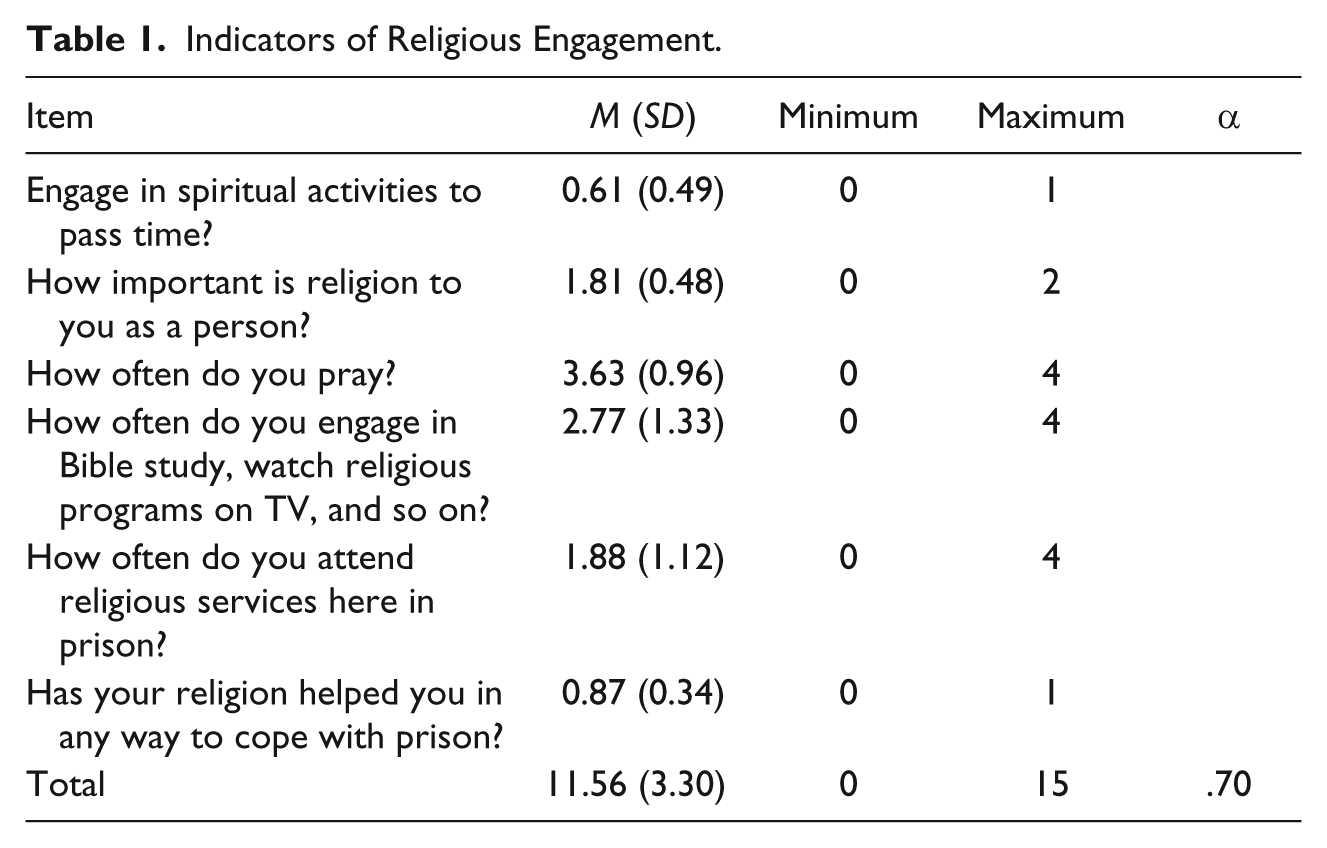
The survey contained six items measuring religious engagement. First, the survey asked participants whether they participated in spiritual/religious activities. Response choices included “yes” (1) or “no” (0). Next, there were four Likert-type prompts including, “How important is religion to you as a person?” Possible responses included “very important,” “somewhat important,” and “not important at all.” Responses were coded 0 to 2 so that more religious importance resulted in a higher score. The subsequent prompt was, “How often do you pray?” Responses included “every day,” “a few times a week,” “once a week,” “once a month,” “once or twice a year,” and “never or almost never.” The same possible responses were provided for the next question, “How often do you engage in bible study, watch religious programs on TV, etc.?” The fifth prompt was “How often do you attend religious services here in prison?” Response choices included “every week or more often,” “once or twice a month,” “once or twice a year,” and “never or almost never.” These responses were coded 0 to 4 so that more frequent religious participation resulted in a higher score. Finally, the survey asked “Has your religion helped you cope with prison?” Response choices included “yes” (1) or “no” (0). Using the above-mentioned items, we constructed an index that represented the sum of the responses. Higher scores on this scale represent higher levels of “religious engagement.” The Cronbach’s alpha for this scale was acceptable at .70.
We also examined responses to open-ended prompts: (a) How have your religious beliefs and/or spirituality helped you cope with any health or end-of-life issues? Please illustrate. (b) Please describe what role, if any, that your religious beliefs or spirituality plays in giving you hope or meaning in life. (c) Would you say that when you first came to prison that religion was more important to your daily life or is it more important for you today? Can you explain these differences? (d) What role does your religious beliefs or faith play in your life as you cope with day-to-day stressors of incarceration? (e) What suggestions would you have for improving the religious programming or opportunities to practice your faith here or any other issues related to religion you would like to share? (f) If you have any special issues you would like to discuss regarding the strategies you use for coping with imprisonment or your life in general, please share them below. Qualitative data from these prompts were coded by question and topic, and three major themes emerged including (a) religion’s role in helping women adjusting to extreme regulation, (b) religion’s ability to ease depression and create hope, and (c) religion ameliorating fears of death behind bars.
Prison adjustment
As a measure of prison adjustment, the questionnaire contained a scale similar to that developed by Zamble and Porporino (1988). Our scale consisted of 21 items that produced a Cronbach’s alpha of .85, indicating strong internal consistency. This Likert-type scale asked respondents to rate certain aspects of imprisonment as bothering them never (0), rarely (1), sometimes (2), often (3), or always (4). For the computation of the scale score, each respondent’s item scores were summed and divided by the number of items constituting the scale. Thus, lower scores indicated better adjustment. Items on the scale included being separated from family, lack of privacy and being quiet, loss of freedom, not feeling physically safe, relationships with other prisoners and prison staff, and parole status.
Depression
Depression was measured using a modified version of the Hopkins Symptom Checklist (Derogatis et al., 1974). Participants rated the level at which they were bothered by certain symptoms as never (0), rarely (1), sometimes (2), pretty often (3), or very often on questions such as how often they “feel lonely” or “hopeless about the future” as well as the frequency of suicidal thoughts and tendencies. Higher scores indicated a greater manifestation of depression. For the computation of the scale score, each respondent’s item scores were summed and divided by the number of items constituting the scale. Eleven questions comprised the scale that assessed frequency of hopelessness, loneliness, and suicidal intentions. A Cronbach’s alpha of .86 was obtained for this scale indicating strong reliability.
Templer’s Death Anxiety Scale (TDAS)
Participants were also administered the TDAS (Templer, 1970). The TDAS is a 15-item assessment that utilizes short yes (1)/no (0) question items aimed at determining the extent to which individuals are preoccupied with death and dying issues. Questions pertained to fears of getting sick, dying in prison, and fears for the future. For instance, the questionnaire asked “Does the thought of death ever bother you?” and “Do you ever fear dying a painful death in here?” For the computation of the scale, the 15 items were summed; a higher score indicated greater death anxiety. Beshai and Naboulsi (2004) assert that Templer’s scale is high in validity and generalization. Consistent with that finding, a Cronbach’s alpha of .82 was obtained in our analysis.
Control variables
In addition to these key variables of interest, we also include several control variables in our multivariate analyses. These include socio-demographic variables of age (years), race, marital status, and education, as well as time served (years), family support, prison support, and extent of physical, sexual, and emotional abuse. Race and marital status are dichotomous variables where Black = 1 (non-Black = 0) and ever married = 1 (never married = 0). Education is represented by a set of dummy variables (less than high school, high school degree, some college, or greater). Family support is also represented by a set of dummy variables that indicate the level of satisfaction with family (very satisfied, somewhat satisfied, and not satisfied). For prison support, we computed a scale based on responses to 15 yes/no questions such as “I have fellow inmates here who I can depend on . . . ” and “friends I have made here are very important to me.” The prison support scale ranged from 0 to 13 (M = 9.19) and had a Cronbach’s alpha of .854. To gauge the presence and extent of abusive pasts, we computed a variable that represented the total types of abuse experiences (range 0 = no abuse to 3 = physical, sexual, and emotional abuse). Prior research has indicated an association between each of these variables and prison adjustment, depression, and death anxiety and/or religious engagement (Gover et al., 2008; Loper, 2002; Thompson & Loper, 2005; van Tongeren & Klebe, 2010; Warren, et al., 2004). As such, we include these control variables to more fully specify our models of the role of religious engagement and prison adjustment, depression, and death anxiety among life sentenced women.
Analytic Strategy
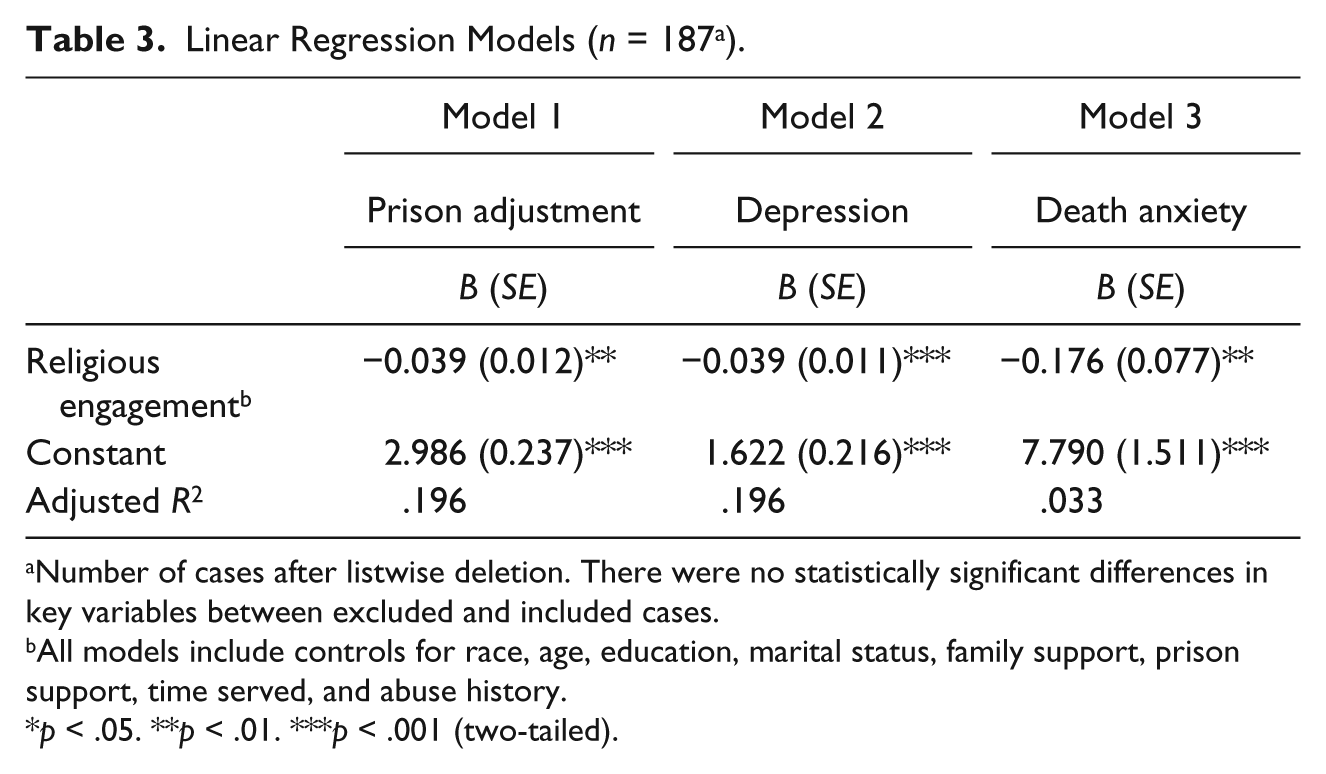
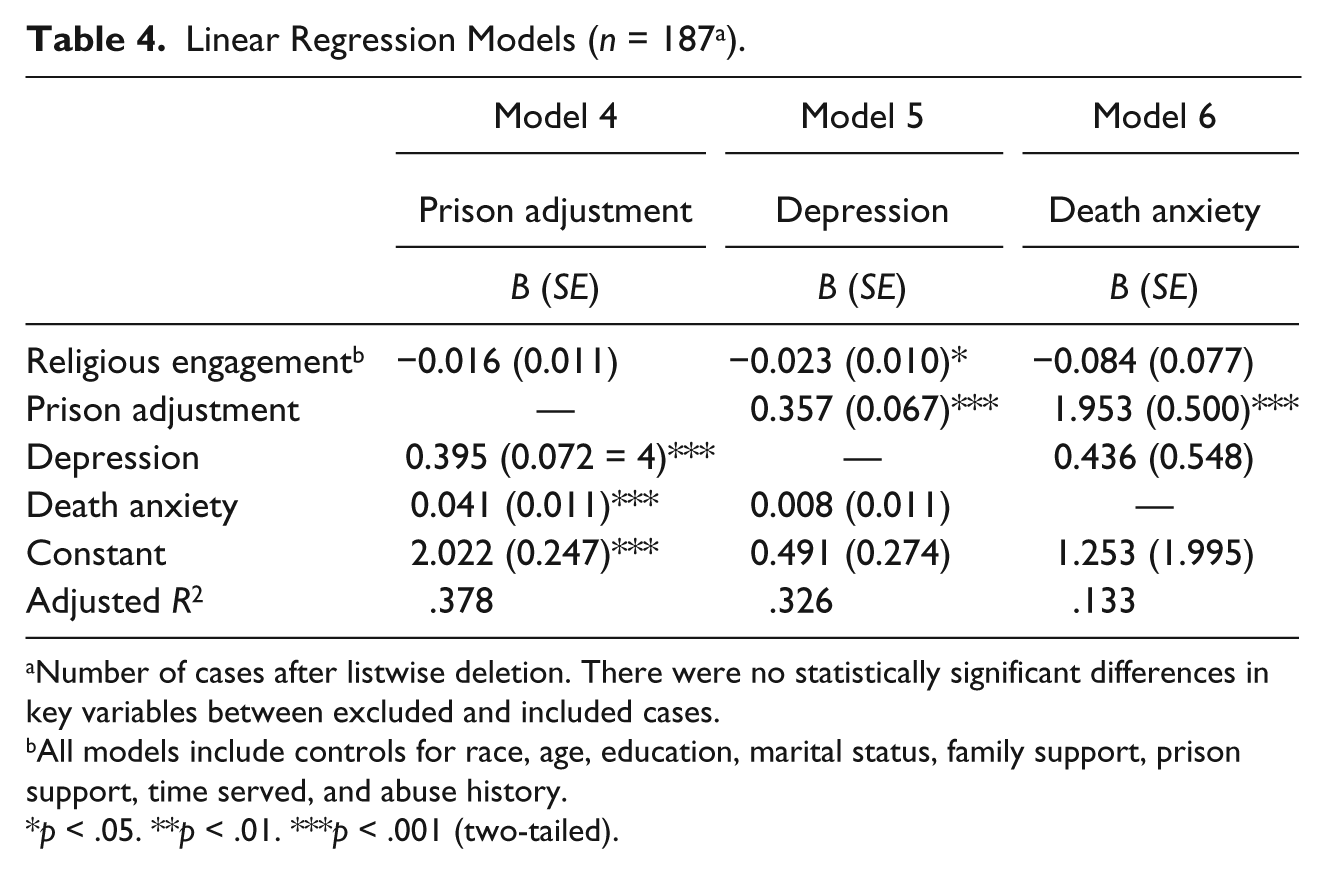
Descriptive statistics for the sample along with correlation matrix for the key variables are presented first (see Tables 1 and 2). For our multivariate models, we perform a series of multiple linear regressions for each of the scaled dependent variables (shown in Tables 3 and 4). We ran seven separate regression models in total. Models 1 to 3 display the religious engagement coefficients for prison adjustment (1), depression (2), and death anxiety (3) net of controls. Model 4 again not only examines the relationship between religious engagement and prison adjustment (net of controls) but also includes indicators of depression and death anxiety as predictors. Likewise, Models 5 (depression) and 6 (death anxiety) incorporate our indicator of prison adjustment and either depression or death anxiety as predictors. Responses to the open-ended prompts regarding religious engagement, prison adjustment, depression, and death anxiety are included with our interpretation of the quantitative analysis.
Indicators of Religious Engagement.
Descriptive Statistics.

Linear Regression Models (n = 187 a ).
Number of cases after listwise deletion. There were no statistically significant differences in key variables between excluded and included cases.
All models include controls for race, age, education, marital status, family support, prison support, time served, and abuse history.
p < .05. **p < .01. ***p < .001 (two-tailed).
Linear Regression Models (n = 187 a ).
Number of cases after listwise deletion. There were no statistically significant differences in key variables between excluded and included cases.
All models include controls for race, age, education, marital status, family support, prison support, time served, and abuse history.
p < .05. **p < .01. ***p < .001 (two-tailed).
Results
As illustrated in Table 1, participants in this study reported substantial religious engagement. In fact, the distribution of responses (not shown) indicated that 84% of the participants described religion as “very important”; 87% stated that religion helped them cope with prison. A similarly high proportion of the sample reported praying every day, engaging in religious activities including bible study and religious television programming daily or weekly, and engaging in religious services weekly or at least once or twice a month. Sixty-one percent of the women reported engaging in spiritual/religious activities to pass the time. As such, for each of the indicators in the religious engagement scale, the mean scores for individual items were near the top of the range. The final scale score was high as well, with a mean score of 11.56 (range = 0-15).
Tables 2 and 3 report the descriptive statistics and bivariate correlations for selected variables of interest. The average score on the prison adjustment scale was 2.11 (SD = 0.60, range = 0-3.62), meaning on average female lifers were “sometimes bothered” by the various indicators of prison adjustment. Approximately 10% of distribution had scores above 3 (“often” or “always bothered”). Participants reported symptoms of depression, especially worries and hopelessness about the future, feeling upset and annoyed, feeling trapped, feeling lonely and blue, and feelings of self-blame. Although many women recalled experiencing these symptoms “pretty often” or “very often,” as Table 2 shows, the average score on the depression scale was relatively low at 1.16 (SD = 0.53, range = 0-2.45). The average score for death anxiety was 6.72 (SD = 3.35, range = 0-15).
Also noted in Table 2, about one third of the women in the sample were very satisfied whereas another 31% were not satisfied with their family relationships. The remaining percentage was somewhat satisfied. Women also reported relatively high levels of support within prison through friendships with other inmates (M = 9.19, range = 0-15). More than three quarters of the women indicated they were very satisfied with their friendships (results not shown). The vast majority of the women (<85%) said that these friendships were very important to them, that they share similar activities and interests, and that they can depend on and confide in fellow inmates. Forty percent of the women responded that they were not satisfied with prison staff.
We also found statistically significant correlations for religious engagement and prison adjustment (r = −.255, p < .01), depression (r = −.200, p < .01), and death anxiety (r = −.204, p < .01). As lower values on the prison adjustment scale indicated better adjustment, the finding provides support for the role of religious engagement in improving prison adjustment. Although these values indicate a moderately weak relationship, the relationships between prison adjustment, depression, and death anxiety are much stronger. For example, we found a strong positive correlation between prison adjustment and depression (r = .566, p < .01) and a moderately strong positive correlation between prison adjustment and death anxiety (r = .398, p < .01). Participants who were more depressed were less adjusted to prison whereas those who were better adjusted experienced less anxiety about death.
Multivariate Findings
The bivariate findings remained statistically significant and in the expected direction in each of our baseline linear regression models as well as with the inclusion of control variables in our multivariate analyses (Models 1-3 in Table 3). These models indicate that as religious engagement increases, prison adjustment improves (evidenced by lower scores on the prison adjustment scale), and both depression and death anxiety levels decrease (net of controls).
The final models (Models 4-6 in Table 4) further explore the relationship between religious engagement, prison adjustment, depression, and death anxiety. In Model 4 (prison adjustment), we found that after incorporating indicators of depression and death anxiety, the relationship between religious engagement and prison adjustment was no longer statistically significant (B = −0.016, p = .151). Instead, those who were less depressed (B = 0.392, p = .000) and less anxious about death (B = 0.041, p = .000) were better adjusted to prison net of religious engagement and other control variables. We also found in this model that other than depression and death anxiety, the only significant predictor of prison adjustment was the level of prison support. The more support received from inmates and staff, the better adjusted (B = −0.032, p = .001).
In contrast, in Model 5 (depression), after incorporating our indicator of prison adjustment, the relationship between religious engagement and depression remained statistically significant (B = −0.023, p = .028). As was the case in Model 4, this model indicated that prison adjustment was significantly associated with depression (B = 0.357, p = .000), but death anxiety was not (B = 0.008, p = .427). Additional factors significantly associated with depression (net of controls, prison adjustment, and death anxiety) included time served (B = −0.013, p = .020) and history of prior abuse (B = 0.080, p = .009). For the final model, Model 6 (death anxiety), only prison adjustment (B = 1.953, p = .000), but not religious engagement (B = −0.084, p = .275) or depression (B = 0.436, p = .427), was found to be related to death anxiety.
Discussion
Although it would be inappropriate to assume a causal direction for the relationships in these models, a comparison of these findings does suggest that religious engagement lowers feelings of depression, which then improves prison adjustment. In other words, the apparent relationship between religious engagement and prison adjustment is indirect and operates through depression. In a similar fashion, anxiety about death is lowered as prison adjustment improves. The findings also suggest that religious engagement alone does not explain depression or prison adjustment; the amount of time served, history of abuse, and the level of prison support are all factors in this process of coping with a life sentence. However, the important role that religious engagement plays seems to be through helping women deal with feelings of depression. These associations between religious engagement, prison adjustment, depression, and death anxiety are evident in the women’s accounts of prison adjustment, depression versus hope, and dealing with death anxiety.
Women’s Accounts of Prison Adjustment
Participants’ personal narratives illuminate the manner in which religious engagement helps them cope with a life sentence. Religion was credited with offering relief from stress and oppression and addressing concerns about getting along with staff and other inmates. Several participants explained how religion helped them adjust: Coping with prison life tests your religion. Imagine being forced to interact with others—some of whom are less than desirable company. The peace of my beliefs helps me cope by being able to meditate and separate my thoughts from the chaos others tend to bring. My beliefs are paramount to coping. I was wild, fighting, getting into trouble all of the time. I was in denial. My adjustment has changed for the better. First I know who I am in Christ. I’ve matured now and I know that my God has the first and last say.
Other accounts are similar to the findings by Greer (2000), Kerley et al. (2005), and Levitt and Loper (2009), who reported that inmates with greater emphasis on religious engagement were less likely to argue with other inmates and less angry in dealing with other inmates. As one inmate succinctly expressed, “(Religion) is my code of conduct. It helps me keep my mouth shut and submit to authority.”
Depression Versus Hope
Although the accounts above illustrate the role that religious engagement plays in adjustment to prison, our multivariate analyses suggest that depression plays an important role in mediating this relationship. Just as previous researchers have found that initial stages of incarceration are especially traumatic for inmates (Adams, 1992; Leigey, 2010; Santos, 2003), women’s’ accounts support the relationship between religious engagement, depression, and prison adjustment during the initial stages of incarceration. For instance, At first I used to cry all [of] the time. I didn’t want to eat. All I would do was talk on the phone and shower. I hardly ever got that much sleep until I had gotten on medication. But I got back into my word (the Bible) and God gave me the strength to go forward. So I slowly came off my meds, didn’t cry that much and I eat more now. Now my time isn’t that hard for me [like] it was.
Here, we hear how faith is an essential buffer to the shock of entering prison life. One participant described the manner in which faith buffered feelings of alienation and abandonment: My belief and faith is vital in my life because there are days when everything begins to crash down on you in one day in this place. Sometimes, things are so stressful in here. I don’t know which way to turn but except for God and His Word. People may misunderstand me or even don’t want to have anything to do with me because of what I am in prison for, but God will never leave me or forsake me . . . He gives me peace that surpasses all understanding in midst of confusion and turmoil.
Other participants stated, God is the source of my strength every day. He is the only reason I can lift my head every day. It’s by his grace and mercy that I am able to survive minute by minute in here, because the officers and this system constantly try to tear you down. Without God I couldn’t do any of this time. Sometimes I just wanna lay down and die but God has helped me and pulled me through some of my darkest moments.
Likewise, religious engagement further aids in sustaining hope over time: When I wake up in the morning, sometimes I can’t believe that I’m still here. I wanna go crazy sometimes and just lay in my bed and die but God always sends someone to me that gives me His words. I know that this is not forever even though it seems like it. When I can no longer go on, God carries me. My religious beliefs and faith play a major role in my day-to-day existence in prison because they won’t allow me to give up, even when I’m discouraged and sick in my soul of this place and have negative thoughts about never getting out of prison.
End of Life Issues/Death Anxiety
Women’s accounts of coping with death anxiety seem to support the role of religious engagement. When asked about the importance of religion in alleviating death anxieties, participants shared the following: My faith in God has given me spiritual disciplines, courage, and hope to face possible death in prison. Surely, fear, doubt and hopelessness come at me. But, I’ve learned and apply my faith and God’s Word to discipline my thoughts and keep hope alive. He has my life in his hands. My relationship with my higher power has helped me cope with health issues as well as end of life issues by just trusting God, knowing that He’s too wise to make a mistake.
These statements support the commonly held view that religion is an important buffer against fear of death (Wink & Scott, 2005) and illustrates the simultaneous issues of coping with depression, hopelessness, and adjustment to the idea of living and possibly, dying in prison. As shown in the multivariate findings, religious engagement seems to work through lowering depression and ultimately to adjustment to life (and death) in prison. As inmates adjust to life in prison, religious engagement (and other forms of support) allows inmates to deal with death anxiety/end of life issues. As noted by Aday (2003), religion helps inmates deal with the lonely, soul-searching experience of prison life, and can provide hope, meaning, optimism, and a sense of security among those spending their final years behind bars. That sentiment is clearly articulated here. For some women, death was posited as relief or escape from prison life. For instance, My religious beliefs are that to be absent from the body is to be present with the Lord, and it’s better to be present with the Lord than be in prison. I know that when I die, I shall be in heaven. End-of-life issues do not affect me because of who I am in Christ . . . I know I belong to my Heavenly Father.
Similar themes emerged from previous research with older male and female inmates (Aday, 2006; Deaton et al., 2009-2010). In particular, the sentiment that it is better to be “absent from the body” and “present with the Lord” was expressed almost verbatim among male participants. This suggests that religion provides inmates hope for something to look forward to beyond incarceration. This hope is doubtlessly a precious commodity for inmates who do not know whether they will ever again have the chance for the freedom of life outside prison. For some, an afterlife may be the singular opportunity to be reunited with loved ones lost during incarceration (Harner, Hentz, & Evangelista, 2010).
Conclusion
Findings from this study illuminate the importance of religious engagement for life-sentenced women. Open-ended questions allowed participants to articulate the importance of religion in their lives whereas multivariate regression models delineated the relationships between religious engagement, prison adjustment, depression, and death anxiety. Overall, religious engagement was associated with lower levels of depression, which facilitated prison adjustment. Women’s accounts also indicated that religious engagement was most directly associated with levels of depression, and in particular, for giving hope, and helping deal with feelings of loneliness and hopelessness. Religious participation and the application of Christian principles helped to free women in a place where there is little chance for free will and gave women a powerful ally in the face of extreme oppression and regulation. As one participant succinctly stated of religion, “It is the rock I cling to.”
Likewise, religious engagement was negatively correlated with death anxiety. A life sentence, especially a sentence of life without parole, may mean that one’s cell will become one’s tomb. Fears of the stigma, loneliness, and pain of dying behind bars often create dread among life-sentenced inmates. This fear is not difficult to comprehend, but it seems difficult to ameliorate. Religion, at least, offers some succor.
One possible limitation of our research is its Christian focus. As the majority of participants in the survey indicated a Christian belief in religion or God, we found this to be an appropriate approach. However, because of this limitation, our findings may not generalize beyond this sample of women or this region of the United States. Also, in this study, we did not delineate the difference between spirituality and religion. We found both intrinsic, individual religiosity and religious participation to be beneficial to inmates’ mental health, fears of death, and overall adjustment.
More research is certainly needed on depression among life-sentenced women—especially studies that listen to, and incorporate, the voices of inmates, themselves. Depression among inmates is a source of suffering that even our increasingly punitive criminal justice system does not intend to inflict. In addition, because depression is linked with institutional infractions and health problems, depression creates problems from a practical and financial standpoint. We need better insight into the nature of depressed life-sentenced inmates’ emotional realities.
As sociologists, we are not concerned with the veracity of religious tenets. But, the benefits of religion for society have been noted by countless social scientists—both classic and contemporary (Durkheim, 1897/1951; Graham et al., 2001; Kerley & Copes, 2009; Thomas & Zaitzow, 2006). Religion fills a human need and capacity for a sense of meaning and connectedness with the world around us and the people in it. It has an important function for groups and individuals—including those lives that might otherwise be disconnected and meaningless—and functions as a rock to cling to for women serving life sentences.
Footnotes
Declaration of Conflicting Interests
The author(s) declared no potential conflicts of interest with respect to the research, authorship, and/or publication of this article.
Funding
The author(s) received no financial support for the research, authorship, and/or publication of this article.