



Abstract
In 2003, the U.S. Department of Justice, Office of Justice Programs, in collaboration with other federal partner agencies provided approximately US$110 million in funding to all 50 states, the District of Columbia, and the U.S. Virgin Islands to develop and/or fill gaps in reentry strategies through the Serious and Violent Offender Reentry Initiative (SVORI). This article describes the New Jersey SVORI intervention approach and evaluates its relative impacts on participants’ rearrest rates. SVORI participants are compared with randomly selected parolees (n = 100) and unconditional releases (n = 100) that did not receive services through SVORI but otherwise met the inclusion criteria of the New Jersey SVORI intervention. Results indicate that SVORI participants were rearrested at a significantly lower rate during the follow-up period when compared with both of the non-SVORI groups. Policy issues are discussed by the authors.
Introduction
New Jersey’s Serious and Violent Offender Reentry Initiative (SVORI) is a prisoner reentry initiative that aims to reduce the likelihood of recidivism of adult and juvenile 1 offenders returning to Camden and Essex Counties in New Jersey. Many offenders are unprepared for their return to the community. The barriers to successful reintegration for New Jersey’s reentering population mirror the national landscape: offenders are returning to the community after serving often long terms in prison, coupled with substantial decreases in institutional treatment and transitional programming to facilitate successful returns to the community. The result is that there are more offenders with multiple risk factors returning to economically deprived communities that do not have the treatment and support networks to aid in their transition to free society.
The New Jersey State Parole Board (NJSPB) selected Camden and Essex Counties for the SVORI project after a review of crime and demographic statistics. Data from Crime in New Jersey: The 1999 Uniform Crime Report indicates that the City of Camden and the City of Newark (the largest urban cities located in Camden and Essex Counties, respectively) are two of the top three New Jersey cities with the highest crime rate, with index crime rates of 87.2 and 83.8 per 1,000 residents, respectively (State of New Jersey, 2000). 2 In 2001, approximately 28,622 inmates were incarcerated in state correctional institutions. Of those inmates, 18% were convicted in Essex County and 14% in Camden County (NJSPB, 2001).
In comparison with New Jersey as a whole, residents of Camden and Essex Counties also experience significant socio-economic challenges. According to the U.S. Census, 2000, 33% of New Jersey’s population was 24 years old or younger. However, the percent of the population 24 years or younger is much higher in the City of Camden (46.6%) and the City of Newark (40.0%). Both cities had higher than average unemployment rates; the unemployment rate was 16.3% in Camden and 14.7% in Newark compared with 5.7% for New Jersey as a whole. Furthermore, 7.6% of New Jersey’s population was living below the poverty level, while the percentage of the population living below the poverty level was significantly higher in Camden and Newark (36.6% and 26.3%, respectively; NJSPB, 2001). The identification of potential New Jersey SVORI participants began in January 2003. Parolees who received services through SVORI were released from New Jersey prisons between October 1, 2003, and July 31, 2005.
This study aims to add to the larger literature base about effective correctional programming as well as the literature particular to the SVORI intervention. It evaluates the relative impact of the New Jersey SVORI program on post-release recidivism. To accomplish this, rearrest outcomes for SVORI participants are compared with randomly selected individuals who otherwise met program eligibility requirements, but were not offered services through SVORI. Two comparison groups are analyzed: parolees (n = 100) and individuals who were unconditionally released at the end of their sentence (n = 100). Descriptive statistics about the number and types of services that SVORI participants received are also highlighted.
Background
National-level studies of recidivism have indicated that, within 3 years of release, approximately 68% of former inmates are rearrested and 47% are reconvicted for new crimes (Langan & Levin, 2002).In addition, 52% are reincarcerated for either a new crime or for a technical violation of supervision conditions (Langan & Levin, 2002). These data also indicate that the likelihood of successful reintegration varies according to the release mechanism an individual experiences. Inmates who are released to supervision via the discretion of a parole board or other releasing authority experience a rearrest rate of 54%, while 61% of mandatory parolees and 62% of unconditional releases experience a post-release arrest within 3 years of leaving prison (Solomon, Kachnowski, & Bhati, 2005). These high levels of recidivism by former inmates in general and parolees in particular substantially contribute to national-level crime rates (Rosenfeld, Wallman, & Fornango, 2005; Travis, 2005).
Noticing these high rates of failure, the difficulties in successfully rehabilitating former inmates, the high needs of this population, and the implementation challenges experienced by practitioners, in 2003, the U.S. Department of Justice, Office of Justice Programs, in collaboration with other federal partner agencies funded all 50 states as well as the District of Columbia and the U.S. Virgin Islands with approximately US$110 million to develop and/or fill gaps in reentry strategies through the SVORI (Winterfield & Brumbaugh, 2006). This funding stream provided 69 agencies with US$500,000 to US$2 million over 3 years to develop 89 adult and/or juvenile reentry programs. Recipients were required to follow relatively few guidelines in administering SVORI interventions—(a) Programs were to provide services to serious violent offenders at three distinct phases during the correctional process: prior to release, during supervision, and after supervision was completed; (b) agencies that were funded were required to focus their efforts on adults and/or juveniles 35 years of age or younger; (c) service provision was to be guided by findings of needs and risk assessments; and (d) services were to be coordinated within partnerships between relevant state agencies, local community providers, and faith-based organizations (Cowell, Lattimore, & Roman, 2009; Lattimore, Steffey, & Visher, 2009; Winterfield & Brumbaugh, 2006).
Providing coordinated pre- and post-release services to reintegrating offenders is not a novel approach to increasing positive outcomes. However, while most state correctional agencies offer services to inmates while they are incarcerated and parole agencies are charged with providing individuals with service linkages while they are under their supervision, participation in in-prison programs is relatively low (Austin, 2001), and few agencies provide these interventions through a continuum of care concept. States have experienced difficulties in implementing coordinated and continuous programming that provide services in prisons and after release often due to a lack of partnerships and information sharing between agencies, disparate missions and goals, as well as a lack of communication between corrections agencies and stakeholders that provide rehabilitative services (Parent & Barnett, 2004).
Correctional programs developed around pre- and post-release continuity models have experienced mixed results regarding recidivism reduction. Findings from a systematic review of the evidence-based corrections literature indicate strong reductions in recidivism for programs that offer in-prison therapeutic communities paired with community aftercare, in-prison employment training paired with job assistance in the community, and intensive supervision models paired with treatment-oriented programs (Aos, Miller, & Drake, 2006). Nevertheless, some programs that use a continuum between “behind the wall” and “on the street” services have negative or no effect. For example, offenders enrolled in a short-term multimodal reentry program called Project Greenlight were found to be more likely to fail in the community than similarly situated parolees who did not participate in the program (Wilson & Davis, 2006).
Greenlight was designed around findings from the effective correctional programming literature, providing inmates approaching parole release with intensive transitional services based on their actuarially assessed risk and need profiles (Wilson & Davis, 2006). In addition to in-prison treatment and programming focused on job readiness, housing, and relapse prevention, participants were provided a comprehensive release plan that was administered by a case manager. Participants also were aided in establishing connections with family members, community-based service providers, and parole officers to smooth their transition into society. Results indicated that program participants had higher rates of criminal recidivism and were more likely to have their parole revoked when compared with parolees who received traditional supervision.
The failure of Greenlight has been attributed to poor implementation and limited exposure time (Rhine, Mawhorr, & Parks, 2006; Wilson & Davis, 2006) as well as a flawed design. Marlowe (2006) attests that this program was doomed at the onset because it provided a “kitchen sink” approach of offering interventions that had weak evidence of being effective paired with a lack of accountability/consequences for offenders who were non-participatory. Interventions funded through SVORI monies are similar to Project Greenlight in that they provide offenders who are approaching their release date with in-prison services based on assessed risk and need, they offer post-release community support, and encourage service collaboration between relevant stakeholders. SVORI interventions differ because, rather than building new programs, this initiative allowed for states to better use existing resources by providing funding to address gaps within local reentry paradigms (Visher, Lindquist, & Brumbaugh, 2007; Winterfield, Lattimore, Steffey, Brumbaugh, & Lindquist, 2006).
Prior Evaluations of SVORI
Existing evaluations of SVORI programs indicate relatively favorable but weak outcomes. An analysis of an adult SVORI program in an upper Midwest state assessed the impact of the program’s services on officially recorded arrests after parole was completed as well as revocations of parole for either a new crime or a technical violation during the supervision term (Bouffard & Bergeron, 2006). Participant needs were assessed and addressed prior to release through appropriately matched in-prison programming, and a comprehensive release plan was constructed to continue to address these needs after release. Findings indicated that inmates enrolled in the program were referred to an identical number of pre-release services when compared with comparison group inmates (an average of 3.8 referrals per inmate), and comparison group members completed a higher proportion of the programs and services to which they were assigned (an 87.1% completion rate versus a 78.8% completion rate for SVORI participants). This indicated relatively weak in-prison service coordination for participants in this SVORI program (Bouffard & Bergeron, 2006).
Post release, SVORI parolees received enhanced programming. They were referred to and participated in more services (an average of 4.2) than comparison group members (an average of 2.2). Results suggested that those who had received the intervention had a 60% lower likelihood of being rearrested after the successful completion of parole, but were just as likely as comparison group offenders to have their parole supervision revoked prior to successful completion. However, SVORI participants received more than twice as many drug tests while in the community and tested positive for drug use at significantly lower rates than comparison group members (Bouffard & Bergeron, 2006).
The most comprehensive evaluation of SVORI utilized data from 16 programs (12 adult programs and 4 juvenile programs) across 14 states (Lattimore et al., 2009). The multisite SVORI evaluation used an in-person, computer-assisted interview strategy paired with drug testing and analysis of official records to document post-release behaviors. Interviews were conducted in prisons 30 days prior to release as well as in communities 3, 9, and 15 months after release. The researchers employed a complex matching system that used propensity score modeling based on 24 unique variables to construct viable comparison groups.
Results from the interviews indicated that both participants and non-participants had many similar needs prior to their release, including educational, housing, employment, transportation, and documentation issues. Overall need decreased after release, but both SVORI and non-SVORI group members continued to report similar areas of need throughout the study period (Lattimore et al., 2009). Post release, SVORI participants reported receiving more services than non-SVORI group members, but, unlike the findings of Bouffard and Bergeron (2006), service receipt declined in the community. Service receipt was much lower than the expressed need for both SVORI and non-SVORI groups. Recidivism outcomes were similar across both groups. Both SVORI participants and non-participants reported high rates of reincarceration within 3 months of release (about 20% of both groups were reincarcerated). While SVORI members were less likely to experience a rearrest within 2 years of release, differences between SVORI and non-SVORI groups did not reach statistical significance. Approximately 40% of both groups were reincarcerated during the follow-up periods.
The New Jersey SVORI Process
Offenders were considered for receiving the New Jersey SVORI intervention if they (a) were released to Camden or Essex counties between October 1, 2003, and July 31, 2005; (b) were between 14 and 35 years of age; (c) were sentenced to a state custodial term between 5 and 25 years; (d) had an institutional security level of medium or higher; and (e) were previously convicted of a crime against persons (e.g., aggravated assault, aggravated criminal sexual contact, aggravated manslaughter, aggravated sexual assault, armed burglary, arson, carjacking, endangering the welfare of a child, harassment, kidnapping, manslaughter, murder, rape, robbery, sexual assault, simple assault, stalking, terroristic threats, and unlawful possession of a weapon). If the offender had not been previously convicted of a crime against persons, then offenders who had committed multiple crimes against property that suggested an increase in severity over time and who had previously violated terms of probation and/or parole were eligible for consideration.
Queries of New Jersey Department of Corrections (NJDOC) information systems yielded 2,000 potential candidates for inclusion in the SVORI intervention. Eligible inmates were approached by DOC staff about receiving services through SVORI prior to their parole hearing. If the potential candidate consented to participate, they signed a records release authorization form. If the inmate had opted into the program and was then released to parole supervision, SVORI participation was included as a condition of their parole. After several months of employing this strategy, SVORI participation was required by the SPB for all eligible inmates released during the recruitment period due to lack of interest in the post-release portion of the program.
New Jersey’s SVORI aimed to address individual-level barriers that confront reintegrating inmates as they attempt to transition from prison to their communities. This was largely accomplished through a continuity of care model for programming and service provision. SVORI programming began in NJDOC facilities and continued throughout the individual’s period of supervised release through parole. The New Jersey SVORI utilized findings from actuarially based risk and need assessment instruments to guide service planning. General criminogenic risks were gauged through the Level of Service Inventory–Revised (LSI-R), while risks particular to alcohol and drug dependency issues were assessed through the Addiction Severity Index (ASI). Because continuity of care models are logistically challenging, the SVORI process required a substantial degree of organizational and cultural change among participating state agencies, law enforcement partners, and social service and treatment providers. The collaborative approach outlined in the SVORI process required organizations to buy-in to SVORI and to make the organizational changes necessary for institutional cooperation.
The collaborative local working group was facilitated by the Police Institute (PI) at Rutgers University—Newark’s School of Criminal Justice. The PI began by helping to forge a positive working relationship between the NJDOC and the NJSPB. The PI had previously developed working partnerships with local, state, and federal law enforcement agencies through a similar post-release program called the Greater Newark Safer Cities Initiative. Because substantial cross-over occurred between this initiative and the SVORI project, partnerships that were developed during the Safer Cities Initiative were capitalized upon to bolster the SVORI collaborative team. Once the group was assembled, the PI facilitated interagency workshops and acted as a neutral convener, explaining the missions and methods of conducting business for the SVORI approach. These workshops served the purposes of (a) identifying similar goals, (b) identifying differences, and (c) identifying ways in which partner agencies could modify current practices to facilitate a more collaborative process.
The working group met on a monthly basis. Meetings consisted of the partner agencies discussing continued or new issues, brainstorming, and making assignments for future meetings. The case conference group, which consisted of treatment and services providers as well as parole officers, met 2 times a month. At these meetings, individual SVORI cases were discussed. Topics included which parolees completed programming, individual-level progress of participants in relevant programs, and how the group could better develop action plans for parolees in need of treatment and/or services. Meetings were also periodically convened for individual parolees at a local church, because it was viewed as neutral ground.
An initial notification meeting was held on a quarterly basis. At these meetings, recently released SVORI participants met with various project partners including the Superior Court Assignment Judge, treatment providers, parole officers, community leaders, and clergy. Partners communicated a similar message during this early stage in the parolee’s supervision period:
We want you to succeed, and we are here to help you. We want you to become productive, law-abiding citizens, and we are willing to give you and your families the assistance necessary to do that. In return, you must be compliant on parole. If you are non-compliant, then we will use the full force of the law against you.
A video of the notification was also produced. The video was shown to new SVORI parolees during their first meetings with their parole officers so that they had basic information regarding the project until they could attend the next notification session in person. A few weeks after the initial notification session, a “rev-up” session was held. These rev-up sessions were scaled-down versions of the notification sessions designed to reinforce the opportunities available to parolees and their families as well as to reiterate the responsibilities of parolees on SVORI.
If a participant was having difficulty transitioning to community supervision, or was willfully non-compliant, then individual adjustment sessions were held with the parolee, the parole officer, and the district parole supervisor. These individual adjustment sessions addressed the parolee’s problematic behavior, explained the potential consequences of continued non-compliance, and then offered additional assistance to the parolee. If a parolee continued to be non-compliant, or committed a new offense, then the parole officer began parole revocation proceedings. In an effort to reinforce the importance of the notification and rev-up sessions, the parolees were reminded of meetings via a mailed letter to their home address of record. Officers would also verbally remind participants of their requirement to attend meetings. Participants were instructed to make all necessary accommodations to attend these meetings as if they were scheduled parole office visits and to actively participate at the meetings. If participants did not attend, or physically attended but did not engage in the meeting, then the meeting requirement was recorded as a “failure to appear.” This was treated as if the participant had failed to make a scheduled office visit with the parole officer.
A number of services were available to SVORI parolees by virtue of the strong partnerships developed through the working group and contracts with local treatment providers. Substance abuse treatment was available to participants and included detoxification, inpatient/residential treatment, intensive outpatient and standard outpatient counseling, and self-help groups such as Alcoholics Anonymous and Narcotics Anonymous. Parolees in need were also offered mental health and/or anger management counseling. Parolees who were identified as mentally ill and chemically addicted were offered specialized services to address the dynamic relationship between symptoms of their mental illnesses and substance use/dependence.
Participants were also able to request assistance with employment and job training. In this study context, employment assistance took a variety of forms including parole officers making referrals to employment agencies for full-time employment or temporary positions until permanent employment could be secured; parole officers assisting their cases with learning how to read job listings in the newspaper or on a computer at a public library; direct referrals to jobs known by working group members; and referral to employment centers to assist in resume development and interview skills. The working group was also able to provide financial aid for parolees who passed entrance tests for trade programs, and for those who desired to obtain commercial drivers licenses. In addition, parolees who qualified were sent to the Division of Vocation Rehabilitation for services. Other forms of counseling available to parolees included basic life skills and budgeting classes, parenting skills development courses, and family counseling. Participants were also provided assistance with securing adequate and safe housing, medical assistance for health issues, obtaining identification if it was not secured prior to release on parole, application for social security and disability benefits for qualified individuals, and mentoring with clergy, if desired by the parolee.
Method
Rearrest data were obtained from Computerized Criminal History (CCH) reports. These reports were abstracted from NJSPB data systems and are ultimately maintained by the New Jersey State Police. The CCH contains all formally recognized in-state criminal justice involvement that an individual has experienced. Individuals are identified by a unique State Bureau Identification (SBI) number, which is assigned at entrance into the New Jersey criminal justice system and is attached to an offender’s fingerprint. To construct the comparison groups, NJSPB data systems were queried for all individual SBI numbers that met the SVORI selection criteria and were either paroled or unconditionally released from NJDOC between the SVORI eligibility dates. The SBI numbers of those who were paroled were compared with the SBI numbers of those who received SVORI interventions. SVORI participants were eliminated from this group so that non-SVORI selections could be made. One hundred individuals each from both the non-SVORI parole and unconditional release groups were randomly selected. These two groups served as this study’s comparison samples.
Service acquisition data for SVORI participants were gathered from the participants parole file. Files are archived at the NJSPB’s central office in Trenton, New Jersey. Files contain various pieces of information including pre-sentence investigations, conditions of parole supervision, and treatments and programs received in prison as well as during parole. The number and types of services that SVORI cases received were recorded from these files. In addition, the researchers gathered data about what sorts of services these cases were referred to, participated in, and completed. Information pertaining to program failures was also gathered.
Results
SVORI Participant Characteristics
Table 1 presents sample characteristics of the adult SVORI participants. In general, the SVORI population is largely male (98%) and African American (82%). They are on average 30 years of age. They have extensive histories within the juvenile and adult systems. Three quarters have at least one juvenile arrest and, on average, have 6.7 prior adult arrests. Of the total sample, 86% were serving time for a violent offense, 32% had at least one conviction charge involving guns or other weapons, and 36% had a conviction charge involving a non-violent crime. In addition, 10% were incarcerated for a probation or parole violation. Overall, offenders were serving an average sentence of 134 months.
SVORI Participant Characteristics (n = 90).

History variables are missing information on a large percent of cases (30% and 46%, and 22%, respectively).
Represents four independent variables and double counts for multiple charges.
SVORI Participant Service Use
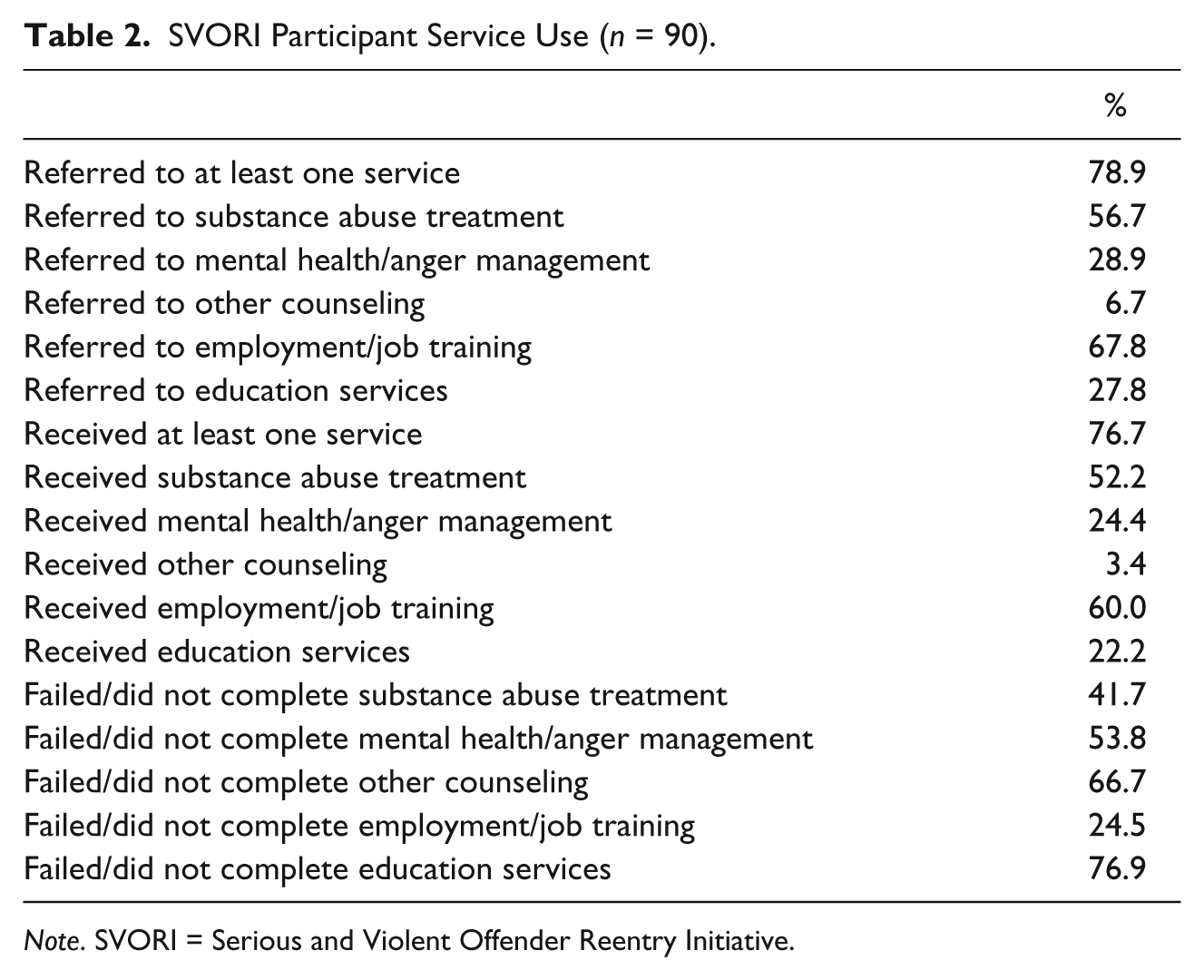
In 79% of cases, SVORI participants were referred to at least one community-based service and 77% of participants received at least one service (n.b., 95.6% overlap of referrals and service receipt). Among community-based services, job training (68%) and substance abuse treatment (57%) were the two services with the highest percentage of referrals. In addition, 29% to mental health/anger management programs, 28% of SVORI participants were referred to education programs, and 7% to other counseling. Not surprisingly, fewer people actually received or participated in services than were referred. Specifically, 60% of SVORI participants received job training services, 52% to substance abuse treatment, 24% to mental health/anger management programs, 22% to education programs, and 3% to other counseling. In most services, a large majority of persons referred attended at least one service session. In each service, a substantial percentage of the participants failed or did not successfully complete the program or service (substance abuse treatment = 42%, mental health treatment = 54%, other counseling = 67%, job training = 25%, and education = 77%). Job training had the highest retention/success rates, while other counseling and education had the lowest (Table 2).
SVORI Participant Service Use (n = 90).
Note. SVORI = Serious and Violent Offender Reentry Initiative.
Primary Outcomes of SVORI Participants
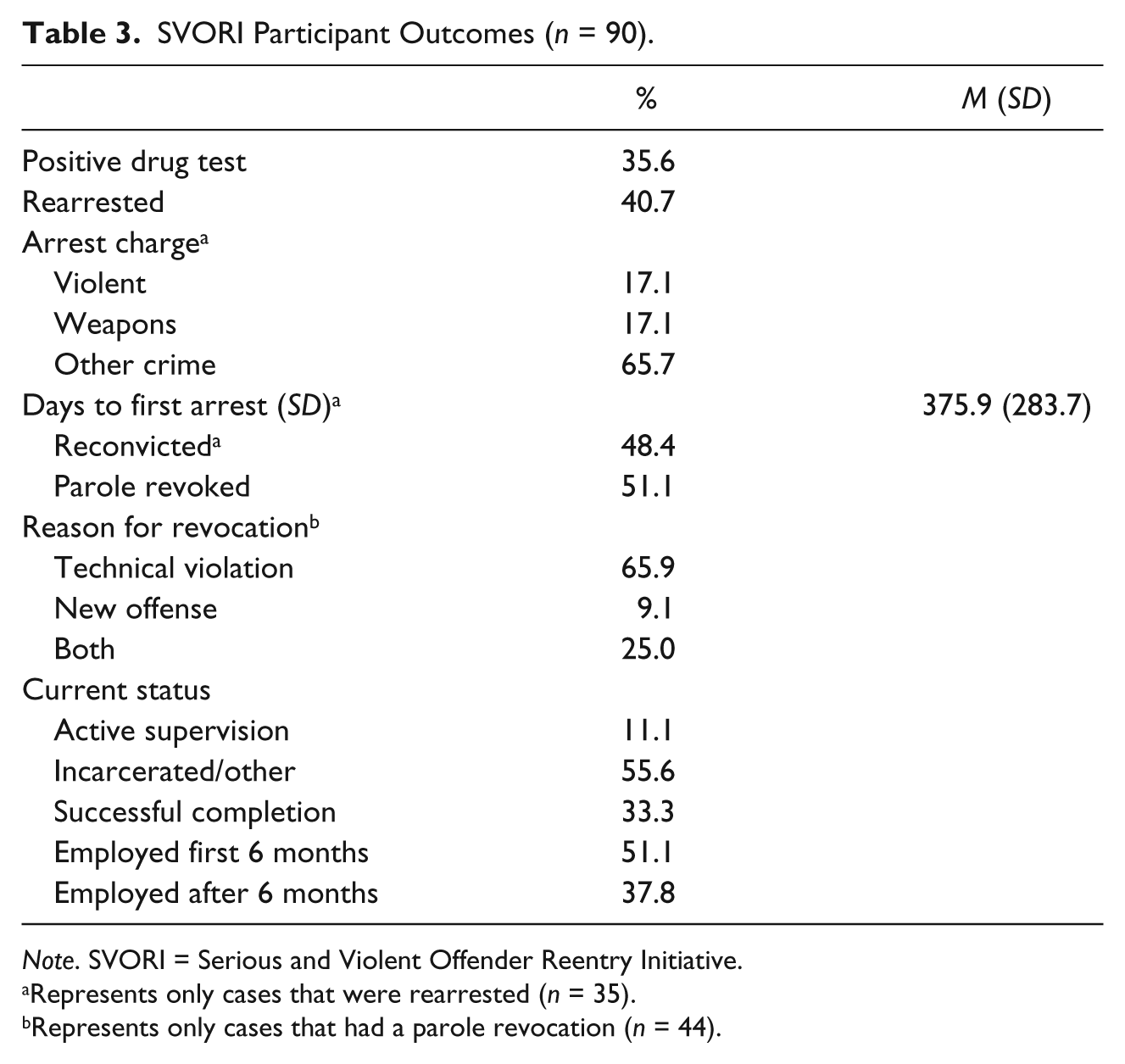
Table 3 presents the primary outcomes for the SVORI program. There are three primary negative outcomes—positive drug test, rearrest, and parole revocation—and one positive outcome (i.e., employment). The drug test is a single variable. Rearrest contains several distinct elements, including whether the individual was rearrested at all during the follow-up period, if rearrested the primary arrest charge and the days from release to first arrest, and finally whether the arrest resulted in a conviction. Revocation also has multiple elements, including whether the individual’s parole was revoked, the reason for the revocation (i.e., technical violation, new offense, or both), and the end supervision status of the SVORI participant (i.e., still under supervision, successfully completed supervision term, or incarcerated, absconded, or died).
SVORI Participant Outcomes (n = 90).
Note. SVORI = Serious and Violent Offender Reentry Initiative.
Represents only cases that were rearrested (n = 35).
Represents only cases that had a parole revocation (n = 44).
Overall, 36% of SVORI participants tested positive at least once during their supervision, 41% were rearrested, and 51% had their parole revoked. Of those who were rearrested, only 17% were arrested for a violent crime, and an additional 17% were arrested for a weapons charge without involvement in a violent crime. The remaining 66% of those rearrested were for other non-violent crimes. Among those rearrested, SVORI participants in general had a little over a year (376 days) in the community before an arrest. Of those rearrested, 48% were convicted. Of the 51% of those whose parole was revoked, 66% was for a technical violation only, 9% for a new offense only, and 25% for both. One third of the SVORI participants successfully completed their supervision terms; 11% was still under active supervision, while the remaining 51% were incarcerated (n = 116), had absconded (n = 1), had died (n = 4), or were inactive for some other reason (n = 1). On the positive side, 51% of the sample was employed within the first 6 months post release and 38% were employed at 6 months or more after release.
SVORI Comparisons
Data were collected on a random sample of offenders who were similar to the SVORI clients in the following ways: (a) met criteria for SVORI, (b) released in the same time period, and (c) if on parole, supervised by the Camden or Essex County Parole Office. Two comparison samples were identified, each comprised 100 adults: 3 persons released on parole and persons who served their full sentences (i.e., max outs). The first comparison group, the parolees, provides a contrast between SVORI activities and “treatment as usual” (i.e., standard parole supervision). The second comparison group, the max outs, provides a contrast between SVORI activities and “no treatment.”
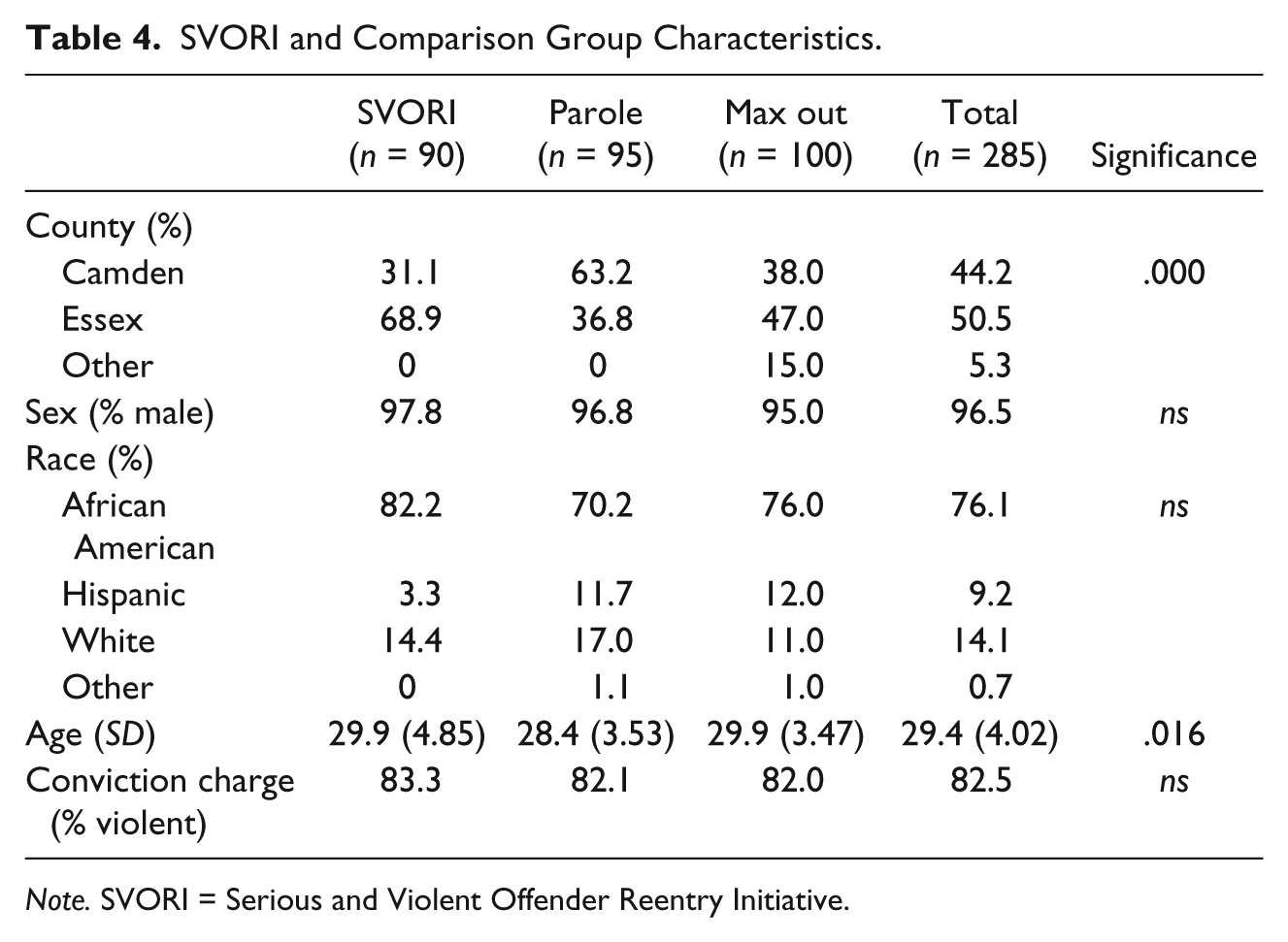
Demographic information, conviction charges, length of confinement, release dates, and recidivism information were collected on the comparison group members. Table 4 presents the demographics and conviction charges of the comparison and SVORI groups. As can be seen, 51% of the sample is in Essex County, while 44% is in Camden County. The remaining 5% are distributed in other counties across the state. However, it should be noted that even among the max outs, 85% resided in Camden or Essex County.
SVORI and Comparison Group Characteristics.
Note. SVORI = Serious and Violent Offender Reentry Initiative.
There were no significant differences between SVORI participants and parole or max out group members in sex or race/ethnicity. Age did differ with parolees being approximately 1.5 years younger than the SVORI and max out groups. The percent of offenders incarcerated for a violent offense was equivalent across groups.
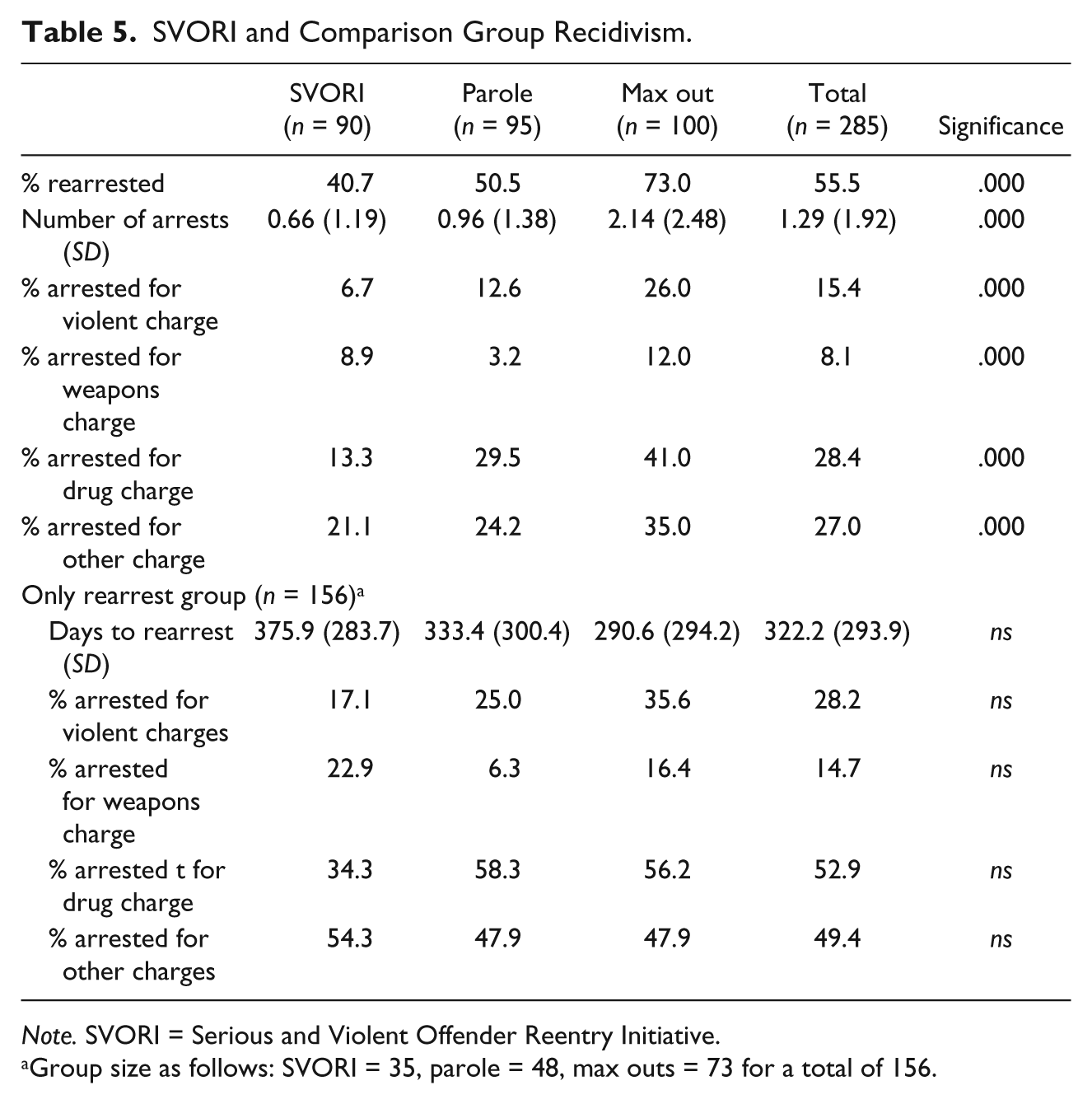
Table 5 presents the recidivism information. Overall, SVORI participants are significantly less likely to be rearrested during the follow-up period. Only 41% of SVORI adults were rearrested compared with 51% of parolees and 73% of max outs. Similarly, the SVORI group had the fewest number of arrests at 0.7 arrests compared with 1.0 arrests for parolees and 2.1 for those who maxed out. However, the difference between the SVORI and parole groups on this measure was not significant. Both SVORI and parole groups had significantly fewer arrests than the max out group.
SVORI and Comparison Group Recidivism.
Note. SVORI = Serious and Violent Offender Reentry Initiative.
Group size as follows: SVORI = 35, parole = 48, max outs = 73 for a total of 156.
If the total sample is included, there are significant differences between groups across arrest charge types. In general, SVORI participants are less likely than the other two groups to be arrested for a violent crime, a drug-related offense or another offense. Only 7% of SVORI participants were arrested for a violent offense (vs. 13% parolees and 26% max outs); 13% for a drug charge (vs. 30% parolees and 40% max outs); and 21% for another offense, including violations (vs. 24% parolees and 35% max outs). SVORI participants were more likely to be arrested for a weapons-related offense than parolees (9% compared with 3%), but less likely than max outs (12%).
When analyzing arrest charges for those who were rearrested only, differences between groups disappear. The sample as a whole is most likely to be arrested for a drug charge (53%), followed by other charge (49%), a violent crime (28%), and a weapons offense (15%). Among those rearrested, the average time to rearrest was approximately 10 months (322 days) with no differences between groups.
Conclusion
Several conclusions may be drawn from the SVORI evaluation. First, SVORI participants had a relatively long time to failure. While about 40% of the SVORI group has been rearrested in the 2- to 3-year follow-up period, nearly 60% were never rearrested, and those who were averaged over 12 months in the community before they were arrested. Excluding those who were never arrested, this varied from the shortest time to arrest at 15 days to 1,122 days.
Second, given the criminal histories of the SVORI participants, those who participated but were arrested had relatively fewer violent crimes than might be expected. SVORI participants have long and serious criminal careers. These individuals have histories of violent crimes, serial felony convictions, and violent infractions while incarcerated. Again, well over half of the SVORI group was not rearrested for any crime in the follow-up period. Of those who were rearrested, only 19% were arrested for a violent crime.
Third, many SVORI participants were returned to custody for technical violations. About half of the SVORI group had a parole revocation. Of those, nearly two thirds had their parole revoked for a technical violation alone. It is not possible to say whether high surveillance and the strategic use of technical violations were partly responsible for the reduction in violent arrests. It is also important to note that a large proportion of the sample tested positive for drug use during the follow-up. This may account for many of the technical violations in the absence of a new offense.
Finally, SVORI outcomes are superior to comparison groups of SVORI-like subjects. SVORI supervision appears to have a significant impact on rearrest. SVORI clients are less likely than general caseload parolees and those with no supervision to be rearrested. While similar to parolees, they have fewer arrests during follow-up than those who maxed out their sentences. However, if SVORI clients are rearrested, they are no different than parolees or max outs in (a) arrest charge or (b) time to failure.
The SVORI intervention targets a specific group of violent offenders. It mixes traditional parole supervision practices with intensive case management practices that build upon extensive community services networks. It is like intensive supervision programs insofar as the SVORI caseloads focus on a high need/high risk group of offenders and provide intensive surveillance of this group. It differs from intensive supervision caseloads insofar as service providers are essential participants in case conferences, and service referral and engagement are priorities.
This is an intensive program that involves many police/corrections and community agencies, and has high expectations of SVORI participants. While such an endeavor is more costly and labor-intensive than standard parole, the superior outcomes of SVORI participants justify the investment. In addition to increasing public safety at a time when many jurisdictions are concerned with the large reentry population, SVORI participants themselves are provided with concrete tools and the support they need to be successful citizens in their home communities.
Footnotes
Declaration of Conflicting Interests
The author(s) declared no potential conflicts of interest with respect to the research, authorship, and/or publication of this article.
Funding
The author(s) received no financial support for the research, authorship, and/or publication of this article.