



Abstract
This research, utilizing a case study design, focused on prison operations in women's prisons and compared those across each of the four jurisdictions of England and Wales, Scotland, Northern Ireland, and the Republic of Ireland. The numbers of women in prison, the crimes for which they are imprisoned, and their sentences are considered, along with women's prison policy initiatives in each jurisdiction. The differences between these policies and the realities of women's experiences in prison are highlighted.
Women's Imprisonment: A Brief Review of the Literature
Worldwide, women represent a smaller percentage of prison populations compared to men, comprising 7% of the incarcerated globally (Walmsley, 2017). Throughout the world, as detailed by Tripkovic and Plesnica (2018), incarcerated women are more likely to be imprisoned for offences of a less serious, generally non-violent nature.
The typically less serious nature of female offending, along with their relatively small numbers, might suggest that women are provided with comparatively more compassionate and lenient criminal justice and correctional system experiences. This, of course, is not the case. It has been documented that women are sometimes committed to prison for offending behaviors for which men would not receive a prison sentence (Carlen & Worral, 2004). Quinlan (2011, p. 92), for example, outlined the views of Irish professionals working with women in prison: ‘men get many more chances than women, men would not receive custodial sentences for the trivial offences for which women might get six or nine months’. In addition, due to their fewer numbers, women are often accommodated in separate sections of male prisons, consequently the same prison experience is provided for women and men. This is particularly problematical due to the gender-specific needs of women prisoners
The fact that women in prison have gender-specific needs is now widely accepted. Critically, this has been recognized by the United Nations. The UN Rules for the Treatment of Women Prisoners and Non-Custodial Measures for Female Offenders, known as the Bangkok Rules, were adopted by the UN General Assembly in 2010 (The Bangkok Rules). While this is the case, traditionally and for a very long time, the focus of prison studies was on men and their experiences of imprisonment. With the development of feminist criminology in the late twentieth century, a research literature on women offenders in criminal justice and correctional systems has emerged (See for example Carlen, 2002, 2021; Carlen & Worral, 2004; Chesney Lind, 1991; Chesney Lind & Morash, 2013; Daly & Chesney Lind, 1988; Gelsthorpe & Morris, 1988; Morash & Schram, 2002; Quinlan, 2011, 2016; Rafter & Heidensohn, 1995; Renzetti, 2013; Smart, 1977). Arguably, it was this traditional emphasis on the male experience of imprisonment that facilitated the development of a widely held view that women, for seemingly logical, common sensical, logistical, and other reasons, should be provided with the same prison experience as men.
The experiences of women in prison in the US, detailed by Chesney Lind (1998), are, in general, reflective of the experiences of imprisoned women across the world. Chesney Lind noted that throughout US history, due to their small numbers, women were correctional afterthoughts. Female inmates were overlooked, she suggests, because when they were unhappy with the prison experience provided for them; they tended to complain rather than riot. She explains that in the mid 1970's, only half of the states had separate women's correctional facilities, and many women were imprisoned in male prisons. In the three decades following the 1970's, the numbers of US women in prison began to grow substantially. Where women represented 3% of the prison population in 1970, they constituted 7% in the mid 1980's, and 11% by the end of the twentieth century (Chesney Lind, 1998).
Chesney Lind observes that this change in the size of the US female prison population locally and nationally took correctional authorities by surprise; and, consequently, they were unprepared, and women inmates were housed almost anywhere; for example, in remodeled hospitals, in abandoned training schools, and in converted motels. Further, she notes that the growth in women's imprisonment is related to illegal drug offenses and the ‘War on Drugs’, which can be understood as essentially a war on women. More recent research on women's incarceration from The Prison Policy Initiative (2019), details that nearly half of all incarcerated women in the US are imprisoned in local jails, with many in a pre-sentence status awaiting trial. Notably, 80% of US jailed women are mothers, most of whom are the primary caregivers for their children. There are other issues, such as mental illness and psychological distress in the form of trauma, which characterize the life experiences of many female inmates in jails and state prisons. In addition, in relation to the incarceration of girls in the US, as many as four out of ten are detained for status offenses, such as running away and truancy (Juvenile Justice Statistics, 2019, p. 14). This is particularly problematical as such offences are often responses to traumatic experiences that in many cases are related to physical and sexual abuse and neglect.
Current issues in the literature on women in prison include: the gendered pains of (life) imprisonment (Crewe et al., 2017); support for women leaving prison, including peer support (McLeod et al., 2020); policies and programs for pregnant women in prison (Pendleton et al., 2020); imprisoned women's histories of domestic violence and legacies of associated traumas, and, in some cases, their subsequent offending behaviors (McMillan et al., 2021, see also Bettinson in this special issue); the impact of poverty, marginalization, and inadequate resources/supports in women's lives; women's experience of prison as a temporary refuge, (Bucerius, Haggerty, and Dunford, 2021); and the need for trauma-informed care in women's prisons (Jewkes et al., 2019).
In 2007, the Corston Report on women's imprisonment in the UK was published. The report stated that there was a need for, ‘a distinct, radically different, visibly-led, strategic, proportionate, holistic, woman-centred, integrated approach’ to women's imprisonment (See Corston Report, cover page). Corston called for women's prisons to be completely dismantled over a 10-year period in favor of small custodial units. Of the 43 recommendations in the report, 40 were accepted. Above all, Corston wanted most women to serve their sentences in the community, where they could attend centers to address problems such as mental illness, addiction, and domestic violence. The Corston Report (2007) echoed years of insights into women's imprisonment detailed in published research, and called for responses to female offending that, in 2011, would be the focus of advocacy in the Bangkok Rules. The Bangkok Rules, formally, the United Nations’ Rules for the Treatment of Female Prisoners and Non-Custodial Measures for Women Offenders, were, as stated, adopted in 2010 by the UN General Assembly. The 193 countries, members of the United Nations, voted unanimously for the Bangkok Rules, thus acknowledging that women in criminal justice systems do have gender-specific characteristics and needs. Each of these member countries agreed to both respect those needs and to meet them. The Bangkok Rules explain that criminal justice systems routinely overlook the specific needs of women and girls, and that prisons and their regimes are generally designed for male offenders.
This article documents in detail, laid out in four cases, the contemporary experiences of women in prison in Britain and Ireland. The cases present evidence illustrating the need for a more holistic gender-responsive treatment and trauma-centered policy approach across these countries’ criminal justice and correctional systems.
Methods
This research project was developed applying a case study design utilizing documentary analysis and drawing on secondary source data. A case study methodology was most appropriate as it allows for the in-depth study of a bounded entity (Quinlan et al., 2019). Here, the case study is comprised of four cases, detailing the imprisonment of women in England and Wales, in Scotland, in Northern Ireland, and in the Republic of Ireland (See Figure 1 for a geographic representation of the four jurisdictions, with statistics for each on prison population size, and numbers of female prisoners). In the following section, each case is presented individually, and then all four cases are compared. The focus in each is on the numbers of women in prison, the prisons within which they are incarcerated, the prison environment and its operations, and the penal policies shaping them.
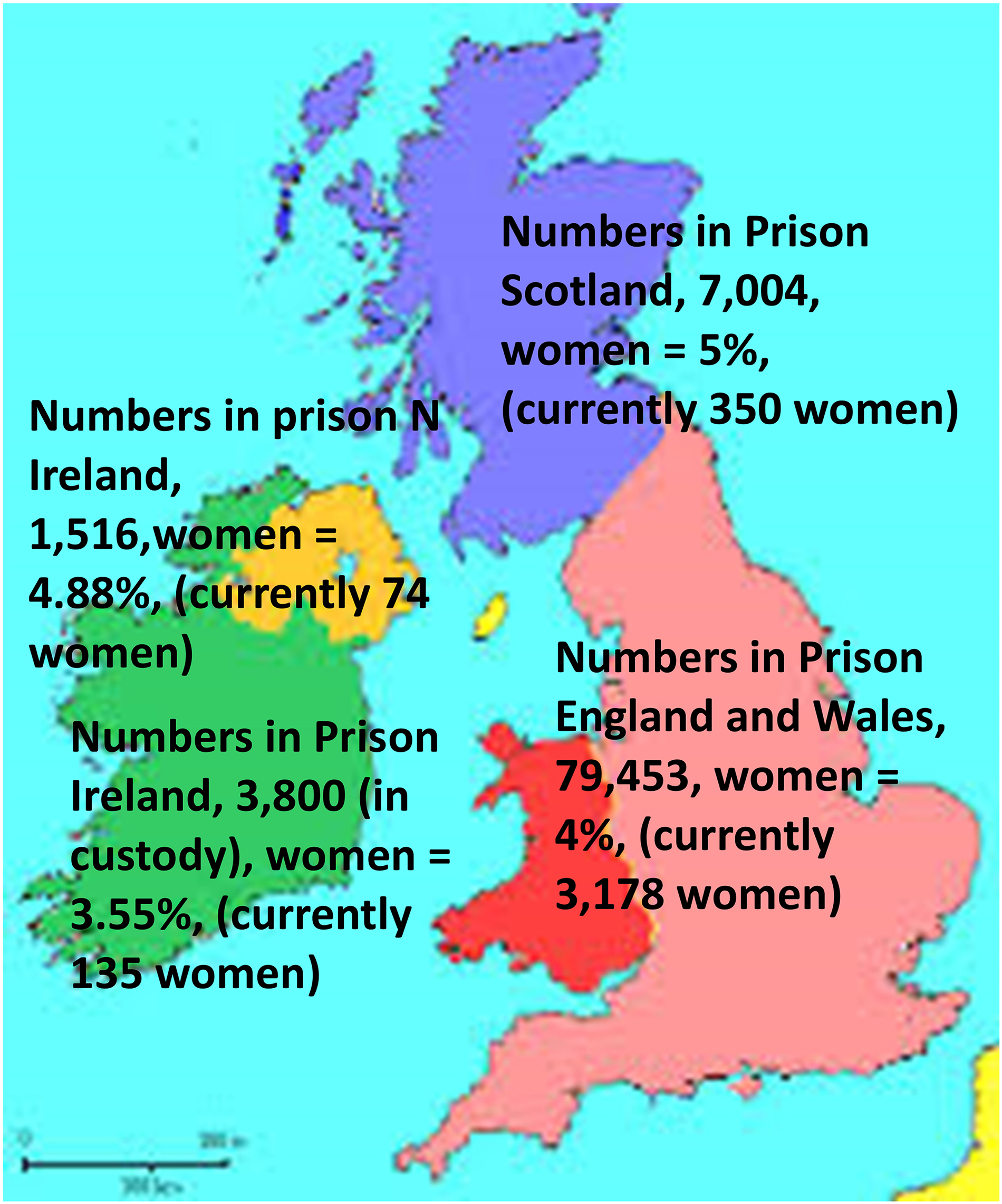
Total numbers in prison and the numbers of women in prison in the four jurisdictions of England and Wales, Scotland, Northern Ireland and the Republic of Ireland.
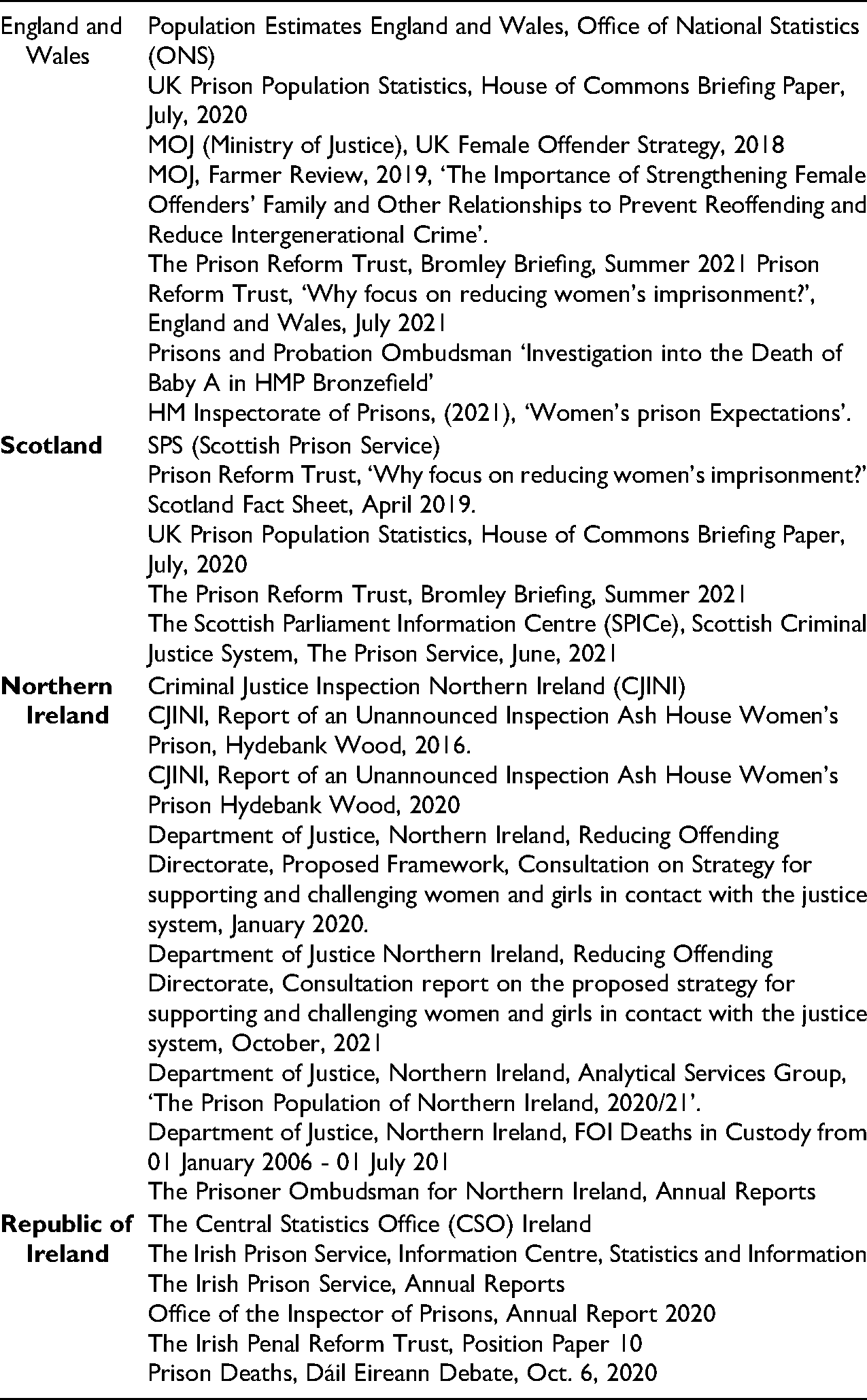
Secondary source data were drawn from government reports, such as each jurisdiction's Prison Service reports, the reports of Inspectors of Prisons, and research carried out by NGOs; see Table 1 for details.
Services and Documents Included in Analysis.
The Four Cases
On any day, there are 4,500 women in prison in Britain and Ireland. Currently in the United Kingdom (UK), which is comprised of three of the four jurisdictions, England and Wales, Scotland, and Northern Ireland, there are 3,602 incarcerated women. Table 2 details the population of each of the four jurisdictions, with the average daily prison population, average daily female prison population, and the female prison population as a percent of that jurisdiction's overall prison population. As evident, the jurisdiction of England and Wales has by far the largest national population, the largest prison population, and the greatest number of women in prison.
National Populations, Prison Populations and Female Prison Populations, and Female Prison Population as a % of Prison Population.
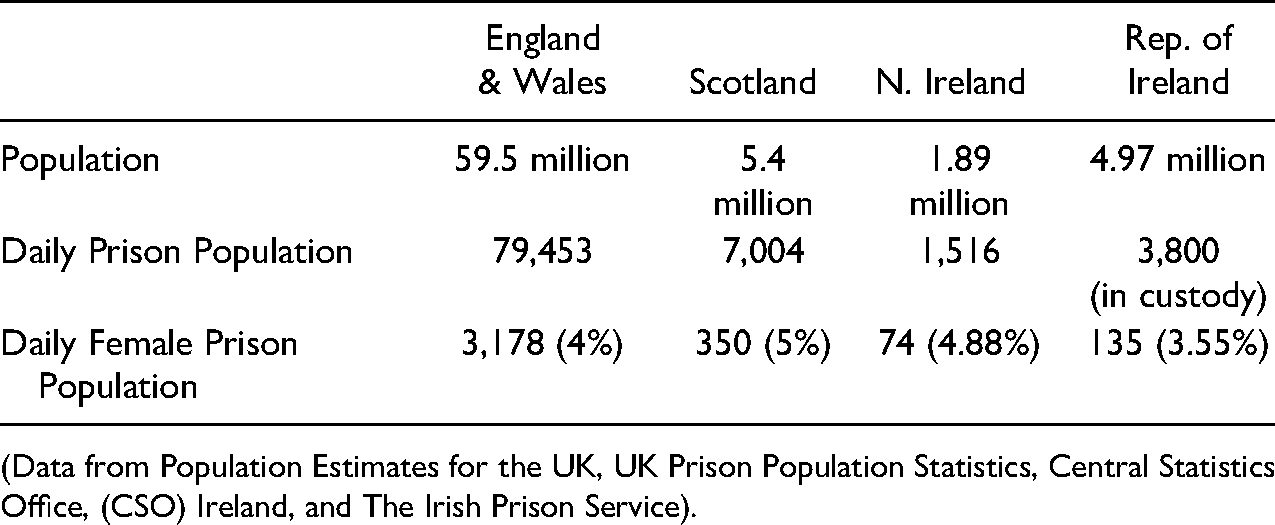
(Data from Population Estimates for the UK, UK Prison Population Statistics, Central Statistics Office, (CSO) Ireland, and The Irish Prison Service).
Case Study 1: Women's Imprisonment in England and Wales
The female prison population of England and Wales is currently about 3,178, as detailed in Table 2. There are twelve women's prisons in England and Wales; all twelve prisons are closed prisons, except two: Askham Grange in York (128 capacity) and East Sutton Park in Kent (100 capacity). Drake Hall in Staffordshire is described as semi-open (315 capacity). In Britain and Ireland, closed prisons have high levels of security, while open prisons operate at low security. All twelve women's prisons are located in England (HM Prison Service); there are no correctional facilities for women in Wales.
Women in England and Wales tend to be imprisoned at a distance from home, on average 64 miles (The Prison Reform Trust, 2017). This raises substantial travel issues for family access and expenses related to prison visits, which especially affect the children of incarcerated mothers. These factors become barriers to and disruptors of familial relationships, and they have the effect of further exacerbating the experience of isolation which is central to women's experiences of prison. In 2020, 49% of prisons in England and Wales were overcrowded (UK Prison Statistics, p. 4).
The Prison Reform Trust (The Prison Reform Trust, Why Focus on Reducing Women's Imprisonment, July, 2021), estimated that about 17,000 children in the UK are impacted by maternal imprisonment every year, and that, on average, 600 pregnant women are held in UK prisons annually. There are estimates that 60% of women who offend have been victims of domestic violence, while rates of self-harm have risen in the women's prisons by 20% in the past ten years. Mothers with babies up to 18 months of age can apply to stay in a Mother and Baby Unit (MBU), a separate part of the prison designed for them. However, there are MBU's in only six of the 12 women's prisons, with, in total, no more than 64 mother and 70 baby spaces (Back into Society: Prison Mother and Baby Units in England and Wales). The average yearly financial cost of one prison place in England and Wales in 2018/19 was £39,385 (UK Prison Population Statistics, 2020).
Deaths of Women in Prison in England and Wales, 2015–2021, (Data Taken from Inquest, Truth Justice and Accountability, Deaths of Women in Prison).
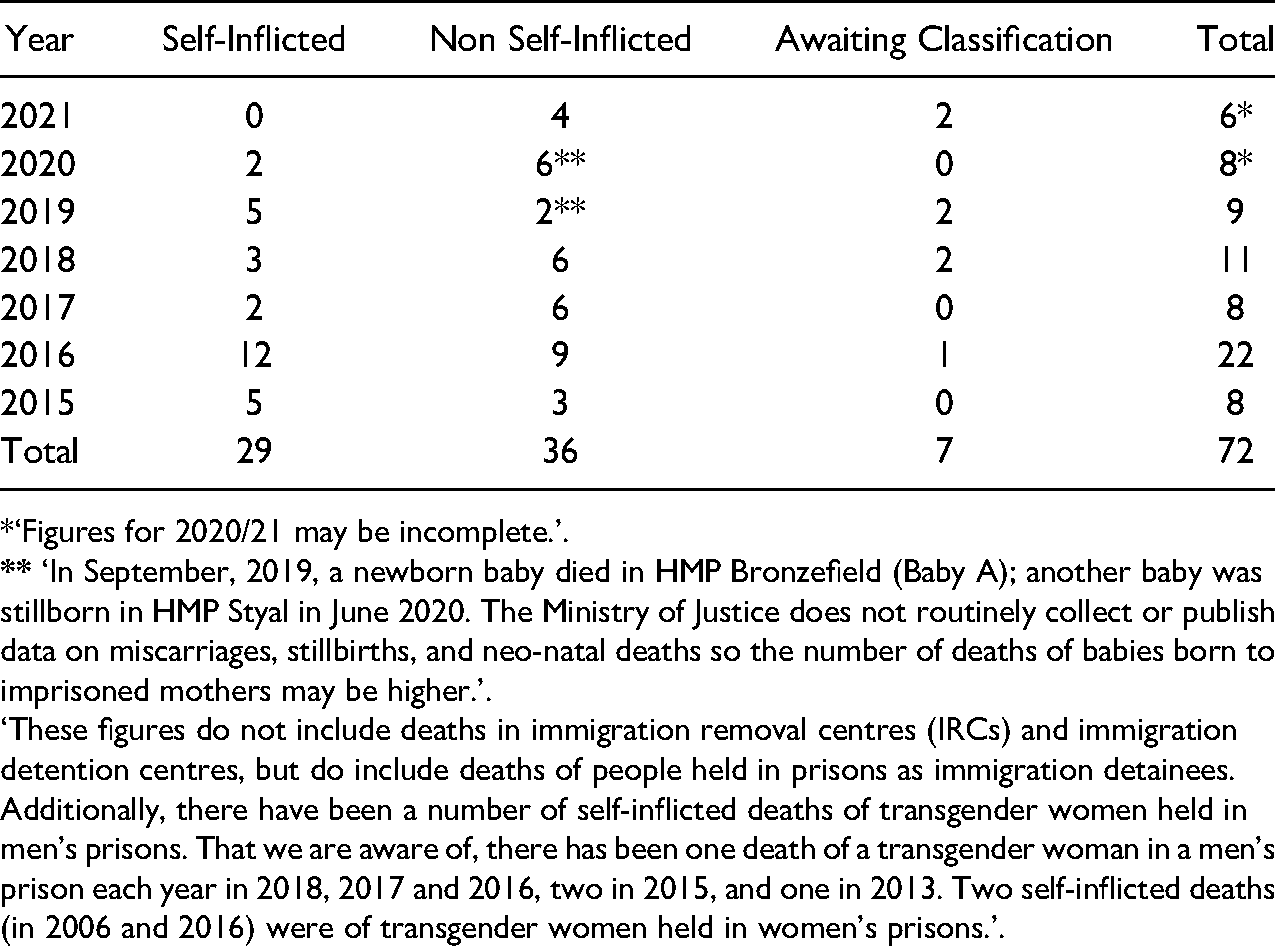
*‘Figures for 2020/21 may be incomplete.’.
‘These figures do not include deaths in immigration removal centres (IRCs) and immigration detention centres, but do include deaths of people held in prisons as immigration detainees. Additionally, there have been a number of self-inflicted deaths of transgender women held in men's prisons. That we are aware of, there has been one death of a transgender woman in a men's prison each year in 2018, 2017 and 2016, two in 2015, and one in 2013. Two self-inflicted deaths (in 2006 and 2016) were of transgender women held in women's prisons.’.
The Chief Inspector observed that many women in prison have experienced ‘chaotic lives involving substance misuse, mental health problems and homelessness’, and such experiences often follow a life of abuse, victimization, and trauma. He wrote of women's relationships with children, with family, and with significant others as being of the utmost importance, (See MOJ, Farmer Review, 2019). He also wrote of the need to recognize and support women who are trying to deal with the effects of trauma. The 2021 report details the human rights obligations and recommendations that underpin the current policy approach to women's imprisonment.
While it is encouraging to see official recognition of both the women's needs and the human rights standards so necessary in women's prisons, the reality of these women's facilities, as evidenced above, and in particular in the detail of the tragic death of Baby A in 2019 in Bronzefield Prison, is that a great deal more work and the expenditure of very substantial resources will be required to operationalize the policy aspirations detailed in the Chief Inspector's report.
Case Study 2: Women's Imprisonment in Scotland
Scotland currently has a total of 13 publicly managed prisons, with two prisons that are operated by private contractors. Women are held in a number of institutions, all closed prisons. The main and sole women-only prison is HMP (Her Majesty's Prison) & YOI (Young Offenders Institution), Cornton Vale, which at this time has a capacity for 309 prisoners. This prison has just seven spaces designated MBU's, and these are the only MBU's available to women in Scottish prisons.
In addition, there are three female units in three male prisons, HMP Edinburgh, HMP Greenock, and HMP & YOI Grampian. Also, HMP Inverness has a small community integration unit (C.I.U.) which ‘holds females at the point of their sentence where they are considered suitable to be introduced to community activities and employment as part of their progression towards eventual release’, (SPS HMP Inverness). Currently, women are also held in HMP Polmont, a Young Male Offenders facility (SPS HMYOI Polmont).
At present, female prisoners in Scotland account for 4% of the prison population; there are about 380 imprisoned women on any day. The profile of these women is similar to the profile of women incarcerees in the other three jurisdictions. According to the Prison Reform Trust's Bromley Briefing (Summer 2021), Scottish female offenders tend to commit less serious offences, and many serve prison sentences of less than 12 months. Most of those committed to prison under sentence in 2020 (72%) had committed a non-violent offence. Notably, many have histories of abuse, as well as high levels of mental health needs. Rates of self-harm are also high.
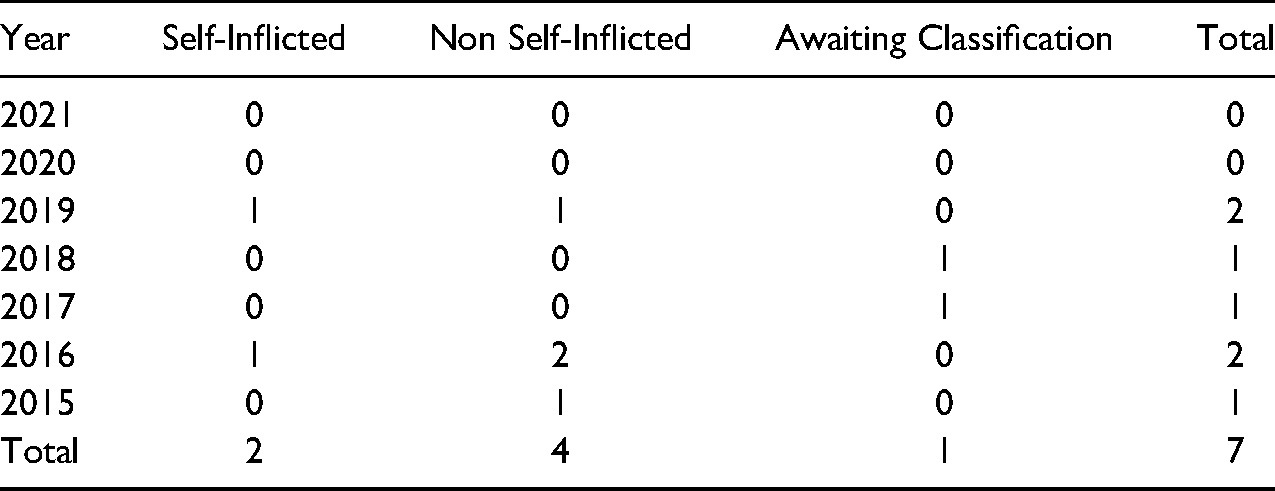
Deaths of Women in Prison in Scotland, 2015–2021 (Data Taken from SPS (Scottish Prison Service), Prisoner Deaths).
Case Study 3: Women's Imprisonment in Northern Ireland
The Northern Ireland Prison Service operates within the Department of Justice, Northern Ireland (see DOJ (Department of Justice: About the Northern Ireland Prison Service). Northern Ireland has one facility for women. It is in Hydebank Wood College and Women's Prison in Belfast, (Department of Justice, Prisons). The Prison Service College for training prison staff is currently also located there. Hydebank Wood is, in fact, a young male offenders’ facility. Ash House, where women prisoners are accommodated, is a one-house block within the institution. It has a capacity for 71 women, (CJINI, 2013). The average daily female prison population in Northern Ireland for the past seven years is detailed in Figure 2. As shown, the numbers have followed a relatively steady trajectory over that time period.
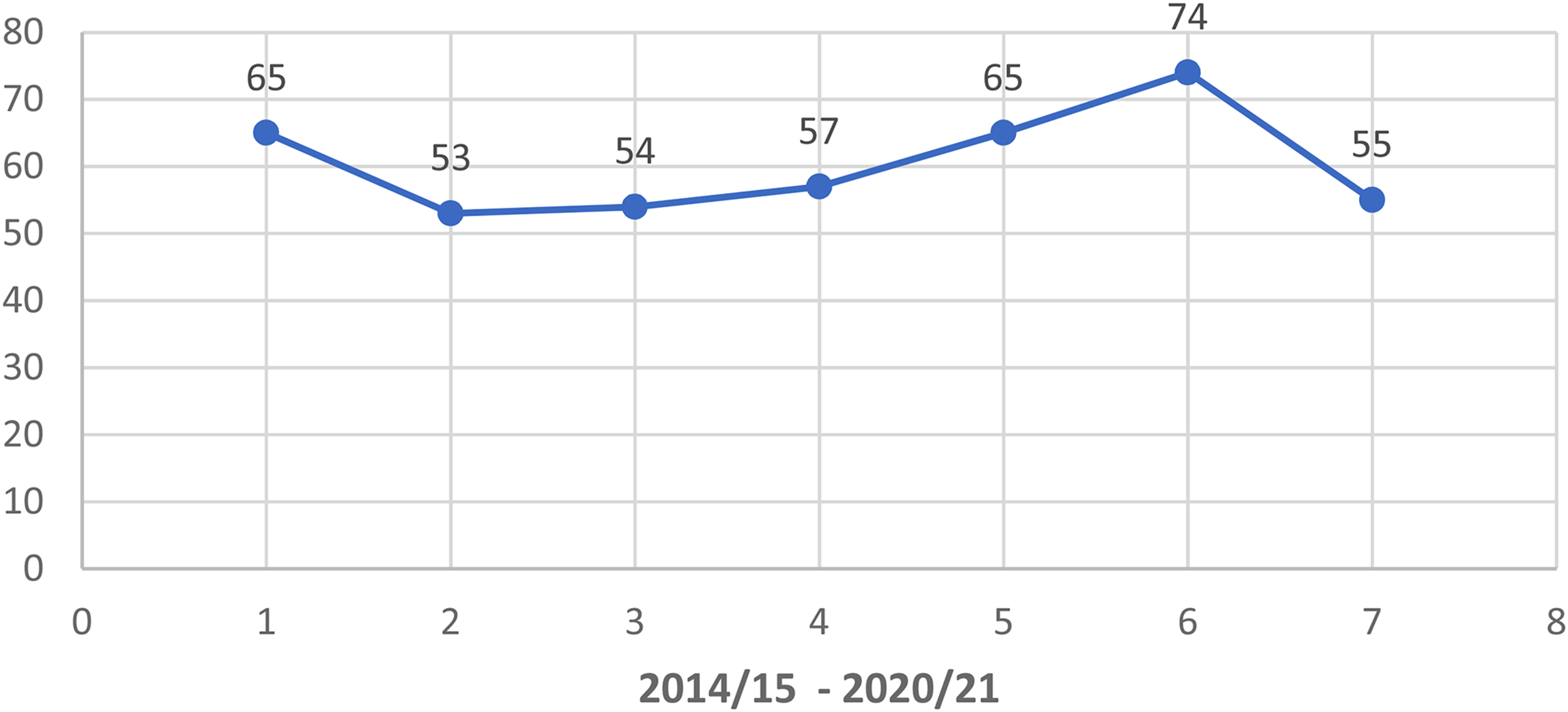
Numbers of women in prison northern Ireland, 2014/15-2020/21. (Data taken from Northern Ireland Prison Population Statistics, 2020/2021, Fig. 3, page 9).
In 2020/21, evidencing the generally low level of female offending in Northern Ireland, 86.8% of females admitted to the prison were serving sentences of one year of less (The Northern Ireland Prison Population, 2020/2021, p. 18). In relation to detentions by the police, Criminal Justice Inspection Northern Ireland (CJINI) report (November 2021), p. 32) details that in 2018/19, a total of 4,251 women were detained by the police: in 31% of the cases, the women detained were recorded as being drunk; in 36% of all female detentions, signs of self-harm were recorded; in 73% of all detentions, the woman detained was recorded as suffering from a physical or mental condition.
Inspector of Prisons: Criminal Justice Inspector, Northern Ireland
In a report of an unannounced visit to inspect Ash House, the women's prison at Hydebank Wood (2020), the Inspection Team noted substantial improvements in the prison. The report detailed that: ‘levels of violence and incidents of self-harm at Ash House were found to be both lower than at the time of the last inspection and lower than at other women's prisons in England and Wales inspected by HMIP’, (Her Majesty's Inspector of Prisons, Overview).
The Inspection Team expressed concern about the need to address the use of illegal and prescription drugs in the prison, as well as improving governance around the use of force in the facility. The Team also noted that the co-location on the same site of a male and female prison is not in line with international standards.
Case Study 4: Women's Imprisonment in the Republic of Ireland
In the Republic of Ireland, women are detained in two prisons. Limerick Prison, the oldest operating prison in the country, and predominantly a male prison. Women are held there in one unit with a capacity for 28 (See Irish Prison Service, Prisons). The other prison is the Dóchas Centre, (Dóchas is the Gaelic word for hope), a modern purpose-built women's prison within the Mountjoy Prison complex in Dublin, with a capacity for 146 women (See Irish Prison Service, Prisons). Both are classified as closed prisons.
According to The Irish Prison Service Annual Report for 2020, a total of 6,340 committals were received in prison in the Republic of Ireland, with women representing 649, (10%), of the total. The average age of women committed to prison was 35 years. The total number of women sentenced was 388: of these, 145 were received prison sentences of less than 3 months; 110 received sentences of 3 to 6 months; and 79 received sentences of 6 to 12 months. In total, 334 women, or 86% of the women imprisoned that year under sentence, were serving sentences of 12 months or less (See Irish Prison Service, Statistics and Information). In a snapshot of the prison population on November 30th, 2020, women represented 4% of the national prison population. On that day, there were 109 women incarcerees under sentence in the Republic of Ireland.
The Inspector of Prisons
The latest annual report of the Inspector of Prisons (2020) focused on the structures, rules, and regulations dealing with the impact of the global pandemic on the nation's prisons. Related to women inmates, the report noted (2020, p. 10) that the Dóchas Centre had the highest percentage, over 50%, of persons in custody, who were ‘cocooning’ (See HSE (Health Service Executive) Corona Virus Covid 19 Cocooning Public Health Advice, 2020), or in isolation. The report noted positive developments in all prisons, including the introduction of online links for calls to family, and arrangements for online court appearances. Among concerns raised, relevant to all prisons, were technological issues with online links, limited or no out-of-cell time for those cocooning or in isolation, school cancelation, the closure of workshops, and the curtailment of yard-time.
Conclusion
The four cases presented provide an overview of women's prison operations in Britain and Ireland. The four jurisdictions of England and Wales, Scotland, Northern Ireland, and the Republic of Ireland have, on any day, about 4,566 incarcerated women. Across all the correctional systems, the key issues are the comparatively small numbers of women in prison, the nature of their offending behaviors, and the concerns that go along with the acknowledgment, in all four jurisdictions, of the need for gender-specific responses and regimes for imprisoned women. The central concern in Britain and Ireland, highlighted in this article, is the failure to provide a fair system of criminal justice for women. Similar to women's correctional systems globally, there is the injustice of imprisoning so many poor, ill, and socially excluded women, particularly those who have been victims of crime, and often crimes of an extremely violent nature. Indeed, the realities of the prison experiences of women in Britain and Ireland, when compared with the policy aspirations for women prisoners, particularly those prioritized in the Corston Report (2007) and the Bangkok Rules (2010), underscore that great justice gap.