




Abstract
Thai correctional institutions face budget constraints that hinder facility improvements. This study proposes a decentralized management approach using in-kind donations rather than central funding. The strategy includes partnering with manufacturers for rejected but usable materials and reusing excess construction materials from nearby projects. Benefits include tax breaks, lower disposal costs, improved prison facilities, inmates’ skill development, and environmental sustainability. A case study at the Thonburi Detention Center showed significant improvements at lower costs. Future research involves refining the approach with service design principles, a digital exchange platform, and introducing environmental credits to enhance participation and impact.
Keywords
Introduction
Correctional facilities in Thailand often grapple with financial constraints that impede essential improvements to their infrastructure (Kuanliang & Chokprajakchat, 2014). Traditional budget allocation processes, characterized by limitations, frequently leave crucial refurbishment of facilities in peril. Despite the evident deterioration of systems and structures, facility management's focus on improvement often remains a low priority. Submitting government budget proposals entails a lengthy process, spanning 1–2 years, involving detailed drawings, measurements, and quantity specifications. Consequently, budgets seldom arrive when needed.
This study proposes a decentralized management approach that leverages in-kind donations to address these challenges. By sourcing materials through donations from construction companies or manufacturers and repurposing material waste from construction sites, medium-security prison facilities can be improved by involving inmates trained in construction skills. This strategy reduces waste management costs for construction companies, provides them with tax benefits, and empowers prisons to make necessary improvements independently of centralized budgets.
Inmates benefit significantly from this approach by gaining valuable training in construction crafts that improve their rehabilitation prospects and employability post-release. This practical experience updates the prison facility and contributes to incarcerees’ personal development, enhancing their reintegration prospects into society.
Previous research has highlighted the challenges correctional facilities face in Thailand regarding infrastructure improvements (Kuanliang & Chokprajakchat, 2014). However, the potential of decentralized management approaches, leveraging in-kind donations from construction companies, remains relatively unexplored. This study aims to address this gap by examining the effectiveness of a decentralized approach in improving the infrastructure of Thai correctional institutions.
This study's methodology involves a qualitative approach applying primarilty an observational research design. The investigation will be conducted at a selected correctional facility in Thailand, focusing on implementing the proposed decentralized management approach. Data collection will occur through direct observation of the construction process and communication with facility managers, inmates, and representatives from partnering construction companies. The analysis of relevant documentation records will provide further insights into the management process.
Thai correctional institutions can overcome financial constraints and upgrade their infrastructure by adopting a decentralized management approach facilitated by in-kind donations from construction companies and manufacturers. This approach empowers facilities to source materials independently and execute construction projects without the limitations imposed by traditional budgetary processes. The study aims to demonstrate that this innovative model can enhance the living conditions of inmates, support their rehabilitation, and contribute to environmental sustainability, thereby creating a “win-win” scenario for correctional facilities, inmates, and society at large.
The primary objective of this research is to propose and validate a decentralized management model for improving the infrastructure of Thai correctional institutions using in-kind donations. This model aims to enable prisons to enhance their infrastructure without relying on slow and limited traditional budget allocations, thereby addressing the urgent need for facility improvements. Additionally, the study seeks to empower inmates by providing them with practical construction skills that aid in their rehabilitation and post-release employability, fostering a more positive reintegration into society. A crucial aspect of this approach is its support for environmental sustainability, as it involves the reuse of materials and promotes a circular economy, thereby reducing construction waste and contributing to a more sustainable future.
The expected study outcomes are multifaceted. First, it anticipates significant improvements in prison infrastructure achieved at reduced costs, demonstrating the financial viability of the decentralized management model. Second, it aims to enhance inmates’ skills development and rehabilitation programming, providing valuable experience that better their prospects post-incarceration. Furthermore, it is expected to produce a positive environmental impact through the innovative reuse and recycling of materials, showcasing the benefits of a circular economy approach within the correctional system. Finally, it seeks to increase engagement and support from businesses that can benefit from tax incentives and reduced waste management costs, thereby fostering a collaborative effort toward a more sustainable and humane correctional infrastructure.
This decentralized approach aims to create sustainable, self-sufficient correctional facilities that benefit all stakeholders by addressing traditional budgetary processes’ financial constraints and procedural delays. The goal is to demonstrate that this innovative model can significantly improve the living conditions of inmates, support their rehabilitation, and contribute to environmental sustainability, ultimately creating a win-win-win scenario for correctional facilities, inmates, and society at large.
Literature
Thai correctional facilities encounter various infrastructure challenges that stem from overcrowding, outdated facilities, financial constraints, inmate well-being deficits, and safety concerns. Of these, overcrowding stands out as the primary issue, fostering inmate tensions, risks of violence, and order maintenance difficulties (Nkosi, 2018). Moreover, aging infrastructure poses health hazards and amplifies inmate dissatisfaction (Fairweather, 2013). Limited financial resources impede renovation and modernization efforts which jeopardize safety for both inmates and staff (Smit, 2001). Rectifying these challenges necessitates modernizing facilities by securing ample funding and prioritizing inmate well-being.
Correctional Facility Challenges
As prison administration in Thailand operates under a top-down authoritarian management model, the bureaucratization of prisons involves legislators calling for policy, rule, and regulation formulation to streamline correctional practices (Barak-Glantz, 1981). Accordingly, budget operations mandate respective proposal submissions for annual approval. Financial constraints present significant hurdles for correctional facilities in meeting infrastructure needs. Research documents complex budget allocation processes, resource limitations, and competing priorities. Infrastructure improvement funding competes with operational costs and staffing needs, subject to stringent scrutiny (Crowhurst & Harwich, 2016). Reliance on government funding often proves insufficient to address extensive infrastructure requirements, resulting in maintenance delays and a backlog of projects.
Consequently, modernization efforts delay or scale down and impede efforts to provide safe, rehabilitative environments. Addressing these challenges requires innovative financing, strategic resource allocation, and advocating for increased investment in correctional infrastructure (Goncearenco, 2023). Given the overcrowded prisons, budgets focus predominantly on managing nutrition and food, relegating facility management and improvement to secondary priority status. Within budget approvals, the main concern is addressing existing damage, often delaying improvements until facilities reach significant stages of decay. However, overcrowding accelerates deterioration rates, exacerbating the issue. The top-down budget approval system fails to address efficiency management and perpetuates a cycle of inefficiency on time. Onw potential solution is decentralization to foster self-sustaining mechanisms. Leveraging skilled inmate labor and alternative funding sources could facilitate facility improvements.
Impact of Infrastructure on Inmate Rehabilitation and Staff Well-Being
The impact of infrastructure on inmate rehabilitation and staff well-being is a critical aspect of correctional facility management (Urrutia-Moldes, 2019). Research has highlighted the profound impact of facility infrastructure on outcomes such as inmate rehabilitation, recidivism rates, and staff well-being. That is, the evidence consistently shows that the physical environment of correctional facilities significantly influences inmates’ behavior, mental health, and readiness to reintegrate into society (Bravo-Yáñez & Jiménez-Figueroa, 2011). Correctional institutions with aging infrastructure, overcrowded living quarters, and inadequate amenities often contribute to increased levels of stress, violence, and recidivism among inmates (Urrutia-Moldes, 2022). Conversely, infrastructure improvements, including modernized facilities, amenities, and therapeutic environments, can produce positive outcomes for incarcerated persons and staff (Fletcher et al., 2021). Access to education, job training, and other rehabilitation programs in well-designed facilities can further support inmates’ rehabilitation efforts and reduce the likelihood of recidivism. In sum, infrastructure improvements that prioritize the needs of inmates and staff alike, impact rehabilitation outcomes, reduce recidivism rates, and create healthier, safer, and more productive environments (Ross et al., 2022).
Approaches to Infrastructure Improvement
Globally, numerous countries and regions have implemented a variety of strategies to improve correctional infrastructure. Some countries use public–private partnerships to finance, design, build, and operate correctional facilities (Gilroy et al., 2010), where private sector companies work with governments to implement infrastructure projects, leveraging private sector expertise and financing (Duff, 2003). Public–private partnerships can help overcome financing constraints, accelerate project delivery, and ensure the use of innovative design and construction techniques (Cox & Osterhoff, 2023). Other countires have explored financing alternatives for correctional infrastructure projects (Kantorowicz-Reznichenko, 2015; Thalmann, 2004). These mechanisms may include funding streams generated through inmate labor or the monetization of assets; this also exists in Thai prison facilities where labor and products are monetized (Jirathitikarn, 2020). By diversifying funding sources, jurisdictions can ensure necessary investments for infrastructure improvements while minimizing reliance on traditional government budgets.
Risk assessment and management consider effective infrastructure planning, which requires thorough evaluation and mitigation strategies (Biringer et al., 2007). The aim is to identify potential risks and vulnerabilities in correctional facilities, such as structural defects, security threats, and environmental hazards, and to implement measures to mitigate these risks. Proactive risk management can help prevent costly disruptions, increase security, and guarantee the long-term viability of infrastructure (Berkeley et al., 2010). Involving local communities and stakeholders in the planning and developmentof projects is also critical to building public support and addressing existing concerns. By involving stakeholders early in the process, jurisdictions can set priorities, gather input, and encourage collaboration, leading to more successful and sustainable outcomes.
Decentralized Management Efforts
The concept of decentralized correctional faciliety management has gained attention as a potential solution to the budgetary challenges prisons face (Farmer, 1994, 1995). This approach involves shifting away from centralized fund reliance and exploring alternative avenues for resource acquisition. Studies in other contexts have demonstrated the potential benefits of decentralized management, emphasizing its ability to foster efficiency, adaptability, and resource optimization (McShane & Williams, 1993). Decentralized and innovative approaches to correctional facility infrastructure improvements offer promising solutions. Public–private partnerships facilitate collaboration between government agencies and private sector companies, leveraging private sector expertise and resources to accelerate project delivery, reduce costs, and improve infrastructure quality. Community participation and alternative funding mechanisms, such as donations, also offer opportunities to supplement government funding and support infrastructure improvements (Chen & Luo, 2020). These innovative approaches demonstrate the potential for decentralized decision-making, stakeholder collaboration, and creative financing solutions to drive positive changes in correctional infrastructure.
Alternative Procurement Sources
Prison facilities require a variety of materials for maintenance, renovation, and rehabilitation purposes. These resources must meet specific criteria such as durability, safety, tamper resistance, ease of maintenance, cost-effectiveness, and compliance with building codes and regulations (O'Toole & Eyland, 2005). While durability and safety are paramount, aesthetics and flawlessness may not be as critical. Lower-grade, functional materials often suffice, offering cost-effective alternatives (Wooldredge & Smith, 2018).
This understanding opens avenues for alternative procurement sources that bypass traditional purchasing processes. One approach involves obtaining leftover materials from nearby construction sites or acquiring products that failed quality inspections for minor reasons. Correctional facilities can undertake essential renovations without relying on centralized funds by partnering with manufacturers willing to accept rejected or defective materials and repurposing usable construction waste. Procuring goods through in-kind donations represents a tangible way for individuals and organizations to contribute to charitable causes, positively impacting deteriorating prison facilities (Goff, 2021). However, managing donated goods presents challenges for receivers that require clear guidelines, thorough research and collaboration with stakeholders to maximize benefits and address potential drawbacks. Effective implementation of these strategies can foster a symbiotic relationship. Businesses benefit from tax breaks and reduced waste disposal costs, while correctional facilities undergo necessary improvements. Additionally, the environment benefits from reduced waste through a circular economy approach, enhancing sustainability efforts (Islam, 2013; Wu, 2023). Establishing clear guidelines, conducting thorough research, and fostering collaboration are crucial steps to ensure the success and sustainability of alternative procurement practices in prison facility management.
Rehabilitation Benefits and Integrating Sustainable Practices
The involvement of incarcerated people in construction projects can provide a comprehensive approach to rehabilitation in correctional settings (Lawrence et al., 2002) by allowing individuals to acquire valuable skills, promote personal growth, and encourage positive social interactions (Cullen & Gendreau, 2000). Participation in meaningful work helps boost self-esteem and motivation, offers valuable job training, and reduces recidivism rates (Vacca, 2004). The experience of working in construction also helps develop teamwork, communication, and problem-solving skills. Constructive activities promote positive attitudes and behavior change, creating a safer and more orderly prison environment (MacKenzie, 2006; Quan-Baffour & Zawada, 2012).
While recent initiatives have emerged to encourage voluntary sustainability reporting in the broader public sector, Thailand does not have government mandates to promote sustainability accounting or accountability, particularly concerning prisons. Sustainability accounting in public sector organizations must consist of policies, strategies, programs, results, and operational impacts to help translate policy goals into practical action (Ball et al., 2014). Integrating sustainable practices in correctional facilities can lead to cost savings, environmental responsibility, and valuable inmate educational and vocational opportunities (Clarke, 2011). The alignment of prison operations with principles of sustainability benefits the environment, enhances inmate rehabilitation, and fosters positive social impact within communities (Martin, 2021).
Policy and Legal Considerations
Political and legal considerations are crucial for addressing prison infrastructure, building codes and regulations, and setting design, construction, and operational standards to ensure safety and compliance. State policies provide frameworks for infrastructure planning, resource allocation, and project prioritization. International organizations such as the International Committee of Red Cross (2013, 2018) or the United Nations (2016) offer guidelines for improving prison infrastructure based on human rights principles. Aligning policy objectives, regulatory mandates, and operational considerations is essential for successful outcomes. Moreover, engaging the public in prison operations is necessary to promote transparency, accountability, and community safety. This can lead to informed policy decisions and support for rehabilitative programs (Cheurprakobkit & Khruakham, 2021; Keerasuntonpong et al., 2019).
Participatory Observational Studies
Observational studies on models of decentralized management of prison staff for facility improvement offer insights into this strategy's benefits, challenges, and practices (Lambert et al., 2006). Researchers can inform policy and practice by examining communication dynamics, leadership support, resource allocation, and stakeholder engagement (Gilroy et al., 2010). Participatory observation studies, where researchers interact with the studied group, increase the credibility of proposed theories through direct observation of behaviors, values, and interpretations (Rudes et al., 2013). This method allows flexibility in pursuing emerging ideas and minimizes reactivity as participants are less likely to change their behavior if they are unaware they are observed (Wener et al., 1985). However, ethical concerns such as deception, consent, and confidentiality arise (Vickovic & Griffin, 2014). Maintaining a covert identity can make comprehensive data collection challenging, potentially leading to data loss or distortion. Despite limitations such as the lack of control groups and potential biases, participatory observational studies are valuable for understanding human behavior, attitudes, and preferences.
Decentralized prison management addresses infrastructure challenges while promoting inmate rehabilitation and staff engagement (Lambert et al., 2008). Involving staff and inmates in decision-making encourages ownership and accountability, leading to more effective and sustained improvements (Prendergast et al., 2017). Effective communication and collaboration are crucial for overcoming barriers and ensuring the success of facility improvement initiatives (Jannetta et al., 2012). However, resistance to change among staff accustomed to traditional approaches and issues related to resource allocation and budget constraints can hinder effectiveness. Leadership support and training programs have been found to facilitate the transition (Kras et al., 2017). Transparent and equitable resource distribution, leveraging external partnerships, and alternative funding sources can help to mitigate financial limitations and enhance sustainability (Love et al., 2000).
Gaps in the Literature and Future Research Directions
In sum, research across a variety of areas, such as the long-term impacts of infrastructure improvements and the effectiveness of financing models for prison management, combined with benefiting social and environmental effects, can provide valuable insights to improve the design, implementation, and management of correctional renovation projects. Addressing these research gaps can also aid policymakers, practitioners, and researchers in achieving positive outcomes across correctional infrastructure improvements. Future studies could examine the feasibility, effectiveness, and ethical implications of improving correctional facility infrastructure to support evidence-based practice and policy development.
Method
This study employs a qualitative case study design to investigate the effectiveness of a decentralized management approach facilitated by in-kind donations for improving the infrastructure of Thai correctional institutions. The goal is to gain a comprehensive understanding of the process, outcomes, and potential challenges associated with this innovative model. Focusing on the Thonburi Correctional Facility as a case study, the investigation offers detailed insights and practical guidelines for broader application across other correctional facilities in Thailand, and potentially to similar carceral contexts globally. The single case study permits an in-depth exploration of the implementation process and its impacts, combining observational and document analysis to gather rich, qualitative data.
The Thonburi Detention Center was selected due to its medium-security status and willingness to participate, providing a representative sample of the broader correctional infrastructure in Thailand. Participants included a project team of prison officers, prison management, prison inmates who volunteered in the construction projects, and representatives from partnering construction companies.
Implementation Process
The implementation process is structured into the following phases: (Figure 1)
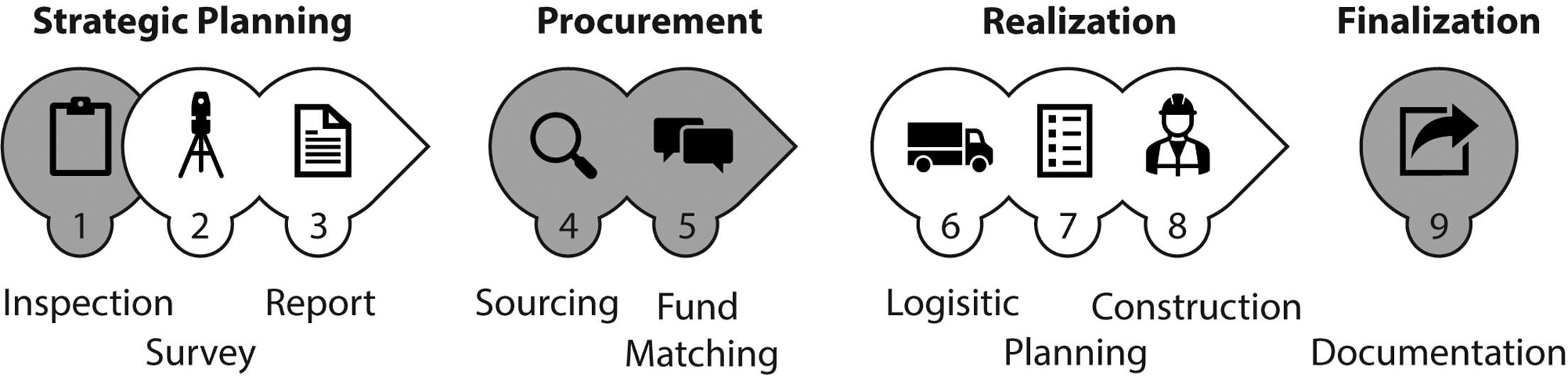
The diagram shows all nine steps of project realization between the project team working with external collaborators (gray) and prison management of the correctional facility (white) to complete this project.
Strategic Planning
The project begins by assessing the areas in need of improvement in the Thonburi Correctional Facility. The area assessment involves: (1) evaluating the current condition of these areas to determine the extent of required repairs; (2) A survey to gather data and feedback from relevant stakeholders, including facility managers, staff, and inmates (The survey aims to identify specific needs, preferences, and priorities related to facility improvements, with a comprehensive report generated based on the area assessment and survey findings); and (3) an outline of identified issues, proposed solutions, estimated costs, and timelines for the facility improvement projects.
Material Sourcing and Funding Management
In Step 4, the project team works with the correctional facility's internal administration to procure materials for the improvement project. This includes sourcing the needed in-kind donations from construction companies and manufacturers and identifying appropriate recycled materials for the renovation. Besides, efforts aim to secure internal funds and financial support from external partners or government grants. These matching funds (Step 5) supplement the in-kind donations and help cover additional projects costs, such as transporting the materials from the sites to the prison.
Realization
Logistics (Step 6) is crucial for successfully executing improvement projects by coordinating the transportation of donated materials, arranging for needed construction equipment and tools, and guaranteeing a smooth workflow on-site. Detailed project planning (Step 7) considers project scope, timelines, resource allocation, and risk management factors. Collaboration between the project team and internal management makes certain that all aspects of the projects are sufficiently planned to achieve the desired outcomes.With logistics and project planning in place, the construction phase (8) begins. Inmates, trained in relevant construction skills, work under supervision to carry out the repairs and renovations using the donated materials. Regular monitoring and quality checks are conducted to ensure adherence to standards.
Completion Report and Finance-Related Documentation
Upon completion of the construction phase, a final report (Step 9) details the outcomes, achievements, challenges, and lessons learned from the project. Evaluations include the quality of the improvements, cost savings, and inmate skills developed, as well as documenting the findings and providing recommendations for future implementations.Finance-related documentation includes a budget breakdown, expense reports, and financial statements compiled for accountability and transparency.
Data Collection Methods
Observations were conducted over the entire project period, focusing on planning, procurement, construction processes, and the project team's interactions between inmates, internal management, and external partners. Detailed field notes captured the project's daily activities, challenges, and solutions. Additionally, relevant documentation—project plans, progress reports, financial records, and training materials—was analyzed to supplement the observational data and interview insights. This analysis provided valuable insights into the operational aspects of the decentralized management approach and its financial viability. Data from observations and document analysis underwent thematic analysis, identifying key themes, and patterns related to the decentralized management approach's effectiveness, benefits, and challenges. Initial coding categories were developed based on research questions and refined through iterative analysis, with key themes including cost savings, skill development, environmental benefits, and stakeholder collaboration.
Ethical Considerations
Given the sensitive nature of the correctional environment, ethical considerations were paramount. Participants were informed about the study's purpose, roles, and rights, including the right to withdraw at any time. Participants’ identities were anonymized to protect their privacy when necessary. All data were securely stored and only accessible to the research team, ensuring confidentiality and ethical integrity throughout the research process.
Limitations and Future Research
The case study provides valuable insights but is limited to a single facility; therefore, the findings may not be generalalizable across Thailand's correctional institutions. The investigation focuses on short-term impacts. Thus, further research is needed to assess long-term outcomes, such as recidivism rates and scalability. Future studies should explore decentralized management in a variety of correctional facility types and include longitudinal designs to evaluate long-term effects related to inmate rehabilitation and recidivism . Finally, comparative studies with other countries that have adopted similar approaches could enhance the generalizability of the findings.
Results
Inventory Process and Strategic Planning
The inventory process to evaluate damaged surfaces involved a comprehensive survey to prioritize areas inside the Thonburi Correctional Facility. This was achieved through detailed assessments with reports and evidence of the extent of damage. This information prompted further documentation of area measurements and activity conditions. Utilizing these extensive data, the institution convened a representative body tasked with contacting construction companies to secure support for the necessary renovations.
The project began with a thorough area assessment to identify and prioritize damaged surfaces. Key areas that required immediate attention were the central kitchen, prison cells (night quarters), the front gate area, and personnel management areas. This initial assessment sets the stage for detailed surveys and documentation.
After the area assessment, more detailed information was collected on the extent of damage. Investigation teams carefully measured the affected areas and documented activity conditions, providing a basis for subsequent planning and resource allocation. The information was compiled into a comprehensive report that included evidence of damage and detailed area measurements to facilitate informed decisions and enable accurate documentation of renovation needs. The report was used by the facility's representative body to prioritize projects and strategize the renovation process.
Material Sourcing and Management
Two alternatives for material procurement and utilization have been provided to explore the alternative of using rejected or discarded materials. The first option addresses the oversupply in construction by capturing and converting leftover materials into a potential resource suitable for correctional facilities. It involves identifying usable construction materials at nearby construction sites and retrieving them before disposing of them as waste. The second option involves materials rejected by manufacturers during quality control procedures. These items do not meet the required standards due to imperfections such as color coating defects, variations in dimensions, or texture issues. Although their functionality remains unaffected, they are usually destroyed or downcycled to maintain the brand image.
Upon securing willing donors, prison authorities procured essential materials such as plaster, cement, stone slabs, and ceramics. Concurrently, the prison's human resources team meticulously planned, organized, and facilitated the relocation of inmates to ensure unimpeded access to the repair site. This comprehensive approach included logistical operations for material transport, streamlining the renovation process.
The external representative contacted construction companies and material suppliers with detailed reports to secure support for the renovation project. Extensive networking and collaboration with the donors successfully procured necessary materials, leveraging government tax incentives to encourage donations from manufacturers and contractors. This strategic approach involved matching available funds with in-kind contributions, significantly reducing the financial burden on the correctional facility. In Figure 2, the picture to the left shows ceramic tile packages rejected by the manufacturer's quality control. The picture to the right shows excess tiles, classified as waste, as surplus and leftover materials are no longer needed and excluded from return.

(Left) Materials that could not pass the manufacturer's quality control. (Right) Materials left after construction used at the construction site Logistics, Planning, and Construction.
Effective logistics management was crucial to the project's success. Procurement of construction materials required an additional workforce, particularly in selecting suitable stone slabs and ceramics from a pile of construction waste. The prison's human resources team planned and organized the relocation of unit users to ensure uninterrupted access to repair sites. Despite pre-selection by the site manager, on-site material selection became mandatory as part of the delivery management process before loading and transporting them. Once materials arrived at the correctional facility, space planning for construction followed. Figure 3 shows prison services and inmates retrieving donated materials from manufacturers and nearby construction sites.
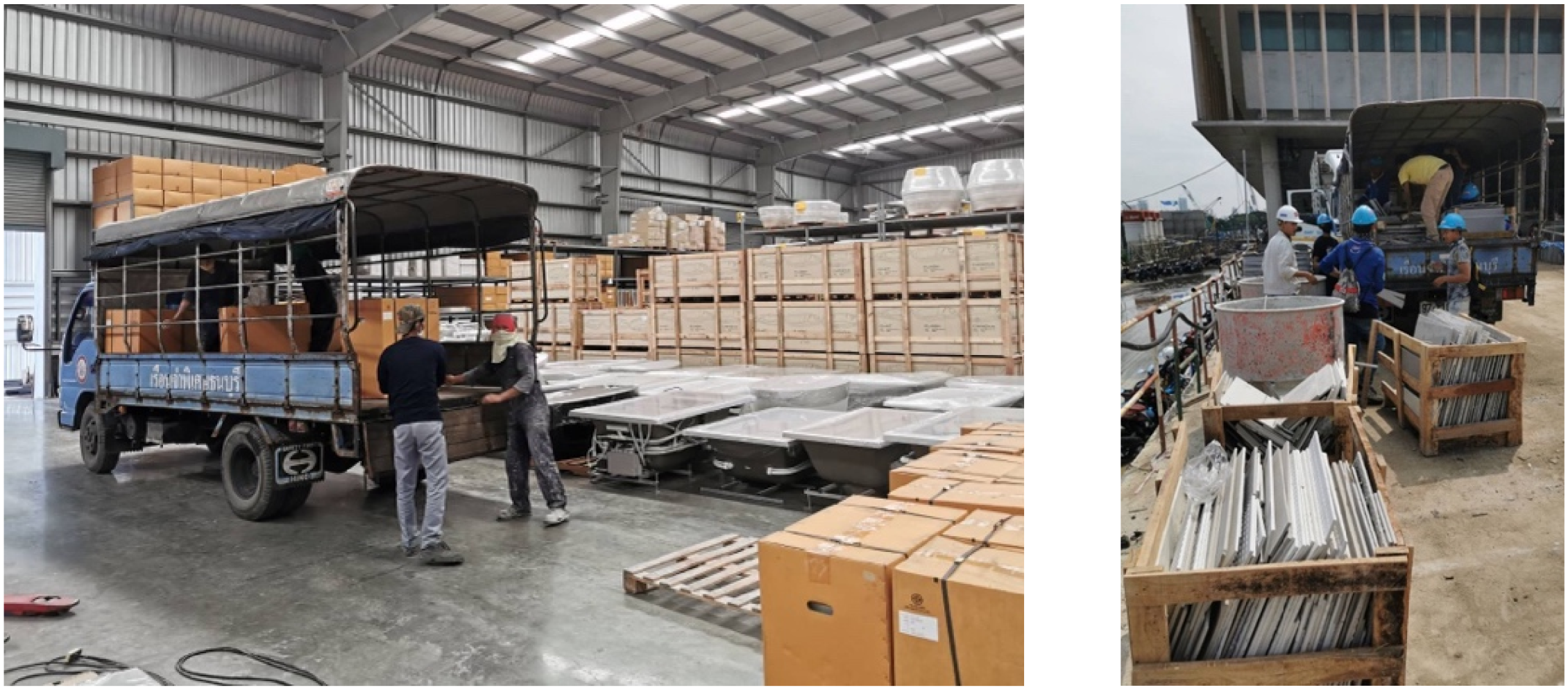
Retrieving the donated materials from a factory (left) and a construction site (right).
This phase also involved coordinating the transport of materials to the correctional facility and providing timely and efficient delivery of donated resources. With materials and logistics in place, detailed spatial planning for the construction phase commenced. This involved precise pattern planning, area measurements, and calculations for plaster and concrete mixtures. The planning phase was critical in ensuring the renovation adhered to the established guidelines and specifications.
The construction phase saw the active involvement of inmates skilled in building construction, supported by experienced personnel. Despite challenges posed by irregular ceramic shapes and ongoing operations within the facility, the construction team demonstrated flexibility and resilience. The renovation, which primarily centered on floor area and sanitary rooms, took significantly longer than standard construction timelines due to the unique constraints of the correctional environment. Planning and labor tasks were handled by selecting inmates with experience in construction. Dealing with irregular materials sources required more time to sort and integrate them into the construction process. Irregular shapes, curved surfaces, and uneven colors of the ceramic tiles also extended the preparation time. The process began with management planning the pattern, measuring the area, and calculating the plaster and concrete mix. An inmate (with professional experience as an architect) assisted in this process. Skilled inmates with construction experience then carried out the installation process. The installation was slow, as there was only partial access to the space; and the material required longer pre-planning and preparation. As the facility, particularly the kitchen areas, remained in use, the work took two and a half months to complete—four times longer than previously estimated.
Figure 4 shows photographs of some of the renovated areas with respective before and after situations of inmate cells (a, b), central kitchen (c, d), and gate/administration areas (e, f).
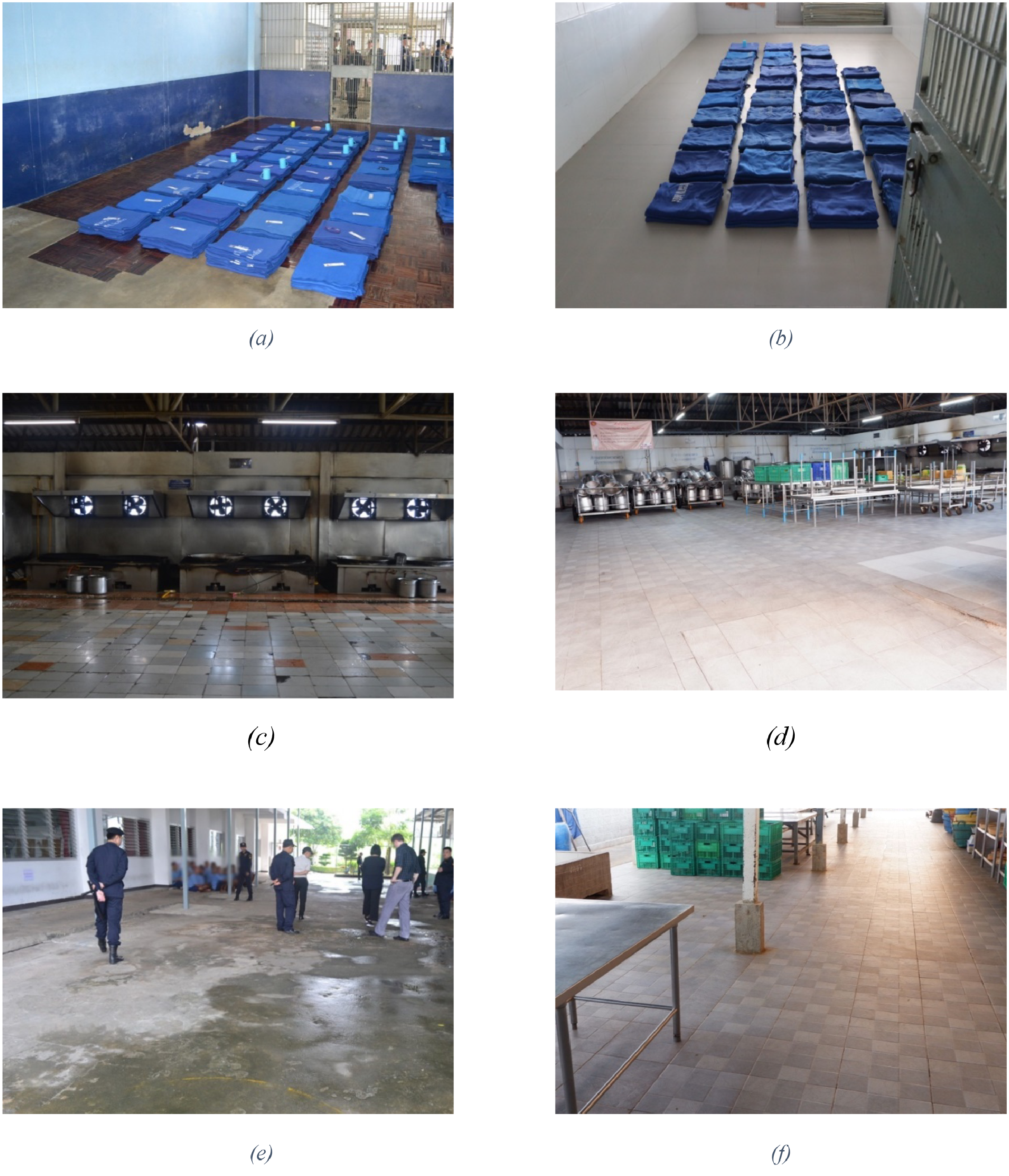
Photo documentation showcasing the situation before (left) and after (right) the renovation of the dormitory ward, kitchen, and gate/administration areas.
Completion Report and Finance-Related Documentation
The final phase involved comprehensive documentation of the renovation process. All participating companies received the necessary donation documents and photos as proof of material use. These documents included official evidence for donation tax deductions to ensure transparency and accountability.
According to Thailand's tax policy, donations to government institutions like prisons allow for deductions of up to 10% of income after expenses and other deductibles. This policy allows prisons to issue tax deduction documents for material donations, specifying their value. With outsourced materials with defects typically disposed of, donations avoided this, saving waste management costs and benefiting the environment (Spišáková et al., 2022). Thus, the financial scheme benefited the business owners—who receive tax deductions—and the prison—which gains valuable materials without recycling costs.
Impact and Cost Savings
Over one year, significant renovations were completed at Thonburi prison. A cumulative area of 540 m² was refurbished with ceramic and stone tile flooring, and the installation of new toilets. Specifically, due to a generous donation from a single manufacturer, the prison managed to repair 500 m² of surface area using ceramic tiles. Additionally, the surfaces of a 40 m² toilet area were improved with granite stone sourced from the construction site for the new Thai Parlament. The renovation of 18 toilets, designated for elderly inmates and officers, was made possible through contributions from a sanitary company. These combined efforts have substantially enhanced the facility, improving inmates’ and staff's living conditions and infrastructure.
This project's collaborative and decentralized approach resulted in substantial cost savings compared to conventional procurement methods. A conservative estimate indicates cost savings of approximately 30% to 40% compared to contracting the work and materials from external sources. This significant cost reduction, estimated at 500,000–700,000 THB, underscores decentralized procurement strategies’ financial efficacy and sustainability in correctional facility infrastructure projects. This approach enhanced the physical infrastructure of the Thonburi Correctional Facility and promoted a sense of ownership, community engagement, and environmental sustainability. The successful refurbishment of critical areas within the facility underscores the potential of participatory and decentralized strategies in achieving impactful and cost-effective infrastructure improvements within correctional facilities.
Discussion and Conclusion
The current study demonstrated a participatory observational reseaarch design aimed at implementing a decentralized approach to improving critical areas of prison infrastructure. The project focused on resurfacing flooring in key deteriorated locations, such as the central kitchen, prison cells, entryway, and staff administration areas. The study notably employed a dual strategy of leveraging external support from product manufacturers and nearby construction sites and actively involving inmates in the procurement and construction processes.
Collaboration with construction companies and manufacturers enabled the procurement of materials—plaster, cement, and ceramic tiles—essential for repair and renovation projects. The utilization of surplus materials from construction sites and rejected items from manufacturers highlights the untapped potential of repurposing waste into valuable resources. This paradigm shift in dealing with construction waste reduces environmental impact and contributes to cost-effective infrastructure improvements in correctional facilities. Working with product manufacturers and contractors to secure construction material donations facilitated key renovations and enabled these donors to benefit from government tax incentives.
Financial aspects—deductions for material donations—benefit donors and correctional facilities. This donation finance schematic cuts waste and operational costs while benefiting the environment by promoting reuse without additional processing. This approach underscores the potential for synergistic partnerships between correctional facilities and external stakeholders and fosters a sense of shared ownership and community engagement in infrastructure improvement initiatives.
In retrospect, the study encountered challenges in navigating corporate policies and decision-making processes related to material donations. Persuading and engaging in corporate management processes proved critical to successful partnerships and material procurement. Internal prison factors, such as labor selection and quality control of waste materials, logistics management, and installation processes, presented logistical complexities and longer timelines than standard construction projects. The involvement of skilled inmates in the installation process showcases the potential for utilizing internal resources effectively while providing valuable vocational training opportunities. At the same time, mandatory staff rotation within the prison administration posed a challenge to the continuity and implementation of the project.
Despite these challenges, the project significantly improved the prison infrastructure by renovating 540 m² of total space. The combination of external support and internal inmate involvement resulted in tangible improvements to the infrastructure. It promoted a sense of ownership and responsibility among inmates, contributing to rehabilitation and reentry into the community. Addressing corporate collaborations, internal logistics, and staff continuity obstacles will be critical to sustaining and scaling up similar initiatives in carceral environments.
In conclusion, this study underscores the potential of decentralized approaches and participatory models in achieving meaningful improvements in prison infrastructure while fostering a sense of empowerment and community involvement. By leveraging alternative procurement sources, optimizing resource utilization, and engaging internal expertise, correctional facilities can overcome challenges and achieve meaningful enhancements while promoting environmental stewardship and cost efficiency. Future research and implementation efforts can build upon these findings to refine and expand upon these innovative practices, ultimately contributing to a more effective and humane correctional system.
Footnotes
Acknowledgments
The successful realization of this project is a testament to the invaluable support and collaboration of multiple stakeholders. The authors extend our sincere gratitude to Sino Thai Engineering and Consotruction PCL, Siam Sanitary Fittinngs Company, Siam Cement Group, Mr. Somphop Rujjanawet (Director of Thonburi Reman Prison), Ms. Chompoonut Pakdebutra (Social Worker of Thonburi Remand Prison), Mr. Somnuk Kamolsevekul (Design & Product Developent Specialist of Siam Sanitary Fittings Company), Mr. Wirote Tessale (Arthitect from the Thai Parliament project, and Mr. Akarapon Nampeeti (Architect coordinating with Christina Sanitary Company). Their unwavering commitment and generous contribuions have been instrumental in the successful execution of this project, and the authors express our heartfelt appreciation for their indispensable involvement.
Declaration of Conflicting Interests
The authors declared no potential conflicts of interest with respect to the research, authorship, and/or publication of this article.
Funding
The authors received no financial support for the research, authorship, and/or publication of this article.