




Abstract
The prediction of sexual behaviors in emerging adult population is important because the number of sexually active individuals is high, and many young adults engage in sexually risky behaviors. Attitudes are an effective way to predict behaviors. The attitude–behavior relation is stronger when both attitude and behavior are measured at equivalent levels of specificity. The aim of this study was to provide empirical support of the Attitudes toward Sexual Behaviors Scale (ASBS) predictive capacity for the sexual experience (number of different sexual behaviors performed) as well as to compare it with the Sexual Opinion Survey (SOS; erotophobia–erotophilia dimension) predictive capacity. Participants were 632 heterosexual young adults (57.8% were women) of Spanish nationality aged 18 to 30 years, selected by incidental and snowball sampling. Sociodemographic questions, the ASBS, the SOS, and a checklist about sexual experience were administered online. When the age and sex variables were controlled, the ASBS predictive capacity for the sexual experience was found to be greater than the SOS predictive capacity in both young men and women. These results might be explained by the higher correspondence in the sexual experience measure (specific sexual behaviors) with the ASBS than with the SOS.
Keywords
Introduction
The prediction of sexual behaviors (SBs) in young adults (e.g., penile–vaginal intercourse, oral sex, anal sex, etc.) is especially relevant because although the first sexual contacts begin in adolescence (e.g., Fortenberry, 2013), the number of sexually active young adults is higher, the variety of SBs is wider, and the number of different sexual partners is higher (Castro, 2005; Liu et al., 2015; Santelli, Brener, Lowry, Bhatt, & Zabin, 1998). Consequently, young adults often engage in new sexual relationships that are sometimes accompanied by high-risk SBs, such as not using condom during certain SBs (e.g., Castro & Santos-Iglesias, 2016). Several studies have shown that about 50% of sexually active young people do not always use condom during penile–vaginal intercourse (e.g., Castro & Santos-Iglesias, 2016; Faílde, Lameiras, & Bimbela, 2008). Moreover, that percentage is lower for oral and anal sex (American College Health Association, 2009; Faílde et al., 2008).
In Spain, Bermúdez, Buela-Casal, and Teva (2010) reported that 31.4% females and 27.8% males between 13 and 18 years old had engaged in sexual intercourse, whereas Castro and Santos-Iglesias (2016) reported that 91.7% heterosexual women and 90.4% heterosexual men between 18 and 26 years old had engaged in penile–vaginal intercourse (with an average of about four partners). Moreover, Bermúdez et al. (2010) found that the adolescents between 17 and 18 years old were the most sexually active, and 52.6% had had sexual contacts with penetration.
Petersen and Hyde (2010) analyzed differences between men and women in 30 reported sexual behaviors and attitudes for 834 individual samples. They found that men reported more permissive attitudes and more sexual experience than women. However, most differences were small, and exceptions were attitudes toward casual sex, casual sex, masturbation incidence, and pornography use, which were medium effect sizes.
The number of different SBs and their frequency, as well as the number of different sexual partners, has been related to sexual attitudes (Lemer, Blodgett Salafia, & Benson, 2013; Rinehart, Yeater, Musci, Letourneau, & Lenberg, 2014). The literature shows that young adults with more liberal/permissive sexual attitudes perform a higher number of different SBs, do them more frequently (Luster, Nelson, Poulsen, & Willoughby, 2013), and have a greater number of different sexual partners than those with conservative sexual attitudes (Luster et al., 2013; Rinehart et al., 2014). Moreover, when we take into account the sex variable, Wells and Twenge (2005) found a stronger attitude–behavior correlation for young women than for young men in a meta-analysis of 530 studies.
In general, attitudes are an effective way to predict behaviors (Ajzen & Fishbein, 2005). The attitude–behavior relation is stronger when the measures of attitude and behavior are correspondent in object, context, and time (Ajzen & Fishbein, 1977; Glasman & Albarracín, 2006; Kraus, 1995). Therefore, if we want to predict a specific SB, a measure focused on attitudes toward sexual behaviors is better than a measure of sexual attitudes in general. Fisher, Byrne, White, and Kelley (1988) proposed the erotophobia–erotophilia dimension to explore sexual attitudes using the Sexual Opinion Survey (SOS). The SOS has become a reference measurement tool, and it is one of the most widely used (Fisher, Davis, Yarber, & Davis, 2010). The erotophobia–erotophilia dimension is considered as “the disposition to respond to sexual cues along a negative-positive dimension of affect and evaluation” (Fisher et al., 1988, p. 25). More erotophilic people (closer to positive pole) should find sex more pleasant and should seek out sexual experience, whereas more erotophobic people (closer to negative pole) should find sexual activity relatively aversive and should avoid it (Fisher et al., 1988).
The dimension erotophobia–erotophilia has been related to frequency of different SBs (García-Vega, Rico, & Fernández, 2017), the sexual experience (Bermúdez, Ramiro-Sánchez, & Ramiro, 2014), and the number of sexual partners (Fisher et al., 2010).
In our work, we present an alternative measurement tool to the SOS when sexual attitudes are studied to predict the sexual experience: the Attitudes toward Sexual Behaviors Scale (ASBS; Blanc & Rojas, under review; Blanc, Ordóñez-Carrasco, Sayans-Jiménez, & Rojas, 2016). This updated measurement tool focuses on attitudes toward specific SBs. Its high attitude–behavior correspondence in object (specific SBs) is instrumental in improving the relation between its scores and the sexual experience (number of different SBs performed). The ASBS measures the psychological tendency expressed by evaluation of SBs. Each item refers to the degree of favor or disfavor toward a specific SB in a particular context (e.g., in solitary, with a steady and causal partner).
The aim of this research is to provide empirical support of the ASBS predictive capacity for the sexual experience in young adults as well as to compare it with the SOS predictive capacity. For that, the effect of age will be analyzed as a confounding variable. We consider this step indispensable because diverse studies have evidenced that older people have more favourable attitudes toward unconventional SBs (e.g., Moreno & Viñuelas, 2009), and there is also an increasing trend in the number of SBs as age increases (e.g., Liu et al., 2015). Moreover, the moderating effect of sex will be studied because some researchers have shown different attitude–behavior relationship for young women and men (Wells & Twenge, 2005). The three hypotheses of the study are as follows: (1) The ASBS and the SOS correlate positively with the sexual experience, (2) the ASBS and the SOS show greater relation with the sexual experience in women than in men, and (3) the ASBS shows a higher predictive capacity for the sexual experience than the SOS (because the ASBS and the sexual experience measure have higher correspondence than the SOS and the sexual experience measure).
Method
Participants
A total of 756 young adults selected by incidental and snowball sampling participated in the study. All participants were of Spanish nationality. Participants' age varied from 18 to 30 years (M = 21.93, SD = 3.19). Most of the participants (83.6%) reported to be exclusively heterosexual. Given the fact that sexual orientation could influence the results (e.g., there are SBs such as penile–vaginal intercourse that cannot be performed in homosexual people), only exclusively heterosexual participants were considered.
The final sample consisted of 632 heterosexual young adults (57.8% were women) aged 18 to 30 years (M = 21.95, SD = 3.21). Among them, 69.2% had completed high school, 29.4% had completed university studies, and the rest had completed primary school or nonformal education. At the time of the study, 51.4% had a steady relationship, 11.1% had an occasional partner, and 37.5% did not have a partner.
Measures
Sociodemographic variables
Questions about sex, age, level of education, relationship status, etc., created by the authors were included. Moreover, an item was used as an indicator of sexual orientation (from exclusively heterosexual to exclusively homosexual) following Kinsey's (1953) conception.
Sexual Opinion Survey
The Spanish version of the SOS adapted to all sexual orientations (Del Río Olvera, López, & Cabello, 2013) was applied. This instrument measures the erotophobia–erotophilia dimension, and it consists of 20 items with seven-point Likert format response categories from 1 (totally disagree) to 7 (totally agree). “Each item describes a positive or negative affective-evaluative response to a sexual activity or situation” (Fisher et al., 1988, p. 124). The total score can range from 20 to 140, with higher scores indicating erotophilia (positive pole) and lower scores indicating erotophobia (negative pole). In this study, reliability estimated by Cronbach's alpha coefficient was .83 and by the split-half method (using Spearman–Brown formula) was .89.
Attitudes toward Sexual Behaviors Scale
This scale measures attitudes toward specific SBs in different contexts: dyadic SBs (caressing, penile–vaginal intercourse, partnered masturbation, oral sex, anal sex, cybersex, and sexting) with a steady as well as causal partner; solitary SBs (solitary masturbation and sexual fantasies) when a person has a partner or not; SBs with more than one person at the same time (threesome and sex group); and the use of erotic material (erotic magazines and books and erotic movies; Blanc & Rojas, under review; Blanc et al., 2016; see Appendix). The ASBS consists of 22 items, and each item refers to the evaluation of a contextualized SB with three response categories: negative (1), neither negative nor positive (2), and positive (3). The total scores can range from 22 to 66 with higher scores indicating more positive attitudes toward SBs. In this study, reliability estimated by Cronbach's alpha coefficient was .90 and by the split-half method (using Spearman–Brown formula) was .96.
Checklist of sexual experience
This checklist measures the sexual experience (understood like the number of different SBs performed). This measure was developed for this study. The checklist asks about 11 specific SBs: caressing, penile–vaginal intercourse, oral sex, partnered masturbation, anal sex, cybersex, sexting, sexual fantasies, solitary masturbation, threesome, and group sex. The participants mark whether they had ever done these SBs. The total score can range from 0 to 11, with higher scores indicating more sexual experience (number of different SBs performed).
Procedure
The questionnaire was administered via the internet. In the first phase, the link to complete the questionnaire was distributed among students at the university of the researchers (i.e., University of Almeria). Previously, the researchers had spread information about the study among their students at the school hours. Specifically, students were informed about the subject of the study as well as about the use of the results. The researchers also informed them that the study was voluntary and anonymous.
In the second phase, these students were invited by researchers to share the link among their acquaintances via the internet out of class. Students who were interested were instructed for the diffusion of the study. The researchers provided them with information on the exclusion criteria to participate (age less than 18 years).
All participants completed an informed consent form before participation. The informed consent form contained information about the subject of the study, the inclusion criteria, the possible risks (e.g., embarrassed), the anonymity, the use of results, the time to complete the questionnaire, etc. The study was approved by the Bioethics Committee of Human Research of the University.
Data analysis
First, the cases with atypical values at more than three standard deviations were diagnosed and eliminated (nine cases for the ASBS and five cases for the SOS). Then, the descriptive statistics and correlations of the total scores of each measure (the ASBS, the SOS, and the sexual experience) and the age and sex variables were computed. The sex variable was transformed into a dummy variable (women = 1 and men = 0). In order to analyze whether age was a confounding variable in the relationship between the ASBS and the sexual experience, and between the SOS and the sexual experience, two linear regression models were done. In the first model, the ASBS (or the SOS) was introduced as an independent variable, and in the second model, age was introduced together with the ASBS (or the SOS). A variable is considered as confounding variable if the regression coefficient of the other predictor variable (the ASBS or the SOS) varies by more than 10% when they are introduced together in the second model (e.g., Sánchez-Villegas & Martínez-González, 2014).
The moderating effect of sex in the relationship between the ASBS (and the SOS) and the sexual experience was calculated with two regression models. In the first model, the ASBS (or the SOS) was introduced with the sex variable (dummy) as independent variables. In the second model, the interaction variable between the ASBS (or the SOS) and the sex variable was added. A variable is considered moderator when the p value of the interaction is <.05 (e.g., Sánchez-Villegas & Martínez-González, 2014). This moderating effect was also represented by two scatter plots, one for each measure of sexual attitudes.
After analyzing the moderating effect of sex, the capacity of ASBS scores and SOS scores to predict the sexual experience was calculated. These analyses were stratified by sex and were performed using a simple linear regression analysis where the dependent variable was the sexual experience and the independent variable was the scores in the measure. Likewise, regression lines were plotted for men and women. Finally, the regression coefficients obtained in men and women were compared in each measure. All analyses were carried out using the PASW Statistics program, version 19, except the contrasts of the coefficients that were calculated through a Web-based computator to analyze Steiger's Z (Hoerger, 2013).
Results
Summary of intercorrelations, means, and standard deviations of scores on sexual experience, ASBS, SOS, age, and sex.
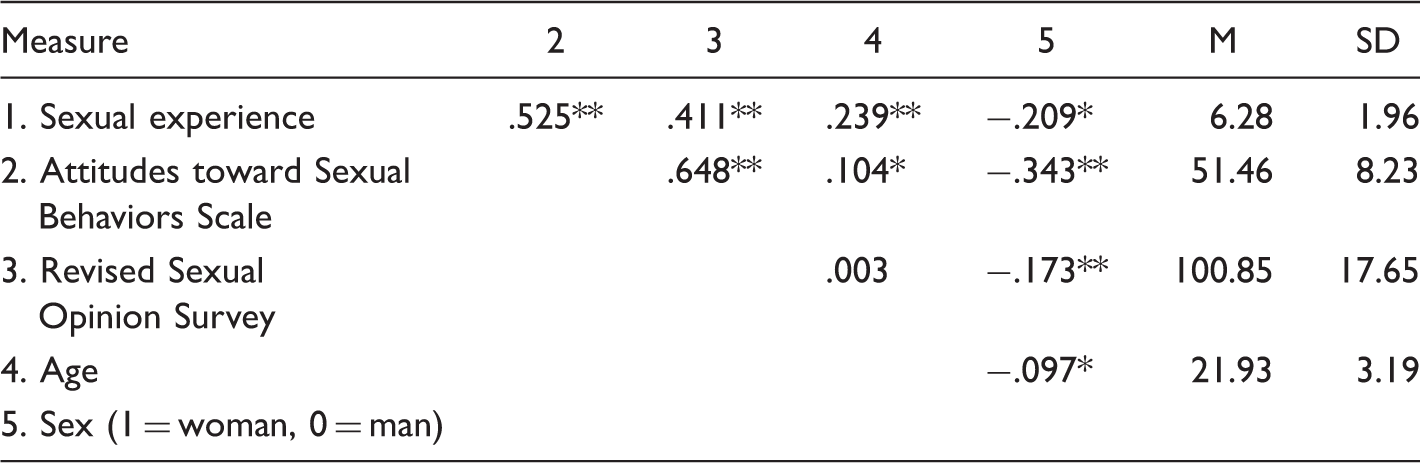
Note. ASBS: Attitudes toward Sexual Behaviors Scale; M: mean; SD: standard deviation; SOS: Sexual Opinion Survey.
*p < .05; **p < .001.
Regression models to analyze the age as a confounding variable in the relationship between the sexual attitude measures (ASBS and SOS) and the sexual experience.
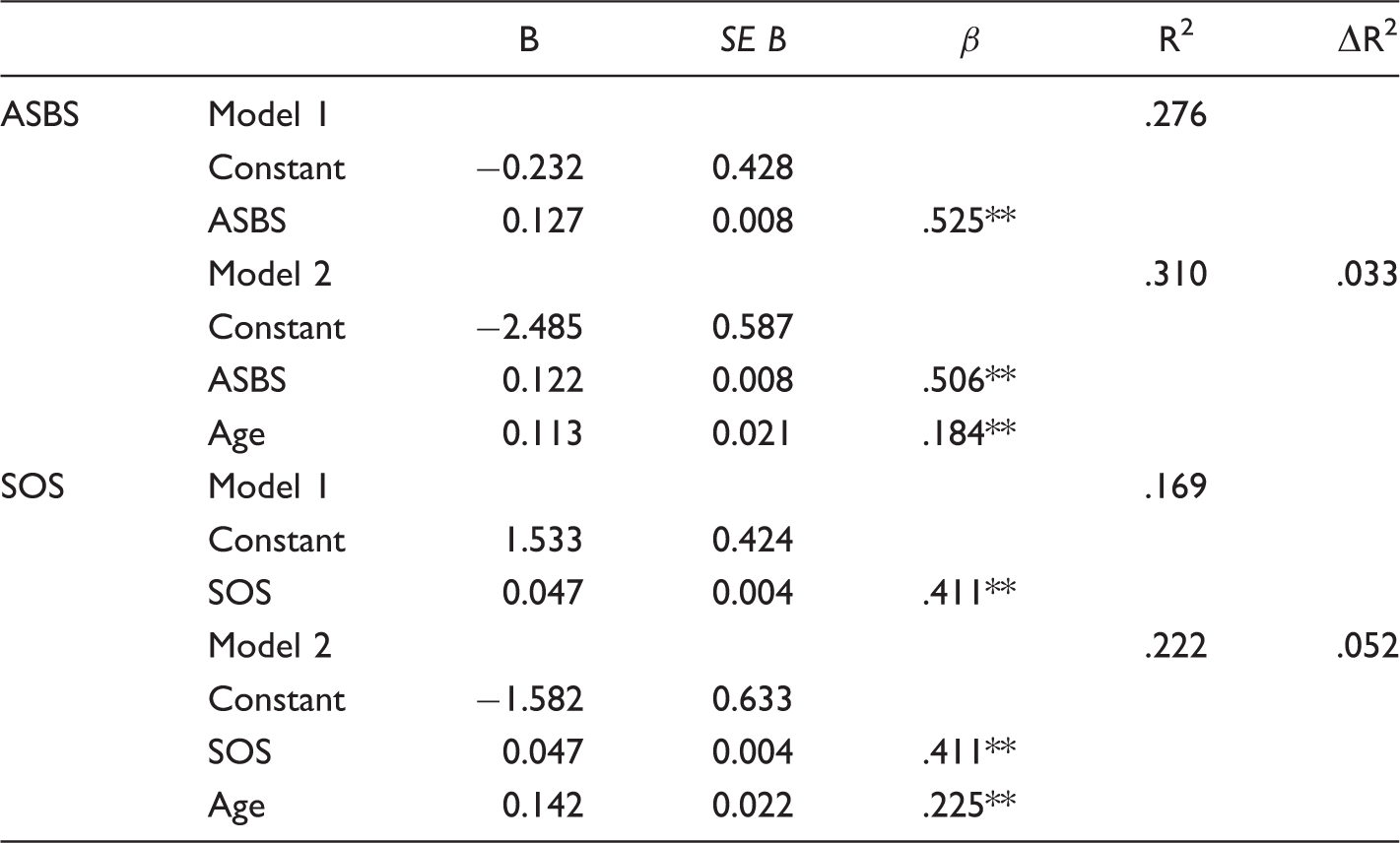
Note. ASBS: Attitudes toward Sexual Behaviors Scale; SOS: Sexual Opinion Survey.
*p < .05; **p < .001.
Regression models to analyze the moderation effect of sex in the relationship between the sexual attitude measures (ASBS and SOS) and the sexual experience.
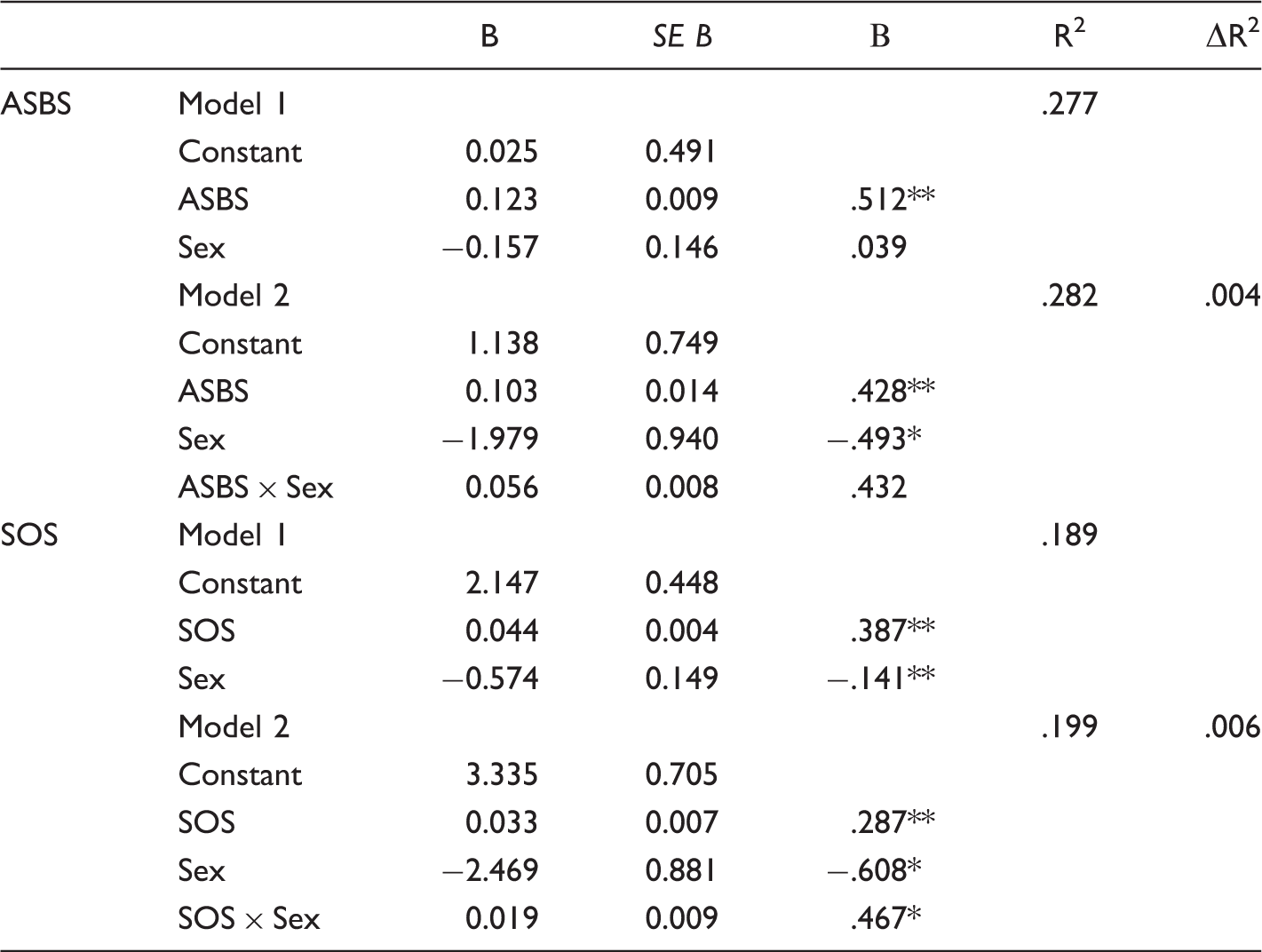
Note. ASBS: Attitudes toward Sexual Behaviors Scale; SOS: Sexual Opinion Survey.
*p < .05; **p < .001.
Figure 1 shows the moderating effect (interaction) of sex in the relationship between both measures of sexual attitudes and the sexual experience. According to the analyses, only in the case of the SOS, the relationship is greater for young women than for young men. However, Figure 1 shows the moderating effects are similar in both measures. Because there is moderating effect in the SOS, and in order to compare the regression coefficients in both measures, we have stratified between men and women.
Interaction effects of sexual attitudes measures (ASBS and SOS) and sex in sexual experience (number of sexual behaviors performed). ASBS: Attitudes toward Sexual Behaviors Scale; SOS: Sexual Opinion Survey.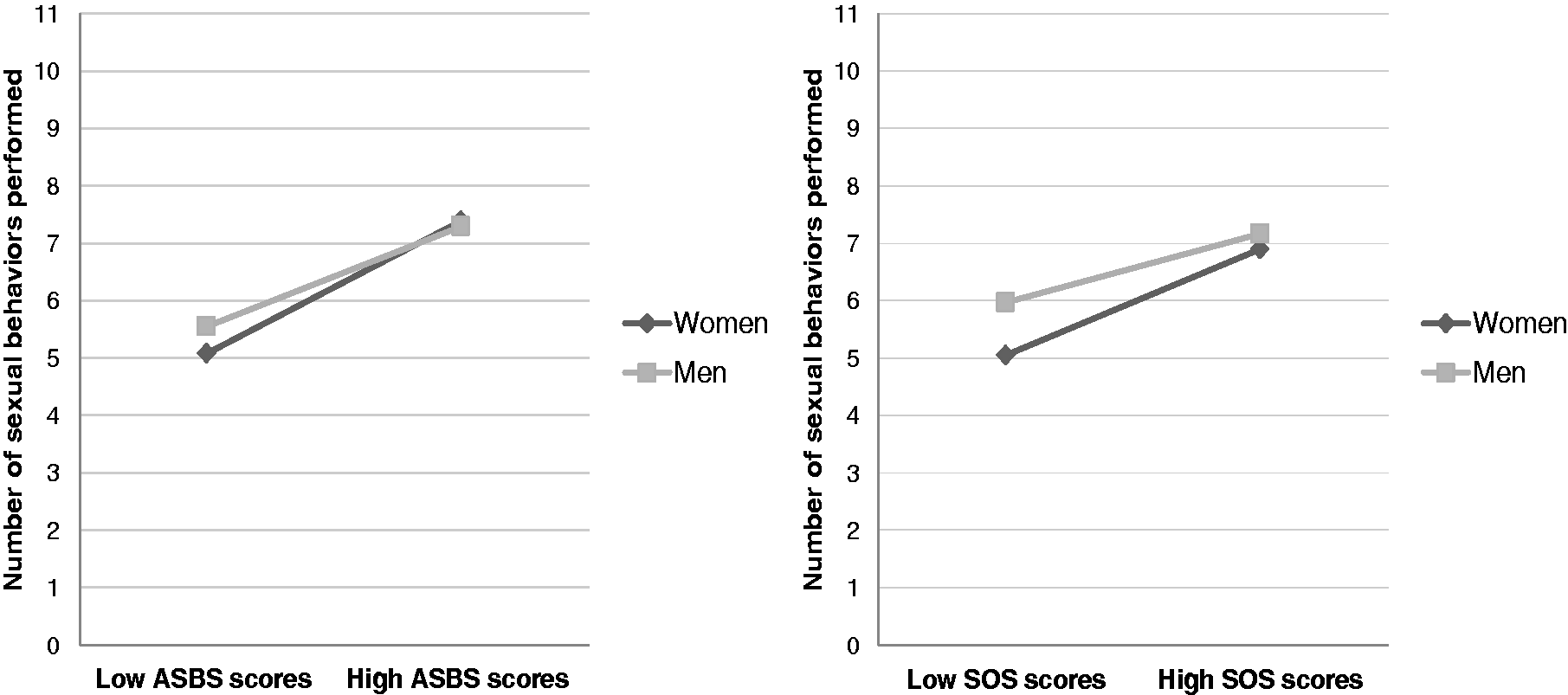
Linear regression analysis predicting the sexual experience in young adult men and women.
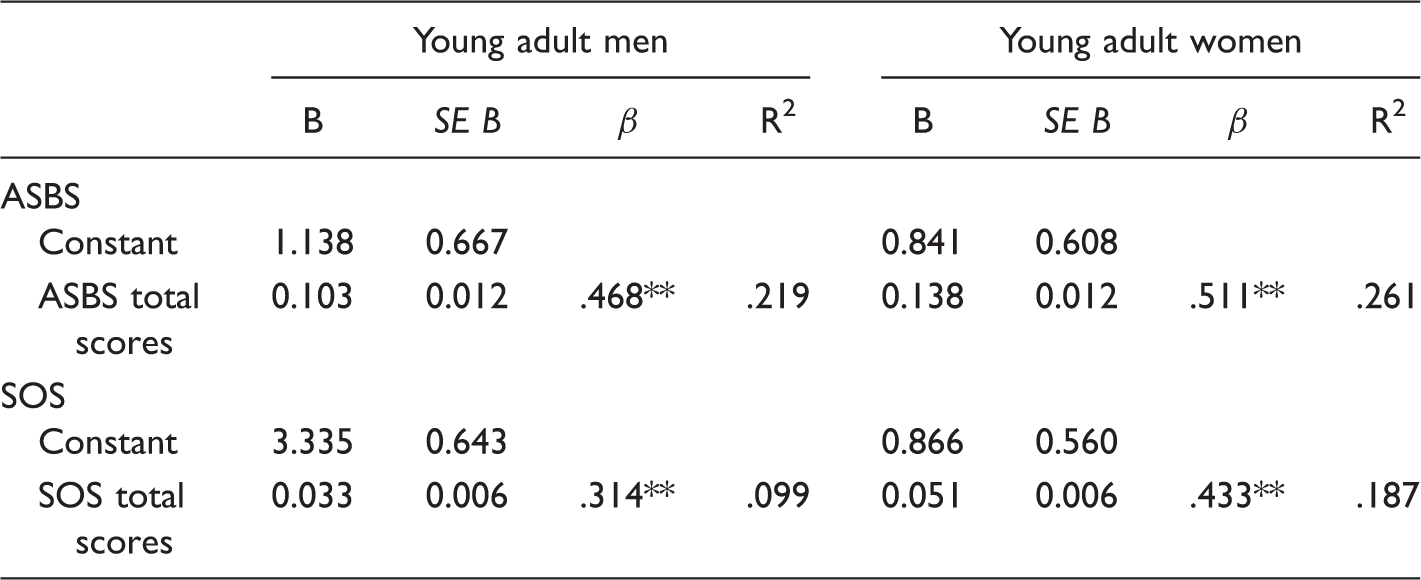
Note. ASBS: Attitudes toward Sexual Behaviors Scale; SOS: Sexual Opinion Survey.
*p < .05; **p < .001.
Figure 2 shows graphically the regression lines plotted. The regression lines of both ASBS scores and SOS scores are more inclined in women than in men. The regression lines for ASBS scores show a greater slope than for SOS scores in men and women. The contrasts between the regression coefficients in both men (Z = 3.27; p = .001) and women (Z = 2.05; p = .040) show that the predictive capacity of ASBS scores for the sexual experience is greater than the predictive capacity of SOS scores.
Linear regressions of the relationship between the sexual attitudes measures (ASBS and SOS) and the sexual experience (number of sexual behaviors performed) in young adult women and men. ASBS: Attitudes toward Sexual Behaviors Scale; SOS: Sexual Opinion Survey.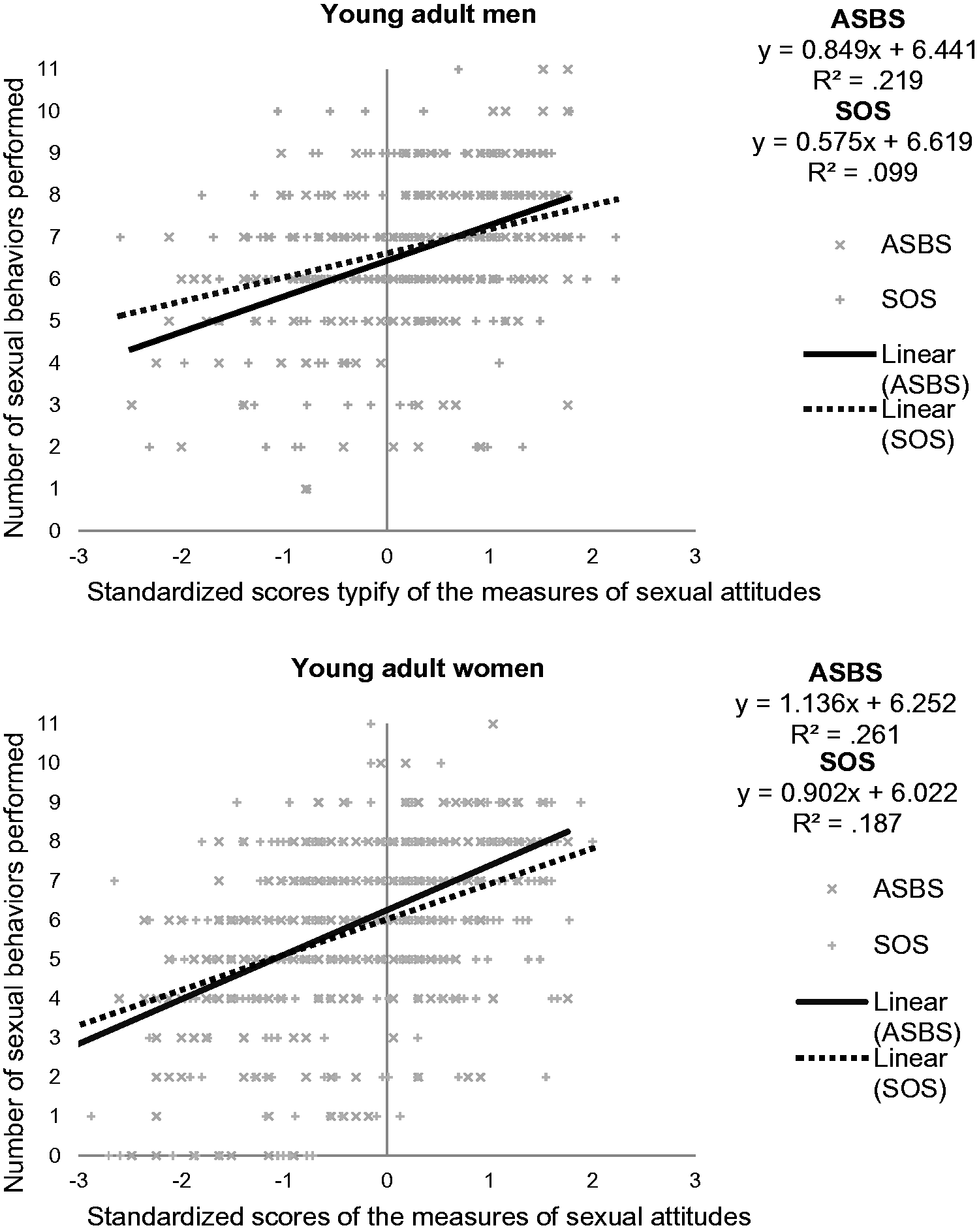
Discussion
The aim of this study was to provide empirical support of the ASBS predictive capacity for the sexual experience (understood as the number of different SBs performed) in young adults and to compare it with the SOS predictive capacity. Age as a confounding variable and the moderating effect of sex have been analyzed before.
Age is not a confounding variable in the relationship between both sexual attitude measures and the sexual experience. Although in accordance with other studies (e.g., Liu et al., 2015), age is a predictor variable (with small magnitude) of the sexual experience. Subsequent analyses of the moderating effect of sex have shown different results according to the measure used. The moderation effect of this variable is only statistically significant in the relationship between the SOS and the sexual experience, as it has been found in other studies (Wells & Twenge, 2005). However, despite the differences are only significant in the SOS, the moderating effect of sex in both measures are similar and small in size.
The correlation between both measures of sexual attitudes (ASBS and SOS) and the sexual experience support the first hypothesis. Both measures have shown moderate correlations with the sexual experience in young adults. These results are consistent with the study by Tobin (2011), where sexual attitudes correlated with the sexual experience in undergraduate students.
On the other hand, results support only partially the second hypothesis in which it was expected to find a greater relationship between the measures of attitudes and the sexual experience in women compared to men. This occurs only in the case of the SOS, where its predictive capacity in the sexual experience is slightly higher in women than in men. These inconsistent results (i.e., moderating effect of sex only when SOS is the predictor) have been reported previously (Baumeister, 2000; Wells & Twenge, 2005). The greater predictive capacity of SOS scores for the sexual experience in women is consistent with that found by Wells and Twenge (2005) in their meta-analysis. However, it does not correspond with Baumeister's (2000) erotic plasticity hypothesis, which posits that women's sexual response is more malleable by social and situational factors. As a consequence, women's SB cannot be easily predicted by their attitudes. One possible explanation given by Baumeister (2000) to the greater attitude–behavior consistency in women than in men found in other studies is the lack of opportunity of young men. According to this author, many men may have wanted to have sex but did not have a partner.
Baumeister (2000), when emphasizing the relationship between SBs and attitudes, referred especially to “general, abstract attitudes” (p. 348). The results of the present study lead to the reflection that the greater relationship between sexual attitudes and sexual experience in women could depend on the measure used. In this study, it is evident that the moderating effect of sex is not statistically significant when the attitudinal objects are specific SBs as in the case of the ASBS, and they are related to the sexual experience. This could be due to the high correspondence between the level of concretion of the ASBS and the measure of sexual experience (specific SBs).
The results also support a third hypothesis in which the ASBS predictive capacity for the sexual experience was greater than the SOS predictive capacity for the sexual experience in both men and women. This could also be explained by the higher correspondence in object of the sexual experience measure with the ASBS than with the SOS (Ajzen & Fishbein, 1977; Glasman & Albarracín, 2006; Kraus, 1995). The ASBS is focused on the evaluation of specific and varied SBs (e.g., penile–vaginal intercourse, anal sex, group sex, cybersex, etc.), and many of them are similar to those included in the measure of sexual experience. However, the SOS includes more general SBs (e.g., “uncommon sexual practices”), maybe is excessively focused on the use of erotic material (e.g., 35% of its items are referred to it), and also neglects relevant specific SBs such as SBs via Information and Communication Technologies (e.g., cybersex; Del Río Olvera et al., 2013).
Another relevant aspect of the ASBS, which might not capture other sexual attitudes measures like the SOS, is that it shows that the sex of the individuals does not predict the sexual experience by itself when it (ASBS) is controlled. The small relationship between the sex variable and the sexual experience when the variance due to attitudes toward SBs is not controlled could be due to the differences between women and men in attitudes toward SBs. That is, young adult women have less sexual experience (perform less variety of SBs) because they have more negative attitudes toward SBs than young adult men. Therefore, if we only use the SOS, we could conclude that the variable sex (woman and man) by itself predicts the sexual experience. However, the ASBS shows that after partialling out the effect of attitudes toward SBs, the sex of participants does not predict the sexual experience. Thus, the same sexual experience would be expected in a sample of women and men with the same scores on attitudes toward SBs. If we link these results with the meta-analysis above (Petersen & Hyde, 2010), we could think that men engage more in casual sex than women because they have more positives attitudes toward casual sex. However, in this study we cannot know if the attitudes change before the behavior, the behavior change before the attitudes, or if they change simultaneously.
In the future, it would be relevant to analyze the causal relationship between the attitudes toward SBs and the sexual experience in young adults using longitudinal studies. Wells and Twenge (2005) showed that the sexual attitudes and SBs change concurrently in young women, and in young men, sexual attitudes during their childhood years predict SBs during adolescence. The knowledge about the causal direction between the attitudes toward SBs and the performance of SBs is of special interest to help develop programs to prevent risky SBs in adolescents and young adults. If the attitudes toward SBs precede the sexual experience, the focus on these attitudes to prevent certain behaviors (e.g., penile–vaginal intercourse with occasional partners without a condom) becomes necessary.
In conclusion, this study represents a significant advance because it shows that the predictive capacity of ASBS is higher than the predictive capacity of one of the most widely used sexual attitudes measure, the SOS (Fisher et al., 2010). Therefore, the predictive capacity of ASBS, possibly due to its high correspondence with the measure of sexual experience (exclusive focus on specific and varied SBs), makes it a very appropriate way to predict the sexual experience in young adults. Moreover, this study also shows two other positive aspects: (1) the predictive capacity of ASBS scores does not dependent on the sex of the individual (no moderator effect) and (2) the ASBS scores allow us to know that the sex variable by itself does not predict the sexual experience. Thus, the ASBS could be a better alternative than the SOS to predict the sexual experience, understood like the number of different SBs performed, in young adult women and men.
Appendix: Attitudes toward Sexual Behaviors Scale (ASBS)
Caressing any intimate area of the body with a casual partner. Penile-vaginal sexual intercourse with a casual partner. Mutual masturbation with a casual partner. Oral sex with a casual partner. Anal sex with a casual partner. Send pictures or messages via the internet or a cell phone with sexual content (sexting) to a casual partner. Sex over the internet (cybersex) with a casual partner. Caressing any intimate area of the body with a steady partner. Penile-vaginal sexual intercourse with a steady partner. Mutual masturbation with a steady partner. Oral sex with a steady partner. Anal sex with a steady partner. Send pictures or messages via the internet or a cell phone with sexual content (sexting) to a steady partner. Sex over the internet (cybersex) with a steady partner. Solitary masturbation (alone) when a person does not have partner. Solitary masturbation (alone) when a person has a steady partner. Having sexual fantasies when a person does not have partner. Having sexual fantasies when a person has a steady partner. Reading erotic magazines or books (with sexual content). Watching erotic movies (for example: showing sexual activities). Sexual activity with two other persons at the same time (threesome). Sexual activity with a group of persons at the same time (orgy or group sex).