




Abstract
This study investigated the emotional labor involved in two forms of sport services—teaching and coaching—as perceived by high school teacher–coaches regarding required emotional displays and the use of emotional labor strategies. A total of 403 high school teacher–coaches from 47 states in the United States completed the online questionnaires measuring their perceptions of required emotional displays and their uses of emotional labor strategies in the two occupational roles. Results showed that there was no significant difference in the perception of positive emotional displays as required among participants. However, participants perceived that the expressions of friendliness and cheerfulness were more required in teaching than in coaching. On the other side, negative emotional displays were perceived to be more required in coaching than in teaching. That is, expressing upset, disappointment, anger, unhappiness, and frustration were perceived differently among participants. Also, participants utilized more surface acting when teaching and employed more genuine expression when coaching. The findings of this study highlight that differences do exist in the perception of required emotional displays and the utilization of emotional labor strategies in the two roles of teaching and coaching. These results were discussed in light of the task and group differences between teaching and coaching.
Introduction
The field of psychology has been interested in the emotions and the management of emotions over the past three decades (Izard, 2010). The exploration of these topics in sports and physical education (PE) is also warranted, as both the contexts require physical interactions between clients and service providers, which entail varied emotional experiences on the part of both the clients and the service providers (Chelladurai, 2014; Lee, 2017). For example, a student failing to follow instructions is likely to evoke disappointment in the PE teacher. Similarly, when a fitness instructor does not live up to expectations, the clients are likely to be annoyed.
It is important to note that the quality of the services provided is greatly influenced by the extent to which the service provider regulates the emotions experienced by herself/himself and/or the clients (Groth, Hennig-Thurau, & Walsh, 2009; Isenbarger & Zembylas, 2006). Thus, the organization would expect the service provider (e.g., the fitness instructor, the PE teacher, the coach, and the physical therapist) to control the felt emotions and exhibit emotions appropriate to the situation (Grandey & Gabriel, 2015). These efforts on the part of service employees is called emotional labor defined as “the regulation of both feeling and expression of emotions to achieve organizational goals” (Grandey, 2000, p. 97). Similarly, Grandey (2000) spoke of display rules that specified the emotions employees should display and those they should suppress in their interactions with customers to be effective on their jobs. It must also be noted that the expectations regarding what emotions to be displayed and what emotions to be suppressed (i.e., the display rules) are likely to vary across the educational contexts (Sutton, 2005). For instance, emotional display expectations for a PE teacher will not be the same as for a coach in competitive varsity sport.
Although the study of emotional labor has been intensive and extensive in the organizational science of psychology and management (Elfenbein, 2007; Grandey & Gabriel, 2015), scholars have largely ignored the context of sports and PE contexts. The present research is an effort to fill this void partially and invoke further interest on this topic. Our strategy was to contrast the emotional display requirement and emotional labor strategies in two different service offerings—teaching and coaching. Teaching and coaching are more formalized in secondary educational institutions where teachers of PE are employed and are expected to coach one or more teams.
We chose a sample of teacher–coaches (hereafter referred to as T/Cs) in high schools due to several reasons. The advantage of selecting this groups of respondents lies in that they are full-time employees who had been trained to be both teachers and coaches and who carry out these roles in their daily routines. Hence, they are most likely to be aware of the emotional labor in those two roles and, more importantly, they would be cognizant of what emotions are appropriate and under what circumstances. Second, similar to findings in other service domains, the dual role of teaching and coaching has been found to be associated with such psychological distresses as role conflict, role ambiguity, and role overload (Richards & Templin, 2012). These stressors, in turn, result in negative individual-level consequences such as reduced self-esteem, increased anxiety and tension, and burnout (Conley & You, 2009; Richards, Levesque-Bristol, Templin, & Graber, 2016). Given that differences exist in the two instructional settings (Richards & Templin, 2012), teaching and coaching may require different emotional displays and necessitate different emotional labor strategies for one to be effective in each role. In fact, while most of the previous literature on this topic has examined the differences in T/Cs’ situational factors (e.g., characteristics of clients), organizational factors (e.g., group differences), and technical skills, relatively little attention has been given to the differences in individual factors including emotional experience, identity, gender, and personal career aspiration (Richards & Templin, 2012).
Thus, to fill this vacuum, this study attempted to integrate the psychological topic of emotional labor into the dual role of teaching and coaching by investigating their perceptions of what emotional displays are necessary and the strategies they employ to express the appropriate emotions. Their perceptions would provide a clear description of emotional labor in the respective roles of teaching and coaching. Furthermore, by identifying the differences in the emotional labor process between teaching and coaching, this study can provide another insight regarding the element that can cause role conflict and the negative outcomes thereof. In sum, grounded upon the role theory (Stryker, 2001), the purpose of this research was to answer the research questions of (a) whether there are differences in the required emotional displays and (b) whether there are differences in the internal emotional regulation strategies between teaching and coaching.
Literature review
Role theory
Role theory explains behaviors of individuals and the interactions among them as a function of their roles within the group and the society at large, rather than as an expression of any natural talent, ability, or desires (Hindin, 2007). In role theory, an individual is seen as fulfilling specific roles assigned to the person in a given context (e.g., parent, student, player, teacher, coach, etc.). These roles are assigned to individuals for the benefit of society as a whole. Further, each role includes a set of prescriptions for behavior which includes rights, duties, expectations, and norms that a person is expected to fulfill in a particular society. One’s behavior in a particular context is predictable as he/she will incur costs if not conforming to norms and expectations assigned to the specific role of that (Biddle, 1986). The term “role” was borrowed from theater, where an actor is expected to behave as specified by the role he or she is enacting. In a similar manner, an individual is expected to fulfill the expectations associated with the role she or he occupies in a given context (Stryker, 2001). For example, an employee is expected to come to work on time, to stay until the work is completed, and not leave early. One of the key insights of this theory is that individuals can engage in various types of roles such as father, brother, managers, and Bible study teachers, and the role conflict is likely to occur when a person is expected to simultaneously act out multiple roles that carry contradictory expectations (Parsons, 1951).
In the context of the present study, the role expectations for a PE teacher may include the development of positive relationship with students and display of positive emotions (Stuhr, Sutherland, & Ward, 2011). On the other hand, the role expectations for a coach may include the development of the talents and capacities of student-athletes as well as winning competitions (Kwon, Pyun, & Kim, 2010). More importantly, the fact that T/Cs engage in both roles of PE teachers sand coaches simultaneously indicates that they wear two “different hats” in order to fulfill distinctive roles of teaching and coaching in the course of their work. Although some similarities do exist between both roles, the roles of PE teachers and coaches are not considered identical, as differences between the two tasks exist in terms of occupational goals and objectives, group and task characteristics, skill sets and abilities, responsibilities, reward systems, and relative status in the two instructional settings (Richards & Templin, 2012). Thus, it is reasonable to assume that the differences between teaching and coaching allows T/Cs to perceive different role expectations, which in turn, lead them to display different behaviors in accordance with the expectations for the two roles.
Emotional labor
Emotional labor, as defined earlier, has received much attention in the field of sociology, psychology, management, and general education (Grandey & Gabriel, 2015). The emphasis has been on the role of emotions and emotional regulation processes on the organizational effectiveness through enhancing the quality of interactions between employees and customers (Grandey, 2000). Based on emotional labor research over the past three decades, Grandey and Gabriel (2015) developed a model of emotional labor consisting of three main components: emotional requirements, internal emotional regulation, and emotional performance.
First, emotional requirement refers to the standards that define which emotions employees should display in their interactions with customers (Grandey, 2000). Organizations usually stipulate either formally or informally the emotional requirements to guide employees to be effective in their work performance. Wharton and Erickson (1993) introduced three types of emotional requirements labeled integrative, differentiating, and masking. An integrative requirement involves expressing positive emotions such as cheerfulness in interactions with customers. In contrast, differentiating involves expressing negative emotions and driving people apart (e.g., fear, hate, and anger). While it is tempting to assume that an integrative emotional requirement is the most common at work places, there are some unique occupations which require the negative emotions to be effective on jobs (Cropanzano, Weiss, & Elias, 2004). For example, debt collectors need to express negative emotions such as anger and aggressiveness rather than such emotions as sympathy and cheerfulness when they attempt to collect money from borrowers or control the behavior of patrons. This expression of negative emotion allows them to achieve their objectives more effectively (Sutton, 1991). Finally, masking involves displays of neutrality, as in the case of judges and physicians who need to display calmness or show no emotions in dealing with the people involved.
In order to comply with emotional requirements, employees need to engage in internal emotional regulation which includes the active suppression, enhancement, or faking of emotions (Grandey & Gabriel, 2015). There are three different kinds of internal emotional regulation termed surface acting, deep acting, and genuine expression (Ashforth & Humphrey, 1993; Grandey, 2000). The first strategy, surface acting, is the process of modifying one’s expressions such as smiling without changing inner feelings. The second strategy, deep acting, corresponds to the process of actually trying to change one’s feelings, as required by the display rules. That is, the individual tries to experience the emotion that is appropriate for the situation. In comparison, surface acting only manages observable expressions whereas deep acting attempts to change internal emotional states to conform to organizational expectations (Grandey, 2000). Surface acting and deep acting are critical elements in Gross’ (1998) emotion regulation model. In this model, emotion regulation includes two processes, response-focused process and antecedent-focused process. The response-focused process is consistent with surface acting, in that it involves the process of modifying only outward displays without changing one’s inner feelings (Gross, 1998). The labor in surface acting is essentially faking the appropriate emotional display. The antecedent-focused process is similar to deep acting, in that individuals regulate the situations and problems before the creation of emotion (Grandey, 2000).
The final category, expression of genuine emotion, was proposed by Ashforth and Humphrey (1993). It refers to employees engaging in emotional regulation internally and then displaying either authentic or faked emotions in their interactions with clients (Ashforth & Humphrey, 1993). They argued that the previous research neglected the possibility that employees are able to experience and display appropriate emotions spontaneously and in an automatic way. For instance, there is a possibility of PE teachers (or coaches) truly feeling enthusiasm toward teaching (or coaching) and being concerned with students or athletes which means it is not necessary for them to engage in deliberate internal emotional regulation process. They labeled this type of expression as emotional labor because employees still are performing the organizationally required emotions. However, it is important to make a further distinction between the genuine expression and emotional deviance, the process of expressing one’s true emotions regardless of organizational expectations (Grandey & Gabriel, 2015). The difference between the two strategies originates from the extent to which the service providers’ emotional expressions are aligned with display rules.
Emotional labor in teaching and coaching is well-documented in previous literature. In teaching, Isenbarger and Zembylas (2006) stated that teachers need to perform emotional labor to achieve teaching outcomes and show their empathies and cares to students. Stuhr et al. (2011) also noted that the intentional emotional control to display positive emotions would be necessary in PE because it could develop emotional connections with students, which in turn lead to better teaching outcomes. In his research with 613 PE teachers in the United States, Lee (2017) found that teacher burnout was positively associated with surface acting and negatively associated with genuine expression. He further identified the mediating role of teacher burnout in the emotional labor-turnover intention relationships. This study demonstrated the importance of emotional labor on the occupational well-being of PE teachers, as well as the educational institutions.
In coaching, Potrac and Marshall (2011) argued that the coaching context contained numerous inevitable stressors which lead coaches to experience emotional struggles and, thus, it was important for coaches to learn how to cope with them. Later, Lee, Chelladurai, and Kim (2015) proposed a conceptual model of emotional labor in coaching which included the three types of emotional labor strategies—surface acting, deep acting, and genuine expression—which result in the psychological costs of psychological effort, emotional dissonance, and feeling of inauthenticity which, in turn, were linked to job dissatisfaction and job burnout. They also identified the possible role of individual characteristics of emotional intelligence and affectivity in the selection of different emotional labor strategies among coaches. In the empirical study of 430 Division I coaches of the NCAA, Lee and Chelladurai (2016) found that (a) positive affectivity predicted the three emotional labor strategies, (b) coaches’ surface acting and genuine expression were positively related to emotional exhaustion, and (c) emotional intelligence moderated the surface acting–emotional exhaustion relationship.
Differences in emotional requirements between teaching and coaching
Sutton (2005) stated that “emotion display expectations are likely to vary in different educational settings” (p. 395). Thus, it is possible that the appropriate emotions expected to be displayed by T/Cs in each role may be different due to the differences in the two instructional settings. For example, as PE teachers often deal with students with low motivation and who often take the class because it is required (Richards & Templin, 2012), their positive emotional expressions play critical roles in motivating and empowering students during the class (Stuhr , Sutherland, & Ward, 2012). Further, Sutton found that teachers were frequently cautious of negative emotional display and particularly regretted expressing anger. In other words, PE teachers may not perceive that negative emotions are required in the course of their work.
In contrast, “a great degree of goal congruence” between coaches and athletes (Chelladurai, 1999; p. 169) will lead coaches to perceive that expression of not only positive but also, at times, negative emotions are acceptable and sometimes required. Indeed, Chelladurai and Kuga (1996) stated that yelling and screaming at athletes in the face of athletes’ poor performance is allowed and often recommended in coaching settings, whereas it is not accepted in teaching. The social information model developed by Van Kleef (2009) also supports the notion that negative emotions are acceptable in athletics. According to the model, expressing negative emotions is acceptable when both parties perceive that such expression is appropriate in given situations. As coaches and athletes share the identical goal of developing skills to excel within the zero-sum nature of athletic competitions, both of them may accept expressions of negative emotions when they are perceived to be associated with goal attainment (Lane, Beedie, Devonport, & Stanley, 2011). In fact, athletes have reported that negative emotions such as anger and disappointment were found to help them refocus their thoughts and actions on the competition (Hanin, 2010; Lane et al., 2011; Ruiz & Hanin, 2011) which, in turn, increased the probability of better performance. Accordingly, we posited that: H1: T/Cs will perceive that positive emotional display is more required in teaching than in coaching. H2: T/Cs will perceive that negative emotional display is more required in coaching than in teaching.
Differences in emotional labor strategies between teaching and coaching
Previous literature noted that teachers felt the pressure to present an idealized image of their emotions to children. Indeed, Sutton (2005) found that most teachers reported self-regulating their emotions and believed emotional regulation was necessary for successful teaching. In Sutton’s study, a teacher stated that he or she became much better at masking emotions in interactions with students. In PE context, Shoval, Erlich, and Fejgin (2010) found that teachers they interviewed often described their emotional responses as “the need to put on a mask” and “When I walk in through the school gate, I put on a happy face” (p. 91). This finding clearly indicated that teachers tended to engage in surface acting at schools. In other words, because teachers may experience more pressure to manage their emotions, they are more likely to engage in deliberate emotional suppression in their interaction with students when teaching.
Regarding the differences in genuine expressions, Gardner, Fischer, and Hunt (2009) noted that leaders in organizations had more latitude in expressing emotions. Specifically, they noted that leaders with more power and/or in prestigious professions (e.g., lawyers and physicians) have more freedom from display rules (i.e., emotional requirements) because their services are necessary for their clients and they decide on what services to provide, when, and how (Gardner et al., 2009). Given the fact that coaches have great authority over the operation of the team (e.g., over the selection and utilization of team members or the choice of strategies to be employed), they have more power over athletes and, therefore, they may have more freedom to express their felt emotions compared to teachers (Chelladurai & Kuga, 1996). Accordingly, we posited that: H3: T/Cs will utilize surface acting more often when teaching than when coaching. H4: T/Cs will utilize genuine expression more often when coaching then when teaching.
Method
Participants
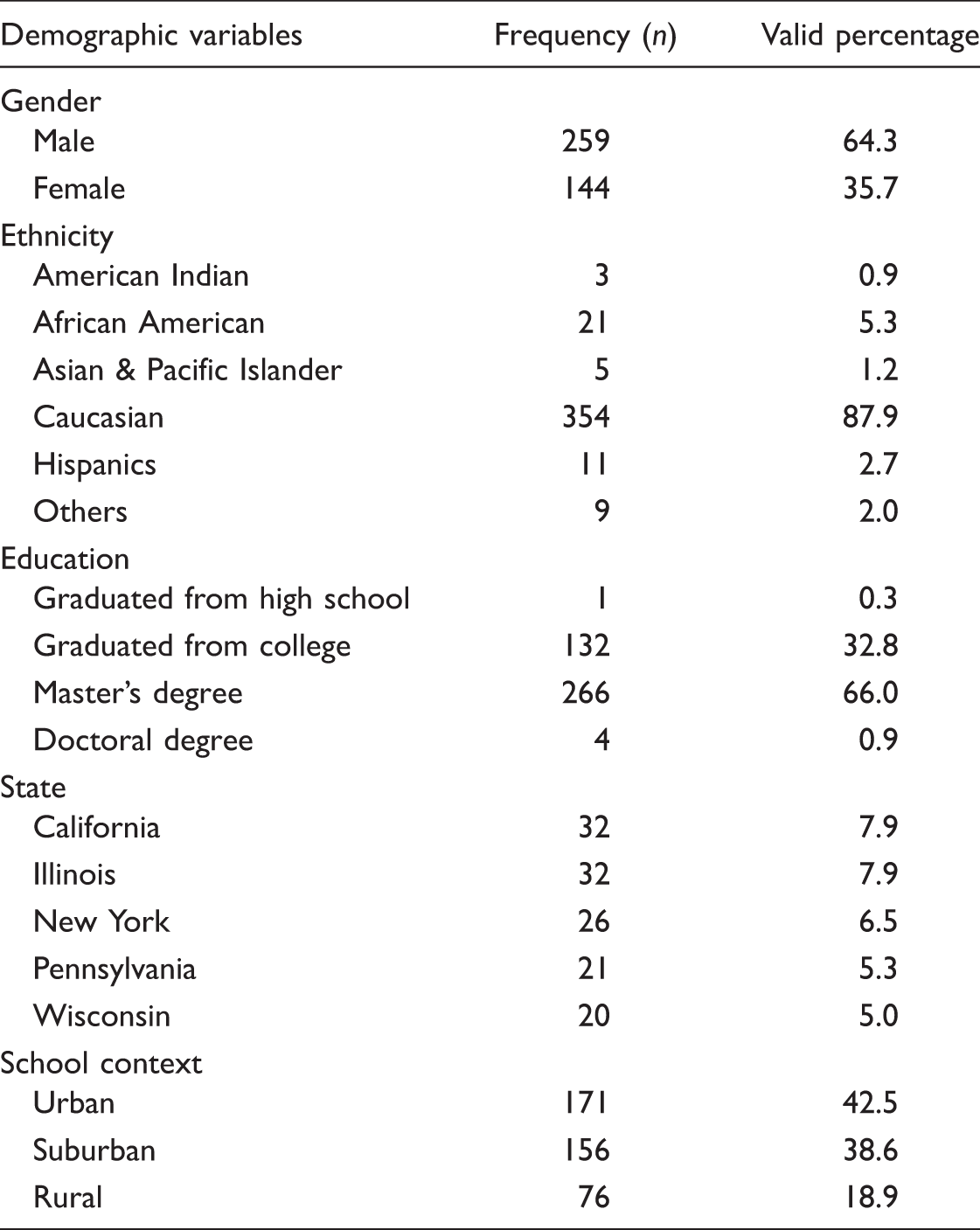
A total of 403 teachers-coaches (Table 1) from 47 states in the United States participated in an online survey (64.3% male; Mage = 25.97 years, SD = 10.59, range = 24–66 years). All of the participants were fulfilling both roles and the majority of the participants were Caucasian (87.7%) and had a master’s degree (66.2%). Of the total participants, 42.5% were from rural areas, 38.6% were from suburban areas, and 18.9% were from urban schools. Participants coached 20 different sports (21.2% football, 19.9% basketball, 9.0% volleyball, and 8.1% track and field). Of 47 states, the largest represented states were California and Illinois (7.9%), followed by New York (6.5%), Pennsylvania (5.3%), and then Wisconsin (5.0%). The participants had an average of 3.22 hours (SD = 2.24) of contact hours with students per day, ranging from one hour to seven hours and had, on average, 20.49 years of teaching experience (SD = 10.61) and 19.78 years of coaching experience (SD = 10.60).
Procedures and Instruments
After obtaining the approval from the Human Research Institution, the researchers purchased a list of 3000 high school T/Cs from MCH Strategic Data Company (http://www.MCHdata.com). MCH has comprehensive K-12 marketing database with more than five million K-12 educators across the United States and provides email and direct mail to customers. The researchers sent the pre-notification email containing a brief introduction to the research project and invitation to participate in the upcoming online survey. “Qualtrics” software was used for the online questionnaire. The researchers then sent an email indicating the purpose of the research, the procedures, and a link to the online survey questionnaire. For the purpose of this study, participants who do not perform one of the roles (teaching or coaching) were discouraged to participate in the survey. After one week, the post-notification email was sent to encourage participants to participate in the survey. The questionnaire items were preceded by the informed consent form assuring confidentiality, the voluntary nature of participation in the study, and a request to answer the items as honestly as possible. The online questionnaires consisted of the two parts measuring the participants’ perception of required emotional display and utilization of different emotional labor strategies.
Required emotional display
We asked T/Cs to indicate if each of 15 different emotional display behaviors were required or not required in each of the contexts of teaching and coaching. The list of these emotional display behaviors was based on Diefendorff, Richards, and Croyle’s (2006) recommendation. The questionnaire contained items about the expression of positive emotions (six items), expression of negative emotions (six items), and expression of neutral emotions (three items). The participants responded to these items from the perspective of being a teacher as well as being a coach. The stem for each item was “Please think about yourself as a teacher. Do you see this emotional display as an expected part of your teaching?” or “Please think about yourself as a coach. Do you see this emotional display as an expected part of your coaching?” The wording was changed to “students” and “teaching” to fit teaching contexts while the wording was changed to “athletes” and “coaching” for the coaching context. The dichotomous response format of either required (Yes) or not required (No) was employed based on Morrison’s (1994) recommendation. In her study of assessing the differences in what clerical workers define as in-role and extra-role behavior, she used the dichotomous response format of two categories because the pilot test demonstrated that the format provided more valid responses compared to a continuous scale.
Emotional labor strategies
To assess the degree to which respondents adopted each of the emotional labor strategies, we requested the participants to complete the surface acting (five items) and genuine expression subscales (three items) of emotional labor scale developed by Diefendorff, Croyle, and Gosserand (2005). The response format for these scales was a five-point Likert scale ranging from one (never) to five (always). Participants were asked to complete the two versions of questionnaires for teaching and coaching. The stem for the two versions were “As a teacher, on an average day at work, how frequently do you do each of the following during teaching?” and “As an athletic coach, on an average day at work, how frequently do you do each of the following during coaching?” Yin (2012) reported the reliabilities of .84 for surface acting and .67 for genuine expression in a sample of Hong Kong teachers. The internal consistency estimates in this study were .88 for surface acting and .65 for genuine expression in teaching and .90 for surface acting and .69 for genuine expression in coaching.
A panel of two sport researchers, two PE teachers, and two former high school coaches examined the content validity of the instruments described earlier. Based on their suggestions and feedback, the survey items were either added, modified, or dropped. For example, the item of “showing furiousness toward students/athletes” was deleted as PE teachers suggested that it would be not the case in teaching. Further “acting sociable around students/athletes” was modified to “acting friendly to students/athletes.”
Data analysis
We conducted the data analysis in a two-step process using SPSS 25.0 software. In the first step, we assessed the differences between teaching and coaching in categorizing emotional displays as either required or not required with the chi-square test of homogeneity. In the second step, two one-way analyses of variance (ANOVA) were conducted to determine if there would be differences in the utilization of surface acting and genuine expression between teaching and coaching. The first one-way ANOVA examined the difference in the uses of surface acting (dependent variable) between teaching and coaching (independent variable) while the second one-way ANOVA examined the difference in the adoption of genuine expression between teaching and coaching.
Results
Preliminary analysis
General characteristics of respondents.
Factor structure of the required emotional display scale.
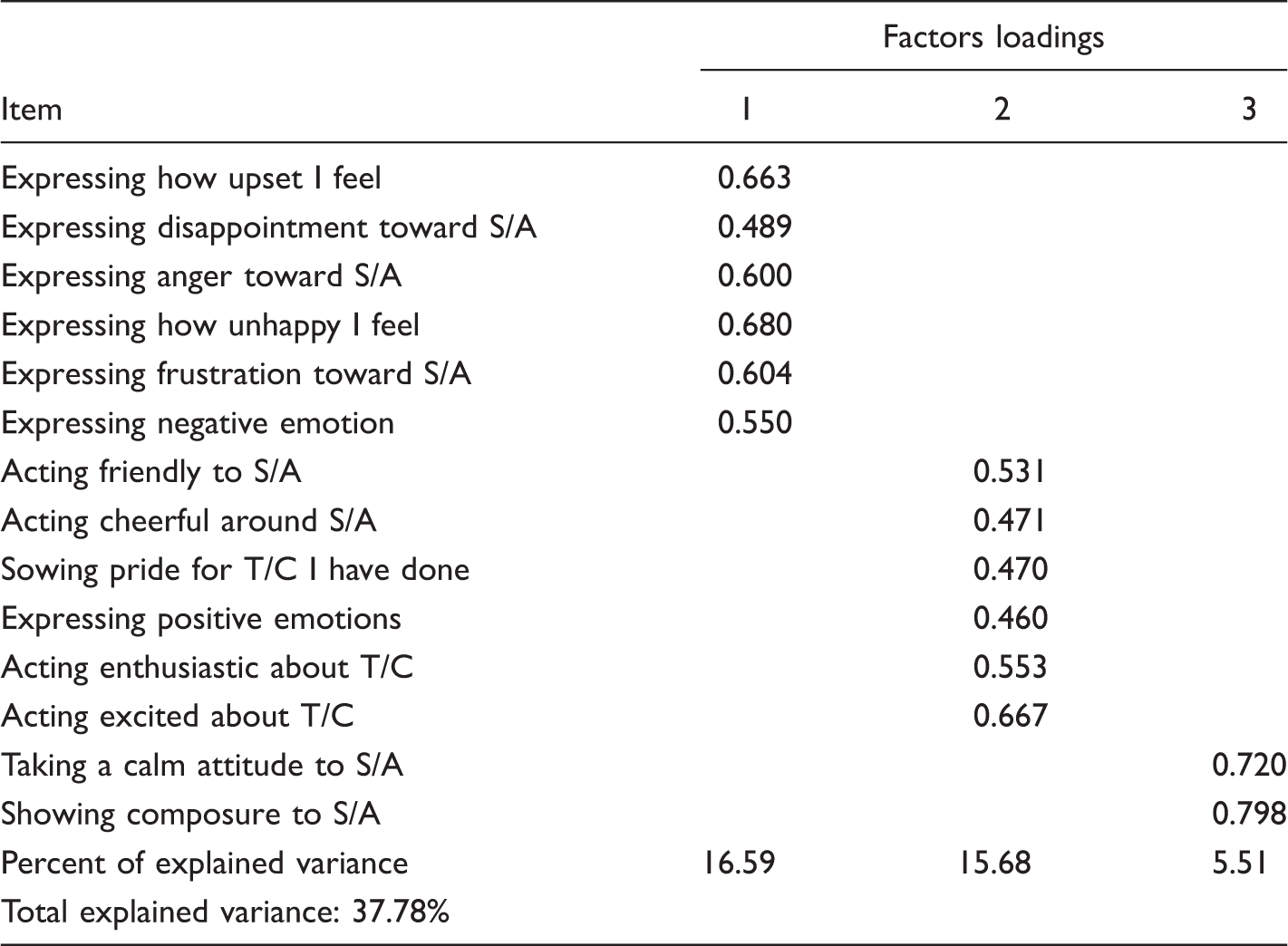
S/A: students/athletes; T/C: teaching/coaching.
CFA results revealed that the measurement model that included all variables of surface acting and genuine expression showed an acceptable fit, χ2/df =111.87/40 = 2.79 (p < .01), RMSEA = .06, TLI = .93, CFI = .96. Convergent validity was established by showing all factor loadings were significant at the .01 level. Composite reliability (ρc) values were high than .70 and average variance extracted (AVE) values were higher than .50 except for the measure for genuine expression. Discriminant validity was established as all the square-root values of AVE were higher than the corresponding correlations between the variable and associated variables (Hair, Hult, Ringle, & Sarstedt, 2014).
Test of hypotheses
PE teacher and coach emotional display behavior categorizations.
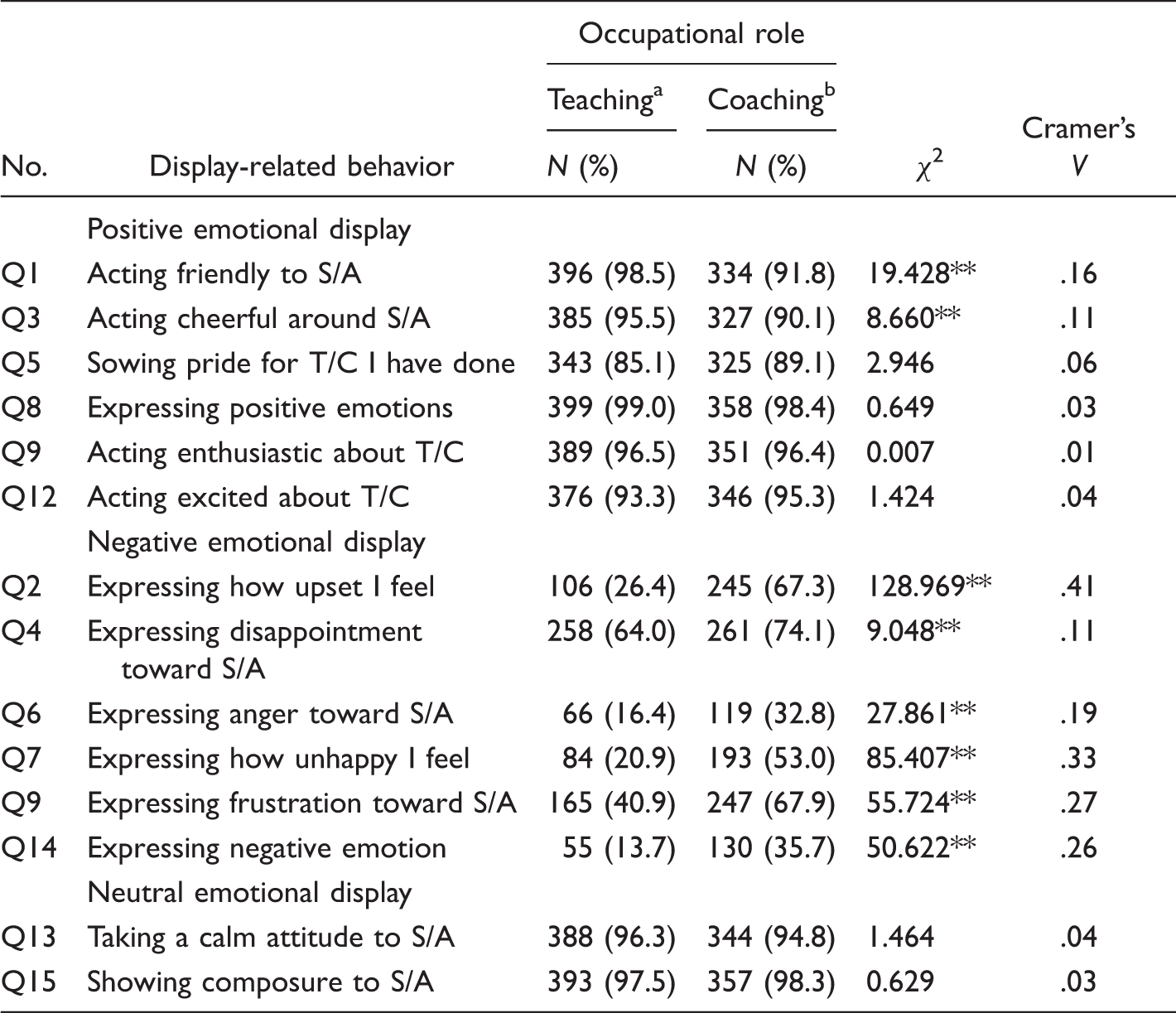
Note: Q11 was deleted after exploratory factor analysis due to the low factor loading. PE: physical education; S/A: students/athletes; T/C: teaching/coaching.
an = 403.
bn = 360.
**p < .01.
Regarding H2, there was a significant difference in the perception of negative emotional display between teaching and coaching, χ2 = 50.62, p < .001, Cramer’s V = .26 (Question 14). That is, T/Cs perceived that negative emotional display would be more required in coaching compared to teaching. At the rest of the item levels, there were significant differences in all five items—”expressing how upset I feel,” χ2 = 128.97, p < .001, Cramer’s V = .41; “expressing disappointments toward student/athletes,” χ2 = 9.05, p < .01, Cramer’s V = .11; “expressing anger toward student/athletes,” χ2 = 27.86, p < .001, Cramer’s V = .19; “expressing how unhappy I feel,” χ2 = 85.41, p < .001, Cramer’s V = .33; and “expressing frustration toward student/athletes,” χ2 = 55.72, p < .001, Cramer’s V = .27. That is, T/Cs perceived that expressing upset, anger, disappointment, unhappiness, and frustration was more necessary when coaching compared to when teaching.
PE teacher and coach emotional labor strategy.
S/A: students/athletes; T/C: teaching/coaching.
an = 403.
bn = 360.
**p < .001.
Discussion
Based on role theory, the primary purpose of this study was to investigate the differences in the perceptions of T/Cs regarding the required emotional displays and in the utilization of emotional labor strategies in teaching versus coaching. This study can make significant contributions to the emotional labor and PE literature. First, this study applied the psychological construct of emotional labor to the sport service context where the examination of emotional labor is still scarce. More importantly, this study fills the vacuum noted by Grandey and Gabriel (2015) to identify situations where negative expressions were norm appropriate and functional. This study shows that sport coaching is an occupation where negative emotional expressions are perceived to be necessary among the service providers. Third, this study adds to the knowledge base in empirically demonstrating that there were differences in the required emotional displays in the two roles of PE and coaching. Richards and Templin (2012) recently developed the multidimensional model for understanding T/C role conflict in PE which describes the intertwined relationships between individual-level factors, socialization factors, and intra-role conflicts within teaching as well as in coaching. By identifying the differences in emotional experiences in teaching and coaching, this study supported the notion of “individual’s emotional response to role conflict” proposed by Richards and Templin (2012; p. 172).
The participants in this study perceived that negative emotions (i.e., anger, upset, frustration, disappointment, unhappiness, and coldness) were more required to be displayed in coaching compared to teaching. Role theory would suggest that the distinctive role of teaching and coaching might impose different role expectations necessary for the fulfillment of each role in terms of emotional displays. For example, winning is one of the most desired outcomes in high school athletics and elicits intense community interest (Rees, 1997). Winning also plays a significant role in the retention of coaches over the long term (Turner & Chelladurai, 2005). To achieve one of the most important objectives, coaches design strenuous training sessions necessary to develop student-athletes and enhance their talents so that their teams can win (Kwon et al., 2010). In this process, coaches may consider negative emotional displays as necessary to create an organizational climate which facilitates the performance of individuals and teams. Indeed, several authors have identified the impact of negative emotional expression on increasing athletes’ focus and performance (e.g., Hanin, 2010; Lane et al., 2011; Ruiz & Hanin, 2011). However, this may be contradicting to what we normally consider the function of negative emotions. Thus, it is important to note that the negative emotions the T/Cs mentioned in this study may be different from what we easily think of negative emotional expressions in general. Hanin (2007) noted that sport performers could experience four different types of emotions based on the interaction between task demands and athlete’s resources: (a) functional-pleasant emotions (e.g., feeling active and confident); (b) functional-unpleasant emotions (e.g., feeling tense and angry); (c) dysfunctional-unpleasant emotions (e.g., feeling unsure or panicked); and (d) dysfunctional-pleasant emotions (e.g., feeling overconfident or complacent). One of the four dimensions related to our theme is the functional-unpleasant emotions (e.g., feeling tense and angry). During practices and competitions, coaches and athletes can feel the need to compensate for the lack of energy or its inefficient use, which in turn lead them to use those unpleasant emotions helping them to excel (Robazza, Pellizzari, Bertollo, & Hanin, 2008).
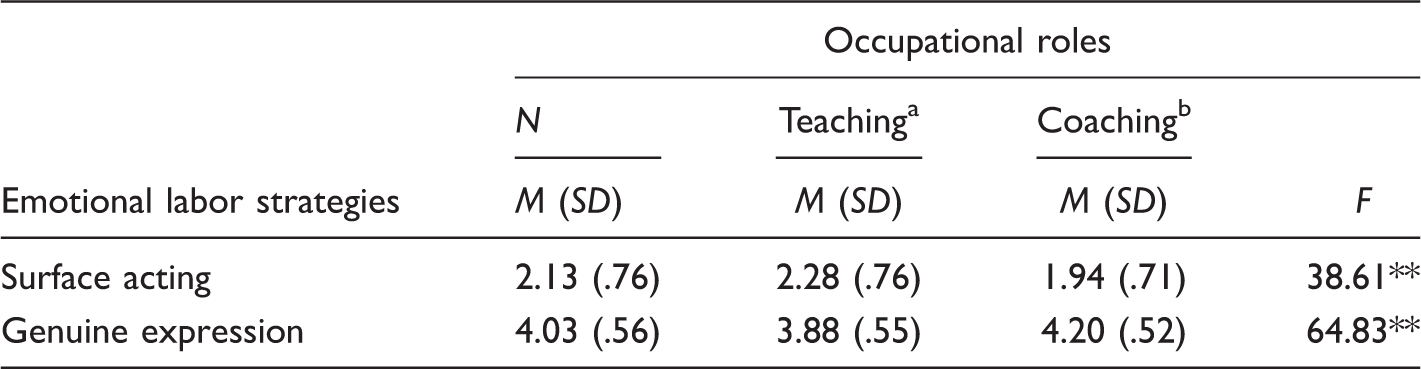
Moreover, the results of this study show that T/Cs performed more surface acting in teaching than in coaching and more genuine expressions in coaching than in teaching. This finding seems to reflect the different power relations and the different characteristics of the clients in the two domains. As noted, leaders with more power (i.e., lawyers, doctors, and physicians) have more freedom from the emotional requirements because their roles are necessary for their clients and followers (Gardner et al., 2009). Previous literature noted that coaches, compared to teachers, possessed more reward power (e.g., exclusive control of recruitment, retention, and utilization of members), coercive power (e.g., oral reprimands, physical drills as punishment), and referent power (i.e., members’ positive perceptions of the coach’s expertise). Much of coach’s power is derived from the intense desire and determination of members to be part of the team (Chelladurai & Kuga, 1996). Thus, they may engage in more genuine expression rather than the deliberate strategy of surface acting. Furthermore, they may perform more genuine expressions when coaching because the athletes they are coaching are highly motivated and are part of the team voluntarily (Richards & Templin, 2012).
On the other side, T/Cs may engage in more surface acting due to the isolation and margination issues when teaching (UNESCO, 2014). According to Schempp and Graber (1992), both issues lead sport teachers spend most of their time with their students, which in turn increases students’ influences on them. However, these students who for the most part take the PE class because it is required, and thus are less motivated than the athletes (Chelladurai & Kuga, 1996). Thus, when teaching, sports teachers feel pressure to meet their demands and present an idealized image of their emotions to children (Sutton, 2005).
The finding that a broader spectrum of emotional reactions is perceived to be required in the coaching role may explain the notion that T/Cs engage in more genuine expression in coaching than in teaching. T/Cs perceived only positive emotional display as required when teaching whereas they perceived both positive and negative emotional displays as required when coaching. As T/Cs perceive that both positive and negative emotional expressions are required in coaching setting, they may engage in a wider variety of emotional expressions in coaching which includes genuine expression. In contrast, T/Cs’ perception of only positive emotions as required emotional displays may oblige them to express only positive emotions despite facing negative affective events (e.g., students’ misconduct). This limited choice of expressing only positive emotions leads them to perform surface acting more in teaching situations.
Practical implications
Previous literature has shown that the differences inherent in the dual role of teaching and coaching can elicit T/Cs’ role stress, which in turn negatively affect their well-being (Conley & You, 2009; Richards et al., 2016). Our study suggests that the overall process of emotional labor should receive more formal attention from the sport service contexts because T/Cs perceived emotional requirements differently and utilized different emotional labor strategies in the two occupational settings. That is, the school administrators should consider incorporating these differences into performance management functions, such as training, goal-setting, and performance evaluations. For example, the training programs for T/Cs could include (a) the importance of emotional life in teaching and coaching; (b) the different forms of emotional requirements and emotional labor strategies; and (c) the possible consequences of such differences. Second, there needs to be a segment discussing the effective techniques for managing the differences in required emotional displays and to apply them in their own leading situations. More specifically, previous literature has pointed out that emotional requirements are not laid down in written form and, as a result, there may be markedly differing perceptions of what is required in service settings (Diefendorff et al., 2005). As these individuals are masters with profound experience in both occupational roles, group discussion sessions might encourage them to discuss which emotion is generally required and which emotion is necessary at specific situations. Further, by incorporating emotional requirements and emotional labor strategies into performance evaluations, managers can give T/Cs feedbacks including sanctions at times which possibly could change and improve T/Cs’ emotional labor at work.
Limitations and future research
Despite the significant contribution to the literature, several limitations of this study can be identified. First, the response rate was somewhat low (14.7%) which might affect the generalizability of this study. Although the response rate does not always indicate the representation of the population (Lambert & Miller, 2014), future studies should find ways to increase the response rate from T/Cs during the online survey. Second, as both emotional requirement and emotional labor measures were assessed by self-administered surveys, the process possibly created the common method bias. However, it should be noted that both measures were assessed on the different types of scales (i.e., the dichotomous response format for emotional requirements and the five-point Likert scales for emotional labor strategies). The difference in formats reduced the likelihood of common method bias (Morrison, 1994). Nonetheless, it is possible that the scores may be over- or underestimated due to the self-report survey. More importantly, although participants in this study perceived that negative emotional display was more required in coaching, it is possible that athletes, parents, or administrators who are the recipients or managers of the service will consider the required emotional displays differently compared to T/Cs. For example, our results suggest that T/Cs as coaches perceive that expressing negative emotions is expected during practice and competitions. However, athletes may perceive the required emotional displays to be different or they may prefer different emotional displays. Moreover, although the effect sizes in the study were small in strength, future studies should continue to investigate this topic to extend our understanding of role stress in the dual role of teaching and coaching.
Future studies may also consider the degree of negative emotional expression in coaching. This study demonstrated that some T/Cs perceived negative emotional displays were necessary in coaching. These coaches should be informed that there are also limits to the discretion accorded to coaches regarding emotional displays, as some behaviors will be deemed “out-of-bounds” and could foster negative impressions and reactions (e.g., drawing penalties and athletes’ turnover) among athletes and school administrators (see Dasborough, 2006). Further, Stirling and Kerr (2007) reported that coaches’ emotionally abusive behaviors (e.g., yelling) are normalized in youth sport contexts and this has significant negative consequences for young athletes. Therefore, we should be cautious and not interpret the finding of this study as a way to legitimize the use of excessive negative emotional expression. Future studies need to examine the balance between necessary negative expressions and emotionally abusive behaviors.
Finally, future studies may examine whether the emotional conflict created by the dual role has negative consequences for T/Cs. Previous literature has consistently reported that the role conflict has significant relationships with negative outcomes such as decreased job satisfaction, increased burnout, poor job performance, lower levels of commitment, and turnover intention among PE teachers (see Richards & Templin, 2012). It is possible that the different emotional requirements imposed by each role and the consequent internal emotional regulation strategies can serve as a source of T/Cs’ role conflicts, which in turn affect T/Cs’ individual outcomes negatively. Thus, future research may examine the effect of the differences in the required emotional displays and the associated internal emotional regulation strategies on T/Cs’ individual outcomes.
In conclusion, this study attempted to explore the emotional labor involved in two of sport services—teaching and coaching—and found differences in the perception of required emotional displays and the utilization of emotional labor strategies in teaching versus coaching. More specifically, the results revealed that T/Cs perceived negative emotional displays are more required in coaching compared to teaching and utilized more emotive suppression (i.e., surface acting) when teaching and more genuine expression when coaching. Further, the study has practical implications fo practitioners to hone their instructional and management skills to be able to handle the emotional contingencies characteristic of each setting. We suggest that this study can be the starting point to explore the emotional conflict derived by each role and to encourage researchers to explore the dynamics of emotional labor in sport services.