




Abstract
Research suggests that people attribute more negative traits to individuals with obesity than to non-obese individuals, and that females with obesity are seen more negatively than males. The theory also suggests that stereotypes are cognitive predecessors of prejudices. The aims of this research were to examine the latent structure underlying anti-fat stereotypical traits, differences in perceiving individuals with obesity and non-obese individuals, male and female individuals with obesity, as well as the role of anti-fat stereotypes in anti-fat prejudices. The sample consisted of 106 respondents (Male = 16; Female = 86; Mean age = 19.98), who graded stimuli photographs of male and female individuals (with obesity and average-weight) on series of anti-fat stereotypical traits on two occasions, and filled in Anti-fat prejudices questionnaire. The data were analyzed through EFA and CFA, ANOVA, and structural equation modeling (moderation). Four factors behind stereotypical traits were extracted: Positive social image, Perceived lack of self-care, Perceived persistence, and Antipathy. It has been shown that respondents gave stimuli photographs of individuals with obesity lower scores on Positive social image and Perceived persistence, and higher scores on Perceived lack of self-care and Antipathy. The same results were obtained for females within the subsample of individuals with obesity. Furthermore, it has been shown that certain anti-fat stereotypes (Positive social image, Perceived lack of self-care, and Perceived persistence) predict anti-fat prejudices, and that gender was a significant moderator of the effect of Perceived lack of self-care on anti-fat prejudices. We can conclude that individuals with obesity are indeed seen in a more negative light than non-obese individuals, and that this is more pronounced for females with obesity, which is in accordance with previous studies. Moreover, the results suggest the possible role of anti-fat stereotypes as cognitive predecessors of anti-fat prejudices, and that gender of individuals with obesity has an effect on this relationship.
Keywords
Introduction
Prejudices refer to attitudes towards certain groups (Allport, 1954/1979; Aronson et al., 2002). They can be negative, and as such are defined as hostile attitudes towards members of a specific group, based only on their membership in that group, or as negative attitudes based on “inaccurate and inflexible generalizations” (Allport, 1954/1979). On the other hand, prejudices can include positive emotions, and in that context we would expect a member of a certain group to have positive traits (Aronson et al., 2002; Esses et al., 1993). In this paper, we will rely on the definition of prejudices toward certain groups of people provided by Aronson et al. (2002).
One of today’s most prevalent prejudices are those toward people with obesity (anti-fat prejudices). Through social modeling by parents, peers, and the media, even children at an early age can gain negative attitudes towards people with obesity (Fabrey, 1994; Stager & Burke, 1982). When it comes to the expression of prejudices, it is well known that it is not socially desirable. For example, in the United States, reference to darker skin color is avoided so that the interlocutor would not think that he is a victim of racial discrimination (Crandall, 1994). Different results are obtained when it comes to anti-fat prejudices. Namely, research has shown that it is “socially desirable” to express prejudices against people with obesity (or seen in some area as obese) (Crandall, 1994; Crandall & Biernat, 1990; Morrison & O’Connor, 1999), and there is little or no deterrence when it comes to the expression of such prejudices (Flint & Snook, 2014). Crandall (1994) used precisely racial prejudice in the United States to illustrate the lower pressure on socially desirable responses to obesity. He quotes findings of other authors who argue that prejudices against African-Americans have significantly declined in the last few decades (Case & Greeley, 1990; Firebaugh & Davis, 1988, as cited by Crandall, 1994). On the other hand, more recent research suggests that these prejudices still exist, just that the form of their expression has become more subtle (Pearson et al., 2009). Crandall and Tomson (1993, as cited by Crandall, 1994) conducted research in which they showed that prejudices towards African-Americans exists, but are better disguised compared to prejudices towards people with obesity. Crandall and Biernat (1990) also argue that prejudices towards people with obesity are easier to examine than prejudices towards other groups of people, because there is lower social pressure towards giving socially desirable answers when it comes to expressing positive attitudes towards this group of people. Morrison and O’Conor (1990) have shown that the correlation between their scale for measuring prejudices towards people with obesity, and the scale for measuring the tendency to give socially desirable responses (Marlow Crowne Social Desirability Scale, MC SDS; Reynolds, 1982) is not significant. All these findings indicate that there are no major social barriers against the expression of anti-fat prejudices. The social desirability of a certain bodyweight is one of the remaining acceptable prejudices, which is a problem when the spreading of obesity throughout the modern Western world is taken into account (Puhl & Brownell, 2001).
Although some research suggests that the harmful effects of prejudices towards people with obesity are not numerous (Jarvie et al., 1983), most researchers confirm that people with obesity are exposed to discrimination in various areas of life (Brownell et al., 2005; Puhl & Brownell, 2001). For example, a group of authors (Flint et al., 2016) showed that individuals with obesity are less likely to get a job, and, moreover, female individuals with obesity have lower chances of getting a job compared to male individuals with obesity. One study has shown that prejudices towards these people are linked to their starting salary, leadership potential, and with the likelihood of getting a job (O’Brien et al., 2013). People with obesity are seen as unattractive (Harris et al., 1982), uncomfortable to look at or unpleasant in an aesthetic sense (Wooley & Wooley, 1979). Obesity is also seen as immoral (Hoverd & Sibley, 2007), individuals with obesity as alienated from their sexuality (Millman, 1980, as cited by Crandall, 1994) and thus alienated from themselves (Maddox et al., 1968), less deserving of an attractive partner (Pearce et al., 2002), and of lower social status compared to non-obese individuals (Vartanian & Silverstein, 2013). Physicians describe them as “weak-willed individuals” (Monello & Mayer, 1963). When it comes to adolescents with obesity, it has been shown that they have poorer relationships with their peers (Troop-Gordon & Ladd, 2005) and are often victims of bullying (Griffiths & Page, 2008). Research further suggests that even healthcare workers have negative attitudes (I. Brown, 2006) and implicit prejudices towards people with obesity, which can pose a potential risk to such patients (FitzGerald & Hurst, 2017). Discrimination based on body weight is often associated with depression and other psychiatric symptoms, including low self-confidence and poor body image (Friedman et al., 2005). When it comes to certain gender differences, previous studies suggest that females are more afraid of gaining extra weight (Crandall, 1994), which can be understandable when we take into account everything that has previously been said about female individuals with obesity being more exposed to the negative effects of these prejudices compared to males.
The second construct included in our research are anti-fat stereotypes. Aronson et al. (2002, p. 461) define stereotypes as a generalization due to which we ascribe the same traits to nearly all members of a group, independently of real variations between them.
In this paper, stereotypes towards people with obesity, or anti-fat stereotypes, are the subject of interest. When it comes to the operationalization of stereotypes, researchers usually use individual traits (e.g. Brochu & Morrison, 2007), sum up all traits to obtain one measure of stereotypes (Bessenoff & Sherman, 2000; Harper & Carels, 2014), or divide stereotypical traits into positive and negative ones (Bessenoff & Sherman, 2000). In another research, the authors conducted cluster analysis in order to see categories within broader social stereotypes (Andersen & Klatzky, 1987).
Early research has shown that there are some differences in the characteristics that people attribute to individuals with obesity compared to individuals with normal weight. For example, Harris et al. (1982) found that undergraduates in Australia gave lower grades to individuals with obesity compared to those with normal body weight when it comes to the following characteristics: activity, intelligence, hardworking, attractiveness, popularity, successfulness, athletic. They have also been graded as less appropriately sex-typed than average-weighted individuals (Harris et al., 1982). Greenleaf and associates (2004) found that respondents attributed more positive traits to silhouettes of average-weight individuals compared to silhouettes of individuals with obesity, and that positive traits were to a higher extent attributed to men, both in a situation with silhouettes with obesity and in the mid-weight silhouette observation situation. Brochu and Morrison (2007) have shown that respondents are more likely to attribute positive characteristics to people with normal body weight, while they attribute negative characteristics more often to individuals with obesity. These authors also showed that respondents attribute positive traits more quickly to people with normal body weight, while negative ones are attributed more quickly to individuals with obesity (Brochu & Morrison, 2007). More recent studies show that social pressure can have an impact on the expression of anti-fat stereotypes (Harper & Carels, 2014). Also, some studies suggest a correlation between anti-fat stereotypes and the emotion of disgust (Vartanian et al., 2013).
The relationship between prejudices and stereotypes is well-known. For example, R. Brown (2010) writes that individuals with high and low prejudices towards certain groups react differently towards that group. Furthermore, some authors have shown that people with different prejudice levels differ in the speed with which they recognize positive and negative words pertaining to stereotyped groups (Wittenbrink et al., 1997). Also, some authors (R. Brown, 2010; Devine, 1989) write that negative stereotypes can lead to a rise in prejudiced behavior. Finally, it is important to point out that stereotypes are considered to be the cognitive predecessors of prejudices (R. Brown, 2010; Devine, 1989). In this research, our analysis of the relationship in question will be based on this last conception.
Most of the existing research included gender only as the demographic variable (Perez-Lopez et al., 2001; Sabin et al., 2012), while a shortlist of studies examined the effect of gender of individuals with obesity on those who evaluate them (Brochu & Morrison, 2007; Greenleaf et al., 2004; Harris et al., 1982). Some of these studies have shown that gender of individuals with obesity can be a significant factor in how respondents attribute characteristics to them (Greenleaf et al., 2004), while this effect was not found in other studies (Brochu & Morrison, 2007; Harris et al., 1982). One study examined differences in the impact of weight stigma on individuals with obesity (Sattler et al., 2018) and showed that females reported significantly more stigma than males did.
We have chosen to conduct this study on a Serbian sample, inspired by the results of a Harvard Project Implicit study which showed that Serbia is the least racially prejudiced country in Europe (ProjectImplicit 1 ; Stafford, 2017) and we aimed to investigate whether the situation is different when it comes to other widespread kinds of prejudices – anti-fat prejudices. It should also be mentioned that the prevalence of obesity in Serbia is 21.5%, according to data from 2016 (Global obesity levels - obesity - procon.org, 2020) and with this percentage, Serbia comes in 88th out of 191 countries. Further, 15% of deaths in Serbia are due to obesity (Ritchie & Roser, 2017). Taking all these data into account we can conclude that people from Serbia are not overly exposed to obesity but that obesity is present in this culture.
Taking everything previously stated into account, the aims of the research were to examine the latent structure underlying anti-fat stereotypical traits; differences in perceiving individuals with obesity and non-obese individuals; differences in perceiving male and female individuals with obesity; the role of anti-fat stereotypes in anti-fat prejudices; the role of gender in the relationship between anti-fat stereotypes and anti-fat prejudices, and to do all that on a Serbian sample, that is, on a sample from a culture moderately exposed to the obesity issue.
The first hypothesis is that there is a latent structure underlying the traits usually ascribed to individuals with obesity. This was assumed based on previous studies which have used some form of broader measure of stereotypes instead of specific stereotypical traits (Andersen & Klatzky, 1987; Bessenoff & Sherman, 2000; Harper & Carels, 2014). The second hypothesis is that there are statistically significant differences in the expression of anti-fat stereotypes towards stimuli photographs of individuals with obesity and those with normal body weight. This was assumed based on previous studies suggesting that respondents tend to attribute negative traits to a higher extent, and positive traits to a lesser extent, to individuals with obesity compared to individuals with normal body weight (Brochu & Morrison, 2007; Greenleaf et al., 2004; Harris et al., 1982). The third hypothesis is that there are differences between stimuli photographs of male and female individuals with obesity. This was assumed based on previous studies suggesting that females with obesity were attributed positive traits to a lesser degree and negative traits to a higher degree compared to males with obesity (Greenleaf et al., 2004). More precisely, in this research we hypothesize that there is an interaction effect of gender and weight of an individual on anti-fat stereotypes. The fourth hypothesis is that anti-fat stereotypes can predict anti-fat prejudices. This hypothesis was based on previous studies suggesting that stereotypes can be considered as cognitive predecessors of prejudices (R. Brown, 2010; Devine, 1989). The fifth hypothesis is that the gender of individuals with obesity is a statistically significant moderator in the relationship between anti-fat stereotypes and anti-fat prejudices. The fifth hypotheses is based on studies stating that there are differences in the perception of male and female individuals with obesity (Greenleaf et al., 2004), as well as those stating that stereotypes can be considered as cognitive predecessors of prejudices (R. Brown, 2010; Devine, 1989).
Method
Sample
During the first examination there were 122 respondents. However, since not all respondents completed the survey in the second examination, the final sample included 102 respondents. The sample consisted of first- and second-year university students (Table 1).
A convenience sample was used. All respondents gave their informed consent to participate in the research.
Instruments
To measure attitudes towards obesity, a questionnaire on obesity attitudes developed by Crandall was used (Explicit Anti-Fat Attitudes, AFA, Crandall, 1994). This questionnaire has 13 items and the respondents answer them on a 9-point Likert-type scale. The questionnaire has three measuring subjects: Fear of Fat (α = .823), referring to one’s own fear of becoming fat; Dislike (α = .754), referring to dislike directed toward people with obesity; and Willpower (α = .693), referring to the opinion of individuals that people with obesity are such only by their own fault and that they do not have the willpower needed to solve their weight problem.
To measure the content of stereotypes, the respondents evaluated stimuli photographs of individuals based on a series of positive and negative traits. The evaluated traits were constructed by Brochu and Morrison (2007) for their study. There were 6 positive and 6 negative traits. Positive traits included: attractive, friendly, goal-oriented, happy, hardworking, and intelligence. Negative traits included: inactive, lazy, sloppy, undisciplined, unhealthy, and unpopular. Respondents were presented with one photograph at a time and they were asked to give their estimation of the presence of each of the afore-mentioned traits in all stimuli photographs on a 7-point Likert-type scale, where 1 indicates “I completely disagree”, and 7 means “I completely agree”. Since all traits are individual items, internal consistency cannot be calculated for them. Internal consistency for anti-fat stereotypes will be reported in the results section after we present the results of the exploratory factor analysis.
Stimuli
Stimuli in this research were photos of four men and four women, which were altered using Photo Shop to show the men and women both as individuals with normal body weight and as individuals with obesity. In this way the characteristics of individuals in the stimuli photographs would not become a confounding variable (which was a possibility if different individuals had been shown as obese stimuli and as normal body weighted stimuli). All of the photographs were taken from the website Pixabay, which offers free for usage images. 2
Procedure
The research was conducted on two occasions (with a twenty-day pause between two examinations).
In the first instance, respondents rated stimuli photographs of individuals on traits used to operationalize anti-fat stereotypes. In this instance, respondents rated four stimuli photographs of individuals with obesity (two male and two female) and four stimuli photographs of individuals with normal body weight (two male and two female). In this instance, respondents also completed the anti-fat attitudes questionnaire (Crandall, 1994).
After twenty days respondents were asked to evaluate stimuli photographs of individuals one more time. In this instance, respondents rated four stimuli photographs of individuals with obesity (two male and two female) and four stimuli photographs of individuals with normal body weight (two male and two female). The stimuli photographs of individuals that had been rated as stimuli with obesity in the first instance were rated as normal weighted stimuli in the second instance, and vice versa.
Respondents went through the procedure separately, one by one, and they filled out questionnaires electronically (questionnaires were administered via Google forms). This type of data collection was selected because of the sensitivity of the topic to social desirability (stereotypes and prejudices), and therefore, the greater possibility of giving socially desirable answers when respondents are in a group. Furthermore, another argument for this type of data collection are the results of some studies which suggest that social pressure can have an impact on the expression of anti-fat prejudices (Harper & Carels, 2014).
Data analysis
The data were analyzed through SPSS and AMOS.
The first hypothesis, that there is a latent structure underlying traits usually ascribed to individuals with obesity, was checked through exploratory and confirmatory factor analysis. The second hypothesis, that there are statistically significant differences in anti-fat stereotypes between stimuli photographs of individuals with obesity and those with normal body weight, was checked through a multivariate ANOVA with two factors: gender and weight of individuals in the stimuli photographs. The third hypothesis, that there are differences between stimuli photographs of male and female individuals with obesity, more precisely, that there is an interaction effect of gender and weight on the anti-fat stereotypes, was checked through multivariate ANOVA interaction effects.
When it comes to the fourth and fifth hypothesis (fourth hypothesis: anti-fat stereotypes can predict anti-fat prejudice; fifth hypothesis: gender of individuals with obesity is a statistically significant moderator in the relationship between anti-fat stereotypes and anti-fat prejudices), a moderation analysis through structural equation modeling in AMOS was conducted. Through this analysis, we were able to see if anti-fat stereotypes can predict anti-fat prejudices and if this relationship is moderated by gender of stimulus-individuals with obesity. For the fit indices within structural equation modeling, we used the criteria of a good and acceptable fit recommended by Schermel-Engel and associates (Schermelleh-Engel et al., 2003). The following fit indexes were included in our study: Chi-square, SRMR, RMSEA, GFI, NFI, and CFI.
Results
Exploratory factor analysis
As shown in the introduction section, researchers who examine different types of stereotypes tend to group individual traits in some manner (Andersen & Klatzky, 1987; Bessenoff & Sherman, 2000; Harper & Carels, 2014; Vartanian & Silverstein, 2013). In this study, instead of just summing up stereotypical traits into one score, or instead of separating traits into positive and negative ones, we wanted to find the latent structure underlying the traits in question. Namely, we intended to obtain a more precise measure of stereotypes toward individuals with obesity than that of previous studies, but also one that was broader compared to each trait taken individually.
The exploratory factor analysis (principal component analysis) was conducted in order to extract more general factors regarding stereotypes respondents have towards individuals with obesity. Four factors were extracted with a Quartimax orthogonal rotation.
The first factor consisted of the following attributes: Attractive, Intelligent, Friendly, and Happy. Because all these traits are an “image” of the positive social status of an individual, we named this factor Positive social image (α = .670). The percentage of explained variance of the first factor was 21.12%. The second factor consisted of the following traits: Lazy, Sloppy, Inactive, and Undisciplined. Because all these variables refer to the perceived relationship an individual has with himself, we named this factor Perceived lack of self-care (α = .810). The percentage of explained variance of the second factor was 17.07%. The third factor consisted of the following traits: Hardworking and Goal-oriented. Because both these traits refer to the perception of an individual to be working hard on achieving their goals, we named this factor Perceived persistence (α = .747). The percentage of explained variance of the third factor was 14.68%. The fourth and final factor consisted of the following traits: Unpopular and Unhealthy. These two traits accompanied one another in all the rotations tried in this study, meaning that respondents in this research found a stable connection between a lack of popularity and a lack of physical health. Because of the meaning of unpopularity (people do not want to “hang out” and be friends with unpopular individuals; they dislike them), we named this fourth factor Antipathy (α = .626). The percentage of explained variance for the fourth factor was 13.37%. All the factors together accounted for 66.24% of explained variance.
After exploratory factor analysis, confirmatory factor analysis was conducted in order to check the latent structure of newly constructed factors. All the fit indices were adequate (SRMR = .055; RMSEA = .066; GFI = .938; NFI = .907; CFI = .917). Model invariance was checked between obese and non-obese individuals and the newly constructed model showed adequate metric invariance (Measurement weights: CMIN(8) = 12.416, p = .134), meaning that these two groups can be compared on these measures.
Multivariate ANOVA
We then conducted a Multivariate ANOVA with two factors: the weight of the stimuli (normal and obese) and gender of stimuli (male and female), and four factors regarding stereotypes mentioned in the paragraph above. ANOVA showed that there are differences in perception between male and female stimuli on all four factors (Positive social image: F(1) = 99.779; η2 = .058; p = .000; Perceived lack of self-care: F(1) = 63.779; η2 = .038; p = .000; Perceived persistence: F(1) = 47.472; η2 = .038; p = .000; Antipathy: F(1) = 120.093; η2 = .69; p = .000). Furthermore, there were statistically significant differences between average-weighted and individuals with obesity on all four factors (Positive social image: F(1) = 98.766; η2 = .057; p = .000; Perceived lack of self-care: F(1) = 128.828; η2 = .073; p = .000; Perceived persistence: F(1) = 32.909; η2 = .020; p = .000; Antipathy: F(1) = 194.021; η2 = .106; p = .000). Males and non-obese individuals were graded more positively. The mean differences are shown in Table 2.
Demographic characteristics of the sample.

Means of normal weighted and obese individuals for four stereotypes.

All differences were statistically significant at the level of .001.
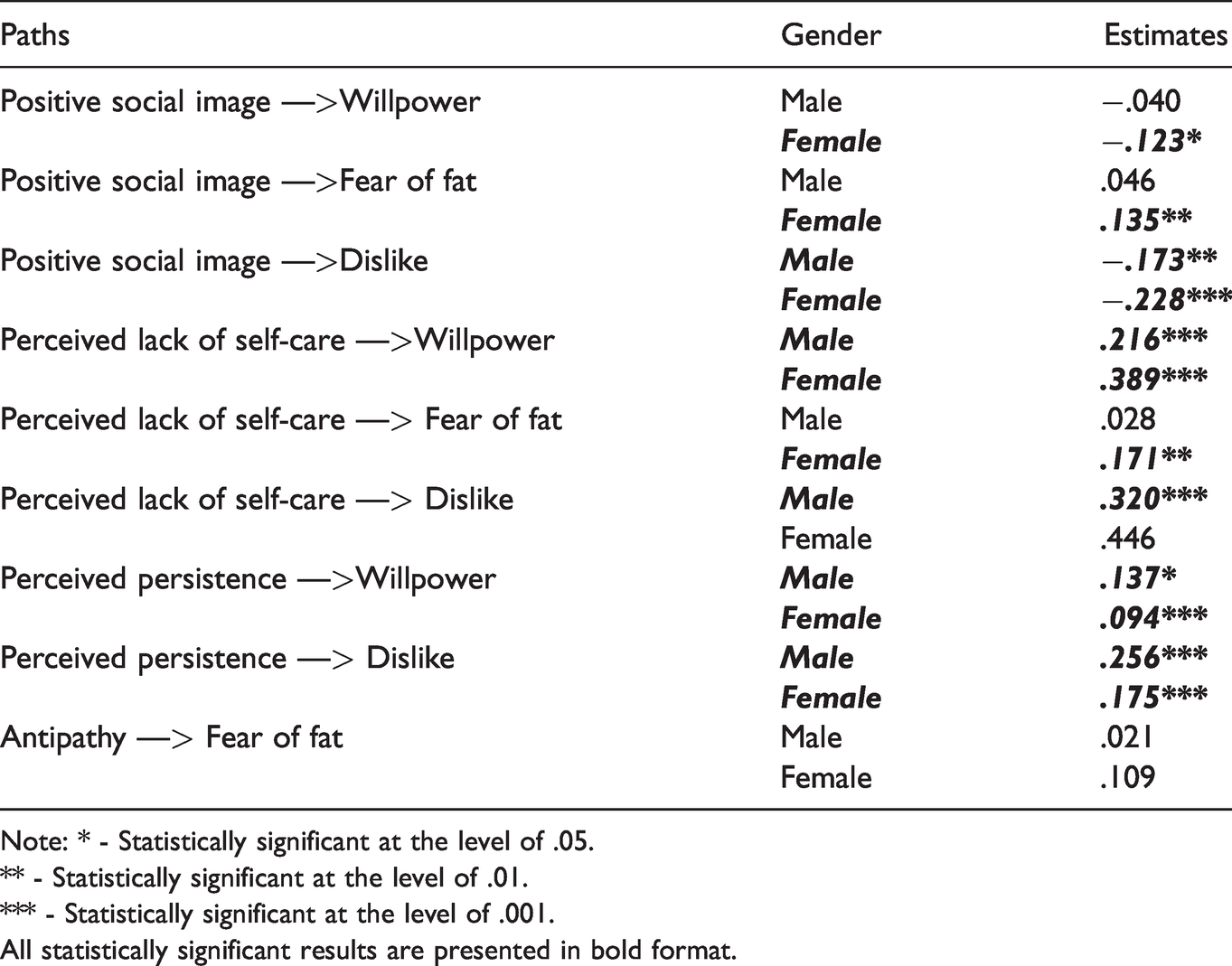
Regression estimates from the AMOS model.
Note: * - Statistically significant at the level of .05.
** - Statistically significant at the level of .01.
*** - Statistically significant at the level of .001.All statistically significant results are presented in bold format.
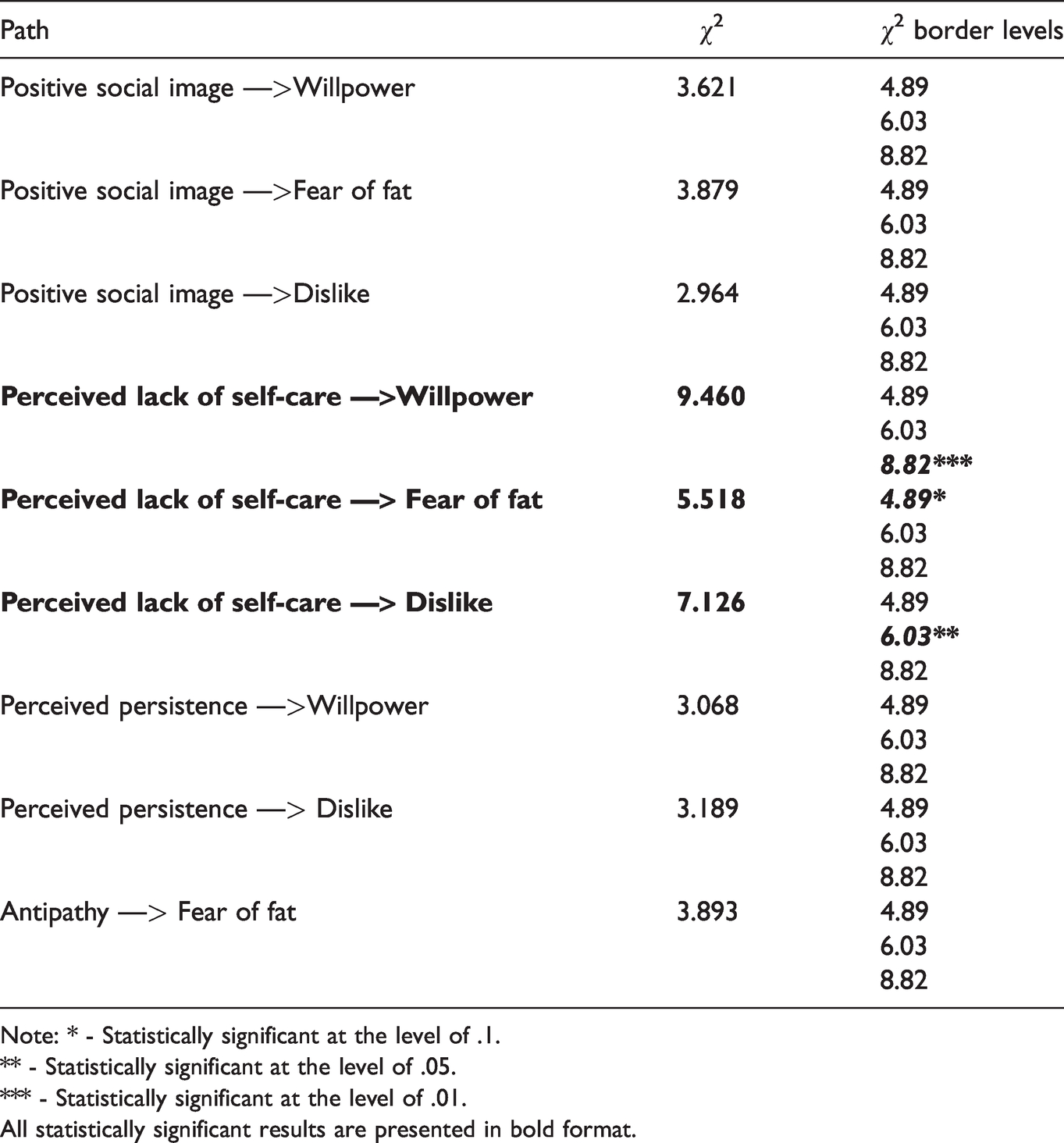
Moderation effects of gender between anti-fat stereotypes and prejudices.
Note: * - Statistically significant at the level of .1.
** - Statistically significant at the level of .05.
*** - Statistically significant at the level of .01.All statistically significant results are presented in bold format.
As can be seen from the table below, respondents see individuals with average weight in a more positive light than individuals with obesity, and this is more pronounced for stimuli photographs of female individuals with obesity. Namely, respondents generally graded male stimuli more positively on all four factors. This is true both for normal-weighted male stimuli compared to normal-weighted female stimuli, and for male stimuli with obesity compared to female stimuli with obesity.
When it comes to interaction effects, we found a statistically significant interaction on three dependent variables (Positive social image: F(df = 1) = 5.648, p = .018; Perceived lack of self-care: F(df = 1) = 4.075, p = .044; Antipathy: F(df = 1) = 5.453, p = .02). Statistically significant interaction effects were not found only on Perceived persistence. Interaction effects are shown in Figures 1 to 3.
Figure 1 shows that male stimuli with normal body weight had the highest score on Positive social image, followed by female stimuli with normal body weight. Also, male stimuli with obesity score overlaps with the female stimuli with normal body weight. The lowest score was given to female stimuli with obesity.

Interaction effects between gender and weight on stereotypes (positive social image).
Figure 2 shows that male stimuli with normal body weight had the lowest score on Perceived lack of self-care, followed by female stimuli with normal body weight. Male stimuli with obesity are next, while the highest score was given to female stimuli with obesity.
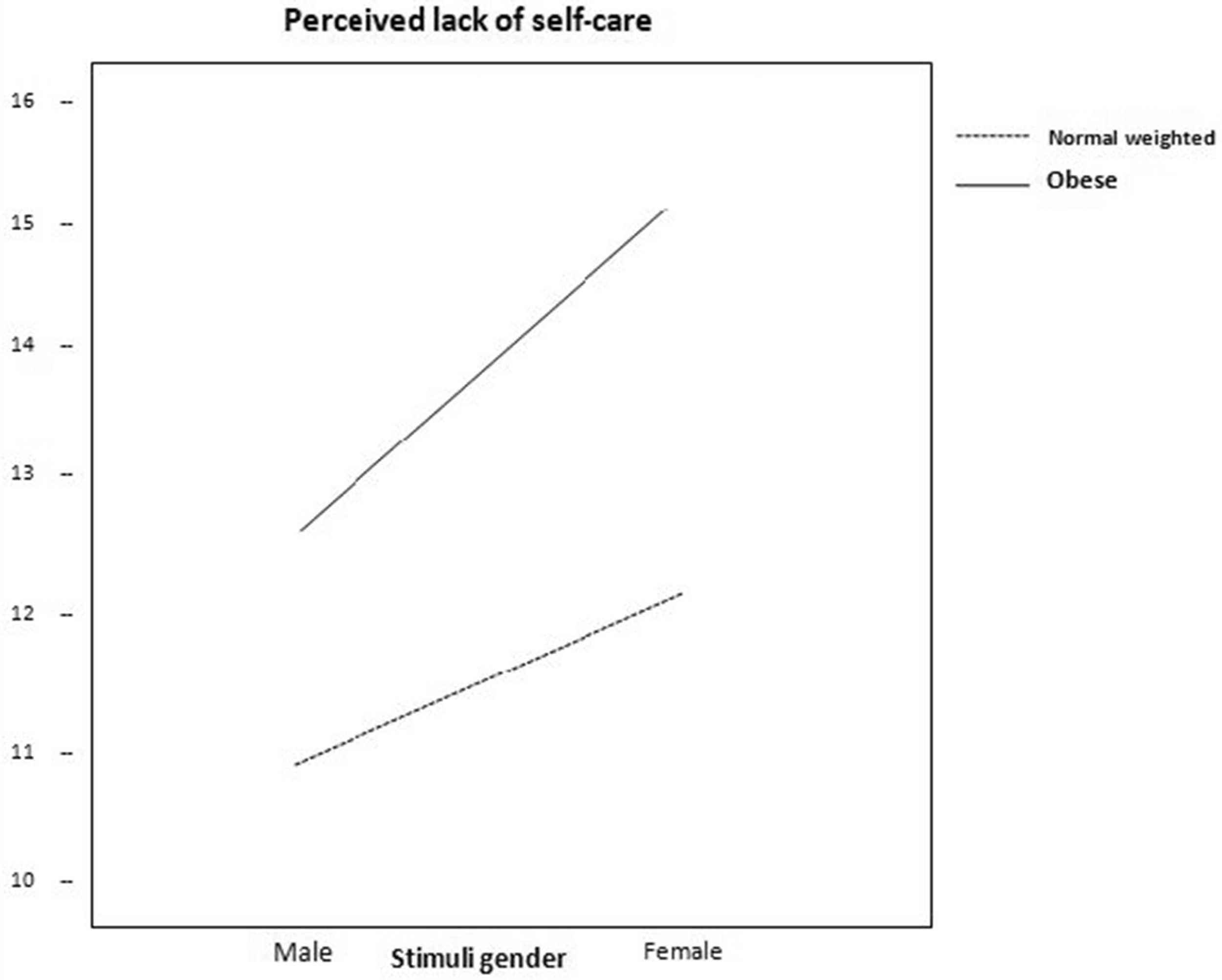
Interaction effects between gender and weight on stereotypes (perceived lack of self-care).
From Figure 3, it can be seen that scores on Antipathy are nearly the same as the scores on Perceived lack of self-care. Male stimuli with normal body weight had the lowest score, followed by female stimuli with normal body weight. Male individuals with obesity are next, while the highest score on Antipathy was given to female stimuli with obesity.
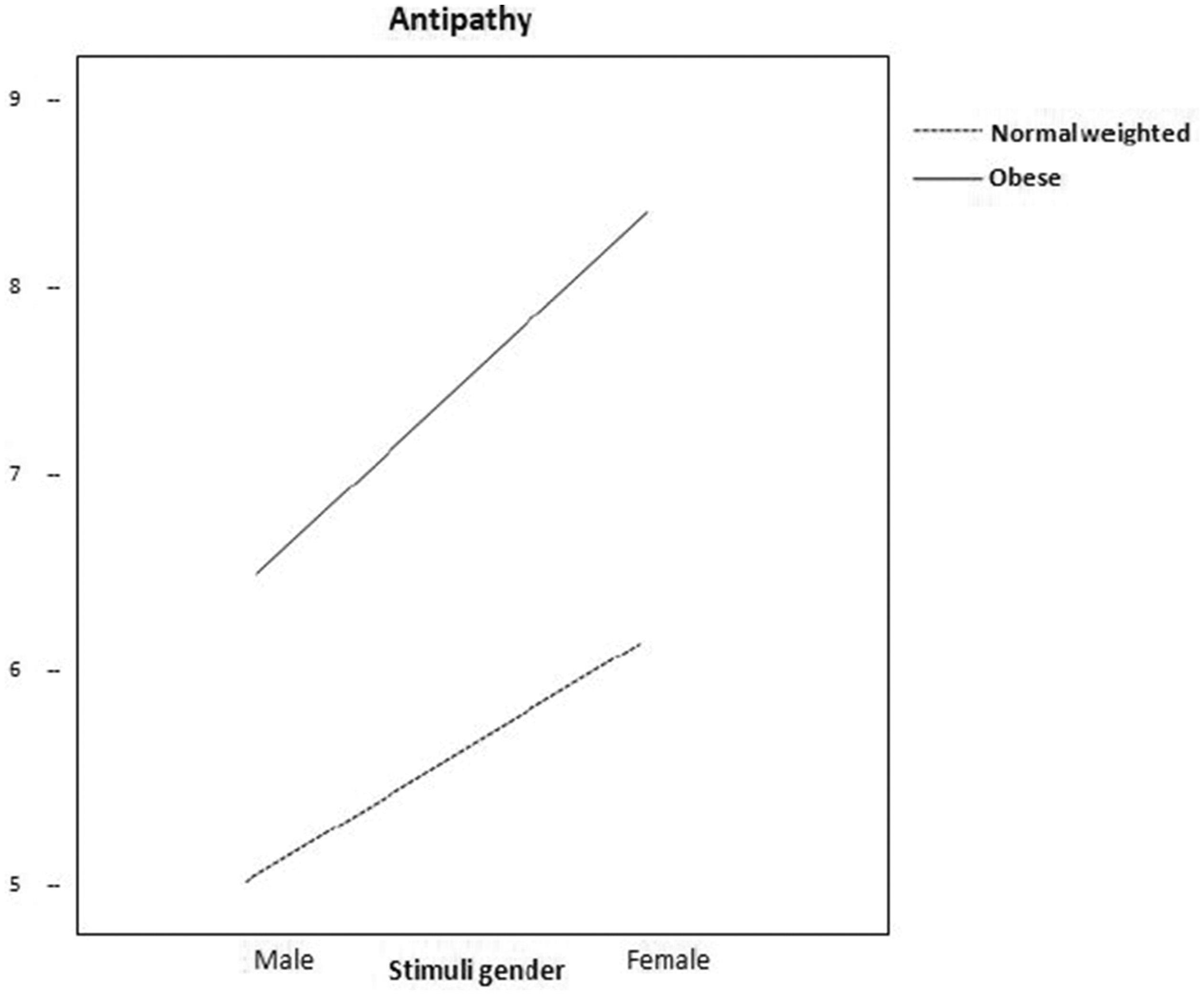
Interaction effects between gender and weight on stereotypes (antipathy).

Unreduced model.
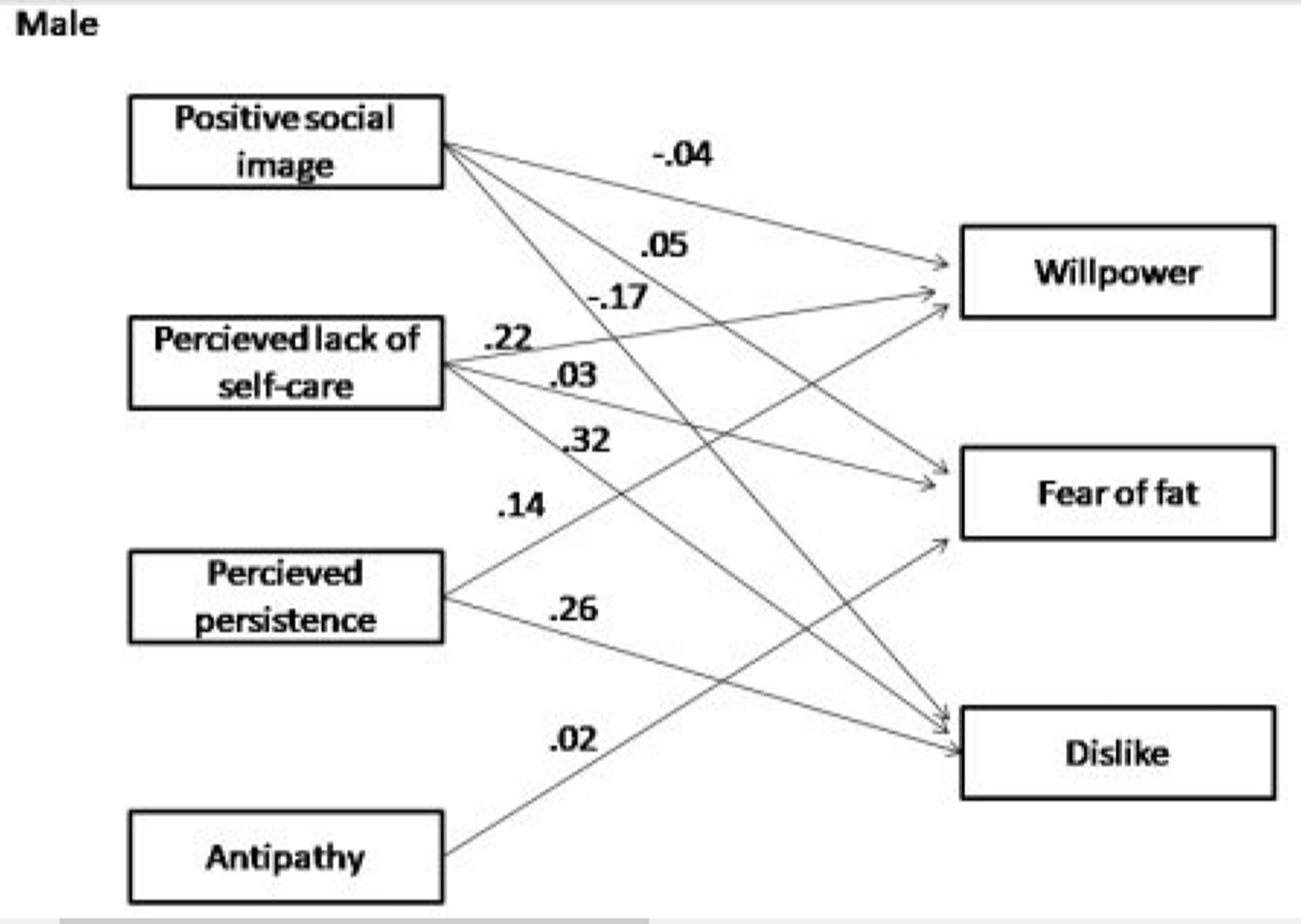
Reduced model for the relationship between anti-fat stereotypes and prejudices—male stimuli.
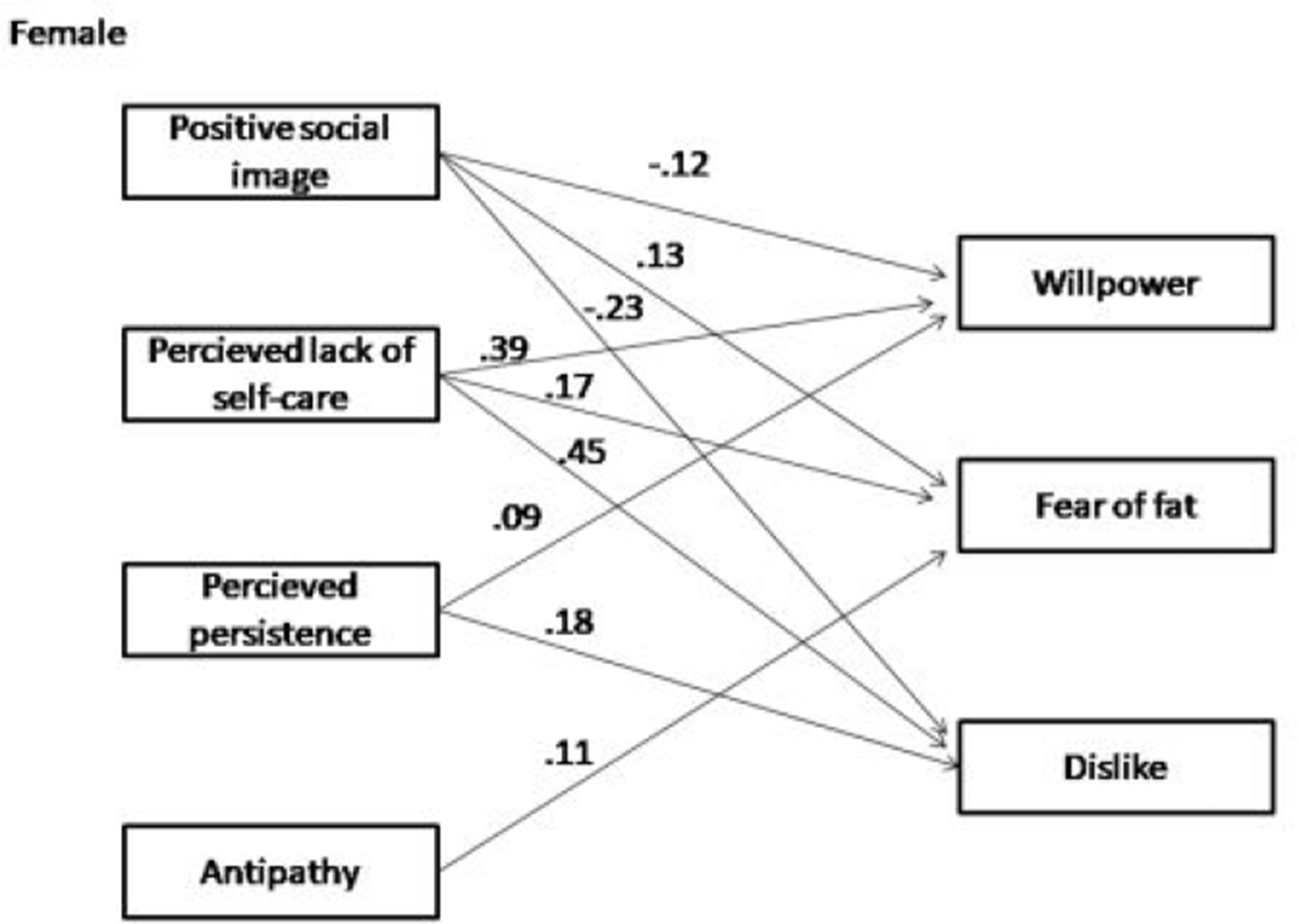
Reduced model for the relationship between anti-fat stereotypes and prejudices—female stimuli.
Structural equation modeling (multigroup moderation)
After ANOVA we proceeded to the multigroup moderation analysis using AMOS. The first step in this analysis was to check if our model has adequate fit indices. Our model is presented in the graph below (Figure 4).
The model showed a great fit on most of the relative fit indices (NFI = 1.000; IFI = 1.000; CFI = 1.000) and some of the absolute fit indices (SRMR = .000), except for chi-square (χ2 = 1466.751, p = .000) which is statistically significant. This could be expected due to the size of the sample. Furthermore, the value of RMSEA (.208) was too high. But, because most of the indices showed adequate fit, we can conclude that this model has an adequate fit. After that, we removed the paths which were not statistically significant neither for the female nor male stimuli with obesity.
The shortened model showed a great fit on both relative fit indices (NFI = .998; IFI = 1.002; CFI = 1.000) and on the absolute fit indices (SRMR = .01; χ2 = 2.185, p = .832; χ2/df = .469; RMSEA = .000). A short model with estimates is shown in the following figures, separately for males (Figure 5) and females (Figure 6).
Regression estimates for stimuli photographs of both female and male individuals are presented in the table below (Table 3)
From Table 3, we can see that Positive social image significantly predicts Willpower only for female stimuli with obesity, and Fear of fat and Dislike for both female and male stimuli. All these relationships were negative, meaning that a higher Positive social image is related to lower levels of the other three variables in question. Perceived lack of self-care significantly predicts Willpower and Dislike for both female and male stimuli with obesity, and Fear of fat only for the female stimuli. Perceived persistence significantly predicts Willpower and Dislike for both female and male stimuli with obesity. Antipathy is close to being a statistically significant predictor of Fear of fat only for the female stimuli.
We then proceeded toward the path analysis in order to examine the potential moderating role of stimuli-individuals gender in the relationship between stereotypes and prejudices.
The first step in this examination was to check the statistical significance of the chi-square of the unconstrained model. This was done through the stats package in excel. 3 The results showed that this model is not significantly different for male and female stimuli individuals (χ2 = 2.185; df = 6; p > .05). The second step was to check the potential differences between male and female stimuli on a fully constrained model. The results on a fully constrained model show that there are differences between male and female stimuli regarding the relationship between stereotypes and prejudices (χ2 = 23.467; df = 12; p < .001). As a result, we proceeded to the individual path analysis in order to see which relationships are moderated by the gender of the individuals in the stimuli photographs.
The second step was to check individual paths in this model in order to see which of these relationships is moderated by the gender of stimulus-individuals with obesity. To answer our question, every single path needed to be constrained separately and checked for statistical significance. The significance was tested through a comparison of the border level of the chi-square value proposed for each of the three levels of confidence intervals (90%, 95%, and 99%). The border level for significance at the 90% confidence interval was 4.89 (p < .1), for the 95% confidence interval was 6.03 (p < .05), and for the 99% confidence interval was 8.82 (p < .01). In order to conclude that gender has a statistically significant effect on one of the paths, the chi-square value for that path had to be greater than the border level of one of the confidence intervals. These results are presented in the Table 4.
Statistically significant moderation effects of gender on the relationship between anti-fat stereotypes and prejudices were found for the relationship between Perceived lack of self-care and Willpower, and between Fear of fat and Dislike. Statistically significant moderation effect was also found for the relationship between Perceived lack of self-care and Fear of fat, but only at the level of p < .1.
Discussion
The first hypothesis in this research was that there is a latent structure underlying the traits usually ascribed to individuals with obesity. In the study conducted by Harper and Carels (2014) the authors included five characteristics that are considered to be common stereotypes toward people with obesity: lazy, sloppy, attractive (reverse coded), overindulgent, and poor personal hygiene. The same was done in another study (Vartanian & Silverstein, 2013), just with different traits. In another study, the traits were separated into positive and negative stereotypes (Bessenoff & Sherman, 2000). Namely, the authors summed up all these variables into one measure of stereotypes towards people with obesity. In another research the authors conducted a cluster analysis in order to see the categories within broader social stereotypes (Andersen & Klatzky, 1987). As can be seen, researchers who examine different types of stereotypes tend to group individual traits in some manner. In this study, instead of just summing up stereotypical traits into one score, or instead of separating traits into positive and negative ones, we wanted to find the latent structure underlying the traits. Namely, we intended to obtain a more precise measure of stereotypes toward individuals with obesity than the measures from previous studies, but also broader in comparison to each trait taken individually. This hypothesis was confirmed. We found that there is a latent structure of anti-fat stereotypes underlying the specific traits we used in our research, and it consists of the following factors: Positive social image, Perceived lack of self-care, Perceived persistence, and Antipathy. We can conclude that the results of this research are in accordance with previous studies which have also found a latent structure underlying anti-fat stereotypes. The contribution of this particular research is that we have found a very specific latent structure, compared to most of the previous studies.
The second hypothesis was that there are statistically significant differences in anti-fat stereotypes between stimuli photographs of individuals with obesity and individuals with normal body weight. This hypothesis was confirmed. When it comes to differences in ascribing positive or negative features to individuals with obesity compared to individuals with average body weight, the obtained results in this research are in accordance with the results of previous studies which show that respondents consistently ascribe negative characteristics more, and positive ones less, to individuals with obesity (Brochu & Morrison, 2007; Greenleaf et al., 2004; Harris et al., 1982). More precisely, the results of our research show that stimuli with obesity are given lower scores on Positive social image, higher scores on Perceived lack of self-care, lower scores on Perceived persistence, and higher scores on Antipathy. The authors of one study (Harris et al., 1982) found that students attending Australian universities gave people with obesity lower scores compared to individuals with normal weight on the following characteristics: activity, intelligence, hardworking, attractiveness, popularity, successfulness, athletic. They also graded individuals with obesity as less appropriately sex-typed than individuals with average weight. Furthermore, Greenleaf and associates (2004) examined which characteristics respondents were prone to attribute to the silhouettes of people with different body weight and found that respondents attributed the following traits to the silhouettes of individuals with obesity: lazy, slow, unhappy, sad, ugly, unhealthy, etc. At the same time, they attributed much more positive qualities to the silhouettes of individuals with normal body weight, such as: athletic, in shape, normal, pretty, etc. Brochu and Morrison (2007) respondents viewed photographs of people with obesity and people with normal body weight and were asked to rate the people in the photographs based on a list of positive and negative traits. Positive characteristics included: attractive, friendly, goal-oriented, happy, hardworking, and intelligent. Negative characteristics included: inactive, lazy, sloppy, undisciplined, unhealthy, and unpopular. It has been shown that respondents are more likely to attribute positive characteristics to people with normal body weight than to people with obesity, while they ascribe negative characteristics more often to individuals with obesity. These authors also measured the time required for respondents to assign negative or positive characteristics to individuals on stimuli photographs and it turned out that respondents attributed positive traits more quickly to people with normal body weight, and negative ones more quickly to individuals with obesity (Brochu & Morrison, 2007). In one study (Horsburgh-McLeod et al., 2009) respondents were asked to describe a typical day in the life of an individual in a photograph, and the results showed that respondents gave more negative descriptions, with negative valence, of a typical day of individuals with obesity. The same results were obtained in our research. Respondents consistently attributed more negative features to individuals with obesity, and positive ones to a lesser extent, while they were more likely to attribute positive, and to a lesser extent negative traits, to people with normal body weight.
The third hypothesis was that there is an interaction effect of gender and weight of an individual on anti-fat stereotypes. This hypothesis was also confirmed by the results of our research. As mentioned in the theoretical background, some studies have shown that gender of individuals with obesity can be a significant factor in assessing the personality traits of these individuals (Greenleaf et al., 2004), while in other studies this effect was not found (Brochu & Morrison, 2007; Harris et al., 1982). Our research confirms differences in the perception of female and male individuals with obesity. Namely, in our study, women with obesity were attributed positive traits to a lesser degree and negative traits more frequently compared to men with obesity. More precisely, stimuli photographs of female individuals with obesity were given lower scores on Positive social image, higher scores on Perceived lack of self-care, lower scores on Perceived persistence, and higher scores on Antipathy. This is in accordance with some previous studies (e.g. Greenleaf et al., 2004). For example, Greenleaf and associates (2004) examined the characteristics people attributed to silhouettes of individuals with different body weight and found that respondents attributed the following traits to obese silhouettes: lazy, slow, unhappy, sad, ugly, unhealthy, etc. In addition, more positive traits were attributed to men, both in a situation where they had obesity and in the mid-weight silhouette observation situation.
The fourth hypothesis in our research was that anti-fat stereotypes can predict anti-fat prejudices. The fifth hypothesis was that the gender of individuals with obesity is a statistically significant moderator in the relationship between anti-fat stereotypes and anti-fat prejudices. These hypotheses were partially confirmed by the results of our research. Namely, some of the anti-fat stereotypes predicted anti-fat prejudices, and gender was a significant moderator in only some of the relationships between anti-fat stereotypes and anti-fat prejudices.
The results of this study show that there is a significant relationship between the dimensions of prejudices and the positive and negative traits that respondents attribute to people with obesity. Namely, the role of stereotypes as the cognitive predecessors of prejudices (R. Brown, 2010; Devine, 1989) is confirmed. Anti-fat stereotypes predicted anti-fat prejudices, but the relationship between these constructs was not the same for male and female stimuli with obesity. This relationship was stronger for female individuals with obesity. Namely, perceived Positive social image predicted all three components of anti-fat prejudices for female stimuli (Willpower – negatively, Fear of fat – positively and Dislike - negatively), meaning that stereotypes including positive traits are associated with the less perceived importance of one’s willpower to lose weight, more with one’s own fear of gaining weight, and with a lower dislike of individuals with obesity. The positive relationship between perceived Positive social image and Fear of fat is an interesting one. This relationship can be explained by an earlier indication that positive stereotypes can signal latent negativity to the target of stereotypes (Siy & Cheryan, 2016). Namely, since the Fear of fat is directed towards oneself, the person with a positive stereotype could possibly feel the latent negativity in their own stereotype. For male respondents, a statistically significant relationship was found only between Perceived social image and Dislike. The relationship between perceived Positive social image and Dislike is clear, as positive stereotypes can lead to a lower dislike of individuals with obesity and a lower level of belief that individuals with obesity are responsible for their weight.
The stereotype factor Perceived lack of self-care positively predicted components of prejudices for female stimuli, but did not predict Fear of fat for male stimuli and Dislike for female stimuli. The differences regarding Fear of fat could be accounted for by the fact that there were more female respondents in our sample. Females would naturally be more afraid of gaining weight when looking at female individuals with obesity than when looking at male individuals with obesity. Furthermore, females generally show greater fear of becoming fat (Lieberman et al., 2012). The differences between appraisals of male and female individuals with obesity regarding the relationship between the stereotype factor Perceived lack of self-care and Dislike can indicate that perceiving male individuals with obesity as individuals who lack self-care can lead to a dislike of those individuals but does not lead to the same outcome in female individuals with obesity. This result can also be accounted for by the fact that individuals with obesity were seen as less attractive in previous studies (e.g. Brochu & Morrison, 2007), and that there were more females in our sample who look at males as potential partners. Perceived persistence positively predicted both Willpower and Dislike, which is in accordance with the previously stated findings that weight is controllable, and is associated with a higher dislike for people with obesity (Crandall, 1994).
The final analysis conducted in this study was a moderation analysis, which showed that the only differences between male and female stimuli with obesity regarding the relationship between stereotypes and prejudices, which are statistically significant, are those between Perceived lack of self-care and Willpower, Perceived lack of self-care and Dislike and, at the lowest level of statistical significance, between Perceived lack of self-care and Fear of fat. These results indicate that stereotypes have nearly the same effect on prejudices for individuals with obesity of both genders, except for the stereotype factor Perceived lack of self-care, which has different effects on prejudices against male and female individuals with obesity. In one of the last paragraphs, we stated that differences regarding Perceived lack of self-care and Fear of fat could be due to the fact that females are more afraid of becoming fat, as previous studies suggest (Lieberman et al., 2012). On the other hand, there were more females in our sample. The differences regarding the relationship between Perceived lack of self-care and Dislike suggest that perceiving male individuals with obesity as individuals who do not take care of themselves leads to a higher dislike of them when compared to female individuals with obesity who are perceived as if they lack self-care.
Finally, we should also discuss the implication of the results of this research for the hypothesis pointed out by previous authors regarding the weak social desirability barrier toward the expression of anti-fat prejudices. An interesting fact drawn from previous studies is that there is no social barrier preventing the expression of prejudices against people with obesity or that it is, at least, a weak barrier (Crandall, 1994; Crandall & Biernat, 1990; Morrison & O’Connor, 1999). In this study, we clearly see that prejudices towards people with obesity exist, and by taking into account that there is no way to examine these prejudices without at least the slightest suspicion regarding the topic of the research, on the respondents’ part, we can assume that this is a confirmation of a weak social barrier preventing the expression of prejudices against people with obesity. Namely, Crandall and Tomson (1993, as cited by Crandall, 1994) conducted a survey where they asked the respondents to evaluate a person based on their statements on several issues (the respondents read the statements of an imaginary individual). Estimates referred to how much they agreed with that person and how much they liked that person. The results showed that the respondents evaluated a person most negatively when his/hers statements were directed against African-Americans, most positively when his/hers statements were neutral, and moderately when negative statements were directed toward people with obesity. Based on this authors concluded that it is possible that prejudices towards African-Americans are only better disguised than prejudices towards people with obesity. In conclusion, the researchers are referring to the assumptions of Festinger et al. (1950) who consider that social pressure increases with the degree to which norms are considered important. From the result of the above-mentioned experiment, it is evident that social pressure towards acceptance is significantly higher when it comes to attitudes toward African-Americans, rather than toward people with obesity.
Conclusion
Based on the results of this study we can conclude that the existence of prejudices and stereotypes towards people with obesity has been confirmed. We can also conclude that non-obese people are seen in a more positive light than people with obesity are. It has also been confirmed that the gender of individuals with obesity is important when assessing their characteristics. Thus, men with obesity will be more positively evaluated than women with obesity. In the end, we can conclude that there is a link between prejudices toward obese individuals and stereotypes about them, meaning that stereotypes toward obese individuals can lead to prejudices against them.
The advantages of this study include clarifying the role of gender of obese individuals, which was not made clear in past studies (Brochu & Morrison, 2007; Greenleaf et al., 2004; Harris et al., 1982). Furthermore, most of the previous research included gender only as a demographic variable of the respondents (Perez-Lopez et al., 2001; Sabin et al., 2012), while a shortlist of studies examined the effect of the gender of individuals with obesity on those who evaluated them (Brochu & Morrison, 2007; Greenleaf et al., 2004; Harris et al., 1982).
The practical implications of this study include the possibility of introducing better strategies regarding eliminating stereotypes and prejudices against individuals with obesity because they give us a better understanding of these constructs and their relationships.
The limitations of this research are that the body weight of the respondents was not measured. Another limitation is that the sample in this research consisted mainly of female respondents due to which differences between males and females could not be calculated. Finally, another limitation of this research is that we did not include respondents with different levels of education and of different economic backgrounds. Taking all the aforesaid into account, for further research we suggest adding data regarding the respondents’ own weight status, the inclusion of individuals of different levels of education and economic status, as well as an equal number of male and female respondents.
Footnotes
Declaration of Conflicting Interests
The author(s) declared no potential conflicts of interest with respect to the research, authorship, and/or publication of this article.
Funding
The author(s) disclosed receipt of the following financial support for the research, authorship, and/or publication of this article: For the first author of this paper, Ana Jovančević, work on this paper was supported by the Ministry of Education, Science and Technological Development of the Republic of Serbia (Contract No. 451–03-9/2021–14/200165).
