



Abstract
Psychological maltreatment is an important public health concern that has been linked with a variety of negative psychosocial consequences and adjustment problems in childhood to adulthood. The purpose of the current study sought to explore the direct and indirect associations between psychological maltreatment, social ostracism, affective experiences, and loneliness among high school Turkish adolescents. Participants were comprised of 791 adolescents attending three public high schools in Turkey. Students were mostly male with a mean age of 16.35 (SD = 1.09) years. Findings from the analyses indicated that social ostracism mediated the relationship between psychological maltreatment and both positive and negative affective experiences. Social ostracism and affective experiences mediated the effect of psychological maltreatment on adolescent feelings of loneliness. Results of the present study suggest that social ostracism and affective experiences are important mechanisms that may help to understand the impacts of psychological maltreatment on adolescent feelings of loneliness.
Introduction
Psychological maltreatment is an important public health concern that has been linked with a variety of negative psychosocial consequences and adjustment problems in childhood to adulthood (Arslan, 2016; Paul & Eckenrode, 2015). Previous studies have supported that psychological abuse and neglect not only impairs current adolescents’ functioning and mental health but also causes various significant challenges in their later psychosocial adjustment and functioning (Arslan, 2018a; Arslan & Balkıs, 2014; Duprey et al., 2019; Hagborg et al., 2017; McPhie et al., 2014; Paul & Eckenrode, 2015; Shields & Cicchetti, 2001). Despite the impairment caused by psychological maltreatment on the youth development, it has not been thoroughly examined (Egeland, 2009; Feiring & Zielinski, 2011). Nonetheless, studies have pointed out that these experiences (e.g., spurning, isolating, rejecting, and terrorizing) might be more strongly associated with individuals’ mental health and functioning, compared with both physical and sexual abuse or neglect (Brown et al., 2016; Gross & Keller, 1992; Infurna et al., 2016; Leeson & Nixon, 2011). Although psychological symptoms have also been reported as the most common type of psychological maltreatment outcome, other types of consequences that are important to understand the detrimental impacts of this experience have been relatively ignored (Feiring & Zielinski, 2011). The objective of the present study is, therefore, to examine the effect of psychological maltreatment on the feelings of loneliness through social ostracism and affective experiences among adolescents.
Pathway from psychological maltreatment to adolescent outcomes
Psychological maltreatment is characterized by both abuse and neglect experiences referring to potentially harmful parent–child interactions, which might lead to important impairment to the child’s development and mental health (Arslan, 2017b; Glaser, 2002). It is a repeated pattern of parent behaviors that expresses to youths that they are unwanted, unloved, worthless, or only of value in meeting another’s needs that result in lasting damage to their functioning and adjustment (Brassard et al., 2000). Psychological maltreatment, therefore, thwarts the fulfillment of fundamental psychological needs of humans including belonging, safety, esteem, and love (Brassard et al., 2000; Hart et al., 1997) and is associated with a number of short- and long-term challenges in psychosocial adjustment in childhood to adulthood (Arslan, 2017a; Chen & Qin, 2020; Glaser, 2002; Gross & Keller, 1992; Paul & Eckenrode, 2015), such as the feelings of loneliness. Loneliness refers to the subjective feeling or experience of deficiencies in one’s social relationships (Russell et al., 1984) and an absence of meaningful and intimate relationships with others (Vanhalst et al., 2015). Previous research has revealed that psychological maltreatment has a positive effect on adolescent feelings of loneliness (Flett et al., 2016; Luo et al., 2020). Moreover, loneliness is identified as an important risk factor for an individual’s mental health and adjustment and a threat to youth healthy development and well-being (Arslan, 2020; Cacioppo et al., 2006; Chai et al., 2019; Lasgaard et al., 2011; Luo et al., 2020). Therefore, there is a critical need to explore the factors influencing loneliness of adolescents and the constructs underlying the link of psychological maltreatment with loneliness; thereby, it could be provided mental health services for reducing adolescents’ feelings of loneliness and fostering their positive development and well-being.
Literature has also underlined the association between psychological maltreatment and affective experiences. Affective experiences– positive and negative affectivity– here refer to the propensity to experience negative and positive feelings or emotions, such as excited, strong, nervous, active, and guilty. Positive emotions are associated with better psychical and psychological health outcomes, whereas negative experiences are related to greater challenges in individuals’ psychosocial development and adjustment (Kansky & Diener, 2017; Moore & Diener, 2019; Pressman & Cohen, 2005; Simons et al., 2005; Weiser, 2012; Zautra et al., 2005). Several studies have indicated that psychologically maltreated individuals report greater negative experiences and fewer positive feelings (Arslan, 2018a; Jennissen et al., 2016; Smith et al., 2014), and they are more likely to isolate themselves from relationships with other people, providing fewer emotional interactions (Young & Widom, 2014). Moreover, the Broaden-and-Build Theory proposes that affective experiences are theoretically emphasized as important factors for human psychosocial functioning and overall well-being (Fredrickson, 2004), and positive affectivity are specifically recognized as an essential mechanism in coping with negative life experiences (Folkman & Moskowitz, 2000), such as psychological maltreatment, loneliness, and social isolation. Affective experiences might, therefore, help to understand the association between psychological maltreatment and loneliness among adolescents. For example, Jennissen et al. (2016) reported the effect of child maltreatment on negative affectivity and emotional dysregulation, and negative affective experiences mediated the association of maltreatment with emotional dysregulation and psychopathology. Negative affectivity was also reported to be associated with challenges in individuals’ psychosocial functioning, such as less relationship satisfaction, lower social support, and greater loneliness, whereas a significant association was reported between positive affective experiences and a variety of health and developmental outcomes (e.g., longevity, positive social bonds, and resilience; (Kansky & Diener, 2017; Moore & Diener, 2019). Overall, these results suggest that psychological maltreatment has potential to cause changes in affective experiences (i.e., more negative affect and less positive affect) which in turn might lead to negative mental health and well-being outcomes such as depression, anxiety, interpersonal sensitivity, and loneliness (Chen & Qin, 2020; He et al., 2014; Jennissen et al., 2016).
Psychological maltreatment is not only associated with impairment in adolescents’ mental health and well-being but is also related to various significant challenges in their social functioning, such as social ostracism. The desire to form and maintain meaningful and positive relations is identified as one of the most fundamental and universal human needs, and failure or difficulties to satisfy this can lead to various problems for the healthy development and adjustment of individuals (Arslan, 2018b; Arslan et al., 2020; Baumeister & Leary, 1995; Leary, 1990). Social ostracism, which is defined as the experience or perception of being kept apart from other people psychologically (e.g., being ignored) and physically (e.g., rejection, social isolation), thwarts this basic motivational need and can leads to impairments in the cognitive, behavioral and emotional development of individuals (Baumeister & Leary, 1995; Williams & Nida, 2011). Literature has theoretically and empirically emphasized that social ostracism is a significant risk factor for individual’s healthy development and adjustment, and ostracized individuals report greater negative affective experiences, such as jealousy, grief, and loneliness than those who are non-ostracized (e.g., the need-to-belongingness theory, a temporal need‐threat model; Arslan, 2018b; Baumeister & Leary, 1995; Leary, 1990; Williams & Nida, 2011). Arslan (2020) for instance found that social ostracism had the strong effect on adolescent loneliness, and loneliness mediated the effect of it on mental health problems and subjective well-being. Ostracized individuals also reported greater feelings of loneliness and negative affectivity compared with those who were non-ostracized (Aydın et al., 2013; Kavaklı, 2019). Moreover, given the detrimental impairment impacts of psychological maltreatment on individuals’ psychosocial functioning, maltreated adolescents are more likely to have greater ostracism experiences (Arslan, 2018a; van Harmelen et al., 2014). Research showed that psychological maltreatment was associated with rejection sensitivity (Reinhard et al., 2020) and childhood maltreatment led to development of psychosocial problems including social exclusion (Frederick & Goddard, 2007). Therefore, social ostracism could help to explain the association of psychological maltreatment with affective experiences and loneliness among adolescents.
Present study
Much of the research on psychological maltreatment has been focused on the mental health outcomes such as anxiety and depression (Rehan et al., 2017), fewer have examined the effect of these maltreatment experiences on other types of consequences (e.g., ostracism, loneliness) that are important to understand the detrimental impacts of the psychological maltreatment, and; therefore, this association remains unexplored. Specifically, understanding the factors underlying the link of psychological maltreatment with adolescent outcomes may be important to provide mental health services for the coping process and fostering positive youth development and well-being. Within the empirical and theoretical context noted above, the purpose of the current study sought to explore the association between psychological maltreatment, social ostracism, affective experiences, and loneliness among high school Turkish adolescents. To this end, the following research questions were addressed: (H1) social ostracism would mediate the association of psychological maltreatment with adolescent positive and negative affective experience (i.e., negative and positive affectivity); (H2) social ostracism and affective experiences would mediate the association of psychological maltreatment with adolescent feelings of loneliness; and (H3) the mediating effects of ostracism and affective experiences would differ between males and females.
Method
Participants
Participants were comprised of 791 adolescents attending three public high schools in an urban city located in the Mediterranean region of Turkey. Students were 54.1% (428) male and 45.9% (363) female and ranged in age from 14 to 18 years (M = 16.35, SD = .95). Socioeconomic level of participants (SEL) was reported as the following: Low SEL = 21.5%, Moderate SEL = 47.3%, High SEL = 31.2%. Before the administration process, the participants were informed about the purpose of the study and surveys. Informed consent from their parents were also obtained with help of teachers. Then, a pencil-and-paper survey, which is created using the study measures, and demographic items were distributed to the adolescents who volunteered to participate in the study. All students completed the demographic variable items and survey in approximately 30 minutes.
Measures
Psychological Maltreatment Questionnaire
Psychological Maltreatment Questionnaire (PMQ; Arslan, 2015, 2021b) is a 12-item self-report assessment tool developed to measure abusive parental acts among Turkish adolescents and adults. All items of the scale are rated using a 4-point scale, ranging from almost never = 1 to almost always = 4 (e.g., “My parent would not care my thoughts”). Higher scores indicate higher levels of psychological maltreatment. Previous research indicated that the scale had strong internal reliability estimates in Turkish adolescents (Arslan, 2021b).
UCLA Loneliness Scale
The UCLA Loneliness Scale (ULS-20) was used to measure subjective perceptions and feelings of loneliness of adolescents (Russell et al., 1980). All items are scored using a 4-point Likert-type scale, ranging from 1 = never to 4 = often (e.g., “I am unhappy doing so many things alone”). Higher scores on the scale reflect to greater loneliness. Demir (1989) examined the validity of the ULS with the Turkish sample and found that the scale had strong internal reliability estimates.
Social Ostracism Scale
The Social Ostracism Scale was measured using a subscale of the General Belongingness Scale (GBS) developed to assess individuals’ feelings of social exclusion (Malone et al., 2012). The scale includes six items scored using a 7- point Likert-type scale, ranging from 1 = strongly disagree to 4 = strongly agree (e.g., “Because I do not belong, I feel distant during the holiday season”). Higher scores signify greater social ostracism. Previous research showed an internal reliability estimates of the scale was adequate-to-strong, and the scale provided good-data model fit statistics with Turkish adolescent and adult samples (Duru, 2015; Satici & Tekin, 2016).
Positive and Negative Affect Schedule
The Positive and Negative Affect Schedule (PANAS) is a 20–item self-report scale developed to measure individuals’ affective experiences, and it comprises of two subscales: a 10–item positive affectivity (e.g., “Interested”, “Excited”) and a 10–item negative affectivity (e.g., “Distressed”, “Upset”). All items of the scale rated on a 5-point Likert scale, ranging between 1 = not at all and 5 = extremely. Higher scores on the scales refer to greater affective experiences. Research revealed that the PANAS had good psychometric properties and strong internal reliability estimates with the Turkish sample (Gençöz, 2000).
Data analyses
Several data analyses were performed to examine the direct and indirect associations of psychological maltreatment with affective experiences, ostracism, and loneliness. Preliminary analyses, including normality assumption, observed scale characteristics, and correlation analysis, were first conducted. Normality assumption was examined using skewness and kurtosis scores and their cut-of values (Curran et al., 1996), and Pearson correlation analysis was then performed to examine the associations between the study variables. Following examining the preliminary analyses, structural equation modeling (SEM) was used to analyze chain mediating model indicating the role of social ostracism and affective experiences in the relationship between psychological maltreatment and loneliness. Findings from these analyses were assessed using common data–model fit indices and their cut–scores: Tucker Lewis index (TLI) and comparative fit index (CFI) values between .90 and .95 indicated good data–model fit, while values ≥.95 were considered a close data–model fit; the root mean square error of approximation (RMSEA; with 90% confidence interval) values between .05 and .08 were viewed as a good data–model fit, whereas the values ≤.05 were categorized as a close data–model fit (Hooper et al., 2008; Hu & Bentler, 1999). All analyses were performed using SPSS version 25 and AMOS version 24.
Results
Preliminary analyses
Findings of the preliminary analyses indicated that skewness and kurtosis scores were between -.749 and .620, suggesting that all variables of the study were relatively normally distributed (skewness and kurtosis scores < |1|). Further results showed that the scales had adequate-to-strong internal reliability estimates, ranging from .75 to .86, as shown in Table 1. Bivariate correlation analysis furthermore showed that psychological maltreatment was significantly and positively correlated with loneliness (r = .33, p < .001), negative affectivity (r = .15, p < .001), and social ostracism (r = .24, p < .001) while was negatively associated with positive affectivity (r = –.17, p < .001), ranging from small to moderate effect sizes. Similarly, social ostracism was positively and largely associated with loneliness (r = .58, p < .001) and negative affectivity (r = .41, p < .001), and there was a negative and moderate correlation between ostracism and positive affectivity (r = –.22, p < .001). finally, loneliness was significantly and moderately correlated with positive (r = –.30, p < .001) and negative affectivity (r = .35, p < .001). Observed scale characteristics and correlation results are presented in Table 1.
Observed scale characteristics and correlation results.

Note. **p < .001.
Structural equation modeling
Structural equation modeling was performed to examine the mediating role of affective experiences and social ostracism in the link of psychological maltreatment with adolescent feelings of loneliness. Findings from this analysis revealed that the modal provided close data–model fit statistics (χ2 = 2.16, df = 1, p < .001, RMSEA = .038 [90% CI for RMSEA: .00–.11], CFI = 99, and TLI = .98). Further, standardized regression estimates showed that psychological maltreatment was a significant and negative predictor of positive affective experience (β = –.13, t = –3.63, p < .001) and positively predicted social ostracism (β = .24, t = 6.86, p < .001) and loneliness (β = .17, t = 6.16, p < .001. However, the effect of it on negative affective experience was found non-significant (β = .05, t = 1.54, p = .13). Social ostracism had also significant effect on positive (β = –.19, t = –5.23, p < .001) and negative affective experience (β = .40, t = 12.01, p < .001) and loneliness (β = .46, t = 14.71, p < .001). Loneliness was predicted by positive (β = –.16, t = –5.79, p < .001) and negative affective experience (β = .12, t = 4.13, p < .001), as shown in Figure 1. Social ostracism fully mediated the association of psychological maltreatment with negative affective experience. Nonetheless, it was a partial mediator in the effect of psychological maltreatment on positive affective experience and loneliness. Psychological maltreatment accounted for 6% of the variance in social ostracism, and it and social ostracism accounted for 6% of the variance in positive affective experience and 16% of the variance in negative affective experience. All variables, together, accounted for 42% of the variance in loneliness of adolescents. Standardized total, direct and indirect effects of the model are presented in Table 2.
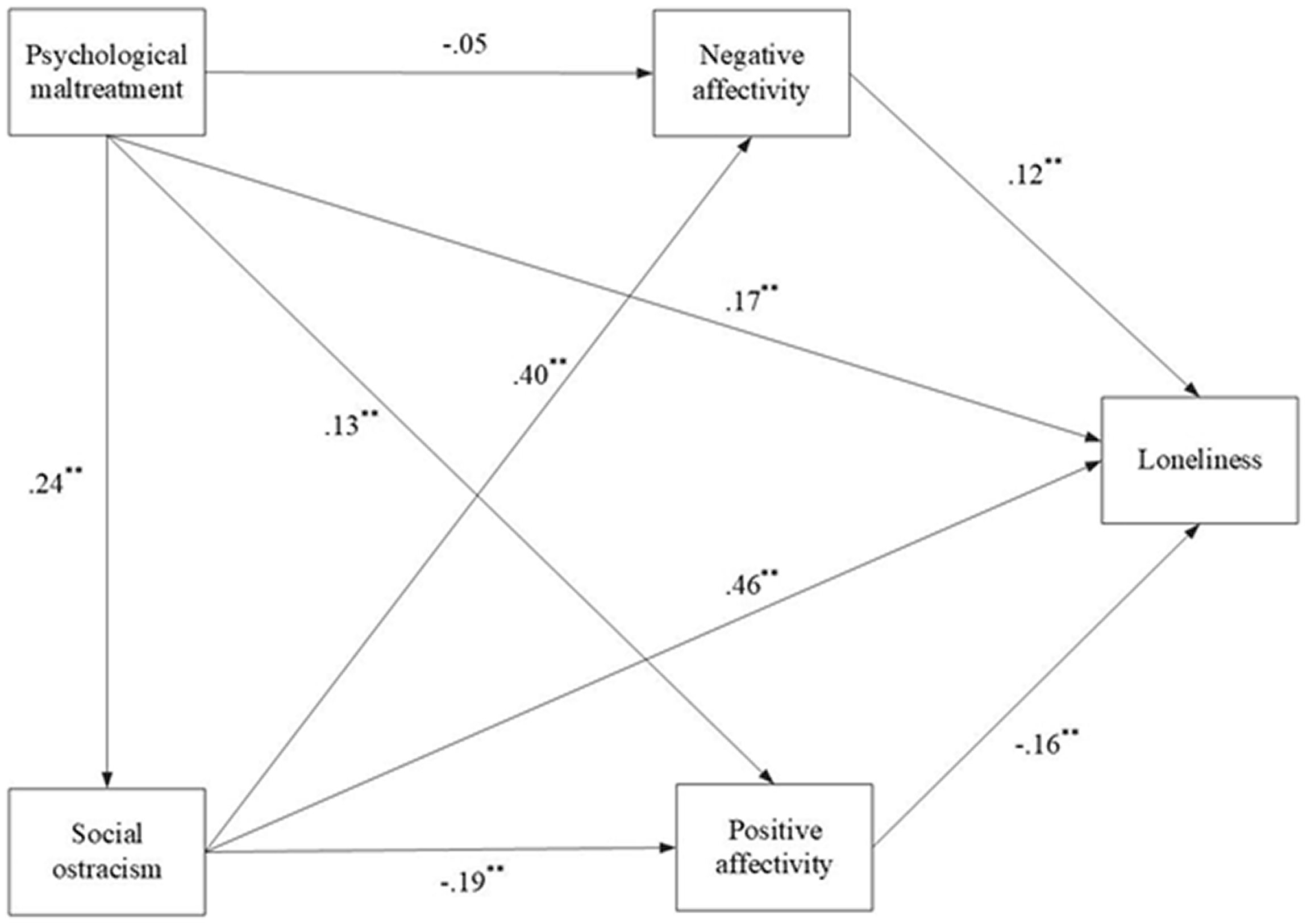
Structural equation model. Note. **p < .001.
Standardized indirect effects.
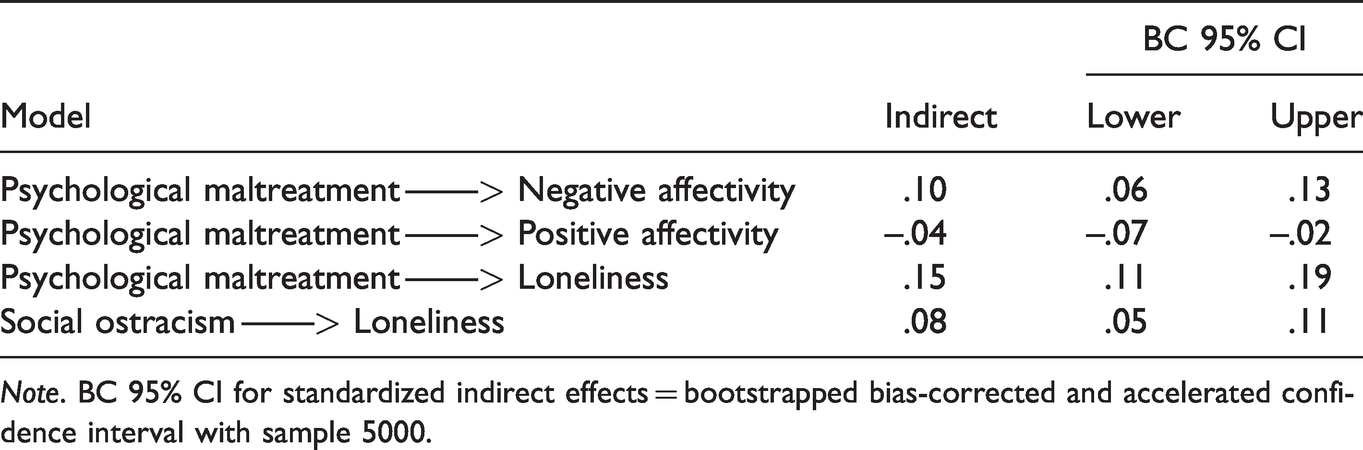
Note. BC 95% CI for standardized indirect effects = bootstrapped bias-corrected and accelerated confidence interval with sample 5000.
Although gender differences are not the purpose of this study, the multi-group analysis was also conducted to whether the mediating effect of ostracism and affective experiences differ significantly between males and females. Findings from the structural model indicated that overall model yielded excellent data-model fit statistics (χ2 = 3.34, df = 2, p = .19, CFI = 1.00, TLI = .98, RMSEA [95% CI] = .029 [.00, .082]). Standardized regression estimates of the female model revealed the full mediating role of social ostracism in the effect of psychological maltreatment on both affective experiences and loneliness. All variables, together, accounted for 43% of the variance in females’ feelings of loneliness. Similarly, the structural model of males supported the full mediating effect of social ostracism on this relationship, accounting for 40% of the variance in their feeling of loneliness. This evidence suggests that psychological maltreatment more strongly predicted females’ social ostracism and affective experiences, compared to males, and the effect of mediators differ across females and males. Findings from the standardized regression estimates (β) are presented in Table 3.
Standardized regression coefficients for female and male adolescents.
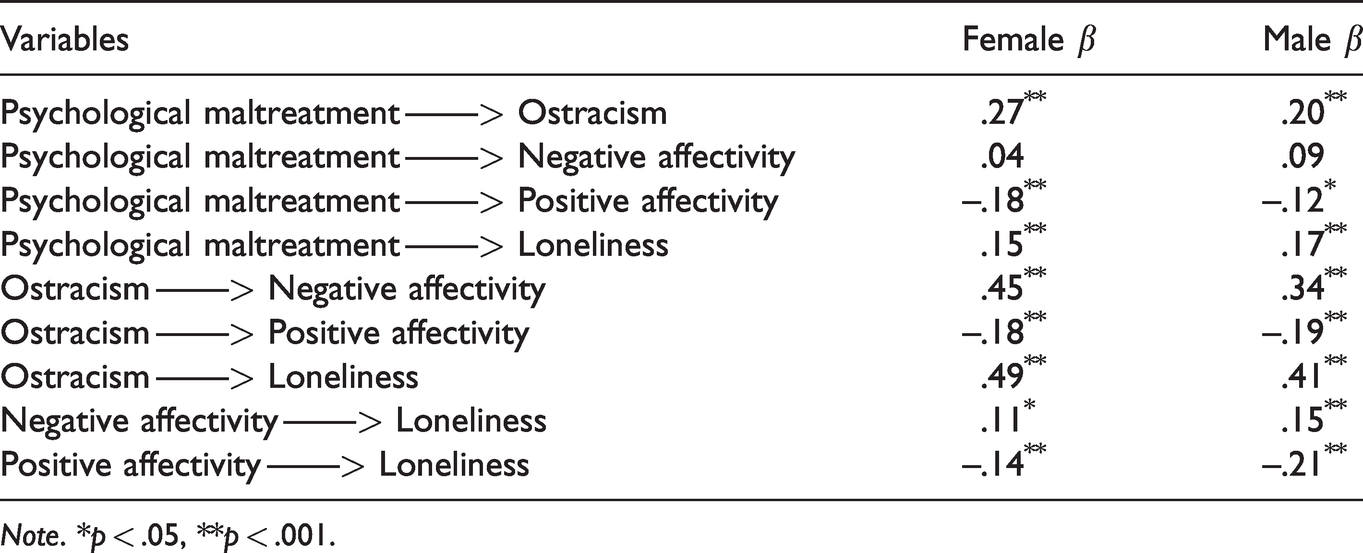
Note. *p < .05, **p < .001.
Discussion
The purpose of the current study was to analyze the direct and indirect association of psychological maltreatment with social ostracism, positive and negative affectivity, and loneliness among high school Turkish adolescents. Findings from the analyses indicated that psychological maltreatment directly and significantly predicted adolescent feelings of ostracism, and positive and negative affective experience was also predicted through social ostracism. Specifically, socially ostracism fully mediated the association between psychological maltreatment and negative affective experience. Although a growing number of studies have examined the detrimental impacts of psychological maltreatment on the outcomes, few have focused on the association between this experience and adolescent affective and social adjustment (Arslan, 2018a; Brodski & Hutz, 2012). Most of these studies have investigated the association between psychological maltreatment and psychopathology (e.g. depression, aggressive behavior) and the impacts of this experience on other types of consequences (e.g. social ostracism) have been relatively unexplored (Feiring & Zielinski, 2011). In addition to the cross-sectional and longitudinal research supporting the effect of psychological maltreatment on adolescent psychopathology, the study results thus provide an essential contribution by exploring the psychological maltreatment as a significant factor of social ostracism and positive and negative affectivity in adolescents. Social-ecological framework has emphasized the importance of risk (e.g., child maltreatment) and protective factors (e.g., positive affective traits) on individual-level outcomes and that familial-level factors are specifically critical for positive youth development and adjustment (Arslan, 2018a; Belsky, 1980). Some empirical evidence has supported the theoretical literature, indicating that adolescents with higher psychosocial maltreatment report lower levels of social acceptance and positive affectivity, as well as higher levels of negative affective experience than those with lower (Arslan, 2018a; Brodski & Hutz, 2012; Jennissen et al., 2016). Parent-child interactions are essential experiences for youth psychosocial and behavioral development (Diener & Diener-McGavran, 2008), and abusive parental behaviors might cause various difficulties in not only current but also later adjustment and functioning of adolescents (Iwaniec et al., 2007). Psychological maltreatment thwarts the desire to form and maintain positive bonds with others and is associated with various challenges in the social relationships of people (Brassard et al., 2000; Hart et al., 1997). Therefore, adolescents who report high levels of psychological maltreatment are more likely to have higher levels of social ostracism (Arslan, 2018a; Chapple et al., 2005), which is associated with fewer positive affectivity, as well as greater negative affective experiences (Arslan, 2018c; Williams & Nida, 2011). Consistent with findings from this study, literature both theoretically and empirically suggests that psychologically maltreated adolescents experience greater challenges in their emotional and social functioning, compared to those who are non-maltreated. For example, child maltreatment was found to be associated with impairment of psychosocial functioning and related mental health outcomes such as attachment, self-esteem, anxiety, posttraumatic stress, and internalizing and externalizing problems (Mills et al., 2013; Taussig & Culhane, 2010). Earlier research also suggests provided evidence regarding the role of positive and negative affectivities in the relationship between child maltreatment and well-being and mental health outcomes. For example, higher positive affect and lower negative affect were found to reduce the impact of childhood maltreatment (i.e., emotional abuse, physical abuse, emotional neglect, and physical neglect) on satisfaction with life (Xiang et al., 2020). Evidence also suggests that stressful events in early life heightens the risk of experiencing high negative emotion and low positive emotion which also have potential to impair mental health and well-being of individuals (Infurna et al., 2015; Turiano et al., 2017). This suggests that psychological maltreatment possesses important adverse impacts on youth mental health.
Further findings of the study showed that social ostracism had a significant effect on adolescent affective experiences. Specifically, ostracism experience was more strongly associated with negative affectivity than positive affective experience, and it fully mediated the relationship of psychological maltreatment with negative affectivity while partially explained the association between maltreatment and positive affectivity. Moreover, social ostracism had a significant effect on youth feelings of loneliness and partially mediated the influence of psychological maltreatment on this structure. Consistent with these outcomes, previous research indicated that socially ostracized individuals reported greater negative affectivity and the feelings of loneliness and less positive affective experiences (Arslan, 2018c, 2020; Aydın et al., 2013; Kavaklı, 2019). The need-to-belonging model has highlighted the importance of positive social relationships for individuals’ healthy development and adjustment and problems to satisfy this need can cause various psychosocial difficulties (Baumeister, 2012; Baumeister & Leary, 1995). For example, socially ostracized adolescents experience greater negative experiences such as jealousy, anxiety, grief, and loneliness, whereas being accepted or included can lead to various positive experiences, including contentment, elation, and calm (Arslan & Duru, 2017; Baumeister & Leary, 1995; Osterman, 2000). Duru (2015) reported that social ostracism was significantly associated with negative affectivity and loneliness, and a significant association was also reported between affective experiences and the feelings of loneliness in adolescents (Telef, 2013; van Roekel et al., 2015). Consequently, findings of the present study provide further evidence, supporting that social ostracism has a significant effect on adolescent feelings of loneliness and affective experiences, which confirms that positive and negative affectivity mediates the association of it with loneliness.
Finally, findings revealed that psychological maltreatment directly and significantly predicted loneliness, and social ostracism and positive affectivity mediated the effect of it on adolescent feelings of loneliness. Positive affectivity mediated the relationship of both psychological maltreatment and social ostracism on loneliness; however, psychological maltreatment did not directly predict adolescent negative affectivity, and negative affectivity mediated the effect of psychological maltreatment on loneliness through social ostracism. Affective experiences are a key component of adolescents’ interactions with other people (LaNoue et al., 2013), and positive affectivity is related to better psychical and psychological health, whereas negative experiences are associated with greater challenges in individual’s psychosocial adjustment and functioning (Kansky & Diener, 2017; Moore & Diener, 2019; Pressman & Cohen, 2005; Simons et al., 2005; Weiser, 2012; Zautra et al., 2005). Psychosocial maltreatment adolescents likely isolate themselves from relationships with other people, providing fewer emotional interactions (Young & Widom, 2014), and experiences more negative and less positive affective experiences compared with those who are non-maltreated (Arslan, 2018a; Jennissen et al., 2016; Smith et al., 2014). In addition, given the broaden-and-build approach (Fredrickson, 2004), positive affectivity is identified as a protective and promotive factor for mental health and well-being and is an essential mechanism in coping with stressful life events (Folkman & Moskowitz, 2000). Affective experiences, especially negative affectivity, were found as the significant of whether the individual’s impact of the adverse childhood experiences was scored as negative (LaNoue et al., 2013). Consistent with the current outcomes, literature has suggested that positive affective experiences mitigate the negative impacts of adverse experiences on adolescents’ functional and mental health outcomes (Arslan, 2018c; Jennissen et al., 2016; Kansky & Diener, 2017; Moore & Diener, 2019; Pressman & Cohen, 2005; Yildiz & Kızıldağ, 2018), and positive affectivity may influence their use of resources and mechanism in coping process with psychological maltreatment and social ostracism. Further, given the mediating role of negative affectivity, adolescents with high levels of negative affectivity may be reflecting the impacts of maltreatment experiences on their current health and functioning (LaNoue et al., 2013), and; thereby, they may experience more psychosocial adjustment difficulties, such as loneliness. Several research provides evidence supporting the role of affective experience on a variety of health and adjustment outcomes (Arslan, 2018c; Kansky & Diener, 2017; Moore & Diener, 2019; Yildiz & Kızıldağ, 2018). Jennissen et al. (2016) for example reported that negative affective experience mediated the association of maltreatment with emotional dysregulation and psychopathology. Arslan (2018b) indicated that affective experiences mediated the effect of social ostracism on adolescent mental health problems. Taken together, these results suggest that psychological maltreatment might lead to difficulties in emotional development and adolescents might thereby experience more negative and fewer positive affective outcomes. The results also support the mediating role of affective experiences and social ostracism on loneliness in the context of psychological maltreatment, confirming that higher positive affectivity and lower negative affectivity and ostracism are associated with lower levels of adolescent feelings of loneliness.
Implications and limitations
Finding from the present study indicated that psychological maltreatment had a direct and significant effect on adolescent social ostracism, positive affectivity, and loneliness, and indirectly predicted loneliness and affective experiences through social ostracism. Moreover, positive and negative affectivity mediated the effect of both psychological maltreatment and social ostracism on adolescent feelings of loneliness. Given these outcomes, a number of important implications were presented for research and practice in the context of mental health services. These results suggest that there is a need to develop more comprehensive mental health services for decreasing negative effects of psychological maltreatment on adolescent psychosocial outcomes. First, mental health providers may design the parent-focused preventions and interventions reduce detrimental impacts of psychological maltreatment on adolescent health and well-being from early childhood to adolescence. Positive parent-child interactions may be fostered in these services by promoting resilience factors such as parenting styles, positive communication skills, positive parenting practices, and coaching in coping with negative experiences (Arslan, 2018a). Further, social ostracism mediated the impact of psychological maltreatment on positive and negative affective experiences. Based on these outcomes, mental health providers working with adolescents who have experienced high psychological maltreatment may support adolescents by encouraging their positive group experiences and provide group-based prevention and intervention service to promote their communication skills, self-perception, and inclusive experiences. Mental health providers may help adolescents by providing inclusive activities (e.g., positive teacher-student relationship, peer acceptance, and social activities) that decrease the negative effect of social ostracism for psychologically maltreated adolescents. Specifically, decreasing social ostracism might facilitate individuals to cope with psychological maltreatment, which in turn would promote their positive affectivity and decrease negative affectivity and the feelings of loneliness. Given the mediating effect of positive affectivity on adolescent loneliness, positive affect-based intervention strategies may be developed to promote adolescent positive psychosocial outcomes. Mental health providers may use these interventions to enhance adolescents’ positive affective experiences while reducing the negative affectivity which are the outcomes of maltreatment and ostracism. Individuals who report more positive affective experiences form and maintain meaningful and positive social relationships, which in turn facilitate their psychosocial adjustment (Cohen & Pressman, 2006; Pressman & Cohen, 2005). Positive affective experiences may, therefore, influence their feelings of loneliness by altering interpersonal interactions in the context of psychological maltreatment. Taken all together, results of the present study suggest that social ostracism and affective experiences are important mechanisms that may help to understand the effect of psychological maltreatment on adolescent feelings of loneliness and highlight the importance of prevention and intervention services targeting to promote positive affectivity, inclusive experiences and social interactions in adolescents.
Although finding of this study suggests a number of implications for research and practice in the context of prevention intervention mental health services, it should be considered in light of a few limitations. First, the current study was conducted using the cross-sectional framework and self-report assessment tools, and this limitation makes it difficult to determine causality. Therefore, future studies should be performed to examine the longitudinal effects of psychological maltreatment and the mechanisms that may mediate the association of it with various adolescent outcomes. Moreover, given the limitation of using self-report measures, a variety of data collection approaches (e.g., qualitative) could be used in these studies. Next, participants of the study included high school adolescents who were obtained through convenience research sampling, and this is another important limitation of this study for the generalizability of its results. Further research is required to examine the mediating effect of the study variables in diverse samples, such as early adolescents, young adults in the context of psychological maltreatment. In addition, in this study, we primarily focused on psychologically abusive parental behaviors. However, adolescent may likely to expose maltreatment by their peers. The role of abusive peer behaviors on adolescent development should be examined by future research. Moreover, social ostracism was measured using a subscale of the General Belongingness Scale (GBS). Future research should use better assessment of social ostracism that explicitly reflects social ostracism. Last but not least, experiences of psychological maltreatment, positive and negative affectivities, social ostracism, and loneliness may differ among adolescents. Due to their subjective nature, the relationships among those variables may be affected by a confounding variable such as personality traits. Therefore, future research needs to control for the third variable that can affect the results.
Footnotes
Informed consent informed
Consent was obtained from all participants included in the study.
Declaration of Conflicting Interests
The author(s) declared no potential conflicts of interest with respect to the research, authorship, and/or publication of this article.
Funding
The author(s) received no financial support for the research, authorship, and/or publication of this article.
Ethical approval
All procedures performed in studies involving human participants were in accordance with the ethical standards of the institutional and/or national research committee and with the 1964 Helsinki declaration and its later amendments or comparable ethical standards.
Data availability
The datasets generated during and/or analysed during the current study are available from the corresponding author on reasonable request.
