



Abstract
Although the construct of work engagement has been extensively explored, a systematic meta-analysis based on a consistent categorization of engagement antecedents, outcomes, and well-being correlates is still lacking. The results of prior research reporting 533 correlations from 113 independent samples (k = 94, n = 119,420) were coded using a meta-analytic approach. The effect size for development resources (r = .45) and personal resources (r = .48) was higher than for social resources (r = .36) and for job resources (r = .37). Among the outcomes and well-being correlates explored, the effect size was highest for job satisfaction (r = .60) and commitment (r = .63). Furthermore, moderation analysis showed that (a) concerning the occupational role, work engagement finds a low association with turnover intention among civil servants, volunteer workers, and educators; (b) collectivist cultural environments reported a greater association of feedback with engagement than individualistic environments; (c) the relationship between personal resources and engagement was stronger among workers with university degrees than workers with high school diplomas. Furthermore, the absorption dimension showed a lower effect with all variables under investigation than vigor and dedication.
Keywords
Introduction
Currently, a prominent trend in engagement research is to translate the substantial body of empirical results based on the Job Demands-Resource (JD-R) model into operational strategies to foster employee engagement (Schaufeli, 2017). Accordingly, recent literature calls for using the knowledge attained to promote individual, team, and organizational health, well-being, and performance (Bakker & Albrecht, 2018). The development of an operational approach requires a comprehensive review of empirical results on work engagement antecedents, outcomes, and potential moderators. The current meta-analysis relied on the Job Demands-Resources model (JD-R model; Schaufeli & Taris, 2014), a prominent model used to explore the nomological network of work engagement.
Previous meta-analyses on work engagement antecedents and consequences were published before 2011. Therefore, the systematization of research findings concerning work engagement should be updated. According to the Scopus database, N = 8084 articles were mentioning the word “work engagement” 1 in titles, abstracts, or keywords between 1960 and 2010, but this metric soared to N = 30,657 documents published from 2011 to today. A further gap in the existing literature was that previous meta-analyses had mostly focused narrowly on the relationship between work engagement and a specific variable. For instance, job performance (Christian et al., 2011), resources, challenge demands, and hindrance demands (Crawford et al., 2010), or on a relatively limited number of job demands, job resources, and outcomes (Halbesleben, 2010). Since 2011, reviews on engagement were merely narrative (Pollak et al., 2017), or they were limited in scope and designed to assess the quality of practical interventions and their effectiveness (Knight et al., 2017).
The current study could also broaden previous meta-analyses’ contribution by including various moderators such as age, gender, tenure, economic sector, occupation, and culture (collectivist v. individualistic). Accordingly, the overall aim of this paper is to answer the call for a systematic understanding of engagement antecedents within specific demographic groups, occupational sectors, and work roles (Bakker & Albrecht, 2018). Furthermore, the current meta-analysis distinguishes among the three components of work engagement (i.e., vigor, dedication, and absorption).
Work engagement and the JD-R model
Over the last 20 years, the JD-R model has emerged as one of the leading paradigms in the job stress literature.
According to the JD-R model, employee well-being is affected by a range of workplace characteristics clustered into two main classes: job demands and job resources. Although the job demands entail aspects that require effort and are associated with physical and psychological costs, job resources are defined as job-related aspects that allow employees to cope with the demanding aspects of their job and stimulate their learning and development (Bakker & Demerouti, 2007).
The model assumes that these two types of job characteristics trigger two distinct processes. The so-called health impairment process postulates that prolonged exposure to an excessive amount of job demands combined with a lack of job resources may lead to job burnout that, in the long-term, may result in harmful consequences for employee health and performance. In contrast, the motivational process hypothesizes that job resources may foster employees' level of engagement with subsequent positive outcomes, such as improved job performance and organizational commitment (Taris, 2017).
Work engagement is defined as a positive, fulfilling, work-related psychological state that stems from the combination of three interrelated dimensions, namely vigor, dedication, and absorption (Schaufeli & Bakker, 2004). In a nutshell, vigor involves prominent energy and resilience levels, while dedication to work entails a powerful sense of meaning, pride, and challenges associated with one’s work. Absorption describes employees’ condition of being completely concentrated on their work-related activities and happily being engrossed in them so that time flies by, and they can hardly detach themselves from work.
A significant remark regarding absorption involves its similarity to the concept of flow, describing a brief peak experience that implies a strong focus on the present moment, associated with a lack of self-consciousness as well as a distorted temporal experience (Nakamura & Csikszentmihalyi, 2002). Hence, absorption resembles a mood that lasts longer, while vigor and dedication have been theoretically and empirically identified as the core dimensions of work engagement (Mazzetti et al., 2018).
A considerable body of empirical results contributed to shedding light on the role of demands and resources in promoting employees’ work engagement. Previous literature emphasizes the role of a specific kind of demand, namely the so-called “challenge” demands, as antecedents of engagement (Kim & Beehr, 2018). This is consistent with the theoretical distinction between challenge and hindrance demands (Crawford et al., 2010): whereas the former hinder or impede employees' efforts toward standard work goal attainment and are therefore negatively associated with engagement; the latter has the potential to promote employees’ mastery, personal growth, and future gains. Hence, they stimulate positive emotions and active problem-focused coping strategies that increase willingness to spend their energy on performing work-related tasks with subsequently enhanced engagement. Consequently, decreasing job demands would not be the most effective strategy in enhancing workers’ engagement. As a suitable number of demands leads to the perception of a stimulating job, a disproportionate reduction of these job aspects could lead to a decreased level of engagement among employees (Einarsen et al., 2018).
In contrast, increasing resources constitutes the principal measure to promote work engagement. Indeed, resources have been consistently identified as the strongest predictors of work engagement, given their potential to enable employees to tackle job demands and to trigger a process of personal growth and learning (e.g., Bailey et al., 2017).
According to the motivational process of the JD-R model, resources have a twofold role. They are intrinsically motivating, given their capacity to promote employees' knowledge and mastery by fulfilling basic human needs (i.e., autonomy, belongingness, and competence). In addition, they have an extrinsic motivational potential that translates into instrumental help that allows employees to successfully meet work goals (Bakker & Demerouti, 2017). However, empirical results on the strengths of the association between engagement and different categories of resources are mixed.
Social resources (e.g., leaders’ and colleagues’ supportive behaviors) are particularly salient for employee well-being (Ashforth et al., 2008). Yet, support at the organizational level, such as a supportive culture, has a long-term effect on work engagement when compared to social support at an individual level—that is, forms of support provided by immediate supervisors and co-workers (Biggs et al., 2014a). These mixed results may be attributed to the fact that resources vary significantly across different organizations and work roles, as predicted by the JD-R model (Taris & Schaufeli, 2016).
The previous reasoning underscores the importance of enriching the pool of job resources that individuals could rely on in performing their job as an effective intervention strategy designed to boost both employee engagement and the suitability of practical efforts to evaluate the effectiveness of these strategies as a promising trend in literature on work engagement (Bakker & Albrecht, 2018).
Towards a categorization of resources
A close examination of the literature on work engagement antecedents clearly suggests it focused heavily on the association between engagement and a wide range of resources and, to a lesser extent, demands. Few studies sought to provide a systematic empirical classification of these two categories of engagement antecedents following the theoretical framework of the JD-R model. Among them, a valuable contribution comes from the SEM analysis proposed by Schaufeli (2015a). The observed results substantiated the taxonomy of factors related to engagement into distinct categories of job demands, job resources, in addition to personal resources and engaging leadership.
This empirical evidence had major implications not only on a theoretical but also on a practical level. It led to the development of the Energy Compass, an online tool that can be applied across different organizational contexts to both define and implement tailored interventions that maximize impact on workforce well-being and performance (Schaufeli, 2017). Building on the soundness of the underlying theoretical model, the main strength of this tool lies in the different outcomes it can yield: individual online feedback based on the comparison between the respondent’s profile and the benchmark scores, the opportunity to compare the organizational units with each other and the whole organization with similar companies.
The choice to ground the current meta-analysis on this categorization is also aimed at facilitating drawing practical conclusions from the findings obtained and defining intervention strategies tailored to the specific characteristics of each work environment, in line with the central assumptions of the JD-R model. In line with Schaufeli (2015a), we focused on the evaluation of four types of resources: social resources (e.g., co-worker support), job resources (e.g., task variety), organizational resources (e.g., organizational justice), and developmental resources (e.g., career perspective).
In line with the proposed categorization, our meta-analysis also considered personal resources and engaging leadership. Xanthopoulou and colleagues (2009) define personal resources as positive cognitions and self-evaluations concerning employees' perceptions of their ability to control and impact their environment (e.g., self-efficacy). Additionally, we focused on the concept of engaging leadership introduced by Schaufeli (2015b). Consistent with the framework of the Self-Determination Theory, engaging leadership promotes the satisfaction of individuals' innate psychological needs for competence, relatedness, and autonomy (Deci & Ryan, 2000). To be specific, engaging leaders (1) inspire (i.e., they enthuse their followers for their vision and plans), (2) strengthen (i.e., they delegate tasks by providing a high degree of autonomy and responsibility), and (3) connect (i.e., they foster collaboration and communication among their followers). Thus, by inspiring, strengthening, and connecting their followers, engaging leaders fulfill employees’ basic needs for autonomy, competence, and relatedness, which, in turn, will boost their level of engagement (Rahmadani et al., 2020).
Based on the discussed results on the relationship between work engagement and resources, the following research question was formulated:
Research Question 1: How the strength of the association with work engagement differs across resource categories (i.e., social, work, development, leadership, and personal resources)?
As previously stated, the motivational process of engagement postulates that resources allow workers to cope with the demanding aspects of their job and at the same time stimulate them to learn from and grow in their job, thus leading to increased levels of motivation and feelings of accomplishment. The outcomes of this positive affective-motivational state (i.e., work engagement) are reflected in favorable outcomes: for instance, organizational commitment, job satisfaction, extra-role behavior, and superior work performance (e.g., Han et al., 2021; Tian et al., 2019).
In addition to organizational outcomes, there is compelling evidence that engagement has a beneficial impact at the individual level as well. For instance, these engaged workers report better social functioning, greater life satisfaction, well-being, and general health (Robledo et al., 2019). Hence, a second goal of the current meta-analysis was to explore the differences in the strength of the association between engagement, attitudinal variables, and health/performance outcomes:
Research Question 2: Are there any differences in the impact of work engagement on different positive individual and organizational outcomes (i.e., job satisfaction, job commitment, life satisfaction, and turnover intention)?
As previously described, there is considerable evidence that absorption differs substantially from the core dimensions of vigor and dedication, since it acts as a temporary condition of being fully immersed in one’s job so that time passes quickly (Mazzetti et al., 2018). Given the considerable evidence that vigor and dedication constitute the critical dimensions of work engagement (Mazzetti et al., 2018; Schaufeli, Taris, & Van Rhenen, 2008), an additional aim was to contribute to the ongoing debate about the different relationships that engagement dimensions may have with categories of predictors and outcomes.
Research Question 3: Does the absorption component of engagement exhibit a weaker association with considered antecedents and outcomes in comparison to the core dimensions of the construct (i.e., vigor and dedication)?
The relationship between the variables included in this study is represented by the research conceptual framework diagram reported in Figure 1. Research conceptual framework.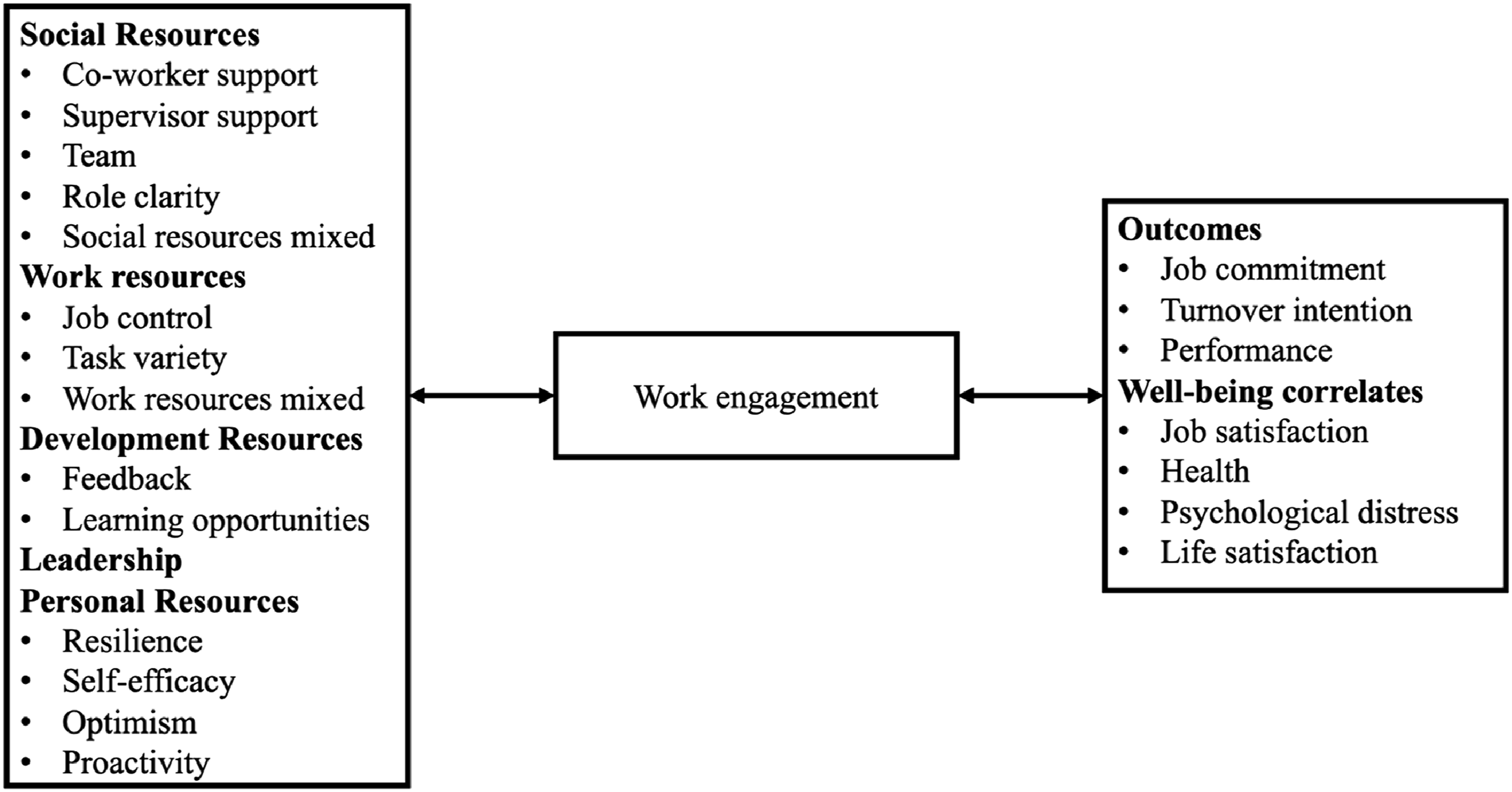
Potential moderator variables
In addition to the two main goals previously described, this meta-analysis aims to identify variables that may moderate the relationship between engagement and its antecedents and consequences. To build a comprehensive set of potential moderators, we followed the guidelines defined by Lipsey and Wilson (2001). We first considered the substantive aspects of the primary studies. Following this lead, we selected demographic variables found in the primary studies: age, tenure, gender, hierarchical position, education, nationality, economic sector, and occupation. Then, we considered the type of UWES version applied to the measurement of engagement as a potential methodological moderator. The rationale of these decisions and the expected results are reported in the following sections.
Age, tenure, gender, and education are the demographic variables most often examined by primary studies considered in this meta-analysis. To be specific, some studies found that the influence of flexible work arrangements on engagement depends on age (Rudolph & Baltes, 2017), and that age is a predictor of engagement (Macdonald & Levy, 2016). Furthermore, a study on the influence of individual characteristics on work engagement in a sample of national and foreign workers in Switzerland (Pocnet et al., 2015) found that the strength of the relationship between personal resources and work engagement varied according to the employees’ age, tenure, gender, and education. Hence, this meta-analysis explores the moderating effects of age, tenure, gender, and education on the strength of the relationship between engagement with JD-R variables.
Sector and occupation. Previous longitudinal results on a sample consisting of eight occupational groups of Norwegian employees (Innstrand, 2016) revealed occupational differences in work engagement levels. To be specific, the highest levels of vigor were revealed among lawyers, whereas church ministers reported the highest dedication levels. In contrast, the lowest level of vigor was reported among teachers, whereas the advertising group was characterized by the lowest degree of dedication to their job. Besides, the association between engagement, autonomy, and job performance was moderated by occupation. We hypothesized that the work sector and the type of occupation moderates the association between engagement and its outcomes.
Hierarchical position. The rank structure typically produces multiple layers of hierarchy, with lower-level employees reporting less autonomy over their work (Biggs et al., 2014b). Hence, the hierarchical position is expected to influence engagement processes.
National culture. The relationship between culture and engagement has been a matter of interest in research. In particular, the demographic characteristic of nationality was translated into a more operational variable, namely the type of culture broken down in terms of collectivism and individualism (Hofstede, 1983). Accordingly, the comparison between the mean levels of work engagement across two cultures (i.e., East Asia and Western Europe) revealed some systematic differences (Hu et al., 2014). To be specific, higher work engagement levels were found among Western European employees than East Asian employees. This result could be explained by recognizing work as a significant opportunity to develop one’s identity and individual competencies in Western culture, in contrast to the Eastern collectivistic perspective that associates work with self-sacrifice to attain shared goals. Furthermore, Pocnet and colleagues (2015) found that nationality moderated between personal resources and work engagement with differences between Swiss and non-Swiss workers. Accordingly, we expect the type of culture to influence correlations between engagement and its antecedents and consequences.
Work engagement measure. An additional moderating variable being explored in the current study pertains to the measure of work engagement employed. The Utrecht Work Engagement Scale (UWES; Schaufeli & Bakker, 2003) is the most widely used operationalization of academic studies (Farndale et al., 2014). Accordingly, the current meta-analysis focused exclusively on studies using the UWES. Since the three versions of the UWES—including 17, 9, and 3 items—reported valuable psychometric properties in terms of validity and reliability (Schaufeli and colleagues, 2019), this meta-analytic study of work engagement included evidence based on the employment of all three versions of this survey. Previous results indicated that student-recruited samples might lead to smaller effect sizes of relationships between engagement and individual outcomes (Wheeler et al., 2014). Accordingly, a specific version of the UWES for students has been developed (Schaufeli et al., 2002). For consistency, the current meta-analysis considered only studies on samples of workers.
To explore the potential role of moderating variables, the following research question was formulated:
Research Question 4: Does work engagement exhibit different relationships with resource categories and outcomes according to (1) demographic variables (i.e., age, tenure, gender, and education), (2) work-related variables (i.e., sector, occupation, and hierarchical position), (3) national culture, (4) work engagement measure (i.e., UWES version)?
Method
Literature search, inclusion, and rejection criteria
A literature search was performed on the electronic databases PsycINFO, PsycARTICLES, ERIC, Academic Search Premier, and Medline. The first inclusion criterion was to select papers published after 2011, the publication date of the most recent meta-analysis on work engagement antecedents and consequences. The second inclusion criterion was to meta-analyze only studies that had measured work engagement using any version of the UWES. Therefore, the following search criteria were used: (1) documents published between 2011 and 2018 “Engagement” in Keyword or Title, and (2) “UWES” in any part of the document.
After rejecting overlapping documents and documents out of scope, 241 published research articles, PhD theses, and chapters were selected. We were able to retrieve 238 published research documents. The following rejection criteria were applied to the documents retrieved: (a) the document was not in English or Spanish, 9 documents rejected; (b) the investigation was carried out with students and not with workers, 24 documents rejected; (c) no quantitative study, 7 documents rejected; (d) UWES was not the scale to measure work engagement, 2 documents rejected; (e) the antecedents or consequences assessed were not those specified by the JD-R model (and subsequently included in the Energy Compass), 96 documents rejected; (f) Pearson correlations were not available, 4 documents rejected; (g) only aggregated team level of measures were included, 1 document rejected; (h) the document was a meta-analysis itself, 1 document rejected.
As a result, 94 documents were coded (i.e., *Airila et al., 2014; *Alarcon & Lyons, 2011; *Alessandri et al., 2015; *Altunel et al., 2015; *Barkhuizen et al., 2014; *Bass et al., 2016; *Bickerton et al., 2015; Biggs et al., 2014a, 2014b; *Birkeland & Buch, 2015; *Bledow et al., 2011; *Breevaart et al., 2014a; *Byrne et al., 2016; *Caesens et al., 2016; *Chaudhary, 2014; *Chaudhary et al., 2012; *Chen & Chen, 2012; *Chin et al., 2017; *Collins, 2011; *Demerouti et al., 2015; *Extremera et al., 2012; *Ferrer & Morris, 2013; *Field & Buitendach, 2011, 2012; *Fong & Ng, 2012; *Freeborough, 2013; *Gan & Gan, 2014; *Garczynski et al., 2013; *Gillet et al., 2013; *Gkorezis et al., 2016; *Høigaard et al., 2012; *Hopkins & Gardner, 2012; *Hu et al., 2016; *Huynh et al., 2012; *Idris et al., 2015; *Idris & Dollard, 2011; *Inoue et al., 2013; *Ivey et al., 2015; *Kanste, 2011; *Kataria et al., 2013; *Kendrick, 2014; *Kim, 2015; *Klassen et al., 2012; *Kuba & Scheibe, 2017; *Kubota et al., 2011; *Kühnel et al., 2012; *Li & Mao, 2014; *Littman-Ovadia & Balducci, 2013; *Lorente et al., 2014; *Lovakov et al., 2017; *Macdonald & Levy, 2016; *Mache et al., 2016; *Martinussen et al., 2012; *Matthews et al., 2014; *Miller et al., 2014; *Mills et al., 2012; *Nishi et al., 2016; *Ocampo Bustos et al., 2015; *Panthee et al., 2014; *Petrou et al., 2017; *Petrović et al., 2017; *Poortvliet et al., 2015; *Reina-Tamayo et al., 2017; *Rofcanin et al., 2017; *Rudolph & Baltes, 2017; *Sakuraya et al., 2017; *Schaufeli et al., 2019; *Searle & Lee, 2015; *Shuck et al., 2015; *Sibiya et al., 2014; *Simbula et al., 2013; *Simons & Buitendach, 2013; *Sliter et al., 2014; *Sonnentag et al., 2012; *Sonnentag & Kühnel, 2016; *Taqatqa, 2017; *Taylor, 2015; *Thomas, 2011; *Timms et al., 2012; *Tims et al., 2013; *Trépanier et al., 2015; *Vahle-Hinz, 2016; *Vander Elst et al., 2013; *Vecina et al., 2012, 2013; *Ventura et al., 2015; *Viljevac et al., 2012; *Vîrgă et al., 2015; *Wang et al., 2015; *Wang & Hsieh, 2013; *Wefald et al., 2012; *Williams, 2015, 2016; *Yang et al., 2017). Unpublished studies were excluded from this meta-analysis. The rationale was that the peer review process could be considered a further guarantee of higher quality for published research than unpublished studies. Nevertheless, a publication bias analysis was performed following Egger’s (Egger et al., 1997) Test of the Intercept and Duval and Tweedie (2000) Trim and Fill test. The aim was to ascertain whether the decision about not including unpublished studies was right, and to have a quantitative assessment of the decision. A flow chart of the selection of studies, following the PRISMA statement, is reported in Figure 2. PRISMA flow chart.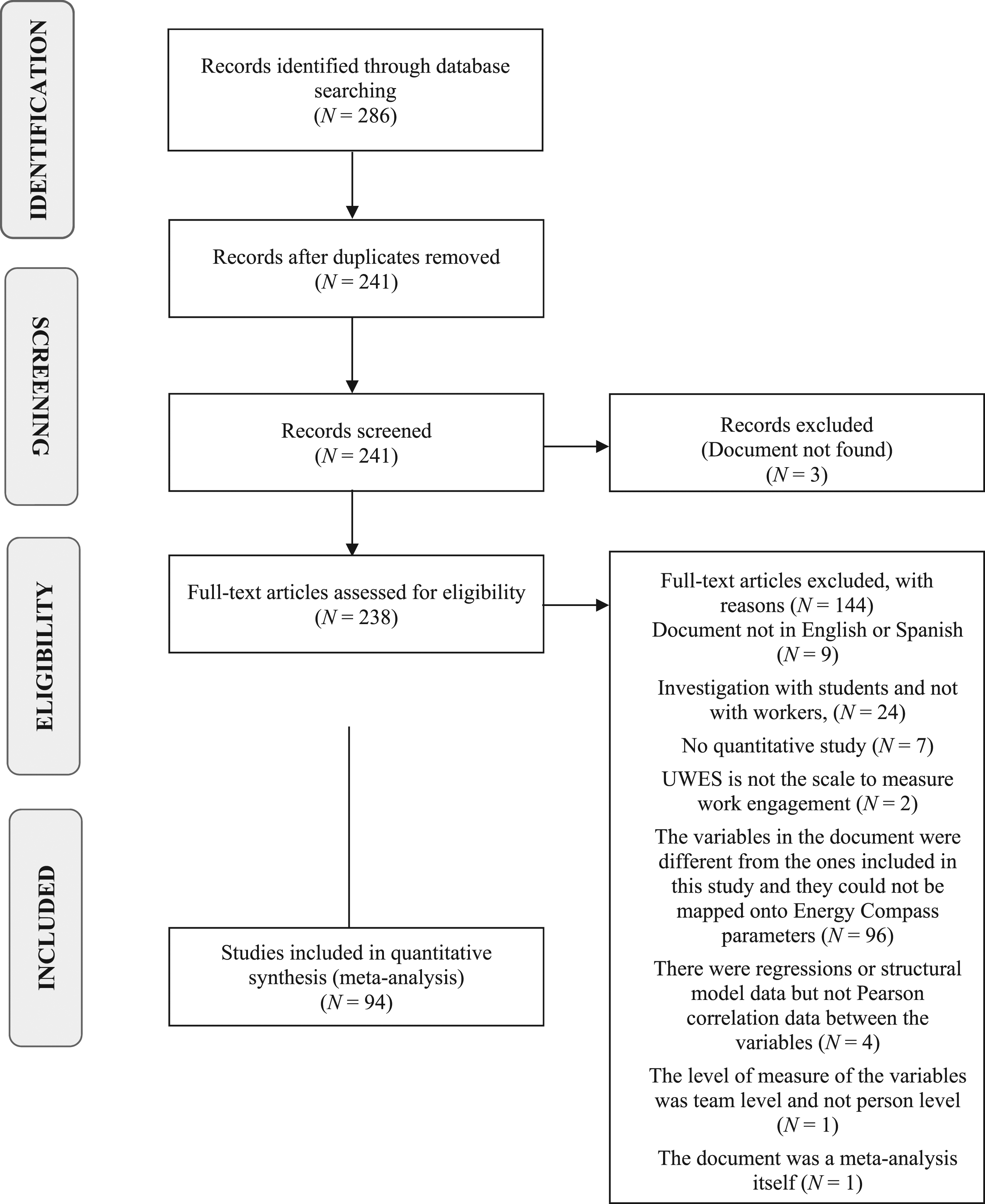
Coding of studies
The following decisions were made during the coding of the 94 documents: (a) samples could be coded from the same study if they were entirely independent; (b) in longitudinal or intervention studies, the time selected to code was the time described in the demographic section. If demographic data were available for many time points, the first time point was used; (c) only person-level and not day-level correlations were included; (d) if several UWES scales were used in the same sample, only data from one of them was coded to avoid duplication of samples. The priority was first to select UWES-3 data, and then UWES-17 data due to the higher number of studies available for UWES-9; and (e) the cut-off points for each category level at each moderator were: Age, 40 years old; Average Tenure, 7 years; Percentage of males, 50%; Percentage of managers, 25%; and Percentage of university degrees, 50%. The cut-off points were selected to have a similar proportion of studies in each category.
Reliability analysis for the coding was performed. Two researchers independently codified a sample of 10% of studies in alphabetical order, reaching an 88% intercoder agreement. The agreement level was highly satisfactory, and minor disagreements were solved by consensus (Lipsey & Wilson, 2001). As a result, the 94 studies coded yielded 533 correlations from 113 independent samples and 119,420 participants in total.
Meta-analysis procedure
The meta-analytical software used was Comprehensive Meta-Analysis 2.0 (CMA; Borenstein et al., 2005). The effect size was r (Pearson correlation coefficient). Correlations were corrected for sampling error by calculating the sample size-weighted correlations. The random-effects model was selected due to the high diversity of samples and populations. Meta-analytic calculations were performed when at least 3 correlations were available. Calculations included a 95% confidence interval for weighted correlations. We interpreted the results using the criteria defined by Cohen (1992): r = .1 as a low correlation, r = .3 as a medium correlation and r = .5 as a high correlation. The rest of the article regards “medium to high” correlations as .5> r >.4 and “medium to low” correlations as .2 > r >.4. Heterogeneity was analyzed through Q statistics (Hunter & Schmidt, 1990), the classical measure of heterogeneity. It represents the weighted sum of squared differences between individual effects and the pooled effect across studies. To overcome the problem of Q test power with the small number of studies, I^2 statistics are also reported as a measure of heterogeneity that describes the percentage of variation across studies resulting from heterogeneity rather than from chance. I^2 <30% is considered low heterogeneity, between 30% and 50% is medium heterogeneity, and above 50% is high heterogeneity (Higgins & Thompson, 2002). We grouped variables into an upper level (e.g., social resources and job resources) as established by the composite approach of Borenstein and colleagues (2005), which calculates a synthetic mean effect size per study for each upper variable level. Although this procedure is highly conservative and produces wider confidence intervals than an independent values approach, we prefer this approach to guarantee the independence of the samples in our meta-calculations for upper-level variables.
The procedure to look for moderation effects first focused on converting all potential moderators into categorical variables with the smallest number of levels possible to maximize the number of effects in each category. A moderator analysis (ANOVA analogous) with CMA software was performed to test for each subgroup’s overlapping of the 95% confidence interval. If there were no statistical differences between groups, but the overlap was minimal, and the moderator was continuous, a meta-regression was performed.
Results
To attain the current meta-analysis purposes, a sample-sized weighted correlation was conducted between work engagement and the rest of the variables.
Meta-analytical correlations between work engagement and its antecedents.
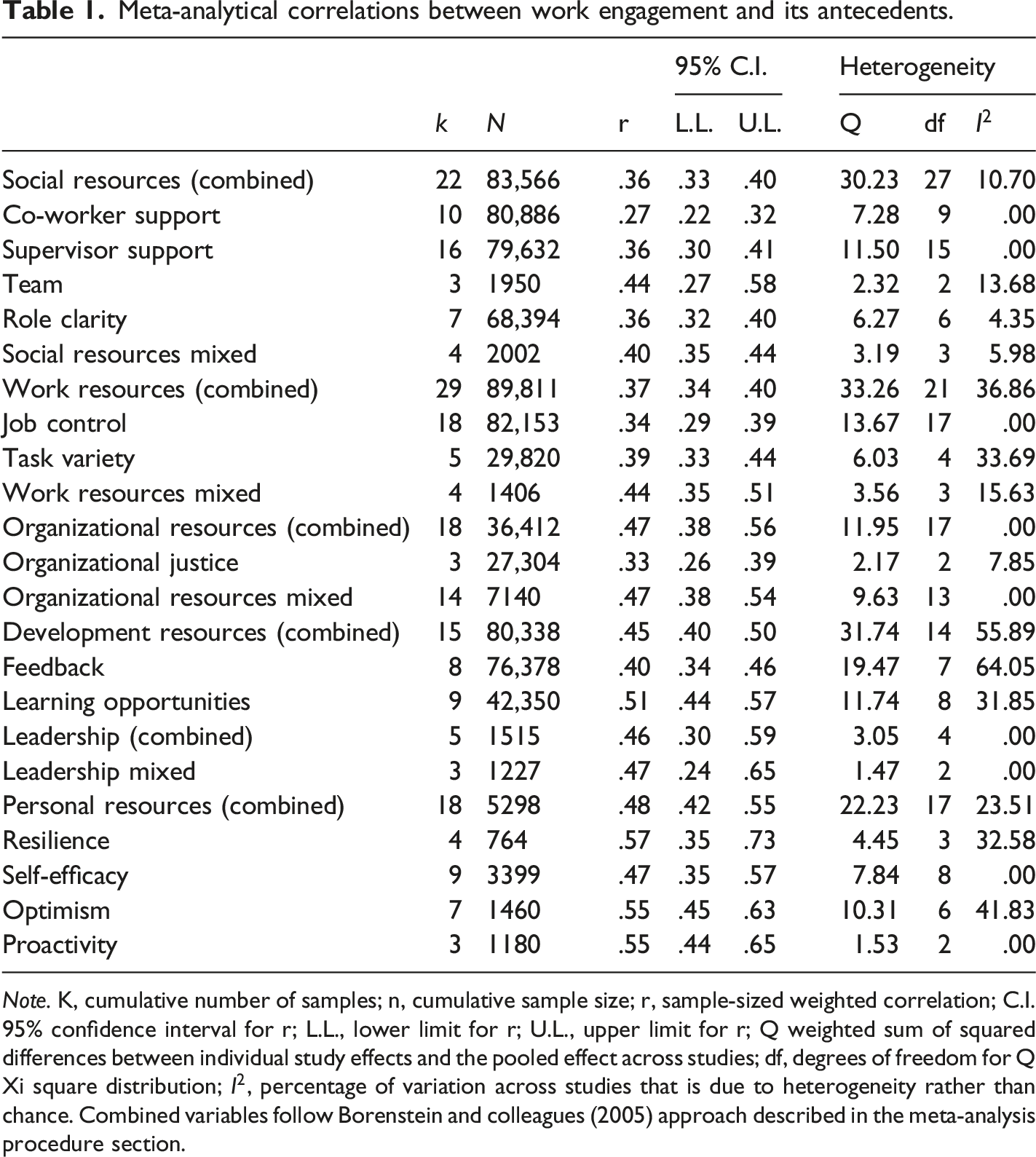
Note. K, cumulative number of samples; n, cumulative sample size; r, sample-sized weighted correlation; C.I. 95% confidence interval for r; L.L., lower limit for r; U.L., upper limit for r; Q weighted sum of squared differences between individual study effects and the pooled effect across studies; df, degrees of freedom for Q Xi square distribution;
Meta-analytical correlations between work engagement and its consequences and other well-being correlates.
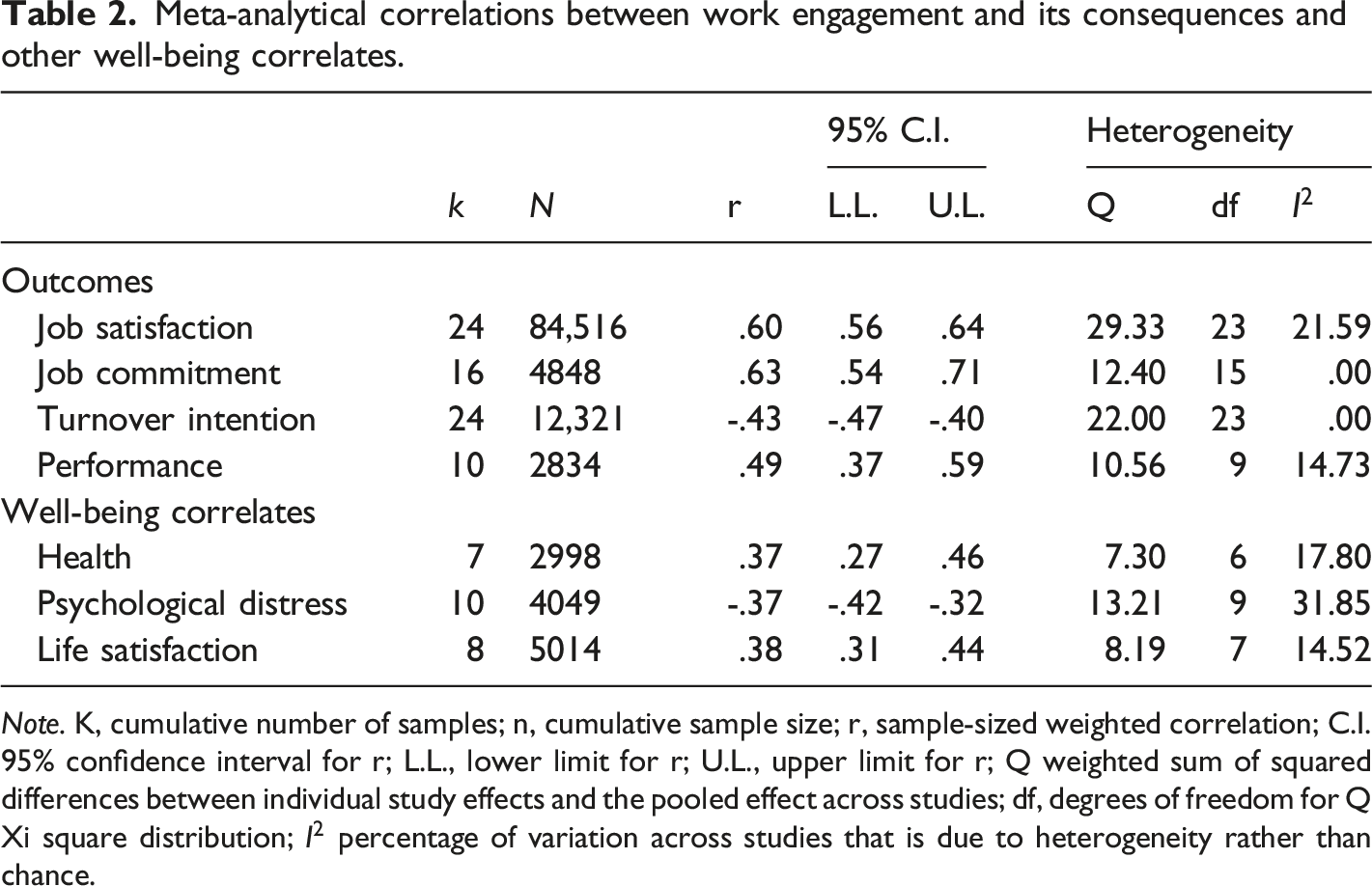
Note. K, cumulative number of samples; n, cumulative sample size; r, sample-sized weighted correlation; C.I. 95% confidence interval for r; L.L., lower limit for r; U.L., upper limit for r; Q weighted sum of squared differences between individual study effects and the pooled effect across studies; df, degrees of freedom for Q Xi square distribution;
Regarding heterogeneity, as displayed in Tables 1 and 2 and following the indications provided by Higgins and Thompson (2002), we can conclude that there is low heterogeneity for most of the variables, medium for job resources (
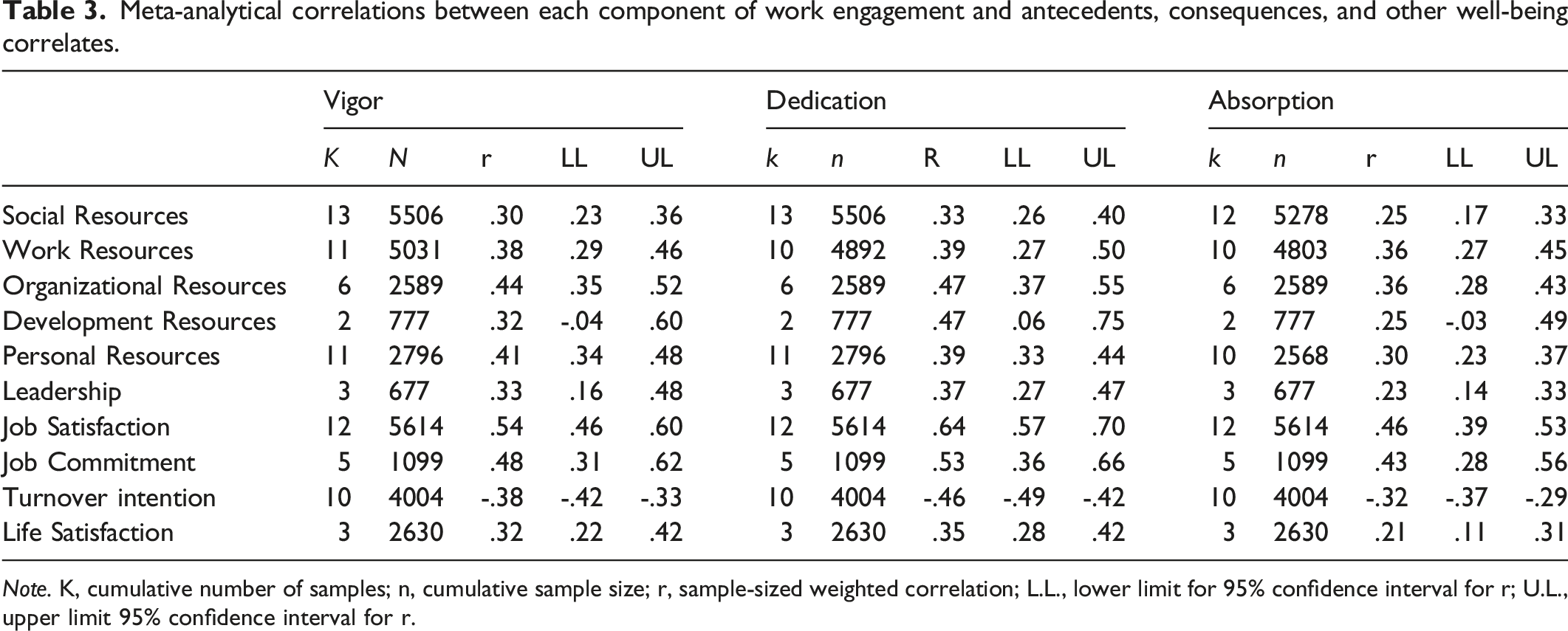
Meta-analytical correlations between each component of work engagement and antecedents, consequences, and other well-being correlates.
Note. K, cumulative number of samples; n, cumulative sample size; r, sample-sized weighted correlation; L.L., lower limit for 95% confidence interval for r; U.L., upper limit 95% confidence interval for r.
Considering the weighted correlation coefficients shown in Table 3, vigor and dedication have similar values, while absorption figures are always lower. A statistically significant difference can be observed only between absorption and dedication in their correlations with turnover intention and job satisfaction due to the confidence interval range. The dedication v. turnover intention confidence interval (LL = −.49, UL = −.42) does not overlap with absorption v. turnover intention confidence interval (LL = −.37, UL =-.29). Likewise, dedication v. job satisfaction confidence interval (LL = .57, UL =.70) does not overlap with absorption v. job satisfaction confidence interval (LL = .39, UL = .53).
Moderator analysis and meta-regression
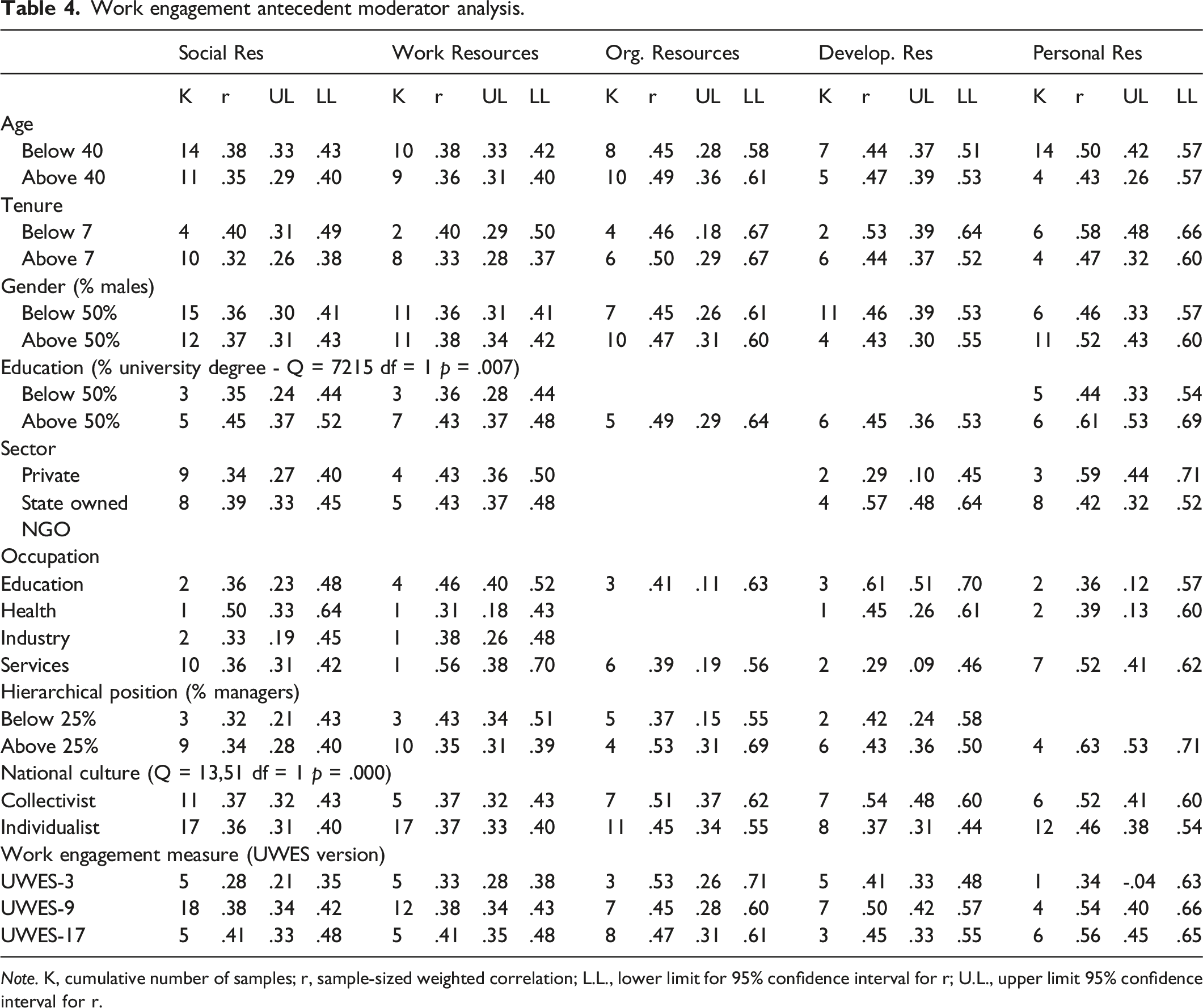
Work engagement antecedent moderator analysis.
Note. K, cumulative number of samples; r, sample-sized weighted correlation; L.L., lower limit for 95% confidence interval for r; U.L., upper limit 95% confidence interval for r.
Work engagement consequences and correlates moderator analysis.
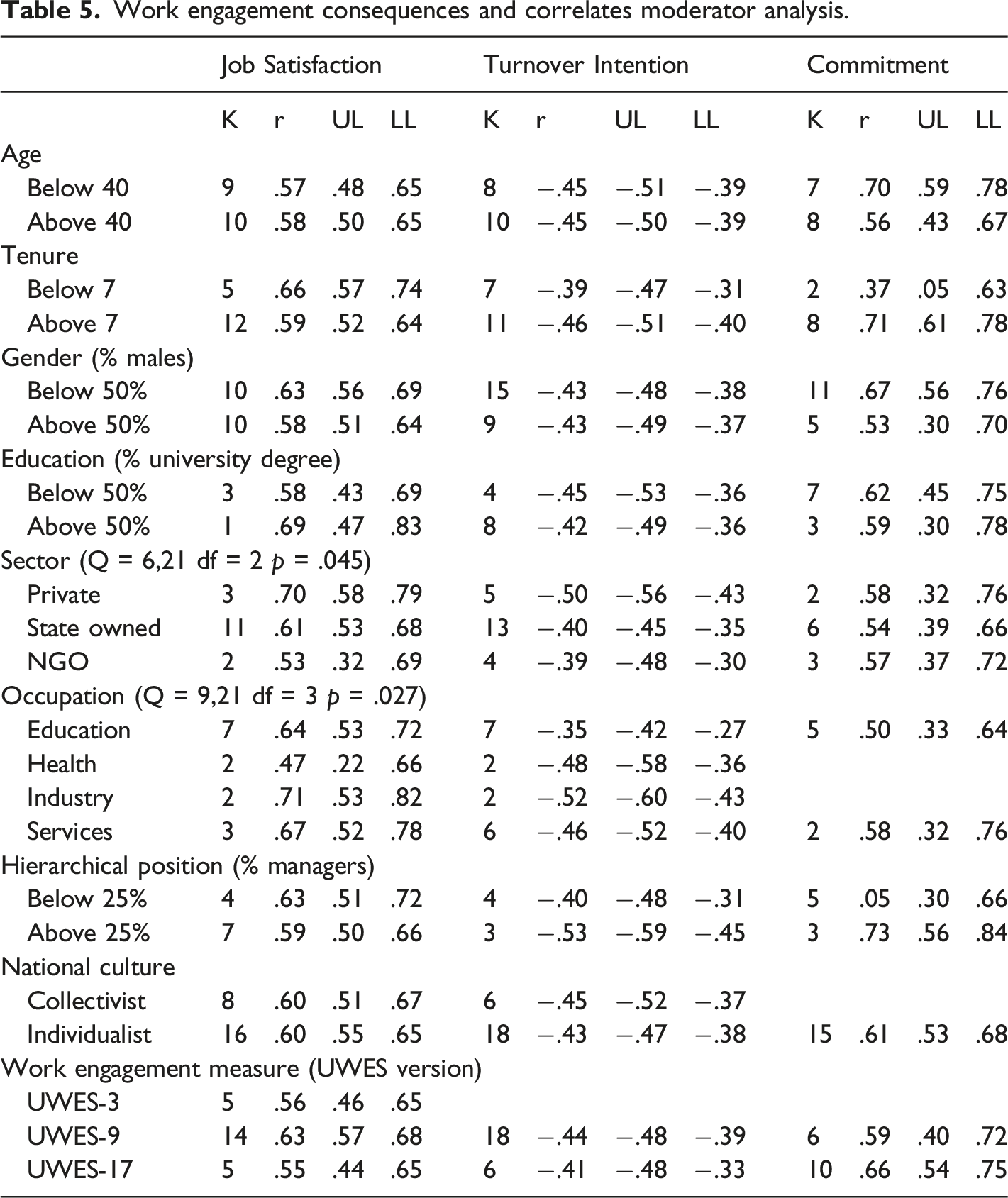
The percentage of workers with a university degree moderated the effect of personal resources on engagement (p = .007). A higher percentage of workers with a university degree corresponded to a more substantial relation of personal resources with work engagement.
National culture also moderated the relationship between development resources and work engagement (p = .001). Development resources reported a greater correlation with engagement (r = .54) within a context characterized by a collective culture. Additional analysis for this specific moderation effect was performed with the two components of development resources coded (learning and feedback). The result obtained indicated that the feedback component is the one that is differential between both cultures (p = .001), with a stronger effect in collective cultures (r = .59).
Additionally, considering that the method followed to build Tables 4 and 5 is not powerful enough to detect all moderation interactions, meta-regression (method of moments) was performed for quantitative moderators on effects that were almost statistically significant. None of the tested meta-regression was statistically significant though: (a) average age as the predictor and job commitment v. engagement as the criterion, (b) average tenure as the predictor and job commitment v. engagement as the criterion, and (c) percentage of managers as the predictor of job resources as the criterion.
However, the meta-regression of the percentage of managers as a predictor of turnover intention yields a significant result (Q = 23.36, df = 6, p=.000). A higher percentage of managers in the sample corresponds to a stronger relationship of engagement with turnover intention. This result must be considered with caution as only 7 samples were included in the regression, as shown in Figure 3. Meta-Regression on Fisher’s Z of Turnover intention correlation with engagement, with Percentage of Managers as a predictor.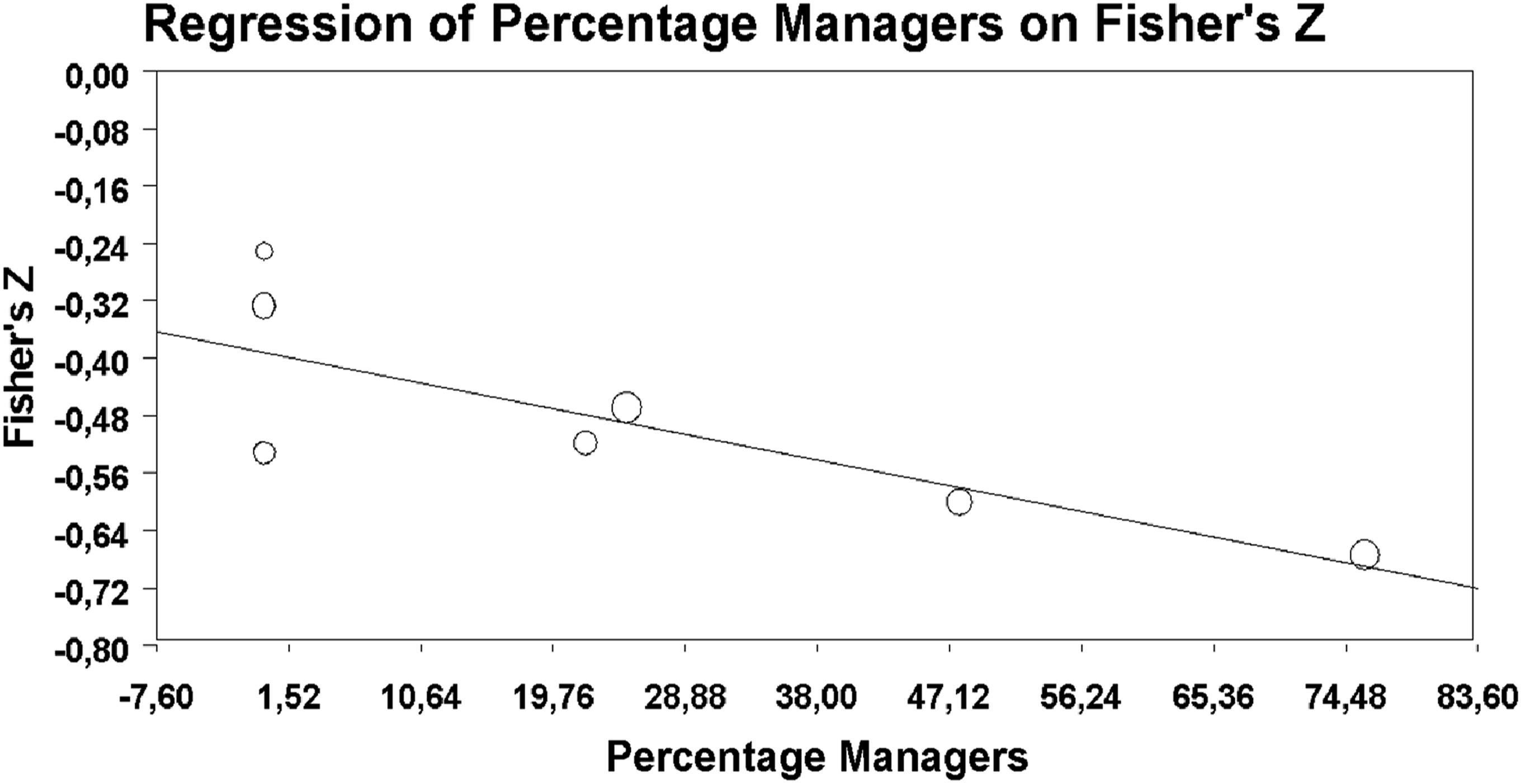
Tables 4 and 5 also contain the results of the moderator analysis for the UWES. Only one study based on 5 samples used the UWES-3 (Schaufeli et al., 2019). We notice that the UWES-3 shows systematically lower correlations; however, the difference is not statistically significant compared to UWES-9 and UWES-17.
Publication bias
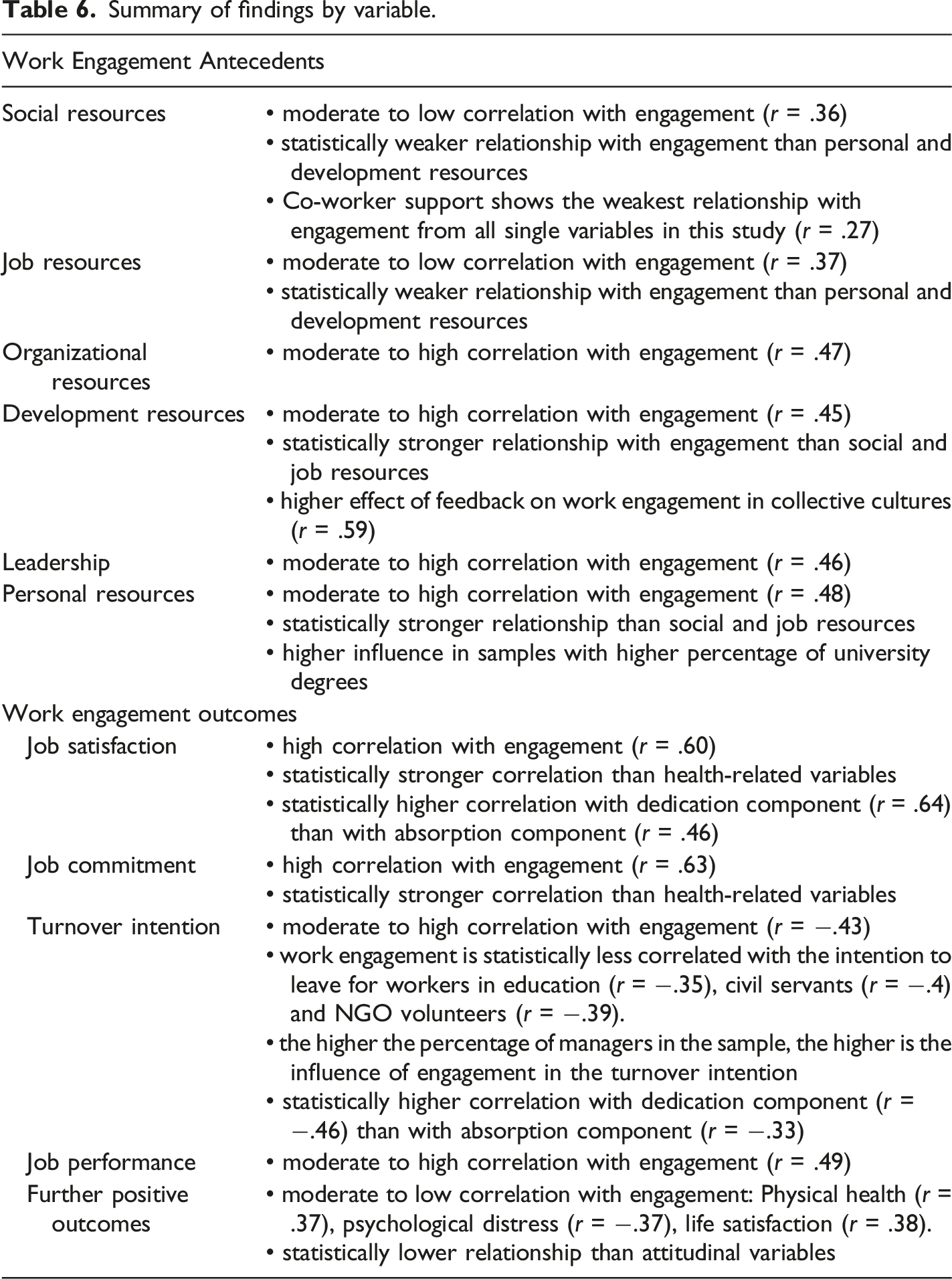
Summary of findings by variable.
Also, Trim and Fill test (Duval & Tweedie, 2000) was performed to assess this publication bias. Under the random-effects model, the point estimate and 95% confidence interval for the correlation was −.43 (−.47, −.40). Using Trim and Fill, the imputed point estimate was −.47 (−.50, −.44), with 7 studies added, as illustrated in red in the funnel plot (Figure 4). Hence, there is a likely tendency to publish a lower relationship between engagement and turnover intention in small sample studies. However, once this publication bias is trimmed and filled, the effect size changes only slightly, and therefore the conclusions from previous results remain valid. We can thus conclude that publication bias is unlikely to threaten the validity of the results. Funnel Plot of Precision by Fisher’s Z of the correlation between engagement and turnover intention.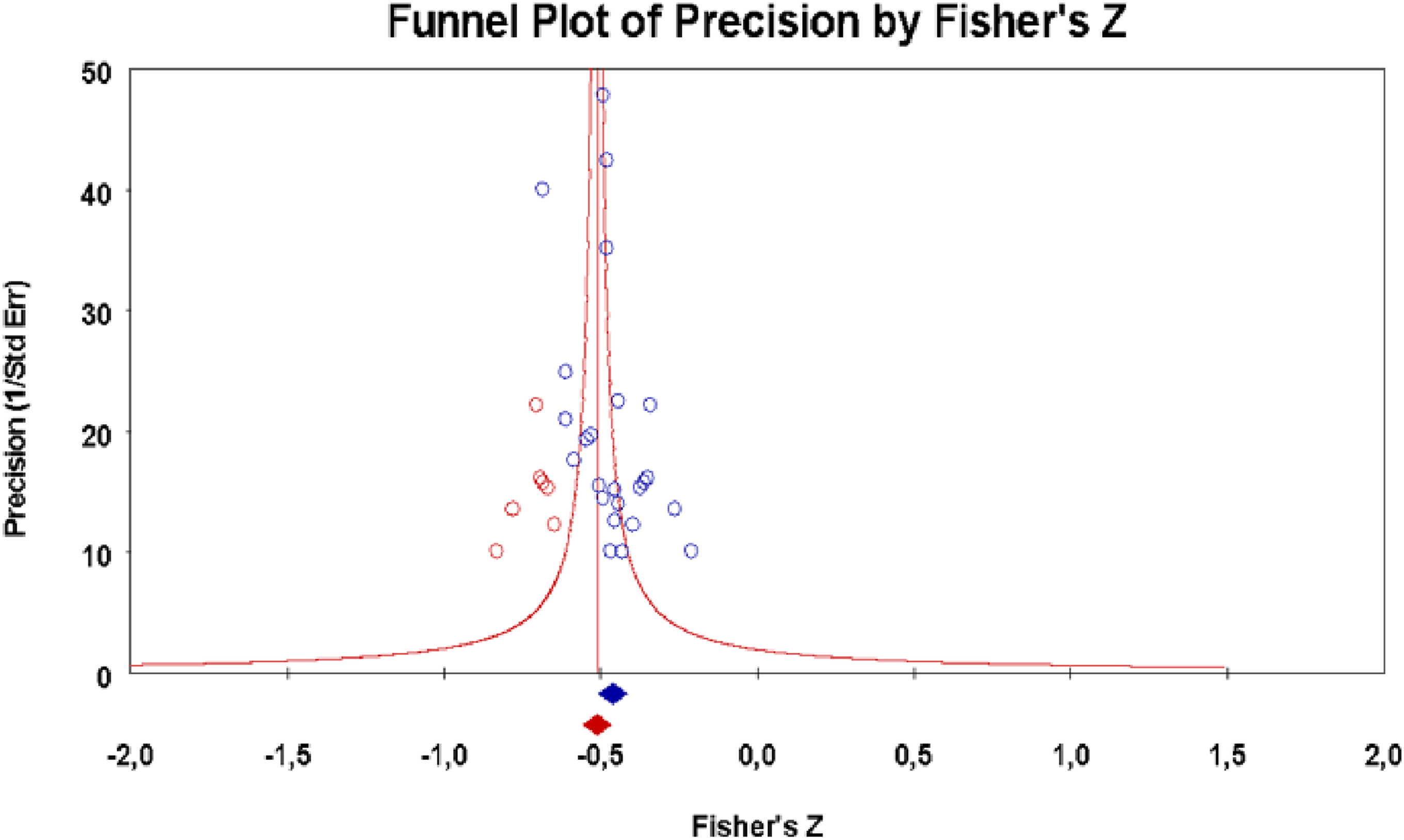
Discussion
The overall purpose of this meta-analysis was to investigate the relationship between work engagement, its outcomes, and different resource categories, using the taxonomy proposed by the Energy Compass tool (Schaufeli, 2017).
The first objective of the meta-analysis was to investigate how the relationship with work engagement varies across different resource categories (Research Question 1). According to our results, the strength of the relationship with engagement fluctuates across different types of resources. Although a medium range of correlation characterizes all resources, social and job resources are statistically closer to the lower range, while personal and development resources are statistically closer to the higher range. Organizational resources also seem to be in the higher range; but the extensive range of the confidence interval did not allow reporting a finding from a statistical standpoint, as it slightly overlaps with the U.L. from social and job resources. The origin of this wide C.I. interval seems to come from a high sampling variance within the primary studies and not from a high variance between samples, as this is very low. In the case of leadership, we face the same issue with the C.I. range, but in this case, the main problem is the small number of studies.
Overall, our results confirmed the previous meta-analysis conducted by Christian and colleagues (2011). In particular, social support, job control/autonomy, task variety, and feedback are positively related to work engagement. Moreover, in line with Christian and colleagues (2011), we found that overall personal resources are positively related to work engagement despite proactivity being the only variable in common between the two meta-analyses.
Furthermore, the current results showed that personal and development resources have a stronger relationship with engagement than job and social resources, with co-worker support reporting the lowest coefficient. This result may be explained by the fact that conceptually personal resources are more proximal, whereas job resources are more distal to engagement (Breevaart et al., 2014b). The prevalence of personal resources is consistent with previous results: for instance, Choochom (2016) found that personal resources, such as intrinsic motivation, reported the highest association with work engagement.
The current results are in line with previous evidence that stable personal resources (e.g., personality characteristics) and individual characteristics (e.g., self-efficacy) act as antecedents of work engagement. However, they may moderate the association between job resources and engagement levels (Mazzetti et al., 2016a). The underlying assumption entails that the perceived level of control over one’s job and ability to tackle unforeseen events may prompt employees to actively manage their job and effectively attain their goals (Bakker & Sanz-Vergel, 2013). Employees with prominent levels of personal resources are thought to appraise their ability to positively meet their work demands, believe in good outcomes, and believe they can meet their needs by fully engaging in their organizational roles (Knight et al., 2017).
Despite the small number of studies, we found a positive relationship between engaging leadership and engagement, which is in line with previous studies and Christian and colleagues (2011). Hayati and colleagues (2014) pointed out that transformational leadership plays a crucial role in explaining the level of engagement reported by nurses, mainly due to the dimension of inspirational motivation. As previously stated, the strong influence of transformational leadership on engagement could be explained through the enhancement of job resources that the skills and knowledge of managers could stimulate, thus motivating employees to engage in their work according to the motivational hypothesis of the JD-R Model (Fernet et al., 2015).
In contrast to the current results, Christian and colleagues (2011) reported a lower relationship between leadership and engagement. This difference could be explained by the leadership styles considered: while Christian and colleagues (2011) coded transformational leadership, our quantitative review focused on engaging leadership (Schaufeli, 2017), defined as the combination of inspiring, strengthening, and connecting dimensions.
In response to Research Question 2, our results also suggest significant differences in the strength of relationships between engagement and a wide range of positive outcomes.
In particular, engagement is closer to attitudinal variables (i.e., job satisfaction and job commitment) than behavioral or intentional variables (i.e., turnover intention, performance, or health), although they still report medium to high correlation coefficients.
Taken together, the results obtained further support the evidence underscored by previous meta-analytical papers. In particular: (a) consistent with results suggesting a stronger association of engagement with personal resources such as self-esteem and optimism (Halbesleben, 2010) and conscientiousness and positive affect (Christian et al., 2011), this meta-analysis indicates a stronger influence of personal resources on engagement when compared to work and social resources; (b) the fact that attitudinal variables are closer to engagement than behavioral or intentional variables can be found in Halbesleben (2010), where job commitment shows a stronger correlation to engagement than performance, health and turnover intention, and in Christian and colleagues (2011), where job satisfaction and commitment are considered proximal factors to work engagement, sharing similar antecedents and consequences, and showing stronger correlation with engagement than with job performance. No such conclusions can be found in the meta-analysis from Crawford et al. (2010) as neither personal resources nor outcomes are coded, and the results concerning the remaining resources are quite comparable.
Our meta-analysis also aimed to examine whether the engagement dimensions (i.e., vigor, dedication, and absorption) reveal a different association with antecedents and outcomes under investigation (Research Question 3).
According to current findings, absorption systematically showed lower correlations with the variables investigated than dedication and vigor. As previously stated, this result could be explained according to earlier evidence that absorption is the least central indicator of work engagement (De Bruin & Henn, 2013). Instead, Mazzetti and colleagues (Mazzetti et al., 2016b) showed that absorption is not a unique feature of work engagement but describes a state of deep involvement and concentration in one’s work that also (i.e., workaholism).
A final objective of this meta-analysis was to identify moderating variables in the relationship between engagement, resources, and positive outcomes (Research Question 4). The moderator analyses provided some insightful findings, mainly regarding turnover intention and development resources. This meta-analysis identified specific occupational groups, showing a lower association between engagement and turnover intention: Civil Servants, NGO workers, and education workers. It could be argued that further reasons beyond engagement could prompt these employees to maintain their employment, most of all the evidence that these workers usually have permanent contracts. A similar topic is reviewed in Borst and colleagues (2020). The authors found a lower association of engagement with turnover intention in the semi-public sector compared to the private and public sectors. The authors include in the semi-public sector mostly education and healthcare professionals and they conclude that these workers value the purposefulness of their job more than the rest of the employees (Borst et al., 2020), so their intention to stay might be more influenced by a sort of calling to the profession than linked to their level of engagement with the organization etc.
Besides, we found a potential relationship between the percentage of managers in the sample and the intention to leave. Engagement seems weaker related to the intention to leave among managers than among their subordinates. This result is hard to interpret. It should be considered with caution as only 7 samples had all data available to perform the meta-regression. It should be considered a potential matter for future investigation.
Another demographic group with differentiated correlations is made up of countries with collective cultures, where the influence of feedback on engagement is stronger than in individualistic cultures. A possible explanation could be that the relationship between self-efficacy and work engagement in collective cultures might not be similar to the relationship observed by studies conducted in Western countries (Chaudhary, 2014). In collective countries, dependence and belongingness are promoted over personal freedom (Hofstede, 1983). Therefore, the influence of feedback from others will enhance self-efficacy, which could have a stronger influence on engagement than in individualistic cultures where the concept of self-efficacy does not depend too much on others.
Also, personal resources seem to have a stronger influence on workers with a university degree. This result might depend on the type of jobs developed and needs further investigation. In this study, some demographic variables did not show any moderation effect on the relationship between work engagement and its antecedents and consequences, such as age, tenure, and gender.
Another interesting finding of the moderation analysis is that UWES-3 does not statistically differ from UWES-9 and UWES-17 in their relationship with engagement antecedents and outcomes. Relationships between variables are weaker with UWES-3, but this result may be interpreted as a consequence of using a shortened version of the scale. Hence, coefficient alpha, which is less bound by internal consistency, is generally reduced, and a larger proportion of the variance is due to a measurement error, with a subsequent reduction in correlations (Schaufeli et al., 2019). This reinforces the use of UWES-3 as a practical tool to measure engagement. One of the most critical phases in research projects is data gathering since participants are reluctant to participate in the survey when perceived as too long and time-consuming (Burisch, 1984). There is increasing pressure on researchers to develop valid, reliable, and short measures without redundant items (Fisher et al., 2016). Hence, using questionnaires with the shortest number of questions, like the UWES-3, would be very convenient for interventions as long as there is no significant concession in terms of accuracy.
Limitations and future research
The current meta-analysis provides an updated picture of empirical evidence concerning the nomological network of work engagement. In particular, we focused on the association between work engagement and different types of resources, but also between engagement and different categories of outcomes (i.e., work-related and individual outcomes). Nonetheless, some study limitations should be acknowledged. First, while the meta-analysis included quite a considerable number of studies on work engagement, very few studies covered a broad scope of variables. Most of them provided a few relationships among the full set of variables embraced in the Energy Compass tool. Therefore, for some pairs of variables, the number k was lower than desired. This limited the number of conclusions that could be reached regarding the statistical significance of differences between correlations.
In addition, the analysis of correlational results makes it possible to obtain an updated picture of possible antecedents and consequences of work engagement as hypothesized by the JD-R model but prevent us from drawing any inference about the direction of causality.
A further weakness is that while all correlations referred precisely to the same engagement concept measured with a UWES scale, the other paired variable was less homogeneous in terms of definition and measurement scale across several studies. This was considered in the random-effects models but left some room for subjectivity in the coding that could influence some of the results in a small k number. Moreover, given the lack of primary studies with the full range of moderator categories, we could only analyze potential moderators in a limited number of variables. This limited the findings that could be reached by moderating analyses. For instance, few studies included UWES-3 as a questionnaire as it has been introduced only recently, so it is advisable to replicate the analysis in the future with a higher sample of UWES-3 questionnaires.
Future research could also consider limiting the scope of correlation pairs and increasing the number of studies by including older papers. This would increase k figures, and the analysis could focus on the essential variables. The larger number of studies could also provide more examples in each category of moderators and lead to additional conclusions compared to those mentioned in this paper. This could facilitate a deeper subgroup analysis of cross-sectional or longitudinal data.
Practical implications
The main goal of this study was to define practical guidelines grounded in the meta-analysis of data contained in the most recent empirical studies on work engagement. Although this quantitative review was based on correlation analysis, results on possible antecedents and outcomes of engagement allow setting up practical guidelines useful for implementing intervention strategies by different actors in the organizations: selection departments, training departments, operational managers, health prevention departments, and general HR functions.
First, the validity of the JD-R model is underscored by the results obtained. The prevalence of some resources in their relationship with engagement can affect the intervention design. Although promoting engagement depends very much on the specifics of each group of people, the findings provide guidelines about where to start the intervention when little knowledge about the group is available. In such a case, it could be interesting first to explore leadership training and personal resource development (Mazzetti et al., 2019). Personal resource building interventions focus on increasing an individual’s self-perceived positive attributes and strengths, often developing self-efficacy, resilience, or optimism. In contrast, leadership training interventions involve knowledge and skill-building workshops for managers and measure work engagement in their direct employees (Knight et al., 2017). This means that tapping into actions focused on the dedication component of engagement—rather than focusing on the absorption component—could be particularly useful to increase engagement (and hence) increase job satisfaction and reduce turnover intention.
Furthermore, this prevalence of specific resources is also interesting to build an engaging workplace. The rule of thumb for practitioners could be to set up a training intervention to boost these malleable personal characteristics rather than selecting employees with personality traits such as optimism and resilience. Furthermore, a suitable leadership style could shape a favorable organizational culture that promotes self-efficacy and personal development among employees. Finally, providing autonomy and variety in one’s job in combination with supportive relationships with supervisors and colleagues.
Moreover, the meta-analysis results on outcomes and well-being correlations provide some hints about what expectations to communicate when starting a work engagement intervention. A higher impact on proximal factors, such as job satisfaction and commitment, can be expected. Results on performance and health should be expected too but to a lesser degree and probably at a later point in time. For practical purposes, the combination of findings on the absorption component and the UWES-3 is also interesting. It is advisable to consider this ultra-short version of the engagement questionnaire to facilitate employee participation in the research and change process. In any case, if the UWES-9 questionnaire is preferred, it could be interesting to consider only the dimensions vigor and dedication.
Last, regarding the moderator analysis, two findings are worth highlighting. When implementing interventions, national culture could influence success, and it could be interesting to develop positive feedback interventions in a collective culture environment. Moreover, the evidence that engagement has a limited association with the intention to leave civil servants, volunteer workers, and educators does not prevent the implementation of work engagement interventions among these collectives, but somehow frames the expectations in such interventions.
Footnotes
Declaration of conflicting interests
The author(s) declared the following potential conflicts of interest with respect to the research, authorship, and/or publication of this article: The authors declare that the research was conducted in the absence of any commercial or financial relationships that could be construed as a potential conflict of interest.
Funding
The author(s) received no financial support for the research, authorship, and/or publication of this article.
Notes
Author Biographies
 .
.