




Abstract
Since listening and speaking are two integral skills for effective second language (L2) communication, enhancing learners’ motivation to listen to and speak in the target language will engage them in the learning process, eventually leading to improvements in these two skills. Yet despite its importance, L2 listening and speaking motivation is underexplored in the current literature. Drawing on self-determination theory, this study adapted, validated, and administered one L2 listening motivation scale and one L2 speaking motivation scale to 863 undergraduate students from different regions of China. Correlation analysis, confirmatory factor analysis, and inferential statistical analyses (e.g., ANOVA) were used to compute the data. The results revealed that the learners were both intrinsically and extrinsically motivated to listen to and speak in English. A strong association between L2 listening motivation and speaking motivation was observed. Furthermore, gender, geographical, and disciplinary differences were found in the two kinds of motivation, and overseas experience also affected the learners’ motivation. The results provide insights into L2 learner motivation in specific linguistic domains and yield pedagogical implications for L2 teaching and learning.
Keywords
Introduction
In second language (L2) education, oracy, defined as “the ability to use the oral skills of speaking and listening” (Wilkinson, 1965, p. 13), is highly valuable because listening (understanding information) and speaking (producing oral language and expressing ideas) are two integral and indispensable processes in communication (Hinkel, 2010). Although oracy has a comparable status to literacy and numeracy, it has received far less attention in education than the other two (Interview with Goh by Mah, 2016; Mercer et al., 2017). Also, while studies have been conducted to investigate effective oracy instruction methods (e.g., Nation & Newton, 2009; Zhang & Goh, 2006), learners’ motivational profiles of L2 listening and speaking have been relatively under-explored. L2 listening motivation and speaking motivation, in this study, refer to L2 learners’ motivation to listen to and speak in the target language for general purposes in university studies, everyday life, and other settings. L2 learner motivation warrants our attention because these learners “face unique challenges to their motivation” (Lamb et al., 2019, p. 4). The L2 learning progress, which is often slow and frustrating, can lead to decreased motivation or even outright discouragement (Zhang et al., 2020), and this can be particularly true in listening and speaking contexts due to their features of immediacy and simultaneousness.
However, before discussing potential methods for enhancing L2 listening and speaking motivation, researchers need to take the step of developing an in-depth understanding of what the L2 listening and speaking motivation constructs are, what learners’ L2 listening and speaking motivation levels are, how listening motivation and speaking motivation are related to each other, and how they are affected by demographic factors. Despite the cruciality of examining L2 listening and speaking motivation, few existing studies have explored this issue (Zhang et al., 2020). While some questionnaires on L2 general motivation have touched upon L2 listening or speaking motivation by including a few items about learners’ motivation to listen to or speak in the target language (e.g., Noels et al., 2001), these are far from enough to independently generate a comprehensive picture of L2 listening and speaking motivation. Hence, scales investigating L2 listening and speaking motivation are necessary. Drawing from self-determination theory (Ryan & Deci, 2017), this study validated two adapted self-determination scales of L2 listening and speaking and administered the questionnaires to 863 university students across different regions of China. It aimed to investigate the learners’ L2 listening and speaking motivation, their correlations, and analyze the motivation levels of learners with different demographic backgrounds (i.e., gender, geographic region, discipline, and study-abroad experience).
Self-Determination Theory and L2 Learning
Motivation is “a condition of an organism that includes a subjective sense (not necessarily conscious) of desiring some changes in self and/or environment. Presumably, this includes some predispositions to act in ways that will facilitate that change” (Baumeister, 2016, p. 1–2). The self-determination theory (SDT) (Ryan & Deci, 2000, 2017) is the theoretical basis for human motivation which “examines how biological, social, and cultural conditions either enhance or undermine the inherent human capacities for psychological growth, engagement, and wellness, both in general and in specific domains and endeavors” (Ryan & Deci, 2017, p. 3).
Ryan and Deci (2017) divided motivation into five types and arranged them along a continuum from control/extrinsic to autonomy/intrinsic. Extrinsic motivation refers to learning that is driven by external rewards or punishment which results in controlled achievement outcomes, whereas intrinsic motivation is enhanced because the activities are done for the learners’ own sake, which leads to greater overall achievement (Ryan & Deci, 2020). Previous studies have even revealed that extrinsic rewards might decrease intrinsic motivation (Deci & Ryan, 2008). It is, therefore, ideal if L2 learners obtain high intrinsic motivation in listening and speaking. The most extrinsic type of motivation is external regulation, in which behaviors are instrumental and the “rewards” are external (e.g., social approval and valued outcome). Introjected regulation describes a person taking in but not fully accepting external controls (e.g., shame and fear of disapproval). If a person both recognizes and accepts the value of the extrinsic behavior, identified regulation is developed, and if the identified value has been integrated into personal values and beliefs, integrated regulation is established. In addition to these different extrinsic and intrinsic motivation types, amotivation, which describes a person who is not motivated or does not take action, is also included in the framework.
Intrinsic motivation (IM), actions taken because of interest and feelings of efficacy and enjoyment, can be triggered by stimulation, challenge, volition, accomplishment, or novelty/curiosity (Deci & Ryan, 1992). Drawing from the earlier literature, Vallerand et al. (1992, p. 1005) divided IM into three sub-motives, namely, the intrinsic motivation to know (pleasure and satisfaction experienced while exploring something novel), to accomplish (excitement when trying to excel), and to experience stimulation (one’s positive sensation of fun when involved). Moreover, an additional IM-challenge (desire to work with/master complex tasks) was added to this categorization because this aspect has also been asserted as important in previous studies (Lepper & Malone, 1987; Logan et al., 2011; Wang & Guthrie, 2004). There is a positive correlation among the different IM, but this may be related to their context-dependent outcomes (Pelletier et al., 1995). For example, Clark et al. (2014) reported that when IM-accomplishment was the strongest antecedent for attending colleges, students tended to concurrently believe that college was an ideal place to develop their intellectual competence and thus performed better academically; nonetheless, other such potentially confounding relationships were not found in other IM types. However, due to insufficient evidence regarding different IM types and L2 motivation, no conclusions can yet be made.
SDT serves as the theoretical foundation for our current understandings of L2 motivation, and existing studies have validated general L2 motivation scales based on SDT (e.g., Noels et al., 2001) and explored how general L2 motivation can relate to listening and speaking (e.g., Ehrman, 1996). For example, Khodadady & Khajavy's (2013) research of Iranian English-as-a-foreign-language (EFL) learners indicated that identified regulation and intrinsic motivation (accomplishment and knowledge) negatively correlated with L2 listening and speaking anxiety, while amotivation was positively correlated with both kinds of anxiety. Notwithstanding the omnipresence of general L2 motivation scales in the current literature, there is a dearth of research focusing on the motivation of individual language skills such as L2 listening and L2 speaking motivation, and little is known about which aspects of the motivation scales can be used to measure L2 listening and speaking motivation.
Furthermore, current research in L2 motivation tends to revolve around the motivation of learners from different demographic groups (Baker & MacIntyre, 2000; Miyamoto et al., 2020), which offers valuable insights that teachers need to appropriately enhance the different motivation levels of learners. However, inconsistent and inconclusive findings have resulted, and there is a lack of evidence demonstrating the impact of demographic variables on L2 listening and speaking motivation, which means the issue remains insufficiently addressed. Among the existing studies, Yashima et al. (2017) reported that compared with their male counterparts, female students valued communication opportunities more highly and were more willing to communicate. While females were found to be more motivated to learn an L2 than males in certain motivational aspects such as integrativeness and intrinsic motivation (e.g., Baker & MacIntyre, 2000; Mori & Gobel, 2006; Pajares & Valiante, 2001), Joe et al. (2017) article did not reveal any gender differences. In addition, geographical variables matter because education inequality is widespread across different regions (Chen, 2016; Xiang et al., 2020), but much remains unclear concerning how geographical variables affect L2 listening and speaking motivation. Moreover, even less clear is the intersectionality of different demographic variables (e.g., between gender and geographic differences).
In a similar vein, few studies have investigated the L2 motivation of learners from different disciplines. This is important because Lau's (2017); Lau and Gardner's (2019) findings reveal that different learning styles are prominent among different disciplines. For example, in academic English learning, students of applied disciplines (e.g., Business and Finance majors) preferred independent learning (choice and volition), whereas those of hard STEM subjects (e.g., Physics and Mathematics) were keener on collaborative learning (peer support) (Lau & Gardner, 2019). Their learning styles, therefore, might variably contribute to different types of motivation. Since the “one-size-fits-all” teaching approach cannot sufficiently address diverse learner needs (Amiryousefi, 2018), exploring learner motivation while considering demographic variables should yield more down-to-earth pedagogical implications.
Motivational Constructs of L2 Listening and Speaking
Listening and speaking skills are challenging for L2 learners because of their complex processes (Levelt, 1989; Vandergrift, 2005). L2 learners need to recognize the speech sound and interpret the meaning of others’ spoken words (Vandergrift, 2005). To respond, the learners process the content message, transform the pre-verbal message into articulatory and linguistic form, and articulate the speech in the actual world (Levelt, 1989). Given that listening and speaking are integral in the real-time communication environment, the two skills need to be examined simultaneously (Goh, 2014; Hinkel, 2010; Zhang et al., 2020).
Although listening and speaking are interrelated, most empirical studies on learner motivation have focused on one of these skills rather than both simultaneously. Regarding motivation in L2 listening context, mixed findings on the relationship between L2 general motivation and L2 listening performance have been reported. Vandergrift’s (2005) study of adolescent learners of French found that L2 learning motivation was positively correlated with metacognitive strategy use, but intrinsic and extrinsic motivation was not an effective predictor of listening proficiency. However, Chon & Shin (2019), who investigated middle school EFL learners, found that highly autonomously motivated learners who adopted achievement strategies obtained higher listening scores than learners with controlled motivation or who were amotivated. One possible reason for the divergent results is that different populations (Canadian vs. Korean) were selected. Most French students had learned the target language for only a short time when data were collected, whereas the EFL learners had been learning English for more than six years. Their different learning experiences might have affected their motivational orientations. Therefore, more studies focusing on different populations are needed to validate the hypotheses; information about learner motivation in the specific domain of L2 listening can yield a nuanced understanding and a more comprehensive picture of learners’ motivational profile in the L2 listening setting.
In the context of universities in China, where examination-oriented culture prevails, communicative task-based activities may be thwarted by teacher-centered and test-oriented culture (Hu, 2011; Zhang et al., 2020). (Xu, 2017) research on test-taking motivation in an L2 listening testing context revealed that motivation predicted test-takers’ listening scores. Furthermore, Xu and Qiu (2020) studied Chinese EFL listeners’ motivational profile and its impact on listening strategy use and found that L2 listening motivation was positively correlated with L2 listening strategy use, and that study-abroad experience boosted both L2 listening motivation and strategy use. These two studies reinforce the importance of exploring L2 listening motivation, but only one university was selected for data collection in each of these studies, which merely shows a limited part of the whole picture.
Furthermore, speaking has also attracted motivation researchers’ attention. A concept related to L2 speaking motivation is willingness to communicate (WTC). Existing studies have revealed that general L2 motivation is a predictor of WTC (Fallah, 2014; Lee & Lee, 2020). More specifically, Joe et al. (2017) reported that for Korean EFL learners, identified regulation was positively correlated with WTC, but intrinsic motivation was not. While most of these WTC studies employed scales of general L2 motivation, few probed to what extent L2 learners are motivated to speak in the target language. Kim’s (2014) study was among the few that investigated Korean EFL learners’ speaking motivation in an English-medium instruction (EMI) context. The learners in this study obtained a higher degree of extrinsic motivation than intrinsic motivation. Comparing the three kinds of intrinsic motivation (i.e., knowledge, stimulation, and accomplishment), they were most likely to be driven by stimulation (e.g., excitement and enjoyment). Kim’s results reinforce the necessity of exploring the motivation of L2 speakers and of developing L2 speaking focused motivation scales.
Although a few L2 motivation scales exist, their focus on our two specific target skills is extremely limited, and therefore can be of little use in apprehending the integral relationship of the two kinds of motivation. For instance, Vandergrift (2005) examined the impact of L2 motivation on listening strategy use among L2 listeners using the general L2 learning scale rather than the L2 listening motivation scale. Zhang et al. (2020) investigated Chinese EFL learners’ (de)motivation in English listening and speaking and found that L2 motivation predicted listening and speaking achievement and sustained learners’ efforts to improve the skills. Nonetheless, they also relied on general L2 (de)motivation scales and treated listening and speaking abilities as a combined language competence, which did not clearly project the motivational orientations of the two skills. Hence, we argue that parallel L2 listening and speaking motivation scales are needed. Drawing from SDT, this study, which involves a national survey of L2 listening and speaking motivation, specifically investigates Chinese EFL learners’ L2 listening and speaking motivation. It encompasses three purposes: (1) to adapt and validate two scales of L2 listening motivation and L2 speaking motivation with Chinese university students; (2) to explore the correlation between L2 listening motivation and L2 speaking motivation; and (3) to investigate the L2 listening and speaking motivation of learners with different demographic backgrounds.
Methodology
This study is part of a larger-scale research project on enhancing Chinese EFL learners’ listening and speaking motivation via task-based instruction. In this project, we intend to design a task-based instruction method (intervention) and implement it in the EFL classroom to examine whether the intervention can boost the learners’ English listening and speaking motivation. At the first stage of the project, as shown here, scales of L2 listening and speaking motivation were adapted and validated and different levels of L2 speaking and listening motivation with different demographic backgrounds were examined.
Scale Adaptation
One L2 listening motivation scale and one L2 speaking motivation scale were adapted through a two-phase process: item-generation and item piloting. Following Haynes et al.'s (1995) advice that questionnaire items should originate from multiple resources, we referred to prior literature and theoretical frameworks, existing or related scales, and our own deductive reasoning and then adapted and drafted potential questionnaire items. More specifically, using SDT as the theoretical basis, we included four IM constructs (stimulation, challenge, accomplishment, and novelty) and four other motivation types (identified regulation, introjected regulation, external regulation, and amotivation) into the scales.
Then, existing SDT scales, particularly those related to academic domains, were combed through and their relevant question items were categorized according to our different constructs. The two authors discussed each item and placed them into a question pool that both fit the definitions of each of our constructs and had been widely used in previous studies (Lee, 2016; Noels et al., 2001: Pelletier et al., 1995, 2013; Ryan & Connell, 1989; Ryan & Deci, 2000; Vallerand et al., 1989, 1992). Given that the existing scales mainly focused on general L2 motivation or academic motivation, we adapted and revised the items for L2 listening and speaking contexts. For example, the item “For the pleasure that I experience while I am surpassing myself in one of my personal accomplishments” (Vallerand et al., 1992) was revised as “For the pleasure I experience when surpassing myself in my English speaking/listening performance”. Also, literature in the field of education was explored to generate the question items (e.g., Jang et al., 2012; Litalian et al., 2019; Ryan & Deci, 2020). For instance, we generated the following example IM-Accomplishment item: “For the pleasure I get from applying the English knowledge or speaking skills that I have learnt from the English lessons or by myself in English speaking”. The generated items were then circulated between the two authors for three rounds to fine-tune those items (DeVellis, 2016) with the understanding that the adapted item pool should be broad enough that the best-performing items could be retained.
Three question items were developed for each construct. Both the listening and speaking scales have the same number of parallel question items, and the wordings of each item in the two scales were identical to avoid the potential influence of content-differing question items on the motivation results (e.g., “Because I enjoy speaking in English very much” vs. “I enjoy listening to English very much.”). All the items were designed using a 5-point Likert scale from strongly disagree (1) to strongly agree (5).
To ensure that the participants could accurately understand the items, we translated the scales into Chinese. A student assistant was invited to back-translate the Chinese items into English. We then compared the original English items with the back-translated ones and revised our translations to ensure that the two versions were as identical as possible. Two experts in L2 motivation were invited to check the content, wordings, translations, and readability. We then made revisions based on their comments and pretested the scales with five students to further identify potential problems. We sought feedback from these students and altered the wording of some questions in response. The revised questionnaire was then piloted with 135 university students, and this pilot test demonstrated high reliability of the overall scale and of each dimension (all Cronbach’s Alpha > .80). After completing the preliminary work, the Chinese versions of the scales were administered to a much larger sample.
Participants
A total of 863 Chinese undergraduate students 1 (274 males and 589 females) with an average age of 19 voluntarily completed the scales. Their universities were located in nine provinces in China, distributed in the southeast, northeast, southwest, and northwest parts of China, including 90 students from the capital (Beijing), 149 from coastal provinces (Shandong, Zhejiang and Shanghai), and 624 from inland provinces (Anhui, Hubei, Jilin, Xinjiang, and Chongqing). 38 majors from different disciplines were represented, including 444 students from humanities and social science (HSS) (e.g., language and literature, law, and management), 408 from science, technology, engineering and mathematics (STEM, e.g., mechanical engineering, biology, and chemistry), and 11 from medicine. Among the participants, there were 549 freshmen, 188 sophomores, 87 juniors, and 39 seniors. Furthermore, 114 of the participants had prior study-abroad experience (e.g., short-term study, tour, or residence of longer than one week). The participants were recruited via their English teachers and completed the scales online in the classroom. They were informed of the confidentiality of their personal information and that their input would neither be shared with their teachers nor affect their academic achievement.
Data Collection and Analysis
Our study adopted the stratified random sampling approach to collect questionnaires data. We first defined the surveyed population as Chinese learners of English and determined to use this sampling approach, a method that involves the division of the population into smaller sub-groups known as different locations, where the surveyed participants pursued their higher education. Three roughly broad areas were arranged: Beijing (the capital), the coastal provinces, and the inland provinces. We randomly chose three provinces from the coastal group and five from inland provinces. In each province, we endeavored to collect as many responses as possible, with 90 at minimum. Additionally, the order of questionnaire items was intentionally scrambled during data collection.
Data screening was conducted prior to analysis, and no outliers or violations of multicollinearity or normality were found. To address the first aim, confirmatory factor analysis (CFA) with maximum likelihood estimation was run in Mplus 8.0 to test the proposed theoretical models. As mentioned above, the various motivational constructs used in our questionnaires had already been tested and verified in the scale adaptation stage. We followed Kline (2011) guidelines to evaluate the appropriateness of CFA model fit by considering the following indicators: Standardized Root Mean Square residual (SRMR) and the Root Mean Square Error of Approximation (RMSEA), in which a resulting value of ≤ .05 suggested a very good fit, and ≤ .10 an acceptable fit; CFI and TLI, with values ≥ .95 indicating perfect fit, and values ≥ .90 an acceptable fit (Kline, 2011). The size of standardized factor loadings was interpreted according to Cohen (1992) suggestion: trivial < .1 ≤ small < .3 ≤ moderate < .5 ≤ large. To address the second aim, descriptive and correlation analysis were undertaken to figure out how closely the L2 speaking motivation was related to the L2 listening motivation. To address the third research aim, inferential statistical analyses (e.g., MANOVA, ANOVA, and independent t-test) were run for L2 speaking and listening motivation independently to pinpoint the differences in levels of motivation within each demographic variable.
Results
Descriptive and Correlation Analysis
Descriptive Analysis of L2 Speaking and Listening Motivation at Item Level.

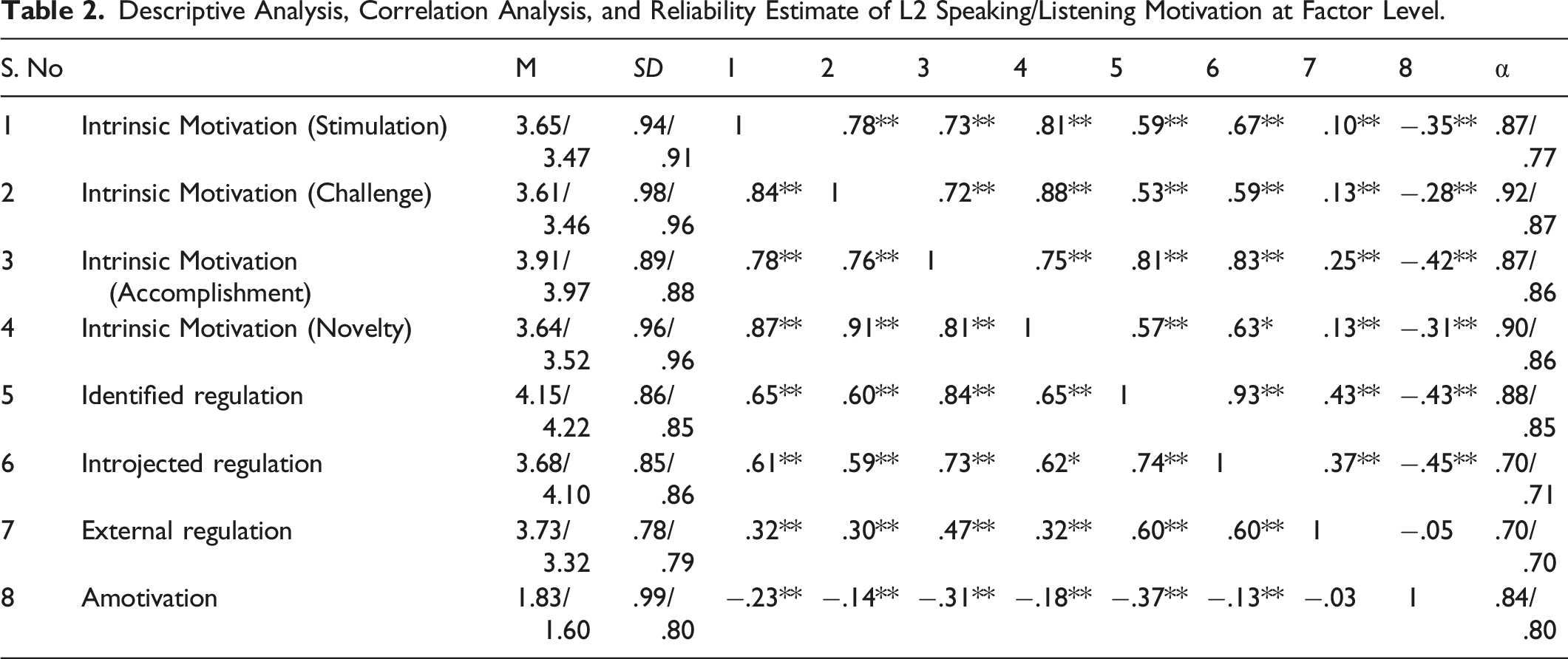
Descriptive Analysis, Correlation Analysis, and Reliability Estimate of L2 Speaking/Listening Motivation at Factor Level.
Correlations Between L2 Speaking and Listening Motivation.
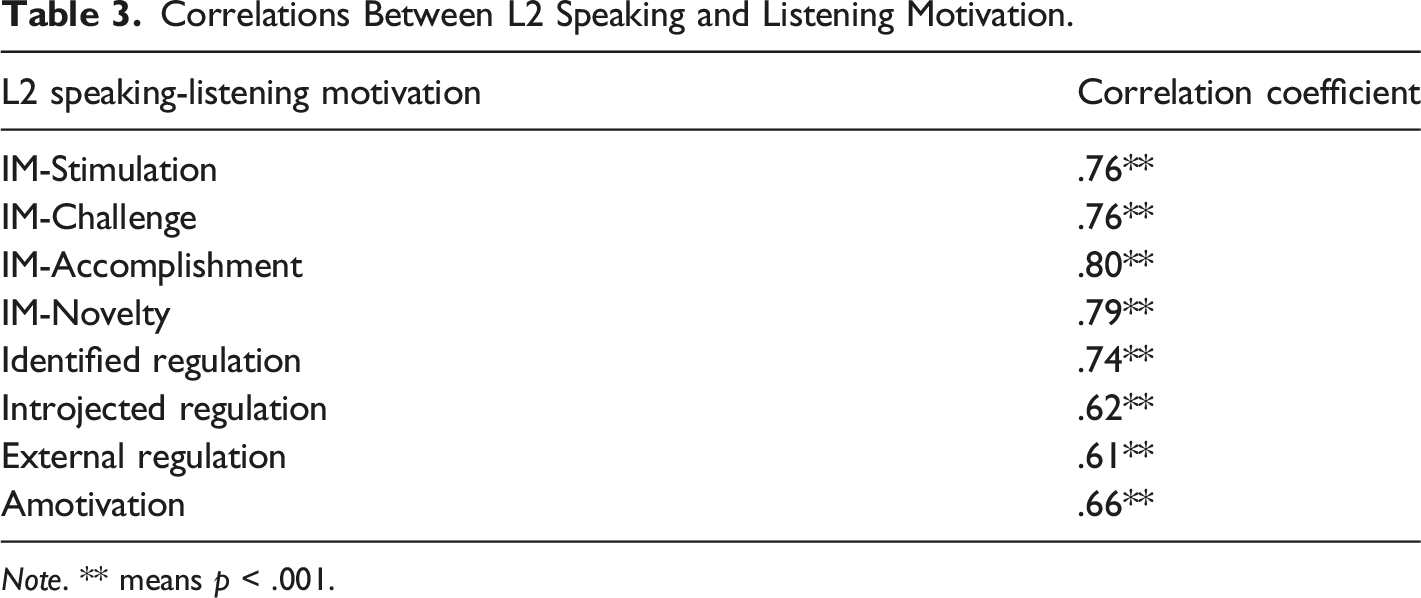
Note. ** means p < .001.
Gender Differences in L2 Speaking Motivation.
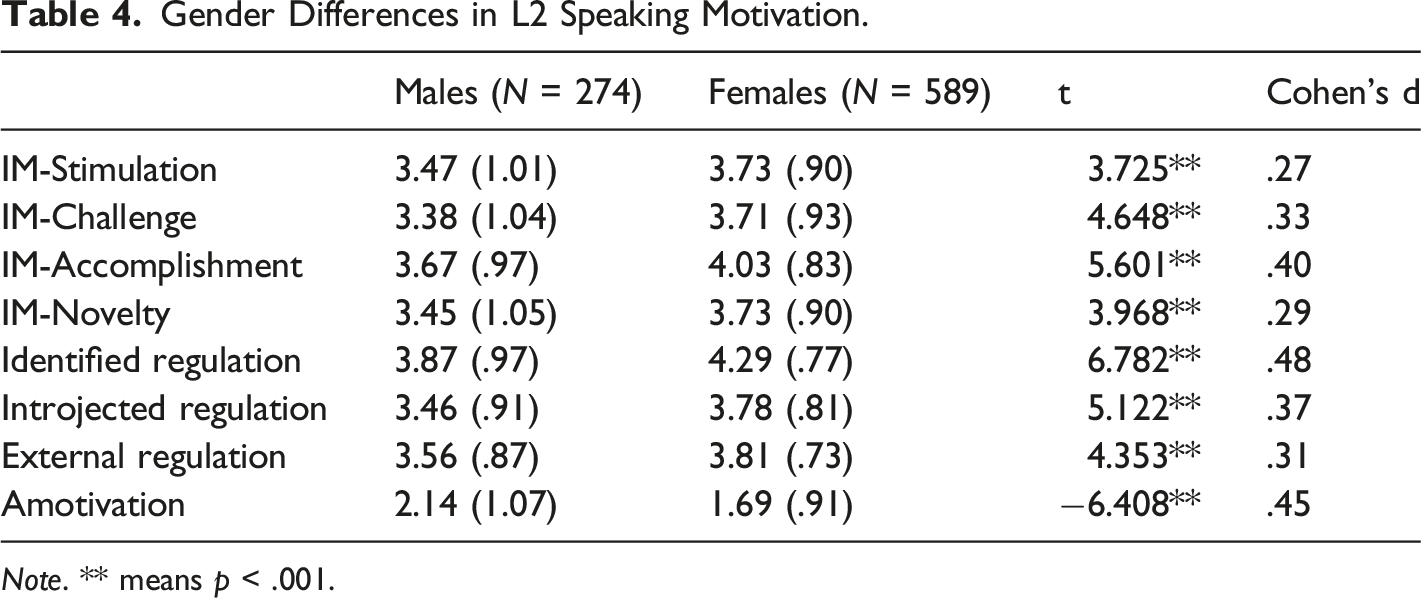
Note. ** means p < .001.
Confirmatory Factor Analysis
Prior to CFA, we performed exploratory factor analysis with the direct oblimin rotation method and extracted eight factors as anticipated. Then, based on our theoretical underpinning, we first tested the hypothesized first-order correlated factor structure of L2 speaking motivation (Model 1 as shown in Figure 1). Results of the CFA indicated an acceptable model fit (x2 = 1400.16; df = 224; p < .001; CFI = .94; TLI = .92; RMSEA = .08, SRMR = .06). Analyses of Model 1 revealed that all standardized factor loadings ranged from moderate to large (.34–.90) and were statistically significant (p < .01). Subsequently, we tested another hypothesized first-order correlated factor structure of L2 listening motivation (Model 2 as displayed in Figure 1) whose results also yielded an acceptable model fit (x2 = 1725.17; df = 224; p < .001; CFI = .92; TLI = .90; RMSEA = .08, SRMR = .08). All standardized factor loadings ranged from moderate to large (.36–.90) and were statistically significant (p < .01). Figure 1 displays the standardized results for the first-order 8-factor correlated models, with one factor loading meaning that the factor loading of two items was the same across the two models. CFA of first-order correlated factor structure L2 speaking/listening motivation scale.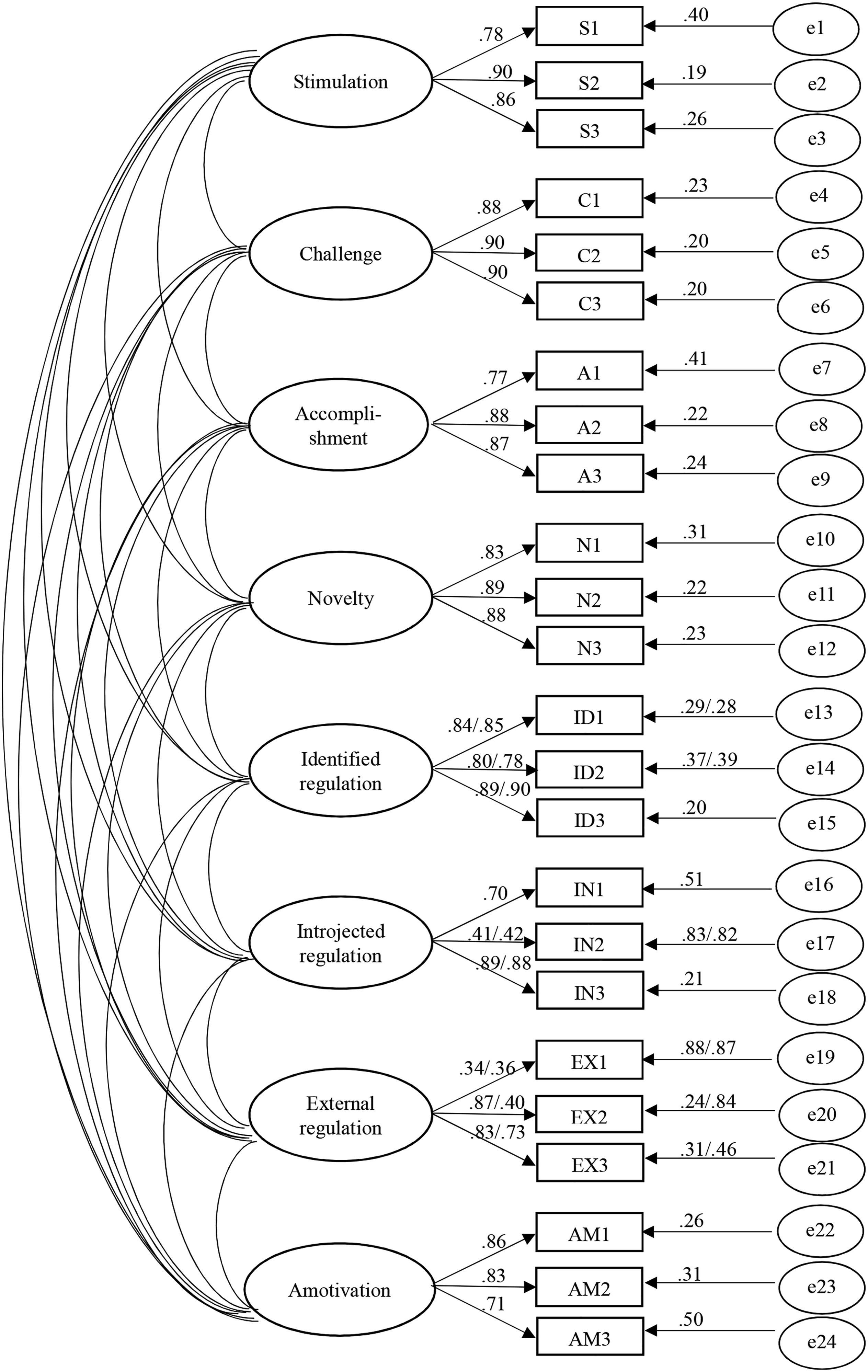
In addition to the first-order validation CFA of L2 speaking and listening questionnaires, we compared the models by validating the second-order correlated factor structure of L2 speaking and listening, respectively, in which L2 speaking or listening motivation pointed to the eight factors as indicated by each of the three items. In contrast, the model fit of the second-order CFA of the L2 speaking scale was undesirable (x2 = 3019.32; df = 224; p < .001; CFI = .85; TLI = .83; RMSEA = .12, SRMR = .08) and so was the model fit of the second-order CFA of L2 listening scale (x2 = 3348.75; df = 224; p < .001; CFI = .83; TLI = .80; RMSEA = .12, SRMR = .13). The comparisons showed that both the L2 speaking and L2 listening scales’ first-order CFA were more robust and valid than their second-order CFA. Furthermore, both scales had good discrimination validity because all the average variances’ extracted estimates were greater than their squared inter-construct correlation. Due to word constraints, information related to discrimination validity is not specified here. Interaction between disciplines and study-abroad experiences in L2 listening IM-Novelty.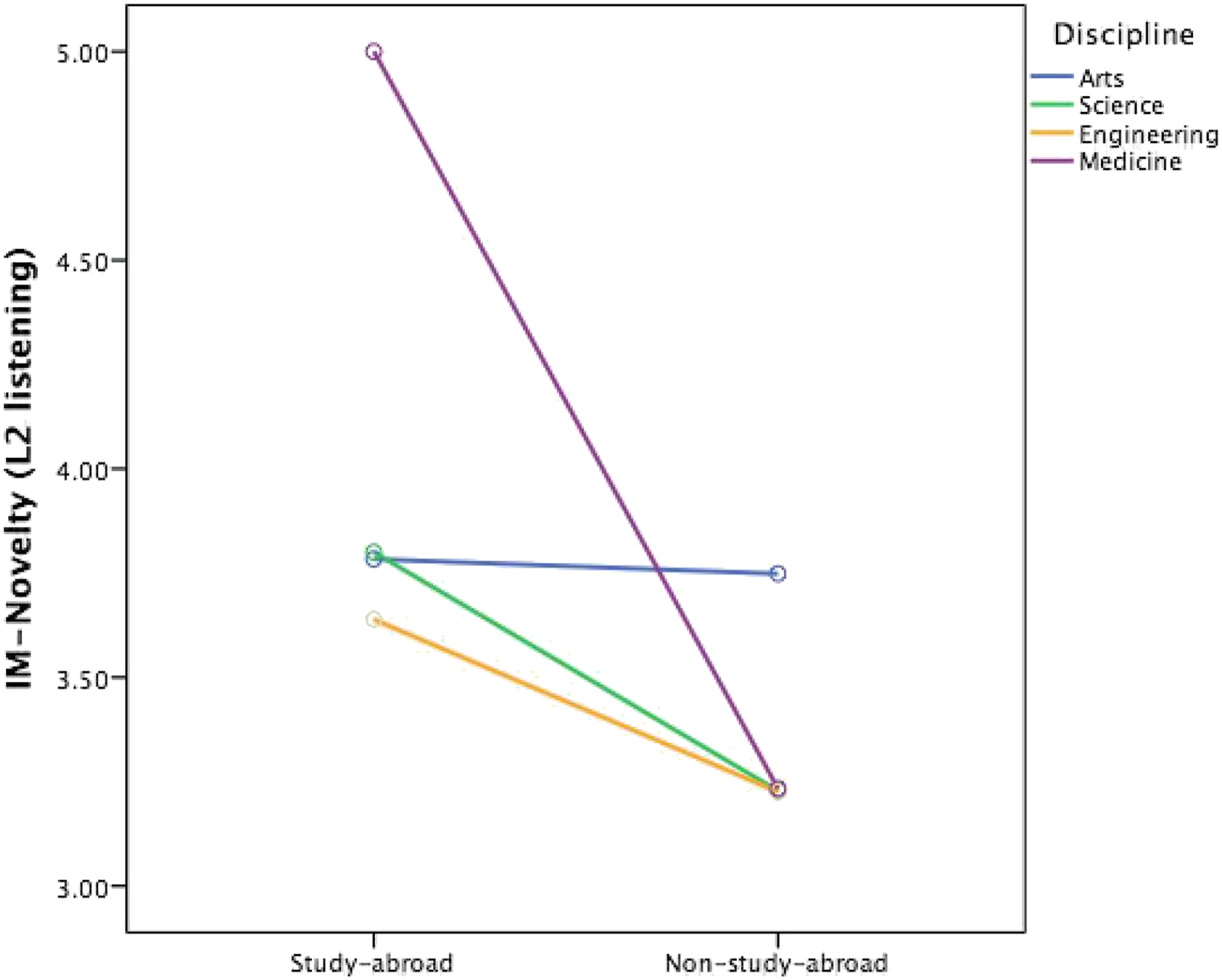
The Associations Between L2 Speaking and Listening Motivation
The correlation analysis results (Table 3) showed that for all the different types of motivation, the students’ L2 speaking motivation and listening motivation were positively correlated, and the correlation coefficients between them were all above .60, indicating a large and strong association between listening and speaking motivation.
Demographic Variables and L2 Speaking and Listening Motivation
Gender Differences in L2 Listening Motivation.
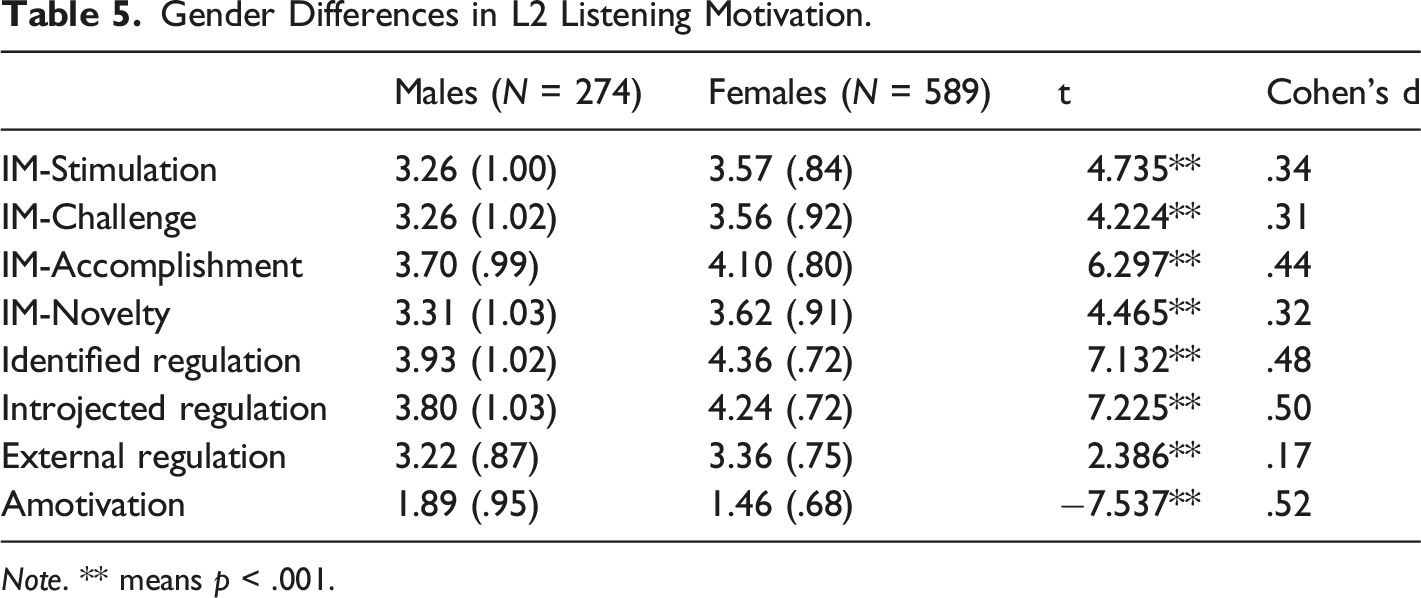
Note. ** means p < .001.
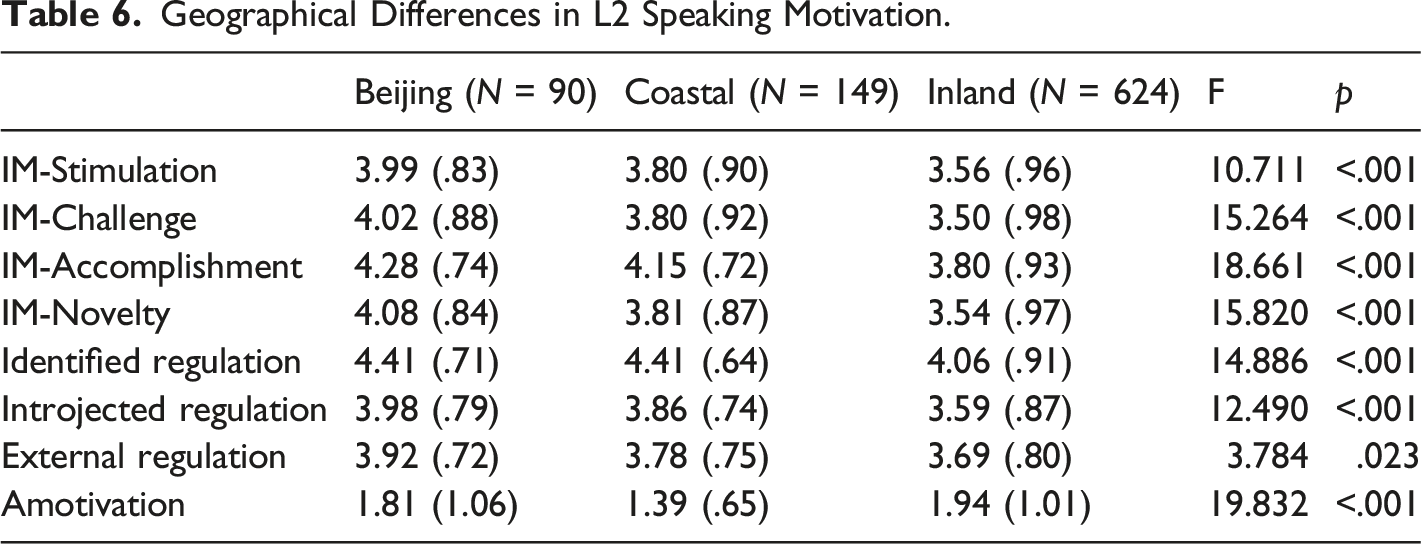
Geographical Differences in L2 Speaking Motivation.
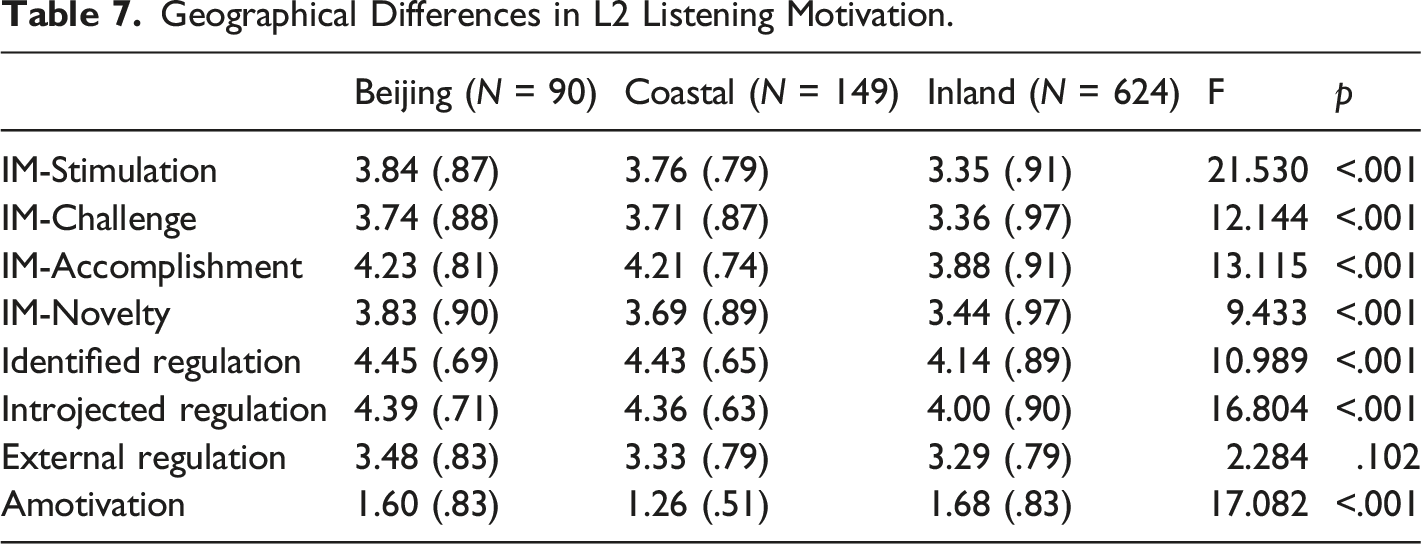
Geographical Differences in L2 Listening Motivation.
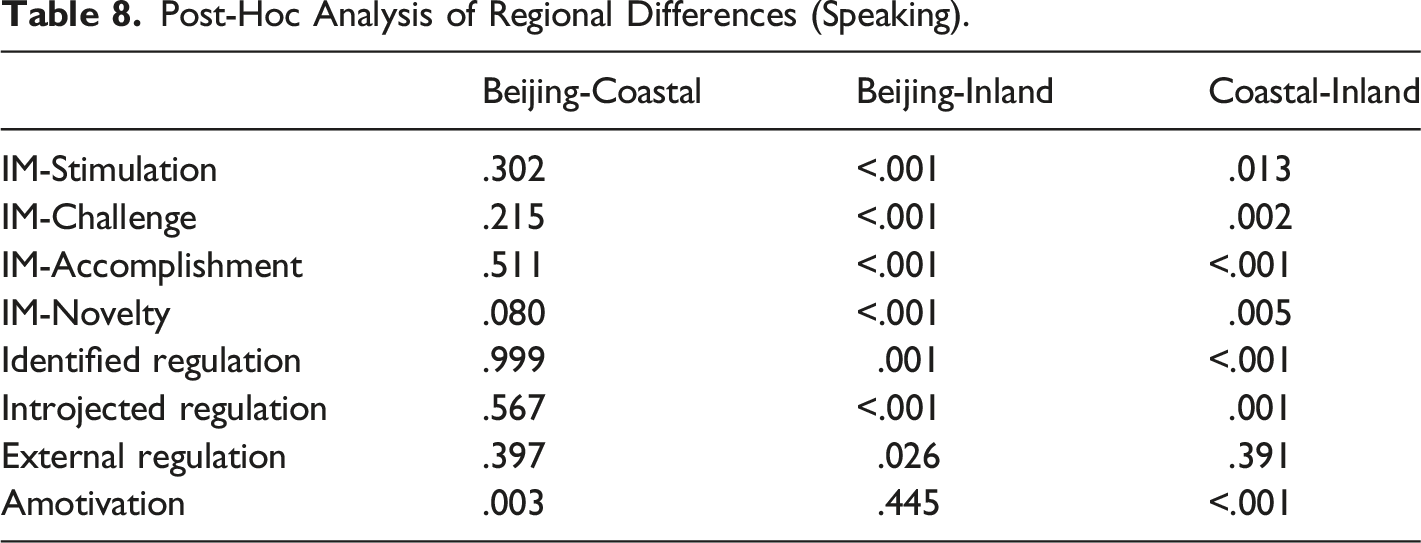
Post-Hoc Analysis of Regional Differences (Speaking).
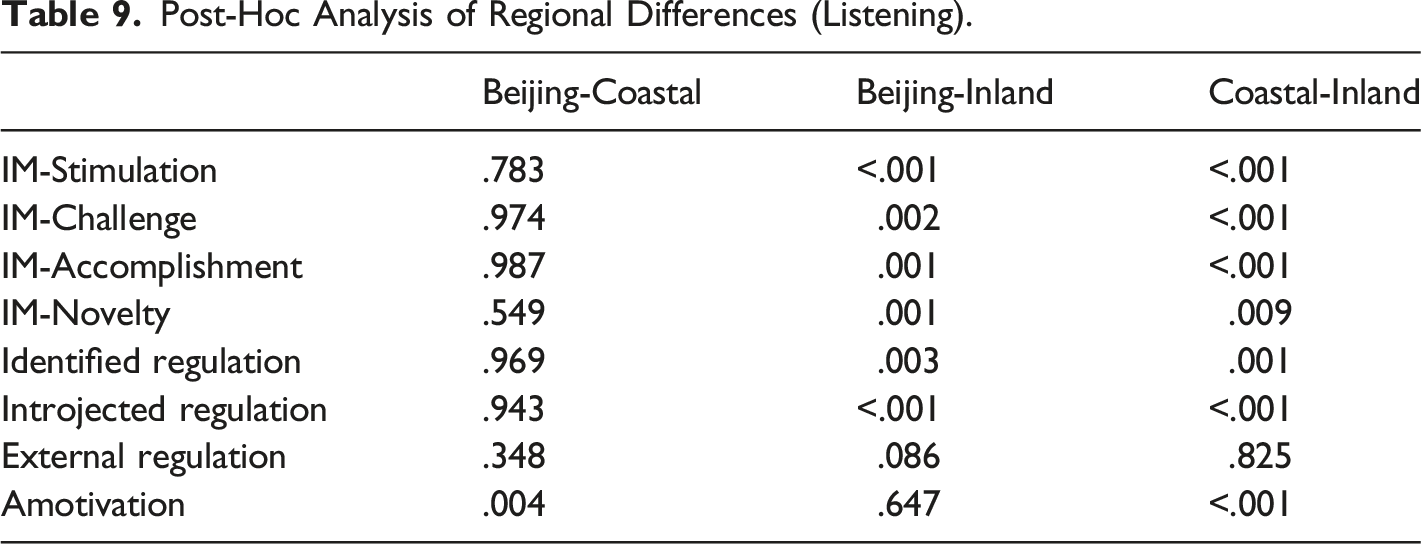
Post-Hoc Analysis of Regional Differences (Listening).
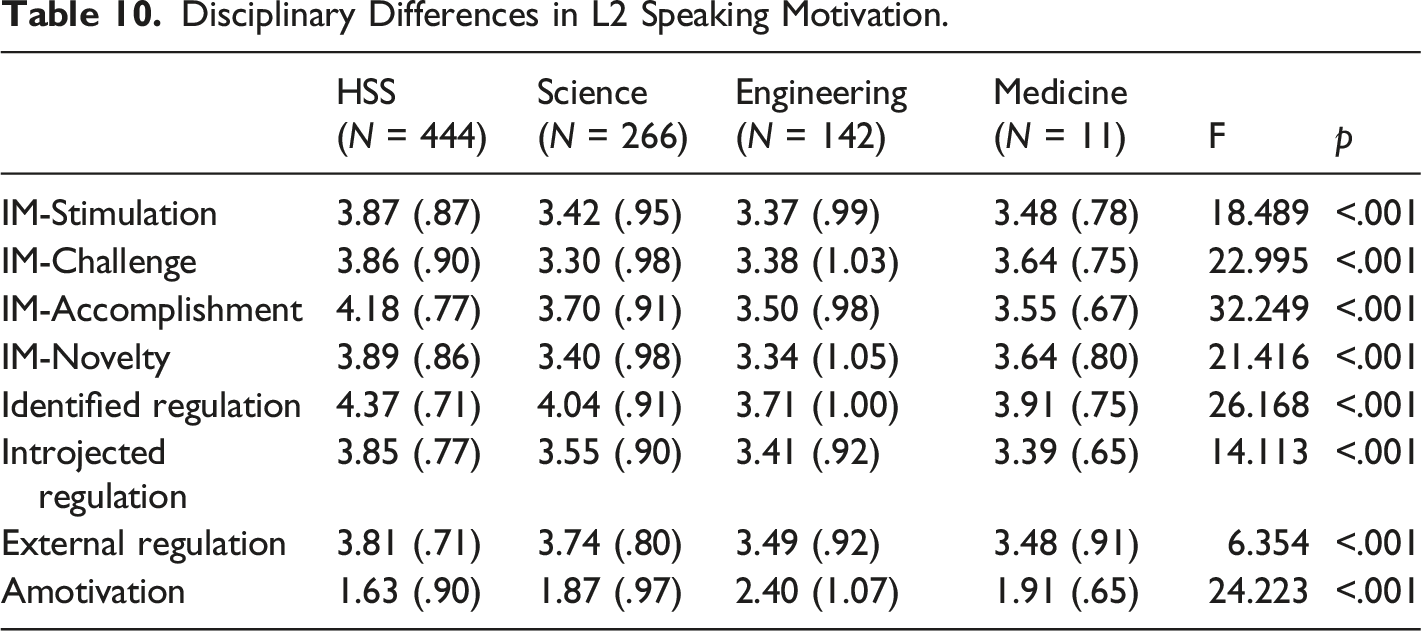
Disciplinary Differences in L2 Speaking Motivation.
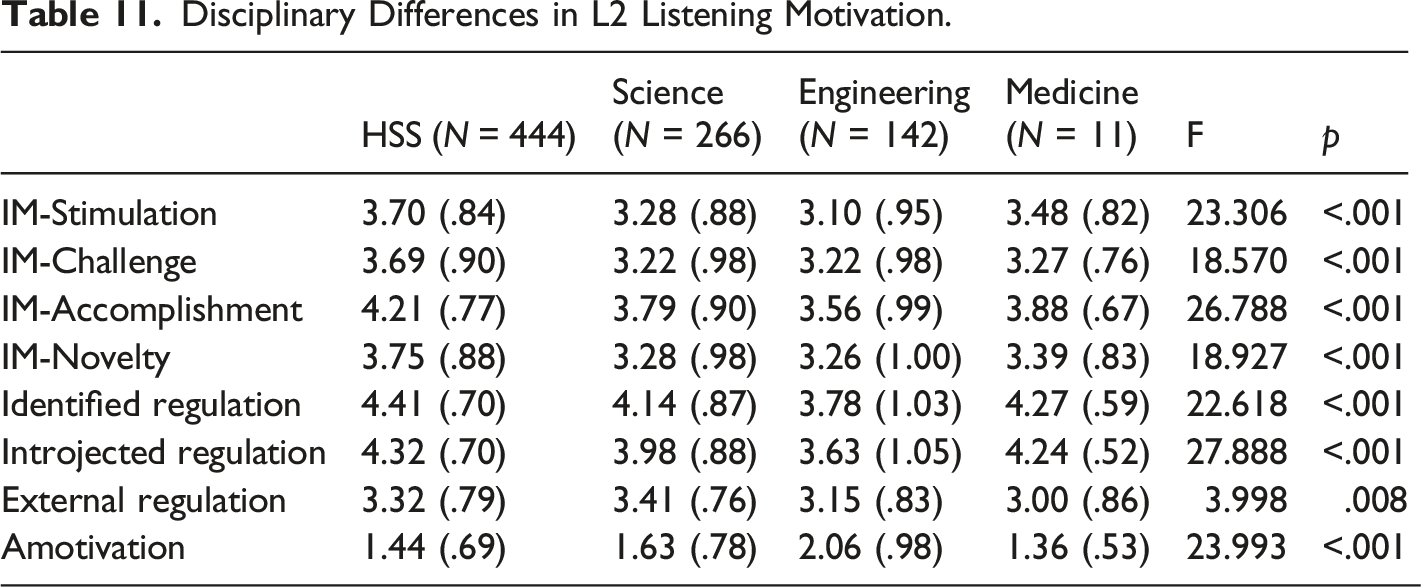
Disciplinary Differences in L2 Listening Motivation.
Post-Hoc Analysis of Disciplinary Differences (Speaking).
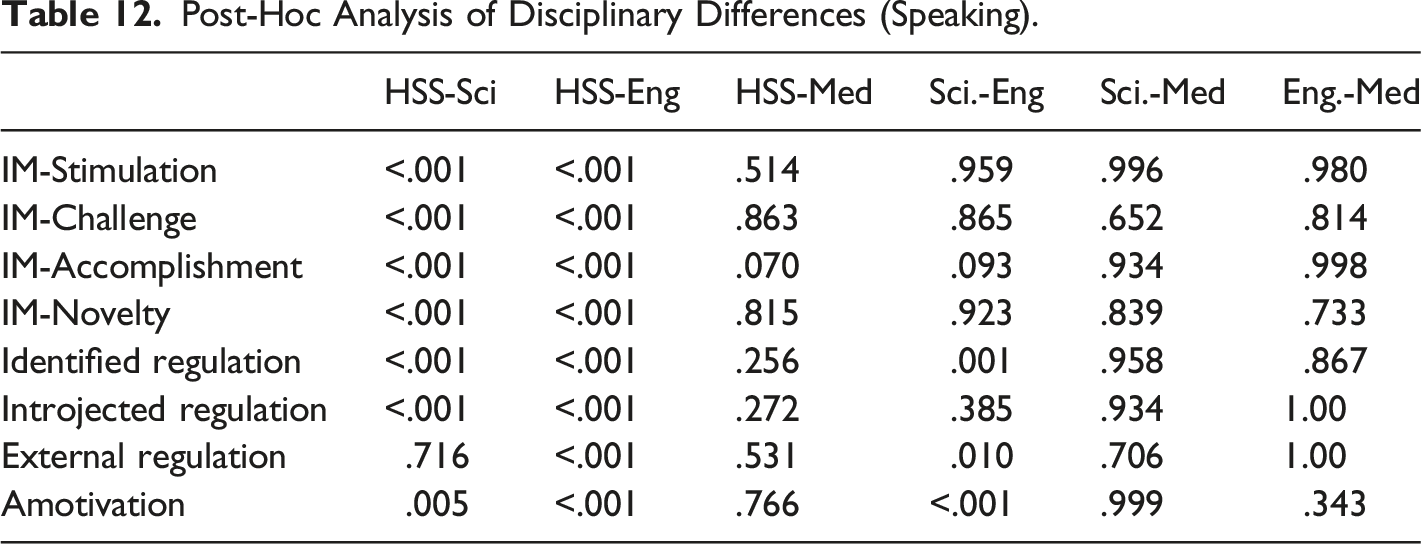
Post-Hoc Analysis of Disciplinary Differences (Listening).

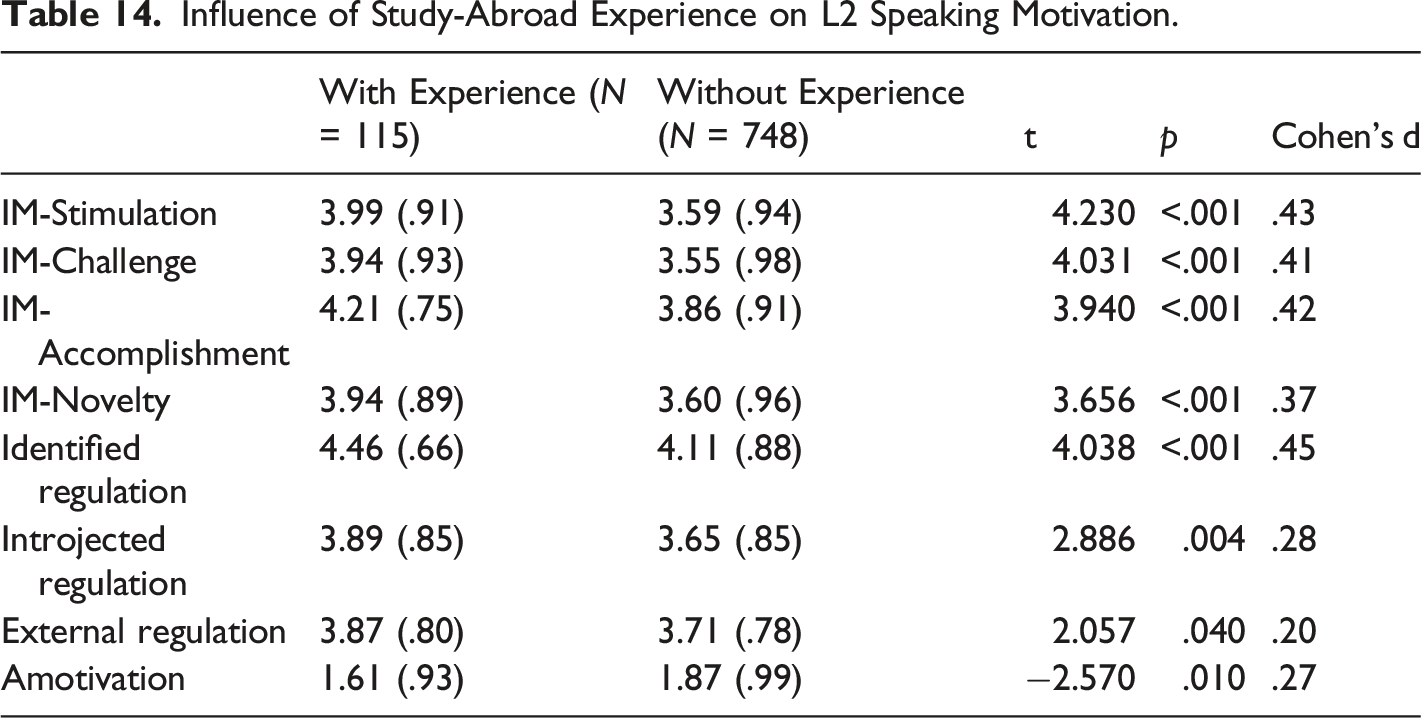
Influence of Study-Abroad Experience on L2 Speaking Motivation.
Influence of Study-Abroad Experience on L2 Listening Motivation.

One-way multivariate analyses of variance tests were also conducted to examine whether intersectionality existed between demographic variables. Our findings indicated interaction effects only between disciplines and study-abroad experiences in all the four IM dimensions for speaking (p < .05) and in IM-Novelty and IM-Stimulation for listening (p < .05). Figure 2 depicts the IM-Novelty, as an example, for L2 listening for study-abroad and non-study-abroad students of different disciplines. It shows that for students of medicine, the difference in IM-Novelty for study-abroad medical students and non-study-abroad ones was the most significant of the four major groups, whereas this difference was least significant for the HSS majors. A similar trend was also spotted in IM-L2 speaking and IM-Stimulation (L2 listening) dimensions, but in the interest of conciseness these were not included in the figure.
To summarize, the statistical results suggested that (1) The two scales were valid and reliable to measure Chinese EFL learners’ L2 speaking and listening motivation. (2) The learners’ L2 speaking motivation and L2 listening motivation were positively correlated with each other. (3) Learners from different demographic groups (i.e., gender, geographical regions, disciplines, and study-abroad experience) demonstrated different degrees of L2 speaking and listening motivation.
Discussion
In this study, two scales of L2 listening and speaking motivation were adapted, validated, and administered to 863 undergraduate students from different parts of China which depict a general picture of L2 listening and speaking motivation of EFL learners in an environment where English is seldom used outside the classroom. The value of this study is twofold.
Second Language Listening Motivation and Speaking Motivation are Integrated
First, this study suggests that L2 listening and L2 speaking skills need to be assessed together (Hinkel, 2010), and learner motivation in the two skills warrants further attention (Zhang et al., 2020). The results of the speaking scale echoed previous studies (Joe et al., 2017) in which EFL learners had developed a high level of identified regulation (4.15). However, unlike the Korean EMI students who were mainly driven by extrinsic motivation (Kim, 2014), our findings did not reveal significant differences between intrinsic and external motivation in this student population. A possible reason is that the Korean students needed to learn their content subjects in English, which is an external driving force for English learning, whereas such an external reward was absent in the surrounding environment (Chinese-medium universities) of our participants. Regarding L2 listening motivation, the mean score for introjected regulation was the highest (4.10), which implied the critical role of extrinsic (controlled) motivation in English listening. Also, amotivation mean scores were very low (about 1.00) among all the motivation types for both L2 speaking and listening, which further reinforces that these participants, in general, were motivated to speak in and listen to English. Furthermore, our results showed a positive correlation between intrinsic and extrinsic motivation for both scales, which corroborates existing findings (Pelletier et al., 1995) and implies that the two types of motivation can co-exist and contribute to enhanced motivation for English speaking and listening (cf. Deci & Ryan, 2008).
With the similar projection of motivational profiles in L2 speaking and L2 listening and the strong association between L2 speaking and listening motivation, we call for more attention to listening-and-speaking motivation and its measurement (Zhang et al., 2020), particularly the oracy instruction (Goh, 2014), to enhance L2 speaking and listening motivation. The processes of listening comprehension and speech generation are not mutually exclusive in real-time communication (Levelt, 1989; Vandergrift, 2005). Rather, they are interrelated. Enhancing learners’ motivation in one aspect can also lead to boosted motivation in the other. Taking this perspective of learner motivation, our findings reinforce Goh’s (2014) proposal that L2 listening and speaking skills, which constitute learners’ L2 oracy competence, need to be examined together.
Demographic Information Matters in L2 Listening-and-Speaking Motivation
Another contribution of this study is to further reveal that learners’ demographic information matters when exploring L2 motivation (Miyamoto et al., 2020; Pajares & Valiante, 2001). Gender differences have become a heated topic when investigating learners’ aspirations for language learning (Oga-Baldwin et al., 2017; Yeung et al., 2011). The general trend that females are more motivated than males in some constructs (e.g., integrativeness and intrinsic motivation) has been observed (e.g., Baker & MacIntyre, 2000; Mori & Gobel, 2006; Pajares & Valiante, 2001). In this study, females, in general, seemed to be more motivated to speak in and listen to English than males, and their intrinsic and extrinsic motivation levels were higher than those of males. It is possible that female students were more willing to communicate and more likely to value communication activities than males (Yashima et al., 2017).
Apart from gender, geographic variables may also play a role in L2 speaking and listening motivation. Some scholars were also interested in students’ SES (social-economic status) and its influence on their motivation (e.g., Miyamoto et al., 2020). In China, education inequity has been discussed and it is believed that students from more developed areas (e.g., coastal provinces) receive more education resources and better learning opportunities than those from inland provinces (Xiang et al., 2020). Our findings showed higher speaking and listening motivation for capital and coastal students than inland ones, which implied that education disparity may exist even in English language education. For example, a trend of academic mobility or “brain drain” from inland to Beijing or coastal universities has been observed in China, and academics with overseas education or working experience and distinguished research and teaching performance tend to seek jobs in more developed cities (Chen, 2016). This may lead to an imbalance of teaching quality among universities from different areas. It might be that communicative language teaching methodologies are more prevalent in the capital and coastal areas, and thus students are more aware of the importance of listening to and speaking in English. Nonetheless, this explanation remains tentative, and a qualitative study should be conducted in the future to explore the reasons behind these results.
Not surprisingly, HSS students obtained higher degrees of L2 speaking and listening motivation than STEM-studying peers, which could be due to the different learning styles and preferences of students from different disciplines. L2 learners from soft science disciplines (humanities and social science) were more active and autonomous in the learning process than their hard science counterparts (Lau, 2017; Lau & Gardner, 2019). As an HSS discipline, English learning may be more attractive to HSS students, who could be more motivated to use the target language for communication. On the other hand, engineering students’ L2 listening and speaking motivation needs to be further enhanced.
These disciplinary differences could also be accounted for by study-abroad experiences. Consistent with previous studies (e.g., Baker & MacIntyre, 2000; Xu & Qiu, 2020) about the influence of study-abroad experience on learner motivation, our results showed that students with overseas experience were more motivated to speak in and listen to English than their peers; such influence was even more obvious among medicine students than in HSS students. As has been pointed out in the literature (Xu & Qiu, 2020), overseas experience, which creates opportunities for learners to experience real-time communication, can boost students’ eagerness to improve their speaking and listening skills. HSS students already possessed high L2 listening and speaking motivation when data were collected, and thus they might have simply preferred learning English, which is a HSS subject. Hence, they could be quite motivated to listen to and speak in English regardless of whether they had studied abroad or not.
Pedagogical Implications
Our results shed light on how L2 teachers can enhance learners’ L2 listening and speaking motivation. First, they demonstrate how motivational orientations for Chinese EFL learners differ from L2 learners in other contexts such as Korea (Kim, 2014), which implies that different groups of learners may carry different motivational orientations. Hence, teachers are encouraged to adopt the two scales to investigate their own learners’ motivation before making decisions on which motivation aspects of their students should be attended to and how their motivation can be enhanced.
Second, our findings reinforce the importance of the integration of L2 listening and speaking and suggest that activities which enhance L2 speaking motivation could also positively impact listening motivation. Given the benefits of study-abroad experiences in motivation development yielded from our results, we recommend that teachers design communicative activities (e.g., task-based learning) that create authentic communication experiences, and practice both speaking and listening skills simultaneously, because they have been shown to enhance learner motivation (Lambert & Zhang, 2019) particularly for medical students.
Third, the “one-size-fits-all” teaching approach is no longer appropriate, as our study has revealed the demographic variations in L2 speaking and listening motivation. Hence, we believe that male EFL students, learners from inland provinces, and hard science or engineering majors particularly warrant extra attention from teachers to enhance their L2 listening and speaking motivation. Teachers should implement classroom activities that could enhance their intrinsic motivation. For example, classroom activities need to align with learners’ proficiency levels which can, to some extent, be challenging but achievable. It is important to consider the preferences of male students and the nature of the hard science disciplines (e.g., deductive experimentation, logical inferences, and collaborative work) when selecting language task topics and types. Furthermore, additional English learning resources need to be allocated to inland areas so that inland students can have more opportunities for English communication and develop insights into the importance of English listening and speaking.
Conclusion
In this study, L2 speaking and listening motivation scales were adapted, validated, and administered with 863 Chinese EFL learners. The results suggested the integration of L2 speaking and L2 listening skills when exploring learner motivation and showed that demographic variables warranted consideration when exploring learner motivation. Although the findings contribute empirical data of L2 speaking and listening motivation to the field, the findings would be more robust and comprehensive if qualitative data (e.g., interview data with the learners to investigate the reasons behind their motivation reports) could have been collected. It is also noted that the participants surveyed in this study are EFL learners and attended Chinese-medium universities offering English language courses. Therefore, the findings may not be generalizable to other English-medium contexts.
Footnotes
Acknowledgments
The authors would like to express their deepest gratitude to Jingjing Wang, Wen Jia, Wenjuan Ma, Hong Cheng, Feng Jiang, Xiaohao Ma, Huan Wang, Yanqi Huang, Yanping Hou, Jufang Kong, Caixia Chen, Bo Sun, Xixu Cheng, Yingying Peng, Rula Sa, and Lezhou Su for their help with the participant recruitment and data collection.
Declaration of Conflicting Interests
The author(s) declared no potential conflicts of interest with respect to the research, authorship, and/or publication of this article.
Funding
The author(s) received no financial support for the research, authorship, and/or publication of this article.
Author Contributions
Xuyan Qiu: Conceptualization, Methodology, Data analysis, Writing-original draft, Writing-Revision. Jian Xu: Data collection, Data analysis, Writing-original draft.
Ethical Approval
The participants’ consent was sought before data collection. They voluntarily participated in the study. They were introduced about the research project and were informed about the confidentiality rule of the study. They completed the questionnaire in the anonymous form. They were also told that the questionnaire input would not do harm to them or affect their academic achievement. The data would be used only for research purposes.
