



Abstract
This article explores the multifaceted nature of the individual motivations behind engaging in competition. In doing so, we investigate the theoretical and empirical links between general trait competitiveness and the three competitive attitudes: personal development, hypercompetition, and competition avoidant, as moderated by core self-evaluation. Findings indicate that it is not merely the level of general trait competitiveness that influences an individuals attitude towards competing, but heightened levels of core self-evaluation decrease the neurotic and unhealthy competitive attitudes of hypercompetitive and competition avoidant individuals. We discuss the implications for these relationships.
Introduction
A 37-year-old high school teacher, Norman Triplett, was the first to investigate how competition spurs a person’s performance (Bronson & Merryman, 2013). Triplett found that most kids put forth greater effort when competing, though this was not the case across all children (Triplett, 1898). This general individual difference, resulting in a preference for competition, is labeled as general or trait competitiveness (e.g., Brown et al., 1998; Murayama & Elliot, 2012). Trait competitiveness represents individual differences in preferences for competition (Swab & Johnson, 2019), as the desire to win against others (Helmreich & Spence, 1978), or in specific contexts such as sports, the desire to enter into the sport competition and strive for success (Gill & Deeter, 1988). However, exploring competitiveness is challenging because it does not necessarily represent a unitary construct but rather, is multi-dimensional.
With respect to situational conditions and perceptions, one’s general competitiveness is a relatively stable trait, but various internal differences or motivations may explain an individual’s attitude towards engaging in competition. Based on both healthy and unhealthy competitiveness, the difference in these attitudes is regarded as three competitive orientations; personal development, hypercompetition, and competition avoidant (Ryckman et al., 1990, 1996, 2009). Although extant studies have assisted in understanding the motivational differences related to competition (e.g., Luchner et al., 2011; Marlowe, 1963; Ross et al., 2003; Swab et al., 2021), there is much to be explored regarding what factors influence how individuals view and engage in competition. As such, this study examines the theoretical and empirical links between general competitiveness, three competitive orientations, and the moderating effect of core self-evaluation (CSE). More specifically, we evaluate how general trait competitiveness, as a trait variable, leads to competitive orientations, which represent less stable attitudes towards competition, but propose this relationship is dependent upon whether individuals are high or low in CSE.
CSE is a higher-order construct based on four separate but related variables; traits of self-esteem (the evaluation individuals make about their own worth), generalized self-efficacy (the extent to which people believe they can perform a behavior to produce a particular desired outcomes), locus of control (the degree of control over life events that individuals believe they possess), and emotional stability (a sense of confidence and security and positive self-evaluation) (Judge et al., 1997). Taken together, CSE describes an individual’s bottom-line appraisal of their own worthiness, competence, and capabilities in relation to not only how individuals view themselves but also how they perceive and assess situations (Judge et al., 1997, 2005). In this regard, CSE presents a useful construct to assist with why or how someone is motivated to compete, as CSE may determine one’s comfort level with a win or loss. Accordingly, we propose CSE—as an assessment of individual worth, control, and competence—should influence how confident one feels in their capabilities to engage in competition and should also impact the attitude one has toward competition (i.e., healthy or unhealthy). As such, the aim of this study is to explore general competitiveness and the interacting effects of CSE and the three competitive orientations.
Our study contributes to literature in the following ways. First, our work builds on the call from Swab and Johnson (2019) for a greater understanding of the relationships between competitive personality factors, individual and structural competition, and how this plays a role in high-stake settings, such as the workplace. Although competitiveness and workplace studies exist, such as the level of competitiveness influencing job satisfaction (Jonason et al., 2015), and the wins and losses of negotiations (Ten Brinke et al., 2015), much of this work focuses on the influence of competitiveness and its relationships with the Dark Triad (i.e., narcissism, Machiavellianism, and psychopathy). Therefore, opportunities exist to study competitiveness in conjunction with a variety of other constructs, including those with bright sides, as well as other personality factors frequently studied in workplace environments, such as CSE. Second, researchers have long studied the relationships between CSE and other organizational behavior constructs, yet we lack an understanding of how CSE may influence individual competition. Understanding this relationship may assist researchers and practitioners in understanding a variety of workplace processes and outcomes. For example, though exceptions do exist (i.e., Bhargava & Pradhan, 2019; Kacmar et al., 2009), relatively little is known regarding how CSEs can be leveraged to understand or improve job performance (Chang et al., 2012). As CSE is associated with self-appraisals and motivation (Bono & Colbert, 2005; Erez & Judge, 2001) and extant studies have examined the influence of competitiveness and its effects on performance and other work outcomes (e.g., Fletcher & Nusbaum, 2010; Jonason et al., 2015; Sapegina & Weibel, 2017), exploring these intertwined effects can contribute to the depth of knowledge surrounding CSE.
Lastly, we contribute to research by exploring the multidimensional nature of competitiveness. This multidimensionality, including the development of the competitiveness orientation or how a personality trait determines interactions in a competitive relationship, has received scant attention in the literature (Fletcher & Nusbaum, 2008; Houston et al., 2002b). Individuals may differentially weigh the importance of a competitive situation, and this “weighing” of objectives in a goal hierarchy represents both individual and dispositional preferences for competition, which are subject to the variability of personality, affect, and cognitions (Murayama & Elliot, 2012). Accordingly, our study involves a theoretical and empirical assessment of the various competitiveness constructs, highlighting general trait competitiveness as relatively stable, while the three competitive orientations are trait-states, represented as competitive attitudes. We incorporate the interactive effect of the competitiveness constructs and CSE to explain individual's motivations to compete. Our study has both theoretical and practical implications, as competition explains a variety of behaviors and outcomes, some of which may be motivational or increase performance (Garcia et al., 2013; Tauer & Harackiewicz, 2004), while others may be unethical and problematic both in and outside of the workplace (e.g., aggression [Luchner et al., 2011] or the toxic behavior of Type A individuals [Thornton et al., 2011]).
Theory and Hypotheses
Competitiveness
A general preference for competing involves “the enjoyment of interpersonal competition and the desire to win and be better than others” (Spence & Helmreich, 1983, p. 42). Competitors may compete on dimensions relevant to the self (Garcia et al., 2013), or due to a general enjoyment of competition and the desire to excel (Helmreich & Spence, 1978). While the described general competitiveness represents a relatively stable disposition (Newby & Klein, 2014), the construct does not distinguish between the multifaceted nature of competitiveness, which can manifest in different ways (Orosz et al., 2018). For instance, competitiveness may exist as a healthy trait, characterized by increases in motivation and engagement, or as an unhealthy trait, characterized by distrust and strong negative emotions (Johnson & Johnson, 1991). Researchers have further expanded upon the healthy and unhealthy characteristics of competition based on individual differences and motivations, which is represented by three competitive orientations or attitudes. Of the three competitive orientations, personal development (PD) is described as a healthy attitude towards competition, while hypercompetitiveness (HC) and competition avoidance (CA) are opposite in terms of their engagement in competition, but share underlying neuroses (Horney, 1945; Ryckman et al., 1996). Each competitive orientation also influences the perceived environmental competitiveness. This environmental view determines whether an individual perceives a situation as structurally competitive and also shapes the individual biases towards competing (Murayama & Elliot, 2012), thus influencing whether or not competitiveness is required or even appropriate.
Personal development
The personal development competitive orientation portrays a healthy form of individual competitive action by which individuals focus on “the enjoyment and mastery of the task” rather than winning (Ryckman et al., 1996, p. 375). PD individuals emphasize personal growth and development, self-discovery, and self-improvement (Ryckman et al., 1996). The PD competitive personality demonstrates high levels of self-esteem, achievement, affiliation, conscientiousness, a concern for the welfare of others, and a willingness to forgive, along with decreased levels of dominance behaviors, aggression, and neuroticism (Collier et al., 2010; Ross et al., 2003; Ryckman et al., 1996, 1997).
PD competitors have high self-regard and awareness, with the ability to conform to norms and work well with others. These competitors can also process when it is appropriate to engage in competitive, cooperative, or other behaviors. They do not necessarily view competitive situations as influencing their self-worth, and therefore, do not filter all situations as competitive with a need to win. Instead, these competitors have the willingness to compete when necessary. As PD competitors are comfortable engaging in competition, whether due to personal growth or mastering a task, we hypothesize a positive relationship from general competitiveness to the personal development competitive orientation.
General competitiveness relates positively to personal development competitiveness.
Hypercompetitiveness
Opposed to a healthy competitor, those high in hypercompetition believe respect and approval derives from successful domination of an opponent, and accordingly, leads to an indiscriminate need to win (Ryckman et al., 1990). Hypercompetitors perceive their personal success through the accumulation of power, prestige, and possessions (Horney, 1945). HC describes a heightened self-worth fluctuating with underlying low self-esteem, a decreased need for others, an interest in admiration and recognition from others, and high levels of neuroticism (Ryckman et al., 1990, 1994). Hypercompetitive individuals tend to view their environment as hostile and dangerous (Brown et al., 1998), which accounts for their ruthless and unsympathetic behavior (Sibley et al., 2007).
This indiscriminate need to win and desire to prove their self-worth to themselves and others, leads hypercompetitive individuals to perceive situations as competitive, even when they may not be. As such, hypercompetitors often compete in situations that are non-competitive (Matthews, 1982). As hypercompetitors are both willing to compete and view most situations as competitive, we hypothesize a positive relationship from general competitiveness to the hypercompetitive orientation.
General competitiveness relates positively to hypercompetitiveness.
Competition avoidant
The competitive avoidant (CA) orientation results from a fear of losing the affection and approval of others. Therefore, unlike PD and HC individuals, CA individuals refrain from competition (Ryckman et al., 2009). This reluctance is due to the outcomes of winning the competition (thereby creating resentment from the loser) or through failure in the competition (and the resulting humiliation). Accordingly, CA individuals have underlying needs and insecurities leading to an evasion of competition when possible, in an attempt to avoid decreasing their view of their own self-worth. However, when competition cannot be avoided, CA individuals may self-sabotage to minimize their chances of success. These behaviors include, but are not limited to, self-mockery, handicapping their own intelligence and ability, and engaging in diverting activities that purposefully distract them from the competition (Ryckman et al., 2009).
A competitive situation for the CA oriented individual induces anxiety, creates self-handicapping behaviors, generates the fear of humiliation, and reduces motivation (Ryckman et al., 2009). Therefore, whether or not a situation is structurally competitive, the CA individual will refrain from competitive behaviors and potentially disengage from the situation all together. As CA oriented individuals are fearful towards both the win and the loss outcomes of a competitive situation, we hypothesize a negative relationship from general competitiveness to competition avoidant orientation.
General competitiveness relates negatively to competition avoidance.
Although the general competitiveness construct operates on a high to low range, it does not focus on an individual’s underlying (in)securities and neuroses, but merely discriminates between individuals who choose to enter or refrain from competitive activities (Gill & Deeter, 1988). However, the aforementioned competitive orientations focus on the underlying individual differences leading to either comfort or discomfort when participating in competition, how competitiveness is perceived, and whether it manifests in a healthy or unhealthy form. While theoretical and empirical studies find individuals may differ in the three orientations based on self-esteem or neuroticism for example (Ross et al., 2003; Ryckman et al., 1994), the traits which together represent CSE (i.e., self-esteem, generalized self-efficacy, locus of control, emotional stability) should influence how individuals manifest their high and low forms of general competitiveness into attitudes towards competition. Therefore, in the following section, we outline our arguments for how CSE moderates the relationship between general competitiveness and each competitive orientation (i.e., PD, HC, and CA).
The Interactive Effect of Core Self-Evaluations
A heightened level of CSE includes strong and positive feelings towards one’s worthiness, competence, and capabilities. As such, high CSE is linked to numerous positive outcomes, such as job-search intensity (Wanberg et al., 2005), career adaptability (Xu & Yu, 2019), strengths use (Ding & Lin, 2020), and mindfulness (Kong et al., 2014). Just as competitiveness incorporates an individual’s view on goals, goal hierarchies, and whether or how individuals will pursue these goals (e.g., Johnson & Johnson, 1989; Swab & Johnson, 2019), one’s level of CSE is also determined by the pursuit of goals. Such that, Judge et al. (2005) finds CSE is positively related to job and life satisfaction, but in part due the pursuit of goals that are consistent with one’s values (i.e., goal self-concordance). In addition, individuals who perceive themselves positively (i.e., high self-esteem, low neuroticism), or those with high levels of CSE, tend to evoke and pursue goals that move them towards a more positive state or outcome, and to a greater extent than individuals with a negative self-view (Elliot et al., 1997; Elliot & Sheldon, 1998). Therefore, those with high CSE are willing to pursue goals due to their confidence in doing so, thus, are willing to compete when competition involves the pursuit of a goal. As such, CSE not only influences the pursuit of goals, but the self-esteem, self-efficacy, and emotional stability of the individual during the pursuit.
Also noted as a control-based personality construct (Wang et al., 2016), CSE reflects not only who the individual is and how they perceive themselves, but also represents the desire one has to succeed and control their life (Judge et al., 1997). As the control exhibited in CSE can be a personality resource, people with higher CSE may see themselves as more capable in external situational constraints and thus may experience positive attitudes towards engaging in a difficult task requiring competition. Alternatively, individuals with lower CSE may view the same competitive task as threatening or stressful, as they are less confident about their abilities in adverse circumstances (Judge et al., 2005). Accordingly, CSE may determine how an individual approaches or avoids competition, and the underlying view of themselves when competing.
CSE and healthy competition
General competitiveness shares positive correlations with personal development competitiveness (H1), however, this does not mean that PD individuals who are willing to compete in a healthy manner necessarily express a high level of enjoyment for engaging in competition. In other words, a PD individual has both a positive self-view of themself and their abilities when competing, and therefore, while we would assume CSE and PD would have strong correlations, the level of general competitiveness (whether high or low), may influence how the two constructs interact with one another.
Traits such as CSE can affect situational behavior patterns (i.e., the differential choice hypothesis, [Kammeyer-Mueller et al., 2009]), such that individuals with higher CSE—due to viewing themselves as capable, worthy, and in control—evaluate choices in a consistently positive manner (Judge et al., 2004). They are more likely to approach situations with the idea that they will be successful. Heightened CSE also allows an individual to perceive competition not as a threat (self-esteem, generalized self-efficacy), but that even in situations of defeat, they have control in changing the situation (locus of control). These ideals support that heightened CSE allows a more positive, development-oriented approach towards competition (e.g., Bono & Colbert, 2005; Ferris et al., 2013). Conversely, individuals with low CSE have lesser evaluations of their ability to address situations, particularly in adverse environments (Johnson et al., 2008). Therefore, individuals with lower general competitiveness, but high CSE, are willing to compete as they believe they have the ability to be successful. In addition, high CSE allows individuals to continue viewing themselves and others in a positive manner and therefore do not view the competition as a situation which controls who they are nor their worth. Accordingly, high CSE, even in individuals with lower general competitiveness, may result in strong appraisals and the willingness to engage and win. However, we do not anticipate the same influence from those high in general competitiveness, as those individuals will not require the heightened levels of CSE to be willing to compete. These arguments lead us to formally hypothesize the following;
CSE and neurotic competition
An evident contrast exists between hypercompetitive and competitive avoidant individuals. However, both orientations portray neurotic behaviors, which has been described as a “problem for everyone in our culture, and…the unfailing center of neurotic conflicts” (Horney, 1937, p. 188). Both HC and CA orientations reflect similar underlying needs and insecurities, which may be in part due to both constructs sharing associations with neuroticism and low optimal psychological health (Ryckman et al., 1990, 2009). In this regard, both the dominance of a hypercompetitor and the disengagement of a competition avoider impact a person’s self-esteem based on their negative perceptions of their relationships with others and their environment due to the need to win, and the perceived respect and approval from winning or refraining from competition.
Individuals high in HC are willing to compete and win at all costs and thus are more likely to perceive situations as a competition. As such, we do not anticipate individuals with heightened levels of HC to be low in general competitiveness (H2), but rather, regardless of the level of general competitiveness, a higher level of CSE would decrease the formation of a hypercompetitive attitude. As hypercompetitors perceive respect and approval is derived from winning, their self-esteem is impacted by competition outcomes. Heightened levels of CSE may decrease hypercompetition, as the potentially heightened self-esteem may lead them to perceive competition and winning not as sources of self-worth, and therefore would not view a potential defeat as a threat. Further, HC individuals also use competitive situations as a way to control and dominate over others, and therefore, heightened levels of CSE may decrease hypercompetition as HC’s indiscriminate need to win may not be perceived as the way in which to control external situations, but rather, may lead to greater enjoyments of the task. Heightened levels of CSE may also provide greater emotional stability, lessening the high neuroticism of hypercompetitors. Accordingly, we propose the following relationships.
CSE moderates the effect of general competitiveness on HC.
Individuals high in CA refrain from competition, and accordingly, will also likely be low on general competitiveness (H3). However, regardless of the level of general competitiveness, a higher level of CSE should decrease an individual’s competitive avoidance. CA individuals may or may not have an enjoyment of competition, but engagement in a competition—whether win or lose—promotes anxiety and the fear of disapproval from others, thereby influencing one’s self-esteem. Heightened CSE may provide greater self-esteem, lessening the negative views toward competing and may also increase the perception of internal control during challenging or uncomfortable situations, such as a competition. Lastly, heightened CSE may lead to greater emotional stability, thereby decreasing the neurotic and unhealthy patterns of the CA individual, allowing them to engage in competition when necessary (see Figure 1).
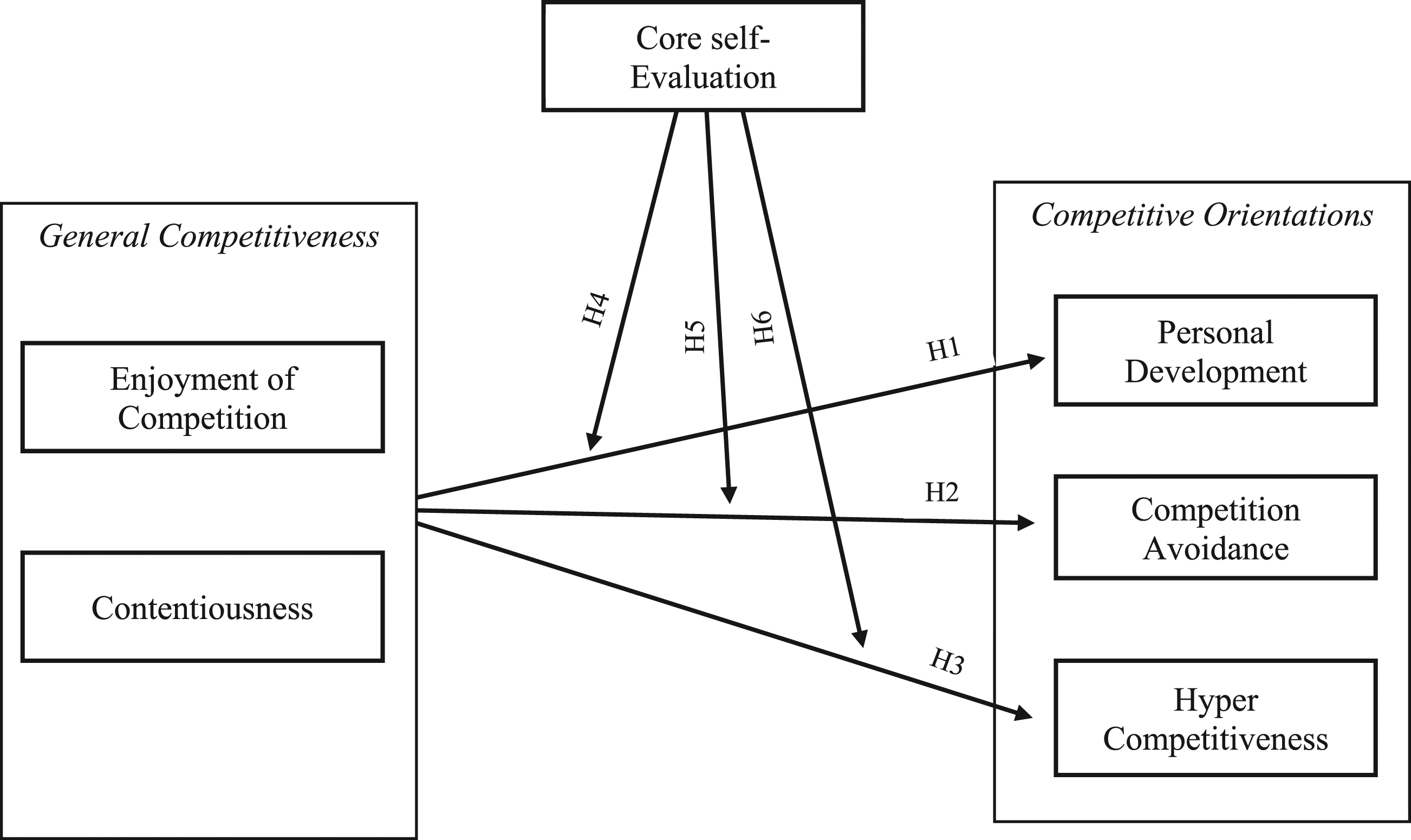
Conceptual framework.
CSE moderates the effect of general competitiveness on CA.
Methodology
Sample
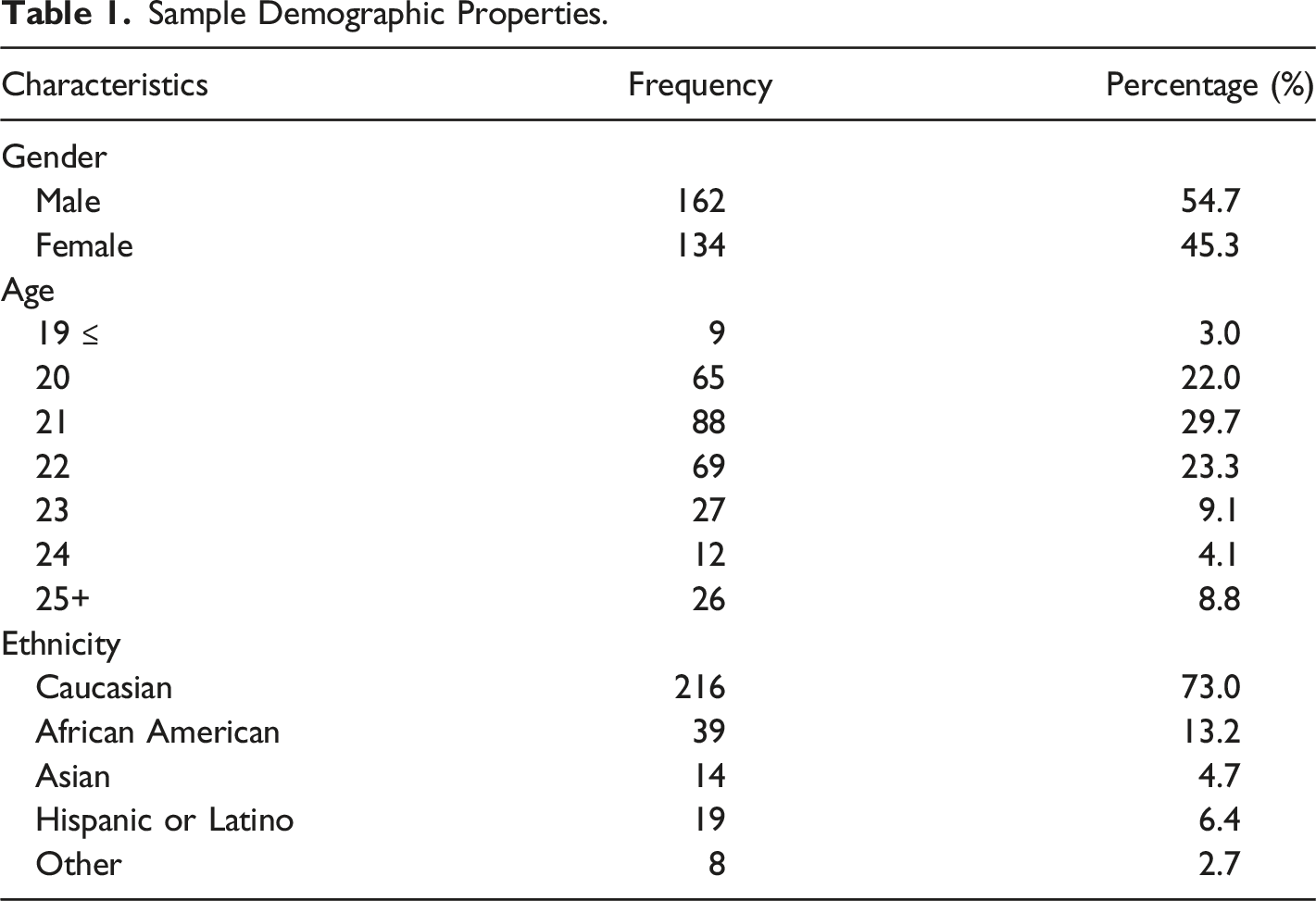
Sample Demographic Properties.
Common Method Bias
Given the use of self-report measures, a basic check for acquiescence due to common methods variance was tested by computing the primary eigenvalue across all scaling items. The results of Harmans’s one-factor test indicated the first eigenvalue accounts for 33.21% of the variance in the data. This result was well below the 60% threshold that might warrant further action to deal with the potential of subsequent bias (Fuller et al., 2016).
Measures
General Trait Competitiveness (General Competitiveness) was assessed with a modified Revised Competitiveness Index (CI-R; Houston et al., 2002a; Harris & Houston, 2010). The 13-item higher order, self-report scale measures the desire to win in interpersonal situations. Example items included, “I get satisfaction from competing with others” and “I often try to outperform others”. The measure used a 5-point Likert scale ranging from 1 (strongly disagree) to 5 (strongly agree).
Competitive orientations
Personal Development, Hypercompetitiveness and Competition Avoidance were measured using a modified 13-item three-factor competitive attitude scale (CAS) (Swab & Johnson, 2020). Example items included, “I value competition because it helps me to be the best that I can be” for personal development competition, “I compete with others even if they are not competing with me” for hypercompetition, and “I avoid competing because others will not like me if I lose” for competition avoidant. The measure used a 5-point Likert scale ranging from 1 (strongly disagree) to 5 (strongly agree).
Core self-evaluation
The original CSE scale (Judge et al., 1997) used a five factor higher order model to measure core self-evaluation. In order to make the measure more parsimonious, the unidimensional CSE scale was developed. Judge et al. (2003, p. 316) state that the “CSES [core self-evaluation scale] was created to tap the underlying core self-evaluation construct and not necessarily the distinct traits.” To operationalize the CSE measure, we borrowed a revised 4-item scale (Ding et al., 2020; Holt & Jung, 2008; Judge et al., 2003; Wu et al., 2022) to measure the underlying self-evaluation factor of various individual differences such as, self-esteem, generalized self-efficacy, and neuroticism. Following the work of Judge et al. (2003) paired with the statistical recommendation of Hair et al. (2010, p. 666), “…preferably four [items], not only to provide minimum coverage of a construct’s theoretical domain, but also provide adequate identification for the construct,” we did not include locus of control in our CSE taxonomy. Further, we determined the selected items provided a theoretically, statistically, and parsimoniously sound measure for core self-evaluation in the context of our manuscript (Judge et al., 2003). A median split was conducted to simplify interpretation of interaction results (Iacobucci et al., 2015). Example items included “Sometimes when I fail, I feel worthless” and “I am filled with doubts about my competence.” Responses were measured using a 5-point Likert scale ranging from 1 (strongly disagree) to 5 (strongly agree).
Controls
As men tend to pursue competition more than women (e.g., Buser et al., 2014; Gneezy et al., 2009), we controlled for gender. We also controlled for the demographic variable of race. No significant patterns were found with the inclusion of the controls (Bernerth & Aguinis, 2016).
Convergent and Discriminant Validity of the Constructs
Scale Items and Measurement Properties.
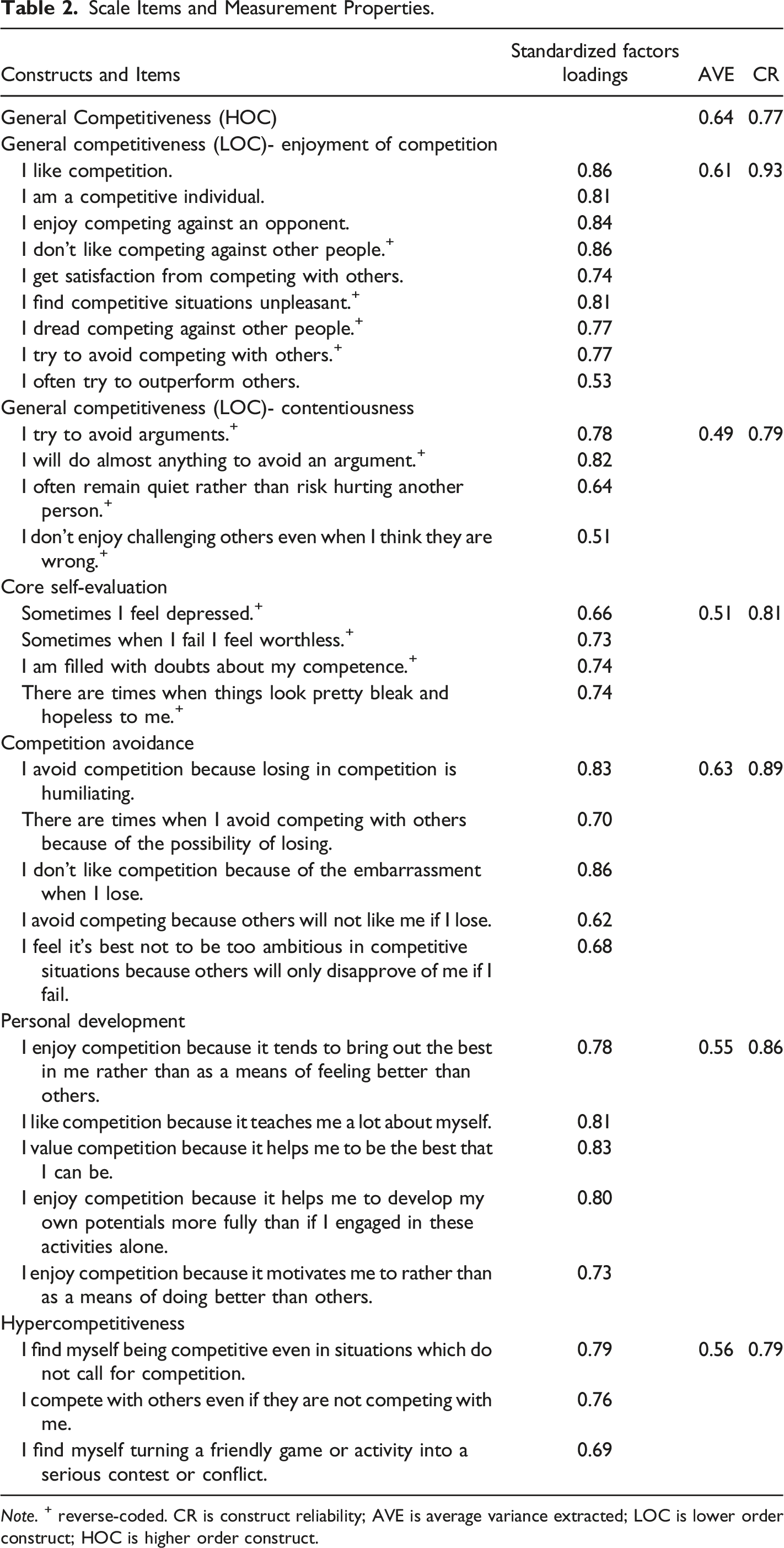
Note. + reverse-coded. CR is construct reliability; AVE is average variance extracted; LOC is lower order construct; HOC is higher order construct.
Discriminant validity was assessed by both average variances extracted (AVE) and confirmatory factor analysis (CFA) approaches. First, by comparing the average variance extracted (AVE) estimates for each factor with the squared interconstruct correlations (SIC) associated with that factor. All average variance extracted (AVE) were greater than the squared interconstruct correlations, which demonstrated acceptable discriminant validity. Second, the five-factor model was changed to a single factor with all 30 items indicating a single latent factor. Results indicated poor fit χ2 = 1767.47, df = 405 (p < .001); comparative fit index (CFI) = .733; root mean square error of approximation (RMSEA) = .107. The original five factor model had better fit, suggesting the 30 items represent six separate constructs, furthering the evidence for discriminant validity (Hair et al., 2013).
Hypothesis Testing
Direct Effects
Results from PROCESS Model 1 (Hayes, 2013) indicated a significant main effect of general competitiveness on personal development (t = 13.95, SE = .06, p < .0001), competition avoidance (t = −11.80, SE = .066, p < .0001) and hypercompetitiveness (t = 7.64.95, SE = .07, p < .0001). This suggests that as respondent’s general competitiveness increases, their personal development and hypercompetitiveness increases. On the other hand, general competitiveness had a negative effect on competitive avoidance (i.e., more likely to favor competition). Thus, the results provided support for H1, H2, and H3. Additionally, results indicated a significant main effect of core self-evaluation on HC (t = −2.36, SE = .45, p = .0187), and CA (t = −3.63, SE = .40, p = .0036), but not on PD (t = 1.09, SE = .37, p = .278).
Interaction Effects and Spotlight Analysis
Results indicated that the interaction effect of general competitiveness and CSE on CA was significant (t = 2.93, SE = .11, p = .0037), as was the interaction effect on HC (t = 1.70, SE = .21, p = .089) at the 90th percentile confidence interval. A follow-up spotlight analysis was conducted at high and low levels of CSE. The spotlight analysis results revealed that general competitiveness had a significant negative effect on respondent’s CA at both high (t = −509, SE = .89, p < .0001) and low (t = −11.80, SE = .06, p < .0001) levels of CSE. Additionally, our results revealed that general competitiveness had a significant positive effect on respondent’s HC at both high (t = 7.85, SE = .01, p < .0001) and low (t = 7.64, SE = .07, p < .0001) levels of CSE. Thus, we found support for H5 and H6. Lastly, the results revealed a nonsignificant general competitiveness and CSE interaction on PD (p = .42), thus providing no support for H4. Figure 2 includes the conceptual model with the outcomes found for each hypothesis. Conceptual framework with results. Note: nonsignificant relationships are represented by dotted lines. P-values included in parentheses following parameter estimates.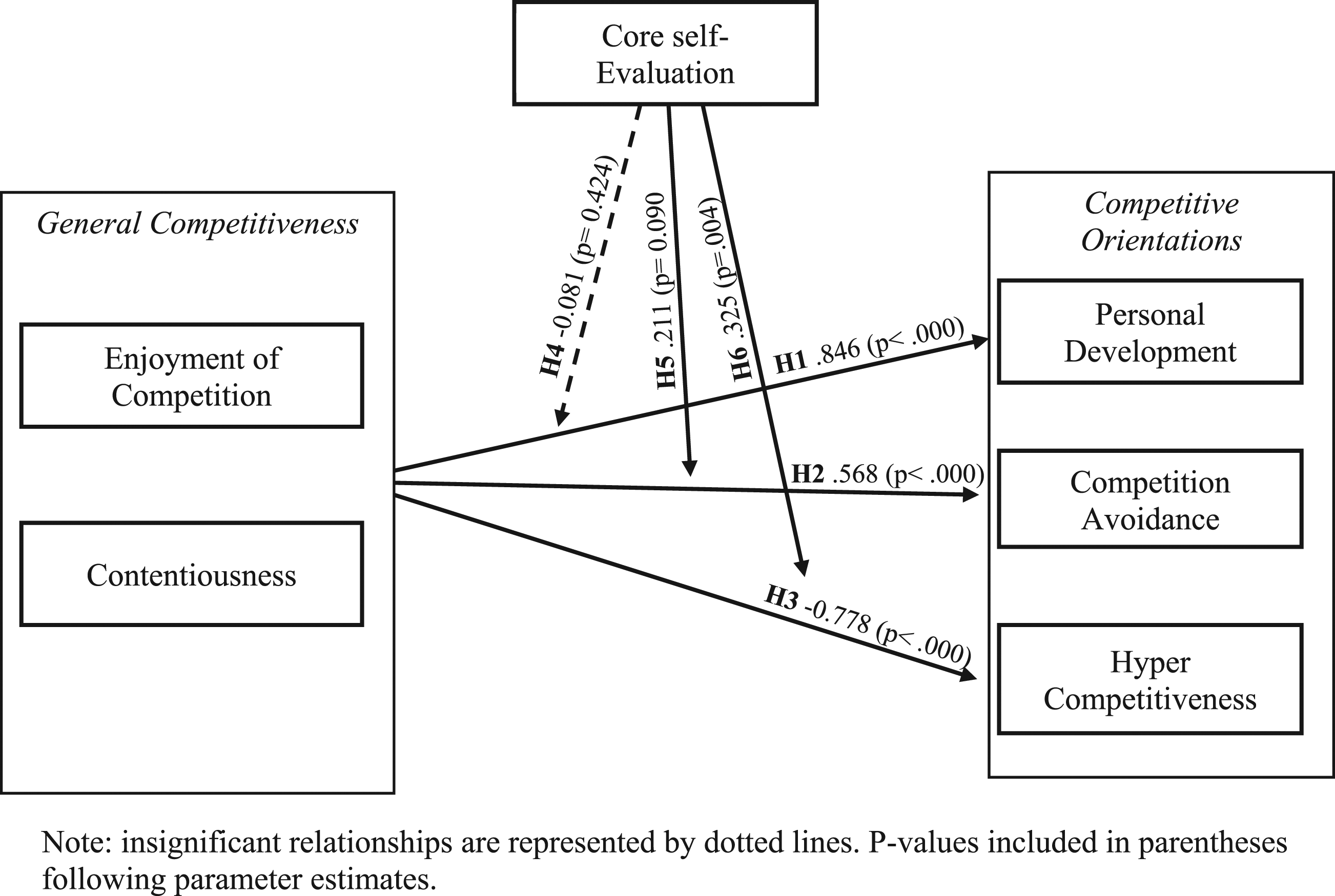
Discussion
Correlation Matrix and Descriptive Statistics.
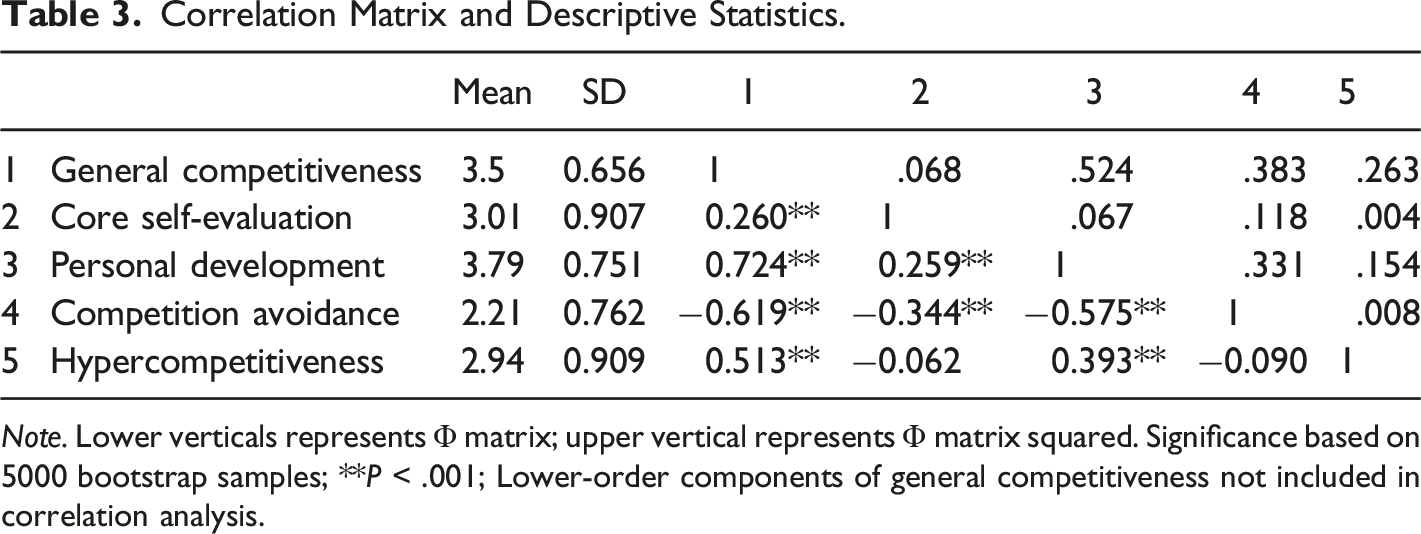
Note. Lower verticals represents Φ matrix; upper vertical represents Φ matrix squared. Significance based on 5000 bootstrap samples; **P < .001; Lower-order components of general competitiveness not included in correlation analysis.
Hypothesis Testing Results.
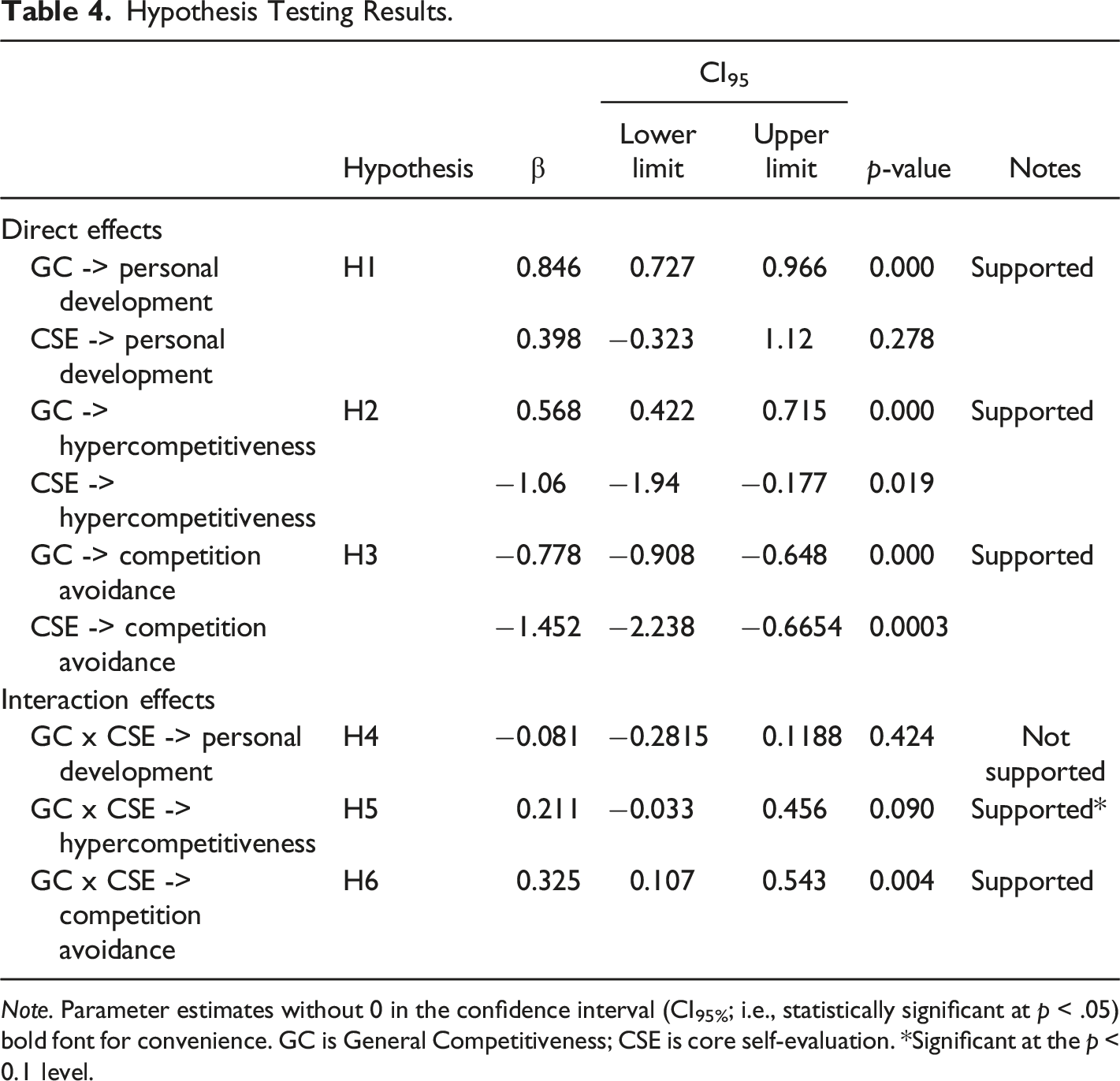
Note. Parameter estimates without 0 in the confidence interval (CI95%; i.e., statistically significant at p < .05) bold font for convenience. GC is General Competitiveness; CSE is core self-evaluation. *Significant at the p < 0.1 level.
Further, we contribute to a greater understanding of the multidimensional nature of competition by examining the construct’s relationship(s) with CSE. As CSE depicts an individual’s perception of their own personal worthiness, competence, and capabilities, CSE also impacts the manner in which individuals perceive and assess situations. Based on these perceptions, CSE should also influence attitudes towards competition and how confident individual’s feel in their capabilities to compete. Therefore, we assessed how CSE moderates the relationship between general competitiveness and the three competitive orientations or attitudes. Our findings suggest CSE is a relevant predictor of one’s competitive orientation. Particularly, regardless of general competitiveness levels, individuals who score high on CSE (i.e., those who are more confident in themselves, others, and situations) are more likely to decrease the neurotic and unhealthy forms of competitiveness found in heightened levels of HC (H5) and CA (H6). These findings imply that individuals who maintain strong self-appraisals (high CSE) are less likely to view situations as structurally competitive and thus their individual biases towards competing are lessened. Specifically, heightened levels of CSE may also provide greater emotional stability, lessening the high neuroticism of hypercompetitors (HC) (H5). Similarly, as CA orientated individuals suffer from a fear of losing the affection and approval of others, they typically refrain from competition (Ryckman et al., 2009). Therefore, individuals with high CSE, due to their increased self-worthiness and competence, may not perceive the loss of affection and approval as a threat in competitive situations, particularly in neurotic forms of competition (H6).
We also found that when general competitiveness is low, PD individuals rely on heightened CSE to compete (H4). As PD individuals emphasize personal growth and development, self-discovery, and self-improvement, it is not surprising that high levels of CSE would strengthen the PD competitive orientation, which is typically demonstrated through high levels of self-esteem and achievement. Additionally, the PD orientation is described as having a healthy attitude towards competition, therefore, PD individuals do not always view situations as competitive and are more likely than the other orientations to engage in cooperative behaviors when appropriate. Thus, when general competitiveness is low, PD individuals are not likely to compete given their overall reluctance towards competition or their lack of a need to win attitude. However, our results suggest this reluctance is attenuated by high CSE (H4). Further, a heightened CSE can lead PD competitors to be comfortable engaging in competition, whether due to personal growth or mastering a task.
In examining these relationships, we contribute to both the competition and CSE literature. As expressed by Swab and Johnson (2019), there is a need for greater understanding concerning the interplay between personality factors and competition. Through our study we highlight how the relatively stable personality factors of general trait competitiveness and CSE influence one’s attitude toward competition. By gaining a greater understanding on the multidimensional nature of competitiveness and its relationships with CSE, there are opportunities for researchers to examine these constructs in specific environments or settings, such as the workplace. Understanding CSE’s effect on competition also has practical implications, as it allows a greater understanding on neurotic competitive behaviors in both one’s personal and professional life, which may lead to negative outcomes.
Limitations, Future Research, and Practical Implications
In our study we followed the guidance of past literature and similar studies, however, the findings of our analysis are limited in generalizability due to the nature of our sample. Homogenous samples in geographic locations can introduce noise into the data (Bornstein et al., 2013) and provide inconsistent findings (Peterson & Merunka, 2014), therefore, we collected data from two different universities. College students have been shown to be a representative sample to examine competition (e.g., Haran & Ritov, 2014; Houston et al., 2005), but we acknowledge that our study is potentially limited by the use of a specific population. In order to mitigate these sample concerns, we suggest that future work examine these personality and competitiveness relationships with a more diverse sample.
Additionally, future research could also explore the use of more control variables. Our use of gender and ethnicity as control variables did not reveal significant effects, but the effects of competition are also potentially influenced by group size (Hanek et al., 2016), the number of competitors (Garcia & Tor, 2009; Tor & Garcia, 2010), or rivalry (Kilduff et al., 2016), for example. Therefore, these controls or other variables may present additional nuance regarding the relationship between competitiveness and CSE. Future research may also wish to separate CSE into its four individual subscales of self-esteem, generalized self-efficacy, locus of control, and emotional stability. The specific sub-dimensions of the CSE construct may lead to a deeper understanding of the moderated effects found in Hypotheses 4–6. Similarly, it may be useful for future research to consider the general competitiveness subscales (enjoyment of competition and contentiousness) to analyze any differences that may emerge from the two separate first order scales.
From a practical perspective, our research highlights the role of individual competitiveness, and therefore, additional work could consider how individual's competitive styles interact with one another in the workplace or other important environments. This suggests strategies may need to be developed at work to manage competitive attitudes and situations. Additionally, practitioners may evaluate the dimensions of CSE that influence whether or not someone has a positive or negative attitude towards competition. For instance, there are times when being competitive or engaging in competition in the workplace is appropriate and times when it is not. Thus, while changing the personality and perceptions of competition may be a difficult task, research finds that improving the dimensions of CSE can enhance work performance outcomes (i.e., self-efficacy [Axtell & Parker, 2003; Marshall et al., 2020]; locus of control [Barbuto et al., 2010; Elias, 2009]). As such, the enhancement of CSE could lead to less of the neurotic behaviors associated with hypercompetitivness and competition avoidant. Future research may also examine how the multidimensional nature of competitiveness influences exchange relationships as work, including team-building or leader-member exchange.
Conclusion
The present study examined the multifaceted nature of individual competitiveness. Our analysis identified how general trait competitiveness might lead to healthy and unhealthy attitudes towards competition. We found CSE moderates the formation of the competitive attitudes, in that higher levels of CSE decreased the neurotic and unhealthy competitive attitudes of hypercompetitiveness and competition avoidance. Accordingly, we expand the knowledge on competition and CSE by suggesting why individuals choose to enter or refrain from competitive activities.
Footnotes
Declaration of Conflicting Interests
The author(s) declared no potential conflicts of interest with respect to the research, authorship, and/or publication of this article.
Funding
The author(s) received no financial support for the research, authorship, and/or publication of this article.
