



Abstract
The present study examined the relationship between posttraumatic growth (PTG) and different types of coping strategies to explain the mechanism underlying PTG. It also considered whether the relationship takes on different patterns in different cultures, thereby expanding on the existing literature regarding PTG. Initially, we found 666 articles published and unpublished between 2013 and 2020. All potentially eligible studies were examined based on the inclusion criteria for this study. The inclusion criteria ultimately yielded total of 96 studies. The findings of this meta-analysis indicate that the relationship varies depending on the coping strategy and culture. Moreover, identifying the coping strategies involved in overcoming traumatic events may be the key to differentiating real PTG from illusory PTG. The results show that PTG has different correlations with the four groups of coping strategies: problem-focused coping, positive emotion-focused coping, negative emotion-focused coping, and unclassified coping.
Introduction
Posttraumatic growth (PTG) refers to the positive changes that occur after a person has experienced an extremely stressful or traumatic life event (Tedeschi & Calhoun, 2004) such as an accident, illness, natural disaster, or sexual assault (Linley & Joseph, 2004; Weiss & Berger, 2010). PTG occurs when the individual works to understand the meaning of the event to their life as part of their struggle and recovery from the event (Tedeschi & Calhoun, 2004). Using this understanding of PTG, researchers have found associations between PTG and personal resources such as coping strategies (Yeung et al., 2016), social supports (Brooks et al., 2019), and optimism (Koliouli & Canellopoulos, 2021).
Among various related personal resources, coping strategies have been discussed as a key mechanism underlying PTG. Tedeschi and Calhoun (1996) argued that PTG is generated by the active struggle on the part of the survivor, not by the trauma itself, suggesting that individuals might have an inner process that turns devastation into growth. Yeung et al. (2016) suggested that the coping process may facilitate individuals’ growth after traumatic experiences. There are many different types of coping strategies, and in the debate over real or constructive PTG and illusory PTG (Boerner et al., 2017), researchers have suggested that productive coping strategies might bring about real PTG, while other coping strategies might lead to illusory PTG (Boals & Schuler, 2018; Pat-Horenczyk et al., 2015). Given this complicated relationship between PTG and coping strategies, to determine which types of coping strategies facilitate growth and which do not, it is necessary to synthesize existing knowledge.
The Construct of PTG
Many studies have examined PTG since its conceptualization by Tedeschi and Calhoun (1995). Meanwhile, related but competing constructs such as stress-related growth (Park et al., 1996) have been introduced and studied as indicators of positive changes after stressful events. Various types of trauma-causing events including disease, accidental injury, and job-specific work hazards have been found to have different implications for PTG (Wu et al., 2009). PTG was initially conceptualized by Tedeschi and Calhoun as a five-component construct (2004). PTG’s five components are personal strength, relating to others, new possibilities, appreciation of life, and spiritual change. PTG is measured using the Posttraumatic Growth Inventory (PTGI; Tedeschi et al., 2017). The PTGI is based on Tedeschi and Calhoun’s (2004) assumption that individuals reassess their perspectives on themselves, the world, and the meaning and purpose of the self and the world after they experience a traumatic event. Aflaksier et al. (2016) similarly suggested that individuals reassess their life priorities, their close relationships with others, and the meaning of life after confronting life-threatening events.
Traumatic events disrupt one’s life, leading to schema changes that support adaptation to new circumstances after the events (Kashyap & Hussain, 2018). Traumatic events help individuals to realize their increased strength and capability to address challenges in their lives. They reassess their relationships with others, developing closer connections to certain groups of individuals after sharing experiences with them or receiving support from them. Survivors also develop increased compassion towards individuals experiencing difficulties (Greenberg et al., 2018). New possibilities and meaning are found, and survivors come to appreciate every moment of their lives. They make spiritual connections between themselves and the world by asking existential questions (Wang et al., 2019).
PTG and Cultural Context
The psychological changes that stem from traumatic events are influenced by the cultural context (Calhoun et al., 2010). Kashyap and Hussain (2018) identified potential cross-cultural differences in PTG. Positive appraisal of stressful life events such as a death of close ones is the default in some cultures and it is not considered as an individual growth, because it is interpreted as a positive event thanks to a strong belief in the afterlife. Some cultures have a collective belief about the reasons for certain illnesses or disasters. Kashyap and Hussain (2018) suggested that how individuals respond to trauma is different depending on cultural context; therefore, growth needs to be evaluated in light of such unique cultural contexts. PTGI was developed in an individualistic culture such as U.S.A. where self-agency related to the controllability of the self and the world is assumed. This has led to some criticism of PTGI. Since many studies worldwide have already used PTGI, however, it is necessary to examine how PTG manifests itself in individualistic and collectivistic cultures, paving the way for additional culturally sensitive PTG studies.
Coping Strategies
Coping strategies refer to the processes by which individuals cope with stress or stressful events, according to Lazarus (1966). Endler and Parker (1990b) defined coping behaviors as reactions to a perceived stressor and changes in anxiety level induced by the stressor. The definition of each particular coping strategy differs depending on whether the researcher chooses to focus on the coping process or behavior. Moreover, different instruments that measure coping strategies have different set of sub-types coping strategies, which is derived from empirical data, not from theoretical background (Tobin et al., 1989). The Coping Inventory for Stressful Situations (CISS; Endler & Parker, 1990a) yields five coping strategies: task-oriented, emotion-oriented, avoidance, distraction, and social diversion. The Coping Strategy Indicator (CSI; Tobin et al., 1989) yields eight types of coping strategies: problem solving, cognitive restructuring, social support, emotional expression, problem avoidance, wishful thinking, social withdrawal, and self-criticism. COPE (Carver et al., 1989) yields 13 coping strategies by expanding one concepts to several ones (e.g., problem solving to active coping, planning, suppression of competing activities, restraint coping, seeking social support for instrumental reasons or social support to instrumental social support and emotional social support; Litman, 2006).
From a hierarchical point of view, many of these categorizations can be seen as either problem-focused or emotion-focused (Endler & Parker, 1994). Any coping strategies related to taking a problem-focused approach are considered adaptive or positive; however, emotion-focused coping strategies can be positive or maladaptive or negative. Emotion-focused coping strategies can be used to reduce the emotional distress caused by an event, but they can also be used to deny the reality of a situation or ruminate on negative emotions. Seeking instrumental help in social supports is considered positive but using social support only to vent one’s feelings is not always adaptive (Carver et al., 1989). Cook and Heppner (1997) categorized these negative/maladaptive emotion-focused coping strategies as avoidance, including distraction, behavioral/mental disengagement, and denial. Negative emotional-focused coping strategies lead individuals to avoid or disengage from problems. Sometimes such strategies involve using drugs or alcohol or escaping through fantasy. Some coping strategies such as self-disclosure have not been identified with any of the aforementioned groups.
Coping strategies can be used differently depending on the cultural context of the survivor. Hansford and Jobson (2021) discussed how culture influences the use of social support among individuals who have experienced PTSD. In collectivistic cultures, social supports are less frequently sought out, but they are sometimes given without asking by members of the community. Kim et al. (2006) found that Asian Americans asked for emotional support less frequently than European Americans.
As discussed, the association between coping strategies and PTG has been investigated in many studies. PTG has been found to be positively associated with problem-focused coping strategies such as active coping, positive reframing, instrumental support, and goal-oriented coping (e.g., Aslam & Kamal, 2015; Scrignaro et al., 2011; Tuncay & Musabak, 2015). Some emotion-focused coping strategies have been found to be positively associated with PTG; these strategies include acceptance (Byra, 2016; Kunz et al., 2018; Rzeszutek et al., 2017), emotional expression (Shin, 2018), and the use of emotional support. However, studies have shown mixed results. For instance, there are no known correlations between some negative emotion-focused coping strategies and one of the subscales of PTGI (Lafarge et al., 2017). Negative emotion-focused coping strategies have also shown mixed results regarding avoidance (e.g., Boyle & Pleace, 2017), behavioral disengagement (e.g., Lafarge et al., 2017; Vanhooren et al., 2018), and wishful thinking (Ye et al., 2018). Synthesized knowledge is necessary to provide a better understanding of the topic, especially with regard to the subscales of PTG.
Aims of the Study
There is evidence of a correlation between PTG and coping strategies; however, there is no overarching synthesis of these correlations, especially when it comes to the subscales of each concept. The influence of cultural context on PTG and coping strategies suggests the importance of considering the cultural context when investigating the association between PTG and coping strategies. Since coping strategies may be a key way to differentiate between real and illusory PTG, this study aims to provide a synthesized understanding of the relationship between PTG and coping strategies considering the cultural context of the person experiencing the event. In this study, we examined the associations between PTG and four coping variable groups (problem-focused coping, positive emotion-focused coping, negative emotion-focused coping, and unclassified coping). We also examined the associations between four subscales of PTG (relating to others, changes in self-perception, new possibilities, and spiritual change) and these coping variable groups in Korean studies, as measured using the Korean version of the PTGI, and in international studies measured using the PTGI. The associations between PTG and specific coping strategies for each group were studied both overall and within the context of specific cultures, whether collectivistic or individualistic.
Method
Literature Search
Preferred Reporting Items for Systematic Review and Meta-analysis (PRISMA) was used to guide the analysis process of the current study to examine the following question: does a coping strategy associate with post-traumatic growth? Based on the systematic literature review (See Figure 1), moderator was identified for each coping strategy and the moderation effect was examined. To find articles for inclusion, we searched a number of databases such as Web of Science, EBSCO, ProQuests, KISS, DBpia, RISS; a web-based search engine, Google scholar; and directories of eminent journals in psychology. Keywords were “coping” and “post-traumatic growth” for this research. To obtain unpublished studies, we additionally used a digital dissertations database at the Catholic University of Korea library. Flow chart for the meta-analysis.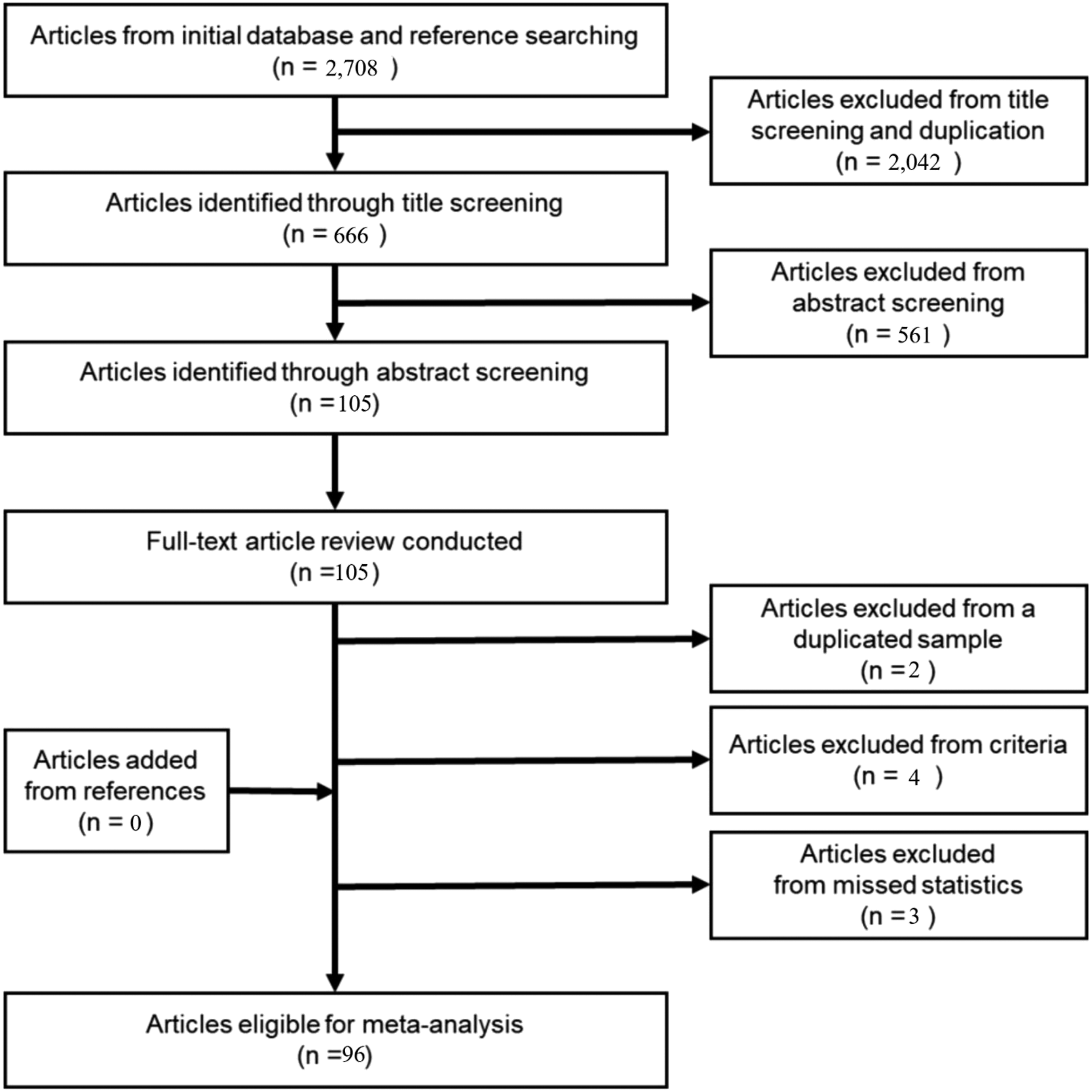
Inclusion Criteria
Based on the systematic literature review (See Figure 1), we initially found 666 articles published and unpublished between 2013 and 2020. All potentially eligible studies were examined based on the inclusion criteria for this study. First, we included articles written either in English or Korean. The three researchers are native speaker of Korean and have English skills. Second, articles that reported correlation coefficients among post-traumatic growth and coping were included. Third, we included studies that used the Post-traumatic Growth Inventory (Tedeschi & Calhoun, 1996) and the Korean Post-traumatic Growth Inventory (Song et al., 2009). Other measures of post-traumatic growth were excluded since they are conceptually different from the PTGI. Fourth, we excluded the articles that reported only total scores of PTG and Coping. The inclusion criteria ultimately yielded total of 96 studies.
Meta-Analytic Procedure
To calculate meta-analytical procedures, we used the program Meta-analysis with Interactive eXplanations (MIX), which performs meta-analyses using Visual Basic, based on Excel, as its main language (Bax et al., 2006). First, we coded the variables from the studies we collected including sample size, measure, and outcome characteristics. After coding the correlation coefficients (r) between various types of coping strategies and post-traumatic growth, we calculated effect sizes. Then, we calculated the weighted correlation coefficients (weighted average r) by applying the sample size of each study. For testing heterogeneity of the variables, we used the Q statistic and selected fixed or random effects models (Lipsey & Wilson, 2001). Furthermore, we also calculated the I2 index to measure the degree of true heterogeneity. According to Huedo-Medina et al. (2006), I 2 values of around 25% indicate low heterogeneity, 50% indicate medium heterogeneity, and 75% indicate high heterogeneity. According to the previous studies, we consider types of support demand as possible moderators. To estimate each of the moderators, we conducted moderator analyses as follows. First, we divided the studies into subgroups by the types of coping strategies. Then, we computed a within group homogeneity statistic (Q w ) for each subgroup. Finally, the between-groups homogeneity statistic (Q b : Q t – Q w ) was used. If the Q b statistic is significant, that means the grouping variable explains a significant amount of variance in the effect size estimates. That is, the grouping variable could be a possible moderator (Penley et al., 2002). To confirm whether publication biases exist, and they can be dismissed the fail-safe test was applied in the present study (Møller & Jennions, 2001).
We analyzed the number of studies for each variable, the total sample size, weighted average effect sizes (r), average Fisher’s Z for testing significance, 95% confidence intervals, the Q statistic and I 2 (%) for testing heterogeneity, and fail-safe N for testing sensitivity of publication bias. Based on heterogeneity tests, we used the random effects model for heterogeneous variables and the fixed effects model for homogeneous variables when measuring weighted average effect size (r and Fisher’s z). Additionally, we used the Q statistic for testing moderation effects of moderators: in relation between the types of Coping Variable Groups and Subscales of Post-traumatic Growth Inventory (K-PTGI & PTGI), Specific Coping Strategies, and Nation.
Results
Meta-Analytic Statistics for Predictor Variables of Posttraumatic Growth.
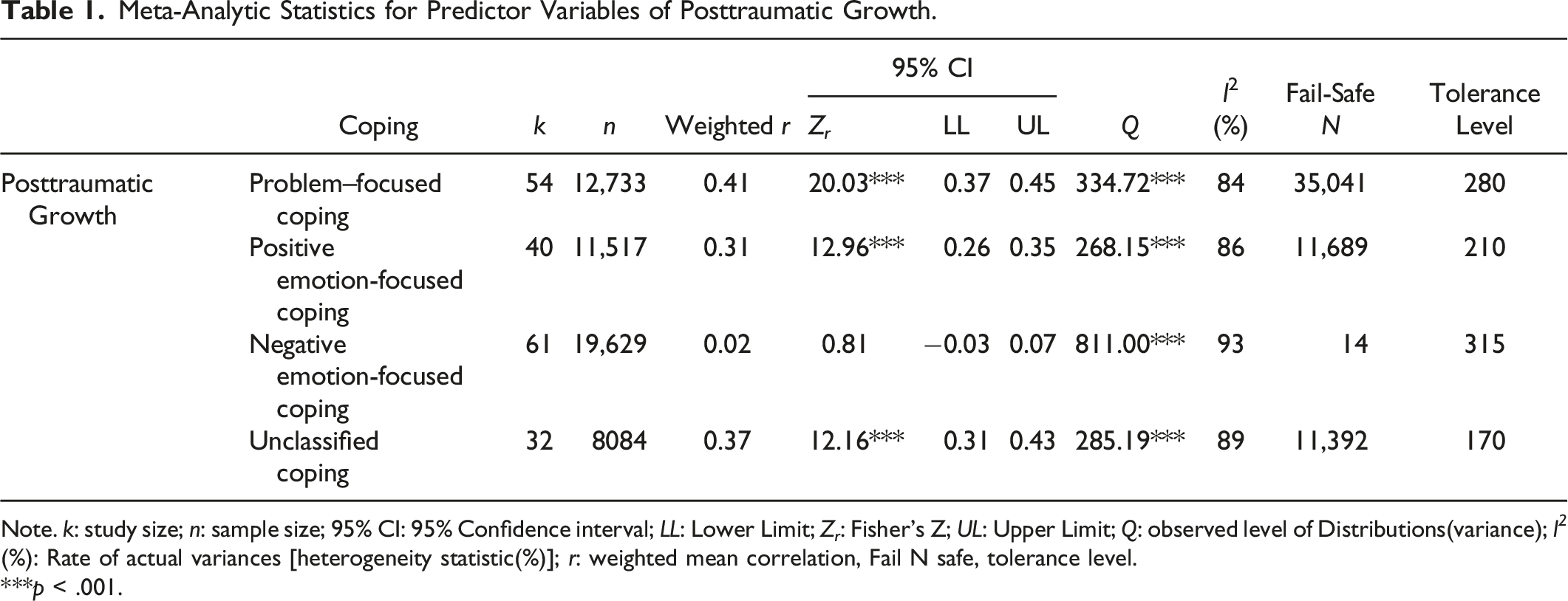
Note. k: study size; n: sample size; 95% CI: 95% Confidence interval; LL: Lower Limit; Z r : Fisher’s Z; UL: Upper Limit; Q: observed level of Distributions(variance); l 2 (%): Rate of actual variances [heterogeneity statistic(%)]; r: weighted mean correlation, Fail N safe, tolerance level.
***p < .001.
Associations Between Subscale of Posttraumatic Growth and Coping Variable group (K-PTGI).

Note. **p < .01; ***p < .001.
Associations Between Subscale of Posttraumatic Growth and Coping Variable group (PTGI).
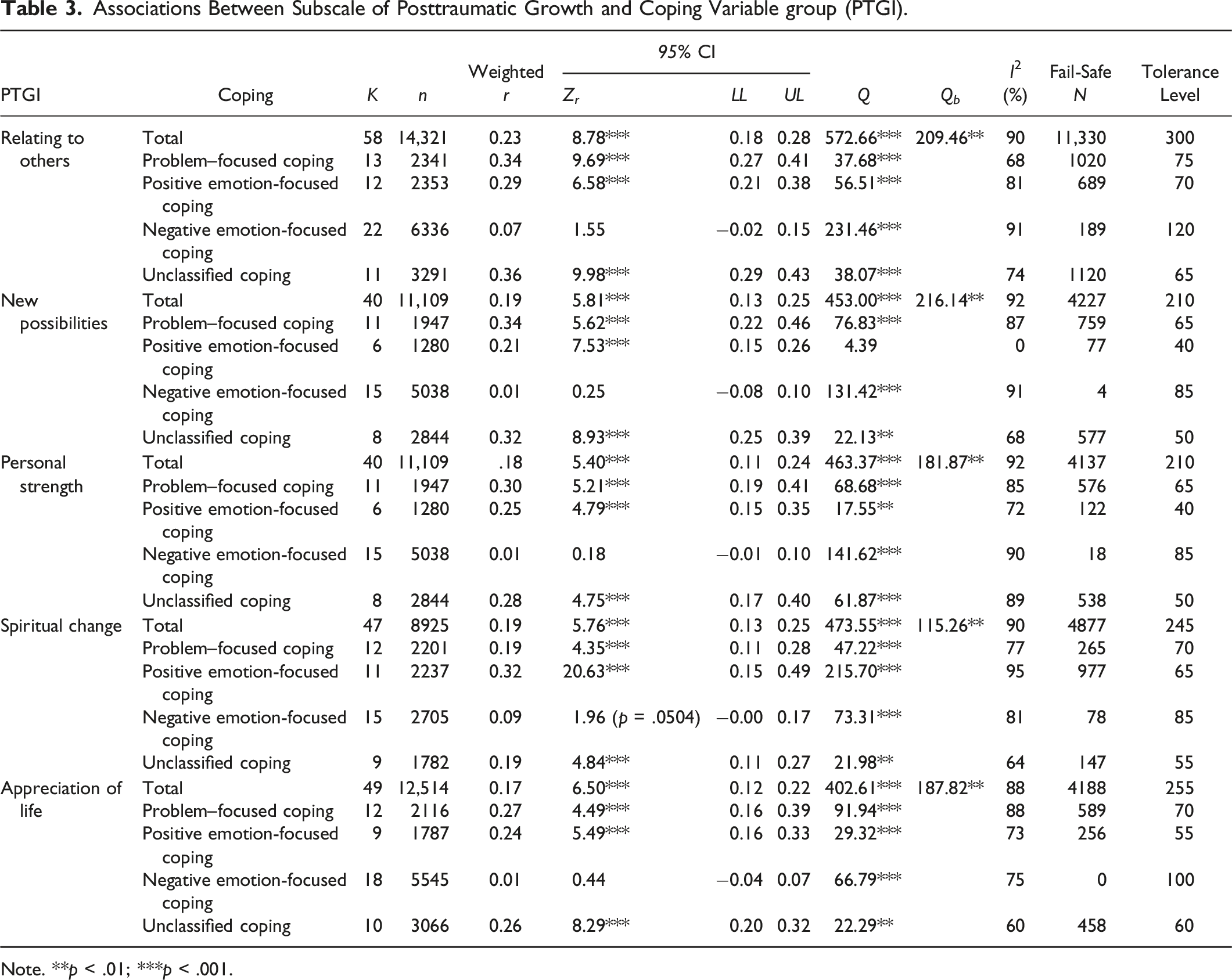
Note. **p < .01; ***p < .001.
Associations Between Posttraumatic Growth and Specific Coping Strategies.
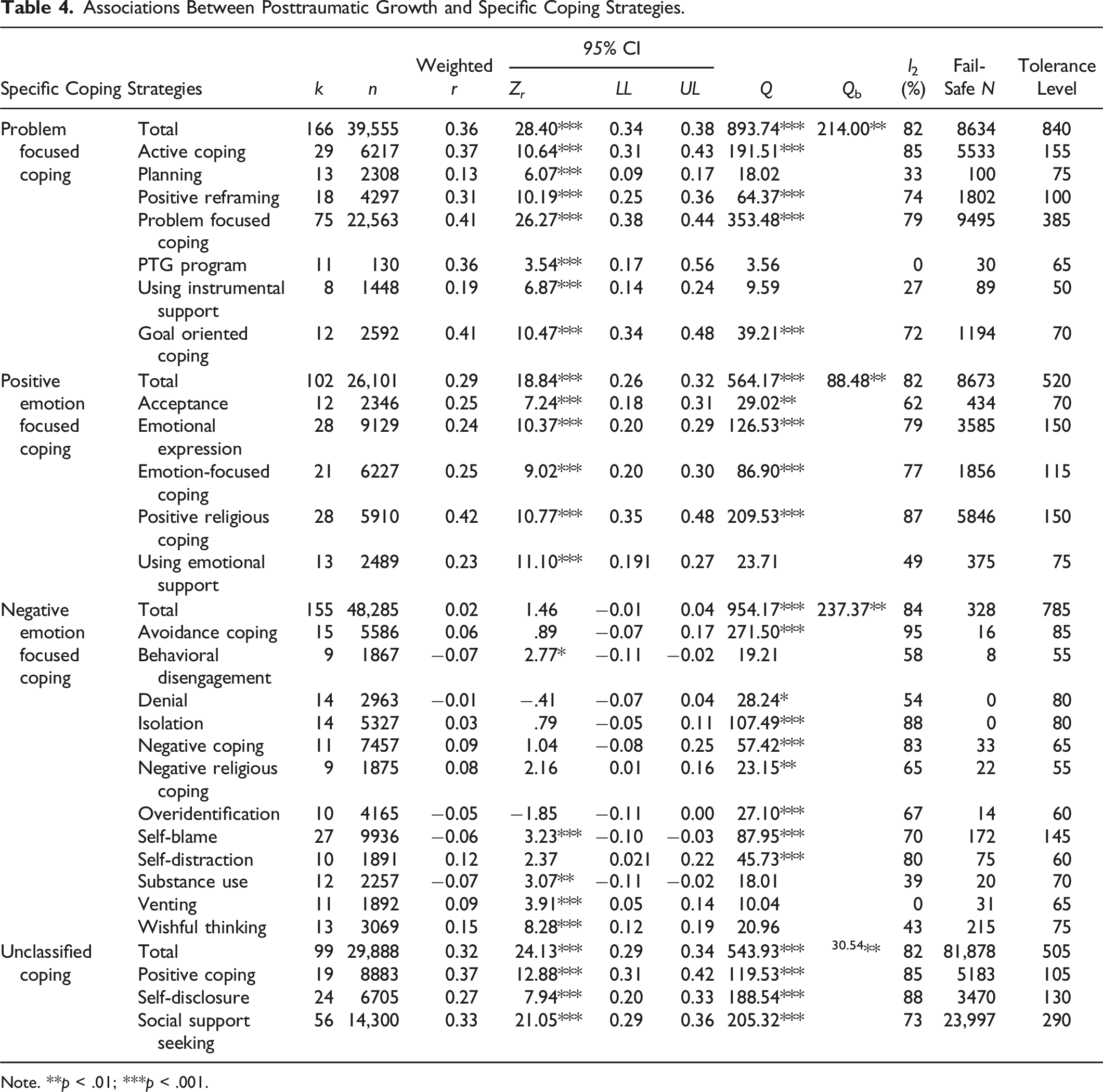
Note. **p < .01; ***p < .001.
Associations Between Posttraumatic Growth and Coping Strategies by Culture.
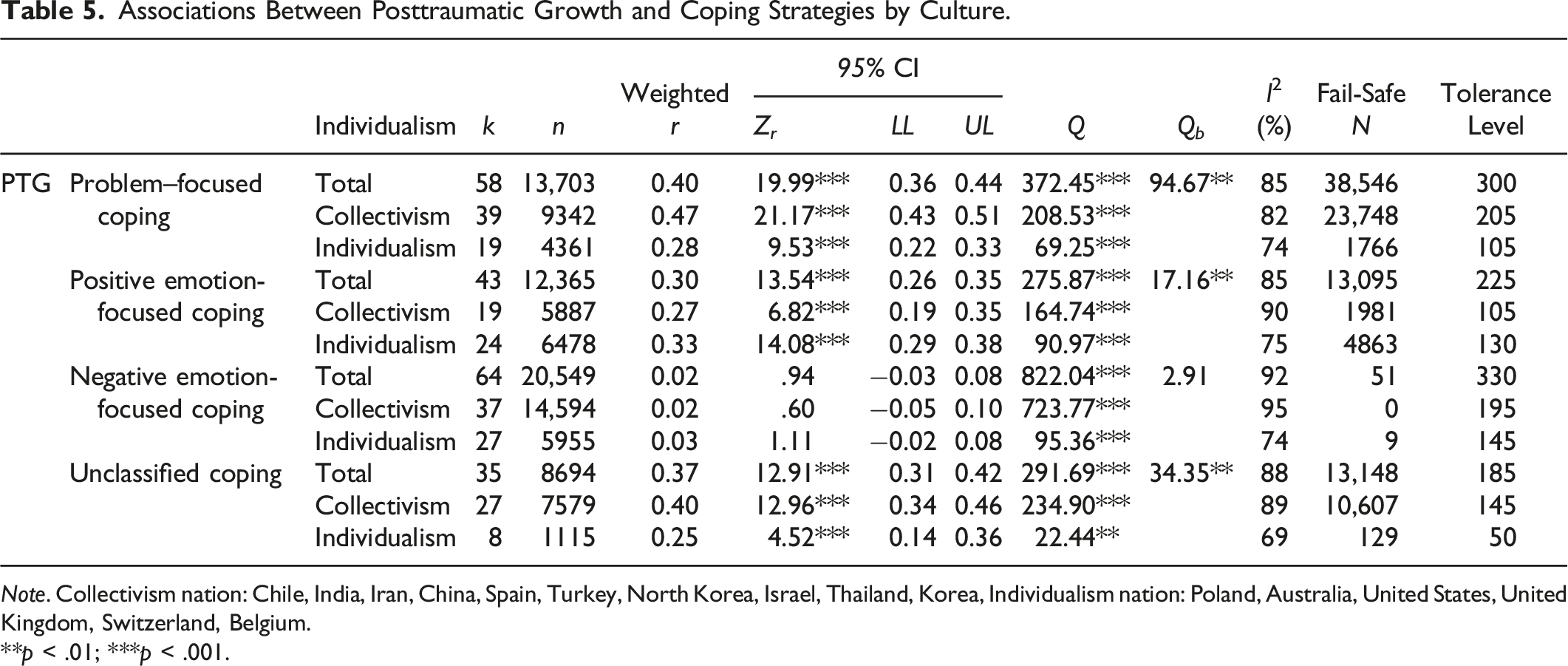
Note. Collectivism nation: Chile, India, Iran, China, Spain, Turkey, North Korea, Israel, Thailand, Korea, Individualism nation: Poland, Australia, United States, United Kingdom, Switzerland, Belgium.
**p < .01; ***p < .001.
Discussion
The present study examined the relationship between PTG and different types of coping strategies to explain the mechanism underlying PTG. It also considered whether the relationship takes on different patterns in different cultures, thereby expanding on the existing literature regarding PTG. The findings of this meta-analysis indicate that the relationship varies depending on the coping strategy and culture. Moreover, identifying the coping strategies involved in overcoming traumatic events may be the key to differentiating real PTG from illusory PTG.
The results show that PTG has different correlations with the four groups of coping strategies: problem-focused coping, positive emotion-focused coping, negative emotion-focused coping, and unclassified coping. Problem-focused coping strategies are known to be helpful for addressing stressful events (Masel et al., 1996) and show moderate positive correlations with PTG. This suggests that problem-focused coping strategies contribute to psychological growth after traumatic events. According to Schuettler and Boals (2011), individuals who see a potentially traumatic event as controllable and changeable are more likely to use problem-focused coping strategies than those who do not. The use of such strategies to control or change the situation leads individuals towards growth. Of course, it might be that those who use problem-focused coping strategies are more likely to assign meaning to traumatic events, which also can lead to growth in the aftermath (Tuncay & Musabak, 2015). Problem-focused coping strategies were shown to be significantly associated with all components of PTG, including relating to others, spiritual changes, and an appreciation of life, when using the instrument that measures PTG (PTGI) and the version that was validated in Korea (K-PTGI). This suggests that individuals may have positive experiences when using personal or spiritual resources to cope with events and develop a new perspective on those resources.
Among the various problem-focused coping strategies, the way of coping and goal-oriented coping showed the highest correlations with PTG (0.41), followed by the PTG program (0.36). Interestingly, these problem-focused coping strategies were also positively associated with all components of PTG, suggesting that problem-focused coping contributes to growth in an individual’s perception of their own competence and regains a positive outlook on the world surrounding them.
Positive emotion-focused coping strategies were shown to be moderately associated with PTG while negative emotion-focused coping strategies were not. The main difference between positive and negative emotional coping is whether an individual actively engages with the emotions generated by the stressful event. For example, positive religious coping, which was found to have the highest correlation with PTG among positive emotion-focused coping strategies, refers to seeking spiritual support and connection to overcome negative emotions and seeking religious help or forgiveness. In contrast, negative religious coping refers to expressing frustration with one’s relationship with God or a certain form of spiritual power upon individuals (Pargament et al., 1998). All components of positive emotion-focused coping were positively associated with PTG, while some of the negative emotion-focused coping strategies such as behavioral disengagement, self-blame, and substance use were negatively associated with PTG. However, venting and wishful thinking showed small positive correlations with PTG. Maercker and Zoellner (2004) argued that the illusory component of wishful thinking may contribute to illusory perceptions of PTG. They also warned that engaging in wishful thinking may negatively affect adjustment in the long run.
In studies regarding the relationship between the four coping strategy groups and components of PTG or PTG measured in Korea, positive emotion-focused coping strategies were positively correlated with all components of PTGI or K-PTGI, but negative emotion-focused coping strategies were not correlated with any components of K-PTGI except for spiritual change. The wishful thinking component of negative emotion-focused coping may produce a certain spiritual experience wherein an individual finds that their wish gave them sufficient comfort because it is related to the god that is believed to have the power to make it come true. Danhauer et al. (2009) showed that wishful thinking and spirituality exhibited similar patterns of change over time among women with breast cancer.
The coping strategies remaining from the factor analyses—that is, positive coping, self-disclosure, and social support seeking—were all positively correlated with PTG, and the overall scores for these remaining strategies suggest that all of the strategies were positively correlated with all components of PTG. Though they are not statistically aligned with problem-focused coping, these items seem to be related to problem-focused coping. Lee et al. (2018) found that self-disclosure leads to PTG through problem-focused coping and social support seeking, suggesting that there might be a dimensional relationship among problem-focused coping, self-disclosure, and social support seeking.
The direction of the correlation between the four coping strategy groups and PTG was the same in collectivistic and individualistic cultures. In collectivistic cultures, problem-focused coping showed the highest correlation with PTG, while in individualistic cultures, positive emotion-focused coping showed the highest correlation. This finding contradicts that of O’Connor and Shimizu (2002), who found that Japanese respondents reported using more emotion-focused coping strategies. This disparity in results may be because none of the studies we considered used a Japanese sample or differentiated between positive and negative emotion-focused coping strategies. Hu et al. (2018) reported somewhat similarly that acceptance, one component of positive emotion-focused coping, was used more in individualistic cultures than in collectivistic cultures. However, many positive emotion-focused coping strategies (i.e., emotional expression and religious coping) were also used more in collectivistic cultures than in individualistic cultures. The magnitude of correlation might not mean much unless there are sufficient samples for all components.
There are limitations of this study. First, this meta-analytic research was the cross-sectional design so we could not interpret causal relationships among variables. In order to verify causal effects of certain variables postulated in the relationships, future research should be designed longitudinally. Second, although unclassified coping was correlated at the low or moderate level with post-traumatic growth, this study limits to tell what coping strategies could be called by “unclassified coping”. According to the criteria of classification, coping strategies to be difficult to classify (e.g., positive coping, self-disclosure, and social support seeking) were named by unclassified coping. More studies should be conducted in the future to generalize and extend the current findings. Third, future studies should check some more popular data bases such as ScienceDirect, Scopus, and PubMed in order to expand search to cover such popular databases.
Despite the limitations, the findings of the present study can provide evidence to intervene in the practical settings by demonstrating significant correlations between coping and PTG variables. If practitioners, researchers, and administrators focus more on reducing psychological demands and support coping strategies, they might be more successful mitigating negative influence of trauma and improve individuals’ psychological well-being. In other words, Problem focused coping and positive emotion-focused coping were protective factors that relieve pain from negative events, and providing therapeutic interventions to maintain and enhance the coping skills will play an important role in experiencing post-traumatic growth. Thus, appropriate coping strategies help individuals with traumatic experiences to organize or perform actions necessary to withstand and overcome the situations, and help individuals achieve post-traumatic growth.
Footnotes
Declaration of Conflicting Interests
The author(s) declared no potential conflicts of interest with respect to the research, authorship, and/or publication of this article.
Funding
The author(s) disclosed receipt of the following financial support for the research, authorship, and/or publication of this article: This work was supported by the Catholic University of Korea, Research Fund, 2022.
