




Abstract
School burnout (SB) among adolescents is a growing concern, yet there has been limited research in Bangladesh. This study aims to address this gap by validating the School Burnout Inventory (SBI) in Bangla and investigating the predictive factors of SB among high-school-going adolescents in Bangladesh. The study employed a cross-sectional design, recruiting participants from various high schools across urban and rural areas. Data were collected through self-reported questionnaires, which included information related to demographics, COVID-19, school burnout, daytime sleepiness, insomnia, and depression. The SBI-Bangla demonstrated high reliability and validity. The mean score of SB was 20.26 (±7.84). Significant differences in SB levels were observed across different age groups, grades, locations, mother’s education levels, smoking status, and self-reported COVID-19 infection status. Multiple linear regression identified age (B = 0.647, p = .010), location (B = −1.043, p = .034), depression (B = 0.270, p < .001), daytime sleepiness (B = 0.208, p < .001), and insomnia (B = 0.662, p < .001) as significant predictors of SB. The final model explained 12.3% of the variance in SB scores. Enhancing sleep hygiene and addressing psychological issues may help reduce academic burnout. This study provides valuable baseline data that can inform future research and policy formulation aimed at reducing adolescent SB in Bangladesh.
Introduction
School burnout (SB) represents a critical psychological syndrome that emerges from chronic academic stress and is characterized by a triad of symptoms: emotional exhaustion, cynicism, and reduced efficacy in academic tasks (Salmela-Aro, Kiuru, et al., 2009; Schaufeli, Leiter, et al., 2002). Emotional exhaustion pertains to feelings of being overwhelmed and drained by the demands of academic work. Cynicism involves a growing sense of detachment from school activities, which can manifest as negative attitudes towards schoolwork and a reduced sense of academic competence. Reduced efficacy refers to a diminished sense of personal achievement and capability in academic contexts (Salmela-Aro, Kiuru, et al., 2009; Schaufeli, Martinez, et al., 2002). The emotional exhaustion component typically results from excessive academic pressures and a high workload, while cynicism and inefficacy stem from feelings of inadequacy and a lack of engagement with school-related tasks.
Academic stress is a significant contributor to school burnout among adolescents (Gao, 2023). Common stressors include high expectations from parents and teachers, an overwhelming academic workload, pressure to excel in national examinations, and constant peer competition. These stressors, combined with factors such as school activities, feelings of inadequacy, lack of interest, and family concerns, can induce SB (Lacombe et al., 2023; Walburg, 2014). The repercussions of burnout extend beyond immediate academic performance, significantly impacting students’ overall well-being and mental health. High levels of SB are associated with substantial psychological issues, including depression and anxiety, which can further impair academic outcomes and personal life (Fiorilli et al., 2017; Salmela-Aro, Savolainen, & Holopainen, 2009). Moreover, burnout can compromise attentional capacities and problem-solving abilities, and in extreme cases, lead to suicidal ideation (Madigan & Curran, 2021; Wang et al., 2020). This highlights the urgent need to understand and address SB among adolescents to promote a healthier and more supportive educational environment.
Theoretical Framework and Literature Review
The Job Demands-Resources model provides a valuable framework for understanding burnout. According to this model, burnout arises from an imbalance between job demands and job resources. In the context of school burnout, academic demands (e.g., heavy workload, high expectations) can exceed available resources (e.g., support from teachers and family), leading to burnout (Demerouti et al., 2001). This model helps explain how excessive academic demands and inadequate support contribute to burnout among students. Besides, The Conservation of Resources theory posits that burnout occurs when individuals perceive a threat of resource loss or experience actual resource loss without adequate resource gain (Hobfoll, 1989). This theory is applicable to school burnout as students may feel threatened by the loss of personal resources, such as time and energy, due to overwhelming academic pressures. The lack of sufficient resources to manage these demands can exacerbate feelings of burnout.
Burnout has been extensively studied across various populations, including high school students (Walburg, 2014), secondary school teachers (García-Carmona et al., 2019), medical students (Ishak et al., 2013), university students (Özhan, 2021), physicians (Rotenstein et al., 2018) and so forth. For instance, among healthcare professionals, such as physicians, burnout rates are alarmingly high. For example, a meta-analysis reported a 67% prevalence rate of burnout among physicians, with specific rates of 72% for emotional exhaustion, 68.1% for depersonalization, and 63.2% for reduced personal accomplishment (Rotenstein et al., 2018). Mental health professionals also exhibit high burnout levels, with a meta-analysis indicating a 40% prevalence of emotional exhaustion, 22% for depersonalization, and 19% for low personal accomplishment (O’Connor et al., 2018).
In the context of university students from low and middle-income countries, burnout prevalence varies. A meta-analysis by Kaggwa et al. (2021) reported a pooled burnout prevalence of 12.1%, with significant rates of emotional exhaustion, cynicism, and reduced professional efficacy. Specifically, 27.8% endured emotional exhaustion, 32.6% showed cynicism, and 29.9% had reduced professional efficacy. In France, a study of 493 adolescents revealed that burnout was most prevalent among 10th graders (84.21%), followed by 12th graders (73.17%), 11th graders (55.26%), ninth graders (49.53%), seventh graders (40.82%), eighth graders (34.07%), and sixth graders (12.64%) (Simoës-Perlant et al., 2023). In Sri Lanka, 28.8% of college students experienced burnout, influenced by satisfaction with the school environment, curriculum, favorite subjects, parental and teacher support, and parental expectations (Wickramasinghe et al., 2018). Among adolescents, burnout rates ranged from 10.9% to 14% in various countries (Tuominen-Soini & Salmela-Aro, 2014; Virtanen et al., 2014; Zhang et al., 2013), with girls reporting higher academic burnout than boys (Vinter et al., 2021). These studies collectively highlight the extensive research on burnout across different groups. Based on the discussion, we hypothesize the following: •
The relationship between burnout and various psychological and physiological factors has been well-documented. There is a robust association between burnout and depression, with burnout often serving as a predictor of depressive symptoms and vice versa (Salmela-Aro, Savolainen, & Holopainen, 2009; Schonfeld & Bianchi, 2016). Meta-analytic studies have demonstrated a moderate to strong correlation between burnout and depression, highlighting the bidirectional nature of this relationship (Koutsimani et al., 2019). Sleep disturbances also play a significant role in the development of burnout. Disrupted sleep patterns, such as daytime sleepiness and insomnia, are known to exacerbate burnout symptoms (Gomes et al., 2011; Vandekerckhove & Cluydts, 2010). Research has shown that sleep disturbances can impact burnout dimensions, such as cynicism and reduced academic efficacy, thereby influencing overall academic performance (Lehto et al., 2019; Pagnin et al., 2014). Individuals with obstructive sleep apnea, for instance, are at a higher risk of experiencing burnout (Guglielmi et al., 2014). Moreover, the relationship between burnout and sleep disturbances may be bidirectional, with burnout potentially leading to poor sleep and subsequently worsening burnout symptoms (Höglund et al., 2023; Salmela-Aro, Savolainen, & Holopainen, 2009). Based on the discussion, we propose the following hypotheses: • •
Validation of the School Burnout Inventory
The validation of burnout scales is essential for ensuring that measurement tools accurately capture the burnout phenomenon within specific cultural and contextual settings. While internationally recognized scales such as the Maslach Burnout Inventory (MBI) and the School Burnout Inventory (SBI) have been widely used, their applicability can vary across different cultural contexts. Cultural differences in attitudes toward education, familial expectations, and stress management may influence how burnout symptoms are expressed and perceived. For instance, while the MBI has been shown to be effective across different professional sectors (Schaufeli, Leiter, et al., 2002), adaptations are necessary for specific populations. The SBI, developed and validated by Salmela-Aro, Savolainen, and Holopainen (2009), has proven reliable in European contexts but necessitates modifications for other regions. Translation and validation studies are crucial for these adaptations. For example, Secer et al. (2013) validated the SBI among Turkish primary and secondary school students, demonstrating its reliability in the Turkish context. Similarly, Boada-Grau et al. (2015) confirmed the effectiveness of the SBI in Spanish-speaking university students, and Caterina et al. (2014) validated it among high school students in Italian-speaking settings.
In the context of Bangladesh, where educational pressures and cultural norms differ from Western or European settings, adapting the SBI is particularly important. This involves translating the scale into Bengali, modifying it to reflect local stressors, and conducting rigorous psychometric evaluations. The meta-analysis by Kaggwa et al. (2021) emphasizes the necessity of such cultural adaptations to ensure accurate burnout measurement and the development of effective interventions. Proper validation within the Bangladeshi context will enhance the scale’s relevance and utility, leading to more precise assessments of school burnout among adolescents and the creation of targeted support strategies. Thus, we propose: •
Research gap and Rationale of the Study
The current state of research on burnout in Bangladesh highlights a noticeable gap in studies, especially on SB. Despite investigations into burnout among frontline doctors during the COVID-19 pandemic (Rashid et al., 2022) and among university entrance examinees pre-pandemic (Mamun et al., 2021), the area remains underexplored. Another study noted how organizational support and professional politics played a role in the burnout of public-sector doctors during the pandemic, while social support affected private-sector doctors’ burnout (Roy et al., 2017). However, burnout in high-school adolescents in Bangladesh has not been studied yet. This study aims to fill this gap by examining the prevalence and predictive factors of school burnout in this population. Besides, the study includes a cultural validation of the burnout scale, addressing the absence of validated tools for assessing burnout in Bangladesh. By investigating these aspects, this research seeks to provide valuable insights into the magnitude of school burnout among adolescents and to inform the development of effective interventions and support systems in educational settings.
Methods
Study Design, Participants, and Procedure
The study was a part of the MeLiSA study, conducted as a cross-sectional investigation among adolescents residing in the Shahzadpur sub-district of Sirajganj. Data collection occurred in November 2022 utilizing a two-stage stratified cluster sampling technique. In the initial stage, seven schools were randomly selected, comprising three from urban areas and four from rural areas, stratified based on geographical location. In the second stage, students from the seventh, eighth, and ninth grades at each selected school were randomly invited to participate. In Bangladesh, the high school includes grades 6 through 10. Approval for data collection was obtained from school authorities, and a written informed consent form was provided to students for their parents or guardians to review and approve. During data collection, both the research team and class teachers were present in each classroom to guide students and address any questions about the questionnaire.
The inclusion criteria for the study were: (i) being present in the classroom during the survey period, and (ii) being enrolled in the seventh, eighth, or ninth grade. Students who did not provide consent, had physical disabilities or were absent were excluded from the study. Additionally, participants with incomplete responses to the outcome variable were intended to be excluded from the analysis to ensure data quality and reliability, but all the participants responded the required questions and none were excluded.
Sample Size Calculation
The sample size for the present study was determined based on several factors. Using an estimated prevalence rate of 50% (for unknown previous prevalence rate as the reference), a margin of error of 5%, and a confidence interval of 95%, the initial calculation resulted in a required sample size of 854 participants. A design effect of 2, accounting for the clustering effect of the sampling technique, was also considered. Additionally, a non-response rate of 10% was taken into account to compensate for potential participant withdrawals or incomplete responses.
Measures
Sociodemographic factors
The study collected various socio-demographic information from the participants. This included age, gender, grade, location, birth order, family type (nuclear or joint), monthly family income in Bangladeshi Taka (BDT), and parental education. Furthermore, the study also collected information on the participants’ ever-smoking status. These socio-demographic variables are essential for understanding the characteristics and background of the participants, which may play a role in their experiences of burnout.
COVID-19 related information
The study also included questions related to the participants’ experiences with COVID-19. Participants were asked whether they had been self-infected with COVID-19, whether their family or friends had been infected with COVID-19, and whether they had experienced the loss of family or friends due to COVID-19. These questions were designed to gather information on the participants' direct and indirect exposure to the pandemic. The responses to these questions were collected in a binary (yes/no) format, allowing for a straightforward assessment of the participant’s experiences with COVID-19.
School Burnout Inventory
To assess school burnout, an adapted version of the School Burnout Inventory was utilized in the study (Seema et al., 2022). The scale consisted of seven items, such as “My daily task should be reduced,” and employed a 7-point Likert scale ranging from 1 (completely disagree) to 7 (completely agree). The total score on the scale ranged from 7 to 49, with higher scores indicating higher levels of student burnout. The reliability of the scale was assessed in the present study using Cronbach’s alpha, which measures the internal consistency of the items. Previously, the scale had demonstrated good internal consistency with a Cronbach’s alpha coefficient of 0.87 (Seema et al., 2022). In the present study, the scale was translated and validated following a forward and backward translation procedure outlined by Beaton et al. (Beaton et al., 2000). The psychometric properties of the scale, including reliability and validity measures, are detailed in the results section of this study. The Bangla version of the School Burnout Inventory is provided in the supplemental file.
Daytime Sleepiness
Daytime sleepiness was evaluated using the Pediatric Daytime Sleepiness Scale (Drake et al., 2003). This scale consists of eight items designed to assess various aspects of daytime sleepiness experienced by individuals. Participants were asked to rate each item on a 5-point Likert scale, ranging from 0 (never) to 4 (always). The scale includes items such as “How often do you have trouble getting out of bed in the morning?” and “Are you usually alert most of the day?” It is important to note that item number 3, which asks about alertness throughout the day, is reverse-scored to ensure consistency in the scoring direction (Drake et al., 2003). Higher scores on the scale indicate a higher level of daytime sleepiness, with the total score ranging from 0 to 32 (Drake et al., 2003).
Insomnia
Insomnia was measured using the short version of the Insomnia Severity Index (Kraepelien et al., 2021). This version consists of two items that aim to capture key aspects of insomnia. Participants were asked to rate their satisfaction with their current sleep pattern and the extent to which their sleep interfered with daily functioning on a 5-point Likert scale, ranging from 0 (very satisfied) to 4 (very dissatisfied) with a possible score range between 0 to 8. To determine the presence of insomnia, a cutoff score of ≥6 was utilized. This threshold has been shown to yield a sensitivity of 84% and a specificity of 76%, indicating its effectiveness in identifying individuals with insomnia symptoms (Kraepelien et al., 2021). The scale was previously used in a Bangladeshi sample (Hasan et al., 2021).
Depression
Depression was assessed using the Bangla Patient Health Questionnaire (PHQ-9) (Kroenke et al., 2001; Rahman et al., 2022). The scale has nine items (e.g., “Little interest or pleasure in doing things?”) with a 4-point Likert scale (0 = not at all to 3 = more than half of the days). The total score ranges from 0 to 27, with a higher score on the score depicting a higher level of depression. While it was initially developed for adults, research has demonstrated its validity and reliability in adolescent populations (Burdzovic Andreas & Brunborg, 2017; Johnson et al., 2002; Richardson et al., 2010). In the present study, the scale showed good internal consistency with a Cronbach’s alpha coefficient of 0.75.
Statistical analysis
Data were first entered, cleaned, and ready for analysis using Microsoft Excel 2019. The categorical variables were presented with frequency percentages, and the continuous variables were presented as mean and standard deviation. Normal distribution was checked using the skewness and kurtosis values of the variables. To measure the mean differences between SB and study variables, t test or one-way ANOVA was conducted considering the variable categories. A post=hoc comparison was also performed using the least significant difference test when there was a significant mean difference among more than two groups. A Pearson correlation coefficient was calculated to examine the relationship between SB, depression, daytime sleepiness, and insomnia. In addition, multiple linear regression models were developed using SB as the dependent variable. Significant variables in the bivariate analysis (e.g.,t test/ANOVA, and Pearson correlation) were included in the linear regression model to find a better model fit. The assumptions for multiple regression were checked using variance inflation factor (<2), tolerance (>0.2), histogram, homoscedasticity, and normality plot. All the test results were significant at p < .05 with a 95% confidence interval. The Statistical Package for Social Science (SPSS) software version 25 was used for all the analyses.
An exploratory factor analysis (EFA) was conducted to investigate the underlying factor structure of the data. Before performing the EFA, the suitability of the data for factor analysis was assessed. The Kaiser-Meyer-Olkin (KMO) measure of sampling adequacy was 0.864, exceeding the recommended threshold of 0.6, indicating that the sample was adequate for factor analysis. Bartlett’s test of sphericity was significant (p < .001), confirming that the correlation matrix was suitable for the analysis. The initial factor extraction was guided by eigenvalues greater than 1 and a visual inspection of the scree plot. The analysis revealed a single-factor solution, which accounted for 45.24% of the total variance. All factor loadings were above the conventional threshold of 0.32, suggesting that no items required deletion (Tabachnick et al., 2007). Following the EFA, a confirmatory factor analysis was conducted to examine the structural validity of the SB components using the Analysis of Moment Structure (AMOS) software, version 23. The reliability of the scale was investigated using Cronbach’s alpha coefficient. The convergent validity of the scale was determined by establishing its relationship with the other scales. The model fit was observed by the chi-square/df statistics, the Comparative Fit Index (CFI), the Goodness Fit Index (GFI), the Tucker Lewis Index (TLI), the Root Mean Square Error of Approximation (RMSEA), and the Standardized Root Mean Square Residual (SRMR). The CFI, the GFI, and the TLI >0.9, along with RMSEA and SRMR <0.08, indicate a satisfactory model fit (Bentler, 1990; Hu & Bentler, 1999).
Ethical consideration
Prior permission was sought from the school authorities and the respective class teachers, and informed written consent was obtained from the students before their inclusion in the study. In addition, the ethical permission for conducting this study was provided by the University of South Asia. Participants were assured about the confidentiality of the data.
Results
Characteristics of the Study Participants
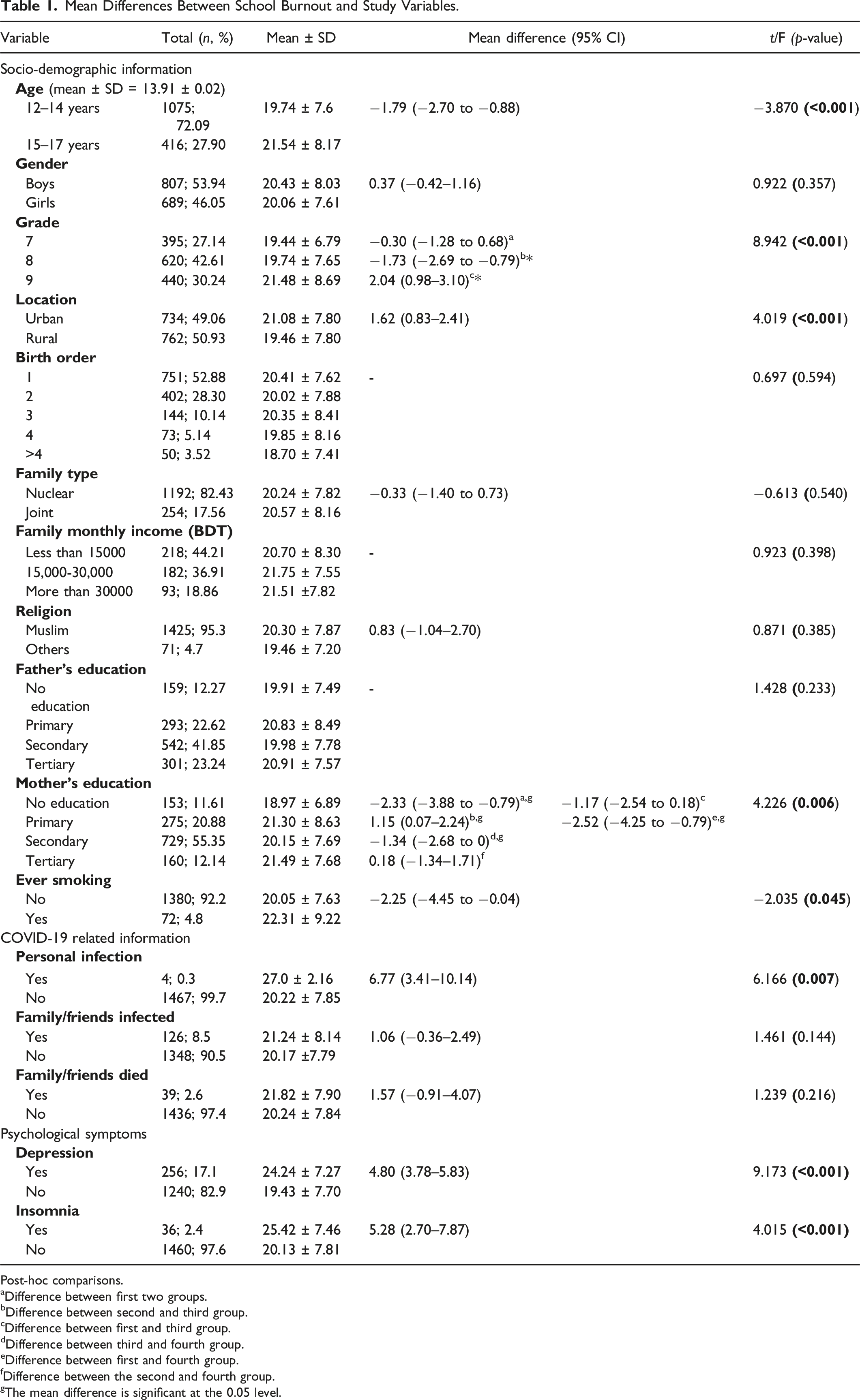
Mean Differences Between School Burnout and Study Variables.
Post-hoc comparisons.
aDifference between first two groups.
bDifference between second and third group.
cDifference between first and third group.
dDifference between third and fourth group.
eDifference between first and fourth group.
fDifference between the second and fourth group.
gThe mean difference is significant at the 0.05 level.
Internal Reliability Analysis of School Burnout Inventory Bangla
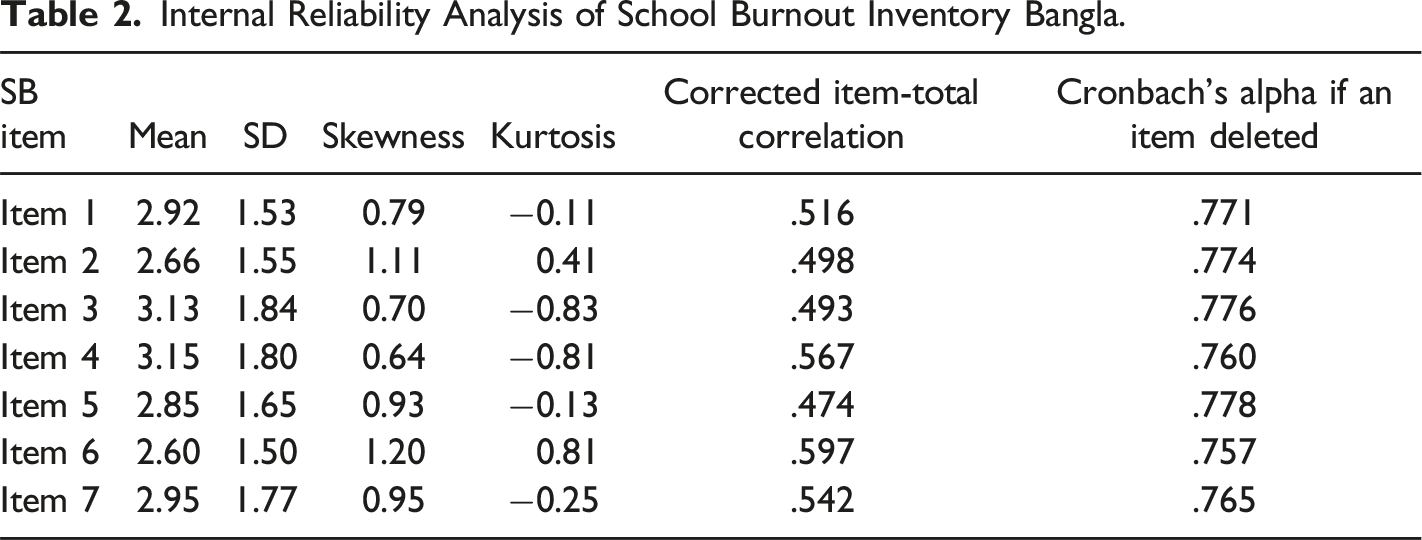
Internal Reliability Analysis of School Burnout Inventory Bangla.
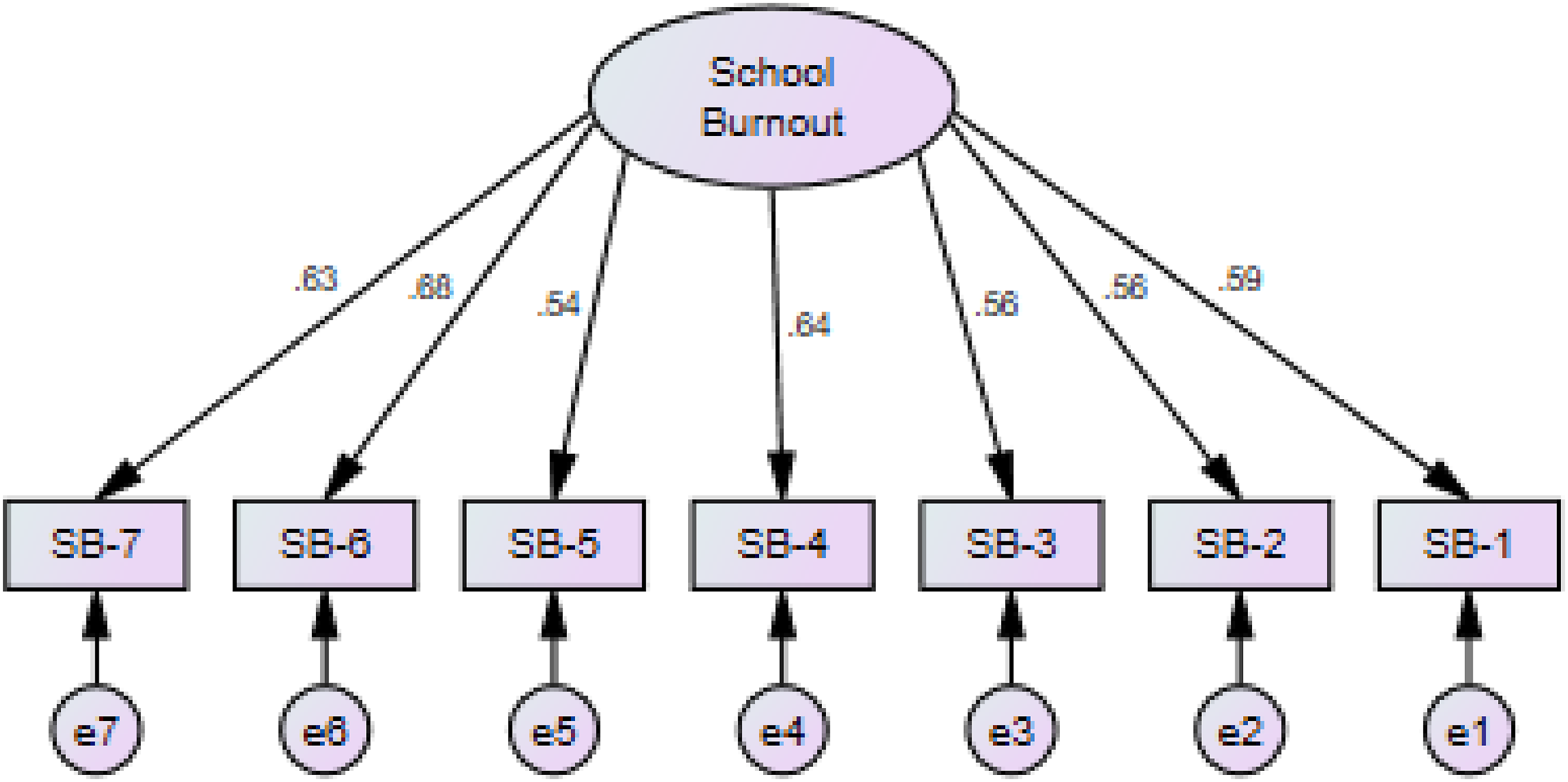
Confirmatory Factor analysis of School Burnout Inventory Bangla.
Structural Validity Analysis of School Burnout Inventory Bangla
Confirmatory factor analysis examined the structural validity of the SB scale (Figure 1). Results suggest that the scale was structurally valid (Model fit: chi-square/df = 6.810 (p < .001), GFI = 0.982, CFI = 0.966, TLI = 0.949, RMSEA = 0.062, and SRMR = 0.038).
Mean Differences Between Burnout and Study Variables
Table 1 reported the mean differences between burnout and study variables. The age group showed a significant mean difference with SB, with 15–17 years having a greater mean score (t = −3.870, p < .001). A significant difference was observed between students’ grades and SB (F = 8.942, p < .001). In-depth, grades seventh and ninth, and grades eighth and ninth significantly differed in terms of SB score, where ninth grade students had comparatively higher mean scores than seventh grade and eighth grade students. Post-hoc comparisons also suggest that no education and primary education groups, no education and tertiary education groups, primary and secondary education groups, and secondary and tertiary education groups had a significant mean difference in terms of mother’s education level (p < .05). Urban students had significantly higher burn-out scores than rural ones (t = 4.019, p < .001). In addition, participants mother’s education (t = 4.226, p = .006), their ever-smoking status (t = −2.035, p = .045), self-infected with COVID-19 virus (t = 6.166, p = .007), depressive symptoms (t = 9.173, p < .001), and insomnia (t = 4.015, p < .001) significantly differed in terms of mean SB scores (Table 1).
Pearson Correlation Between Burnout and Other Variables
Pearson Correlation Between SB, Depression, Daytime Sleepiness, and Insomnia.
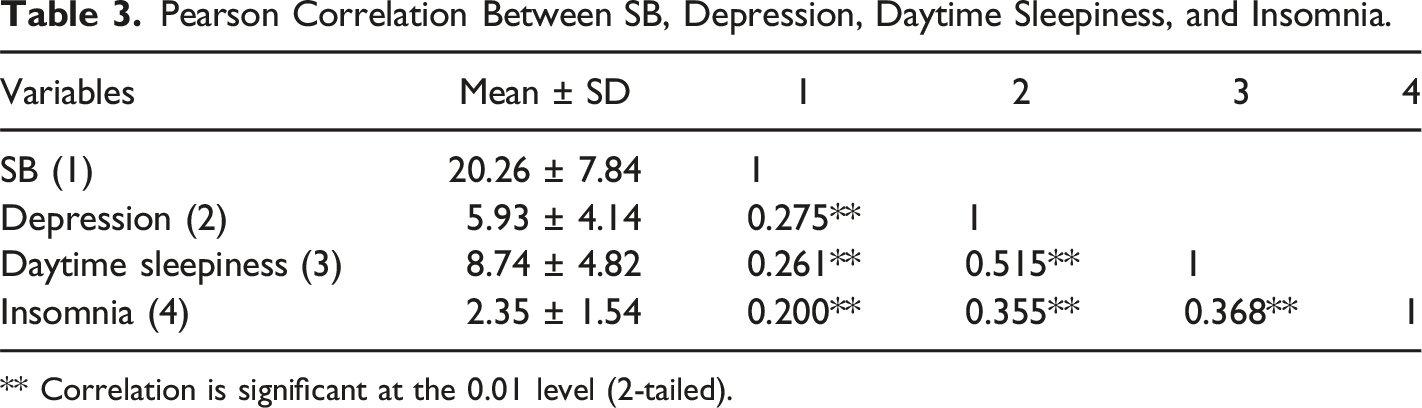
** Correlation is significant at the 0.01 level (2-tailed).
Multiple Linear Regression of School Burnout
Multiple Linear Regression of School Burnout Among Adolescents.
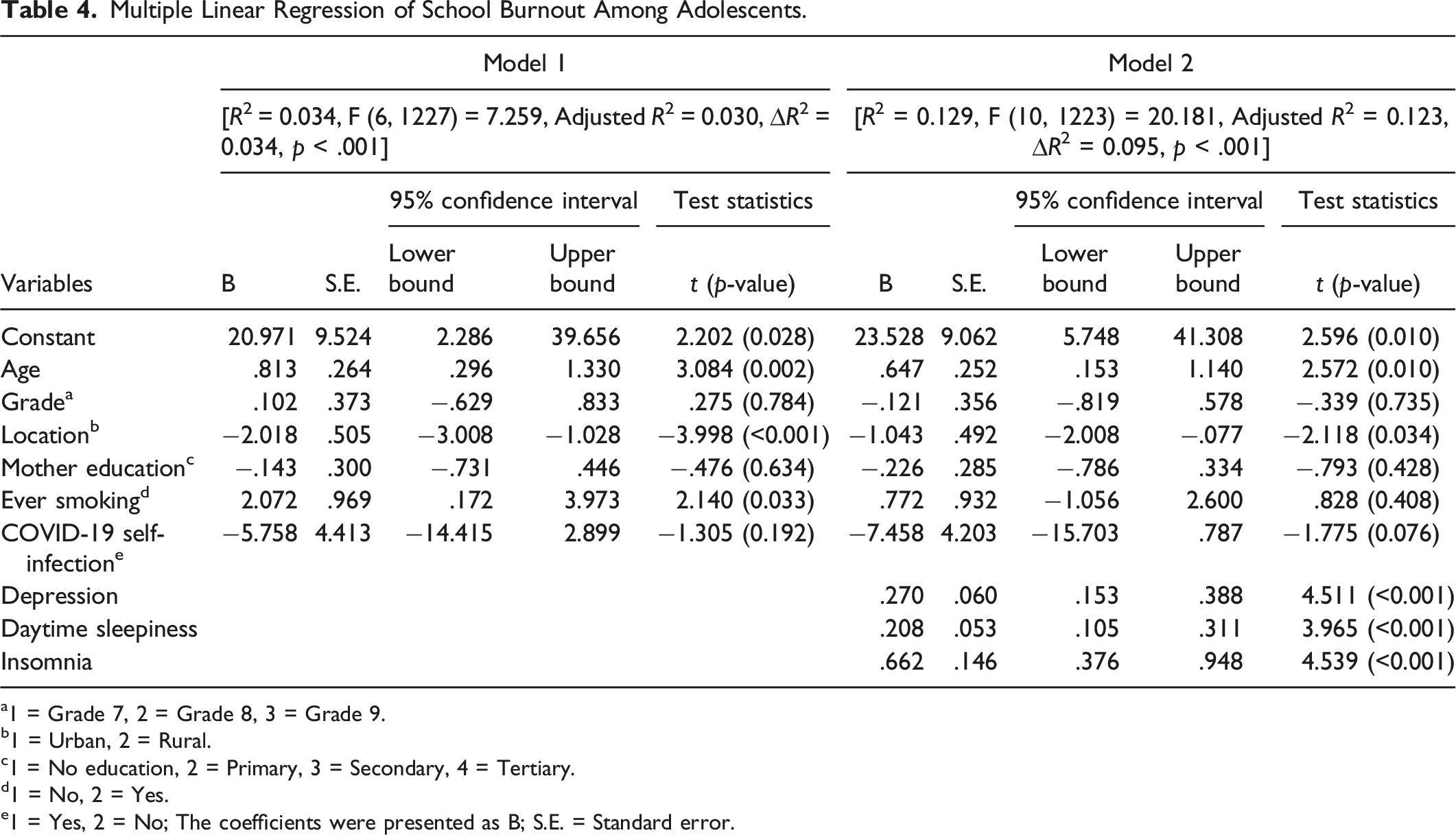
a1 = Grade 7, 2 = Grade 8, 3 = Grade 9.
b1 = Urban, 2 = Rural.
c1 = No education, 2 = Primary, 3 = Secondary, 4 = Tertiary.
d1 = No, 2 = Yes.
e1 = Yes, 2 = No; The coefficients were presented as B; S.E. = Standard error.
Discussion
The primary objective of the present study was to investigate school burnout (SB) and its association with sociodemographics and mental health problems including depression, daytime sleepiness, and insomnia among high-school-going adolescents in Bangladesh. Besides, the study addressed the need for culturally validated burnout assessment tools by including a cultural validation of the burnout scale for the Bangladeshi context. The analysis revealed significant differences in SB scores based on age, gender, geographical location, maternal education, history of smoking, and COVID-19 infection. Furthermore, the presence of depressive symptoms, daytime sleepiness, and insomnia significantly heightened the risk of experiencing SB. These findings highlight the multifaceted nature of burnout and emphasize the importance of addressing both individual and contextual factors, as well as mental health and sleep-related issues, in effectively preventing and managing SB.
The School Burnout Inventory was used to assess SB for the first time in the context, thus the scale was validated in the study. Results indicated that the internal consistency of the scale was 0.79, suggesting that the study’s results are reliable. The original School Burnout Inventory was translated and validated in different languages. For instance, a Turkish study among 570 primary and secondary school students found a similar internal consistency with a Cronbach’s alpha of 0.75 (Secer et al., 2013). Another study among university students also reported similar reliability for the SBI (Boada-Grau et al., 2015). The scale’s validity was measured using the Pearson correlation and confirmatory factor analysis, with results indicating a satisfactory model fit and significant correlation with other scales, supporting the validity of the scale. These findings are consistent with previous studies (Caterina et al., 2014; Secer et al., 2013). Therefore, it can be said that the scale is reliable and valid to use in the country.
Using the School Burnout Inventory – Bangla (SBI-Bangla), the present study revealed that the mean score for SB among adolescents was 20.26 (SD = 7.84) [score range 7–49]. This finding aligns with previous research conducted among Chinese nurses, which reported moderate levels of emotional exhaustion and depersonalization, as well as a high level of low personal accomplishment (Wang et al., 2015). Similar patterns were observed among frontline doctors in Bangladesh, who exhibited high levels of emotional exhaustion, depersonalization, and low personal accomplishment (Rashid et al., 2022). Notably, a study highlighted that burnout symptoms in adolescents may originate during primary education and further intensify during the transition from primary to secondary school (Parviainen et al., 2021). This indicates that the likelihood of experiencing burnout during adolescence increases with age, which is consistent with the current study’s findings (Fiorilli et al., 2017; Lee et al., 2013). Specifically, this study demonstrated that each additional year of age was associated with a 64.7% increase in burnout scores. Consequently, it is crucial to allocate greater attention and implement targeted interventions for individuals in higher age groups to effectively address and prevent burnout. These findings highlight the importance of recognizing age-related factors in the development and management of burnout among adolescents. By understanding the influence of age on burnout, appropriate strategies can be implemented to support and promote the well-being of adolescents at different stages of their educational journey.
The COVID-19 pandemic has emerged as a significant factor contributing to burnout, particularly among adolescents (Lacombe et al., 2023). The disruption caused by the pandemic, including prolonged school closures and interruptions in academic activities, has intensified psychological issues and contributed to increased burnout (Theberath et al., 2022). Adolescents who contracted COVID-19 often faced extended absences from school, leading to academic delays and heightened pressure upon their return. This backlog of missed coursework, combined with the anxiety related to the pandemic itself, has compounded feelings of SB (Simoës-Perlant et al., 2023). This association highlights the broader impact of global health crises on mental well-being and educational outcomes.
The findings of the present study are in line with previous research, highlighting a significant relationship between SB and depression (Koutsimani et al., 2019). This consistent association underscores the impact of depression on the development and exacerbation of SB symptoms. In support of this, a study conducted among university entrance test-taking students revealed that depression increased the likelihood of developing burnout by 2.50 times, whereas those depressed students who failed to get admission to a university were found to be at even higher risk of burnout compared to normal counterparts (Mamun et al., 2021). These findings are also supported by longitudinal research, which identified depression as a strong predictor of adolescent burnout (Salmela-Aro, Savolainen, & Holopainen, 2009). Moreover, a meta-analysis of 37 studies among nurses revealed a positive association between burnout and depression, further reinforcing the link between these two conditions (Chen & Meier, 2021). The relationship between depression and burnout can be attributed to various factors. For instance, depression may arise from the inability to meet school demands and the experience of stressful life events, both of which can contribute to the development of burnout symptoms. However, it is also important to acknowledge that burnout might contribute to depression, highlighting the complexity of the causality between these conditions. Therefore, while addressing and managing school demands effectively is crucial for protecting students from burnout, a comprehensive approach that considers both burnout and depression is essential. By focusing on alleviating depression symptoms and providing adequate support to students in managing school-related stress, it is possible to mitigate the risk of burnout and promote their overall well-being.
Several studies have identified sleep problems as a potential contributing factor in the development of burnout over time (Li et al., 2020; Liu et al., 2021). For instance, a study involving 127 medical students revealed that daytime sleepiness increased the risk of experiencing emotional exhaustion and cynicism by 1.21 times and 2.47 times, respectively. Besides, it was found to decrease academic efficacy by 0.86 times, indicating the detrimental impact of sleepiness on burnout symptoms (Pagnin et al., 2014). Further supporting this association, a study involving 350 adults demonstrated a positive correlation between sleep quality and burnout. The findings suggested that higher SB scores were associated with poorer sleep quality, highlighting the reciprocal relationship between these two variables (May et al., 2020). Similarly, among 555 Finnish secondary school students, daytime sleepiness, tiredness, and poor sleep quality were significantly associated with increased burnout scores (Lehto et al., 2019). One possible explanation for the observed link between sleep problems and burnout is the concern students have regarding their academic achievements. This worry can lead to increased levels of stress and anxiety, ultimately resulting in reduced sleep quality (Gomes et al., 2011). These findings underscore the importance of recognizing the role of sleep problems in the development and progression of burnout. By addressing and promoting healthy sleep habits, educational institutions and healthcare professionals can potentially mitigate the risk of burnout among students and individuals in various settings.
It is important to acknowledge the limitations of this study. Firstly, the cross-sectional design employed in this study prevents the establishment of a causal relationship between variables. To address this limitation and provide stronger evidence, future research using longitudinal designs is necessary to examine the temporal nature of the association between SB and its contributing factors. Secondly, the study did not capture information regarding specific stressful school life events, which could potentially influence SB levels. Including such information in future studies would enhance our understanding of the contextual factors contributing to SB among adolescents. Thirdly, the Daytime Sleepiness Scale was not validated in the sample, though we used a forward and backward translation procedure as suggested by Beaton et al. (Beaton et al., 2000). Despite these limitations, this study holds significant value as it is the first of its kind to investigate SB among adolescents in Bangladesh. By utilizing culturally adapted and validated assessment tools, the study ensures the appropriateness of measuring SB within the local cultural context. The findings of this study serve as a crucial foundation for future research in this area, especially in terms of validation of the scale. Policymakers, educators, and healthcare professionals can utilize these findings to inform the development of targeted interventions and support systems aimed at preventing and addressing SB among adolescents in Bangladesh. Further studies can build upon these findings, addressing the limitations identified, to provide a more comprehensive understanding of the complex factors contributing to adolescent SB in this population.
Conclusions
In conclusion, this study highlights several important findings regarding adolescent school burnout. First, the cultural validation of the scale seems reliable and valid for assessing the school burnout of Bangla-speaking adolescents. The results also indicate that higher age groups, depression, and sleep problems play significant roles in predicting school burnout among adolescents. It is important for educators, policymakers, and healthcare professionals to recognize the impact of these factors on adolescent school burnout and to implement appropriate strategies and interventions. By addressing these predictors and targeting high-risk individuals, efforts can be made to reduce the prevalence of burnout and enhance the overall mental health and academic performance of adolescents. Further research is warranted to explore additional factors contributing to school burnout and to develop comprehensive interventions that address the multifaceted nature of this syndrome. By building upon these findings, future studies can contribute to the development of evidence-based approaches to prevent and manage school burnout among adolescents.
Supplemental Material
Supplemental Material - Adaptation and Validation of School Burnout Inventory-Bangla and Its Predictive Factors Among Adolescents
Supplemental Material for Adaptation and Validation of School Burnout Inventory-Bangla and Its Predictive Factors Among Adolescents by Firoj Al-Mamun, Mohammed A. Mamun, Moneerah Mohammad ALmerab, Johurul Islam, and Mohammad Muhit in Psychological Reports
Footnotes
Acknowledgements
The author would like to thank all the study participants.
Declaration of Conflicting Interests
The author(s) declared no potential conflicts of interest with respect to the research, authorship, and/or publication of this article.
Funding
The author(s) disclosed receipt of the following financial support for the research, authorship, and/or publication of this article: This study was funded by the University of South Asia, Dhaka, Bangladesh and the CHINTA Research Bangladesh, Dhaka, Bangladesh. Dr. ALmerab acknowledges the funding support currently receiving from Princess Nourah Bint Abdulrahman University Researchers Supporting Project (PNURSP2025R563), Princess Nourah Bint Abdulrahman University, Riyadh, Saudi Arabia.
Correction (February 2025):
The article has been updated with the Funding statement since its original publication. See correction notice for more details.

Data Availability Statement
The research data is available from the corresponding author upon reasonable request.
Supplemental Material
Supplemental material for this article is available online.
Author Biographies
References
Supplementary Material
Please find the following supplemental material available below.
For Open Access articles published under a Creative Commons License, all supplemental material carries the same license as the article it is associated with.
For non-Open Access articles published, all supplemental material carries a non-exclusive license, and permission requests for re-use of supplemental material or any part of supplemental material shall be sent directly to the copyright owner as specified in the copyright notice associated with the article.
