



Abstract
This study investigates the occurrence of corrective feedback and uptake in child ESOL classes. Transcripts of 8.1 hours of lessons in 6 ESOL classes in a New Zealand primary school were analysed to explore the relationship between errors, feedback, and uptake. The results revealed that there was a clear preference for recasts and explicit correction, and there was a lack of prompts. The two most frequent feedback types yielded relatively high uptake rates, which was ascribed to the fact that a high percentage of the recasts were corrective (as opposed to supportive) and many cases of explicit correction subsumed multiple, hybrid (input-providing as well as output-prompting) corrective moves. Phonological errors led to a high repair rate regardless of feedback types, and grammatical errors mainly received recasts, most of which were not followed by repairs. Overall, there are differences in the patterns of feedback and uptake between this study and previous studies, which were interpreted with reference to the unique characteristics of this instructional context. This study demonstrates a need for an interactive, situated approach to the study of corrective feedback.
Introduction
Corrective feedback (CF) refers to responses to learners’ errors. Since Lyster and Ranta’s seminal work (1997), there has been an exponential growth of interest in the role of CF in L2 learning and instruction. Teachers are pestered by the conundrums of whether feedback should be provided and if so, how it should be provided to achieve optimal instructional effects. Researchers are interested in the mechanism through which feedback facilitates or impedes (such as in Krashen’s view, 1982) interlanguage development. Descriptive studies have investigated the occurrence of feedback, uptake (learner’s response after feedback), and learners’ perception of feedback (Lyster, 1998; Egi, 2010). Experimental studies have examined the effects of different types of feedback (Li, 2010; Lyster and Saito, 2010). Both lines of research have obtained valuable insights into L2 pedagogy.
However, most CF studies were situated in immersion settings or conducted with adult ESL/ EFL learners. To date, there has been no research on how CF fares in ESOL (English for Speakers of Other Languages) contexts where language instruction is provided to young ESL learners from mainstream content classes in support of their academic performance. This study was undertaken to investigate the occurrence of CF and uptake in a child ESOL context in New Zealand. It seeks to shed light on the dynamic, situated nature of corrective feedback and on child L2 pedagogy.
Review of the Literature
Corrective Feedback
CF constitutes a form-focusing device. It can consist of an indication of an error, provision of the correct target language form, or metalinguistic information about the nature of the error, or any combination of these (Ellis et al., 2006). CF prompts learners to notice the gap between their erroneous L2 production and the target form and make subsequent interlanguage adjustments (Gass, 1997). Lyster and Ranta (1997) identified six types of feedback – recasts, explicit correction, metalinguistic feedback, clarification request, elicitation, and repetition. (These feedback types will be exemplified in the coding section). Recasts and explicit correction contain the correct forms and are therefore referred to as input-providing; the other corrective strategies encourage learner repairs and are described as output-prompting. These feedback moves also stand in the implicit-explicit continuum depending on whether learners’ attention is overtly drawn to linguistic forms. Recasts stand at the implicit end and metalinguistic correction and explicit correction at the explicit end.
Previous descriptive research showed that the occurrence of CF varies across instructional settings. Lyster and his colleagues (Lyster and Ranta, 1997; Lyster, 1998, 2001) conducted a series of studies in a French immersion setting involving young learners. They found that the recast was the most predominant feedback type (55%) and that grammatical errors were the most frequent error type (50%). It was also found that grammatical and phonological errors tended to invite recasts, whereas lexical errors tended to invite ‘negotiation of form’ (prompts). However, other studies obtained different results. For instance, Sheen (2004) found that recasts accounted for more than 80% of the feedback in the EFL classes. Mackey, Gass, and McDonough (2000) found that grammatical errors mainly led to negotiation of form and phonological errors to recasts in dyadic interaction.
Experimental studies demonstrated that the effects of feedback were affected by learner-external and learner-internal factors. For instance, prompts/explicit feedback were more effective than recasts for low-level learners, but the 2 feedback types were equally effective for high-level learners (Ammar and Spada, 2006; Li, 2009); recasts were less amenable to non-salient, hard linguistic structures (e.g. French gender in Lyster, 2004; English articles a/the in Sheen, 2010) than salient, transparent structures (English his/her in Ammar and Spada, 2006). Lyster and Saito (2010) found that younger learners benefited more from feedback than older learners, indicating the influence of age on the effects of feedback. Taken together, these studies, in conjunction with the class observation studies reviewed above, showed that CF should be viewed as a dynamic construct that interacts with contexts and learner factors. This study ascertains how feedback is provided and responded to (or taken on board) in an ESOL context.
Uptake
Uptake refers to a student’s reactive move that immediately follows the teacher’s feedback (Lyster and Ranta, 1997). Uptake has been regarded as an indicator of the effectiveness of feedback because they may serve as proof for the learner’s noticing and incorporation of the provided feedback (Egi, 2010; Lyster and Ranta, 1997). Uptake also constitutes a type of ‘pushed output’ (Swain, 1995), through which the learner likely engages in metalinguistic reflection, hypothesis testing, and active rehearsal of recently or previously acquired linguistic items.
Uptake is constrained by various factors. Lyster and Ranta (1997) reported that prompts were more effective than recasts in eliciting uptake (80% to 100% vs. 30% for prompts and recasts respectively). They argued that prompts afford opportunities for learners to repair their own errors and therefore facilitate L2 automaticity. Lyster (1998) reported the advantage of prompts in inviting grammatical and lexical repairs and of recasts in leading to phonological repairs. The finding is indicative of an interaction between uptake, feedback, and errors. A second mediating factor for uptake is the instructional context. For example, while Lyster and Ranta (1997) reported a relatively low uptake rate (55%) in young learners’ immersion classes, Ellis et al., (2001) and Loewen (2004) reported high levels of uptake in meaning-focused ESL classes in New Zealand (74% and 73% respectively). Sheen (2004) compared the uptake levels of four different contexts (French immersion, Canada ESL, New Zealand ESL, and Korean EFL) and found that whereas around 50% of feedback was followed by uptake in the two Canadian settings, uptake in the New Zealand and Korean settings was as high as 80%. Furthermore, there has been research on how the characteristics of feedback contribute to uptake (Sheen, 2006; Loewen and Philp, 2006). Recasts, for example, were found to lead to more uptake if they involved a single change and partial reformulation or were provided with declarative intonation, prosodic emphasis and within extended moves.
Notwithstanding the argument that uptake might facilitate L2 development, there has been limited empirical evidence to confirm its usefulness as a source of learning. Loewen (2005) and Loewen and Philp (2006) are the only studies that ascertained the connections between uptake and learners’ test performance. Loewen (2005) investigated the impact of the characteristics of incidental focus on form on its effectiveness and found that successful uptake was a significant predictor of learners’ post-test scores. However, the researcher confounded student-initiated focus on form (which, in the absence of error, did not involve corrective feedback) and reactive focus on form (which entailed corrective feedback). It is not clear whether the predictive power of uptake was attributable to learners’ being more engaged in the case of student-initiated focus on form (which is provided in response to learners’ queries) or the corrective force of feedback in the case of reactive focus on form. Based on the same dataset, Loewen and Philp (2006) found that successful uptake after elicitation and informs (explicit correction of error), but not that after recasts, was predictive of the learners’ post-test scores. This is probably because elicitation and informs are more explicit than recasts; uptake following different feedback moves may reflect different levels of noticing, which relate to different learning outcomes, assuming that noticing is integral to, or at least facilitates, learning. Therefore it would seem simplistic to conclude whether uptake relates to interlanguage development because of its interaction with feedback type in affecting learners’ L2 performance. It is not a focus of this study whether uptake leads to L2 development; rather, the concern here is its occurrence in child ESOL classes.
ESOL Education
In light of the large number of immigrant students in mainstream content classes in English speaking countries, the importance of ESOL language support programmes cannot be overemphasized. For instance, in New Zealand there are 33,207 students in 1,301 schools representing 163 different ethnic groups from 159 countries of birth, speaking 116 different languages (Ministry of Education, 2011). The New Zealand Ministry of Education sponsors a program which offers ESOL classes to these students for up to five years.
Despite the importance of ESOL education, there has been no research on the occurrence of feedback in this context, and feedback is an integral component of L2 instruction. Also, in light of the different dynamics and characteristics of this context in comparison with immersion or ESL classes, ESOL classes may show different patterns of feedback and uptake. The present study investigates the pattern of CF related interaction in young learners’ ESOL classes and seeks to answer the following research questions:
What types of learner errors lead to what types of CF in child ESOL classes?
What is the uptake rate of each type of feedback and what is the relationship between learner errors, feedback, and learner uptake?
Methodology
Participants
The study was conducted in an ESOL programme in a public primary school in Auckland, New Zealand. The observations took place in six child ESOL classes from different year levels (Year 2-6). The students’ ages ranged from six to 12 years. There were two Year 2 classes and one class each for the other year levels. The total number of participants was 38. The learners’ prior exposure to English varied: Some were born into immigrant families in New Zealand; some were from non-English speaking countries such as China or Korea where they hardly had any opportunities to speak English; others were from India or the Philippines where they had considerable exposure to English prior to coming to New Zealand. The teacher participant was a female native English speaker with 38 years of experience in teaching ESOL to primary children. She was informed that the study would examine aspects of classroom interactions but not that the specific focus was on corrective feedback.
Instructional Context
The objective of the ESOL programme in this school was to provide language support to ESOL students and enhance their communicative competence by way of engaging them in conversational activities (for which they did not have enough opportunities in mainstream classes). The content of ESOL instruction was closely linked with what was covered in classes of the subject matter (science, social studies and mathematics), but the primary objective was to enhance the students’ language development. The topics of the observed lessons included ‘Food and Shopping’ (Year 2), ‘Describing Pictures’ (Year 3), and ‘Responding to a Reading Text: Create My Hero’ (Year 4, 5 and 6). Using tasks relating to these topics, the teacher prepared the language learners for similar tasks they were likely to experience in content classes (and real world communication). Due to the small class size (4 to 7), there were often active conversational interactions between the teacher and individual students. Form-focused instruction (including provision of corrective feedback) was incorporated and was often incidental, contingent, and mostly reactive. The students were withdrawn from mainstream classes twice a week, and each instruction session lasted 40-60 minutes.
Procedure
Altogether eight hours of lessons were observed that involved six classes, and the observations were completed within ten days. One of the researchers was present during all observations as a non-participant observer, and the classroom interactions were recorded using a video camera and a digital audio-recorder. Each class was recorded for two sessions. To familiarize the students with the recording procedure, trial recordings were conducted one week before the actual data collection. The observer kept field notes to report any noteworthy instances during the recording. Upon completion of the data collection, an exit interview was conducted with the teacher, who was asked to comment on her choice of feedback in certain episodes of the videotaped lessons.
Coding
The coding scheme of this study was based on Lyster and Ranta’s (1997) error treatment sequence, which starts with a learner utterance containing at least one error. The learner error is followed either by the teacher’s CF or topic continuation. If feedback is provided, then it is either followed by learner uptake or topic continuation. If there is uptake, then the learner’s initial error is either repaired or still needs to be repaired. Table 1 shows the coding scheme.
Coding Scheme for Error Treatment Sequence
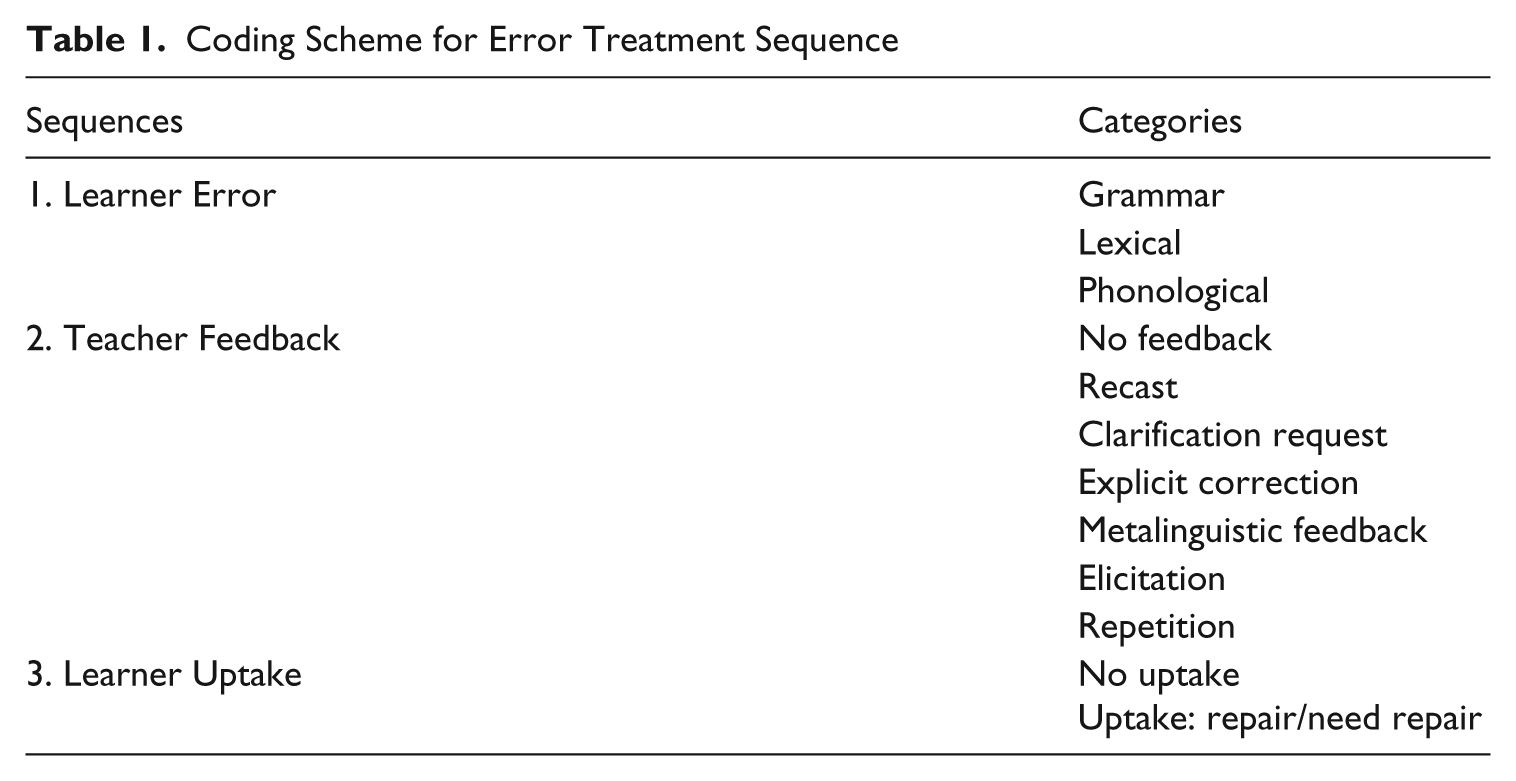
All student turns were coded as either having an error or not. Short turns with little or no potential for error were excluded, such as yes, no, thank you, please, ok, and so on. Error turns were classified as phonological, lexical or grammatical. Below is a description of error types based on Lyster’s scheme (1998) with examples from the database of the present study.
Grammatical errors – errors in tense, verb morphology, auxiliaries, pluralization, question formation, word order, subject/verb agreement, and the use of closed classes such as prepositions, pronouns, determiners.
Example 1 S (Student): Are it blue? (grammatical error) T (Teacher): No, no, you can’t ask that, you say ‘is it’. S: Is it blue?
2. Lexical errors – inaccurate and inappropriate choices of lexical items in open classes such as nouns, verbs, adverbs, and adjectives.
Example 2 S: He is poison. (lexical error) T: could be poisonous.
3. Phonological errors – mispronunciations in reading aloud or spontaneous conversations.
Example 3 S: vellins. (phonological error) T: villains. S: villains.
All teacher turns within an error treatment sequence were classified as one of the following six CF moves: explicit correction, recast, clarification request, metalinguistic feedback, elicitation and repetition. The six types of feedback are exemplified below.
Recast – reformulation of all or part of a learner’s erroneous utterance without changing its original meaning.
Example 4 S: washing power. T: powder. (recast) S: Ah…washing powder.
2. Explicit correction – provision of the correct form with a clear indication of what is being corrected.
Example 5 S: Is that all would you like? T: Alright, you are not gonna say ‘Is that all would you like’. Is that all you would like? (explicit correction) S: Is that all you would like?
3. Elicitation – techniques to elicit the correct form from the students without providing the correct form such as 1) ‘elicit completion’ moves (‘It is a…’), 2) elicitative question (‘How do we say X in English?’), or 3) reformulation request (‘Can you say it another way?’)
Example 6 S: he got catched by T: he got… (elicitation) S: caught.
4. Metalinguistic feedback – metalinguistic information regarding the student’s erroneous utterance
Example 7 S: She has best friends and her friends pretended that they are gonna…have her friends. T: Just be careful when you are telling a story that you keep to the same tense. (metalinguistic feedback)
5. Clarification requests – moves that indicate to learners that their utterances were either not understood or were ill-formed such as ‘Sorry?’ or ‘Pardon?’
Example 8 S: It’s a red bird? T: Sorry? (clarification request) S: It’s a red bird?
6. Repetition – a repetition of the student’s erroneous utterance.
Example 9 S: Oh my God, it is too expensive, I pay only 10 dollars. T: I pay? (repetition) (Sheen, 2004: 279)
As in Lyster and Ranta (1997), multiple feedback moves were coded as follows:
recast or explicit correction + metalinguistic feedback = explicit correction
recast or explicit correction + elicitation = explicit correction
metalinguistic feedback + elicitation = elicitation
Uptake is classified as follows:
Repair: uptake that leads to the correct reformulation of an error as a response to feedback.
Example 10 S: exciting boy. T: an excited boy. S: excited. (uptake – repair)
2. Needs repair: uptake that does not entail the correct form.
Example 11 S: if she plays it, people sleep gets T: go to sleep. S: yeah. (uptake – needs repair)
3. No uptake: when the student does not provide any response to the teacher feedback and carries on topic continuation, these cases are coded as ‘no uptake’.
Example 12 S: He is poison. T: could be poisonous. S: He could bite you. (no uptake – topic continuation)
The recorded data was transcribed and coded initially by the first author, and 30% of the data was transcribed and coded by another transcriber. The agreement rate was 99%, and discrepancies were resolved through discussion.
Results
Error and Feedback
During the eight hours of lessons, a total of 2,703 student turns were produced, out of which 232 contained errors (9%). These errors were committed by 35 out of the 37 students, with an average of 6.63 errors for each of the students that produced errors. Two students remained silent during all videotaped lessons. Seven students produced more than ten errors, and among them, five received more feedback than average. (The average feedback rate is 63%, as Table 2 shows).
Errors and Feedback
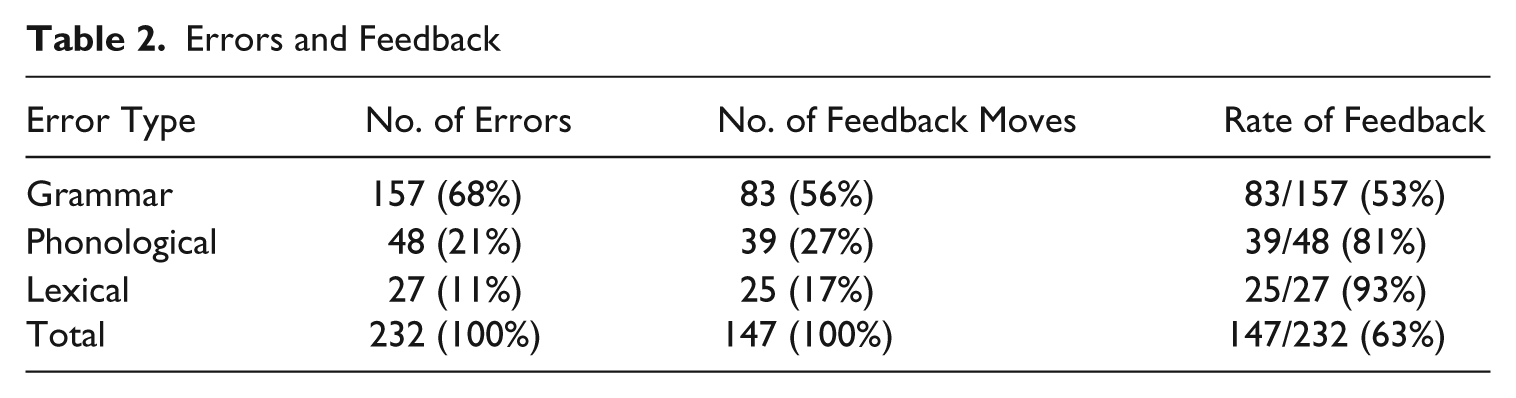
Table 2 presents the number and percentage of student errors, feedback moves by error type, and the rate of feedback for each error type. Of the 232 total error turns, 68% (157) related to grammar, 21% (48) to phonology, and 11% (27) to lexicon. In all 147 (63%) of these error turns received teacher feedback; 83 feedback moves (56%) were provided for grammatical errors, 39 (27%) for phonological errors, and 25 (17%) for lexical errors. The results demonstrate that grammatical errors constituted the majority of errors and received the most feedback. However, the results related to the rate of feedback per error type revealed a different picture. As Table 2 shows, lexical errors received feedback almost always (93%), phonological errors also received feedback at a high rate (81%), and only about half (53%) of the grammatical errors received feedback.
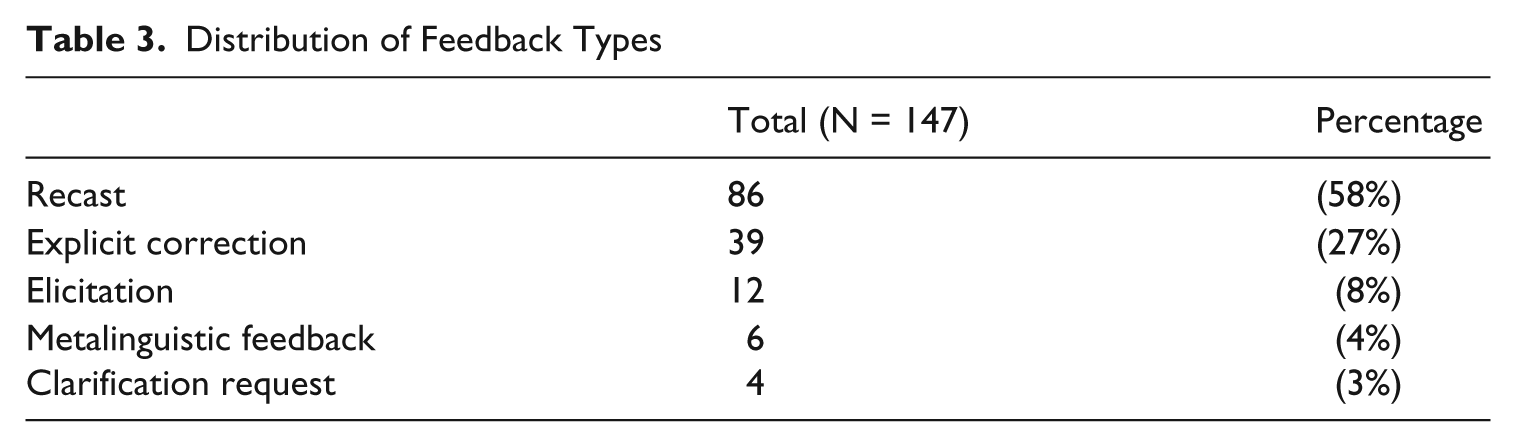
Table 3 reports the teacher’s use of different types of feedback in response to the errors. Of the total 147 feedback moves, 58% were recasts, 27% were explicit correction, and 15% were prompts. Furthermore, repetition was nonexistent in the recorded data.
Distribution of Feedback Types
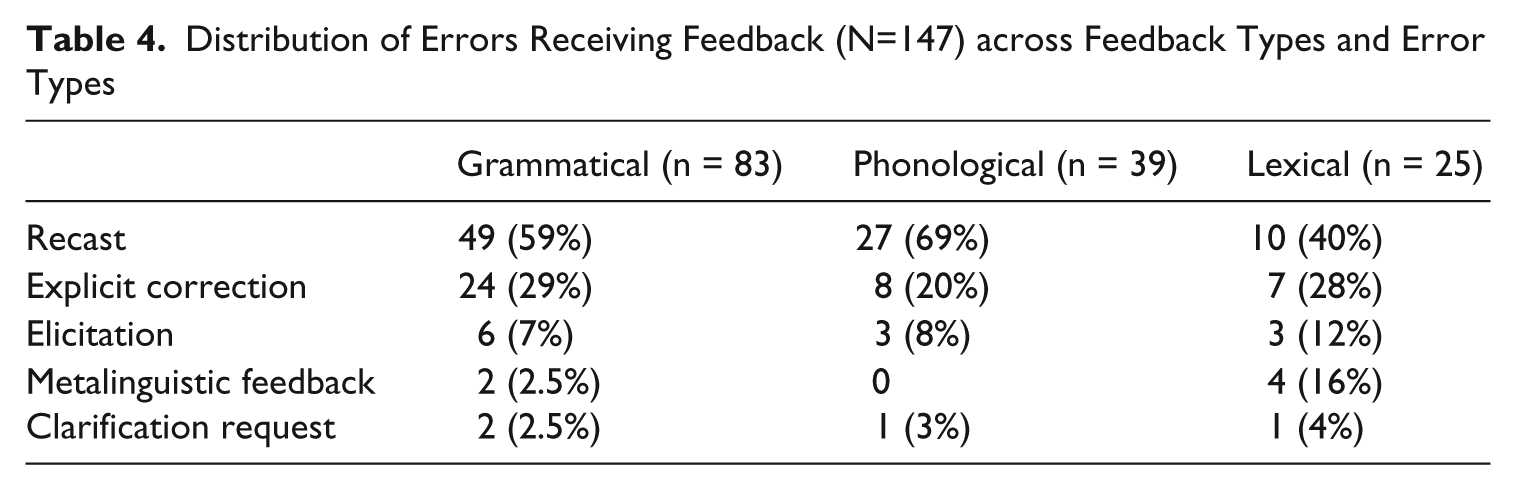
To determine what type of feedback was provided to each type of error, the related data were cross-tabulated, and the results appear in Table 4. As shown, for the 83 grammatical errors, the teacher provided 49 recasts (59%), 24 explicit corrections (29%), and ten prompts (12%). Of the 39 phonological errors, 27 received recasts (69%), 8 received explicit corrections (20%), and four received prompts (11%). For the 25 lexical errors, ten recasts (40%), seven explicit corrections (28%), and eight prompts (32%) were provided. Thus, the teacher used more prompts for lexical errors than for the other errors.
Distribution of Errors Receiving Feedback (N=147) across Feedback Types and Error Types
Uptake
The second research question consisted of two parts: the uptake rate of each type of feedback and the relationship between errors, feedback and uptake. Table 5 presents the relationship between feedback type and learner uptake/repair (which refers to successful uptake). It can be observed that the highest uptake rate (100%) went to elicitation and clarification requests (although the number of cases for these two feedback types is small), followed by explicit correction (80%) and recasts (59%). With respect to learner repairs, elicitation yielded the highest repair rate (83%), followed by explicit correction (69%) and recasts (52%). Clarification request (25%) and metalinguistic feedback (17%) resulted in the lowest repair rate.
Uptake and Repair Following Teacher Feedback
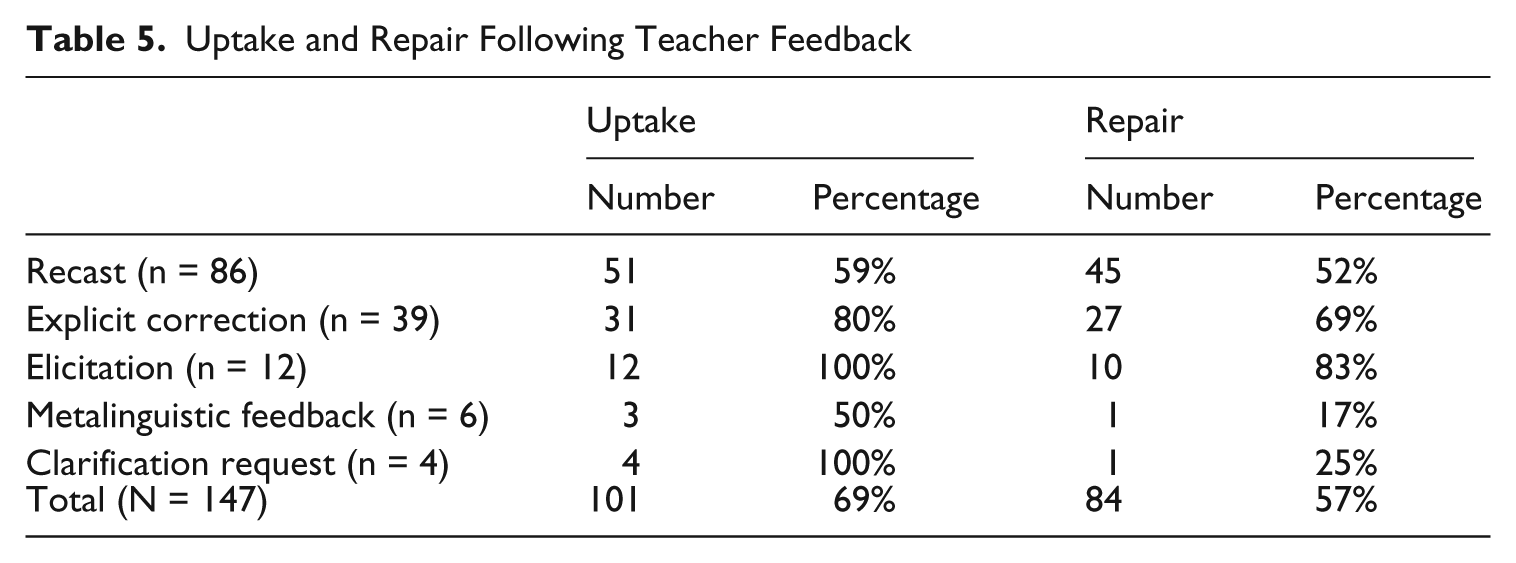
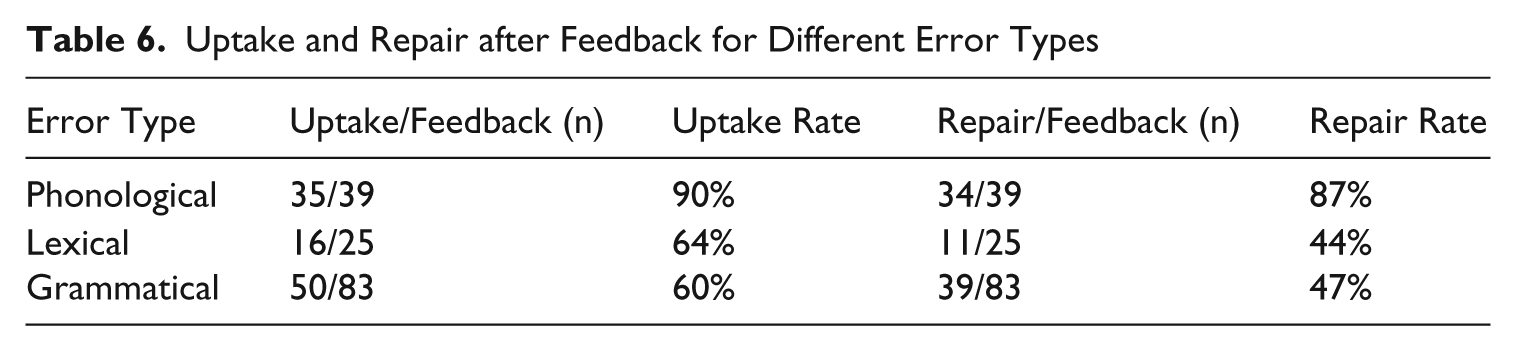
Table 6 shows the rate of uptake and repair for feedback after different error types. As shown, 90% of phonological feedback resulted in uptake and 87% in repairs; 64% of lexical feedback led to uptake and 44% to repairs; 60% of grammatical feedback was followed by uptake, and 47% was followed by repairs.
Uptake and Repair after Feedback for Different Error Types
The second research question also asked about the relationship between error type, feedback type, and learner uptake. Table 7 reports the results. In terms of the relationship between error type and uptake/repair, grammatical errors, the most frequent error type, received feedback in about half of the (83/157, 53%) cases where they were committed; about 60% of the feedback was taken up, and only 47% of the feedback led to repairs. Phonological errors, the second most frequent error type, received the teacher’s feedback (39/48, 81%) at a higher rate, and resulted in the highest uptake rate (90%) and repair rate (87%). Lexical errors were the least frequent error type, received feedback (25/27, 93%) almost always, but invited uptake in 64% and repairs in 44% of the cases where feedback was provided.
Relationship between Errors, Feedback, Uptake/Repair
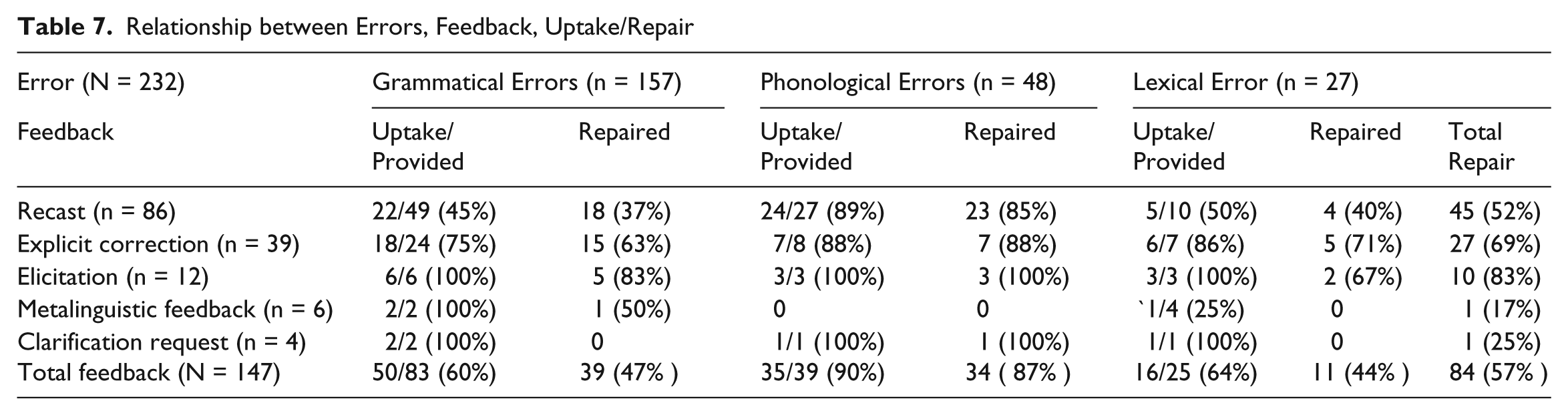
From the perspective of feedback, recasts were the most frequent feedback type and led to a low uptake and repair rate for grammatical errors (45% and 37% respectively), but a high uptake and repair rate for phonological errors (89% and 85% respectively). The uptake rate of recasts for lexical errors was 50%, and the repair rate was 40%. Explicit correction was the second most frequent feedback type and led to a relatively high uptake rate (75%, 88% and 86% for grammatical errors, phonological error and lexical errors respectively) and repair rate for all the error types (63%, 88%, and 71%). Elicitation was less frequent (12) but led to the most uptake for all error types (100%), and the highest repair rate for grammatical and phonological errors (83% and 100%) and a relatively high repair rate for lexical errors (67%). Metalinguistic feedback and clarification requests were rare.
Discussion
Feedback
The first research question concerns the relationship between error type and feedback type in child ESOL classes. It was found that grammatical errors were the most frequent but only about a half of them received feedback. Phonological and lexical errors were less frequent but the majority of them were responded to with feedback. All error types tended to invite recasts and explicit correction. Lexical errors tended to invite more prompts than other error types, but the majority of the feedback provided for lexical errors were still recasts and explicit correction.
Grammatical errors received less feedback because of their lack of semantic and perceptual salience. Many grammatical features (such as plurals, tense markers, articles, to name a few) are semantically redundant although they are syntactically obligatory. Misuse of or failure to use those features often does not cause communication problems, and the related errors therefore tend to be ignored, either purposefully or unconsciously. The following example illustrates:
Example 13 S: boys is playing. (grammar) T: Right. How many of them? (no feedback – topic continuation)
In this scenario, the student’s error in subject-verb agreement did not cause any problem in meaning conveyance, and the teacher carried on topic continuation without providing any feedback. Unlike grammatical errors, lexical and phonological errors often cause communication failures and are therefore more likely to invite feedback. Furthermore, phonological errors are perceptually salient, which will be addressed in the discussion on the interaction between errors, feedback, and uptake.
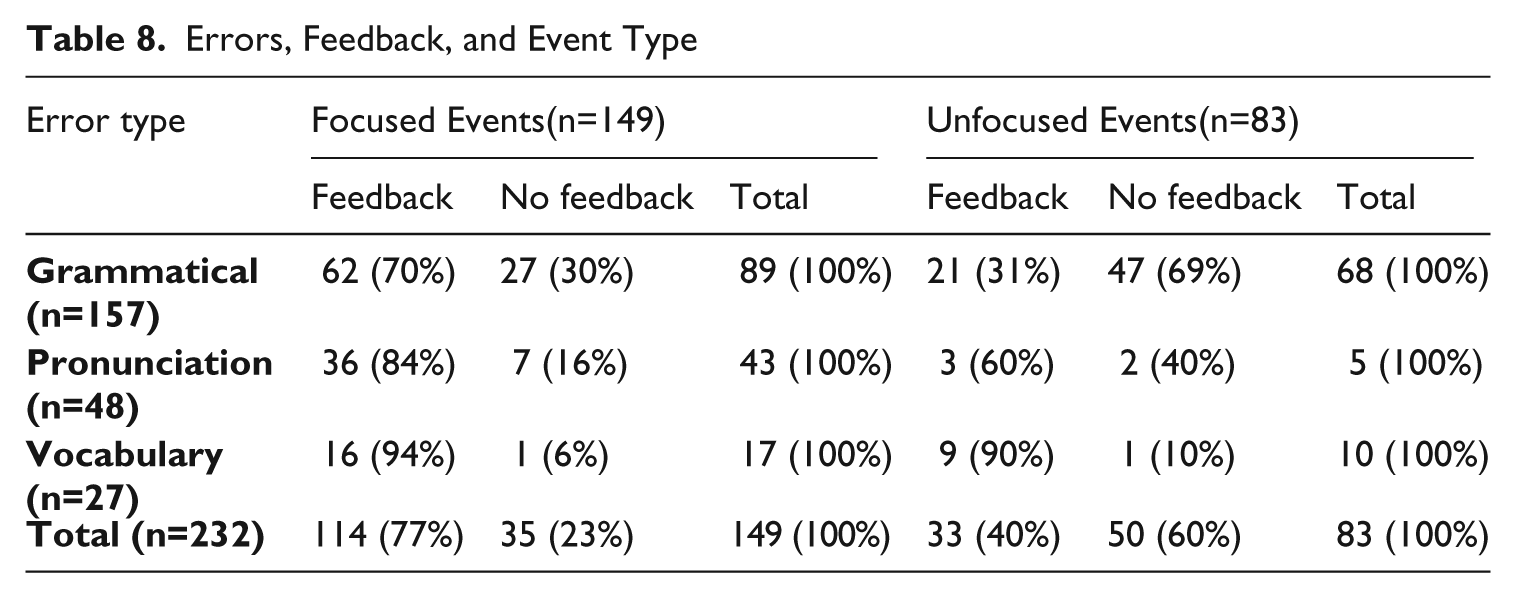
While the provision of feedback was affected by the nature of the linguistic target, further analysis of the data showed that whether an error received feedback or not was also constrained by whether it occurred in a focused or unfocused event (or task). A focused event revolves around a linguistic target, and an unfocused event does not have a linguistic focus. In this study, each observed lesson had a linguistic focus, so most events were focused. Unfocused events mostly happened during focused tasks when the teacher carried out some casual conversations with students. In child language classes, even when a lesson has a linguistic focus, there may be many unfocused events as ‘children’s talk can go a bit wild’ (an ESOL teacher’s words). For example, during one observed lesson, a boy suddenly talked about the scary movies he watched when the class were asked to talk about a hero of their own creation. Table 8 shows the relationship between errors, feedback, and event type. It is evident that errors in focused events were more likely to receive feedback than errors in unfocused events. The results also show that regardless of event type, pronunciation and vocabulary errors were more likely to receive feedback than grammatical errors, confirming the impact of linguist targets on the provision of feedback.
Errors, Feedback, and Event Type
Clearly not all errors received feedback (which refers to negative feedback in this article). One caveat is that in the absence of feedback, an erroneous utterance may be perceived as correct even though it is not, especially when the teacher confirmed the truth value of the message (called positive feedback in this section for the convenience of the discussion) as in example 13. Gass and Lakshmanan (1991) referred to these instances as conflicting input. In our data, among the 85 errors that did not receive corrective feedback, there were 21 cases that contained positive feedback. However, there are reasons to believe that this concern is overstated. First, positive feedback is necessary to maintain the flow of communication and to encourage learner production. Too much negative feedback is disruptive and may be detrimental to the proceduralization of L2 knowledge (DeKeyser, 2007). Second, online negative feedback is one of many form-focusing strategies (Ellis et al., 2002), and other remedial options (such as post-task metalinguisitc explanation) are available to prevent fossilized errors. Third, the teacher’s intention may match the learner’s perception. In other words, the learner may also interpret positive feedback as a confirmation of the message instead of a favourable comment on his/her language production. In fact, in meaning-oriented communication, even negative feedback is often perceived as relating to meaning rather than form (Mackey et al., 2000).
The finding that recasts were the most frequent feedback type was also obtained in previous studies (Lyster and Ranta, 1997; Panova and Lyster, 2002; Sheen, 2004). The dominance of recasts across instructional contexts is likely attributable to the fact that this type of feedback is time-saving, less threatening to students’ confidence, and less disruptive to the flow of interaction in comparison with other types of feedback (Loewen and Philp, 2006). Furthermore, as Ellis and Sheen (2006) pointed out, recasts can serve both communicative and didactic functions. Lyster (2004) also contended that recasts in a communicative classroom are used not only as ‘corrective moves’, but also as ‘supportive, scaffolding help’ that serves to move the lesson ahead when the target forms are not available in the students’ current production ability.
The data in the current study showed that recasts were indeed used for two different purposes: corrective and supportive. It appears that recasts were made more explicit when the teacher’s intention was corrective. Strategies the teacher used to reduce the ambiguity of recasts and to convey her corrective intention included segmentation (i.e. isolation of the problematic part), repetition (repeating the reformulated part), or prosodic emphasis. The following example illustrates:
Example 14 S: of there. T: over, over, over there. (recast) S: over there.
In this example, the teacher repeated ‘over’ three times to make the corrective intention of the recast overt.
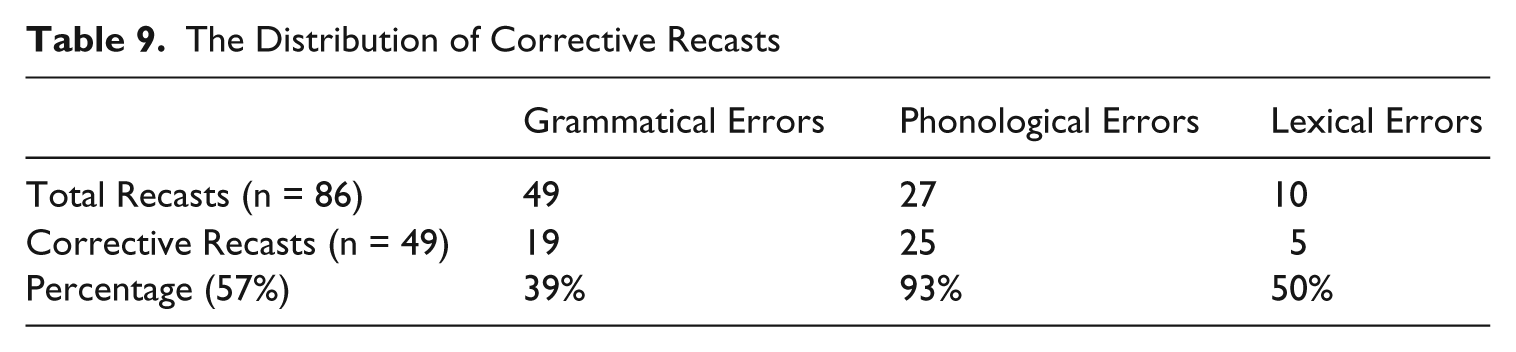
A post-hoc analysis of the transcriptions revealed that corrective recasts constituted more than half (57%) of the provided recasts (Table 9). It is noteworthy that almost all the recasts (93%) provided for phonological errors were corrective.
The Distribution of Corrective Recasts
However, the teacher preferred ‘supportive’ recasts when the interactions did not relate to the predetermined instructional foci of the lesson when she prioritized the flow of conversation over formal accuracy. This type of recast was primarily used to support and encourage the learner to proceed with the ongoing conversation rather than correct the error:
Example 15 S: … he sell for the zoo. T: … OK, he’s collecting him for the zoo, OK. (recast)
In this episode, the student was talking about the plot of the story he was going to write. The teacher reformulated the utterance not to correct the error(s); rather, she used the recast as a discourse move to maintain the flow of the conversation, to deliver the message that the utterance had been understood, and to send a ‘go-ahead’ signal. As the teacher pointed out in the follow-up interview, sometimes she did not correct students’ errors because she wanted ‘to keep the flow of conversation going’.
Lyster (2004) argued that this usage of recast made the corrective intention ambiguous as it could be perceived as repetition of well-formed utterances. However, from a pedagogical perspective, the supportive function of recasts cannot be regarded as detrimental, as the purpose of this language programme (and we believe of all language programs) is not only promoting learners’ grammatical accuracy but also nurturing their confidence in communication. This type of recast may encourage the young learners to push their output towards more fluency, if not ‘accuracy’. Providing both corrective and supportive recasts can help achieve a balance between form and meaning and between fluency and accuracy.
One striking finding is the high incidence of explicit correction, which accounted for 27% of the total amount of provided feedback. It was the second most frequent feedback for all error types following recasts. The finding was inconsistent with all other studies based on Lyster and Ranta’s coding scheme and research design: It constitutes 7% of the feedback in Lyster (1998), only 2% in Panova and Lyster (2002), and 12.7% /10.8% in Sheen (2004).
The high proportion of explicit correction in this study may be attributable to two factors: the instructional context and the learners’ age. First, Lyster’s studies were conducted in immersion settings where the content rather than language was the focus of instruction. The ESOL programme of this study, however, is obviously more language- than content-oriented; hence the teacher’s preference for explicit correction, which is conducive to drawing the students’ attention to linguistic forms and accords with the mission of the pull-out programme. Second, the higher percentage of explicit correction in this context than in adult ESL/EFL classes may be due to the teacher’s belief that the young children were not attentive enough to notice the corrective force of more implicit types of feedback and might therefore need more explicit cues as attention grabbers. In the follow-up interview the teacher explained her choice of explicit correction:
These children are all young and they are learning, so I have to be very clear with my explanations so that they can understand what I am talking about and so that it will go into their brains and they will remember it.
While the teacher tried to use more explicit correction, she used prompts less frequently (15%) than in Lyster and Ranta (1997) (34%) and Panova and Lyster (2002) (21%). Lexical errors received prompts at a higher rate (32%) than other types of errors, but the frequency was very small (8). It would seem that the teacher tended to provide the correct form rather than elicit it from the students. This is because the teacher considered that the young learners in the present study might not have sufficient internal resources to self-correct or process the metalinguistic information had it been provided. The teacher said:
To these children, it’s [English] a foreign language to them. They don’t actually have the vocabulary. If I ask them to give me, for example, past tense of a verb, they don’t have that knowledge. So I try to feed them the information rather than hoping I am going to get it from them.
Uptake
The first part of the second research question concerned the relationship between feedback type and uptake. While it was no surprise that elicitation led to a high uptake rate (Lyster, 1998; Sheen, 2004), what stood out was the finding that recasts and explicit correction led to higher uptake rates (especially higher repair rates) than in previous studies (Lyster and Ranta, 1997; Panova and Lyster, 2002). As an illustration, Table 10 provides a comparison between this study and two related studies in this regard.
Uptake and Repair Rates of Recasts and Explicit Correction in Different Studies
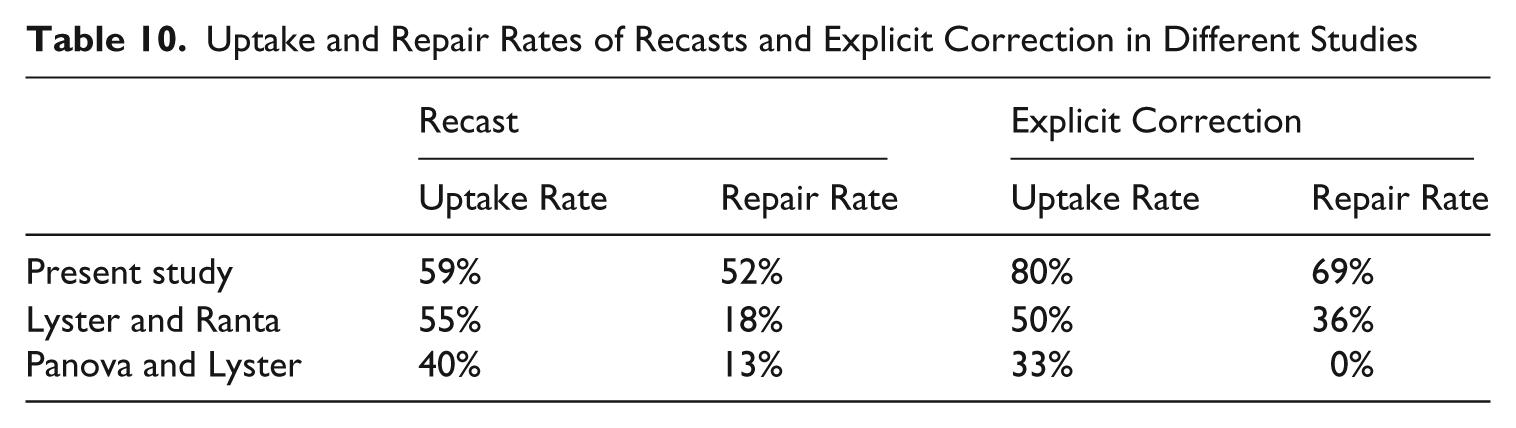
The reason for the high uptake rate of explicit correction may be because in many cases it was provided in extended sequences that involved multiple, hybrid (input-providing as well as output-prompting) feedback moves (36%). Example 16 illustrates:
Example 16 S: Oh yeah, I did go on that. T: No, you can’t say ‘I did go’, ‘I went on a sledge’. Say it for me (explicit correction + elicitation = explicit correction) S: I went on a sledge
In this example, the teacher explicitly drew the learner’s attention to the error, provided the correct form, and then asked the student to produce it. A post hoc analysis showed that this type of multiple-move feedback led to 100% uptake and a very high repair rate (93%). However, in these cases, it is difficult to decide which particular move led to the uptake or repair. It is likely that combining these ‘provides’ and ‘prompts’ makes the feedback’s correcting force stronger, hence the high uptake and repair rate.
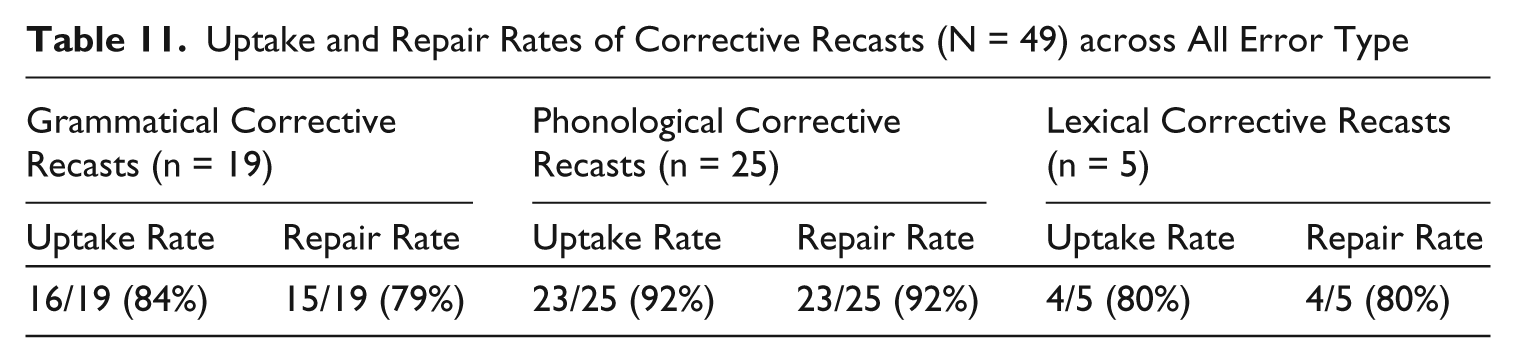
The relatively high uptake rate of recasts is likely due to the teacher’s preference for corrective recasts. As shown in Table 11, the corrective recasts resulted in strikingly high uptake and repair rates across all the error types. (See Table 9 for the distribution of corrective recasts in the dataset). The result confirmed Ellis and Sheen’s (2006) argument that the problem of ambiguity of recasts and the resultant low uptake rate can be solved by making the corrective force transparent.
Uptake and Repair Rates of Corrective Recasts (N = 49) across All Error Type
With regard to the relationship between learner errors, feedback, and uptake, there was a noteworthy tendency: Phonological errors primarily invited recasts and resulted in a high uptake rate irrespective of feedback types, even after recasts. The finding suggests an influence of the perceptual salience of learner errors on uptake. It was noted that most of the phonological errors (27 out of 48) occurred in reading aloud activities (Lyster, 1998) and did not cause communication breakdown, but they still received feedback probably because they were inherently more salient and were therefore easily perceived by the teacher. Moreover, as manifested in the example below, when the students committed phonological errors, they often signalled their uncertainty by means of paralinguistic cues such as hesitations or rising intonation.
Example 17 S: they were about Roboman saving metro city from… villion? (Phonological error) T: Villains S: Villains (Uptake-repair)
In this episode, the student indicated his uncertainty with a rising tone and in the meantime, he slowed down the speech, making it clear he was expecting feedback. The learners’ awareness of errors may have increased the possibility for noticing when feedback was provided. Also, the form-focused dynamic of this context may have made the students more sensitive to linguistic errors and feedback.
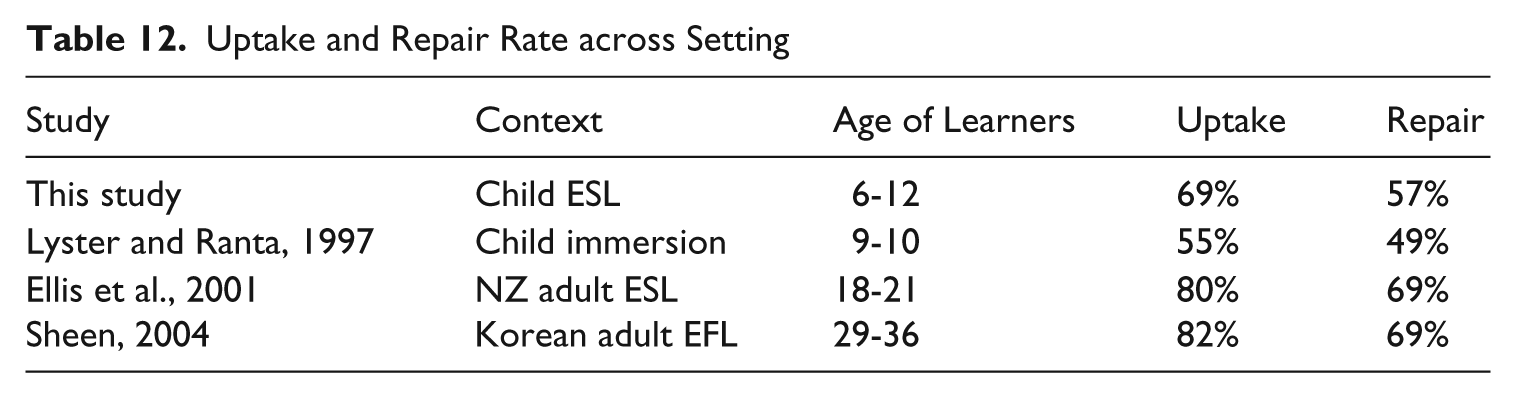
Lastly, to investigate the role of the instructional context, a post hoc analysis was carried out on cross-study differences in uptake and repair. As shown in Table 12, overall the uptake and repair rate was higher in this study than in Lyster and Ranta (1997) but lower than in studies conducted with adult ESL classes. The higher uptake rate in this study in comparison with immersion classes in Lyster and Ranta is perhaps because the ESOL context was more form-focused, and the students were therefore more sensitive and receptive to feedback. By the same token, the higher uptake rate in intensive adult ESL/EFL classes than ESOL classes is because of its heavier language focus, coupled with the possibly higher motivation of students in adult fee-paying language programs (Loewen, 2004).
Uptake and Repair Rate across Setting
Conclusion
This study is the first attempt to investigate the occurrence of feedback in young learners’ ESOL classes and obtained somewhat different results from previous studies. In-depth, post hoc analyses revealed that these differences were attributable to the distinctive dynamics and characteristics of this context. By investigating the interaction between error, feedback and uptake, it provided an integrated picture about construct under investigation. This study opens up grounds for further research into the mediating factors for learner uptake.
This study has limitations, and it is hoped that addressing these limitations bears out some directions for future research. First, similar to previous research, the perspective taken on corrective feedback is restricted to production errors, and it does not address learners’ comprehension errors. To the best of our knowledge, there has been no research on how comprehension errors are responded to by means of feedback, and this, beyond doubt, constitutes a promising venue of research. (See Shintani et al., forthcoming) for a review of the comparative effectiveness of production- and comprehension-based instruction). Second, this study did not consider the role of individual differences in the occurrence of errors and provision of feedback. It is not clear whether learners of certain ethnic and linguistic backgrounds were more likely to produce certain errors or whether the teacher varied the type and amount of feedback in accordance with the learners’ personal traits or dispositions. Third, while the ESOL classes were closely connected with content classes, this study only examined teacher feedback in the former. Future research may investigate how content teachers respond to ESOL students’ linguistic errors. A fourth weakness concerns the fact that we only investigated verbal feedback and did not examine other instructional strategies that accompanied feedback. For instance, in our data, there was one instance in which the teacher wrote some examples on the blackboard when she provided metalinguistic feedback. This indicates the teacher might have considered the error typical of the whole class and thought it necessary to provide further instruction.
Last but not least, the researchers wish to provide the following pedagogical implications based on the findings of this study (as well as previous research):
Teachers should be aware of the characteristics of different corrective strategies and their differential effects. (See Li, 2010; and Lyster and Saito, 2010; for a summary on experimental feedback research).
Since both this study and previous studies (Lyster, 1998) show that teachers tend to provide more feedback on lexical and phonological errors but less on grammatical errors (most probably because of the redundant nature and low communicative value of many grammatical features), it would seem important to give more attention to grammatical errors.
Recasts can serve both corrective and supportive purposes and therefore constitute a very useful corrective strategy.
Learners’ individual differences such as age and their receptivity to feedback should be considered in making feedback-related decisions. For young learners, more salient feedback may be necessary, but metalinguistic feedback may not be appropriate given their propensity in cognitive processing.
Teachers should realize that the nature of the linguistic target (grammar, lexis, and pronunciation) affects how feedback is taken up: Whereas feedback pertaining to phonology and lexis are easily recognizable, grammar-related feedback is not. A corollary is that teachers should make certain their corrective intention is perceived by students. This recommendation, however, is not intended to lobby for the predominant use of explicit corrective strategies such as metalinguistic feedback or explicit correction, overuse of which is intrusive and disruptive. Other, less intrusive feedback moves can be salient. For example, recasts, which are non-threatening, can be easily perceived if they are segmented or provided with prosodic emphasis.
Footnotes
Funding
This research received no specific grant from any funding agency in the public, commercial, or not-for-profit sectors.