



Abstract
This study investigates how the model of Authentic Leadership applies to language teaching and its implications for future directions in teacher education programmes. Data was collected from 56 native-speaking English teachers through an online survey consisting of specific open-ended and short answer type questions. The results of the study suggest that currently the concept of classroom leadership is not at the forefront of teachers’ conscious thought, but is, to some extent, embedded in various teaching practices and characteristics. This could be attributed to the absence of explicit discussion of teacher leadership in teacher education programmes despite principles of leadership being strongly connected to the act of teaching itself. It is argued that a clear model of leadership would better help teachers face the unique challenges of EFL teaching and the model of Authentic Leadership provides an excellent framework for this context as the principles of self-awareness, relational transparency, balanced processing, and internalized moral/ethical perspective have direct links to core concepts in ELT. This article contends that by applying the principles of Authentic Leadership in classroom practice, both novice and experienced teachers will be better able to manage the challenges of language teaching, enhance and enrich their skillsets, and achieve greater professional success.
Keywords
Introduction
John Quincy Adams said, ‘If your actions inspire others to dream more, learn more, do more, and become more, you are a leader’. Leadership is manifest in every great teacher. No matter how detailed a lesson plan or how dedicated they may be to the vocation, without leadership a teacher will struggle to spur students to their full potential. But it is unclear what exactly leadership entails in classroom practice, how teachers can develop such skills, or, in the context of EFL, how teachers can be great leaders considering the challenges of professional inexperience, cultural differences, and difficulties with communication.
Christison and Murray (2008) reported ‘a surge of interest in leadership’ in ELT, yet the topic remains lacking in the language-teaching literature (Coombe, 2008; Curtis, 2013). Only one book (White, 2008) and two edited collections (Christison and Murray, 2008; Coombe, 2008) have advanced the subject, and these deal primarily with language programme administration. Moreover, TESOL courses tend to focus on teaching linguistic knowledge, SLA theory, and research methods. Day and Conklin (1992) observed more than two decades ago that teacher education programmes tend to place primary emphasis on content and pedagogical knowledge, and this remains largely true today. As Freeman and Johnson (1998: 407) explain, ‘In defining the knowledge-base, one must recognize that language teacher education is primarily concerned with teachers as learners of language teaching rather than with students as learners of language. Thus teacher education focuses on teacher-learners as distinct from language-learners’.
While we know intuitively that teaching is more than transmitting information and that the capacity to motivate and lead the class are crucial factors in classroom success, defining and observing teacher leadership in the classroom context has proven elusive (York-Barr and Duke, 2004). It is perhaps even cloudier in the field of EFL/ESL, where there is virtually no empirical research regarding leadership in actual classroom practice despite its critical importance to the professional success of the teacher and the academic achievement of students (Christison and Murray, 2008).
To address this gap, this exploratory study examines whether the model of Authentic Leadership (AL) (Avolio and Gardner, 2005; Begley, 2006; George, 2003) applies to language teaching and its implications for informing and developing a new model for teacher education programmes.
Literature Review
Authentic Leadership
Bill George (2006), a Harvard Business School Professor who has helped popularize Authentic Leadership, defines authentic leaders as those who bring people together around shared values and a mutual respect that empowers everyone. Avolio and Gardner (2005: 4) define authentic leaders as:
Those who are deeply aware of how they think and behave and are perceived by others as being aware of their own and others’ values/moral perspectives, knowledge, and strengths; aware of the context in which they operate; and who are confident, hopeful, optimistic, resilient, and of high moral character.
Despite these instructive sentiments and the expanding literature on AL, the theory is still in the process of maturation and hence the definition is not precisely clear (Pittinsky and Tyson, 2005), and there are a number of differing, though interconnecting interpretations (Cooper et al., 2005). For the purpose of this study, the following key principles suggested by Walumbwa et al., (2008) are used:
Self-Awareness: A continuing process of reflection and self-evaluation with the goal of understanding one’s strengths, weaknesses, and beliefs, and the reasons for them.
Relational Transparency: Openly sharing one’s thoughts and emotions with others; conscious about how feelings are conveyed to others and striving to understand the motives behind ideas.
Balanced Processing: The ability to be objective, empathetic, and considerate to various perspectives, especially opposing viewpoints, with the genuine desire to explore all viewpoints before making decisions.
Internalized Moral/Ethical Perspective: Guided by positive values and high ethical standards; behaviours and decisions reflect guiding principles, yet allow for the capacity to understand various cultural contexts and take appropriate action.
Originally conceived to promote more ethical and democratic leadership in business, AL has been increasingly applied to the field of education (Bhindi and Duignan, 1997). Bhindi and Duignan (1997: 206) assert that authentic teacher-leaders are ‘aware of their own limitations, are tolerant of imperfection in others, and help others learn, grow, mature, and succeed’. Teacher-leaders must also be committed to the profession and have the drive to succeed. Palmer (1998) maintains that teachers, to begin with, must have an authentic call to the vocation of teaching and a growing body of research indicates the importance of committed leadership to the success of teaching and learning (McGee et al., 2015). To be successful, classroom teachers need a greater understanding and appreciation for human nature and individual motivations in addition to high ethical standards (Begley, 2006). While recognizing and developing these capacities in any teaching situation takes time and effort, foreign language teaching presents unique challenges.
Challenges of Authentic Leadership in the EFL Context
The first major obstacle in language teaching is that many individuals working in nonnative English speaking countries enter the field with little or no formal training or qualifications as an EFL teacher (Göker, 2006). In most cases they are not offered training or support by the institutes that hired them nor provided information on how they might attain professional knowledge and skills (Chen and Goh, 2011; Jones, 2008). Moreover, the adequacy of the one-month TEFL training courses that many teachers opt for has been called into question given the vastly complex reality of EFL teaching today (Ferguson and Donno, 2003).
Teachers must also consider the organization context and the national cultural values in which they work (Holliday, 1994). Certain institutional and cultural practices may very well be at odds with one’s own principles. Begley and Stefkovich (2007: 401– 402) remind us that we must consider ethics as a cultural phenomenon and therefore, ‘ethics based postures tend to be relevant to certain types of administrative decision processes and not always considered by school leaders an appropriate basis for decision making in some administrative situations’. Respecting the current organization rules and policies and the culture of the country in which you work while staying true to your own beliefs is something language teachers must learn to balance.
Finally, perhaps the most obvious challenge for foreign EFL instructors teaching in a nonnative English speaking country is the language barrier with co-teachers, administrators, parents, and students. Miscommunications can occur because of cross-cultural differences (Hoa, 2011), misunderstandings between interlocutors (Pica, 1987), or communicative breakdowns caused by a lack of language proficiency. Considering the complexity and gravity of these issues for novel and experienced teachers alike, models of language teacher education and professional development must find ways to address them.
The Appropriateness of Authentic Leadership in ELT
Authentic Leadership may help to alleviate some of these issues in the ELT context because, at its essence, it advocates that teachers gather a deeper understanding and cognizance of these challenges. We do not intend to define ‘leadership’ per se, but instead to explain how AL can help teachers recognize, empathize with, and incorporate the culturally and contextually fluid nature of the concept in the process of decision-making. However, to better understand and apply these concepts in language teacher education, it is necessary to first locate them within the ELT context.
Self-Awareness
Self-awareness is imperative in language teaching as reflecting on experiences allows teachers to better captivate the more humanizing capacities of being a language teacher and to continuously enhance their practice. Self-Awareness, akin to ‘Reflective Practice’ (Farrell, 2008, 2011; Richards and Lockhart, 1994) in the ELT literature, affords teachers a conduit to explore their teaching through reflection and action research (Richards and Lockhart, 1994). Hamachek (1999: 209) asserts, ‘The more that teachers know about themselves – the private curriculum within – the more their personal decisions are apt to be about how to pave the way for better teaching’.
Referencing the work of John Dewey and Donald Schӧn, Farrell (2012) summarizes reflective practice as ongoing, evidenced-based introspection about a teacher’s practice that they use to inform their work and make decisions. In this sense, the self-awareness aspect of ELT means teachers are introspective, open-minded, responsible, passionate, and dedicated to the profession (Farrell, 2012).
Relational Transparency
Relational transparency refers to ‘openly sharing information and expressions of one’s true thoughts and feelings while trying to minimize displays of inappropriate emotions’ (Walumbwa et al., 2008: 95). It does not mean showing every emotion. As Lewis (2011: 103) makes clear, ‘Relational transparency is about appropriate, thoughtful, and wise self-disclosure and self-management, not kneejerk unmediated responses’.
Beyond learning to govern one’s emotional-self, teachers must demonstrate actions that gain assurance and respect from their students. Diddams and Chang (2012: 594), in discussing relational transparency in business, explain, ‘authentic leaders promote trust among their followers because their deep self-knowledge of both their strengths and weaknesses creates a nondefensiveness that allows for them to be consistent across situations and transparent with their followers regarding the reasons for their actions’. This is crucial in language teaching because consistency and openness can alleviate some of the issues caused by communication problems. Moreover, fair, genuine, and honest discussion can break down barriers caused by cultural differences.
Balanced Processing
Teachers come with their own educational and philosophical background, ideas, and values based on their sociocultural practices and personal experiences (Freeman and Johnson, 1998). However, following their own subjective beliefs can lead to mismatches between the teacher’s approach and goals and the students’ wants and needs. Lewis (2011: 115) defines balanced processing as,
The ability to have some awareness of the distortions and exaggerations that our emotional responses bring to our decision-making and to use the information they bring wisely. Implicit in the phrase is the ability to balance the needs of self and others…’
In EFL teaching balanced processing directly relates to satisfying the needs of the learners (Nunan, 1988).
As reported by Tarone and Yule (1989), language teachers have frequently based their teaching on some kind of intuitive or informal analysis of students’ needs, resulting in failing to account for or overlooking the actual desires of the learners. With the diverse contexts of language teaching and learning and the varied goals of learners, it is requisite to consider students’ wants and needs both when preparing and conducting lessons.
Internalized Moral/Ethical Perspective
This principle refers to following an internal sense of self-regulation and moral integrity and not succumbing to social or organization pressures, but instead making decisions and acting in accord with one’s values (Walumbwa et al., 2008: 95). However, EFL teachers must balance their own internal and cultural standards and those of the situation and context within which they work. Begley (2006: 583) contends,
Because ethics are often interpreted in culturally exclusive ways, and do not necessarily require empirical evidence to justify their adoption, they can be a very troublesome category of values to employ as guides to action in our increasingly culturally diverse schools and communities’.
EFL teachers are cultural ambassadors, not just in the sense that they represent their own culture, but more importantly because they will serve as a role model for how students treat others that are culturally, ethnically, and linguistically different from them. Teachers should, at all times, model the virtues of patience, tolerance, understanding, and appreciation. Moreover, understanding the cultural characteristics and perspectives of your students is an essential element of teaching them effectively and for understanding their behaviour in the classroom (Gay, 2002).
Using these operational definitions for each principle of Authentic Leadership in the ELT context, three primary research questions are explored:
How do the characteristics of a good language teacher, as reported by native-speaking EFL teachers, relate to the principles of Authentic Leadership?
How do teachers describe leadership within their own EFL lessons and how does this relate to the principles of Authentic Leadership?
Is Authentic Leadership an appropriate model to use in teacher-education programmes in the ELT context? If so, what can it contribute?
Method
Participants
Participants for this study consisted of a random sample of 56 native-speaking English teachers consisting of 33 males and 23 females ranging in age from 20–60+ years-old. Table 1 represents all of the context and capacities in which respondents have worked or are working now.
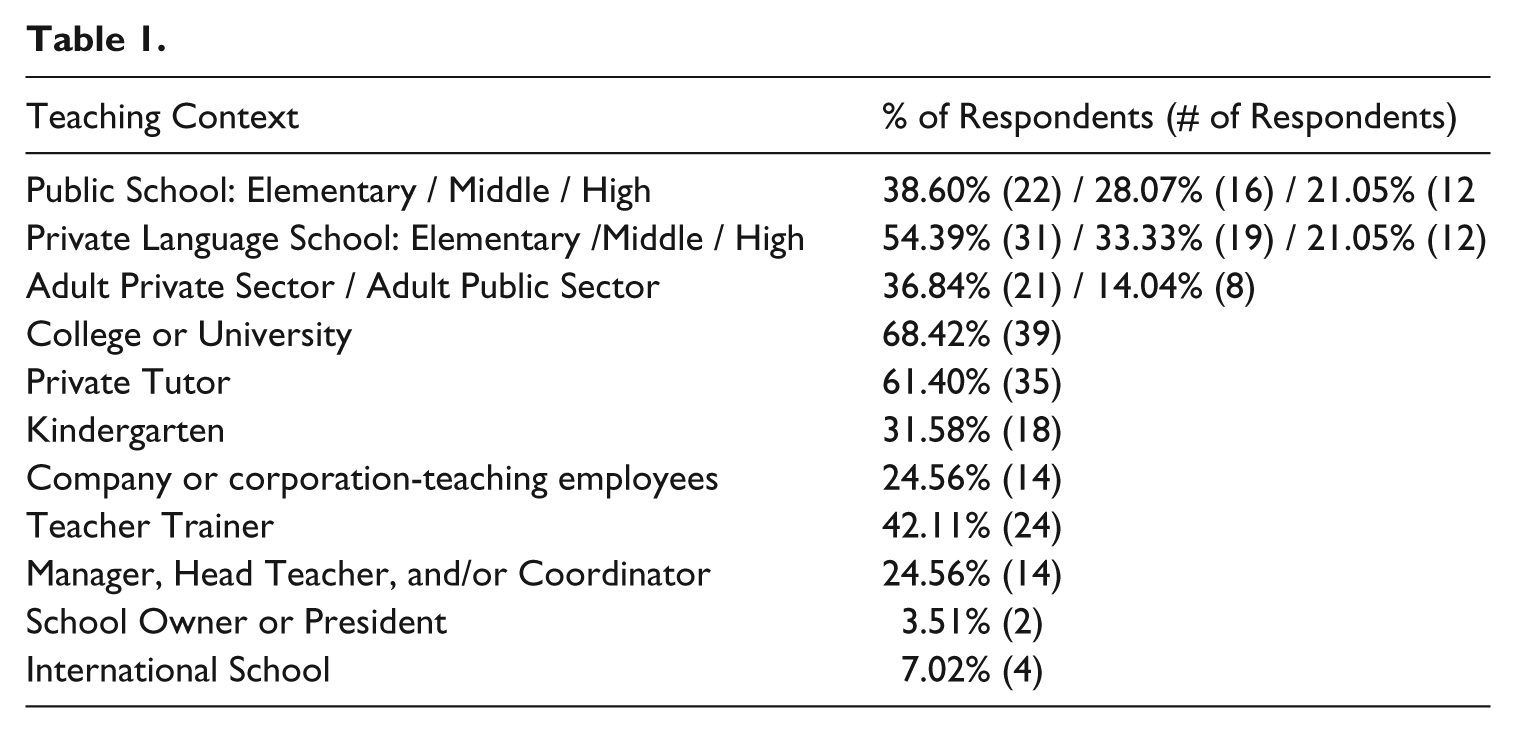
Nearly 2/3 (65.46%) of respondents have completed a Master’s degree or higher (3.64% have earned a PhD). The remaining 34.55% have completed at least a Bachelor’s degree. While the respondents have a wide range of international teaching experience, the vast majority (87.27%) have taught in South Korea. Approximately 35% reported having worked in China and 20% reported work experience in Japan.
Data Collection
Data was gathered through an anonymous online survey hosted by surveymonkey.com. Voluntary participants were recruited utilizing online social media platforms (particularly Facebook groups dedicated to ELT in East Asia). To ensure survey takers fully understood the study they were participating in, written details of the study were provided prior to taking the survey. Participants were also assured that the information collected would remain completely anonymous.
The following open-ended questions were utilized in the survey in order to capture a range of possible answers (Dörnyei, 2003: 47) and descriptive accounts of participants’ thoughts.
Q1) List 10 words (or short phrases) you think describe a good EFL teacher. Please write the words that first come to mind. They do not need to be ranked, any order will do.
Q2) Describe a lesson that you taught recently in which you think you showed excellent leadership.
The first specific open-question (see Dörnyei, 2003: 48) attempts to encapsulate the qualities that respondents associate with good practices in language teaching; it intentionally omits the word leadership so as not to influence respondents towards characteristics more associated with management-type duties (i.e. scheduling, bookkeeping, etc) than teaching. The goal was to capture the technical, emotional, intellectual, interpersonal, and philosophical dimensions of good teaching, as seen by teachers, in order to investigate how these concepts coincide with the principles of AL. The second short-answer question (see Dörnyei, 2003: 48) is meant to obtain a description of leadership within a lesson in order to evince teachers’ views regarding the nature of leadership embedded in the classroom context.
Data Analysis
Data analysis followed constant comparative analysis procedures (Charmaz, 2014; Tracy, 2013) where codes and data were under constant review allowing for ongoing modifications. The coding process started with data immersion, where the entire breadth of the data was explored through a detailed reading, analysis, re-reading, and re-analysis process. Primary-cycle coding, outlined by Tracy (2013), followed standard procedures where qualitative responses were first closely examined and compared for similarities and differences and then grouped into general categories for further analysis (Gibson and Brown, 2009). Secondary cycle coding began to organize the data into emergent themes which involved the critical examination of the preliminary codes while organizing, categorizing, and synthesizing them into interpretive concepts (Tracy, 2013). An additional level of coding was then performed in order to sort the secondary codes into the authentic leadership categorical framework of self-awareness, relational transparency, balanced processing, and moral perspective.
Results
The categories presented in Graph 1 are the results of the first open-ended survey question (Q1). Responses are divided into the ‘Major Response Categories’ reported by respondents. Synonyms and thematically-like items were consolidated within the major categories. For example, ‘prepared’ was placed in the Organized category, ‘innovative’ with Creativity, and ‘energetic’ with Enthusastic (see Appendix 1). Numbers in the following graph are given in terms of the percentage of respondents who listed a word/phrase in that category.
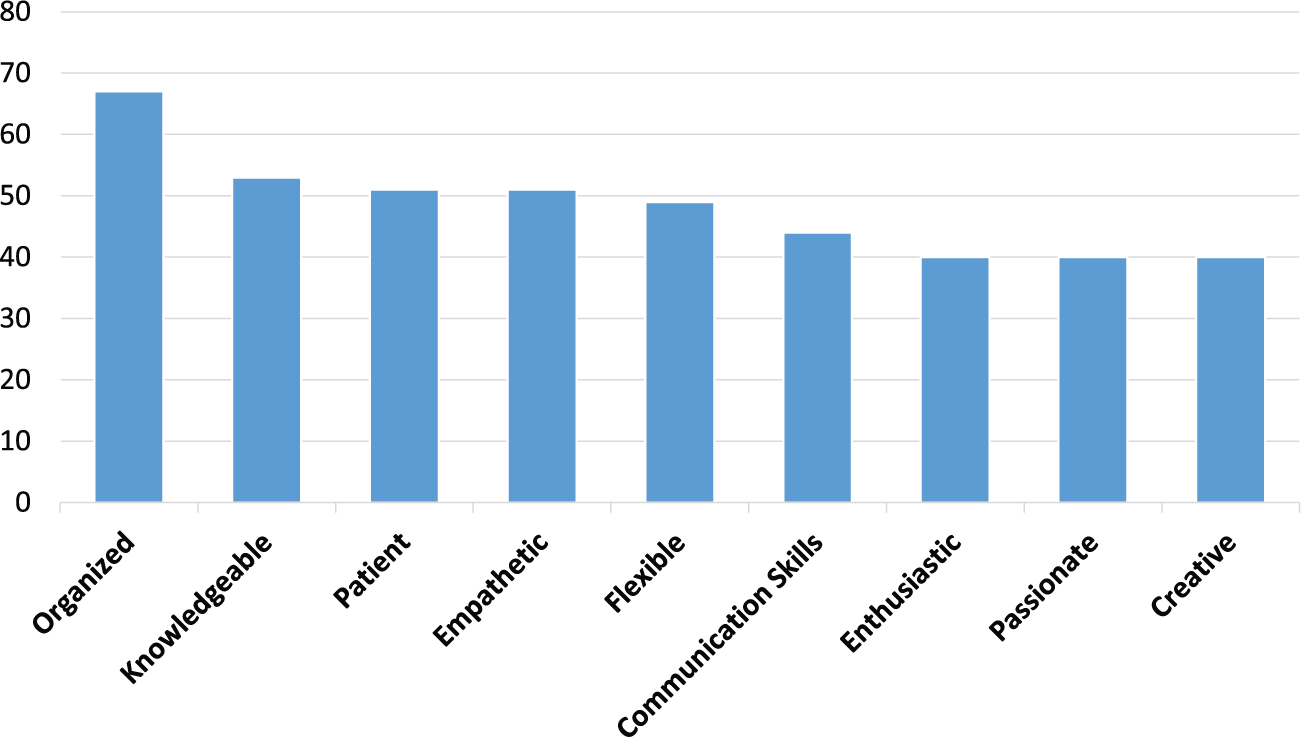
Major Response Categories of Good EFL Teacher Word List (% of Respondents).
The most popular response category was ‘organized’, which was mentioned by 67% of respondents. The next most frequent response was ‘knowledgeable’ (53%), followed by ‘patient and empathetic’ (51%); ‘flexible’ (49%); ‘good communication skills’ (44%); and ‘passionate, enthusiastic, and creative’ (40%). There were several other categories that possessed relatively fewer responses and there were numerous unique items. These are not included in the graph. The categories displayed here represent only the most frequent responses.
Data gleaned through Q2 of the survey uncovered 10 responses that failed to reference specific leadership qualities in terms of their classroom practice. These responses ranged from failing to consider themselves a leader in the classroom (‘I don’t consider myself a leader in the classroom. Thus, no such lesson exists in my mind’), to an assertion of not understanding what exemplifies leadership within a lesson (‘I don’t know what you mean by leadership in this context’), to responses that did not provide sufficient detail to determine how leadership was perceived (‘Indirect and direct questions’). These responses were coded under their own parent node of ‘undefined classroom leadership’ (see Appendix 2).
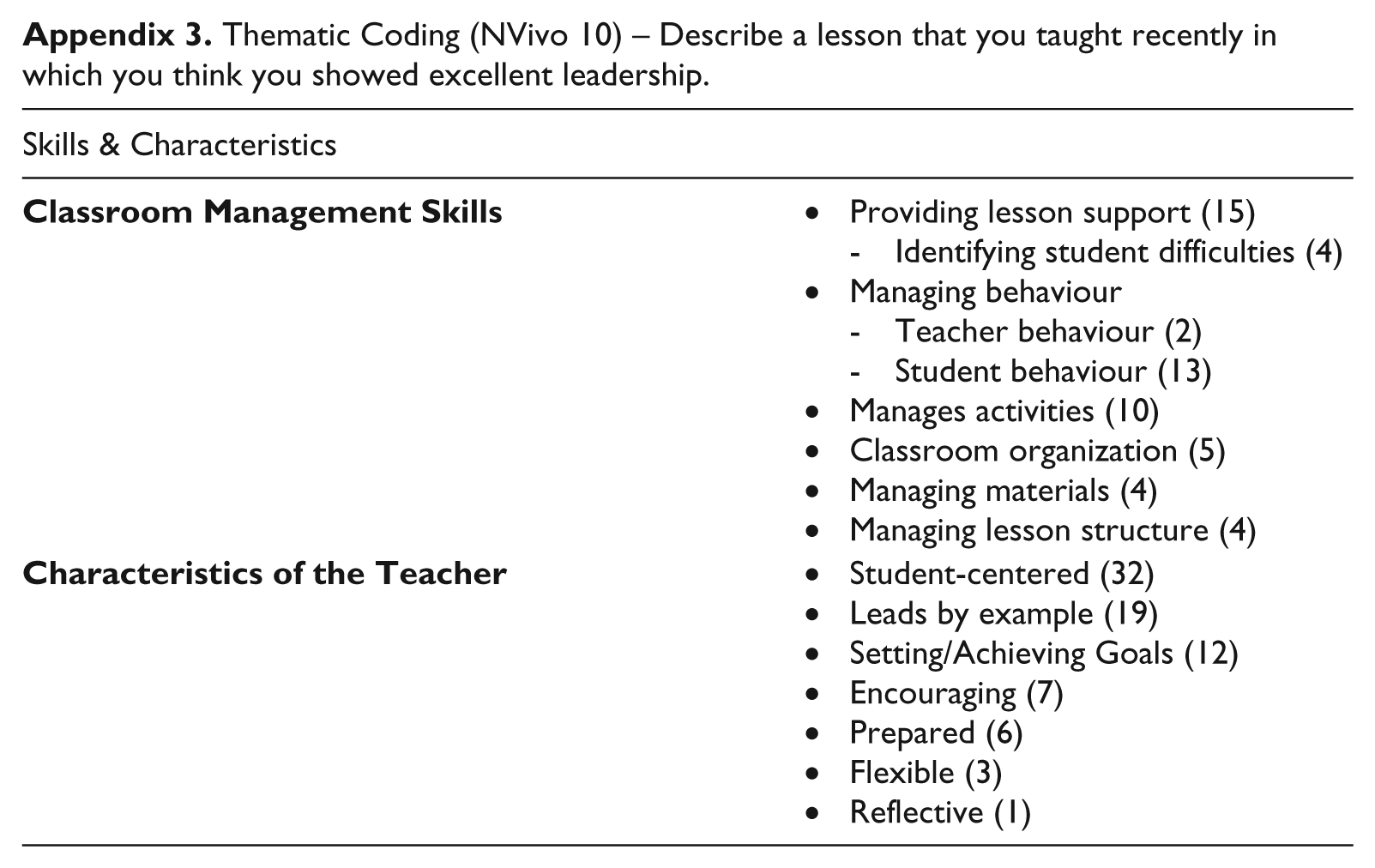
Graphs 2 and 3 represent the findings elicited from Q2 that related to classroom leadership (see Appendix 3). For this question the results are presented under thematic headings that provide a descriptive frame for the collected data. From the data analysis, two major themes emerged: Classroom Management Skills and Teacher Characteristics.
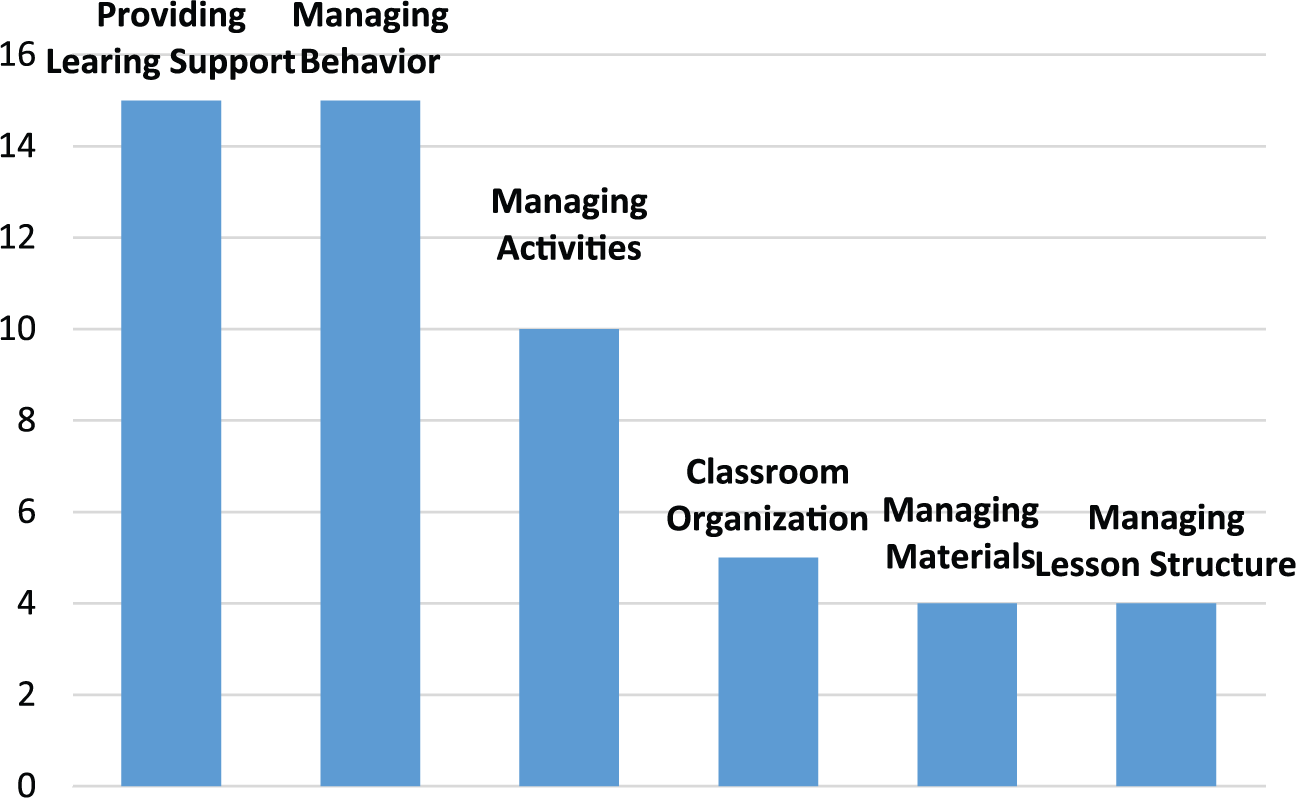
Responses Related to Classroom Management Skills.
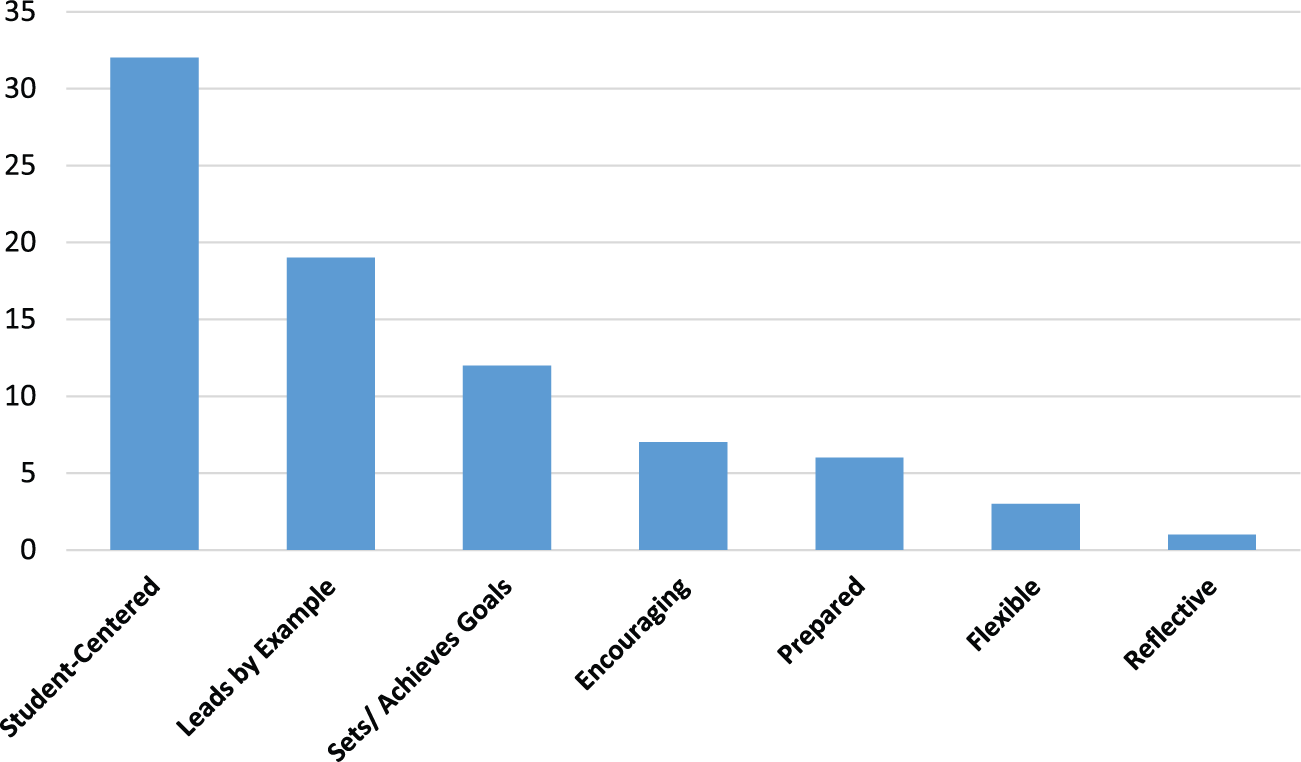
Responses Related to Teacher Characteristics.
Classroom management skills refer to classroom specific skills, techniques, and behaviour that enable the teacher to lead the class by creating and maintaining a positive learning environment. Teacher characteristics relate to the specific traits and habits of a teacher that exemplify leadership and positively contribute to the language learning environment.
A total of 53 references were related to specific classroom management skills that included 15 responses for providing learning support, 15 responses for managing behaviour in the classroom, 10 references to managing activities, five references to managing the classroom setup and organization of the classroom, four references to managing lesson structure, and four references to managing classroom materials.
There were 63 references related to the specific characteristics of a teacher of which ‘Student-Centeredness’ was referenced 32 times. ‘Leading by Example’ was mentioned in 19 responses. The characteristics of setting and achieving goals was referenced 12 times with many (10) references referring to the importance of setting goals with clear expectations. The characteristic of being encouraging was referenced seven times, being prepared surfaced six times, being flexible three times, and being reflective was referenced once.
Discussion
The elicited data contained few responses that directly referenced the principles of authentic leadership or even leadership in general; however, leadership qualities were found to be implicitly embedded. This suggests that teachers’ direct cognitive awareness of leadership in the classroom may not currently be at the forefront of their thinking when it comes to the characteristics of a good teacher or good teaching. This lack of explicit referencing may be a result of language teacher education focussing primarily on providing a knowledge-base for teaching through a behaviourist view of what teachers do when teaching (Freeman and Johnson, 1998), rather than who they are as teachers or who they are teaching. While possessing a knowledge-base and teaching strategies are certainly beneficial, they do not direct teachers to the more humanizing aspects of leadership that will help them excite, inspire, and build relationships with their students.
Teachers, as leaders in the classroom, hold the potential to deeply affect the learning culture through the many qualities acknowledged by the respondents in this study, qualities integral to authentic leadership.
In the case of self-awareness, multiple references to classroom management indicates a general need for understanding and awareness of a teacher’s classroom actions and how those actions impact the students. Additional reference to teacher characteristics such as being student-centred, setting goals, achieving goals, encouraging learners, being prepared, being flexible, and being reflective all point to the need of understanding the positive characteristics of a teacher that support a positive learning environment. The data suggests a need for teachers to be cognitively aware of their own practices and characteristics that enhance learning as well as inhibit it. In the AL framework this would align with knowing one’s strengths and weaknesses. By having teachers engage in the continuing process of self-reflection and self-evaluation, increased awareness of how their thoughts, decisions, and way of being affects learners and learner outcomes can be fostered.
In the case of relational transparency, characteristics such as being empathetic, patient, and having good communications skills are qualities that promote trust and rapport between the teacher and students. This can create greater comfort in the classroom, breaking down cultural and language barriers that may inhibit learning. Empathy and communication skills also invite an open line of communication not only between a teacher and students but also between a teacher and their co-teachers, administrators, and parents. This open line of communication can serve as a form of on-the-job ‘action-research’ that can help novice teachers gain insights into their teaching context, develop relevant and appropriate practices, and improve confidence in their teaching.
A great deal of the elicited data referenced qualities of student-centeredness and catering to students’ needs. This directly aligns with the core concept of balanced processing and the importance of negotiating between what the teacher wants and what the learners want. By taking into account the perspectives of learners, teachers can target specific learning goals, develop tailored lessons and methods, and make learners part of the learning process. This can lead to greater satisfaction between teacher and students as they are working together towards common objectives. By extending a teachers’ openness and awareness to the viewpoints of additional stakeholders (i.e. co-teachers, administrators, and parents), cross-cultural misunderstandings and other communicative breakdowns can also be mitigated.
In the data, many respondents referenced the importance of being a good role-model and leading by example in the classroom while managing students’ behaviour to align with the teachers’ classroom principles. Teachers have the difficult job of being a role-model in a variety of aspects. For classroom consistency as well as management, it is important for a teacher to set clear classroom rules, expectations, and standards; however, it is even more important that they themselves set a positive example in their classroom. EFL teachers are not only models for classroom behaviour but also for how students should treat others that are different. That teachers intuitively recognize this is evident in the large number of responses referencing patience and empathy (51% each). Many teachers acknowledged that being ‘tolerant’, ‘patient’, and ‘thinking of students’ minds’ as well as ‘attending to their moods’ are important elements of understanding them as individuals and relating to their difficulties. Additionally, teachers are also role-models of the EFL teaching profession itself. They must do their job demonstrating positive values, moral integrity, and high-ethical standards. Again, this is shown through the many attributions to knowledge and organization, but also by the sizable number of references to passion, enthusiasm, and creativity (40% each) and their concern for being ‘student-centred’, ‘leading by example’, and ‘setting and achieving goals’.
Increasingly the emphasis in teacher education has begun to shift from the transmission of knowledge to a greater consciousness of one’s own knowledge (Korthagen, 2003). This focus turns the act of learning to teach into an emergent process of engagement rather than a state of knowing, which in turn inspires teachers to reflect and embark on a continual journey of development. Indeed, this state of transition can be seen in the responses, which reflects both the teachers’ need to be seen as language teaching professionals in possession of the traditional knowledge and skills of a teacher (Coldron and Smith, 1999) combined with an understanding that ‘self-knowledge, capacity, and sensitivity’ are essential requirements for all leaders in a school (Begley, 2006: 573).
Implications
As the data has suggested, the idea of leadership is vague and difficult to define when it comes to the ELT classroom. The model of Authentic Leadership would lend itself well to the field as it already aligns with much of the existing literature in regards to positive teaching characteristics and practices, and it fits the current transition towards accounting for the web of social constructs embedded in teaching (Johnson, 1999). Explicitly incorporating the principles of AL in teacher-education programmes will foster more direct cognitive awareness and reflection of leadership skills in classroom practice.
Furthermore, applying the characteristics of AL will help teachers better manage the unique challenges of being an EFL teacher, challenges that most language teacher education programmes do not address. Thus, complementing degree and certificate programmes with an unambiguous focus on how to be an effective and authentic leader in the classroom will ready teachers for the real-life challenges of on-the-job professional development, adapting to local organization and cultural customs, and better handling communication difficulties. Ultimately, such guidance could enrich teachers’ experiences and enhance the status of the profession.
Limitations
As this was a preliminary exploratory study, the researchers aimed to evaluate responses across the spectrum of language teachers working in East Asia in order to explore the perceptions of teacher leadership in the EFL context and examine how these perceptions may fit into the framework of authentic leadership. The scope of this study was rather limited and thus more work must be done to achieve greater generalizability. In order to examine the transferability and increase the generalizability of this study’s findings, future research should analyse how language teachers working in their local context perceive leadership. A comparative analysis of how their views may differ or align with the findings of this study would be largely beneficial to broadening understanding of what role authentic leadership may play in language teacher education around the world. It would also be beneficial to compare and correlate students’ perceptions of their teachers’ authentic leadership with teachers’ self-evaluation, as has been the method for much of the AL research in other fields.
Conclusion
To positively affect their community of learning and be authentic classroom leaders, teachers must continuously reflect, be open and honest but conscious of how they communicate their feelings, wholeheartedly consider students’ needs, and act in a manner that is both principled and respectful. Such leadership skills require an ongoing effort that utilizes both teaching knowledge and the capacity to engage and motivate learners by understanding their needs, their culture, and their individual characteristics. Unfortunately, teacher training programmes tend to minimize these capacities in favour of content and pedagogical knowledge (Freeman and Johnson, 1998), but learning is as dependent on the relationship between the teacher and students and the learning environment as it is on a teacher’s knowledge-base, arguably more so. A model for teacher-leadership built upon the principles of AL will provide teachers with a frame to better understand and apply their knowledge, experiences, and passion for teaching.
Further research on how leadership may be perceived in various teaching contexts is needed because the concept of leadership currently lacks a comprehensive conceptual framework or common foundation, making analysis and measurement difficult (York-Barr and Duke, 2004). However, in attempting to craft a more definitive framework, it is important that it does not become overly prescriptive. Rather, teacher-leadership, particularly in ELT, must be perceived through a lens that enables teachers to account for important socio-cultural variables while being dedicated to enhancing the knowledge, skills, and lives of their learners.
Footnotes
Appendices
Thematic Coding (NVivo 10) – Describe a lesson that you taught recently in which you think you showed excellent leadership.
| Skills & Characteristics | |
|---|---|
|
|
Providing lesson support (15)
- Identifying student difficulties (4) Managing behaviour
- Teacher behaviour (2) - Student behaviour (13) Manages activities (10) Classroom organization (5) Managing materials (4) Managing lesson structure (4) |
|
|
Student-centered (32) Leads by example (19) Setting/Achieving Goals (12) Encouraging (7) Prepared (6) Flexible (3) Reflective (1) |
Funding
This research received no specific grant from any funding agency in the public, commercial, or not-for-profit sectors.