




Abstract
With the globalization of the English language, Global Englishes (GE) is a growing research paradigm with numerous pedagogical implications for those learning and teaching English. The study reported here provides insights on pre- and in-service Teaching English to Speakers of Other Languages (TESOL) practitioners’ perceptions of Global Englishes Language Teaching (GELT) (Galloway & Rose, 2015; Rose & Galloway, 2019), which aims to make TESOL classrooms more reflective of learners’ needs in today’s globalized world, where multilingualism is the norm and English functions as a lingua franca. Interviews (n=5) with those taking a GE course on an MSc TESOL programme at a Russell Group university in the UK were triangulated with a survey among the wider programme (n=66). The study reveals that curriculum innovation is complex, particularly when it requires a conceptual transition, and practitioners need time and support to implement change. Furthermore, it was clarified that GE has made little headway into ‘traditional’ TESOL classrooms, which remains biased towards ‘native’ English norms.
Keywords
Introduction
English came from England – at first glance, this is a simple concept, but these four words have been chosen very carefully. The past tense ‘came’ could not be converted into the present tense ‘comes’ because the ‘English’ in this sentence refers to something that is long gone. In the seventeenth-century, it is estimated there were 5 to 7 million English speakers (Jenkins, 2015); now there could be as many as 2 billion (Jenkins, 2015; Galloway & Rose, 2015). Kachru’s (1992) Three Circle Model depicting the global diversity of English, lists only the USA, UK, Canada, Australia and New Zealand as the ‘inner circle’ of English users. The estimated, combined population of these five countries currently falls far below 500 million (United Nations, 2016), suggesting that the vast majority of English users are located within the ‘outer circle’ and ‘expanding circle’ (Kachru, 1992). English is no longer used exclusively among native English speakers or in native English speaking settings. As such, it seems increasingly irrelevant for those learning the language to be exposed to a monolingual native model in the classroom, which, in turn, creates numerous implications for teacher education. The Three Circle Model (Kachru, 1992) is now a generation old and has been criticized for being more focussed on geography and history than linguistic realities (Jenkins, 2015), yet it does demonstrate the effects of the three initial ‘channels’ through which English spread globally (Galloway & Rose, 2015: 9): colonization, slavery, and trade. Beyond its historical, colonial spread, English has expanded, and continues to do so via the ‘fourth channel’ (Galloway & Rose, 2015: 11); the globalization of business, academia, politics, and culture requires access to a shared language, and English has ‘become this common language on a global scale’ (Seidlhofer, 2011: 393). Today English is a commodity, valued internationally like gold or oil; such demand requires practitioners, materials, and guidelines for implementation.
The norm is now multilingualism, not monolingualism, and the needs of English language learners, and pre- and in-service Teaching English to Speakers of Other Languages (TESOL) practitioners, have changed. Global Englishes research showcases these changing needs, and as the pedagogical implications for English language classrooms become clearer, so will the implications for practitioner education.
Responding to the Globalization of English
‘Global Englishes’ (GE) is an umbrella term that includes work in the fields of World Englishes (WE), English as a Lingua Franca (ELF), English as an International Language (EIL), and translanguaging (Galloway & Rose, 2015; Rose & Galloway, 2019). These fields of research may have different focusses, but they share a desire to understand the linguistic realities of worldwide English use. Researchers who position their work in these fields also discuss the need for English language classrooms to be more reflective of how the language functions as a worldwide lingua franca in multilingual contexts today.
Global Englishes Language Teaching (GELT) (Galloway & Rose, 2015; Rose & Galloway, 2019) seeks to provide a framework for English language classrooms to evolve into something more reflective of modern linguistic realities, with a specific focus on six main proposals for the English language classroom that aim to increase WE and ELF exposure, emphasize respect for multilingualism and raising awareness of GE and ELF strategies in TESOL curricula, as well as emphasize respect for diverse cultures and identities and change English teacher hiring practices (Galloway & Rose, 2015).
The first proposal centres on the statistical fact that, if the majority of English users are ‘non-native’, then those learning the language should be exposed to something more than merely what is spoken by a minority of ‘native’ speakers. The second centres on the need to raise learners’ awareness that English is used in multilingual contexts, as a lingua franca between speakers from diverse lingua-cultural backgrounds who draw on their entire linguistic repertoire to negotiate successful communication. This may be a noble concept, but as long as English remains in a ‘special position…[of] political/economic power’ (Galloway & Rose, 2015: 13; see also Rose & Galloway, 2019), it may be unrealistic to expect policy makers to value local dialects equally to a language that holds inherent, global influence. Proposals three and five call for English learners to become more conscious of GE research, and critical of how ‘standard’ English is represented in their classrooms and beyond. Given the increase in English as a Medium of Instruction (EMI), both in higher education and school contexts, ‘Global Englishes-related subject matter can become the object of learning itself’, though ‘materials are scarce’ at present (Galloway & Rose, 2015: 216; see also Rose & Galloway, 2019). The fourth proposal suggests that the ability to negotiate meaning successfully in ELF interactions is more relevant today than displaying unwavering grammatical accuracy or sounding like a ‘native’ speaker. Possibly the biggest obstacle standing in the way of shifting classroom focus in this manner is the ‘very powerful’ presence of English examinations (Jenkins, 2015: 225), and their backwash effect on the classroom. The final proposal is for teachers to be hired solely for their qualifications and experience, and that Native English Speaking Teachers (NESTs) should not be prioritized over Non-Native English Speaking Teachers (NNESTs). However, as long as ‘standard’ English is valued above all else, the ‘native’ speaker will remain English’s pin-up.
When putting forward calls for change, Galloway & Rose (2015) identified several barriers hindering pedagogical change: a lack of materials language assessment teacher education attachment to ‘standard’ English; and teacher recruitment practices.
The inadequacy of GE materials may be related to ‘standard’ English norms pervading TESOL publishing houses, but it may also be related to the fact that GE research has yet to adequately discern what these materials should contain. Galloway & Rose (2015) proposed a framework to help TESOL practitioners adopt and develop materials that reflect the growing use of ELF, and to encourage coursebook writers to incorporate a GE perspective into their materials. With regard to the second barrier, current English examinations face criticism for using the ‘native’ English speaker as a benchmark of proficiency, creating a ‘negative impact…on language education’ (Sarich, 2012: 26). For example, the International English Language Testing System (IELTS), which calls itself ‘the most popular English language test for higher education and global migration’, states in its speaking test rubric that the highest scores are reserved for those with speech ‘characteristic of native speaker speech’ and whose first language ‘accent has minimal effect on intelligibility’ (http://takeielts.britishcouncil.org). However, examinations cannot simply reject ‘standard’ English norms, as any language test needs a coherent linguistic model to gauge aptitude against (Davies, 2009), and, as yet, clear enough parameters do not exist for testing GE competence. Barriers three and five relate to how the idolization of the ‘native’ speaker influences the manner in which English teachers are trained and employed. These barriers, along with the first two, are only compounded by the fourth barrier: the devotion to ‘standard’ English. While neither ‘standard’ English nor the ‘native’ speaker are concretely definable, their shadows loom large over TESOL. Whatever definitions these concepts do have are determined almost solely by attitudes: attitudes of learners, teachers, politicians, scholars and more.
Stakeholders’ Attitudes towards Global Englishes and TESOL
Research into the attitudes of key stakeholders can reveal important information about suggested curriculum innovation, determine both its implementation and success, and signpost when change is on the horizon as ‘attitude’ is not an abstract piece of jargon, but a term that is understandable to all involved. Teachers play a crucial role in shaping students’ attitudes, and a teacher’s training plays a crucial role in shaping their own attitudes. Given the dominance of English as the world’s global language, there have been several studies concerning English language attitudes (for an overview see Galloway & Rose, 2015; Rose & Galloway, 2019). Many have focussed on learners, and commonly confirm the high prestige attributed to ‘native’ English in contexts as varied as Greece (Prodromou, 1992), Austria (Ladegaard and Sachdev, 2006), Hong Kong (Zhang, 2013), and Iran (Rezaei et al., 2014). To discover how entrenched the bias towards ‘native’ English is in Japan, Rose & Galloway (2017) took action research into classrooms to discover if raising the awareness of GE could alter the attitudes of Japanese university students. Participants were asked to critically assess Singapore’s Speak Good English Movement (a governmental drive to prioritize ‘standard’ English over the regional variation, ‘Singlish’). Debate reflections showed that the majority were against the movement; although commenting on another context from afar does not necessarily reflect how participants feel about their own context.
Others have focussed on the attitudes of English practitioners. Lai’s focus group with five Taiwanese teachers of English found views to be ‘contradictory’ (2008: 44); they desired to focus on fluency but actually prioritized accent. Similarly, Decke-Cornhill’s group interviews with six German teachers of English highlighted desires to ‘open up [students’] minds’ to ELF (2003: 253), but with obligations to teach ‘proper English’ (2003: 261). Both studies, however, were small-scale. Sifakis and Sougari’s survey with 421 Greek teachers of English found 95% thought ‘sounding native-like’ was important for students (2005: 477). Contrary to this, 67.6% of the 253 English teachers in Switzerland in Murray’s (2003) survey wanted more respect for ‘non-native’ English and 61.3% wanted more ‘non-native’ English in textbooks. Murray (2003) also found support for ‘non-native’ English was actually stronger among NESTs than NNESTs. Both of these studies used standalone surveys, however, and did not investigate the origins of these attitudes, which is crucial to understanding the feasibility of curriculum innovation. He and Li (2009) used interviews, a survey, and a Matched-Guise Technique (MGT) (where participants listen and comment on a single person imitating different accents) to target 189 Chinese teachers and 795 Chinese learners of English. The results showed 81.9% of all participants wanted to sound native-like. Yet, beyond this, 87.3% were dissatisfied with the current TESOL system; 62.6% wanted aspects of ‘China English’ to be incorporated into TESOL, although only 26.6% believed TESOL could change. While this study reveals important insights with the use of multiple methods, MGT studies are problematic as it is unreasonable to expect any single speaker could authentically imitate multiple linguistic varieties.
As Blair suggests, ‘ELF users and their teachers can be both barriers to and agents of change’ (2015: 99). However, while attitude research among students and teachers, such as the studies above, are invaluable to inform any paradigm shift towards GELT, more research is needed in directly examining the practicalities of GELT. The globalization of English creates different and complicated pedagogical implications for all involved in English education. With teachers being the vanguard of how education is actually delivered, perhaps it is the educators themselves who face the most complicated of these implications. Teacher education is a key factor to ensure successful and sustained curriculum innovation and remains central to discussions on the need for change in ELT in relation to ELF (see Dewey and Patsko, 2017). For the discussion to move forward, there is a need for explicit investigation into which of the specific GE proposals teachers believe could influence modern language classrooms, and exactly which barriers are impeding pedagogical evolution.
The Current Study
The study aimed to investigate how pre- and in-service TESOL practitioners feel about the GELT proposals put forward at the theoretical level in relation to their own learning and teaching contexts. Specifically, which, if any, of the GELT proposals were considered viable, and what insights they have regarding barriers to instigating a paradigm shift towards GELT. To fulfil these objectives, the following research questions guided the study:
1) What aspects of GELT do pre- and in-service TESOL practitioners’ believe could be introduced into English language classrooms today?
2) What do pre- and in-service TESOL practitioners’ perceive as the current barriers to implementing GELT into classrooms?
This project used a mixed methods approach to triangulate data. Interviews (n= 5) were chosen as the initial instrument in order to gain qualitative insights into various teaching contexts. These were followed up with questionnaires (n= 66) to quantifiably discover if the interview findings were generalizable. All data gathering instruments were original and created specifically for this study, which was conducted in 2016 at a Russell Group university involving students on one of the UK’s largest MSc TESOL programmes (Higher Education Statistics Agency, personal communication).
Purposive sampling targeted five interviewees who participated in the 2016 Global Englishes for Language Teaching elective course (Nicola Galloway was the course director: for the course overview see Galloway & Rose, 2015). Part of this course included exploration of Galloway & Rose’s (2015) proposals and barriers and encouraged critical reflection on key pedagogical theories and methods in light of the global spread of English. The semi-structured interviews began with questions designed to clarify the presence, or lack, of GE in the interviewees’ home context, followed by discussion of Galloway & Rose’s (2015) GELT proposals and barriers to change. Following Kvale’s (2008) seven stages, the interviews were conducted with participants from mainland China, Hong Kong, Indonesia, Japan, and South Korea. The Asian leaning was an unavoidable reflection of the demographics of the GE course (26 out of 28 students were Asian), and the overall MSc TESOL programme (157 out of 177). Furthermore, Asians constitute a large proportion of worldwide English users – China and India alone could account for 500 million (25%) of all English users (Kachru et al., 2009) – and, therefore, this leaning was not considered overly problematic. However, the decision was made to only select one representative from each national context to compare findings. Additionally, the GE course contained only two NESTs and two males, but one of each was included to represent different insights. A pilot interview was conducted first, which allowed the interview questions and structure to be fine-tuned.
Interview transcripts were analysed using the corpus analysis tool AntConc (version 3), and the qualitative data analysis software NVivo (version 11). Emergent themes formed the basis of the questionnaire that was distributed to the wider population as an online survey through a social networking site, and then analysed using SPSS (version 22). The questionnaire utilized Likert scales wherever possible to yield more nuanced data on participant attitudes. Questionnaire participants were selected by convenience sampling, with the only selection criteria being those who were not interviewed. Although convenience sampling raises issues with generalizability (Thomas, 2013), the entire population was not vast (n=177), and it is hoped that the strong return rate (n=66, 37.29%) alleviates this potential issue and increases the reliability of findings.
While every care was taken to maximize the robustness of the findings, there are some limitations. Interviewees were assured of their anonymity and encouraged to answer honestly, furthermore, the GE course had already concluded and final grades submitted prior to the interviews, yet data gathered in this manner is never immune to prestige bias. Secondly, questionnaires were administered via a social networking site for practicality, yet only 115 (64.97%) of the programme’s population were members; meaning 62 (35.03%) did not have an opportunity to respond. If there is any correlation between those who choose not to use social media and those with strong opinions on GE, these voices are not represented. Finally, as the data collected came from only one programme at one university, similar research at other institutions would be required to confirm external generalizability.
Findings
All interviewees reported, often in negative terms, that their educational contexts remain intertwined with ‘standard’ English. Charlotte (23) (a Chinese national with only a few months’ teaching experience) described ‘standard’ English’s hold on Chinese TESOL as ‘unwavering’. Julia (48) (a Japanese citizen with 20 years’ experience) defined her teaching context as a ‘battlefield’ where she could be replaced by a western teacher if she failed to prove herself. Ines (25) (who has two years’ teaching experience in her home country of Indonesia) said that, while her government allots time for teaching local languages, schools typically use this time to teach English instead. Karen (31) (a British citizen who taught for three years in South Korea) spoke of the perceived prestige of ‘native’ English, and how she, as a NEST, was hired in the hope that students would obtain her ‘level of English’. Of the five interviewees, only Howard (23) (who taught for a year in his native Hong Kong) discussed anything resembling a departure from the ‘native’ speaker model of TESOL; he mentioned that speaking test guidelines which reserved the highest scores for those without a Chinese accent were recently removed. Although, when asked if he considered this a major change, he committed to only, ‘there is still a long way to go’. The questionnaire respondents upheld these findings, with the vast majority reporting that teachers (88.52%), textbooks (86.88%), and testing (85.24%) focussed on ‘native’ English.
The Impact of Global Englishes Awareness-Raising
Of the interviewees, only Julia knew about GE before beginning her MSc TESOL. However, during the interviews, all participants demonstrated a strong understanding of GE and a desire to see it influence TESOL, supporting the proposal of the need to raise GE awareness amongst learners and teachers (Galloway & Rose, 2015). There was also a juxtaposition between the negative language describing the current realities of their educational contexts and the positive language used to describe GELT’s possibilities. Karen summed up the consensus feeling with her succinct and clear comment, ‘a change is needed’, and all interviewees hoped GELT could be that change. Table 1 shows what survey respondents look for in an English teacher (in the form of a non-restricted Likert scale), divided into three sub-groups: 1) those who took the GE course (n=11); 2) those who did not take the course but had pre-existing GE knowledge (n=12); 3) those with no prior GE knowledge and who did not take the course (n=43).
Preferences for English Teacher Attributes.

Overall, the presence or lack of GE awareness made little impact over teacher preferences. The results show that the GE students actually valued both experience (mean = 3.55) and qualifications (mean = 3.45) less than the group with prior GE knowledge (4.08 and 3.75) and the group without (4.00 and 4.07). However, when asked whether GELT could ever become the standard for English education, GE instruction was influential (table 2). Respondents were generally ‘not sure’ if GE can become the standard for TESOL. Yet, the GE students answered ‘yes’ almost three times as frequently as the other sub-groups; although, possibly due to the small samples of subgroups, these results fall just outside of statistical significance (Analysis of variance, p=.086).
Belief in Change.

Belief in Change (Analysis of Variance).
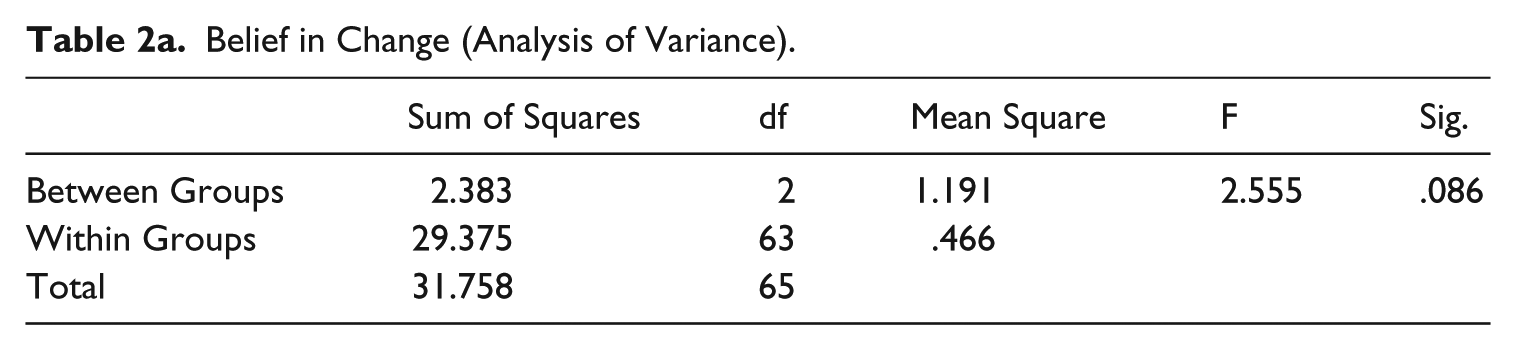
In summary, while those taking the course did not show clear-cut support for every GE proposal (table 1), findings do indicate that explicit GE instruction could increase belief in change (table 2).
The Possibilities of Global Englishes Exposure
The notion of increasing GE exposure in the classroom was something that all interviewees felt could initiate changes throughout their countries’ TESOL practices, but that doing this when students are young is important. In a prototypical response, Charlotte talked about the many ‘foreign people with different culture backgrounds’ already living in China and beyond, and thought that exposure to this ‘inevitable trend’ could only benefit students. In support of these interview findings, 66.67% of survey respondents felt that English students should be exposed to a mixture of ‘native’ and ‘non-native’ Englishes, and only 1.52% wanted only native-like English in the classroom. This indicates that, while native Englishes are valued, the participants of this study do want more balance of Englishes in classrooms.
The Greatest Barriers to Change
Each interviewee declared that they wanted GE to influence the TESOL curriculum in their respective contexts, but when asked whether this was a realistic aim, the most optimistic answer came from Howard who suggested that change may occur in the ‘very very long run’. Karen and Ines were more sceptical; with the former saying: ‘change does happen but…I’m not sure what that will be…because [Koreans] are quite fixed’, and the latter committing only to: ‘I won’t say it won’t happen’. Julia answered simply, ‘I don’t know’. Charlotte was the most pessimistic of the participants, responding, ‘I have no confidence of [change], actually’. Their doubts about curriculum reform fell mostly into three categories: 1) testing; 2) textbooks, and; 3) time.
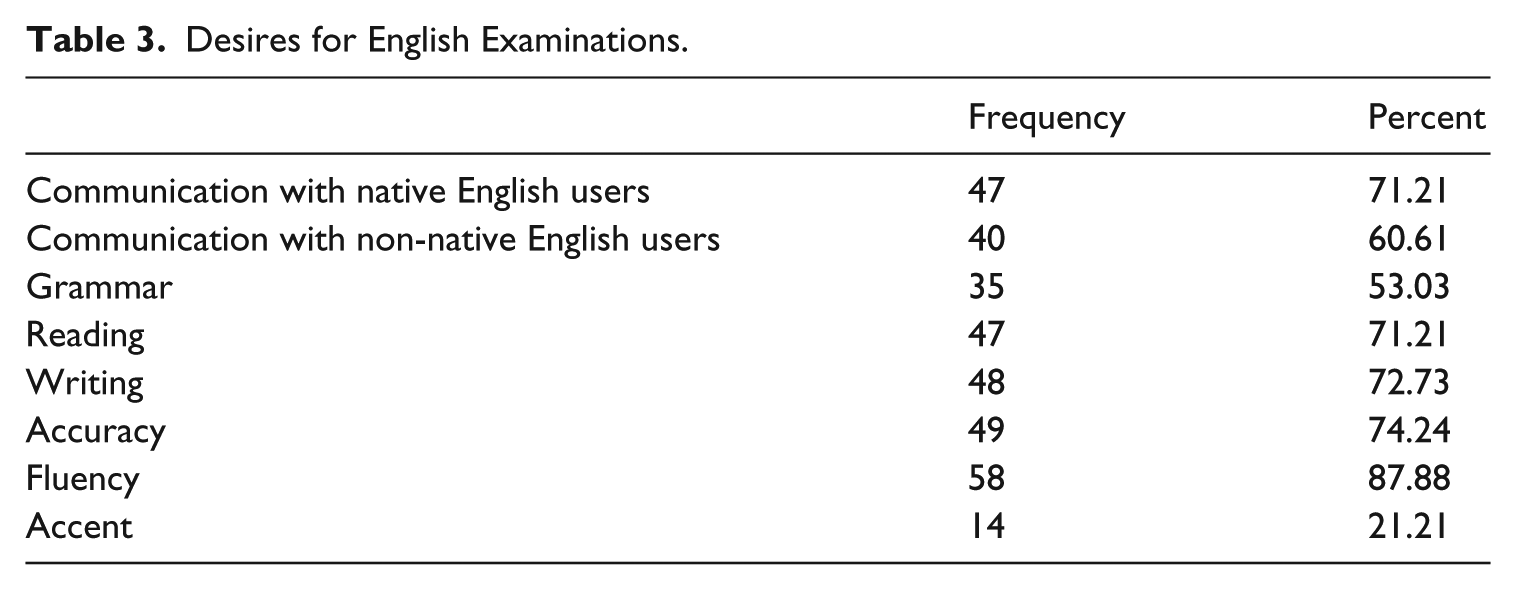
‘Testing’ was the most frequently raised topic across the five interviews (35 occurrences). Ines captured the feelings of the interviewees when she described English proficiency tests as ‘huge’ for securing scholarships, grades and employment. With regard to the survey participants, while it has been established that testing is still very much informed by ‘standard’ English, table 3 shows what contributors want English tests to examine. As previously noted from the interviews, Howard reported that teachers’ speaking tests in Hong Kong have abolished the ‘standard accent’ criteria; this policy shift would suit the majority of questionnaire respondents as only 21.21% wanted their accent to affect their grades. Furthermore, respondents preferred ‘fluency’ (87.88%) to be judged above ‘accuracy’ (74.24%), and for examinations to feature ‘non-native’ communication (60.61%). There is a clear divide between what respondents reported students are being tested on, and what they think they should be tested on; the very mismatch that GELT seeks to address.
Desires for English Examinations.
Testing also greatly influences another reported obstacle, the lack of classroom time for innovation. When asked how much class time is spent preparing for exams, Ines replied: ‘most’. Speaking about the feasibility of incorporating a GELT perspective into her classroom, Julia commented: ‘I don’t think we have enough time to do that’. Karen did not mention a lack of time as a barrier, but worried that, having been hired as a NEST, her employers might be unhappy if she did not teach entirely as a ‘representative’ of ‘standard’ English.
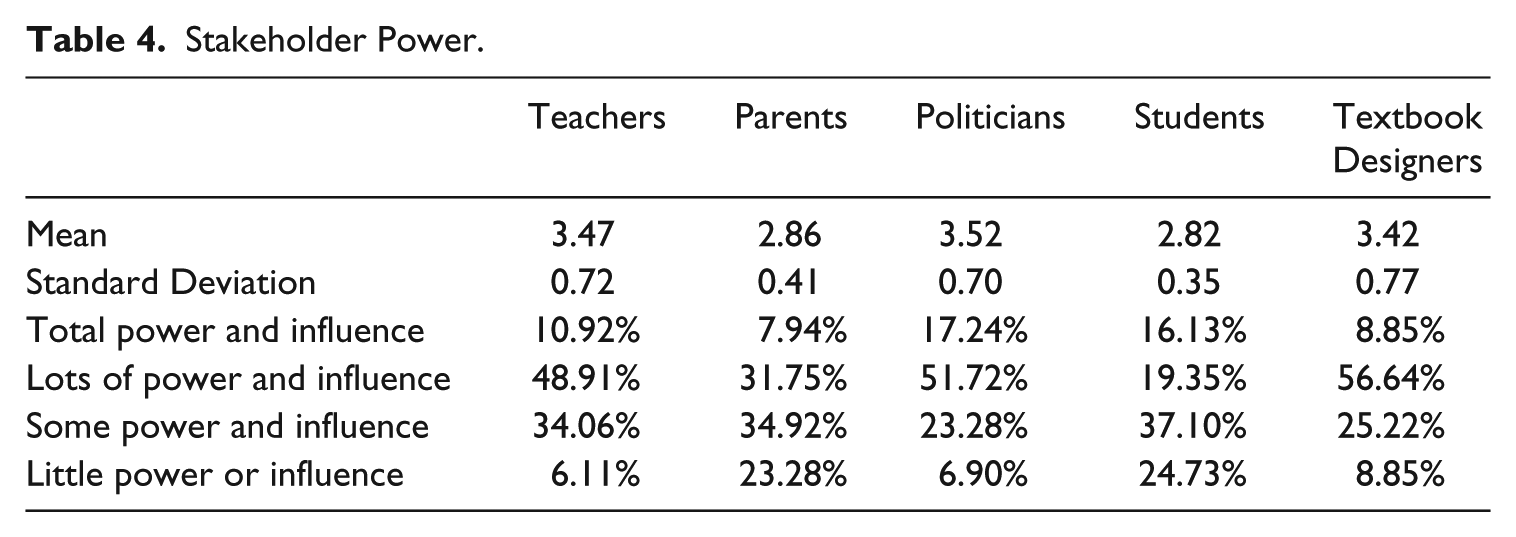
The lack of materials that reflect anything but ‘standard’ English was reported to be another major obstacle for the interviewees. Julia captured the interviewees’ sentiments with, ‘we need textbooks…textbooks are the prime source of the information’. The questionnaire participants concurred with the interviewees (table 4); 56.64% of respondents attributed ‘lots of power’ to textbook designers, exceeding any other stakeholder.
Stakeholder Power.
Discussion
Interviewees unanimously reported that ‘standard’ English remains the focus for textbooks, tests and teachers in their TESOL contexts, and the majority of questionnaire respondents concurred. If teachers are spending a large portion of their classroom time preparing students for tests, then they do not have the time to focus on other things. Moreover, with only ‘standard’ English-biased textbooks, any instructor willing to teach something different, will have to spend extra time finding, or more likely, creating, these materials. These findings support previous studies which demonstrate the common TESOL bias towards British English (Ladegaard and Sachdev, 2006), American English (Rezaei et al., 2014), or both (Prodromou, 1992; Lai, 2008; Zhang, 2013). Garrett (2010) suggests that people’s attitudes towards language are shaped by the standardization of language, and these findings serve as warning signs that ‘standard’ English is close to washing away teachers’ and students’ respect for anything else.
The Scope for Change
Participants considered GE exposure to be the best approach for educating young learners. From a practical standpoint, young students are usually less burdened by testing. Additionally, it is at younger ages when learners are often the most susceptible to stereotypes; instead, this could be an ideal time to engender a sense of parity between the international uses of English. These findings concur with those of Murray (2003) but contradict those of Sifakis and Sougari (2005). It should be noted that, while many participants were experienced teachers (34.84% had taught for at least one year), the majority were not. While the opinions of these contributors should not be marginalized, such opinions may change once they become in-service teachers. It should be equally noted that a decade has elapsed between both Murray’s (2003) and Sifakis and Sougari’s (2005) articles and the current study. It could be argued that GE has become more influential and meaningful during this time, though, more contemporary studies, such as Zhang (2013) and Rezaei et al. (2014) found that English learners in Hong Kong and Iran, respectively, considered ‘standard’ English to have more prestige than local Englishes. However, the studies by Zhang (2013) and Rezaei et al. (2014) focussed on learners rather than teachers, and their findings may be attributed to their participants having a lower awareness of GE. Indeed, raising awareness emerged as another potentially impactful GE proposal. All the interviewees chose to take the GE course as part of their MSc TESOL, and, at the time of the interviews, they all expressed the desire to see the TESOL curriculum move away from ‘standard’ English; although they still retained doubts about this being realistic. This sentiment is echoed by Lai, who found Taiwanese English teachers to be split on whom English belonged to, with some calling it an ‘international language’ while others felt ‘that English still belongs to certain countries’ (Lai, 2008: 43). The study also supports the results of Rose & Galloway (2017), who reported that raising awareness of GE created a curiosity in their participants to discover more about it; although this study did not directly address if participants felt GE could meaningfully become a part of their own TESOL context. Overall, there are indications that having a higher awareness of GE can change opinions, although these opinions do not necessarily translate into classroom practices. Widdowson suggests that ‘the real challenge lies [in] how far teachers feel able to transform their awareness into effective classroom activities and so resolve for themselves the ambivalence of attitude’ (2015: 203). However, it may be difficult to propel GELT-related curriculum innovation in TESOL by raising only the awareness of teachers. More research is needed comparing the attitudes of different TESOL stakeholder groups before and after GE instruction to further gauge the impact of targeted awareness raising.
The Remaining Barriers
This project has confirmed that Galloway & Rose’s (2015) compilation of GE barriers remains in place. With regard to their fifth barrier, the interviewees reported that NESTs are given preference for employment over NNESTs, and the questionnaire respondents themselves indicated a slight preference for NESTS over NNESTS. Such inclinations for ‘native’ teachers are common (Kirkpatrick, 2007; Jenkins, 2015), yet, to the current study’s participants at least, this was not seen as a primary concern in their contexts. In fact, of all the interviewees, Karen, the only NEST interviewed, was the most concerned about such practices. Karen’s attitude matched the tone of the NESTs in Murray’s (2003) study, who felt more strongly than their NNEST colleagues that ‘non-native’ English should be given more respect. Moving to Galloway & Rose’s (2015) third barrier, the current research confirmed the bias towards ‘standard’ English teacher education practices. However, participants did not consider this a major obstacle to implementing GELT. The biggest obstacles were isolated as: 1) the lack of materials informed by anything but ‘standard’ English; 2) the importance of the ‘standard’ English-biased tests; and 3) the fact that these first two impediments leave little time to focus on anything else.
Viable teaching materials are needed if GELT is to become widely accepted. Resources are key for any teacher, especially inexperienced teachers (like the 65.15% of the current study’s participants who have little-to-no teaching experience) as they can find ‘security in following the set course book closely’ (Nation and Macalister, 2010: 160). Furthermore, textbooks and other materials are more than just teaching aids. They ‘carry hidden cultural values’ into the classroom (Kumaravadivelu, 2008: 186); this is troubling, as the current study found that participants are commonly exposed to materials which are either made by ‘native’ publishing houses, or are made by education ministries in collaboration with ‘native’ English-speaking academics. The dominance of ‘standard’ English-defined materials has been frequently reported as a barrier to incorporating a GE perspective in the TESOL curriculum (McGrath, 2013; Jenkins, 2015; Galloway & Rose, 2015), however the current research takes this one step further. It is not simply the textbooks themselves creating an obstacle, it is the fact that, in all the interviewee contexts, these textbooks must be sanctioned by the government (Chen [2006] reported the same situation in Taiwan). This indicates that educational authorities are either oblivious to the biased nature of the average ‘standard’ English textbook, or they tacitly, or even actively, endorse these representations. McGrath warns that the ‘vested interests of textbook writers, publishers and even governments…have an effect on the way in which textbooks are produced and marketed and ultimately on teaching and learning’ (2002: 9). The revenue created by producing classroom materials leaves educational ministries and publishing houses little incentive to alter the ‘standard’ English formula. For example, for the 2014/2015 financial year alone, Pearson PLC, a worldwide leader in producing educational materials, reported sales to non ‘inner circle’ countries of £1.14 billion (GBP) (Pearson PLC, 2015). Publishing houses are highly unlikely to change their production and distribution habits without pressure from governments, and, without appropriate materials to support them, it is unrealistic to expect inexperienced educators to teach anything beyond the norms already in place.
Testing and the almost unavoidable washback effect can plague any form of education, and it is evident that TESOL is no exception. Throughout the interviews, the topic repeatedly reverted to examinations. While it has been suggested that excessive testing can be detrimental in its own right (Taylor, 2005), it is what is being tested that compounds the negative effects (Canagarajah, 2013; Jenkins, 2015). The respondents in the current study expressed a disparity between what is being tested and what they want tested. Calls have been made for alterations to English assessment in order to ‘devise teaching and testing practices that are more responsive to the changing communicative contexts around us’ (Canagarajah, 2013: 10). Others have challenged the credibility of those suggesting such examination reforms as residing ‘outside the professional language testing field’ and therefore lacking understanding of assessment practicalities (Elder and Davies, 2006: 296). As to these practicalities, Davies has suggested that language skills cannot be assessed without ‘a description of the language’ first being concretely established (2009: 86). However, in his interview, Howard reported that the speaking tests for teachers in Hong Kong no longer assess accent. This is corroborated by the absence of criteria relating to ‘accent’ in the Hong Kong Education Bureau’s 2016 report on Language Proficiency Assessment for Teachers (Education Bureau, 2016), and the Hong Kong TESOL system has yet to collapse. Research is still required before the scope of English testing can widen beyond ‘standard’ English, but the current study found both a desire for examinations to have a broader focus, and an example of where this broader focus already exists.
Conclusion
English came from England, but now it comes from everywhere, from all around us. In almost any country in the world, English is spoken, written, heard, read, created, adapted, used and abused. Language is dynamic and exciting, and English may be the most dynamic and exciting language in human history, simply because it expresses more voices than any other language ever has. A dynamic exciting language deserves dynamic, exciting language education. However, if English instructors are to be expected to incorporate a GELT perspective in their TESOL curricula, they will need help. As it stands, GE materials and implementation guidance are scarce (Jenkins, 2015). This study indicates a willingness for change, but also a lack of confidence in change actually occurring. There have been calls for publishers to be bold enough to produce materials reflecting something other than the established order of English (McGrath, 2013), but it goes beyond just the materials’ designers. Without support from educational ministries, the textbooks, testing procedures, and general attitudes towards what constitutes ‘good English’ are never going to change, and neither will TESOL curricula as a whole. This study suggests that, through increasing GE exposure amongst learners and raising the GE awareness of all TESOL stakeholders, support for GELT-related curriculum innovation can grow, and, in time, perhaps support for change can become demand for change.
Footnotes
Funding
The author(s) received no financial support for the research, authorship, and/or publication of this article.