




Abstract

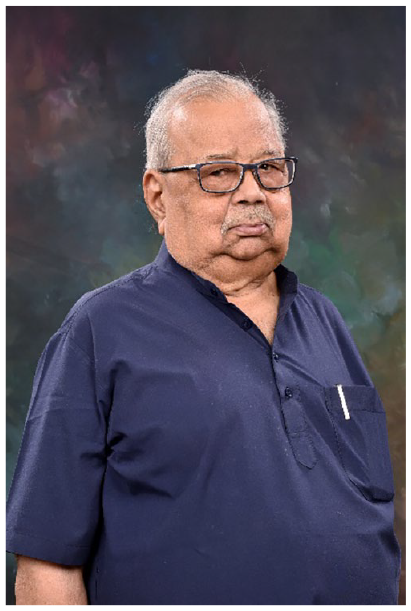
N.S. Prabhu (pictured) began his teaching career in Madras, India. He worked for many years as an English language specialist for the British Council in southern India, and in that time conducted a 5-year project of teaching English in state primary schools employing task-based activity. He later taught applied linguistics at the Department of English and Literature of the National University of Singapore (NUS). Prabhu retired from NUS as Professor of English in 1994. He now lives in India and gives talks at various conferences and seminars around the world.
Let me first explain the kind of thinking that led to the project and then talk about the form of teaching it led to.
We are all familiar with what looks like a gulf of difference between a child’s acquisition of the mother tongue and any subsequent attempt to acquire a second language: the former is always successful, effortless and, barring literate/formal uses, uniform in achievement for all learners. It is as natural and effortless as learning to walk. In striking contrast, attempts to learn a second language need a lot of effort, vary in success between learners (even between siblings) and rarely reach the level of first-language (L1) acquisition. The common conclusion is that the mother tongue interferes with subsequent acquisition of any other language or that second-language learning is a different mental process from mother-tongue learning.
There is, however, another fact to consider. When a child has parents who happen to have different mother-tongues, or the household has two generations which are comfortable in different languages, or when neighbouring households speak different languages and their children make friends and spend time together, a second language gets learnt as well, or nearly as well as the first. When instruction at school happens in a language different from the mother tongue, that language gets learnt in the process of learning the different subjects; and it gets learnt clearly better than if it is learnt separately as a language. When people emigrate to foreign lands, they learn the foreign language in the course of living there – not easily perhaps, but much more successfully than if they took a course of instruction for the purpose. These are all instances in which a second language gets learnt without being taught as such, and gets learnt a great deal better than when it is taught as a second language. And the level of success seems to increase as the need to understand things – or the attraction or desire for understanding things – increases. That indicates that a language is perhaps best acquired in the process of acquiring some knowledge or content which is encoded in it, such that getting to the content necessarily involves some perception or intake of the code involved.
That suggests the possibility that acquisition of the mother tongue itself happens in that way. The new-born child is faced with having to make sense of the bewilderingly new world it finds itself in, and does so in small steps continually over the first two or three years. It acquires the much-needed knowledge along with unconsciously sorting out the code, which is the mother tongue. The success of mother-tongue acquisition is unique because the experience of acquiring so much new knowledge, driven by a need or desire to survive or cope, is unique. Success in acquiring a second language can begin to move towards such success as the effort is driven by some similar need or desire.
The Bangalore Project was an attempt to see if something similar could be brought about in classroom second language instruction. A team of half-a-dozen interested teachers took over the teaching of English (one lesson of 45 minutes on each week day) in mother-tongue medium primary schools, one class each in three to six different schools at different times over a period of five years. We had three broad aims: (i) the children should find what they hear interesting enough to want to comprehend it; (ii) we as teachers should get some idea of how much is being comprehended; (iii) the level of comprehension expected should be reasonable, that is to say, neither too low (i.e. achievable without effort) nor too high (i.e. unachievable even with an effort). We did things such as telling a story leading to something to be guessed; or handing out copies of a road map and getting each pupil to trace on it a particular journey by listening to a description of it. We called them ‘tasks’ since they involved a mental effort leading to an outcome. Each lesson consisted of two similar tasks – one as a whole-class interaction which made clear what learners had to do, followed by another which learners worked on individually. The latter served as feedback for us on how suitable the day’s task had been, judged by our rule-of-thumb that it was suitable if at least half the class had succeeded on at least half the task, hence, neither too easy nor too difficult.
Doing and watching such teaching over a period of time made me realize that there is an inherent appeal to young minds in problem-solving, offering the prospect and pleasure of success on the one hand and the risk of failure on the other, somewhat similar to the appeal of competitive games and sports. Task-based teaching can draw on that appeal to bring about effort at comprehension in the classroom, just as a natural need or desire to comprehend things one does in real-life situations. Teachers too can improve by trial-and-error their ability to judge and adjust the difficulty level of a given task in relation to a given class of learners, thus enabling the learners to succeed more and, more often than not, at steadily increasing levels of comprehension. Such success and progress through a series of small steps is precisely what is envisaged in Vygotsky’s theory of learning. It can thus be a situation where learners’ language acquisition goes on increasing on the one hand and teachers’ pedagogic judgement goes on improving on the other! I think it is something like this that appeals to the SLA profession.
I think it is a misconception to see L1 as an inhibiting factor in L2 acquisition. Let me explain.
The mother tongue is acquired, as we saw above, through continuous effort at comprehension by the child over a prolonged period of time. It is only around its first birthday that the child utters a short word. The effort at comprehension then continues, along with gradually increasing production, over another couple of years before the child is able to engage in an oral interaction. And the effort takes place pretty much all the waking hours, not during fixed hours at the school.
No child learns to produce a language before it has learnt to comprehend it. It is also well-known that we all possess a far larger ‘passive vocabulary’ (words we understand) than ‘active vocabulary’ (words we use in our own speech or writing) throughout life, and this applies to professional writers and speakers, who also comprehend far more words than they employ in their own speech/writing. When memory begins to recede with advancing age, one struggles to find words to say what one wants to say well before forgetting the meanings of words. Does this not indicate that there is a single language ability which begins and grows from comprehension, rises to the level of production but stays larger in scope than production and, in due course, recedes back to the level of comprehension? When classroom instruction attempts to get learners to comprehend and produce a second language at the same time (following the hallowed Listening-Speaking-Reading and Writing principle), the forced production naturally draws on what production ability is available in the mother tongue, causing what looks like ‘interference’/‘inhibition’. This also explains why, when families migrate to a different language area in search of a living, the adults soon develop a pidgin language while the children learn over a period of time to speak the local language.
If, as I think, production is actually a more advanced form of comprehension, developing comprehension until it reaches that advanced stage is the only right thing to do. I think, however, that it is possible to make the process of comprehension more intensive, thus making the acquisition faster. Intensity is a matter of how keenly the learners are interested, motivated or absorbed in making sense of something by investing maximum effort. Reading for meaning is a process of comprehension just as listening is, and reading comprehension can be a task-based activity just as listening comprehension can. Further, a piece of writing is not just an alternative to a stretch of speech: a written text is much more condensed, semantically organized and capable of carrying implicit as well as explicit meaning, suggestions, implications and possible inferences. A piece of text is a chunk of knowledge, made not just of grammatical structure but of semantic, rational and discoursal structure as well. There is, as a result, a dimension of depth to a text, permitting comprehension at different levels of accuracy, detail or thoroughness. As a result, the deeper the learner’s engagement is with the text, the more intensive the exposure to the language becomes, leading to proportionately quicker approach to the level of production. Inferential comprehension constitutes problem-solving at a higher level, carrying the appeal to young minds that I mentioned earlier, and taking acquisition faster towards production. In addition, since texts have an inherent level of thought organized by a line of reasoning, learners will probably absorb such reasoning, becoming better thinkers as a result!
In broad terms, I think teacher training should aim at three things. First, the general thinking behind task-based teaching, which I outlined above, should be conveyed, discussed and examined (though not laid down as law or truth), so that trainees perceive and feel its persuasiveness and promise. Second, task-based teaching should be described, illustrated, discussed/debated, and tried out by trainees in as many forms and at as many learner-levels as feasible. It would be good if trainees themselves were given a few tasks which are at a level high enough to be demanding for them. Thirdly, trainees should try their hand at thinking up and writing down a variety of tasks likely to be suitable for the learners they are expected to teach.
A teacher’s sense of plausibility is her/his own perception of how learning takes place and how a certain form of teaching can cause or accelerate it. It is something that arises, takes shape, grows and gets modified continuously in the course of teaching which engages the teacher’s mind and classroom decision-making. It is something of a feel for the occurrence of learning, perhaps similar to a medical practitioner developing an instinctive feel for ailments, or a lawyer knowing instinctively whether a witness is telling the truth. But it happens only when the teacher has a stake in each lesson, making a decision and taking the chance of success or failure, as happens in those other professions. When teaching is carried out merely or mostly as an act of conformity to stipulated procedures, with no need for the teacher’s ‘on-site’ decisions and no immediate outcome or feedback, it only gets steadily routinized. The term ‘method’ is commonly used to refer to a teaching procedure formulated in advance and conformed to by the teachers involved, so that plausibility has little likelihood or relevance.
A sense of plausibility is likely to begin at some point in the course of making classroom decisions and assessments, especially at points of unexpected outcomes, in my own experience. It then slowly becomes not only clearer and stronger but can make one aware of when learning is happening or not happening, even of what the learning process is comprised of. While it is active and engaged, it keeps growing and changing, increasing learners’ success on the one hand and teachers’ professional growth on the other. If it ceases to be so, teaching becomes more or less an occupational routine.
Footnotes
Funding
The author received no financial support for the research, authorship, and/or publication of this article.