



Abstract
This article describes the development and pilot testing of an Internet-based abuse and safety awareness program, the Men’s Safer and Stronger Program, for men with diverse disabilities and Deaf men (MWD) using a three-phase community-based, qualitative modified Delphi process. In Phase I, MWD participated in individual interviews (n = 46) and nominal discussion groups (n = 37), identifying key messages to be included in the program and providing guidance concerning program structure and content. In Phase II, the project staff developed the program content and structure with the assistance of an advisory board of MWD. Video narratives by nine male survivors with disabilities were recorded and edited. In Phase III, 14 MWD served as expert reviewers, verbalizing their thoughts, concerns, and suggestions as they used the program. In Phase IV, the program was piloted with 31 MWD and qualitative and quantitative feedback was gathered. The resulting user-guided program contains eight modules including definitions and examples of abuse, risk factors for abuse, survivor narratives, and strategy suggestions designed to increase safety. The program was generally well received by expert reviewers and pilot study participants. Overall, the use of an Internet-based program to increase abuse awareness in MWD appears feasible.
Keywords
Approximately 12% of the civilian, non-institutionalized U.S. population experiences a disability; this increases to approximately 37% for those who are 65 years or older (U.S. Census Bureau, 2010). People living with disabilities experience disproportionate rates of interpersonal violence (IPV; Hughes, Lund, Gabrielli, Powers, & Curry, 2011). Relative to the slowly growing body of literature on IPV and women with disabilities, the problem of abuse and men with disabilities has received only minimal attention by the research community (Hughes et al., 2011) and no known violence intervention or prevention programs have focused exclusively or primarily on men with disabilities (Lund, 2011). The current article describes the development of an intervention designed to address safety awareness in men with disabilities.
Relatively little research has addressed IPV against men despite evidence that such violence can and does occur (Davies & Rogers, 2006). In one study addressing partner violence experienced by men who have sex with men, Greenwood et al. (2002) found rates of about 33% for psychological abuse, 22% for physical abuse, and 5% for sexual abuse. In another study of 241 male and 332 female college students, male respondents reported both high and low intensity intimate partner violence at roughly the same rate as the female respondents (Próspero, 2007). Tjaden and Thoennes (2000) conducted a population-based study (N = 16,000) and concluded that physical and sexual intimate partner violence is perpetrated against approximately 2.9 million men in the United States each year. Davies and Rogers (2006) observed that social perceptions of men being solely perpetrators of sexual violence continue to exist in prevalence studies as well as in the general public view, resulting in a poor understanding and acknowledgment of male victims of sexual assault. In a review of intimate partner violence programs that serve male victims, Cheung, Leung, and Tsui (2009) discussed the lower rates of help-seeking among male victims of intimate partner violence and the relative dearth of specific services and programs for this population.
Abuse of People With Disabilities
Although the historical record of abuse associated with disability status goes back centuries (Petersilia, 2001), violence experienced by people with disabilities, particularly people with intellectual or other developmental disabilities, was first empirically examined in the late 1980s and early 1990s by Sobsey and colleagues (e.g., Sobsey & Doe, 1991). In the mid-1990s, Nosek and colleagues began to examine violence against women with physical disabilities (e.g., Nosek, 1995; Young, Nosek, Howland, Chanpong, & Rintala, 1997) and conducted a national survey of nearly 1,000 women with and without physical disabilities. Although the percentage of women reporting physical and sexual abuse was roughly equal across both groups of women, women with disabilities who had experienced abuse reported a longer duration of IPV (Nosek, Howland, Rintala, Young, & Chanpong, 2001). Disability-related barriers to leaving violent relationships and situations were identified in subsequent research (e.g., Powers et al., 2002; Saxton et al., 2001; Saxton et al., 2006) and include fear of losing independence, fear of not being believed, and dependence on the perpetrator for assistance with essential activities of daily living.
Furthermore, other research (e.g., McFarlane et al., 2001; Saxton et al., 2001; Saxton et al., 2006; Powers et al., 2008; Powers et al., 2002) suggests that people with disabilities are at risk of forms of disability-related abuse, such as denial of care, destruction or denial of adaptive equipment, and medication manipulation, in addition to more common forms of abuse (e.g., physical, psychological, and sexual violence). People with disabilities are at risk of abuse by a wide variety of perpetrators, including friends, family members, and personal assistance providers (Hughes et al., 2011). Accordingly, this article will use the term IPV, a term that encompasses both intimate partner and non-intimate partner violence.
Violence Against Men With Disabilities
Compared with the research conducted on violence in the general population, IPV against men with disabilities has received relatively little attention in empirical research. Early work by Randall, Parilla, and Sobsey (2000) reported high rates of abuse against male children and adolescents with developmental disabilities, and Stermac, Sheridan, Davidson, and Dunn (1996) reported that men with disabilities comprised 38% of their sample of men (n = 26) who sought emergency care for sexual assault. A population-based study (Cohen, Forte, Du Mont, Hyman, & Romans, 2006) included an analysis of abuse experienced by men and women with activity limitations during the previous 5 years; findings revealed prevalence rates for any type of abuse (24.9%), physical abuse (9.2%), and sexual abuse (0.2%) among the men with limitations. In investigating abuse against people with severe mental health disabilities, Goodman et al. (2001) reported men’s past year rates of 34.1% for physical abuse and 7.6% for sexual abuse. Finally, Powers and colleagues’ 2008 investigation of abuse against men with physical and cognitive disabilities found lifetime IPV rates of 65% for physical abuse and 24% for sexual abuse. Men in that study reported past year abuse rates of 8.5% for physical abuse and 2.5% for sexual abuse by anyone, and when asked about their experiences of past year disability-specific abuse by personal assistants, the men reported rates of 13.7% for manipulation of medications, 11.7% for financial abuse, 4% denial or destruction of equipment, 2% for physical abuse, and 2.9% for sexual abuse (Powers et al., 2008).
Research by Saxton and colleagues (2006) elucidates our understanding of the barriers affecting men’s responses to violence, especially preventing and stopping violent situations. Interviews with men with physical and cognitive disabilities who used paid or unpaid personal assistant services (PAS) revealed barriers to leaving similar to those previously identified by female PAS users (Saxton et al., 2001). These include dependence on the perpetrator for care, shortage of high-quality PAS providers, and fear of institutionalization if abuse were to be reported. Participants in this study identified barriers specific to men with disabilities such as fears of not being believed due to their gender and disability status, shame related to the perception that abuse constitutes a loss of manhood, and societal expectations or beliefs that men can handle abuse on their own, that men cannot experience abuse, or that women cannot abuse men.
Relation to Rehabilitation Counseling
The National Council on Independent Living (NCIL, 2006) has identified violence as a serious threat to the independence and community life of people with disabilities. Previous research indicates that violence may result in social isolation and physical and psychological sequelae, creating significant barriers to health, social involvement, and employment in individuals with disabilities (see, for example, Hassouneh-Phillips & Curry, 2002; Saxton et al., 2001; Saxton et al., 2006). As counseling professionals, rehabilitation counselors are well-suited to address violence and related issues in their clients, and previous work has indicated a need for professionals with expertise in both violence and disability (Frantz, Carey, & Bryen, 2006; Swedlund & Nosek, 2000). This is a niche that rehabilitation counselors with training in IPV could potentially fill quite well, given their training in counseling, independent living, and disability-specific issues.
Identification of Need
As discussed above, the issue of IPV against men with disabilities is an important one. However, a search of the relevant literature failed to uncover an evidence-based abuse awareness programs for male victims of IPV, either with or without disabilities. A systematic review of the literature on violence intervention and prevention programs for adults with disabilities (Lund, 2011) found only two intervention or prevention studies that included men with disabilities. One was a psychotherapy case study (Cooke, 2003), and the other was a behavioral training program with a didactic component (Singer, 1996); both focused solely on men with mild to severe intellectual disability. Although several programs, in Cheung et al.’s (2009) study of services for male victims of IPV did offer information and support services to clients, the authors did not indicate that any of these programs had been empirically tested. In addition, none of these programs specifically served men with disabilities.
The Viability of an Internet-Based Abuse Psychoeducation Program
Oschwald and colleagues (2009) developed an audio computer-assisted self-interview (A-CASI) method for raising awareness of abuse and safety among women with diverse disabilities. This program, the Women’s Safer and Stronger Program (SSP), consists of information on different types of abuse, self-screening questions, video vignettes from women with disabilities who are survivors of abuse, tips for enhancing interpersonal safety, and resources for women with disabilities who are experiencing abuse. It was developed in close consultation with women with diverse disabilities, including members of the research team and outside consultants, many of whom were survivors of abuse (Oschwald et al., 2009). A language expert also reviewed the content to make sure that it would be maximally accessible to women with cognitive and intellectual disabilities (Oschwald et al., 2009). Although the Women’s SSP was not originally translated into American Sign Language (ASL), the researchers planned to add this feature at the request of several Deaf women (see Note 1) who took part in the pilot testing (Oschwald et al., 2009).
An evaluation study of Women’s SSP with women with diverse disabilities (n = 305) resulted in generally positive results (Robinson-Whelen et al., 2010). More than 60% of the female participants stated they would prefer utilizing the A-CASI format to answer abuse-related questions over talking directly with a medical, professional, friend, or family member about their experience with violence, and slightly more than half indicated that knowing their responses would not be reported to adult protective services influenced how they answered the question. Overall, the A-CASI format was well received by women with diverse disabilities and was found capable of accommodating many of their unique needs via an audio option, on-screen captions, self-paced utilization, and the capability to enlarge or reduce text and font size and other accessibility features (Oschwald et al., 2009). Findings from a randomized, controlled trial of the A-CASI computer-based Women’s SSP (Robinson-Whelen et al., 2010) suggest it holds promise as an intervention to enhance abuse awareness among women with diverse disabilities.
Project Purpose and Overview
Based on the promising evidence for the Women’s SSP, the current project team created a similar Internet-based psychoeducation program for men with disabilities, the Men’s SSP. Consistent with the model of community-based participatory research (CBPR; Wallerstein & Duran, 2006) and drawing from and expanding on the development of the Women’s SSP (Oschwald et al., 2009), men with diverse disabilities were involved throughout the development process as advisors, consultants, informants, and project leaders with the goal of creating a comprehensive, relevant, and accessible Internet-based program to meet abuse and safety needs of men with diverse disabilities.
In addition to CBPR, the program development team utilized a modified, qualitative Delphi process (B. B. Brown, 1968; Vázquez-Ramos, Leahy, & Hernández, 2007) to develop the Men’s SSP. In this process, a group of experts (e.g., men with diverse disabilities) are used to gather consensus about an issue (B. B. Brown, 1968; Vázquez-Ramos et al., 2007)—in this case, appropriate and necessary features and content for an abuse awareness program for men with disabilities. To this end, men with diverse disabilities reviewed the content at all stages of the program development process, and common concerns or opinions were used to guide changes to the program’s format and content. As shown in Table 1, this CBPR-modified Delphi process took place across three stages of program development: community guidance that built consensus about key format and content features, a description of the content and format and its creation in partnership with expert community members, and expert review of that format and content. Although multiple rounds of consensus-building were not used in each phase, expert review was used in all three phases of development, and multiple rounds of consensus-building were used in the initial phase as well as in the development of the video segments in the content development phase.
Phases of Program Development.
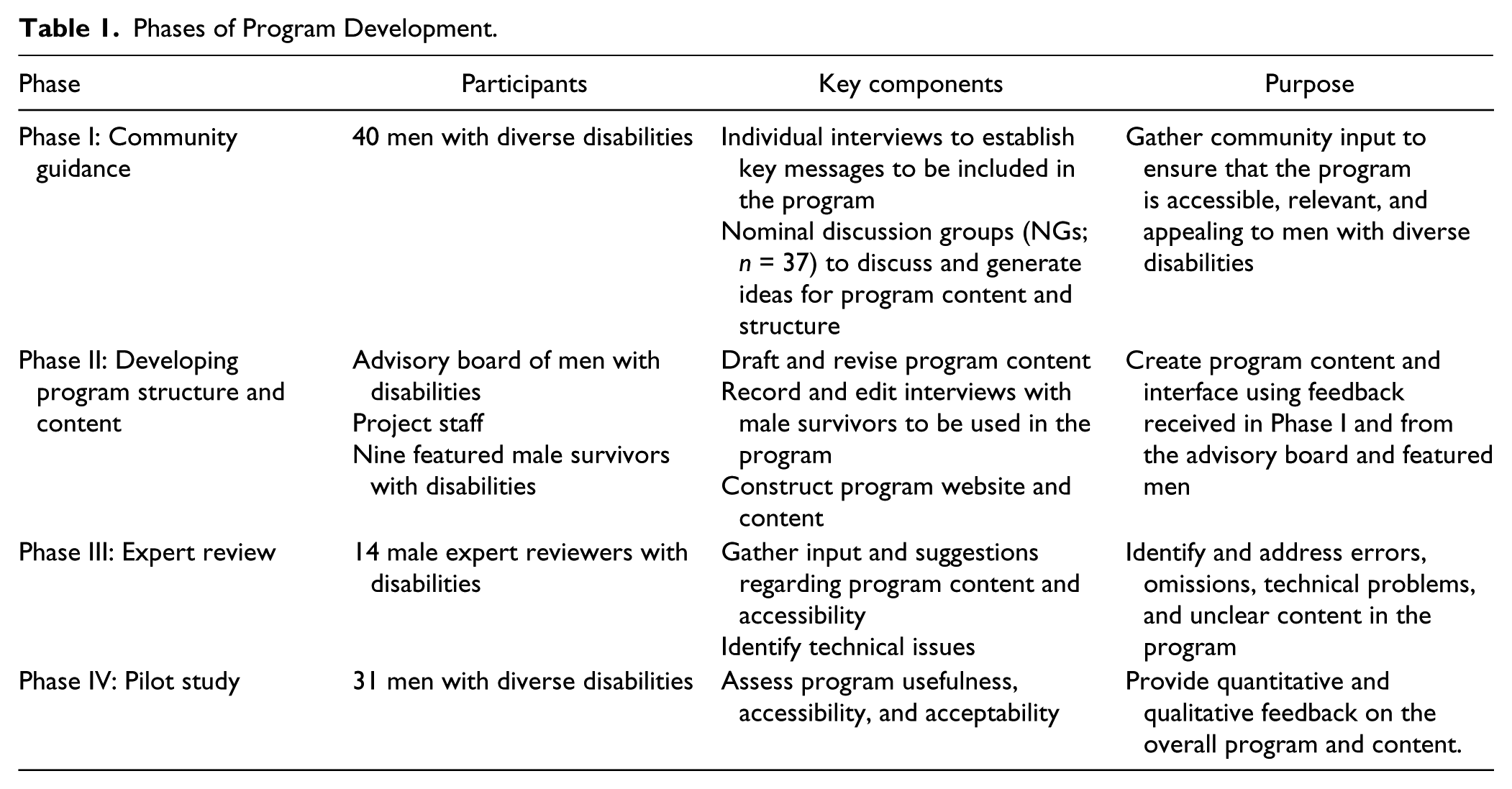
The final phase of development described here is the pilot-testing phase. After the program was developed and finalized, 31 men with diverse disabilities who had not previously been involved in the project were invited to complete the Men’s SSP and provide feedback on their experiences with the program and on whether they found it useful and would recommend it to others. Both quantitative and qualitative data were collected. Although the sample size was smaller as a result of budget limitations, this pilot-testing phase was similar in process and content to that used by Oschwald and colleagues (2009). The results of this phase provide preliminary support for the accessibility, appeal, and usefulness of the Men’s SSP to men with diverse disabilities.
The purpose of the present article is to describe those processes and the resulting content, in hopes of guiding future intervention development with this and similar populations while simultaneously describing a new intervention with potential for use by rehabilitation counselors and other clinicians.
Phase I: Community Guidance
One of the first steps in the development of the Men’s SSP involved gathering information on how men with diverse disabilities viewed IPV in the specific contexts of disability and gender. The project team also gathered men’s feedback on ways the existing Women’s SSP program should be modified to more accurately address the specific needs of men with disabilities. In general, the team anticipated that the basic design and accessibility features used for the Women’s SSP would remain intact. The men informing the project offered suggestions for adaptations to the women’s program in terms of structure, format, and content for the purpose of increasing the relevance and appeal of the program to men with disabilities. Initial feedback from groups of men with diverse disabilities was solicited through a two-step consensus-building approach that consisted of key informant interviews and nominal discussion groups.
Purpose and Analysis of Phase I Findings
Because little research has examined the experiences of men with disabilities with regard to abuse (Hughes et al., 2011; Lund, 2011), the project team conducted key informant interviews and nominal discussion groups to better understand the experiences and preferences of men with disabilities as they relate to abuse and safety psychoeducation. These key informant interviews and nominal discussion groups were not intended as full-scale qualitative research but as something more akin to focus groups in marketing—a way to gather direct information about what would be most useful to potential users. To that end, the results of the informant interviews and nominal discussion groups were subject to in-depth but informal content analysis, and the findings should be interpreted with that caveat in mind.
Key Informant Interviews
Participants
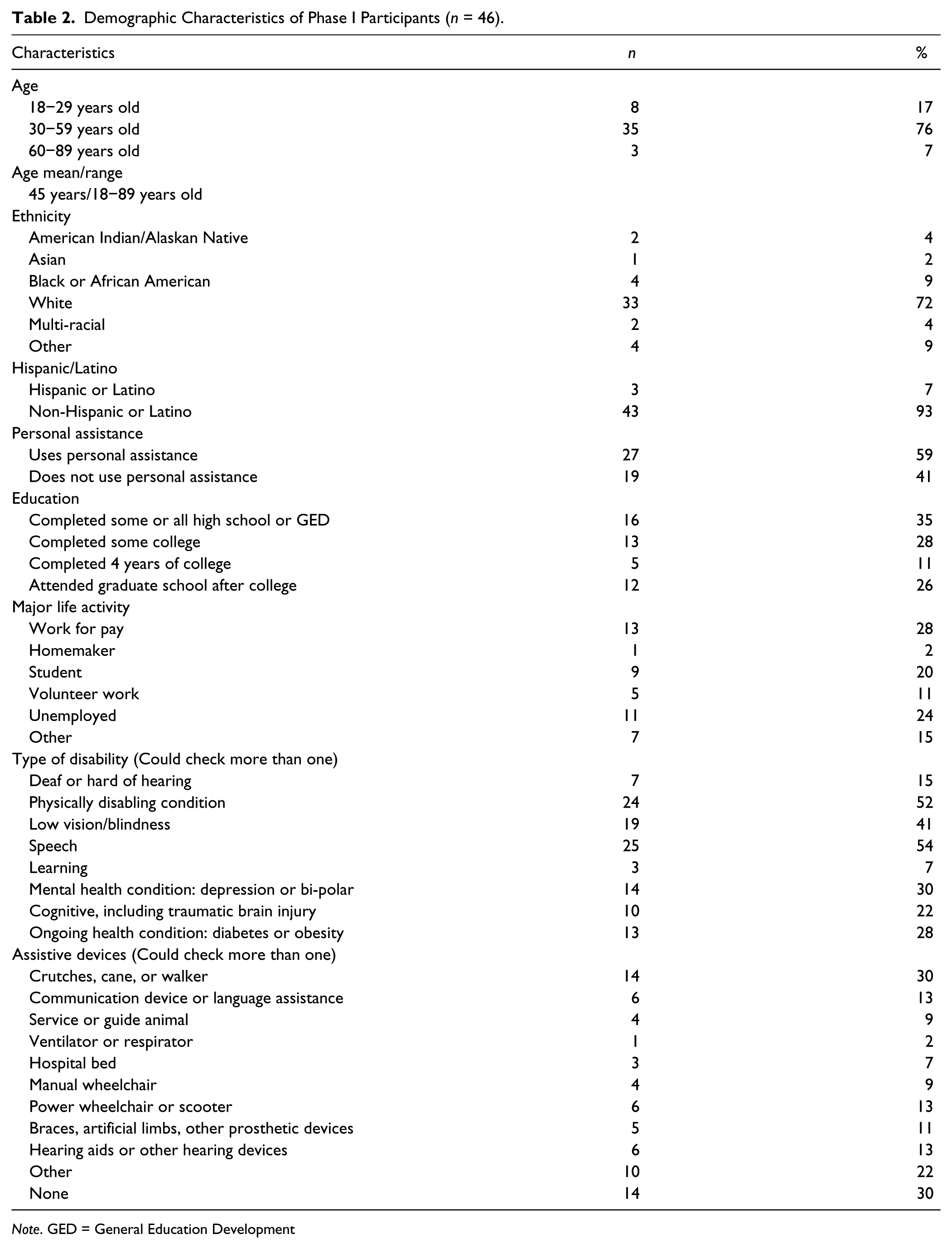
After receiving approval from the university institutional review boards, project staff recruited 46 men with diverse disabilities for individual key informant interviews. Participants were recruited from both a small northwestern city (n = 16) and a large metropolitan area in the same region (n = 30). The sample included men with diverse disabilities, including but not limited to blindness, deafness, mental health conditions, speech impairment, learning disability, cognitive impairment or traumatic brain injury, and/or ongoing health conditions. Participant demographics are included in Table 2. All men were over 18 years old and provided signed informed consent. Participants received a small payment for their time and travel costs. To obtain feedback from men with diverse levels of IPV, to reduce the possibility of having to report the abuse to the authorities, and to minimize risk, participants were not required to have personal experience of IPV nor were they asked to share information about their IPV histories. The men were informed of the state mandatory abuse reporting laws if they chose to disclose IPV experience and told that they would be invited to participate in the reporting process if reporting were to be necessary.
Demographic Characteristics of Phase I Participants (n = 46).
Note. GED = General Education Development
Method
Individual informant interviews, which were conducted by project staff, asked participants to provide content ideas for the Men’s SSP, including information about personal safety strategies; key messages they believed other men with disabilities needed to know about IPV; information about specific types of IPV, such as physical, sexual, or financial abuse; and key messages that could be included in an advertising campaign related to abuse and safety for men with disabilities. Key informant interview questions are listed in Supplement A, available online.
Results
Project staff incorporated the findings into a checklist with common, key messages identified by the men during the interviews. Themes included peer support, the need for knowledge about abuse, the importance of self-care, the importance of not blaming oneself for abuse, personal validation, and resiliency. For a full list of key messages identified, please see Supplement D. A second checklist of potential topics was compiled based on a combination of the men’s responses to the individual interview questions and the topics covered in the Women’s CASI program. Topics on this checklist included men’s rights as crime victims and survivors of abuse, strategies for selecting and managing personal assistance services or support providers and for arranging back-up care, ways to keep money and personal possessions safe, and types of community resources that could be helpful when addressing abuse. The full “Information About Abuse” checklist can be viewed as an online supplement, Supplement C, to this article.
Participants suggested that the Men’s SSP include empowering messages that combat the stigma of abuse against men and encourage other men with disabilities to take active steps to stay safer and address abuse. The importance of obtaining abuse-related information and resources was a common topic, often in the context of the relatively limited services available to male abuse victims and the lack of societal discourse on IPV against men. Finally, participants suggested including information about ways to find and utilize peers and other sources of support.
Nominal Discussion Groups
The next step in developing the Men’s SSP involved using the nominal group technique (NGT; Van de Ven & Delbecq, 1972) to help develop consensus among experts. In applying NGT, group members are asked to participate in interrelated group discussions in conjunction with an independent task that generates a response to a central question. NGT is generally more directed and focused than a focus group and places greater emphasis on individual responses in the context of group consensus (Ruyter, 1996).
Participants
Men who participated in the key informant interviews were invited to participate in a nominal discussion group (NG). Thirty-seven men participated in a total of five groups. The remaining nine men either could not be reached or were unable to attend the NG. Informed consent, which was obtained from all participants at the time of key informant interviews, was reviewed with participants at the time of the discussion groups. Participants were compensated $30.
Method
Two project team members facilitated the NGs, and research assistants took hand-written notes. The data were recorded and transcribed verbatim and anonymously. During the NGs, participants were shown several text and video clips from the Women’s SSP (Oschwald et al., 2009). They then suggested modification for making the program accessible, relevant, and likely to be visited by men with disabilities. Specific questions were asked about whether to include video footage of a narrator and male survivors; whether the survivors in the footage should be men with disabilities specifically; and if so, whether these men should have visible disabilities only, and/or if their specific type of disability should be identified, particularly if their disability would not be readily apparent. Participants were also asked to provide feedback on the format of narrator and male survivor videos, including whether to use actors versus actual survivors, if and how the topic of sexual abuse should be addressed, and major topics that should be added to the program.
Consistent with NGT (Ruyter, 1996) and with Delphi processes (B. B. Brown, 1968; Vázquez-Ramos et al., 2007), participants were given the two checklists developed from the individual interviews and asked to indicate their preferences for topics or messages to include in the Men’s SSP. Participants typically endorsed most topics, suggesting that the key topics identified by the men during the individual interviews matched topics identified in the NGs. Because NG participants considered all or almost all items on the checklist to be important and all items could be included in the final product without time or space constraints, the project team did not feel it was necessary to narrow consensus to a smaller number of items over multiple rounds as done in traditional Delphi processes.
After the data from the NGs were transcribed and examined for key themes, participants were given a copy of the key themes and messages identified through the interview and discussion group process. They were asked to suggest changes or additions to this summary based on their own recollections and make additional suggestions that may not have been adequately captured during the key informant interviews or nominal discussion groups to further build consensus.
Key findings
As found in previous literature (Saxton et al., 2006), participants in the key informant interviews and NGs identified factors related to both gender and disability status as affecting the risk, identification, reporting, and cessation of IPV. For example, similar to findings in previous studies (Saxton et al., 2001; Saxton et al., 2006), several participants reported that dependence on the perpetrator for assistance with daily life activities was a barrier to reporting abuse. Likewise, other participants noted that men with disabilities who need assistance from others with financial activities may be at greater risk of financial abuse than people without disabilities.
The men also identified societal pressure to “man up” and deal with abuse without having to ask for support or assistance, as well as the general expectation that men are not abused or, if they are, that abuse should not be discussed. As one man stated, “It is hard to get men to sit up and talk about their experiences like that, physical or verbal abuse.” Another said that, “Not every man would want to be shown as being a victim to abuse because society might interpret them as weak people or something.” In a comment that notes the intersectionality of gender, disability, and social expectations, one participant expressed the idea that men with disabilities may experience greater stigma as a result of disability. Thus, men with disabilities may be even more reluctant to resist the social pressure to “man up” when experiencing abuse. As one participant noted, “We might have a problem that we can’t do all those ‘man things’ in certain aspects of our lives, but we still want to be treated like men.”
Implications for the Men’s SSP Program Development
Based on these themes, one of the major goals of the Men’s SSP program is to deliver messages that abuse against men with disabilities can and does happen; that the experience of abuse is not a sign of weakness; and, that it is acceptable for men to ask for help. In addition, in response to participants’ comments on disability-related risk abuse factors and barriers to reporting abuse, the project team agreed that the Men’s SSP content should include common disability-related considerations in risk assessment and management and safety planning, such as arranging for back-up PAS providers if a current provider becomes abusive, and having medication and other necessary equipment available in preparation of leaving a violent situation.
The participants offered many suggestions for the content and structure of the Men’s SSP. Although some men thought it would be acceptable to use a female narrator and female survivors, others preferred having a male narrator and only male survivors, allowing male viewers to identify with other men with disabilities. For this reason, the videos feature only men with disabilities. Because many men expressed the importance of having a direct and fact-focused program, the decision was made to separate the program into eight separate sections, including an introduction section, five sections addressing forms of abuse, a section on types of abusers and warning signs, and a closing section, which are discussed in detail below. Having distinct modules allows men to select only the information they are interested in or comfortable accessing, to view the program in multiple sessions, and to control the amount of time spent in the program.
Likewise, while designing the script, the project team took efforts to ensure the program was concise, informative, direct, and facts-focused in both language and content. The program has a welcoming and supportive tone and melds personal narratives from male survivors with disabilities, empowering messages, concrete facts about abuse, and active suggestions for increasing safety and dealing with potentially or actively abusive situations and people. Because many men in the NGs mentioned the importance of proactive and empowering content, an emphasis was placed on providing examples and information regarding strategies and behaviors participants could use to make their lives safer from abuse. In addition, while acknowledging the negative consequences of IPV, one of the goals was to portray the featured men as strong survivors who continued to live full and productive lives.
Phase II: Developing Program Structure and Content
After receiving developing consensus and input from the participants in Phase I and from the advisory boards, the project team began the actual design and construction of the Internet-based Men’s SSP.
Video Segments of Survivors
The next step in creating the overall program was to recruit men with disabilities who would be willing to share their stories of IPV and abuse survivorship in video clips. Nine men aged 18 years and above who had diverse disabilities, including blindness, deafness, and physical, learning, cognitive, psychiatric, and chronic health disabilities, agreed to have their stories featured in the Internet-based program through video clips. All gave signed permission for the recording of their first names (and, in the case of duplicate names, last initials), video images, and audio descriptions to be used in the Internet-based program. The videographer, who had filmed the participants in the Women’s SSP, filmed these volunteers, who were interviewed by two project staff members with counseling expertise, both of whom had a disability. The men filmed were asked about their experiences of abuse and survivorship and for their suggestions for other men with disabilities who may be experiencing or at risk of abuse. The purpose of the interview was to structure the narratives in a manner that would provide relevant information consistent with the program text. Interview questions used during the filming of male survivors are included as an online supplement, Supplement B, to this article.
Throughout the filming process, efforts were made to ensure that the men felt comfortable and safe. The men were encouraged to ask for clarification or further explanation and to disclose as much or as little information as they felt comfortable sharing. The interviewers refrained from pressuring the men to respond to questions and assured them that any video clips that they did not want included in the program would be cut from the final version.
The videographer and the project staff completed several rounds of editing. The featured men had the opportunity to view the video after the first “major” edit to ensure the content was an accurate and acceptable portrayal of their story. The men instructed the project team about what information from their video segments they wanted included in or omitted from the program, and their instructions were honored in each case. In these cases, the project team members consulted with the videographer regarding how to edit the content to preserve clarity while respecting the men’s suggestions and wishes. This process mirrored the one used in the development of the survivor video content for the Women’s SSP (M. Oschwald, personal communication, December 20, 2013).
Accessibility and Technological Features
Technical and accessibility features were primary considerations during the development of the program. In the interest of safety, the program begins with a safety alert page in which users are reminded that a perpetrator may be able to monitor their Internet access history and thus, they are advised to view the program only in a safe location, such as an Internet café, library, or at trusted friend’s home. Program users are also advised to call 911 if in immediate danger. In addition, each page of the program contains a button that, if clicked, will immediately close the program, clear the user’s Internet history, open a blank, neutral Google search page, and lock that computer out of the program for approximately 15 min.
To promote increased access for men with low literacy levels, reading difficulties, low vision, or dial-up Internet connections, or who use screen readers, the content is available in multiple formats. Users may choose to have the text portions of the program read aloud by a pre-recorded audio feature, and the size of the text can be increased or decreased as needed. Users also have the option of viewing the program in a text-only format, which includes all textual content and a transcription of the video narration. The text-only version can be easily read by screen reading programs as well as accessed by individuals without high-speed Internet connections. The program includes a synchronized ASL translation that accompanies all textual and video content. This translation was conducted by a certified interpreter and can be turned on or off at any point during the program. All video content is also open-captioned in written English.
Storyboard Construction and Narration
The structure and content of the program is based on the findings from the key informant interviews and the NGs, the current literature on IPV and safety promotion, especially in the contexts of disability and men, and the material used in the Women’s SSP. Effort was made to develop an intervention that is informed by and for men with diverse disabilities, grounded in the current empirical literature, and addressed the unique safety-related needs and concerns of men with disabilities.
All project members reviewed and edited the initial draft of the storyboard for the men’s program. The first round of review was primarily concerned with the accuracy, clarity, and completeness of the storyboard content. This round of review also focused heavily on adapting language to ensure accessibility for men with cognitive disabilities and autism. Examples of adaptations include using straightforward, common words; dividing long statements into smaller, more direct sentences; and eliminating or minimizing the use of metaphors and figures of speech, replacing them with more concrete language. In addition, the material was checked for reliance on research-informed content, and the advisory board reviewed selected sections of the storyboard for content and clarity. After the narrator’s script had been drafted and revised, the narrator—a man with a hearing impairment—was filmed, and those video segments were inserted in the Internet-based framework.
Program Sections
The Internet-based Men’s SSP program includes eight distinct sections: (a) Introduction, (b) Financial Abuse, (c) Neglect, (d) Emotional Abuse, (e) Physical Abuse and Threats of Physical Abuse, (f) Sexual Abuse and Threats of Sexual Abuse, (g) Types of Abusers and Warning Signs, and (h) Things You Can Do. Except for the introduction section, all program sections are optional, and direct links to each section are provided on all screens in the program; thus, users can move easily between sections in their preferred manner, as allowance for self-directed participation was a key formatting suggestion made throughout the Phase I consensus-building process. Due to this allowance, users may choose to view or not view certain modules and may view modules in any order. However, although it is not required, the narrator strongly recommends that users watch the “Things You Can Do” module.
Introduction section
The Men’s SSP opens with a section introducing the nine featured male survivors and the narrator provides a description of the sections, purpose, and structure of the program. This section also discusses male survivorship in the context of gender, offers a definition and examples of abuse, and emphasizes empowerment, informing users that abuse is never the victim’s fault and that everyone has the right to ask for help and seek support.
Five abuse-type sections
Each of the five abuse sections defines the type of abuse being discussed and introduces relevant clips from the featured male survivors. Each of these sections contains specific examples of the type of abuse presented and a series of risk assessment questions with a yes/no response option. Although not designed to self-identify abuse, these questions are designed to raise participants’ awareness of potentially dangerous situations. Program users are then presented with more abuse type-specific video clips from the featured male survivors and asked to think about whether their experiences are similar to those described in the videos. If yes, users are advised to speak with a trusted friend or a professional about their concerns. Each of these modules presents a list of suggestions for men with disabilities for potentially reducing their vulnerability to that particular type of abuse, such as clearly stating personal boundaries or regularly monitoring their finances, with the caveat that not all of the given strategies will work for all men in all situations and that each man must decide which strategy or suggestion will work most effectively and safely for him.
Types of Abusers and Warning Signs section
This section opens with several male survivors talking about different people in their lives who were abusive, including family members, friends, and spouses, as well as caregivers, professionals, guardians, and co-workers. Users are encouraged to consider their own situation, the people they know, and possible warning signs that may indicate increased risk of abuse or increased intensity or severity of abuse. A list of self-inventory questions are presented that ask about behaviors and characteristics of threatening or potentially threatening people to which users may respond with a “Yes,” “No,” or “Do not want to say” option.
Things You Can Do section
This final section contains several subsections including Safety Planning; Disability-Related Issues; Symptoms of Abuse; Abuse Reporting, Lessons Learned, and Advice From Male Survivors; Empowerment and Next Steps; Types of Resources; and Your Feedback About the Program and Helpful Links. Both the researchers and experts who provided content and helped to develop consensus remarked on the importance of including information on potential secondary symptoms of abuse, such as negative psychological consequences, and disability-related factors that may affect the risk for and experience of abuse. In addition, participants asked whether the program included ideas for safety options that may help men when planning to leave an abusive situation as well as information on reporting abuse. In addition, the “Things You Can Do” section contains video clips of male survivors detailing personal experiences of dealing with and reporting abuse. A particular emphasis is placed on empowering statements that highlight the fact that abuse, especially abuse against men with disabilities, can be addressed and that no man should have to “put up” with abusive situations. The men featured suggest strategies such as talking to a trusted friend or professional about the abuse and having a strong, supportive peer group. Although acknowledging the difficulties and potential dangers, such as the fear of retaliation that may accompany the reporting of abuse, the video clips ultimately leave the viewer with statements of empowerment and hope. This was a point emphasized by the expert men with disabilities, including abuse survivors, who participated in the initial development process of the project.
The “Things You Can Do” section also provides an opportunity for users to request information on legal resources; disability-related resources; substance abuse-related resources; resources for lesbian, gay, bisexual, and transgender individuals; resources for members of ethnic minority groups; and/or domestic, physical, and interpersonal anti-violence resources. At the end of the program, users receive web addresses for resources they have requested and they can opt to have the links emailed to them.
User feedback questions
At the end of the program, users are invited to answer three multiple choice questions asking how much they liked the program for obtaining information about abuse, how helpful they perceived the program would be for other men with disabilities and Deaf men, and how easy it was to participate in the program given their disability. Responding to the questions is optional, and, although the data are saved, they are not linked to email addresses or other potentially identifying information.
Phase III: Expert Review
Following the completion of the program, 14 men with disabilities were asked to serve as expert reviewers and provide final feedback on the program design, content, and functionality. Because these reviewers were invited to suggest changes or additions to text, the text-to-audio and sign language components were not recorded prior to nor included in the expert review. Following the recording and incorporation of ASL and audio components, however, additional expert reviewers and the ASL translator were asked to view the program and report on the accuracy, clarity, and synchronization of the sign language and audio components prior to the release of the program for piloting.
Method
Expert reviewers
The 14 male expert reviewers were recruited from among the project advisory panel members, the featured male survivors in the program videos, and other community sites. As in previous phases, personal IPV experience was not a prerequisite for participation nor were data on such experiences collected. The expert reviewers were men 18 years of age or above and who had diverse disabilities, including physical, cognitive, and learning, psychiatric disabilities, and autism. Because the activity was non-research, no personal data or informed consent were obtained from the reviewers, who were compensated for their contributions.
Procedure
Project staff interviewed each expert reviewer. Although most of the reviews occurred in-person at one of the research institutes, two occurred remotely through real-time technological mediation (e.g., Skype text chatting) for reasons of distance or reviewer preference. Expert reviewers were asked to verbalize their thoughts as they went through the program. In addition, project staff used a designated list of suggested queries for the expert review; these queries addressed issues such as program length, format, accessibility, content, and relevance. Because this process was not focused on the men’s individual histories, the men were informed that they were not being asked to respond truthfully to the abuse items. The 2- to 3-hr review sessions were recorded and then reviewed for common, frequently mentioned issues, suggestions, and feedback, which were then incorporated into a summary sheet for later discussion and action by the project team. In addition, computer-generated transcripts or reviewer notes were taken during the review process.
Common Suggestions and Feedback
Much of the feedback from expert reviewers focused on technical issues with the program itself, such as slides that did not auto-advance as programmed, male survivor videos that did not sync with the on-screen content, inconsistencies between the narrator’s instructions and the actual layout of the program, and concerns about program display on different types and sizes of monitors. The project staff noted these issues and compiled a list of revisions and programming glitches to be corrected. Several reviewers suggested including a tutorial on navigating the program prior to introducing the actual content, mentioning that many users may not be familiar with Internet-based programs or even with computers in general. One expert reviewer noted the inherent limitation in reaching men who do not frequently use computers or the Internet.
In addition, expert reviewers suggested ways to reword or rephrase portions of the on-screen text to enhance clarity or relevance, such as modifying or writing new abuse screening items that would directly address issues they personally had experienced, or had heard other men with disabilities experiencing. Expert reviewers suggested emphasizing the importance of actively addressing abuse and repeating the statement that abuse is not the fault of the victim both for emphasis and reduction of shame and stigma.
Revision and Future Work
The expert reviewers’ comments were summarized and used to make technological and minor content revisions to the program. When the storyboard was finalized, the ASL and text-to-audio components of the program were recorded and inserted into the program structure. The ASL videos were synced and reviewed by Deaf reviewers to ensure that the syncing and content were accurate representations of the on-screen text and video captions.
Stage IV: Pilot Study
As a final step in the development process, a small pilot study was conducted with 31 men with diverse disabilities. The men, all of whom lived in a large metropolitan area in the Northwest United States, had not previously been involved in the development of the program. They were recruited via flyers at independent living centers and other disability-related organizations, via contacts from previous research and program development projects, and by participants who enjoyed participating in the pilot and encouraged other men they knew to take part. Participants were asked to complete questions regarding their satisfaction with the Men’s SSP and were also asked to provide oral, qualitative feedback, which was transcribed by researchers.
Method
Recruitment and procedures
Men who called or emailed to ask about participating in the pilot study were informed about the expected time requirements, the general topic and process of the study, and the compensation for participation. All potential participants were also asked whether they identified as having a disability or chronic health condition that substantially limited one or more major life activities. If the potential participants agreed to take part in the study, the researcher set up a mutually convenient time and place to meet; most participants elected to complete the program at the researchers’ offices. Before beginning the program, participants gave written informed consent and were briefed on the researchers’ duties as mandatory reporters if current abuse was disclosed; the researchers did not encounter situations necessitating mandatory reporting during the study. All participants were compensated $40 for their time.
The study took between 1.5 and 2.5 hr to complete, with 29 participants completing the program in a single session. In the two cases where a second session was required, each participant’s place in the program was saved by means of unique ID code. These codes were stored in a locked file cabinet between sessions and were destroyed once the participant completed the study.
Participants
The mean age of the 31 participants was 45.6 years (SD = 12.18; range = 20–64). The majority of the men were White, non-Hispanic, with 22.6% (n = 7) identifying as Black or African American. Most were unmarried or unpartnered (n = 28; 90.3%) and heterosexual (n = 28; 90.3%). The educational level varied with more than one third (38.7%) completing high school or a General Education Development (GED), and more than two fifths completing some college (25.8%) or a college degree (16.1%). The vast majority (n = 28; 90.3%) did not currently work. Most (74.2%) lived in a home or apartment, and 16 (15.6%) lived alone. More than half reported experiencing abuse at some point in their lifetime, as measured by the Abuse History Scale (Curry et al., 2009).
Most participants reported multiple disabilities. The most frequently reported disabilities were intellectual or cognitive disabilities (35.5%; n = 11), mobility or other physical disabilities (35.5%; n = 11), and mental health disabilities (35.5%; n = 11). One man was Deaf, three were blind, and two were on the autism spectrum. Eight (25.8%) reported having a chronic health condition. Thirteen (44.8%) used PAS, and about half of the men used assistive devices.
Feedback on the Men’s SSP
Helpfulness and ease of use
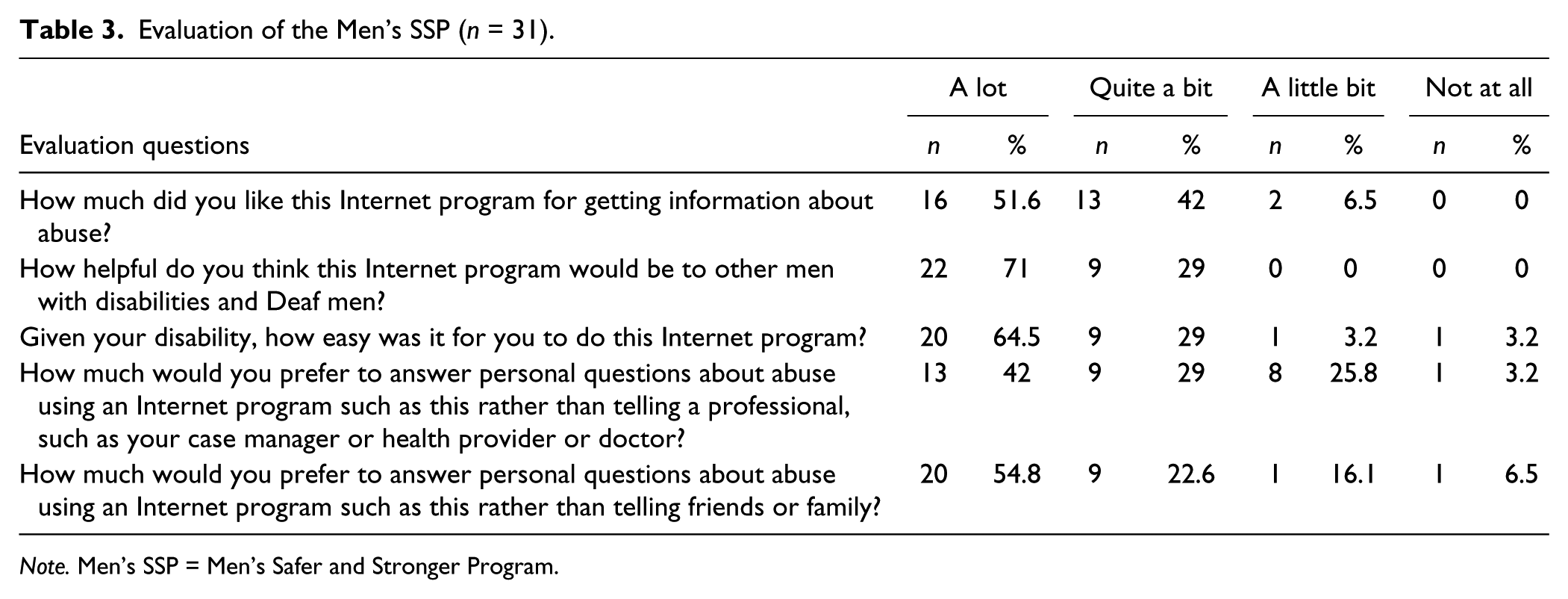
Overall, participants regarded the program as positive, helpful, and easy to use given their disability (Table 3). Twenty-nine of the men (93.5%) endorsed “a lot” or “quite a bit” when asked how much they liked the Men’s SSP for getting information about abuse. When asked how helpful the Internet program would be to other men with disabilities, 22 (71%) of the men endorsed “a lot” whereas the remaining 9 men (29%) responded “quite a bit.” Men were asked how easy it was to use the Men’s SSP given their disability, with 29 (93.5%) of the men answering either “a lot” or “quite a bit.”
Evaluation of the Men’s SSP (n = 31).
Note. Men’s SSP = Men’s Safer and Stronger Program.
Preferences for learning about abuse reporting
With regard to using the Men’s SSP to learn about abuse reporting, 13 (41.9%) of the men endorsed “a lot” and 9 (29%) endorsed “quite a bit” in preferring to use an Internet program such as the Men’s SSP to learn about abuse reporting rather than telling a professional, such as their case manager or health provider or doctor. In addition, when asked about whether they would prefer to use an Internet program such as the Men’s SSP for answering personal questions about abuse rather than telling friends or family, more than three quarters of the participants (n = 24, 77.4%) reported that they would prefer using the Men’s SSP “a lot” (n = 17) or “quite a bit” (n = 7).
Qualitative feedback
Qualitative feedback of the Men’s SSP was also favorable. Many participants thought that the features of the program were helpful and interesting; men said they could relate to the male survivor videos and thought it was really great that men stepped forward to tell their survivorship stories and included these stories as video clips into the programs. Several men utilized and appreciated the “read-out-loud” accessibility feature.
Other participants talked about ways they would use the information in the program to make their lives safer. One man said he was going to go home and pack a safety bag so that he would be ready to leave if needed; he said the program gave him ideas about ways to prepare for leaving an abusive situation, if needed. Another participant said the program taught him things about himself and others that he had previously not considered, such as the importance of continuing to learn about self and others; in other words, the program taught him things about his current relationships. Yet another participant said that after going through the Men’s SSP, he began to understand the ways and types of abuse he had experienced in his previous relationships. Speaking in his role as a case manager, one participant believed that if case managers and other professionals who provided support to men with disabilities knew the information in the program, the quality of the services they provided to clients would be improved and would be more sensitive to the abuse experiences of their male clients.
The Men’s SSP also helped validate safety-promoting behaviors participants were already doing. Several participants commented on their high level of confidence in being able to do the safety skills described in the program. One man said he was proud of the fact that he had already learned safety-planning ideas for dealing with support people and ways to access law enforcement if faced with an abusive situation. Another participant commented on the sense of safety he feels by having a protective, caring community around him, which is one of the safety-promoting ideas offered by a male survivor in one of the program’s video clips. Another study participant described ways he had learned to make and sustain friends who knew his routines and who were allies for him; he talked about his communication skills and ability to engage with people, hear their stories, and build respectful relationships with them. Yet another participant indicated that the program’s information helps one feel confident and is a great way to bring information about abuse of men with disabilities, safety-planning options, and resource information to people’s attention.
Discussion
The overall goal of the Internet-based Men’s SSP was to work closely with men with diverse disabilities to create a maximally safe, accessible, and relevant awareness and educational program about abuse against men with disabilities and Deaf men. Project team members assert that the Men’s SSP has potential to not only be useful to men with disabilities but also to family members, professionals, support providers, and others who interact with men with disabilities. Although the general structure and content of the Men’s SSP is based on a similar computer-based program for women (Oschwald et al., 2009), the project team, which included several men and multiple people with disabilities, made constant, conscious efforts to obtain feedback and guidance from men with diverse disabilities. Individual key informant interviews and nominal discussion groups in Phase I with men with diverse disabilities helped provide guidance and identify key themes that men with disabilities considered important. Feedback from an all-male advisory board and the inclusion of video footage that featured a male program narrator and male abuse survivors in Phase II helped to ensure the Internet-based program remained relevant and accessible to the target population and that video content remained true to the experiences of the men whose stories were included in the program. Finally, expert reviewers—men with diverse disabilities—in Phase III assisted both in tracking technical issues and ensuring the final content was understandable and applicable to men with diverse disabilities. By involving men with disabilities throughout all stages of the program development process through the use of a CBPR and modified Delphi process, the project team is increasing the likelihood that the all users of the Men’s SSP will find it to be helpful, inviting, informative, and empowering.
After program development and expert review processes were completed, 31 men with diverse disabilities participated in a pilot study of the finalized program, including the ASL and speech-to-text features. Most participants reported positive experiences with the program and said they would prefer using it over disclosing abuse in a face-to-face environment. In addition, men reported that the program provided them with helpful and relevant information about safety while also affirming the safety behaviors in which they were already engaging. Overall, the pilot study provided strong preliminary evidence that our goal of creating a program that both provided helpful information and created an environment in which abuse could be openly discussed was achieved.
Information Gathered About IPV and Men With Disabilities
Although the nature of this project was program development and not research, the information obtained from participants, particularly in Phase I, provides insightful information about how men with diverse disabilities view IPV. As in previous research (Powers et al., 2008; Saxton et al., 2006), the themes of shame, stigma, and social norms, such as the belief that “men can’t be abused,” were frequently mentioned as barriers to abuse identification and reporting by men with disabilities who participated in the development of the Men’s SSP. Empowerment strategies and emphasis of the message that abuse is never the victim’s fault were seen as important responses to managing abuse and working with survivors. Lack of societal awareness, social and contextual issues surrounding abuse against men, and the need for strong peer support networks were discussed as potential ways to cope with abuse and trauma and to support survivors in their healing process. Although these themes were not obtained through rigorous qualitative methodology, and thus should be interpreted with caution, they may provide guidance for future research in this area.
Key Themes Regarding Content and Structure
Many of the men with diverse disabilities whom we consulted throughout the process found the discussions of disability-related abuse to be important parts of the program content, especially examples of mistreatment that the men may not have initially recognized as abuse, such as substandard care or not respecting the man’s autonomy. Similarly, many men discussed the importance of addressing disability-related barriers to leaving and reporting violence, such as dependence on the perpetrator for assistance with activities of daily living. Social or physical isolation as a result of disability, or dependence on the perpetrator and difficulties communicating with others, were also mentioned as barriers that should be discussed in the Men’s SSP, along with possible strategies for dealing with each of these types of barriers. Thus, other programs and future interventions that address IPV should be mindful of disability-related considerations in their materials or training designs to maximize relevance and accessibility.
Likewise, many participants considered the accessibility and ease of navigation of the Men’s SSP to be a vital factor. In consideration of users who may not have much experience using computers or the Internet, the suggestion was made to add an Internet-based tutorial with explicit instruction on program navigation. This suggestion was considered especially relevant given the large number of men with disabilities who live in poverty and thus may lack regular or daily access to computers or the Internet. Participants appreciated the Men’s SSP accessible features, such as the capacity to select a text-only format, have the program read out loud, access to full translation into ASL, and/or the chance to self-pace. For example, an autistic expert reviewer noted that because he preferred textual content to video content, he was pleased to have access to the text-only option.
Implications for Practice
The Men’s SSP has considerable potential as an intervention tool for rehabilitation counselors and related professionals. Its web-based, secure design allows the tool to be accessed safely from anywhere with a reliable Internet connection. This allows men to use the tool either in a supportive setting, such as an independent living center or counselor’s office, or in their own homes; men can approach this often difficult topic in the setting in which they feel most comfortable without the need for specific hard copy materials. In addition, the web-based nature of the program allows both clients and therapists to view the content at any time for the purposes of planning or review. This may be useful for introducing and reinforcing concepts before or after sessions and allows the counselor to preview the content in full prior to using it with clients. Furthermore, the integration of survivor’s stories in the Men’s SSP introduces a sort of “virtual peer” component in which men with disabilities can hear real-life stories of abuse and survivorship from peers. Given that many of the men who participated in our program development process indicated that IPV was a difficult topic to discuss with other men, this virtual support may reduce some of the initial shame and anxiety related to discussing abuse experiences with a counselor or others. The results of the pilot study also suggest that most men with disabilities see the Men’s SSP as a viable and appealing alternative to traditional abuse disclosure. Finally, the Men’s SSP has potential utility in familiarizing rehabilitation counselors and other professionals with the issues surrounding violence, masculinity, and disability, thus increasing their own understanding of IPV in male clients with disabilities.
Conclusion
The development of the Internet-based Men’s SSP highlighted the importance of addressing the intersectionality of gender and disability when creating abuse and safety-related programs for men with diverse disabilities. The need to address the stigma, shame, and ignorance surrounding abuse of men was a persistent theme in both the development of content and consultations with participants, advisors, and expert reviewers. The importance of programmatic access and the discussion and considerations of disability-related abuse, risk factors, and barriers were equally prominent topics. It can be reasonably concluded that the ability to address both gender and disability in tandem is key to the creation of a useful and well-received program for men with diverse disabilities. Future testing will continue to contribute to the evaluation and possible enhancement of the Internet-based Men’s SSP, which may prove to be a significant step to ending violence against people with disabilities.
Footnotes
Authors’ Note
Emily M. Lund is now at the Department of Special Education and Rehabilitation at Utah State University. Allyn Latorre is now a mental health service provider in Portland, Oregon.
Declaration of Conflicting Interests
The author(s) declared no potential conflicts of interest with respect to the research, authorship, and/or publication of this article.
Funding
The author(s) disclosed receipt of the following financial support for the research, authorship, and/or publication of this article: This project was funded by National Institute on Disability and Rehabilitation Research (NIDRR) Grant H133G070190.