MEDICAL ABSTRACTS 
Discovery of novel renal epithelial senescence associated biomarkers
David P. Baird1, Maximilian Reck2, Ross Campbell1, Eoin D. O'Sullivan1, Marie-Helena Docherty1, Carolynn Cairns2, Cyril Carvalho1, Matthieu Vermeren3, Jeremy Hughes1, Laura Denby2, Bryan Conway2, Katie J. Mylonas1, David A. Ferenbach1.
1Centre for Inflammation Research, Queen's Medical Research Institute, University of Edinburgh, Edinburgh, UK.
2Centre for Cardiovascular Science, Queen's Medical Research Institute, University of Edinburgh, Edinburgh, UK.
3Centre for Regenerative Medicine, University of Edinburgh, Edinburgh, UK.
Background: Cellular senescence is characterised by irreversible cell cycle arrest and marked changes in transcriptional and secretory activity. It can occur as a physiological component of healthy organismal development or in response to a range of cellular insults including DNA damage, oncogenic mutations and metabolic stress. Renal tubular senescence in response to ageing and injury is proposed as a key driver of kidney fibrosis. Senescent cell depletion in mice improves outcomes in multiple organs including the kidney. There are currently no non-invasive biomarkers for quantifying renal senescence available. I am using a multi-omics approach and utilising human renal proximal tubular epithelial cells (hRPTECs) in culture, a murine model of renal senescence and human samples, to identify urinary biomarkers of renal tubular senescence and to determine if they can predict decline in kidney function.
Methods: In vitro: I have optimised a model to induce senescence in hRPTECs in vitro using 10Gy irradiation and treatment with MDM2-antagonist Nutlin 3A. Transcriptomic studies using bulk RNAseq were performed (each group n=5) to identify genes that are differentially expressed in senescent cells compared to proliferating controls.
In vivo: Total body irradiation (TBI) induces accelerated senescence in mice whilst the senolytic drug ABT-263, effectively depletes senescent cells. I performed LC-MS proteomic studies on urine from mice comparing healthy controls with mice exposed to TBI with or without subsequent senolytic therapy. Additionally, I have quantified tubular senescence histologically in human biopsy samples from 55 patients with chronic kidney disease using a triple immunofluorescent stain, which included cell cycle arrest and senescent marker p21CIP1, proliferation marker Ki67 (absent in senescent cells) and tubular markers CD10 and CKPAN. Tubular cells were classified as senescent when p21CIP1 positive and Ki67 negative and expressed as a percentage of all tubular cells.
Results: In vitro: Irradiated and Nutlin 3A treated cells both had an increase in mRNA levels of CDKN1A and a fall in LMNB1 and MKI67 in keeping with senescence induction. Other factors including CXCL8, TNFA and IL6 rose in irradiated cells compared to controls but fell in Nutlin 3A treated cells. 1272 genes where differentially expressed in irradiated cells compared to controls; 760 of these genes were differentially expressed in the same direction in Nutlin 3A treated samples. Over representation analysis highlighted pathways relating to the cell cycle, as would be expected with senescence.
In vivo: Murine LC-MS studies identified 15 proteins that fell in mice exposed to TBI compared to healthy controls but reverted towards baseline with senolytic treatment. By combining my datasets with publicly available data, I have identified several candidate biomarkers of senescence. This includes urokinase plasminogen activator surface receptor (uPAR), which has already been linked with senescence and used as a biomarker ageing as well as others not previously linked to senescence (not named here due to pending patent applications).
In the patients where senescence was quantified, the mean age at the time of biopsy was 54 years (range 19-81 years) and the mean eGFR was 56 ml/min/1.73 m2 [s.d. 34]). Renal tubular senescence correlates with age (rho=0.64, p<0.001) and inversely with baseline eGFR (rho=0.51, p<0.001). Further LC-MS and ELISA studies in matched urine samples are planned that will allow us to determine which molecules most closely correlate with senescence histologically in the human kidney.
Conclusion: Through a combination of transcriptomic studies and LC-MS proteomics, we identified several candidate urinary biomarkers of senescence; ongoing studies will determine which molecules most closely correlate with renal senescence histologically. Further planned studies in a cohort of >380 patients with >4 years follow-up will determine if the most promising of these biomarkers predict renal outcomes.
Statins in Renal Transplant Patients
Navya Bezawada, Scott Day, Julie Browne
Renal Unit, Raigmore Hospital, NHS Highland
Background: Cardiovascular disease is a leading cause of mortality after renal transplantation, accounting for more than 30% of deaths. Hyperlipidaemia is a frequent finding following transplantation and immunosuppressive medications can play a role in the development or worsening of hyperlipidaemia. End Stage Renal Disease treated by kidney transplantation is considered a chronic disease, with cardiovascular risk expected to increase over time even in the presence of optimal graft function. The KDIGO guidelines therefore suggest treatment with a statin (2B recommendation) in all kidney transplant recipients.
Aim: The aim of this study is to assess the prevalence of statins and assessment of hyperlipidaemia in kidney transplant population in NHS Highland.
Methods: Information was collated from renal transplant patients attending the NHS Highland renal service using electronic patient record systems including Hermes, Care Portal and SCI Store. Data gathered included age, gender, use of statin and dose, presence of cardiovascular disease (ischaemic heart disease), stroke disease and diabetes mellitus. Most recent lipid profile results were obtained for each patient as of January 2022, which was the time of the initial audit. Clinic letters of patients not on statins were reviewed to identify the reasons for this in September 2022.
Results: There were 185 kidney transplant patients included in the study. The vast majority (98.9%) had lipid profiles assessed at some point and a large proportion of patients had a lipid profile check within the last year (91.4%, 169 patients). Nearly two thirds (61.6%, 114 patients) of patients were on lipid lowering therapy. The average level of Cholesterol was 4.49 mmol/L in those on lipid lowering therapy and 4.99 mmol/L in those not on lipid lowering therapy. The group of patients on statins were older, with a male preponderance and had a higher prevalence of diseases such as ischaemic heart disease, cerebrovascular disease and diabetes. The most common prescription was Atorvastatin 10mg. The reasons for patients not being on a statin were reviewed in September 2022. Between January and September, 5 further patients had commenced on statin therapy in this population, taking the total number of patients on lipid lowering therapy to 119. As of September, one third of patients (35.7%, 66 patients) were not prescribed lipid lowering therapy. Fifty-five patients (29.7%) had never trialled a statin, with 34 of these patients having a normal lipid profile and 8 declining a statin. Thirteen patients had no clear reason for not being on a statin. Eleven kidney transplant patients (5.95%) had trialled, and subsequently discontinued statin therapy with 4 patients suffering side-effects and 1 patient having an elevated CK level, whilst in 6 patients statin therapy was discontinued for no clear reason.
Conclusions: A large proportion of transplant patients are on lipid lowering therapy in this population. An individual risk assessment in combination with the patient's lipid profile is likely needed to assess the requirement for statins in the renal transplant population in the context of lack of strong evidence/up-to-date guidelines.
What are the Modifiable Factors to Improve Incident Rates of Permanent Vascular Access?
Katie Booth, Joanne Baxter, Shona Methven.
Department of Renal Medicine, Aberdeen Royal Infirmary.
Background: Arteriovenous (AV) access is the optimal form of definitive access for haemodialysis (HD). The UK Kidney Association standard states >60% of incident patients should receive their first haemodialysis session via permanent AV access. The Scottish Renal Registry (SRR) annual report for incident HD access in 2020 showed NHS Grampian was not meeting this target. However in March 2020, the Covid-19 pandemic severely curtailed clinic appointments and operating theatre access. The data for patients commencing HD with non-permanent access in NHS Grampian were analysed to identify modifiable factors and missed opportunities.
Aim: Sixty per cent of all patients with established end stage kidney disease commencing planned haemodialysis should receive their first dialysis via a functioning AV fistula or graft.
Methods: We utilised Scottish Renal Registry 2020 data to retrospectively identify patients who had started HD on a central venous catheter. This was supplemented by the local renal and hospital electronic patient record. Excel was used to collect and analyse the data. Patients were grouped according to time of presentation (late defined as patients presenting <90 days before starting HD).
Results: Twenty six patients (52%) started HD with non-permanent AV access during 2020. This was split equally between patients who presented late and those known to renal services. Vascular assessment was undertaken in 11 patients (85%) who presented late as two patients had contra-indications for native access. For those who presented late, the mean number of days from commencing HD to vascular referral was 15.6 days (range -6-81); mean time from commencing HD to vascular review was 58.4 days (range 6-156) and mean time to creation of vascular access was 106.7 days (range 22-379) after starting HD. The mean number of days between vascular referral to review was 42.7 days (8-75) and from review to access creation was 50.9 days (16-223). These patients started HD for a number of acute reasons including sepsis and new diagnosis of myeloma.
Fifty per cent of patients (n=13) were known to renal services. Seven patients (54%) had attended the low clearance clinic (LCC) at least once and the remainder were attending general nephrology clinics. All of this cohort were reviewed by vascular and 69% of patients (n=9) had access created. Of those attending general nephrology clinics five patients (83%) had suffered acute kidney injury/ severe acute deterioration having previously had stable CKD. One patient who was attending a general nephrology clinic met criteria for transfer to the LCC (eGFR <20ml/min/1.73m2). For those attending general nephrology clinic the mean time to vascular referral was 1.8 days after starting HD (range -25-51); time to vascular review was 50.5 days after starting HD (range 2-87) and creation of vascular access was 107 days (46-183) after starting HD.
From the LCC patient cohort, only 57% of patients (n=4) subsequently had vascular access created. The mean number of days for vascular referral was 203 days before commencing HD (range -406 – 6). The mean time to vascular review was 138 days (range -293-29) and time to vascular access creation was 12.5 days (range -1-43) after starting HD. The mean time from vascular referral to review was 65.1 days (range 5-166) and for vascular review to access creation was 127 days (range 8-294). These patients had attended the LCC between 0-6 times in the year prior to vascular access creation. For those attending LCC who had not had AV access created, a significant proportion (28%) had changed planned modality from peritoneal dialysis to HD shortly before commencing dialysis.
Cancellations for procedures were also recorded. Overall 42% of patients (n=10) had their vascular access procedure cancelled due to being acutely unwell (21%) followed by emergencies taking precedence over planned surgery (8.3%).
Discussion: Only 50% of those starting with non-permanent access were previously known to renal services in 2020. For those attending renal services, we have identified potentially modifiable delays in the vascular access pathway, in order to streamline and improve the pathway. NHS services are remobilising in the aftermath of the Covid-19 pandemic which may afford opportunities for change. We are working to standardise the time point and process for vascular access referral from the low clearance clinic first visit and seeking further dedicated theatre access time for vascular access procedures to reduce cancellations.
High grade urothelial carcinoma in kidney transplant recipients with a history of BK viraemia – cause or coincidence?
Emma Cannon1, Chara Ntala2, Marie O'Donnell2, Wendy Metcalfe1 and Paul J Phelan1
1Department of Renal Medicine, The Royal Infirmary of Edinburgh
2Department of Pathology, The Western General Hospital, Edinburgh
Background: Some viral infections (HPV, EBV, Hep B, HepC, HHV-8) are linked to an increased risk of developing malignancy following kidney transplantation. A direct link between BKV and urothelial cancer development has yet to be established. There are several published case reports and evidence from animal models showing a potential oncogenic link between BKV and urothelial carcinoma through the deactivation of tumour suppressor proteins p53 and pRB as a result of interaction with BKV. We present the largest described case series of patients who have developed urothelial carcinoma (UC) in the context of BK virus (BKV) infection following kidney transplantation.
Methods: The local electronic patient record system (VitalPulse Limited) was searched for pathology reports containing key words “urothelial”, “micropapillary”, or “transitional” in kidney transplant recipients in the Royal Infirmary of Edinburgh between 2009 and 2020. Identified patients notes were then reviewed to determine BKV infection and available pathology samples were re-examined and stained for SV40 as a marker of BKV infection.
Results: Fourteen patients were identified as having developed UC and 10 had a known history of BKV infection. Pathology samples were available for 8 of these patients and 7 were strongly positive for SV40 staining (five primary tumour samples, one lymph node biopsy and one showed SV40 positivity in both the primary tumour sample and a metastatic lesion). All of the patients with SV40 positive tumours had a history of BKV infection. Of the SV40 positive tumours, 6/7 were micropapillary variants, which is rare in the general population (<1% of cases), and consistent with literature of previously described BKV associated UC cases. The median time to detection of BKV in this group was 4.2 years (IQR=2.1 years) post transplantation. They had prolonged viraemia with median time to clearance of 579 days (IQR=1848 days). Four of the six patients with micropapillary tumours died, three as a result of UC and one as a result of metastatic head and neck cancer. Median survival of patients with micropapillary tumours was 191 days (IQR=1523 days) from time of biopsy. The seventh patient with an SV40 positive tumour had a mixed papillary and solid tumour.
The BKV positive patient with the SV40 negative tumour only had one positive serum sample for BK with a peak of <100 copies/ml and did not develop a micropapillary tumour. Four patients had no evidence of BKV infection post-transplant, the three available pathological samples were negative for SV40 and none of these patients developed a micropapillary variant tumour.
Conclusions: We describe a series of seven kidney transplant patients with BKV associated UC as evidenced by strong SV40 staining in the primary tumour or metastasis. These cases appear to have a similar rare histological appearance and clinical phenotype (aggressive tumours generally occurring after persistent BK viraemia). Further work is being performed to characterise transcriptomic signature of these tumours to examine if they differ in pathogenesis from UC in the general population.
Is lower dose Mycophenolate Mofetil safe and effective in transplant recipients aged 60 and over? Follow up data from 2018 -2021.
Emma Cannon1, Trijntje JW Rennie1, Paul J Phelan1.
1The Department of Renal Medicine, The Royal Infirmary of Edinburgh.
Background: Since September 2018, patients over the age of 60 undergoing kidney transplantation in Scotland have been commenced on a lower dose of 500 milligrams twice daily of Mycophenolate (MMF). We aimed to assess whether the new protocol is associated with improved tolerance of MMF, stable acute rejection rate and reduced infection rate.
Methods: Retrospective outcome data for the first year post transplantation were collected for kidney only transplant recipients (KTR) who underwent transplantation in Edinburgh between September 2018 and June 2021 and were followed up in Lothian, Borders or Fife. Outcomes: MMF intolerance: requiring MMF dose reduction, cessation or change of antimetabolite. Severe infection: any infection requiring hospitalisation or any opportunistic post-transplant infection necessitating immunosuppression reduction. Acute Rejection (AR): either biopsy proven rejection or empirically treated rejection.
Results: There were 310 KTR in the study time period of which 161 were followed up locally. Six patients were excluded (: moved out of area (n=2), on Azathioprine from time of transplant (n=1), over 60 but commenced on 1g twice daily MMF (n=3)), resulting in 155 KTR being including in the analysis.
Over 60s (n=63): Mean age of 67 years at time of transplant, 67% male. Six deaths within the first year (3 COVID19 infection, 1 bleed, 1 malignancy, 1 infection) and two KTR experienced graft failure within the first year. Mean MDRD eGFR at 1 year 56ml/min/1.73m2 (censored for death and graft loss).

Reasons for intolerance: Infection 24% (n=15), GI Upset 13% (n=8), Leucopenia 10% (n=6), Malignancy 2% (n=1), Critical illness following haemorrhage 2% (n=1).
Dose increase to 1 g BD required for 3% (n=2) KTR after AR.
Under 60s (n=92): Mean age of 45 years at time of transplant, 66% male. One death in the first year (PE). Three KTR experienced graft failure (2 primary graft non function with evidence of rejection and 1 post biopsy bleed). Mean MDRD eGFR at 1 year 61ml/min/1.73m2 (censored for death and graft loss).
Reasons for intolerance: GI Upset 13% (n=12), Leucopenia 20% (n=18), Infection 28% (n=26), Malignancy 2% (n=2)
Conclusions: Reduced dose MMF (500mg BD) for KTR aged 60 and over is better tolerated at one year than full dose MMF (1g BD). It is associated with a reduction in severe infection rates and comparable acute rejection rates during the first year. KTR aged under 60, receiving full dose MMF (1g BD) as per protocol, showed comparable levels of tolerance, acute rejection and infection rates to KTR in the previously studied cohort.
References
1. Rennie T.J.W., Petrie M., Metcalfe W., Walbaum D., Joss N., Barton E., Marson L., Clancy M.J., Henderson L., Traynor J.P., Geddes C.G. and Phelan P.J. (2020) The impact of age on patient tolerance of mycophenolate following kidney transplantation. Nephrology Vol. 25 Iss 7 July 2020 pp. 566-574 doi: https://doi.org/10.1111/nep.13718
Apelin increases forearm blood flow in chronic kidney disease
Fiona A. Chapman, David E. Newby, Bean Dhaun
Centre for Cardiovascular Science, Queen's Medical Research Institute, University of Edinburgh
Introduction: Chronic kidney disease (CKD) affects 1 in.10 people and cardiovascular disease (CVD) is its commonest complication. Despite standard-of-care, many patients with CKD progress to kidney failure and/or die of CVD. Apelin is an endothelium-dependent vasodilator and an attractive therapeutic target for CKD. We examined, for the first time, the local vascular actions of apelin in CKD.
Methods: We recruited 15 patients with non-diabetic CKD and 15 age- and sex-matched healthy volunteers. We assessed blood pressure (BP) and arterial stiffness (pulse wave velocity, PWV), and examined vasodilatory responses to acetylcholine (ACh, endothelium-dependent vasodilatation), sodium nitroprusside (SNP, endothelium-independent vasodilatation), and pyroglutamated apelin-13 ([Pyr1]apelin-13) using gold-standard forearm plethysmography. To assess the effect of apelin on endogenous fibrinolysis, we measured tissue plasminogen activator (tPA) and plasminogen activator inhibitor-1 (PAI-1).
Results: CKD patients had a mean age of 55±4 years and 53% were male. Patients with CKD had a higher BP (mean arterial pressure 102mmHg versus 93mmHg, p<0.05) and increased PWV (7.5±2.2m/s versus 6.0±0.9 m/s, p<0.01) compared to healthy volunteers. Similar dose-dependent vasodilatation to ACh and SNP was seen in both groups. [Pyr1]apelin-13 increased forearm blood flow by ∼30% in both health and CKD (p<0.01 compared to baseline for both). Net tPA antigen release increased 20-70 fold in response to apelin in both health and CKD, with a trend to a greater release in CKD. There was no association between apelin response and kidney function.
Conclusions: Apelin causes vasodilatation in optimally-managed patients with CKD. Systemic studies are needed to further examine the actions of apelin in CKD.
Can we take your better kidney?
Kirsty Crowe, Siobhan McManus, Julie Glen, Karen Stevenson, Colin Geddes
Glasgow Renal and Transplant Unit, Queen Elizabeth University Hospital, Glasgow
Background: The assessment of living kidney donors includes accurate measurement of glomerular filtration rate by clearance of isotope (iGFR) in all UK centres. Some centres, including ours, also estimate the contribution from each kidney using an isotope renogram to calculate percentage function. This split function may influence decision making about which kidney should be donated, usually with the assumption that leaving the donor with the ‘better’ kidney will reduce the risk of renal impairment in the longer term. Recovery after living kidney donation is usually associated with a rapid increase in function of the remaining kidney to approximately 70% of previous GFR. The aim of this study was to explore whether the percentage function of the remaining kidney influences the percentage recovery of eGFR at 1 year.
Method: A retrospective analysis was undertaken of all living kidney donors at the Glasgow Renal & Transplant Unit between 2011 and 2021 inclusive. Baseline demographics, pre-donation iGFR, differential uptake on renogram, pre-donation and 1 year post-donation serum creatinine, and laterality of donated kidney were extracted from the electronic patient record. Donors with missing data because their assessment was carried out elsewhere, or who did not have a serum creatinine measure sufficiently close to 1 year post-donation, were excluded.
Donor GFR at 1 year was estimated from the deduction that, assuming muscle mass is unchanged, the ratio of GFR at 1 year to iGFR pre-donation is equal to the ratio of reciprocal serum creatinine (SCr) at 1 year (1y) to reciprocal creatinine pre-donation (PD).
GFR 1y = 1/SCr 1y Thus GFR 1y = 1/SCr1y x iGFRPD
iGFRPD 1/SCr PD 1/SCr PD
The primary outcome was the percentage of pre-donation iGFR at 1 year. Correlation between the pre-donation differential isotope uptake of the remaining kidney and the percentage recovery of pre-donation GFR at 1 year was analysed with Pearson's correlation coefficient.
A sub-analysis of donor outcomes was undertaken using unpaired t-tests with donors grouped by pre-donation differential isotope uptake of the donated kidney; in group 1 the remaining kidney had pre-donation ≥55% isotope uptake, group 2 the remaining kidney had ≤45% pre-donation isotope uptake, and group 3 (the control group) remaining kidney had an uptake 46-54%.
Results: There were 292 donors included in the analysis once 180 donors with missing/incomplete data were excluded. Mean age was 48.4 (SD 11.3), 45.2% were female, mean iGFR pre-donation was 91.4 mL/min/1.73m2 (SD 12.5). This included 11 donors who donated a kidney with ≥55% uptake (range 55-58%) and 53 donors who donated a kidney with ≤45% lower uptake compared with the non-donated kidney (range 31%-45%). The remaining 228 donated a kidney with isotope uptake between 46-54% and were the control group.
There was no significant correlation between the % isotope uptake of the non-donated kidney and the percentage recovery of GFR at 1 year (R2=0.08, p=0.47). There was no significant difference in mean percentage recovery at one year of pre-donation GFR between donors with ≤45% isotope uptake in the remaining kidney compared with the control group (72.3 v 70.1%; p=0.17) and between donors with ≥55% isotope uptake in the remaining kidney and the control group (71.3 v 70.1%; p=0.43).
The analysis was repeated using eGFR calculated by CKD-EPI formula based on pre-donation and 1 year serum creatinine and the observations were similar.
Discussion: This study demonstrated no predictive relationship between recovery of GFR at 1 year after living kidney donation and difference in the pre-donation isotope uptake between the donated and remaining kidney within the range accepted for donation in our centre. This calls in to question whether ‘split function’ measurement is routinely needed in living donor assessment and merits further study. Though there are small number of donors who are left with a kidney with pre-donation split function of ≤45%, the absence of a difference in outcome between these donors and the control group, and the absence of a difference between the control group and donors who donated a kidney pre-donation split function of ≤45% is reassuring that within our parameters this is a relatively safe strategy.
A summary of the Glasgow patient healthcare activity in the first year of peritoneal dialysis
Kirsty Crowe, Eleanor Murray, Joan MacLeod, Peter Thomson
Glasgow Renal and Transplant Unit, Queen Elizabeth University Hospital, Glasgow
Background: Peritoneal dialysis (PD) is the incident kidney replacement therapy (KRT) for 16% of patients in Scotland.1 Conveying the healthcare-related burden associated with KRT is essential for informed patient choice, but has not been characterised as comprehensively in PD as in haemodialysis (HD) or kidney transplantation2,3. Knowledge of the patient journey is key to practising patient-centred realistic medicine, and of considerable use when considering service configuration, resource deployment, and NHS Scotland's target of net-zero greenhouse gas emissions by 2040.4 This study therefore aimed to capture the nature and extent of kidney-related healthcare activity in the first year of PD therapy.
Method: Retrospective analysis was undertaken of prospectively recorded Strathclyde Electronic Renal Patient Record (SERPR) data on consecutive incident adult patients on PD between 1st January 2015-31st December 2019 in.NHS Greater Glasgow & Clyde and NHS Forth Valley. Healthcare-related activity was captured up to the first 365 days post commencement of PD, censored by death or switch in KRT modality. Data was collected on hospital admissions, scheduled and unscheduled outpatient clinic and home visit activity. Data concerning dialysis access activity, radiological activity and relevant infection episodes was also captured. Carbon mapping of healthcare activity was estimated using patient postcode data and previously published carbon footprint estimations.5
Results: PD was initiated in 122 patients over the study period. Four patients died and 63 patients (52%) transitioned to another KRT within 365 days of commencing PD (10 live donor kidney transplantation, 19 cadaveric kidney transplantation, 34 HD) and one patient recovered native function. The median duration from insertion of PD catheter to utilisation was 26 days (IQR 34). Mean distance travelled to renal unit was 23.7 miles.
Over the first year, patients had a mean 36.4 days (SD 22.7) of face-to-face contact days with renal services. This included a mean of 1.5 (SD 1.6) hospital admissions, with a median 5 (IQR 10.8) in-patient days. Additionally, a mean of 2.5 (SD 2.5) unscheduled ambulatory assessments per patient; 4.7 (SD 6.2) telephone consultations; 14.9 (SD 8.96) face-to-face clinics with a PD nurse and 7 (SD 3.9) with a nephrologist, and 2.5 (SD 3.4) home visits occurred.
Within these contact episodes there were on average 4.4 (SD 4.1) radiological investigations per patient (3.1 x-rays, 0.4 CTs, 0.4 ultrasounds, 0.1 MRIs); and 1.4 (SD 0.3) infection events (0.02 bloodstream infections, 0.2 urinary tract infections, 0.7 PD catheter site infections, and 0.5 PD peritonitis episodes).
The estimated carbon footprint from patient contact with renal services was 803.6kg CO2e/patient; this included 402.6kg CO2e/patient for inpatient days, 54.6kg CO2e/patient for unscheduled ambulatory assessment, 0.24kg CO2e/patient for telephone consultations, 293.8kg CO2e/patient for outpatient clinic activity and 17.6kg CO2e/patient for home visits, and 34.8kg CO2e/patient for radiological investigation and treatment of infection episodes.
Discussion: Patients should be aware of the frequency of attendance and admission days in the first year, despite PD being described as a ‘home-based’ therapy. KRT transition appeared common in this cohort, with equal rates of transplantation and conversion to HD. Exposure to ionising radiation is frequent in this cohort, with abdominal x-rays undertaken predominately to assess catheter malfunction. Sixty-eight percent of the cohort experienced at least one infection episode necessitating anti-microbials, with implications for patient experience and anti-microbial stewardship. The length of time PD catheters are in situ but not used was heterogeneous and merits further examination given the frequency of infection episodes and KRT transition. Estimates of carbon footprint relating to routine and unscheduled care indicate that carbon hotspots include patient travel and hospital admissions, and episodes of peritonitis; a full life cycle analysis is merited.
References
1. Scottish Renal Registry. Scottish Renal Registry National Report: Figures from January to December 2020. Public Health Scotland, September 2021.
2. Murray E, Eid M, Traynor JP, Stevenson KS, Kasthuri R, Kingsmore DB, Thomason PC. (2018) The first 365 days on haemodialysis: variation in the haemodialysis access journey and its associated burden, Nephrology Dialysis Transplantation, 33(7) 7:1244–1250.
3. Murray, E. C., Traynor, J., Mark, P., Geddes, C., Kingsmore, D., Stevenson, K., … & Thomson, P. (2019). Healthcare related activity following kidney transplantation: an observational cohort study. bioRxiv, 524421.
4. Cabinet Secretary for Health and Social Care. NHS Scotland climate emergency and sustainability strategy 20022-2026 draft: consultation. Scottish Government, November 2021.
5. Numerous references available on request.
Ward Waste Audit: PPE and Packaging
Dr Z. Din, Dr S. Gibson, Dr E. Kelbert, Dr V. McAtear, Dr E. Murray
Glasgow Renal and Transplant Unit, Queen Elizabeth University Hospital, Glasgow
Background:  NHS Scotland generated 18,468.042 tonnes of clinical waste last year. (FOI - 000147 NHS Scotland and Health Boards waste stream costs. Available from: www.nss.nhs.scot/publications).
 Clinical waste is a financial and environmental problem: it's either heat treated then landfilled, or incinerated.
£ Clinical waste (orange bag) costs £300/tonne EXTRA compared to non-clinic (black bag). ii
 Greenhouse gas (GHG) emissions contributing to climate change come from energy required to transport and incinerate waste and associated pollution.
 Dialysis patients are uniquely vulnerable to the consequences of the climate crisis, and yet kidney care contributes inordinately to GHG emissions.
 COVID-19 increased use of PPE and clinical waste. NHS Scotland supports a return to ‘normal practice’ for non-infectious, non-clinical waste. And ONLY blood / body fluid contaminated / infectious waste in orange bags.
 Scotland's Zero Waste Plan targets 70% recycling (and a maximum of 5% permitted in landfill) by 2025. (Scotland's Zero Waste Plan. Available: www.gov.scot/publications/scotlands-zero-waste-plan/. Published June 2010. ISBN 9780755983063.:).
 NHS Scotland commit to net-zero greenhouse gas emissions by 2040. NHS Scotland climate emergency sustainability strategy 2022-2026. www.gov.scot/publications/nhs-scotland-climate-emergency-sustainability-strategy-2022-2026/. Published Aug 2022. ISBN 9781804356814: 4Rizan C, Bhutta M, Reed M, Lillywhite R. The carbon footprint of waste streams in a UK hospital. Journal of Cleaner Production 286 (2021).
Method: A sustainable quality improvement methodology included:
1. Goal setting: reducing non-clinical waste entering the clinical waste stream to 10% of contents.
2. Studying the system: all clinical waste bins across two renal wards (50 patient rooms and adjacent areas such as drug preparation areas) were inspected on a single day and photographs obtained. These were assessed by two independent assessors for suitability of identifiable items for clinical waste.
3. Interventions: multi-faceted to facilitate behaviour change - ensuring correct bin was located in the most appropriate place, waste posters on bins and walls as reminders to staff and to inform patients/visitors; use of ward social media groups to flag best practice and share link to LearnPro Waste Management Module.
4. Impact measured: with repeat analysis of waste bin contents.
Results: Round 1: 257 items in clinical waste bins visually analysed, 115 (45%) were clinical i.e. appropriate, 142 (55%) were not and should have been considered domestic waste. Personal protective equipment (PPE) dominated the clinical waste (83% of clinical waste, 37% total waste). Non-clinical waste within the clinical waste stream was mainly packaging and plastic containers (63% of non-clinical, 35% of total waste), paper towel (20% and 10%), food waste (8% and 4%), paper (4% and 2%) and other items grouped as miscellaneous (5% and 2%).
2nd Round: 244 items were assessed; 161 items (66%) were appropriate (clinical waste) while 83 (34%) were incorrectly disposed ‘domestic’ waste. Similar to the first round, 2/3 of the clinical waste was PPE.
Discussion: Most of the clinical waste is PPE related; it is not clear if current PPE use follows NHS Scotland's ‘return to normal practice’ guidance. Packaging and paper towels accounted for the most of non-clinical waste entering the clinical waste stream and can be influenced by bin location and education; focusing attention on these may reduce clinical waste further. Recycling is not available at this hospital site; we will continue to advocate for the introduction of recycling provision. High temperature incineration of clinical waste equates to 1074 kgCO2e/tonne, compared to 21–65 kg from recycling, or 172 –249 kg for low temperature incineration with energy retrieval.4
After only limited intervention, we demonstrate a significant improvement in waste disposal management, with a 21% reduction in domestic waste entering the clinical waste stream in the second round. This directly translates into cost and carbon savings for the NHS, though further improvement is required to meet obligated targets.
Does the timing of PD catheter insertion influence clinical outcomes?
Ala Eldin Elhoweris, Michael K Sullivan, Jamie P Traynor
Queen Elizabeth University Hospital, Glasgow
Background: Peritoneal dialysis (PD) is a beneficial kidney replacement therapy modality for many patients as it can help them preserve quality of life and residual kidney function. However, timing PD catheter insertion can be challenging for clinicians. Inserting the catheter too early may increase the risk of PD peritonitis, while inserting it too late may risk the patient requiring haemodialysis with inadequate PD training. Current guidance states that clinicians should plan for PD catheter insertion 6 weeks prior to a patient requiring dialysis, but it is unclear to what extent the timing influences rates of peritonitis or the need for haemodialysis.
Methods: We studied all patients initiating PD in the Queen Elizabeth University Hospital, Glasgow between 01/01/2018 and 31/12/2020. The median time from referral for catheter to insertion was calculated. We compared the rates of clinical outcomes for patients whose catheters were inserted more than 30 days (long gap) and less than 30 days (short gap) before PD was commenced. The outcomes of interest were PD peritonitis and the need for haemodialysis within 12 months.
Results: 107 patients meeting our inclusion criteria started PD during the study period. The median time from referral to PD catheter insertion was 21 days. In patients who commenced PD with a long gap following catheter insertion, 16 had an episode of peritonitis in the first 12 months (28.6%) and in the short gap group 9 had peritonitis (17.7%). In the long gap group, 15 (26.7%) experienced “technique failure” (forced switch from PD to HD within 1 year) compared with 18 (35.3%) of the short gap patients. 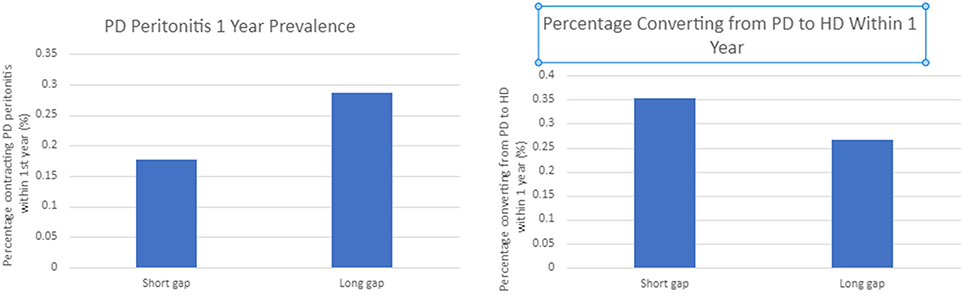
Discussion: We show that the rates of PD peritonitis are elevated in patients who have early catheter insertion. However, the likelihood of having unplanned haemodialysis is high in those whose catheter insertion is closer to them commencing PD, potentially owing to the decreased time training. When considering the optimal time to insert a PD catheter, we suggest balancing the risk of PD peritonitis against having adequate time for patients to complete training.
Markers of kidney disease used for exclusion from drug trials of VEGF-signaling pathway inhibitors in combination with immune checkpoint inhibitors
Dr Benjamin Elyan1, Dr Stephen Rankin1, CaNOn Group1,2,3, Professor Rob Jones3, Dr Ninian N Lang1, Professor Patrick B Mark1, Dr Jennifer S Lees1
1.School of Cardiovascular and Metabolic Health, College of Medical and Veterinary Life Sciences, University of Glasgow, Glasgow, UK,
2.NHS Greater Glasgow and Clyde, Glasgow, UK,
3.School of cancer Sciences, College of Medical and Veterinary Life Sciences, University of Glasgow, Glasgow, UK
Introduction: Combination treatment with vascular endothelial growth factor signalling pathway inhibitors (VSPI) and immune checkpoint inhibitors (ICI) has contributed to major improvements in survival in people with cancer. These survival improvements have not been matched in people with CKD. The evidence-base for cancer treatment in CKD may be limited by exclusion of people with CKD from cancer trials.
Methods: Systematic review of published clinical trials of combination with VSPI and ICI for any solid organ cancer. We included phase II-IV trials that enrolled >20 people. The primary outcomes of interest were inclusion and exclusion criteria related to kidney disease from trial protocols and information about the representation of people with kidney disease.
Findings: There were 32 trials (11,066 participants), spanning 2018-2022, examining 10 different combinations of VSPI/ICI that met criteria for inclusion. Full trial eligibility protocols were available for data collection from 31 trials. In every trial, exclusion criteria listed at least one marker of kidney disease. The most commonly listed exclusion criterion was creatinine clearance (CrCl: 26/31 trials, 75.7% participants). Though the threshold for exclusion varied across trial phase, tumour site and year of publication (Figure 1), all trials excluded participants with CrCl <30ml/min. Alternatives to CrCl as measures of glomerular filtration rate (GFR) were accepted in 6 trials (17.2% of participants). Participants with evidence of proteinuria on urinalysis were excluded in 25/31 trials (85.8% of participants). Quantitative methods of proteinuria (such as spot urine protein:creatinine ratio or 24-hour urine collection) were less commonly listed as exclusion criteria. All trials excluded people with immunosuppression or solid organ transplant. No trial reported baseline kidney function or proteinuria in the primary results paper. 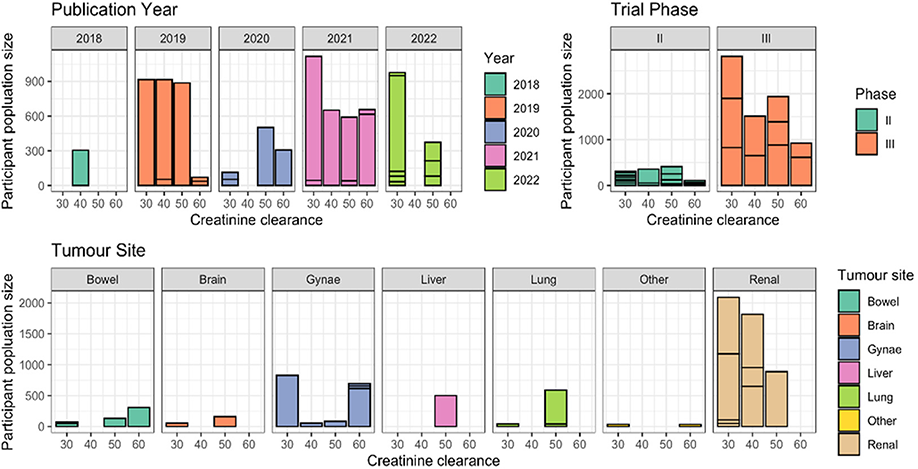
Conclusion and Relevance: All published trials of combination VSPI/ICI excluded people with markers of kidney disease, using a variety of definitions, suggesting a lack of biological rationale for these exclusion thresholds. Trials did not report the representation of people with kidney disease. Given the high prevalence of CKD in people with cancer, targeted efforts should be made to maximise representation of people with CKD in cancer trials to improve external validity. Where exclusions are biologically justified, standardisation of approach using reliable markers of kidney function would improve clinical application.
Standardised blood pressure measurement in nephrology outpatient clinics – is it feasible, acceptable and useful?
Colin C Geddes, Marion Houston, Mairi Rennie, Elizabeth Wilson, Julie Tortolano, Mun Woo.
Renal Unit, Inverclyde Royal Hospital, Greenock
Background. The 2021 KDIGO guideline for the management of blood pressure (BP) in chronic kidney disease (CKD) introduces a chapter dedicated to the measurement of BP ‘since all large randomised controlled trials targeting pivotal outcomes used standardised preparation and measurement protocols’.
Aim. The aim of this study was to analyse the impact of introducing BP measurement using a standardised preparation and measurement protocol to one of our weekly nephrology clinics.
Methods. Since November 2021 all patients attending one of our the weekly nephrology clinic had BP measurement by following a published standardised method. The introduction of this change was preceded by education of clinic staff and patients. A checklist ensured patients had appropriate preparation for each BP measurement. On first attendance BP was recorded in each arm where possible and the higher of the two arms used for all future measurements. We analysed the impact during the first four months in the following ways: 1. Interviews with clinic staff; 2. A bespoke anonymous patient acceptability questionnaire; 3. The proportion of patients who had a BP difference between each arm that would influence treatment decisions; 4. The difference between the standardised BP and the mean of the two preceding clinic measures.
Results. 135 patients had at least one standardised outpatient BP measurement during the 4 months period. Mean age was 60.9 years, 49.6% were female and 39 had a functioning renal transplant. The clinic staff highlighted an initial 10-15 minutes extra time per patient and the challenge of remembering what to do and not to speak to the patient during the measurement. By 4 months, however, they reported no increase in staff time except for new patients having modified the ‘flow’ of the clinic’ and the fact that the process was now routine. 43 patients completed the anonymous questionnaire and reported positive comments related to improved confidence in the measurements and no negative comments. Median difference in systolic BP between each arm was 5mmHg (range 0-29). Assuming a ‘target’ systolic BP for treatment of <130mmHg, 9.8% had measurement above the target in one arm and below the target in the other arm on the same day. The mean difference between the first standardised BP and the average of the two previous clinic measures was 3.79mmHg lower (range -36.5 to 41); p=0.003.
Conclusion. Introduction of standardised BP measurement to routine nephrology clinics was feasible. With good staff engagement to adapt to local facilities it added little to the time per patient and became routine. It was received positively by patients and resulted in measurements that had important implications for therapeutic interventions.
10 Year Outcome of Patients Attending Nephrology Clinics with eGFR<20mL/min.
Rebecca Glendell1, Colin Geddes2
1School of Medicine, Dentistry and Nursing, University of Glasgow
2Glasgow Renal and Transplant Unit
Background: As part of efforts to improve access to timely kidney transplantation in Scotland, it has been suggested that all patients reaching an eGFR <20mL/min should be referred for kidney transplant assessment to improve pre-emptive transplant opportunity. However, not all patients will be fit for, or will ever require, a transplant.
Aims: The aim of this study was to determine what proportion of patients attending renal clinics with an eGFR<20mL/min experience the following events:
1. Are assessed for transplantation, 2. Are added to the transplant waiting list 3. Receive a pre-emptive kidney transplant 4. Start dialysis and receive a subsequent kidney transplant 5. Die before the need for renal replacement therapy (RRT).
Methods: The primary cohort of all prevalent patients attending renal clinics in the geographical area covered by the Glasgow Renal and Transplant service in the year preceding 1st May 2012 with eGFR <20mL/min at their last visit were identified from the Scottish electronic patient record. Patients over the age of 75 and those who had already started RRT were excluded. All of the events described above were identified from specific coded entries. To determine whether patient numbers or practice have changed in the last 10 years, identically defined prevalent cohorts for 01/02/2017 and 01/05/2022 were compared.
Results: 561 patients met the inclusion criteria for the primary cohort with 10 year follow up. The table below summarises the results of the 3 cohorts. 45.1% of the patients followed for 10 years had died before transplant assessment and approximately 10% received a pre-emptive transplant. 
Conclusions: Referral of all patients for transplant when eGFR <20mL/min is unlikely to be an effective use of resources since almost half of patients died before any transplant assessment. It seems unlikely that earlier referral for transplant would have changed their outcome. Our data also demonstrates the importance of long-term follow up to inform advanced kidney care guidelines.
SGLT2-inhibitors in CKD: What it means for patients with type 2 diabetes in NHS Borders.
Dr Kirstin Griffin1, Dr Wendy Metcalfe2, Dr Rachel Williamson3, Dr Olive Herlihy3, Dr Jane Goddard2
1Senior Clinical Development Fellow, Renal and Diabetes & Endocrinology, Borders General Hospital
2Consultant, Renal Medicine, Royal Infirmary of Edinburgh
3Consultant, Diabetes & Endocrinology, Borders General Hospital
Introduction: SGLT-2 inhibitors are an important therapy in improving glycaemic control in patients with type 2 diabetes and have been available for use in diabetes for several years now. The DAPA-CKD trial showed that these medications slow disease progression in proteinuric chronic kidney disease (CKD) as well as reduce mortality from cardiovascular and renal causes [1]. Updated NICE diabetes guidelines have recommended that an SGLT-2 inhibitor should be considered (ACR 3-30mg/mmol) or offered (ACR>30mg/mmol) in addition to an ACE-inhibitor or ARB to treat CKD in patients with type 2 diabetes and an eGFR over 25ml/min/m2 [2]. The aim of this audit was to determine how many patients with type 2 diabetes are already prescribed SGLT-2 inhibitors within NHS Borders and to identify how many patients, who fulfil the CKD criteria, are not on treatment but would potentially benefit.
Methods: A database search of NHS Borders SCI-diabetes was undertaken to identify all patients with type 2 diabetes. These patients were then divided into two groups: those who were prescribed an SGLT-2 inhibitor and those who were not. Within each group, patients were then stratified according to stage of CKD and quantification of proteinuria.
Results: The database search identified 4143 patients with type 2 diabetes within primary and secondary care in NHS Borders. 66% (n=2737) of patients had an eGFR>60. Overall, 12% (n=513) of patients with type 2 diabetes were prescribed an SGLT-2 inhibitor. The majority of these patients (85%, n=436) had an eGFR >60. Of the 1406 patients with an eGFR <=60 (CKD Stage 3 or above), only 5% (n=77) of patients were prescribed a SGLT-2 inhibitor.
Both PCR and ACR were poorly recorded within both groups. In total, only 763 patients had a PCR and an additional 58 patients had an ACR recorded since January 2021. Recording was similar in both groups (21% on SGLT-2 inhibitor, vs 20% not on SLGT-2 inhibitor). Despite poor proteinuria recording, the study identified 162 patients with a recent PCR>50 (range 50.3-1300mg/mmol) who were not prescribed an SGLT-2 inhibitor.
Discussion: This study showed that SGLT-2 inhibitors are currently not a widely prescribed therapy for patients with type 2 diabetes in NHS Borders. Most patients currently on this treatment do not have CKD and are prescribed this for glycaemic control. This study identified a significant population of patients with CKD who would benefit from this treatment. Limited documentation of proteinuria is impacting clinicians’ ability to identify patients with higher levels of proteinuria who would benefit most from the addition of this therapy. Despite this, 162 patients with significant proteinuria were identified who would benefit from the addition of an SGLT-2 inhibitor to their diabetes and CKD management in line with updated NICE guidance. There is likely a much larger cohort of patients who would be eligible for this therapy if there was a record of their proteinuria. Local laboratory policy has restricted the testing of PCR and ACR measurements due to cost. This study highlights the need for proteinuria measurement to bring NHS Borders in line with national guidance. Furthermore, as most patients with type 2 diabetes are managed within primary care further work needs to be done to target education around SGLT-2 inhibitor prescribing for this high-risk patient population.
References
[1] Heerkspink HJL et al; DAPA-CKD Trial Committees and Investigators: Dapagliflozin in patients with chronic kidney disease. N Engl J Med 383: 1436–1446, 2020pmid:32970396
[2] NICE guidelines: Dapagliflozin for treating chronic kidney disease. Published 9 March 2022. https://www.nice.org.uk/guidance/ta775
Quantifying the Cost of Prenatal Detection of Chronic Kidney Disease in Scotland: Use of a Decision Tree Model
Hamill M1,2
1 London School of Economics
2 Department of Nephrology, Tallaght University Hospital, Dublin, Ireland.
Introduction: It is known that women with a pre-conception serum creatinine of greater than 125 µmol/l are at increased risk of an accelerated deterioration in their renal function and have a greater likelihood of pregnancy complications (Williams and Davison, 2008). Approximately 1 in.5 of the women who are found to have early preeclampsia have previously undiagnosed chronic kidney disease. Despite the recognition that chronic kidney disease will lead to an increased risk of maternal and foetal complications, a renal profile is not routinely performed at the prenatal booking visit which is offered at ten weeks gestation in the United Kingdom. Some women may undergo renal profile testing if their pregnancy is considered high risk due to certain factors such as multiple births, previous obstetric complications or co-morbidities such as diabetes mellitus, or cardiovascular disease. However, pregnancy may be the first time many women interact with healthcare and given the average age of mothers in Scotland in 2019 was 30.7 it is likely these chronic conditions, which are risk factors for CKD, may not yet have been diagnosed. Furthermore, the physiologic stress of pregnancy may unmask certain chronic diseases (Kaaja and Greek, 2005) Although blood pressure and urinalysis are key components of prenatal monitoring, it is likely without renal profile testing the opportunity to diagnose a significant percentage of chronic kidney disease in asymptomatic women may be missed. This model analyses the cost of prenatal detection of chronic kidney disease per person, by including renal profile testing with booking visit blood testing in Scotland.
Methods and Model Design: For the diagnosis of chronic kidney disease, specifically stages G3a to G5, at least two readings of estimated glomerular filtration rates (eGFR) less than less than 60mL/min per 1.73m2 using the CKD- EPI equation, over three months apart, are necessary (KDIGO). To characterise clinically significant chronic kidney disease this model used an eGFR threshold of less than 60 mL/min per 1.73m2. This would operate as a screening test and repeat testing would be necessary to confirm the diagnosis of CKD. It is also likely this may record cases of acute kidney injury during pregnancy. Given acute kidney injury is a risk factor for chronic kidney disease, recording of these events in young women may prove beneficial. A decision tree model was utilised to analyse the cost of this intervention from the paper perspective of the National Health Service of Scotland and the inputs for the decision tree including the termination rate, estimated rates of miscarriage, and attendance at booking visit drawn from NHS Scotland data. As per Williams and Davison (2008), 1 in.750 pregnancies are complicated by stage 3-5 chronic kidney disease. As per Chu (2021) approximately 50% of chronic kidney disease diagnoses are not known in women of childbearing age. As the booking visit is already an establish intervention, its costs including labour, and blood taking equipment were not included and the only cost considered is that of the addition of a renal profile blood test which is £0.25 (NHS Scotland, 2022) The base case analysis suggests that the cost of detecting one new case of stage III to stage IV chronic kidney disease is approximately £375 per woman.
Conclusion: This model has analysed the cost of adopting this intervention based on assumptions from UK and international data. For the individual woman, this intervention would lead to increased monitoring during pregnancy, and trigger referral to a specialist obstetric nephrology service. In the longer term, this intervention will offer healthcare providers the opportunity to introduce measures to her care which may slow the progression of her chronic kidney disease. Across NHS Scotland, this intervention may lead to safer pregnancies and would provide data to plan obstetric and nephrology services in the future.
Expansion of “REACH Transplant” initiative: Home based living donor kidney transplantation (LKDT) education for patients in Scotland
O Hobson1, J Lumsdaine2, L White3 G Oniscu1
1Edinburgh Transplant Centre, Royal Infirmary of Edinburgh, UK
2Department of Renal Medicine, Royal Infirmary of Edinburgh
2On behalf of Living Donation Scotland
3Organ Donation Policy Team, Scottish Government
Background: Renal Choices and Education @ Home (REACH) was a pilot project, funded by the Edinburgh Transplant Centre and NHS Lothian (with support from the NHS Blood and Transplant Living Transplant Initiative), which comprised a home education model of LDKT education for patients and members of their support network, based on the success of the Dutch “Kidney Team at Home” approach. The objective of REACH's tailored, interactive home education sessions was to increase knowledge about transplantation and LDKT and to facilitate open discussion about living kidney donation – overcoming identified barriers to accessing LDKT.
Materials/Methods: Evaluation of the pilot, using pre and post session questionnaires, indicated that homebased education significantly increased knowledge among patients and their invitees and made attitudes to LDKT among patients more favourable. Home visits have been extremely well received with excellent feedback provided by attendees. Feedback from kidney care planning nurses, nephrologists, transplant surgeons and co-ordinators has also been positive. The REACH approach is now embedded as standard care for patients residing in NHS Lothian and NHS Borders, with over 175 (September 2022) patients having received a home visit.
Results: As a result of the success of the REACH pilot, the Scottish Government, as part of its Organ Donation and Transplantation Plan 2021-2026, has allocated recurring funding for the nationwide roll-out of “REACH Transplant”. Funding will cover 5 x full time equivalent (FTE) Band 6 REACH Transplant Nurse Specialists and 1 FTE Band 7 Programme Lead. The recruitment process is currently ongoing (September 2022) and it is anticipated than an update will be available at the time for the SRA conference in November. REACH Transplant Nurse Specialists will be employed locally in the renal units of each Scottish health-boards, (with coverage allocated on the basis of the local CKD/RRT population, as well as geographical and socio-economic characteristics) and will work closely with local teams to optimise pathways and outcomes for patients who would benefit from a kidney transplant.
Conclusions: The Scotland-wide roll out of REACH Transplant will mean that all patients living in Scotland who would benefit from a kidney transplant will have the opportunity to receive tailored information about LDKT, along with members of their support network, in a relaxed setting, free from time constraints. It is anticipated that homebased education will continue to overcome identified barriers to access, increasing the likelihood that patients will eventually receive a transplant from a living kidney donor, and that the benefits of the homebased approach are likely to be greatest for those currently least likely to access LDKT, including those belonging to an ethnic minority and those affected by socio-economic deprivation.
Improving Conservative Care (CC) Service in Glasgow: an audit of home visit service outcomes
Ashley Hong; Kirsty Crowe; Louise Robertson, Connor McKee; Laura Mulligan; Seamus Crumley, on behalf of WOS Supportive Care Group
Queen Elizabeth University Hospital, Glasgow
Aim: We present our experience of developing a home visit service for patients undergoing conservative care (CC) for renal failure in a large tertiary referral centre in Glasgow to improve patient experience and service outcomes.
Methodology: Previously these patients struggled to attend clinic and may experience a high symptom burden with limited specialist input and a lack of anticipatory care planning (ACP). They were at risk of acute hospital admission at the end of life, and at times, inappropriate dialysis.
A new CKD nurse specialist with a special interest in supportive care was employed, and patients opting for conservative care were offered home visit service from October 2021. These visits would offer holistic assessment/ACP, family support and help bridge the gap to community services. A monthly multidisciplinary team meeting was held to support this, with input from Nephrology, Palliative Care and Pharmacy.
We audited patient activity and home visit service outcomes over a 6 month period, from Oct 21 – March 22, and compared this with pre-service data over a similar period, from April 21 – Sep 21. Data is obtained through home visit records, Clinical Portal, and Scottish Electronic Patient Record (SERPR) queries.
Results: Over a 6-month period, 42 patients have been assessed at home. 15 patients (36%) have died. Of those, preferred place of death has been achieved in 57% compared to only 31% prior to service commencement. ACP documentation, resuscitation decisions and patient electronic key information summary have also improved, leading to reduced number of unplanned hospitalisations (43 episodes pre-service vs 25 post service). 69% of patients preferred the home visit service. This is reflected by reduced clinic attendances (97 pre-service vs 26 post-service). The service has been evaluated positively, via anonymous post visit questionnaire, by 100% of respondents (n=20). At present, the service supports 49% of those undergoing conservative care and has identified scope for development, while actively seeking ongoing resource commitment.
Conclusion: The home visit service has led to improved patient experiences and outcomes by enabling more effective delivery of holistic care for CC patients at home. The potential cost savings are significant, as shown by the reduction in hospital bed stays (£1059/night), clinic attendances (£189/clinic), provision of inappropriate haemodialysis (£350/4 hour session), and associated patient transport costs. The service has been welcomed by patients, families and primary care practitioners. We hope to continue to expand the service and support more patients on conservative management.
Is there room for improvement in the management of dyslipidaemia in kidney transplant recipients?
Htet Htet Ei Khin*, Trijntje Rennie
Royal Infirmary of Edinburgh, Edinburgh
Background: Cardiovascular mortality and morbidity in patients with end stage renal disease (ESRD) is extremely high (10-20 times that of general population). The cardiovascular risk reduces after kidney transplantation but it remains higher than in the general population. The Scottish Renal Registry reported that 25% of death in kidney transplant recipients (KTR) between 2008 and 2019 was due to cardiovascular disease (CVD).
Dyslipidaemia is one of the most important modifiable risk factors of CVD in KTR. The risk of dyslipidaemia remains high in KTR mainly due to immunosuppressive drugs such as steroids, CNI, mTOR inhibitors etc. The Landmark ALERT extension study showed that fluvastatin was associated with 29% reduction in cardiac death or non-fatal MI compared to placebo. The UKKA/BTS guideline recommends the following for all KTR:
Lipid levels should be measured at 3 months post transplant and then annually
Treatment targets should be the same as in the general population
KTR at increased primary or secondary cardiovascular risk should receive statin therapy
A 10% 7-year risk of a major adverse cardiac event using the risk calculator derived from the ALERT study should be used as a trigger for consideration of lipid lowering therapy
Questions: How does our local practice in the management of dyslipidaemia compare to recommendations set by the UKKA/BTS guideline?
Methods: All KTR who received a kidney transplant between 2015 and 2020, followed up in NHS Lothian and Borders were analysed. Automated data collection from eSRPR included: recipient age, date and type of transplant, graft function, graft loss and mortality data, cholesterol measurements and anti-lipid medication pre-and post transplant.
Findings: In total 257 KTR, including 95 living donor, 154 deceased-donor and 8 SPK transplant recipients were followed up. Mean (current) age 58 years, and mean duration of follow up was 4.4 years. Mean eGFR at 1 year was 54 ml/min. Nearly 90% of patients had an eGFR >30 ml/min at 31/7/2022. Six recipients had died, and 5 had lost their graft at 1 year. There were 16 death and 15 graft loss at 4 year and 19 death and 14 graft loss at the end of follow up (31/7/2022).
Lipid check: 31% (80 out of 257) of KTR had a lipid check performed during the first 3 months post Tx, this was 37% (97 out of 257) at 6 months. 44% (99 out of 224 KTR with a functioning graft) had a lipid check within the last calendar year (from 31/7/2021 to 31/7/2022). 24% (62 out of 257) did not have a lipid check performed post transplant at all.
Cholesterol target: Out of the 97 KTR with a lipid check in first 6 months, 33% (32) had a total cholesterol <4. Out of 99 KTR with a lipid check within the last calendar year, 40% (40) had a total cholesterol <4.
Anti-lipid treatment: Out of the 224 KTR with a functioning graft, 33% (75) are currently on anti-lipid treatment. >50% of those with a total cholesterol >4 in.last 1 year are not on any treatment. 107 (42%) of KTR have not been on anti-lipid medication pre or post transplantation)
Summary and Recommendations: Lipid management in kidney transplant recipients is vital and review of current practice suggests routine lipid check is challenging. We are planning to raise awareness within the transplant unit and referring centers around this issue, advocate the routine use of a MACE calculator and improve compliance with the UKKA/BTS guidance by creating a 3-month and 1-year routine post transplant blood testing set which will include a lipid profile. We will re-audit in a year time after changing practice.
Patient perceptions on use of video consultations for renal outpatient clinics – a single centre survey
Zheying Khor*1; Ross Norris*2; Alison Almond3; Michael K Kelly4; Thalakunte Muniraju5; Nadeeka Rathnamalala6; Elaine Rutherford7 (*Joint first authors)
1Clinical Developmental Fellow, Dumfries and Galloway Royal Infirmary;
2Internal Medicine Trainee, Dumfries and Galloway Royal Infirmary;
3-7Consultant Nephrologist, Renal Unit, Dumfries and Galloway Royal Infirmary
Background: NHS Attend Anywhere is service which enables patient consultation to be conducted via a video call. This facility can be accessed by patients using any device with an internet connection. Usage of this service within the renal unit, NHS Dumfries and Galloway was implemented in 2018 prior to the COVID-19 pandemic. We conducted patient surveys in 2018 and thereafter in January 2022 following the wide usage of the facility during the pandemic to assess patients’ views before and after utilising the service.
Methods: In 2018, survey questionnaires were handed out to 50 patients during their renal outpatient clinic appointments to assess their willingness to participate in video consultations for their upcoming appointments. The survey also explored the perceived benefits and barriers for video consultations using multi-select questions. During the COVID-19 pandemic, video consultation was implemented for most renal outpatient consultations and a further survey was collected from 40 patients in 2022. Data from the second survey included the usage of video consultation, satisfaction on a 10-point rating scale, benefits and barriers of the service and whether patients were willing to continue or resume using the facility.
Results: The initial survey revealed that 29 out of 50 patients (58%) showed interest in video consultations. The most common perceived benefit was less time spent travelling (86%) while the commonest barrier was the lack of confidence when using the technology (57%). In the second survey, 16 patients (40%) continued to use the service. The average satisfaction among the current users was 8.5 on a scale of 10 while the average was 7.4 for the previous users. Among the current users, 13 of them (81.2%) wished to continue using the service while 13 out of 24 of the previous users (54%) said they would avoid video consultations in future appointments, mostly citing the lack of confidence in technology as the main reason.
Conclusion: Feedback from current renal outpatient users of the NHS Attend Anywhere in Dumfries and Galloway were generally positive. Conversely, patients who are less experienced in technology may find the service difficult to access. Additional planning with focus on patient education is required for this service to be widely implemented within the renal services and the wider NHS.
References
1. https://www.vc.scot.nhs.uk/near-me/guides/
Rituximab therapy in the Glasgow Renal and Transplant Unit during the covid-19 pandemic: use and outcomes
Ingrid WS Lee1, Jamie P Traynor2, Kate Stevens2, Emily McQuarrie2
1School of Medicine, University of Glasgow.
2Glasgow Renal & Transplant Unit, Queen Elizabeth University Hospital, Glasgow
Introduction: Rituximab is a monoclonal antibody against CD20 on B cells. COVID-19 has had an impact on patients with immune-mediated kidney disease, in particular those receiving immunosuppressive therapy such as rituximab. Current literature suggests rituximab use may be associated with increased risk of adverse outcomes from COVID-19, even after vaccination. This project aims to determine whether rituximab use changed during the pandemic (defined as March 2020 to June 2022), and whether any patients who received rituximab died due to COVID-19.
Methods: Patients who received Rituximab in the Glasgow Renal and Transplant Unit from April 2015 to July 2022 were identified by searching the West of Scotland Electronic Renal Patient Record (SERPR). Data were extracted from SERPR and GG&C Clinical Portal including: primary renal diagnosis, date rituximab commenced, most recent kidney replacement therapy modality, and where applicable date and cause of death. Vaccination data were obtained via Clinical Portal. Paediatric patients, those with a primary renal diagnosis of AL amyloid and patients from outwith Greater Glasgow and Clyde and Forth Valley health boards were excluded. Remaining patients were separated into two groups based on whether the first Rituximab dose was administered pre COVID-19 pandemic or during COVID-19 pandemic.
Results: 171 identified patients fulfilled inclusion criteria. Of them, 33% (n=56) received rituximab during the COVID-19 pandemic. Rituximab use peaked in 2019 with 35 patients and has followed a downward trajectory since with 32 patients treated in 2020, 23 patients in 2021, and 11 patients in the first half of 2022.
The main indications for rituximab were glomerulonephritis (49%, n=83) or vasculitis (37%, n=63). Specifically, the top five diagnoses were membranous nephropathy (27%, n=46), granulomatosis with polyangiitis (20%, n=35), microscopic polyangiitis (14%, n=24), minimal change nephropathy (8%, n=14) and focal segmental glomerulosclerosis (7%, n=12). Conditions treated were similar both before and during the pandemic. 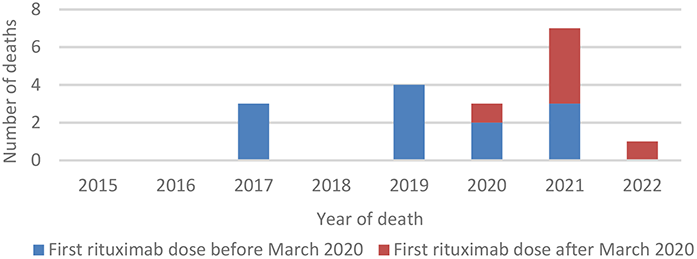

11% (n=18) of patients died during the study period. Cause of death could be ascertained in 14 patients. 61% (n=11) of deaths occurred during the COVID-19 pandemic. Of these 11 deaths, five were due to COVID-19. These five deaths occurred in 2021, accounting for 71% of deaths in 2021.
Of the 11 patients who died during the pandemic, six received a first dose of rituximab after March 2020 (Figure 1). Overall COVID-19 was listed as a cause of death in 45% (n=5). Of these 80% (n=4) had received their first rituximab dose after March 2020.
Median time to death from first dose of rituximab was 374 days (IQR 166-671). Median age at death was 69 years (IQR 61-78).
In the five patients who died with COVID-19, median time to death was 251 days (IQR 142-464). Median age of those who died with COVID-19 was 69 years (IQR 69-75). Current median age of the 153 surviving patients who received rituximab is 59 years (IQR 46-70).
The earliest recorded first dose of COVID-19 vaccinations in the 56 patients who received Rituximab during the pandemic was at the end of January 2021. The median number of vaccination doses was four. Three patients were unvaccinated and two of these patients died (Figure 2).
Conclusions: Rituximab use in the Glasgow Renal and Transplant Unit peaked in 2019 and decreased during the COVID-19 pandemic. The overall distribution of conditions treated remained similar compared to pre-pandemic. Despite caution in administering immunotherapy to patients during the pandemic, unfortunately deaths due to COVID-19 still occurred in patients treated with rituximab after March 2020. Unvaccinated patients were more likely to die. Numbers are small and association does not prove causality. We do not have information on either the timing nor the effectiveness of vaccination relative to rituximab dosing. Furthermore, withholding immunosuppression and failing to treat an immune mediated kidney disease is not a benign intervention.
Arrhythmia complicating internal jugular dialysis line insertion – truth or myth?
Luis Loureiro Harrison, Arthur Doyle
Queen Elizabeth University Hospital, Glasgow
Introduction: In our clinical experience, there is a prevailing idea that the insertion of internal jugular dialysis lines is more hazardous in hyperkalaemic patients due to the risk of destabilising the myocardium as the guidewire is introduced. Some practitioners fear that this can induce arrhythmias, particularly ventricular tachycardia and fibrillation. This is despite prior research in non-dialysis settings that suggested ventricular arrhythmias are not more common during neck line insertion. We carried out a retrospective observational study to investigate whether arrhythmias complicate internal jugular line insertion for dialysis.
Aims: Primary - To determine which proportion of internal jugular non-tunnelled dialysis lines performed in hyperkalaemic patients are complicated by arrhythmias (ventricular or otherwise).
Secondary: – To determine which patient factors are associated with arrhythmias in this patient group.
Method: We used the Strathclyde Electronic Renal Patient Record (SERPR) to identify patients who underwent internal jugular non-tunnelled dialysis line insertion between the 1st January 2016 and the 30th June 2022, and had also recorded a potassium of 6.0 or above within the 24 hours preceding the procedure. Further data on serum calcium and magnesium, 30-day mortality, diagnoses of atrial fibrillation (AF) and ischaemic heart disease (IHD), and treatment with beta blockers, calcium channel blockers, and amiodarone, was gathered. We reviewed inpatient records and SERPR clinical entries to identify arrhythmic complications in the 24-hour period post line insertion. Sinus tachycardias were not recorded.
Results: We identified a total of 908 internal jugular non-tunnelled dialysis lines performed in the time period of interest, of which 83 were performed on patients with a potassium of 6.0 or above. These procedures were performed on 80 patients. The median and mean potassium were 6.4 and 6.475mmol/L respectively. 6 procedures (7.23%) were complicated by atrial arrhythmias in the first 24 hours – 3 de novo AF with rapid ventricular rate, 1 established AF with new rapid ventricular rate, 1 atrial flutter, and 1 junctional rhythm. 10 inpatient case notes could not identified and in these cases we could not determine whether an arrhythmia had occurred. No ventricular arrhythmias were identified.
There were no statistically significant differences in line laterality, renal replacement therapy status, serum potassium, serum magnesium, AF diagnosis, IHD diagnosis, beta-blocker treatment, calcium-channel blocker treatment, or amiodarone treatment between procedures complicated by arrhythmia, and those that were not. Serum calcium, however, was lower in the arrhythmia group (median 2.020 versus 2.285mmol/L, p=0.03341). Patients who developed arrhythmias were older than those who did not (median 71.40 versus 63.08 years, p=0.0341).
Conclusion: In this retrospective observational study we identified no ventricular tachycardias in a series of procedures performed in hyperkalaemic patients over a 6-year period. Atrial tachyarrhythmias, however, do complicate some neck line insertions, and are associated with older age and lower serum calcium levels at the time of insertion.
Clinical usefulness of a risk prediction model to guide clinical decisions after hyperkalemia
Andrew McLean1, Simon Sawhney2
1Aberdeen Centre for Health Data Sciences, University of Aberdeen, Aberdeen, United Kingdom
2National Health Service Grampian, Aberdeen, United Kingdom.
Hyperkalaemia (HK) is a well recognised clinical emergency affecting 1% of people per year in Scotland. Current guidelines recommend medication reviews after HK, including consideration of dose adjustments, however medicines such as RAAS blockers have strong evidence for cardiac, renal, and survival benefit. In addition, adjunctive potassium lowering therapies are now also available to consider for those at high risk. There may be different clinical opinions on the degree of caution required with monitoring and dose changes. We assessed whether a clinical prediction tool could feasibly or usefully assist decision making among those presenting with HK, by identifying people at higher risk of recurrent events.
We identified all people in Grampian in a ten-year period, who presented for the first time with an admission episode of HK>=6.0 who survived to hospital discharge. We developed multinomial regression models to separately predict death, and recurrent HK within 30 days. Three models included M1: demographics+kidney biochemistry; M2: addition of comorbidities; M3: further addition of antihypertensive and diuretic medications. We used decision curve analysis (DCA) is a to evaluate “clinical usefulness” through graphical comparisons of net benefit. We used DCA to compare the potential net benefit of competing decision approaches at a risk threshold range where nephrology consultants fed back that they would consider a change in management - ranging from 10-50% for interventions including dietary advice, increased monitoring, or medication adjustments.
Of 2985 people surviving HK episodes, 394 (13.2%) experienced recurrence within 30 days, and 362 (12.1%) died without any recurrence. In univariable analysis, older age, low discharge eGFR, higher potassium at discharge, and heart failure were associated with both recurrent HK and death. In contrast cancer was associated with death but not HK; and diabetes was associated with recurrent HK, but not death. For models M1, M2, M3; AUC statistics were 0.77, 0.77, 0.77 for HK recurrence; and 0.61, 0.67, 0.69 for death. Decision curve analysis suggested limited clinical usefulness of any model for any decisions that would be considered even if risk of recurrence were low (e.g. risk ∼10%), but potential usefulness to guide decisions that may be limited to higher risk individuals. In this situation a simple model of demographics and laboratory results would be adequate. This will be carried forward into subsequent external validation.
The Use of a Collaborative, Regional Approach to Deliver Immersive Simulation in Renal Emergencies
Millar JWT1, Crowe K1, Radley A1, Fairweather J2, Clark LE3, Spalding E4, Drummond I
1Glasgow Renal and Transplant Unit Queen Elizabeth University Hospital
2Renal Unit, University Hospital Monklands,
3Renal Unit, Aberdeen Royal Infirmary,
4Renal Unit, University Hospital Crosshouse
Introduction: Immersive simulation is a validated methodology used in multiple medical specialties to provide training in high impact clinical scenarios. The West of Scotland Renal Simulation Network (WOSREN) was established in 2021 to co-ordinate high-quality, immersive simulation training for Doctors in Training (DiT) undertaking Internal Medicine (IM) or Renal Medicine training across in NHS Greater Glasgow and Clyde, Ayrshire and Arran and Lanarkshire. Since then, there has been greater wider collaboration with the nephrology team from NHS Grampian to coordinate activity, share scenarios and other resources.
Methods: The WOSREN group organised half-day simulation training with collaboration from dialysis teams at Forth Valley Royal Hospital and University Hospital Crosshouse. Participants engaged in three clinical scenarios focused on management of commonly encountered emergencies, including vascular access-related sepsis, pulmonary oedema, and cardiac arrest of in a haemodialysis patient. Sessions also focused on developing non-technical skills including communication and managing uncertainty. The faculty consisted of senior renal trainees, consultant nephrologists and senior nursing staff from local renal dialysis units;’ all of whom contributed to the facilitated debrief. A flipped classroom methodology was used to maximise session time spent in scenarios. A pre-course recorded presentation was made available to participants prior to the sessions. A knowledge-based multiple-choice questionnaire (MCQ) developed conjointly with WOSREN faculty (registrars and consultants) was administered to capture the participant's pre-course knowledge and confidence. Questionnaires with alternative knowledge questions centred on the same themes were repeated after the simulation session. Candidates were asked to offer Take Home Messages (THM's) from each scenario. These were recorded both to ensure that key learning objectives had been achieved as well as to assess impact on future practice.
The NHS Grampian sessions made use of similar immersive scenarios including cardiac arrest during haemodialysis, pulmonary oedema in a haemodialysis patient, and a bleeding arteriovenous fistula. These sessions involved a diverse group of multi-professional learners including healthcare support workers (HCSWs), nurses and trainees from FY1 to ST level. Each scenario ran for thirty minutes, with a group introduction and facilitated structured debrief.
Results: Eighteen GIM trainees participated across three WORSEN run sessions. Participants scored well in pre-course MCQ and this knowledge improved following the training session (mean MCQ score 79% and 95% respectively). This reflected engagement in pre-course material and technical learning within the scenarios. We analysed responses to the pre- and post-course questionnaire with improvements in the statement “I feel confident responding to an emergency in the renal dialysis unit” from 33% to 100% participant agreement. Improvements were also seen in the statement “I am confident managing a cardiac arrest on haemodialysis” from 0% to 80% participant agreement. The main themes of THMS's include the importance of situational awareness, how to make the most efficient use of the different skill within teams, appropriate escalation of patients, and the importance of a systematic approach to assessment.
The NHS Grampian group ran six half-day sessions between June and November 2021. There were a total of ten attendees per session split into sub-groups of five. When considering feedback from the NHS Grampian sessions, 100% of responders found the session to be useful. Comments included: “I really liked the simulation practice because this increases confidence when dealing with renal patients” and "I hope other departments organise simulation as it helps to learn about clinical management of cases, communication and teamwork, and attract the junior doctors towards those specialties because of reflection of friendly culture of those departments and specialties”.
Conclusion: We have demonstrated that high-quality immersive simulation can be a valuable learning tool to improve the confidence of both DiT and members of the wider multi-professional team managing common emergencies encountered in the care of patients with renal disease. The collaborative network has underpinned this with effective resource sharing and comparison of local experiences. Looking to the future our intention is to engage a greater number of IM trainees in current sites as well as developing a simulation programme for renal specialty trainees. We plan to expand our working group to include representatives from renal units in other Scottish health boards to enable further collaboration.
Patients’ attitudes towards different areas of kidney research
Ching Wei Ng1, Robert Hunter2
1Edinburgh Medical School, University of Edinburgh;
2Centre of Cardiovascular Science, University of Edinburgh.
Introduction Healthcare research is fundamental to the further understanding of health conditions and the development of therapies. The understanding of patient perspectives towards different areas of research would emphasise the focus on patient-centred research. We aimed to understand the attitudes towards biomedical research in patients with kidney disease.
Methods: A questionnaire evaluating patients’ attitudes towards personal involvement in study design, kidney biopsy-based research and the use of routinely healthcare data in research.
Results: There were 33 participants in total. For interest towards personal involvement in study design, most participants (57.5%) showed interest in helping to identify important research topics. As for patients’ attitudes towards kidney biopsy-based research, 90.9% of participants were willing for the surplus bits of tissue from their sample to be used for research and 60.6% participants would allow for an additional pass during a clinically indicated biopsy. Most participants (n=19) were not aware of the use of their anonymised routinely collected healthcare data in research. Participants were more willing for their healthcare data to be used in research if the NHS or university teams were involved. There were no significant associations found between the variables.
Conclusion: Overall, we concluded that patients were most interested in helping to identify research topics. Researchers are more likely to obtain tissue samples for research during a clinically indicated biopsy from the surplus tissue samples or via an additional pass. Participants were more willing for their healthcare data to be used in research by the NHS or university teams.
Visual Abstract:
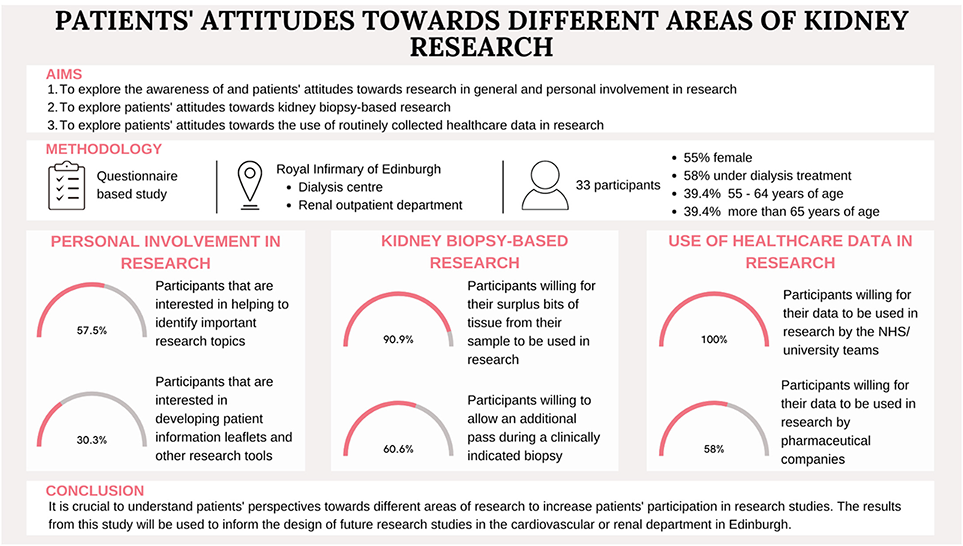
Developing a Renal Crash Course for new nephrology trainees
Ailish Nimmo1, Carol Chau2, Jemima Scott2
1Department of Renal Medicine, Royal Infirmary of Edinburgh, Edinburgh
2Department of Renal Medicine, Southmead Hospital, Bristol
Introduction: Renal medicine is a diverse specialty which balances managing acutely unwell patients with holistic longitudinal care and requires broad cross-specialty knowledge. With kidney care frequently provided by specialist units it can be challenging for junior doctors to gain experience in the specialty. Anecdotally, commencing a registrar post in renal medicine can be daunting, particularly for those without substantial prior exposure of the specialty. To address this, we developed a not-for-profit Renal Crash Course to ease the transition to renal registrar. Our aims were to provide teaching on the common on call queries encountered in the first year of training and facilitate networking amongst a new peer group.
Methods: The Renal Crash Course was piloted as a one-day in-person weekend event in July 2022. It was endorsed by the UK Kidney Association (UKKA) and advertised via the UKKA website, communication with UK Internal Medicine and Renal Training Programme Directors, and on Twitter. Participants were charged £10 to contribute to venue hire fees. A pre-course questionnaire was used to help inform the programme, which contained the main areas covered by the renal registrar on call: haemodialysis, peritoneal dialysis, transplantation, GP calls, the acutely unwell renal patient and prescribing in kidney disease. Teaching was delivered as lectures with interactive components by current renal registrars and pharmacists. Anonymised feedback on the structure, content and running of the course was also collected following the event.
Results: Thirty-five participants attended from across the UK, ranging from IMT1 to IMT3 trainees. The pre-course survey showed the majority had been made aware of the course via email from their new training programme directors or by word of mouth from colleagues. From the pre-course questionnaire, the topics most frequently wanting covered by attendees were treating acutely unwell renal patients, dialysis terminology and troubleshooting, managing GP calls, and deciding when to admit patients. Trainees stated their biggest concerns starting as a registrar were managing phone referrals without being able to assess the patient, dealing with emergencies out of hours, and a possible lack of senior support.
All attendees stated they would recommend the course to others, with comments including ‘thoroughly enjoyed it and I feel much happier starting in August’, ‘the best course I've been to this year - very relevant to our clinical practice’ and ‘I truly enjoyed the crash course - well organised, excellent presenters, interactive presentations and well fed with both knowledge and food’. Based on post-event feedback, 86% favoured the event as being in person and 94% preferred the event to be run on a weekend. The participants approved of the variety and enthusiasm of the speakers. Suggestions on future improvements included the addition of talks on supportive management of kidney disease and management of glomerulonephritis, and signposting to useful resources for learning during registrar training.
An additional survey of participants will be distributed in December 2022 to those with renal training numbers. Feedback about key knowledge barriers experienced in the first six months of training will be used to plan future Renal Crash Course events.
Conclusion: Commencing a renal registrar post can be a daunting experience especially in this time of unprecedented NHS burden and innovative measures to ease this transition are required. The Renal Crash Course aims to equip new registrars with the skills needed to approach their first year of training with confidence and was well received by incoming registrars. We hope this will benefit not only the individual doctor but also the unit they are welcomed into. The Renal Crash Course will sit within the new UKKA ‘Renal Starter Group’ network, designed to promote renal specialty training and support junior doctors looking to apply to join this fascinating career pathway.
Cystic Kidney Panel Testing in Scotland
Jolene Peddie
East of Scotland Regional Genetics Service, NHS Tayside
Polycystic kidney disease (PKD) is a genetically heterogenous disorder with variants in PKD1/2 and PKHD1 accounting for the majority of autosomal dominant and recessive cases respectively. The East of Scotland Regional Genetics Service (ESRGS) previously delivered testing for individuals with cystic kidneys by Sanger sequencing. This approach was laborious and was limited to analysis of six genes (PKD1/2, PKHD1, TSC1/2 and HNF1B) depending on clinical indication. Sanger sequencing of the PKD1 gene is particularly cumbersome due to the high sequence similarity to the six PKD1 pseudogenes and this method has resulted in at least one false negative to date. Additionally, advances in genomics have resulted in further gene-disease correlations being established meaning the number of genes thought to be causative of cystic kidneys has significantly increased. Whilst the previous Sanger approach did have a good diagnostic yield (59%; n=53), it still failed to identify a genetic cause for a number of individuals, particularly those with an atypical presentation. Together with nephrologists, a “Cystic Kidney” Next Generation Sequencing (NGS) panel was designed to cover 32 genes known to cause cystic kidneys. Analysis can be performed for either the full cystic kidney panel or subpanel(s) (ADPKD, ARPKD, Renal cysts and diabetes, Tuberous sclerosis) with the option of reflexing to full panel re-analysis if negative. Almost one year post-implementation, there have been 112 analyses performed with an overall diagnostic yield of 43%. Nearly half of the referrals received have been for ADPKD subpanel analysis (n=54; diagnostic yield=61%) with the full panel being analysed for 35 cases (15 through reflex) and this has resulted in a diagnosis in 34% of cases. I will discuss some cases that would not have been detected by our previous methodology such as variants in the ALG8, ALG9 and DNAJB11 genes as well as a mosaic PKD1 case that would have been at the limit of detection for Sanger sequencing. These cases demonstrate the benefit of delivering a cystic kidney NGS panel; it allows us to offer a better, more comprehensive service to patients whilst overcoming the issues surrounding Sanger sequencing of the PKD1 gene.
Accessing health information in kidney disease: what do patients want to know?:
Navjot Purewal; Dr Robert Hunter
University of Edinburgh; Department of Renal Medicine, Royal Infirmary of Edinburgh
This study explores two aspects of maintaining a healthy lifestyle with kidney disease, specifically regular exercise in patients with end stage kidney disease (ESKD) on haemodialysis, and the maintenance of a healthy weight in patients with ANCA vasculitis. ESKD symptoms can limit exercise tolerance in haemodialysis patients, which decreases quality of life and increases morbidity and mortality. This study explores barriers to exercising and the use of exercise bikes in the dialysis unit of RIE. ANCA vasculitis can affect the kidneys and has been associated with excess weight gain. This has been associated with glucocorticoid therapy, and this study explores patient opinions on this and other barriers to maintaining a healthy weight with vasculitis.
Questionnaires in this study aim to ascertain patients’ attitudes and behaviour regarding healthy lifestyles, and explore their sources of health information and how healthcare professionals and resources could improve. The 51 completed questionnaires were analysed by thematic analysis and the following themes developed:
Patients had a thorough understanding of healthy lifestyle factors, but experience obstacles relating to kidney disease and its symptoms
Patients used NHS staff and the internet, and are receptive to increased support from both
Patients want individualised exercise and weight loss plans from websites (such as EdRen) and NHS staff
These findings are discussed to improve trusted online resources, and suggest other recommendations for NHS staff. This includes individualised exercise and weight loss plans for patients, 1-to-1 monitoring, and advice on how to cope with kidney disease related symptoms.
Diagnosis of advanced cancer and subsequent outcome in people with CKD: a sex-stratified analysis of a national population cohort
Richard Shemilt1, Michael K Sullivan1, Benjamin MP Elyan1, Patrick B Mark1, Jennifer S Lees1
1 Institute of Cardiovascular and Medical Sciences, University of Glasgow, Glasgow, UK
Introduction: Incidence of cancer is increased in patients with chronic kidney disease (CKD), with a number of large population cohorts suggesting that estimated glomerular filtration rate (eGFR) of <60ml/min/1.73m2 increases overall risk of cancer death after adjustment for overlapping risk factors. In the general population, advanced cancer stage at presentation is associated with poorer outcomes. We sought to determine whether patients with CKD were more likely to present with advanced stage cancer, whether this impacted on their survival, and whether these factors varied by sex.
Methods: Data were from Secure Anonymised Information Linkage Databank (SAIL), a Welsh primary care cohort with linkage to cancer and death registries. We included patients with a new cancer diagnosis between 2009 and 2020, and at least two kidney function tests before and within two years of diagnosis. Albuminuria was not routinely available. Logistic regression models (adjusted for age, deprivation, smoking status and number of comorbidities) determined odds of presenting with advanced cancer (stage 3 or 4 at diagnosis). These models determined odds of overall survival at one year after cancer diagnosis for each 10mL/min/1.73m2 reduction from baseline eGFR 80 mL/min/1.73m2. Logistic regression models for survival were additionally adjusted for presenting cancer stage. Due to significant interaction between age and sex, further analyses were stratified by sex and age groups.
Results: There were 111,081 patients: 48% were female, mean age was 69.5 years (standard deviation 14.2) years and 25,499 had CKD (eGFR <60ml/min/1.73m2). Over a median follow-up time of 3.6 (interquartile range 0.9 – 5.9) years, there were 54,430 deaths of which 41,990 had cancer listed as a primary cause. Men were more likely to present with advanced cancer than women (odds ratio (OR) 1.32, 95% confidence intervial (CI) 1.28, 1.37) but were also more likely to survive one year following cancer diagnosis (OR 1.18, 95% C.I. 1.14, 1.23). Each 10ml/min/1.73m2 reduction in eGFR was associated with lower likelihood of presentation with advanced cancer in men of all age groups and in women aged 60-80(Figure 1A). Lower eGFR was associated with lower odds of one-year survival in men and women, except women <60 years (Figure 1B), despite accounting for presenting cancer stage.
Conclusion: Lower eGFR is associated with a reduced risk of presentation with advanced cancer but with a reduced likelihood of surviving one year following a diagnosis of cancer. These data suggest that poorer cancer outcomes in patients with reduced kidney function are not due to advanced disease at presentation but could be due to other factors, such as differences in efficacy and safety of cancer treatments in this group. Despite presenting with earlier cancer stage, women with reduced kidney function had worse survival outcomes than men. Possible explanations include differences in cancer type or choice of treatment and further investigation is required to understand this fully. 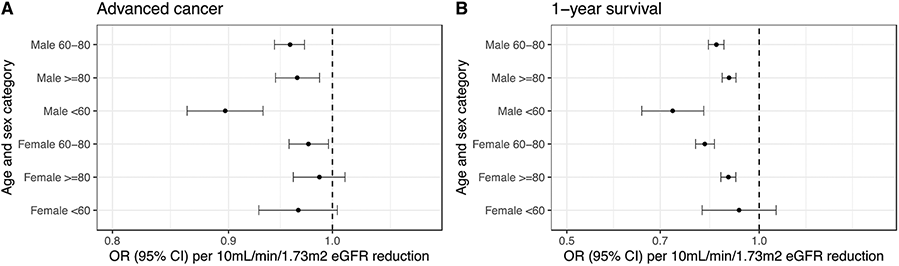
Development of an automated vancomycin dosing calculator for patients on haemodiafiltration
Richard Shemilt1, Aileen Dunleavy1, Rachel Cox1, Vishal Dey1
1 Renal Unit, University Hospital Crosshouse, Kilmarnock, UK
Introduction: Vancomycin is commonly used to treat gram-positive infections in patients requiring haemodialysis. There is little reliable data on vancomycin pharmacokinetics and technical advances such as high-flux HD and haemodiafiltration (HDF) have made accurate dosing difficult. We aimed to assess the use of the current vancomycin dosing protocol and develop an automated version to improve patient safety.
Methods: Quality improvement (QI) methodology was used with an aim of identifying potential medicines safety issues and testing changes to improve on these. The first cycle involved retrospectively identifying all HDF patients in Crosshouse who received vancomycin over a period of 12 months (November 2019 - October 2020). Data was extracted using patient notes, and electronic database (SERPR and Clinical Portal) and matched with vancomycin prescriptions and serum levels. Paper records requiring manual calculations based on weight and vancomycin levels were simplified to create an automated dosing calculator (fig.1). The calculator self-populates doses of vancomycin, diluent and infusion time, requiring only the correct body weight and vancomycin levels to be input by the prescriber. Separate calculators were provided for the first (dose 1-3) and second (dose 4-6) weeks of therapy and for starting a course off-HDF. Further changes were implemented after a one-year evaluation (March 2021-February 2022).
Results 19 courses of vancomycin were identified in the first cycle of data collection and 13 courses in the second cycle. In the first data cycle, there was one incorrect dose calculation of vancomycin and on two occasions levels were taken at the wrong time. We addressed these problems with the dosing calculator as the weight-based dose was automatically calculated and there was a prompt to take levels before the third dose and every three doses thereafter. After implementation of the dosing calculator, there were no dosing errors, though one level was taken at the wrong time. Qualitative feedback from users highlighted that for prolonged courses, dose numbers were being overwritten and it was possible to confuse the calculators for starting a course during or between HDF sessions. A new revised version has now been implemented. Due to the small number of patients and use of QI methodology, formal statistical analysis was not performed.
Conclusions: Our data suggested that the previous vancomycin protocol for HDF, may be poorly understood by users, resulting in dosing and monitoring errors. The development of an automated dosing calculator, which integrates prescribing and administration of vancomycin appears to have reduced errors relating to human factors. Further changes to the vancomycin calculator have been made and are now undergoing a test of change. 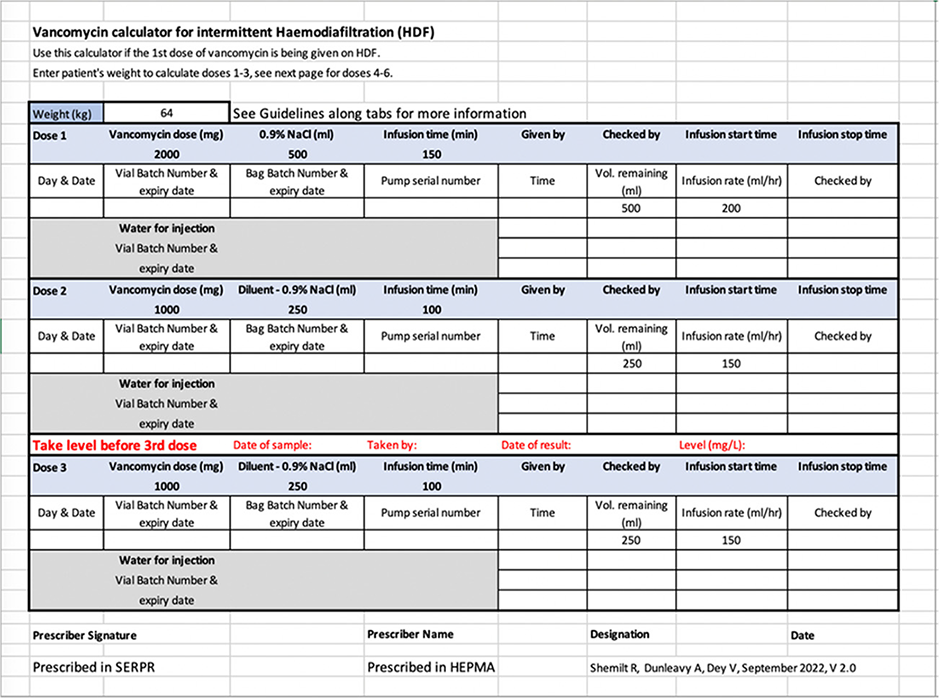
Figure 1: Automated dosing calculator. The user enters patient weight for dose 1 and vancomycin levels for ongoing doses. The calculator self-populates vancomycin dose, diluent and infusion time. Paper copies are retained for governance.
Perioperative management of anticoagulation in kidney and simultaneous kidney-pancreas transplant recipients
Ashley Simpson1, Lorna Henderson1, Julia Anderson2
1Dept of Renal Medicine, Royal Infirmary of Edinburgh
2Dept of Haematology, Royal Infirmary of Edinburgh
Background: The management of anticoagulation in patients undergoing kidney (KT) or simultaneous kidney and pancreas (SKP) transplant is challenging. Currently there are no guidelines specific to patients on anticoagulation undergoing transplantation. Our local experience shows that there is variability in assessment and inconsistency in management of similar clinical scenarios. Determining a safe time before recommencing full anticoagulation is influenced by the risk of bleed following surgery and the indication for anticoagulation. Similarly, the need for specialist Haematology input can vary depending on the clinical picture and thrombotic risk.
Aim: This project aimed to review peri-operative prescribing practice in KT and SKP recipients who were prescribed therapeutic anticoagulation either at the time of transplant or following discharge. We sought to determine the incidence of bleeding and thrombotic complications following surgery and identify any specific aspects of management that predisposed to a higher risk of bleeding. We identified cases that had been discussed with a Haematologist of other specialist prior to transplant and determined if advice had been adhered to.
Method: Electronic records were reviewed for patients who received a KT or SKP transplant between 1st January 2016 and 1st August 2022. Any patient receiving anticoagulation prior to admission or following discharge was included. Patients receiving prophylactic doses of low molecular weight heparin (LMWH) or anti-platelet agents alone were excluded.
Results: 278 live donor kidney, 428 deceased donor kidney and 105 SKP transplants were carried out between 1st Jan 2016 and 1st August 2022. Forty-six patients were identified as having been prescribed anticoagulation; 28 of these patients were prescribed anticoagulation on admission which was continued through to discharge; 10 had their anticoagulation discontinued perioperatively; 8 were newly prescribed anticoagulation post-operatively.
Of the 38 patients prescribed anticoagulation on admission: 36 received warfarin and two received low molecular weight heparin (LMWH). Indications for anticoagulation included; previous venous thromboembolism (13), AF (8), vascular access patency (8), metallic heart valve (6) and lupus anticoagulant / antiphospholipid syndrome (3). Of the 36 patients anticoagulated on discharge; 8 received warfarin, 7 received apixaban and 21 received LMWH.
Postoperatively, 30 patients were managed with unfractionated heparin 5000 units BD; 6 patients received 5000 units TDS; 9 patients received an intravenous (IV) heparin infusion and one patient received treatment dose LMWH. Seven patients experienced a bleeding complication. Five of these were significant bleeds requiring a return to theatre and/or blood transfusion. Of these patients, four received IV heparin. APTT was above target at some point in all cases post operatively (range 59-104). One patient received therapeutic LMWH but took an accidental additional dose.
Of the 39/46 patients who did not experience bleeding complications, 28 received unfractionated heparin 5000units BD; 6 received 5000 units TDS and 5 received IV heparin. In all cases APTT was within the normal range. We identified one patient who had a thrombotic event at Day 53 which was managed with LMWH and warfarin. 17 patients had documentation of discussion with a Haematologist before transplant.
Conclusion: We found that the majority of patients prescribed therapeutic anticoagulation either before or after transplantation did not experience serious bleeding complications. Those that did were more likely to have received IV heparin with an APTT above normal range. Prescribing practice was inconsistent for the same clinical indications for anticoagulation and specialist Haematology advice was not consistently sought or followed. In collaboration with Haematology colleagues, we have devised guidance for the management of perioperative anticoagulation in transplant recipients. The purpose is to reduce the risk of bleeding complications, standardise our approach in straightforward cases to improve consistency in prescribing and identify the patients who require specialist haematology input.
Clinical Frailty Scoring to guide Anticipatory Care Planning for Dialysis and Conservative Care Patients: A Quality Improvement Project
Rachel Smith, Pei Hwa Thing, Laura Clark
Renal Unit, NHS Grampian
Introduction: Patients with end stage kidney disease (ESKD) have reduced life expectancy compared to the baseline population. Identifying patients that will not benefit from intensive medical intervention and resuscitative measures in the event of deterioration or a sudden catastrophic event is essential for optimising care and ensuring a good death. We use Clinical Frailty Score (CFS) as an objective assessment tool to identify such patients. Once identified, efforts can be focused towards ensuring anticipatory care planning (ACP) is commenced.
We sought firstly to identity:
How many patients receiving dialysis in NHS Grampian had a CFS documented within the previous 4 months
How many of those with CFS ≥5 had ACP and DNACPR discussions documented and communicated to primary care with an Electronic Key Information Summary (eKIS)
How many conservative care patients had ACP and DNACPR decisions discussed and documented via eKIS
Following this a number of change ideas and initiatives have been identified and implemented to improve the rate of CFS scoring and ACP documentation.
Methods: Electronic records on both Clinical Vision and Trakcare between January 2019 and August 2022 were reviewed for all current haemodialysis (HD), peritoneal dialysis (PD) and conservative care patients in NHS Grampian. Most recent CFS and dates documented were recorded. Documentation of ACP and DNACPR discussions were also reviewed through searching clinic letters, recent discharge summaries and eKIS. Active DNACPR and ACP decisions were noted. If discussions had commenced or were in progress this was also recorded.
Results: 90 of the 217 dialysis patients (41.1%) had a frailty score recorded within the past 4 months. None of the 49 conservative care patients had a CFS updated within the past 4 months. The performance of CFS documentation varied considerably between dialysis units. 51(23.5%) of the dialysis patients had a frailty score of ≥5 when last documented. Of these patients identified as frail, 18 (33%) had either a complete or initiated ACP in their eKIS; 6(11.8%) of these were complete. 18 (35.3%) of the frail patients had a DNACPR form. Of the 49 conservative care patients, 10 (20.4%) had a documented ACP, whilst 21 (42.9%) had a DNACPR form.
Conclusions: This first cycle of data collection has demonstrated that frailty scoring is inconsistent and widely variable between dialysis units. In order to improve this aspect, reminders about regularly recording CFS have been distributed to dialysis nursing teams at all units. An education session about the importance of CFS and anticipatory care planning will be carried out during departmental teaching. Results from this first cycle will be shared during the session, and further ideas sought from the team on how best to increase ACP numbers. Since the first round of data collection a new supportive care clinic for conservative care patients has been initiated in collaboration with palliative care colleagues. Through this we hope to increase the provision of ACPs for this cohort of patients. Further data collection is planned to track progress with our aim of improving CFS scoring and better documentation of ACP decisions in this frail population.
Sex and risk factors for decline in kidney function in UK Biobank participants
Michael K Sullivan1, Elaine Rutherford2, Patrick B Mark1, Jennifer S Lees1
1School of Cardiovascular and Metabolic Health, University of Glasgow, UK
2Renal Unit, Mountainhall Treatment Centre, NHS Dumfries and Galloway, UK
Background: Chronic kidney disease (CKD) differs between men and women in terms of prevalence and complications. In particular, women tend to have lower estimated glomerular filtration rates (eGFRs) than men, but men are more likely to be treated with kidney replacement therapy (KRT). Decline in kidney function may be partly driven by sex, and there is a need to determine whether risk factors for renal decline are different in men and women.
Methods: Here we use data from UK Biobank to study risk factors for renal decline (incident eGFR <60mL/min/1.73m2, 40% decline in eGFR, or incident KRT). The 2021 race-free CKD-EPI eGFR equations were used. We use Cox models to investigate the associations between risk factors and renal decline, stratified by sex and biomarker (creatinine and cystatin C) and adjusted for each of the other risk factors.
Results: We studied 16,535 participants, whose blood tests were performed at baseline and a median of 8.3 years later (median age 59, 49.8% female, median eGFRcreatinine 97mL/min/1.73m2). Renal decline varied by sex and by biomarker: 116/8,231 (1.4%) women and 130/8,304 (1.6%) men using eGFRcreatinine, and 211/8,231 (2.6%) women and 272 (3.3%) men using eGFRcystatin. There were associations between advancing age and renal decline in men and women using eGFRcystatin, but this relationship was not seen for women using eGFRcreatinine: adjusted hazard ratio (aHR) 1.08 (95% confidence interval (CI) 0.93-1.25). Using eGFRcreatinine, diabetes was associated with renal decline in women, but not in men: aHR in women 2.52 (CI 1.28-4.97) and aHR in men 0.85 (CI 0.42-1.69). Using eGFRcystatin, diabetes was not associated with renal decline in either men or women: aHR in women 1.06 (CI 0.65-1.72) and aHR in men 1.09 (0.72-1.64). 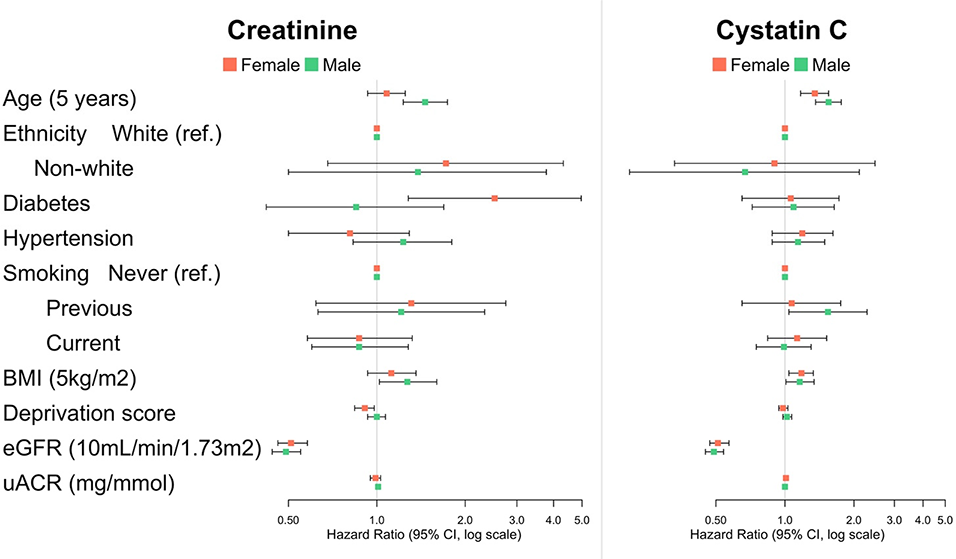
Conclusion: Within the UK Biobank population, risk factors for renal decline may be different between men and women. Associations between risk factors and kidney function decline were similar for men and for women when cystatin C based eGFR was used, but there were differences with creatinine. Changes in these biomarkers over time may be driven by non-GFR determinants. Creatinine is influenced by muscle mass, which may change in different ways as men and women age. Diabetes may be a more important risk factor for renal decline in women than in men. Further studies are required to investigate the differences in risk factors between men and women and whether sex-specific treatment strategies are required.
‘Typical’ Presentation of Atypical Hemolytic Uremic Syndrome
Pei Hwa Thing, Dana Kidder, Laura Clark
Renal Unit, Aberdeen Royal Infirmary, Aberdeen
Introduction: Atypical hemolytic uremic syndrome (aHUS) is a rare complement mediated disease which is characterized by thrombocytopenia, microangiopathic hemolytic anemia and acute kidney injury. The rarity with which it is encountered makes aHUS challenging to diagnose.
Case Presentation: A 64-year-old gentleman with background of hypertension, chronic obstructive pulmonary disease (COPD) and fifty pack years of smoking history, was referred by GP with acute kidney injury and thrombocytopenia following an initial consultation of right knee pain. His blood pressure was elevated at 194/101mmHg. His regular medications include Amlodipine, Atorvastatin, Tamsulosin, Anoro Ellipta Inhaler, three recent doses of Ibuprofen which he took for knee pain, and two courses of Flucloxacillin for cellulitis three weeks prior to admission. Laboratory findings were as follows, Hb 165 g/L, platelet 53x109/L, urea 24 mmol/L, creatinine 335µmol/L, bilirubin 42 µmol/L, ALT 13 U/L and CRP 60. His blood test two years ago showed Hb of 180g/L with normal platelet count and normal renal function. Urine dipstick showed 3+ blood and 1+ protein. CT KUB showed no sign of obstruction with normal kidneys size. Immunology and virology screens were all negative. Initial blood film reported presence of thrombocytopenia but no red cells fragmentation.
Prednisolone was started empirically on day 5 for presumed tubule-interstitial nephritis secondary to recent penicillin exposure. Biopsy was not carried out at this stage due to technical challenges of body habitus. His platelet count normalized transiently only to drop again. He was initiated on haemodialysis on day 10. His blood test at this time showed Hb 147g/L, platelet 88x109/L, urea 48 mmol/L, and creatinine 712 µmol/L.
Repeat blood film was sent demonstrating red cell fragmentation which on hindsight was present on day 1. ADAMTS 13 level was normal. Prednisolone was tapered then stopped.
Eculizumab was started on day 23 following discussion with National Complement Therapeutic Centre at Newcastle. Genetic screening for relevant alternative pathways complement mutations revealed CD46/MCP mutation. Clinical course was complicated by episodes of pulmonary oedema, thrombocytopenia and an episode of generalized tonic-clonic seizure. Renal biopsy could therefore not be safely done until day 37 which revealed findings of thrombotic microangiopathy.
His platelets count was return to normal 9 days after starting Eculizumab but he remains dialysis dependent. Eculizumab is planned to continue for three months and reassess.
Discussion: This case demonstrated the challenges in diagnosing aHUS in this patient, including an error in initial blood film reporting, anaemia masked by his secondary polycythemia, absence of family history, and finally the difficulties in obtaining kidney biopsy. Genetic screening was pivotal in clenching the diagnosis.
De novo heart failure after kidney transplantation in the presence of an arteriovenous fistula
Peter van Rhijn1; Sokratis Stoumpos2
1University Hospital Crosshouse, Kilmarnock;
2Queen Elizabeth University Hospital, Glasgow
Background and Aims: Although the risk for congestive heart failure (CHF) decreases after kidney transplantation (KT) compared to dialysis, it remains a significant clinical concern. Available epidemiological data on CHF after KT are limited, outdated, and have mostly focused on traditional risk factors. The presence of an arteriovenous fistula (AVF) may increase the risk of CHF after kidney transplantation. We aim to describe the association of a functioning arteriovenous fistula at time of transplantation with subsequent risk of de novo heart failure.
Method: We used electronic patient records from the West of Scotland renal database to retrospectively investigate de novo CHF in adult kidney transplant recipients between 1st January 2010 and 31st March 2020. Heart failure was ascertained using a combination of physician-reported diagnoses, echocardiographic criteria, radiological evidence of heart failure and elevation of NT-proBNP levels. Participants were followed up until dialysis start, death or 15th April 2021. The primary outcome was de novo heart failure and secondary outcomes included a composite cardiovascular outcome (de novo heart failure, non-fatal myocardial infarction, stroke and cardiovascular death), death and graft loss. Propensity score matching followed by multivariable regression and competing risk analyses were used to identify independent correlates of primary and secondary outcomes.
Results: Ninety seven (7.3%) of 1,330 transplant recipients had de novo CHF [median age, 52.5 (42.5 to 60.7) years; 537 (40%) women]. The cumulative incidences of de novo CHF were 3.8% (95% CI 2.9 to 5.1), 5.2% (95% CI 4.1 to 6.7) and 7.1% (95% CI 5.6 to 8.9) at 1, 3 and 5 years, respectively. Risk factors for de novo CHF included older recipient age (HR 3.7; 95% CI 1.6 to 8.5 for age group 51-60 years, HR 4.8; 95% CI 2.1 to 10.9 for age group >60 years), pre-transplantation diabetes mellitus (HR 4.3; 95% CI 2.3 to 7.9), pre-transplantation ischaemic heart disease (HR 1.9; 95% CI 1.1 to 3.3), and the presence of an arteriovenous fistula (HR 1.6; 95% CI 1.1 to 2.5). The presence of an arteriovenous fistula at time of transplantation was an independent predictor of all secondary outcomes (HR 1.5; 95% CI 1.1 to 2.0 for the composite CV outcome, HR 1.4; 95% CI 1.1 to 1.9 for death, and HR 1.4; 95% CI 1.1 to 1.7 for graft loss).
Conclusion: Congestive heart failure is a common complication after kidney transplantation with a markedly increased risk in patients with an arteriovenous fistula at time of transplantation. Prospective studies are needed to investigate the cardiac benefits of AVF closure post-KT against the risk of losing a dialysis access site. 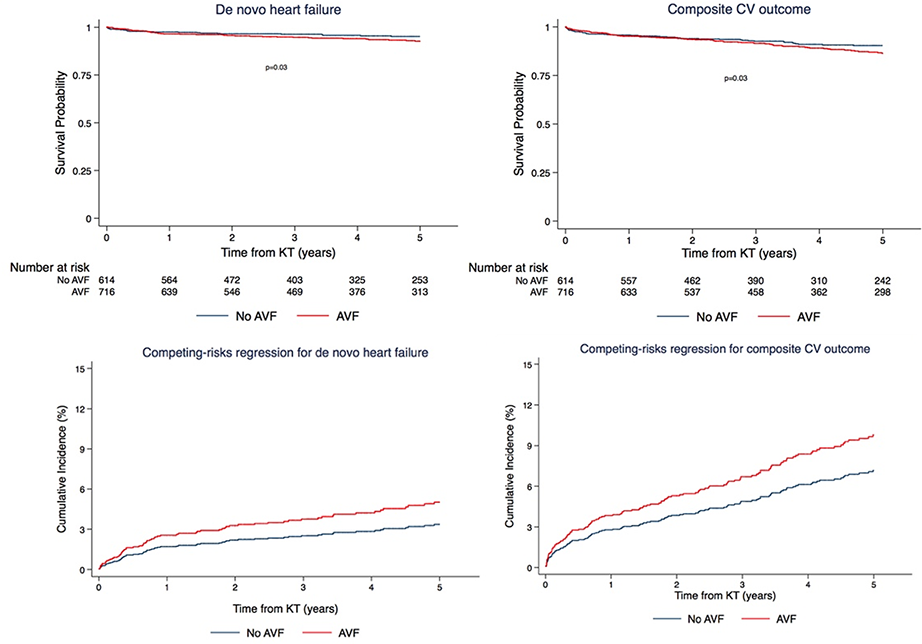
What is the value of a repeat biopsy in patients with Glomerulonephritis?
Maggie Webb, Colin Geddes, Mark Findlay
Queen Elizabeth University Hospital, Glasgow
Introduction: A repeat biopsy can provide useful information however comes with associated risks. This study aimed to describe the indications, findings and significant bleeding complications of a repeat biopsy in patients with glomerulonephritis.
Methods: A query was constructed to extract all patients with glomerulonephritis who had undergone a repeat percutaneous native renal biopsy, attending the Glasgow Renal and Transplant unit from 2012 to 2021 inclusive. Patient demographics including sex, age, primary renal diagnosis, diabetes status and indication for repeat biopsy were documented. Individual pathology reports were interrogated to determine if the repeat biopsy demonstrated an active disease process, chronic damage or a new or additional diagnosis. Bleeding complications following biopsy were determined by the need for imaging within 7 days and radiological evidence of bleeding.
Results: Of the 1,932 native renal biopsies carried out in Glasgow Renal and Transplant unit in this 10 year period, 115 were identified as patients with glomerulonephritis undergoing a repeat biopsy. For 108 patients their second biopsy and for the remaining 7, their third biopsy. There were 55 (47%) males and 60 (52%) were females. The average age at biopsy was 54 years. 11 had diabetes. There was a median of 4.4 years between biopsy. The most common primary renal diagnosis included vasculitis (27%), IgAN (17%) and Lupus (15%). The main indications for repeat biopsy were raised serum creatinine (62%) and proteinuria and/or haematuria (54%). Other indications included changed level of disease marker, nephrotic syndrome, treatment resistant glomerulonephritis or clinical manifestations of disease. The repeat biopsy provided evidence of active disease of their known diagnosis in 88% and chronic disease changes in 68%. A new or additional diagnosis was discovered in 17% of repeat biopsies. Of the patient population examined, 7% required urgent imaging within 7 days of their biopsy with 5% demonstrated evidence of bleeding complications.
Conclusions: Of 1,932 biopsies performed over a 10-year period, 115 were repeat biopsy. The commonest indication for repeat biopsy was serum or urinary abnormalities. Active disease of known diagnosis was confirmed in almost 90% and an additional diagnosis was discovered in approximately 20%, highlighting the value of a repeat biopsy in this population. There was a 5% risk of major bleeding complication in a repeat biopsy compared to a background bleeding complication rate of <2.2%.
Funding/Conflicts None
NURSING & AHP ABSTRACTS
Paediatric Shared Care
Rhoda Bell
Renal Unit, Raigmore Hospital, Inverness
Objectives: This case study looks at the shared care of a 15 year old PD patient between adult and paediatric renal services. The adult renal service is 45miles from the patient's home and the paediatric unit is over 300 miles away. Discussion will include the challenges presented, the protocol developed and the training needs of on- call nursing staff.
Methods: Discussion took place between paediatric and adult services and it was agreed that the adult unit would carry out any initial assessment and a joint decision would be made whether transfer to paediatric unit was warranted.
The adult PD nursing team identified concerns about caring for paediatric patients. These included –: • Which ward should patient attend (paediatrics or adult)
What are the responsibilities for staff
Who will make decision about admission/transfer out of hours
Patient on different PD system than adult unit use, no stock kept of other system
Child protection issues
Results: The patient was successfully managed in the adult centre with home visits included. There were five admissions, two required peritoneal dialysis to be carried out and on one of these occasions the family brought in the APD machine and stock.
Conclusions: The importance of providing individualised care and addressing the concerns of staff and patients should be highlighted in shared careplanning. We now have a closer working relationship with paediatric team both at adult hospital and paediatric hospital and have since worked collaboratively in caring for other patients. Shared care will continue until patient transitions to adult team or receives a transplant.
Case Study of Milky Peritoneal Dialysis Effluent
Rhoda Bell
Renal Unit, Raigmore Hospital, Inverness
Objectives: This case study presents a patient who when having a peritoneal dialysis catheter inserted, the surgeon noted a significant amount of milk like fluid in his abdomen. Testing of this fluid revealed no signs of malignancy or infection. The patient was known to have metastatic renal carcinoma prior to commencing PD.
Methods: On commencing CAPD the effluent was found to be cloudy/milky but there were no other symptoms of peritonitis, i.e. abdominal pain, fever. Subsequent samples continued to show no signs of infection and no positive cultures identified. Discussion took place with the Consultant biochemist regarding PD effluent clarity and what the cause of milky fluid was. A sample of peritoneal dialysis effluent showed the presence of triglycerides which was suggestive of chyloperitoneum. This presentation will discuss the characteristics, aetiology and management of chyloperitoneum and what management strategies were undertaken in this case. In addition the challenges for both the patient and the renal unit nursing staff when differentiating between chyloperitoneum and peritonitis will be explored.
Results: This patient has been on peritoneal dialysis for 16 months and the triglyceride level has reduced and at times the effluent is clear. There has been no progression of the renal carcinoma.
Conclusions: Chyloperitoneum is a rare complication of peritoneal dialysis and can easily be confused with infectious peritonitis. All staff who are caring for patients undertaking PD should be aware of this condition.
Shared Haemodialysis Care: Overcoming the barriers
Ginto Cherian
Aberdeen Royal Infirmary, Aberdeen
Background: The Renal Dialysis Unit at Aberdeen Royal Infirmary is currently developing a quality improvement program to enhance quality of care and ultimately the quality of life of our haemodialysis patient group.
Our Aim: Our ultimate aim is to be able to offer all patients, who receive in-center haemodialysis, the opportunity to share in decisions, learn and engage in their own treatment supported by a skilled dialysis team. However, we must first identify the barriers that are preventing us from achieving our goal and collaboratively identify solutions to overcome them.
Progress: A Shared Haemodialysis Care team was appointed to lead this quality improvement initiative by developing the knowledge and skills of the wider renal team, provide information, education and support for patients to enable them to share in decisions and achieve a level of independence that will improve their quality of life.
This has been generally well received by patients however we have found capacity within our unit, conflicting opinions and general resistance to change among staff have become barriers to the success of shared Care.
We continue to work on overcoming these barriers however, in spite of these challenges, the number of patients engaging in Shared Care continues to increase with some opting to go on to dialysing by themselves at home.
Being part of the Cohort 34 Scottish Improvement Leader (ScIL) course–My experience while introducing a fluid assessment tool
Rachel Cox, Renal Practice Educator
Renal Unit, University Hospital Crosshouse
Background: I chose to apply for the Scottish Improvement Leadership (ScIL) course as I felt it would benefit me carrying out quality improvement work and more importantly support colleagues with their improvement projects. My line manager was both supportive and encouraging of this development opportunity, we both believed this was critical to my role.
Following an incident where a patient was admitted with life-threatening fluid overload, it was agreed that looking to improve fluid assessment within the service would be beneficial, for me, as prospective leader in improvement; the staff, being able to evidence their fluid assessments; and the patients, as improvement in fluid management would hopefully reduce these types of incidents.
The quality improvement aim for the ScIL course was that: “90% of patients receiving haemodialysis in University Hospital Crosshouse Renal Unit will have a fluid assessment recorded in there nursing document by June 2022”.
Methods: I applied for the course which required both my manager and the organisation to agree to support my studies, ensuring protected hours for ScIL, which was valuable as most of the sessions where mandatory for successful completion of the course. Due to a global pandemic, the cohort were not able to meet and all the sessions where done via teams.
We were given the study materials required to succeed in the course; there was a mentor allocated by the organisation and a mentor on from the ScIL cohort. Support from these mentors allowed me to present the driver diagrams, project charters and other improvement tools that the renal unit fluid assessment team developed to my cohort. Having to submit monthly reports to both the mentors via Moodle, kept the project moving in a very demanding and stressful time within the who of the NHS.
A fluid assessment tool presented at a previous SRA meeting by NHS Highlands was used our first test, it was a tool we had previous looked at but had struggled with implementing it. The first PDSA (Plan, Do, Study, Act) improvement methodology was to test the fluid assessment tool with patients we knew to be overload or dehydrated to see if the score from the score matched that of the clinical judgement of senior staff. Later cycles of PDSA involved asking less experienced staff to use the tool on patients to see if they found it intuitive enough to use confidently. Once we were satisfied that it was fit for purpose in the NHS Ayrshire & Arran setting, medical staff & the advanced nurse practitioner give their opinion and provide support.
Implementation of the fluid assessment tool proved once again to be a large stumbling block, with staff shortages, high turn-over of staff and the increasing acuity of the patients often the tool was forgotten, or sadly it's the value was not recognised, when working under the pressures of a busy dialysis unit. Initially and still we as a team wanted a fluid score to be completed once a month, in much the same was as we once did a body composition monitoring. The intention was to identify the fluctuations in a patient's weight before they become excessively dehydrated, risking falls and/or dialysis access complications; or overloaded risking cardiac health.
Results: Though, unable to achieve the ambitious goal we set ourselves, the project was more successful than attempts to introduce any fluid assessment tool, prior to attending ScIL. Having 60% of patients with a documented fluid assessment tool score, was an accomplishment. The aim had been and is 90%, however importantly it been accepted as tool. It has been recognised by the wider team and forms part of the assessment for a deteriorating line. Staff are required to do it monthly, but until the senior team have the management time, as they once had before the pandemic, this, as with other clinical indicators, will struggle to be maintained. That, unfortunately, is a not a problem unique to this renal unit or even our NHS trust.
Conclusion: Despite the pandemic, despite being short staffed, we achieved an improvement in fluid assessment, and the story is not over. You may wonder why if the story is not completed did I chose to submit an abstract, why not wait for the story to finish? Quality improvement work is a never-ending story, especially in medical & nursing specialities such as renal, new technologies, new gismos mean things are always evolving. It is worthwhile, indeed essential to take stock of where we are and where we are going. In submitting this abstract, it may encourage others units to look at the fluid assessment tool such as the NHS Highlands created and presented then adapt them for use, or you could let us know of tools you are using, we can look at further improve our tools even to national level.
Applying for the ScILs course, however, was my motivation for this abstract. It was intense, especially in the beginning, and as I embark on the start of my journey officially as a Scottish Leader in Improvement, this is an opportunity to reflect on the wealth of knowledge I have gained with cohort 34. We continue to meet monthly and share idea & problems, we exchange information and continue to actively learn from each other. We have planned to start going back through the course material and have a schedule for re-reading the books, so that we can remember what we forgot.
I would recommend anyone who is interested quality improvement at the very least look into this course or feel free to ask me about it.
Can we inject fun into Haemodialysis?
Diane Drysder
Aberdeen Royal Infirmary, Aberdeen
Over three million people in the UK are living with chronic kidney disease, with around 70000 on renal replacement therapy. (23rd renal registry report, 2019)
A study by Kidney Care UK of renal units highlighted that psychosocial care in haemodialysis units is poorly addressed in the United Kingdom, less than 50% of units (49.3%) have a renal social worker and only a small minority (5%) have access to a psychologist.
Up to a third of renal patients will experience depression at some point. (Kidney care UK)
Patient surveys carried out by Kidney care UK(Worried sick, Out of sight out of mind, Lifting lockdown) during the Covid-19 pandemic showed that 68% of renal patients felt their emotional wellbeing was impacted and would like to have ongoing mental health support.
Small studies have demonstrated that intradialytic activity can improve mental wellbeing and health related quality of life (Carswell et al 2021) (Warsame et al 2018).
We are a small 6 station satellite haemodialysis unit with a demographic of 3 female and 7 male patients aged between 44 and 80 years based in Stonehaven, Aberdeenshire.
We want to explore if the introduction of more interactive group activities as opposed to solo activity during dialysis helps alleviate some of the issues around mental wellbeing in our small cohort of patients?
We surveyed our patients both pre and post introduction of the activities and early indications are promising.
References:
1. UK Renal Registry (2021) UK Renal Registry 23rd Annual Report – data to 31/12/2019, Bristol, UK. Available from renal.org/audit-research/annual-report
2. https://www.kidneycareuk.org‘Worried sick’ – the impact of COVID-19 on people living with kidney disease: findings from a patient survey
3. Out of sight, out of mind. The continuing impact of COVID-19 on people living with kidney disease (October 2020)
4. Lifting lockdown - the impact of COVID-19 for kidney patients as the pandemic eases
5. Findings from a third survey of people living with kidney disease March 2021
6. The Experiences of a Complex Arts-Based Intervention for Patients with End-Stage Kidney Disease Whilst Receiving Haemodialysis: A Qualitative Process Evaluation.
7. Carswell, C.; Reid, J.; Walsh, I.; McKeaveney, C.; Noble, H. Healthcare 2021, 9, 1392. https://doi.org/10.3390/healthcare9101392
8. Intradialytic Activities and Health-Related Quality of Life Among Hemodialysis Patients. Fatima Warsame; Hao Ying; Christine E. Haugen; Alvin G. Thomas; Deidra C. Crews ;Tariq Shafi; Bernard Jaar; Nadia M. Chu; Dorry L. Segev; Mara A. McAdams-DeMarco Am J Nephrol 2018; 48:181–189
Assisted Home Haemodialysis
Marie Henry
Renal Unit, Crosshouse Hospital, Ayr
Problem Statement: Over the last 10 years we have recruited a number of patients who have benefited from the flexibility of Home HD. However latterly some of these patients have become frail, their home circumstances have changed or they have had added complications to their Chronic Renal Failure. 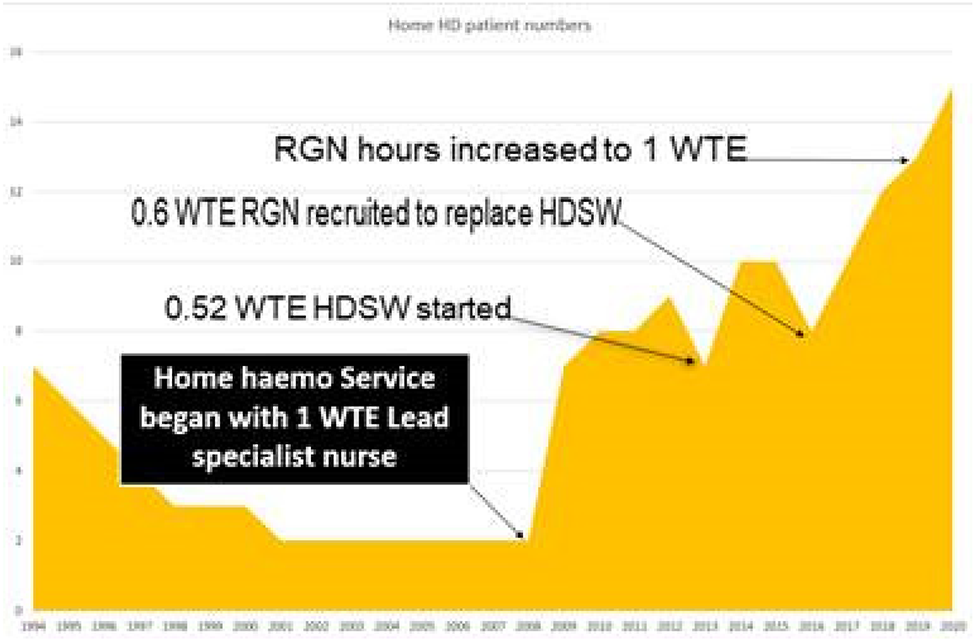
Our problem was how to support these patients/carers to allow them to continue to make the choice to dialyse at home.
If these patients were to dialyse within the renal unit they would require hospital transport to and from the hospital putting further strain on an already under pressure service.
Action: In March 2021 we submitted an SBAR (Situation Background Assessment Recommendation) to our Health Board proposing the need for an additional member of staff to allow us to support these patients/carers at home.
We were successful and appointed a Haemodialysis Support Worker (HDSW), who would be trained to SVQ 3, Level 7, to join our Team.
Outcome: The creation of a HDSW Post has resulted in direct benefits to our home patients and their families and is in keeping with the current drive to keep patients at home.
The use of two systems in PD – a blessing or a curse?
Roslynn Keating
Aberdeen Royal Infirmary, Aberdeen
In the Renal Unit at ARI, we have used 2 dialysis PD systems (Baxters and Fresenius) since September 1995. Prior to this, we used the Baxters system only.
Fresenius was introduced to ARI in 1995 when a patient moved into our area who was already using this system to deliver PD. The PD staff had to learn this system in order to support her. It became apparent at that time, that there were advantages with using this system. We then assessed each patient prior to starting PD in order to decide which system would be most suited to them and their needs.
Having now used both systems throughout the years, it has become clear that there are advantages and disadvantages to each system, and these have changed throughout the years. It is therefore vital that we remain open to changes and adapt our care accordingly.
There are several factors to be taken into consideration when thinking about the most suitable system for each patient, and this can be complex. In our experience at ARI we have found there are benefits to using a two system approach, however this can also bring challenges.
Developing a living donor kidney transplantation online learning resource
Jen Lumsdaine1, Linda White2
1On behalf of Living Donation Scotland
2Organ Donation Policy Team, Scottish Government
Background: To achieve living donor transplantation before starting dialysis requires a multi-disciplinary approach by all healthcare professionals caring for patients with chronic kidney disease. Early discussion and referral increase the likelihood of timely recipient and donor assessment. There was agreement at the Living Donation Scotland meeting in December 2019, attended by nurse and nephrologist representation from all units in Scotland to explore educational options to support staff in discussions.
Method: Following a meeting with The Scottish Renal Association Nurse Strategy Group in 2020 it was agreed to conduct a survey to ascertain the barriers to discussing living donor transplantation and explore educational preferences. With 176 responses from renal unit staff the majority suggested that lack of knowledge was a barrier to discussion and an online learning resource would be (very) beneficial.
Outcome: We approached TURAS Learn, the NHS Education for Scotland (NES) learning resource and developed an online learning resource. The programme is designed to provide a basic understanding of current practice with donor and recipient specific sections. Local contact details are included in the final section. On completion a certificate can be downloaded for evidence of learning. The programme can be accessed via this link: Living donor kidney transplantation : learning programme | Turas | Learn (nhs.scot). At the end of the programme there is a survey link which we hope participants will complete to provide feedback on this new resource. 
Becoming Transplanted
Melanie Phillips
Edinburgh University, Royal Infirmary of Edinburgh, Edinburgh
Introduction: There are limited studies of the patient experience regarding pancreas transplant and research in pancreas transplant is heavily weighted towards the quantitative and biomedical approach to study. This study took a qualitative approach of the pancreas patient experience. This is a longitudinal study following the SPK patient from waiting list to transplant. In the understanding of this experience the hope is to inform future practice and potential interventions and identify further areas for study and development.
Methods: The study investigates patients listed for Simultaneous Pancreas and Kidney (SPK) transplant in Edinburgh. Data was collected using semi-structured qualitative interviews of an average 30 min duration. This was initially face to face, then following COVID restrictions via video. These were analysed using NVIVO and a Constructive Grounded Theory approach (Charmaz,2017). The study was longitudinal in design, the first interview being conducted when there is an estimated 6 months to transplant and the second 3 months post-transplant.
Results: The initial findings from this study are from 18 interviews with 10 patients, 10 pre-transplant and 8 post transplantation. The participants: 5 males, 5 females, 5 pre-dialysis and 5 on dialysis.
The main findings from the data analysed identified that the experience of chronic disease leads to the
Unwanted Self
which causes suffering. However, although the disease maybe the same the experience of each individual is diverse. All participants displayed experiential avoidance of diabetes in their glycaemic control. Creative
Adjustment
and
Reframing of Self
are the positive outcome of acceptance and transplantation.
Discussion: The individualistic experience of suffering reiterates a need for person-centred care, as the process of alleviating suffering can only be started once identifying the cause. As health professionals we can be actively involved as facilitators to
Creative Adjustment
and acceptance of the
Unwanted Self.
Reference
1.Charmaz K.(2017) Constructivist grounded theory The Journal of positive psychology 12(3) pp299-300
Incremental Haemodialysis – The Raigmore Experience
Stuart Ross
Renal Unit, Raigmore Hospital, Inverness
Background: Most patients starting haemodialysis will have significant residual kidney function when compared with patients who have been undergoing haemodialysis for a longer period of time. Renal Units have historically tended to start all patients on a standard thrice weekly dialysis schedule regardless of their residual kidney function. While this one size fits all approach ensures that all patients are adequately dialysed and does not require dialysis prescriptions to be individualised, it does not take into account the negative impact that dialysis will have on a patient's residual kidney function and on their quality life. Strategies that potentially preserve the residual kidney function of haemodialysis patients should confer survival benefit on the patients concerned. Logically a patient with some residual kidney function should require less dialysis than a patient with no residual kidney function and at the end of 2019 the Renal Units linked to Raigmore Hospital in Inverness made the decision to start new patients on twice weekly dialysis, increasing the time and frequency of dialysis as their residual kidney function reduced in a process known as incremental dialysis.
Method: All new hospital haemodialysis patients transferring from our Low Clearance Clinic were started on twice weekly haemodialysis providing they met an inclusion criteria that included no history of hyperkalaemia or fluid overload in the months leading up to their dialysis start date. Any unplanned starts, peritoneal dialysis patients transferring to haemodialysis and failing transplant patients were also started on twice weekly haemodialysis providing they had a residual urine volume of at least 600ml in 24 hours at the point of starting haemodialysis. Patients were asked to complete a 24 hour collection of urine every 6 weeks which was used with our routine blood testing to calculate their residual urine volume, KrU urea clearance and total Kt/V. Patients were maintained on twice weekly haemodialysis for as long as their residual urine volume was greater than 600ml in 24 hours, KrU Urea Clearance was greater than 3ml/min and Total Kt/V was greater than 2. Any evidence of failure to thrive on haemodialysis, hyperkalaemia or fluid overload also necessitated an increase to three times per week haemodialysis regardless of the patient's residual urine volume or KrU urea clearance.
Results: Since 2019 we have started 31 patients on incremental haemodialysis with no increased hospitalisation in this group. Patients were maintained on twice weekly haemodialysis for a mean of 36 weeks with 9 patients safely maintained on twice weekly dialysis for over one year. Adopting incremental haemodialysis has led to savings in the cost of HD consumables and taxis in excess of £80,000, has prevented 50 tonnes of C02 from being generated, more than 2 tonnes of non recyclable waste from being produced and has prevented more than 36,000 miles from being travelled for dialysis treatment. More importantly, it has prevented 1,105 unnecessary haemodialysis treatments from taking place.
Conclusion: Incremental haemodialysis allows new haemodialysis patients to be safely started on haemodialysis treatment in a more patient centred way. It reduces the burden associated with starting dialysis while also having significant cost saving and environmental benefits. Some additional testing and monitoring of results is required but the time and costs associated with this are minimal when compared with the potential savings.
Development of a specialised nurse led advanced kidney care clinic (AKCC) telephone clinic
Tricia Sutherland, Rachel Cox, Jennifer Evans, Marissa Strannigan, Hazel Herbert, Jacqueline McGowan, Erin Batchelor, Laurie Kirkland, Vishal Dey
Renal Unit, University Hospital Crosshouse
Background: The Covid 19 pandemic has caused significant disruption to outpatient services across the globe. It has disproportionately affected vulnerable patient groups with chronic health problems like those with chronic kidney disease (CKD). To minimise the impact in reduction of clinic appointments for patients with advanced CKD a specialised nurse led advanced kidney care (AKCC) telephone review clinic was developed.
Our goal was to provide a safe environment for patients with complex needs using the resources and expertise of the AKCC renal nurses and measure the impact of this on our services.
Methods: All patients attending the AKCC clinic (advanced CKD Stage 4 and 5 with estimated glomerular filtration rate (eGFR) of <20 ml/min) were identified using the electronic data base. Patients classed as “low risk” with stable CKD were triaged to a nurse led AKCC telephone review clinic from a physician led face to face review. A paper-based form was redesigned to an interactive electronic checklist that also served as a communication tool. This captured data on clinical and biochemical parameters and helped identify progressive renal disease and the need to start renal replacement therapy. Prompts were enabled to assess if a threshold had been reached, which led to further medical input from a senior renal physician. Outcomes were recorded into an electronic database; Strathclyde Electronic Renal Patient records (SERPR) and a copy of the review notes were sent to the primary care physician.
Results: From its inception we have carried out 769 nurse led telephone reviews for 179 individual patients from April 20 to August 2022. Of these nurse-led telephone reviews 33 patients required further discussions with the medical team for an early intervention. This however, is a gross underestimate, as our electronic databases were only designed to capture intervention data from July 2021.
While we did not collect specific measurable data on patient or staff satisfaction telephone reviews were well received by all.
Conclusion: Establishing an AKCC telephone reviews for patients during the Covid 19 pandemic has been a successful development within the renal service. It has helped in early identification of progressive renal disease and improved patient satisfaction. By using innovative telehealth techniques and information technology we have been able to demonstrate a safe provision of care using current resources in an over stretched health care system.
Cost of living crisis: what can be done to help?
Gillian Wilson
Aberdeen Royal Infirmary, Aberdeen
We are all very aware of the current increases in the cost of living, with food and bills rising and general lifestyle therefore being affected.
To date we have 5 patients on home haemodialysis, and general concern is how much electricity is rising by, for the running costs of the dialysis machines.
Currently in NHS Grampian there are no re-imbursements for utility bills, but following a national campaign by the charity Kidney Care UK, we are committed to addressing this and in the process of looking at how to proceed.
I will also discuss what support and advice is available to renal patients and have a representative with me from Kidney Care UK to talk about what they can offer –advocacy, grants and benefit advice




