




Abstract
This article argues that the repeal of the farm laws and even meeting the demand of the protestors to reduce corporatisation of agriculture and enhance the role of the state through expansion of guaranteed procurement is unlikely to bring significant positive transformation for farmers or consumers. Indian agriculture was remade through an industrial logic by harnessing science and technology, not by corporations but by the might of the state in the 1960s during the Green Revolution. Beyond its well-known negative environmental and livelihood impacts, I show how this logic also transformed diets and damaged the health of people. Challenging the tropes of food security, modernisation, efficiency and quality that have been used to justify the perpetuation of this logic, I argue that only by tracing the relationships that have led to the present, can we begin to unravel them and reimagine a healthier and more sustainable agrarian future.
Introduction
Farmers protesting against the three farm laws, passed by the Modi government in 2020, argued that the laws promoted greater corporatisation of agriculture. With a call to ‘Boycott Adani-Ambani’ (the two richest Indian businessmen), protesting farmers called for a greater role of the state in agricultural marketing, including the extension of guaranteed procurement at minimum procurement prices (MSP) for many more than the three crops the government currently supports (rice, wheat and sugarcane) (Jodhka, 2021). Following a year of protests, the laws were repealed in 2021.
The laws intended to do away with stocking limits, promote contract farming and allow buyers to purchase agricultural commodities across India without any kind of licensing requirements, thus, facilitating the easier entry of large-scale private entities into agri-marketing. Greater corporate control over specific aspects of the agricultural supply chain is a major concern especially when a handful of corporations are controlling significant global market share in all major crops (Clapp, 2019; Howard, 2016). In India, too, a growing push towards liberalisation of market regulations and corporate involvement in farming over the last thirty years has led to market control by a few players in farm inputs and commodities like edible oil (Premkumar, 2020).
However, repealing the farm laws or even formulating new laws to limit corporate control over the agricultural system may not result in significant changes in the condition of farmers and farming in India. As I argue in this article, the ills of the agri-food system are fundamentally linked to the industrial logic driving the trajectory of Indian agriculture—and this industrial logic was introduced, not by corporations, but by the state, as part of the Green Revolution in the 1960s. Over the years, it has become ubiquitous as the model of agriculture across India. While studies have looked at the social, economic and ecological consequences of this model (Dhanagare, 1988; Frankel, 1971; Shiva, 1991; Singh, 2000), in this article, I argue that the industrial logic in farming has also led to a nutritional crisis that is compromising our health.
Historian Deborah Fitzgerald (2003) has argued, in her book, Every Farm a Factory, that the industrial logic in agriculture dates back to the early twentieth century with the growing involvement of science and technology in the United States. Multiple economic, managerial and ideological relationships driven by various agents of industrialisation transformed wheat, corn and even meat and milk production in the 20th century, around the world. The industrial logic promoted greater corporatisation, pushed farmers onto a technological treadmill and eventually, led to their exit from farming (Dorin et al., 2013). In India’s case, the advent of new technologies and institutional arrangements in agricultural production and marketing in the 1960s promoted industrial food supply chains in cereal crops (wheat and rice) as part of the state-led Green Revolution. Unlike the west, this industrial logic incorporated small farms and multiple intermediaries into its ambit.
As I show in this article, by pushing industry-produced inputs onto the farm and taking away farm products to be industrially processed before supplying to consumers, the logic of industrial agriculture promoted the twin processes of monoculture production and standardised consumption in staple crops (rice, wheat, sugarcane and edible oil) as part of a state-driven push for food security and modernisation in agriculture. Liberalisation in the 1990s strengthened these processes by encouraging greater corporate investment in agriculture and building industrial supply chains across various other foods. Built on the twin characteristics of scale and standardised quality, the industrial logic transformed both ends of the chain—it reduced the biodiversity on the farm as well as the diversity on our plates by narrowing the band of crops and varieties that were produced and consumed. Just as it has done in the United States, the industrial logic in agriculture has led to a nutritional crisis in India, too.
While the farm protests and academic critiques of the three laws focused on the ills of corporatisation (Banerjee, 2021; Narayanan, 2020), hardly any criticism was levied on the underlying model of industrial agriculture and its propagation by the state and the scientific establishment. The expectation that the state could, through policy instruments like the minimum support price and guaranteed procurement, make farming viable as a livelihood, belies the fact that these instruments, due to their design, promoted monocultures on the farm. This narrowed down the food choices of consumers with negative health consequences. Monoculture farming damaged the natural resource base of the farm to such an extent that it is increasingly becoming unviable for farmers to farm.
In this article, I trace the development of the industrial logic in agriculture in India from the Green Revolution to the present showing how it has produced the nutritionally deficient and immunocompromised consumer. By tracing this history and the various elements that have come together to produce this logic and sustain it over time, I argue that we can identify the threads that can be pulled to help unravel it (Callon, 1984; Latour, 2007).
This article draws upon my engagement with Indian agriculture as a social anthropologist since 2006—first, as part of my doctoral work on the yellow revolution in Malwa, Madhya Pradesh (MP) between 2006 and 2012 where I looked at the transformation of the region with the entry of soybean monoculture farming using ethnographic methods (Kumar, 2016); and then, between 2017 and 2019, as part of a multidisciplinary, mixed method, collaborative study in western Avadh, Uttar Pradesh (UP) to understand how diets and agricultural practices had changed over the last fifty years and the consequences for nutrition and health (Kumar et al., 2019). In UP, my colleagues (from Sangtin Kisan Mazdoor Sangathan [Sitapur] and IIT Delhi) and I interviewed over 100 farmers, traders, processors, labourers, government officials and civil society actors associated with food and farming in the region along with conducting a four-season diet survey of 100 households in two villages. We also conducted ethnographic research in the survey villages along with 26 focus group discussions with elderly respondents cutting across caste, class, gender and religion to understand historical diets in the region. While drawing upon some of the findings from the above research, the article also builds on secondary literature on India’s agrarian history as well as historical and ethnographic studies on the working of the industrial logic in the American food and agricultural system.
Bringing Monoculture to Farms and Creating Nutritional Deficiency
At independence, India was left with an agricultural sector that had been decimated on all fronts—ecologically, socially and economically (Bhattacharya, 2018; Blyn, 1966; Whitcombe, 1972). With the primary focus of the British colonial rulers on cash crops, food crops had received little support. Extractive land rents and unequal land tenure arrangements had exacerbated rural inequalities (Stokes, 1978). With independence, relief from taxation, land reforms and investment in water resources brought a new lease of life to farming, and productivity, as well as production, surged across all crops. Yet, the shadow of the Great Bengal Famine of 1943, the legacy of partition, and the inheritance of a food control/rationing system instituted by the British during World War II along with runaway inflation, all contributed to localised hardship in several parts of the country (Kamtekar, 2001; Kumar, 2019).
Notwithstanding growing food production, India began importing food (wheat, in particular) from the United States under Public Law 480 (PL480), as it was available for free (paid for in rupees, which were then spent by the United States in India)—the Americans had excess stocks that they wanted to dispose of. 1 The price disincentives caused due to these imports, along with the geopolitical implications of import dependence, created conditions in the mid-1960s where India found itself arm twisted by the United States. A host of other contingent factors around the same time led to a policy shift and adoption of the Green Revolution paradigm in agriculture. 2
With a desire to boost food security and build up buffer stocks of food grain in the case of crop failure, this paradigm was built on a technological and institutional package for farmers which included (a) high-yielding varieties of wheat and rice that were responsive to the application of chemical fertiliser and water and, which were required to be grown as monocrops, (b) input subsidies on chemical fertilisers and electricity to pump water, and (c) output guarantees in the form of direct purchase of wheat and rice at minimum support prices by the government. This was supported by revamping and investing in the agricultural research and extension system where scientists bred high-yielding varieties of seeds responsive to inputs and they were promoted by extension officers down to the village level. This model of research and extension focusing on monocrops was drawn from the American land grant model (Abrol, 1983) and especially built on the approach towards agricultural research (focused on increasing grain yield of cereals) funded by the Rockefeller Foundation in Mexico (Fitzgerald, 1986; Raina, 2006, 2009).
Prior to the Green Revolution, farmers on the Indian subcontinent grew a variety of crops on their farms as part of agroecologically suitable mixed cropping systems with cereals, pulses and oilseeds being grown in some combination on the fields and in rotation over time (Howard, 1940; Nelson et al., 2019). Livestock rearing was an integral part of the farming ecosystem along with growing and foraging for fruits and vegetables, gathering seasonal greens, mushrooms and also hunting small game and fish (Menon & Vadivelu, 2006). But with the Green Revolution’s supporting package of investments and extension, farmers across the subcontinent replaced mixed cropped fields with monocultures of rice and wheat (and later, sugarcane). 3 Everything else on the farm became a weed or a pest, to be killed so that all the nutrients could be saved for the monocrop.
As a result, although the country became self-sufficient in wheat and rice, and even began exporting them, it became deficient in oilseeds 4 and pulses, which used to be exported in the past (Ahlawat et al., 2016; Dorin & Landy, 2009; Vyas & Kaushik, 2020). Millets, which have recently been recognised as nutricereals, were the staple for masses across India, especially in the drylands and the north. Acreage devoted to them and to gram (which was also used to make roti), halved during the above period, much of it shifting to wheat. Between 1961 and 2006 the per capita availability in kg per person per year doubled for wheat from 28.9 to 56.3 and remained the same for rice (73.4–72.3). For pulses, it plummeted from 25.2 to 11.8 and for millets and grams, it halved from 54.6 to 26 (Planning Commission Databank Table 1.25). 5
Thus, the biggest irony of the Green Revolution’s legacy is that it was justified in the name of food security but it ended up skewing the food basket and creating nutritional insecurity. Revisionist research suggests that India’s food insecurities post-independence had to do with problems of distribution and access. Not only was India producing enough food (although much of this was not counted in the statistics), but the shortages in the mid-1960s were localised shortages that were hyped up in the media due to larger geopolitical factors (Cullather, 2010; Kumar, 2019; Perkins, 1997). Moreover, India was importing food from the United States under PL480 for a small segment of its industrial working-class population because it was free and not because local production was inadequate. Further, this act of importing had itself caused disincentives to farmers to produce wheat, which, ironically, was not even the staple food of a majority of the population (Kamath, 1992; Shenoy, 1974). Yet the very existence of PL480 imports was used as evidence to claim that India could not feed itself (Rajagopal, 2016). 6
Sadly, the bounty of rice and wheat from the Green Revolution did not end hunger because it did not drastically enhance the entitlements of the poor. 7 Although the public distribution system (PDS) supplied this rice and wheat through ration shops across the country, the reach of this network was limited during the 1980s and hunger continued to plague the poor and marginalised groups in rural areas (Landy, 2009).
Furthermore, incentives to grow monocultures also led to the conversion of fallow land, uncultivated marginal lands and common lands (grazing land, wetlands, forests, etc.) to cultivated fields. This had a direct impact on the availability of nutritious foods from these sources, especially fruits, vegetables, greens, roots, mushrooms, fish, birds and small game—and this especially hurt marginalised groups in rural areas who were dependent on the commons for their food needs. Loss of fodder made it harder to keep livestock and this, further, compromised diets dependent on milk and meat (Bawa et al., 2020; Kumar et al., 2019). Sadly, even those availing of cheap food grains from the PDS only received rice and wheat, and with the lack of affordable oilseeds and pulses, their diets became heavy in carbohydrates and severely lacking in protein and fats (Dorin, 1999; Shatrugna, 2010). Severe protein malnutrition is known to contribute to stunting (among other nutritional and health deficiencies) and this was reflected in India in the 1990s when data from nationwide surveys showed continually dismal rates of stunting of the population in the face of a food grain production surplus (Shatrugna, 2021; Siddiqui et al., 2019; Smith, 2015). These imbalances in the nutritional basket were intensified with the coming of liberalisation in the 1990s.
Promoting Industrial Foods and Producing the Immunocompromised Consumer
Liberalisation of the economy in the early 1990s brought with it several transformations in food and agriculture beginning with the freeing up of imports and the entry of agribusiness/consumer food multinationals into India. Even domestic food companies, including small players at the regional level, expanded operations to fulfil the demand of a growing urban market (Baviskar, 2012). Using new techniques of processing, flour mills, rice mills, sugar factories and oil mills mushroomed across the urban (and rural) landscape providing consumers with pre-processed raw materials such as wheat flour, milled rice, white sugar and refined edible oil. This replaced wheat that was bought locally and crushed in a chakki, rice that was parboiled and dehusked by hand milling, jaggery and its by-products that were made in gur bels and oilseeds that were given to a kolhu for cold-press crushing at the village or ward level. This technological transition was lauded as a move towards a modernised, hygienic food sector but it had serious implications for nutrition. 8
The new machine processing of rice and wheat removed the entire portion of fibre (bran) from the outer part of the grain, leaving only gluten and starch. 9 Thus, consumers who ate these highly polished machine-processed grains were eating pure carbohydrates without any overall nutritive value (Chaudhari et al., 2018). Even milled rice supplied in the PDS suffered from the same problem. In the northern states in the past, wheat was mixed with barley or gram in varied proportions to balance the high level of gluten, which provides wheat with the quality of elasticity. But the slow disappearance of these other crops, and the over-abundance of wheat, especially due its availability through the PDS, led to its consumption as a sole grain.
Moreover, factories that processed wheat into flour through the automated roller and sieving process produced several by-products out of a grain of wheat—20% was choker (waste), 10% was whole wheat flour or atta, 8%–10% was suji, 8% fine bran and 52% (the largest portion) was refined wheat flour or maida—which is entirely gluten or starch. 10 Maida became the raw material of choice for a whole variety of packaged foods, including bread, biscuits, cookies, buns, burgers, rusk, cakes, pastries, pizza bases and even locally made foods like samosas, kachoris, south Indian parottas, naans, roomali rotis, etc. Thus, foods that were made of whole wheat flour, which had retained its bran/fibre in the past, were now made from pure starch. The healthier fine bran and choker (fibre) were sold as food for animals (Alvares, 1992; Visvanathan, 2007).
This move towards white rice and maida was undergirded not only by technology and business interests, there was also an important aspirational logic. ‘Milled rice was modern… [and] more fashionable’ (Arnold, 2013, p. 118). Although the more nutritious millets (Dayakar Rao et al., 2017; Saleh et al., 2013) were the primary staple of masses across India, they were labelled by the British as ‘coarse’ cereals in opposition to the ‘finer’ cereals like wheat and rice. This labelling (ironically has no link to the physical characteristics of millets—they are smoother and finer than wheat and rice) bolstered local notions that millets were meant for the poor, underprivileged caste groups (and, at times, even meant just for animals), whereas wheat and rice were superior grains. Across northern India, wheat flour was considered to be special food and kept solely for guests, or consumed by elite households. 11 In the case of rice, specific varieties of white rice consumed by privileged caste households in the lowlands were considered superior to red or black rice varieties and parboiled white rice varieties consumed by marginalised caste groups and Adivasi households in the uplands (Carcea, 2021). This was despite the fact that fine white rice is less nutritious than the other varieties, and that practices like parboiling helped retain its nutritional qualities (Heinemann et al., 2006; Rathna Priya et al., 2019). Thus, when machines and markets made refined wheat flour and fine white rice available to the masses, the diverse universe of millets and the other varieties of rice and wheat had no hope. 12 They disappeared from plates and farms leaving behind a nutritional vacuum (DeFries et al., 2018).
In the edible oil sector, at the time of independence, India was an oilseed exporter. But a decade after the Green Revolution policies took effect, it began importing more than one-third to nearly one-half of its edible oil requirements. A push towards self-sufficiency through the Technology Mission on Oilseeds in the late 1980s, and, the tightening of import restrictions, reduced import dependence from over 40% in 1987 to just 4% in 1993 (Dorin, 2004; Sekhar, 2004, p. 4733). But with the liberalisation of edible oil imports in 1994, cheap palm oil from Indonesia and soybean oil from Argentina flooded the domestic market, despite high tariffs of up to 300%, thus, disincentivising domestic producers (Dohlman et al., 2003; Dorin, 1999). From 1994 to 1999, imports rose to over 50% of domestic edible oil consumption (Sekhar, 2004; Shenoi, 2003), from 2000 to 2009 they ranged from 40% to 50% (Reddy, 2009) and from 2009 to 2016 they went up to nearly 75% (Persaud, 2019).
Palm oil and soybean oil became cheaper substitutes for other edible oils, especially in the manufacture of vanaspati (refined, hydrogenated vegetable shortening), a very popular substitute for more expensive ghee (clarified butter). 13 Further, the popularisation of solvent extraction technologies to separate oil and meal from oilseeds in the 1980s along with the use of modern refining techniques created a homogenised edible oil product. Through heating, deodorising and decolouring the oil using chemicals, a homogenised (blended) oil was marketed under the label of refined edible oil as a modern choice for urban consumers.
This was in complete contrast to the past where traditional methods of oil extraction (cold pressed) produced oils that retained their distinct colour, flavour and smell. These characteristics of oil were an integral part of food and culinary practices around the world. Thus, Indian cooking in the east was built upon the distinctiveness of mustard oil, in the north and the west it was sesame and groundnut oil, and in south India, it was coconut oil. Similarly, west African consumers were comfortable with the colour and smell of traditionally processed palm oil. However, making soybean and palm oil palatable to Indian consumers required stripping them of their distinctive aromas and making them part of a generic edible oil (Sharma, 2008; Vyas & Kaushik, 2020).
Growing acceptance of oil from ‘nowhere’ (McMichael, 2009) led to a shrinkage of diversity of cooking practices, recipes and tastes, further reducing the demand for traditional oils (Hiraga, 2015). Farmers found it unremunerative to grow mustard, sesame, linseed, coconut and groundnut and they disappeared from farms and plates across India (Dohlman et al., 2003; Dorin, 2004).
However, scientists and nutritionists are calling into question the health implications of modern refining techniques (Bhardwaj et al., 2011; Dhaka et al., 2011; Gharby, 2022; Manchanda & Passi, 2016). India is seeing a resurgence of expensive cold-pressed regional oils for an elite, health-conscious consumer. Although in the past, poor households had access to cold-pressed oil for cooking through small-scale oil presses at the village level, the scale and scope of modern oilseed production and processing changed all that (Achaya, 1994).
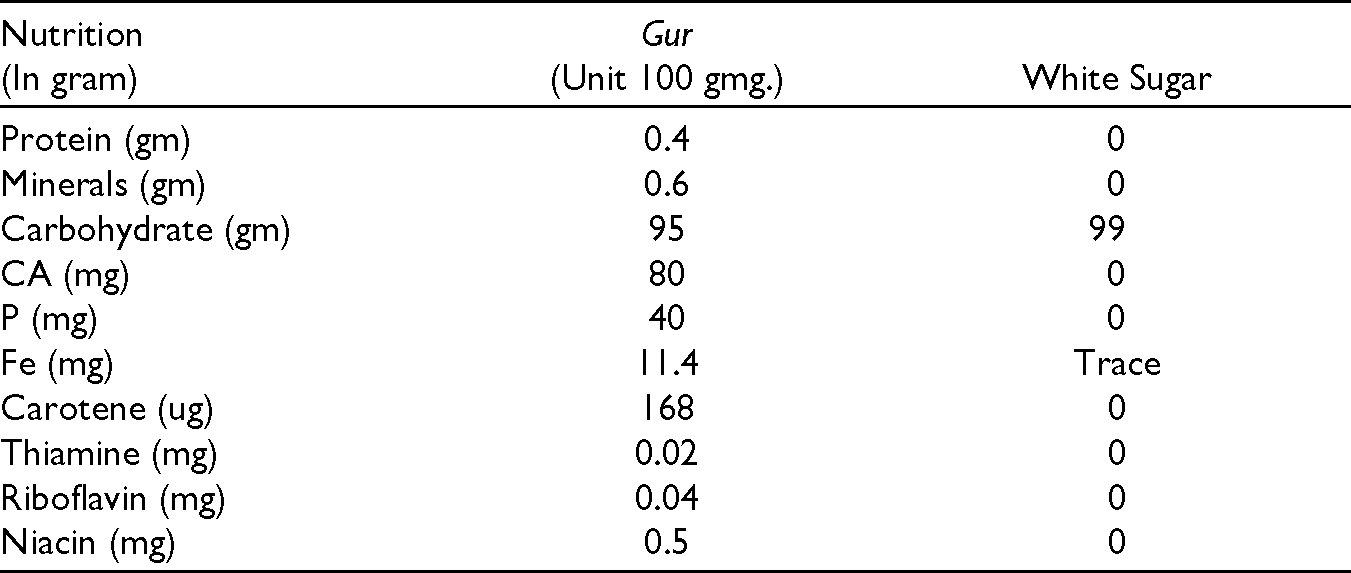
Another big area of concern has been the shift from jaggery and its by-products as a sweetener to refined white sugar, which has well-known hazardous health effects (Bhatt et al., 2022; Iqbal et al., 2017). The pure, modern, refined white sugar has been portrayed as better in terms of hygiene and quality, when in fact, nutritionally, it is only providing empty calories. In contrast, jaggery has a host of valuable micronutrients, especially iron, along with a sweet taste (Table 1). Although in the past, sugarcane was processed at the village level in gur bels that produced jaggery and liquid raab, the advent of large sugar mills decimated this local industry (Govindu, 2015; Singh, 2021). Nowadays, jaggery has become the raw material for alcohol making at the village level, and white sugar is the sweetener of choice across rural and urban households as well in industrial packaged foods and local wholesale and retail food producers (e.g., mithai/sweetmeat shops). This has also played into an aspirational story of ‘whiteness’ with jaggery makers ‘cleaning’ it and whitening it (with chemicals) in an effort to compete. 14 The rapid expansion of sugarcane production thanks, once again, to government subsidies for inputs and purchase by sugar mills at a guaranteed purchase price has created a glut in the market. 15
Nutritional Value of White Sugar and Gur (Jaggery).
The explosion of packaged foods like biscuits, potato chips, Maggi noodles, toffees and cola, from the 1990s onwards, changed the foodscape across rural and urban India (Baviskar, 2018; Finnis, 2007; Nichols, 2017). With the demise of traditional snacks made of millets, groundnuts, sesame and jaggery, these packaged foods became a cheap and convenient substitute. Except, they were nutritionally deficient and pushed empty calories into people, especially young children. Biscuits, for example, are made of refined wheat flour (maida with no fibre), white sugar, refined salt and refined edible oil—all of which are nutritionally compromised foods. Yet, the biscuit lobby has, time and again, attempted to replace hot cooked meals in the midday meal system in government schools with biscuits, claiming superior hygiene and nutrition (Jitendra, 2014; Sethi & Mukul, 2007).
These changes in diets in India are a reflection of similar changes happening in other parts of the world, especially the United States. There, too, much of the ultra-processed food (from breakfast cereals and cookies to pizzas and burger buns) is based on highly refined wheat flour, high fructose corn syrup and refined edible oil, none of which have been very suitable nutritionally (Guthman, 2011; Nestle, 2002; Pollan, 2009). The advent of fast food and the creation of the standardised meal which consists of French fries, cola drinks and a meat-based dish has led to further deterioration in the nutritive quality of calories consumed (Schlosser, 2001). Colas are a huge source of sugar and empty calories but are promoted on school premises and in school lunches (Nestle, 2002). In specific geographic areas where large numbers of underprivileged people live, fresh fruits and vegetables are entirely absent from the supply chain. Known as food deserts, retail chains do not provide healthy options here because people cannot afford to buy them (Walker et al., 2010).
The frightening 2017–2018 Center for Disease Control (CDC) statistic stating that seven out of ten Americans over the age of twenty are overweight or obese (Fryar et al., 2020), needs to be seen in the light of changing diets, among other factors. Indian statistics are no less alarming. The latest National Family Health Survey (2019–2020) showed that one out of every four persons is overweight or obese whereas more than 50% of women and children are anaemic (PIB, 2021; PTI, 2021). India is also considered to be the Type II diabetes capital of the world. This is further reflected in the double burden of malnutrition, as one out of every five Indians continues to remain undernourished and one-third of children are still underweight and stunted (Barnagarwala, 2021; PIB, 2021). The linkage between co-morbidities like diabetes, high blood pressure and diseases like COVID-19 is increasingly evident—the immunocompromised consumer is eating standardised industrial fare without consuming a diversity of nutrients across geography and season, which are needed to battle infection (Kancharla, 2020; Kumar et al., 2019).
Standardised Foods: In the Name of Efficiency and Quality
The industrial logic reshaping agricultural supply chains in India under the state push of the 1970s and 80s was initially justified in the name of food security and the modernisation of agriculture (Subramaniam, 1979). Over time, however, as grain rotting in state godowns became a symbol of self-sufficiency and state apathy, the industrial logic became linked to the role of corporations in bringing efficiency and quality across long supply chains. Western, especially American, agriculture was hailed as the model to emulate, with scale and standardisation as the building blocks of efficiency and quality. Efficiency was defined economically in terms of least cost, which was linked to economies of scale, whereas quality was defined as the least amount of variability of the product (Cronon, 1992).
But, unlike industry, where machines are able to produce standardised products and remove the quality variation that is the hallmark of handmade artisanal products, agricultural products are prone to natural variation. Nature does not produce standardised products because standardised means ‘compromised’. Uniformity means susceptibility to instant destruction. Disease or predators/pests can wipe out vulnerable populations of plants or animals entirely. Nature thrives on diversity, on variability—that is its mechanism for reducing risk, for increasing the chances of survival.
This is possible only through the process of monoculture farming where genetically uniform seeds/breeds are specially cultivated to ensure uniformity and standardisation. Through scientific intervention, the product is the same size, colour, hardness and texture (Hightower, 1978). The implementation of such standards in the United States ended up pushing out of business all those producers who could not produce that tomato or potato or chicken or milk to a uniform specification, i.e., local producers who would typically provide non-standardised products. Only those who could implement standardised, scalable processes by making their farms into factories, were able to survive (Fitzgerald, 2003; Kramer, 1981).
At the same time, a standardised, uniform product became equated with a certain vision of quality, where quality came to be defined solely by appearance and not by taste, the purpose of use or healthfulness. This led to the creation of a ‘discerning’ consumer who began to expect standardised foods, thinking that unstandardised means below par, poor quality and unhygienic (Busch, 2000; Stoll, 1998). Thus, French fries, which were made from a variety of potatoes of different shapes and sizes, were turned into a standardised product by McDonald’s, which insisted that they should be of the same size, shape, colour and crunchiness, and for that, only the Russet Burbank potato would do. They pushed for farmers in the United States to only grow that specific potato variety and being a large buyer, they were able to transform a large number of farms across the country into monocultures (Pollan, 2001). At the same time, they packaged, advertised and marketed their version of French fries as a ‘standardised’ quality product that everyone in the fast-food industry was expected to emulate. In the process, not only did they reduce the diversity of potatoes that were grown, but they also created a consumer who would reject variations in colour, shape, size and crunchiness of fries and only valorise McDonald’s version (Schlosser, 2001).
Similarly, Pepsi Frito-Lays potato chips in India are made from a specifically bred potato variety (FL 2027), which has less moisture and is grown under monoculture conditions. In contrast to multiple potato varieties that have been grown on farms and cooked across Indian households using multiple recipes (especially the tiny round potato [chota aloo] with a distinct flavour that is harvested in winter), increasingly, marketed potato varieties are based on a handful of genetic strains. The same is true for various other foods, including tomatoes, brinjals, corn, soybean, bananas and even chickens and milk. In our minds, a ‘good’ quality tomato is round, red and just the right hardness, and that is what is pushed through supply chains to our homes. Everything else is discarded (or goes into tomato ketchup). In the past, we added sourness to our foods using many different ingredients, including tamarind, dried mango powder [amchur], kokam and narangi, but many of these have disappeared from urban (and rural) homes. Instead, we expect certain foods such as lemons to be available all year round, regardless of the actual season when they should be grown and consumed. We have also lost hundreds of varieties of uncultivated foods (fruits, berries, greens, mushrooms, vegetables and even wild rice) that were consumed by earlier generations who lived on the farm (Nelson et al., 2019).
Although the notion of quality encompasses a wide range of desirable traits, including taste, culinary preferences, nutritive value and not simply appearance alone, promoting a standardised product has become the new norm at the expense of native breeds or desi varieties, of varying shapes, sizes, colours, textures and, most importantly, tastes. For the very discerning, elite consumer, customised supply chains for exclusively branded, organic or exotic foods do exist. But these are out of reach for the majority of the population whose palates are being reshaped by the industrial logic of scale and standardisation.
Yet, as we begin to open up the black box of efficiency and quality, it is clear that they have been defined using an economic and industrial logic that situates agriculture outside of nature—despite efforts to convert the farm into a factory, the variability and excess of nature keeps spilling out (Gidwani, 2008). Whether it is pest resistance, weed explosions, soil toxicity or water scarcity, the treadmill of monoculture is constantly trying to catch up with the help of science and technology (Kumar, 2016). The spillage (or ‘externalities’ as the economists would call it) has not remained confined to the farm. The modern global food system is now dependent on a narrow genetic base of animal and plant products that are highly susceptible to virus outbreaks, which can spread rapidly across the entire system, and even jump over to human beings. This has been most evident with the COVID-19 outbreak in the last three years (Kumar, 2021). The industrial logic underlying the agri-food system is creating both, the disease, as well as the bodies susceptible for it. Rescuing agriculture from this logic would require us to redefine notions of efficiency and quality and re-embed agriculture within nature.
Conclusion
Around the world, the rise of factory farms has created the standardised producer and the standardised consumer. As I have shown, in India, this industrial logic can be traced back to the state-led Green Revolution in staple foods in the 1960s–1970s, which was strengthened by the growing role of corporations after liberalisation in the 1990s. Not only did the industrial food system physically remake agricultural supply chains, but it also psychologically remade the preferences of consumers through notions of quality and efficiency. In the process, it made invisible the multitude of relationships that shape the universe of growing and consuming food—between humans (shaped by sociopolitical, economic and cultural differences) and non-humans (ecological factors, other species, technologies, institutional frameworks).
Re-embedding the agri-food system within these relationships forces us to acknowledge that the frightening health and environmental costs outlined above are an integral part of the industrial logic itself. Challenging corporate control over the food system and seeking the support of the state, as the farm protests have done, is inadequate, as both state and market actors are embedded in the industrial logic of agriculture. Only by challenging the high modernist scientific and technological rationale underlying the industrial logic can we begin to imagine alternatives (Scott, 1998). Clearly, Indian agriculture needs reforms—not of the kind of the now-repealed farm laws. But one where human health and planetary health are deemed paramount.
Footnotes
Acknowledgements
The author is grateful to Satendra Kumar for graciously shepherding this piece to completion and to an anonymous reviewer for detailed and constructive feedback that helped sharpen the argument. The author wishes to acknowledge the contribution of Sudha Nagavarapu, Richa Singh, Surbala Vaish, Dwijendranath Guru and Sangtin Kisan Mazdoor Sangathan in shaping some of the ideas that have emerged in this piece and for their collaborative work to understand and untangle India's nutrition story.
Declaration of Conflicting Interests
The author declared no potential conflicts of interest with respect to the research, authorship and/or publication of this article.
Funding
The author disclosed receipt of the following financial support for the research, authorship, and/or publication of this article: the financial support of IIT Delhi's Faculty Interdisciplinary Research Project (No. MI01249) for research conducted between 2017–2019 in Uttar Pradesh.