



Abstract
This article presents the findings of research regarding the transformation of the meaning of ex-detention and extermination sites in Chile. In the context of the increasing cost of land and the ‘urban cleansing’ associated with global processes of neoliberalization, the author reflects in particular upon the dynamics of visibility and erasure that accompany the life of these recent ruins, and the various politics of their memorialization. From a critical phenomenological perspective the author argues that ruins of sites of violence have the capacity to interrupt, transgress and even contradict narratives about them; furthermore, the relation between affect, ethics and aesthetics is discussed so as to raise questions about the possibility of witnessing and the challenges of memorialization.
Introduction
It was only a few years ago that the Chilean public learned that in the middle of one of Santiago’s wealthiest neighbourhoods (‘La Reina Alta’), there was a small extermination camp, known as ‘Cuartel Lautaro’ that no prisoner left alive. This property, located in what were still the rural outskirts of Santiago in the 1970s, belonged to the esoteric Arica Institute, and consisted of a large shed without windows, ostensibly designed for spiritual retreats. Without changing ownership, from 1975 onwards it was used as a site for the extermination of the clandestine communist leadership. In 1980 the property was ‘donated’ to Fundación mi Casa (an institution that promotes the protection of children’s rights) for charitable use, and then sold to the Centro Nacional de Información (CNI), the National Information Centre (Secret Service). Ten years later, the CNI sold the property to a private real estate company who, in 1991, built the expensive townhouse complex that is there today. The links between the psychological-esoteric exercises of the Arica Institute and the intelligence and military command of Pinochet’s regime (which, under the name ‘Brigada Lautaro’ committed indescribable crimes in those quarters) are not clear; however, archival investigation has allowed the establishment of a very clear link between the neoliberal logics of profit, corruption and state violence (Rebolledo, 2012a, 2012b).
In post-conflict landscapes it is indeed not uncommon that construction workers become involved in the exhumation of bodies of ‘disappeared’ victims of violence, or that detention and extermination sites are transformed into hotels or shopping malls. While it is well established that fear of prosecution, an ambiguous public and gentrification all contribute to the erasure of the material traces of violence, the focus of my research is a different one. By studying sites of violence as ambivalent markers of erasure and visibilization, my project seeks to take account not only of the overlapping historical acts of violence linked to nationalist and racist imaginaries, which erased bodies and populations to visibilize a ‘whiter’ and modern nation, but also of a symbolic form of erasure that results, paradoxically, from the politics and aesthetics of the visibilization of violence, its representation and memorialization.
Cuartel Lautaro (located on Av. Simon Bolivar, Santiago) was only one of more than 1000 detention sites established all around Chile after the military coup in 1973, which caused the once celebrated Chilean democratic tradition to vanish behind an immense repressive apparatus that kept the country captive until 1990.
Thanks to testimonial accounts, ongoing judicial processes and the persistent political efforts of those who oppose the politics of oblivion, the once hidden truth about what really happened during the military dictatorship has slowly been brought into daylight. Nevertheless, factual certainty about the thousands of tortured and mutilated bodies, and the naming of the logistics and implementation of this type of racialized and gendered state sponsored violence (Palacios, 2009) still confront us with the challenges of its representation. As studies of trauma show, language falls short when confronting the challenge of ‘saying it all’ (Palacios, 2013, 2017). Scholars of trauma and witnessing argue that the traumatic event is characterized by its lack of symbolization, as it refers to a type of experience that seems to happen precisely ‘outside’ of language (Caruth, 1995; Felman & Laub, 1992). In Caruth’s words, ‘the event is not assimilated or experienced fully at the time, but only belatedly, in its repeated possession of the one who experiences it’ (Caruth, 1995, p. 5). Agreeing with the post-colonial critique of this purely structural account of trauma (Craps & Buelens, 2008; Novak, 2008), I have argued (Palacios, 2013, 2017) that this account of the limits of language is insufficient. The failure of symbolization needs to be theorized vis-a-vis its ‘political’ counterpart in ways that do not sever the experience of trauma/pain from the process of symbolizing othering, power and exclusion that accompany and inform violence. Not surprisingly, these purely structural accounts of trauma tend not only to under-theorize and universalize notions of passive victimhood, they also remain uncritical of naïve conceptions of witnessing that ignore, for example, the complex dynamics of spectacle and voyeurism that often characterize the representation of the pain of the other (Ettinger, 2006; Fassin & Rechtman, 2009; Sontag, 2003).
We could say, at this point, that this failure of signification and the existential abyss with which experiences of violence confront us, destabilize theoretical paradigms that privilege notions of truth and presence. Although politically necessary, attempts at reconstructing the truth seem to be always displaced and challenged, not only by the politics of forgetting and the emergence of new facts, narratives and interpretations, but also by this space of silence – absence – which is left when the naming of violence happens. This dilemma of giving testimony and becoming witness to violence, furthermore, points to the unavoidable dynamic of visibility and erasure that informs any aesthetic regime (Ranciere, 2006, 2009a, 2009b) in relation to the representation of violence: what or who comes forth and represents violence – in a memorial, for example? And what or who remains hidden or erased?
That is, acknowledging that memorialization involves a complex, even paradoxical dynamic of visibilization and erasure (of bodies, identities and experiences) which speaks of the inevitably ‘incomplete’ process of signification – what Merleau-Ponty calls the ‘chiasm’ of the social (Merleau-Ponty, 1968) – I attempt to address this limit of representation and the impossibility of language ‘saying it all’ through a study of former sites of violence. Addressing the very ‘thingness’ of these sites, I explore the silence and absence that surround experiences of violence while tracing the powerful, loud and yet untranslatable affective force that characterizes the struggle of appearing and disappearing, linked to regimes of visibility and the politics of memorialization.
Sites of violence and the ‘force’ of things
If in the 1970s the military and secret police made bodies disappear through the deployment of what can be called ‘an architecture of violence’ that was hidden from the public eye – from schools to sports stadiums, from seaside vacation bungalows to private homes and including prisons and military facilities, were carefully and secretly transformed into sites of ‘invisibilization’ – today, with few exceptions, these places still lack visibility and public recognition. It could be said that the unequal distribution of the visibility of sites of violence, produces a peculiar type of social stratification – and even power struggles – between the sites themselves, as the local organizations that are responsible for each of them are permanently competing for public recognition and limited funds. But it is not just funding that these sites are competing for: a variety of different narratives and political views about violence in Chile, as well as contrasting memorialization efforts (including, one could even say, ‘opposing’ politics of aesthetic intervention), has made each of these sites strikingly singular.
This singularity raises the important question of how to approach these sites. In response, this study proposes a conception of aesthetics where matter becomes a political agent and a ruined site of violence stands as a critical witness, offering a particular and privileged type of testimony (Bennett, 2010; Benso, 2000; Heidegger, 1962, 1993a, 2001; Keenan & Weizman, 2012). Sites of violence, as we will see in what follows, are not just passive receptors of a variety of interventions, but are themselves agents, in their capacity to interact, frame and even interrupt human action. As Jane Bennett has argued in her Vibrant Matter (2010), while engaging with a variety of ‘vitalist’ philosophers, ‘the aim is to articulate the elusive idea of a materiality that is itself heterogeneous, itself a differential of intensities, itself a life. In this strange, vital materialism, there is no point of pure stillness, no indivisible atom that is not itself aquiver with virtual force’ (Bennett, 2010, p. 57). Particularly in the study of confinement, walls, for example, become of utmost importance. In their ambivalent emblematic character as material witnesses of the occurrence of violence, one could say, walls are both knowing and not knowing, passive and active, disrupting and allowing, protecting and leaving in solitude. Particularly in the context of the study of violence, ‘forensic’ aesthetics can be employed to understand the power of such objects.
In Keenan and Weizman’s words:
The advent of forensic aesthetics is … better understood … as an arduous labor of truth construction, one employing a spectrum of technologies that the forum provides, and all sorts of scientific, rhetorical, theatrical and visual mechanisms. It is in the gestures, techniques and turns of demonstrations, whether poetic, dramatic or narrative that a forensic aesthetics can make things appear in the world. The forums in which facts are debated are the technologies of persuasion, representation and power – not of truth – but of truth construction. (Keenan & Weizman, 2012, p. 67)
Now, although forensic aesthetics is characterized by its faith in the capacity of visible things (including walls and buttons) to speak the ‘truth’ of violence, in my view, ‘things’ are not that simple. Diverging from Keenan and Weizman, and as I have pointed out previously, memorialization attempts to face the aporia of giving testimony, that is, reconstructing the ‘truth’, while at the same time leaving open the space of ‘exile, loss or disappearance’ that accompanies violence and its representation.
It is for this reason that, although I embrace the turn towards ‘things’ in social and cultural theory, I think it might be worth re-reading some of the main inspirations in this field, which can be found in Heidegger’s The Origin of the Work of Art (1993b). Although, in this essay, Heidegger argues that art has the capacity to bring forth the truth of the otherwise concealed thing, he also carefully elaborates a certain ‘resistance’ to appearances: according to him, things are never entirely open; there is always an aspect that remains concealed: ‘the unpretentious thing is the one that evades thought most stubbornly’ (1993b, p. 99). Language, or what Heidegger calls ‘world’, is always in strife with ‘earth’– not a destructive strife, but a type of strife where opponents carry each other beyond themselves, a strife between clearing and concealing.
In the context of my research, sites of violence seem to be irreducible to what we might call, using forensic language, the ‘truth’ of violence. I would say instead that sites of violence confront us with a type of irreducibility that speaks not only of the elusive thingness of the thing – as conceptualized by Heidegger – but also of an affective register that accompanies these sites. As Massumi writes in the Foreword of Deleuze and Guattari’s A Thousand Plateaus,
AFFECT/AFFECTION. Neither word denotes a personal feeling (sentiment in Deleuze and Guattari). L’affect (Spinoza’s affectus) is an ability to affect and be affected. It is a prepersonal intensity corresponding to the passage from one experiential state of the body to another and implying an augmentation or diminution in that body’s capacity to act. L’affection (Spinoza’s affectio) is each such state considered as an encounter between the affected body and a second, affecting body (with body taken in its broadest possible sense to include ‘mental’ or ideal bodies). (Deleuze & Guattari, 2004, p. xv)
This definition of affect – as bodily intensities that are autonomous from conscious perception and language – points towards an experience of excess that allows us to rethink the limits and challenges of memorialization. As I have argued before in the context of trauma, affect cannot be theorized independently of the social. Even if different from conscious feelings or socially informed emotions, affect exists in relation to these other dimensions of social life and not cut off from them (Palacios, 2013). In this sense anxiety, for example, theorized by Lacan as ‘what does not lie’, can be a powerful decolonizing notion to scrutinize the limits of power, repression and disavowal (Palacios, 2017).
Concentration Camp Chacabuco and Pisagua Prison: Stories of haunting in the Atacama Desert
Two of the most prominent former detention sites from the Pinochet regime are situated in the very north of Chile, in the confines of the Atacama Desert. Although these sites are iconic in the history of violence in the country, upon visiting it was striking to confirm their extreme state of dereliction and neglect. Although various organizations of political prisoners have attempted to keep their memory alive, the state has done little to support these initiatives while the general public has remained oblivious.
My first visit took place in 2013 before securing funding to support my research. I visited Chacabuco, an old nitrate mining camp in the Atacama Desert and the largest concentration camp operating during the military dictatorship (Carrasco, Jensen, & Cáceres, 2004; Cerda, 1994; Cozzi, 2001; Gomez-Barris, 2012). Accompanied by an ex-political prisoner and his then teenage son (‘Hernán Junior’), we bore witness to the stories of fear, pain and friendship. Although the family lives in nearby Antofagasta, they had never visited Chacabuco together. I was there, in the background, when that necessary conversation took place, and the significance of that encounter remains the inspiration of this research.
Concentration Camp Chacabuco is one of the many abandoned nitrate or ‘saltpeter’ towns (oficinas salitreras) in the Atacama Desert of northern Chile. As such, it opens a door to a different type of violence: the historical violence linked to the extraction of nitrate in the country at the beginning of the twentieth century (Bermúdez, 1987; Garcés, 1999; Pinto, 1990). Becoming a ghost town in the late 1930s, it was declared a Historical Monument by socialist president Salvador Allende in 1971, at which point restoration of the site began. Ironically, in 1973, right after the military coup, Pinochet turned Chacabuco into the largest concentration camp in Chile, and it was in use until the end of 1974.
Although, since 2003, Chacabuco is under the management of Corporación del Museo del Salitre, the site has gone back to its ghostly existence. It is a desolated and abandoned place, increasingly falling apart – disappearing – as the years pass, with a permanently strong wind blowing away the sand walls of the former miners’ houses (Figure 1). At its entrance there is a map that shows the extent to which the ghost town was transformed into a gigantic concentration camp (Vilches, 2011). Particularly interesting for this project was my visit to the ‘museum’ of Chacabuco, consisting of a single room on the second floor of one of the remaining abandoned buildings. There, one can find a series of small vitrines and tables with objects from its time as an active mining town. In a hidden corner, one small table is dedicated to Chacabuco the concentration camp (Figure 2). The table holds a few typed pages with information, some bullets and a packet of cigarettes. Although at first I was disappointed to see this very minimum memorializing effort and interpreted it as a ‘failure’ to memorialize, now I see things differently. Yes, maybe the modest table is a failure. But not so much because the state has not responded properly to existing activists’ demands, but perhaps because it shows metaphorically the existing incommensurability between memorialization (or any enacted narrative) and the site and its history. Indeed, this is a place that seems unable to be ‘tamed’ by any discourse: the never ending and disorienting sea of ruined houses, each with different marks on the interior walls – some giving testimony of the ‘lives’ of the prisoners in them who sometimes carved words or drawings, others simply giving testimony of a century of poverty and exploitation – constitute a heterogeneous multitude that resists becoming, precisely, homogeneous, digestible, mourned. In this sense, failure acquires a different meaning, as it could be understood as a type of ‘faithfulness’. As Derrida argues, the failure of mourning is associated with the impossibility of assimilating loss, and as such becomes central to theorizing the ethics of alterity: ‘Mourning is an unfaithful fidelity if it succeeds in interiorizing the other ideally in me, that is, in not respecting his or her infinite exteriority’ (Derrida, 1995, p. 321).
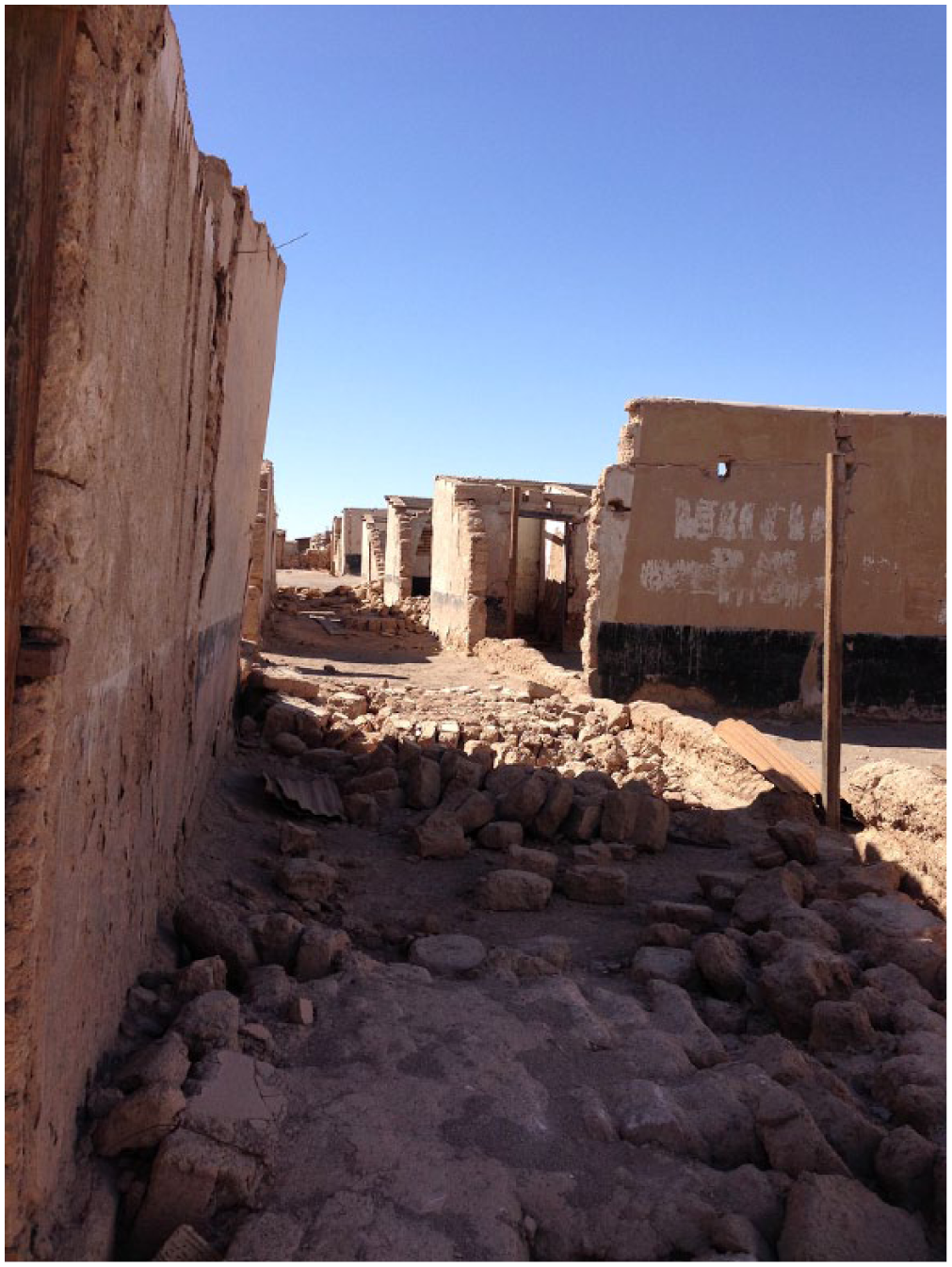
Chacabuco.
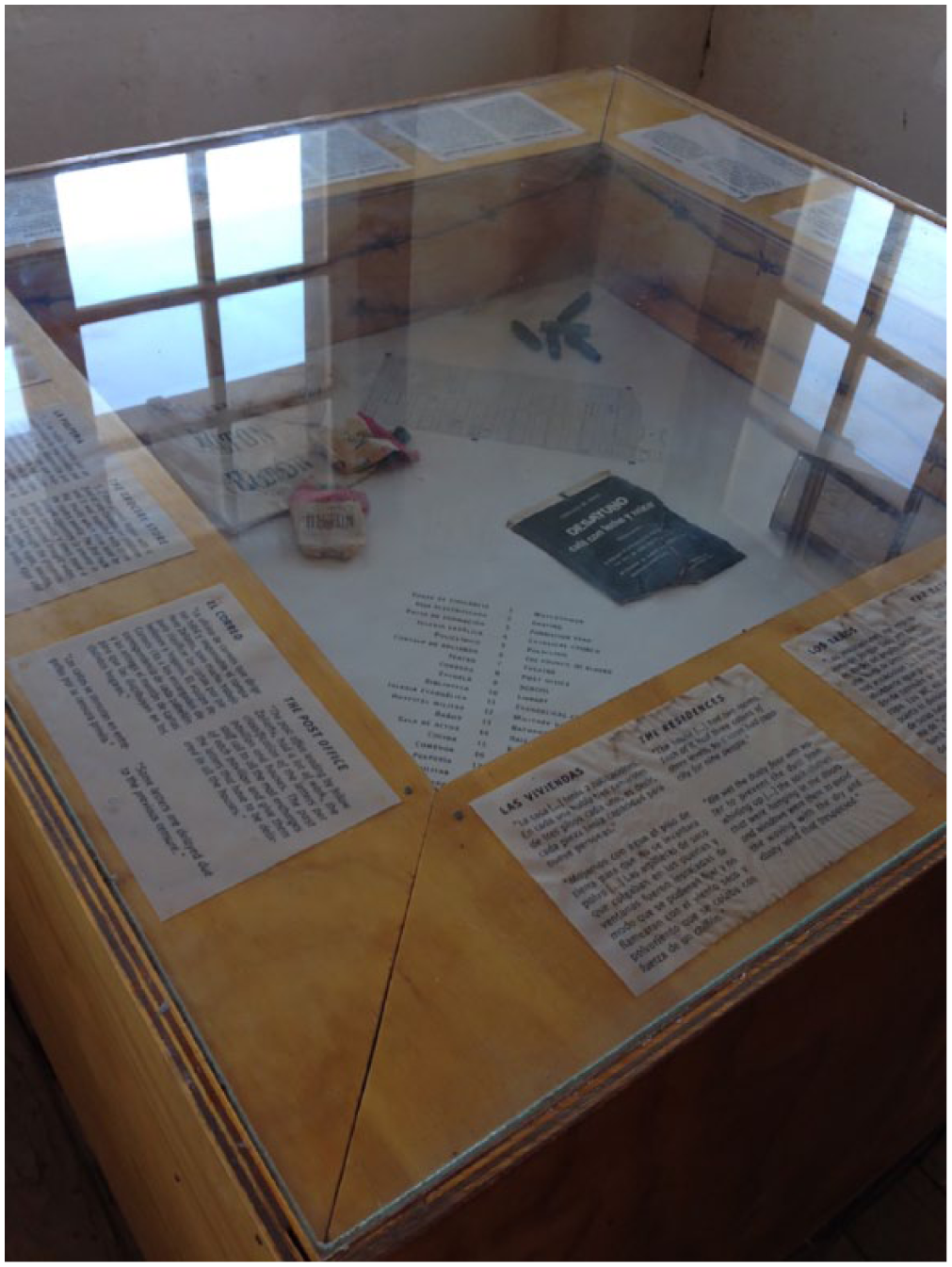
Table memorializing Chacabuco Concentration Camp.
Pisagua Prison
After securing external research funding, I was able to return to Chile in 2015 and visit the Atacama Desert again, this time heading towards Pisagua Prison. The several hours’ drive through the desert, particularly after turning off the highway to cross the solitary and melancholic slopes of Cordillera de la Costa (Figure 3), was an intense – and in many ways illustrative – experience of what my days in Pisagua town would look like.
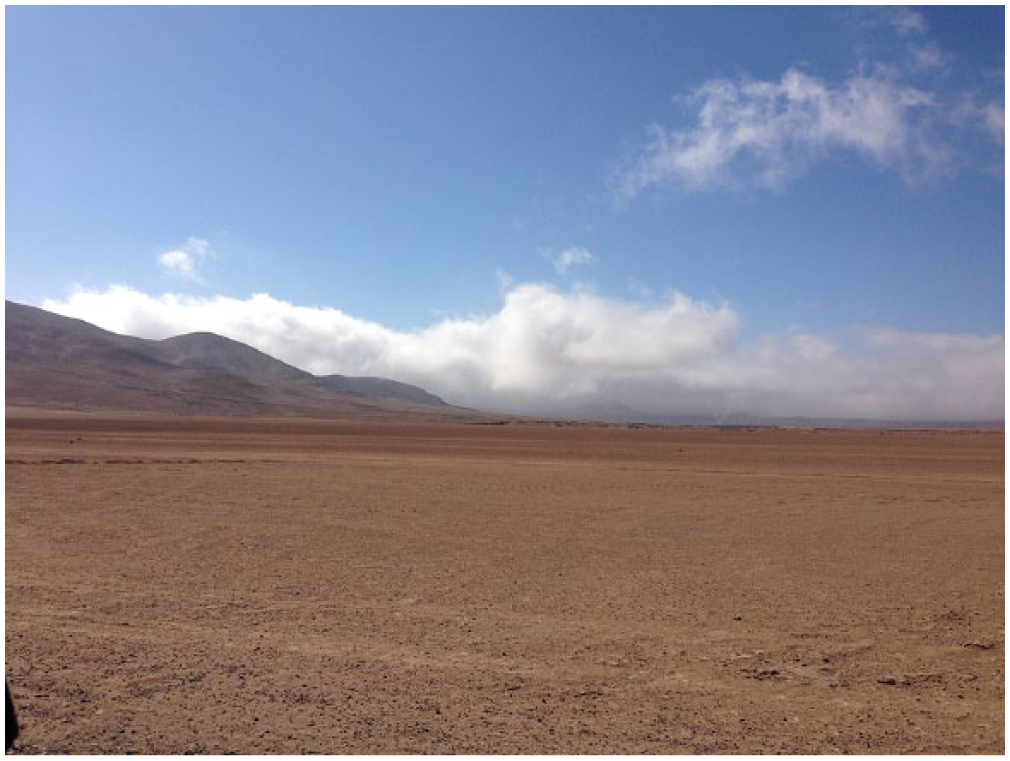
Atacama Desert.
Pisagua Prison, I would argue, is the most powerful and paradigmatic example of the dynamics of appearing and disappearing I explored in my research. Located in the invisible confines of Chile, between the Atacama Desert and the Pacific Ocean, this building was used at various times during the twentieth century to confine those who threatened the possibility of the appearance of nationalistic and patriarchal Chilean imaginaries: Peruvians and Bolivians at the beginning of the century, queer sexual dissidents in the 1940s, and communists in the 1970s (Frazier, 2007). During the neoliberal reforms of the 1980s, the building was sold to a private investor who converted it into a hotel (Spira, 2012). The street sign ‘Hotel’ at the entrance of Pisagua town is still there. However, interestingly, there are contradictory narratives regarding its use as such: some of the current inhabitants of Pisagua – as well as members of associations of victims of violence – deny that it was ever a functioning hotel, while others say that ‘Pisagua lived its best times when the hotel had its doors open to the public’ (Jose, local fisherman). Now abandoned (and since the earthquake of 2014 with significant cracks in the walls and part of the roof missing), the building has been declared a National Monument, and is in the process of being symbolically assimilated into existing official narratives about golden Chilean neoclassical and Georgian style architecture. Its well-preserved, pale red painted façade hides fallen walls and stairways, and broken windows as well as patios with blooming bougainvillea trees (Figure 4).
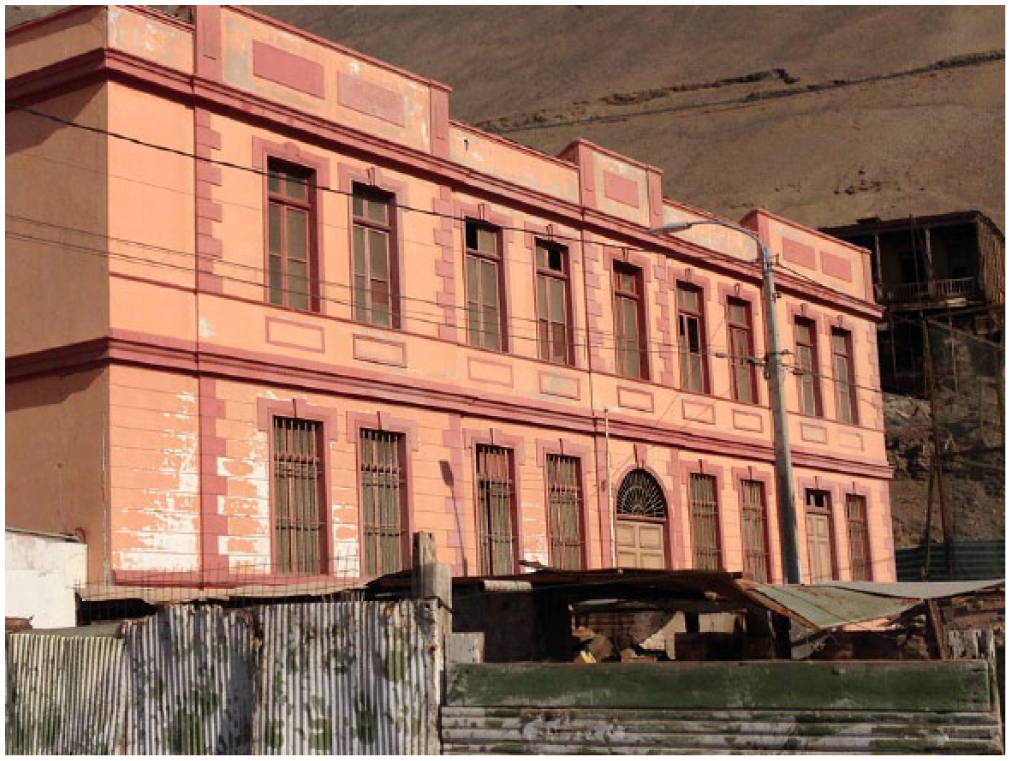
Pisagua Prison.
After several days of attempting to persuade the fisherman who holds the keys to open the locked doors of the prison – a permission long-denied to victims of repression and their families – I managed to convince him to open the back gates to the building. The opening of the doors was an extremely powerful experience, and in its own limited context felt like a political victory. Inside the building and its surrounding patios, it was possible to see the material testimony of abandoned objects: the cruel transformation of torture chambers on the top floor into the pool-playing rooms of the hotel, the iconic staircase where prisoners were often tortured and even killed, and the small vitrines at the entrance of the building exhibiting objects that had once attempted to erase the history of political violence. I could, in fact, corroborate that the prison had functioned as a hotel, among other things, as I found an old hotel diary (from 1992) lying on the floor. It had handwritten entries with several bookings: ‘24th of November: 3 Rooms for 3 people from the Secretary of Education’; ‘8th of September: Marankovich, 4 adults and 6 children for lunch at 13.30’.
Although the prison itself has not been memorialized, 1 Pisagua does have a memorial in the nearby iconic cemetery, where a mass grave was discovered in June 1990.
Pisagua, a town of only a few streets but once a strategic port for the transport of nitrate, was transformed during the dictatorship into one big detention site. On the border between sea and land, it was possible to see the ruins of the destroyed concentration camp – designed and built but never used – in Nazi architectural form (Figure 5).
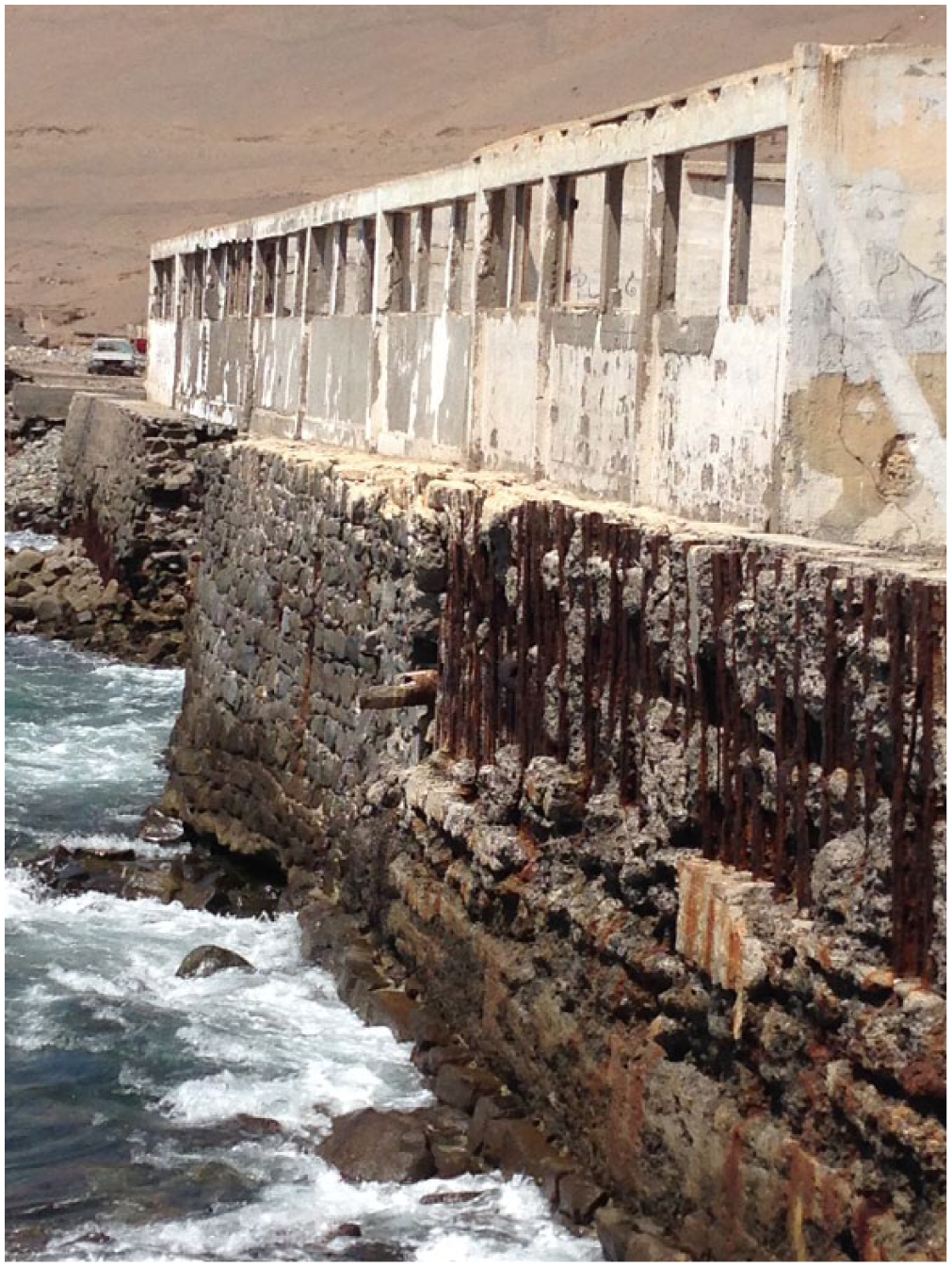
Destroyed concentration camp in Pisagua port.
I spent the afternoons in Pisagua watching children and adolescents play football in what had once been a place to torture prisoners (a patio outside the prison building). Indeed, Pisagua is a place full of resignifications. Nevertheless, the memory of violence still haunts those who live there, who mentioned the words ‘ghosts’ and ‘haunting’ of their own volition when asked about their lives in Pisagua. As the woman who now runs the small local library said, ‘Here nobody likes to walk alone at night … . There are too many noises and some say they can hear screams and people crying. Too many died in Pisagua and the dead are still with us’ (Rosa, local librarian).
Chacabuco and Pisagua are both extremely powerful sites. Their history of association with structural violence in Chile and the various attempts at hiding – erasing – such violence from the Chilean imaginary, poignantly shows an unbridgeable incommensurability between any attempt at symbolizing violence (either by erasing it or by ‘inadequately’ memorializing it) and the occurrence of violence itself. Although neglected and disappearing – not only symbolically (as at Pisagua Prison that now becomes an icon of architectural glory) – but also materially (Chacabuco and its few standing walls), their humble testimonies still manage to contradict the narratives about them. Both sites ‘are there’ in a modest way, and using the language of forensic aesthetics, one could say that they convey a type of (unmediated) truth that the knowledge or epistemology that mobilizes their erasure/memorialization lacks the capacity to signify.
Sites of violence in Santiago
Sites of violence in Chile’s capital, Santiago, are actually at the very centre of the contemporary politics of visibility and erasure in Chile. They once kept bodies hidden, in a context where the disappearance of these bodies seemed to provide the opportunity for the ‘appearance’ of a new, modern Chile – what became known in the 1980s as ‘The Jaguar of Latin America’. In a fast-changing culture and society, Chile has proudly and vigorously embraced the neoliberal agenda; with it, urban landscapes (and their commercial value) have rapidly multiplied. These ruined sites of violence – particularly those in Santiago – thus stand between an imaginary of success and a history of failure. It is no surprise, then, that a constant struggle persists between a general public (and political elite) that seems to want to erase these sites, and those few who wish to retain them as memorials. However, in spite of repeated attempts at erasure (including, for example, tearing them down, changing street numbers, the disappearance of the legal history of the property and the transformation of the use of the property), these attempts have only been partially successful, insofar as all these places retain some link to their past. In the context of accounting for the space of difference between the site and its narrative, it seems very useful to revisit Avery Gordon’s work on haunting. In her words,
… what’s distinctive about haunting as I used the term (and this is not its only way, of course) is that it is an animated state in which a repressed or unresolved social violence is making itself known, sometimes very directly, sometimes more obliquely. I used the term haunting to describe those singular and yet repetitive instances when home becomes unfamiliar, when your bearings on the world lose direction, when the over-and-done-with comes alive, when what’s been in your blind field comes into view. … Haunting and the appearance of specters or ghosts is one way, I tried to suggest, we’re notified that what’s been suppressed or concealed is very much alive and present, messing or interfering precisely with those always incomplete forms of containment and repression ceaselessly directed towards us. (Gordon, 2011, p. 2)
Villa Grimaldi and Londres 38: Funded, institutionalized and highly visible memorials
As described by the literature in the field of new museology, there is a tendency to move away from monumentality towards more horizontal practice that aims to include communities in the control of their cultural heritage. As Andermann and Arnold-de Simine argue in their article ‘Memory, community and the new museum’, this tendency has taken place within a context of increased narrativization, associated not only with the predominance of the linguistic turn and increased curatorial discourses, but also with decolonizing efforts: ‘in order to do so, the museum cannot simply rely on the aura of the authentic object as a window onto the past, but deploys multi-media technologies and performance as strategies of narrativization associated with art forms such as literature and film’ (2012, p. 7). Furthermore, and following Marstine, the authors argue that this increased narrativization involves a change from ‘awe and worship’ to the production of a site of discourse and critical reflection. Certainly there are significant differences between a site of violence (and its memorialization) and a memory museum. However, the memorialization of a site of violence involves –and even consists of – precisely the presence of its narrativization. Villa Grimaldi, it could be said, has embraced – at least to a certain extent – such an approach. Nowadays, ‘Peace Park Villa Grimaldi’ (formally Cuartel Terranova) is the most visible site of violence in Chile and the first site at which alternative models of memorialization have been debated and acted upon by survivors and their families (Read & Wyndham, 2016). It has been chosen as the icon – alongside El Museo de la Memoria, also in Santiago – of government efforts to deal with the country’s history of repression, and as such provides a platform to foster sociability, human rights participation and other forms of civic action (Gomez-Barris, 2010). As the most institutionalized and restored site of violence, today Villa Grimaldi operates as a cultural corporation and offers a variety of educational resources to the public. Located on the eastern outskirts of Santiago, Villa Grimaldi once was an elegant colonial house, built at the beginning of the twentieth century (Salazar, 2013). The property was sold for demolition in the late 1970s, and plans to construct a housing complex on the site were approved. However, a variety of local and political initiatives managed to succeed in recovering the estate and, after expropriation by the government, it was opened to the public as a memorial site in 1994. In their detailed account of the struggle to memorialize the site, Read and Wyndham show how very different views and political agendas were ‘furiously debated’ (2016, p. 132), where more conciliatory views (represented by a desire to homogenize a narrative about violence independently of the site itself, and among other things, erase from the site any leftovers from Pinochet’s era) were contrasted with those that wanted to stress the particularity and literality of the experiences that occurred on the site. ‘In this way, and amidst much controversy, Villa Grimaldi was by 1995 becoming a haven of peace, tranquility and reflection: rolling lawns, a fountain, flower beds and a plaza open to concerts and plays would gesture towards the beautiful garden that Villa Grimaldi once had been’ (Read & Wyndham, 2016, p. 134).
Since its recovery, the site has been reconstructed in a variety of ways. There have been attempts to reproduce some of the building structures that surrounded the main house where torture took place (‘la torre’ and ‘la celda’) as well as simply marking on the ground what previously stood there. There have also been several permanent aesthetic interventions, including a manicured rose garden and a number of monuments that honour the militants of different political parties who perished or disappeared there. It is probably fair to say that curatorial discrepancies have not entirely cancelled each other out, as even views that were dismissed in the planning of the memorial to a certain extent manage to ‘appear’: ‘Roberto Matta, who had summarised the quadrants of opinion back in 1997, believed that the interests of reconciliation slid all too easily into self-censorship among the tour guides. In 2000, amidst disapproval of some other members of the Corporation of the Villa Grimaldi Peace Park, he devised a tour as both guide and author that firmly placed him among those wishing to present the blindfold and the parrilla in their full horror’ (Read & Wyndham, 2016, p. 137).
The experience of being in Villa Grimaldi, in this sense, is very different from that of being in Chacabuco and Pisagua, as the Villa is symbolically ‘saturated’ with its many commemorative interventions. For me, personally, ‘Monumento Rieles’ is the most striking of these. It consists of a cubic metal structure built to exhibit the remains of train lines found at the bottom of the sea in the Quintero Region, during the 2004 Human Rights investigation. One tactic for making bodies disappear during the military dictatorship was to throw them from planes into the sea (sometimes when still alive), tied to train rails so they would never be found. One of the rails exhibited in Villa Grimaldi has a nacre button attached to it, cruelly confirming this fact. However, upon visiting Villa Grimaldi my experience of confronting the button was not about knowledge and certainty. Although the button is indeed there, it feels as if its presence is only insinuated. It can hardly be seen, as it is intermingled with the rusty rail, and both objects lie inside a long and square vitrine that prevents the possibility of getting close to it and seeing it with ‘clarity’. This tiny artefact, in a similar way to the acting/disrupting/contradicting walls of Chacabuco and Pisagua Prison, manages to convey an experience characterized by a paradoxical undecidability between the truth of the real, and the lack of certainty and even knowledge to represent it. Maybe I could characterize the encounter with the button precisely as an experience of ‘awe and worship’, even if the framing (a cube of metal in a glass case in Peace Park Villa Grimaldi) has a different purpose. In my view, the performative power of this undecidability, experienced in the encounter with the nacre button, speaks back to both approaches in an interesting way. The button, in its humble literality, manages to destabilize symbolic closure (digestion) through its evasiveness, and in doing so prevents the reaffirmation of a type of ‘subjective omnipotence’ while resisting the colonizing operation of the gaze that wants to capture, frame and own it. Instead, this semi-invisible but material, tiny nacre-ruin offers back a truth without knowledge, a gap, a question, a silence. Its opacity consists in its resistance to becoming an epistemological object while at the same time it powerfully destabilizes the subject who encounters it. In my view, this failure of the constitution of the dualistic subject–object relation safeguards a space of difference where a certain ethical encounter –or wit(h)nessing between the self and the other might take place.
Londres 38 is the former house of the Socialist Party. This property, located in downtown Santiago, was converted into a detention and extermination site during the military dictatorship. Subsequently, in the late 1980s, it was donated to the military institution Instituto O’Higginiano, which attempted to sell it in 2006. This initiative failed, as activists and members of a variety of human rights organizations succeeded in recovering it two years later. Since then, Londres 38 has been in the hands of the Chilean state, and has become – together with Villa Grimaldi – one of the very few recognized and memorialized sites of violence in Chile (Read & Wyndham, 2016). In contrast to Villa Grimaldi, however, intervention has been kept to a minimum in order to leave all traces of the walls exactly as they stood at the moment the property was recovered. In this recovery process, the conservation of the black-and-white tiles on the floor of the entrance hall was particularly significant, as this was the only thing that prisoners of Londres 38 may have been able to see when brought blindfolded into the building. Survivors testified to seeing these black-and-white tiles at the entrance and this served as a fundamental clue that helped human rights activists to locate this otherwise concealed and then erased detention and extermination site. The only aesthetic intervention in Londres 38 consists of 94 small metal plaques located outside the building with the names and ages of those who perished there (e.g. Figure 6). It is striking to confirm the young age of the men and women, victims of state violence, who according to the logic of political antagonism had become ‘enemies’ of the country. Surrounded by hip cafes and boutique hotels, Londres 38 subtly interrupts the urban environment; this is a conserved but ‘bare’ house: on the ground floor there is some office space and a meeting room, and one of the rooms in the upper floor is used for small itinerant exhibitions. Otherwise, the house is nothing more than empty rooms, stairways and a small back patio. Londres 38 has a digital archive and similar to Villa Grimaldi participates in a network of social, cultural and local associations with the goal of fostering and recovering memory in Chile. It is interesting to contrast the Londres 38 anti-interventionist aesthetic with the highly interventionist one of Villa Grimaldi; however, Londres 38 still participates in an effort to narrativize the place, as its bare walls are experienced through the mediated experience of ‘guided visits’. Indeed, a particular narrative of violence and survival belongs to each room. Only the small back patio does not have a symbolic reference associated with it, and is used as a storage corner. I sat there, on the floor, for a long time on a summer morning, following silently with my fingers the cracks and mould on the walls. I had finally found a space of silence. The lack of intervention in the house and the use of one of the upper rooms for itinerant exhibitions contribute to the permanent resignification of the building. Unlike Villa Grimaldi, which has a more consolidated narrative that is associated with a variety of interventions and a more institutionalized feeling to it, Londres 38’s bareness shows an interesting commitment to keeping open certain hermeneutical horizons where new meanings and processes of identification and disidentification can be fostered. In this sense, one could say it is precisely its limited narrativization that triggers and fosters resignification.
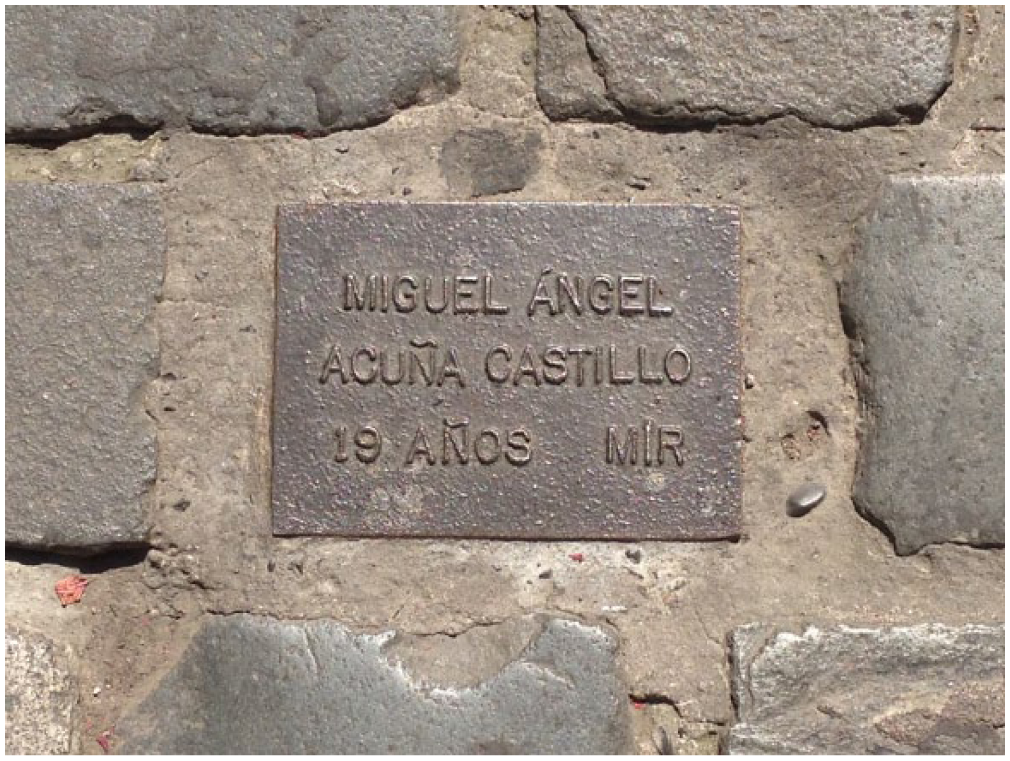
Plaque at Londres 38.
The struggle for visibility continues: Estadio Nacional and Casa Memoria
Estadio Nacional (the National Sports Stadium) is an iconic site in the history of violence in Chile, as this was the first place where more than 20,000 detainees were brought after the coup in 1973. In spite of this, it was not recognized as a site of violence until 2003, when it was finally declared a National Monument. Although it continues to be used as the main sports venue of the country, the most paradigmatic sites of violence within the building have been memorialized, including the Memorial Acceso Grecia, Escotilla N. 8, Graderías del Coliseo, Memorial de Mujeres, Memorial Pedro de Valdivia, Camino de la Memoria, Pasillo Sector Andes, Camarin 3, Tunel del Velódromo and Caracola Sur del Velódromo.
Contrary to Villa Grimaldi and Londres 38, which are working institutions with permanent members of staff and an associated bureaucracy, the memorialized areas of Estadio Nacional are looked after by volunteers only. Indeed, Estadio Nacional relies for its functioning as a memorial site on the voluntary work of two or three people who, mostly at weekends, receive visitors and show them around the Estadio, telling the story of each memorialized area. As the two images (Figures 7 and 8) show, memorialization here has meant conserving the sites in their ‘original’ physical state. The complex logics of visibilization and erasure make Estadio Nacional, and the struggle for its recovery as a site of violence, a very unique case: on the one hand it is hard to understand how Estadio Nacional, with its impressive visibility and monumentality (the whole complex covers around 65 hectares) and its centrality in the history of repression in the country, managed to remain ‘under the radar’ for so long. And even after ‘appearing’ (becoming memorialized in 2003), it still struggles to properly become visible. The great majority of people who visit Estadio Nacional do so in order to watch a football game or to attend a concert. The perseverance of these few voluntary workers who spend their weekends in Estadio Nacional is extremely remarkable: they simply will not let go. The strength of their ethical commitment has managed to pierce bureaucracies and seep into an oblivious public. At this site we are once again confronted with the dynamics of erasure, resignification and resistance to disappearing.
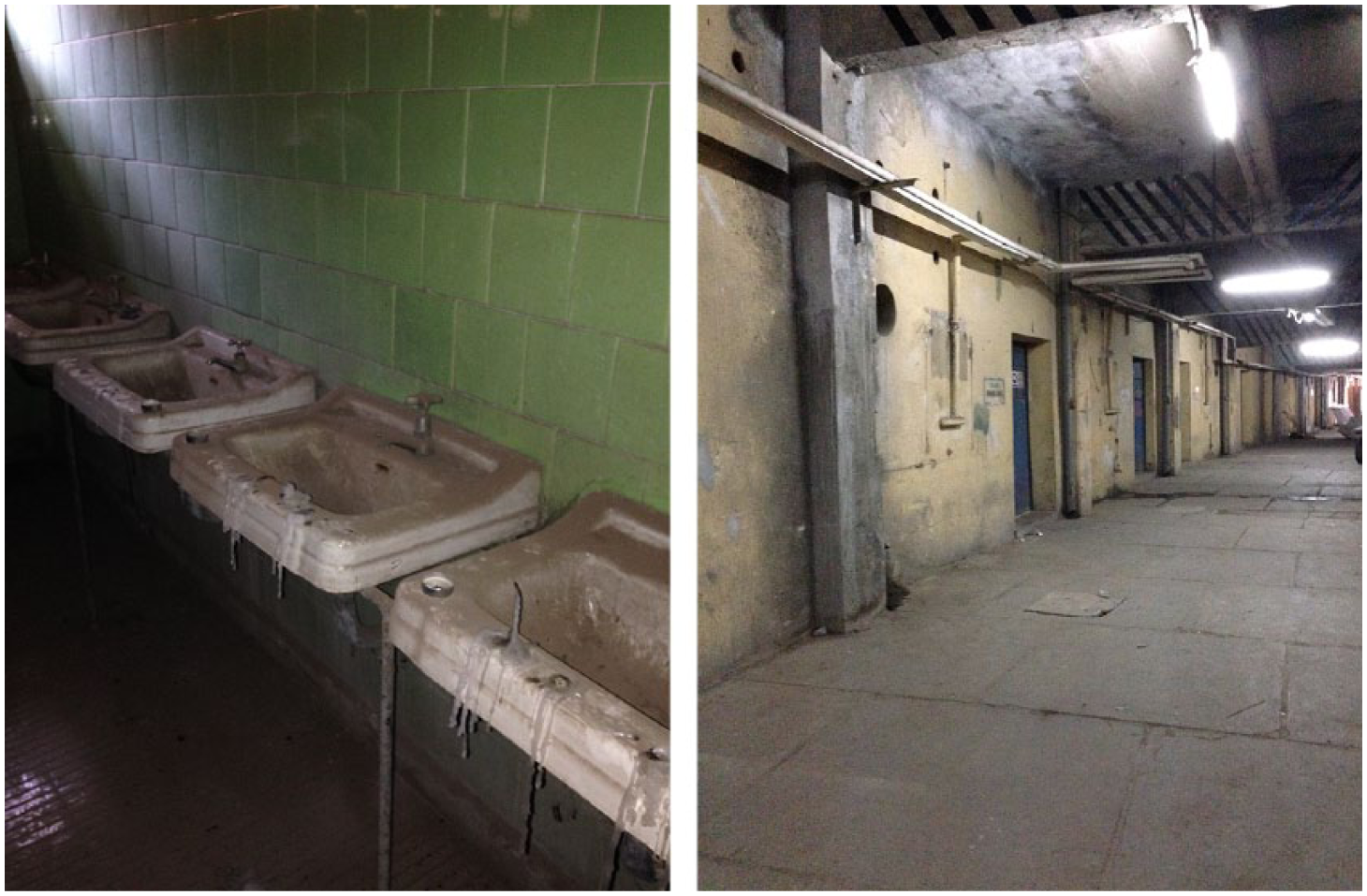
Memorialized areas of Estadio Nacional.
Casa Memoria
Another striking site of violence in Santiago is a private property located in José Domingo Cañas 1367. This former red bungalow belonged to a Brazilian diplomat in the early 1970s, and it became the second address of the Embassy of Panama after the coup in 1973, where dozens of political asylum seekers were hosted. Shortly after, however, the house was taken over by the secret police and became a clandestine detention centre (known as Cuartel Ollague). Despite the great efforts of the families of victims who perished or disappeared from that house, to keep it as a memorial site (after it had been abandoned by its former users), its neighbour – the owner of a well-known Chilean children’s toys company, ‘Rochet, El Castillo del Juguete’ – bought the house and quickly tore it down.
Today, what is known as ‘Casa Memoria’ is a strikingly empty lot. Only the foundations of the house remain (with indications of what was there before they tore down the house), with a thin wooden sculpture erected above it. Casa Memoria – or, precisely, its absence – is an interruption in the urban landscape of what has become a wealthy neighbourhood in Santiago. This memorial has not produced an aesthetic intervention that in any way could be experienced as soothing or beautiful (like the rose garden in Villa Grimaldi). Neither can it be assimilated into the environment (as does Londres 38, to a certain extent), as the paintings on the back walls of the lot, depicting naked hanging political prisoners, and the spiky wooden sculpture confront us with horror, suffering and violence (Figure 9). Even without entering the premises of Casa Memoria, it still manages to become an interruption in the urban landscape that surrounds it. As an uncovered scar, it has managed something that has been achieved by none of the other sites I visited in Santiago: it simply and unapologetically disrupts. Not committed to any other political agenda – there is no state funding involved, but only voluntary work – except to testify to death and suffering, Casa Memoria embraces an approach that does not compromise. In this sense, it is very impressive that such a small-scale (compared to Villa Grimaldi and obviously Estadio Nacional) and unfunded site of violence manages to succeed in its (local) visibility. In my view, the eclectic aesthetic intervention in this place (that includes a realist approach together with figurative painting and the striking sculpture), in the context of both the courage and modesty of the site, makes it a remarkable example of a well-tuned interaction between the site and its memorialization, as neither cancels the other out; on the contrary, these elements seem to feed force into each other without ever finding a resolution. It is as if the site is alive and open, and in a permanent struggle with itself.
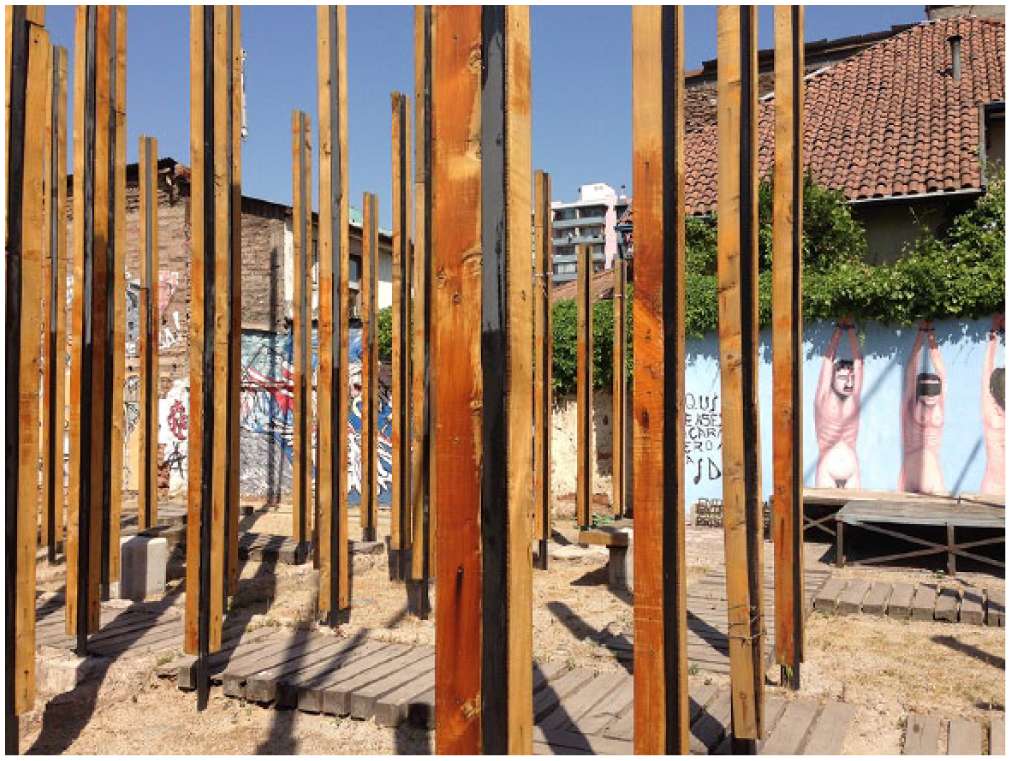
Casa Memoria.
Concluding remarks
This project has attempted to study the logics of appearing and disappearing linked to projects of memorialization in the context of post-dictatorship Chile. Visiting these heterogeneous sites of violence confirmed the extent to which memorialization is always implicated in a dynamic interaction with the site being memorialized. This is particularly obvious in the cases where there is little or no memorialization (as in the case of both sites in Atacama Desert), but – I would argue – the same holds for memorialized sites such as Villa Grimaldi. Although, from all the sites visited, this is the one that offers the most elaborate narrativization and aesthetic intervention, in my view the simplicity and modesty of the nacre button, for example, has an affective force that does not compare to other elements on the site. It is the enigmatic simple ‘being there’ of this small object that appears but that also refuses to be captured by the gaze, that silences and interrupts its framework.
Unlike perspectives that reduce the effort of memorialization to the task of including a variety of discourses and experiences (in order to not reduce memorializing efforts to all male-led official narratives), in my study I have focused on the space of difference between the site (thing) and its narrativization. In doing so I have theorized the trauma and agency of the site/thing as eluding representation and therefore disobediently always exceeding meaning.
From a theoretical perspective, this research has contributed to the rethinking of traditional perspectives on epistemology. In the context of the study of memorialization, notions of truth and knowledge are of paramount importance. I have tried to argue, however, that the experience of trauma and the reality of the ‘thing’ confront us with a paradox where truth eludes its knowledge. One could say that if deconstruction and Lacanian psychoanalysis have made an effort to critique what is perceived as metaphysical in phenomenology (particularly and directly a critique of Heidegger) while theorizing the ‘real’ as that which remains unsignified, the study of the ‘agency’ of things (and their affects), on the other hand, proposes a revisiting of these linguistic postulates but offers a different perspective. This time, agency is granted to matter, a concept that is closer to a late Heideggerian understanding of the capacity of objects to conceal and open themselves to the world. The real, in this sense, is the real phenomenological ‘thing’ – in this case, the nacre button in Villa Grimaldi – not the irretrievable, unconscious formation. This links to the notion of excess, and how memorialization and its narratives – or lack thereof – seem to always be exceeded by sites of violence themselves. Ruin-things in this sense resist becoming epistemological findings: one could say that they only ‘partially’ become ‘objects’ (studied, translated, scrutinized), as they manage to remain mysterious, forceful and elusive.
Footnotes
Funding
This research was funded by a Leverhulme grant and it was accompanied by an aesthetic intervention performed in collaboration with visual artist Livia Marin. The produced work ‘Tejas Verdes I was not There’, was exhibited in London in the summer of 2016 at the Peltz Gallery, University of London.