




Abstract
The trend towards desegregated women’s and men’s toilets, including installing Gender Neutral Toilets (GNTs), and the implications of revisions to the Gender Recognition Act for women-only spaces, have brought into focus the pre-existing lack of female toilet provision in the UK. Looking at the problem from a town planning perspective, I argue that austerity-driven cuts are coming together with GNT provision to reshape the public toilet landscape in ways that continue to be detrimental to women. Typically women are only provided with half as many facilities as men, resulting in queues for the Ladies, and GNT provision based on relabelling rather than redesigned or additional provision can, in fact, increase competition for the cubicles in the Ladies. The historical, legislative and cultural reasons for this inequality are explored, along with the different types of public toilet and the different requirements of male and female users. The article draws on previous research project findings, many of which foreshadow the problems currently coming to the fore as a result of toilet desegregation. In conclusion, recommendations are made as to how to deal with the conundrum of providing adequate facilities for all women and men, whilst providing all sorts of individuals with choice and privacy to create inclusive, accessible cities for all.
Introduction
Demands for toilet desegregation and the creation of Gender Neutral Toilets (GNTs) have brought to the fore concerns that these changes are taking place with little acknowledgement of the pre-existing backlog of under-provision for women, and the different toileting requirements of women from men, or recognition of women’s toilet fears and experiences. Gender neutral toilets take two main forms. A GNT can comprise a self-contained individual cubicle. For example, Jennifer Ingrey (2012, p. 815) recommends a ‘single stall (cubicle), placed either within the standard segregated washrooms, as a valuable, additional third option’ to school toilets. Alternatively GNTs can be achieved by just changing the labels on the door from ‘Ladies and Gents’ to ‘Toilets for All’ with no design modifications to accommodate specific needs. But, as will be explained, neither, but particularly the latter, of these alternatives actually helps redress the lack of provision for women, who typically have half the level of toilet facilities as men to start with, meaning women risk facing longer queues and increased competition for increasingly limited facilities (Greed, 2003). This is significant when longer toilet queues for women can be blamed on women ‘taking too long’ or ‘not going before you went out’ (Stanwell-Smith, 2010).
The long-standing fight for equal female toilet provision for women (Greed, 1995) is currently being eclipsed by new gender paradigms challenging the concept of separate toilet provision for women. The binary sexual division, upon which second-wave feminism was based, is being questioned (Mayer, 2017, pp. 91, 315) and major changes are underway as to the legal, social and personal understandings of gender identity and assignment. Public toilets have become a key site of contestation because they are the ultimate gender-segregated public spaces (Bender-Baird, 2016; Borck, 2017; Browne, 2004; Cavanagh, 2010; Doan, 2010; Duncan, 1996; Herman, 2013; Kogan, 2007; Longhurst & Johnston, 2010; Molotch & Norén, 2010; Patel, 2017; Skeggs, 2001; Valentine, 2002).
My interest in public toilets began from an urban spatial perspective, as part of my research on the social aspects of town planning and especially the ‘place’ of women in urban public space. Conceptually I have been concerned for many years with the urban question: ‘who gets what where, why and how?’ (Harvey, 1975). I have previously investigated the role of the built environment professions in determining whose needs are recognised in the allocation of scarce resources within cities (Greed, 2004). In this process women’s needs are often marginalised by the predominantly male policy makers who contribute to the reproduction of social relations over urban space, resulting in the imprint of gender relations upon the built environment (Massey, 2013), as manifest in the low priority given to women’s needs in toilet provision and design. GNTs can thus be seen to further restrict women’s spatial rights. Feminist urban geographers have long argued that ‘to be male is to occupy space’ (Cockburn, 1985, p. 213), bringing into question whether there is such a thing as gender neutral public space – as in shared spaces women usually lose out (Massey, 2013).
The marginality of toilet provision in planning is visible in the way that most local planning authorities do not refer to toilet provision within their plans, even though lack of provision undermines health policies, economic development, social inclusion and environmental sustainability. If governments want to create sustainable cities, and to get people back to public transport, cycling and walking, then adequate public toilets are essential: they are ‘the missing link’ (Greed, 2012). Inadequate toilet provision undermines people’s mobility and chances of freely accessing and moving around in the city as a whole. The gendering of this provision is not without significance.
This article explores different types of public toilet provision, along with discussion of public toilet need, followed by a discussion of the historical, legislative and regulatory factors that shape toilet provision in the United Kingdom, and which limit provision for women. The BS6465 committees on ‘Sanitary Installations’ set national standards for toilet provision (British Standards Institution [BSI], 2006a, 2006b, 2010, 2017), and their membership comprises a range of experts including professional toilet providers, designers, architects and sanitary engineers, including myself. The issue of providing GNTs and/or desegregating male/female toilets has not, heretofore, come up as a prominent issue in the BSI consultation process with toilet users and providers. The public are more concerned about the limited availability of public toilets in general, especially women. Rather, the impetus for GNTs has emerged elsewhere. For example, in the USA, toilet desegregation is increasingly widespread as a result of Title IX legislation which seeks to accommodate the needs of trans and other non-binary citizens but, arguably, does not recognise the impact upon other toilet users, including cis women. I argue that in the context of decreasing public toilet provision, the act of simply relabelling toilets as gender neutral does little to improve toilet provision for anyone, especially women. Of course, purpose-built GNT cubicles provide a valuable option for all sorts of people, but what must be critically examined is the process of their provision in place of, rather than in addition to, existing provision.
In the UK the drive for toilet desegregation has not come from construction professionals, architects or town planners concerned with the built environment and building design. Rather it derives primarily from government departments concerned with social policy, education and equality: often with little thought as to the spatial impact on the design of the built environment. The 2018 government consultation on the reform of the Gender Recognition (Protected Characteristics) (GRA) Act 2004 included a short section (paragraphs 125-129) and one question (Question 19) on the likely effects on the provision of goods and services, and has raised the issue of the effect of the legislative changes on women’s toilet provision (Government Equalities Office [GEO], 2018, p. 50). In the UK, gender equality requirements in the provision of public services, such as the Public Sector Equality Duty under the 2010 Equality Act, are widely flouted in respect of toilet provision for women (Ramster, Greed, & Bichard, 2018).
In April 2017 the Barbican Arts Centre London replaced Ladies and Gents signs on its theatre toilets with ‘Gender-Neutral with cubicles’ and ‘Gender-Neutral with Urinals’ respectively. As Grafton-Green (2017) reported, this resulted in longer queues for the ‘with cubicles’ toilet as men as well as women joined the queues for these toilets, although the converse was not the case. The Barbican noted that, ‘We recognise that the way our gender-neutral toilets are currently implemented [has] practical limitations’ (Grafton-Green, 2017) in recognition of the difference between purpose-built GNTs and adapting signage on existing binary provision. Thus efforts aimed at increasing access to public space for all through access to public toilets for all can produce unintended consequences, such as when formerly ‘men’s’ and ‘women’s’ toilets are converted into GNTs in such a way that there is a significant increase in usage by all genders of one GNT type (here ‘with cubicles’) at the expense of the other (‘with urinals’). This is particularly critical when the preferred GNT toilet type means that women – who already had to queue for longer than men when these very same toilets were gender-binaried – have to share their already meagre resources even further.
Owing to government cutbacks in the UK, few municipal public toilets are being built, and many existing ones are being closed (Bichard, 2015; British Toilet Association, 2001). For example, all 40 public toilets in Bristol (Bristol City Council, 2005) were closed in early 2018 to save money, in spite of protests from user groups. Rather than restoring and increasing public provision, there is a growing trend to concentrate on desegregating those that remain. Thus, much greater thought must be given to how all toilet users are accommodated, including women, otherwise, this will seriously affect women’s chances of moving around freely in public space away from home, without being constrained by the ‘bladder’s leash’ (Kitchin & Law, 2001, p. 289).
The range of toilets and their users
Types of toilets
‘Public toilets’ comprise both traditional ‘on-street’, local authority public toilets and ‘off-street’ toilets to which the public has right of access, for example in restaurants, shopping malls and department stores, which, together, may be defined as ‘away from home toilets’ (British Toilet Association, 2001; Greed, 2003; Knight & Bichard, 2011). There is a vast range of ‘privately-provided toilets’ including workplace toilets, in shops, offices and factories; toilets in educational establishments for pupils and students; facilities in leisure, sport, arts and entertainment facilities; and toilets associated with the transport system, in train stations, bus termini, coach stations and airports.
As indicated above, BS6465 provides the standards on toilet provision. Part 1 deals with the levels of provision, including tables on levels of male/female facilities (which until recently gave much higher levels of provision to men) (BSI, 2006a). Part 2 is on internal design (BSI, 2017), including the size and design of cubicles. Part 3 covers plumbing specifications (BSI, 2006b). Part 4 provides guidance specifically on public toilets (BSI, 2010). All the standards are subject to a continuous updating process. The ‘linked’ Building Regulation Part G on water and sanitation provides the legal basis for the application of these British Standards (Department of Communities and Local Government [DCLG], 2016). BS8300 (updated in 2018) provides guidance on ‘accessible toilet’ provision, and is linked to Part M of the Building Regulations (DCLG, 2015). Significantly BS8300 now includes a new paragraph (18) on sanitary accommodation, which states (rather vaguely) ‘Good inclusive design provides choice for a multitude of users: for example, single user gender-neutral sanitary accommodation can be helpful for transgender people and also useful for parents with young children, people who need assistance’. But no reference is made as to how this might be related to BS6465’s requirements on levels of male/female provision.
The British Standards are not retrospective and only apply to new buildings and to substantially renovated buildings. Most public toilets in the UK are old, many have closed, few new ones are being built, and some localities have no toilets left at all because of underfunding (Ramster et al., 2018). The issues of retro-fitting existing toilets to accommodate new demands, whilst dealing with funding, management and maintenance issues, are very challenging in these times of local government cutbacks. Some see the move towards GNTs simply as a cost cutting mechanism, of replacing traditional blocks of toilets with just a few separate, shared unisex cubicles, usually accompanied by a ‘pay to pee’ system (Greed, 2016). Long before the present-day move for GNTs for trans inclusion emerged, unisex toilet provision was promoted by some local authorities simply as a way of saving money (Greed & Daniels, 2002).
Types of toilet users and their concerns
Toilet facilities are used by diverse people in terms of social class, ethnicity, religion, culture, ability, age and gender. This has produced research concerned with finding out about the needs and concerns of differently situated people in the general public as a whole, with particular attention needing to be paid to under-provided groups including women, those with disabilities and the elderly (Cooper, Law, Malthus, & Wood, 2000; Kitchin & Law, 2001; Twigg, 2006, pp. 159–160). Public toilets are a component of local government provision of goods and services, ultimately paid for by users, and shaped by local governance decisions and urban policy, which should be informed by the proportions and needs of the different sections of society in need of public toilets (Greed & Johnson, 2015, chapter 2).
As well as intersections of gender and disability and gender and age, ethnic minorities comprise at least 15% of the UK population (Office for National Statistics [ONS], 2017a), overlapping with a range of religious and cultural identities, which often incorporate practices that affect toilet use. Some Islamic, Hindu and Orthodox Jewish women are forbidden to share public toilet buildings with male strangers, especially when menstruating, so whether they are tourists or local residents, they are effectively barred from using desegregated toilets. If a woman is visibly from an ethnic minority and from a different religious group she may be ‘fair game’ for toilet attack, as commented upon by various respondents in the course of our community-level research (Ramster et al., 2018).
But, the move to GNTs has been largely welcomed as a means of making public toilets more flexible and inclusive, and is often promoted as a way of reducing queues for the Ladies (Anthony, 2017; Mayer, 2017). Elderly people, those with disabilities, as well as children and their carers, are all likely to welcome the greater flexibility of another ‘unisex cubicle’ especially if they feel they do not qualify to use the official ‘disabled toilet’ but are unable to use a regular cubicle (cf. Wiseman, this volume) – but only when provided in addition to, rather than in place of, existing provision. However, renaming the accessible toilet as a ‘toilet for everyone’ greatly reduces the chances of people with disabilities being able to use them (Ramster et al., 2018), a situation made more acute when, as is common in the UK, there is usually only one disabled toilet within away-from-home toilet provision (Hanson, Bichard, & Greed, 2007).
Transgender and gender non-binary toilet users may find GNTs provide them with a valuable alternative (Hines & Sanger, 2010; Pearce, 2018). It is estimated there are around 5000 people who have officially transitioned under existing gender reassignment legislation (GEO, 2018), mainly male to female. A further 165,000 are challenged by binary toilet provision, including 30,000 intersex people (Bulman, 2017; ONS, 2017a, 2017b). But there is also a need to acknowledge dominant self-identifications among the population as male or female (Bichard, 2015; Greed, 2016). Many different groups have expressed concerns about the impact upon women and girls of desegregating toilets from many perspectives including feminist perspectives (Jeffreys, 2014a, 2014b), religious perspectives (McGuire, 2017), toilet campaigning perspectives (Cunningham, 2016) and toilet research perspectives (Hanson et al., 2007; Ramster et al., 2018).
The introduction of GNTs and toilet desegregation is relatively recent, and there is at present limited empirical research on the effects of these changes; however recent work suggests that the reception of GNTs is not universally positive (Brunskill-Evans & Moore, 2018; Ramster et al., 2018), producing a need to engage with these countervailing voices. Earlier work has shown a long history of women expressing concerns about public toilets regarding access, levels of provision, design, health and safety issues (Greed, 2003; Hanson et al., 2007; Thomas, Greed, & Penrose, 2001) and these concerns remain germane to current expanding GNT provision, particularly in the context of a wider trend of public toilet closure.
Our previous research projects have covered a wide range of toilet locations and types, and also a wide variety of types of people. Projects have included both academic research (Bichard & Van de Heuval, 2008; Greed, 2003, 2006; Greed & Daniels, 2002; Thomas et al., 2001) and technical research for government bodies (BSI, 2006a, 2010; Building Research Establishment [BRE], 2014). There were over 200 respondents in one of our toilet studies, funded by the Engineering and Physical Sciences Research Council (Hanson et al., 2007), who discussed their toilet concerns both individually and within focus groups so we could build up qualitative ‘toilet personas’ for a representative range of different groups in society. Bichard (2015) led a study of over 100 people from the ages of 0 (babies) to 100 and including a diverse range of people, applying the principles of ‘design anthropology’ (Ventura & Bichard, 2015). All of this work has explored the specific reasons to give women and girls separate toilets.
Of course, GNTs do promote forms of inclusion, particularly towards trans and non-binary people, and towards male carers of young children. However, much of this work has been limited in focus to examine trans inclusion through GNTs on university campuses (Beemyn, 2005; Cavanagh, 2010; Hutton, 2016, p. 140; see also Greed & Bichard, 2012) and in schools (Ingrey, 2012; Slater, Jones, & Procter, 2016). Much of this work has sought out the views and experiences of members of the trans community, thus offering an important perspective missing so far, but research with a wider focus is sorely needed. To be given weight, arguments that desegregating toilets is ‘good’ need to critically engage with the terms by which they are ‘good’ and emerge from wide-reaching empirical research with toilet users of all stripes. It needs to be recognised that advances towards inclusion in one area could increase exclusion in another and that a more subtle picture of the consequences of the move towards greater GNT provision in a climate of public toilet provision contraction needs to be painted.
Current toilet provision in historical context
A major component of the town planning reform movement of the nineteenth century was the improvement of public health and sanitation in the new industrial cities (Greed, 2003, chapter 3). Powers for local authorities to provide public toilets were first introduced under the 1875 Public Health Act and these reforms were heavily gendered: over twice as much toilet provision was legally required for men as for women under the building codes (see Figure 1). Most engineers, architects, planners and decision-makers in the nineteenth century were men, who appeared to have little awareness of or interest in women’s toilet needs.

Unequal Victorian toilet provision for women.
Most public toilet provision in the UK has continued to be divided into separate male and female facilities. Recent works suggest that gender-segregated toilets first appeared in the late 1700s (first in Paris and subsequently in London), presenting this as a backward step (Anthony, 2017, p. 123; Cavanagh, 2010; Patel, 2017, p. 52). But there was no earlier golden age of gender neutral toilets (as some, such as Kogan, 2007, suggest), or antecedents to shared toilet provision (except in the private realm of the domestic privy [Burlette, 2018; Greed, 2003, p. 36]). Rather, nearly all public toilets were only for men. The provision of separate toilets for women was a hard-won right achieved by first-wave feminists and a reaction against the idea that middle-class women were not meant to be out on their own, or to need toilets, resulting in calls of ‘unmentionable suffering’ (Penner, 2001). In the late nineteenth and early twentieth centuries campaign groups such as the Ladies Association for the Diffusion of Sanitary Knowledge and suffrage movements campaigned hard to change attitudes and improve provision (Greed, 2003, p. 47). The emergence of public toilet provision for women can thus be read in multiple ways: as ‘enforcing a spatially constructed division between men and women’ (Patel, 2017, p. 52), enabling women’s inclusion in public space (Cooper et al., 2000), protecting men from female pollution of public space (Browne, 2004) or protecting women’s modesty, dignity and privacy (Overall, 2007).
Nevertheless, the need for public toilets, albeit mainly for men, was accepted without question right into the mid-twentieth century as a key component of public health. Toilet law was consolidated in the still extant 1936 Public Health Act. This allows local authorities to build toilets but does not require them do so: the legislation is permissive but not mandatory, arguably a fundamental constraint in enforcing provision. Since then, the situation in the UK has greatly deteriorated, as government cutbacks, combined with a lack of political will, has resulted in the closure of public toilets because provision is not compulsory. Under Section 87, sub Section 3 of the 1936 Act, local authorities were empowered to charge such fees as they thought fit ‘other than for urinals’. So women had to pay. ‘Penny in the Slot’ mechanisms were put on the Ladies on cubicle doors and later turnstiles were installed at the entrance. Following a heated campaign, the 1965 Turnstile Removal Act abolished the use of turnstiles, and many local authorities made their toilets free; this Act only applied to local-authority run toilets, not toilets in railway stations, many of which still charge a fee, although that fee now applies to all users.
Owing to government cutbacks, payment systems are returning to public toilets, particularly in London, where the 2012 London Local Authorities Act revoked the rule prohibiting turnstiles in the city’s public toilets. Both men and women can now be charged owing to a rather perverse understanding of the 2010 Equality Act, which interprets ‘equality’ as charging everyone to use the toilet, rather than making it free for all! Modern turnstiles are waist height and based on a softer ‘paddle system’ but can still be a major access barrier. Narrow barriers restrict use by women with pushchairs, ambulant disabled people, the pregnant, and those who cannot afford the entrance fee. Narrow entrances further enforce the division between abled and disabled users, requiring ‘special’ wider entrances for those in wheelchairs (or no access at all).
The particular problems for women
This historical legacy still affects public toilet provision in Britain today, as it is embedded in the inherited built environment, manifest in the nature of toilet distribution, levels of provision, accessibility and design, creating ongoing problems for women and men. Many Victorian public toilets were built underground, down steps, in convenient proximity to the main sewers whilst shielding modest women users from the public gaze. This resulted in generations of people, especially women with pushchairs, the elderly and those with disabilities, experiencing difficulty accessing public toilets (Cavanagh & Ware, 1991). In contrast, it was considered quite acceptable to provide male street urinals, and blocks of men-only toilets for ‘the working man’ on his way to the factory. Nothing was provided for working-class women going to the factories and mills in newly industrialising countries (Cooper et al., 2000). Male street urinals are still being installed, such as the Urilift, intended to combat male street urination (Greed, 2003) (Figure 2). When I questioned a senior toilet official of a major London borough about the legality of this male-only provision I was told that such contraptions are for the purpose of ‘street cleansing’, thus not technically ‘public toilets’. Due to this framing as ‘street cleaning’ rather than public toilet provision they are not subject to equality laws requiring ‘equal’ provision of public services for women and men, with no commensurate investment in suitable facilities for non-urinal users in city centres.
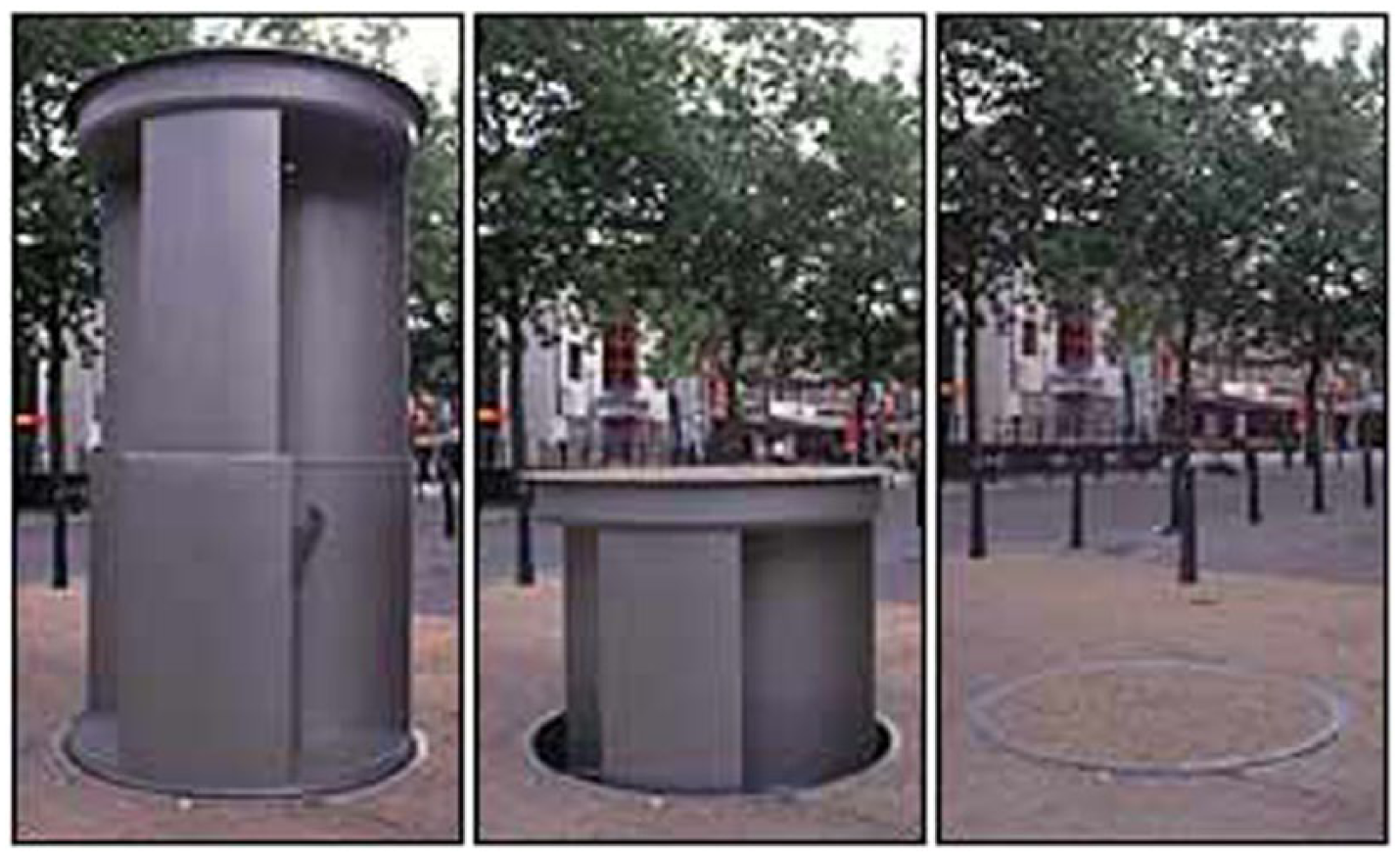
Urilift: Street urinals for men but nothing for women.
The location and distribution of public toilets is still patterned on male practice and insufficiently geared towards women’s different travel patterns, caring responsibilities or changing land-use and development patterns. Indeed, the location and provision of public toilets is frequently regarded by planning inspectors, judges and planning lawyers as outside the scope of planning law and policy (Greed, 2012, 2016). Although patterns of work and parenting are shifting, women still disproportionately have responsibility for household and family caring duties, meaning they are the ones who are more likely to be out and about in the daytime, use public transport more than men, and are frequently accompanied by children or by elderly and disabled relatives who may need to use the toilet more often or with greater urgency (Greed & Johnson, 2015, chapter 15). A toileting landscape built for male bodies fails to account for women’s social needs.
Inadequate toilet facilities for women persist, resulting in continuing queues for the Ladies. Queuing is exacerbated by the fact that female toilet users on average take twice as long to use the toilet as male users for biological, sartorial and spatial reasons (Bichard & Van de Heuval, 2008; Kira, 1975). Women need to physically enter a cubicle, navigating large toilet roll holders, menstrual product waste receptacles and often toilet doors that are close to the toilet bowl (Figure 3). Women’s clothing is such that they must remove more clothing to urinate, and may, of course, be changing menstrual products (see Moffat & Pickering, this volume, on the gendered burden of menstrual management).
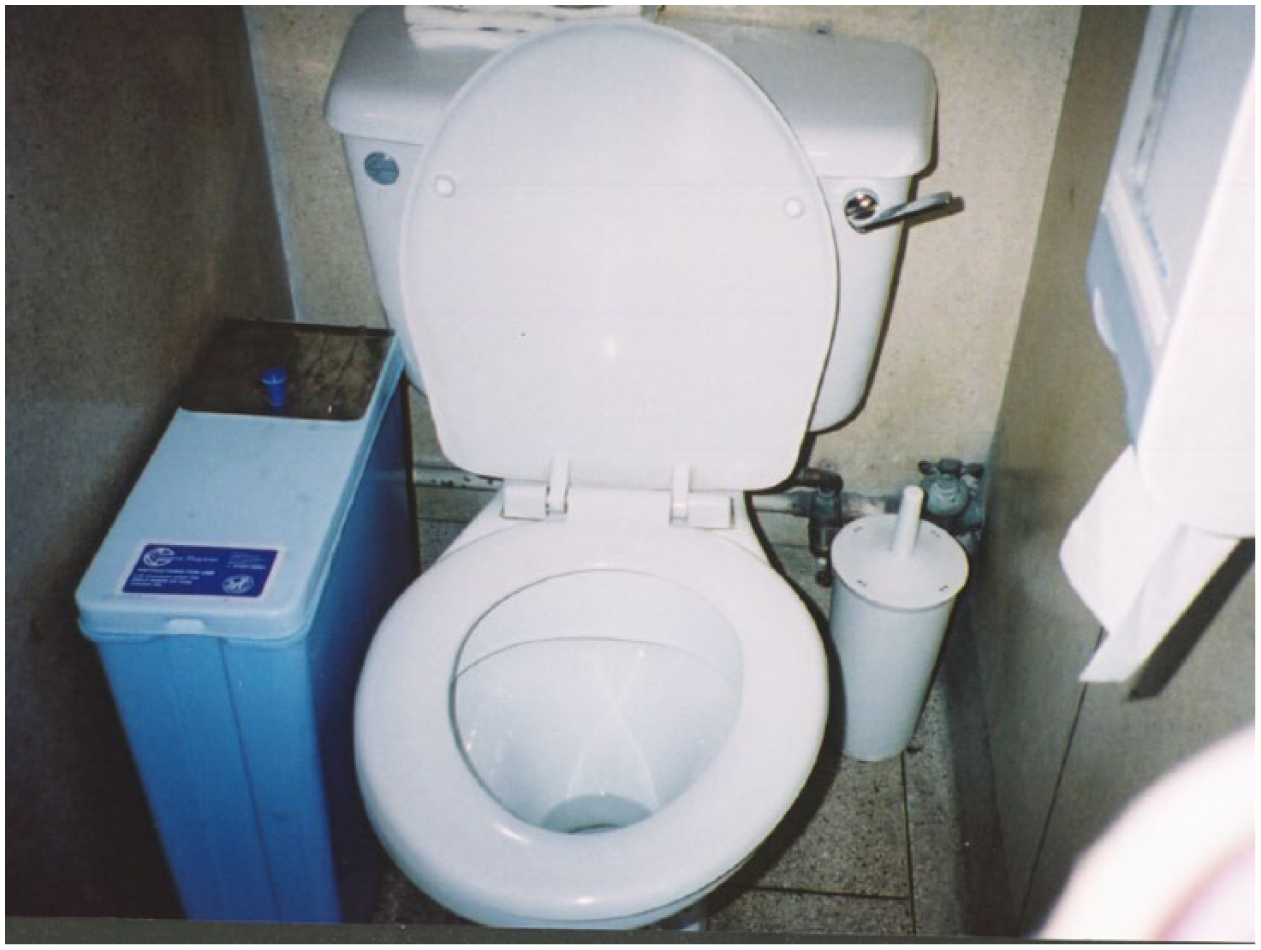
Inside a cubicle in the Ladies.
Menstruation, menopause and pregnancy can increase the frequency with which women need to use the toilet (Greed, 2016), as well as the less sex-specific challenges of urinary tract infections, diarrhoea, or incontinence. Differences of time and space matter as early equalities legislation legislated for equality of floor space, rather than receptacles, which when combined with the longer time requirements of women’s toilet usage (and the greater distance to women’s compared to men’s away-from-home toilets; see Anthony & Dufresne, 2007) means that desegregating existing male/female toilets might in fact intensify the unequal, lesser provision of toilets for women, because male toilets with urinals are less readily converted to GNTs that provide privacy for all (Figure 4).

Whilst the Ladies are turned into GNTs, the Gents remain unaltered.
The internal design of toilets has also been much criticised by female respondents in our research. This is perhaps unsurprising given that toilet facilities have been and are disproportionately designed by front-facing ‘urinators’ (i.e. male sanitary engineers, designers and providers) with little awareness of or consultation about the design needs of other groups. This gains expression in Greed and Daniels (2002), where Automatic Public Conveniences, that is the stand-alone automatic on-street toilets, found in many cities in the UK, were seen by many of our female research respondents as just a urinal for men (Greed & Daniels, 2002).
The cultural roots of under-provision
Dirt and disgust
Dirt and disgust are key themes in this monograph. Both men and women view toilets as sites of disgust, dirt, disease, sex and disorder (Barcan, 2005; Haslam, 2012). Shame and embarrassment about bodily functions result in toilet provision not being dealt with as forthrightly as other design issues (Bichard, 2015). Thus the toilet is often seen a source of embarrassment, and not deemed a worthy subject for open debate or policy making. Whilst public toilets can be ‘dirty’ because they are unhygienic and insalubrious spaces, deeper cultural attitudes towards ‘private’ bodily functions render toilets symbolically as well as materially dirty. As Barcan (2005) observes, men’s toilets are physically dirtier than women’s and a source of smell, dirt and contamination. Yet, some men articulate a particular disgust at women’s excretory needs, as illustrated by Trump shouting ‘‘that’s disgusting’ when Hillary Clinton had to take a toilet break during one of the presidential candidates’ debates (Plaskow, 2016); his criticism of her for taking so long failed to take account of women’s toilets being further away than the men’s as a later, low priority addition to the building (see Anthony & Dufresne [2007] on the placing of women’s toilets in previously male-only American governmental buildings).
But menstruation is seen as even dirtier than excretion (Greed, 2016). Historically, women have been considered, in many cultural and religious traditions, to be on the wrong side of a series of dualisms including: sacred/profane, natural/spiritual, spirit/body, rational/emotional, good/evil and clean/unclean (Eliade, 1959/1987). Women’s menstruating bodies have been seen as sites of danger and power, as well as a source of pollution (Buckley & Gottlieb, 1988). The male medical profession saw the female body as anatomically incomplete and defective in that women ‘leak’ and menstruate (Kursch & McGuire,1998). Dr Benjamin Spock, whose books ostensibly gave sympathetic advice to new mothers, wrote an alarmingly negative book regarding women, entitled Decent and Indecent (1969). Tellingly, in his best-seller on childcare, he suggested that mothers could breastfeed in the public toilet (Spock, 1948); today women are trying to reclaim lactation and menstruation as clean and natural pursuits (Bobel, 2010; Fahs, 2016). The female body has thus long been constructed as ‘different’ from male bodies, symbolically and medically. While potentially uncomfortable for some, physiological difference (and its symbolic consequences) must be critically engaged with.
Sanitation policy has also been informed by various cultural attitudes as to quite ‘who’ else is ‘dirty’ and the source of germs and disease and moral corruption (Jayasingham, 2010). Women, the working classes and ethnic minorities have long been seen to need to be controlled through moralistic ‘social hygiene’ policies (Jackson, 2014; Jones, 1986). For example, ‘whites-only’ restrooms were provided in the segregated South of the USA as late as the 1950s (Penner, 2013, pp. 19–23). Sanitary reform was as much about separating ‘clean and decent’ (Wright, 1960) and controlling the sexuality of the lower orders, as it was about clearing up the sewage and fighting disease (Hodding, 2006, see chapter 5 entitled ‘Foul’). In particular men’s public toilets were condemned as socially unclean as the site of ‘cottaging’ (Greed, 2003, pp. 86–89). Furthermore men may be seen as having a different toilet ‘culture’ from women, in that men tend to flout ‘dirtiness’ in their toilets (Haslam, 2012, p. 65) whereas women are always taught to be clean. But all this ‘male dirtiness’, both moral and physical, has not been condemned, rather it appears to be rewarded with men continuing to be provided with more public toilets than women.
Additional problems for women exacerbated by desegregating toilets
All these cultural factors mean women’s need for separate toilets has to be taken seriously. The problems encountered may be divided into three categories: the spatial issue of city-wide location, the local area environment in which toilets are placed and the detailed level of cubicle design and allocation. First, at the city level, Hanson et al. (2007) have shown how women continue to express concerns about the location and distribution of toilets that still reflect a bias towards men’s daily lives and travel patterns. Toilets to which the ‘public’ have access in pubs, clubs, sports and leisure facilities are historically male spaces, newly opened up to women (Greed, 2003).
Second, at the local level, toilet environs are a key issue. The siting of on-street public toilets in secluded locations, with inadequate lighting, and lack of a clear line of vision have been expressed by women participants in toilet research as personal safety concerns; in addition when Ladies toilets are accessible only by walking past the entrance to the Gents in alleyways, women can be exposed to cat calling, and other forms of harassment. Mixing toilet provision does not directly address these experiences and may be perceived to exacerbate them (Greed & Daniels, 2002; Hanson et al., 2007). Significant concerns have also been expressed by women about hetero-men entering the women’s toilet, or having shared access or waiting areas (Bichard, Hanson, & Greed, 2003). As gender-segregated toilets move towards gender neutrality, some women are expressing concerns about the relabelling of with-cubicle and with-urinal toilets as GNTs producing increased competition for cubicle space, and that if women choose not to use with-urinal toilets this leads to ever more competition for already limited facilities for women (Ramster et al., 2018).
It is important to acknowledge the persistence of a highly sexist, potentially violent and discriminatory attitude towards women in contemporary Britain, to remain aware of its specific roots and contemporary dynamics and not to assume that a toilet policy of gender neutrality can in itself erase these long-standing challenges, or produce change which does not introduce new gender-based problems. Women have heightened fears of themselves or their children experiencing violent crime in public spaces (Pain, 2011), of which public toilets are an important and secluded part (Greed, 2003). The politics and activism creating a more inclusive environment for trans and gender non-conforming individuals cannot in itself negate the history of women’s oppression and exclusion, partly playing out through the design, distribution and access to toilets. That trans women are seen by some to be more vulnerable to attack than cis women in public spaces is profoundly important (Borck, 2017), however GNT provision functioning in place of, rather than in addition to, existing provision reduces available space for both cis and trans women to use the gender-segregated public toilet as a space of retreat. As Overall reminds us,
In a sexist society, women’s toilets have a social function: They offer a space for bonding, the exchange of information and personal recovery. … Any woman who has withdrawn to the ‘ladies’’ room after a rough situation knows that segregated toilet facilities play this role. It is a symptom of life in a sexist society. (2007, p. 83)
Third, it has been found that women’s main worries about toilets focus on the detailed level of toilet design within the toilet block itself (Hanson et al., 2007). Whilst there have always been concerns about poor cubicle design and lack of adequate facilities, increasingly apprehension centres around the design issues associated with toilet mixing. Whilst many women welcome self-contained GNT cubicles, some appear most worried about situations where existing toilets are simply relabelled as gender neutral with no design alterations. In particular, situations where traditional cubicles are entirely desegregated, which often have flimsy dividing walls, spaces under the doors and walls, and no sound insulation. Some women and men simply cannot ‘go’ in situations where everyone can hear, smell and see everyone else (Soifer, 2001), suffering from paruresis (shy bladder syndrome). Well-designed GNTs offer a solution to this, but only when designed as privacy-respecting GNT spaces.
Some women are fearful of making noises and smells so cannot relax adequately whilst trying to defecate. Menstruating women have expressed concerns about leaving behind tell-tale traces of menses (blood) which will not flush away (cf. Fahs [2016, p. 37] on menstrual stains), about having ‘an accident’ in front of men, or being worried about leaving sanitary waste products in a cubicle also used by men (even in a disposal bin). At least a quarter of women of child-bearing age will be menstruating at any one time (Kursch & McGuire, 1998). Unfamiliar and ambiguous signage as to which toilet to use may cause confusion, particularly amongst those with dementia, some elderly people, and those with poor eyesight.
The way forward: What can be done?
There needs to be more policy finesse in recognising women’s concerns while addressing the needs of transgender people (Plaskow, 2016, p. 750). The particular biological, social and personal needs of cis and trans men, women and non-binary people need to be recognised and addressed: these include (but are not limited to) the spatial and temporal consequences of women’s dress, paruresis as a primarily male condition mitigated by cubicle use, the gendered patterning of caring responsibilities, violence towards women and trans people, and the menstrual needs of all menstruators (not limited to cis women).
These do not need to be placed in opposition to each other, but there needs to be open, frank discussion between all parties, toilet providers and users of all genders, urinators/menstruators, parents, able bodied and disabled people and so forth. In an era of austerity, it is pivotal toilet users are not pitched against each other in competition for ever-diminishing resources.
It is essential to mainstream gender considerations into toilet policy at the highest level of policy making, rather than leaving it to the technically-trained plumbing fraternity with no sociological awareness (Greed, 2005). Gender must not be treated as an abstract disembodied concept, separate from biology (Grosz, 1994). It must be related to the realities of the differences in bodily functions, beyond ‘ordinary’ excretion and take in sexed bodies, gender identities, pregnancy, menstruation, incontinence and the excretory needs of an ageing population. Unequal toilet provision remains a violation of women’s human rights (Cooper et al., 2000; Damon, 2009). Do not let us forget in provisioning toilets policy makers cannot ignore the embodied dimensions of toileting, and the need to make provision for all bodies and all needs in the move towards GNTs. Just changing the labels on the toilet door, for example from ‘Male’ and ‘Female’ to ‘gender-neutral with urinals’ and ‘gender-neutral’ (to return to the Barbican), is over-simplistic, and ignores the intersections of gendered experiences of paruresis, menstruation, childcare and ageing. It also ignores the specifically gendered patterns of use of such toilets. Until we understand the flows and patterns of use when people are faced with such a binary, we cannot know whether a push for trans inclusion increases wait time for women but does not for men (as was the subject of Grafton-Green’s [2017] article) or even achieves the inclusion it aspires towards (if non-binary persons are still forced to choose between de facto men’s and women’s toilets). It would seem many policy makers and campaigners do not even consider the ‘spatial’ implications of their proposals: as the social geographer David Harvey said of urban policy makers many years ago, ‘they are floating in a spaceless vacuum’ (Harvey, 1975, p. 24). The implications of toilet desegregation on the materiality and physicality of toilet design have not yet been adequately taken into account (Ventura & Bichard, 2015).
To give an example of a single effort to develop new toilets to meet all users’ needs, Molotch noted that ‘even progressive goals can be in mutual conflict (e.g. … providing for transgender people can be in conflict with providing for observant Muslims’ (2010, pp. 261–262) in his analysis of toilet reform at New York University. In designing new toilets for the Department of Social and Cultural Analysis, groups came into conflict: some wanted GNTs, others wanted conventional binary toilets; some wanted urinals excluded, others wanted them. Critically, administrative staff had different views to students and academics. As Molotch says, ‘Those who keep the accounts, arrange the meetings, and prepare the curricula did not sign up for an experiment in gender relations’ (2010, p. 262). Consultation with toilet users in a specific community yielded understanding of the desires of that community but also their sometimes mutually exclusive nature: some valued urinals as a cleaner and more ecologically sound option than toilet bowls; others did not want to be in a space where men exposed their penises. These tensions had to be navigated, and were able to be navigated given the new build nature of the building, and the willingness of the Department and the architects to innovate (although in the end, the University decreed conventional toilets must be installed). While there are always tensions, consultation can create a space to air these conflicting views and find innovative solutions. The problem really emerges when the de-gendering of formerly gendered toilet provision characterised by stalls in one and urinals in another intersects with non-binary forms of trans identity, inadequate disabled toilet provision, paruresis in men, women’s need for retreat in a sexist society and religious observations – particularly in contexts of austerity and toilet closure.
To conclude, in the UK, rather than totally desegregating existing toilets, or building just new gender-mixed toilets, it would be better to provide a range of alternatives, especially to provide more toilets for women to make up for the pre-existing lack of facilities (Anthony, 2017). For example, at the new Storyhouse Arts Centre in Chester there are ample male, female and gender-neutral and accessible toilets; everyone’s needs are met. There is a need for balance and an understanding of the needs and impact of change on all user groups.
This cannot be done on the cheap, or ‘instantly’, without careful research and design development to facilitate the full accommodation of all toilet-using groups. Gender neutral provision should be provided as part of a suite of provision reflecting broad demographic trends including the rise of transgender identities, an expanding population and an aging one – these provisions need to be made in addition to, and not at the expense of, female facilities. There is a need to question whether urinals should be abolished – at present they stand like sentinels in the men’s toilets discouraging women from entering, thus ensuring that men retain their protected male-only toilets, whilst the Ladies toilets are a soft option for desegregation with little regard to pre-existing under-provision for women. Rather than looking at individual toilet blocks in a piecemeal, ad hoc manner, there is a need to take an urban planning approach to these matters. A strategic spatial ‘Toilet Plan’ would ensure that there is an adequate distribution of public toilets to meet the needs of everyone, to enable them to travel, move around the city and carry out their daily lives in comfort (Greed, 2016).
Footnotes
Funding
This research received no specific grant from any funding agency in the public, commercial, or not-for-profit sectors.