



Abstract

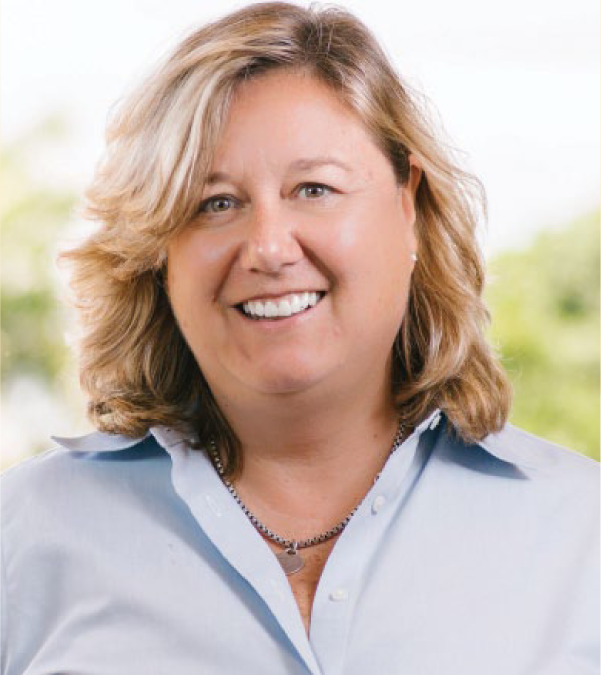
Jennifer Lesh, Ph.D., began her term as president of the Council for Exceptional Children (CEC) in January 2020. She is assistant professor, exceptional student education, at Lynn University in Boca Raton, Florida.
She has over 20 years of special education practical experience ranging from classroom teacher and specialist to dean of students at the high school level. She has also been an adjunct professor for both Lynn and Barry University.
Lesh has vast experience with cross-cultural teaching as she has taught for Barry University in its Caribbean/Bahamas Cohorts as well as in urban K–12 settings in Florida, New Jersey, and Chicago. She has presented topics within the special education realm extensively at conferences and professional development workshops at the local, state, and national level.
TEACHING Exceptional Children interviewed Lesh to learn more about her views on special education and the future of CEC.
What drove your interest in special education?
Long before I understood my calling, I included all my elementary classmates when playing on the playground. I recall having a classmate who had just index fingers and thumbs for hands, her right leg was only a few inches long and she had a metal prosthetic below that.
Melissa wore a brace to even out her legs and allow her to walk. When I started recess-time basketball camp Melissa did not want to join in, but I did not take “no” for an answer. Melissa reluctantly joined us. I modeled how to dribble with two fingers, and Melissa quickly caught on. She learned how to do a right-handed lay-up and even played in some pickup games.
At the age of eight, I did not envision my future; I just knew that it was the right thing to include all levels of basketball learners in my recess camp! I had my epiphany to be a special education teacher when I was a junior in high school. I was a teaching assistant in an inclusive, adaptive physical education class for my favorite teacher, Coach Nichols. His wife was a special education teacher at our high school, and she asked him to take on this experimental inclusive class.
I was all in from the beginning! I loved making a difference for the students who had not had an opportunity to be part of volleyball, basketball, tennis, wrestling, and flag football. When Coach Nichols asked me to assist with the High School Special Olympics team, I enthusiastically joined.
After graduating from high school, I choose to stay local and attend one of the top colleges of education for special education, Indiana University (IU). At IU, I was introduced to some of the seminal researchers in the special education field. I graduated from IU College of Education, ready to work with students with severe emotional and behavioral disorders.
I moved to Palm Beach County in South Florida and was hired to teach in an Emotional/Behavioral Disorders unit at Santaluces Community High School. I recall being so ecstatic to have my classroom, writing lesson plans, creating a welcoming environment for my students that I forgot it was payday! The secretary had to call me over the loudspeaker on Friday at 4:30 pm to come up to the front office to get my paycheck! Thirty years later, I work to instill that same enthusiasm in my pre-service special education teachers at Lynn University.
How did you get involved in CEC and how has CEC influenced your career?
CEC has been very prominent in my special education leadership career; the Council has provided me with several leadership opportunities. I was a member of CEC when I was an undergraduate at Indiana University, but it was when I became a doctoral student at Barry University in Miami Shores, Florida that I decided to get involved in the leadership of CEC.
My professors in the Special Educational Leadership program at Barry emphasized the importance of being an active member of CEC. Since I was a working professional as well as a doctoral student, I became involved in the local Palm Beach County #0200 chapter.
Our local chapter had been established for some time, so I was mentored by fantastic veteran special educators from the Palm Beach County School District. These mentors asked me to become involved as the vice president with the expectation I would become president-elect, president, etc.
One of our local past presidents wanted to create scholarships for our local students with exceptionalities. My first goal as the president of Chapter #0200 was to find additional revenue options. We were quickly involved in working at local festival events that brought in a steady stream of revenue.
We established our 501(c)(3) nonprofit status and created two scholarships – one for local graduating high school seniors with exceptionalities and one for younger students with exceptionalities to attend summer camps.
One of my other goals as the local president was to create a leadership pipeline of diverse CEC special educator leaders. Since 2010, we have found a relatively robust pathway of onboarding diverse presidential leaders.
In 2011, I convinced our local chapter to host the 2012 Florida CEC Annual Conference. We had one of the most successful conferences ever with more than 400 paid registrants despite Hurricane Sandy scaring folks away!
I became President of Florida CEC in 2013. During my tenure, I served as a CEC Representative Assembly (RA) member as well as RA committee member and eventually Chair of the RA. I finished my Florida presidential line in the summer of 2015 and decided to apply for the CEC National Board of Directors. With some luck, I was elected to the Board of Directors and have thoroughly enjoyed moving our professional organization into the future!
In addition to the leadership roles within CEC, I continually refer to our two journals, Exceptional Children and TEACHING Exceptional Children. Our publications, along with the journals of various CEC divisions have been the cornerstone of my doctoral research and now are the basis of my curriculum content as I chair the Exceptional Student Education (ESE) Master’s Program at Lynn University.
Our CEC journals, CEC Specialty Set Standards, and the High Leverage Practices in Special Education have assisted me in obtaining certification of our ESE program from the Florida Department of Education. CEC has, by far, the best research and practitioner literature and professional standards of any educational association.
Lastly, one of the biggest CEC influencers that has a significant impact on me has been the many personal and professional relationships that I have etched from being a member of CEC. These are lifelong relationships that will forever have an impact on me, and for that, I am grateful.
What do you see as the major challenges in special education today?
Currently, 48 states report special education teacher shortages, and many higher education pre-service teacher programs report decreased enrollment. Further statistics published by the Gallup Poll and shared this past summer at the 2019 Special Education Legislative Summit claim that over 50 percent of all educators will retire during the next 10 years.
This reverse correlation is a significant challenge for all stakeholders who work in some area of special education. All of us – CEC units, divisions, and chapters – must think critically and problem-solve together to resolve this significant barrier. I believe that together we can create solutions to this daunting challenge.
The State of the Special Education Profession Survey Report that appeared in the September-October 2019 issue of TEACHING Exceptional Children, authored by Pioneers Division members and Past CEC Presidents Susan Fowler, Ph.D.; Mary Ruth Coleman, Ph.D.; and William Bogdan, Ph.D., has given us a roadmap for building capacity in our field.
While their research shows that special education teachers value the Individual Education Plan and use it to map out and adapt instruction and curriculum, there is still much work to be done.
From creating time in busy general and special education teachers’ calendars to co-plan to preparing administrators to support the unique needs and skills of special education teachers to providing culturally responsive and cross-cultural competence professional development for our special educators, the challenges are immense.
From creating time in busy general and special education teachers’ calendars to co-plan to preparing administrators to support the unique needs and skills of special education teachers to providing culturally responsive and cross-cultural competence professional development for our special educators, the challenges are immense. We have much work ahead of us, but with these challenges come the opportunities to build capacity, and we as CEC members are uniquely qualified to create this bright future!
We have much work ahead of us, but with these challenges come the opportunities to build capacity, and we as CEC members are uniquely qualified to create this bright future!
What do you hope to accomplish during your year as president?
I look forward to working closely with all CEC stakeholders such as the Board of Directors, the Leadership Development Committee, the Policy Steering Committee, standing and advisory committees, workgroups, members, and staff.

I am optimistic we can meet, if not surpass, our goals established in the CEC strategic plan. With the hiring of new CEC Executive Director Chad Rummel, M.Ed., CAE, we are poised to increase the visibility and value of CEC. With our vast evidence-based products and literature, we are equipped to promote the importance of special education as a viable social-impact profession.
I want to engage our pre-service and early career special educators – they are our future! I envision that all CEC units, divisions, chapters will work together with all the CEC leadership entities. I want to involve alternative, diverse, GenZ, and millennial voices in our optimistic forecast. Together we will elevate the state of the special education profession.
Please tell us something about yourself that most CEC members don’t know
I believe my love of playing and coaching sports has cultivated a “never give up” attitude and outlook in all aspects of my life. I am an avid golfer. At one point in my career, I was an assistant golf professional at a private golf club in New Jersey, where I gave lessons day in and day out during the summer and was a special education teacher during the fall, winter, and spring months.
I was raised in Bloomington, Indiana, and have lived in South Florida for over two decades. Watching college basketball is a pastime favorite! I have spent my entire career in some aspect of special education. I have taught in special education settings at elementary and secondary levels and held several special education administrative positions before moving to higher education in 2015.
I take pride in my practitioner roots. I am married to one of the most amazing educators, twice awarded Teacher of the Year. After 34 years of teaching, I convinced Michele to become a special education teacher, and she is currently a high school learning strategist and co-teacher in 9th grade English Language Arts. Needless to say, we have some fascinating educational conversations!
Any last thoughts?
Join CEC! Get involved! Attend a division or unit conference, participate in the leadership of that division, unit, or chapter. Collaborate on research, write for our journals, join a workgroup or committee. Whether you are a new member, student member, or a pioneer, whether you are a practitioner or higher education professional, we want you!
There is a place for you working with CEC and our three pillars of Advocacy, Standards, and Professional Development. Remember
#TogetherWeAllMake ADifference
#4SpecialEducation
#AllEducatorsEvery ChildNoLimits!