




Abstract


Katherine and her parents, Brian and Caroline, have been involved in an early intervention program over the past 2.5 years to address concerns related to Katherine’s diagnosis of cri-du-chat syndrome (CDCS). During this time, they have learned that CDCS is a relatively uncommon diagnosis (Genetics Home Reference NIH, 2020) in which children typically have stronger receptive than expressive language skills and a short attention span and demonstrate a range of intellectual disabilities (Kristoffersen, 2008; Sarimski, 2003). Moreover, they have also learned, due to the difficulty some children with this diagnosis have in expressing themselves, the use of augmentative/alternative communication (AAC) supports is often recommended to support their communication needs (Cornish et al., 1999).
The Individuals with Disabilities Education Act (IDEA) requires children enrolled in Part C to have a transition plan in place at least 90 days before the child’s third birthday (IDEA, 2004). This plan may include a transition to Part B services or an option to continue with Part C services until kindergarten (IDEA, 2004, §303.211). In the 42nd annual report to Congress on the IDEA, 58.9% (137,953/234,090) of children who received Part C services were found eligible for Part B services in the 2017–2018 school year (U.S. Department of Education, 2021). Children declared eligible for Part B services must be identified with any one of 13 categories of disability (IDEA, 2004), and the majority qualify due to identification of a speech language impairment (41.4%) or developmental delay (37.7%; U.S. Department of Education, 2021).
Once eligibility for Part B services is determined, families and professionals meet to develop an individualized education program (IEP) for educational planning, including services to support the child’s plan and a decision regarding placement. In compliance with IDEA regulations, all students, including those with disabilities, have access to participate in a free and appropriate public education in the least restrictive environment (IDEA, 2004; Morningstar et al., 2017). For the majority of children who receive Part B services for concerns related to a higher incidence disability (e.g., speech or language impairment, specific learning disability), decisions about placement and services may be relatively straightforward. In contrast, for children with lower incidence disabilities (e.g., sensory impairment, significant cognitive impairment), recommended placements do not always include general education settings (Morningstar et al., 2017). Therefore, in supporting families and all children to access and participate in inclusive settings, the Division for Early Childhood’s (DEC) Recommended Practice for transition (TR2) suggest “practitioners use a variety of planned and timely strategies with the child and family before, during, and after the transition to support adjustment and positive outcomes for both the child and family” (DEC, 2014a). For example, the use of planned and timely strategies (i.e., visiting schools, allowing a child to interact with future classmates during outdoor play) for children and families can provide opportunities to learn about programs and school settings that may be beneficial in continuing a child’s educational and social development. Thus, the purpose of this article is to describe how TR2 may be systematically and intentionally used to guide families and transition team members (including both Part C and Part B personnel) in supporting children with a low-incidence disability before, during, and after the transition process to participate in general education settings.
The process of transitioning from Part C services to Part B services involves a series of systematic events, required by federal law, to occur at certain time points leading up to a child’s third birthday (see Table 1; Early Childhood Technical Assistance Center [ECTA], 2010; Podvey et al., 2013). These events include notification and referral, an opportunity for the family to meet with a representative from the local education agency (LEA) to develop a transition plan, the completion of an evaluation, an eligibility meeting, and an IEP meeting (see Figure 1; Malone & Gallagher, 2008). For families with a child who has a known disability or diagnosis, the period before transition may be particularly stressful (Rous, et al., 2007b). Therefore, following the recommendations of TR2 may be beneficial, and a source of comfort, for families to know they will be supported before, during, and after transition. Table 2 provides an outline of the roles and responsibilities of the parent/guardian, Part B team member, and the Part C service coordinator throughout the transition process.
Systematic events and time points for transition to local education agency (LEA)
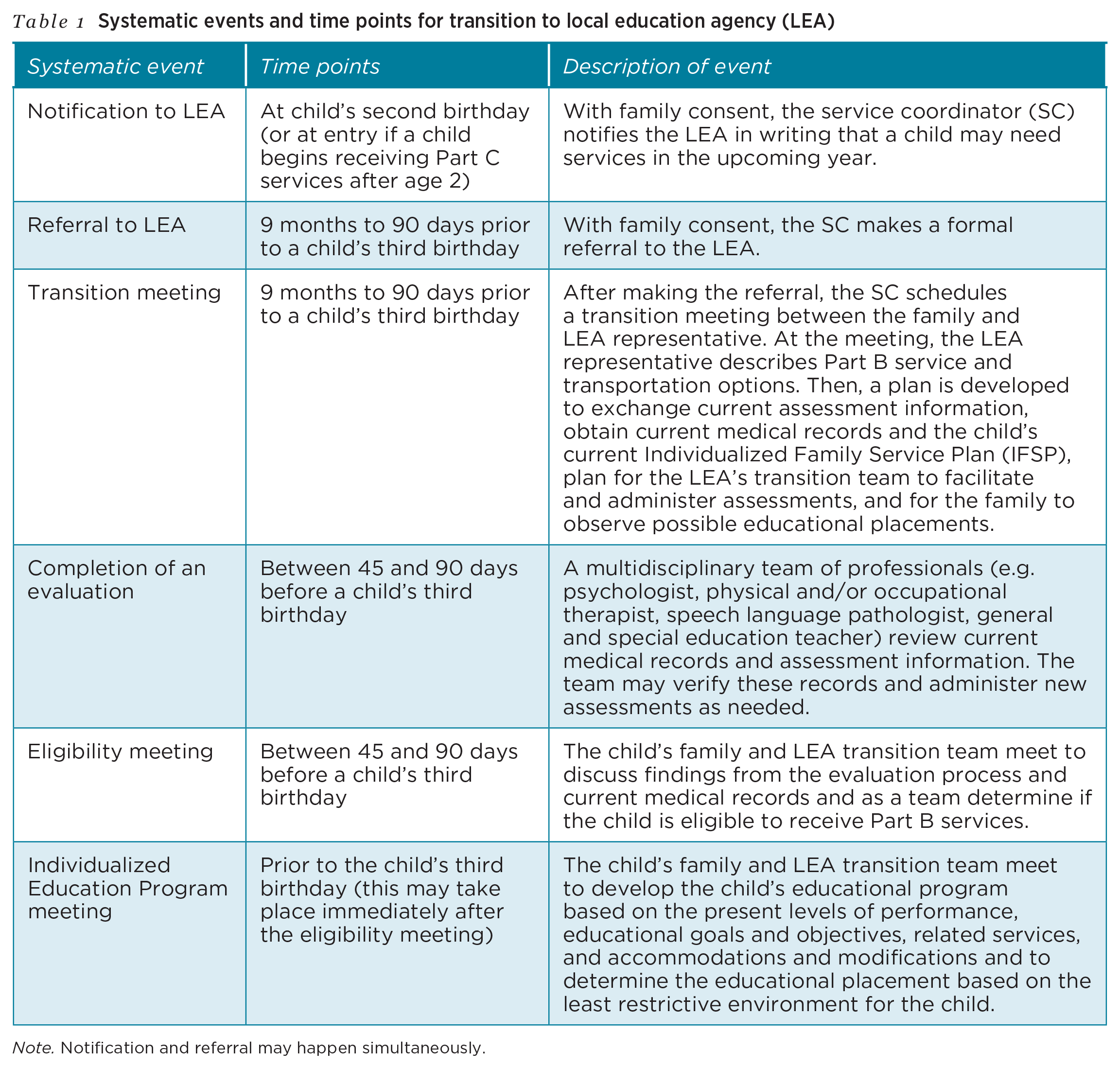
Note. Notification and referral may happen simultaneously.
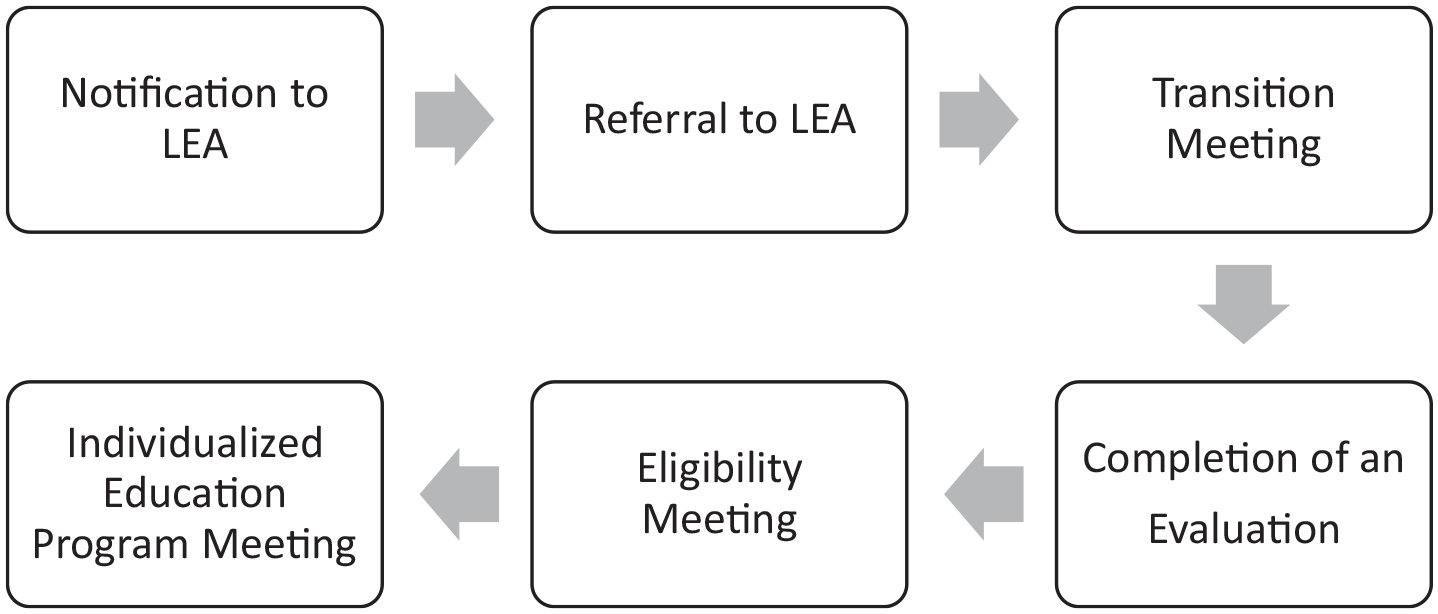
Flowchart of the transition process
Roles and responsibilities of team members
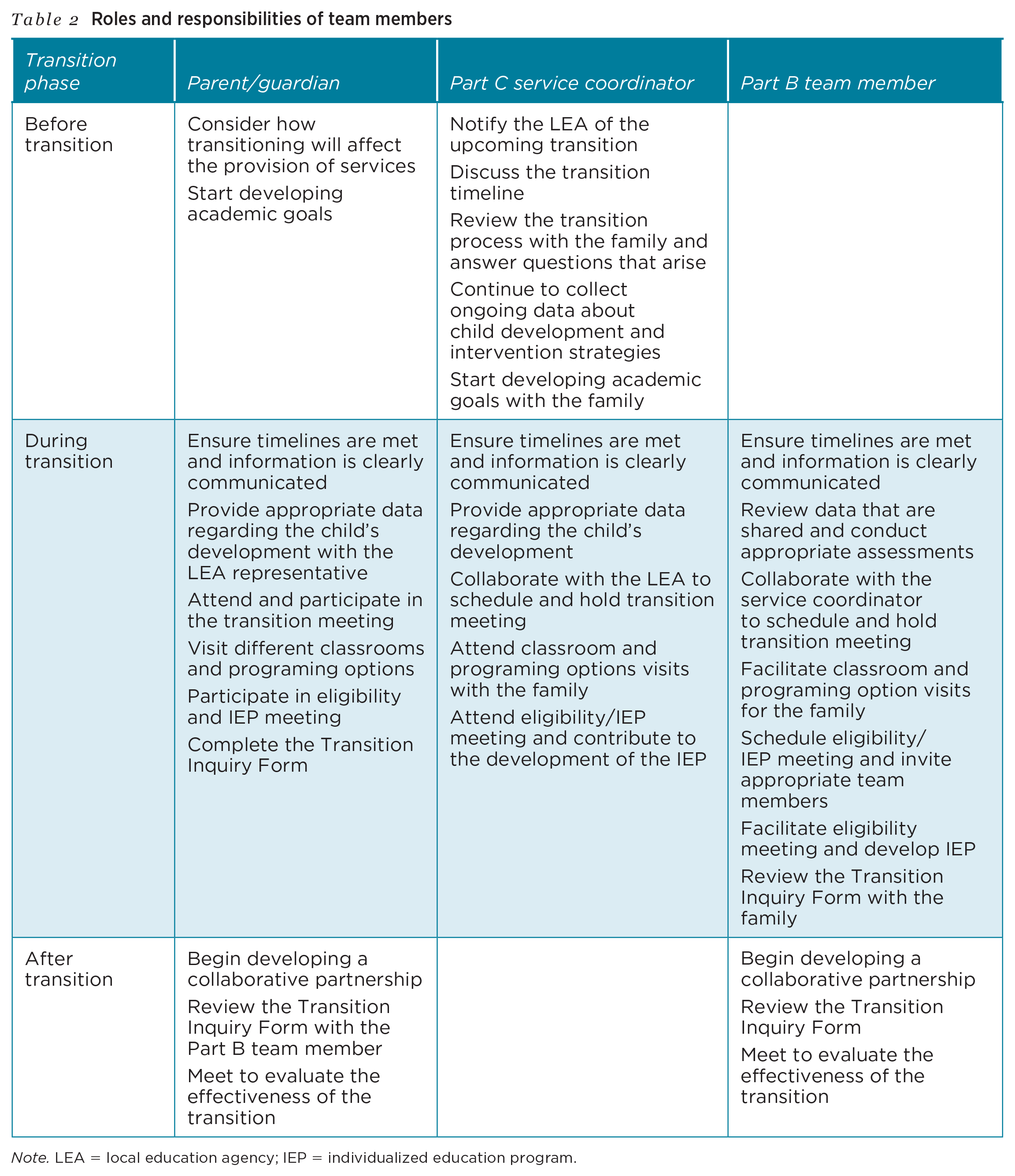
Note. LEA = local education agency; IEP = individualized education program.
Pretransition Supports
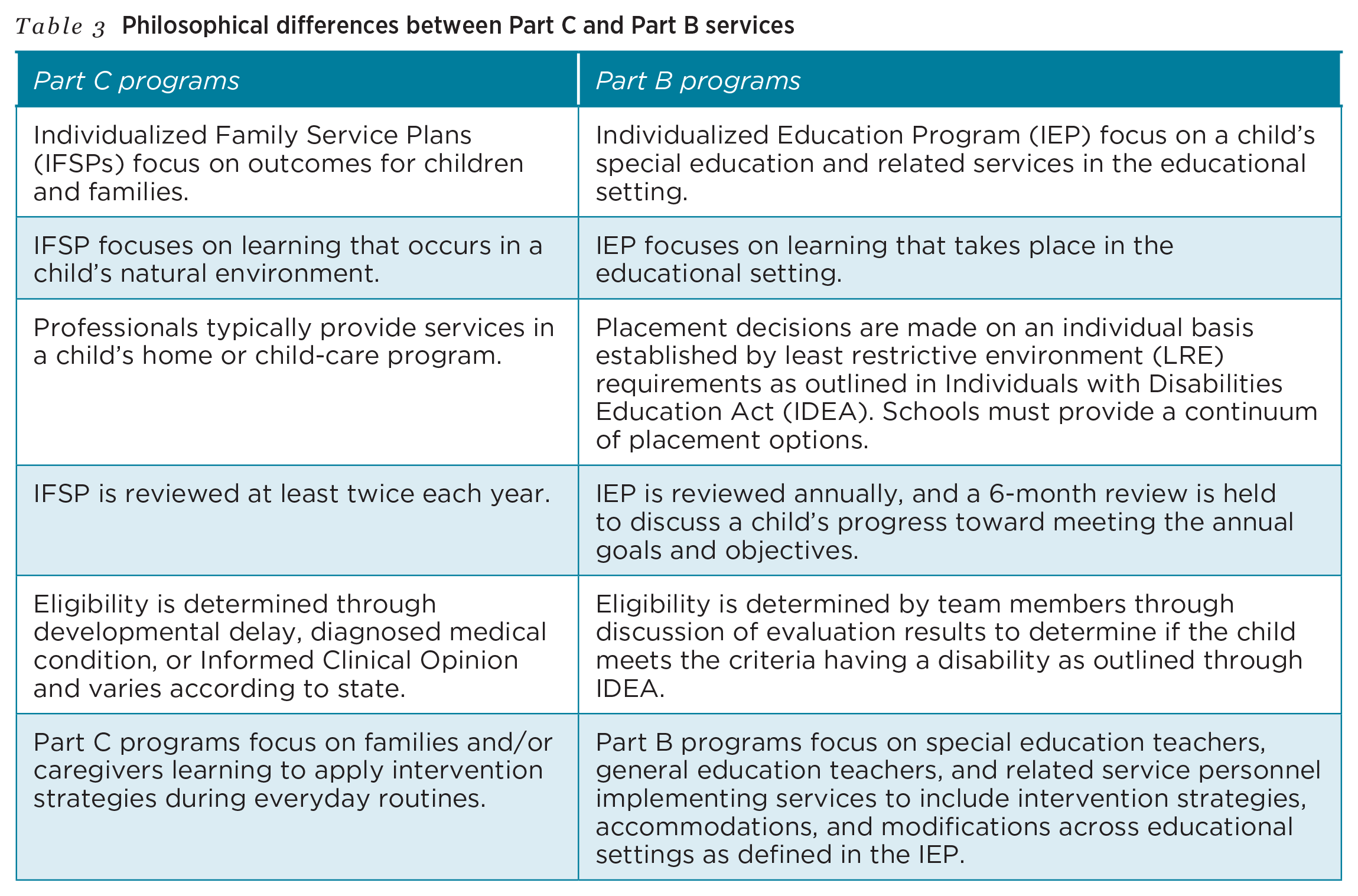
To effectively assist families during the transition process, provide pretransition support early and often to deepen the family’s understanding about the different philosophies between Part C and Part B services (see Table 3; Branson & Bingham, 2009). This understanding may include a philosophical change to shift from family-focused intervention services to child-focused educational services (Podvey et al., 2010). The discussion of the differences between the focus of service will likely include a discussion regarding the transition from natural environments into school settings, program expectations regarding modes of communication, and use of strategies to meet child outcomes (Rous et al., 2010). Pretransition supports provided early and often include (a) having multiple conversations between families and practitioners about philosophical differences between Part C and Part B services, (b) encouraging the family to ask questions they have about transition, (c) identifying goals and priorities for their child’s education, (d) providing information about transition resources, and (e) partnering with families about parent rights during the IEP process (Storie et al., 2020). However, some pretransition supports are one-step actions (i.e., notification to LEA, referral to LEA, continuation of Part C services).
Philosophical differences between Part C and Part B services
Notification to LEA
With the family’s permission, after a child’s second birthday, but no earlier than 9 months before the child’s third birthday, notify the LEA if a child has been receiving Part C services (Malone & Gallagher, 2008; Podvey et al., 2013). This notification provides Part B programs time to adequately prepare for the potential number of children who may enter programs. Additionally, families may begin considering how the upcoming transition will affect the provision of services. The service coordinator and other professionals working with the family should engage in multiple conversations about each of these concepts.
Referral to LEA
Upon eligibility or prior to a child’s second birthday, initiate a discussion regarding the duration of Part C services with the family. These conversations should include (a) the timeline in which transition should occur, (b) opportunities for the family to ask any questions about the transition process, and (c) opportunities for the family to share their goals and dreams for their child (KidTalk, n.d.; Podvey et al., 2013). When a child reaches the age of 2.5 years, particularly if a child has a low-incidence disability with significant support needs, it may prove beneficial to make an early referral to the LEA and schedule a transition meeting sooner to allow additional time to learn about service options that are available. Furthermore, earlier referrals allow families more opportunities to process the unique changes that will occur between Part C and Part B (Bradley-Johnson et al., 2015).
Continuation of Part C services during pretransition
In addition to understanding the logistical and legal aspects of transition, service providers and family members should continue to take advantage of opportunities to learn how to support, facilitate, and promote child development. For children who have a known disability with significant needs, the time a family spends in Part C is an optimal opportunity to receive one-on-one coaching in learning how to support their child’s development. This may involve deepening the family’s basic understanding of the sequence of child development, interventions, and strategies to support child and family outcomes (i.e., embedding a communication system during daily routines, the proper ways to position their child, how to make adaptations to the environment to best meet motoric and sensory needs) and an understanding and use of recommended practices through early intervention (EI) visits (Branson & Bingham, 2009). According to federal regulations, any of the 14 services may be accessed (e.g., nursing services, speech language pathology services, service coordination) to meet child and family outcomes set forth on an individualized family service plan (IFSP; IDEA, 2004, §632(4)(E)).
Through participation in the local Part C services, Katherine has received physical and occupational therapy and speech language pathology services and participated in a community-based child-care program. When Katherine was 26 months old, a special instructor in early intervention (Division for Early Childhood, 2014b), Elizabeth, began working with Katherine and her parents in her natural environment to specifically target communication skills. Elizabeth, Katherine’s parents, and other team members all noted and shared concerns about Katherine’s overall development and communication, limited eye contact when interacting with others, and ability to participate in play routines. She frequently walked around her community-based classroom or her home holding her hands and making intermittent vocalizations such as “ma-ma.” Furthermore, due to difficulties with hand coordination and other developmental delays, Katherine had minimal interest in looking at books or playing with other age-appropriate toys. Now, as Brian and Caroline begin to prepare for Katherine’s upcoming transition to preschool, they want to ensure the transition process is successful in supporting Katherine’s communication and developmental needs.
“Collect anecdotal notes and video documentation to provide supplemental information about how services are provided.
Collaborations between families and professionals should assist in empowering families with the knowledge and expertise (Dunst et al., 2014) needed to later share with others, such as Part B providers. As services continue, it may be helpful for service providers to share with families that knowledge gained through their participation in intervention sessions prepares them to actively participate and advocate for their child’s educational and/or medical needs in future transition meetings. Specific conversations about how the team plans and reviews what happens between home visits and participation in IFSP meetings may help build family capacity and confidence in their knowledge. These ongoing Part C experiences are all advantages, as are pretransition supports, in preparing families for transition. Finally, service providers and families may reflect on their journey in identifying child and family strengths and goals and intervention strategies to support their child’s development.
As part of providing Part C services, collect anecdotal notes and video documentation to provide supplemental information about how services are provided or how an AAC system is used and to determine what to expect when a child enters a new setting. These notes and documentation provide valuable information regarding levels of independence, engagement, and social interaction that may not be immediately clear to professionals unfamiliar with skills and abilities associated with low-incidence disabilities. It is also helpful to parents and professionals as they communicate what interventions work to professionals in the next setting. Moreover, this process may help minimize the critical window of time needed for a child to adjust to a new setting and services because the purpose of transition is to support children in the acquisition of academic and social skills as they enter a new school setting or program (Rous et al., 2007b).
At the onset of their collaboration, Elizabeth videorecorded Katherine interacting with her parents through a range of routines that built on identified interests at their home (e.g., playing peek-a-boo, eating snacks, swinging in her hammock). These observations, along with the use of parent reports and other assessments, helped identify Katherine’s current level of communication skills and ways Brian and Caroline interacted with their daughter. By collecting multiple forms of data, Elizabeth learned Katherine primarily communicated by vocalizing and signing “more,” “all done,” “drink,” and “eat.” Based on her observations, Elizabeth believed the use of naturalistic language intervention strategies would be helpful in facilitating Katherine’s communication development (Kaiser & Hampton, 2017). After agreeing to try these strategies, the team members, including Brian and Caroline, selected sign language as a mode of AAC to use.
During Transition Supports
Both Part C and Part B team members can support families during the transition by actively listening to families throughout the transition process and consider the family’s cultural, linguistic, and social preferences. Both sets of professionals ensure timelines are met and pertinent information is clearly communicated. Families will vary in the extent to which they would like to be involved in this process and should choose their level of involvement for planning, implementing, and evaluating their child’s educational plan. As Katherine’s family begins to engage in the transition process, Brian and Caroline will likely benefit from ongoing support because the transition between programs can be an emotional experience.
Transition meeting
Between 9 months to 90 days before a child’s third birthday, schedule a transition meeting (IDEA, 2004, §303.209(c); Malone & Gallager, 2008; Podvey et al., 2013). In addition to the family, involve multiple professionals and agencies to ensure current, accurate information is available for informed decision-making (Rous et al., 2007b). Participation may be in person, online, or by written report (ECTA, 2020). During this meeting, encourage the family to (a) share information about their child’s development and their priorities and goals; (b) ask questions about potential services and settings; (c) obtain information regarding other pertinent issues such as transportation, meals/snacks, and so on; and (d) schedule an observation of possible receiving classrooms and programs.
During the meeting, the LEA will coordinate the exchange of assessment information, describe how the transition team will facilitate the assessment process, ask the family information pertinent to their child, and review procedural rights and safeguards for Part B services. Next, the LEA representative provides information about how Part B services are provided by communication about the continuum of placements, what services entail across settings (e.g., self-contained, inclusive), and the typical daily schedules for children.
Families and service providers may find it useful to review checklists and other information available through the ECTA (2020) to deepen their understanding of information shared during the transition process. Families may ask the LEA representative how meetings are facilitated, how written materials are shared, and about evaluation procedures and delivery options (including tele-intervention) for services/programs.
At the conclusion of the transition meeting, a plan for next steps is finalized. For the family, this will include information about how to learn more about Part B services and programming, if they need to complete any paperwork or provide updated information, details regarding opportunities to observe Part B settings, and the plan for coordinating future evaluations. The IEP team will have learned the family’s goals and current services the child has been receiving.
During the transition process to Part B programs, families may find it helpful to visit receiving classrooms to discover how children learn in classroom environments, find out about student/teacher ratios, and talk to teachers (Podvey et al., 2010; Rous et al., 2010). During these visits, families gain firsthand experience in seeing differences in programming options such as community-based programs, self-contained classrooms, inclusive sites, Head Start programs, or private child care. For families of children similar to Katherine’s, in-person observations allow families to learn more about how teachers and other professionals in Part B programs are providing services and embedding AAC supports into classroom routines and activities; thus, families may see similarities and/or differences than what they have in Part C services.
During Elizabeth’s time working with Katherine’s family, progress was monitored through the use of functional assessments during daily routines, observation, and parent reports. The selection of these assessment measures allowed her team to more accurately capture progress made in her increased engagement and eye contact and how she participated in play routines, demonstrated greater understanding of what was said to her, and increased use of signs and vocalizations to communicate. With the family’s permission, Elizabeth shared copies of the assessment reports she compiled with rich descriptions of Katherine’s current skill levels and how their team embedded naturalistic language strategies and sign language together into the family’s routines and in her community-based child-care program. Finally, Brian, Caroline, and Elizabeth discussed what their goals and priorities were for Katherine and the ways team members could contribute to the development of the IEP once eligibility had officially been determined.
In supporting families to become advocates for their child during the transition process, systematically obtain information about a child’s development using a variety of techniques and strategies (Salisbury et al., 2018). For children such as Katherine who have a low-incidence disability and difficulty sustaining engagement and interest in formal, structured approaches to testing, assessment reports obtained through standardized testing may not provide helpful or accurate information for developing goals and objectives, determining services, or making recommendations for placements (Benner & Grim, 2013; Kurth et al., 2014). Furthermore, researchers have reported challenges that professionals may experience in knowing how to administer assessments with individuals who have severe and low-incidence disabilities (Bradley-Johnson et al., 2015). Thus, the use of DEC’s Assessment Recommended Practices (DEC, 2014a; e.g., multidisciplinary teams, family-based assessments, focus on functional assessments across settings; Hill et al., 2020) and best available practices (e.g., authentic assessment, play-based assessments; Bagnato et al., 2011) are recommended during the transition process.
Completion of an evaluation
The sharing of developmental levels and the child’s current level of functioning, including an emphasis on strengths of the child, is part of the timely, systematic sharing of information required prior to a child’s eligibility meeting, Therefore, careful documentation of qualitative data regarding administration of the assessments, including the use of authentic and transdisciplinary play-based assessments, helps team members in both Part C and Part B programs have a better representation of the child’s abilities (Bagnato et al., 2011). Team members may also consider the use of video technology (Marturana & Woods, 2012) to illustrate ways children communicate and interact with peers and other familiar adults in their natural environment to provide the IEP team with more clarity about a child’s current level of functioning for assessment purposes.
“Finally, ask the family ways they would like to be supported.
As Rous and colleagues (2007a) put forth, “the strengths and needs of individual children must be considered when planning for transition . . . these unique characteristics, such as temperament, type of disability, etc., should inform the individualized transition practices for young children” (p. 139). For example, families and Part C providers can share (a) descriptive details about language strategies used to support a child’s development, (b) information tips about what makes the child happy and comforted, (c) videos of a child using an AAC support, (d) tips on how to use any assistive technology a child uses, and (e) specific needs related to nutrition and mealtime. Through their participation in their Part C services, families such as Katherine’s increase their confidence in using planned supports during the transition process (TR2).
Along with these recommendations, the IEP team (i.e., family/guardian, Part C team members, Part B transition team) may examine alternative ways (e.g., family-based questionnaires, ecological assessment, and other forms of authentic and/or play-based assessment; Bagnato et al., 2011; Pool & Hampshire, 2020) to capture a child’s ability levels and personality in preparation for the eligibility meeting. Using child- and family-centered assessments may help ease the transition into a new setting while adhering to required IDEA guidelines that state IEP teams should review developmental levels using different types of tests, consider the child’s cultural and/or social background, and collect parent and teacher reports (IDEA, 2004, 20 U.S.C. 1414(b)(4) and (5)). In considering this range of information obtained through authentic assessments, the IEP team will determine eligibility of services based on a child’s diagnosis or the team’s decision that a child is eligible based on their informed clinical opinion.
Preparing for the eligibility and IEP meeting
In preparation for eligibility and IEP meetings, review the information collected on the Transition Inquiry Form (see Figure 2). This information will assist the team in understanding the type of communication, behavioral, and other intervention supports previously implemented with the child. The Transition Inquiry Form also aids in learning about the interests and concerns of the child’s family.
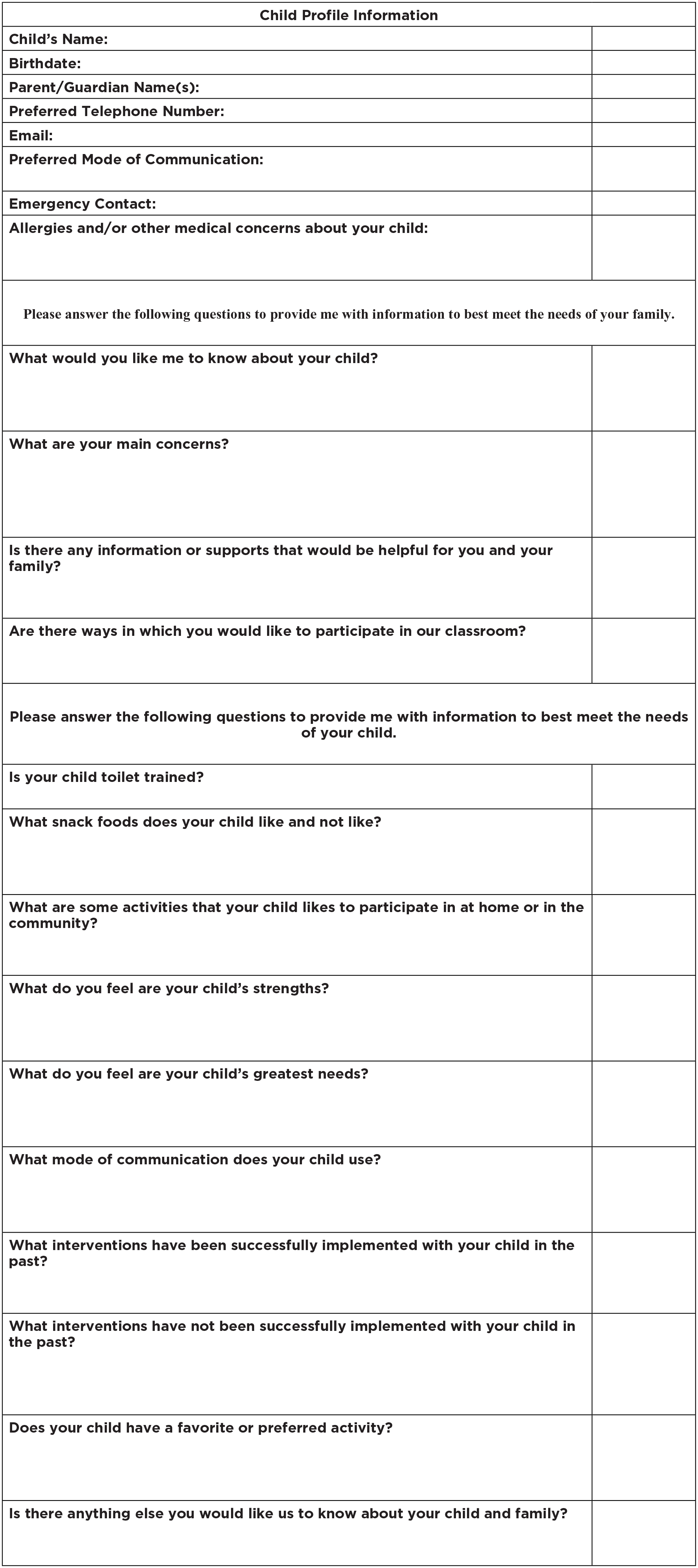
Transition Inquiry Form
In addition to information collected, encourage the family to invite their support system to the IEP. Ask the family about their comfort level in speaking with professionals they do not know very well, including a possible need for language interpretation services, and remind the family of their expertise and knowledge gained about their child during their time in Part C. Furthermore, prioritize cultural responsivity by identifying the family’s spiritual and religious beliefs, cultural background and environment, preferred method of communication (verbal or written), and ways that nonverbal communication behaviors can create a rapport with families (Zajicek-Farber et al., 2017). Specifically, learning about cultural values, facilitating meetings in a “nonrushed” manner, identifying interpreters familiar with the transition process/IDEA policies and procedures, and taking time to develop a trusting relationship may all help families feel supported during the transition process (Sladeczek et al., 2020). Finally, ask the family ways they would like to be supported during the meeting (i.e., the family may want the service provider to attend the meeting, prompt them to share their goals, make recommendations for educational outcomes, services, or placements).
Eligibility and IEP meeting
After completing pretransition and other during transition activities, schedule a meeting to determine if a child meets eligibility criteria established for Part B services (Malone & Gallagher, 2008). This meeting must take place prior to the child’s third birthday but not more than 90 days before turning 3. During this meeting, all assessment information is reviewed, and a team discussion is held to determine if a child is eligible for Part B services. Team members will include the child’s family, members of the IEP transition team (e.g., special education teacher, general education teacher, LEA, school psychologist, and related service providers), and others the child’s family may invite. Following the eligibility meeting, if the child is determined eligible for Part B services, team members begin the process of developing the IEP goals based on the present levels of performance, discussing the type and frequency of services to be provided, and examining possibilities for educational placements (Podvey et al., 2010).
Once the IEP is developed and agreed on by the team, the team discusses possible placements for the child to begin on or after their third birthday. Possible options for placement include continuing with a child’s current IFSP (IDEA, 2004, §300.115(a)) and include a continuum of placements (i.e., general education classroom, special education classroom, special education school, home, instruction in hospitals and public or private institutions). Other options may include private school placements. Prior to the transition to the new setting, parents will receive a 10-day prior written notice, have a right to disagree with placement recommendations, and can pursue mediation and due process through procedural safeguards (IDEA, 2004, §300.503).
After Transition Supports
After a child transitions to Part B services, continue to provide support, such as active listening, after transition and implement strategies to promote a welcoming environment to ease anxieties families may have after transition. As children begin the transition process to receiving Part B services, families may experience an overwhelming number of emotions as they begin to adjust to Part B services (Rous et al., 2007b). Lastly, the transition team and family should consider ways to evaluate the effectiveness of the transition (Hojnoski & Missasll, 2020; Rous et al., 2007b). The use of active listening strategies, sensitivity to a family’s emotions during the transition process, and the evaluation about the effectiveness of the transition align with DEC’s (2014) Family Recommended Practices, and illustrate the importance of family-centered practices, family-capacity building, and family-professional collaboration.
“Provide support, such as active listening, after transition and implement strategies to promote a welcoming environment to ease anxieties families may have after transition.
Creating a collaborative partnership
Upon notification of a new child being placed in the program, reach out to the family to set up an in-person or virtual introductory meeting time. This meeting will provide children and families like Katherine’s the opportunity to meet the teacher and explore the new setting. During this visit, facilitate conversations necessary to gain information regarding the child preferences, needs, and interests by reviewing the Transition Inquiry Form (see Figure 2). This form provides content for the early childhood education/early childhood special education teacher to expand on by specifically asking questions about the implementation of interventions (e.g., communication, behavioral, social) and how these can be embedded within the new environment. This meeting may promote a smoother transition to the new environment by providing access and supports to participate in all activities and routines throughout the day.
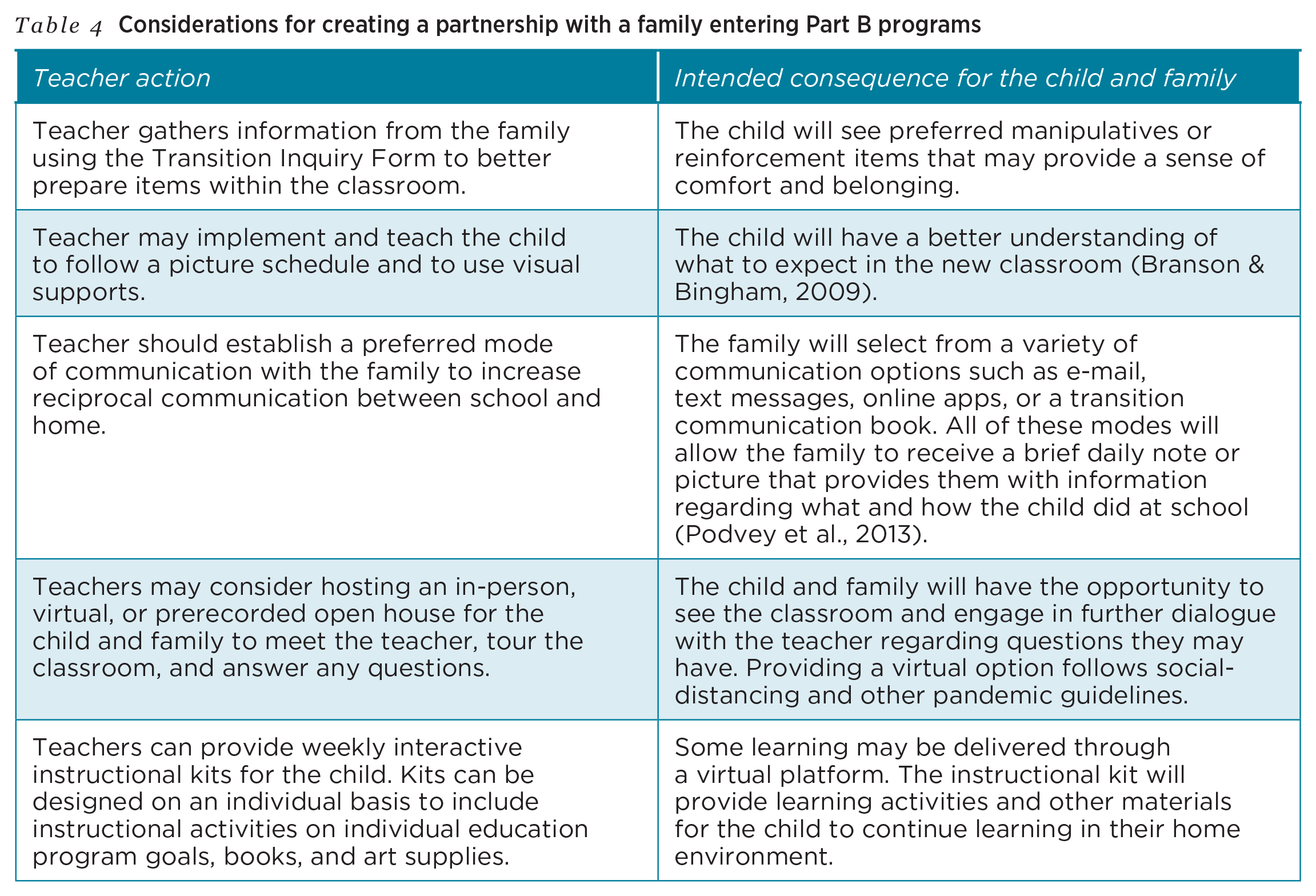
It will be advantageous to establish a positive, welcoming partnership with the family. Several recommendations can be considered to develop this partnership (see Table 4). In addition to these suggestions, when planning for instruction, it is important to refer to the Transition Inquiry Form to review and implement interventions that were known to be effective to increase the effectiveness of the transition. By using intervention strategies the student is familiar with (e.g., naturalistic language interventions, sign language), they will have the ability to communicate, engage, and interact with adults and peers in the classroom (Branson & Bingham, 2009).
Considerations for creating a partnership with a family entering Part B programs
Posttransition activities
After a transition takes place, consider ways to evaluate the effectiveness of the transition. Rous and colleagues (2007a) developed a transition outcomes model that included three interdependent outcomes: engagement, adaptation, and continued growth and development. Evaluating how a child is engaged, adapting to a new environment, and continuing to grow and develop can provide useful information for families and professionals. Hojnoski and Missall (2020) suggested the use of classroom observations, the collection of performance data, and the use of rating scales as ways to determine the success of the transition. Professionals may also consider using resources provided by the ECTA (2020; i.e., environment checklists, interaction checklists) to provide further information on alignment with the transition outcome model. Meetings between families and professionals will provide opportunities to continue relationship building, allow all parties to discuss findings from data collected, and discuss if any changes are needed in the child’s educational plan. Finally, professionals may establish policies and procedures to determine how families perceive the transition process (e.g., information sharing, alignment between the home and school; Early Childhood Learning and Knowledge Center, n.d.).
During Katherine’s IEP meeting, the team agreed Katherine would attend an inclusive preschool within the Part B school system and receive physical, occupational, and speech language therapy services within her classroom. Brian and Caroline were pleased with many suggestions made for Katherine, such as using a stamp instead of writing her name on papers. However, they expressed concerns when the school system recommended a voice output device as a support for Katherine’s communication system due to difficulty differentiating Katherine’s signs. After much thought and conversation with Katherine’s initial team, Brian and Caroline agreed to try a voice output device to support Katherine’s communication development. To help support this new mode of communication, Elizabeth continued home visits so her family could learn to use the new device with Katherine. These visits allowed the team to practice using the device while pairing it with spoken words. Similarly, due to the information shared prior to the IEP meeting, including the use of the Transition Inquiry Form during conversations with Katherine’s parents, the school had a better understanding of how the use of the naturalistic language intervention strategies and sign language could be effective in facilitating her communication development. Thus, practitioners across programs were able to support the family before, during, and after the transition process.
Summary
Although not all providers will be able to continue home visits in the manner described here, school personnel and specialists from other receiving programs may be able to support families in learning to use AAC systems. Katherine’s community and EI program is a unique one many communities may not have access to due to resources and provider expertise (Kurth et al., 2014; Morningstar et al., 2017). Young children with disabilities interact with numerous professionals across environments and experience multiple transitions (Rous et al., 2007b). Katherine’s family, over the course of 2.5 years of participation in Part C services, experienced transition and collaboration with different medical professionals, EI professionals, and therapists and learned about the process of developing and revising IFSPs. In addition to developing and using a communication system, along with all team members across Katherine’s natural environments, Brian and Caroline strengthened their confidence to participate more fully during transition and educational programming meetings. As conversations with team members began about timelines associated with transition and the sharing of information across programs and potential new settings, the team also recognized the importance of using specific strategies based on the individual family’s needs to provide supports before, during, and after transition (TR2; DEC, 2014a). Finally, Part C and Part B professionals should proactively prepare to provide these supports through ongoing, systematic interactions to support smoother transition for young children and their families.
Footnotes
Declaration of Conflicting Interests
The author(s) declared no potential conflicts of interest with respect to the research, authorship, and/or publication of this article.
Funding
The author(s) received no financial support for the research, authorship, and/or publication of this article.
