




Abstract
Relative humidity (RH) and air gap size are two characteristic indices of clothing microclimate. The current thermal protective performance (TPP) tests cannot evaluate protective performance of fabrics under a microclimate with high temperature and humidity. In this study, a newly modified TPP test apparatus was applied to investigate the effect of RH in a microclimate on heat transfer of fabrics exposed to flash fires. Air gap heights from 0 to 24 mm with increments of 3 mm were employed. Three microclimates with different RH were preconditioned respectively. The results indicate that the RH in a microclimate significantly improves thermal protection of fabric with various air gaps. Under 35% RH, the TPP obviously increases with the air gap up to 15 mm and then the increment becomes a little lower; under humidified conditions (65% or 95% RH), it becomes higher substantially with air gap height increasing until 12 mm, subsequently it decreases or increases alternatively if the size keeps increasing. The positive effect of air gap with small size on TPP of fabrics is enhanced due to the increase of the vapor in the air; however, the positive effect of air gap with large size is interfered by the RH. It is indicated that around 12–15 mm was a critical air gap size under 35% RH, while about 12 mm was a key air gap size for a damp microclimate with 65% or 95% RH.
Firefighters usually encounter high ambient temperatures and radiant heat flux during fire operations and rescue, including flames, hazardous chemicals, toxic fumes, and gases. 1 They are in need of qualified firefighter protective garments with excellent thermal protective performance (TPP) to ensure the safety of their lives. The thermal protective clothing can not only provide higher thermal insulation but also impede body heat and moisture transfer to the external environment. At a higher ambient temperature or during strenuous activity, the wearer of thermal protective clothing perspires profusely, so clothing next to the skin becomes saturated with perspiration. Consequently, a clothing microclimate with a high ambient temperature and humidity may cause steam burns during operations in a fire scenario. The distribution of air spaces plays an important role in thermal protection of garments, 2 which is commonly not considered in bench-scale tests, although there are some tests where the sensor is placed at a distance of 6.4 mm behind the fabric.3,4 Laboratory test methods for measuring the TPP of protective clothing should simulate the heat hazards present at the fire scene as accurately as possible. 5 Thermal protection evaluation under a clothing microclimate with high temperature and relative humidity (RH) is very important and has not yet been considered. Therefore, full consideration of the effects of RH in a clothing microclimate on thermal protection exposed to high intensity heat flux is necessary.
Many studies have shown that the presence and distribution of moisture has a complex effect on heat transfer through insulating materials. 6 – 10 Convection/conduction and radiation are the two main heat transfer modes between heated fabrics and a calorimeter sensor. While the fabric gets wet, on the one hand, the thermal conductivity will greatly increase and enhance the heat transfer through the fabric; on the other hand, the heat capacity will also sharply increase, resulting in more energy stored in the fabric and lessening the heat transfer. In addition, water vaporization will occur if the fabric temperature is higher than the saturated temperature and this may change the heat transfer character in the air gap between the heated fabric and the copper sensor. If the water vapor transfers to the human skin and condenses, steam burns may occur. In previous studies, it was found that moisture enhanced the thermal insulation of all single-layer protective fabrics under convective and radiant exposure of 84 kW/m2, and moderate radiant exposure, 11 while moisture reduced the TPP under high intensity radiant heat flux. 12 A thermal protection decrease for a specimen internally moistened at moderate radiant heat flux was also discovered. 13 Lawson et al. found that the internal and external moisture exposed to flame or low radiant heat flux had a different influence on TPP. 7 Barker et al. investigated the effects of absorbed moisture on protective performance under low radiant heat flux and found that approximately 15% moisture content approached the minimum thermal protection. 9 In a recent study, it was reported that the moisture in clothing systems enhanced the protective performance under low level radiant heat exposures, with some exceptions. 14
The effect of air gap on the TPP has also attracted the extensive attention of researchers. The distribution and size of the air gap could obviously affect the methods of heat conduction, convection, and radiation from the fire to the body skin. 15 There has been an argument on whether an air gap should be used in standard bench-top tests, and the air gap of 6.4 mm in those standards is appropriate to represent the real air gap size. 16 A numerical model was used to study the effect of the size of the air space on bench-top test results. It was indicated that the height of the air gap in bench-top tests played an important role in their results for thermal protective fabrics; however, no optimal value of the air gap was found. 2 Sawcyn and Torvi have developed a model to predict well the results obtained experimentally for different air gap heights ranged from 3.2 mm to 19.1 mm. 17 A group of quartz tubes was used to produce a radiant heat source of 21, 30, and 42 kW/m2 for radiant bench-top tests. 18 It was revealed that the time to second degree skin burns was prolonged with the increase of the air gap size, then decreased and later increased again while the air gap size still increased. As no flame exposure was simulated, it is still not sure that how the sizes influence the TPP under high heat flux (84 kW/m2) conditions with both radiant and convective heat flux. Song focused on the air gap of a thermal mannequin and used a three-dimensional (3D) scanner to measure the distance from the clothing to the surface of the mannequin. 19 Air gaps between a female mannequin and protective coveralls were used to determine the effect of garment style and fit on thermal performance. The findings demonstrated that air gap sizes were not evenly distributed over the mannequin, and were dependent on garment style and fit, as well as body contour. There were a greater number of smaller air gaps over the mannequin than larger ones. 20 Garment style and fit influenced protection, as the inappropriate fit of the women’s style compared to the men’s made some areas of the female mannequin more susceptible to burns than others. 21 In a recent study on water vapor permeability of wet fabrics, the effect of air layers between the skin and the testing specimen on the total heat and mass transfer was experimentally investigated. 22 The results indicated that when a 2 or 4 mm air gap was made, the relative water vapor permeability or relative cooling heat flow was smaller than when the fabric was in direct contact with the skin; moreover, it did not depend significantly on the fabric moisture content.
However, complex moisture effects on the protective performance of fabrics have not been understood; there is still a lack of quantitative study on the effect of air gap on skin burn evaluation of wet fabric under flash fires and whether there is an optimal value of this air gap. The current bench-top tests cannot evaluate TPP of flame-resistant fabrics under real clothing microclimates with high temperature and RH. In this paper, a new modified TPP test apparatus was developed to investigate the thermal protection of flame-retardant fabrics used in firefighter protective clothing under different clothing microclimates exposed to flash fires of 84 kW/m2. Different air gap sizes from 0 to 24 mm with increments of 3 mm were employed to simulate the air space between skin and clothing and space change due to body postures. Three types of microclimate RH were preconditioned respectively to examine the moisture effect on the TPP of fabrics.
Experimental
Materials
Basic properties of the testing samples

Testing apparatus
To quantitatively evaluate the protective performance of fabrics under a microclimate with high temperature and RH, a self-designed measurement apparatus was developed based on a TPP tester to well control and regulate the required testing conditions, shown schematically in Figure 1. The TPP tester used here was CSI-206 (Custom Scientific Instrument Corporation, USA), which consists of two Meker burners and nine heated quartz tubes to produce a nominal heat flux of 84 ± 2 kW/m2, with 50% convective and 50% radiant heat flux calibrated by using a Hy-Cal radiometer (No.R8015-C15-072). An automatic water-cooled shutter was used to insulate the testing specimen from heat sources before the test to accurately control the exposure time. An adjustable square microclimate chamber made of insulating material (Teflon) was positioned above the testing fabrics. Several needles were evenly distributed at the bottom of the microclimate chamber to fasten the testing samples in order to constrain fabric shrinkage and crinkle. A digital humidity sensor SHT75 (Sensirion Co., Switzerland) with a measurement error of ± 1.8% RH was applied to observe the RH in the chamber. Water vapor with a temperature of 33 ± 1°C was generated by a commercial ultrasonic atomizer. A height changeable device was added to easily control the air gap height of the microclimate by rotating the buttons on both sides simultaneously. Temperature rise was measured by a copper calorimeter. The copper face was blackened to obtain the a similar emissivity as that of the human skin. To control well the temperature of the calorimeter sensor at 32.5°C, an auto control hot plate consisted of a very thin stainless steel plate and an attached membrane was employed, located at a position of 30 mm height. The thermal sensor and humidity sensor were connected to a data acquisition system. The Stoll curve
25
for skin burn was applied to predict the time required to reach second degree burns and the TPP value according to NFPA 1971.
A schematic of the testing apparatus.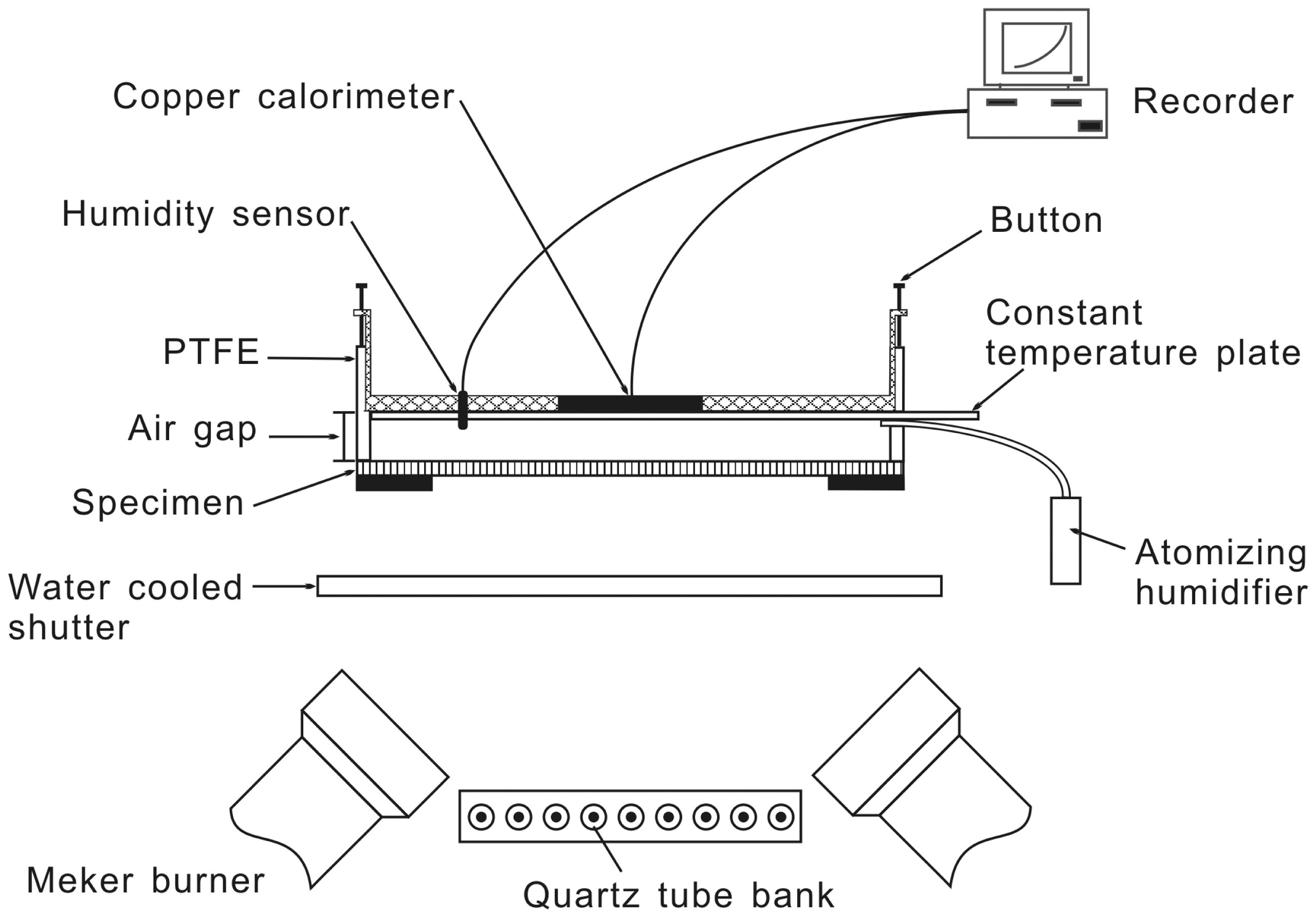
Experimental protocol
In a previous study, the maximum average air gap height between clothing and human skin was discovered to be close to 25 mm. 19 There were a greater number of smaller air gaps over the mannequin than larger ones. For both styles, approximate 80% of the air gaps were less than 30 mm, 65% of the air gaps were less than 20 mm, and about 30% of the air gaps were less than 10 mm. 20 In this study, air gap sizes from 0 mm (tight) to 24 mm (loose) with increments of 3 mm were selected to produce different spaces under the clothing. After setting up the prescribed air gap size, the testing specimen was mounted under the chamber and fastened by the distributed tooth. A pair of tweezers was used to make the specimen flat to produce an even air gap size. The RHs of 35 ± 3% (without humidifying), 65 ± 5% (comfortable), and 95 ± 3% (high humid environment) in a simulated chamber were adjusted respectively for each size of clothing microclimate. During regulation of the chamber environment, the hot plate was heated simultaneously to keep the calorimeter sensor at 32.5°C. The RH precondition took less than 20 s and depended on the prescribed RH and air gap size. The employed fabrics were synthetics and had an applied water resistant finishing. In fact, the moisture regain will change in different RH. However, the moisture regain of conditioned testing fabric changes little for so short a time, so it is not considered in this study. When the chamber RH condition was reached, the hot plate, humidity sensor, and water vapor pipe were all removed in less than 2 s. The calorimeter sensor was then located at the regulated position to make an expected air space and the chamber was rotated to be above the water-cooled shutter. The time expensed before the experiment started was just less than 5 s. Consequently, the RH change after regulation was lower than 5%, which was measured before the series of tests. The exposure time was set at 9–15 s, which depended on the air gap size and RH in microclimate. After each test, the calorimeter sensor was allowed to cool faster using an ice bag covered by thin fabric and then located on the heating plate to keep the initial temperature constant.
Results and discussion
Effects of air gap size on heat transfer under different relative humidity
Temperature rise curves of specimen N2 with different air gaps under conditions of 35% RH are shown in Figure 2. It is clear in Figure 2 that there are intersection points found between the Stoll curve and all temperature rise curves under conditions of 35% RH before the sensor temperature rises to 50°C. Consequently, only part of the temperature rise versus time is depicted here. It is observed that the temperature curve of each air gap size increases with time. The temperature rises most quickly while the calorimeter sensor is in contact with the testing specimens (0 mm air gap), and that with the air gap of 24 mm is the slowest. There is an obvious temperature change found from 0 mm to 6 mm, and the discrepancy declines with increasing air gap. As the air gap size changes from 9 mm to 15 mm, the temperature varies slightly between different air gaps, only with a little decrease. If the air gap continues to increase, an apparent temperature decrease is discovered, and the decrease is much lower than those with air gaps less than 6 mm. Consequently, it is indicated that heat transfer through fabrics from high intensity convective and radiant heat flux decreases with an increase of the air gap size, which means that less energy is transferred to the thermal sensor with larger air gap size.
Temperature rise of specimen N2 with different air gaps under conditions of 35% RH.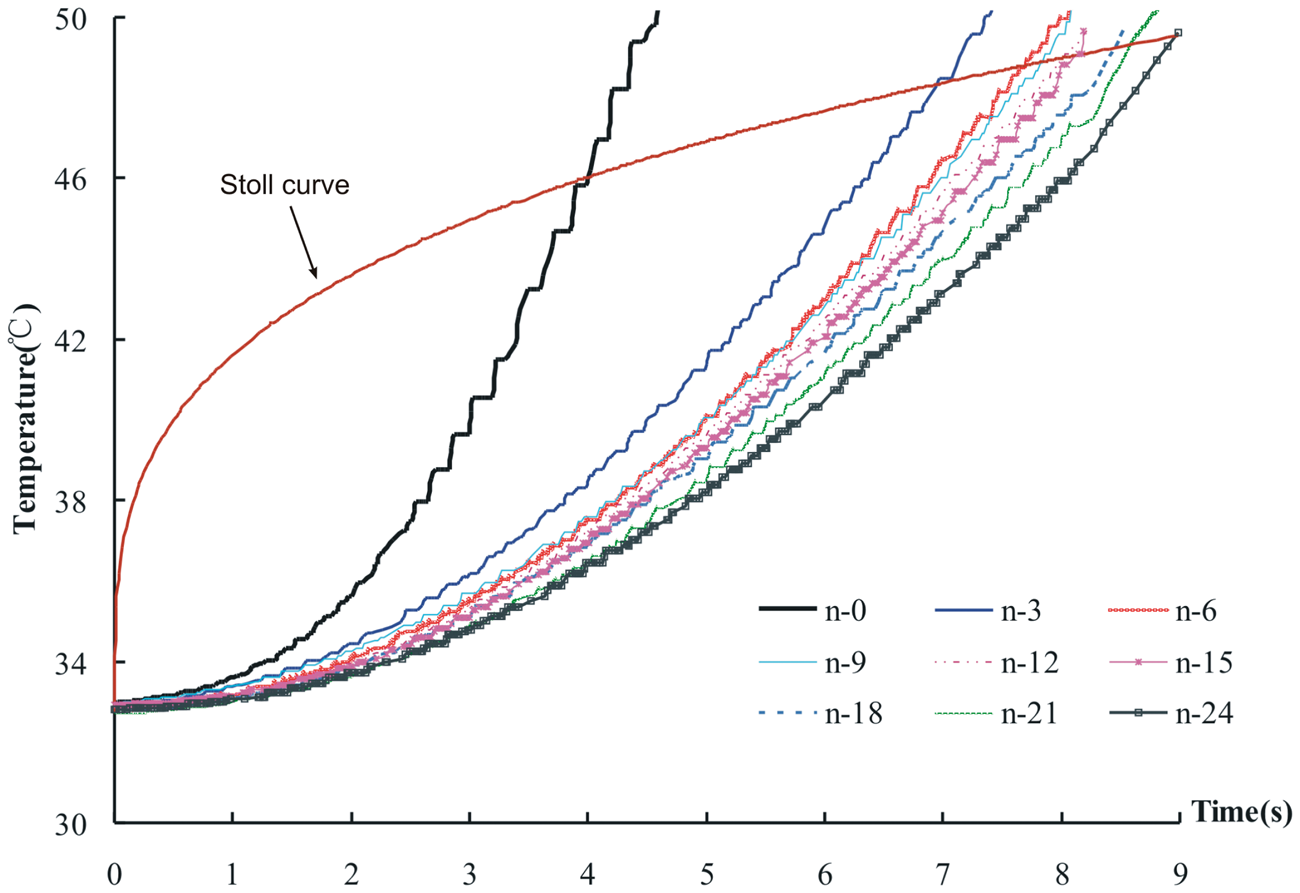
TPP of testing specimens with different air gaps
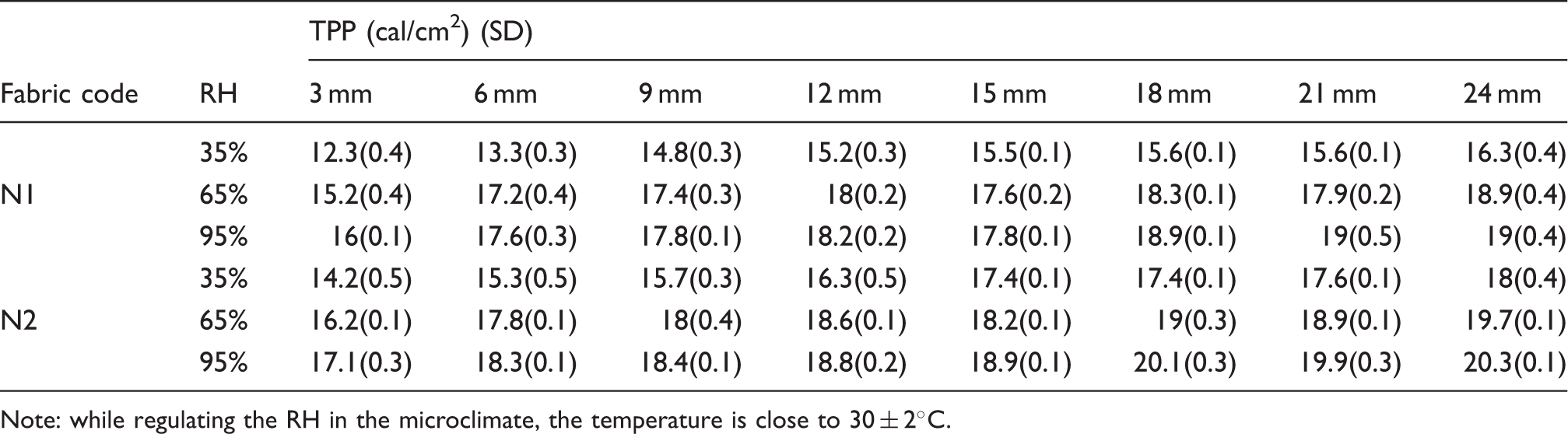
Note: while regulating the RH in the microclimate, the temperature is close to 30 ± 2°C.
The effect of air gap size on TPP under conditions of various RHs in a microclimate is compared in Figure 3. While RH is 35%, the TPP of both testing specimens becomes higher with increase of the air gap size. Moreover, the TPP sharply increases with small air gap size and then the increment becomes a little lower; if the air gap further increases, an obvious increase of TPP is observed again. The critical air gap size of two specimens is around 12–15 mm. In general, the change trend of both specimens is similar, and the thermal protection of N2 is better than that of N1. As the RH reaches 65%, the TPP greatly increases with air gap height increasing from 3 mm to 12 mm; subsequently the TPP increases or decreases alternatively if the size continues to increase. The change trend in the two specimens is almost the same, which is different from that under 35% RH. The TPP is also higher for N2. When RH approaches 95%, a similar change trend with that under conditions of 65% RH is found.
TPP of the testing specimens with different air gaps. the TPP of (a) N1 and (b) N2 under different microclimates.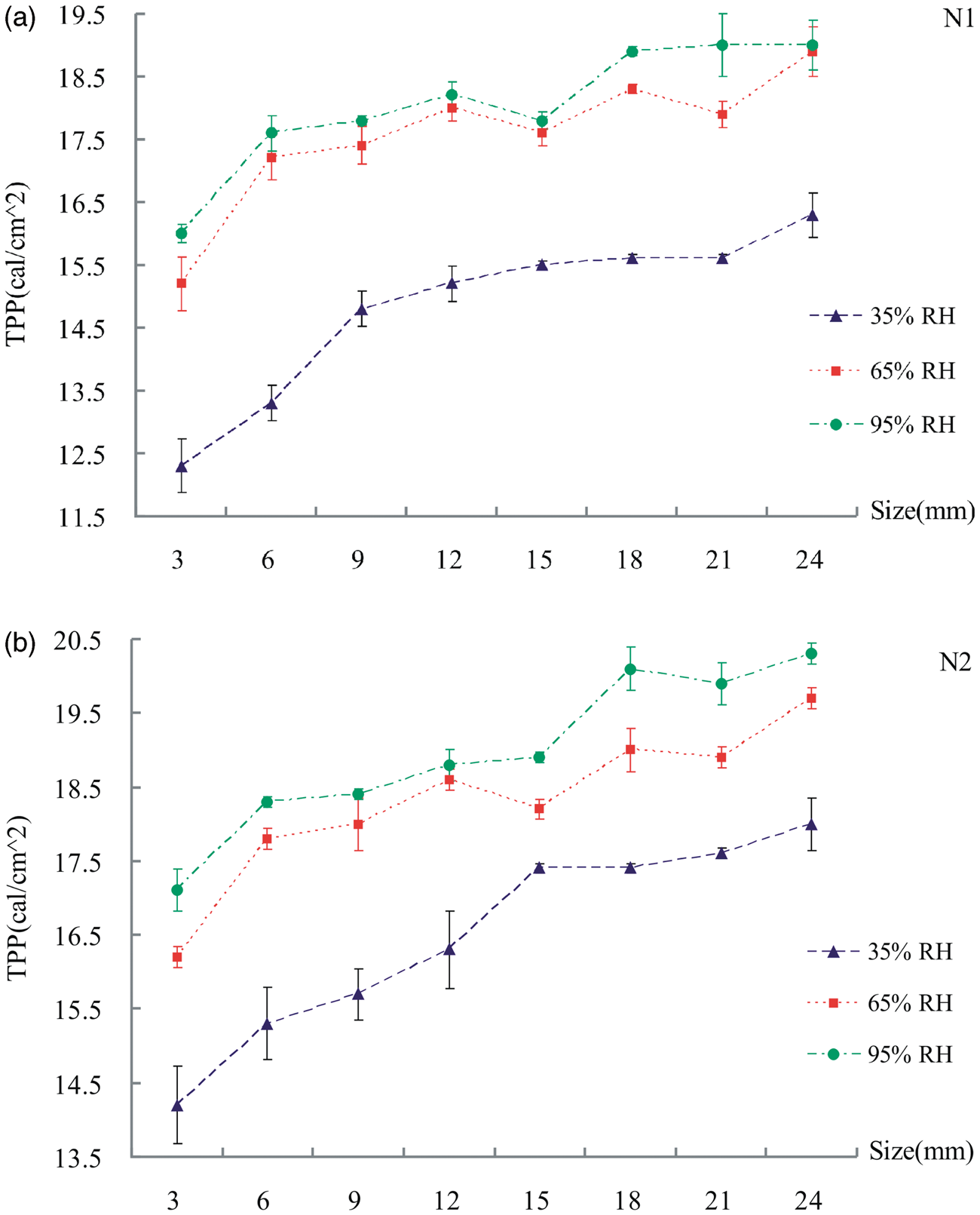
The above experimental results have indicated that the air gap height in bench-top tests plays an important role in thermal protection of flame-resistant fabrics under different microclimates. Referring to Figure 3, the TPP increased sharply with air gap size from 3 to 12 mm under conditions of 65% RH and 95% RH, and then no obvious continuous increase was observed as the air space became wider. However, the TPP under 35% RH in a microclimate increased substantially; then the increment became a little lower, and subsequently the TPP increased obviously, which was consistent with previous studies.2,26 It is clear that there is no significant increase observed after a size of 15 mm. The optimum air gap in the range of 12–15 mm is recommended. Consequently, it is concluded that air gap height in the range of 12–15 mm is a critical size under conditions of 35% RH, while an air gap of 12 mm is a key size for humid clothing microclimates. In a previous study, the decrease of radiation view factor with increase of air space between the fabric and test sensor was verified, and thus radiative heat transfer weakened. 17 It was reported in another previous study on a heat transfer model in dry fabrics with different air gaps that the energy transfer between the heated fabric and test sensor was mostly by thermal radiation.17,26 Consequently, the TPP of testing specimens kept increasing versus air gap size under microclimates of 35% RH. In addition, when the air gap exceeded approximately 8–9 mm, convective heat transfer appeared; 26 thereby heat transferred to the thermal sensor was enhanced slightly. The increment of heat transferred from the heated fabric to the thermal sensor depended on the conductive, convective, and radiative heat transfer. This was why a lower increment of thermal protection was found in Torvi et al.’s study 26 by using a single burner for the heat source when the air gap is ranged from 8 to 12 mm. However, in this study, a slight increment was found when the size was around 15 to 21 mm. This difference might be caused by the types of heat source employed. If the air gap kept increasing, radiative heat transfer declined immensely, while convective heat transfer decreased slightly, 26 thereby the energy transferred greatly decreased and the TPP improved substantially. Comparing the results under conditions of 35% RH, the change trend under humidified conditions (65% and 95% RH) were complicated. While the air gap increased from 3 mm to 12 mm, the TPP greatly increased; if the air gap size kept increasing, there was no obvious change trend observed. It was revealed that the RH had a great impact on heat transfer, and coupled with the effect of the air gap, showing a complicated influence.
Effects of relative humidity in microclimate on thermal protection
Temperature rise curves of specimen N2 with an air gap of 3 mm under conditions of different RHs are shown in Figure 4. It is clear that the temperature under different climate RHs increases with time. It is also obvious that the temperature increment at a certain time point with a microclimate of 35% RH is highest, and that with 95% RH is lowest. There is an obvious temperature difference found between 35% RH and the humidified environment (65% RH and 95% RH). Moreover, the temperature difference between them increases with time.
Temperature rise curves of N2 with an air gap of 3 mm under different RHs.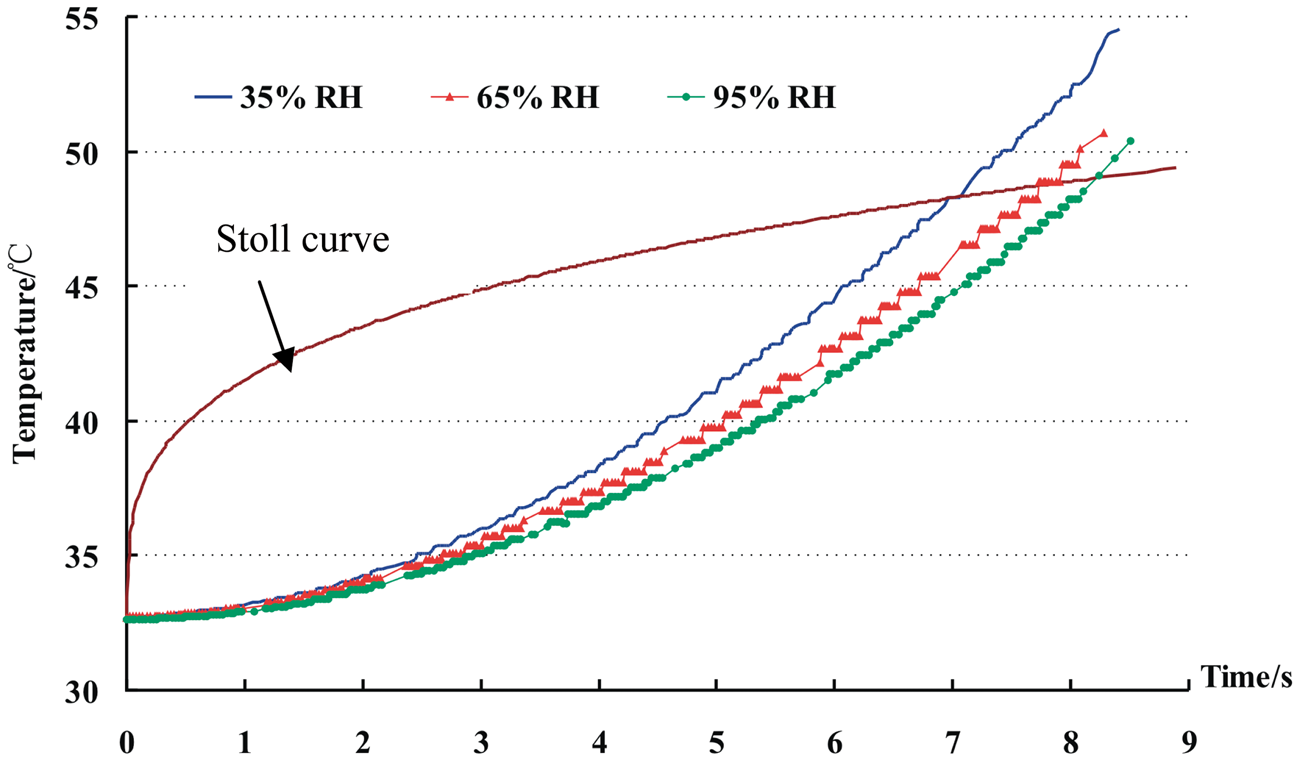
To understand the effect of RH in microclimates on TPP of flame-resistant fabrics, comparison of the TPP in all specimens under different RHs was also carried out, as shown in Figure 5. It is apparent that the TPP of all the tested specimens highly increases with increase of the RH. In addition, the discrepancy between 35% and 65% is much bigger than that between 65% and 95%. The statistical analysis using the T-test shows that the difference among these three RHs in a microclimate is greatly significant (p < 0.001).
Comparison of TPP for the testing specimens under different RHs.
In this study, it was revealed that the RH had great positive effect on the TPP of flame-resistant fabrics exposed to flash fires (refer to Figure 5). According to Figure 3, it was indicated that the positive effect of an air gap with small size on the TPP of fabrics was enhanced due to the vapor in the air; however, the positive effect of an air gap with large size on protective performance varied. The effect of air gap interacted with the influence of RH in a microclimate. Under actual wear conditions, the big size and ease of clothing will reduce the motion flexibility. 27 While a firefighter sweats profusely, the RH in the microclimate between the protective clothing and the human body is very high, and the positive effect of the air gap may be changed. The air gap effect under high RH is more complicated than that under dry conditions. For designers, the size of protective clothing should consider the interacting effect of the air gap and RH. Although there was no decrease of TPP found under conditions of high RH, compared with 35% RH, it was notable that little vapor condensation on the sensor was observed after exposure. This may cause scalding burns during actual firefighting and rescue operations.
Convection/conduction and radiation are the two main heat transfer approaches between heated fabrics and the calorimeter sensor. The water aerosol distributed in the high humid microclimate increases the effective thermal conductivity of air flow. The equation for air in a horizontal enclosure has been proposed by Hollands et al.
28


For the same air gap size and initial temperature difference, the Ra is similar, and thus the convection heat transfer coefficient h increased. 16 However, the existence of water droplets greatly absorbed and scattered the short wave radiation, and thus radiative heat transfer declined. 29 In Sawcyn and Torvi’s study, it was indicated that heat transfer between the heated fabric and the thermal sensor was mostly by thermal radiation. 17 In addition, water droplets will evaporate due to high temperature and absorb heat flux, thereby reducing the energy transferred from the heated fabric to the thermal sensor. Under different RHs, the thermal conductivity of the fabric will also be slightly changed in such a short time. The thermal protection depends on the balance of positive effect and counteracting effect. Modeling work of heat and mass transfer in the future may provide a basic understanding of the mechanism. Consequently, the RH in a microclimate had a positive effect on the TPP of flame-resistant fabrics exposed to flash fires, as shown in Figure 5.
Conclusions and future work
In this study, a new improved TPP tester was developed to investigate the effect of RH coupled with an air gap in a microclimate on TPP of flame-resistant fabrics exposed to flash fires. The testing results verified the validity of this device to differentiate the effect of air gap and RH on the protection of fabrics. It was indicated that air gaps in bench-top tests played an important role in thermal protection of flame-resistant fabrics under different microclimates. The positive effect of air gap with small size on TPP of fabrics was enhanced due to the increase of the RH; however, the favorable effect of air gap with large size was interfered with by the RH. The air gap effect under high RH is more complicated than that under dry conditions. It could be inferred that an air gap height of 12–15 mm was a critical size under conditions of 35% RH, while an air gap of 12 mm was a key size for a clothing microclimate of 65% or 95% RH.
The RH in a microclimate also had a positive effect on the TPP of flame-resistant fabrics exposed to flash fires. In addition, the difference between conditions of 35% RH and that of 65% RH was much bigger than that between conditions of 65% RH and a microclimate of 95% RH. The results indicated that the effect of RH in a microclimate on heat transfer from a heated fabric to the thermal sensor interacted with the air gap. For designers, the size of protective clothing should consider the interacting effect of air gap and RH.
The effect of the microclimate on heat transfer through flame-resistant fabrics used in firefighter protective clothing depends on the fabric combinations, design features, methods of moisture preconditioning, the form of heat source and intensity, exposure time, and human body motion etc. In this study, only some factors were investigated, and other factors will be considered in future work.
Footnotes
Funding
This work was financially supported by the Program for New Century Excellent Talents in the University of Ministry of Education of China (NO.NCET-10-0321), Donghua University PhD Thesis Innovation Funding (NO.11D10711), The Fundamental Research Funds for the Central Universities (NO.11D10715), and Doctoral Program of Higher Education of China (NO.20110075110005/20110075120009).