



Abstract
Incontinence control through the use of well designed nonwoven materials is a rapidly growing area of interest. Analysis of the streaming zeta potential, absorbance capacity and moisture content measurements of absorbent layers in incontinence materials is a useful approach to evaluation and design. Using this approach, electrokinetic properties can be used to demonstrate the role of fiber surface polarity, swelling, and water uptake in the mechanism of incontinence control. By applying electrochemical double layer analysis to functional layers of absorbent incontinence products, the polar charge differences between cover stock, the acquisition/distribution layer (ADL) and the absorbent core were characterized. The aqueous fiber polarity is characterized from pH titration plots that give zeta plateau (ζplateau) values for each absorbent layer. The ζplateau value assigns the relative hydrophilic/hydrophobic (amphiphilic) character of the cover stock and ADL. Delta zeta (Δζ) and moisture content are applied to determine the functional value of fluid acquisition due to swelling and moisture absorption. Structure/function mechanisms are proposed for urine uptake relative to volume, pH and fluid transport in the cover stock and ADL of heavy, moderate, light incontinence pads and adult incontinence underwear. Using an electrokinetic analysis as a model to describe the mechanism of urine transport in absorbent incontinence materials makes possible the distinction of absorbent material design differences based on fiber charge, swelling, and absorption capacity. The electrokinetic model approach to absorbent incontinence material analysis and design is discussed for its potential applications.
Keywords
Introduction
Urinary incontinence and absorbent materials
Urinary incontinence is common and has an adverse effect on quality of life. It has been previously noted that one-third to one-half of younger and middle age women (40–60 years) and one-half to three-quarters of women >60 years require protection with absorbent incontinence products. 1 However, users of absorbent urinary incontinence products are diverse. An aging population will realize an increased need as do immobilized patients, and although female incontinence represents 80% of the market the male incontinence market is growing with 31% of men becoming incontinent by age 85. 2
Urinary incontinence products have continually evolved over the last sixty years. 3 Absorbent products may be divided into a variety of structural designs for baby care,4,5 feminine hygiene, 6 and adult incontinence management. 7 The size and shape of disposable absorbent hygiene products vary including body worn all-in-one diapers, underwear, pads for light to heavy incontinence episodes,8,9 and bed pads for immobilized patients. 10 – 13 Common to these products is a basic design motif that is consistent throughout most absorbent incontinence materials: cover stock, acquisition layer, distribution layer, absorbent core, and back sheet. 14 The composition of the absorbent core, which typically consists of fluff pulp, cellulose wadding, and/or a super absorbent polymer is the key determinant in product absorption capacity. However, efficient moisture management depends on the design, composition and structure of the layers around the absorbent core. Thus, the cover stock, acquisition layer, and back sheet optimize the efficiency of the product's performance to keep the skin dry and avoid leakage. 15
Comparative electrokinetic structure/function relationship of cover stock and acquisition/distribution layer
Role of fiber surface polarity in incontinence control
The cover stock or top-sheet and its corresponding acquisition/distribution layers (ADL) play a key role in providing comfort, dryness, and moisture distribution, and their design depends on the level of incontinence treated. A bio-material's surface polarity and interfacial free energy 16 contribute to the movement of fluid away from the skin and also play a role in the biocompatibility of the absorbent material. 17
In recent years, the patent and research and development literature for incontinence materials has focused on enhancing the sophistication and cost efficiency of absorbent materials that promote urine uptake, transport and retention in the design of absorbent materials. Part of the design process involves evaluating the amphiphilic character or hydrophilic versus hydrophobic balance on the surface of the material's fibers as reflected by the degree of fiber surface polarity. For example, the hydrophobic/hydrophilic character of the cover stock and acquisition layer and hydrophilic distribution layer is one aspect of design. This design feature works with material porosity and structural and composition design approaches to promote urine transport, absorption capacity and retention to the absorbent core.
Methods used in evaluating hydrophobic/hydrophilic character in the design of incontinence materials have relied principally on water contact angle determinations. The patent literature for nonwoven absorbent materials often cites these values, along with rewet determinations, to develop models and equations that will improve the likelihood of more efficient incontinence products. When analyzed comparatively among fibers, the zeta plateau (ζplateau) can also be viewed as an indication of the relative hydrophobicity and hydrophilicity or fiber surface polarity of the sample as well. For example, the rank order of increasing hydrophobicity for four textile fibers has previously been assigned, based on ζplateau, as cotton > polyamide > polyester > polyacrylonitrile,18,19 and it has been previously shown by several studies that the surface of various fibers for textile application may be characterized by their ζplateau and isoelectric point (IEP), in combination with their water uptake ability and swelling capacity. 20 – 22 The per cent moisture versus the delta zeta potential (Δζ) plotted for the absorbent layers, reflects the degree of swelling and the amount of moisture the material is prone to absorb.
Although electrokinetic analysis has been used to study a variety of textile materials, few literature reports have addressed the use of electrokinetic analysis to study the contribution of absorbent layers present in incontinence materials to their mechanism of action. This paper examines the electrokinetic properties of the cover stock and ADL in a complete series of commercial incontinence products including adult incontinence underwear, and heavy, moderate and light incontinence liners. It demonstrates how this approach can be used to understand the contribution of surface polarity, swelling and moisture content to the dynamics of fluid transport.
Materials and methods
Materials
Incontinence products were randomly obtained from a retail commercial source. The principle impetus for analyzing the incontinence materials was our interest in the development of standards to screen cotton-based materials using electrokinetic analysis. Thus the products analyzed in this study remain anonymous in the interest of objectivity, and are designated as heavy (HA, HB), moderate (MA–C), and light (LA, LB) incontinence pads, adult incontinence underwear (UA and UB) and a bed pad (BP). At least two brand names were selected for each wearable incontinence product and one BP. Each material was physically separated into its component layers, and each separated layer was subject to the Dupont Dye test 23 to assess the predominant category of chemical composition.
Streaming zeta potential
Streaming zeta potential experiments were carried out with the Electro Kinetic Analyzer (Anton Paar, Ashland Va.) using the cylindrical cell developed for the measurement of fibrous samples. For each measurement, a fiber plug was placed between the Ag/AgCl hollow cylindrical electrodes of the cylindrical cell. The pH dependence of the zeta potential was investigated with the background electrolyte of 1 mM KCl solution. The evaluation of zeta potential is based on the Smoluchowski equation:24,25

Time-dependent/swell behavior
The swell behavior of the incontinence products was measured using the Anton Paar analyzer with the cylindrical cell template. A 0.65 g sample was loaded into the cell, and quickly rinsed with electrolyte solution. The flow rate was adjusted into the range of 60–100 mL/min by compression of the sample to remove trapped air. The pH of the sample was about 5.5 and was adjusted to 9.0 by adding 0.1 N NaOH solution, and the measurement was started.
Moisture content
The moisture content of the incontinence products was measured using a modified ASTM D629-99 and the AATCC 20A-2000. The sample was conditioned overnight in a humidity chamber with the hygrometer reading at 70% and a room temperature of 23°C. The moisture measurements were taken with an Infrared Moisture Balance (Kett FD 240, manufactured by Kett Electric Laboratory in Tokyo, Japan). The balance was set for automatic wet-based moisture with a drying temperature of 110°C. Approximately, a 1 g sample was used for each measurement on the Kett FD 240.
Moisture plots
The per cent moisture was plotted against the Δζ, using the following equation to obtain the Δζ. Δζ = (ζο − ζ∞)/ζο, which is a measurement of the materials swell behavior, where ζο is the potential immediately after starting the run and ζ∞ is the potential value after achieving equilibrium.
Measuring the absorption capacity of urinary incontinence products using ISO protocol 11948-1:
Urine-Absorbing Aids Part 1, Whole-Product Testing
A standard protocol (International Standard 11948-1: Urine-Absorbing Aids Part 1, Whole-Product Testing) designed to measure the absorption capacity of urine-absorbing aids for heavily incontinent persons, was adapted to light and moderate fluid absorbency-level aids.26,27 The absorbency-level categories mentioned here (heavy, moderate and light) refer to the use of the products for either heavy, moderate or light urinary incontinence. Four sample product groups were assembled by purchasing brand name absorbent products from local vendors in the United States.
The following procedure was performed for five samples of each product. Initially, the dry weight of each sample was recorded to the nearest 0.1 g. The sample was then submerged for 30 min in 8–10 L of 0.9% NaCl on top of a drainage screen (length = 406 mm, width = 330 mm, and wired square grids with 1.27 cm between adjacent wire centers) and inside a reservoir having internal dimensions of 508 mm× 381 mm× 133 mm. The sample was positioned with its adhesive layer facing downwards. Air bubbles that were seen to accumulate were removed by gently massaging the pad/diaper. The drainage screen was raised above the reservoir and excess fluid was drained back into the reservoir from the urine-absorbing aid for 5 minutes. The balance used was then tared to the weight of the empty drainage tray and the sample was placed on the tray avoiding the loss of liquid during transfer. The wet weight of the sample was recorded to the nearest 1 g. Absorption capacities were obtained by subtracting the dry weight from the wet weight of the sample, and were recorded to the nearest 1 g. Lastly, the mean absorption capacities (to the nearest 1 g) and the standard deviations of these means (to the nearest 0.1 g) were recorded. The mean dry weights (nearest 0.1 g) and their standard deviations (0.01 g) were also recorded.
OriginPro8 science analysis software was used for statistical analysis. Two sample tests of variance to determine homogeneity of variances were performed. Equability of the variances results were followed by one-way ANOVA tests to make a general comparison of more than two sample groups, followed by independent samples t-test for comparison of two groups.
Results and discussion
Composition of the incontinence products
Composition of the layers employed in the study as identified by a Dupont Dye test 23 for fiber identification

Products are designated by description rather than brand name: UA = underwear A; UB = underwear B; HA = heavy incontinence pad A; HB = heavy incontinence pad B.; MA = moderate incontinence pad A; MB = moderate incontinence pad B; MC = moderate incontinence pad C; LA = light incontinence pad A; LB = light incontinence pad B; and BP = bed pad.
Zeta potential titrations
The zeta potential titrations for all of the cover stock and acquisition layers of the incontinence materials are given in Figure 1. The absorbent core could not be tested due to super absorbent polymers (SAPs) swelling which blocks the flow of the electrokinetic analyzer. The ζplateau, IEP, and per cent moisture content versus delta zeta, Δζ, are listed in Table 1. An average difference of −30 mV was observed between the ζplateau of the most hydrophobic and most hydrophilic layers preceding the absorbent core. This is an indication of amphiphilic-like character in the layers of incontinence materials. Understanding the role of the amphiphilic character of the cover stock and ADL, as relates to wicking, swelling, and moisture distribution to the absorbent core, is important in characterizing fluid transport from the cover stock to the absorbent core.
a–d. Streaming zeta potential titration plots as outlined in the Materials and methods section. a) Streaming zeta potential titrations for two heavy incontinence liners (HA and HB). Titrations were performed on the cover stock, acquisition and distribution layers. b) Streaming zeta potential titrations for two adult incontinence underwear (UA and UB). Titrations were performed on the cover stock, acquisition, distribution, and back sheet layers. c) Streaming zeta potential titrations for two adult incontinence liners (MA and MB). Titrations were performed on the cover stock ADL and separate acquisition and distribution layers. d) Streaming zeta potential titrations for two light incontinence liners (LA and LB). Titrations were performed on the cover stock, separate acquisition and distribution layers and backsheet.
Cover stocks and acquisition/distribution layer
Cover stock
A list of ζplateau, isoelectric point data, and Δζ %MC for heavy, moderate, light incontinence liners, and adult incontinence underwear cover stock, ADL, and back sheet

ζplateau = the charge at the plateau of the zeta potential pH titration.
IEP = the isoelectric point as determined by the pH at which the titration curve reaches zero charge at infinity.
Δζ, %MC are the change in zeta potential as a function of swelling based on the difference in zeta potential at time zero and infinity divided by the initial charge at time zero (Δζ. = (ζο – ζ∞)/ζο), and the per cent moisture content as described in the Materials and methods section.
CV, cover stock; Acq, acquisition layer; Dist, distribution layer; BS, backsheet.
Products are designated by description rather than brand name: UA = underwear A; UB = underwear B; HA = heavy incontinence pad A; HB = heavy incontinence pad B; MA = moderate incontinence pad A; MB = moderate incontinence pad B; MC = moderate incontinence pad C; LA = light incontinence pad A; LB = light incontinence pad B; and BP = bed pad.
Acquisition/distribution layer
Means and standard deviations of the absorption capacities of all pad/underwear samples determined from the Rothwell Assay outlined in the Materials and methods section

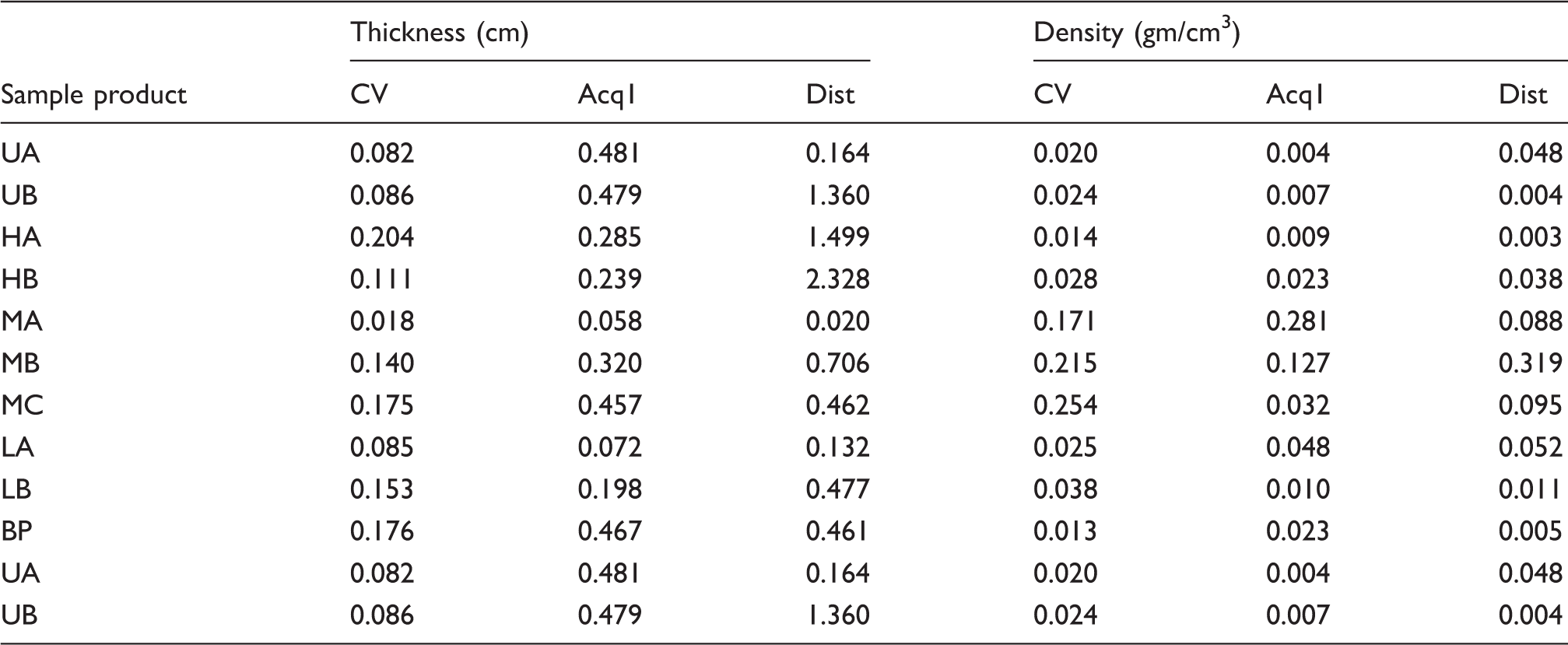
Table of thickness and density determinations for cover stock, acquisition and distribution layers
It is evident that there is a relationship for functional values of fluid acquisition due to material swelling based on per cent moisture versus Δζ for each group of incontinence product. The per cent moisture versus the Δζ potential for all layers reflects the degree of swelling and the amount of moisture the material is prone to absorb. Comparison of the swelling capacity of different groups of product lines shows a 2–4 fold difference in swelling: for example, the distribution layer (in contact with the absorbent core) of the adult incontinence underwear had 4-fold more swelling than the distribution layer in the light incontinence liners. The moisture per cent and Δζ values of the light liners exhibit a pattern where cover stock-contact acquisition layers are similar but the MC% versus Δζ of the cover stock and distribution layer of each product appear as ‘mirror images’ in the swelling profile.
Absorbent core
The absorbent core could not be measured electrokinetically due to blocking by the swollen SAPs of fluid flow in the instrument analyzer cell. However, the absorption capacity (Table 3) of the products using ISO 11948-1:1996 reveal the range for maximum absorption capacity of incontinence product classification in the entire urine-absorbing material. Although it has been noted that this method overestimates the amount of urine these products hold in actual use, this method is useful in comparing products whose absorbent cores are uniform in composition and absorbing properties. Thus, products are comparable within the incontinence grouping. Viewing all products this way shows that there was only a 2% difference between most incontinence product groups with the exception of the light incontinence products which showed about a 6% difference in absorption capacity between LA and LB.
Heavy incontinence liners
Severe incontinence and composition
Heavy or severe incontinence has been defined in the literature as urine leakage of one-quarter cup or one-half cup or more at least once a week,1,30 and others have defined it as 75 g or more in 24 hours. 31 Urine volume discharge within this range requires rapid uptake and storage by the liner to avoid leakage.
The zeta potential pH titrations of the cover stock, acquisition, and distribution layers for the heavy incontinence liners are shown in Figure 1a. Since the pH of urine at this volume will have a significant effect on charge, it is worthwhile to consider the effect of pH on charge within the normal range which is pH 4.4–8. 32 The pH titration range provides a view of the change in the material's charge and its relative hydrophilic/hydrophobic character throughout the wide acidic to alkaline range found in human urine. The charge on the HA cover stock within this pH range varied from −35 to −60 mV and the HB cover stock varied from −35 to −45 mV at pH 4–6 and remained at a plateau of −45 mV up to pH 8.
The ADL of HA and HB varied in composition, density (Table 1 and 4) and fiber surface polarity. The HA acquisition layer consisted of low density polypropylene and the ADL was a polyester/cellulose blend. The acquisition layers of both products were the thickest. Both distribution layers in contact with the absorbent core had similar hydrophilic character (−20 and −10 mV), which reflects rapid water uptake. The cover stock of HB is twice as dense as that of HA. The singular ADL of HB is a very thick hydrophilic material with a density that is 10 fold greater than the HA product distribution layer.
Fiber surface polarity of heavy incontinence liners
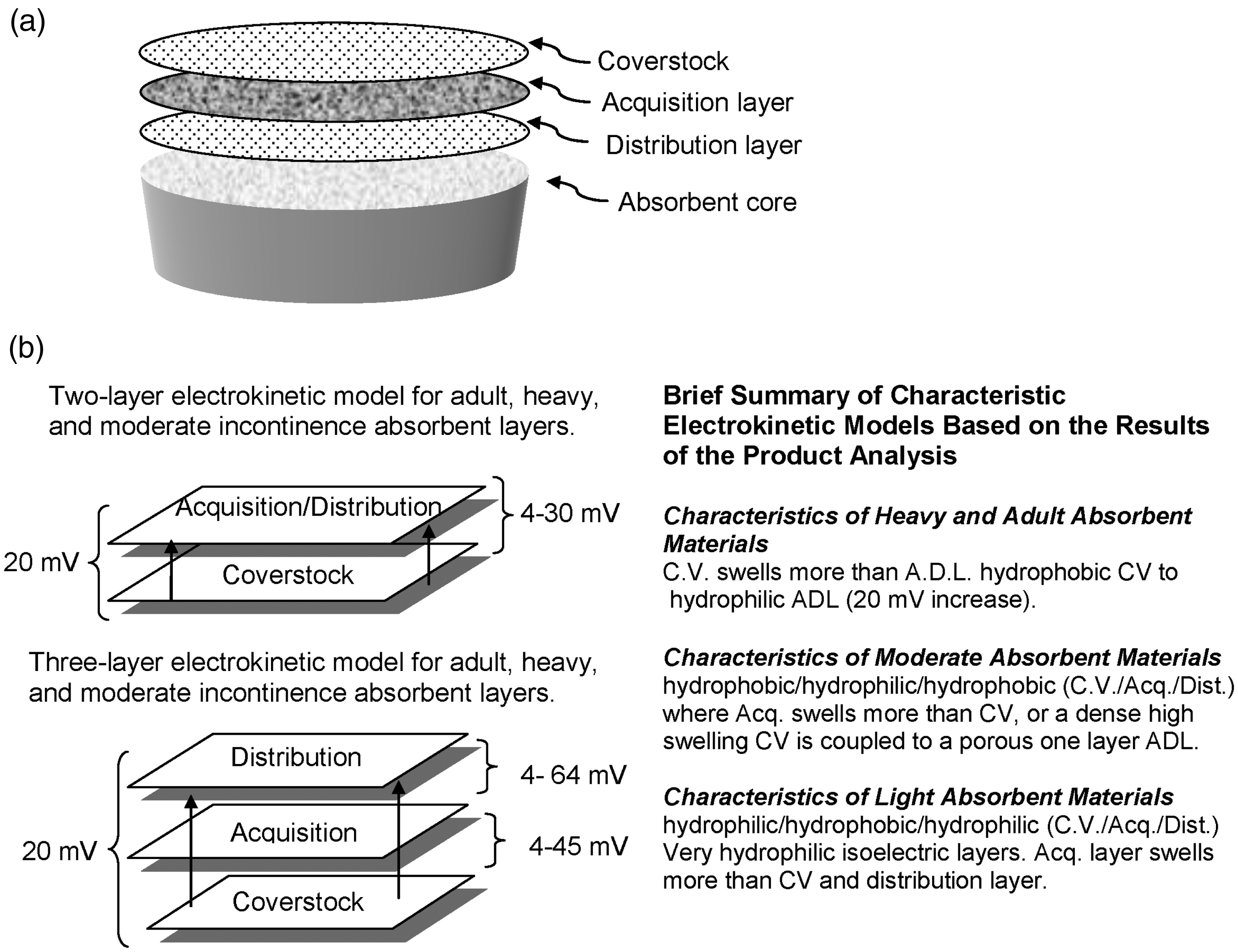
In each product, porosity combines with surface polarity of the cover stock and ADL to facilitate urine transport to the absorbent core. The design of the HB and HA cover stock/ADL is shown in Figure 3. For example, the surface polarity of the singular ADL of HB was considerably greater (−15 to −20 mV from pH 4–8) than that of the HA acquisition layer (−60 mV). The cover stock of HB is twice as dense as HA. The dense ADL of HA wicks urine from the cover stock and distributes it in the absorbent core. This design facilitates urine transport through a sharp polar gradient from cover stock to ADL. In HB, an increase of 30 mV between cover stock and ADL creates wicking from a hydrophobic cover stock to a hydrophilic ADL. Thus in the heavy incontinence product HB, the mechanism of urine transport and distribution to the absorbent core is facilitated by a sharp increase in polarity between cover stock and singular ADL.
The HA acquisition layer (−45 to −65 mV, pH 4–8) has a surface polarity similar to its contact cover stock. HA has a separate distribution layer that is similar in polarity to the HB ADL. The mechanism of urine transport in HA is facilitated by the increased porosity and hydrophobic character of the HA acquisition. From cover stock and acquisition layer to the distribution layer the polarity gradient increases steeply (+50 mV) enabling fluid movement into the HA absorbent core. The corresponding distribution layer of HA is also more porous than its acquisition layer and has a very hydrophilic character (ζplateau = −10 mV). Thus, in the heavy incontinence product HA, which has a thicker, porous cover stock, urine transport and distribution to the absorbent core is promoted by fluid wicking from a hydrophobic cover stock and acquisition layer to a hydrophilic distribution layer, and porous fluid channeling from the cover stock to ADL.
Fiber swelling of heavy incontinence liners
The relationship of fluid uptake to swelling of the cover stock and ADL is shown in Figure 2a where the change in zeta potential, with time, and the water uptake capability (per cent moisture content) are plotted for the cover stock, acquisition, and distribution layers. Noteworthy is the comparative relationship of swelling of the materials in the heavy incontinence products HA and HB. For example, both cover stocks gave a similar profile of water uptake capability (%MC). The cover stocks of both products swell more rapidly than their respective ADL as judged by the difference in their delta zeta potential values. In HA, the polypropylene cover stock swells more than the corresponding acquisition layer yet their water uptake capability is comparable. This design is consistent with facilitating rapid fluid uptake from the skin and preventing rewetting.
a) Basic organization of the functional layers of an absorbent incontinence material. b) Outline of the highlights of the polar surface gradient between layers with a summary of the electrokinetic analysis results important to design features of fluid transport within the layer. CV, cover stock; Acq, acquisition layer; Dist, distribution layer; ADL, acquisition/distribution layer.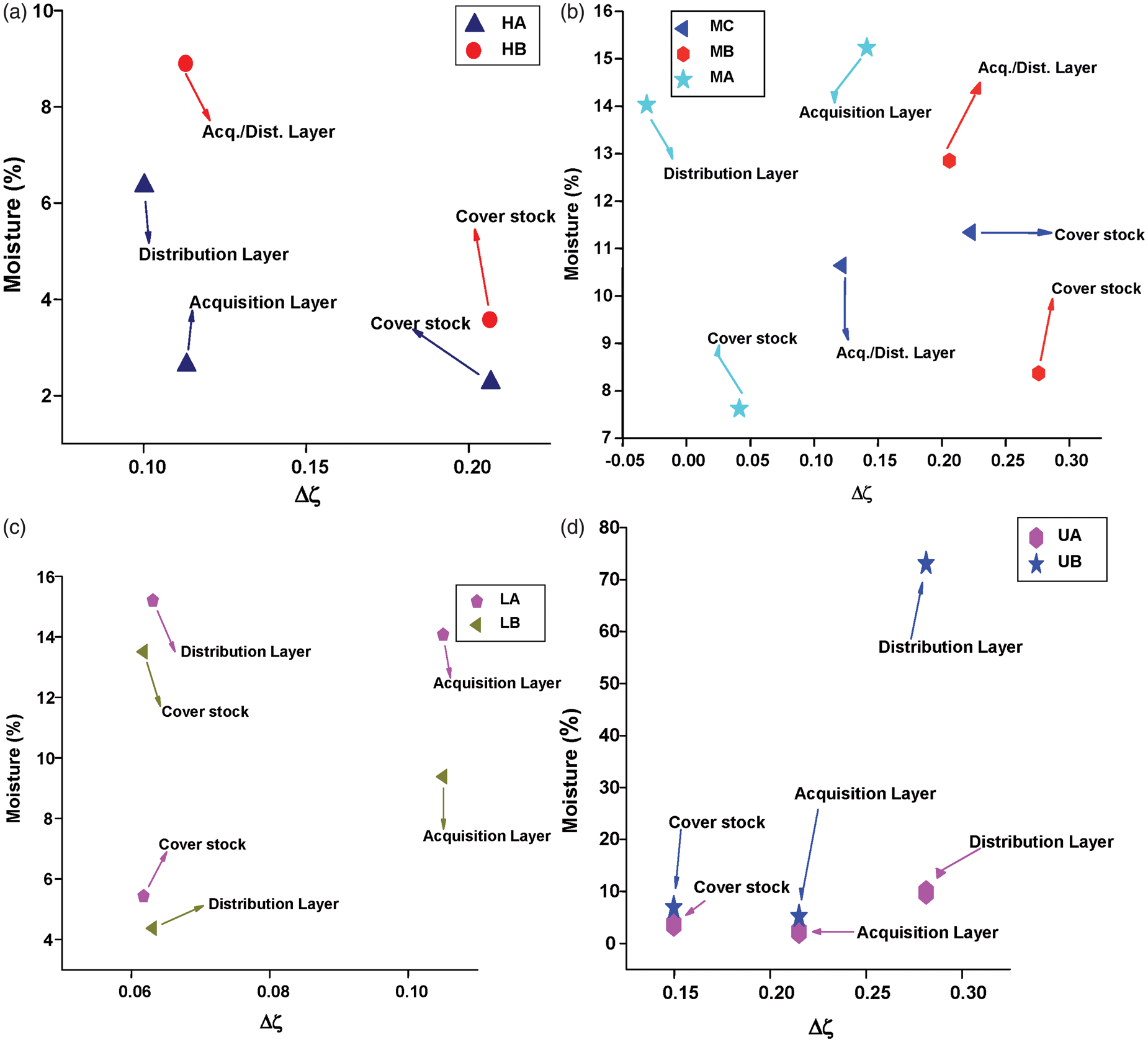
Moderate incontinence liners
Moderate incontinence and composition
Moderate incontinence as defined based on a one hour pad test ranges from 21 to 74 g in a 24 hour period. Based on the Sandvik Severity Index, 30 which is a combined measure of frequency and volume widely referenced in the literature, it is distinguished from severe incontinence by a difference of 17 g per 24 hours. Other incontinence studies have characterized moderate as 2–3 tablespoons to one-quarter cup of urine per episode with seven or less episodes per week.1,32
Three moderate incontinence cover stocks and ADLs were assessed in the zeta potential titrations shown in Figure 1b. Three of the top layers of the moderate incontinence products vary in charge over the pH range representative of urine. The cover stocks ζplateau values range from −9 mV to −20 mV and −32 mV within the urine pH range of 4.4 to 8. Many of the layers were relatively iso-electric (the zeta potential did not vary during the pH titration) within the pH range of urine.
The cover stocks and ADL composition (Table 1 and 4) were spun bonded polypropylene and cellulosic, respectively. MB and MC possessed a cover stock in contact with a one-layer ADL. The MC ADL was an extruded, aperture film bonded to cellulose. The cover stock, and ADL density varied among the products.
Fiber surface polarity of moderate incontinence liners
The moderate incontinence pads contained less hydrophobic character when compared to the heavy incontinence pads. This is consistent with their more cellulosic character. For example, as shown in Figure 1b the ζplateau of the most hydrophobic layer was −32 mV, the other layers were less than −24 mV and three were less than −10 mV. In comparison, the heavy incontinence products discussed above contained more pronounced hydrophobic cover stocks and one very hydrophobic acquisition layer. There are differences in the polarity of the layers of the moderate incontinence materials. The amphiphilic design of the cover stock/acquisition/distribution for MB and MC consists of a hydrophobic cover stock in contact with a very hydrophilic one-layer ADL.
The design of MA is sandwich-like (hydrophilic/hydrophobic/hydrophilic polarity), as shown in Figure 3; for cover stock/ADLs i.e. cover stock and distribution layers have almost identical electrokinetic profiles and are very hydrophilic (−4 mV) whereas the acquisition layer in between the two is more hydrophobic (−26 mV). Thus urine transport from cover stock to absorbent core in MA is mediated through a charge gradient and relatively porous layers that promote rapid wicking. Urine transport in MB and MC is facilitated by a hydrophilic, less porous one-layer acquisition layer with an inter-layer charge increase between the cover stocks and the ADL of approximately 20 mV, pH 6–8.
Fiber swelling of moderate incontinence liners
The relationship of fluid uptake to swelling of the cover stock and ADL is shown in Figure 2b where the change in zeta potential with time and the water uptake capability (per cent moisture content) are plotted for the cover stock, acquisition, and distribution layers. In MA, the middle acquisition layer swells more than the cover stock and distribution layer, and the water uptake capability of the acquisition and distribution layers is greater than the cover stock. This suggests that the very dense acquisition layer of MA despite its more hydrophobic charge takes up water twice as fast as the cover stock. This design is consistent with facilitating rapid fluid uptake from the skin and preventing rewetting.
The swelling properties of MB and MC differ. The cover stock of MC swells more than the ADL. The water uptake capability and porosity were similar with both layers in MC. On the other hand, the MB cover stock and ADL had similar swelling. The more porous ADL of MB has a higher water uptake capability which facilitates urine flow from the cover stock, and swells more than the others evaluated in this study. Thus, the design of MB is a denser high swelling cover stock coupled with a very porous ADL having high water uptake capability.
Light incontinence liners
Light incontinence and composition
Light incontinence as defined based on a one hour pad test ranges from 1.3 to 20 g in a 24 hour period. Based on the Sandvik Severity Index, 30 which is a combined measure of frequency and volume widely referenced in the literature. Light incontinence is distinguished from moderate incontinence by a difference of 9 g per 24 hours. Other incontinence studies have characterized light incontinence as 2–3 tablespoons per episode with less than seven episodes per week.
The cover stock and ADL of two light incontinence products were assessed in the zeta potential pH titrations shown in Figure 1c. The pH titrations revealed that most of the layers, including the cover stock and ADL, were very hydrophilic and completely isoelectric throughout the pH titration, with the exception of the rayon-aperture acquisition layer of LA.
The composition of the light liners given in Tables 1 and 4 was polypropylene cover stocks, and rayon, cellulose, and polyester ADLs. As would be expected all the layers were very thin and of a low density. LA contained a spun bonded cover stock, in contact with an aperture, rayon acquisition layer, and a spun bonded polyester/cellulose distribution layer. Whereas, LB contained a spun bonded cover stock and cellulosic ADL.
Fiber surface polarity of light incontinence liners
The hydrophilic character of the light liners with their very porous low density composition is a design necessitated by the need for rapid wicking of relatively small volumes of fluid as compared with moderate and heavy incontinence liners. The design of fiber surface polarity as measured electrokinetically in LA approximates (Figure 1c) the ‘sandwich’ design previously discussed for the moderate liner MA with hydrophilic/hydrophobic/hydrophilic sandwich-like cover stock/ADLs, as shown in Figure 3. The cover stock and distribution layers are very similar in their titration profiles suggesting that although they are made of different natural and synthetic polymers they have very similar fiber surface properties. The acquisition layer of LA is very hydrophobic, and this property combined with its aperture structure accelerates the wicking from the cover stock to the distribution layer.
LB consists of a very hydrophilic isoelectric cover stock and ADL to absorb and retain moisture. Thus, using the amphiphilic model as a descriptor, wicking of moisture in LB is enabled by the 20 mV increase in polarity between the cover stock and ADL as a fluid polar gradient to uniformly facilitate urine transport within the pH range from 4.4–8.
Fiber swelling of light incontinence liners
The overall absorption capacity (Table 3) as measured by the Rothwell assay was 6% higher for LA. A pattern of fluid uptake and swelling in both light incontinence products is evident based on the Δζ value versus the moisture content as shown in Figure 2c. The LA acquisition layer, which contains rayon is considerably more hydrophobic and the swelling is similar to the LB acquisition layer. The swelling of the cover stock and distribution layers of both products are nearly identical. Their swelling is less than the corresponding acquisition layers; whereas, the water uptake capability of the cover stocks and distribution layer is reversed. For example, the cover stock of LA has a lower water uptake capability (per cent moisture content of 5.4) compared with the distribution layer (15% moisture content). With regard to water uptake in LB the distribution layer's per cent moisture content is 4.4% and the cover stock is 13.5%. Thus, the swelling and water uptake properties of the cover stock and distribution layers are reversed in LA and LB. In both products the acquisition layers had higher swelling capacity than the cover stock and distribution layers. However, the more negatively charged aperture rayon acquisition layer of LA has a 5% higher moisture content than the low density cellulosic distribution layer of LB. The feature when combined with the hydrophobic acquisition layer may be responsible for the increased absorption capacity of LA.
The moisture per cent and Δζ values of the light liners exhibit a pattern where acquisition layers have similar swelling properties, but as discussed above the moisture uptake properties of the cover stock and distribution layer of each product is reversed. This ‘reversal’ of the profile of moisture uptake for cover stock and distribution layer is concomitant to Δζ being similar for both products and the per cent moisture being high for one and low for the other. This relationship of electrokinetic features demonstrates the collective water transport properties related to swelling, and moisture content of the cover stock and distribution layers with interchangeable properties of water uptake capability while swelling is the same for all cover stock and distribution layers.
Adult incontinence underwear
Adult incontinence underwear and composition
The cover stocks and ADLs of two adult incontinence underwear products labeled by the manufacturers for moderately-heavy incontinence were also evaluated in this study. Adult incontinence diapers are worn by a wide range of users including people with or without urinary or bowel control. The largest volume of adult incontinence diapers are consumed by medical facilities where typically minimal absorbent products are used due to routine changing practices.6,9 The products evaluated here fall between moderate and heavily absorbent, and fall into a similar category for heavy incontinence to those discussed above. Thus, they could be worn longer and more comfortably under these conditions. Since body worn products serve a wide range of uses, the design of their urine uptake differs from liners.
The composition (Table 1) of the cover stocks was polypropylene, and the ADL contained layers made of cellulose, rayon, and acrylic. The thickness and density (Table 4) of the cover stocks and acquisition layer were nearly identical. However, the distribution layer varied in thickness and density. Notably the thickness and porosity of the distribution layer for UB was similar to that of the heavy incontinence pad HA.
The pH titration of the products shown in Figure 1d reveals that one ADL system has a wide range of zeta plateaus which represent a polar fiber surface gradient for fluid transport from cover stock to ADL. The other product contains a set of hydrophilic layers with a very porous distribution layer. The pH titration of most of the layers plateaus between 6 and 8, and could be expected to be isoelectric within that pH range of urine.
Fiber surface polarity and swelling properties of adult incontinence underwear
The cover stock and acquisition layers (Figure 1d) of UA were relatively hydrophobic as indicated by the zeta plateaus for these layers that were −36 mV and −27 mV respectively, and the corresponding distribution layer was −6 mV. Thus, there is a charge increase of 30 mV and a corresponding increase in hydrophilicity between the cover stock and distribution layer as observed for many of the previous products. Consistent with this design, the mechanism for urine transport from the cover stock to the absorbent core is a polar increase in hydrophilicity within the fiber contact layers, and also an increase in porosity. On the other hand a modification of this design in UB, where the equivalent charge and high hydrophilicity of the cover stock and ADL suggests that the very high water uptake capability of the distribution layer (73% moisture content, Figure 2d), which is a low density rayon, is the driving force for urine transport to the absorbent core in UB.
The swelling properties of the UA and UB distribution layers are interesting to contrast. UA and UB have similar Δζ values as seen in Figure 2d. However, UB is a very thick porous layer composed of cellulose with 73% moisture content and the UA distribution layer is modified acrylic acid with 9% moisture content. Thus, the cover stock and cover stock-contact acquisition layer of both adult incontinence underwear products have very similar swelling properties, and have nearly identical Δζ and per cent moisture content values, but their distribution layers are differ in moisture content. The swelling of both sets of cover stock and acquisition layers in UA and UB were identical and the water uptake capability was very similar varying from 2.2% to 6.9% for moisture content. The swelling of the cover stock and ADL increased from the cover stock to the distribution layer. Although the swelling of the distribution layers was identical, the water uptake capability was nearly seven-fold greater for the distribution layer of UB, as discussed above.
Bed pad
Cotton and other cellulosic materials as medical textiles are at the interface between patient skin and medical treatment support surfaces in the form of bed sheets, patient clothing, under pads, and incontinence devices. As the population ages and the number of patients with pressure ulcers increases, there is now a critical need to fill the gap in effective pressure ulcer prevention textiles. 10 The bed pad analyzed in this study is characteristic of one used in the home or hospitals, it has a simple design and is often used for only one incontinence episode; the cover stock/ADL relationship of the bed pad was a simple hydrophobic/hydrophilic design with a very hydrophobic cover stock and hydrophilic ADL, accompanied by a high swelling hydrophobic back sheet. The back sheet was a film with adhering cellulosic fibers, and differed from the back sheet of the other incontinence materials. This design allows for rapid wicking under varying weights and patient pressure and distribution, and less potential for rewetting.
Conclusion
This paper demonstrates the usefulness of applying electrokinetic analysis to incontinence absorbent materials as an analytical descriptor of surface polarity. Electrokinetic analysis and absorbency have been employed to characterize the role of the hydrophobic/hydrophilic character of the material. As shown in Figure 3, surface polarity design motifs have been described using this approach, based on the charge difference between the cover stock and ADLs. Products evaluated here have been divided into design motifs between the cover stock and ADL; two-layer or three-layer, and their relevant amphiphilic properties. However it is important to note that materials often overlap and are sometimes virtually inseparable since the fibers of the layers are in contact or overlap especially with regard to the ADL. In addition since this approach has focused on electrokinetic analysis it is important to keep in mind that other material design properties which are conventionally examined including the material porosity and other physical characterizations have often been central to design of absorbent incontinence products. Future work will focus on the application of this approach to examining new types of materials for absorbent incontinence material design.
This paper has examined the electrokinetic properties of the cover stock and ADLs of absorbent incontinence materials with varying absorbance properties. It is clear that a pattern in fluid uptake and material swelling can be delineated using this approach. Moreover, since electrokinetic analysis can be completed routinely at a daily pace that is amenable to most labs, the potential to use this approach to screen new materials to incorporate into incontinence control design is made apparent by this study. The potential to use this approach in tandem with composition and porosity design will be the subject of future studies.
Since cotton, in addition to being environmentally friendly, has many other positive attributes that are of value including softness, comfort, non-irritating, hypo-allergenic and breathability, it is our future goal to further employ this type of approach toward mapping the usefulness of nonwoven cotton for incontinence control design into absorbent materials.
Footnotes
Funding
This research received no specific grant from any funding agency in the