



Abstract
The effect of thermal properties on the three-dimensional knitted spacer fabrics made from functional fibers (i.e. Outlast®, Coolmax®) with different fiber compositions was studied. The spacer fabrics were specifically designed for mattress ticking applications. Samples were manufactured with two fabric tightness and knit designs, and four Outlast® fiber compositions. Thermal conductivity, thermal resistance, thermal absorptivity, thermal diffusivity, and relative water vapor permeability were considered as thermal comfort properties. Alambeta and Permetest devices were used for the measurement of thermal properties. Fabric design was the leading criteria on the thermal resistance and water vapor permeability, while fiber compositions became more important on the thermal absorptivity. The contribution of Outlast® fiber on the thermoregulatory efficiency of spacer fabrics was analyzed using a differential scanning colorimeter. The thermoregulatory effect of Outlast® fiber was slightly observed in the 33% Outlast® fiber composition. Water vapor permeability of open-skin samples was higher than the closed-skin samples, which was due to the holed/meshed structure of the open-skin structure for the same fiber content and fabric construction. Statistical analysis was also performed and confirmed the contribution of each factor, including their interactions. In particular, the interaction became more significant than the main factors for thermal diffusion behavior of samples.
Keywords
The principle function of clothing is to enable the human to remain in a good physiological state, which is accepted as comfort. This state should cover thermal balance between internal body temperature and the environment, and maintaining the perspiration rate at a balance level. At the level of comfort, the skin temperature should be in the range of 33–35°C. Knitted fabrics are usually preferred next-to-skin wear due to their extensibility and soft touch, while such positioning leads fabric comfort to be more important than in woven or non-woven fabrics.
The early studies related to the thermal properties of textiles set up the theoretical background for the concept of thermal behavior fabric and its relation with the human body.1–6 Clothing comfort is composed of three main features: thermophysiological, sensorial, and physiological comfort. Thermal- and moisture-related properties of textiles deals with the thermophysiological comfort of fabrics. Dynamic surface wetness of fabrics was correlated with skin contact comfort in wear for a variety of fabric types in which mobility of thin films of condensed moisture is an important element of wearing comfort. 7 The mathematical model of the principal thermal properties in functional knit structures was devised by Geraldes et al. 8 Thermal comfort properties of functional polypropylene knitted fabric for active wear and socks were evaluated for efficiency of fiber structure to suck moisture from the skin.9,10 The effect of fabric knit on the thermal comfort properties was studied by Oglakcioglu and Marmarali. 11 Uçar and Yilmaz 12 focused on thermal properties of various rib knit structures. Ozdil et al. 13 reported the thermal properties of rib knit fabrics using various yarns of different yarn properties. Ramachandran et al. 14 studied thermal insulation, thermal conductivity, and thermal diffusion of single jersey, rib, and interlock knitted fabrics made from ring and compact spun yarns.
The thermal behavior of next-to-skin knitwear has been studied by several researchers.9,10,15 Armit 16 brought some specific aspects of bedding textiles and their influence on thermal comfort and sleep. The relation between the cool sensation of pillows and their thermal transport properties was investigated with special attention to the padding material. 17 However, no researcher paid attention to the thermal comfort properties of three-dimensional (3D) knitted spacer fabrics specifically designed for mattress fabrics. The present research focuses on the effects of different fabric manufacturing parameters on the thermal comfort properties of mattress fabrics made from 3D spacer fabrics, rather than made by the usual production techniques and applications of spacer fabrics, as reviewed by Bruer et al. 18 Statistical analysis was also performed for revealing the contribution of interactions in addition to the main effects. Special attention was given to the contribution of functional fibers, such as Outlast® and Coolmax®, on the thermal behaviors.
Materials and methods
Materials
Properties of yarns used in fabric production
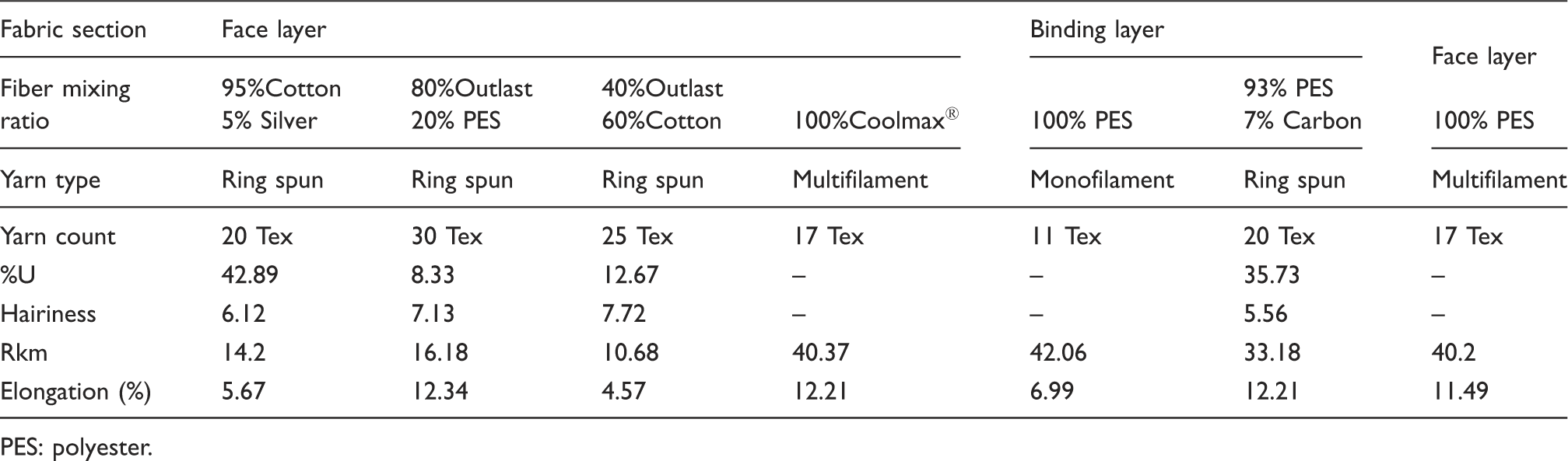
PES: polyester.
Samples were manufactured with two fabric tightness and knit designs, and four Outlast® fiber compositions, where fabrics coded with letters ‘A’ and ‘B’ indicated loosely and densely knitted closed-skin structures, respectively, and letter ‘C’ indicated loosely knitted open-skin structure (Figure 1). The samples coded with ‘A’ and ‘C’ were knitted with the same machine settings, whereas ‘B’ coded samples used different machine settings in order to knit them densely.
Digital images of spacer fabrics at the magnification of 8x (a) closed-skin structure (b) open-skin structure.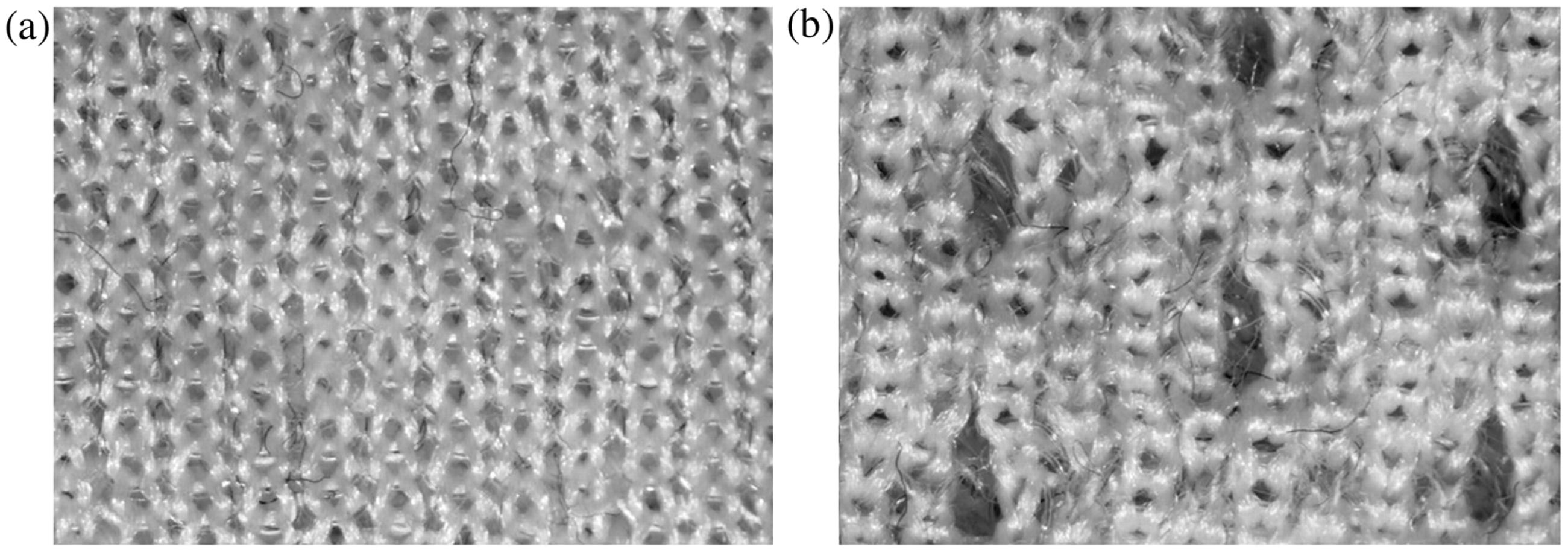
The plain knit was used on both sides (face layers) of the spacer fabric for the samples with the closed-skin structure (A and B coded samples). The design of the open-skin structure (Figure 2) (C coded samples) is different in that one side of the spacer fabric is meshed knit, while other side is plain knit, similar to the samples coded with ‘A’ and ‘B’. While coding the samples, the numbers beside the capital letters indicated the level of Outlast® fiber composition. For example, sample code A1 means a loose closed-skin structure with the Outlast® fiber level of one. The positioning of yarns within each layer of spacer fabric, including the sample codes, is shown in Table 2. Front face layer refers to the side of the spacer fabric that is in touch with the human skin lying on the mattress, while the reverse face layer refers to the side of the spacer fabric that is in touch with the foam of the mattress, namely the lining side of the spacer fabric.
The knit notation of open-skin and closed-skin structures. Fabric specifications at each layer of the spacer fabric PES: polyester.

Physical properties of spacer fabrics

PES: polyester.
Methods
Fabrics were relaxed at a stenter, which is adjusted for spacer fabric finishing reaching final dimensional stability. The samples were laid on a flat surface in a standard atmospheric environment (20 ± 2°C and 65 ± 2% RH) for a day, before the measurements were performed. Loop densities were measured using a magnifier. Loop density was measured at the front face layer of the spacer fabric. Ten measurements were made at different places of fabrics and the average was recorded. Fabric thickness was measured using a J. H. Heal & Co. Ltd fabric thickness meter according to the BS 2544 standard. The EN12127 standard was used for fabric weight measurements.
Thermal comfort properties of spacer fabrics were measured using an Alambeta Instrument. Water vapor permeability of samples was measured using the Permetest device by SENSORA Instruments, according to the modified ISO11092 standard. The instrument principle depends on measurement of the convection heat loses of the measuring head due to moisture evaporation from its surface, or due to the temperature difference between the instrument surface and the air passing along the measuring head. The instrument measures thermal resistance (Rct) and evaporation resistance (Ret) of the fabrics and their relative vapor permeability; the details of the instrument and the theoretical background of the measured values were published by Hes et al. 10
The air permeability evaluation was conducted using the Textest FX 3300 Air Permeability Tester in accordance with standard EN ISO 9237. All comfort tests and air permeability test measurements were performed from the front face layer of the spacer fabric.
The differential scanning calorimeter (DSC) technique was also used for the thermal characterization of the samples. Differences of heat flow versus temperature in the samples and in the reference material (standard) were measured using a Perkin Almer DSC instrument. The quantity of each sample was determined as 20 mg. The heating process takes place through the continuous flow of hot air at an increasing temperature rate of 5°C/min.
Image processing was carried out based on the images taken from a charge-coupled device (CCD) camera mounted on an Olympus SZX31 stereo microscope. Images were taken in exact color with different magnifications and represented in grayscale. This was followed by analyzing with BAB imaging software to determine fabric cover and thus porosity.
The statistical software package JMP® was employed to interpret the experimental data for the 95% confidence level. Replicated analysis of variance (ANOVA) was employed for evaluating the significance of each factor. The results were evaluated based on the F-ratio and probability of the F-ratio (probF). The lower the probability of the F-ratio, the more significant is the variable. Fabric design (D), fabric tightness (T), and fiber composition (FP) are selected as the factors for analysis. Interaction effects are also considered.
Results and discussion
Fabric properties of spacer fabrics manufactured for home-textile application are given in Table 3. Fabric weight and loop density increase and loop length decreases when the fabric structure gets tighter. The loop length of open-skin designed samples (C1, C2, and C3) are longer than that of samples A1, A2, and A3, which have similar tightness but a closed-skin structure. This difference was attributed to the long tuck stitches, which go around the holes of the open-skin structure. Although all spacer fabrics were manufactured for the same gap between the cylinder and dial plates of the double jersey knitting machine, samples with an open-skin structure are thicker. It is thought that this result was because of the bulkier surface layer at these samples due to the gathering of tuck stitches around the holed/meshed sections.
Porosity
The surface of knitted fabric is composed of pores surrounded by the yarns. Permeability-related properties of knitted fabrics are highly correlated with the porosity percentage. The porosity percentage of the samples was calculated with the basic equation as follows:

The porosity measurement was performed using image analysis. All porosity measurements were performed for the same magnification ratio and the average of 10 measurements was recorded as the porosity, with a measuring error of 5%. The measurement process for the open-skin structure is given in Figure 3. It is obvious from the image that some loops could not be identified by the camera and hence were recognized as porous regions. This was due to surface roughness, which leads to resolution problems. The layers of the spacer fabric directly below the front face layer are the primary cause of lower porosity when compared to regular plain knitted fabrics.
The recognition procedure of fabric from raw image to the porosity measured image for the magnification of 10x (a) raw image (b) black-white image (c) clustered recognized image.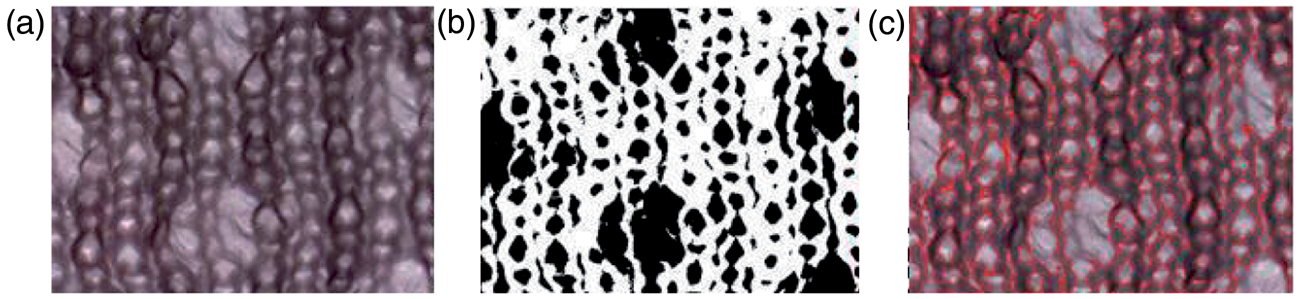
The linear relations between the knitting parameters, such as fabric thickness, loop length and stitch density, and porosity, were studied by an early researcher.
19
However, when the results were compared, no correlation was found between the rest of the knitting parameters and porosity, apart from the fabric thickness (Figure 4). This result was attributed to the complexity of 3D knitted spacer fabric, in which three loop lengths need to be measured and the interaction between the layers within the structure makes it hard to deduce a tendency when compared to single jersey knits.
The relation of porosity percentage and fabric thickness with the sample codes.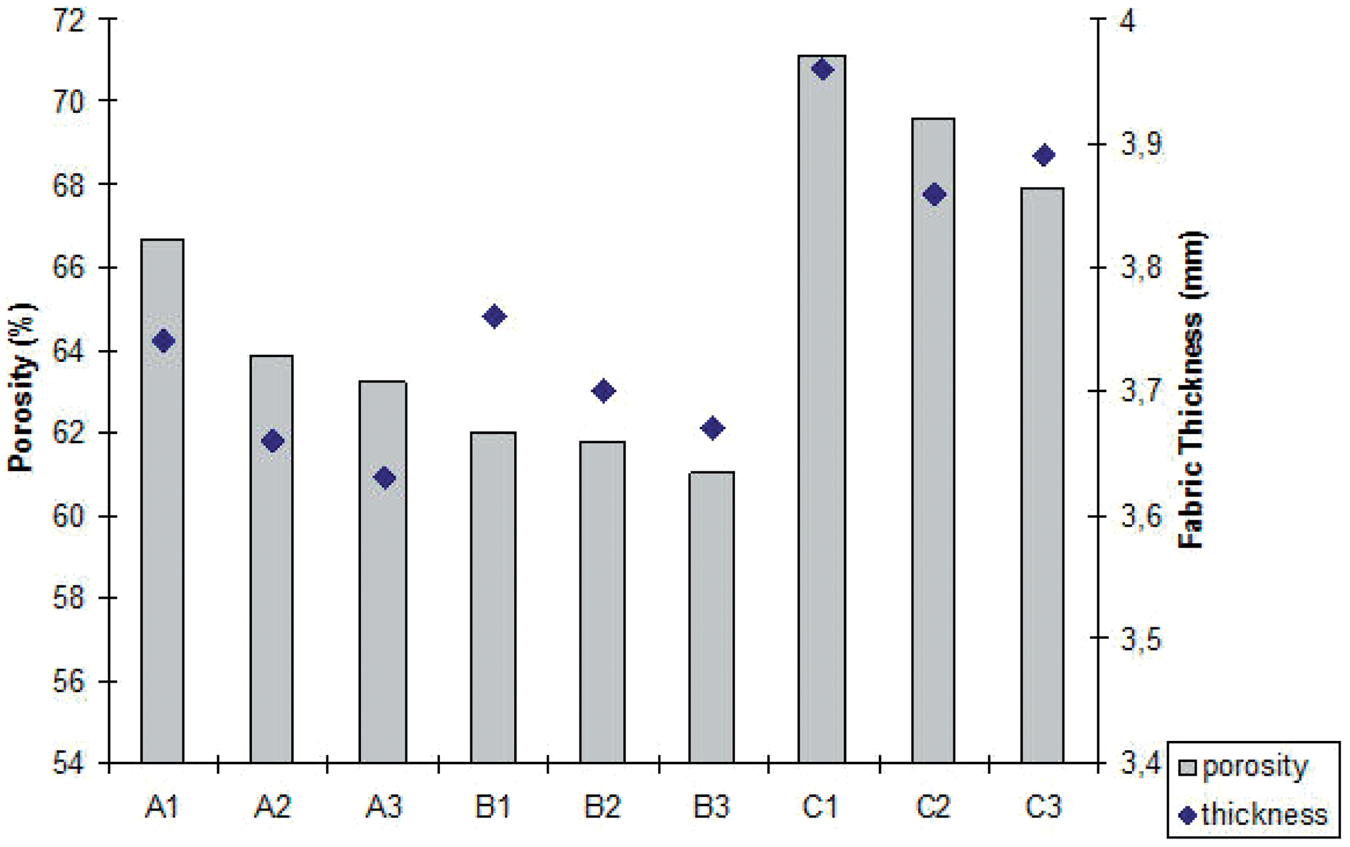
The fabric knit or design and the fabric tightness are the leading factor on the porosity of knitted fabrics. The porosity increases with the open-skin structured samples (samples coded with C). The tightness is also an important factor in that tighter samples have a lower porosity percentage. For tight structures, where porosity values are under 62%, the yarn-covered area increases due to the closer positioning of the loops. Fiber type is another important factor in that porosity is lower for the samples made from staple yarns relative to the samples made from filament yarns for the same sample groups. The higher the PES-based fiber composition, the higher the porosity percentage. This result is due to almost zero hairiness of the multifilament Coolmax® yarn. ANOVA results reveal the interaction effects within the factors. FP + T and FP + D interactions are significant (probF values are 0.0347 and 0.0000, respectively) besides the three main factors (T, D, and FP).
Air permeability
Permeability properties of textiles are directly related to the number of pores on the fabric and thus the porosity percentage. It is found that the air permeability of fabric is highly correlated with the porosity (R = 0.932). It is clear from Figure 5 that the air permeability of fabric is directly proportional to the porosity percentage. The higher the porosity of the fabric, the higher the air permeability. For the same fabric construction, higher filament fiber composition gives higher air permeability, which is due to the almost zero hairiness of multifilament yarns relative to staple yarns (Table 1). Air permeability of fabric decreases with an increase in fabric tightness. Fabric design and knit directly affect the number of pores on the fabric. It is obvious that the air permeability of open-skin fabrics (C1, C2, and C3) is higher than the closed-skin fabrics (A1, A2, and A3).
The relation of air permeability and porosity percentage with the sample codes.
Thermal conductivity
Thermal conductivity is a material property that is described as the quantity of heat transmitted through the thickness of the material direction normal to the measured surface area. This property indicates the ability of fabric to conduct the heat coming from the source. For the application of mattresses, the heat source is the body itself, which is touching the mattress fabric during the night.
The difference observed from the results of samples having the same knit and close fiber compositions indicated that thermal conductivity values highly depend on the fabric square mass. The same comments were also published in the literature.11,20 Tighter samples (B1, B2, B3), having higher weight, also have higher thermal conductivity values (Figure 6). When fabric design is considered, samples having open-skin structure (C1, C2, and C3) have higher thermal conductivity than the closed-skin structure, having almost the same fabric weight. The amount of air entrapped within the structure is another factor contributing to the higher thermal conductivity of samples with an open-skin structure, due to the increased free convection heat transfer in the fabric. This result was also explained with the loop configuration observed in the samples with an open-skin structure, where tuck loops were gathered around the holes of the front layer. Such gathered long-floated tuck loops might increase the thermal conductivity values. The ANOVA results verified these comments, as well that all three factors of T, D, and FP are significant with the probability of F ratios of 0.000, 0.0011, and 0.0042, respectively.
The relation of thermal conductivity and fabric weight with the sample codes.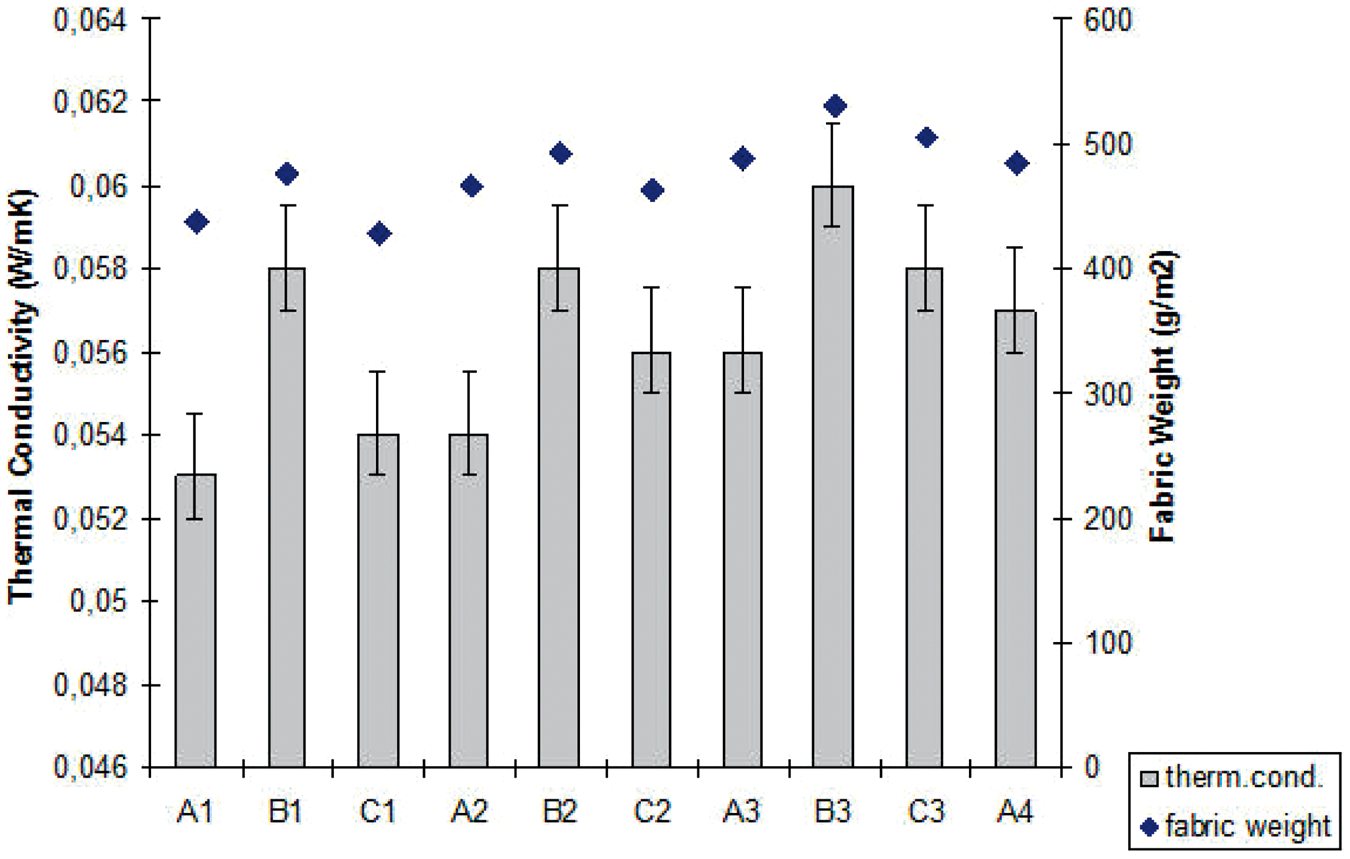
The thermal conductivity values are strongly related with fiber density, thermal conductivity of individual fibers, and moisture content of fibers within the fabric structures.2,21 The densities of cotton fiber, viscose (Outlast®), and PES fibers are around 1.54, 1.52, and 1.38 g/cm3 and the thermal conductivities of these fibers are 0.461, 0.289, and 0.141 WC°/m, respectively. 22 The cellulosic fiber compositions of samples A1, A2, A3, and A4 are 5%, 20%, 32%, and 36%, respectively (Table 3). Therefore, as the cellulosic fiber content increases, the thermal conductivity of samples increases as well. This trend is valid for ‘B’ and ‘C’ coded samples, which are tighter, and open-skin constructed sample groups, respectively.
Thermal resistance
Thermal resistance expresses the ability of material that prevents the heat flowing through one side of fabric to the other at a unit area of material. Fabric thickness and thermal conductivity were accepted as important factors governing thermal insulation of textiles.1–3 Still air amount within the fabric and the fabric density are the other two factors that were mentioned.
2
As can be seen from the results (Figure 7), the thermal resistance increases as the fabric thickness increases for the same fabric tightness, which coincides with the findings of early researchers.2,11,20 In addition, open-skin constructed samples (C1, C2, and C3) have higher thermal resistance than closed-skin constructed samples (A1, A2, and A3) for the same fabric machine settings. This result is explained in the way that relatively higher fabric thickness of open-skin samples could entrap more air within the pile (spacer) section of the fabric and thus cause higher thermal resistance. The ANOVA showed that factors D and T are significant, but probF is 0.07 and thus insignificant. It should be noted that the interaction of factors D and FP is also significant, which agrees with the thermal resistance values.
The relation of thermal resistance and fabric thickness with the sample codes.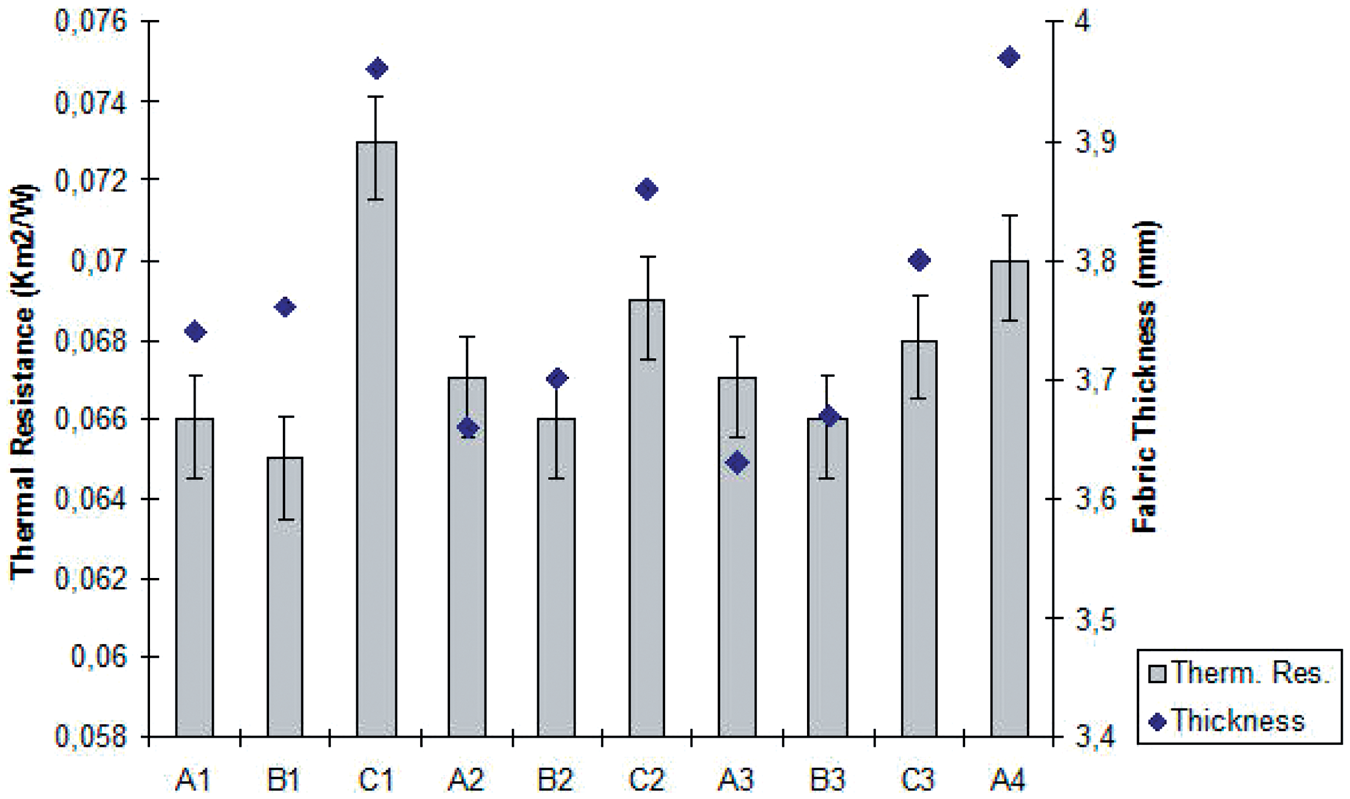
It is interesting to note that the thermal resistance decreases when the fabric tightness increases for very close fabric thickness values of the samples. The tendency shown in Figure 7 is almost the opposite of that shown in Figure 6, which depicted the thermal conductivity of the spacer fabrics. This result was attributed to the inverse relationship between thermal resistance and thermal conductivity. The relationship between thermal conductivity and thermal resistance was defined as
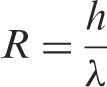
The thermal resistance of fabrics increases with the increment on cellulosic fiber composition for the same fabric construction (A1, A2, A3, and A4). It is thought that this result could be due to the increase in fabric density, in addition to the fabric thickness. The densities of cotton fiber, viscose (Outlast®) and PES fibers are around 1.54, 1.52, and 1.38 g/cm3, respectively. There could be an interaction effect of the fiber density and fabric thickness factors, but a detailed study is necessary for better evaluation.
Thermal absorptivity
Thermal absorptivity is a surface-related property of textiles in that fabric is assessed with a warm-cool feeling as human skin is directly in touch with any textile material. 23 The fabric with a low value of thermal absorptivity means a warm feeling at first contact, while high value refers to a cool feeling. Thermal absorptivity is an objective parameter, but could effectively be measured with an Alambeta device. 6
For all sample groups, thermal absorptivity values almost linearly increase with the Outlast® fiber composition for all sample groups (Figure 8). This behavior can be explained with the functional properties of Outlast® fibers. Outlast® fiber contains thermally adaptive phase-change materials, which keep the human body comfortable by absorbing body heat when too much is created, thereby diminishing the amount of moisture in the clothing.
24
The ANOVA reveals that factors of T and FP are significant (probF = 0.000), but factor D is insignificant. The samples A3, B3, and C3 contained a higher percentage of Outlast® fiber and thus thermal absorptivity values are higher when compared with the other samples that have similar fabric construction. However, it should be noted that sample C3, which contains 33% Outlast® fiber, has almost the same thermal absorptivity value as sample A3, which contains only 27% Outlast® fiber. This situation is explained by the surface roughness difference between the sample groups A and C, whose fabric designs are different but fabric tightnesses are similar. The surface area of open-skin (samples coded with C) samples is smaller than the closed-skin (samples coded with A) samples, because of holed or meshed construction. A coded closed-skin samples having larger and smoother surfaces, leading to a cooler feeling. This was also stated by Oglakcioglu and Marmarali
11
and Pac et al.
25
This result is in agreement with the ANOVA in which factor D itself is insignificant with the probF of 0.104, but the interaction effect of D + FP is significant (probF = 0.0026). While observing the influence of the fabric tightness, we can see no clear influence on thermal absorptivity between the loosely (A1, A2, and A3) and tightly (C1, C2, and C3) manufactured fabrics for the same fiber compositions. In the meantime, another interaction effect of factors fabric tightness and fiber composition is significant (probF = 0.000).
Thermal absorptivity values of spacer fabrics versus the Outlast® fiber percentage and sample codes.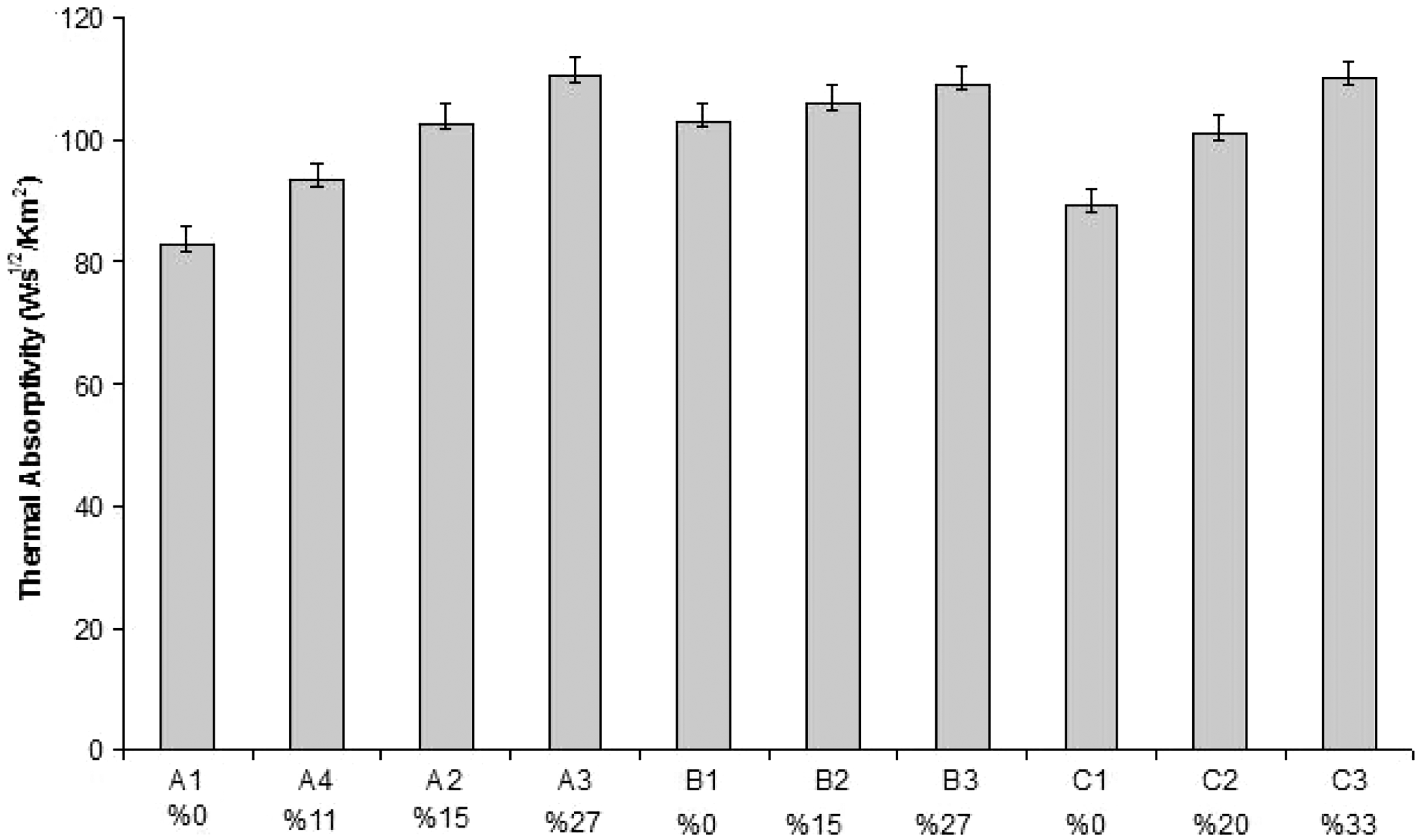
Summing up the thermal absorptivity results, it could be implied that fabrics with a plain, smooth surface and higher Outlast® fiber content give a cooler feeling in comparison with fabrics of lower surface regularity and higher surface roughness. Outlast®-rich fabrics have a much higher value of thermal absorption, so such spacer fabrics give cooler feelings than fabrics made of higher percentage of Coolmax® and PES fibers.
Thermal diffusion
Thermal diffusion is the heat flow through the air along the thickness of materials in a direction normal to the measured surface area. The thermal diffusivity is a transient thermal characteristic of materials, which can be defined by the means of two other thermal characteristics, such as thermal conductivity (λ) and thermal absorptivity (b). The expression of thermal diffusivity (a) is
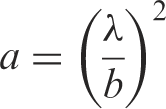
In the case of thermal diffusivity, almost the opposite situation to that noted in the thermal absorptivity graph (Figure 8) is observed. For all types of sample groups, samples containing higher Coolmax® and PES fiber composition have higher thermal diffusivity than samples that are rich in Outlast® fiber (Figure 9). Analyzing the influence of fabric design, it can be seen that open-skin samples are characterized by higher values of thermal diffusivity than are closed-skin samples for similar fiber content and fabric construction.
The relation of thermal diffusion and air permeability with the sample codes.
While observing the influence of the fabric tightness, it is seen that thermal diffusivities of tighter samples (B1, B2, and B3) are higher than that of loose samples (A1, A2, and A3) for the same fiber compositions. It is thought that this situation is due to the fabric thickness and air permeability, which affects the thermal diffusivity of fabrics. The air permeabilities of samples (B1, B2, and B3) are lower for relatively higher fabric thickness compared to samples A1, A2, and A3 (Figure 9 and Table 3). These two factors had a role on the thermal diffusivity characteristics of fabrics, which coincided with the findings of a previous study. 14 The ANOVA reveals that any factor alone (D, FP or T) is found to be significant, while some of the interactions of these factors are also significant, namely D + FP and T + FP.
Water vapor permeability
The ability of transmitting moisture/vapor from the skin can be defined as the water vapor permeability. The textiles are expected to transport body fluids from the skin in order to reduce the uncomfortable sensation. There is a correlation between water vapor permeability and the wicking behavior of fabrics. Fiber cross-sectional shape is an important parameter for the wicking properties of knitted fabrics. The wickability of fabrics increases with the irregular fiber cross-section, such that Coolmax® fiber is well-known for its highly wicking nature. In the meantime, the fiber cross-sectional shape is also irregular for the Outlast® fiber. Due to the complexity of the 3D spacer fabric, the interactive effect of fiber composition, fiber type, fabric design, and fabric tightness are mixed. That is why it is not very easy to analyze the behavior from the graph indicating the water vapor permeability values of samples (Figure 10). The interactive nature of this property was also reflected with the ANOVA result. The interactions of T + FP, D + FP, and T + FP are significant, in addition to the factors of T, FP, and D.
Water vapor permeability values of spacer fabrics versus the sample codes.
It is apparent from Figure 10 that water vapor permeability values of open-skin samples are higher than the closed-skin samples. This result is expected, due to the holed/meshed structure of the open-skin structure for the same fiber content and fabric construction. Analyzing the influence of fabric tightness, it is obvious that tighter fabrics have higher water vapor permeability, which is attributed to the larger yarn-covered surface being able to transmit the liquid. The stitch density of fabric is higher for tighter fabrics and thus the larger yarn-covered region is able to interact with the liquid. This interaction increases the rate of wickability/absorbency. Fiber composition is another important factor on the water vapor permeability values.
Differential scanning colorimeter analysis
DSC analysis revealed the influence of Outlast® fiber changes in the thermal resistance of samples quantitatively. The test was performed from 10 to 50°C to look for whether the Outlast® fiber composition within the fabric is enough to observe its thermoregulatory effect.
The tendencies of the graph look similar for the sample groups with similar fiber compositions but different fabric design and fabric tightness (Figure 11). Samples A1, B1, and C1, composed of almost totally multi- and monofilament PES and functional PES (Coolmax®) fibers, that is, 0% of Outlast® fiber composition, show full endothermic behavior from 0 to 50°C. On the other hand, samples A3, B3, and C3 have the highest percentage of Outlast® fiber within the spacer fabric; their graphs have an exothermic region from 0 to 30°C and an endothermic region from 30 to 50°C. The slight difference of sample C3 is attributed to its open-skin structure.
DSC curves of spacer samples.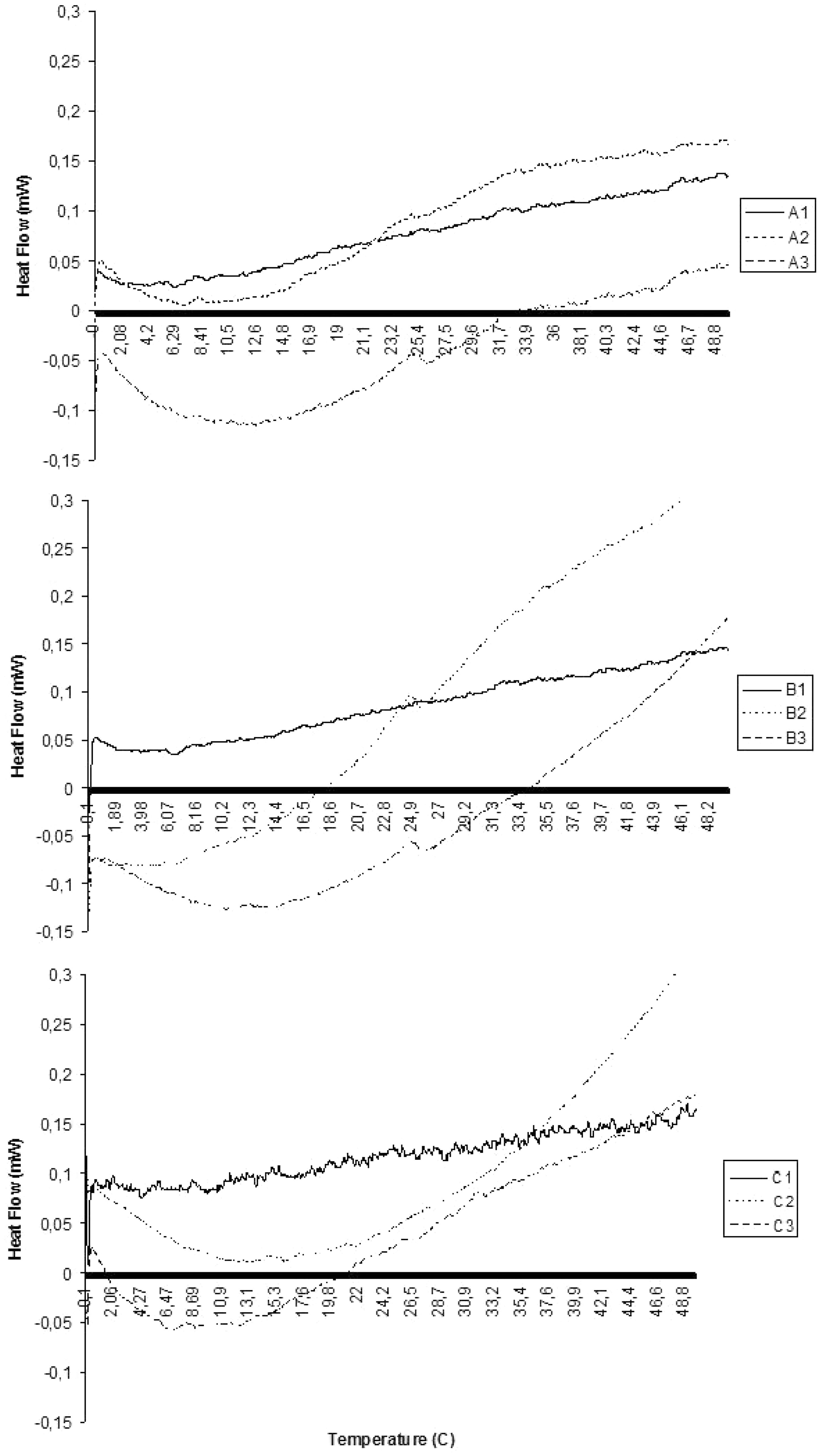
The presence of Outlast® fiber in the tested samples is expected to generate an exothermic reaction up to 30°C and to generate an endothermic reaction after 30°C in order to keep the heat flow stable with the temperature difference at the outside environment. The endothermic-type reaction refers to the absorption of heat by the thermoregulatory fiber so as to keep the temperature more or less constant. Such thermal regulatory response was slightly observed only on samples A3, B3, and C3, each of which contain 33% of Outlast® fiber within the spacer fabric. However, the trend is not very apparent, as it was observed by the Araújo et al. 15 that they reported the desired property and trend above the Outlast® fiber composition of 65%.
Conclusions
Thermal properties of spacer fabrics made from functional fibers were studied in this paper. The spacer fabric for the application of mattress ticking is considered to generate a thermally comfortable fabric that regulates the human body temperature during sleep and increase the quality of sleep. Fabric tightness, fabric design, and Outlast® fiber compositions were considered as design parameters. Despite the complicated 3D fabric construction, the significance level of each factor on the thermal behavior revealed that fabric design, fabric tightness, and fiber composition were found to be significant on almost all thermal behavior, apart from thermal diffusion. Due to the complexity of the spacer fabric, the interactions of factors also became significant based on the ANOVA, in particular with the thermal diffusion.
Fabric tightness is the leading factor on the thermal conductivity properties of spacer fabric. A good correlation was found between the thermal conductivity and fabric weight. The close relation between thermal resistance and fabric thickness was recorded as mentioned in the literature. 6 Thermal resistances of open-skin designed samples are higher than closed-skin samples for the same fabric machine settings, which is due to relatively higher fabric thickness of open-skin samples. Increasing Outlast® fiber composition leads an increment of thermal absorptivity values and thus causes a cool feeling. This behavior is explained with the presence of thermoregulatory Outlast® fibers, which are capable of regulating the heat level next to the skin and keeping the human body comfortable. Water vapor permeabilities of open-skin samples are higher than that for the closed-skin samples; the holed/meshed structure of the open-skin structure for the same fiber content and fabric construction leads to this behavior. Although this study generates first-step evaluations on the effect of functional thermoregulatory fabrics on 3D spacer fabrics, further studies are still required for revealing the contributions of the fiber composition and fabric construction to the thermal properties of spacer fabrics.
Footnotes
Acknowledgements
The authors are grateful to the administration of BOYTEKS A.S. for allowing them to use their facilities to manufacture the samples.
Funding
This work was supported by the Erciyes University Research Council (Project Code: FBY-08-364).