




Abstract
After a long break, Spanish broom gained interest as a natural, sustainable and renewable fibre for textile and technical applications. This paper describes the characterization of Spanish broom fibres (Spartium junceum L.) in comparison to the flax fibres (Linum usitatissimum). Spanish broom fibres were obtained by two different methods of maceration and some of the most significant chemical and physical properties of tested fibres are reported. Scanning electron microscopy has proven to be a useful tool for the determination of morphological characteristics of elementary and technical fibres. Other physical-chemical properties of fibres were determined by infrared spectroscopy (FT-IR), thermogravimetric analysis (TGA), fineness and tensile strength methods.
Introduction
The rapidly increasing environmental awareness and growing global waste problem affected the development concepts of sustainability and renewable materials. Over the last ten years, the real revolution in bast fibre production technology started. Although, bast fibres have been grown for centuries throughout the world, their production is much higher nowadays in order to meet the demands of the global market and to produce recyclable, renewable, ‘green’ products. Some of the most used bast plants are: flax, hemp, kenaf, ramie, jute, etc.1,2 Whilst flax and hemp have mostly been used as textile raw material of cellulosic origin in the plains,
3
in coastal areas of the Mediterranean, wild Spanish broom (Figure 1) has been used as the textile raw material since ancient times.4–6
Spanish broom (Spartium junceum L.).
The habitat of Spanish broom is the Mediterranean area of south Europe, south-west Asia and north-west Africa.7,8 It grows in coastal areas with rugged soil and clean air, and as such it is not exposed to pesticides like the cotton is. It is a shrub-like plant from the family of legumes and the only species in the genus Spartium. Spanish broom grows 1–1.5 m tall and the only old examples grow into smaller trees of 4–5 m tall and 15–20 cm thick. Spanish broom produces intensively yellow flowers between May and July, and its legumes mature between August and October. Its roots are deep and it binds the soil quite well. As a legume plant, it uses symbiosis to bind atmospheric nitrogen in the roots' lumps, thickening and enriching the soil. 9
A production of Spanish broom fibres already existed in Mediterranean countries, but because of high production costs, caused by the conventional maceration method, it has been abandoned now – except in Italy and Romania. Since the general production of Spanish broom fibres is negligible nowadays, accurate statistical data of the theoretical amount of Spanish broom fibres are not available. 10
The fibre yield of wild Spanish broom plant is approximately 5% according to our experiments while the fibre yield of the cultivated flax plant is 20–25%. In general, fibre yield depends on the pretreatment process known as maceration or degumming, as well as on the plant cultivar and plant maturity.
Maceration of natural fibres can be easily described as the separation of fibre from the woody part of the plant and the removal of its non-cellulosic components such as pectin, hemicellulose, lignin, waxes and fats.13–15
Some maceration methods e.g. DeCoDe process9,14 have shown better results in fibre yield, but in this paper the most common maceration method of water retting was used, as well as osmotic degumming of the flax.
With maceration, it is possible to obtain fibres of very good quality, which were used for the ropes, baskets, mats, etc., in ancient times. Today these fibres are increasingly used in biocomposite materials, especially for the automotive industry. 16 The most recent papers of our research group6–9,15 try to draw the attention to this promising area of application. The purpose of this research is to answer the question of whether the quality of Spanish broom is comparable to flax.
Experimental
Materials
Polish flax cultivar Modran (collected in Poland) and Spanish broom (picked in the area of town Šibenik, Croatia) were used in the study. The extraction of fibres was conducted at the INFMP (Institute for Natural Fibres and Medicinal Plants, Poland). Prior to the testing, fibres were obtained from the plant through a maceration process (Figure 2).
17
Two maceration methods were applied: water retting and osmotic degumming.
Fibre processing scheme: WR_B – Spanish broom fibres (B) obtained by water retting maceration method (WR); WR_F – flax fibres (F) obtained by water retting maceration method (WR); OD_B – Spanish broom fibres (B) obtained by osmotic degumming maceration method (OD); OD_F – flax fibres (F) obtained by osmotic degumming maceration method (OD).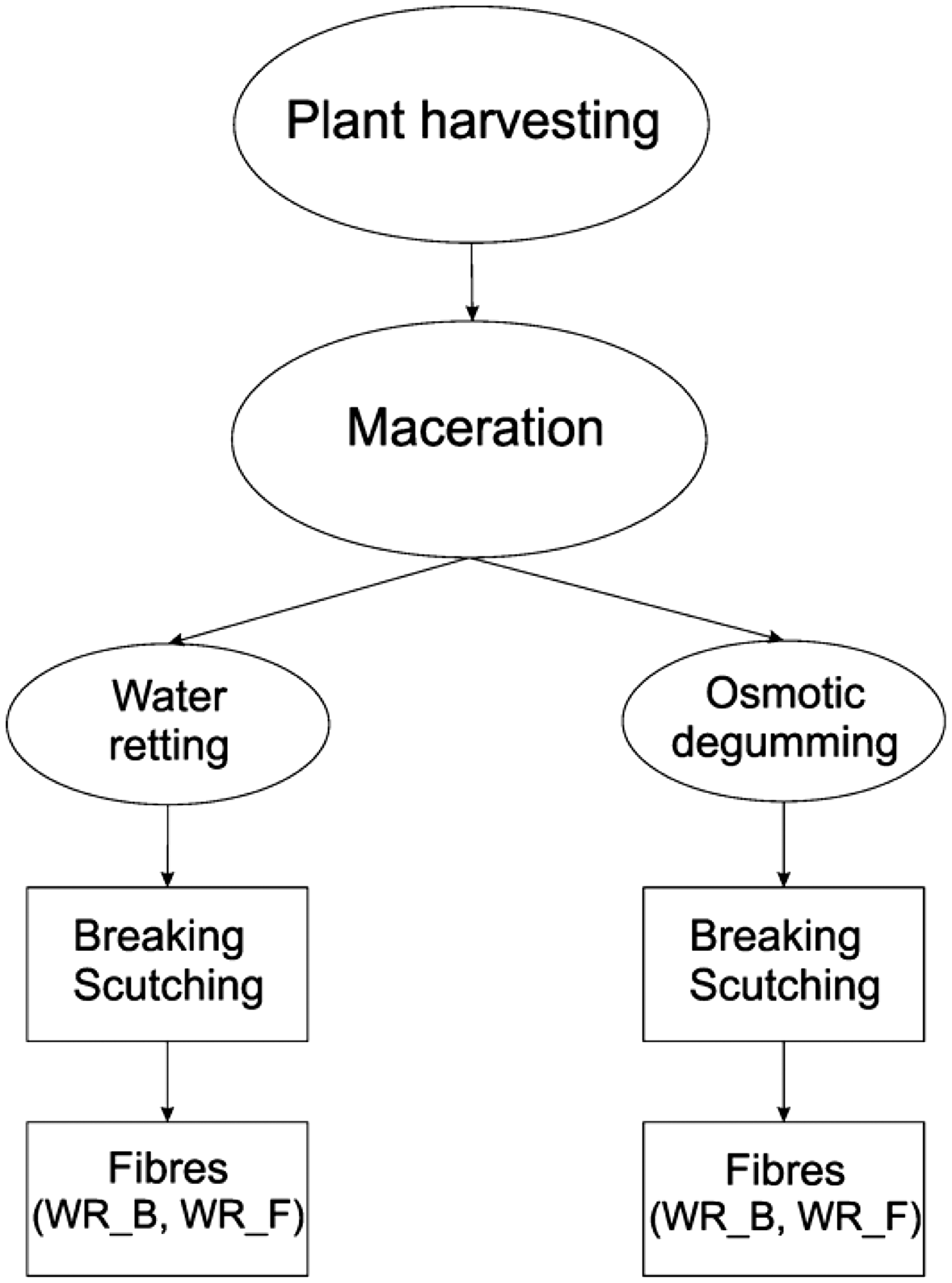
In this study, technical fibres were characterized, except within the SEM analysis where both the elementary and technical fibres were used.
Methods
Water retting
Samples were placed in a tank with water heated to a temperature of 30.6–33°C. The Spanish broom was retted in a tank for 20 days (480 h) and flax for 3 days (72 h). After retting, the plants were passed through a mechanical process (breaking, scutching), after which fibres were obtained.
Osmotic degumming
Samples (Spanish broom and flax) were placed in a 2000 mL glass gauge filled with warm water and placed in a tank full of water heated to a temperature of 30°C. One end of the rubber hose was immersed in the glass gauge and the second end was immersed in a small plastic container. This method of maceration uses natural physical laws such as water diffusion, osmosis and osmotic pressure.17,18 Osmotic degumming of the Spanish broom plant lasted 28 days (672 h) and for flax 3 days (72 h), after which fibres were obtained by mechanical processes (breaking and scutching).
Physical properties
SEM and optical microscopy
Surface morphological analysis of the Spanish broom fibres was carried out using a field emission scanning electron microscope, Mira, Tescan. Samples were previously coated with gold/palladium in a sputter coater.
Cross-sectional optical micrographs of both plants with a magnification of 20× were conducted with Nikon Elipse E 400 microscope.
Fineness, strength and elongation
Breaking tenacity and fineness of individual fibres were examined using the Vibroscope and Vibrodyn devices, Lenzing Instruments. Tension, testing speed and gauge length values were 0.015 N, 3 mm/min and 5 mm respectively. Samples were conditioned at the standard temperature (20 ± 2°C) and relative humidity (65 ± 2%). An average of 250 tests for fibres was used in the study.
Moisture regain
The moisture regain of the fibres was determined according to ASTM standard method 2654 using standard conditions for 24 h. Moisture sorption was calculated as a weight percentage of absolute dry material.
Fourier transform infrared (FT-IR) spectra
Infrared spectroscopy (FT-IR) spectra were obtained with a Perkin Elmer Spectrum 100 FT-IR spectrometer using ATR (attenuated total-reflection) method. All spectra were registered from 4000 cm−1 to 380 cm−1, with a resolution of 4 cm−1 and 100 scans. The background was collected at the beginning of the measurement. In order to normalize the infrared spectra obtained, we used the 1314 cm−1 band, assigned to CH2 rocking vibrations.
Thermal analysis
Thermogravimetry (TG)
A Perkin Elmer Pyris 1 thermogravimetric analyzer was used for determination of thermal degradation on Spanish broom fibres. The samples were crushed into small pieces before testing. The weights ranged from 7 mg to 10 mg. The samples were heated from 30°C to 800°C at the heating rate of 10°C/min in a nitrogen flow of 30 mL/min. Two parallel probes for each sample were made to achieve more accurate results.
Results and discussion
Maceration methods
Spanish broom fibres need more time for the maceration treatment. The main cause lies in the tougher stem of Spanish broom compared to the flax.
The main issue that has to be solved is to find a better and quicker maceration process. Preliminary experiments have already been performed. 9
SEM and optical microscopy
Scanning electron micrograph
Spanish broom and flax fibres are technical fibres, both consisting of a number of elementary fibres held together by pectinous gums.
A schematic structure of the flax and Spanish broom fibres, from stem to microfibril, is given in Figure 3.
19
Technical fibres are isolated from the stem by the maceration process and by mechanical decortication (breaking, scutching, etc.).
Architecture of bast fibres: from stem to the fibrils.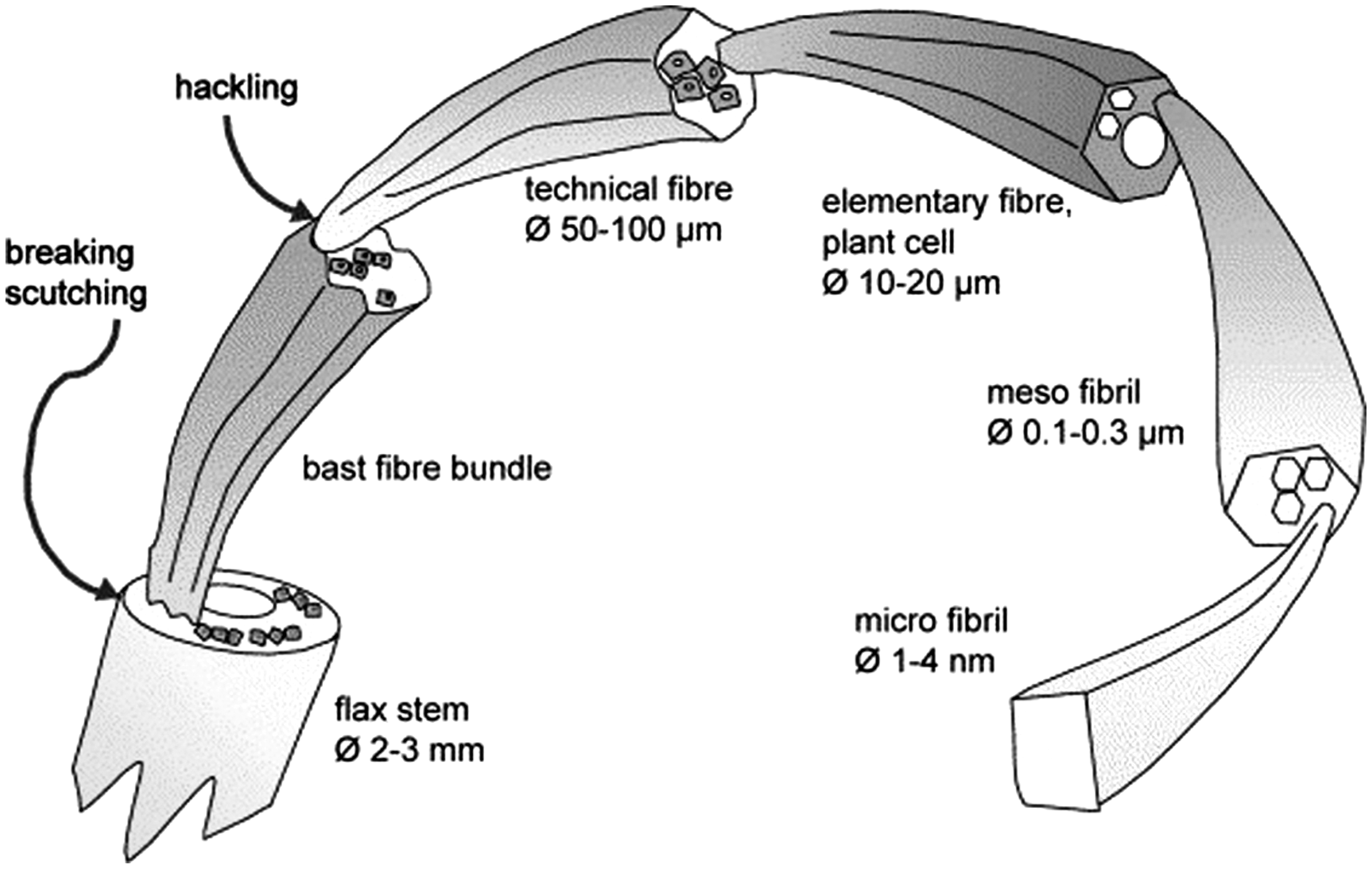
The width of the elementary fibre of Spanish broom, as shown in Figure 4(a), is similar to the width of flax elementary fibre, shown in Figure 4(b).
Longitudinal SEM image of (a) Spanish broom fibre, (b) flax – elementary fibre as part of the technical fibre.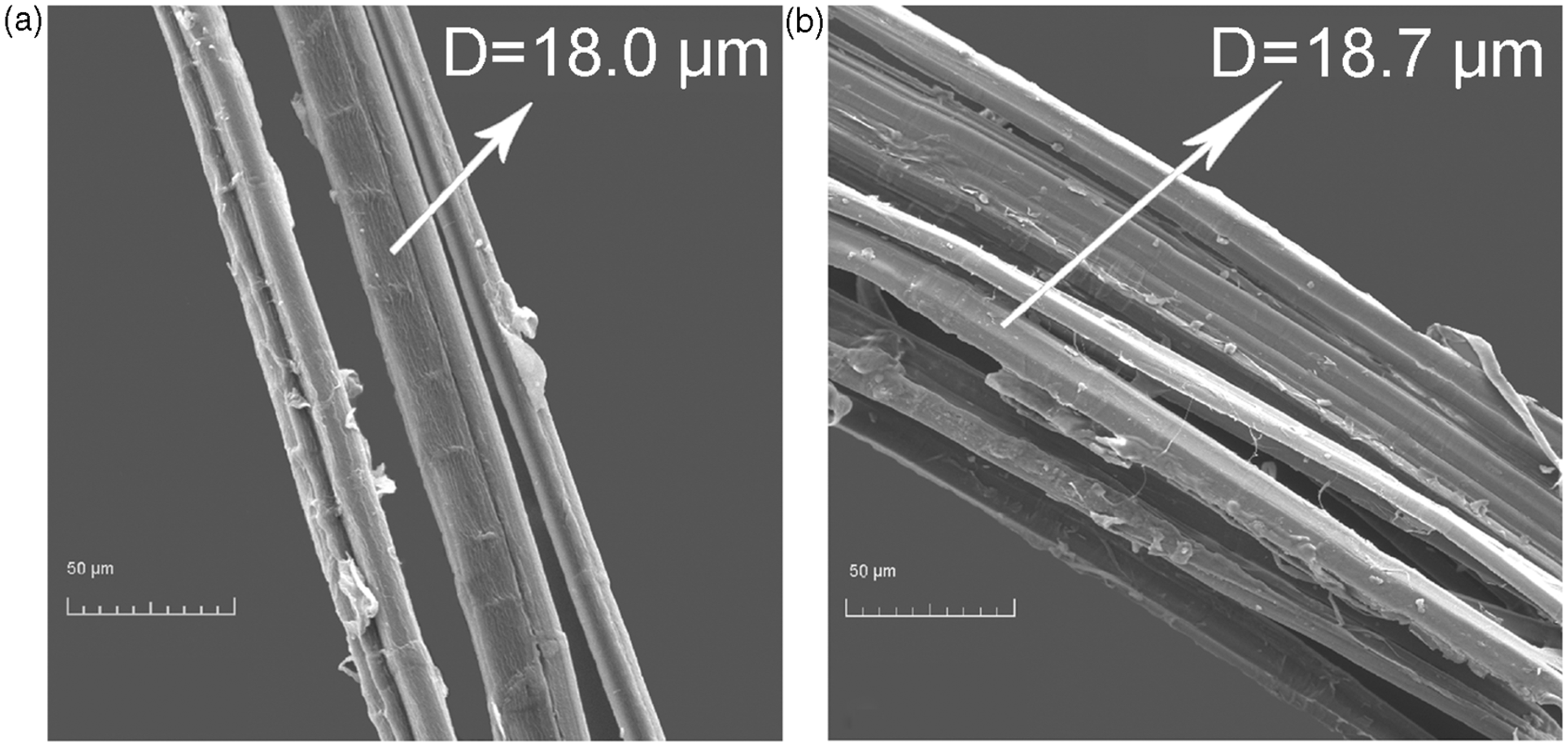
The cross-section of both fibres indicates the presence of a thick secondary cell wall (e.g. 7.32 µm for Spanish broom and 5.41 µm for flax), as shown in Figure 5.
Cross-section SEM image of (a) Spanish broom, (b) flax – elementary fibre.
The secondary cell wall is of extreme importance because of its influence on the fibre properties while its cellulose-rich fibre structure influences higher tensile strength.20,21
Each elementary fibre can be considered as a network of ultrafine cellulose fibrils embedded in a matrix of hemicelluloses and lignin. 22 Both of the fibres have fibre nodes and kink bands that appear as horizontal bands in the elementary fibres and bundles, by which they are easily recognized. These dislocations are regions where moisture and various chemicals can penetrate and influence fibre properties. They also represent weak points in the fibres which can be seen after breaking tests.22–24 The surface of tested fibres is slightly irregular, which is caused by the maceration method. In general, addition of NaOH is recommended during the maceration process, enabling more suitable fibre surface of samples used for the SEM analysis.
Optical micrograph
Bast fibres are produced in the outer regions of the stem. The fibres exist in bundles of elementary fibres in a ring encircling the core tissues. About 40–70 bundles are in cross-sections of Spanish broom stems, while 20–50 bundles are in cross-sections of flax stems, with 10–40 elementary fibres per cross-section of single bundle for both plants. Oval-shaped bundles in flax stems indicate high quality fibre (Figure 6(b); 2), while the Spanish broom plant has irregularly shaped bundles that indicate poor quality (Figure 6(a); 2).
Cross-section of Spanish broom (a) and flax (b) plant: 1, xylem; 2, sclerenchyma (bast fibres); 3, phloem; 4, epidermis.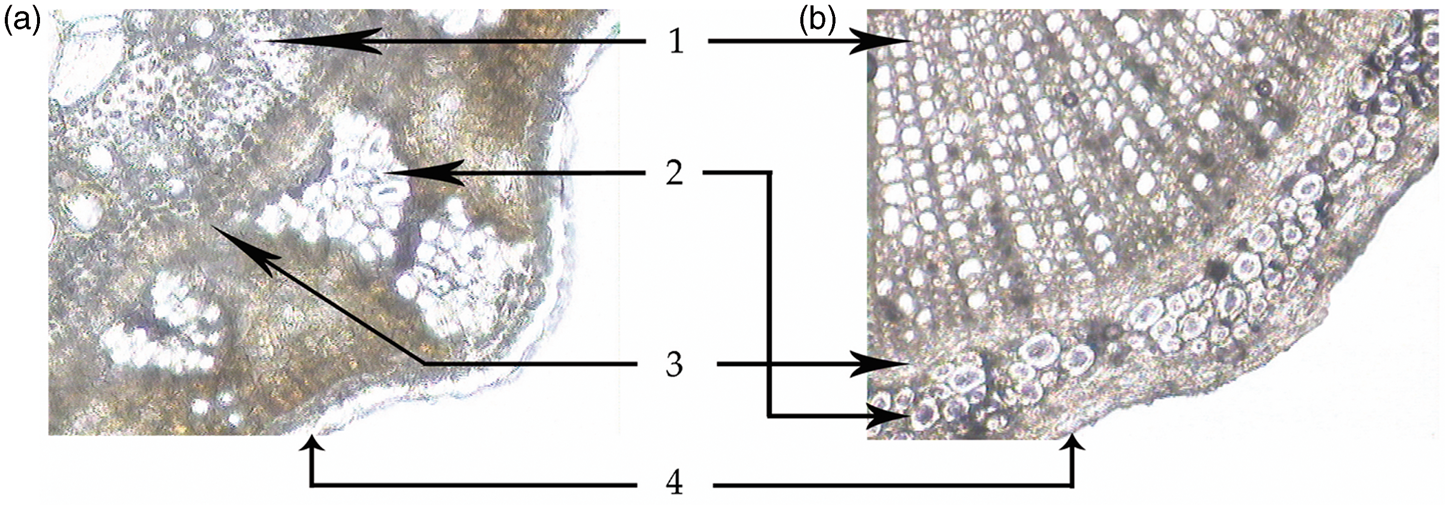
Despite of that, Spanish broom has a polygonal cross-sectional shape of elementary fibres, as well as thick cell walls (Figure 5.) and the possibility to provide better quality fibres (better light reflection and absorption).20,23–25
Fineness, strength and elongation
Figures 6 and 7 represent the graphical review of chi-square test which is non-parametrical method for data analyzing. Deviation of the normal distribution can be assessed by the mentioned analyzing method. This test was applied for fineness measurements.23,24,28,29
Frequency of fineness in 250 measurements of (a) Spanish broom fibres (B) obtained by osmotic degumming (OD), (b) flax fibres (F) obtained by osmotic degumming (OD).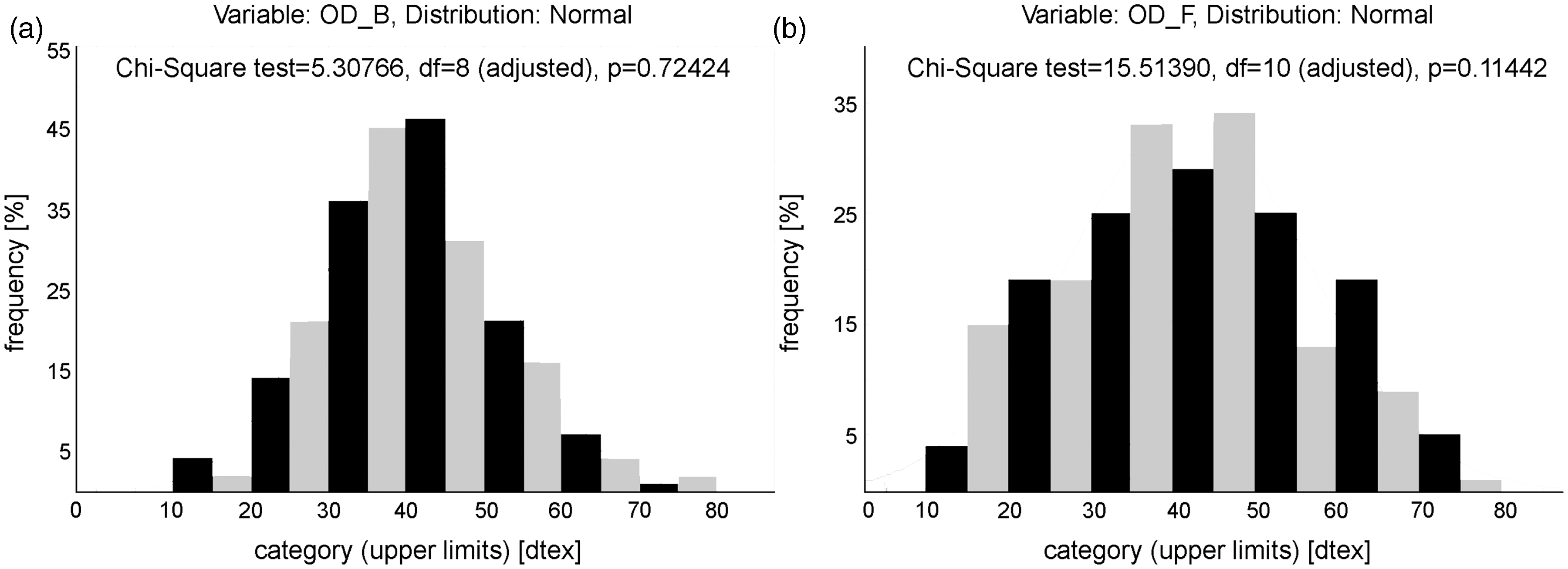
The technical fibres obtained by osmotic degumming behave in a normal distribution, as shown in Figures 7(a) and 7(b), which means that empirical values are pretty similar to theoretical values (p ≥ 0.05; the p-value is the number that represents the probability of obtaining a test statistic). The most common fineness of the Spanish broom technical fibres is in the category from 40 dtex to 45 dtex (18% of all fibres) while for the flax fibres that category is from 45 dtex to 50 dtex (14%).
Technical fibre fineness depends on the shape and length of elementary fibres, their number in the fibre bundle to be measured and the processing method. 29 Our results clearly support this statement. Upon the treatment of osmotic degumming the mean results of Spanish broom and flax fibres fineness are within the range 40.97 dtex (Spanish broom) to 41.83 dtex (flax) causing higher quality in comparison to water retting.
Technical fibres obtained by water retting as shown in Figures 8(a) and 8(b) are coarser. The most common fineness is in the category from 30 dtex to 35 dtex (16%) for Spanish broom and 35 dtex to 40 dtex (12%) for flax fibres. The average value for fineness is 41.17 dtex for Spanish broom and 47.83 dtex for flax fibres. The decreased fineness value of the fibre after osmotic degumming is attributed to the cellulose molecules in the fibre that are loosely held after lignin removal.
Frequency of fineness in 250 measurements of (a) Spanish broom fibres (B) obtained by water retting (WR), (b) flax fibres (F) obtained by water retting (WR).
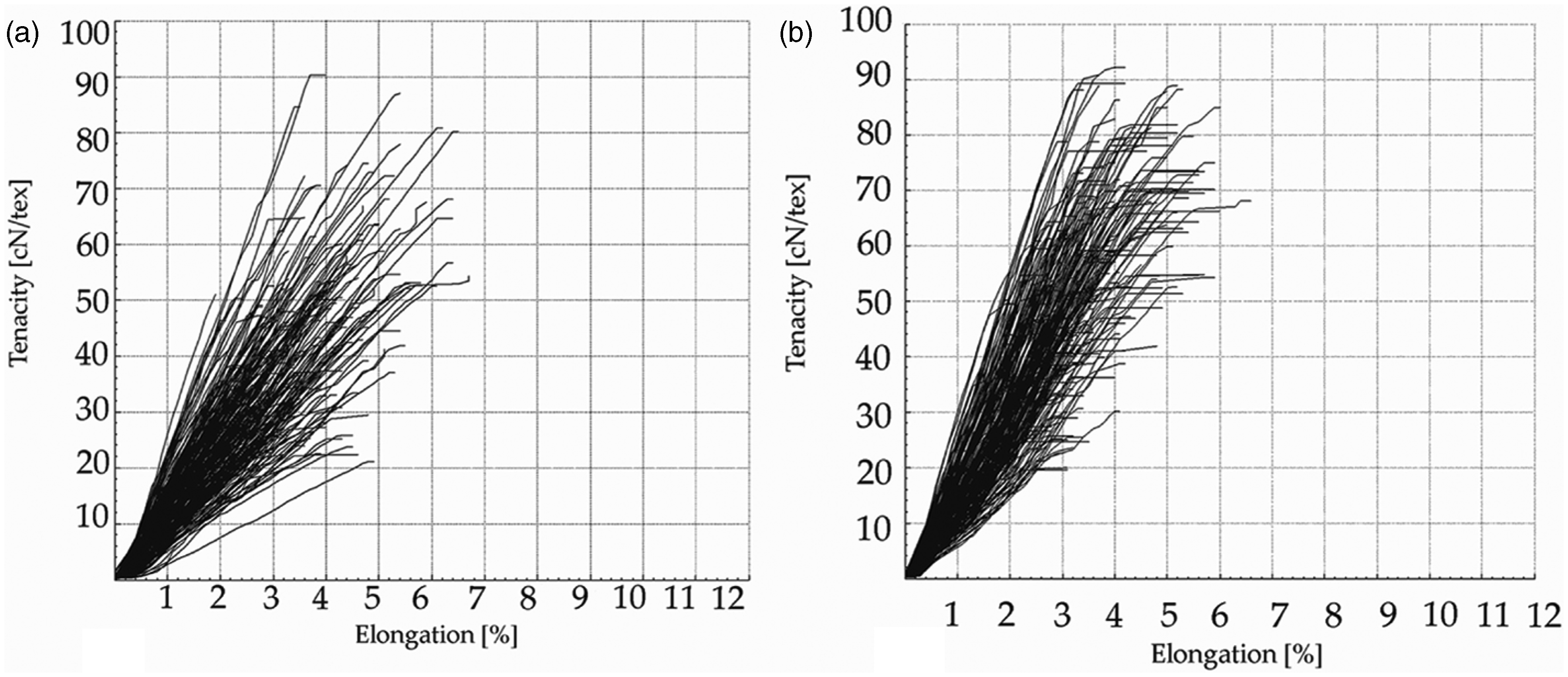
The stress-strain curves for the Spanish broom and flax fibres are shown in Figures 9 and 10. Elongation at break of the fibres is the elongation of a test specimen produced by the breaking force, expressed as a percentage of the initial gauge length.23,29,30 Breaking elongation of the Spanish broom fibres obtained by the osmotic degumming method of maceration (5.0%) is higher than elongation of the other tested fibres, implying the decreased toughness of the Spanish broom fibres is obtained by osmotic degumming. The mean value for the breaking elongation of the fibres varied among tested fibres from 3.6% to 5.0% in the osmotic degumming method of maceration, and 3.5% to 3.6% in the water retting method of maceration. Flax fibres exhibited better uniformity of breaking elongation as shown in Figures 9(b) and 10(b), which is also evident from variation coefficient. Flax fibres show a coefficient of 28.14% after the water retting and 30.01% after the osmotic degumming while Spanish broom has a coefficient of variation of 31.01% and 32.75%, respectively. One of the reasons causing the higher coefficient of variation of Spanish broom fibres compared to flax, is the choice of the conventional maceration method.
9
Stress-strain curves for (a) Spanish broom fibres (B) obtained by osmotic degumming (OD), (b) flax fibres (F) obtained by osmotic degumming (OD). Stress-strain curves for (a) Spanish broom fibres (B) obtained by water retting (WR), (b) flax fibres (F) obtained by water retting (WR).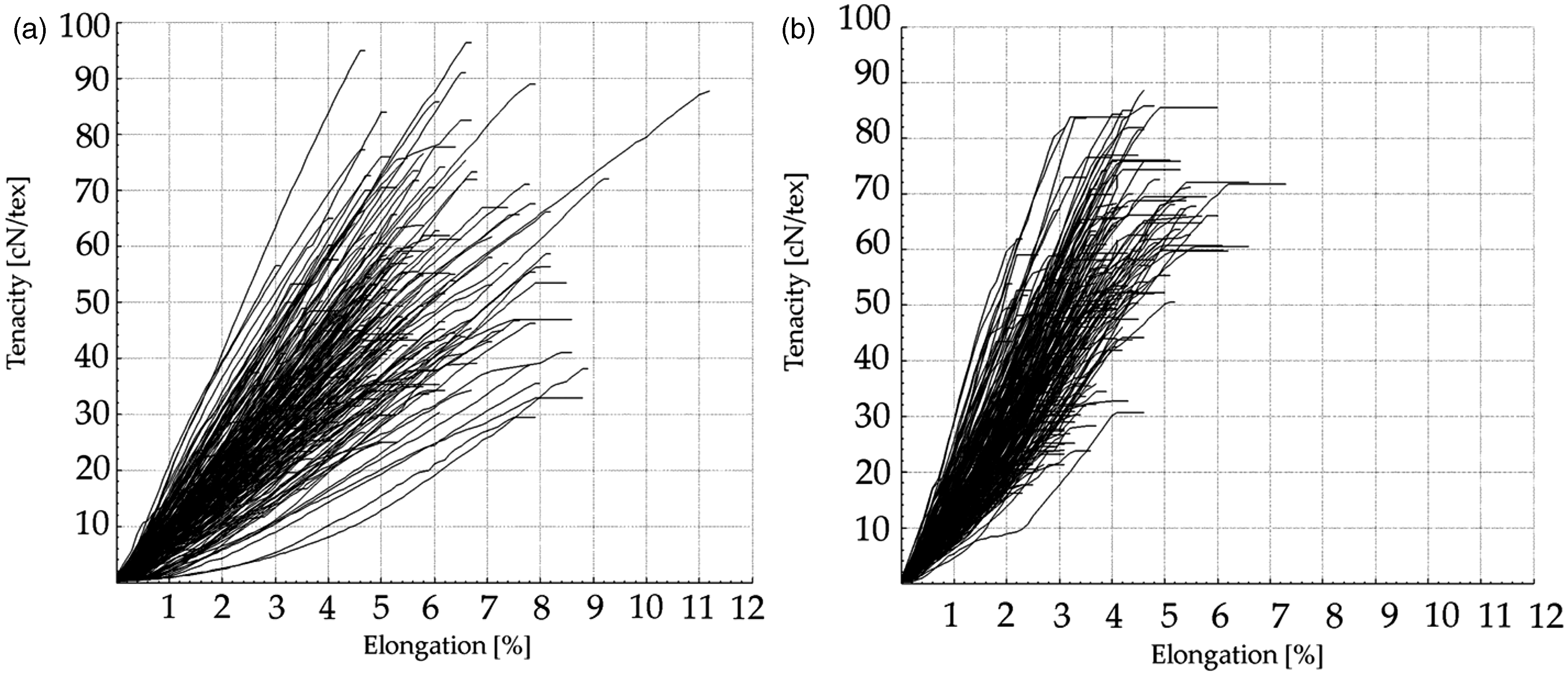
ANOVA test of significance for Spanish broom and flax fibres tenacity
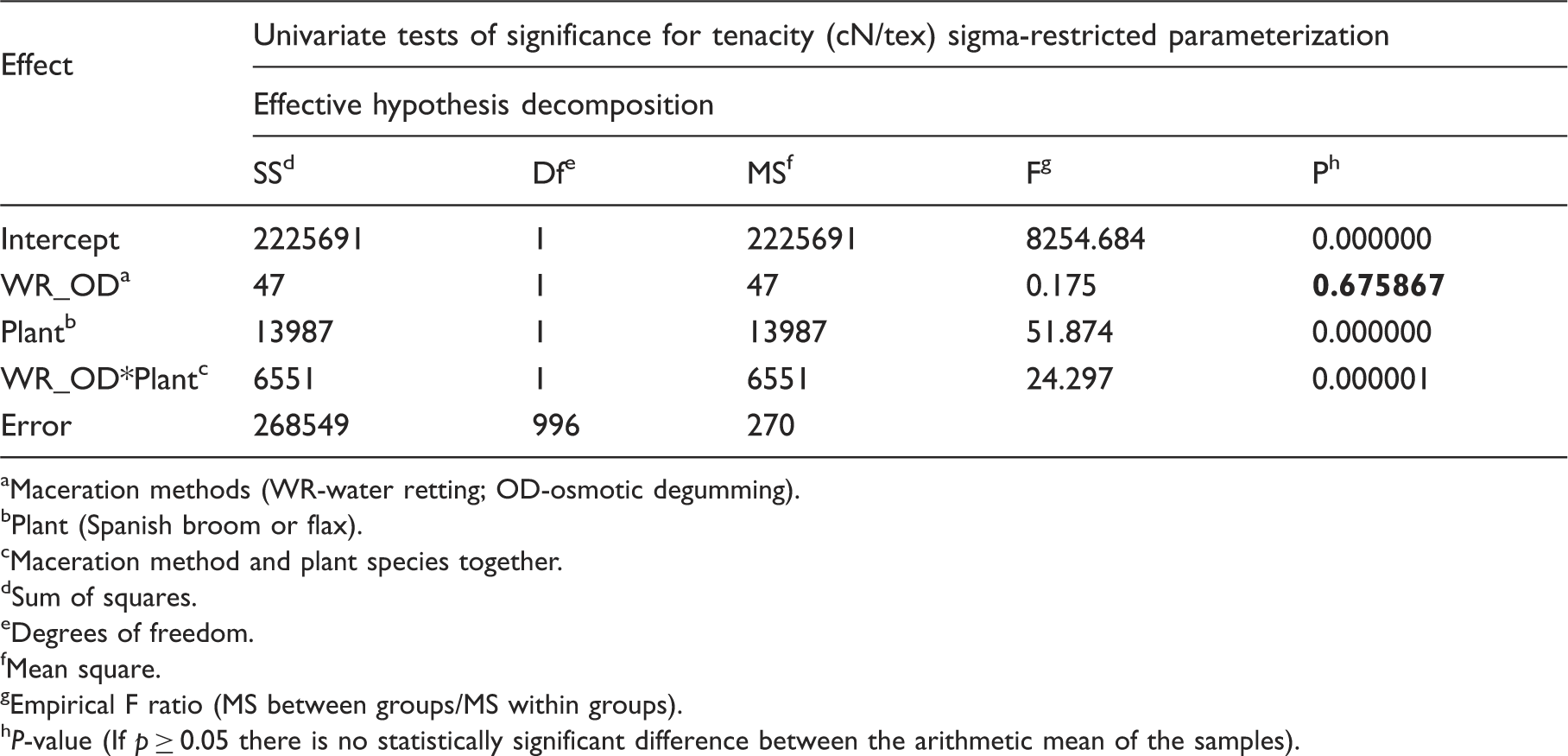
Maceration methods (WR-water retting; OD-osmotic degumming).
Plant (Spanish broom or flax).
Maceration method and plant species together.
Sum of squares.
Degrees of freedom.
Mean square.
Empirical F ratio (MS between groups/MS within groups).
P-value (If p ≥ 0.05 there is no statistically significant difference between the arithmetic mean of the samples).
Since p ≥ 0.05 it can be concluded that the maceration method has no significant influence on tenacity as shown in Figure 11.
Mean value of breaking tenacity for different maceration types.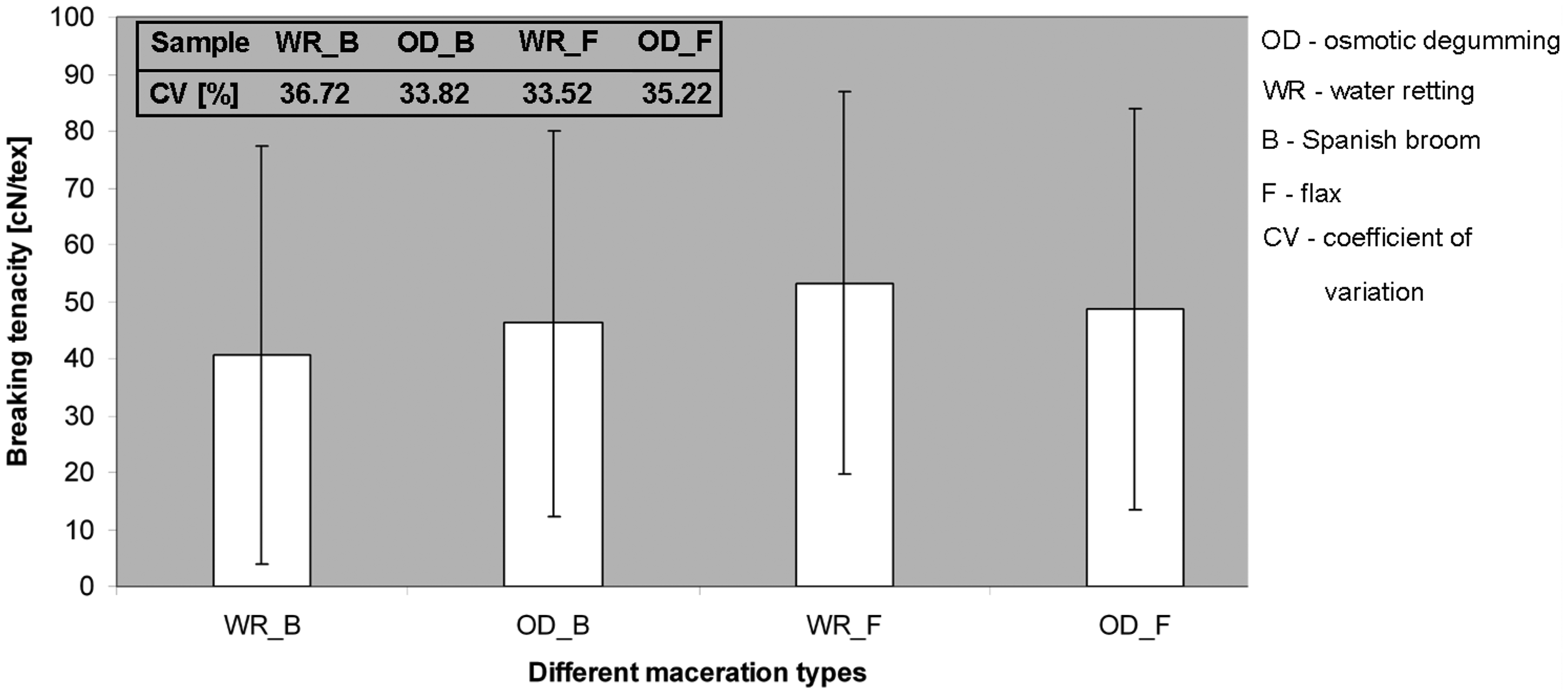
Figure 11 shows that there are no significant differences in the tenacity of selected fibres. Error bars in the graph refer to relative standard deviation (coefficient of variation). Coefficient of variation is within the usual range of the natural fibres. Osmotic degumming created slightly better results in the case of the Spanish broom (B) treatment in comparison with the water retting (WR) method.
Moisture regain
Bast fibre water interaction can be explained as a competition of hydrogen-bond formation between hydroxyl groups of the polymer (mainly cellulose) and between the polymer and a water molecule or a water cluster. The water penetrates inside the fibre in the form of vapour or water in liquid state. It breaks the secondary interactions between cellulose macromolecules and is adsorbed into the fibre by hydrogen bonds, which causes a swelling of the fibres.31–33 Free hydroxyl groups at the fibre amorphous regions and at crystallites’ surfaces are responsible for the moisture sorption. The sorption of water vapour starts with the formation of a monolayer, where one molecule of water is bonded to each accessible hydroxyl group and continues with the formation of a multilayer of progressively increasing thickness. Therefore, moisture sorption values yield information on the extent of areas accessible to water vapour within a fibre. Changes in moisture sorption of fibres reflect changes in chemical composition, crystallinity and in pore structure. 34
Moisture regain of tested fibres under 65% of relative humidity

FT-IR spectra
Figures 12(a) and 12(b) show the IR spectra of Spanish broom and flax fibre obtained by different methods of maceration.
(a) FT-IR spectra of Spanish broom (B) and flax (F) fibres obtained by osmotic degumming (OD), (b) FT-IR spectra of Spanish broom (B) and flax (F) fibres obtained by water retting (WR).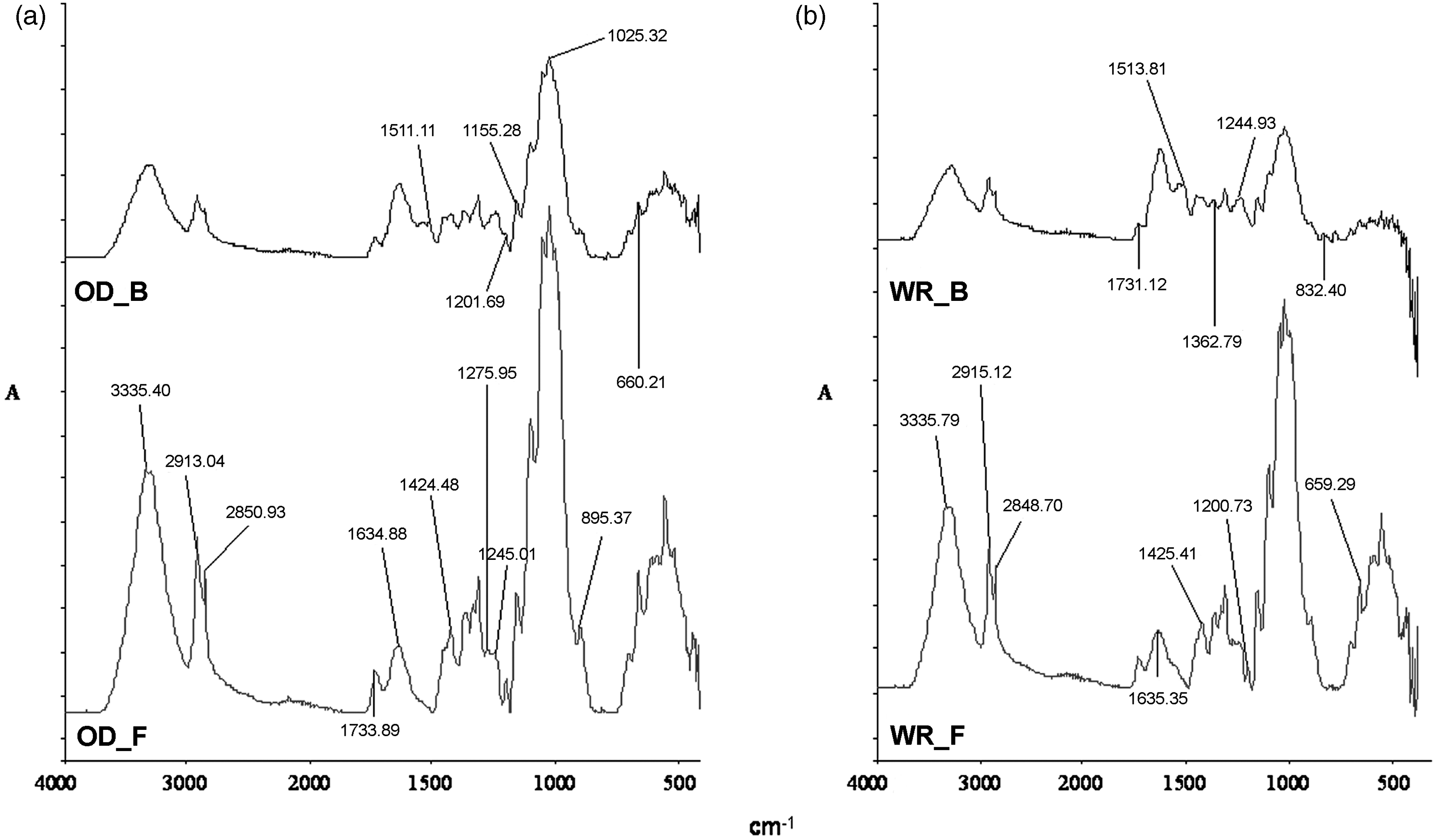
Main infrared transition for Spanish broom and flax fibres
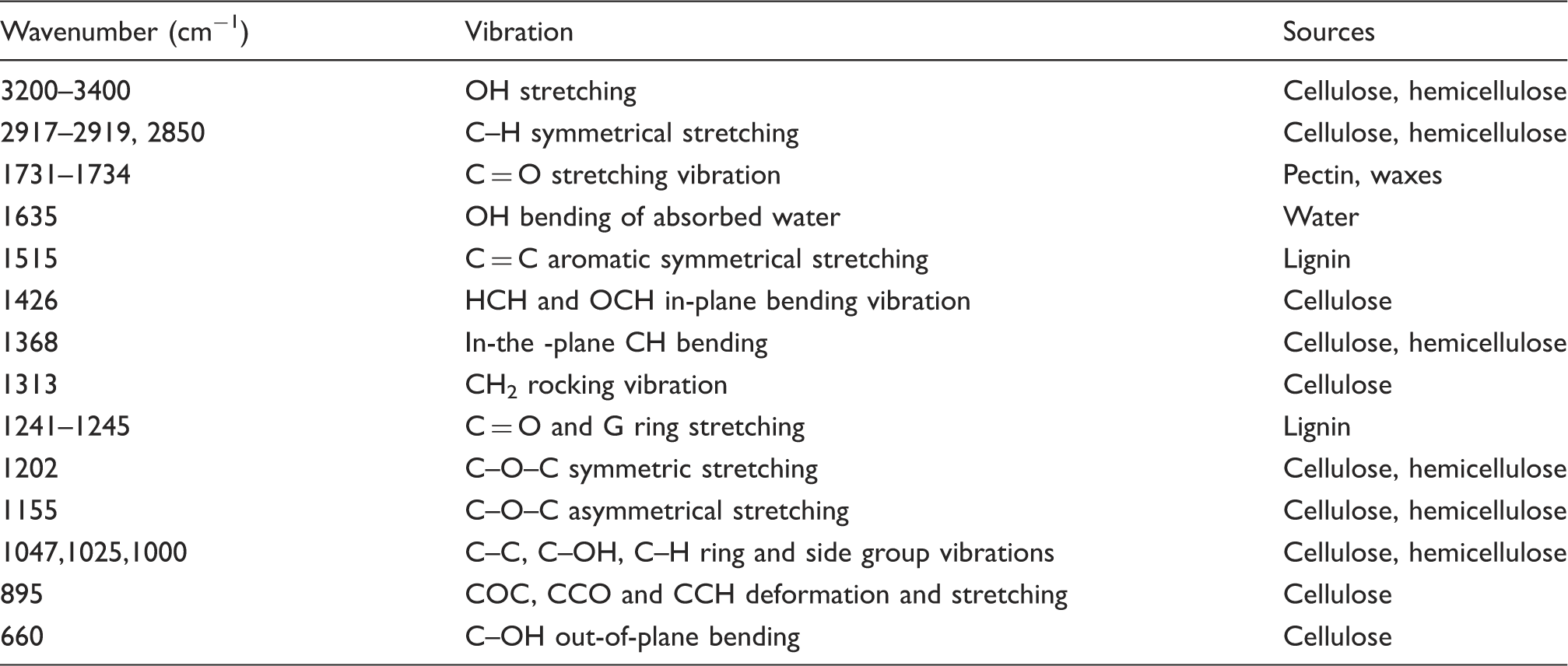
Pectins are characterized by several bands: 1731 cm−1–1734 cm−1 is characteristic of the free COOH groups of polygalacturonic acid, and those at 1426 cm−1 and 1615 cm−1 are of symmetrical and asymmetrical oscillations of ionized carboxyl groups respectively.30,38,39
Absorption bands at 1731 cm−1–1734 cm−1, 2917 cm−1–2919 cm−1 and 2850 cm−1 can be observed in the spectra of all fibres, but they are less intensive in the Spanish broom spectra pointing to the minor amount of pectins, fats or waxes. It should be noted that CH2 and CH groups of the fats and waxes could also contribute to the same bands.
According to the literature, 37 lignin is characterized by absorption bands at 1600 cm−1, 1515 cm−1, 1241 cm−1–1245 cm−1 and 820 cm−1–850 cm−1. Peaks at 1515 cm−1 and 1241 cm−1–1245 cm−1 can be seen in the spectra of the Spanish broom and only as the shoulder in the spectra of flax. In the area of 1600 cm−1, no clear band was observed, nor at 820 cm−1–850 cm−1, which suggests that there is still a certain amount of fats and pectins in the fibres. Removing fats and pectins leads to the decrease in intensity of peaks at 2850 cm−1 and 2917 cm−1–2919 cm−1 and probably to a more symmetrical band at 2917 cm−1–2919 cm−1, which is related to cellulose.
In this case it was impossible to remove all pectins because they are present not only in the wall of elementary fibres, but also in the interfibre bands, so consequently a more intensive treatment of fibres is required to obtain total pectin removal.
IR spectroscopy is very helpful in the determination of the index of crystallinity (Ic) of cellulose.25,36,37 The index is determined as a ratio of intensities of absorption bands at 1368 cm−1 and 2917 cm−1.

Index of crystallinity for tested fibres

According to the data presented in Table 4. the crystallinity index of fibres is decreased after the water retting maceration method which indicates that the cellulose crystals are better oriented after osmotic degumming.36,37,40,41 Results clearly indicate that the cellulose crystals are better oriented in Spanish broom fibres.
The percentage of crystallinity of Spanish broom and flax fibres is also influenced by the moisture in the sample, and fibres with higher moisture contents, as given in Table 2, have been reported to have a lower percentage of crystallinity. The lower percentage of crystallinity of the tested fibres is caused by the lower amounts of lignin and hemicellulose.
TG analysis
Thermogravimetry is one of the most widely used techniques to monitor the composition and structural dependence on the thermal degradation of natural cellulose fibre. Lignocellulosic fibres are constituted by three main components: hemicellulose (20–40%), cellulose (40–60%) and lignin (10–25%), and known as a very complex structure. These components are not thermally stable and tend to degrade at an early stage of heating. Further processing of a composite requires thermal stability information for materials selection and process operation.42,43
The thermogravimetric analyses of fibres show distinct processes of weight loss occurring at different temperatures.
44
The first process of weight loss of the Spanish broom and flax fibres is attributed to the thermal degradation of pectin, lignin and hemicellulose. The next weight loss is associated to decomposition of the α-cellulose present in the fibres. The thermogravimetric analysis (TG) of the fibres in nitrogen atmosphere is shown in Figure 13. The TG measurement gives information about the composition and thermal stability of fibres.
40
The curves can be divided into three different regions. For the temperature below 200°C (i.e. the first stage), the slight decay of the weight is attributed to water loss in the form of absorbed moisture.
45
In this stage, the weight loss of the tested material is less than 10%. The onset of degradation temperatures for tested fibres for the second stage of degradation in N2 were around 200°C. This implies that the fibres are quite stable up to 200°C, in nitrogen. When the temperature is between 200°C and 400°C (the second stage), a significant loss of weight is observed, stemming from the thermal decomposition of hemicellulose, cellulose and lignin. In this stage, the weight of the tested materials has been reduced from 65% to 85%. When the temperature is higher than 400°C (third stage), the weight loss is not as significant as the previous period (ca. 12%), mainly as a consequence of thermal decomposition of other heavy components.
46
In this stage, it can be seen that fibres after water retting still show a certain percentage of residue (∼10%) due to charring at 800°C, while fibres obtained by the osmotic degumming method of maceration show less than 5% of residue at the same temperature.
TGA curves of tested fibres.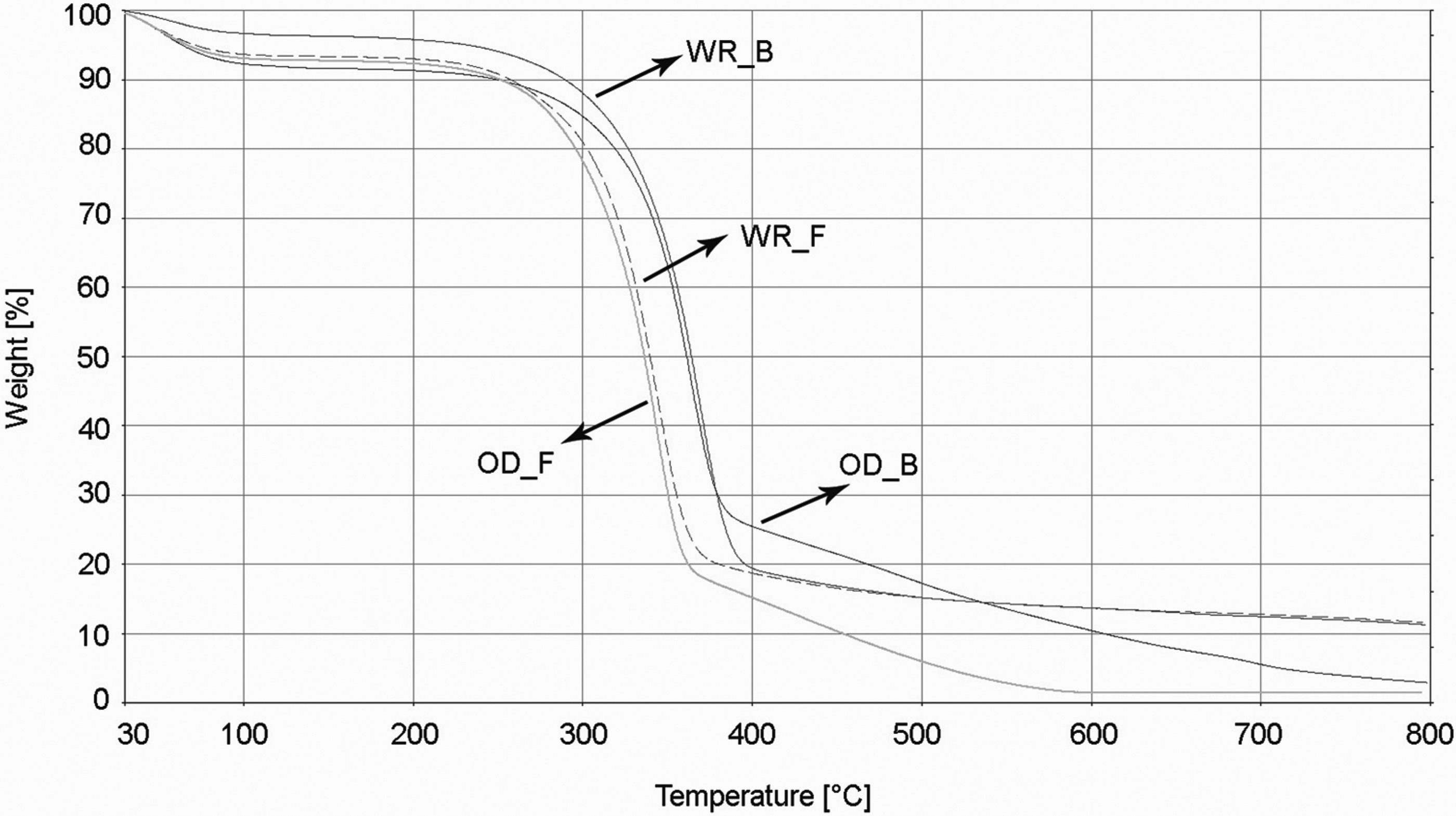
Conclusions
Many well known lignocellulosic fibres such as flax, jute, ramie, sisal, hemp, coir have been studied and well documented, but there are a few vegetable fibres which still remain unutilized and are going as weed species. One of them is Spanish broom fibre.
The main goal of this paper was to answer the question of whether the quality of Spanish broom is comparable to flax. After we have tested the most important properties of two selected technical fibres we made several conclusions:
Surface morphological properties of elementary fibres, which are part of technical fibres are very similar. Both fibres have dislocations and surface irregularities, which are the consequence of maceration methods. Polygonal cross-sectional shape of elementary fibres, as well as the thick cell wall, provides good quality of technical fibres. Spanish broom technical fibres are finer than flax fibres, especially the ones obtained by osmotic degumming. Elongation of both fibres is very similar with the exception of Spanish broom fibres obtained by osmotic degumming. These fibres show higher elongation than the others and accordingly suggests a decreased rigidity of the same fibres. Flax fibres obtained by water retting show higher tensile strength than the others, but it is not significantly different in comparison to other fibres. It is clear that Spanish broom fibres after osmotic degumming treatment show better results of breaking tenacity than after the water retting. Their tenacity is still very similar to the flax fibre tenacity. Spanish broom fibres have lower moisture regain than flax fibres and after osmotic degumming, both fibres show higher moisture regain than after water retting maceration. FT-IR spectra of tested fibres demonstrated that Spanish broom has lower amount of pectins and waxes, but higher amount of lignin, than flax fibres. The crystallinity index of cellulose showed better crystal orientation in Spanish broom fibres obtained by osmotic degumming method of maceration. It is important to note that the crystallinity index is used to indicate the order of crystallinity rather than the absolute crystallinity of crystalline regions. TG analysis shows better thermal stability of Spanish broom fibres compared to the flax fibres. Decomposition of Spanish broom starts at 300°C, in comparison to flax fibres when decomposition starts already at 250°C. This confirms the better suitability of Spanish broom for the production of composite materials and the possibility of applying for larger scope of thermoplastic materials.
The overall conclusion is that fibres obtained from Spanish broom have comparable properties to the flax fibres and they could be suitable for usage in technical textiles, especially for the production of polymeric composite materials. Further work should be focused on the development of processing and spinning technology of Spanish broom fibres for ensuring diversity of their application.
Footnotes
Funding
This work was supported by the European Community's Seventh Framework Programme (FP7/2007-2013) for the CSA action FP7-REGPOT-2008-1: T-Pot (grant number 229801).