




Abstract
In recent years, finishing has begun introducing an extraordinary touch and appearance to the surface of leathers by surface modification. Because some superficial anomalies cannot be recovered by conventional finishing procedures, those can only be drawn on by coating techniques. Coating aims at obtaining an alluring product, which must both recover the surface anomalies and be compatible with the leather characteristics.
This study is for valorization of leathers with inferior quality, which contain surface defects, thereby being aimed at improvement of the surface characteristics. The product should have ease of use, as well as giving a fashionable look and touch to flocked fibrous surfaces, whether applied to synthetic leather types or Alcantara. For covered and patterned fibrous surfaces, the experimentations of different flock formulations with different binder types were executed, superficial characteristics were imaged with optoanalytical techniques and the fiber adhesion onto the surface was examined by abrasion tests. The research results showed that polyurethane binder had acceptable qualities for bags, footwear, garments and accessories and yielded superior binding characteristics compared to acrylic binder.
Introduction
The recent developments in finishing make a major contribution for leather products to become a fashionable element of our daily life. Finishing guided by the surface defects provides certain characteristics on the leather surface. The defects on the surface have a great influence on the quality of leather products and affect the aesthetic appearance of leather goods and the amount of usable area. The presence of defects is a critical factor for adjustment of the leather for manufacturing of particular goods.1,2 Defects composed of scratches, pin holes, hard spots, parasitic damage, brand marks, etc., are the basic issues for the tanneries. Finishing is an option to remove or hide the defects from the leather surface. However, defects cannot be eliminated entirely by the current manufacturing technologies. 3
Deeper defected and damaged areas are required to be restored to similar characteristics of grain leathers; this is important from the profitability point of view. Alternatively, coating these superficial and structural defects with flock treatment, as was the case for synthetic leather surface modifications, has been considered as a novel approach for making use of inferior-quality leathers with coated fibrous surface appearances, thereby making them alluring products. Although clothes with a velvety surface are acceptable as a comfort style as per the current trends, they are also considered to have major drawbacks in terms of use due to the worsening of natural suede characteristics and lack of performance in progressing time. On the other hand, Alcantara and even flocked textiles and artificial leathers with synthetic fibers are well known as advantageous products in terms of performance in fastness properties.
As a matter of fact, it has been known for a long time that flocking can be applied on all kinds of items to create a special surface design. 4 – 6 Flocking was first practiced by the French Researchers to produce flocked wallpapers 200 years ago, and it has achieved great developments during the last 20 years by the addition of electrostatics, so-called electrostatic flocking.7,8 Flocked fabrics are special textile-based products used in outer-wear and home textiles composed of substrate, adhesive and flock fiber. 9 – 12 While applying textile, velvety or brush-like surfaces to almost any material, it is possible to obtain fancy surface characteristics. Flock applied materials are also used in the technical area and the household. 13 Some uses of flocked materials are on clothes, sheets, curtains, packaging for perfumes, car seats, car glove boxes, car headliners, floor coverings, eye liner brushes and scrubbing pads, in which consumers are always looking for something different and unusual.14,15
Flocking includes the procedures of applying and binding flock powder over the surface pre-treated with an adhesive layer. The flocks to be adhered to the surface may either consist of fiber or pulverized metal particles. 16 Flocking is a typical application onto surfaces for creating velvety artificial leather and textiles by fixing fiber or fiber powders to the materials needed to be improved with a special appearance. 17 The coating materials protect, functionalize and lubricate surfaces. 18 The ease of use provided by suede surfaces for the consumers and their extraordinary attractiveness have recently increased the studies on introducing these characteristics to textile products. Although the fiber-coated and flocked textile products produced with corresponding studies are extremely successful in terms of creating a beautiful appearance on the surface; however, they failed to substitute the natural feels of the product and remained just as a successful imitation material. In addition, the textile base of being a non-texture gave rise to some losses in the performance of the surface texture contrary to those of natural suede leathers. However, novel products with stronger texture and higher performance might be obtained with the use of leathers as a base material, while eliminating superficial defects.
This study focuses on overcoming the texture problem in synthetic suede applications by replacing natural leather, and on the valorization of sub-standard leathers that cannot be sold due to superficial defects. In the study, the surface properties of sub-standard leathers were targeted for modification with flock applications, and new synthetic fiber-coated products having a natural leather base were obtained, thereby further improving sub-standard quality leather to generate demand.
Experimental details
Materials
Flock fibers
Flock fibers are produced by grinding and cutting from various natural and synthetic fibers, such as cotton, artificial silk, nylon, polyester and so on. Fibers have different colors, thickness, softness, touch and chemical structures. Thin and short fibers, as well as the thickness of the adhesive layer, would enhance the touch and softness of the flocked surface. Although working with short and thin fibers is difficult, such fibers were especially choosen to retain the natural appearance and feeling of leather.
In this study, nylon flock fibers with uniform length produced by the fiber cutting method were used because they have a pleasant feeling and high performance in abrasion resistance. Fiber lengths obtained by cutting ranged from 0.3 to 5.0 mm and fibers with 1.7 dtex thickness and 0.6 mm length were used in the experiments.
Leathers and binders
Sixteen domestic sheep skins sized 6–6.5 square foot, having some superficial defects, were flocked during the experiments. The defects on the leathers are hard spots, pin holes, mechanical damages, poor grains, etc., that impair the appearance and touch, and they are commonly identified as primary and secondary defects that require intensive finishing and pigment coats.
In flocking, the adhesive coat consisting of binders and some auxiliaries is the base in which the fibers are embedded. The binders used for this purpose are mainly of importance for adherence and high fastness. Water-based anionic aliphatic polyurethane and acrylic binders with 35% of dry matter contents were examined to compare their performance properties.
Methods
Preliminary processing
Fundamentally, flock fiber adhesion to the surface depends on the electrical conductivity. For this reason, both environmental and flock fiber conditions (temperature and humidity) were kept under control before the process. Flock fibers were conditioned in a climatically controlled room at 15–25°C and 60–65% relative humidity (RH) for 24 hours.
Electrostatical method and flocking procedure
The flock fibers were applied by the electrostatical method on the leather surface. The electrostatical flocking method is practiced through the physical phenomena comprising the gravity forces between two magnetic poles. Electrical charges are accumulated by flock fibers and electrically charged fibers are quickly magnetized into an adhesive coating connected to the opposite pole.
In the research, flocking processes were carried out at the facilities of Depar Deri Plastik Inc. (Firuzkoy, Istanbul) company, which conducts synthetic leather production and work on flocking various textile clothes.
In the flocking procedure with the electrostatic method, the electrostatic field used was 40,000 V, the flocking sieves were respectively 40-25-40 meshes and the stencil mesh interval was 40 meshes. The machine speed was 7 mt/min, while the drying temperature was 150°C.
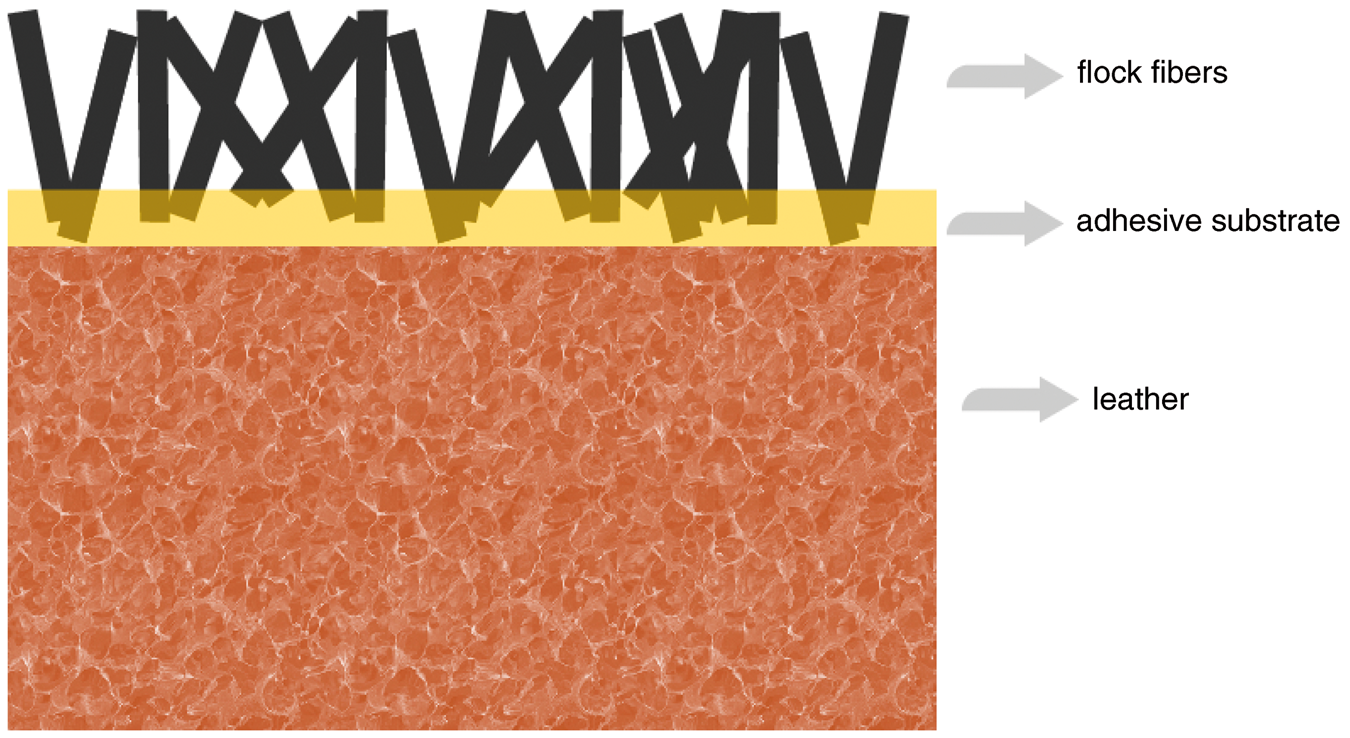
Flocking treatments were realized by applying water-based polyurethane and acrylic type binders on the semi-finished leathers, which are classified as sub-standard quality and unsold due to certain surface defects. Figures 1 and 2 show the application of the flock coating system and the leather surface after application, respectively.
Application of the flock coating system. Leather surface after flock application.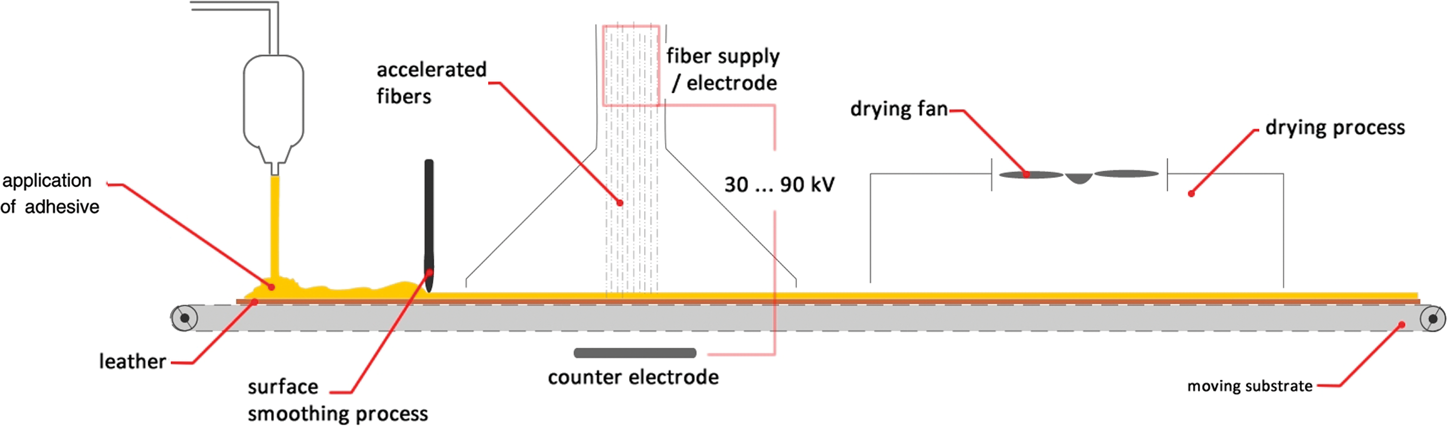
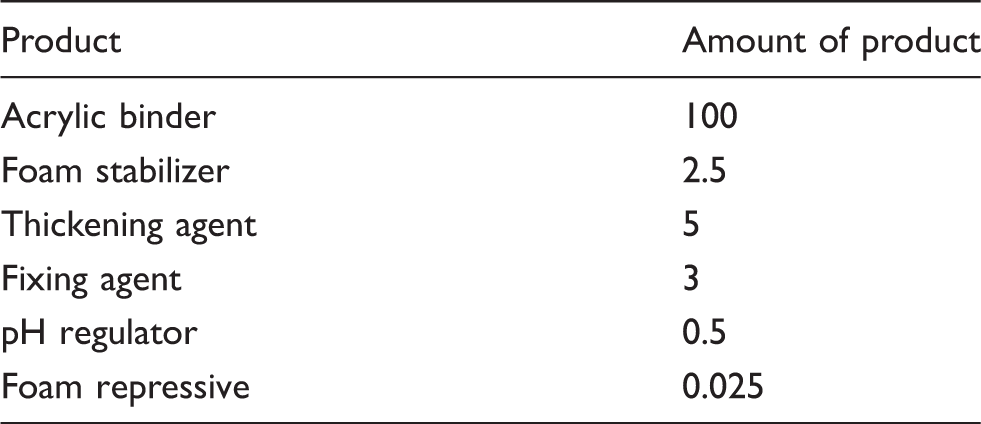
Polyurethane binder application

Acrylic binder application
Physical analyses in leather samples
During the study, sampling from leathers for physical analyses was realized in accordance with the TS ISO 2418 standard.
19
Sampling zones for physical analyses on the leather’s croupon part were determined in accordance with the norm, as shown in Figure 3.
Sampling zone from the croupon part of the leather.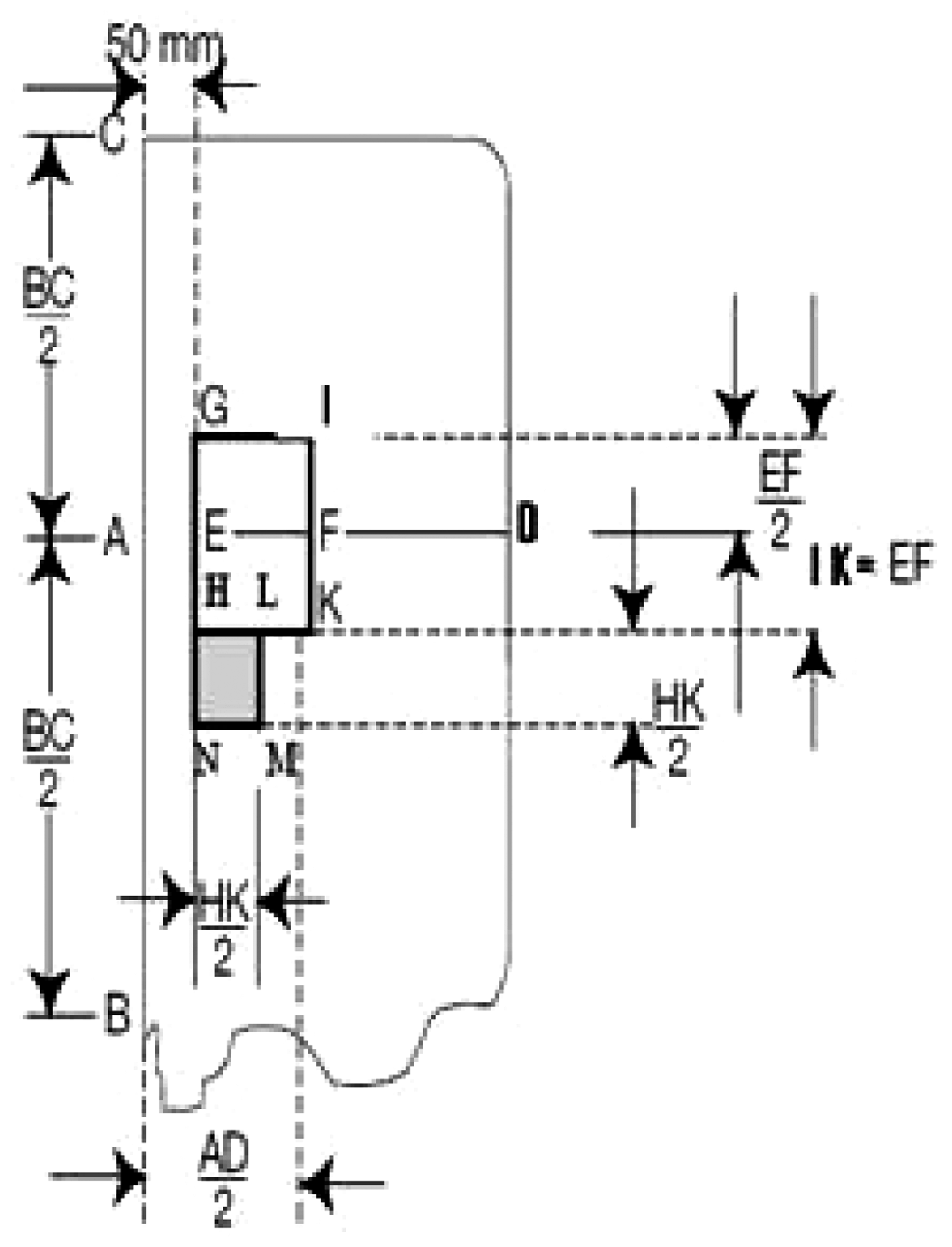
In Figure 3, the required samples for physical analyses are taken from the HGIK square and the required samples for chemical analyses are taken from the HLMN square. The samples required for the physical analyses in our study were taken from the point shown with the HGIK square on the leather’s croupon part.
The abrasion test of leather samples was carried out according to the DIN 53863-4 standard method with a Martindale test device. 20 The analyses of fastness to perspiration were realized in accordance with TS EN ISO 11641, 21 the analyses of wet, dry and sweat rub fastness in accordance with TS EN ISO 1164022 and the analyses of washing fastness in accordance with TS EN ISO 15702 standard test methods. 23
Surface characterization of flocked leather samples
The analyses of surface characterization of the flocked leather samples were carried out with a LEICA L5 FL model light microscope and with an Hitachi TM-1000 Tabletop Electron Microscope.
Results and discussion
The experiments with the water-based polyurethane binder did not indicate any technical issues during the application and in relation with flock binding. For performance evaluation, the flocked leathers obtained were subjected to Martindale abrasion tests. According to the test procedure, it was established that under 12 kPa load Martindale cycles were at 1500 and the results recorded were found to be at a sufficient level for the articles, such as garments, accessories and so on. Nevertheless, results have also indicated that abrasion performance must be improved for home textiles, saddlery, upholsteries and some interior uses, and it was determined that greasy surfaces must be cleared and the surface area for binding must be expanded by buffing.
During the experiments where an acrylic binder was used, flock applications could be smoothly practiced and adequate adhesion was achieved. In Martindale abrasion tests under 12 kPa load carried out on the flocked leathers produced with acrylic binder the rub off cycles were recorded as up to 400–500. Although flock adhesion performances with acrylic binder did not prove as good adhesion as with polyurethane; the results indicated that it could also be used in limited levels for garments and accessories. Meanwhile, results revealed that the process should be optimized with the modification of acrylic binder formulations, along with the improvement of surface characteristics.
Although a Martindale rating of 1500 is sufficient for the leathers with prominent pattern applications and appearance characteristics, such as garment leathers, it is not sufficient for saddlery and upholstery leather types, which are continuously exposed to abrasion. However, as sub-standard leathers with various structural defects were used during this study, such superficial defects are also considered as a reason for the insufficient binding. Nevertheless, a fashionable look has been provided to such sub-standard leathers through flocking, and the economic value of such unmarketable leathers was restored. Besides, this is the first and a preliminary study in the field of flock application on leather products, and it will be a source of reference for researches regarding different flock applications in the future. The obtained abrasion resistances may be improved with optimization works and different finishing formulations in the future.
Perspiration fastness value of the flocked leather products
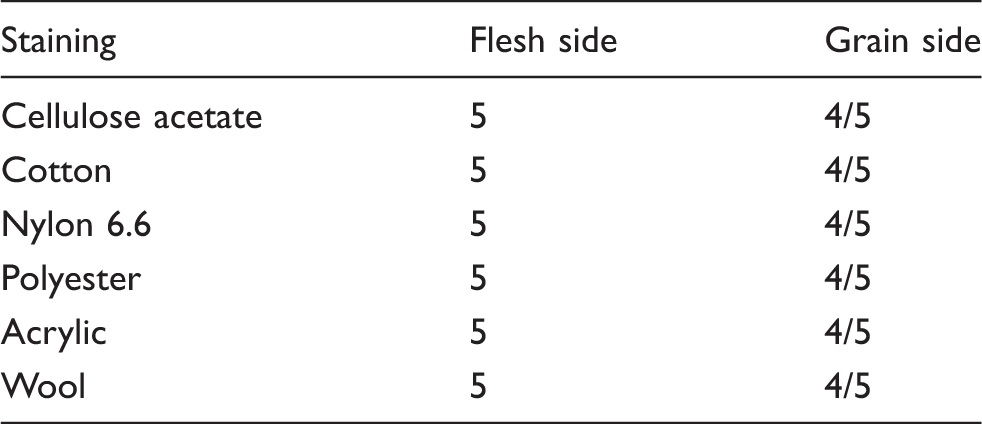
Table 3 shows that the perspiration fastness values of the flocked leather products were at good levels, both on the flesh side and on the grain side of the leather. The leathers’ fastness values on the flesh side were slightly better than that of their grain side. All the perspiration fastness values were at highly sufficient levels for all kinds of articles.
Rubbing fastness value of flocked leather products

The examination of Table 4 shows that the rub fastness values of flocked leather products are between average and good levels. The test results indicated that the fastness of flocked leather against dry rub was quite good, while sweat and wet rubbings were lower than that of the leathers suitable for interior articles. The 3 and 2/3 values were dependent on dye extraction from the leather itself, not from the flock fibers.
Washing fastness values of flocked leathers (staining of different test fabrics)

Table 5 shows that wash fastness values of flocked leathers also had acceptable quality levels. The best wash fastness values, numbered 5, were obtained for nylon 6.6 and polyester. On the other hand, the lowest fastness was identified at 3/4 fastness value for cotton.
Figure 4 indicates some pictures of the finished leather products as a result of the flocking treatment within the study.
Leather products obtained with the flocking application.
The images of flocked leather samples obtained in the light microscope are shown in Figure 5.
Images of flocked leather samples under the light microscope.
The scanning electron microscope (SEM) images of leather flocked products in 1 mm, 300 µm and 100 µm are shown in Figure 6.
Scanning electron microscope images of the flocked leathers in 1 mm, 300 µm and 100 µm.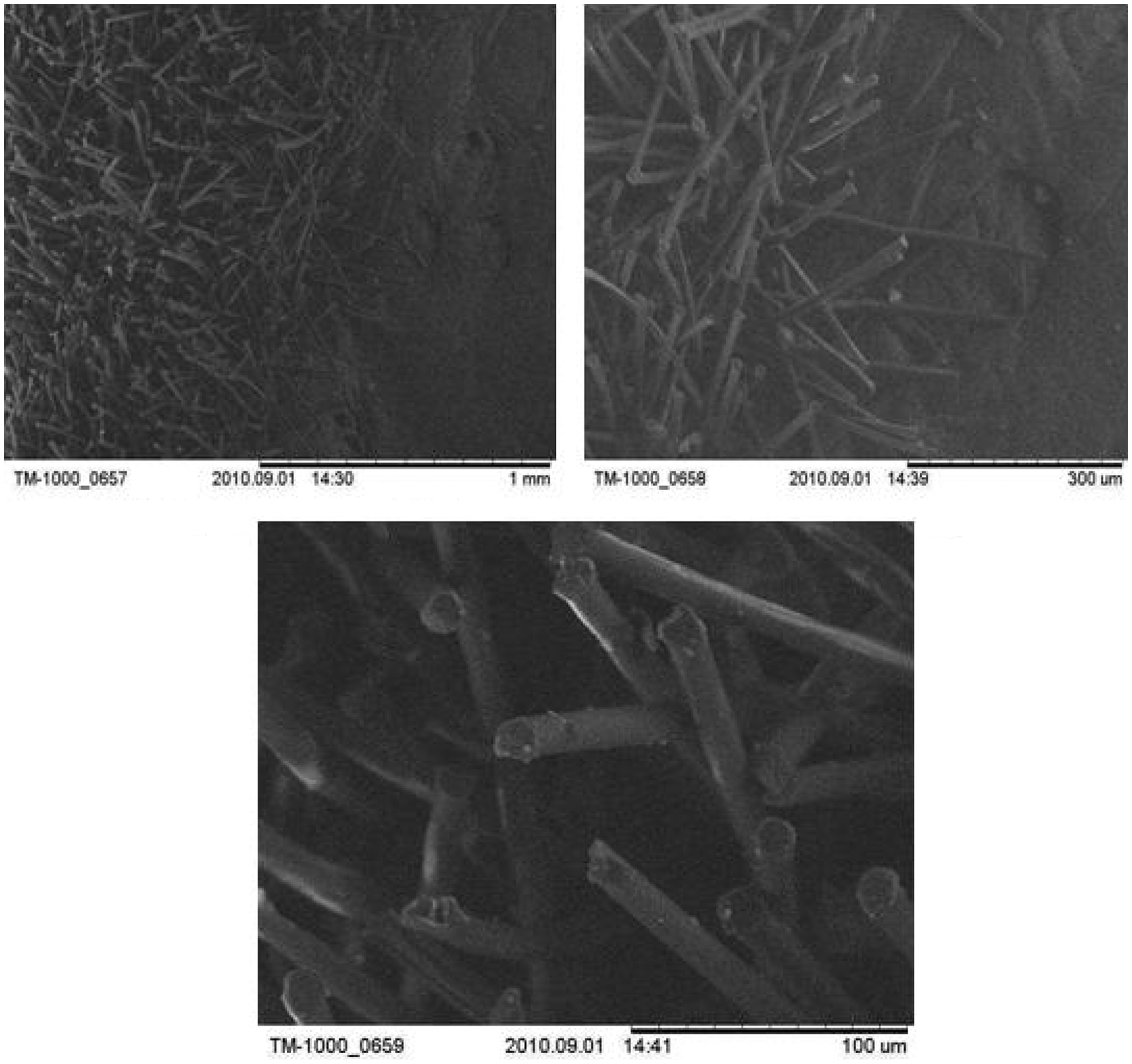
In Figure 6, the fibers on the leather’s surface are seen extremely clearly in SEM images at 100 µm. All images visible in the light microscope and SEM reflected the homogeneity in the flock fiber matrix and also displayed proper orientation.
Conclusions
Recently; the luxurious characteristic demands for leather products, including new appearance and different touch, etc., have increased together with the expansion of the fields in which leather is used. Flocking is a surface modification technique for providing velvety, suede and nubuck-like surfaces for artificial leathers and textiles through fibers or fibrous powders, thereby certain finishing options on the fibrous surface might also be possible and products with good appearance are able to successfully be derived by some treatments in accordance with the latest trendy looks.
Leather is such a valuable product that it cannot be scrapped or cut out for its surface defects. Although conventional finishing recovers the defects to a certain extent by covering them, fashionable surface effects are preferred as they increase the marketability of the goods, with higher market values, and therefore they are considered as a reasonable technical approach.
This study, in accordance with this reasonable approach, provided a practice on obtaining new modified surface characteristics with flock fiber in certain patterns, provided that the natural leather characteristics do not recede. Accordingly, synthetic suede surfaces obtained by flocking of sub-standard leathers would be able to expect to meet the expectations from various end-user segments after some further studies and modifications. The quality characteristics of flocked leathers with acrylic and polyurethane binders were tested and compared. In conclusion, flocking with a polyurethane binder satisfactorily ensured the end-use performance criteria for garments, accessories, etc., while its performance for home textiles, saddlery, upholsteries and some interior goods seemed to be insufficient due to the poor rub off. All in all, abrasion, fastness, durability and maintenance characteristics may possibly be obtained by replacement of solvent-based binder types.
Footnotes
Acknowledgement
The authors are grateful to Kazim Melih Yedigocmen and Depar Deri Plastik Inc. (Firuzkoy, Istanbul) for the technical assistance and financial support they provided.
Funding
This research received no specific grant from any funding agency in the public, commercial or not-for-profit sectors.