




Abstract
Wool fabrics were graft copolymerized with methacrylamide (MAAm) and 2-hydroxyethyl methacrylate (HEMA) in aqueous media, using a chemical redox system as an initiator. After grafting, the mechanical properties related to the hand evaluation, such as tensile, shearing, bending, compression and surface properties of wool fabrics, were evaluated by means of the Kawabata Evaluation System for Fabric. The surface morphology was examined by scanning electron microscopy. The results revealed that the surface morphology and low-stress mechanical properties of wool fabrics were remarkably changed after grafting with HEMA. The weight gain of the wool fabrics grafted with HEMA increased rapidly in the initial grafting stage and reached saturation level at 17 wt% after 20 minutes. Small deposits of oligomers were visible on wool surfaces and typical scale patterns were changed after grafting wool fabric with HEMA. The slope of the shearing hysteresis curves in the weft and warp directions for wool fabrics grafted with HEMA was increased compared with the control and wool fabrics grafted with MAAm. These results imply that the changes in tensile, shearing, bending and compression behavior of grafted wool fabrics are due to the reduction of the free internal volumes of the fabrics, leading to a tightening of its texture.
Keywords
Among natural protein fibers, wool fibers occupy a distinguished position for their outstanding properties; considerable amounts of wool fibers are used in textiles, apparel and carpets. 1 Wool possesses, however, serious inferiority in different functional performances, such as rub resistance, wash and wear properties and photo yellowing, which limit its general use. Thus, the wool finishing industry is under continued pressure to use more environmentally friendly finishing processes and to find new methods of making wool garments more competitive in the global market. Many finishing products are commercially available, but their durability is not always long enough to maintain the desired property for the entire lifespan of the products. As one of these improving techniques, grafting seems to be an important procedure.
The graft-copolymerization technique of vinyl monomers2,3 can be considered as a powerful tool to improve some inferior textile performances of natural protein fibers and to impart new physico-chemical and functional properties that are suitable for technological implementation, in order to meet market requirements for better wear and maintenance behavior of textile goods and for developing new textile products. Graft copolymerization onto various natural polymers, such as silk, 4 soya protein, 5 casein 6 and corn, 7 has been reported. With respect to the graft-copolymerization onto wool, a few studies have been carried out on the application of vinyl monomers onto wool, and their influences on the fiber properties were extensively elucidated.8–13 The grafting with vinyl monomers with different side chain bulkiness, flexibility and polarity is likely to result in effective changes in wool fiber performance and functionality. Varma and Sarkar 9 and Varma et al. 10 studied the mechanical properties of wool fiber grafted with methyl methacrylate (MMA) and they analyzed the tensile properties, including the Young’s modulus of the grafted wool fibers.
The shrinking of wool fibers deteriorates the handle of wool fabrics. Many techniques have been proposed to prevent the shrinking of wool fabrics. Grafting might be a potential technique to prevent these shrinking behaviors in addition to the improvement of easy-care. Thus, for improving the practical properties of wool fibers and fabrics, a large number of finishing techniques have been developed or proposed to develop. It is desirable to develop a new, effective and energy-saving finishing technique to produce new textile products for practical applications.
The elastic and inelastic components of low-stress tensile, shearing, bending and compressional deformations were measured using the Kawabata Evaluation System for Fabric (KES-F).14,15 The mechanical properties of silk fabrics graft copolymerized with polyethylene glycol dimethylacrylate (PEGA) were analyzed on the basis of the KES system, including bending and shearing behaviors. The grafting of PEGA induced the reduction of the free internal volumes of silk fabrics, leading to a tightening of their texture. 16 The mechanical properties of silk fabrics modified with epoxide compounds were analyzed on the basis of bending, in-plane shear and compressional characteristics experiments. 17 In addition, the value of the mechanical behavior of the silk fabrics, including shearing stiffness (G), and shearing hysteresis (2HG), can be largely attributed to the increase in the contact pressure between warp and weft yarns. However, there is no research on KES evaluation for wool fabrics grafted with vinyl polymers, such as poly(methacrylamide) (MAAm) and poly(2-hydroxyethyl methacrylate) (HEMA).
This paper deals with the mechanical properties, such as bending and shearing behaviors, of wool fabrics grafted with MAAm and HEMA. These properties are very important in determining the wearing behavior of textiles, and the results will be discussed in relation to the changes in the internal frictions within warp and weft yarns and between warp and weft yarns, focusing on the utility of the industrial application of this grafting technique.
Materials and methods
Materials
Wool fabrics (adjacent fabric for JIS L0803), for dyeing standard purposes, were the commercial products (Wool 1-1) purchased from Nihon Kikaku Kyoukai, Tokyo, Japan. The specification of the wool fabrics are as follows: the weight of fabrics is 102 g m−2; the size of the warp and weft yarns are 19 and 22 tex, respectively; and the density of the warp and weft yarns are 72 and 69 number inch−1, respectively.
Grafting
Grafting of HEMA and MAAm on wool fabric was carried out according to the same procedure as previously reported by Tsukada et al. 18 Dried wool fibers were immersed for different periods of time at 80℃ in a reaction system containing 2 g l−1 formic acid, 2.5 w/w% ammonium persulfate and 50 w/w% HEMA or 100 w/w% MAAm. The material to liquor ratio was 10:1 and 20:1 for the grafting with MAAm and HEMA, respectively. At the end of the reaction, the wool sample was refluxed with acetone to remove unreacted monomers and homopolymers, washed with tape water, dried at room temperature, and placed in desiccators before successive measurements.
Fiber weight gain was calculated from the increase in the mass of the control wool fabrics after grafting by using the following equation:

KES-F characterization
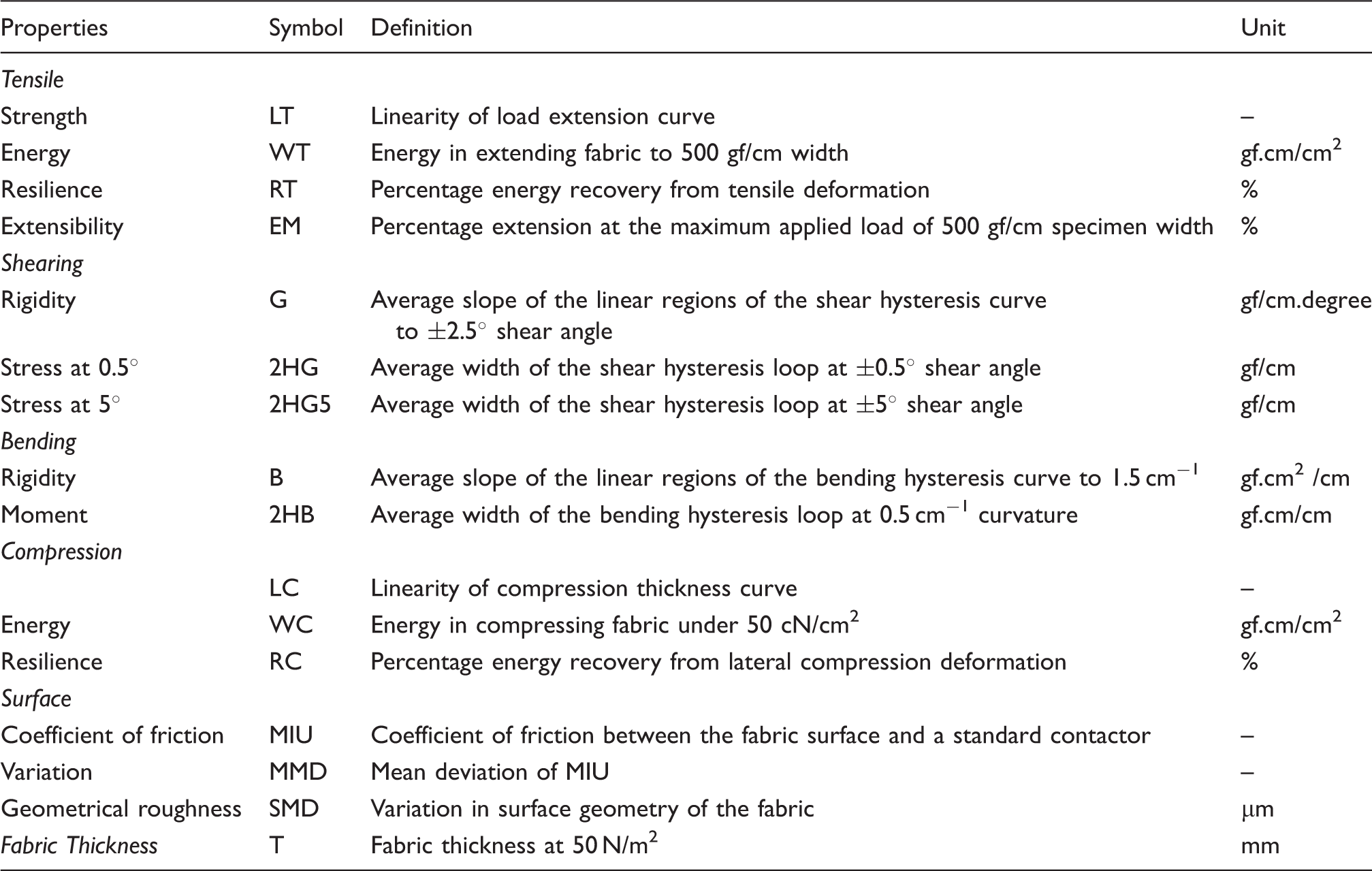
The tensile, shearing, bending, compression and surface properties as measured by the Kawabata Evaluation System for Fabric
Surface morphology
The morphologies of fibers were examined with a Hitachi S-2380N scanning electron microscope (SEM) at 15 kV of acceleration voltage. Before placing the samples in the SEM chamber, the samples were mounted onto an aluminum stud and sputter-coated with gold/palladium for 180 s (E-1010 ION SPUTTER, Hitachi, Japan) to prevent charging.
Results and discussion
Grafting of wool fibers with MAAm and HEMA
The amount and type of monomer are very important factors in controlling the extent of fiber grafting. The performance of MAAm and HEMA was evaluated by calculating the weight gain percentage of wool fabrics grafted with both monomers at different grafting times. Figure 1 shows the fiber weight gain of wool fabrics grafted with MAAm and HEMA as a function of grafting time. The weight gain of the wool fabrics grafted with HEMA increased rapidly in the initial grafting stage and attained saturation level (around 17 wt%) after 20 minutes, whereas this saturated value was very low for MAAm grafting: 5 wt%. The fiber weight gain of the wool fabric grafted with MAAm for the period of 90 minutes was 34wt%, showing a higher value than that of the wool fabric grafted with HEMA. In this study, the wool fabrics grafted at 80℃ with HEMA and MAAm for 90 minutes, whose fiber weight gain was 20 and 34 wt%, respectively, were used as the sample for KES-F measurement.
Weight gain of wool fabrics grafted with methacrylamide (MAAm) and 2-hydroxyethyl methacrylate (HEMA) as a function of time: (a) MAAm-grafted wool fiber; (b) HEMA-grafted wool fiber.
Surface morphology
Figure 2 shows the SEM images of control, wool fabrics grafted with MAAm and wool fabrics grafted with HEMA. The surface morphology of wool fabrics grafted with MAAm was similar to the control sample. The typical scale pattern of control wool fabric underwent slight modification for the wool fabric grafted with HEMA. Small deposits of foreign materials were visible on the surface of the wool fabric grafted with HEMA (Figure 2(c)). Tsukada et al.
18
reported that the surface of silk fibers grafted with HEMA was smooth when the weight gain was lower; the HEMA polymers and HEMA oligomers, however, attach on the surface of the sample beyond the weight gain of 34wt%. The wool surface morphology obtained after grafting with HEMA and MAAm is consistent with the results of silk fabrics grafted with HEMA and MAAm.
Scanning electron microscope images of wool fabrics grafted with methacrylamide (MAAm) and 2-hydroxyethyl methacrylate (HEMA): (a) untreated wool fiber; (b) MAAm-grafted wool fiber; (c) HEMA-grafted wool fiber.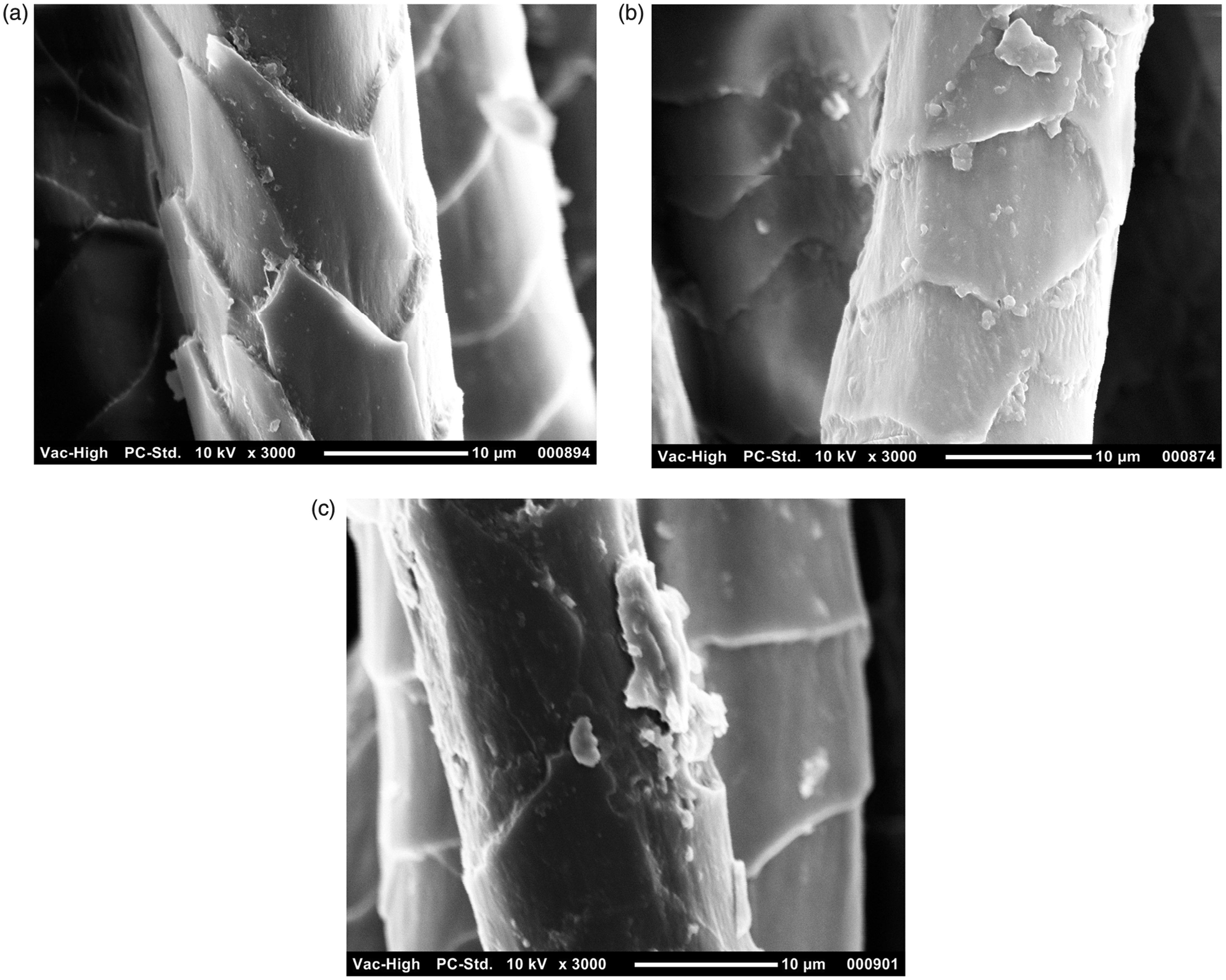
Tensile properties
The functional performances, such as handle, comfort and maintenance, of textile materials are strongly related to their mechanical performances. Therefore, the tensile properties are important parameters that are used to assess the functional performance of textiles. Figure 3 shows the tensile curves of wool fabrics grafted with MAAm and HEMA in the warp and weft directions. The initial slopes of F for wool fabrics grafted with HEMA both in the warp and weft directions are much larger than those of the control and wool fabrics grafted with MAAm. The different tensile properties, including the linearity of tensile force (LT), tensile energy (WT), tensile resilience (RT) and extensibility (EM), of the grafted wool fabrics as measured by KES-F system are shown in Table 2. The LT value of wool fabrics grafted with MAAm and HEMA increased from 0.60% to 0.66% and 0.95%, respectively, suggesting that wool samples showed the elastic tensile behaviors after being grafted with vinyl polymers.
Tensile curves of wool fabrics grafted with methacrylamide (MAAm) and 2-hydroxyethyl methacrylate (HEMA) both in warp and weft directions: (a) untreated wool fiber; (b) MAAm-grafted wool fiber; (c) HEMA-grafted wool fiber. Mechanical properties of wool fabrics grafted with methacrylamide (MAAm) and 2-hydroxyethyl methacrylate (HEMA)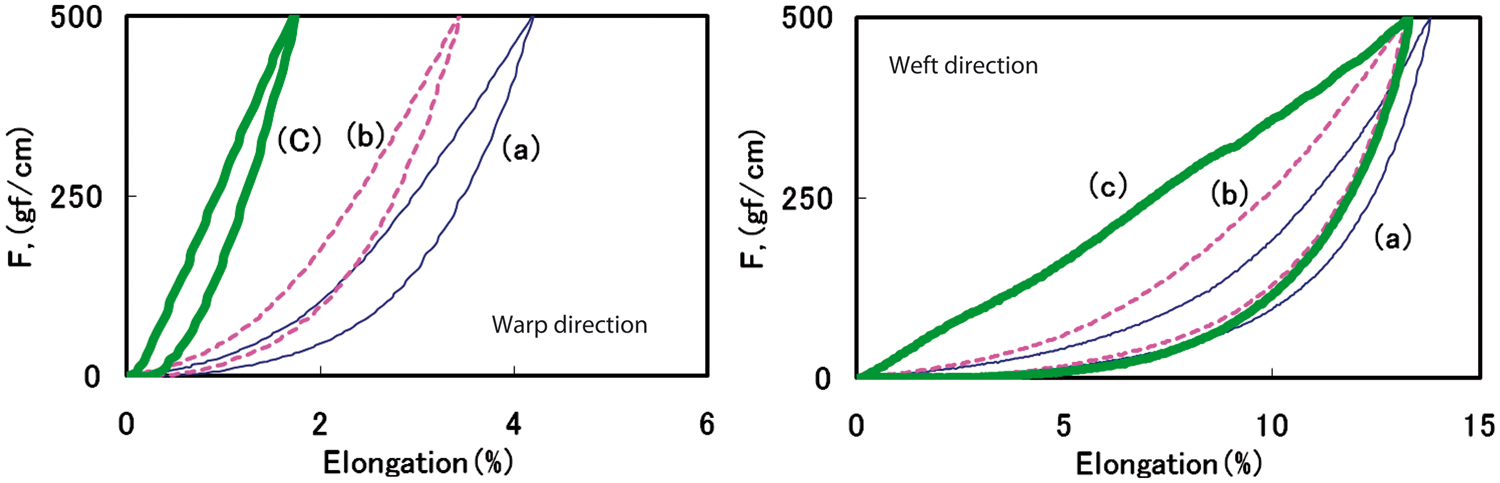
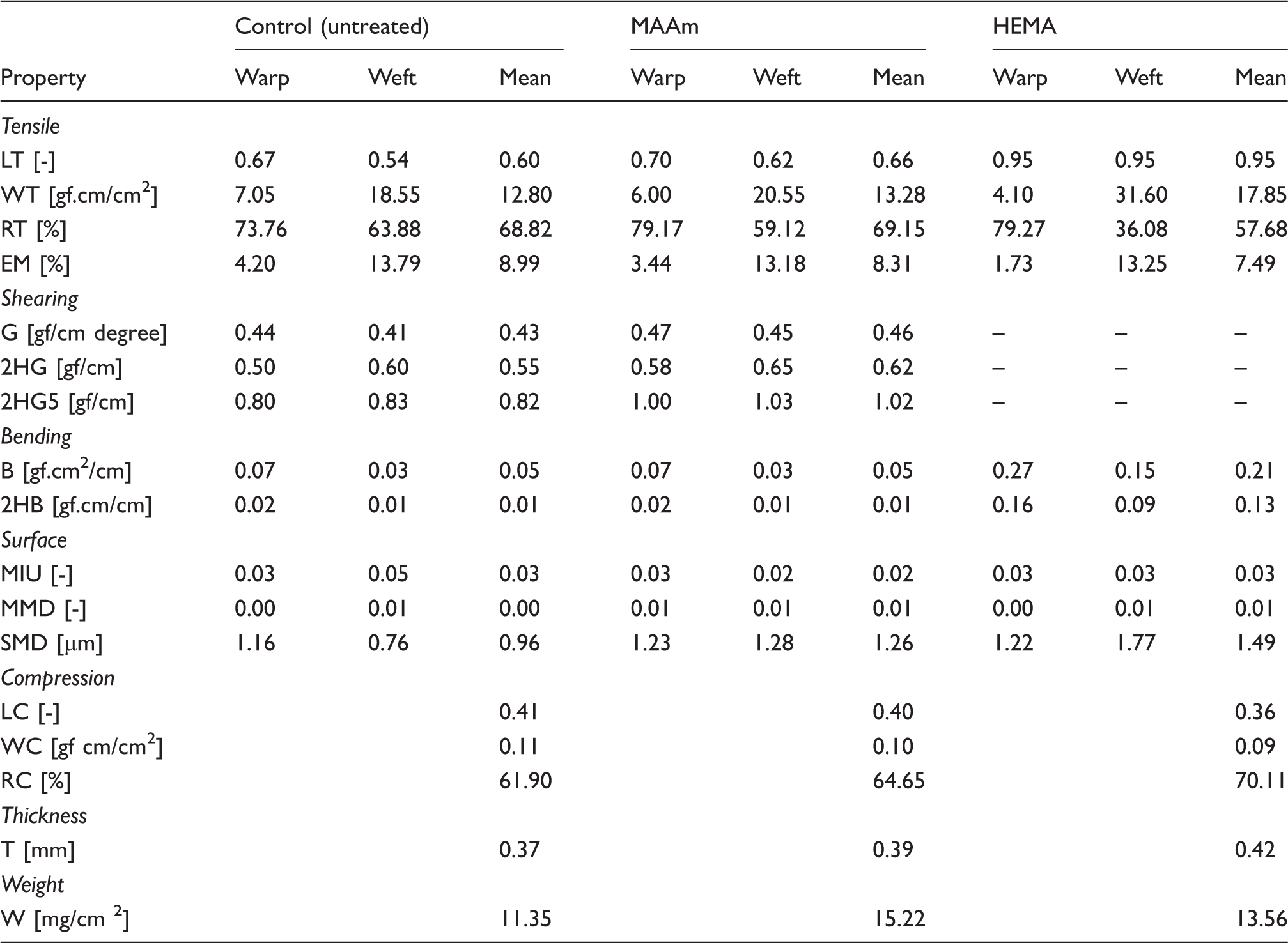
The EM value in the warp direction decreased after grafted with HEMA, indicating the influences of the elastic properties of wool fabrics, which are needed for good fabric handle. The EM values in the weft yarn stayed almost unchanged regardless of the HEMA and MAAm grafting. It seems that the tensile properties of a fabric, estimated from the KES-F measurement, mainly depend on the crimp ratio of the warp and weft yarns and not on the amount of their constituent yarns. Actually the extent of crimp ratio of the constituent weft yarn is higher than that of warp yarns. This is why the EM values in the weft direction of the HEMA grafted wool do not decrease, compared with that of control sample. However, the mean EM value of wool fabrics decreased from 8.99% to 8.31% and 7.49% after being grafted with MAAm and HEMA, respectively. These findings are supported by a previous published report. 19 Veronovski et al. 19 reported that surface treatments can alter the mechanical properties of textile materials and decrease the fabric extensibility.
The WT value in the weft direction of the wool sample grafted with HEMA increased significantly in comparison to that of the control sample. These tensile properties should be closely related to the LT and WC (compression energy per unit area) values, since the elongation behavior of the fabrics is closely related to the compression behaviors. It is accepted that the higher value of WC corresponds physically to the extent of the softness and extensibility of the wool fabrics. The RT values are related to the EM values of the fabrics. The mean value of RT was increased for the wool fabric grafted with MAAm and decreased for fabric grafted with HEMA.
Shearing properties
Shear deformation is a very common phenomenon during the wearing process, since the fabric needs to be stretched or sheared so as to conform to the new direction of body movement. During the making-up of a garment, shear deformation is also indispensable for an intended garment shape. Shear rigidity (G) provides a measure of resistance to rotational movement of the warp and weft threads within a fabric when subject to low levels of shear deformation. The lower the value of G, the more readily the fabric will conform to three-dimensional curvatures. 2HG and 2HG5 are shear stresses at shear angles of 0.5 an 5.0 degrees. The shearing properties of grafted wool fabrics are summarized in Table 2.
Shearing properties – the evaluated G, 2HG, and 2HG5 values – of wool samples grafted with MAAm remained unchanged after the grafting. However, we could not measure the shearing values for wool samples grafted with HEMA because these values exceed the maximum limits for KES measurement. This is mainly due to the very large value of the shearing rigidity of the wool fabrics grafted with HEMA. The greatly increased amount of 2HG and G influences the increasing shearing rigidity and decreasing shearing hysteresis. Shearing curves of grafted wool fabrics in the warp and weft direction are shown in Figure 4. The initial slopes of Fs for control and wool samples grafted with MAAm in the warp and weft direction are much lower than that of the wool sample grafted with HEMA. It can therefore be assumed that the larger value of initial slope of the wool fabrics grafted with HEMA are due to the stronger internal friction of the warp yarn, weft yarn, and warp and weft yarn. This is probably due to the increased fiber size of wool yarns. As we would explain in the surface character part, the increase of internal friction is probably due to the increase of wool yarn size and to the coated HEMA polymers on the surface of wool fabrics.
Shearing curves of wool fabrics grafted with methacrylamide (MAAm) and 2-hydroxyethyl methacrylate (HEMA) both in warp and weft directions: (a) untreated wool fiber; (b) MAAm-grafted wool fiber; (c) HEMA-grafted wool fiber.
Bending properties
As shown in Table 1, two parameters can be used to measure this property, B and 2HB. B is bending rigidity, a measure of a fabric’s ability to resist bending deformation. 2HB is mean width of bending hysteresis loop at 0.5 cm−1 curvature. The bending characteristics of grafted wool fabrics are summarized in Table 2.
The bending rigidity was considerably increased in wool fabrics after grafting with HEMA, whereas it was almost unchanged after grafting with MAAm. After grafting with HEMA, the mean value of B and 2HB increased from 0.05 to 0.21 gf.cm2/cm and from 0.01 to 0.13 gf.cm/cm, respectively. These results showed greater decrease of the bending rigidity of the wool fabric grafted with HEMA. Figure 5 shows the bending hysteresis loops in the warp and weft directions for wool fabrics grafted with MAAm and HEMA. In connection with the analysis of the fabric handle, Yokozawa
20
estimated the values of 2HB in bending experiments and reported that the 2HB value does not depend on the amount of internal volume, that is, the quality of air between the warp and weft yarns. It is assumed that increased 2HB values for wool fabrics grafted with HEMA are related to the increase in friction between the filaments or between the warp and weft yarns, or both.
Bending curves of wool fabrics grafted with methacrylamide (MAAm) and 2-hydroxyethyl methacrylate (HEMA) both in warp and weft directions: (a) untreated wool fiber; (b) MAAm-grafted wool fiber; (c) HEMA-grafted wool fiber.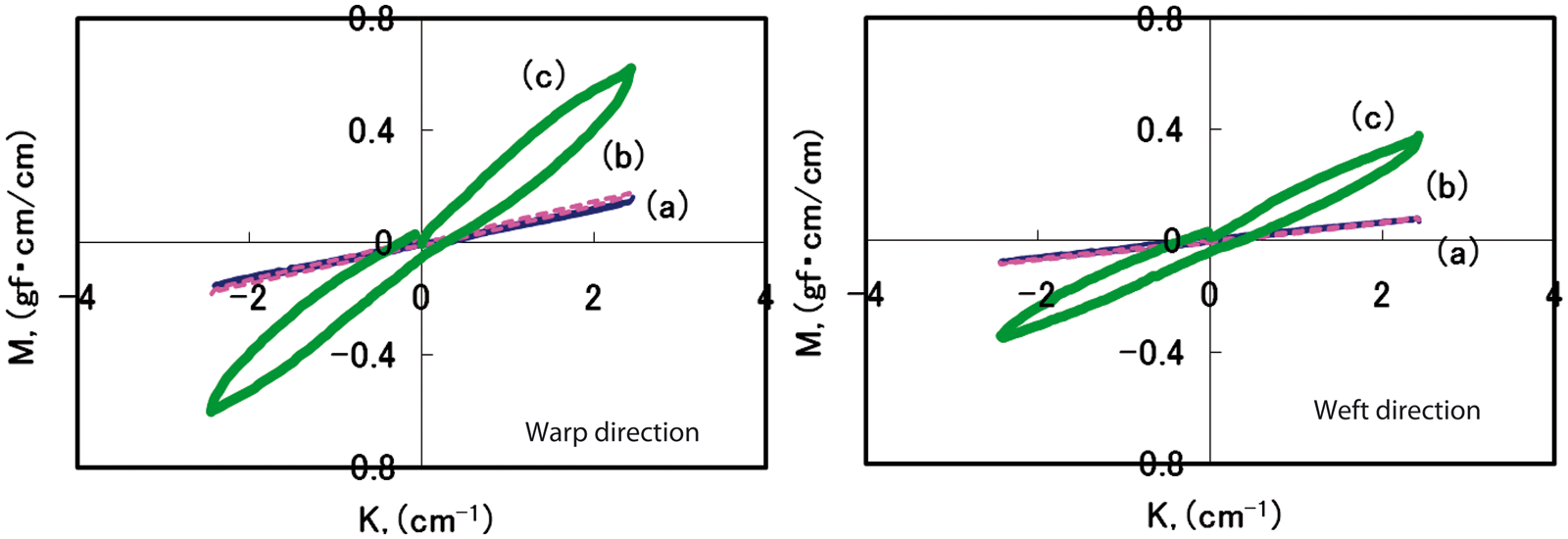
Surface properties
Apparently, fabric handle bears a close relationship with the surface property of the fabrics. Three parameters are used as indices of fabric surface property. They are MIU, the coefficient of friction; MMD, a measure of the variation of MIU; and SMD, a measure of geometrical roughness. The results of surface properties of grafted wool fabrics are summarized in Table 2. The surface properties, evaluated from the measurement of MIU and MMD for the wool fabrics, remained unchanged even after grafting with MAAm and HEMA. However, the SMD value for the wool sample grafted with HEMA slightly increased, indicating that the fabrics showed less smoothness after grafting with HEMA.
Compression properties
The results of the compression properties of the grafted wool fabric are shown in Table 2, which includes the fabric thickness (T), fabric weight, compressional energy (WC), compressional resilience (RC) and linearity of compression (LC). The thickness of wool fabrics slightly increased after grafting with MAAm and HEMA. It is expected that the bulkiness of wool fabrics increased due to the increased volume of the wool yarns. However, the actual experimental data showed contradiction. Actually the thickness (T) of the grafted wool fabrics showed a slight increase for the following two reasons. The outer surrounding cuticles prevent the growing size of the wool yarns even after immersing with grafting monomers. Another reason is that the grafting monomer polymerized into the matrix of the wool yarn, which is attributed to the prevention of an increase of size of wool yarns. A decrease in linearity of compression (LC) accompanied by an increase in the thickness (T) were found after grafting of the wool fabric. The RC value, compressional resilience, slightly increased after HEMA and MAAm grafting. These findings indicate the enhancement of compressional softness of resilience of wool fabrics.
It is supposed that MAAm is selectively immersed mainly into the matrix of wool fabrics and has not attached on the surface of the samples, regardless of comparatively higher weight gain. On the other hand, HEMA are preferentially polymerized within the matrix of wool fabrics and then HEMA polymers attached on the sample surfaces, when the weight gain increased to 20%. The higher values of the shearing and bending properties of wool fibers grafted with HEMA, compared with those of the wool fabrics grafted with MAAm, are attributed to the stronger internal friction of warp yarn, weft yarn, and warp and weft yarn for the wool fabrics grafted with HEMA. The changes in shearing behavior of grafted wool fabrics are due to the reduction of the free internal volumes of the fabrics, leading to a tightening of its texture, in such a way that a higher shear force is required to overcome the increasing friction between the warp and weft yarn, in order to achieve the same extent of deformation as the control wool fabrics. The higher resistance towards the bending deformation exhibited by the wool fabric grafted with HEMA could be attributed to the increase in friction between the filaments that form the warp and weft yarns, or between the warp and weft yarns, or both, as a result of the tightening of the fabric construction.
Conclusions
The mechanical performances related to hand evaluation of plain wool fabrics, which were prepared by grafting with MAAm or HEMA, were analyzed using KES-F system equipment. The fiber weight gain of the wool fabric grafted with MAAm for the period of 90 minutes was 34wt%, showing a higher value than that of the wool fabric grafted with HEMA. The surface morphology of wool fabrics grafted with MAAm was almost similar to the control sample. The typical scale pattern of control wool fabric underwent slight modification for the wool fabric grafted with HEMA. The mechanical properties, such as tensile, shearing and bending properties, of wool fabrics were significantly changed after grafting with MAAm and HEMA. LT was increased from 0.60% to 0.66% and 0.95%, and EM was decreased from 8.99% to 8.31% and 7.49% after grafting of wool fabrics with MAAm and HEMA, respectively. The bending properties (the values of B and 2HB) were almost unchanged after grafting with MAAm, whereas after grafting with HEMA, these values were increased from 0.05 to 0.21 gf.cm2/cm and from 0.01 to 0.13 gf.cm/cm, respectively.
Footnotes
Acknowledgements
This study was supported by a Grant-in-Aid for the Global COE Program by the Ministry of Education, Culture, Sports, Science and Technology, Japan.
Funding
This research received no specific grant from any funding agency in the public, commercial or not-for-profit sectors.