




Abstract
The surface of cotton (COT) and polyester (PET) fabrics was modified to create a water-repellent finishing by depositing a modified silica-based film using the sol-gel technique. TEOS (tetraethoxysilane)-based physically modified sols with 2% and 11% on weight fabric (o.w.f.) of hydrophobic additives were tested. N-propyltrimethoxysilane (C3), hexadecyltrimethoxysilane (C16) and 1H,1H,2H,2H-fluorooctyltriethoxysilane (FOS) were investigated as additives.
Furthermore, a low-temperature plasma pre-treatment was used to activate the COT and PET fabric surface to improve the sol-gel coating adhesion, resistance to abrasion and fastness to washing stresses.
A complete chemical/morphological (Fourier transform infrared, X-ray photoelectron spectroscopy, scanning electron microscopy) and physical characterization (abrasion and air permeability test) of treated samples was carried out. High values of θ (around 140°) on PET and COT samples were obtained with all additives used (C3, C16 and FOS) even at a low concentration (2%). Due to plasma pre-treatment, interesting water-repellent properties were achieved for PET (θ = 148°) treated with TEOS/FOS molar ratio 0.63 and for COT (θ = 140°) with TEOS/C16 molar ratio 0.63. The enhanced coating adhesion, due to plasma surface activation, was confirmed by abrasion and washing tests.
Improvement of existing properties and creation of new material properties by means of modified inorganic sols can lead to a widening of application fields of textiles. There have been some reports on the improvement of hydrophobic properties of several kinds of fabrics using nanostructures achieved by nanotechnology. 1
The production of superhydrophobic fabrics is of particular interest for the leisure market, outdoor sportswear and home textiles.
It has been proved that superhydrophobicity depends not only on surface chemistry, but also on surface topology. Two distinct theoretical models (Wenzel and Cassie–Baxter) have been used to guide the generation of superhydrophobic surface by either roughening the surface due to micro-or nano-structures (e.g. etching) or lowering the surface free energy thanks to waxy materials on top of rough structures, or both. Examples include using a microprocessing technique to produce a rough surface and subsequent chemical treatment with silane or fluoro-containing polymers to reduce the surface free energy. 2
Recently, roughened surfaces have been commonly obtained by depositing nano-sized particles into the surface and the sol-gel technique has been reported as a promising tool for the preparation of water-repellent coatings, and is particularly versatile for application on textile or wood.3–5 This process offers a low-temperature synthetic route to prepare advanced glass and ceramic materials, and is particularly important in thin film coatings on glass substrates. Employing organically modified alkoxysilanes containing long-chained aliphatic or highly fluorinated groups, sol-gel offers far-reaching possibilities to prepare water-repellent as well as oil-repellent textiles.
It has been reported that hydrophobic sol-gel-based coatings can be prepared by combining simple TEOS (tetraethoxysilane)-based sols with minor amounts of hydrophobic additives. 6
The silica nanoparticle treatment itself does not change the hydrophilic surface of cotton (COT) fabric. However, amounts of 1–2 vol.% of fluorinated silanes or alkylated silanes are reported to be sufficient to transform the hydrophilic surface of the particles into hydrophobic ones, increasing the repellence dramatically.
The low required add-on does not compromise the typical hand and breathability of fabrics. Furthermore, most fluorinated materials are very expensive and may often cause serious health hazards in the case of skin contact and environmental problems in the case of emissions of fluorine during and after the treatment process. Therefore, as it is necessary to minimize the usage of fluorinated materials, textile factories are now turning to silane chemistry. 1
However, one major barrier to widespread commercial use of silane chemistry is poor durability, in terms of washing and abrasion fastness, of the resulting hydrophobic surfaces. The durability of water-repellent coatings after washing, particularly for those produced on COT, remains a challenge, because a post-treatment is usually required to restore hydrophobic properties.
Plasma technology has been studied to pre-treat textile fibers before the application of different kinds of coatings to improve adhesion to the substrate and to favor surface functionalization.7,8
Most literature reports the use of low-temperature plasma (LTP) to enhance the abrasion resistance, while little information is found about the effect of plasma as a surface activation treatment before the application of sol-gel coatings.9,10
The aim of the present work was to confer hydrophobic behavior to COT and polyester (PET) fabrics depositing a modified silica-based film by sol-gel technique.
COT has always been the principal clothing fabric due to its attractive characteristics, such as softness, comfort, warmness, biodegradation and low cost. However, the abundant hydroxyl groups on its surface make COT water absorbent and easily stained by liquids. Therefore, additional finishing is required to impart hydrophobicity and self-cleaning properties to COT fabrics.
PET has the advantage of being produced at low cost and has excellent durability, abrasion resistance, tenacity and high elongation; the fiber also has high appearance retention, dimensional stability, elastic recovery and excellent resiliency. All of these properties make PET the best choice for outdoor high-stress use.
Sol-gel coatings were prepared by mixing TEOS-based sols with low amounts of hydrophobic additives. Moreover, a LTP pre-treatment was carried out on fabrics to improve their sol-gel coating adhesion and fastness. LTP is also known as non-thermal (cold) plasma and is characterized by an electron temperature (i.e. average electron kinetic energy) much higher than the ion or gas temperature.
Treated fabrics were characterized by scanning electron microscopy (SEM), Fourier transform infrared–attenuated total reflectance (FTIR-ATR) and X-ray photoelectron spectroscopy (XPS), while their wettability was evaluated by measuring the water contact angle.
In this work the effects of an inorganic/organic coating on textile properties of PET and COT fabrics, such as air permeability and abrasion resistance, were evaluated.
Experimental details
Materials
PET ISO-F04 Type 54 Dacron woven fabric, weight 140 g/m2, and COT ISO 105-F02 woven fabric, weight 105 g/m2, were used as textile substrates. Dimensions of fabrics were 100 mm × 100 mm.
All chemicals used, TEOS, n-propyltrimethoxysilane (C3), hexadecyltrimethoxysilane (C16), 1H,1H,2H,2H-fluorooctyltriethoxysilane (FOS) and ethanol 96% vol. (ET-OH), were purchased from Sigma Aldrich (Italy).
Sample preparation
The sols were prepared by means of acidic hydrolysis of 20 ml of TEOS as a precursor stirred with 84 ml EtOH and 4 ml HCl 0.01M for 24 h at room temperature. Then, the hydrophobic additives were added to the sol under stirring conditions.
The application on textile samples was performed by dip-coating. The impregnated samples were dried for 2 h at room temperature and thermally treated for 1 h at 120℃ in an oven. 9 On samples treated with silica-containing sols, TEOS application was kept constant at 10% on weight fabric, while the additive quantities were 2% and 11% o.w.f. Thus, the total amount of deposited coating ranged from 10% o.w.f. (pure TEOS sol) to 21% o.w.f. (with 11% o.w.f. of additives).
As regards cold plasma pre-treatment, a laboratory-scale LTP equipment was employed to carry out an etching reaction with oxygen (99.999%; Siad S.p.A., Italy) with a flow rate of 20 sccm (standard cubic centimeter), operating at a radio frequency (RF) power of 80 W (60 s for each fabric side). The working pressure was kept constant at about 50 Pa.
Characterization techniques
The amount of coating deposited on PET and COT fabrics was determined after sol application and thermal treatment of the samples with a laboratory balance. Before weight measurement, samples were conditioned at 20℃ and 65% relative humidity for 24 h.
The wettability of untreated and treated samples was investigated by a DSA20E “Easydrop standard” drop shape analysis system from Krüss (Germany), using the sessile drop method. Distilled water drops were deposited on the fabric surface by means of a software-controlled dosing system and a glass syringe. The reported contact angles were the average of at least eight measurements for each sample with a standard deviation on the average contact angles of about 2–3%. The evaluation of the drop image was performed with DSA1 software included and, due to the fast absorption rate of plasma-treated PET fabrics, a high-speed charge-coupled device (CCD) CF4016 camera was used to record videos at 149 fps, evaluating the wettability times.
Surface energy was estimated using the Owens–Wendt–Rabel method, considering that the surface tension σ of each phase (liquid and solid) can be divided into a polar and a disperse fraction.
In this study, contact angles of deionized water and ethylene glycol were measured and used to calculate the surface energy.
Investigation on the fastness behavior of treated samples in relation to domestic laundering was performed at 40℃ for 30 minutes using 5 g/l of ECE reference detergent in a Linitest machine, in accordance with the standard method ISO 105 C01.
To study the morphological distribution of coating, micrograph images of treated and untreated fabrics were obtained with a LEO 435VP scanning electron microscope from LEO Electron Microscopy Ltd (UK). Small parts of the samples were arranged in aluminum stubs and covered with gold using the Emitech K550 (Germany) sputter coater (current 20 mA, time 240 s).
The surface chemistry of the fabrics, before and after treatment, was analyzed by FTIR-ATR spectroscopy.
The fabric samples spectra were collected in ATR mode, using an ATR accessory (Specac Ltd) equipped with a ZnSe crystal with an angle of 45°. All of the samples were analyzed by means of FTIR reflectance. Nanosol solutions of TEOS, pure and physically modified with additives, were deposited on a KBr pellet and then placed in an oven at 120℃ to allow complete evaporation of the contained ethanol. The spectra were collected in the transmission mode using a pellet holder. KBr pellets (1 mm height, 10 mm diameter) were prepared with a hydraulic press (Specac Ltd), pressing 200 mg of KBr powder (Sigma Aldrich p.a. for IR spectroscopy) at 10 tons for 2 minutes. KBr pellets were prepared by using the same quantity of samples.
All the spectra were collected using a Thermo Nicolet Nexus 510 spectrometer (Thermo Scientific, Italy) in the range of 400–4000 cm−1, co-adding and averaging 100 scans at 4 cm−1 resolution. The spectra were processed by means of OMNIC software and analyzed after smoothing and baseline correction.
Moreover, treated and untreated samples were analyzed using XPS with a PHI 5000 Versa Probe system (Physical Electronics, USA) using monochromatic Al radiation at 1486.6 eV, 25.6 W power, with an X-ray beam diameter of 100 µm. The energy resolution was about 0.5 eV. XPS measurements were performed at a pressure of 1.0 × 10⁻⁶ Pa. The pass energy of the hemisphere analyzer was maintained at 187.85 eV for the survey scan and 29.35 eV for the high-resolution scan, while the take-off angle was fixed at 45°. Since the samples are insulators, an additional electron gun and an Ar+ ion gun were used for surface neutralization during the measurements. The binding energies of XPS spectra were corrected by referencing the C1s signal of adventitious hydrocarbon to 285 eV. XPS data fittings were carried out with PHI multipak™ software using the Gauss–Lorenz model and Shirley background.
Air permeability tests were performed using air permeability equipment TEXTEST FX 3300 (Switzerland) in accordance with ISO 9237. The samples were conditioned at 20℃ and 65% relative humidity for at least 24 h before the measurements. The air flux (l/m2/s) that passes through the fabric was evaluated at a pressure difference of 100 Pa. Abrasion tests were performed using a Nu-Martindale Abrasion and Pilling Tester from James Heal & Co. Ltd (UK). According to the ISO 12947 standard method, round specimens with a diameter of 38 mm were cut out of the samples and subjected to 2000 abrasion cycles with a load of 9 kPa.
Results and discussion
Contact angle and wettability measurements
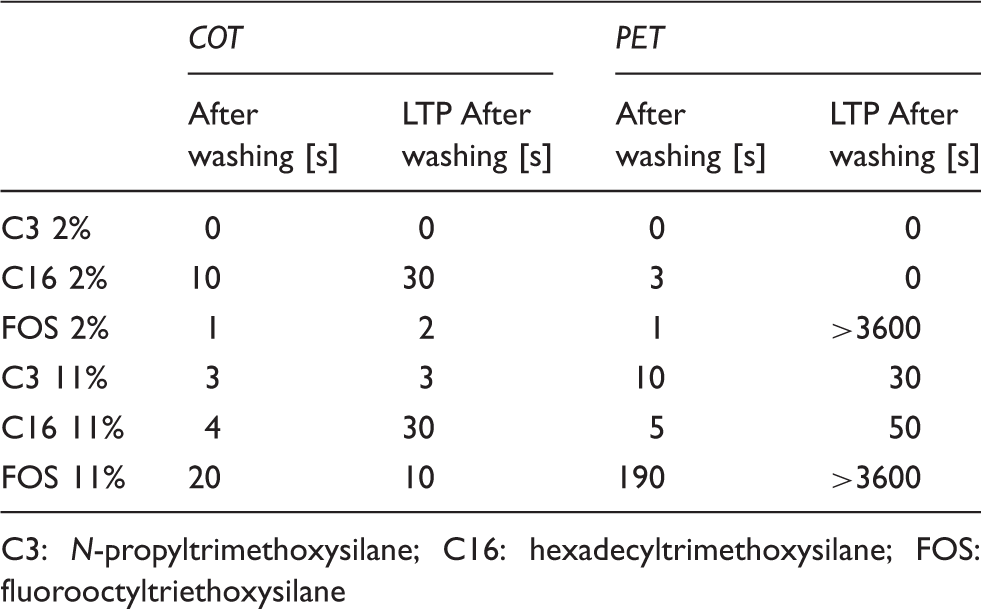
The results of contact angle θ (Figures 1 and 2) and wettability (Table 1) measurements carried out on COT and PET samples are shown. High values of θ (around 140°) on PET and COT samples are obtained with all additives used (C3, C16 and FOS) even at a low concentration (2%). As regards COT, the result is more evident: for example, the sol-gel treatment with 11% FOS determined a contact angle of 145° on the fabric surface and wetting times longer than 1 hour, while the contact angle for untreated COT is 70° and water drops spread instantly when placed on the fabric surface.
Contact angle measurements of sol coated on cotton (2 and 11% of additives on the fabric weight) before and after washing and low-temperature plasma (LTP) before and after washing. Contact angle measurements of sol coated on polyester (2 and 11% of additives on the fabric weight) before and after washing and low-temperature plasma (LTP) before and after washing. Water absorption time of sol-gel treated cotton (COT) and polyester (PET) samples, with or without low-temperature plasma (LTP) pre-treatment, after washing C3: N-propyltrimethoxysilane; C16: hexadecyltrimethoxysilane; FOS: fluorooctyltriethoxysilane
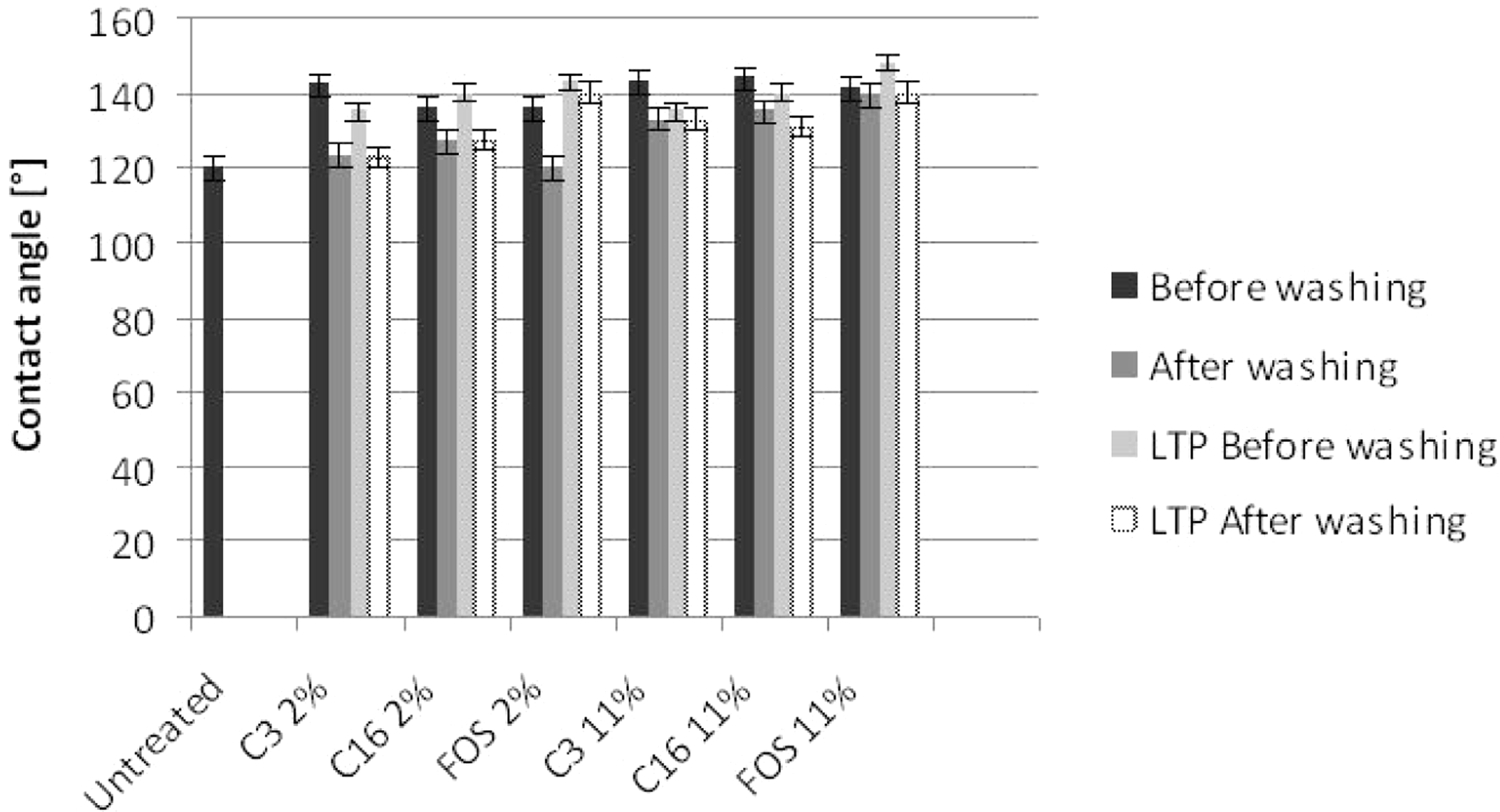
PET-treated fabrics do not show a great increase in the contact angle compared with untreated samples (θ = 120°).
However, after the washing test the contact angles of treated samples decreased to values similar to those of untreated samples, indicating a removal of the coating.
In order to enhance the adhesion between the hydrophobic coating and the substrate, all fabrics were pre-treated with LT oxygen plasma. Oxygen plasma treatment promotes the creation of polar groups on the fabric surface, thus improving adhesion and formation of siloxane bonds with the nanosol coating.
The production of polar groups on the polymer surface due to plasma action increases the wettability and surface crosslinking with the coating.
Moreover, plasma has a physical effect on the surface through an etching, forming micro-roughness on the treated surface that enhances the adhesion of the coating.
As shown in Figure 1 and Table 1, for COT plasma pre-treated substrates, the best results are obtained with C16 (11% o.w.f.) modified sol: in fact, after washing, the contact angle on coated COT fabrics is still 132° and wettability time 30 s. The hydrophobic properties obtained with C16 silica sol, at 11% o.w.f. on COT, suggest that natural water-repellent textiles could be prepared without any addition of fluorine-containing compounds.
For PET plasma pre-treated samples (Figure 2 and Table 1), the best result (θ = 148°) was obtained with TEOS nanosol modified with FOS (11% o.w.f.); the hydrophobic properties showed a slight decrease after washing (θ = 140°), while the wettability time is higher than 3600 s.
The results show that the coating with silica sol containing long-chained alkylsilane additives, such as C16 and FOS, has more hydrophobic properties, probably because the longer alkyl chain increases the shielding effect of hydrophilic silica, as found in the literature.11,12
Surface energy
Contact angle and surface energy values of plasma pre-treated cotton (COT) and polyester (PET) coated with tetraethoxysilane (TEOS) sol modified with hexadecyltrimethoxysilane (C16) and fluorooctyltriethoxysilane (FOS) additives (11% o.w.f.)

The treated PET shows surface energy values similar to the untreated ones; this result is related to the high contact angle (120°) measured for the starting material.
Fourier transform infrared analysis
Untreated, plasma pre-treated and coated COT and PET fabrics were analyzed with a FTIR spectrometer equipped with an ATR microreflection device.
Figure 3 illustrates the infrared spectra related to plasma-treated PET and untreated samples. The effect of oxidation of the PET surface due to plasma treatment is shown by the increase in the peak due to the absorption of C–O bonds at 1124, 1100 and 970 cm–1.
13
Fourier transform infrared spectra of plasma-treated polyester fabrics (b) compared with untreated sample (a).
The spectra of untreated and plasma-treated COT (Figure 4) have similar characteristic absorption between 3100 and 3400, 2894 and 1308, and at 1021 cm–1, corresponding to O-H, C-H and C-O stretching and C-H bending vibration. The absorption intensity of plasma-treated samples is higher than that of untreated samples, probably due to the increase and formation of polar groups such as C=O (1647 cm–1), –OH (3340 cm–1), respectively, due to plasma surface oxidation.14,15
Fourier transform infrared spectra of plasma-treated cotton fabrics (b) compared with untreated sample (a).
As regards sol-coated samples, not all signals of deposited TEOS nanosol and additives were clearly visible due to the overlapping with characteristic absorption bands of plasma-treated fabrics. However, all the samples showed a decrease in their absorption bands (Figure 5), which is considered a sign of the coating presence, according to literature data.
16
Fourier transform infrared spectra of plasma pre-treated cotton fabric and coated with modified sol (fluorooctyltriethoxysilane additive, 11% o.w.f.) (b) compared with untreated sample (a) in the 4000–650 cm–1 range.
The chemical composition of pure TEOS sol and the sol of TEOS mixed with additives or with molar ratio 0.63, which was used for the tests on fabrics, was investigated by FTIR spectroscopy in transmission mode (KBr pellets)
Figure 6 shows the comparison between spectra of pure TEOS sol, pure FOS additive and TEOS/FOS sol (M:0.63).
Fourier transform infrared spectra of tetraethoxysilane (TEOS) sol (a), pure fluorooctyltriethoxysilane (FOS) (b) and TEOS/FOS sol (c) in transmission mode.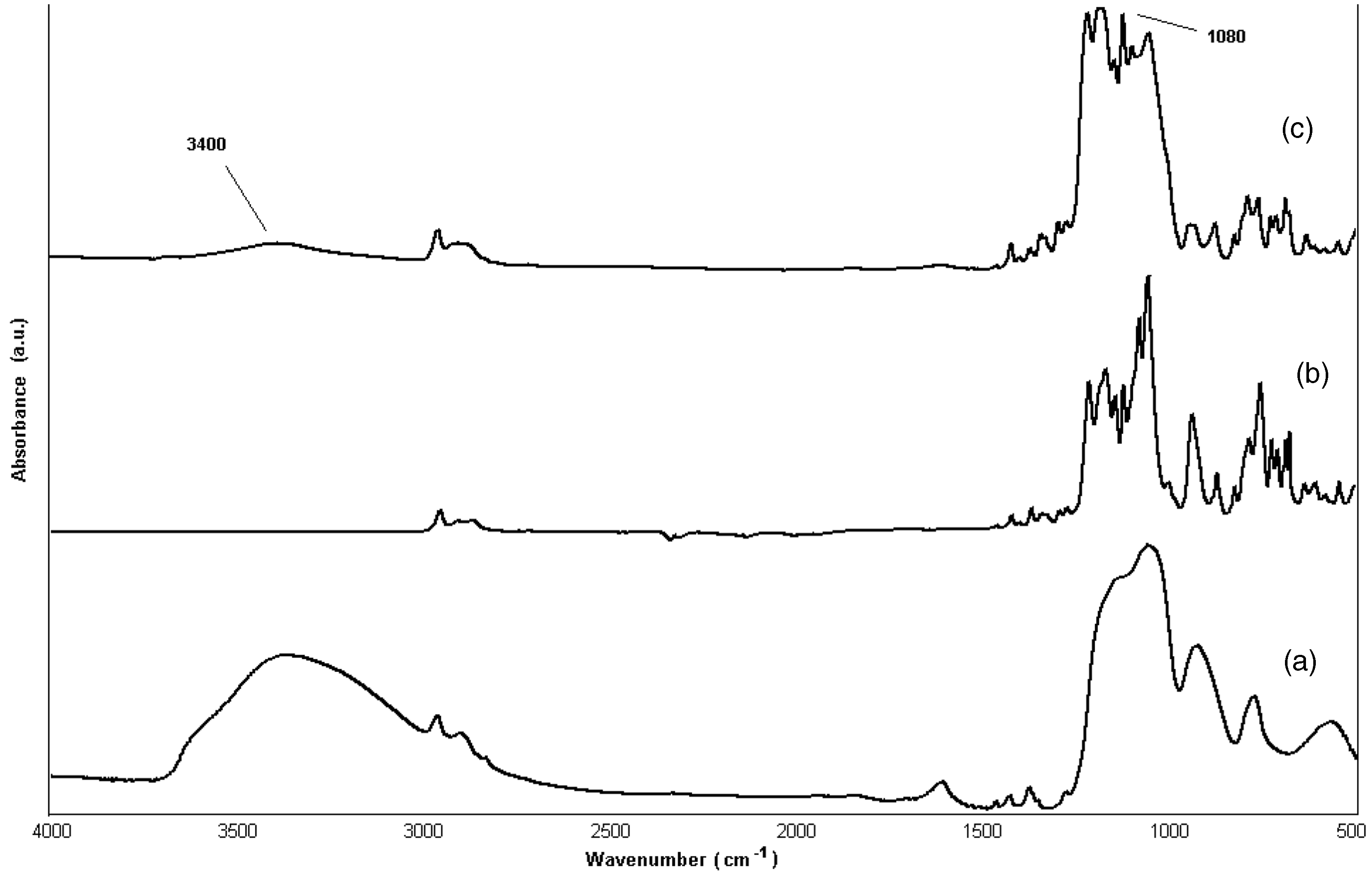
The spectrum of silica film modified with FOS, compared to pure TEOS film, shows a lowering of absorption peaks at 3400 cm–1 assignable to O-H peaks. 17 The absorption peak at 1080 cm–1 corresponds to the Si-O-Si asymmetric stretching vibration. Moreover, the FTIR spectrum of the TEOS-modified film with FOS shows CF stretching absorptions ascribable to CF2 and CF3 (1050–1200 cm–1).17,18
X-ray photoelectron spectroscopy analysis
At first, a low-resolution XPS survey scan was carried out to determine the percentage of elements on untreated and plasma-treated, TEOS/C16 COT fabric.
X-ray photoelectron spectroscopy (XPS) survey scan of C1s, O1s, F1s, O/C ratio % and XPS high resolution of C1s components (%) of (1) O2 plasma treated; (2) tetraethoxysilane (TEOS)/hexadecyltrimethoxysilane (C16) M:0.63; (3) TEOS/fluorooctyltriethoxysilane (FOS) M:0.63 treated and untreated cotton (COT) fabrics

X-ray photoelectron spectroscopy high resolution of Si2p components (%) of tetraethoxysilane/hexadecyltrimethoxysilane (C16) M:0.63-treated cotton (COT) fabric
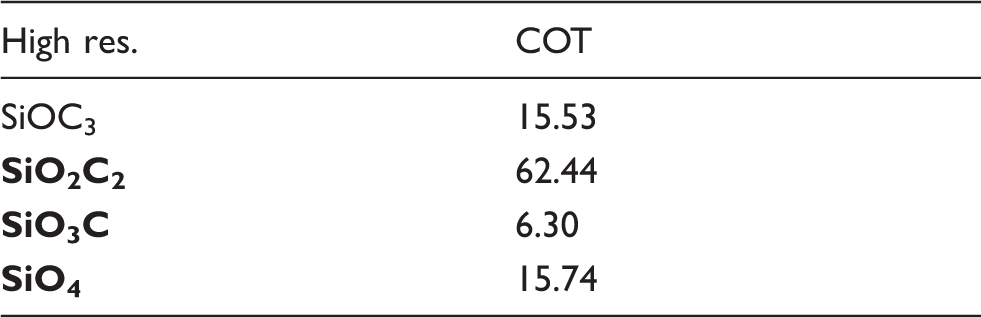
Treated COT fabric revealed the presence of nanosol modified with a fluorosilane by the appearance of fluorine (F1s) (689 eV) peaks in XPS spectra.
In particular, from the high-resolution C1s peak related to FOS-modified nanosol, the presence of fluorine is in forms of CHF– (289.9 eV), –CF2 (292.1 eV) and –CF3– (294.2 eV) (Table 3). Moreover, the XPS spectra of the sample treated with sol TEOS/FOS show that the intensity of the component related to –CF2 is present in large amounts.
X-ray photoelectron spectroscopy (XPS) survey scan of C1s, O1s, F1s, O/C ratio % and XPS high resolution of C1s components (%) of (1) O2 plasma-treated polyester (PET) fabric; (2) tetraethoxysilane (TEOS)/fluorooctyltriethoxysilane (FOS) M:0.63; (3) TEOS/FOS M:0.63 treated and untreated polyester (PET) fabrics
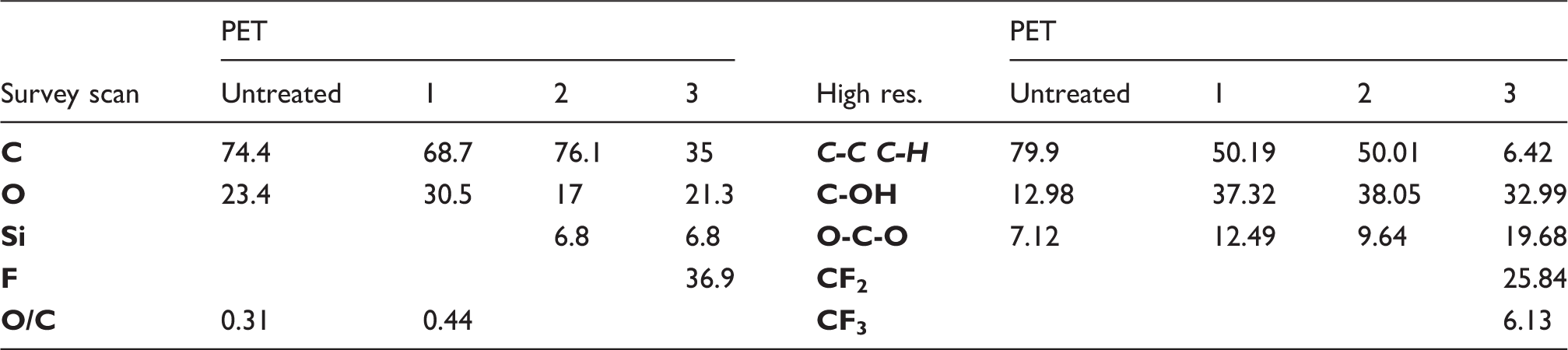
X-ray photoelectron spectroscopy (XPS) high resolution of Si2p components (%) of sol (tetraethoxysilane (TEOS)/hexadecyltrimethoxysilane (C16) M:0.63) treated polyester (PET) fabric

Scanning electron microscopy analysis
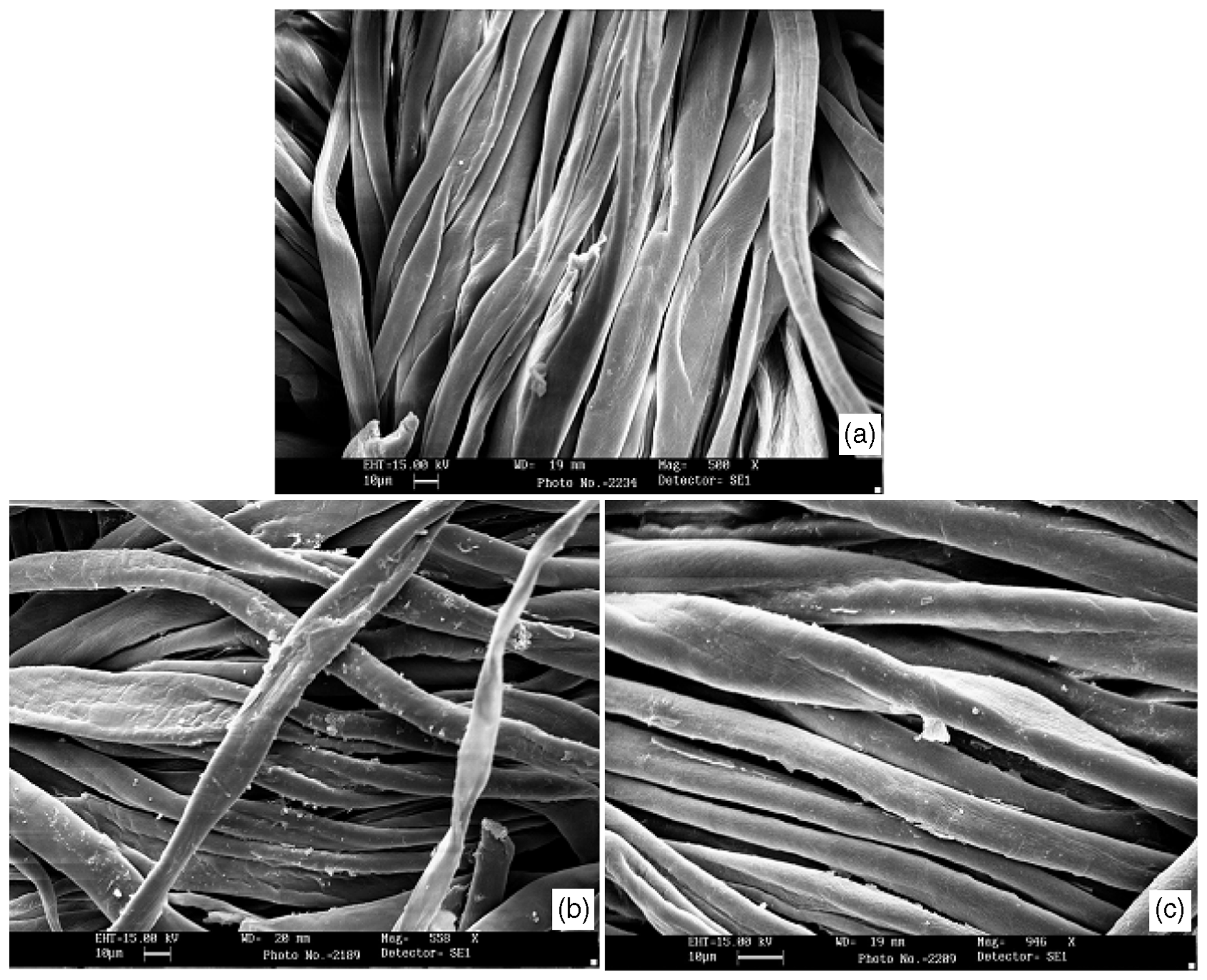
SEM was used to study the morphological distribution of sol-gel coating deposited on plasma pre-treated fabrics. All samples showed the formation of a coating on the fiber surface. Representative SEM micrographs are shown in Figures 7 and 8. For coated PET fabric, the photographs show that a uniform and coherent film formed on each fiber and in the contact points between the fibers; in particular for a high concentration of additives (Figure 7(b)), it was possible to observe agglomerates of different sizes. After washing tests (Figure 7(c)), the partial removal of the coating did not affect the hydrophobic surface properties acquired, as confirmed by contact angle measurements (Figure 2). The same behavior was observed for COT plasma pre-treated and coated fabrics (Figure 8).
Scanning electron microscopy images of untreated (a), plasma pre-treated and coated with tetraethoxysilane (TEOS) sol modified with fluorooctyltriethoxysilane (FOS; 11% o.w.f.) Polyester fabric, before (b) and after (c) washing test. Scanning electron microscopy images of untreated (a), plasma pre-treated and coated with tetraethoxysilane (TEOS) sol modified with fluorooctyltriethoxysilane (FOS; 11% o.w.f.) Cotton fabric, before (b) and after (c) washing test.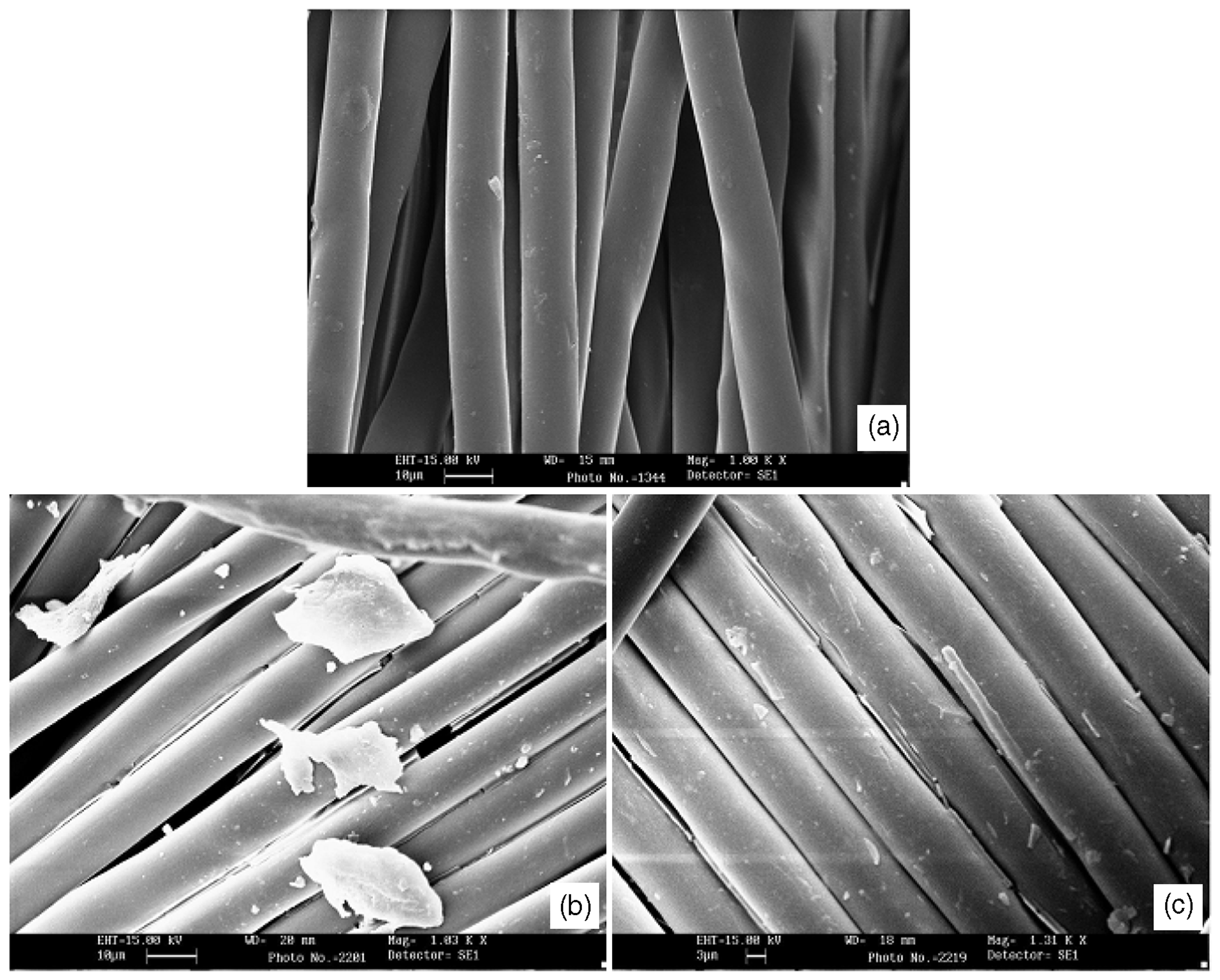
Physical tests
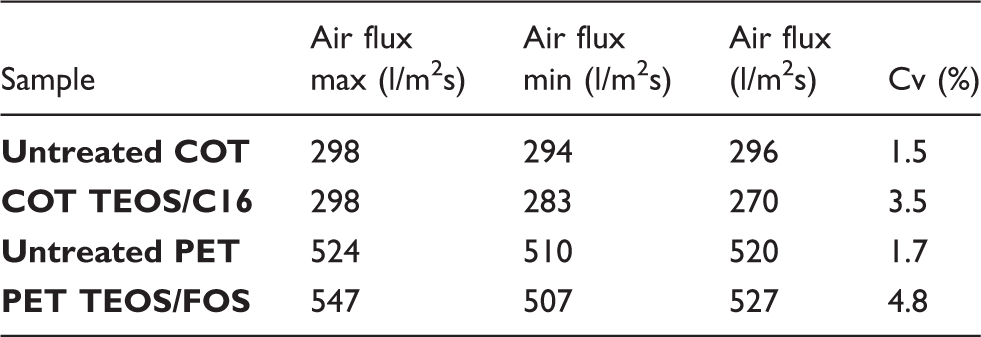
Results of air permeability test for plasma pre-treated and coated polyester (PET) (with tetraethoxysilane (TEOS) sol modified with fluorooctyltriethoxysilane (FOS) 11% o.w.f.) and cotton (COT) (with TEOS sol modified with hexadecyltrimethoxysilane (C16) 11% o.w.f.) fabrics compared with untreated samples
Moreover, an abrasion test was used to verify the adhesion of the coating to the substrate, measuring the contact angle values and wetting times after 2000 abrasion cycles.
Contact angle and wetting times before and after abrasion test for plasma pre-treated and coated polyester (PET) (with tetraethoxysilane (TEOS) sol modified with fluorooctyltriethoxysilane (FOS) 11% o.w.f.) and cotton (COT) (with TEOS sol modified with hexadecyltrimethoxysilane (C16) 11% o.w.f.) fabrics

Conclusions
The aim of this work was to confer hydrophobic behavior to COT and PET textiles by a TEOS sol-gel coating modified with suitable additives (C3, C16 and FOS). Moreover, in order to preserve the hydrophobic properties acquired with the coating, all fabrics were pretreated with oxygen plasma. A complete chemical/morphological (FTIR, XPS, SEM) and physical characterization (abrasion and air permeability test) of treated samples was carried out.
The best results were obtained combining a plasma pre-treatment with sol-gel TEOS/C16 coating for COT fabrics and TEOS/FOS coating for PET fabrics, using the highest percentage of additive on weight fabric (11%).
Future work will be focused on the enhancement of treatment fastness by the chemical modification of the TEOS nanosol, partial replacement of ethanol with water as the dilution medium and the reduction of plasma power and exposure time in an interesting attempt to lower the environmental impact of the process.
Footnotes
Acknowledgment
The authors would like to thank Dr R Innocenti for the fruitful discussion of the obtained results.
Funding
This research received no specific grant from any funding agency in the public, commercial or not-for-profit sectors.