




Abstract
The electrical property evolution of a metal/polyethylene terephthalate (PET) composite during tensile deformation was theoretically analyzed in this work. It was found that the resistance variation of a metal/PET composite during tensile deformation falls into two parts: before a crack appearance and after a crack appearance. Before a crack appears on the coated metal layer, the resistance variation complies with Ohm’s law. After that, the resistance variation of the metal/PET composite, on the whole, correlates with the elongation rate of the metal/PET composite in an exponent relation. In addition, the resistance variation of the Al/PET composite during tensile deformation was tested for verifying the correctness of the theoretical analysis.
With the rapid development of the electronic industry, more and more attention has been paid to electronic functional materials. As an electronic kind of functional materials, metalized polyethylene terephthalate (PET) composites provide good quality antistatic and conductivity properties, high electromagnetic shielding effectiveness, good flexibility, good heat-conducting performance and so on.1,2 They therefore have extensive applications in the electronic industry. Moreover, the metalized PET composites can be split into laminating filaments to weave textile fabrics with special antistatic and anti-electromagnetic functionalities. 3 However, the composites will be under the action of tensile forces during use, which could cause the composites to be damaged and lose their functionality. Therefore, great attention has been paid to the deformation mechanisms of the composites.
Up until now, a great number of investigations have been carried out on this subject. Some previous studies4,5 analyzed the stresses and deformation processes in thin films on substrates and found that substrate-bonded metal films may rupture by strain localization rather than cleavage. Moiseeva et al. 6 investigated the fracture mechanism of a metallic coating under uniaxial stretching of polymer support. Lu et al.7–9 reported that metal films well-bonding to polymer substrates can be stretched beyond 50% without cracking, and the stretching is only limited by the rupture of the polymer substrate. However, for the polymer-supported nanocrystalline metal films, three factors are responsible for the failure of plastic deformation of the metal films, including (1) strain localization at large grains; (2) deformation-induced grain growth; (3) film debonding from the substrate. In addition, they also investigated the effect of film thickness on the failure strain of polymer-supported metal films. Kim et al. 10 studied the surface modification of polymers and intended to improve the adhesion between evaporated copper metal film and a polymer. Bautista et al. 11 briefly discussed the correlations between mechanical stress, electrical conductivity and nanostructure in Al films on a polymer substrate.
In fact, a metalized PET composite can be an electronic kind of functional material owing to its good conductivity and high electromagnetic shielding effectiveness. The conductivity of the metal/PET composite determines whether the composite processes their functionality and it is also a prerequisite to whether it is possible to continue using the composites. So it is necessary to investigate the electrical resistance variation of the metal/PET composite during tensile deformation.
In this work, the electrical property of a metal/PET composite during tensile deformation was analyzed theoretically. In order to verify the theoretical analysis, a synchronous electrical resistance collection apparatus in the process of tensile experiments was designed. Based on the self-modified tensile instrument, the resistance of the Al/PET composite during tensile deformation was tested and compared with the theoretical analysis.
Theoretical analysis
Normally the PET film is non-conductive. The metal/PET composite has a good conductivity due to the existence of the coated metal layer. However, when the metal/PET composite is drawn under an external load, the coated metal layer will deform and even ruptures appear, which results in the electrical property variation of the composites.
Many factors affect the electrical property of the metal/PET composite, including the characteristics of the coated metal, the processing technology of the composite, the application environment and so on. In order to simplify the theoretic analysis on the electrical property of the metal/PET composite, the following hypotheses were proposed. (1) The metal contained a single component with high purity. The existence of impurities would affect the resistivity of the coated metal layer of the composite. (2) The coated metal layer was uniform and the coated metal layer thickness was constant on the same sample. (3) There was excellent adhesive force between the coated metal layer and PET substrate.
When a metal/PET composite is drawn under a tensile stress, the coated metal layer of the composite will first get longer in length and narrower in width, as well as thinner in thickness. As we know, the Young’s modulus of the metal film is significantly higher than that of PET film. Therefore, as the composite continues to be drawn under the tensile stress, cracks start to appear firstly in the coated metal layer. With the continuous drawing of the composite, the cracks in the coated metal layer increase. However, thanks to the lower Young’s modulus of the PET film, the coated metal layer will not immediately completely break. The cracks are connected with each other by the other part of the coated metal layer with no cracks. Finally the coated metal layer falls apart completely. Therefore, the analysis of the electrical property of a metal/PET composite falls into two parts: (1) before a crack appearance; (2) after a crack appearance.
Before a crack appearance
When a metal/PET composite is drawn under a tensile stress, the coated metal layer is still a complete continuity before a crack occurs in the coated metal layer. The structural characteristic of the coating metal film is similar to that of the bulk metal. Therefore, we can suppose that the resistance variation of the composite during this phase complies with Ohm’s Law. 12
Usually the tensile samples are cut into a rectangle shape. We assume that the original length and cross-section of the coated metal layer are
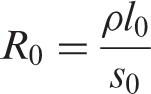
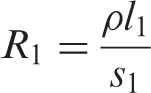
Note that during the tensile process of the metal/PET composite, not only the Poisson’s ratios of the PET and the coating metal film increased with the elongation rate of the composite, but also the thicknesses of the films changed. The conductivity of the metal/PET composite depends on the coated metal layer. Therefore, the resistance variation of the metal/PET composite during the tensile process is determined by the length and cross-section of the coated metal layer. However, if it is constant for the volume of the metal/PET composite before and after tension, then one has

Equation (3) can be rewritten as follows:
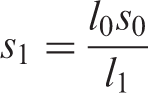
Substituting Equation (4) into Equation (2), one has

Supposing the increased length of the coated metal layer is

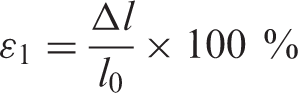

After a crack appearance
When a metal/PET composite is drawn so that a crack appears in the coated metal layer, it will decrease suddenly for the conduction cross-section of electric current passed at the crack section in the coated metal layer, and the resistance increases. At this time, the resistance variation does not comply with Ohm’s law. With the increasing cracks appearing in the coated layer, the conduction section for electric current in the coated metal layer has already reached the state of network structure. By this time, the Poisson’s ratio of PET film is utterly changed. However, the electrical current between the two testing holders would flow along the connections between the cracks in the coated metal layer, that is, the electric current passes the sample in two-dimensional random walks, as shown as in Figure 1. Therefore, the Poisson’s ratio of PET film is not a real concern at this time. The real factors influencing the resistance variation of the composite are the length of random walks and the width of the connections between the cracks. According to the basic equation of two-dimensional random walks,
13
one has
The path for electric current to pass after the appearance of cracks.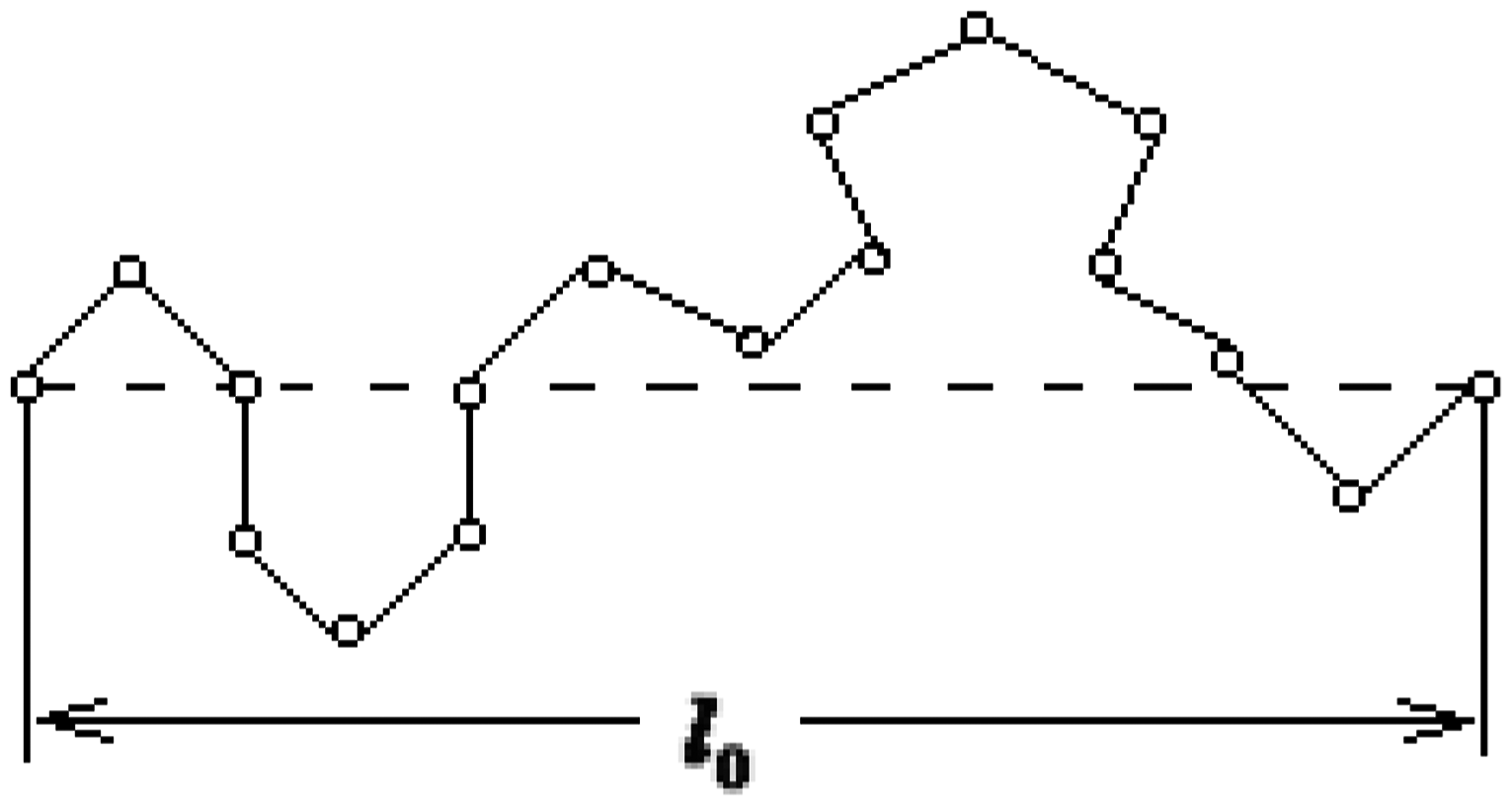


where
By integrating for

Similarly,
13
one has

By integrating for

When
Substituting Equation (14) into Equation (13), one has

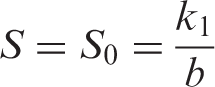
Here, not only the thickness of the coating film is fairly thin, being only in the micro scale, but also the width of the tensile test sample is very narrow. So the cross-section S of the electric current channels could change little during the tensile deformation process of the composite and it can be similar to the original cross-section S0 of the coated metal layer.
Then the resistance of the metal/PET composite
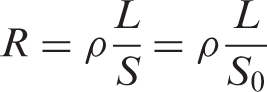
Substituting Equations (11) into Equation (16), one has

Substituting Equation (10) into Equation (17), one has

With the tensile deformation going on, the number of cracks reaches a certain quantity, the conduction network of the coated metal layer will be broken and there is no current channel and the electrical conductivity of the coated metal layer is very small and similar to that of the PET substrate. This shows that there exists another critical point for a metal/PET composite. That is, when the composite is drawn to over the critical elongation value, we can think that the metal/PET composite has lost its function of electric conductivity, which indicates the composite failure.
Experiment verification
Sample preparation and experimental set-up
Aluminum material with high purity (up to 99.99%) was used as the coating material, which was bought from General Research Institute for Nonferrous Metals in China. The employed substrate was polyester (PET) film with a thickness of 12 microns, which was produced by the method of extrusion and compression.
The ZZS 400 vacuum coating system was used with an e-beam gun made by Nanguang Enterprise Joint-stock Co., Ltd for coating 20 µm thickness of aluminum on the surface of PET substrate under the following conditions:
For a metal/PET composite, the adhesion property is the key factor for influencing the tensile property of the composite. So the adhesion property of the composite was measured in this work. As it is not possible to measure the peeling length of the coating metal film, the abrasion tester was used to examine indirectly the adhesion property of the coating metal film. In this experiment, the Martindale Abrasion Tester was used to examine the adhesion fastness of the coating metal film. The experimental parameters are as follows: a circular specimen in a 38 mm diameter; a wool gabardine fabric as the abrasion material; 500 abrasion cycles; and 2.5 kg of pressure plate. The experimental results indicated that, after 500 abrasion cycles, there was no obvious change in the appearance of the coating metal film, which indicated that the adhesion property of the coating metal film is very good. In fact, there is no falling film in the following tensile experiments.
All the samples were cut out as rectangular along the extrusion direction of PET film along their length direction. The size of each sample is 150 mm × 10 mm.
According to standard ISO 1184-1983, 14 the tensile properties of the metal/ PET composite films were measured using an Instron 5565 Universal Testing Machine under the following testing conditions: gauge length, 50 mm; strain rate, 2 mm/min; temperature, 20 ± 2℃; and relative humidity, 62% ± 3%. The experimental results were the mean of the 10 measurements.
In order to simultaneously record the electrical resistance variation of the metal film during tensile deformation using the Instron 5565 Universal Testing Machine, a synchronous electrical resistance collection apparatus was designed. In order to avoid stress concentration resulting from direct clipping to the metal/PET composite by the testing holders of the synchronous electrical resistance collection apparatus, two metal sheets were padded on both ends of the metal/PET composite surface. The two metal grips of a current meter were clipped to the two metal sheets, as the up and down grips of the Instron 5565 Universal Testing Machine are made of metal. Then the electrical current across a space between the two testing holders can be obtained. The measurement of the current meter ranges from 5 to ∼1000 A and the measurement accuracy is 0.1 mA.
The data acquisition system used a PCI 1713 high-speed data acquisition card (made by Advantech Co., Ltd in China) for converting the electrical current signals output by the testing holders into digital signals that can be recognized by a computer. For considering the sensitivity and the accuracy tested, the power supply in the apparatus adopted a 5 V direct current (DC) stabilized source. With the help of the computer processing system, the resistance value R of the metal/PET composite between the two testing holders can be obtained. Figure 2 shows the schematic diagram of the whole experimental set-up.
Schematic diagram of experimental set-up for testing electrical resistance of the metal/polyethylene terephthalate (PET) composite during tensile deformation: (a) metal/PET composite; (b) upper grip of Instron 5565; (c) down grip of Instron 5565; (d) metal sheet.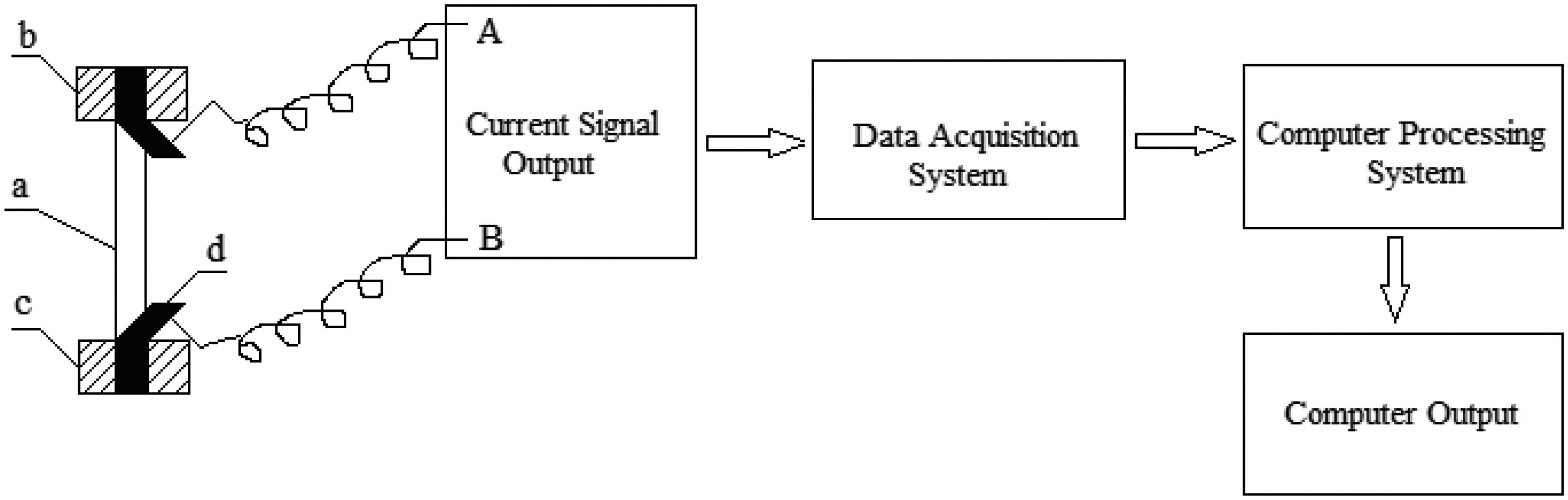
Experimental results and discussion
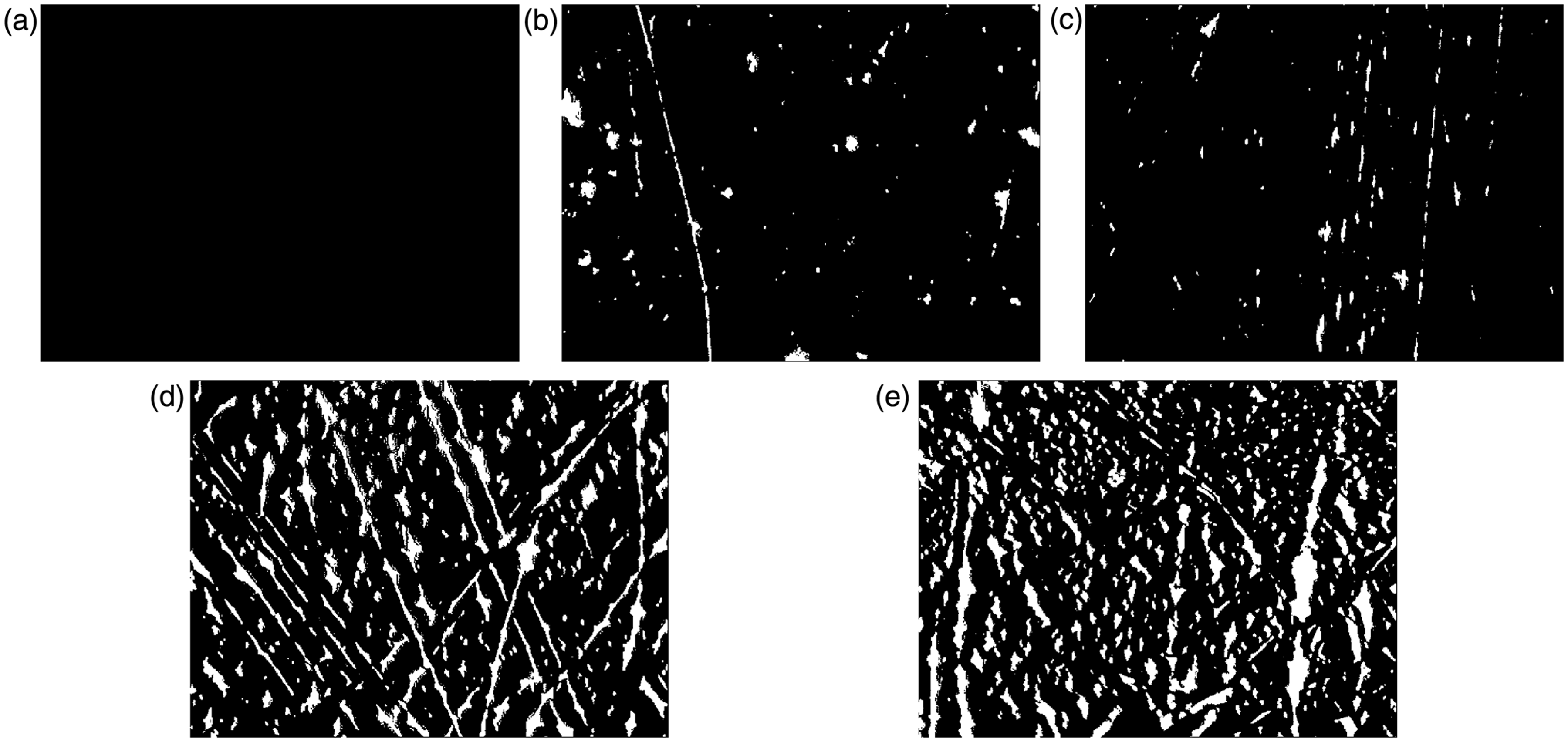
Figure 3 shows the resistance variation during tensile deformation at 2 mm/min tensile speed. The tensile temperature is 20 ± 2℃. Figure 4 shows the optical microscope photos of aluminum coating film during tensile deformation. It can be seen from Figure 4 that, when the elongation rate of the Al/PET composite reached 5%, a few cracks began to appear in the aluminum coating film, which were distributed randomly in a few individual locations. With the tensile deformation going on, the number of cracks was on the increase steadily. However, we can see that the cracks were still distributed randomly. When the elongation rate of the Al/PET composite was over 70%, the crack propagation rate sped up. Therefore, we think that 5% elongation rate is the critical value. According to the above theoretical analysis we know that, when the elongation rate of the composite is no more than 5%, the resistance variation should comply with Ohm’s Law. So we divided the testing data of the Al/PET composite during tensile deformation into two groups. Through fitting the two groups of data using the above analyzed theoretical equations, the regression models of the resistance (R) with the elongation rate ( The resistance variation of Al/polyethylene terephthalate composite during tensile deformation. The optical microscope photos of aluminum coating film under different elongation rates (×20): (a) 5%; (b) 30%; (c) 70%; (d) 90%; (e) 120%.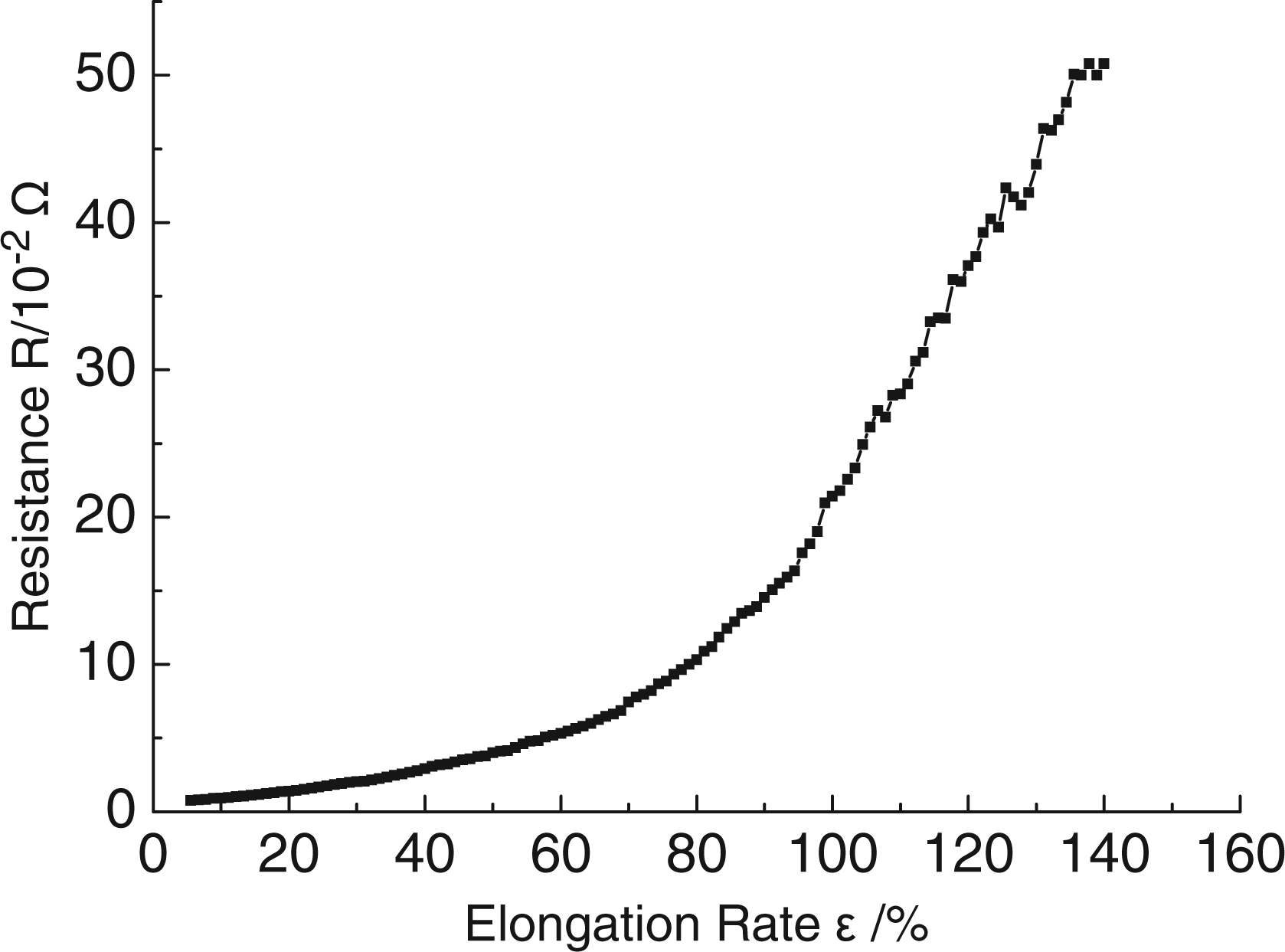


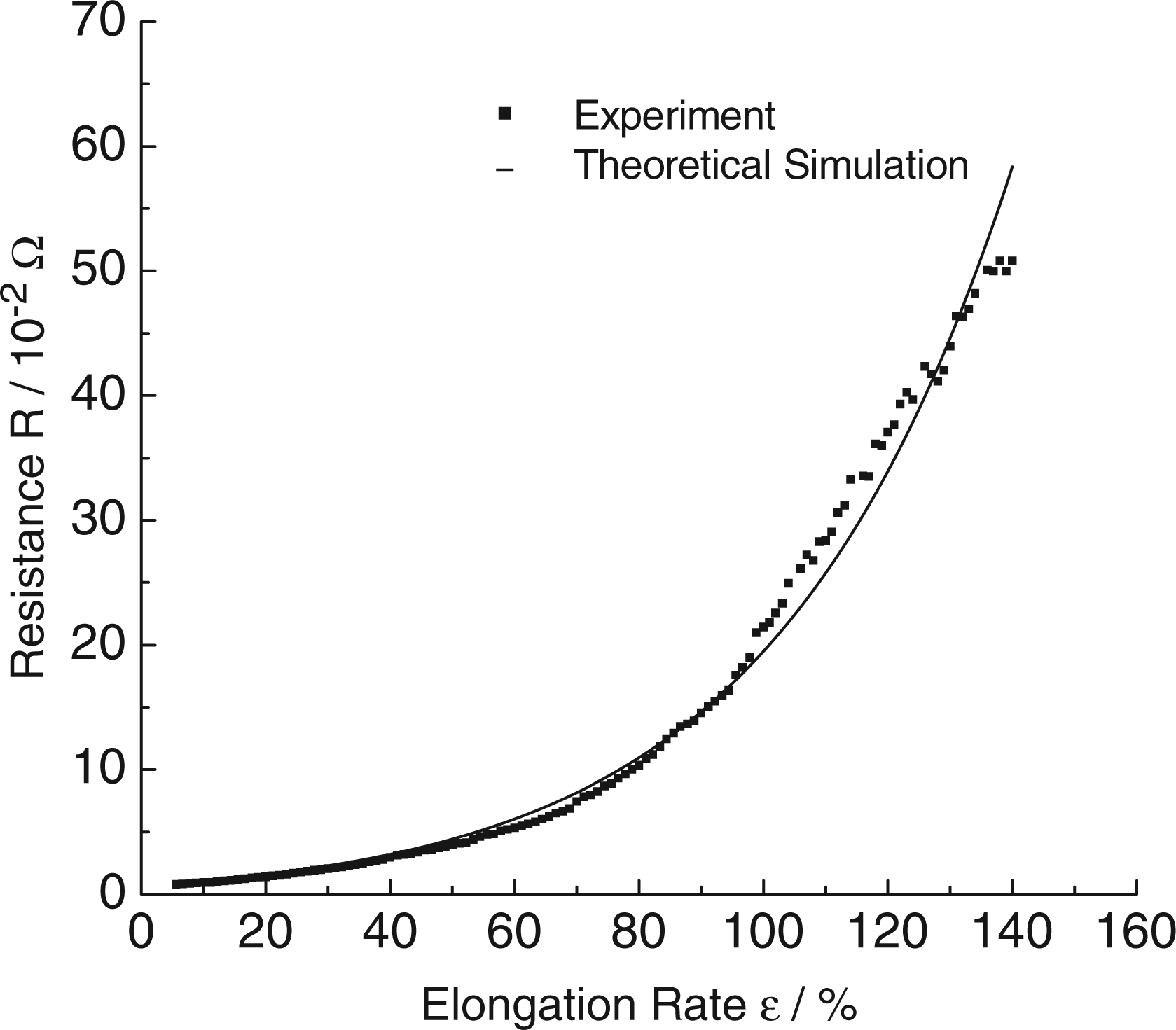
Figures 5 and 6 show the comparison of the resistance variation of the Al/PET composite between theoretical simulation and experiment before and after the 5% elongation rate during tensile deformation, respectively. It can also be seen from Figures 5 and 6 that the theoretical simulations agree well with the experimental results. Therefore, it can be verified that the above theoretical analysis is correct.
Comparison of the resistance variation between theoretical simulation and experiment under an elongation rate within 5%. Comparison of the resistance variation between theoretical simulation and experiment under an elongation rate over 5%.
Conclusions
The electrical property of a metal/PET composite during tensile deformation falls into two parts: before a crack appearance and after a crack appearance. Before a crack appears in the coated metal layer, the resistance variation complies with Ohm’s Law. After that, the resistance variation of the metal/PET composite is quite different. On the whole, after a crack appears in the coated metal layer, the resistance variation of the metal/PET composite during tensile deformation theoretically correlates with the elongation rate of the metal/PET composite in an exponent relation. By theoretical analysis on the electricity property of a metal/PET composite during tensile deformation, the specific theoretical equations are obtained in this work. In addition, based on the Instron 5565 Universal Testing Machine, a synchronous electrical resistance collection apparatus was designed and the resistance variation of the Al/PET composite during tensile deformation was tested to verify the correctness of the theoretical analysis.
Footnotes
Acknowledgments
We gratefully acknowledge The Academician Research Center of Xi’an Polytechnic University, Shaanxi Research Center of Engineering Technology for Textile Testing & Control and Shaanxi Research Center of Engineering Technology for Technical Textiles for providing the experimental devices and the test instruments to accomplish this work.
Funding
This work was supported by the Shaanxi Province Leading Academic Discipline Project (grant number 2050205).