



Abstract
There are technological limitations in the processing of smooth, slippery and rather flat multifilament viscose rayon yarn. The present work describes a shorter route for viscose rayon modification through mechanical crimp texturizing. Texturizing was performed with different pre-twists and optimized texturizing twist. This work describes a shorter and cost effective route for viscose rayon modification through mechanical crimp texturizing. The prepared texturized viscose rayon yarn has achieved the desirable structural characteristics of spun yarn as depicted in SEM micrographs. The textured yarn has retained an almost identical fineness with the parent yarn. Unlike air jet texturizing, mechanical crimp texturizing has benefits in terms of retro-processing of costlier viscose rayon yarn. Although it was textured, it has not shown any significant drop in tenacity and, apart from that, shows enhanced the elongation property compared to the parent yarn.
Viscose Rayon is the first regenerated natural (cellulose) based man-made fibre. It possesses desirable properties of cotton, like good moisture absorbency, breathability and comfort to wear and can also be easily dyed in vivid colors. So it is thought to be the most suitable replacement for cotton.1–3 However, unlike cotton it possesses remarkably low dry and wet strength. It possesses smooth slippery structure with a high degree of cohesion. This creates handling problems of the material during shop floor production. Therefore it needs to undergo structural modifications before being used for commercial fabric manufacturing process.1,3–7
Two commercialized options are available to attain required transformation of flat, weak, smooth and slippery structure into stronger, rugged and bulky structure. The first option is a short staple spinning of viscose rayon fibres, either as one hundred percent or in a blend. But this involves a longer route of production due to multistep processing.1–4,6 Thereby it adds to production cost and time. The second option is the direct use of highly twisted viscose rayon yarn in weaving. Here the production route is quite short but sacrifices favorable characteristics of viscose rayon, viz., softness, feel, comfort and bulk.6,7
Texturizing of viscose filament yarn should be the third possible option, but it is still not commercialized. Ivanova et al.4,5 made the first attempt in this direction. They produced a textured bulky viscose rayon yarn based on the principle of false twisting by the following multistep process. Considering the non-thermo plasticity of viscose rayon, in the first step, the viscose rayon in the cellulose xanthate state was twisted, before completion of regeneration process. In the second step, the resulting deformation of the filaments of the coagulated but not fully regenerated yarn was set during the final decomposition of the xanthate. In subsequent steps the yarn was made to undergo a finishing and drying processes. Such a dried yarn was then twisted in the opposite direction in the final step. The torque induced during this course forced the filaments to revert to the state of equilibrium, but the elastic forces caused them to assume the configuration of coil springs and form a bulky structure. Although successful, this complicated multistep processing imposes technological as well as economical limitations in its commercialization. However, the efforts of Ivanova et al. have enlightened the importance of the bulky structure of this man-made yarn with good hygroscopic properties. This leads to the challenge to develop a single step texturizing technique to overcome all such techno-economical limitations.
False-twist texturizing and air jet texturizing are the commercially successful techniques in today’s context. Both of them are single step processes. Economically their proficiency is said to be better than the technique suggested by Ivanova et al.4,5 Technically, the false-twist texturizing technique can not be preferred for non-thermoplastic viscose rayon yarn as it is based on the concept of the heat setting of the deformation.1,7–9 On the contrary, mechanical mode air jet texturizing can be comfortably used for non-thermoplastic viscose. However use of costly compressed air and installation as well as maintenance of the compressor unit adds to product cost. Apart from this, a coarser product is obtained from over fed fine feeder yarn, which is costly. This adversely affects the product cost. The clinging effect of loopy yarn also makes post treatments like twisting or stabilizing followed by heat setting compulsory.1,2,8 Deviation of filaments from yarn axis for loop formation makes textured yarn weaker than parent yarn. This becomes significant in case of an originally weaker parent yarn. Even well-anchored loops with a yarn core reduce breaking extension, which is not preferable.10–14 All these factors have imposed restrictions on the implementation of a technique for viscose rayon, which could otherwise be feasible.
Mechanical crimp texturizing
The mechanical crimp texturizing concept was introduced by Shaikh et al.,15–18 by linking concepts of false-twist texturizing and air jet texturizing. This technique is still at the experimental stage. Its basic concept and the outcome of research done on polyester and nylon have been briefly reviewed.15–18
Basic concept
Pre-twisted FDY (Fully Drawn Yarn) flat multifilament yarn is subjected to higher false twisting (depending on yarn fineness) action under the condition of underfeeding (depending on the ductility of parent yarn). The torque caused due to the high level of false twisting forces the filaments to follow a helical path at a certain angle (dependent on the magnitude of twist and denier per filament) to the longitudinal axis of the filament yarn. Internal stresses arising in single filaments tend to bend the filament and take the shape of a spatial helical spring. After the yarn has passed through the false-twisting unit, the initial twist reasserts itself and locks the already formed crimpy convolutions in position.
The crimpy constituent filaments locked together by real twist and intermingling had shown a good similarity with the ring spun yarn. Even mechanical crimp textured polyester yarns were used successfully as weft on loom and as feeder yarn on knitting machine without any need of post twisting or treatment and did not show any clinging tendency with machine parts. 18
Improved orientation on under feeding and added binding forces due to the presence of real twist in the structure had retained almost identical tenacity of the textured yarns to that of their respective parent yarns.16,18 The linear density of textured yarn is found to be same as that of the parent yarn, which is due to combined effect of pre-twisting, crimping and under feeding.15,18 Comparative cost analysis of three texturizing systems had put this mechanical concept next to cheaper false-twist texturizing due to obviation of cost adding factors. 18 Altogether it makes this newly engineered concept easy and cost effective for throwsters. The present research work represents such an effort. It deals with the evaluation of technical efficacy of this innovative system in texturizing non-thermoplastic viscose rayon yarn.
Experimental details
Materials
Fully drawn white 300-denier (270 dtex)/76-fils. viscose rayon multifilament yarn used as the parent yarn for the present study.
Methodology
The selected parent yarn was textured on the mechanical crimp texturizing apparatus. Texturizing was carried out in each division with optimum processing conditions by varying only the pre-twist. Three pre-twist levels were used, viz., 157 tpm, 315 tpm and 472 tpm. The selected pre-twist values were guided by previous work on mechanical bulking by Sen et al.
19
The process parameters adopted for mechanical crimp texturizing of viscose rayon yarn are given below. They were optimized experimentally.
Input parent yarn tension = 0.500 gf/tex Bulking zone length = 25 mm Under feed = 10% Delivery speed = 150 m/min Winding tension = 0.470 gf/tex
Optimization of process variables
The process variables, like bulking zone length, input yarn tension and underfeed, have been optimized for the selected 300-denier/76-fils. viscose rayon multifilament parent. The pattern of study in the pilot trials is similar to that adopted for the polyester yarn in the earlier study. 16 A brief review of trials along with their outcome has been given.
In the first phase of the experiment, pilot trials were conducted with a 300-denier/76-fils., viscose rayon multifilament parent yarn by varying only bulking-zone length from a minimum possible 25 mm to a maximum possible 100 mm. Bulking-zone length was varied in regular increments of 25 mm during the experiment. Below 25 mm bulking zone length, frequent end breakages were recorded due to high tension, whereas going beyond 100 mm resulted in frequent end-breakage due to the bulging of long unsupported length at a higher false twist. Going in similar findings as Sen et al. 19 for mechanical bulking in earlier experiments on polyester, 16 suggested that better textured product was obtained shorter bulking zone length, i.e. 25 mm. This behavior is attributed to the favorable bending stress and torsional stress undergone by constituent filaments at the applied identical false twist in the shorter bulking zone length.
In second phase of experiments texturizing was carried out by varying only the input parent yarn tension value at the optimum bulking-zone length. Input yarn tension was varied between 0.45 gf/tex to 0.81 gf/tex and measured with mechanical tensiometer. The best texturizing effects have been observed at an input tension of 0.500 gf/tex. A remarkable rise in end breaks was observed due to balloon formation at low tension and filament fraying at high tension. This has shown close agreement with the empirically derived optimum input yarn tension value for twisting multifilament viscose rayon yarn by Hearle et al. 20 They found a 0.45 gf/tex input tension value most suitable for twisting viscose rayon yarn. Intensity of migration get reduced if twisting is carried out beyond this set tension limit. The quality of the textured yarn will be poor at a low intensity of migration.16–18
The underfeed is mainly influenced by ductility and mechanical properties of the input yarn. It maintains a constant texturizing tension of 0.500 gf/tex at bulking zone based on constant extension principle. 8 This was set by changing the gears in the main drive. 18 Winding was carried out at 5% over feed.
Optimum false-twist for selected viscose rayon yarn was derived in a similar fashion that has been followed for polyester.
16
The minimum false-twist employed was calculated as per Heberlein’s advanced empirical formula (Equation 1).12,21 This was based on similarity found in crimping methodology for both the systems. However, ‘K’ can differ from the calculated value due to elimination of heat in the present technique.
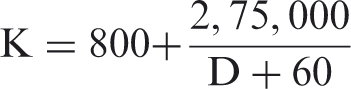
Where, K = optimum twist (tpm)
D = yarn fineness (denier)
Experimental design

Test methods
Textured yarns were tested for their percent bulk, percent instability, percent boiling water shrinkage and mechanical properties after conditioning for 24 hours at standard atmospheric conditions for tropical regions. 23 Parent yarn was also checked for denier, mechanical properties, long term regularity and boiling water shrinkage after conditioning. The structural changes in the flat filament yarn on texturizing were observed on a Scanning Electron Microscope (SEM) instrument (model JSM5610LV, version 1.0, Jeol, Japan) using Oxford-Inca software (U.K.). SEM micrographs were obtained at the set up of 15 kv, 35 × , 500 µm for the same. The Erma scope has been used to measure structural characteristics at 100 × magnification.
Long-term regularity of product yarn was confirmed from the subjective evaluation for 100 m wrappings. Samples were prepared from top-layer, middle-layer and bottom-layer of one of the randomly picked bobbin out of five produced. A total of 50 yarn samples, each of 1 m were selected at random from different layers of the five bobbins for the measurement of structural characteristics and uniformity of texturizing effect. Samples were observed under the Erma scope microscope in continuous 2 mm section at 100 × magnification. The length of the section was limited by the field of the microscope’s focal length. Short-term irregularity of the parent as well as textured yarns was checked by Premier Evenness tester at the test speed of 100 m/min. An average of five readings for each sample has been considered for the study.
A skein of 90 m was weighed accurately by using Libror balance for measuring the denier of the parent yarn and textured yarn as per the BISFA method. 24 The mechanical properties were checked on Lloyd tensile tester using gauge length of 500 mm and cross-head speed of 100 mm/min as per ASTM standard D 2256-02. 25 Looking at the similarity with air jet textured yarn in imparting stability to the textured structure,15–18 the DuPont method was used to measure the stability of curls. 14 Burnip et al. introduced the concept of bulk factor (θ) for measuring the bulk of false-twist textured yarns. 26 Hence bulk is the outcome of crimp characteristics attained by flat yarn with mechanical crimp texturizing and false-twist texturizing. The same method was adopted for measuring the bulk of the newly engineered yarn. 15 The percent boiling water shrinkage of parent and textured yarn was measured as per the BISFA method. 24
Results and discussion
Structural characteristics of textured yarn
Evaluation of structural characteristics of innovative yarn needs to be done before establishing the relationship between its structure and properties. So, structural changes undergone by low pre-twist textured yarn (sample A1) with respect to its parent yarn has been analyzed from their SEM images (Figures 1(a) and (b)).
It can be observed that the straight rod like filaments of the parent yarn (Figure 1(a)) have bent to form coils of different sizes. The bending rigidity of the filament, degree of twist [twist angle] and the tension undergone by the filaments during twisting are the main decisive factors for the frequency and size of coils formed on mechanical crimp texturizing.16–18 The bending rigidity of yarn is mainly influenced by its chemical constitution, fineness of filament and density.16–18,22,27,28 For the selected yarn and filament fineness, degree of twist and tension has played the decisive role in defining size and frequency of coils formed. Filament or yarn tension was maintained constant by means of additive tensioner at the entry to the bulking zone and the constant extension method (under feed) was used at the bulking zone. However, torque caused on twisting (false twist) adds to this tension.28–31 In the absence of heat relaxation, the resultant tension undergone by individual filaments varies as per their radial position occupied during twisting. Filament on the yarn surface undergoes more tension in comparison to the filament at the centre and tends to migrate from surface to centre.24,25,29–35 Hence, bending of the filament on the surface is more than that at the centre. This alters the size of the coils formed. The coils are regularly disposed along the yarn axis as well as in the space around it due to the change in their radial position. Frequently changing the radial position of bent filaments from surface to centre and again back to the surface along the length of yarn results in intermingling of filaments in the yarn matrix (Figure 1(b)). This imparts stability to crimpy configurations attained against lateral forces. Distinct groups of surface curls of various configurations and dimensions are bound by real twist (pre-twist) to the core yarn, giving it a bulky, voluminous structure that has a very close resemblance to spun yarn. Microscopical views of randomly selected yarn from the packages (Figure 2), also substantiates this observation.
SEM Micrographs of 300 d/76 fils. (a) parent and (b) mechanical crimp textured yarn [pre twist = 157 tpm]. Microscopical views of 300 d/76 fils. mechanical crimp textured yarn (sample A1) (snap shots taken at random location).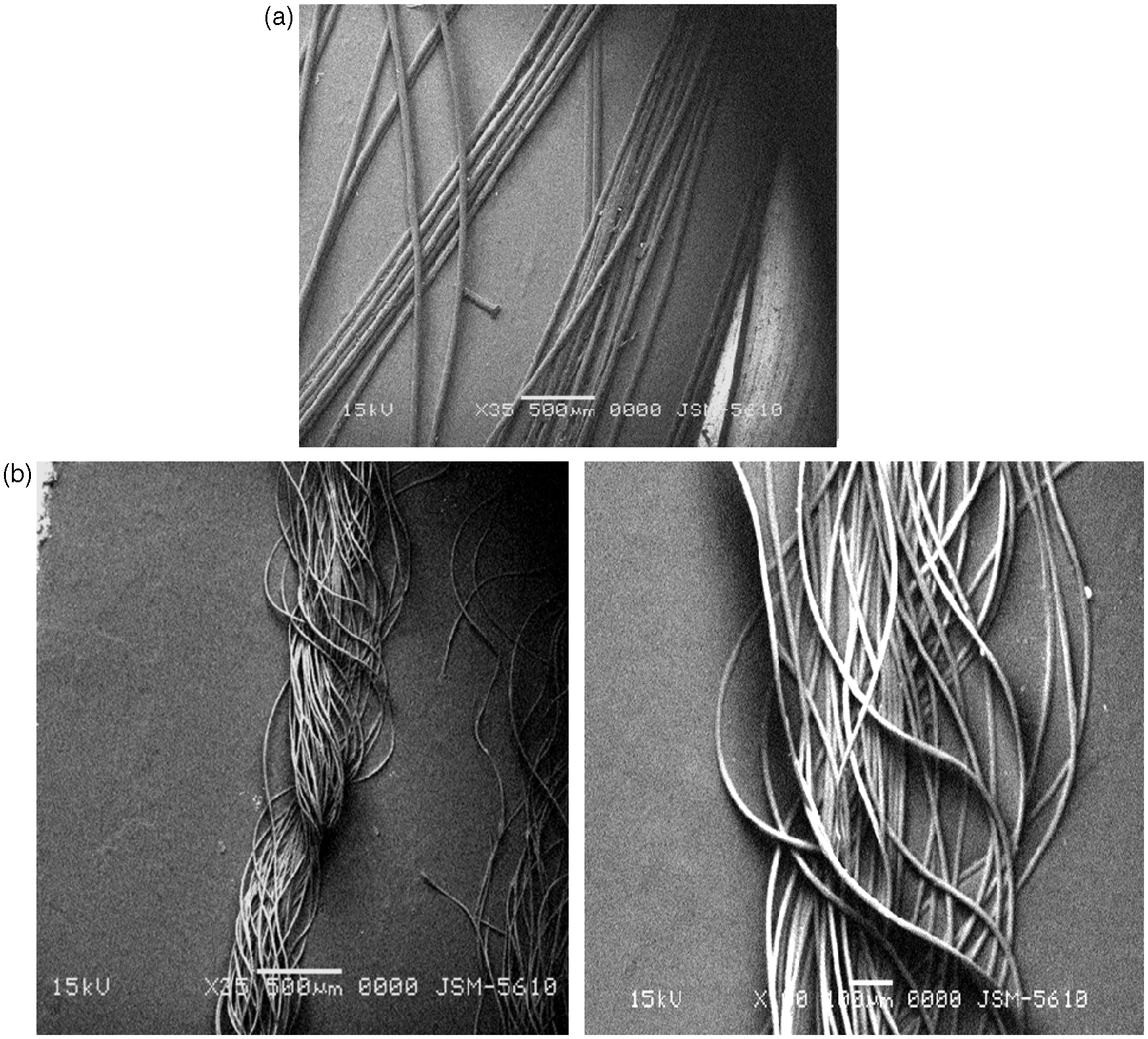

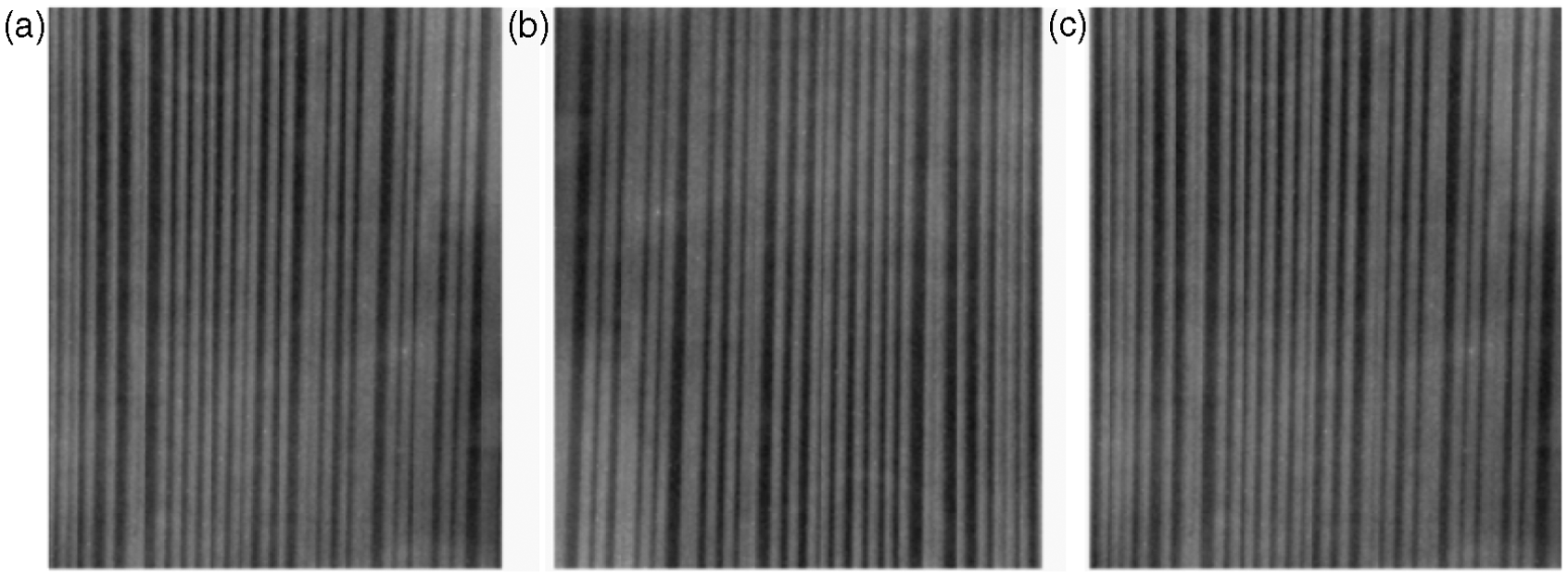
Texturizing was carried out at an optimum false-twist level for all the three samples under consideration. The pattern of coil formation, filament migration and intermingling has not shown any remarkable difference amongst them. However, the pre-twist value was increased from sample A1 to sample A3 with the regular increment of 4 tpi (Table 1). This has made the subsequent yarn compact (Figure 3) by going in accordance with the twisting behavior of viscose rayon multifilament yarn.32–34
Microscopical views of 300 d/76 fils. mechanical crimp textured yarns. Wrapping board of mechanical crimp textured yarn [sample A1].
Parents and textured yarn properties

#F = feeder yarn, T = textured yarn.
It can be observed that pre-twist level has a significant effect on textured viscose rayon yarn diameter, curl size, as well as curl frequency at an optimum false-twist level. This behavior has gone in accordance with the migration pattern observed during the twisting of multifilament yarn at different producer twist or initial twist levels.20,22,27,30–35 Accordingly, the yarn with higher initial twist has an increased number of filaments occupying different initial radial position along the length of yarn axis, to start with the migration on final twisting. This can lead towards increased total migration in the final yarn. Following the same classical twist theory, filaments that have undergone frequent changeover have not only enhanced curl frequency, but also reduced curl size. Increased migration along with higher pre-twist (real twist) in the structure has produced well-compacted textured yarn with a striking reduction in diameter (Table 2 and Figure 3).
Regularity
Figure 3 illustrates randomly selected snap shots for microscopical views of sample A1 taken for long-term regularity evaluation. The occurrence of the regular crimpy effect has been observed.
Reduction in U% has been recorded for all the textured yarns as compared to the parent yarn. This is mainly attributed to the under feed given during texturizing. 26
Percent instability
Stability of the newly attained crimpy configuration is influenced by the extent of migration and magnitude of locking twist (pre-twist) in the structure. Both the parameters have shown an increase from sample A1 to sample A3 as mentioned in the previous section. These have subsequently bound the curls well with the textured yarn core (Figure 3) and offered higher resistance against permanent extension at an applied force. This is reflected in the reduced percent crimp instability with increased pre-twist level (Table 2). However, percent crimp instability measured for all the samples in consideration are well below the DuPont limit of 5%. 14
Bulk factor
Bulk factor is the ratio of specific volume of textured yarn to that of flat yarn. Thus, for identical material type, yarn size and section length, it really represents the ratio of the square of the diameter of the textured yarn to that of the flat parent yarn.15,26 Reduction in textured yarn diameter with increased pre-twist has reduced proportionately the bulk factor as per expectation (Table 2).
Denier
The linear density of the parent yarn has undergone changes as per the magnitude of attenuation and contraction employed during the course of texturizing. A constant extension mode has been adopted for maintaining constant yarn tension during texturizing (10% under feed, Section 3.2). Drawing action caused due to under feed has reduced yarn fineness to 269 denier (based on an average of 10 readings). Simultaneously, the parent yarn was pre-twisted before entering the bulking zone. This increases linear density in direct proportion to twist contraction. Crimpiness attained on texturizing further increases linear density in direct proportion to crimp contraction. Thus for the adopted direct yarn numbering system, viz. dtex, textured yarn fineness is equal to the algebraic sum of changes in fineness magnitudes undergone by the parent yarn. The coarsest denier measured for sample A3, having the highest curl frequency as well as pre-twist at an identical under feed ratio, have substantiated this argument.
Percent boiling water shrinkage
Dimensional stability and cover of the fabric is mainly affected by the percent boiling water shrinkage value of the constituent yarns. It has a great influence on garment fit also.8,10,12,36 Therefore more attention should be paid to the measure of percent boiling water shrinkage for the newly engineered yarn, especially designed for apparel.
Torsional deformation and bending deformation increase in direct proportion to amount of twist employed. The optimum false-twist value has increased along with the increase in pre-twist value (Table 1). Thus, the parent yarn has undergone highest stress when textured with higher pre-twist. The highest percent boiling water shrinkage obtained for sample A3 substantiates this argument. The higher amount of stress involved during mechanical crimp texturizing and the absence of heat relaxation during the process has allowed the product to shrink more.1,3,37 Gubaidullina38 also found similar behavior for viscose rayon multifilament yarn while studying the influence of twist on its physico-mechanical properties. Going on the closer resemblance with these theories, percent boiling water shrinkage of the feeder yarn has also shown rise with the increase in pre-twist value (Table 2).
Mechanical properties
Mechanical properties of yarns are important for assessing their suitability for subsequent processes. Therefore, in depth analysis of the newly engineered product and its tensile behavior with respect to parent yarn is required. Hence, comparison of the stress–strain curves of the parent yarn (untextured) and textured viscose rayon yarns, given graphically in Figure 5, reveal striking differences.
Parent viscose rayon yarn tensile behavior During the tensile testing of parent yarn, all the filaments in a parent yarn simultaneously share the applied load to the yarn and are deformed elastically (Figure 5). When the load has increased beyond the elastic limit, all the filaments are plastically deformed, exhibiting an increasing strength. This continues up to the yield point after which it elongates rapidly. When the stress in an individual filament exceeds its breaking stress, it breaks, regardless of the other filaments’ condition. Therefore, in the parent yarn, the break has occurred in different filaments at different times, probably due to slight variations in their diameter, and some of the filaments appeared to elongate more than others for the zero twisted structure. Nevertheless, for the purpose of the strength tests, the load that causes most of the filaments to break is taken as the breaking load for the yarn and the corresponding elongation is regarded as the breaking elongation. These values are reported in terms of tenacity/stress (gpd) and percent extension/strain (%) in Table 3 as well as graphically (Figure 5).
Stress–strain curves of parent yarn and mechanical crimp textured yarns A1, A2 and A3. Mechanical properties of parent yarn and textured yarn gpd = grams per denier.
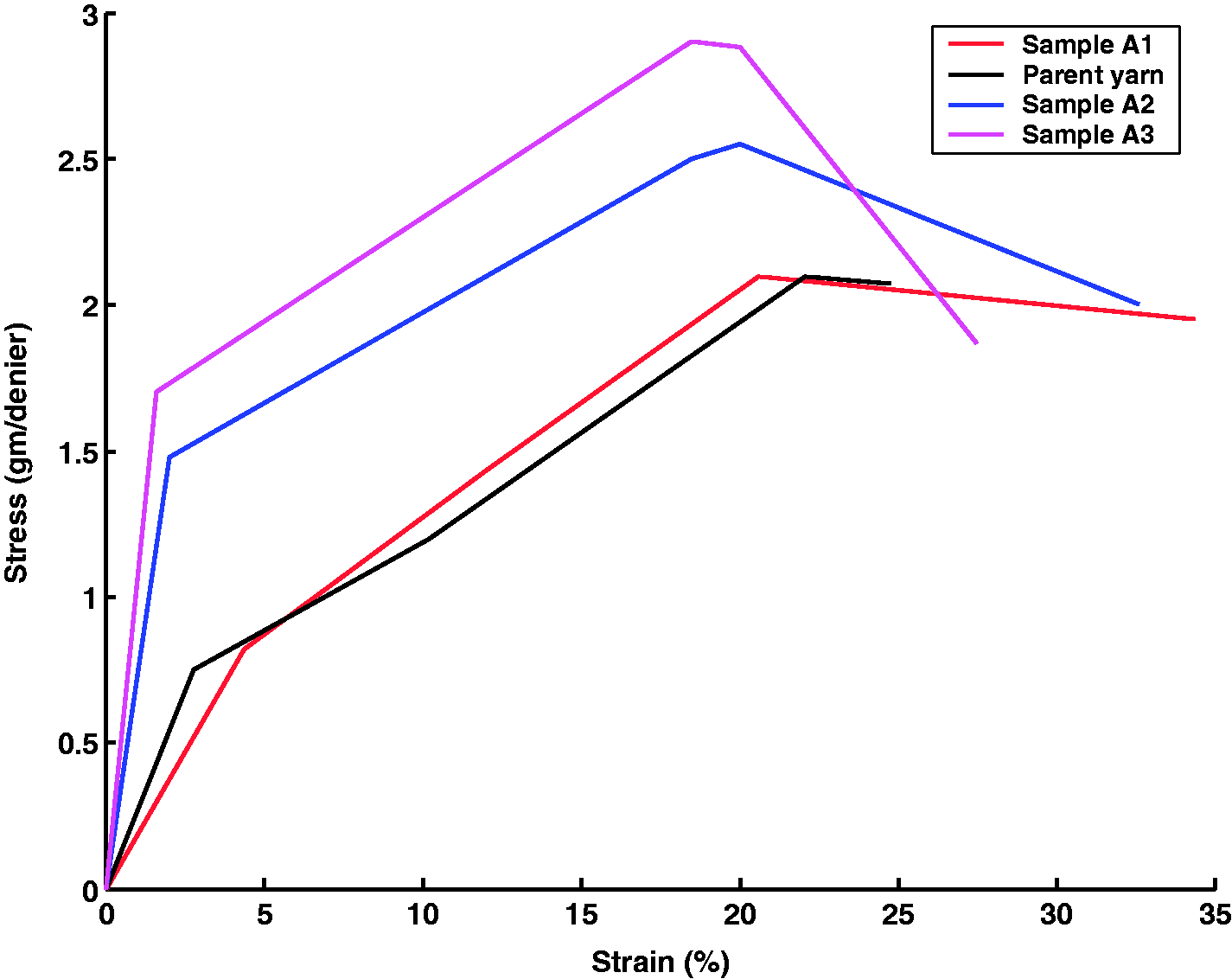

Textured viscose rayon yarn tensile behavior Textured viscose rayon yarns have exhibited totally different stress–strain characteristics from the parent yarn (Figure 5). They have shown lower tenacity but higher percentage extension than their respective feeder yarn (Table 3). This can be mainly attributed to its curled constituent filaments, randomly entangled (due to intermingling) and locked by the pre-twist at regular intervals. Deformation of textured yarn has increased with permanent elongation due to opening of the curls beyond the elastic limit of the applied load. Opening of the curls has shown rise in strain (%). However, locking of these curls through intermingling and use of real twist in the yarn matrix has resisted this opening of curls at an applied force. Resistance offered is greater with higher pre-twist and degree of intermingling. Hence, sample A3 shows the lowest strain (%) value, although it contains the highest curl frequency (Table 3 and Figure 5).
All the filaments have exhibited entangled curls and twisted sections intermittently along their lengths. But these are separated by straight portions of filaments (Figure 2(b)). At any section of the yarn, at any particular instance, only these straight portions can resist the applied load effectively. Most likely such fewer load carrying straight filaments are left behind for the yarn textured with a higher pre-twist, sample A3, due to its higher curl frequency (Table 2). So, a higher drop is likely in its tenacity value as compared to parent yarn amongst the group. However, increased cohesive forces due to higher pre-twist and extent of intermingling has stopped a further drop in its tenacity due to constituent filament diversity. Owing to the same resisting forces, sample A3 does not show a marginal drop in breaking tenacity compared to parent yarn (Table 3).
The binding force of intermingling and pre-twisting has made all the textured yarns behave like one compact unit, unlike their parent yarn. This has increased their resistance against applied forces in direct proportion to binding force magnitude. Hence, higher stress values are executed by all the textured yarns compared to parent yarn before break, even though they have reached breaking point simultaneously due to one unit unlike the parent yarn, resulting in an almost instantaneous breakage of the textured yarn (Figure 5).
Conclusion
Fully drawn non-thermoplastic viscose rayon multifilament yarn was successfully textured by the mechanical crimp texturizing technique. Product yarn so obtained has been checked for its structural characteristics using SEM micrographs. The structure shows good resemblance with the preferable ring spun as well as air jet textured yarn structures. Increase in curl frequency but reduction in curl size is observed with the increased pre-twist in the textured yarn structure. The increased lateral force at higher pre-twist levels reduces curl instability. Long term and short-term regularities are tested. The wrapping boards have ascertained long-term uniformity of the texturizing effect. All the textured yarns have exhibited lower unevenness (U %) than that of the parent yarn due to axial stress induced because of under feed.
Although the yarns are textured, mechanical parameters of product yarns have shown the proficiency in sustaining the forthcoming stresses by retaining almost identical tenacity as that of the parent yarn. Identical fineness is retained by textured yarns similar to that of parent yarn due to the constant extension mode adopted for texturizing. The presence of real twist in the structure of the textured yarn shows the same impact as that of the staple fiber yarn. Low pre-twist offers less intensive migration, resulting in higher values of bulk, instability and extension but low pre-twist textured yarn gave less tenacity as compared to the textured yarn with higher pre-twist. Presence of crimps in the structure of textured yarn has executed higher boiling water shrinkage compared to the parent yarn.
Thus, the present study has shown a potential to texture selected non-thermoplastic viscose rayon yarn with desirable quality characteristics. Selection of variable process parameters, viz, pre-twist and false-twist have been undertaken as per end use.
Footnotes
Funding
This research received no specific grant from any funding agency in the public, commercial, or not-for-profit sectors.
Acknowledgments
Samples of Viscose rayon yarns were gratefully received from the “Indian Rayon Ltd. Veraval” for our research on a donation basis. Experts from the industry and our institute professors have extended their help for subjective analysis.