



Abstract
Low-torque ring yarn spinning is a modified-ring spinning technology with the false-twisting devices attached on the conventional ring spinning machine. The introduction of the false-twisting operation gives low-torque yarn a new fiber and yarn configuration, and thus causes different characteristics of low-torque yarn fabric from that of conventional ring and rotor yarn fabrics. In this paper, a comparative study has been carried out to evaluate the performance of jeans and trousers produced by low-torque yarns to conventional ring and rotor yarns. The results from the objective measurements of fabric performance indicate that the tensile and tear strength of low-torque ring yarn fabrics in the weft direction is similar to or only slightly lower than that of fabrics using conventional ring yarns with a normal twist level as the weft yarns, but they are much higher than that of the fabrics using rotor yarns. Compared to the fabrics produced from conventional ring and rotor yarns, the low-torque ring yarn fabrics exhibit higher compression energy (WC) and lower mean deviation of friction (MMD) and achieve higher values in fabric Numeri and Fukurami. The subjective evaluation of jeans and trousers through wear trials further confirms that low-torque yarn jeans have significant advantages of a better appearance in jean smoothness, less ‘small snake’ patterns, a more prominent slub effect and better overall quality than the conventional ring and rotor yarn jeans. The low-torque yarn trousers also show better luster, smoothness appearance and overall quality than the conventional ring and rotor yarn trousers.
Keywords
Yarns for woven fabrics can be produced using various spinning technologies. These spinning methods such as ring spinning, open-end spinning and air-jet spinning provide yarns with different characteristics in both structure and properties that have a great impact on appearance and performance of the resultant fabric and thus the garment made from it. Comparative studies of fabrics and garments produced by different types of yarns have been conducted in the past. Mohamed and Lord 1 investigated the physical properties of fabrics woven from open-end and ring-spun yarns. They found that fabric tensile and tear strengths and abrasion resistance made from open-end yarns may be lower than that of the ring-spun-yarn fabrics. Morris and Prato 2 conducted research on the end-use performance and consumer acceptance of denim fabrics woven from open-end and ring-spun yarns and reported that the ring-spun-yarn fabric was more durable than the open-end-yarn fabric but both fabrics were acceptable to consumers. Effects of yarn type and twist factor on air permeability, absorbency and hand properties of open-end and ring-spun-yarn fabrics were studied by Peak. 3 The test results indicated that fabric woven from open-end yams displayed higher absorbency, whereas the test fabric woven from ring-spun yarns presented a higher air permeability, coefficient of friction (MIU) and flexural rigidity. Behera et al. 4 compared fabrics woven from ring-, rotor- and friction-spun yarns from the standpoint of comfort. The results showed that from the tactile comfort point of the view, ring yarn fabric was the best, followed by rotor and friction yarn fabrics while the friction yarn fabric was the best and the ring and rotor yarn fabrics were comparable in terms of the thermal comfort. Ünal 5 investigated the handle properties of the fabrics woven with ring-, rotor- and vortex-spun yarns. It was concluded that the handle properties of fabrics woven with folded, conventional ring-spun yarns were softer than that produced with folded, rotor and vortex yarns and the vortex yarn fabrics were the stiffest ones among all types. Additionally, a number of reports on the performance of the knitted fabrics produced from different types of yarns including ring-spun, compact, open-end and vortex-spun yarns are available.6–9
Recently, a modified-ring spinning system incorporating the false-twisting devices into a conventional ring spinning machine has been developed for producing low-torque ring-spun yarns.10–12 The introduction of a false-twisting operation during yarn formation gives low-torque ring yarn a new fiber and yarn configuration, and thus causes different characteristics of low-torque ring yarn from those of conventional ring yarn. The experimental investigations on a spinning triangle showed that there were splitting bundle structures in the low-torque yarn and the fiber bundles had a high twist level and strength together with a symmetric structure and a short height of the spinning triangle. The theoretical analysis on fiber residual stress distribution in a single yarn revealed that the splitting bundle structure and symmetric geometry can decrease and even fiber stresses in the spinning triangle and final yarn; thus, yarn residual torque is reduced.13–16 The yarn structure studies on low-torque yarns demonstrated that the majority of fibers in the low-torque yarns followed a configuration of deformed non-concentric conical helixes with the axis of the helix varying significantly in space, that most fibers were located close to the yarn center and that most fibers altered their radial positions frequently with relatively greater migration amplitude.11,13,17 Such unique structural characteristics created during yarn formation provide low-torque yarns with low yarn torque, less yarn hairiness as well as normal yarn breaking strength at a much lower yarn twist than that of the conventional ring yarns.11–13
With the above mentioned notable changes in yarn structure and properties, the fabrics and garments produced from low-torque ring yarns will no doubt exhibit different characteristics from that of conventional ring and rotor yarn fabrics. Hence, more information is required on the appearance and performance of fabric and garments made from low-torque ring yarns. Wear trials were demonstrated to be an effective method in clothing research to evaluate the end-use performance of garments.1,18 The advantage of wear trials over the lab tests is that the wear trial simulates the conditions similar to those experienced in ‘normal’ wear. 19 Therefore, a study was carried out to evaluate the comparative performance of the end product (jeans and trousers) produced by low-torque ring yarns and conventional ring yarns and rotor yarns through objective measurements of fabric performance and actual wear and washing trials of the garments.
Garment samples and methods
Sample preparation
Yarns and fabrics
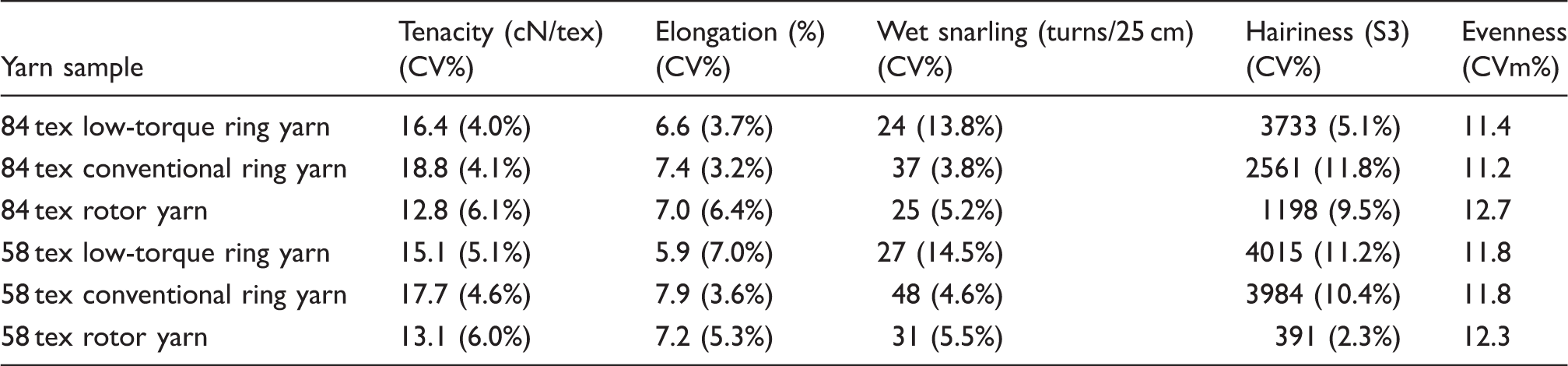
Properties of low-torque ring, conventional ring and rotor yarns (cones)
Fabric specifications
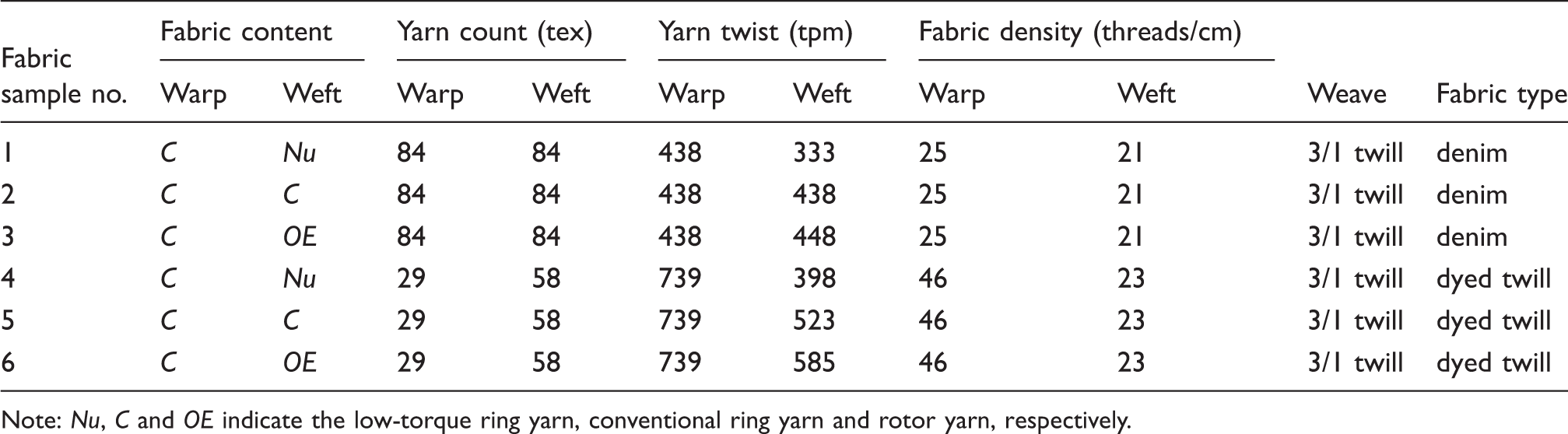
Note: Nu, C and OE indicate the low-torque ring yarn, conventional ring yarn and rotor yarn, respectively.
Denim jeans and twill trousers
Three denim jeans samples, the low-torque ring yarn jeans, conventional ring yarn jeans and rotor yarn jeans, were produced and then evaluated in the study. The low-torque ring yarn jeans were produced from fabrics with low-torque ring yarns as weft yarns, the conventional ring yarn jeans were made from denim fabric using conventional ring yarns as weft yarns, while the rotor yarn jeans were made from fabrics by using rotor yarns as weft yarns. In addition, three different twill trousers were made from fabrics by using low-torque ring yarns, conventional ring yarns and rotor yarns as weft yarns, respectively, for use in the wear phase of the study.
Subjects
For the jeans investigation, one male research student was asked to participate in the wearing phase. Then, ten male and ten female research students and staff members were invited to evaluate the appearance and performance of the jeans before and after wearing and washing.
Ten male research students and staff members were invited to take part in the wearing phase of the twill trousers. Afterwards, twenty subjects (ten male and ten female research students and staff members) were requested to complete the subjective and comparative assessments of the twill trousers’ performance.
Background of the subjects

Note: the number of subjects is shown in brackets.
Objective evaluation of fabric performance
The fabric samples were conditioned for at least 24 hours under standard conditions (20 ± 2℃ and 65 ± 2% RH) and the fabric properties were measured.
The fabric breaking strength and tear strength were measured according to ASTM D5034 and ASTM D1424, respectively. For each fabric sample, the specimens were taken both in the warp and weft directions. Five specimens, in either fabric direction, were tested for tensile and tearing strengths. Yarn crimp was measured using a Tautex digital instrument (James H Heal, UK) according to ASTM D3883. Ten specimens were tested both in the warp and weft directions. Fabric mechanical and surface properties were measured on a KES-FB tester. The tensile and shear behavior of all the fabric samples was studied on KES-FB1, while the bending behavior of all fabrics was investigated on a KES-FB2; the compression properties were measured with KES-FB3 and surface roughness and friction were identified by KES-FB4. All sixteen parameters describing the fabric mechanical properties were measured following the test procedure. Five specimens were tested both in the warp and weft directions and the mean values were determined. Then, these measured results were used to compute the primary and total hand qualities of the fabrics. Denim fabric skewness and twill fabric skewness were measured following Levi Strauss Standard LS & CO.11 and AATCC 179, respectively. Three specimens of each fabric sample were tested for fabric skewness.
Subjective evaluation of jeans and trousers
Wearing procedures
One participant was given three pairs of jeans for the jeans’ wear trial, while each of the other 10 participants received three pairs of trousers for the trousers’ wear trial. The period of the wearing time for each sample was around 10 hours and the wearing sequence was not specified. The wearing conditions were varied from clerical work to active work, etc. Measurements were conducted before wearing and washing and after five wearing and washing cycles. The washing method used comprised a machine-wash, hot 49℃ and tumble-dry high cycle for jeans and a machine-wash, cold 27℃ and tumble-dry low cycle for trousers following AATCC 135.
Wearing evaluation
Before wearing and after five wearing and washing cycles, 10 male and 10 female participants were invited to complete the subjective and comparative assessments on the jeans’ and trousers’ performance. In addition, 10 wearers of trousers were invited to complete the subjective and comparative assessments on the trousers’ wear comfort after every wear cycle.
Attributes of jeans and trousers
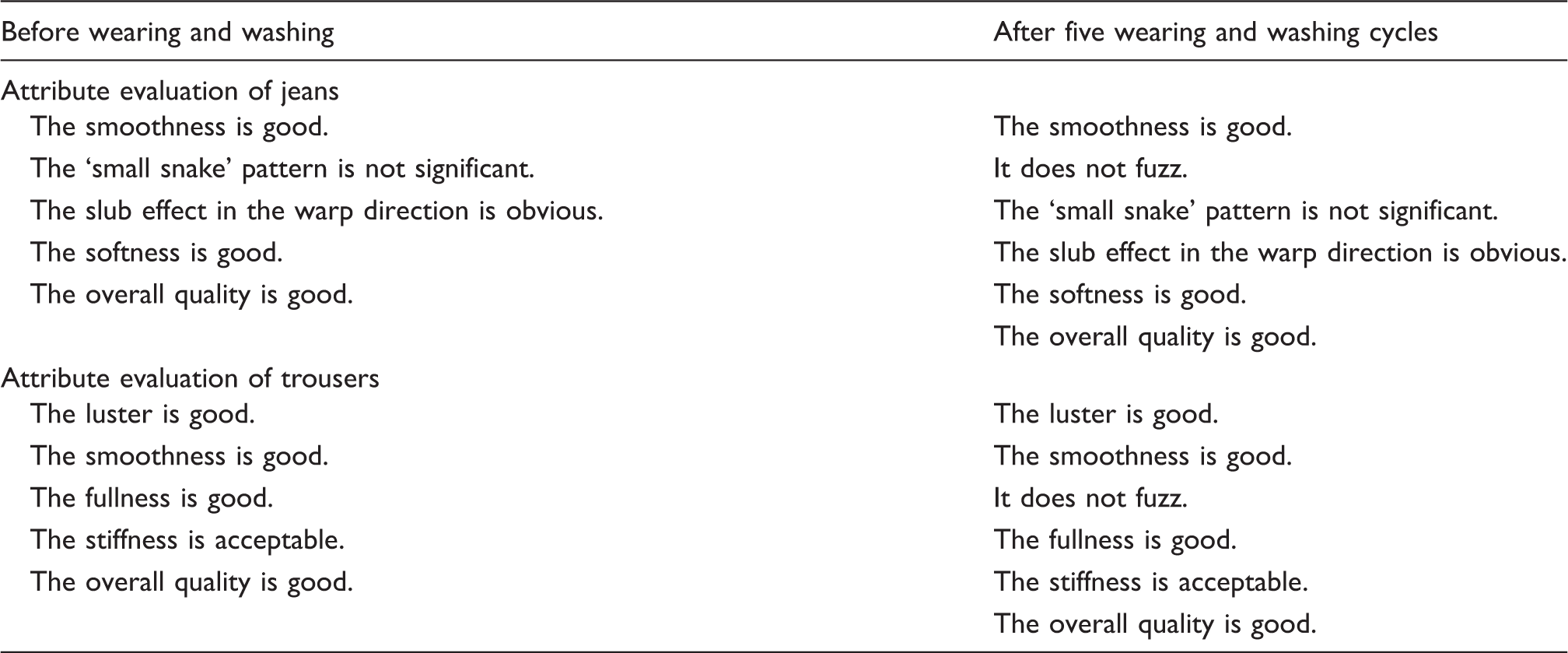
Scale of the level of agreement

The samples of jeans and trousers were on the hangers and hung in the center of the viewing board. Standing at a close range from the samples, the subjects viewed the surface appearance of the jeans and trousers and touched them with their fingers, thumbs and palms. Ratings were then given by subject according to the degree of agreement from 1–5. Data were analyzed by one-way analyses of variance to compare the sample means. The significance level was set at a 0.05 level and a multiple comparison least significant difference (LSD) test was performed using SPSS statistical software. During the evaluation, comparative ratings were considered to indicate if there were any differences between the samples.
At the conclusion of the subjective evaluation, a questionnaire was given to the subjects. The questions about the performance of the three pairs of jeans and trousers were answered.
Results and discussion
Mechanical and structural characteristics of the fabrics
Tensile and tear properties
Fabric tensile strength and tear strength are important for the durability of garments. Particularly, after fabric finishing, denim will undergo garment washing such as stone washing or enzyme and stone washing. During this process, denim fabric should have enough strength to endure the process. More importantly, after garment washing, denim fabric should still have enough strength to meet the needs of the end use.
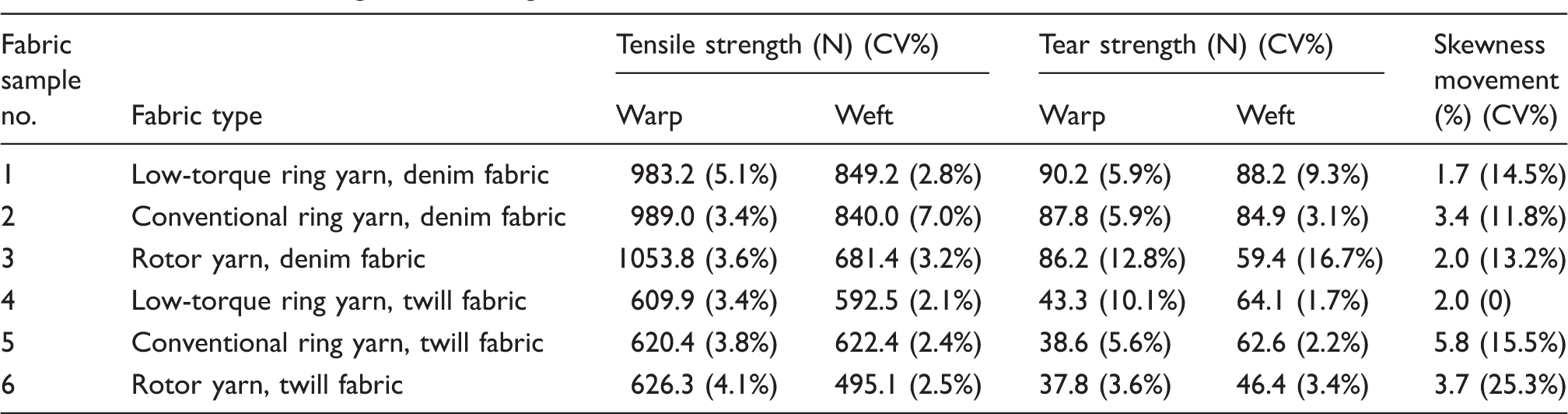
Fabric tensile strength, tear strength and skewness
Yarn crimp
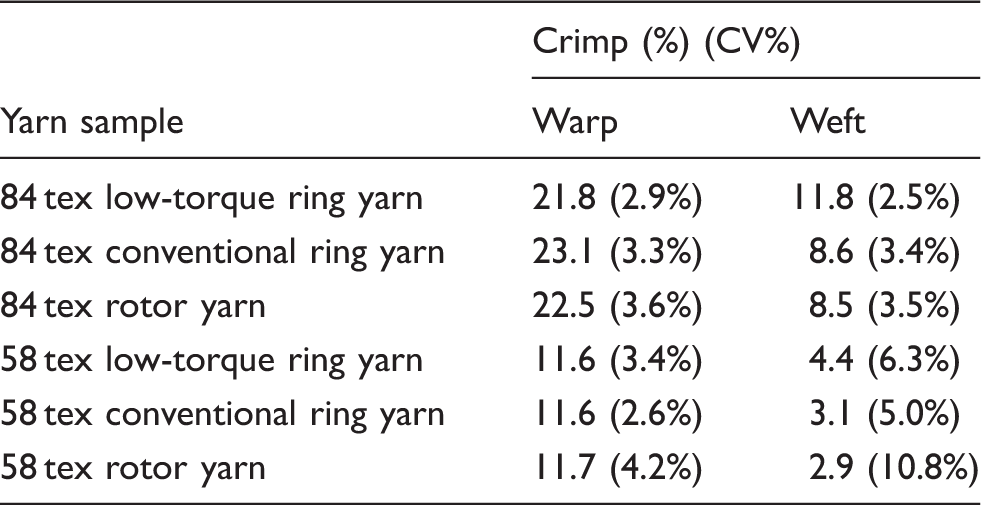
Bending and compression properties
Fabric mechanical characteristics measured by KESF Kawabata Evaluation system.
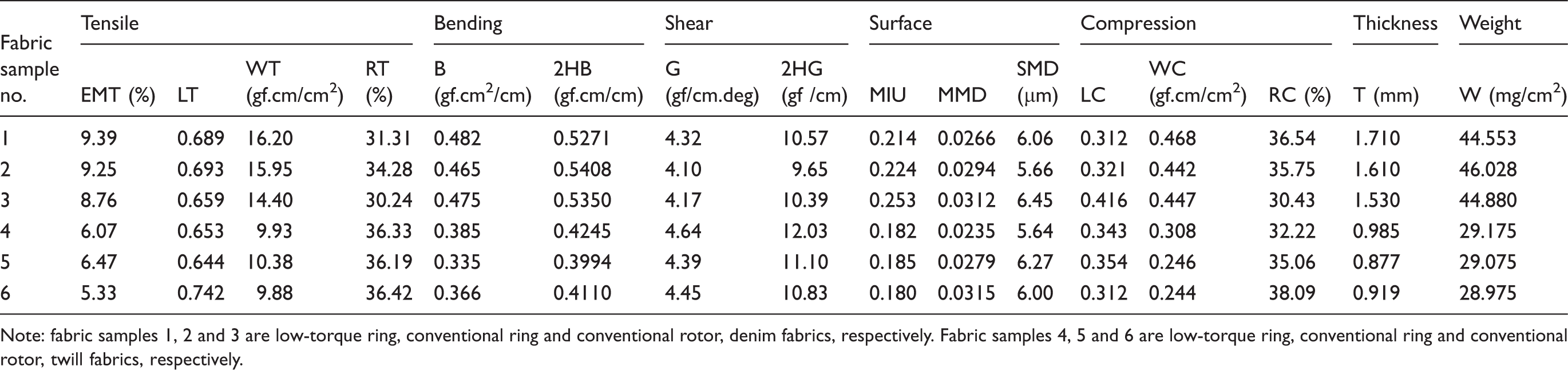
Note: fabric samples 1, 2 and 3 are low-torque ring, conventional ring and conventional rotor, denim fabrics, respectively. Fabric samples 4, 5 and 6 are low-torque ring, conventional ring and conventional rotor, twill fabrics, respectively.
The fabric compression property is one of the most important factors when assessing a fabric’s mechanical properties. It is also a property highly related to fabric handle such as fullness and softness. Based on the test results of the fabric compression property, the compression energy (WC) of low-torque ring yarn fabrics is higher than that of conventional ring yarn fabrics and rotor yarn fabrics. The increase of fabric WC when low-torque ring yarns are used may come from the improvement in bulkiness of the yarn and thickness of the fabrics. Hence, accompanied with an increased fabric thickness as presented in Table 8, the relative high WC of fabrics using low-torque ring yarns as weft yarns endows low-torque ring yarn fabrics with a softer and fuller handle feeling when compared with the fabrics using conventional ring and rotor yarns as weft yarns.
Surface characteristics
Fabric surface, a characteristic integrated with the fabric structure as well as the constituent fiber and yarn surface property, is one of the important factors related to fabric appearance and the handle of fabric smoothness. Three parameters are used to represent the fabric surface properties in the Kawabata Evaluation System, which includes the MIU, the mean deviation of friction (MMD) and the geometrical roughness (SMD).
From the test results in Table 8, it can be seen that the value of the MMD of fabrics using low-torque ring yarns as weft yarns is lower when compared to that of fabrics using conventional ring and rotor yarns as weft yarns, which may indicate that the smoothness and the evenness of the low-torque ring yarn fabric surface is better than that of conventional ring and rotor yarn fabrics. For denim fabric, the improvement in smoothness may come from the decrease in the ‘small snake' pattern that is a group of white- and light-colored, warp streaks formed on the fabric surface. The surface of denim fabric has the possibility of becoming uneven after garment washing due to the weft-yarn residual torque. Therefore, the raised parts (warp yarn) of the fabric surface get a greater washing effect than the other parts of the fabric. Some portions of the surface fibers and dyes of the raised parts of the fabric surface are rubbed off by abradant, which results in the formation of the ‘small snake' pattern. In addition, for twill fabrics, the better fabric surface smoothness of low-torque ring yarn fabric, as revealed by KES-FB examination, may bring benefits to the improvement in the fabric luster.
Fabric skewness
Fabric skewness is of great importance for apparel, cotton products. Table 6 presents fabric skewness after washing. From Table 6, it can be seen that the fabric samples using low-torque ring yarns as weft yarns possess lower fabric skewness after washing than that of conventional ring yarn and rotor yarn fabrics. Skewness is one kind of dimensional change commonly occurring in twill-woven fabrics, which can be described as the movement of the vertical and horizontal alignment away from the perpendicular. Yarn-twist level and direction, fabric weave and density and finishing method influence the level of fabric skewness. Therefore, the reduction of yarn-twist liveliness or yarn torque may be helpful in decreasing fabric skewness.
Fabric hand
The analysis of fabric structural and mechanical characteristics demonstrates that, just as predicted, the notable change in structural and mechanical properties of low-torque ring yarns gives the downstream fabric an improved appearance and modified properties. Among them, the fabric surface smoothness and fabric fullness and softness exhibit a desirable improvement.
Objective evaluated handle values for men’s winter jacket and slacks
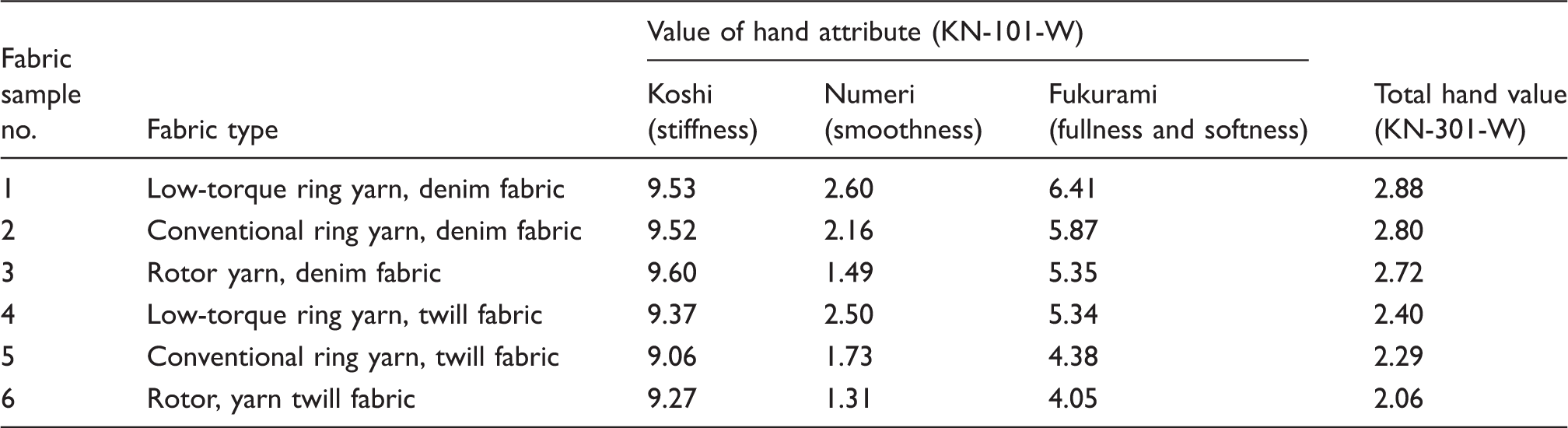
Table 9 presents the various hand attributes of the fabric and the fabric total hands associated with men’s winter jackets and slacks. From Table 9, it can be seen that the fabrics representing low-torque ring yarns used as wefts give higher values in fabric Numeri and Fukurami in all fabric samples compared with fabrics with conventional ring yarns and rotor yarns as wefts. The higher value in fabric Numeri of low-torque ring yarn fabrics may be attributed to the lower value of MMD of fabrics and the higher value of fabric WC using low-torque ring yarns as weft yarns. Also the higher WC and lower MMD of fabrics give low-torque ring yarn fabrics a higher value in fabric Fukurami.
Although low-torque yarns show a lower bending rigidity, revealed in the analysis of yarn properties, higher fabric bending rigidity and thickness may result in a higher value of Koshi in low-torque ring yarn fabrics when compared to conventional ring yarn and rotor yarn fabrics. Table 9 also shows that fabrics using low-torque ring yarns as weft yarns exhibit better total hand quality than those of fabrics from conventional ring yarns and rotor yarns. The total hand quality of the twill fabric of sample 4 with low-torque ring yarns is slightly better than that of the conventional ring yarn fabric of sample 5 and much better than that of the rotor yarn fabric of sample 6.
Subjective evaluation of denim jeans and twill trousers
Low-torque ring yarns differ from conventional ring yarns and rotor yarns in both structure and properties. These new characteristics of low-torque ring yarns will be brought into downstream fabrics and garments made of the yarns. The objective tests in the previous section revealed that the surface smoothness and fullness of low-torque ring yarn fabrics are better than those of conventional ring yarn and rotor yarn fabrics. The fabrics made from low-torque ring yarns are also found to be thicker than those of fabrics produced by conventional ring and rotor yarns. However, the results of objective measurements on fabrics may not always well correlate with end-use performance, and this relationship is a special problem when new products are developed. Wear studies are frequently used to evaluate the end-use performance of garments and to verify the value of objective tests that are routinely used to predict performance. Therefore, evaluations were conducted on the comparative performance of the end products (jeans and trousers) produced by low-torque ring yarns, conventional ring yarns and rotor yarns respectively before and after actual wearing and washing trials.
Evaluation of appearance and performance of denim jeans
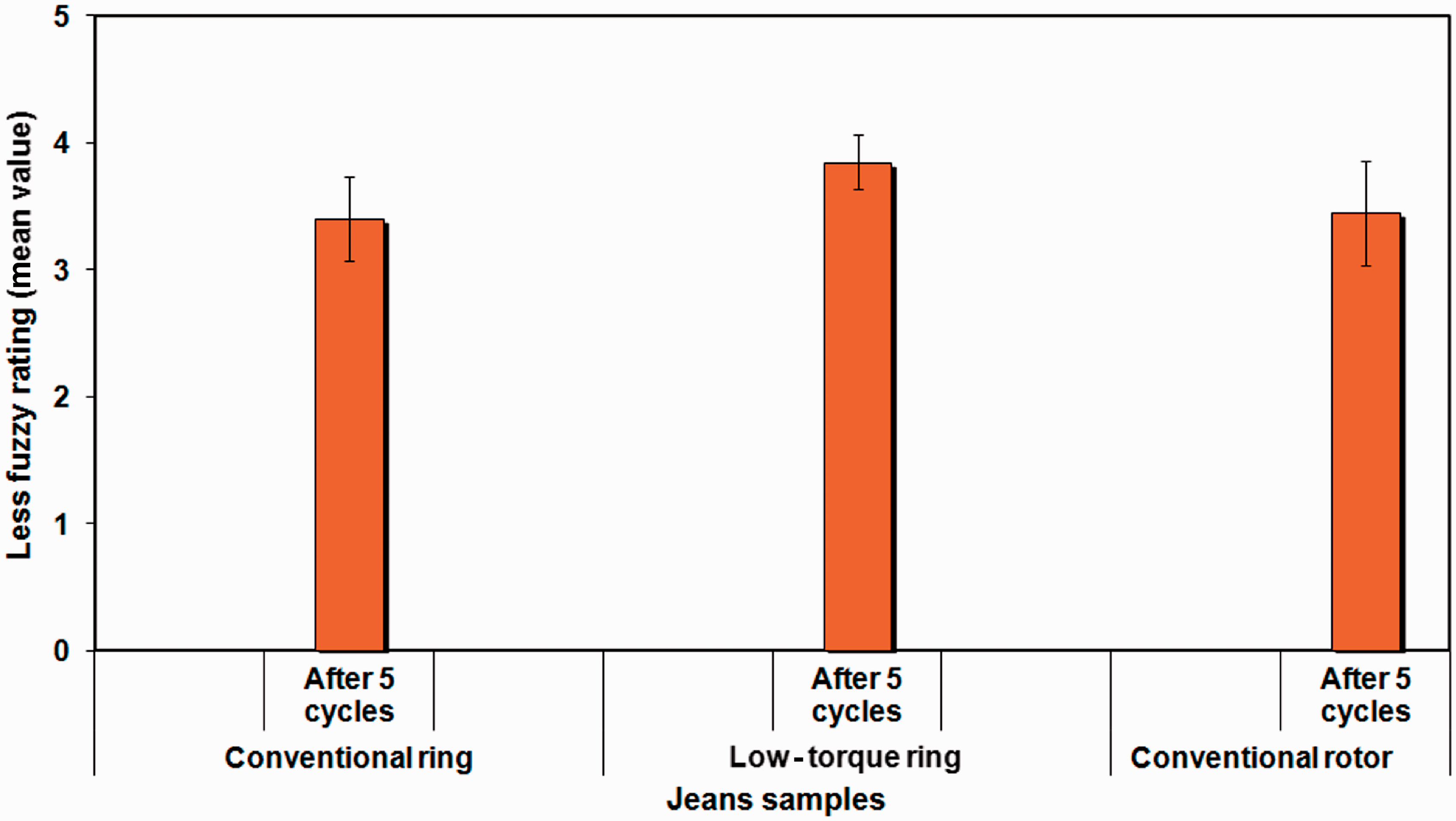
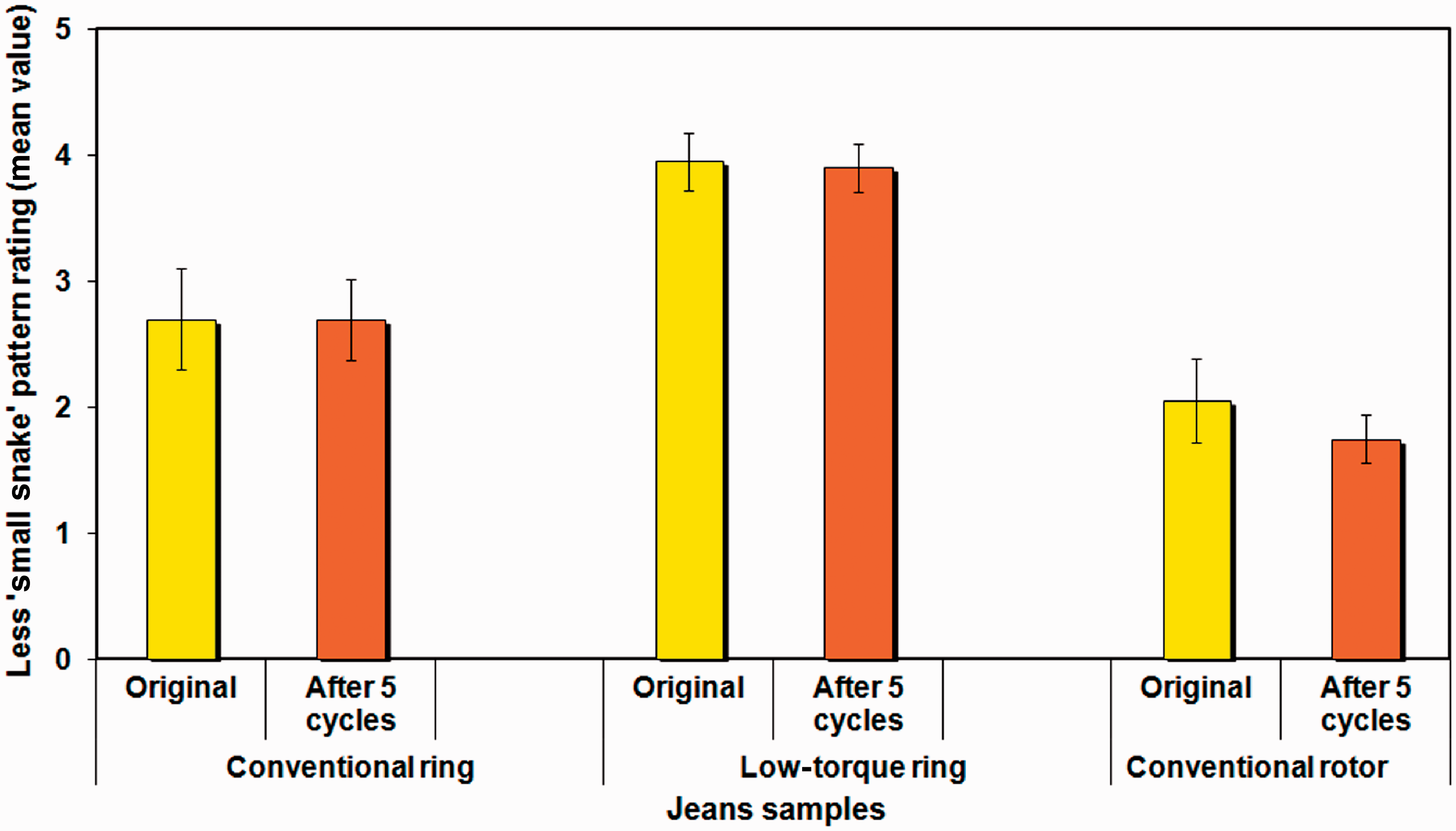
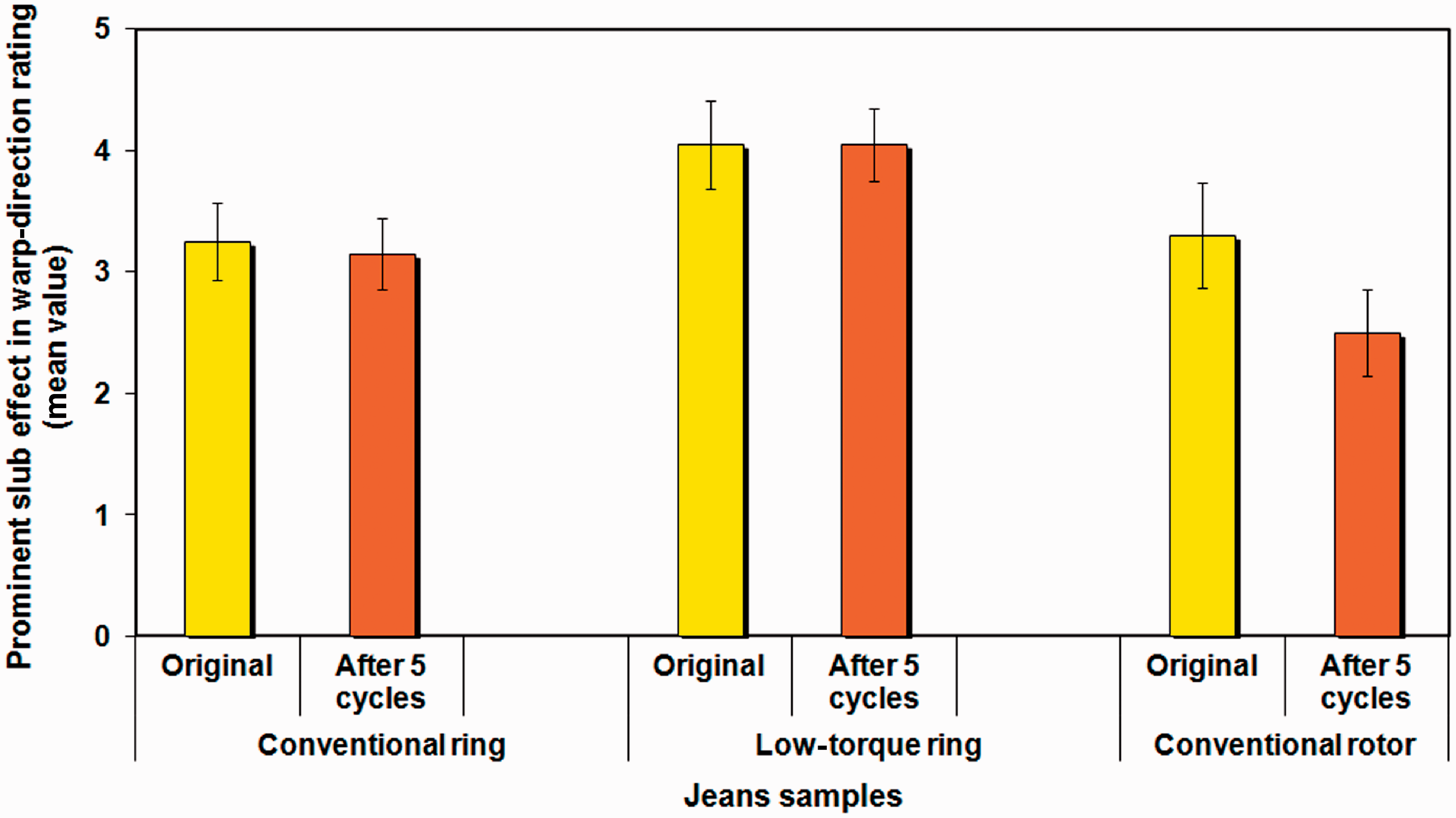
The subjective rating of the jeans’ appearance and performance is shown in Figure 1–6, including the smoothness, fuzz, ‘small snake’ pattern, slub effect, softness as well as the overall quality of the jeans. One-way analysis of variance was performed on the data in order to test and assess if there was a significant difference between the means of the samples with different types of weft yarns at a 0.05 level. The results of multiple comparison LSD test are given in Table 10. From the Figures 1–6 and Table 10, it is found that the jeans sample produced by the low-torque ring, weft-yarn fabric has significant advantages of better jean smoothness appearance, less ‘small snake’ pattern, better prominent slub effect and overall quality than the samples produced by the conventional ring and rotor yarns. When low-torque ring yarns with low residual torque were introduced into denim fabrics used as weft yarns, the ‘small snake’ pattern on the fabric surface, which is largely caused by high weft-yarn residual torque, was greatly reduced and thus the fabric surface smoothness improved significantly.
20
The objective measurement of denim fabric in the previous section shows a similar trend. The results measured by a KES-FB surface tester demonstrate that the value of MMD of the fabrics using low-torque ring yarns as weft yarns is lower compared to that of the fabrics using conventional ring and rotor yarns as weft yarns, which probably indicates that the smoothness and the evenness of the low-torque ring yarn fabric surface is better than that of the other two conventional fabrics. The handle being objectively evaluated also means that the fabric representing the low-torque ring yarns used as wefts obtains a higher value in Numeri compared with that of the fabrics with the conventional ring and rotor yarns as wefts. Moreover, with less ‘small snake’ pattern and better smoothness of the fabric, the jeans exhibited a more prominent slub effect in the warp direction of the denim when slub yarns were used as warp yarns.
Subjective evaluation results comparing smoothness of jeans produced with Nu, C and OE weft yarns. Subjective evaluation results comparing fuzz of the jeans produced with Nu, C and OE weft yarns. Subjective evaluation results comparing ‘small snake’ pattern of the jeans produced with Nu, C and OE weft yarns. Subjective evaluation results comparing prominent slub effect in the warp direction of the jeans produced with Nu, C and OE weft yarns. Subjective evaluation results comparing the softness of the jeans produced with Nu, C and OE weft yarns. Subjective evaluation results comparing the overall quality of the jeans produced with Nu, C and OE weft yarns. Results of the multiple comparison LSD test for the jeans’ subjective evaluation Note: low-torque ring jeans, conventional ring jeans and conventional rotor jeans are jeans produced by fabrics with low-torque ring yarns, conventional ring yarns and conventional rotor yarns as weft yarns, respectively. means the mean difference is significant at the 0.05 level.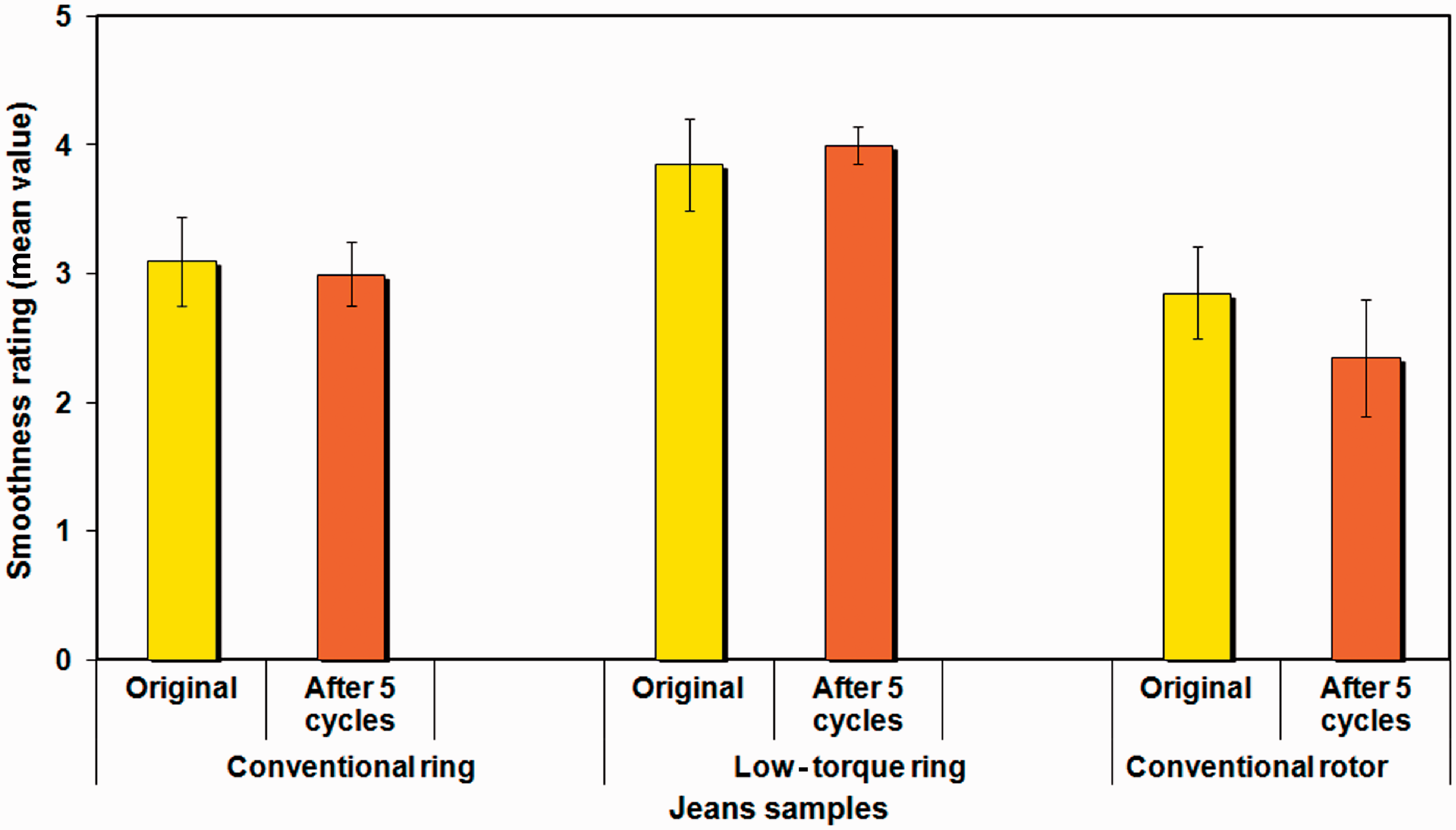
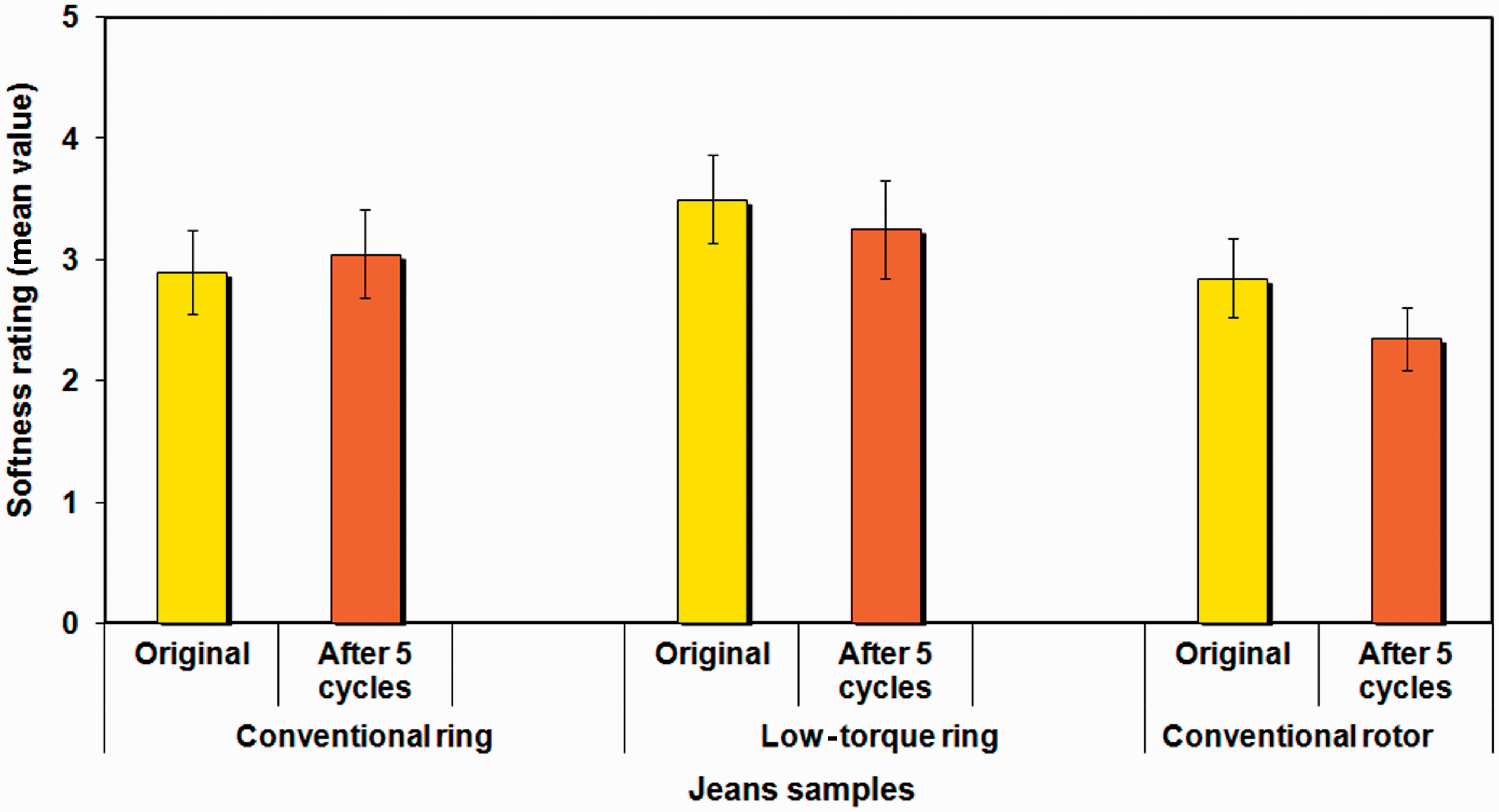
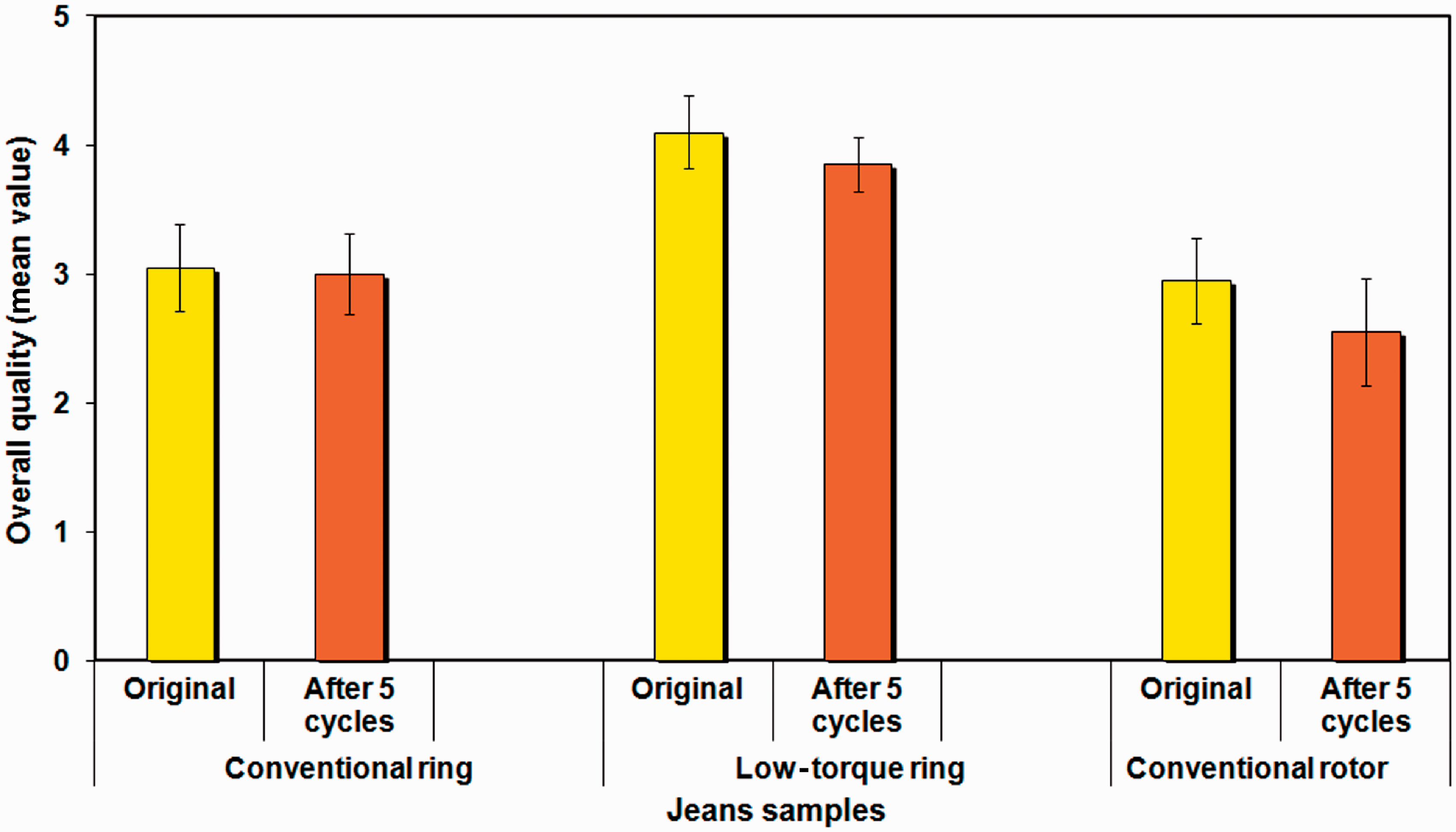
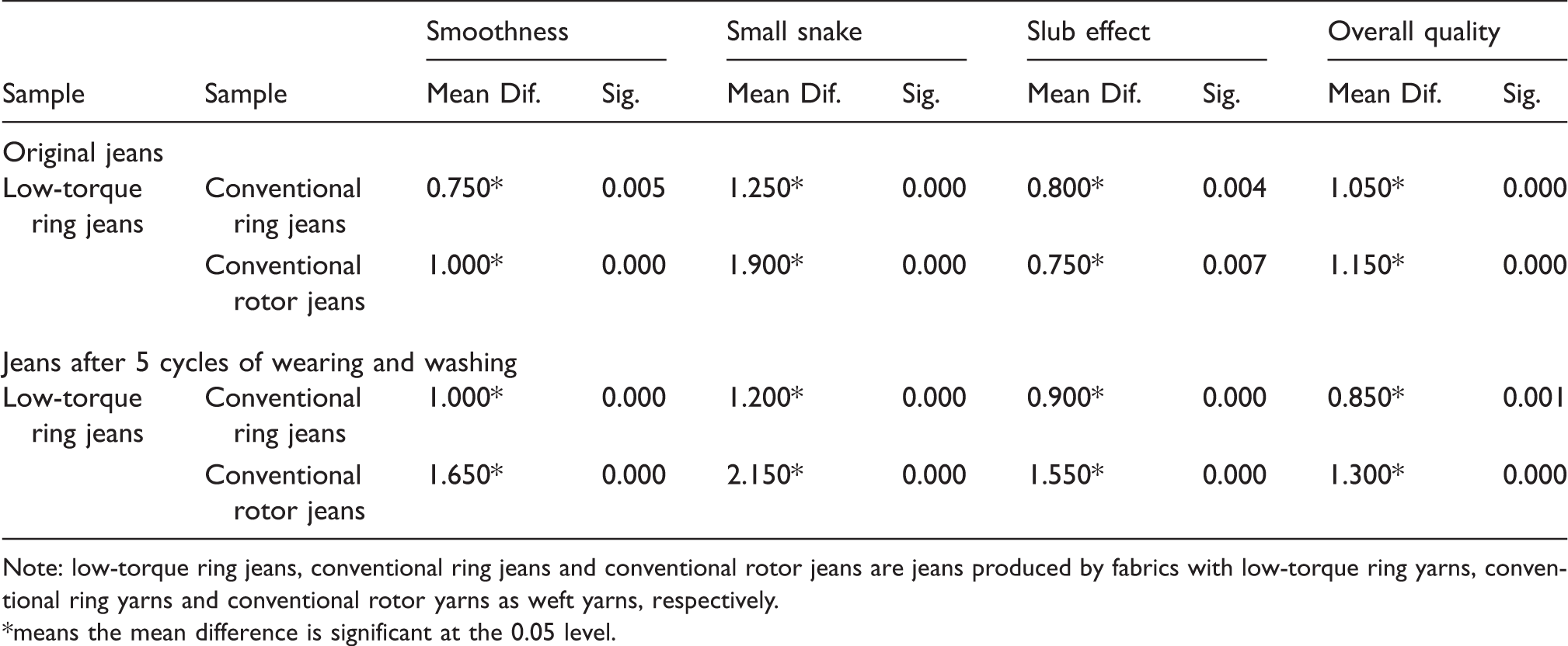
In addition, the softness of low-torque yarn jeans is slightly better than that of conventional weft-yarn jeans and much better than that of rotor weft-yarn jeans. The objective measurement of the KES-FB tester of the fabric handle shows a similar trend. The low-torque ring yarn, denim fabric has a higher value of Fukurami compared to other conventional denim fabrics, probably due to the higher WC and lower MMD of low-torque ring yarn fabric.
Evaluation of appearance and performance of twill trousers
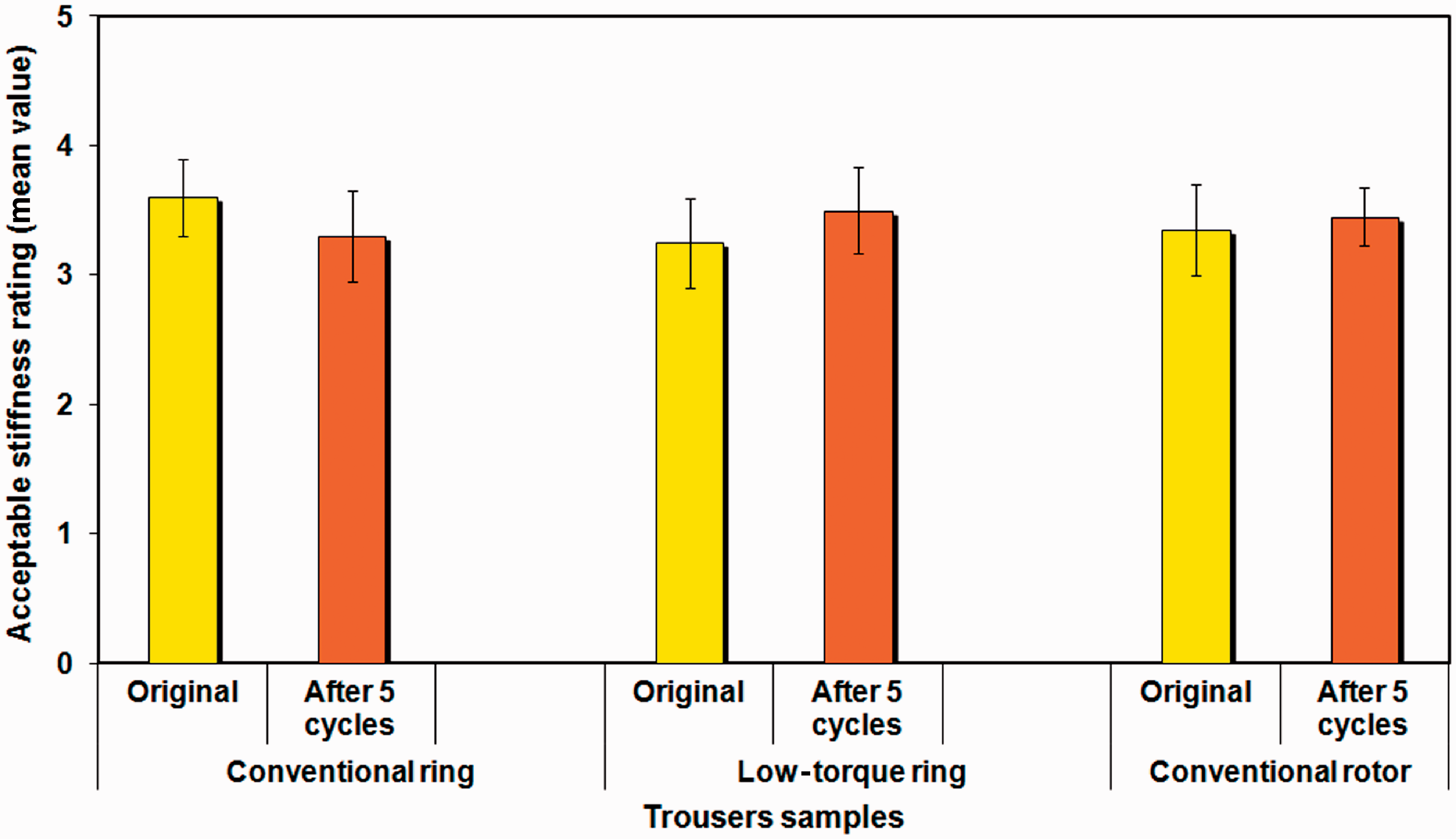
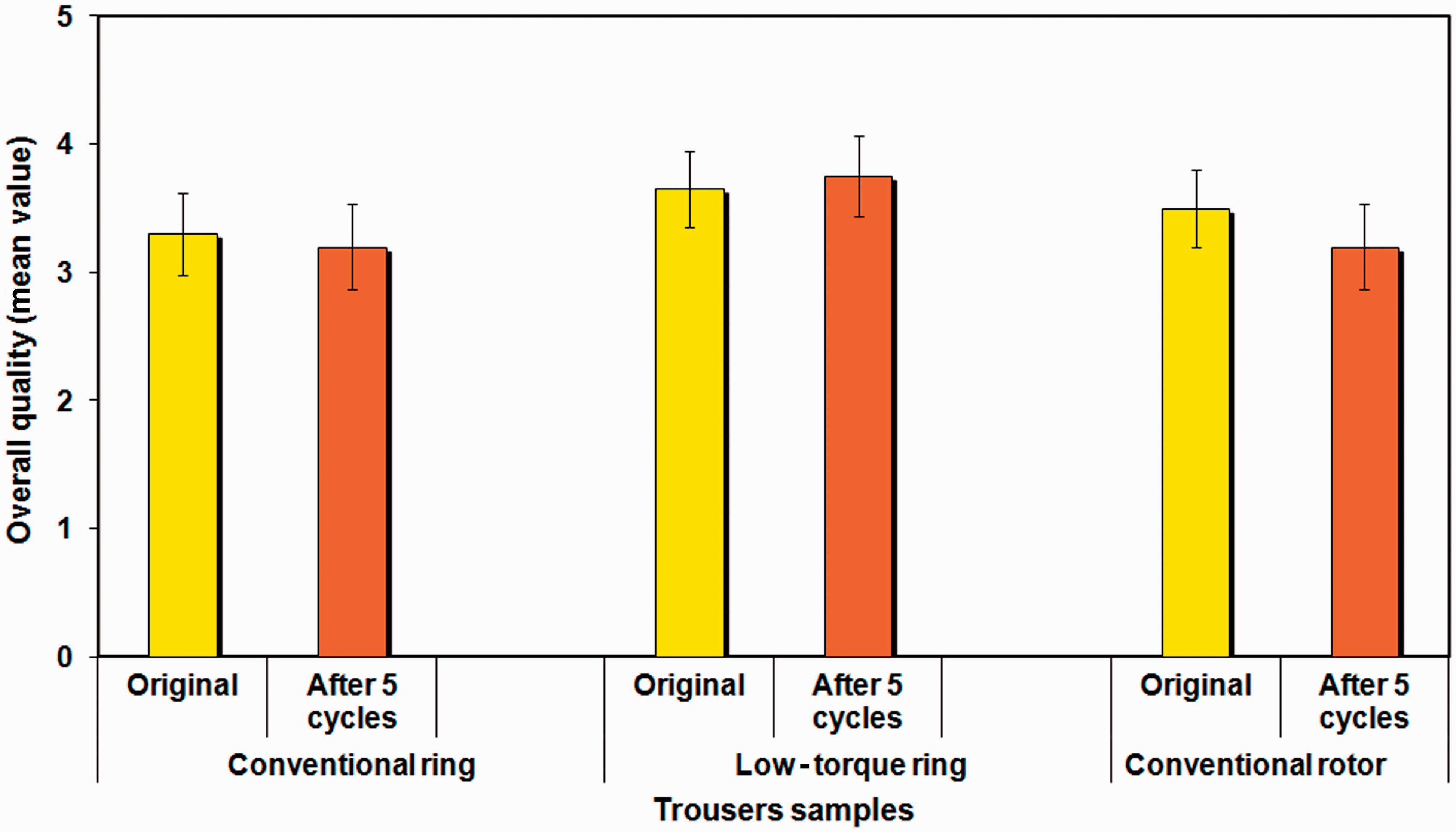
Figures 7–12 present the subjective rating of the trousers’ appearance and performance in terms of the luster, smoothness, fullness, stiffness and overall quality of the trousers before and after wearing. Table 11 shows the results of the multiple comparison LSD test for the trousers’ subjective evaluation. As shown in the Figures 7–12 and Table 11, the low-torque ring, twill trousers have significant advantages of better luster, smoothness appearance and overall quality than the other two trousers made from conventional ring yarn fabric and rotor yarn fabric particularly after five cycles of wearing and washing. Like jeans, the objective test results from the KES-FB surface tester indicated that the fabric, when low-torque yarns were used as weft yarns, possessed a lower value of MMD and SMD and a higher value of fabric WC. In addition, the change for the better luster of the low-torque ring, twill trousers exhibited in the subjective evaluation is also related to this surface smoothness improvement.
Subjective evaluation results comparing the luster of the trousers produced with Nu, C and OE weft yarns. Subjective evaluation results comparing the smoothness of the trousers produced with Nu, C and OE weft yarns. Subjective evaluation results comparing the fuzz of the trousers produced with Nu, C and OE weft yarns. Subjective evaluation results comparing the fullness of the trousers produced with Nu, C and OE weft yarns. Subjective evaluation results comparing the acceptable stiffness of the trousers produced with Nu, C and OE weft yarns. Subjective evaluation results comparing the overall quality of the trousers produced with Nu, C and OE weft yarns. Results of the multiple comparison LSD test for the trousers’ subjective evaluation Note: low-torque ring trousers, conventional ring trousers and conventional rotor trousers are trousers produced by fabrics with low-torque ring yarns, conventional ring yarns and conventional rotor yarns as weft yarns, respectively. means the mean difference is significant at the 0.05 level.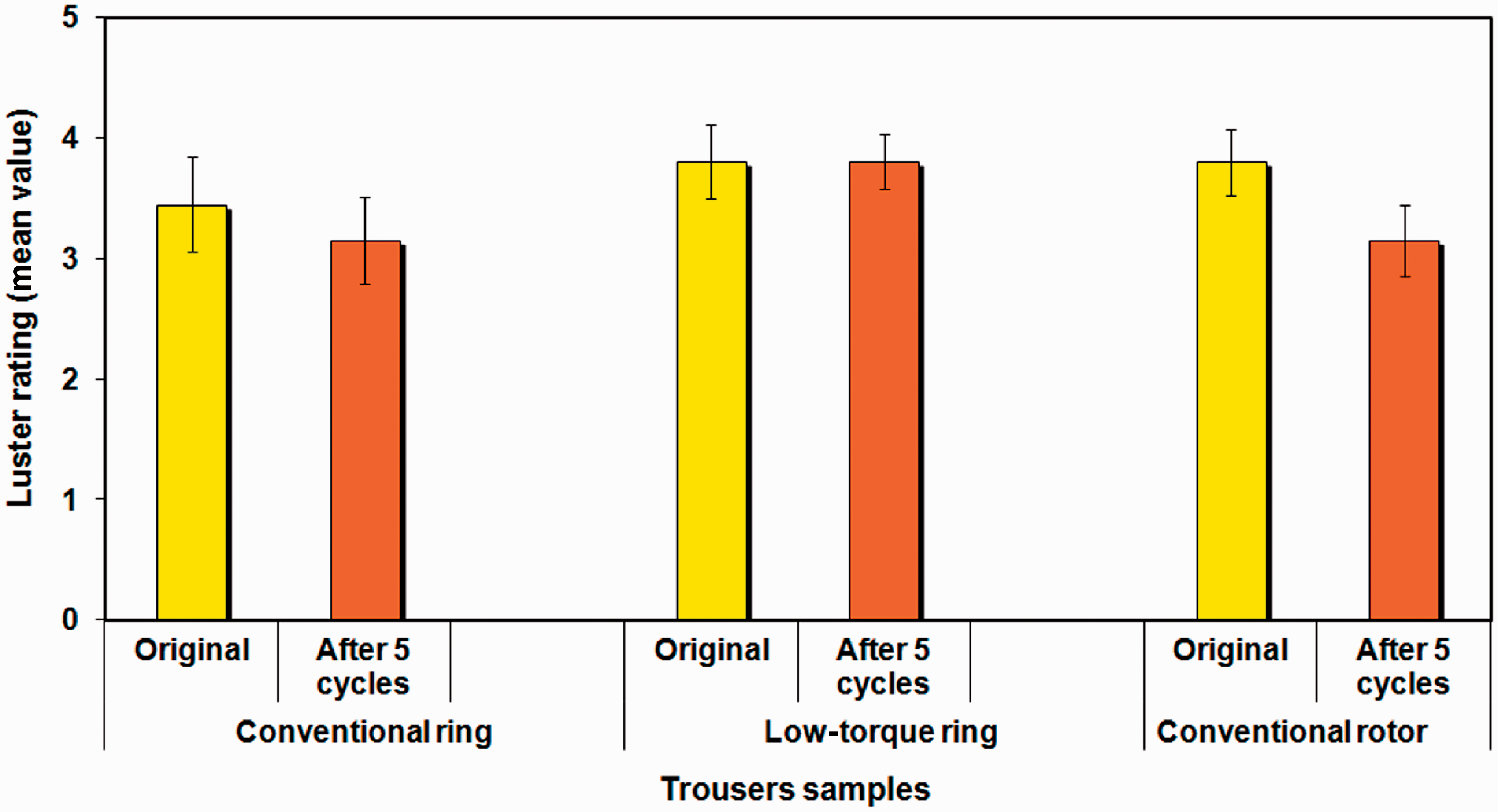
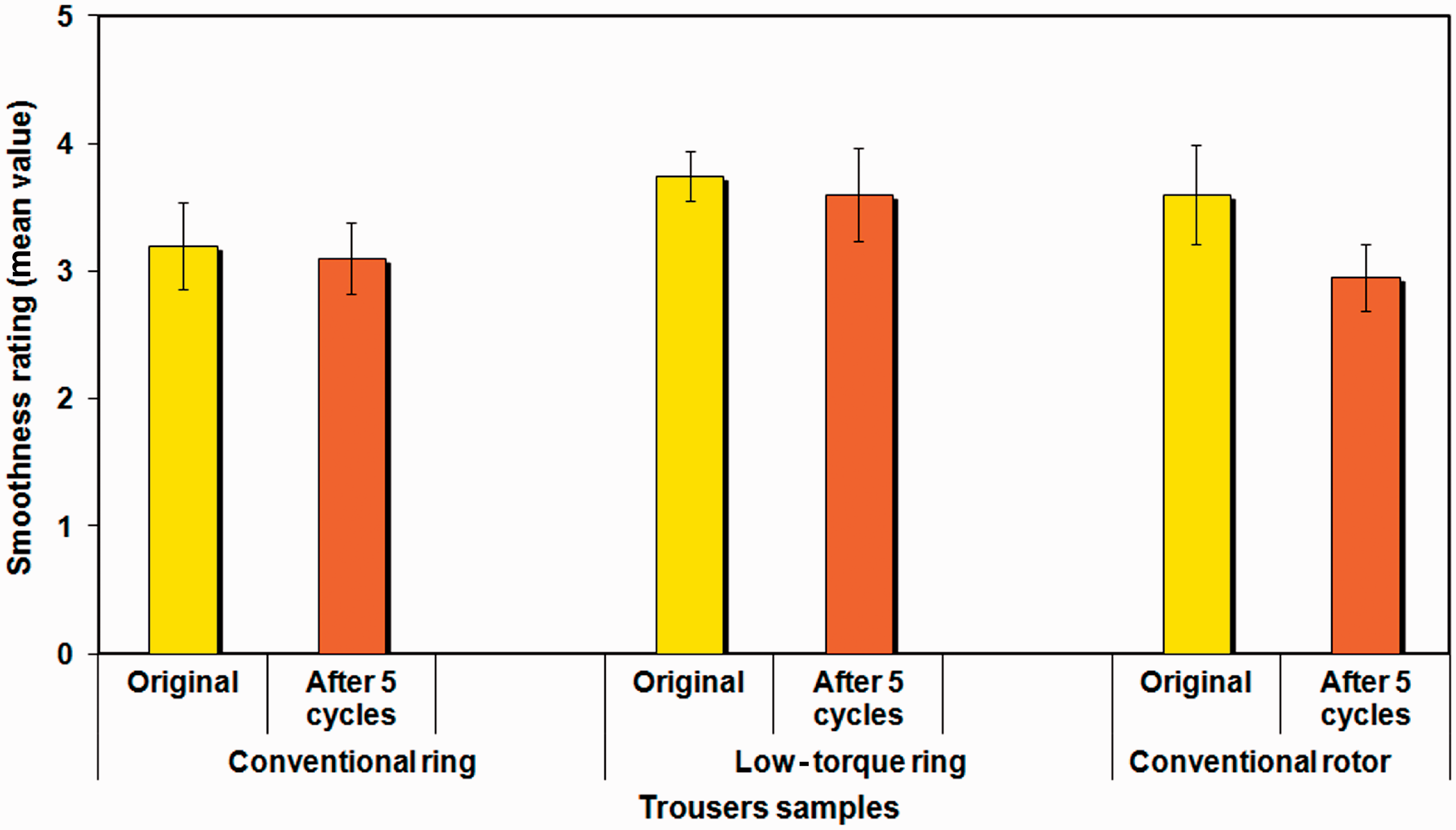
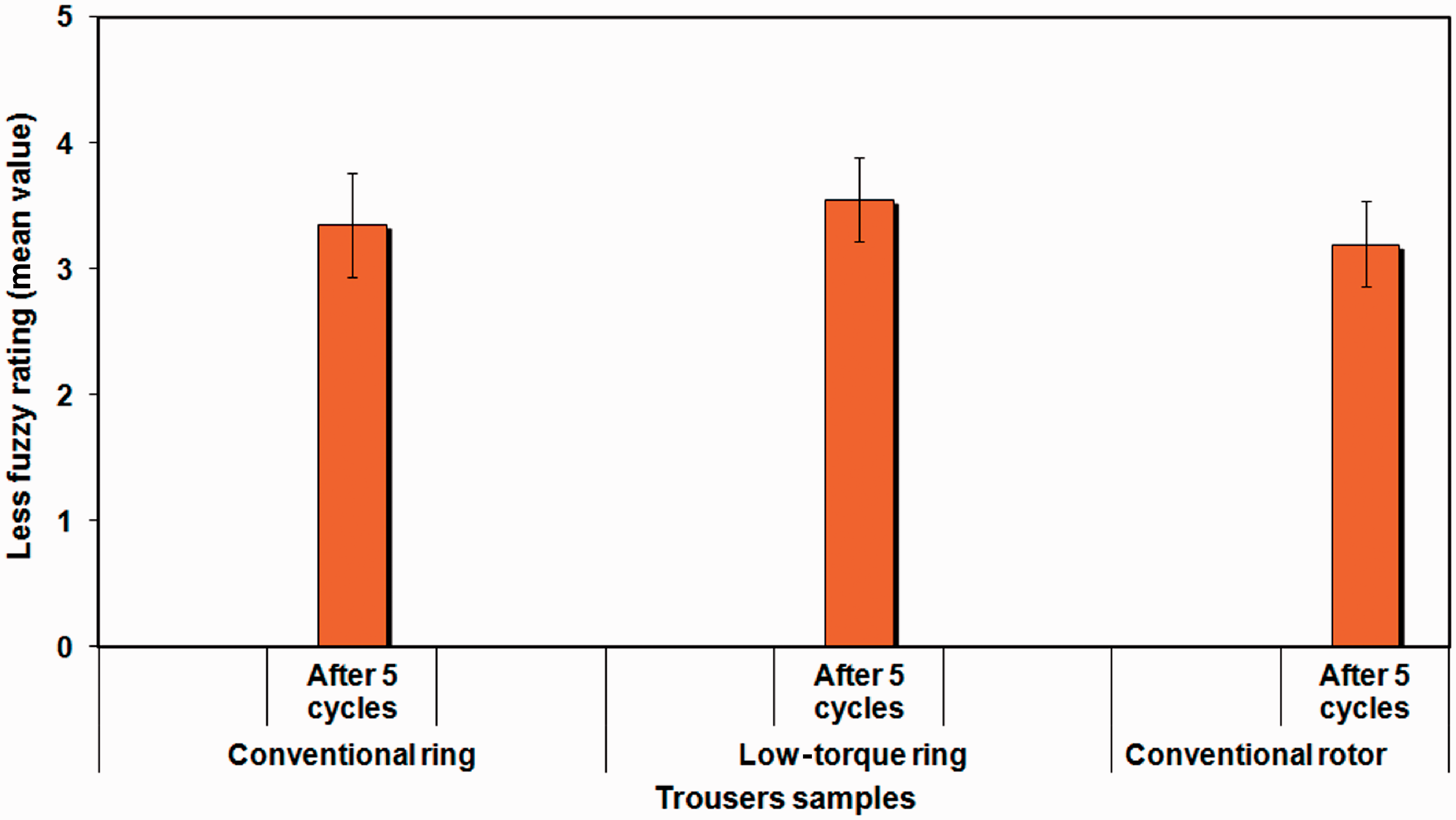
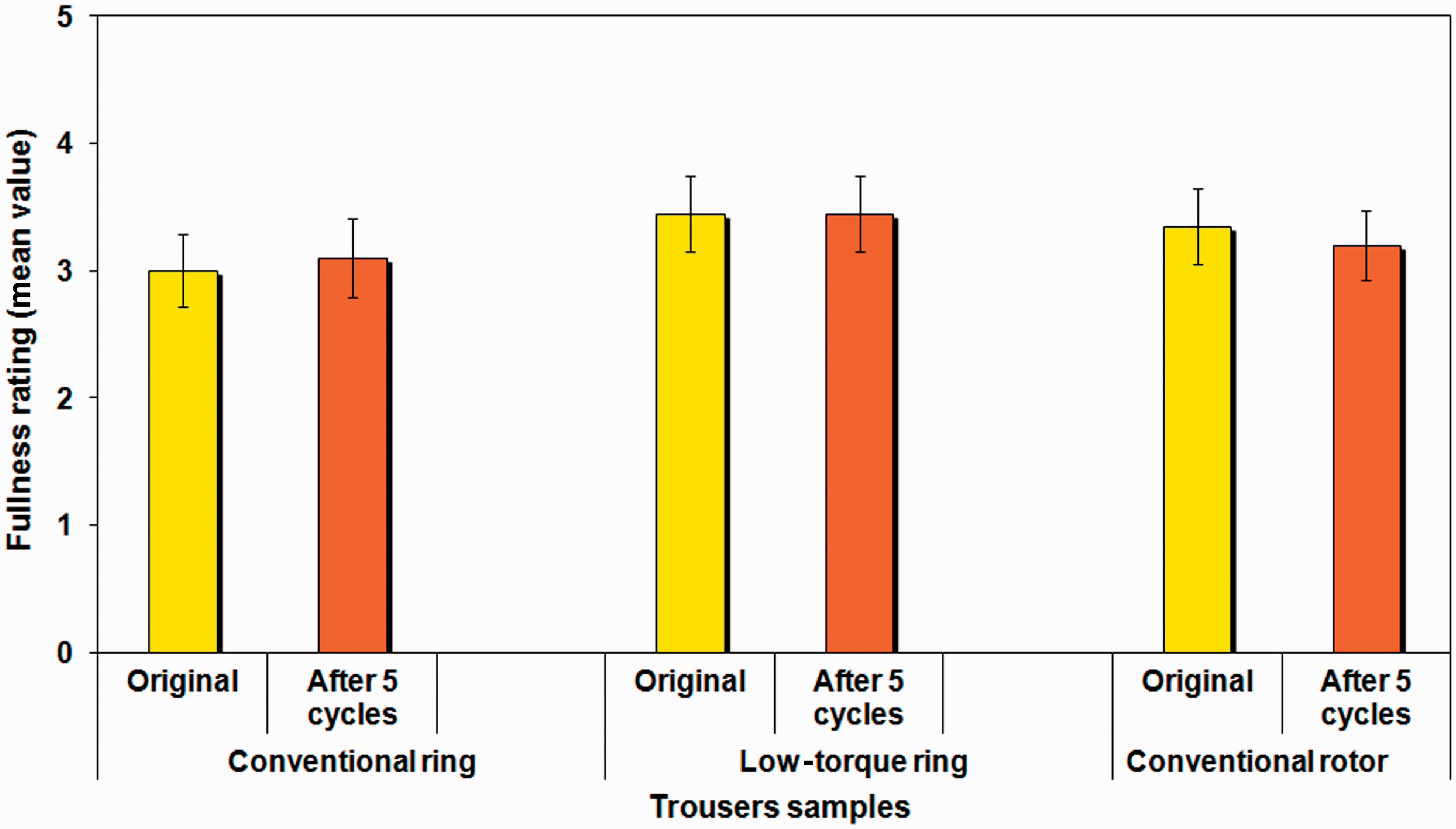
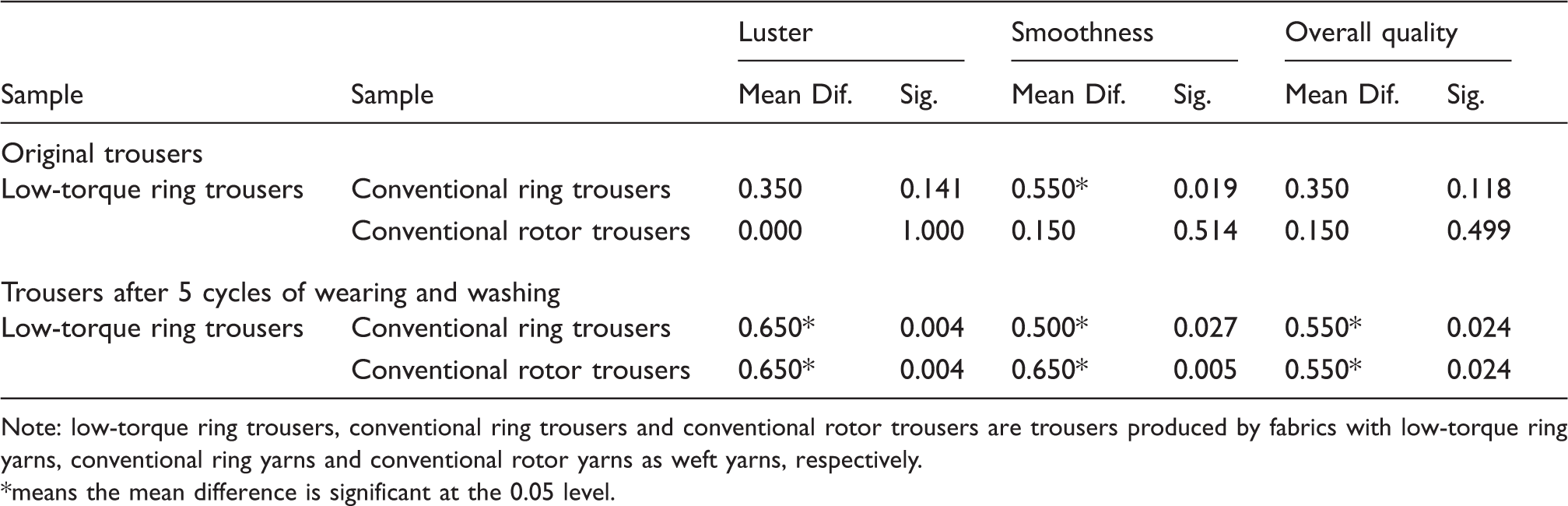
Figures 7–12 also show the subjective rating of the fullness of the trousers produced by the low-torque ring and the conventional ring and rotor yarn, twill fabrics. However, no significant difference is found among them. In addition, all three trousers show a less fuzzy appearance.
Overall subjective evaluation
Questions given to subjects and the summary of their answers for the jeans
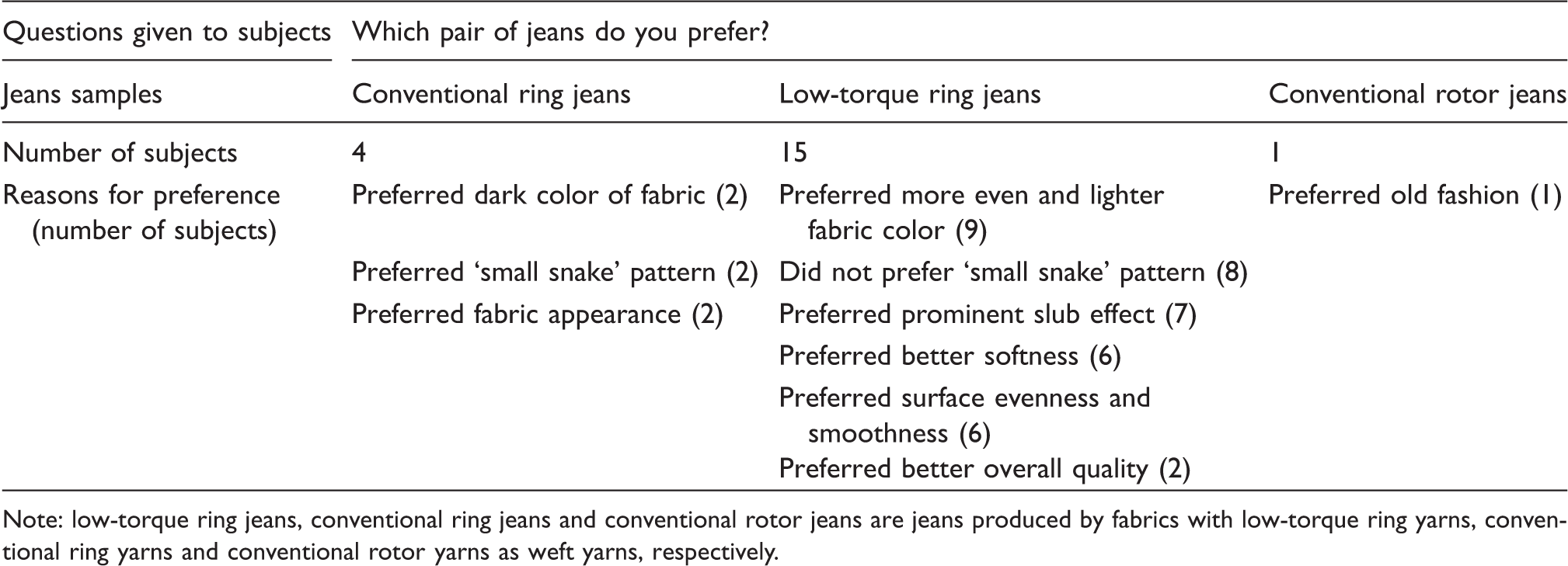
Note: low-torque ring jeans, conventional ring jeans and conventional rotor jeans are jeans produced by fabrics with low-torque ring yarns, conventional ring yarns and conventional rotor yarns as weft yarns, respectively.
Questions given to subjects and summary of their answers for the trousers
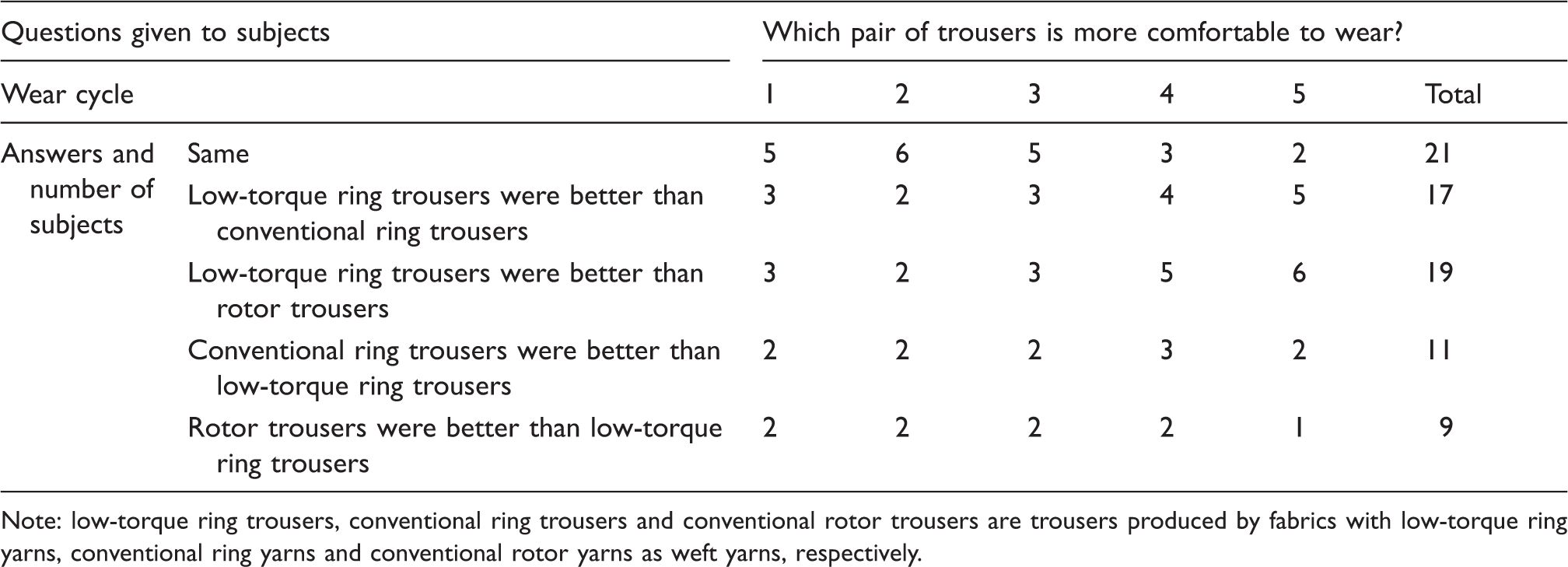
Note: low-torque ring trousers, conventional ring trousers and conventional rotor trousers are trousers produced by fabrics with low-torque ring yarns, conventional ring yarns and conventional rotor yarns as weft yarns, respectively.
Conclusion
In this paper, a study has been carried out to evaluate the comparative performance of the end product (jeans and trousers) produced by low-torque ring yarns to conventional ring yarns and rotor yarns through objective measurements of fabric performance and through actual wearing and washing trials.
The study started from the objective evaluation of fabric performance including the mechanical characteristics and the handle of woven fabrics produced by using low-torque ring yarns, conventional ring yarns and rotor yarns as weft yarns, respectively. The test results show that the tensile strength and tear strength of low-torque ring yarn fabrics in the weft direction is similar to or only slightly lower than that of fabrics using conventional ring yarns with a normal twist level as weft yarns, but the tensile strength and tear strength are much higher than that of the fabrics using rotor yarns. Compared to the fabrics produced from conventional ring and rotor yarns, the low-torque ring yarn fabrics exhibit higher WC and lower MMD. The increase of fabric WC when low-torque ring yarns are used may come from the improvement in bulkiness of the yarn and thickness of the fabrics. The lower MMD value may indicate that the smoothness and the evenness of the low-torque ring-yarn fabric surface are better than that of other conventional fabrics. The objective evaluated handle values demonstrate that the fabrics representing low-torque ring yarns used as wefts give higher values in fabric Numeri and Fukurami compared with fabrics with conventional ring and rotor yarns as wefts.
Following the objective measurements of the low-stress mechanical and surface properties of fabrics, a subjective evaluation of jeans and twill trousers produced by low-torque ring-yarn fabrics was made and compared to that of jeans and trousers made from conventional ring yarn fabric and rotor yarn fabric through the actual wear trial. The evaluation results demonstrate that the jeans produced by the low-torque ring, weft-yarn fabric have significant advantages of better jean smoothness appearance, less ‘small snake’ pattern, better prominent slub effect and overall quality than the jean samples produced by the conventional ring and rotor yarns. In addition, the softness of low-torque yarn jeans is slightly better than that of conventional, weft-yarn jeans and much better than that of rotor, weft-yarn jeans. The twill trousers produced by low-torque ring-yarn fabrics also shows better luster, smoothness appearance and overall quality than the trousers produced by conventional ring and rotor yarns.
Footnotes
Funding
This work was supported by a grant from the Innovation and Technology Commission of the Hong Kong Special Administrative Region Government and Central Textiles (HK) Limited, Chip Tak Weaving Factory Limited, Fountain Set (Holdings) Limited and Perfecta Dyeing Printing and Weaving Works Limited (Grant No. ITS/055/02).