



Abstract
Wool in outdoor clothing systems is stated to be a good temperature and humidity regulator giving the wearer a warm and dry feeling during physical activities in the cold. The objective was to compare two different battings (sheep wool “tirolwool” (TW) versus polyester microfiber (PMF)) in an outdoor jacket of a two-layer outdoor clothing system consisting of a shirt and jacket on the heat and moisture management and comfort sensation during a moderate mountain walking protocol which was followed by a cool-down phase in the cold (−5℃, 43% relative humidity). Due to its beneficial moisture management properties it was hypothesized that TW in the outermost layer would cause a higher skin and core temperature, reduce the after chill effect, increase moisture transfer, decrease moisture accumulation within the clothing system, and lead to more pleasant comfort sensations. Twelve sport students performed the simulated walking protocol (60 min, 7.7% inclination, 5 km/h) and cool-down phase (20 min) with TW and PMF in a climatic chamber. The use of TW compared to PMF was stronger moisture absorbent led to a dryer shirt (p = 0.043) and lower humidity underneath the shirt and jacket (chest: p ≤ 0.05). Core temperature (p = 0.017) and skin temperature drop (chest: p = 0.003) were attenuated with TW after the physical activity. Therefore, the after chill effect was reduced with TW but moisture accumulated to a higher extent in the jacket (p = 0.001), which might lead to a longer drying rate. Correlation analysis revealed that tested underwear blended with merino wool, elastane, and polyamide might feel less scratchy in the slightly damp state than in the dry state.
Keywords
In the cold, one of the biggest challenges of outdoor clothing is to ensure sufficient moisture removal, to prevent internal heat build-up during the physical activity, and to isolate the body well to counteract an excessive cooling after the activity.1,2 An excessive moisture accumulation in the clothing system should be avoided because the risk of becoming hypothermic is higher, especially at the cessation of activity due to evaporation and higher thermal conduction (after chill effect). 3 Moreover, increased wetness in clothing systems is accompanied with worsened comfort sensations. Sweat-wetted skin is correlated with lower thermal comfort and influences tactile sensations negatively.4,5 The feeling of scratching will increase and skin irritations will be more likely as moisture in the next-to-skin layer and stratum corneum hydration rise.5,6
Material and construction modification of outdoor clothing can enhance the moisture transfer and thereby reduce moisture accumulation.7–9 Material tests have shown that the type of batting and the position of the batting (variations between inner and outer batting configurations) affect the moisture accumulation and moisture transmission in the cold. 9 These findings indicate that a variation of battings in outdoor jackets will have an influence on human thermoregulation and comfort sensations during activities in the cold. Wool and synthetic fibers are commonly used batting materials in outdoor jackets. In general, wool absorbs and retains more moisture than synthetic fibers. Based on this, one could assume that wool would not be beneficial for activities in the cold because of the risk of becoming hypothermic due to wet clothing. However, Wu and Fan 9 demonstrated that wool as a batting caused not only the highest moisture transmission but also the lowest moisture accumulation, followed by polyester and down, during material tests in the cold. In addition, wool’s unique properties of being both hydrophobic and hygroscopic provide natural beneficial properties. The action of water vapor being absorbed by wool is classed as an exothermic reaction, thus providing a warming effect in cold temperatures.10,11 Therefore, wool as a batting in a jacket of a two-layer outdoor clothing system consisting of a long-sleeve shirt and jacket has the potential to serve as a good temperature and humidity regulator. Wool could reduce moisture content more effectively within the clothing system, as well as the risk of becoming hypothermic, and emerging discomfort compared to polyester during activities in the cold. In particular, if the batting in the outerwear is able to positively influence the temperature and moisture management by maintaining thermal balance and reducing moisture content in the underwear, thermal comfort will be enhanced and tactile sensations such as scratching will be reduced.
Two-layer clothing ensembles (shirt + jacket) are commonly used clothing systems during winter sport activities. Wear trials with garment systems composed of underwear and outerwear are necessary to get new and additional knowledge about their function on the wearer. Results of laboratory material tests of Wu and Fan 9 indicated that moisture management of wool batting configurations would be superior compared to polyester, but this has to be verified in combination with underwear during wear trials. It is also possible that differences between material properties become negligible if they will be integrated in clothing systems and be worn in reality.
Thus, the study looks to further back up Wu and Fan’s work 9 by providing controlled field experiments comparing the heat and moisture management and comfort sensation in the cold (−5℃, 43% relative humidity (RH)) of sheep wool batting “tirolwool” (TW) with a polyester microfiber (PMF) batting inside an outdoor jacket of a two-layer outdoor clothing system (consisting of long-sleeve shirt and jacket). Battings were compared with each other during a simulated mountain walking protocol and a cool-down phase under standardized conditions. It was hypothesized that TW would cause a higher skin and core temperature, reduce the after chill effect, increase moisture transfer, decrease moisture accumulation, and lead to more pleasant comfort sensations in the cold.
Materials and methods
Subjects
Twelve healthy well-trained male sport students of the Department of Sport Science of the University of Innsbruck (Austria) volunteered to participate in this study (age: 23.7 ± 1.7 years; mass: 76.1 ± 3.8 kg; height: 184 ± 5 cm BMI: 22.7 ± 1.2; physical activity: 10.2 ± 4.5 h/w). Participants provided written informed consent, and the study was approved by the Institutional Review Board and the Ethical Commission of the University of Innsbruck.
Physical activity of 10 hours per week demonstrates that participants were not untrained and performed regular sports. In a recent study, maximum relative oxygen consumption (VO2max) of 67.3 ml/min/kg of male sport students (Department of Sport Science, Innsbruck) was measured during maximal spiroergometry. 12 Calculated for leg cycling, measured VO2max would conform to a maximum power of approximately 384 W (J/s). 13
Study design and climatic condition
Characteristics of the jackets filled with tirolwool (TW) and polyester microfiber (PMF) and of the remaining outdoor clothing components. Values of properties are presented as Mean ± SD
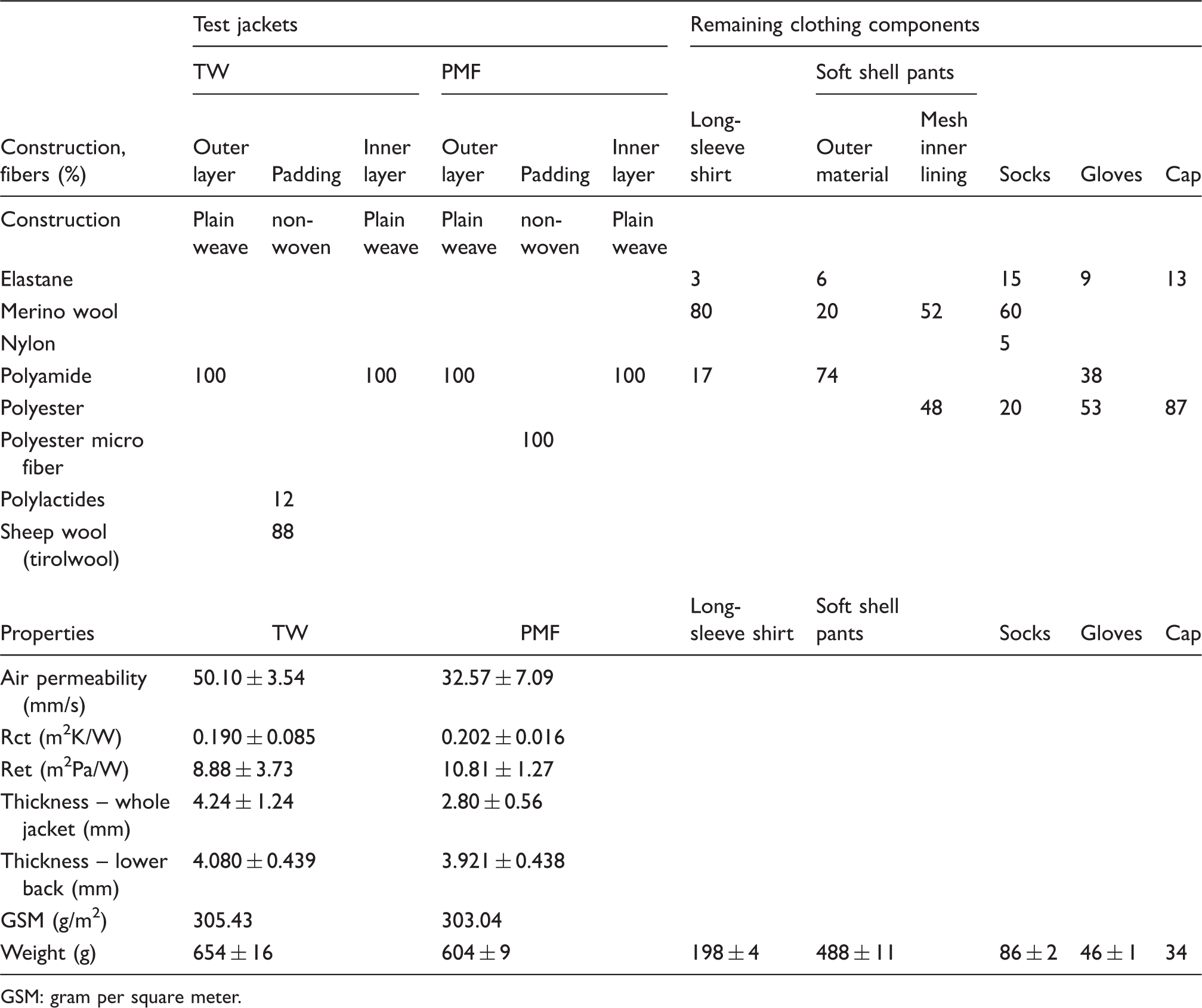
GSM: gram per square meter.
According to the manufacturer of the climatic chamber, temperature and humidity can be kept in the range of ±1℃ (from 60 to −30℃) and ±3% (from 60 to −5℃), respectively. RH at temperatures below −5℃ cannot be regulated constantly due to the low saturated vapor pressure of the environment. For checking purposes, RH and temperature were recorded during the measurements. RH and temperature could be kept at 43.5 ± 1.6% and −4.7 ± 0.3℃ and at 43.1 ± 1.6% and −4.5 ± 0.3℃ with TW and PMF, respectively. Environmental temperature and RH did not differ significantly between the two test conditions.
Outdoor apparel
The test jackets were constructed with the same inner and outer layer and differed only with respect to their batting. Jackets filled with TW and PMF had the same fit, cut, and construction and were manufactured by the same producer. Variation of body mass and height of test persons were low and therefore just one person wore a smaller jacket (M) than the others (L). The difference in weight between the two sizes (M and L) was 52 g for TW and 32 g for PMF.
Material tests with jackets in size M were conducted at the Institute for Textile Chemistry and Textile Physics in Dornbirn (Austria) regarding the construction, air permeability, thermal resistance (Rct), water vapor resistance (Ret), thickness, and gram per square mass (GSM) of the jackets (Table 1).15,16 The PMF batting was a non-woven made up of staple fibers with a length of 40–60 mm. Some material properties fluctuated during the measurements demonstrated by their high standard deviations (Table 1). Material tests revealed that both jackets had a high stitch concentration and in a non-uniform pattern, resulting in a fluctuating thickness. Furthermore, the variation in stitch density and thickness affects material properties causing a relatively high standard deviation throughout the material testing. The PMF batting partly showed a higher lofting between the stitching, which had a great influence on the result of the thickness measurement of the whole jacket. The pressure used to measure the thickness was a standard value of 980 Pa (100 g/10 cm2) and it had a much greater effect on the PMF batting than on the TW batting. Comparing the thickness result of our first measurement of the whole jacket with the result of our second control measurement of the lower back demonstrates this problem. The thickness of PMF differed massively between the two tests. Due to the pressure applied, the thickness measurements are actually artificial and not that relevant for insulating materials that are soft. As the jackets were not flat, the thickness measurements without an additional force would have been unreliable. This is a common problem and some people have been coming up with new methods, but none of them have been standardized yet.
To sum up, results indicate that air permeability of TW must have been higher and Ret lower compared to PMF, but it cannot be stated that Rct differed significantly between the jackets.
Test protocol
The test protocol had two phases: participants walked on a treadmill (pulsar, h/p/cosmos, Germany) with 7.7% inclination and a walking speed of 5 km/h (walking period) for 1 hour. The altitude covered was 375 m. After the physical activity, participants rested in an upright position leaning at a table for 20 minutes (cool-down period). Testing cold weather apparel often requires exposure times of an hour or longer to evaluate physiological responses sufficiently and to stabilize and reach a steady state. 17 The executed test protocol lasted overall 86 minutes with additional four 1.5 minute measuring intervals. The activity corresponded to a relative oxygen uptake (VO2rel) of 27 ml/min/kg, an uptake that will be approximately 40% of the maximum oxygen uptake (VO2max) of sport students who were tested at the Department of Sport Science in Innsbruck in May 2012.12,18 A test person with a body height of 1.84 m and weight of 76.1 kg had theoretically a metabolic energy production (M) of approximately 366 W/m2 (if respiratory quotient was 1) during walking. 17 The test protocol should reflect a common activity (e.g. hiking, ski touring with light intensity) with a subsequent cooling phase in wintertime in the mountains.
Measurements
Parameters representing the heat and moisture management were core temperature, skin temperature, absolute humidity underneath the shirt and jacket, surface temperature of the jacket, sweat production, evaporation, and sweat residues. The subjective comfort enfolded the thermal sensation and the sensation of scratching. Perceived exertion, sensation of pain, register of shivering, and heart rate were additionally elicited. Core temperature, surface temperature, and subjective sensations were determined every 20 minutes. Humidity, skin temperature, and heart rate were continuously recorded.
The core temperature was measured in the right ear canal by IR-Tympanometry (ThermoScan IRT 4520, Braun, Germany). 1 Before every usage the measuring device was stored in the antechamber and carried in the jacket of the investigator to prevent malfunction during measurement in the cold. Core temperature was determined without movement of the test persons (within a 1.5 minute interval) after every 20 minutes. Thermal sensors (platinum thermal sensor M222, Heraeus, Germany) were attached on the chest (pectoralis), upper back (scapula), and upper arm (deltoid and triceps) for measuring the skin temperature of the upper trunk. Additional sensors (SHT 15, Sensirion, Switzerland) were attached underneath the shirt (right pectoralis, left scapula) and jacket (left pectoralis, right scapula) for calculating absolute humidity within the clothing system. Temperature and humidity data were recorded with data loggers and analyzed with MatLab Ver. R2012a (USA). For the statistical analysis, the data were averaged over the last five minutes of 20-minute intervals. Thermography images (VarioCam high resolution, Infratec, Germany) were captured without movement of the front and back of the jacket for determining the outer surface temperature.
Participants were weighted (DS150K1, Kern, Germany) in underpants and completely dressed at the beginning and at the end of the investigation for calculating sweat production and evaporation. The quotient of evaporation and sweat production represented the relative evaporation. Jacket, shirt, and pants were weighted separately at the start and end of the tests for calculation of the sweat residues.
Thermal and tactile comfort questions were related to the upper body. The thermal sensation was assessed with a nine-point thermal rating scale (from 4 very hot to −4 very cold, modified from ISO-10551, 1995) and the tactile sensation “scratching” with a seven-point scale (from 7 no sensation to 1 totally felt).5,17 In addition, it was observed if the participants shivered. Perceived exertion was evaluated with the Borg scale (6–20, from no exertion at all to maximal exertion) and perceived pain with a five-point scale (from 0 none to 5 severe).17,19 At the end of the test protocol, participants made a subsequent assessment if they felt their thermal status acceptable during the whole protocol. 17 Heart rate (wear link + transmitter w.i.n.d, Polar, Finland) was recorded with the treadmill software (para graphics, h/p/cosmos, Germany) and calculated exactly as well as the skin temperatures and microclimates for the statistical analysis.
Statistics
Analysis of variance (ANOVA) with repeated measurement (factor 1: batting, factor 2: time) was used to determine parameter differences between TW and PMF for the walking (start to 63 minutes) and cool-down period (from 63 to 84.5 minutes). With the same statistical method, core temperature was additionally analyzed over the whole test protocol (walking + cool - down). Weight parameters were analyzed with t-tests for matched pairs. If parameters were not normal distributed, the Wilcoxon and McNemar tests were applied. In addition, correlation analysis between the progress of moisture underneath the shirt and comfort sensations were executed with Pearson’s correlation. Values are reported as mean values ± standard deviation (Mean ± SD). Differences and correlations were considered as statistically significant at p ≤ 0.05. Parameters were analyzed with the program SPSS Statistics Ver. 18 (IBM, USA).
Results
Core and skin temperature
From the start to the end of the whole test protocol (from minute 0 to 84.5) core temperature dropped from 36.77 ± 0.5 to 36.13 ± 0.54℃ with TW and from 36.69 ± 0.36 to 35.98 ± 0.42℃ with PMF. Core temperature change over the whole protocol did not differ significantly between TW and PMF (−0.63 ± 0.56 versus −0.71 ± 0.38℃).
Separating the protocol phases, progress of all temperature parameters shows that an after chill occurred with both battings during the cool-down period from minute 63 to 84.5 (Figures 1(a), (b) and (e)). In this period TW caused less drop of body core temperature (−0.08 ± 0.22 versus −0.27 ± 0.3℃, p = 0.017) and skin temperature of the chest (−0.63 ± 0.71 versus −1.27 ± 0.83℃, p = 0.003, Figures 1(a) and (b)). This demonstrates that, due to the variation of the battings, temperatures took a different course after the activity. The absolute mean temperature value of the core and chest, however, did not differ significantly between both battings.
Progress of temperature and humidity during walking and cool-down (CD): (a) core temperature; (b) skin temperature of the chest (left), upper back (centre), and upper arm (right); (c) absolute humidity underneath the shirt in the chest (left) and upper back area (right); (d) absolute humidity underneath the jacket in the chest (left) and upper back area (right); (e) surface temperature of the jacket at the chest (left) and upper back (right). §: significant difference between tirolwool (TW) and polyester microfiber (PMF); §§: significant change across the measurement progress; §§§: significant different change between TW and PMF; solid line: TW; dashed line: PMF. Values are presented as Mean ± SD, N = 12.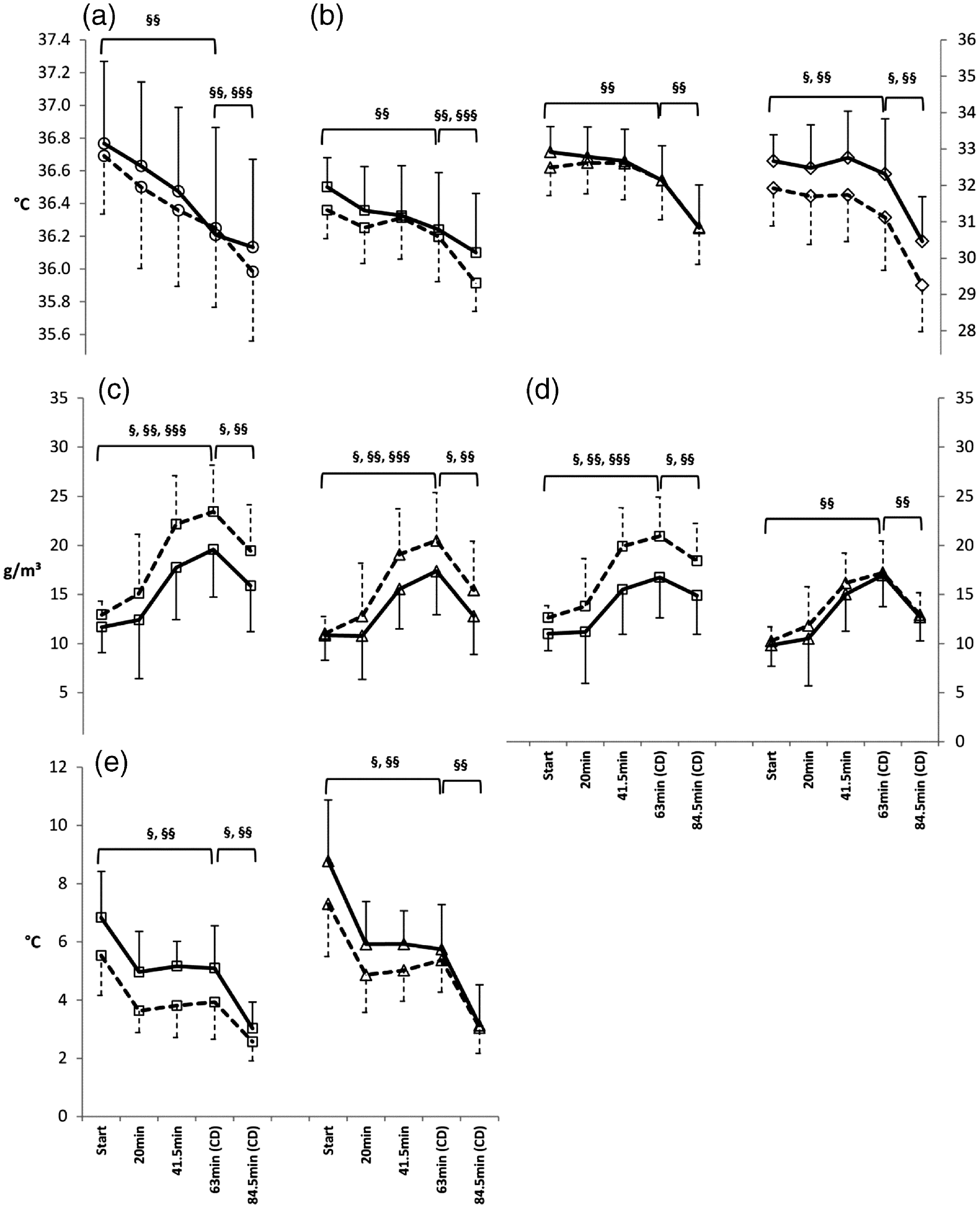
Skin temperature of the upper arm was kept significantly higher with TW compared to PMF during both protocol phases (walking: 32.56 ± 1.12 versus 31.62 ± 1.23℃, p = 0.021; cool-down: 31.39 ± 1.27 versus 30.18 ± 1.3℃, p = 0.022).
Absolute humidity
Underneath the shirt and jacket absolute humidity increased during walking and decreased to a lower extent during cool-down (Figures 1(c) and (d)).
During the walking period absolute humidity increased underneath the shirt with TW from 12 ± 3 to 19.6 ± 5 g/m3 (from 34% to 58% RH) and with PMF from 13 ± 1 to 23 ± 5 g/m3 (from 39% to 68% RH) at the chest and with TW from 11 ± 3 to 17 ± 4 g/m3 (from 30% to 48% RH) and with PMF from 11 ± 2 to 21 ± 5 g/m3 (from 31% to 56% RH) at the back. TW caused less humidity and less rise of humidity underneath the shirt (chest: p = 0.002 and p = 0.003, back: p = 0.021 and p = 0.001) and jacket (chest: p = 0.002 and p = 0.003). In addition, a lower humidity was observed with TW underneath the shirt (chest: p = 0.001, back: p = 0.011) and jacket (chest: p = 0.001) also during the cool-down phase.
Surface temperature
At the start of the protocol, the surface temperature of the jacket dropped and remained stable until the end of walking (Figure 1(e)). Surface temperature was significantly higher with TW during walking (chest: p ≤ 0.001, back: p = 0.007) and resting (chest: p = 0.007).
Weight measurements
Weight parameters. Values are presented as Mean ± SD, N = 12
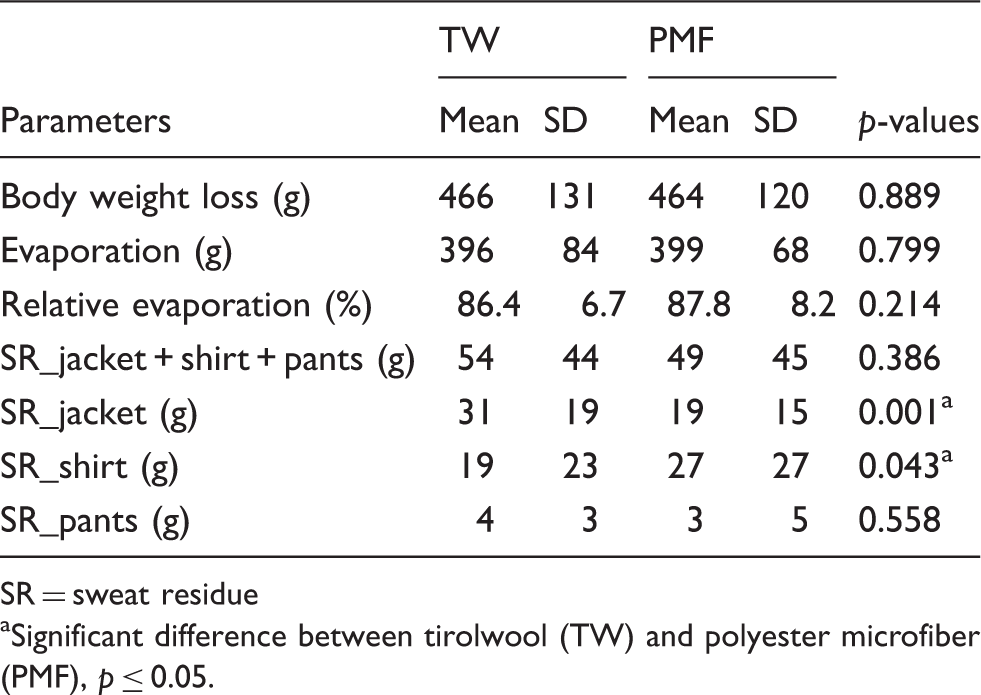
SR = sweat residue
Significant difference between tirolwool (TW) and polyester microfiber (PMF), p ≤ 0.05.
Stress level and comfort sensations
Heart rate and level of perceived exertion increased during walking and decreased during resting, but did not differ between TW and PMF. At the end of the walking period heart rates were 117 ± 8 and 114 ± 8 bpm with TW and PMF, respectively (Figure 2(a)), and load was perceived as very light (Figure 2(b)). Participants did not shiver and had no pain during testing. Thermal sensation changed from slightly warm to warm during walking and dropped from warm to slightly cool during the cool-down phase (Figure 2(c)). Thermal sensation was not significantly different between TW and PMF. Clothing felt scratchier during walking and less scratchy during resting (Figure 2(d)). Within the cool-down period clothing felt scratchier with TW compared to PMF (p = 0.035).
Heart rate (a), perceived exertion (b), thermal sensation (c), and scratching (d). §: significant difference between tirolwool (TW) and polyester microfiber (PMF), p ≤ 0.05; §§: significant change across the measurement progress, p ≤ 0.05; solid line: TW; dashed line: PMF. Values are presented as Mean ± SD, N = 12.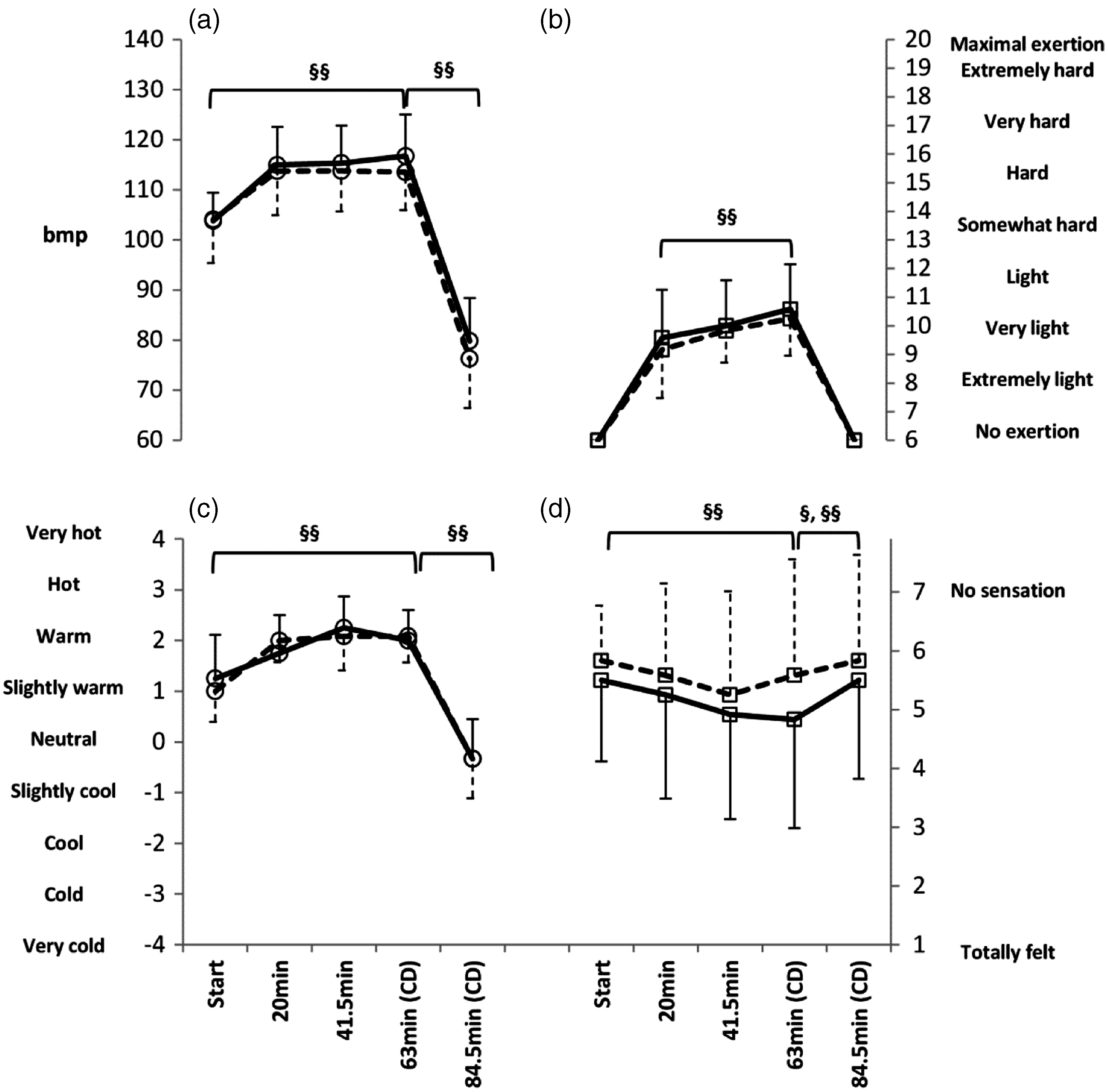
After finishing the whole test protocol, participants made an additional assessment if they felt their thermal status comfortable during the whole test protocol. During the whole test protocol thermal state was felt acceptable by 10 of 12 participants with TW and 8 of 12 participants with PMF. The perceived thermal state of the whole test protocol did not differ significantly between TW and PMF.
Correlation analysis
Correlations between absolute humidity underneath the shirt, scratching, and thermal sensation
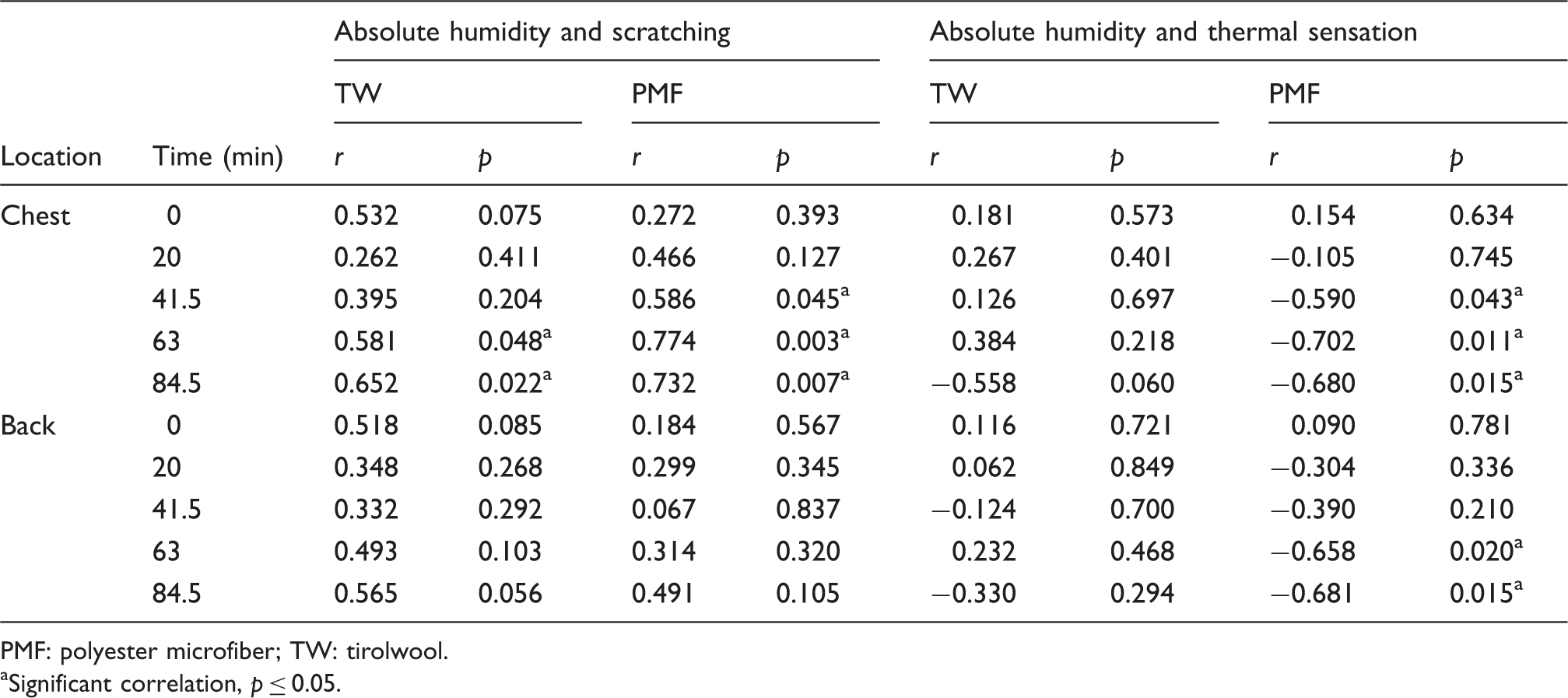
PMF: polyester microfiber; TW: tirolwool.
Significant correlation, p ≤ 0.05.
Discussion
The variation of the battings (sheep wool (TW) versus PMF) differently affected the heat and moisture management as well as the comfort perception in the cold. Wearing TW reduced the after chill effect, lowered absolute humidity underneath the shirt and jacket, and improved the moisture transfer from skin to the jacket. However, TW did not cause a higher mean core temperature or higher skin temperatures on all skin areas, did not reduce moisture accumulation inside the jacket, and did not lead to more pleasant comfort sensations. Thus, our hypotheses have only been confirmed partly.
Results of laboratory trials cannot often be translated one-to-one in wear trials. Our investigation showed similarities with Wu and Fan’s 9 work and we could largely substantiate their results.
Heat management
Particularly after physical activities in the cold it is of importance that clothing systems isolate the body well, counteracting an excessive cooling.1,2 After walking in the cold with −5℃ ambient temperature, all temperature parameters dropped with both tested battings but core temperature did not decrease below 36℃ and, therefore, participants did not become hypothermic neither with TW nor with PMF. However, TW attenuated the core temperature and skin temperature drop after the activity. Water vapor and liquid sweat were transported more effectively from skin to the outer layer (Figure 3). This kept the skin more dry and warm and reduced the after chill effect.
Theoretical description of the moisture transfer and moisture accumulation within the tested two-layer clothing systems either with integrated batting tirolwool (TW) or polyester microfiber (PMF) in the second layer (jacket).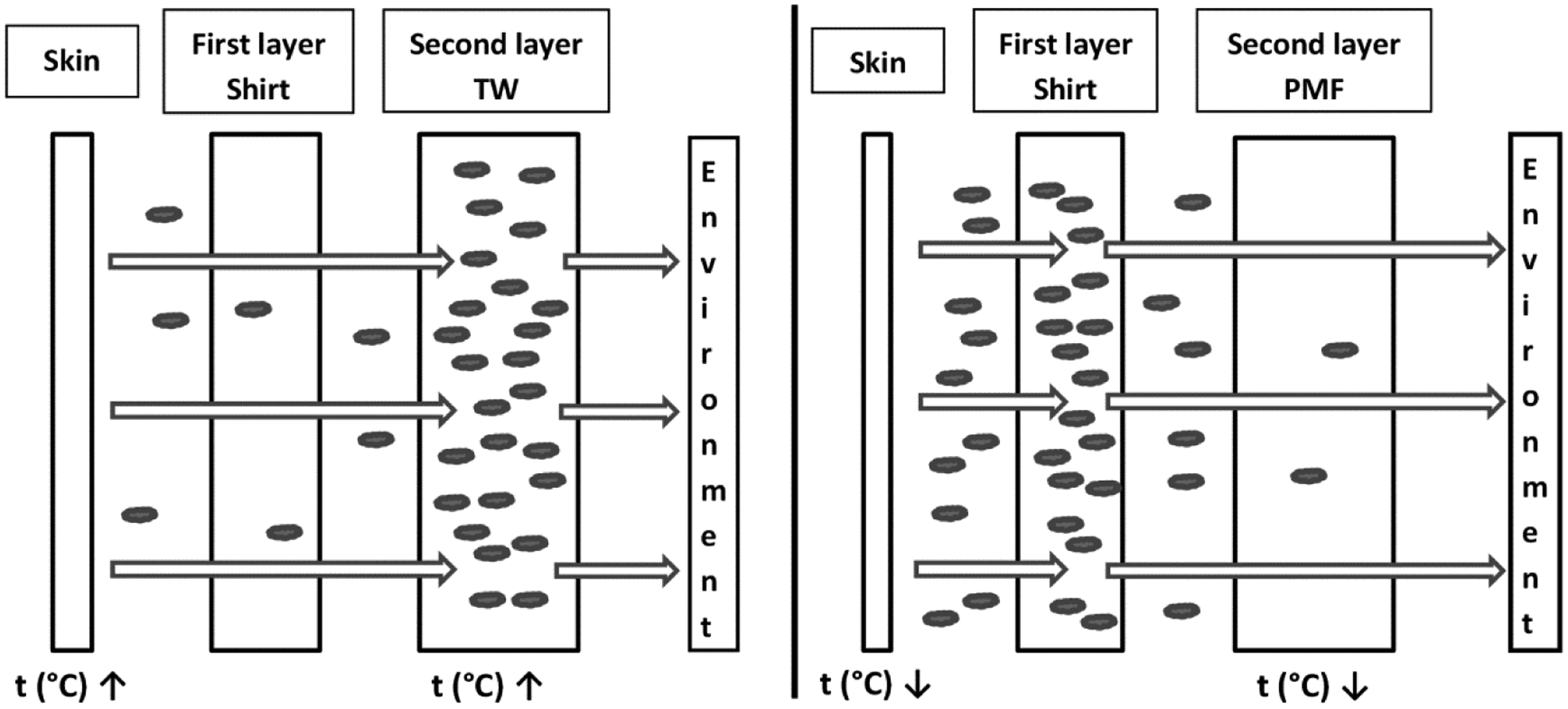
A higher surface temperature of the TW jacket was observed during the measurement. In general, this demonstrates that an increased heat transfer occurred between the clothing surface and the environment. This should have been resulted in a higher heat loss and lower skin and core temperatures of the wearer. Contrary to this expectation, skin and core temperatures were not lower wearing TW. The action of water vapor being absorbed by wool is classed as an exothermic reaction, thus providing a warming effect in the cold.10,11
The higher surface temperature of the jacket might have indicated a heat-releasing effect of the wet batting and might have contributed to the lower temperature drop.
Moisture accumulated to a higher extent in TW, which will lead to a longer drying rate of the jacket. Obviously, the higher moisture accumulation did not strengthen the chilling effect after 20 minutes of walking at −5℃. It might be that this result would change with longer cool-down phases and should therefore be further reviewed.
Moisture management
Wu and Fan’s 9 material tests with different battings showed that wool, compared to polyester and down, was superior in terms of reducing moisture accumulation and increasing moisture transmission in the cold. Also in our investigation, using TW instead of PMF in the second layer of the two-layer outdoor clothing system effectively attenuated the rising humidity underneath the shirt and jacket and prevented moisture accumulation in the first layer during walking and resting in the cold. However, moisture accumulation in the second layer was higher with TW compared to PMF. The sweat production, whole sweat residue, evaporation, and relative evaporation were not significantly different between TW and PMF. These results imply that moisture transmission rates to the environment were almost similar with both battings, and a different moisture distribution within the two-layer clothing system occurred (Figure 3).
The additionally performed material tests indicated that TW had a lower water vapor resistance and higher air permeability. Therefore, we assumed that TW would show an improved moisture transfer throughout the jacket and a lower moisture accumulation inside the outerwear. Water vapor resistance and air permeability were measured in the dry state and might have been changed due to the strong absorption property of the wool during the measurement. Hes 20 demonstrated that water vapor permeability of wool fabrics can change up to 70–80% when becoming wet. It could be that a fiber swelling and a compression of the fabric tissue took place whereby material properties changed and no longer differed between TW and PMF.
Comfort
Increased wetness in clothing systems and higher skin wetting are accompanied with worsened comfort sensations. In particular, thermal comfort and tactile sensations will be negatively influenced if skin becomes wet.4,5 Wet skin causes a higher friction coefficient between skin and textiles. In addition, the skin friction coefficient can be more than twofold higher with wet fabrics compared to dry fabrics, which can result in skin irritations and discomfort. 6 Therefore, it was assumed that due to the improved moisture removal from the skin and lower humidity underneath the clothing system TW would have led to more pleasant comfort sensations. This assumption could not be confirmed. It was even perceived that the clothing felt scratchier with TW compared to PMF. It might be that the special fiber blend of the long-sleeve shirt composed of merino wool, elastane, and polyamide felt smoother when becoming slightly damp. The first layer, which was in direct contact with the skin, had the highest influence on the comfort sensations. The merino wool shirt and climate underneath the shirt were moister with PMF. The higher moisture content could have caused a smoother surface structure of the fabric tissue, resulting in a more comfortable tactile sensation with PMF. In this connection, a negative correlation could be observed that substantiates the following conclusion: the higher the absolute humidity underneath the shirt the lower the feeling of scratch. However, normally it is very unlikely that wool feels more comfortable when becoming wet because in wet states it opens its scales and increases its coefficient of friction. Obviously, the special fiber blend had a strong influence on this wool property, but it is necessary to verify these findings by further investigations.
A higher humidity can worsen thermal sensation in the cold. This was substantiated by an additional correlation that was only significant for PMF: the higher the absolute humidity the colder the feeling. That means that due to the higher moisture content, clothing should have felt colder with PMF than with TW, but this was not clearly confirmed because thermal sensation did not differ between the two battings. Therefore, moisture content was not high enough to influence thermal sensation negatively.
An additional interesting result was that correlations were primarily significant for the chest area. This indicates that comfort differences were more sensitively perceived on the chest than on the back area.
Conclusions
The investigation showed similarities with Wu and Fan’s 9 work and largely confirmed their results. Results of laboratory trials were also shown in wear trials. The variation of the battings (sheep wool versus polyester) inside an outdoor jacket of a two-layer outdoor clothing system significantly affected the heat and moisture management and comfort sensation during a simulated moderate mountain walking protocol which was followed by a cool-down phase in the cold. From the point of hypothermia both jackets were equally suitable for the use of moderate outdoor activities at −5℃. However, the use of sheep wool compared to the polyester material in the outermost layer was more strongly moisture absorbent, leading to a dryer first layer and dryer climate within the clothing system. This led to an attenuated core and skin temperature drop at the end of the physical activity. The after chill effect was reduced with TW, but moisture accumulated to a higher extent in the second layer and this might possibly lead to a longer drying time of the jacket after the activity. In addition, correlation analysis revealed that shirts with fiber blends composed of merino wool, elastane, and polyamide might feel more comfortable in a slightly damp state than in the dry state, but this has to be substantiated in the future. Further research is required to achieve more knowledge about the suitability of the different battings in colder environmental conditions and/or during higher physical intensities and longer cool-down phases. Testing different age groups of men and women will be required, because the study results and statements are primarily applicable to young male subjects and the given experimental condition.
Footnotes
Funding
The study was partly supported by the Bergrettung Tirol (Austria) and the Comet K-Project “Sports Textiles” (grant number 820494), funded by the Austrian Research Promotion Company (FFG), Standortagentur Tirol (Austria), and region Vorarlberg (Austria).