




Abstract
Incorporation of functional additives is one of the most important ways of functionalizing textiles. Among the additives, photocatalyst has been used extensively in recent years. This paper reviews the current research status on application of photocatalysts in fibrous materials. The review concentrates on novel methods for coating various photocatalysts on textiles and properties of the photocatalyst-modified textiles. The fundamental limitations and future prospects of this research are also discussed.
Keywords
Textiles are often regarded as our second skin. They decorate and protect our bodies while bringing comfort into our lives. Functional high-grade textiles are enjoying a high market growth rate. Modified fibers or textiles for domestic and industrial use with environment friendly functionalities, such as self-cleaning, antimicrobial and anti-pollution, have developed rapidly in recent years. Generally the functionalization of textiles can be achieved by not only emerging production technologies and raw materials (e.g., three-dimensional (3D) structures), but also by the new developments in the modification of textiles. Modification of textiles via incorporation of functional additives (organic or inorganic nano-structured materials) is one of the most important principles. Among these functional additives, a photocatalyst, which is able to catalyze reactions with the involvement of light, has emerged as one of the most promising materials for use in multifunctional textiles.
The semiconductor photocatalyst, as a rising and efficient technology for environmental remediation, represents an easy way to eliminate pollution by utilizing the energy of either natural sunlight or indoor illumination light, which is available everywhere in the world. The mechanism of these functions is based on the in-situ generated highly reactive oxygen species (e.g., OH•, O2•−) for mineralization of organic compounds. Photocatalysts, such as TiO2, ZnO, Fe2O3, CdS, WO3, SnO2 and ZnS, are employed to degrade a wide range of organics into readily biodegradable compounds, and eventually mineralize them to carbon dioxide and water.
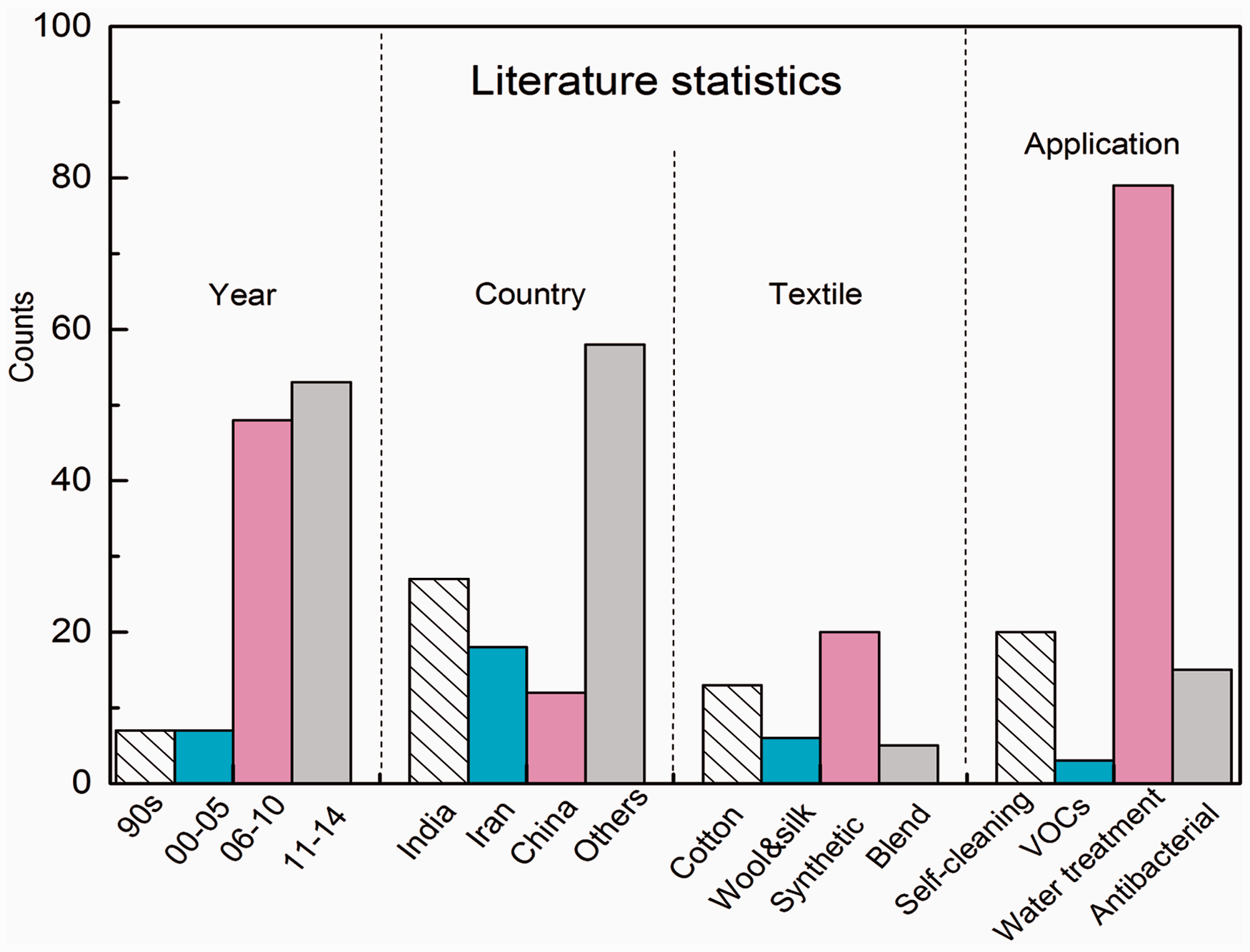
A literature search was carried out using the Scopus database of articles published prior to March 2014. “Photocatalytic textiles” was used as the keyword. The literature search identified 537 articles. Among these, 420 articles were excluded because the studies were either not performed on textiles or the article was not written in English. Therefore, 117 studies have been examined in this review as shown in Figure 1.
Among the reported research papers, titanium dioxide and its composites are the most common photocatalysts used on textiles. 1 Most functional textiles modified with titanium dioxide as the catalyst are activated by ultraviolet (UV) light. The important features for photocatalysts are as follows: (1) low toxicity: the common photocatalyst is titanium dioxide, a semiconductor oxide that is also a component of some toothpaste; (2) ambient operation temperature and pressure; (3) complete mineralization of organics without secondary pollution; (4) low operation cost; (5) broad activity towards a wide variety of contaminants; and (6) photocatalytic activity in both indoor and outdoor light.
This review aims to give an overview of the understanding and development of photocatalyst-modified textiles, from fundamentals of the catalyst to possible applications of the photocatalyst-modified textiles. It also includes the modification methods that have been used for textiles. The possible future challenges are also discussed.
Photocatalytic oxidation process using semiconductors as the catalyst
The photocatalytic activity of semiconductors involves a series of reactions including chemisorption of organic molecules on the semiconductor surface, electron excitation, and electron transfer among particles and photochemistry on reactive surface.
Adsorption studies on the semiconductor surface
In aqueous colloid suspensions, the metal oxide materials are usually covered with hydroxyl groups on their surfaces. These surface-active groups are useful in promoting the surface adsorption with the substrate or media that they contact with via electrostatic interactions, hydrophobic interactions or hydrogen bonds.
Semiconductor electronic excitation
Electrons in semiconductors possess a void energy region that extends from the top of the filled valence band to the bottom of the vacant conduction band. The void energy region is called the band gap. The initial process for the photocatalytic activity of the semiconductor is the generation of electron-hole pairs in the semiconductor. Figure 2 shows the excitation of the electron from the valence band to the conduction band initiated by light absorption with energy that matches with the band gap of the semiconductor. Upon excitation, the separated electrons and holes can go in several ways. One possibility is that electrons and holes can recombine with each other. The recombination of the separated electrons and holes can occur on the surface, or in the volume of the semiconductor particles with the release of heat. The semiconductor can also donate the electron to the electron acceptor at the surface. At the same time, a hole can migrate to the surface where an electron from a donor species can combine with the surface hole, resulting in oxidization of the donor species.
Literature statistics. Schematic of titanium dioxide ultraviolet photo-excitation followed by the excitation process.
2
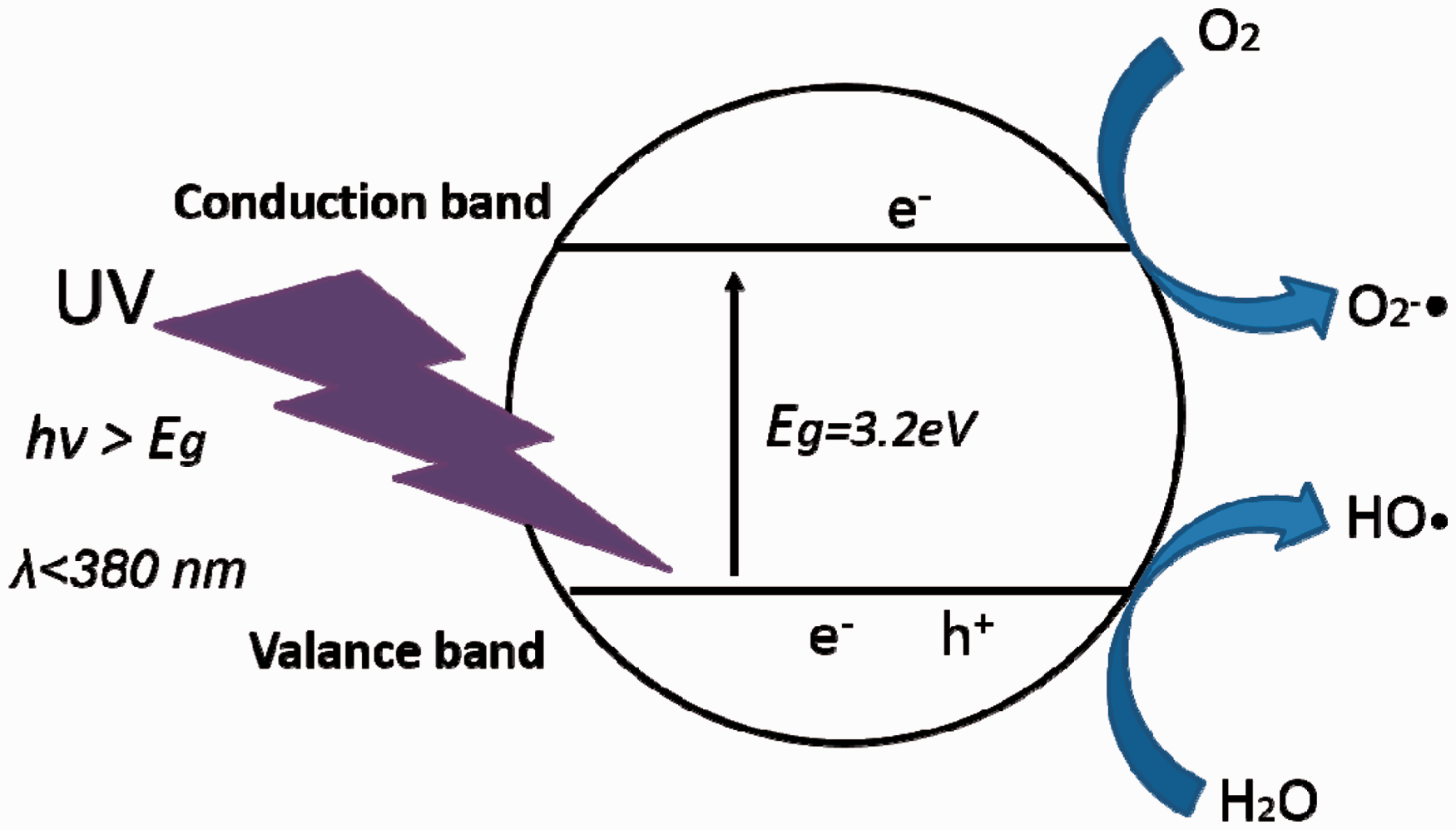
The photo-excited electrons and holes in Figure 2 have suitable redox-potential for inducing a wide range of catalytic reactions. For example, when the photo-generated electrons and holes react with water or oxygen, superoxide and hydroxyl free radicals can be produced. Gonzalez-Eclipe et al. 3 reported the formation of the superoxide (•O2−) and hydroxyl (•OH) free radicals generated by UV irradiation of the hydrated anatase titanium dioxide nanoparticles. These free radicals are thought to be the primary cause for the degradation of organic materials. 4
Features of photocatalytic nanomaterial functionalized textiles
Self-cleaning
With increased awareness for environment protection, self-cleaning materials have attracted increasing attention. The self-cleaning technology can be applied to building materials, glass, textiles, papers and in the auto industries. A self-cleaning surface can be classified as a hydrophobic surface or a hydrophilic surface. The hydrophobic one is also known as having the lotus effect, which can be achieved by chemical or geometrical surface modification. The hydrophilic self-cleaning surface is based on the photocatalytic effect. Photocatalysts are modified on the surface of the substrates, and the stains and pollutants are chemically decomposed by the photocatalytic reactions under light irradiation. Self-cleaning textiles have a large global commercial market. For example, self-cleaning cotton fabrics with a life cycle of 25–50 washes are a class of new products classified as intelligent fabrics. About 14 million meters of this type of fabric is demanded by the European Union market per year. 5
Among the research that focuses on modifying photocatalysts on textile substrates for self-cleaning, most of the works have been carried out to deposit titanium dioxide on cotton fabric. Daoud and Xin 6 developed self-cleaning cotton by applying titanium dioxide nanosol on cotton fabric by a conventional pad-cure-dry process. The titanium dioxide was nucleated from titanium tetraisopropoxide through a sol-gel process. In their study, the titanium dioxide-coated cotton fabric could decompose organic contaminants and dirt under UV irradiation. Meilert et al. 7 coated commercial titanium dioxide Degussa P25 on cotton fabric to produce self-cleaning fabric by using non-toxic spacers. In their study, cotton fabric was first activated with functional groups on the surface by using succinic acids, 1,2,3-propanetricarboxylic and 1,2,3,4-butanetetracarboxylic acid as the spacer. Then titanium dioxide Degussa P25 was loaded on the surface of fabric by the dip-coating method. This titanium-spacer cotton showed improved photocatalytic activity to degrade a variety of stains, including red wine, concentrated coffee, make-up solution and simulated human perspiration. Bozzi et al., 8 Yuranova et al. 9 and Mejía et al. 10 also incorporated the dip-coating method with different pre-treatments to produce self-cleaning cotton textiles. Radio frequency plasma, microwave plasma or vacuum/atmospheric UV irradiation was used to pre-treat the cotton surface to improve the adhesion of titanium dioxide to cotton fabric. Both plasma and UV pre-treatment can provide negative charged functional groups, including carboxylic, percarboxylic, epoxide and peroxide groups on the cotton surface. These negative functional groups provide chelating groups for binding titanium dioxide. Compared with the chemical spacer technique, UV pre-treated cotton demonstrated a two-fold improvement in decomposing stains such as red wine and coffee. However, the drawback of this technique is that immediate loading of titanium dioxide on cotton fabric after pre-treatment is required because of the short life time of the surface-generated reactive species.
Although intensive research has been conducted on applying photocatalysts to cotton fabrics for self-cleaning functions, transferring this technology to protein fiber fabrics is hampered. This is because protein fibers, such as wool, show limited chemical, thermal and photo-stability.8,9,11 Wool-polyamide (PA) blended fabric was used to bind titanium dioxide. 9 It was found that the anchoring surface functional groups, such as carboxylic and hydroxyl groups, were less than 50%, which resulted in an ineffective photocatalytic activity. Pre-treatments such as plasma and UV irradiation have been applied to introduce the functional groups onto the surface of keratin fiber fabric. Hurren et al. 12 prepared titanium dioxide sol and then precipitated titanium dioxide on wool fabric by a dip-coating method. Photocatalytic activity of the titanium dioxide-coated fabric was investigated on a red wine stain.
Summary of titanium dioxide modified on synthetic fibers
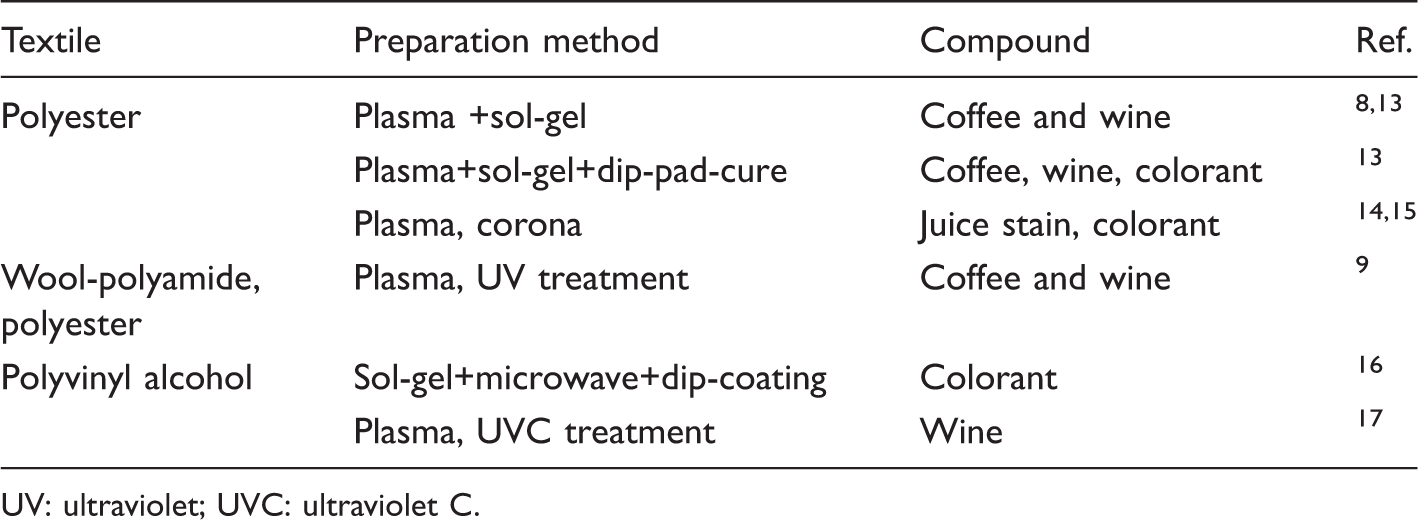
UV: ultraviolet; UVC: ultraviolet C.
The application of photocatalyst on synthetic fabrics was most extensively studied on polyester (PET) and PA. Many efforts have been made to introduce new carboxylic and hydroxyl groups to the fiber surface in order to increase the binding sites between the fiber surface and titanium dioxide.
Plasma treatment can increase the active surface area and surface roughness, which are favorable for deposition of titanium dioxide. Wool/PA blends were activated by plasma prior to application of suspension of titanium dioxide Degussa P25.
9
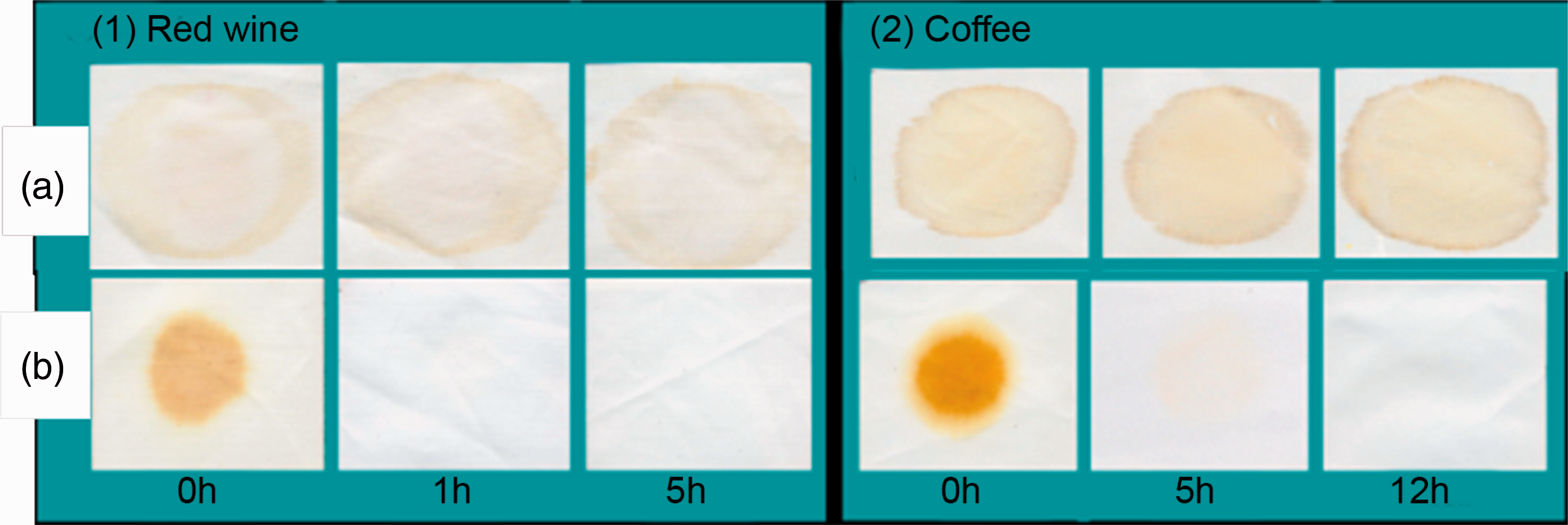
Coffee and wine stains were successfully decomposed as shown in Figure 3. Although titanium dioxide can be observed on the fiber surface after dry cleaning of samples, the rate of photodegradation decreased due to the organic and chloride-ions residue originating from perchloroethylene used for dry cleaning.
18
Stain removal test using (1) a red wine stain and (2) a coffee stain. The images shown are the exposed sides of only oxygen plasma pre-treated polyester (PET) substrates (1a, 2a), titania-coated PET substrates pre-treated with oxygen plasma (1b, 2b) in Xenotest Alpha LM light exposure and the weathering test instrument.
13
Photocatalytic self-cleaning fabrics do not only possess the self-cleaning property, but also have antimicrobial, deodorizing and UV blocking functions. In the following section, we will focus on the volatile organic compounds (VOCs) removal by photocatalyst functionalized textiles.
Volatile organic compounds removal
Summary of various photocatalysts on textiles for volatile organic compound removal
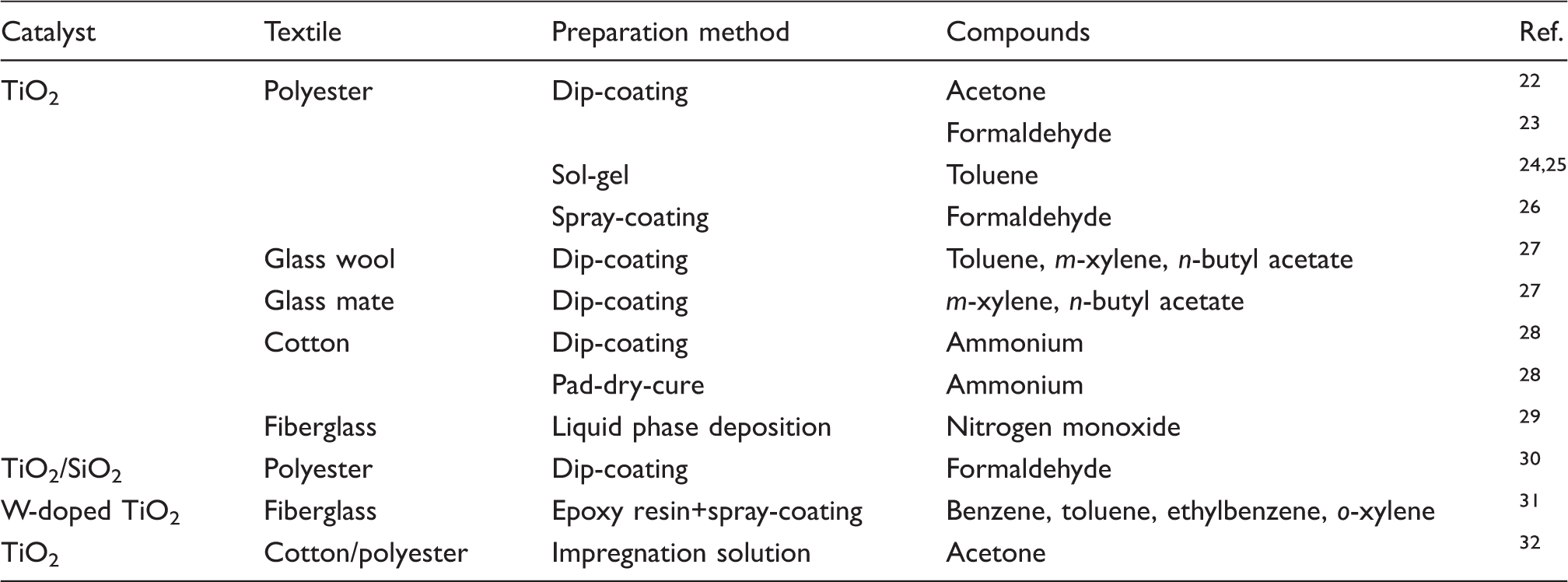
Titanium dioxide was applied in most of the investigations for indoor air photocatalytic oxidation. A titanium dioxide-coated fiberglass mesh composed of titanium dioxide and silica was first employed for photocatalytic oxidation of benzene, toluene and xylenes in indoor air. 33 The average concentration of benzene, toluene and xylenes was indeed reduced by a factor of 2–3 in an ordinary non-airtight room. Park and Na, 24 Park and Kim 25 and Park et al. 34 evaluated the toluene removal efficiency of a multichannel UV reactor/titanium dioxide-coated PET fabric. The titanium dioxide-coated fabric was applied as a photocatalytic reactor as well as a dust filter. Nanosized titanium dioxide was also prepared by the hydrothermal method and then immobilized on nonwoven fiberglass fabric by dip-coating. It was found that the TiO2/fiberglass fabric showed high photocatalytic activity for nitrogen oxide oxidation. 29 The toluene vapor removal capacity for this system was found to be 0.1 µg m−2(fabric) s−1. In addition, the removal rate can be improved by increasing the exposure time and decreasing the vapor load.
Doped titanium dioxide was also used in photodegradation of VOCs. Sangkhun et al. 31 immobilized W-doped TiO2 on fiberglass fabric and evaluated its VOC removal efficiency compared to titanium dioxide under visible light. The W-doped TiO2 functionalized fabric showed higher efficiency than that modified by titanium dioxide, approximately 18, 3, 3 and 2.5 times for BTEX (benzene, toluene, ethylbenzene and o-xylene), respectively. BTEX removal of 100% was achieved under conditions at 20 min/ml VOC loading, catalyst loading 0.1 mg/cm2 and 30% relative humidity.
Apart from synthetic fibers, cotton, as a natural fiber, was also used as the substrate to load titanium dioxide for VOC photodegradation. Dong et al. 28 immobilized Degussa P25 on cotton fabric by two different textile finishing methods, coating and pad-dry-cure. In their study, two commercial additives, an acrylic binder and a Lutexal thicker, were employed to form the coating formulation, which was mixed with titanium dioxide to form the coating paste. TiO2/cotton prepared by this coating method gave the fabric strong adsorption of ammonium molecules because of the acrylic binder. This fabric also exhibited a high washing fastness compared to that prepared by the conventional pad-dry-cure method. (The fabric was washed with an aqueous solution containing 2 g/L anionic detergent and 2 g/L sodium carbonate through a SW-12 washing testing machine.) TiO2/cotton prepared from both methods degraded ammonia in the air under UV irradiation. The functionalized cotton textiles and cotton/PET blends were also prepared by impregnation with Al2O3 or SiO2 as the binding agent and TiO2 as the photocatalyst, as reported by Selishchev et al. 32 The resulting textiles showed high photocatalytic activity to acetone vapor.
Compared to other substrates, nonwoven fabric shows several advantages in the VOC removal system: the low density of fabric reduces the weight of the reactor; the porosity of the fabric allows high throughput volume; and the cost of fabric is much lower than metals and ceramics.
Photocatalytic water treatment
The semiconductor photocatalytic process has shown a great potential as a low cost, environment friendly and sustainable treatment technology. Photocatalytic materials have the ability to remove persistent organic pollutants and microorganisms from water. The nanoscale photocatalysts have a large surface area to volume ratio and can further promote the efficient charge separation and trapping at the surface. Suspended nanoscale photocatalysts give much better contact between the photocatalysts and dissolved impurities than immobilized catalysts. However, the post-recovery of the catalyst particles after water treatment is the main technical barrier that impedes the commercialization of this technology. Researchers have tried to eliminate the recovery steps by immobilizing the catalyst on various solid supports or on the reactor walls. Immobilization of photocatalysts on the reactor walls or other parts of the reactors has its limitations. It is especially hard to replace the photocatalyst when its photoactivity decreases. Therefore, it is better to immobilize the photocatalyst on supports that can be easily replaced in the reactors, as shown in Figure 4. The replaceable support also has the advantage of providing a good contact between the treated medium and the photocatalyst. Various supports have been applied to immobilize photocatalysts. These supports include the TiO2/Al2O3 composite membrane,35–38 the glass slide coated in ZnFe2O4–FeFe2O4–ZnO nanoparticles paste,
39
titanium dioxide supported on polymer and metallic membranes40,41 and titanium dioxide particles trapped within polymer membranes during the membrane fabrication process.42–44 In this section, we will focus on using flexible textiles as the support for photocatalysts.
The scheme of the flow photocatalytic reactor with immobilized photocatalysts on textiles.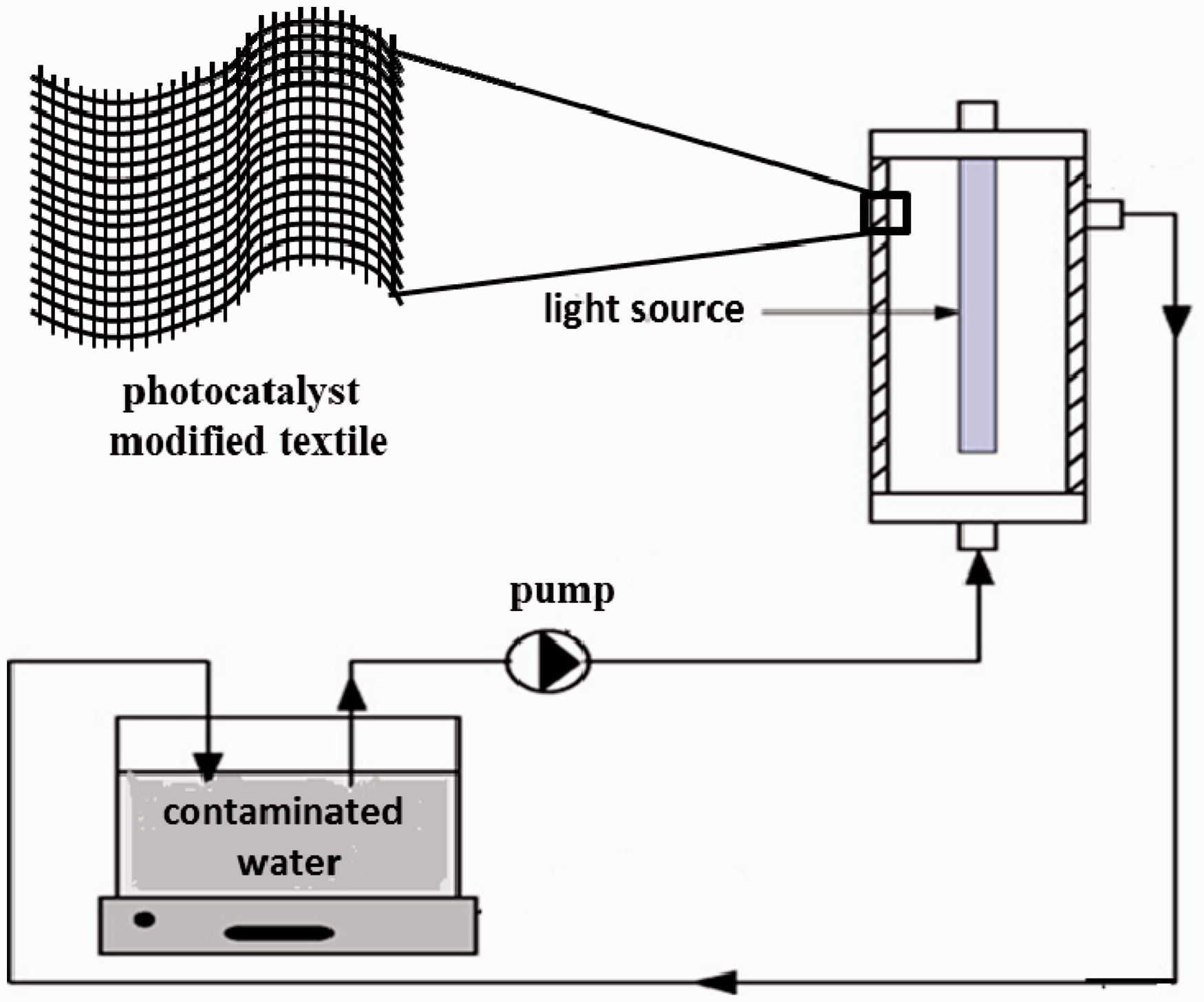
Han and Bai 45 immobilized different layers of titanium dioxide onto the surface of polypropylene fabric by the hydrothermal method to obtain a buoyant photocatalyst. It was confirmed that the degradation of methyl orange dye solution under UV and visible lights could be greatly improved over one layer of titanium dioxide coating. The buoyant photocatalyst minimized the low light utilization efficiency in the photocatalytic reactions compared to the conventional suspended photocatalytic reactors.
Méndez-Román and Cardona-Martínez 46 found that a binary catalyst with silica and titanium dioxide had significantly higher activities than pure titanium dioxide for the photocatalytic oxidation of phenol from water. A good photocatalyst depends strongly on the efficiency of electron-hole separation and the adsorption ability of the pollutant. To efficiently eliminate the recombination of electron-hole pairs in the photocatalytic reaction, titanium dioxide was doped with some metal ions, coupled with other semiconductor oxides or noble metals. The presence of metal ion dopants in the titanium dioxide crystalline matrix significantly influences photo-reactivity, electron-hole recombination rates and interfacial electron-transfer rates. Zhang and Zhu 47 immobilized Fe-doped TiO2 on the surface of PA fabric under hydrothermal conditions. This Fe-doped TiO2/PA demonstrated improved photocatalytic activity against methylene blue compared to TiO2/PA fabric. Ag-TiO2 was synthesized by photo-reducing Ag+ ions to Ag metal and then coated on cotton fabric using the pad-dry-cure method. The coated fabric showed high efficiency against methylene blue under the normal laboratory environment conditions. 48
Experimental results of some influence factors in photocatalytic water treatment
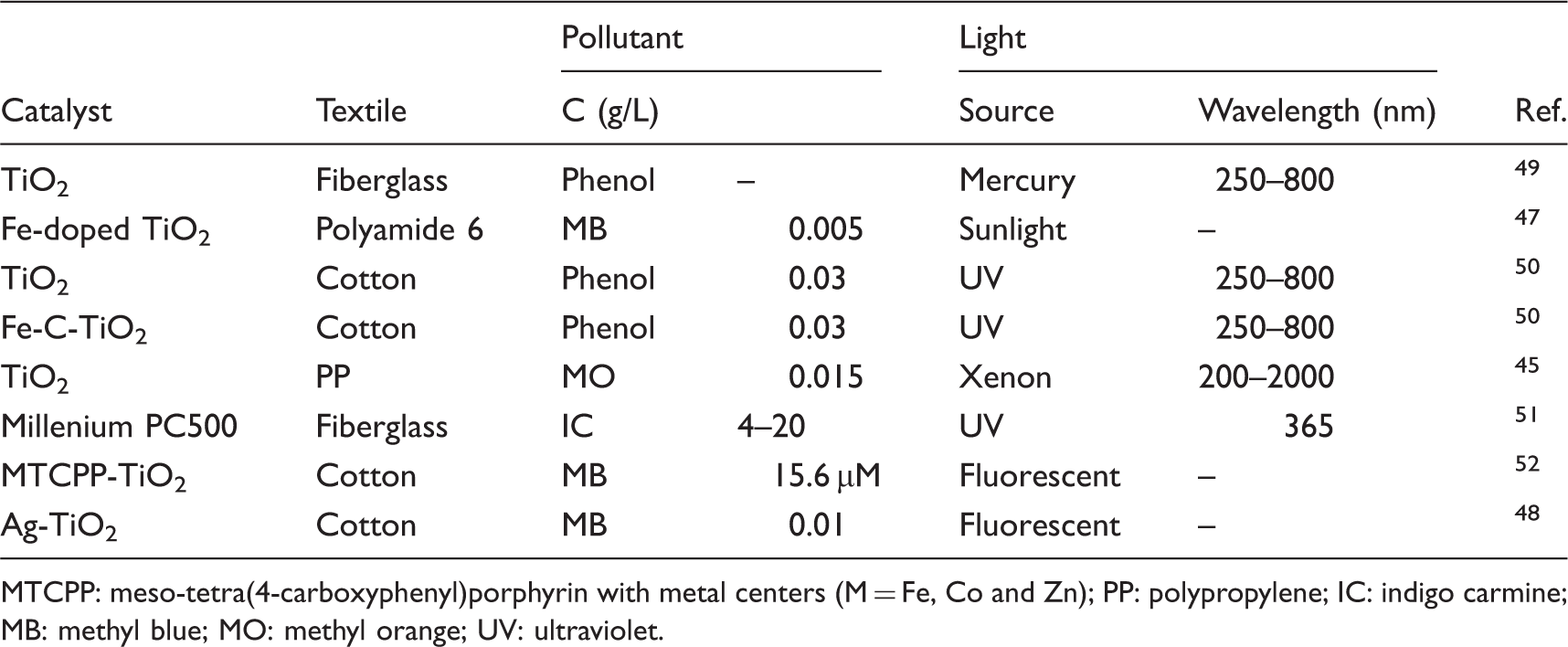
MTCPP: meso-tetra(4-carboxyphenyl)porphyrin with metal centers (M = Fe, Co and Zn); PP: polypropylene; IC: indigo carmine; MB: methyl blue; MO: methyl orange; UV: ultraviolet.
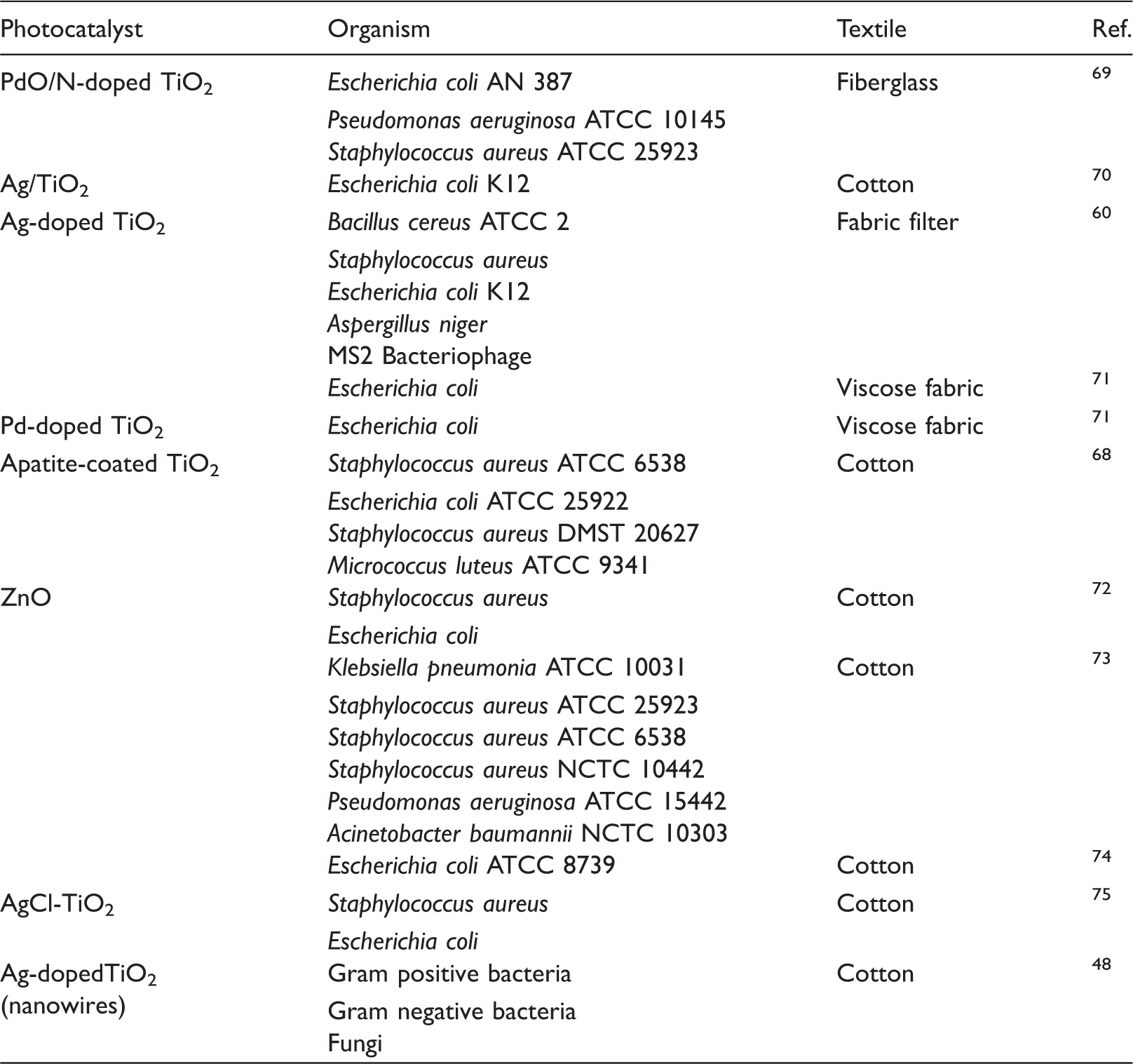
Examples of photocatalyst coated on fabrics for antimicrobial application
The reaction rates increased with the increase of light intensity, because the heterogeneous photocatalytic reaction depends on the irradiation of the UV light to generate the electron-hole pairs. It was found that the influence of irradiation intensity on the reaction rate could be separated into regimes depending on the electron-holes recombination. 53 When the electron-hole pairs are consumed more quickly by the chemical reaction than the recombination, a first-order dependency is applied. When the electron-hole recombination dominates, a half-order dependency is applied.21,54
Pollutant concentration is another factor that influences the photocatalytic reaction. The relation between pollutant concentration and reaction rate follows the Langmuir–Hinshelwood model or other law models. This applies to pollutants such as indigo carmine 51 and phenol. 49 Usually, there is an optimal pollutant concentration that will maximize the photocatalytic reaction rate when the other conditions are fixed.
In the photocatalytic water system, pH is one of the most important operating parameters that affect the isoelectric point or the surface charge of the photocatalyst. 55 At the point of zero charge (PZC) of photocatalysts, the surface charge of particles is neutral. Therefore, the interaction between photocatalysts and water contaminants is minimal. At pH < PZC, the surface of photocatalysts is positively charged, increasing the interaction between photocatalysts and negatively charged pollutants because of the electrostatic interaction, which in turn increases the subsequent photocatalytic reaction. At pH > PZC, the photocatalytic reaction rate for positively charged pollutants increases.
Antibacterial effect
Photocatalysts are capable of killing a wide range of organisms, including endospores, fungi, algae, protozoa and viruses as shown in Table 4. 56 There is increasing interest in applying photocatalytic materials for disinfection of surfaces, air and water. Many studies have reported on the application of photocatalysts such as titanium dioxide for disinfection of water. 57 These include killing bacteria and viruses from water supplies.58,59 Titanium dioxide-coated filters have also been used to disinfect air. 60 The advantage of applying photocatalysts on conventional air filtration is that these filters are self-cleaning.
The mechanism for killing organisms is shown in Figure 5. The process has been proposed to be caused by the membrane and cell wall damage due to the production of reactive oxygen species.61–63 These studies include microscopy, detection of lipid peroxidation products, leakage of intercellular components, for example cations, RNA and protein, and permeability to low molecular-weight labels. Complete mineralization of the organism, like damage to protein and DNA, may occur after rupture of the membrane and cell death.
64
Mechanism of antimicrobial activities exerted by the photocatalyst.
Wu et al. 65 studied antibacterial properties of titanium dioxide-coated cotton fabric and showed that titanium dioxide coating not only prevented the formation of a biofilm of adsorbed bacterial but also destroyed the bacterial cell. Lin and Li 66 investigated the disinfection effectiveness of commercial titanium dioxide-coated filters for airborne microbes. They studied the destruction of Escherichia coli, bacterial spores, Candida famata (yeast) and Penicillium citrinum (fungal spores) in a laboratory setup and concluded that the process was effective against airborne microorganisms.
An attractive feature of titanium dioxide photocatalytic disinfection is its potential to be activated by visible light, such as sunlight. Metal doping has long been known to improve the visible light absorbance of titanium dioxide and increase its photocatalytic activity. Vohra et al. 60 demonstrated that Ag-doped TiO2 improved the destruction rate for Escherichia coli almost 12-fold over a conventional photocatalyst because of its improved photocatalytic activity. It was believed that visible light absorption by silver surface plasmons induced electron transfer to titanium dioxide, resulting in charge separation and thus activation by visible light. 67 Kangwansupamonkon et al. 68 investigated the use of apatite-coated titanium dioxide on cotton fabric and its antibacterial properties. They studied the destruction of four types of bacteria (Staphylococcus aureus, Escherichia coli, Staphylococcus aureus and Micrococcus luteus) under black light, visible light and dark conditions. They found that the presence of apatite-coated TiO2 on cotton showed antibacterial activity under black light and visible light. It is suggested that the apatite-coated TiO2/cotton fabric could be used to reduce the microorganism transmission risk for textiles.
The preceding section introduced some outstanding features of the photocatalyst particles functionalized textiles. The following section discusses some common approaches through which the photocatalytic particles were stabilized on textiles.
Textile modification methods
Summary of some published methods used for modifying textiles with different photocatalysts
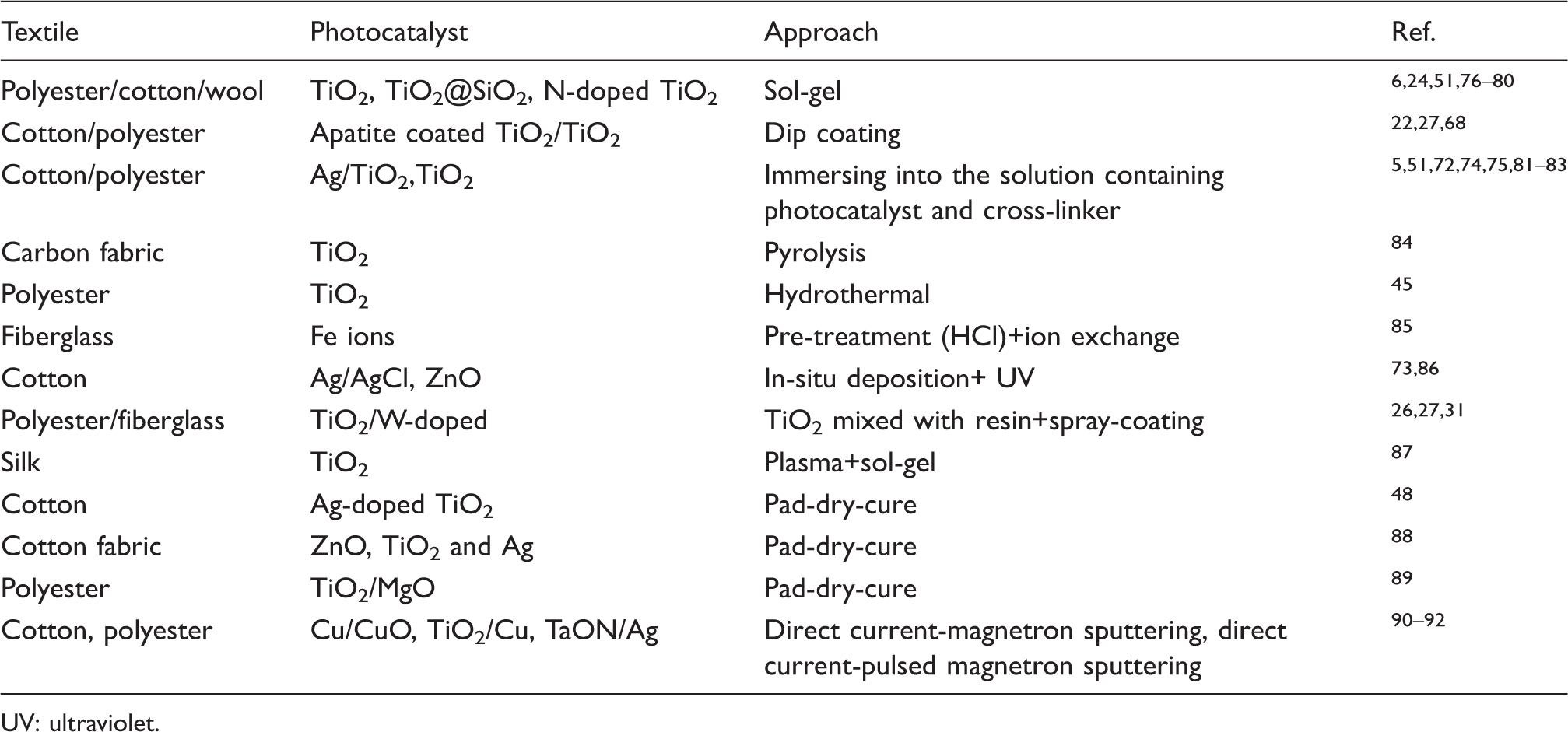
UV: ultraviolet.
Sol-gel method
Sol-gel processing is an effective way to realize the functionalization of textiles using coating. This method is a wet chemical approach through which the fabrication of material, typically metal oxide (I), is possible. Inorganic sols are normally prepared by either acid or alkali catalyzed hydrolysis of the corresponding metal alkoxides in water or ethanol, as shown in Figure 6. The nanosol (II) are normally transparent and stable. The particle size is smaller than 50 nm. The nanoparticles condensed on the surface of the textiles with a 3D network by treating textile substrates with a solution containing metal oxide nanosols. They initially form a solvent containing a gel layer on the textile surface. Then the gel is dried and heated to remove solvent from the coating. Finally a layer (III) is obtained with a porous structure.
Preparation of titanium dioxide nanosol coating.
Daoud and Xin6,93 and Daoud et al. 79 have made significant contributions to this field. They used a sol-gel method to precipitate titanium dioxide particles on the surface of wool or cotton fabric. A thin layer of titanium dioxide, with a diameter of around 20 nm, was obtained on the surface of fibers. Uddin et al. 94 reported cotton fabric loaded with titanium dioxide using a sol-gel method to develop a simple method for coating titanium dioxide on cotton that could be sufficiently stable over a long period of time. Titanium dioxide nanoparticles (13.5 wt%) were deposited on the surface of cotton fabric, with a diameter of around 5 nm. The potential application was evaluated by photodegradation of dye methylene blue and bitumen fraction under artificial solar light irradiation. Extraordinary photocatalytic activity of deposited titanium dioxide was preserved after three cycles of irradiation. Cotton fabric loading with titanium dioxide by the sol-gel method was also reported by Wu and colleagues. 65 In their work, uniformly sized titanium dioxide with a diameter of 3–5 nm was immobilized on cotton fabric. Excellent photocatalytic activity of titanium dioxide nanoparticles against dye methylene orange was obtained. The photocatalytic activity was not significantly altered after washing (the number of washings was not defined).
The resulting gel layers can be easily modified chemically and physically to alter fabric properties in a wide range. Chemical modification can be realized by incorporating an organic substitute R to the metal oxide precursor. For instance, Rahal and colleagues 95 chemically modified Ti(OR)4 with anthraquinone-2-carboxylic acid (AQ-COOH) to get [Ti(OR)3(O2C-AQ)]. Sensitized titanium dioxide-coated cotton was accounted for by a synergy effect between titanium dioxide and AQ-COOH, enhancing the formation of reactive oxygen species. The cotton fabric coated with sensitized titanium dioxide also displayed self-cleaning properties towards wine stains, either under solar illumination or even under indoor light. 95 The oxide matrix can be also modified physically by immobilizing additives with the coating. The additives can be inorganic metals,96–98 pigments,99–102 organic polymers103–105 or biomolecules.106,107 A thermal post-coating treatment is necessary to obtain the well-adhesive and stable coating on textiles. Both the washing fastness and mechanical properties can be improved with improving the duration and the annealing temperature. Dastjerdi et al.108,109 and Montazer et al. 110 proposed a new method for stabilizing the nanomaterials on the textile surface. In their study, they embedded nanoparticles in a cross-linkable polysiloxane layer in combination with or after the nanofinishing process. Polysiloxane could form a colorless and transparent web-like structure on the surface of fabric surfaces, which acted as a supporting layer to stabilize photocatalysts. A major improvement of the stability was obtained by using polysiloxane. Long-term activity against home laundering is expected.
Cross-linker method
Apart from the sol-gel method, various approaches have been employed as a pre-treatment on fabric. Most studies rely on the known fact that the carboxylic group is the best anchoring group for titanium dioxide.
111
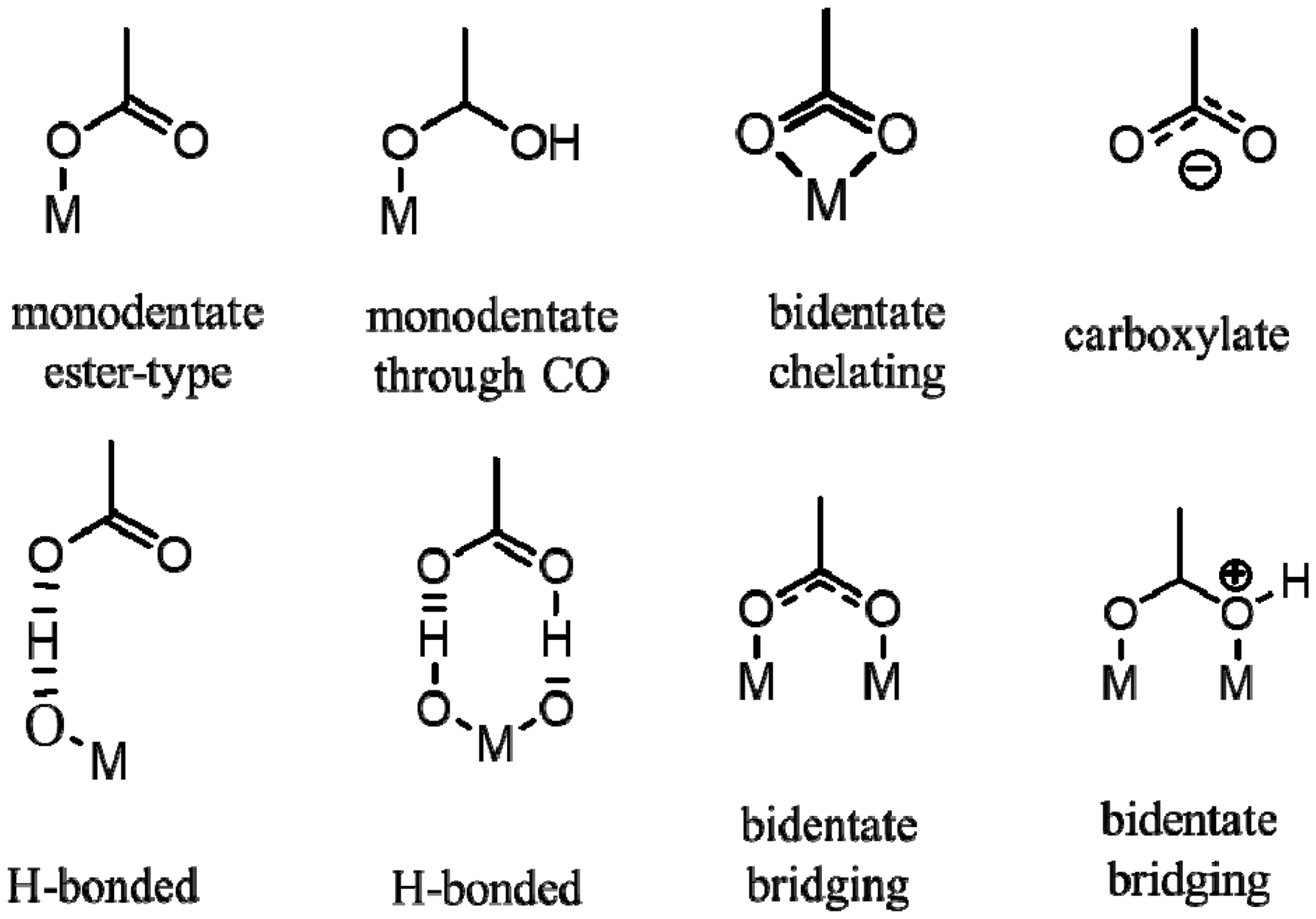
It is known that Ti atoms can be bound to carboxyl groups through different modes, as shown in Figure 7. Cold oxygen plasma pre-treatment has been used for surface cleaning and generation of active groups on the surface of silk to be combined with titanium dioxide nanoparticles.
87
Selvam et al.
88
used ethylenediaminetetraacetic acid as a cross-linker to attach sulfated cyclodextrin on the surface of cotton fabric. Then zinc oxide, titanium dioxide and silver nanoparticles were coated on the cross-linked cotton fabric using the pad-dry-cure method. Du et al.
89
also obtained photocatalytic functional textiles with the pad-dry-cure method, using PET nonwoven fabrics as the supporting materials, a self-cross-linking acrylic binder as fixer and TiO2/MgO nanofibers as photocatalysts. The resulting textiles had a good performance in both photovoltaic and photocatalytic fields due to the suppression of charge recombinations. Manna and colleagues
72
used poly(allylamine) as a binder to mineralize zinc oxide particles in an aqueous solution and zinc oxide coating was formed on cotton under mild conditions of room temperature and neutral pH. They found that the presence of positively charged poly(allylamine) not only catalyzed the mineralization of zinc oxide, but also kept the particles well-attached on the fabric, with no zinc detected in the washed water after six cycles in Millipore water at pH 7. Yuranova et al.
112
applied silica as a binder to coat titanium dioxide on the surface of cotton fabric. It is important to note that a silica layer should cover the textile materials before the top layer coating of titanium dioxide to protect cotton fabric from attack by the reactive oxygen species generated by titanium dioxide under light irradiation. Such a nanocomposite system exhibited better self-cleaning properties against red wine stains compared to the fabric coated with titanium dioxide alone. A laundering durable self-cleaning titanium oxide-coated cotton fabric was obtained by co-grafting 2-hydroxyethyl acrylate with the surface of titanium oxide.
83
The covalent bonds between titanium oxide and cotton fabrics maintain their self-cleaning properties even after 150 commercial or domestic launderings.
Possible binding modes of a COOH group to a metal oxide (titanium dioxide).
111
Other methods
Dastjerdi et al.81,82 modified filament yarns with various concentrations of nanocomposite fillers via melt mixing of two different nanocomposites (Ag/TiO2 and Ag/zinc) and polymer powder. Three different mixing methods were performed, which were single screw extruder, twin extruder and master batch preparation. 113 This technique is a high-quality, environment friendly and easily adjustable industry modification method. However, the limitation of this method is that only synthetic fibers can be applied and most of the nanocomposites are located inside the filaments. The direct current-magnetron sputtering method is capable of producing thin compound films of controllable stoichiometry and composition on an industrial scale, 91 which has also been utilized to coat photocatalyst on textiles. Kiwi et al.90,91,114 reported that TiO2, Cu, TiO2/Cu thin films can be prepared on the surface of cotton by sputtering methods. A low Cu-loading of 0.060% w/w was capable of inactivation of E. coli within 30 min under visible light (1.2 mW/cm2) and within 120 min in the dark. 90 Innovative TiO2/Cu bi-functional films led to fast bacterial inactivation in the dark and under low-intensity visible/actinic light. 91 To overcome the problem of non-uniform Cu deposition on rugous and complex shape substrates by direct current pulsed magnetron sputtering, highly ionized pulsed plasma magnetron sputtering was applied to coat ultrathin TiO2/Cu nanoparticulate films on PET. The obtained TiO2/Cu-PET showed higher, faster bacterial inactivation compared to more traditional sputtering approaches. 114
Sonochemistry is the research area in which molecules undergo a chemical reaction due to the application of powerful ultrasound radiation. Khanjani et al. 115 reported that zinc oxide particles have been deposited onto the surface of silk fabric via ultrasound irradiation. These nanoparticles could be finely dispersed on the fabric surface without significant damage to the structure of the yarn. Zinc oxide particles were also sonochemically synthesized and coated on cotton fabrics, by pre-treating the fabric surface with a cellulose enzyme. 74 Small-sized particles with improved adhesion coating were successfully obtained on cotton, which withstood 10 laundry cycles at 92℃ and retained its antibacterial properties. (This laundering durability evaluation was carried out according to AATCC (American Association of Textile Chemists and Colorists) Test method 61−2006 condition 2A.) The layer-by-layer method was also applied to immobilize photocatalysts on the surface of cotton and PET for improving the UV blocking property and wastewater management.116,117 Anionic polymer-coated titanium dioxide particles were deposited onto pre-treated cationized cotton fabric. 118 Higher numbers of coatings gave better UV protection.
Although the strong oxidating activities of titanium dioxide benefit several applications, the applications of titanium dioxide on substrate have some drawbacks. A direct application of titanium dioxide or zinc oxide on organic materials like fabrics can lead to a degradation of the substrates, resulting in the delamination of the coating. 119 Wang et al.120,121 proposed the use of silica coating on photocatalyst zinc oxide as an effective method to prevent the degradation of substrates during the photocatalyst application.
Summary and future challenges
In this review, we have selectively discussed and summarized the main recent achievements in the field of photocatalyst-modified textiles. Application of photocatalysts and their nanocomposites on textiles can open up a new opportunity for multifunctional modification of textiles. However, to promote the feasibility of photocatalytic textiles, several key technology constrains, ranging from photocatalyst development to the graft optimization, have to be addressed. These include photocatalyst improvement to take advantage of the wide solar spectra for high photo-efficiency and improvement in photocatalyst immobilization on textiles and the fate of the fibers impregnated with photocatalysts exposed to longer UV irradiation. Currently, the utilization of solar energy is limited by the low photo efficiency of the photocatalyst, which uses only 5% of the solar spectra. The other issue is primarily related to the exploitation and maintenance of textile products containing photocatalysts. The low surface energy of flexible substrates and their irregular shape pose one of the hardest challenges in achieving sufficient adhesion of photocatalysts on textiles. This can be achieved with more or less success by certain functionalization of fibers prior to deposition of photocatalysts. On the other hand, the fate of the fibers impregnated with photocatalysts exposed to a long period of UV irradiation, such as the possible degradation due to the contact with photocatalysts, has not been evaluated to a great extent yet. More work is warranted in this area.
Footnotes
Funding
This research received no specific grant from any funding agency in the public, commercial or not-for-profit sectors.