




Abstract
The objectives of this study were to investigate the correlation between fabric movement and washing efficiency in a front-loading washer and to make an algorithm for improving washing efficiency by optimizing fabric movements. A regression model between fabric movement and washing efficiency was made using 14 movement indexes. The angle change of the fabric gravity center, the speed difference between the drum and the fabric, and the shape factor were found to be determining factors for washing efficiency. Various kinds of wash spin speed were employed for making a complex movement algorithm, since it was found that turbulent or complex movement improves the washing efficiency. The optimal algorithm saved energy (25%) and time (27%), as well as achieving higher washing efficiency (4.8%).
Mechanical action, chemical action, time, and temperature are four factors in the washing process that constitute the so-called as Sinner’s Circle, which was utilized to explain the basic principles of cleaning by Sinner. 1–3 Among them, mechanical action is normally controlled by the washer through washing time, wash spin speed, and reversing rhythm. When the washer changes the mechanical actions, the fabric movement in the washer also changes, and the changed movements affect washing efficiency.4,5
However, many studies were not focused on the mechanical actions within washing systems, and there is no enough understanding of the effects of fabric movement on washing efficiency. Thus, washing effects are considered difficult to explain exactly in respect of the mechanical washing mechanism, such as fabric movements, mechanical action by the washers, water flow dynamics, and so on. It eventually causes difficulties in explaining the overall washing mechanism, such as new washing methods,6–9 washing evaluation methods,10–14 and simulations on washing.15–20 Therefore, there is a need for research on the effects of mechanical action, such as fabric movement on washing efficiency, for better understanding the overall washing mechanism.
In previous studies, Yun et al. 21 and Yun and Park 22 analyzed the force intervening in fabric movement in a front-loading washer, by changing the type of fabric, size of fabric, number of fabrics, and wash spin speed, in order to examine the effects of fabric movement on washing efficiency. Fabric movement in a front-loading washer was categorized as “sliding”, “falling”, and “rotating”. These categories were explained and were determined by the balance among centrifugal force received from the washer, frictional force of fabrics, and gravitational force. It was revealed that complex movement, which is comprised of various movements such as sliding, falling, and rotating, was advantageous for washing efficiency.
In this study, regression analysis was conducted on fabric movement that affected washing efficiency. Furthermore, by reflecting the results of the regression analysis, the final goal was to propose an algorithm for improving washing efficiency by finding conditions that could optimize fabric movement.
Experimental details
Specimens
Characteristics of specimens

Washer
For easier observation of the fabric movement, the front/right-hand side/top of a front-loading washer (Samsung Electronics, WW-135UV; maximum capacity 13 kg) were converted to use. Programs to adjust the wash spin speed and the motor on/off time of the washer were received from Samsung Electronics.
Evaluation of fabric movements
Before observing movement, the specimens were soaked in water for 20 minutes to be similar in condition to washed fabrics. A total of 6.0 l of water was added for evaluating fabric movement.
Recording and analyzing the fabric movements
A high-speed camera, XS-4 (X-Stream™, IDT Co. Ltd), was used to record the fabric movement and it was recorded as the washer spun in the counter-clockwise direction. Each fabric movement was analyzed for 13 seconds, which was for 10 spins at 46 rpm. A total of five video recordings were taken for each sample, out of which the most typical video was selected from analysis by a panel of three independent evaluators, based on the types and frequency of fabric movements.
In order to analyze the fabric movement, the outlines of the fabric that appeared in the video, which was filmed with a high-speed camera, were traced using the outline-tracker functions of TEMA Motion (Image Systems Co., Ltd). Twenty frames per second and a total of 260 frames were tracked and analyzed for each sample.
For digitizing the fabric movement, the coordinate system shown on the right-hand side of Figure 1 was generated based on the center of the washer two points (Ref #1, #2) shown on the left-hand side of Figure 1. The center of the washer was set as the origin of the coordinate system, and two points where the length can be measured were used to convert length in the video. The center of gravity of the fabric was determined by connecting the outermost point of the up, down, left, and right points in the traced outline.
Coordinate system for analysis of fabric movements.21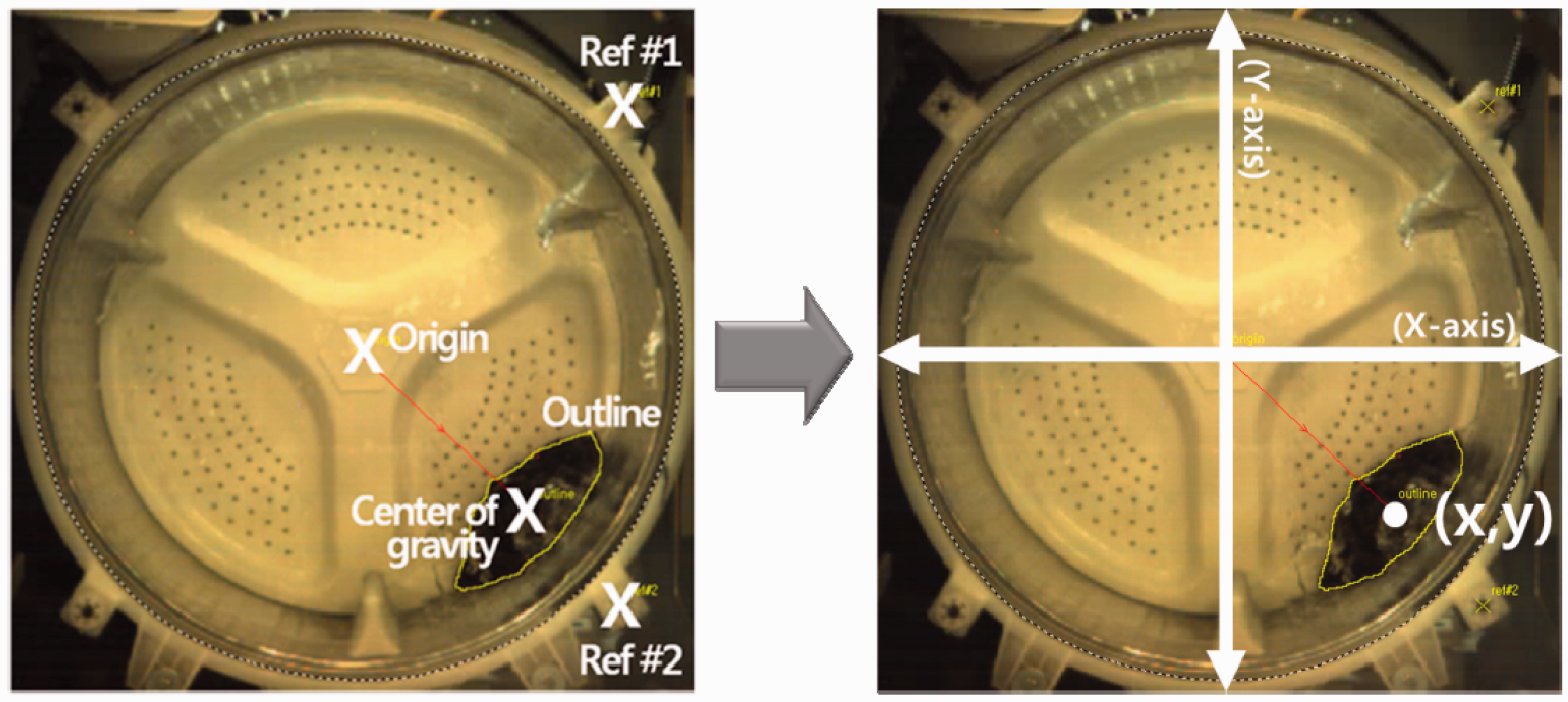
Fabric movement index
In order to analyze the correlation between fabric movement and washing efficiency, it was necessary to establish an index system for the various fabric movements. After supplementing the fabric movement indexes created in preceding studies,21,23 they were utilized to analyze the correlation between fabric movement and washing efficiency.
Fabric movement indexes21

Evaluation of washing efficiency
Washing conditions
EMPA 106 was purchased from Testfabrics Inc. (415 Delaware Ave, West Pittston, PA 18643, USA) and cut into size of 5 cm × 10 cm. EMPA 106 was soiled with carbon black and mineral oil and could indicate mechanical effects well. 24
Tap water supplied to the lab was used after being set at 15℃, and the amount of water used at this time was 9.5 l.
“Persil” powder detergent by Henkel Company was used according to recommended usage (1.75 g/l). The detergent was completely dissolved prior to the test, at 15℃ and 0.5 l of water. The washing time for the washing efficiency evaluation was set at 30 minutes. EMPA swatches were rinsed lightly by hand three times, and then they were air-dried for 24 hours.
Measurement of reflectance
In order to evaluate washing efficiency, the spectrophotometer (MINOLTA, CM-2600d; Observer conditions – 10 degrees, Illuminant conditions – D65) and the analysis program (MINOLTA, Spectra Magic) were utilized to measure the reflectance. The reflectance of the soiled fabric was measured before and after washing.
Using the Kubelka–Munk equation in (1), the reflectance was converted to K/S values and the washing efficiency was calculated using formula (2):
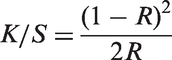

Tests for determining the washing efficiency were repeated three times for each test condition, and the mean value was used.
Measurement of power consumption
The power consumption during washing was measured using a powermeter (WT210, Yokogawa).
Statistical analysis
In order to analyze the correlation between fabric movement and washing efficiency, PASW Statistics 18 was used. Significant fabric movement indexes were chosen by stepwise regression analysis, and these were set as the independent variable, while washing efficiency was set as the dependent variable to make the regression analysis.
Results and discussion
Fabric movement index
Main fabric movement index values

Angle change of fabric gravity center
The angle made by connecting the origin and the center of gravity for one frame and the next frame was named as “the angle change of fabric gravity center”. There was a small angle change resulting from sliding movement, while there was a large angle change resulting from rotating. Furthermore, a complex movement exhibited large values of the standard deviation and average change of the angle, where falling was the main movement mixed with minor movement of sliding and rotating. However, single movement of only sliding or rotating showed small values of the standard deviation and average change of the angle. This is because only one movement was repeated for single movement, while there were various changes of direction due to tumbling and falling in complex movement.
Speed difference between drum and fabric
Large values of standard deviation and average change of the speed difference between the drum and fabric mean complex movement. Sliding occurs only at one position regardless of drum rotation, and shows the largest speed difference. Rotating is the movement that moves together with the lifter and thus exhibits the lowest speed difference. However, as for the standard deviation of the speed difference, single movement where only sliding or rotating movement is repeated at a constant speed represented very low values of standard deviation. In complex movement conditions in which falling is the main movement with both sliding and rotating, the average change of speed differences were found to be the largest.
Shape factor
The shape factor was defined as the value of the fabric area divided with the outline length. In order to eliminate effects of fabric size and the number of fabrics, the shape factor was normalized so as for the completely unfolded fabric to have the value of “one”. The standard deviation of the shape factor increases when there is a lot of folding and unfolding movement, which occurs during the tumbling and turnover movements.
Correlation between fabric movement and washing efficiency
In order to examine the effects of fabric movement on washing efficiency, a regression model between fabric movement and washing efficiency was made, employing the values of the preceding study for washing efficiency. 22
When using washing efficiency as the dependent variable, the factors that could be used as independent variables were grouped into three levels. The first variables are the fabric absorption weight, friction coefficient, and wash spin speed, which are related to the centrifugal force, frictional force, and gravitational force, affecting the fabric movement in a front-loading washer. 22 The second level is the value that expresses the fabric movement changed by the three forces. They are the angle change of fabric gravity center, moved distance, speed difference, distance from the center of the drum, outline length, and fabric area. The third variables are associated movements such as sliding, turnover, falling, rotating, and unfolding. When conducting the stepwise regression analysis by setting all of the variables of the three levels as independent variables, a regression model was made with independent variables in the second level. While the first level and the third level represent just one movement, angle change, moved distance, distance from the center of drum, outline length, and fabric area can represent all movements that occur in washing process, and they are assumed to be significant for washing efficiency.

Regression analysis results for washing efficiency
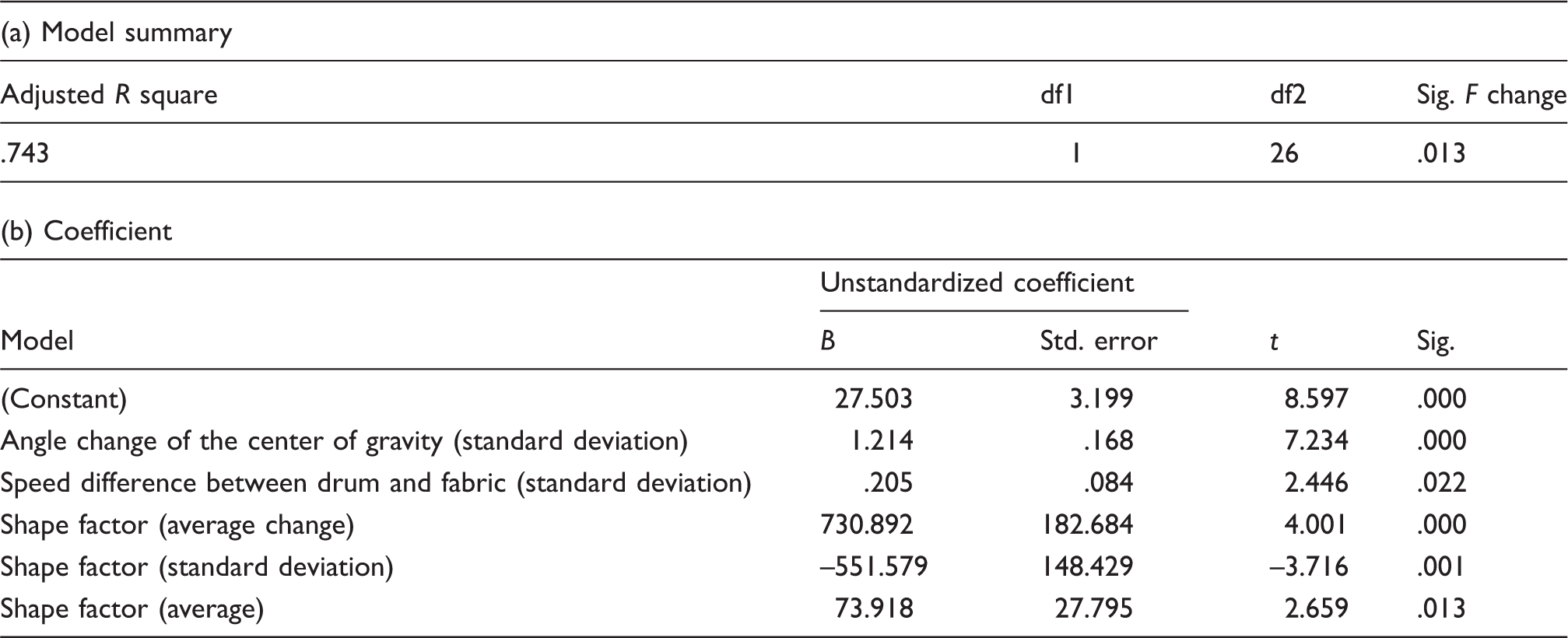
The standard deviation of the angle change of the fabric gravity center, standard deviation of the speed difference between the drum and fabric, and the average change and average value of the shape factor had positive correlations with washing efficiency, while the standard deviation for shape factor had a negative correlation. As shown in Table 3, complex movement, which is comprised of various movements such as sliding, falling, and rotating, showed the high values of the standard deviation of the angle change of the fabric gravity center and the speed difference between the drum and fabric, which was therefore assumed to have a positive correlation with washing efficiency. It was judged that for the shape factor, all three values, average, standard deviation, and average change, affected washing efficiency, as can be seen in the regression equation. The sum of the three values reflecting the coefficient for the shape factor showed positive in all 32 test conditions and, therefore, it can be said that the shape factors also have a positive correlation with washing efficiency. Because shape factor expresses the folding or unfolding movement of fabrics and the change between them, large values for the shape factor mean various movements associated with more chances for flexing, and thus resulting in higher washing efficiency. When judging by the significance level of the t-value, the standard deviation of the angle change of the fabric gravity center and the average change of the shape factor were found to be the most influential variables. It was revealed that washing efficiency increased as there were greater changes in the angle change of the fabric gravity center and the shape factor when various fabric movements appeared. In order to improve washing efficiency by control of the fabric movement, therefore, it was necessary to make the fabric movement complex.
Improvement effects by complex movement algorithm
Complex movement algorithm
In order to improve the washing efficiency of existing algorithms that are susceptible to simple movement due to their makeup of just one reversing rhythm and wash spin speed, a washing efficiency improvement algorithm was proposed. The new algorithm had different motor on/off time and wash spin speed in CW1 (clockwise)→CCW1 (counter-clockwise)→CW2 →CCW2→CW3→CCW3. This was intended to achieve large values for the standard deviation of speed difference between the drum and fabrics, angle change of the fabric gravity center, and the shape factor, which are the influential variables in the regression equation. The conventional algorithm and proposed algorithm examples are shown in Figures 2 and 3.
Conventional algorithm. Example of proposed algorithm for improving washing efficiency.

However, in the comparison test, the motor on/off time was set as 30 seconds on, 4 seconds off, like the conventional algorithm, so as to examine only the effects of complex movement on washing efficiency.
Based on 32, 46, and 60 rpm, which were confirmed to have an effect on fabric movement and washing efficiency, 22 three sets of wash spin speed combinations were proposed. The three proposed combinations were: 42 – 46 – 50 rpm, 38 – 46 – 54 rpm, and 34 – 46 – 58 rpm. The conventional algorithm is comprised of the same wash spin speed: 46 – 46 – 46 rpm.
Washing efficiency of the proposed algorithm
In the case of a single movement, the fabric movement was limited and the position of the fabric where mechanical force was applied did not change, thus limiting the force that the fabric received from the washer. However, in the case of a complex movement, the movement of fabrics was diverse and the position of the fabric that received mechanical force also changed continuously, thus making washing efficiency higher.21,22 The proposed algorithm made fabric movement complex with various wash spin speeds. The washing efficiency for the proposed algorithm is shown in Figure 4. It was assumed that the improved algorithm exhibited better washing efficiency possibly because complex movement occurred as the centrifugal force that the fabric received from the washer became more diverse. The algorithm of 34 – 46 – 58 rpm that combines the slowest and fastest spin speed and thus is expected to involve single movements, such as sliding or rotating movement, had the lowest washing efficiency among the improved algorithms.
22
Comparison of washing efficiency between the conventional and proposed algorithm. (Number of sheets is eight: P1, two sheets, P2, two sheets, C1, two sheets, and C2, two sheets; fabric size: 40 cm × 80 cm.)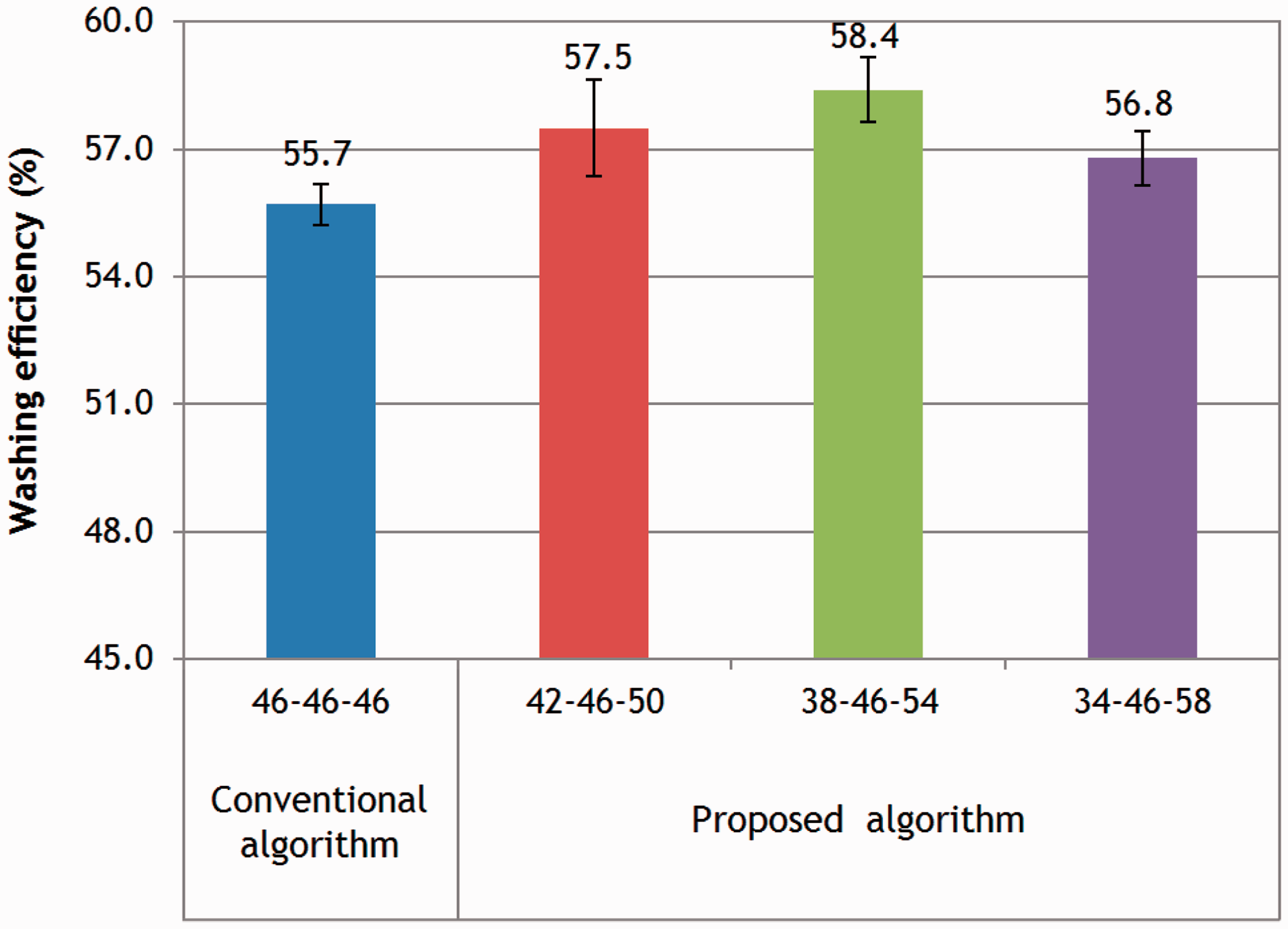
In the case of 38 – 46 – 54 rpm, the washing efficiency was 58.4%, showing an improved effect of washing efficiency of 4.8% (2.7%p) when compared with the conventional algorithm. Thus, it was concluded that the 38 – 46 – 54 rpm combination of wash spin speed was the optimal complex movement algorithm within this test condition.
Effectiveness verification of the proposed algorithm
In order to verify the effectiveness of the optimized movement algorithm under various conditions, the washing efficiency of the proposed algorithm and that of the conventional algorithm were compared using four fabrics that showed the different movements in the preceding studies.21–23 As shown in Figure 5, the optimized movement algorithm exhibited higher washing efficiency than the conventional algorithm in all fabrics. It was proved that various kinds of wash spin speed employed for the proposed algorithm made the fabric movement more complex, and that the complex movement was advantageous for washing efficiency under various washing conditions.
Verification of the proposed algorithm using four fabric samples. (Number of sheets is eight; fabric size: 40 cm × 80 cm.)
Effects on saving wash time and energy use
In order to examine the time and energy saving effect, the wash time of the complex movement algorithm was differentiated to 15/20/25/30 minutes. The results are shown in Figure 6.
Washing efficiency of the optimal algorithm by wash time. (Number of sheet is eight: P1, two sheets, P2, two sheets, C1, two sheets, and C2, two sheets; fabric size; 40 cm × 80 cm.)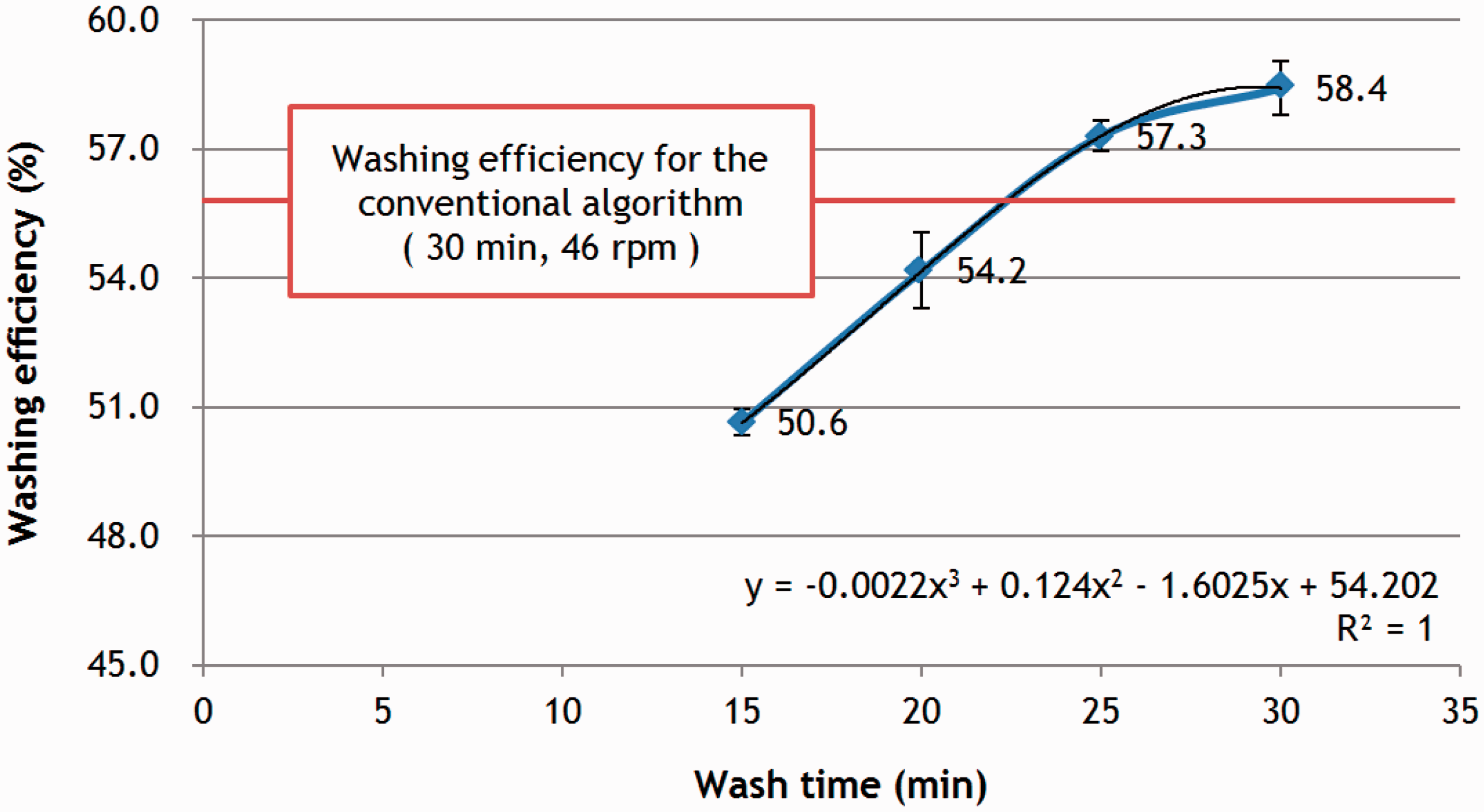
Comparison of washing efficiency, wash time, and power consumption between the conventional and proposed algorithm. (Number of sheets is eight: P1, two sheets, P2, two sheets, C1, two sheets, and C2, two sheets; fabric size: 40 cm× 80 cm.)

When washing for 22 minutes using the proposed optimal algorithm, washing efficiency was maintained at similar levels, while washing time was reduced by 8 minutes (27%) and energy consumption by 7.4 Wh (25%).
Conclusion
Effects of fabric movement on washing efficiency were examined using regression analysis. Through this, fabric movements causing high washing efficiency were found, and they were used to propose a washing efficiency improvement algorithm.
The angle change of the fabric gravity center, speed difference between the drum and fabrics, and shape factor were selected as the significant fabric movement indexes. The standard deviation of the angle change of the fabric gravity center and the average change of the shape factor were found to be influential independent variables for washing efficiency. Through the regression analysis, it was confirmed that the fabric movement had direct effects on washing efficiency.
An algorithm that combines a number of wash spin speeds was proposed to improve washing efficiency through diversifying fabric movement in the washer. The proposed complex movement algorithm showed higher washing efficiency when compared to the conventional algorithm, and the combination of wash spin speeds that showed the highest washing efficiency was 38 – 46 – 54 rpm, and it showed a washing efficiency improvement effect of 4.8%. The complex movement algorithm also exhibited a saving effect of 25% energy and 27% wash time, while achieving similar washing efficiency with the existing algorithm.
Footnotes
Funding
This work was supported by the BK21 Plus project of the National Research Foundation of Korea Grant funded by the Korean Government and the National Research Foundation of Korea (NRF) grant funded by the Korea government (MSIP) (No.2015R1A2A2A03002760).
Declaration of conflicting interests
The authors declare no potential conflicts of interest with respect to the research, authorship, and/or publication of this article.