



Abstract
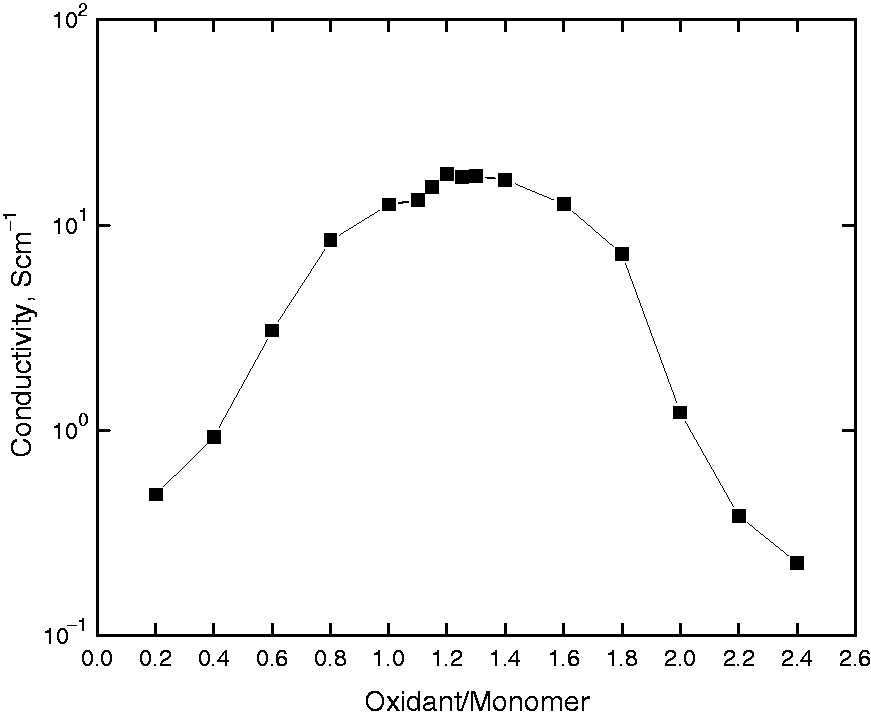
Polyester fabrics were coated by polyaniline synthesized via in-situ chemical polymerization and doped with HCl and H3PO4. The coated fabrics were examined by scanning electron microscopy, infrared spectrum and thermogravimetric analysis. The performance of flame retardancy and conductivity of polyester fabrics were studied by Limiting Oxygen Index (LOI) and cyclic voltammetry measurements. Experimental results indicated that the modified polyester fabrics had both excellent flame retardancy and conductivity. The sample molar ratio of ammonium persulfate (APS) to aniline of 1.2:1 resulted in the highest conductivity of 17.8 s/cm and the highest LOI of 42 vol% was acquired at the molar ratio of aniline to APS of 1:2.
Polyester (PET) is one of the most important synthetic textile fibers and has been widely used in apparel and furnishings and technical textile applications due to the good wash and wear properties, durability, good elasticity and excellent anti-corrosion peroperties. 1 However, its flammability restricts its use in some areas requiring flame-retardant properties. Furthermore, its melt dripping property and ease of giving off smoke during burning aggravate the flammable performance of PET fabrics.2,3 Hence, it is very imperative to improve the fire resistance performance of PET fabrics in many applications.
Flame retardants for PET fabrics includes various types such as halogen-containing,4–6 phosphorus-based7–9 or nitrogen-containing compound flame retardants.10–12 Halogen compounds not only release halogen radicals serving as terminators for the chain reaction during combustion, 13 but also generate great quantities of toxic and corrosive hydrogen halide fumes, which bring many potential safety issues. Organo-phosphorus compounds that act as typical halogen-free flame-retardant agents have been shown to impart flame retardancy to PET and are always used as acid sources to form intumescent flame-retardant (IFR) systems with a carbon source and a gas source.14,15 For instance, Deng et al. 16 synthesized a sulfur-containing aryl polyphosphonate to prepare flame-retardant PET. Ban et al. 17 synthesized a flame-retardant agent named PSTPP (polysulfonyldiphenylene thiophenylphosphonate) and PET samples containing PSTPP could reach a Limiting Oxygen Index (LOI) value of 29 vol% and a UL-94 V-0 rating. Zhao et al. 18 synthesized an organic compound containing P/N/S and found its LOI values for PET increased linearly with the increase of flame-retardant content (the highest value could reach 32 vol%). Nitrogen-containing species can greatly increase the flame retardancy of PET by the condensed phase flame inhibition and releasing nonflammable gases such as N2, NH3, CO2 and H2O to dilute flammable components.19,20 If nitrogen-containing flame retardants are combined with organo-phosphorus compounds, the performance of flame resistance will often be improved more significantly than the theoretical effects of the individual compounds added separately. This improvement through the association effect between the two elements is called the P-N synergy.18,21,22 Therefore, P-N flame-retardant systems are promising substitutes for halogenated systems in the field of anti-flame PET.
Polyaniline (PANI) has received great attention owing to its high conductivity, good environmental stability, processability, lower cost and availability in recent years.23–25 Its molecular structure, which contains significant amounts of nitrogen and phosphoric acid, is always chosen as the dopant to improve the value of its conductivity. Conductivity of PANI as its basic function has been extensively studied, including monomer concentration, oxidant concentration, type and concentration of acids, temperature and reaction time. Several other methods have also been used to improve the conductivity of PANI based on incorporation of metals, 26 graphene, 27 carbon nanotubes,28,29 and so on. Zhou et al. 30 prepared PANI films doped by phosphoric acid on PET fibers by in-situ chemical polymerization. Boara and Sparpaglione 31 optimized the synthesis that led to a product having conductivity as high as 85 S cm−1. Prokes and Stejskal 32 and Trchova et al. 33 investigated the thermal stability of the conductivity of phosphate-containing PANI. Stejskal et al. 34 prepared PANI in the presence of various acids and found that polymerization in phosphoric acid yielded the product with the highest molecular weight. Haji et al. 29 prepared PANI/multiwall carbon nanotube conductive PET fabrics with plasma polymerization and improved conductivity.
In recent years, the attention has also been paid to the flame retardancy of PANI. Zhang et al. 35 synthesized both fibril and spherical PANI nanostructures as nanofillers for epoxy resin polymer nano-composites and the flame retardancy behaviors were evaluated by the heat release rate and residual char estimations. Wu et al. 36 prepared PANI-paper composites doped with three inorganic acids by in-situ polymerization and investigated the co-doping with a mixture of acids to further improve the conductivity, flame-retardant and other properties. Bhat et al. 37 studied PANI/cotton fabrics for their performance, including their flame retardancy. Stejskal et al.38,39 studied cellulose fibers coated with PANI by precipitation and dispersion polymerization and discovered that the PANI-deposited composites converted to solid carbonaceous products to have a better flame-retardant effect. Salgaonkar and Jayaram 40 grafted PANI onto PET fibers, which increased the LOI to 28.7 vol%.
However, little attention has been paid to the flame retardancy of conductive PET composites, which are deposited with PANI codoped with a mixture of acids. Attempts were made in this study to improve the flame retardancy of PANI codoped with a mixture of acids under the protection of nitrogen. In-situ polymerization was adopted because of its simplicity, convenience, low cost and effective approach.
In this study, modification of PET fabrics by PANI doped with phosphoric acid and hydrochloric acid was carried out to improve its flame-retardant and conductive performance. One of the major technical concerns is the low adhesion of the PANI to the PET fabrics. It is generally known that increasing hydrophilicity can effectively improve the adsorption performance of PET fabrics. 41 Alkali deweighting treatments to improve the hydrophilicity were widely used on PET fabrics. Firstly, by means of an alkali surface treatment to etch the surface of PET fabrics, more aniline could be deposited on PET fabrics. Secondly, by introducing a novel IFR system onto the surface of the PET fabric, H3PO4 would work as an acid source and PANI acted as both a nitrogen and a carbon source. Finally, the flame-retardant mechanism and morphological structure of PET fabrics before and after the PANI coating were investigated by scanning electron microscopy, infrared spectroscopy and thermogravimetric analysis (TGA). The flame-retardant properties and conductivity were evaluated by LOI and cyclic voltammetry (CV), respectively.
Experimental details
Reagents and materials
Aniline (An), sodium hydroxide (NaOH), ammonium persulfate (APS), hydrochloric acid (HCl), phosphoric acid (H3PO4), acetone (CH3COCH3) and ethanoic acid (CH3COOH) were purchased from Sinopharm Chemical Reagent Co., Ltd (Shanghai, China). Basic deweighting promoter 1227 was supplied by Yancheng Printing and Dyeing Co., Ltd (Yancheng, China). Aniline was purified twice at a reduced pressure prior to use. Other chemicals were used as received.
The PET fabric used as the substrate was 63 Dacron plain woven fabric in a white color, with an area density of 120 ± 2 g/m2. It was acquired from the Textile Chemistry Laboratory of Jiangnan University. Nitrogen gas (99.9995%) for synthesis was provided by Yancheng Clean Source Gas Co., Ltd (Yancheng, China).
Alkali deweighting treatment of polyester fabrics
PET fabrics, which had been cut into approximately 6 cm × 35 cm area samples, were washed with acetone and ethanol for 10 min in order to remove the impurities, and then dried at 60 ºC for 4 h. After being cleaned, PET fabrics were incubated in a solution of 20 g/L sodium hydroxide and 0.6 g basic deweighting promoters at 95 ºC for different times, from 70 to 120 min with a bath ratio (1:30). All of the experiments were executed in a WHYF-2F high-temperature and high-pressure dyeing machine (Shanghai Yuejin Co., Ltd, China). After the treatment, the fabrics were washed with 95 ºC deionized water, 65 ºC deionized water and 5% (w/w) glacial acetic acid for 10 min to wipe off the residual alkali. Finally, the treated samples were washed thoroughly with cold deionized water before they were air dried.
Chemical synthesis of PANI on polyester fabrics
The PET fabric modified with PANI was prepared by in-situ chemical polymerization in the presence of APS (as the oxidant), HCl and H3PO4 (as the dopant). In the first step, a certain amount of aniline was dissolved in 1 M hydrochloric solution at the molar ratio of aniline/HCl 1:1. In the second step, the dry pre-weighed fabric was put into the above solution (bath ratio at 1:30) in a three-necked flask and the mixture was heated at 60 ºC for 1 h. After being cooled down to room temperature, the reaction mixture was further cooled to 0–5 ℃ with an ice bath. In the third step, different proportions of APS were dissolved in a solution that consisted of two-thirds of the amount of the HCl mentioned in the first step and 110 ml H3PO4 solution. In the fourth step, the reaction was started by adding the solution prepared in the third step dropwise into the three-necked flask with stirring for 1 h under the protection of nitrogen and then the reaction was kept at around 0–5 ℃ for 4 h. Finally, the PANI-coated fabric was washed with 1 M HCl solution, deionized water for several times and then vacuum dried at 60 ºC.
Characterization
A Su1510 scanning electron microscope (SEM) (Hitachi, Japan) was employed with an acceleration voltage of 10 kV to observe the surface morphology of uncoated and coated fabric samples. All the fabric samples for SEM observations were sputtered with a thin layer of Au. Elemental analysis on the burning ashes of the treated fabric sample was also carried out using energy-dispersive X-ray spectroscopy (EDS) along with a SEM.
Infrared absorption spectra in the range 500–4000 cm−1 were recorded on an IS10 FTIR Spectrometer (Nicolet, American) using the attenuated total reflectance mode with a resolution of 4 cm−1 and 32 scans for each sample.
The TGA was carried out with a TG 209 analyzer (Netzsch, Germany) at a heating rate of 10 ℃/min between 30 ℃ and 600 ℃ under an air atmosphere.
The flame-retardant performance was evaluated by determining the LOI values and the testing was performed on a HC-2C oxygen index meter (Jiangning Analysis Instrument Company, China) with a sheet dimension of 58 mm × 150 mm according to the National Standard GB/T 5454-1997 (China).
An Autolab Im6ex electrochemical work station (Zahner, Germany) was employed to perform CV measurements in three-electrode mode for measuring the volume resistivity of the PET samples. The PET fabrics were sandwiched in a Teflon conductivity cell equipped with Pt foil contacts on which Pt black was deposited. As shown in Figure 1, the counter electrode (red) and the reference (blue) were attached to the same platinum plate, and the working electrode (green) was attached to the other. The characterization by means of CV was conducted on the condition that Start E or Lower E was 500 mV and Upper E or End E was −500 mV. Depending on the value of the electrical conductivity, the current range was different, such as −2 mA or 2 mA.
Three-electrode mode for measuring the surface resistivity of the polyester samples. (Color online only.)
Results and discussion
Fourier transform-attenuated total reflection analysis
Infrared spectra of pristine PET fabric and the PET fabric treated by PANI are shown in Figure 2. From spectrum a, it is clearly seen that the absorption peaks between 2922 and 2855 cm−1 may be ascribed to the stretching vibration of –CH2– groups and the peaks, such as 1476, 1341, 722 cm−1, are caused by the deformation vibration of –CH2– groups. The peaks at 3056 and 792 cm−1 in the spectrum may correspond to C–H stretching vibration and out-of-plane deformation accordingly present in the benzene, and the weak peak at 1510 cm−1 is assigned to the C=C group in the benzene. The appearance of a characteristic peak centered at 1717 cm−1 corresponds to the stretching vibration of C=O, which connects directly to benzene in PET fabric. The peaks at 1248 and 1101 cm−1 are due to the stretching vibration of C–O and C–O–C groups, respectively. The three characteristic absorption peaks demonstrate the existence of the ester bond. After processing through polymerization and acid doping, the infrared spectrum of the fabric was changed significantly with a new absorption peak at 3231 cm−1 corresponding to the stretching vibration of N–H groups, indicating that the PANI was successfully introduced onto the PET fabric. Compared with the regular value of N-H stretching vibration absorption, the bathochromic shift has occurred due to hydrogen bonding and conjugative effects. The peak at 3056 cm−1 has become stronger because of the increased content of benzene rings arising within the deposited PANI. The bands at 1449 and 1571 cm−1 in the spectrum probably correspond to the ring-mode vibration of the C–N and C=N group of the benzenoid and quinoid structures,23,42 which added to the evidence that PANI was present on the surface of the fabric. The presence of phosphate anions in the protonated form of PANI is manifested by the bands at 1019 and 586 cm−1.43–46 In addition, after treatment, it is also found that the intensity of the C=O peak at 1719 cm−1 decreases significantly. The peaks at 1248 cm−1 (C–O) and 1101 cm−1 (C–O–C) also shifted to 1236 and 1096 cm−1, respectively. The former can be explained by the surface of PET being covered by PANI and the latter is due to the existence of intermolecular hydrogen bonds between N-H and C-O groups. These results strongly indicated that PANI prepared in solutions of phosphoric acid was introduced into the PET fabric successfully.
Fourier transform infrared spectra of (a) polyester (PET) and (b) polyaniline/PET.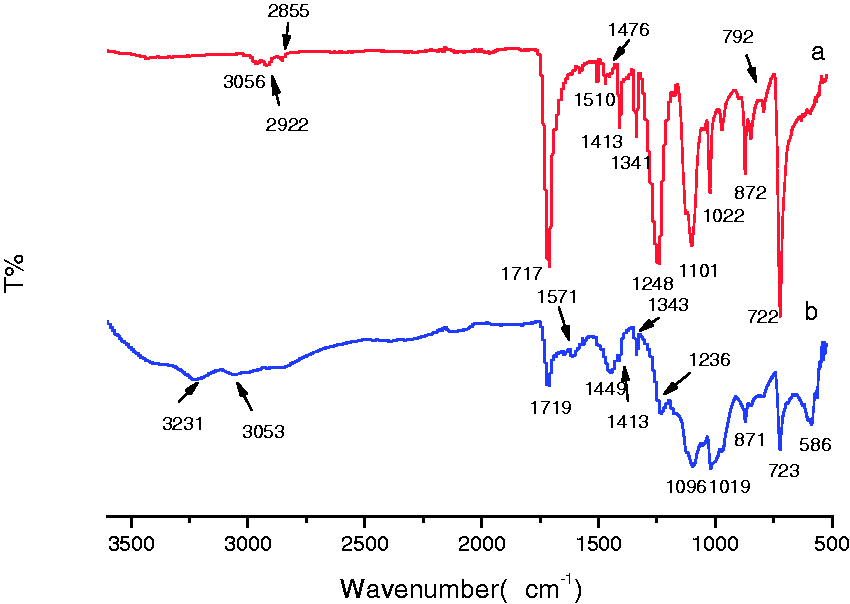
Thermal analysis
The TGA profiles of the modified PET fabrics and the pristine PET fabric are shown in Figure 3. All of the fabrics display three major weight-loss stages at around 80–300 ℃, 300–485 ℃ and 485–600 ℃, which belongs to the expulsion of water molecules from the polymer matrix or the moisture absorbed from the air and the loss of the acid dopant (HCl) bound to the polymer chain, the decomposition of the PANI and the splitting of the PET main chain as well as the oxidation behavior of carbon, respectively. The weight-loss percentage for the major weight-loss step between 300 ℃ and 480 ℃ of the pristine PET fabric (85.08%) is obviously higher than that of the modified PET fabrics (72.15% for sample A, 71.84% for sample B). This indicated the higher thermal stability of the modified PET fabrics. It also can be seen that the onset of the thermal decomposition of the pristine PET fabric is significantly higher than that of the modified one. This corresponds to the degradation of PANI, which occurred before the decomposition of the PET fabric and released nonflammable gases, such as NH3, N2, CO2 and NO2, and other active ingredients, for instance, PO• radicals generated by Thermogravimetric analysis thermograms of untreated polyester (PET) fabric: (A) polyaniline (PANI)/PET fabric with a molar ratio of aniline to ammonium persulfate (APS) of 1:1.2; (B) PANI/PET fabric with molar ratio of aniline to APS of 1:2.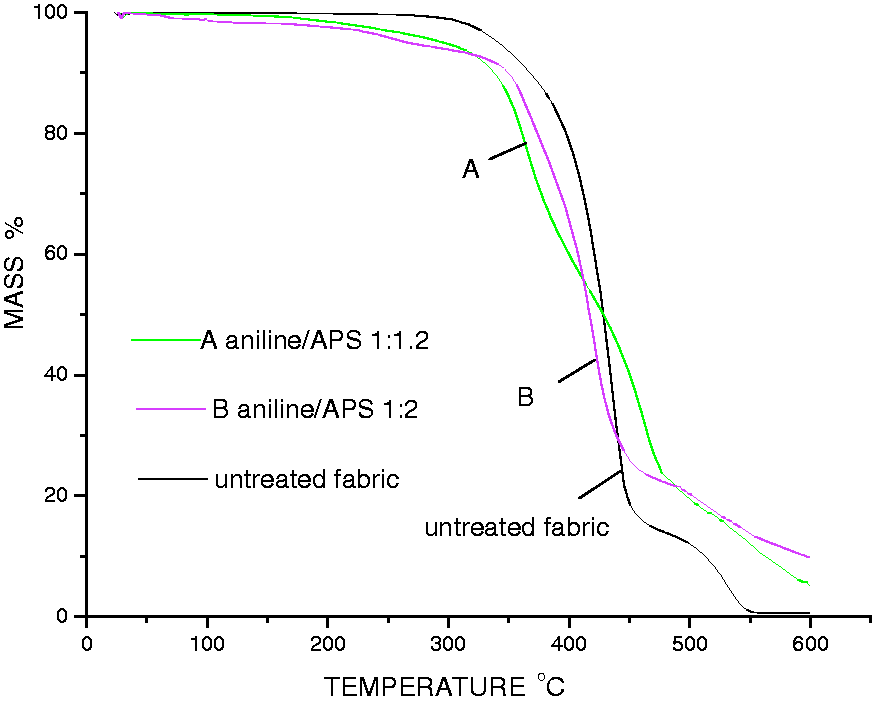
Surface morphology
The SEM images of alkali deweighting-treated and PANI-deposited PET fabrics are shown in Figure 4. It is found that some microporous structures were formed after alkali deweighting treatment. It is well known that the surface of PET fiber is too smooth and compact to absorb enough aniline. Microporous structures formed in the alkali deweighting process can facilitate the absorbance of more aniline, and this is the key factor to improve the polymerization. The effect of the different ratios of the oxidant to the monomer on the morphological microstructure was also investigated. It is found that the sample 1:1.2 (aniline to APS) shows a much smoother and uniform surface, as presented in Figure 4(b). With the increase of APS content, the PANI/PET fabric appears to have a random globular porous morphology and even the large agglomerates are observed, as presented in Figure 4(c).
Scanning electron microscope photographs of the surfaces of (a) polyester (PET) fabrics by alkali deweighting treated, (b) polyaniline (PANI)/PET fabric with molar ratio of aniline to ammonium persulfate (APS) of 1:1.2, (c) PANI/PET fabric with molar ratio of aniline to APS of 1:2.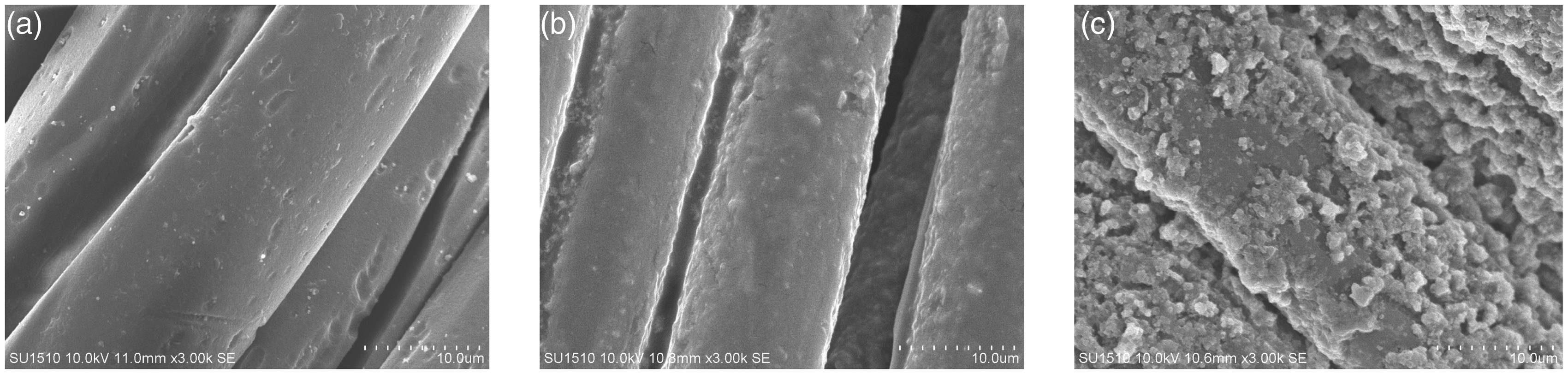
Figure 5 shows the morphological structure and elements of the residue char of the PANI/PET sample (1:1.2 aniline to APS) obtained by scanning electron microscopy and EDS, respectively. Many large holes and porous structures are observed on the outer and inner surface of residues, as illustrated in Figure 5(a). Meanwhile, coherent, dense and compact charred layers are observed on the outer surface of the residues in Figure 5(b). These microporous cells and char layers effectively protect the internal structures, inhibit the heat transmission and reduce the fuel gases when the fire contacts them. Furthermore, EDS results show that there is much P element (atomic percent 3.8%, mass percent 8.18%) in the residue, which further confirms the fact that the P element had been successfully introduced into the PANI/PET fabric. Therefore, the treated PET fabric exhibits good flame retardancy, which agrees well with the results of TGA and LOI.
The morphological structure and elements of the residue char of the polyaniline/polyester sample 1:1.2 (aniline to ammonium persulfate): (a) scanning electron microscope (SEM) images magnified by 10,000×; (b) SEM images magnified by 1500×; (c) element analysis on the burning ashes of the treated sample.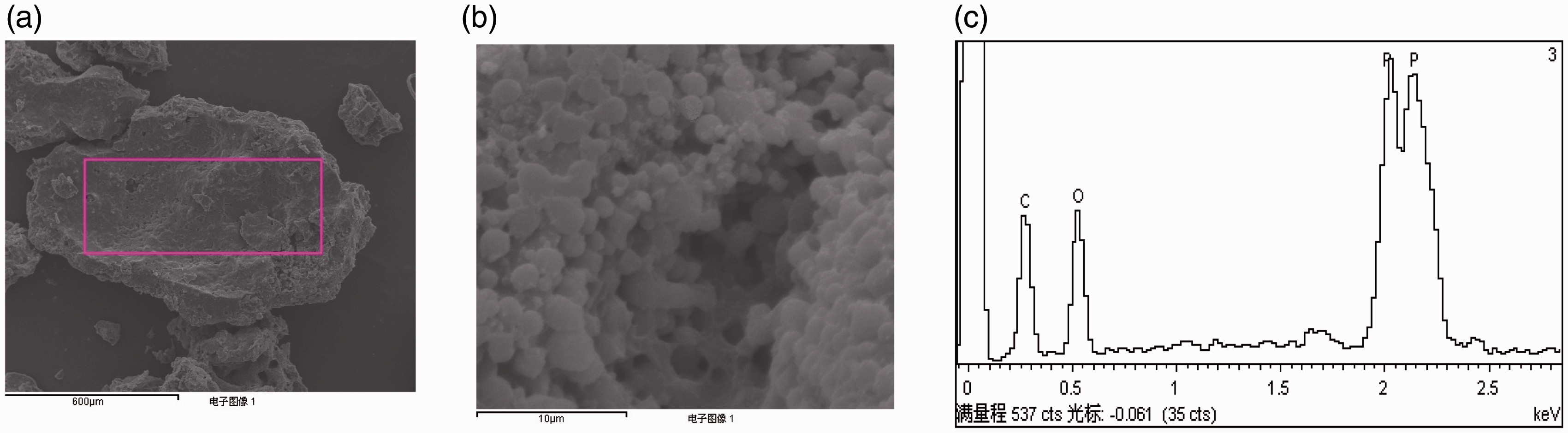
Electrical conductivity
Electrical conductivity of PET/PANI fabrics was measured using the CV measurement method and expressed as the electrical conductivity δ(s/cm). All samples were conditioned in a standard atmosphere before measurement and then measured repeatedly 10 times to take an average. Electrical conductivity δ of the PANI-coated PET fabric was calculated by the following equations:
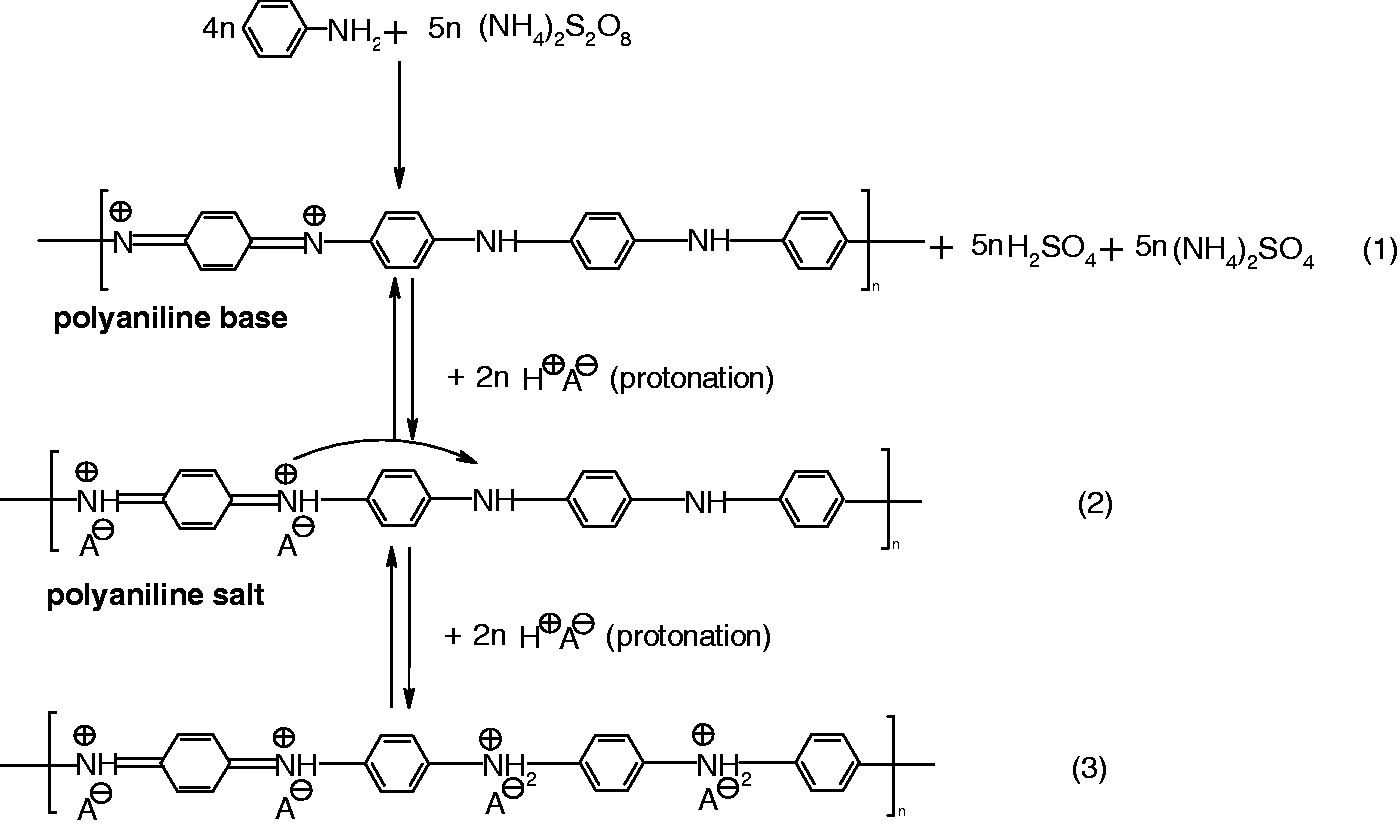
The conductivity of polyaniline/polyester fabrics prepared at various molar ratio of ammonium persulfate to aniline. The polymerization mechanism of polyaniline (PANI) is illustrated: (1) the polymerization process with aniline and ammonium persulfate; (2) PANI base was doped and proton rearrangement; (3) further doping in strong acid.
44


Limiting Oxygen Index
The effects of the ratio of APS to aniline on the flame retardancy were studied by means of LOI and TGA. According to TGA, as shown in Figure 3, the increase in the combustion residues at 600 ℃ shows that the PANI/PET fabrics have good flame retardancy, especially the PANI/PET fabric with a molar ratio of aniline to APS of 1:2. Figure 8 shows the LOI values of the PANI/PET fabrics at different ratios of APS to aniline and the highest LOI was acquired at the molar ratio of aniline to APS 1:2. This result coincided well with the results of TGA and the changing rule can be explained because low molecular aniline is easy to wash due to weak affinity with PET fabric, while the higher molecular weight PANI can form the stronger Van der Waals force and hydrogen bonding between PANI with PET fabrics. Meanwhile, it is easier for higher molecular weight (MW) PANI to form an interpenetrating structure, in which two kinds of macromolecules tangled together. This structure is helpful for PANI to be adsorbed onto PET fabrics. According to Figure 8, with the increasing ratio of APS to aniline, the LOI values increase to a point then decrease. The slight minimum at a ratio of 1.1 may be caused by error in the experiments. The MW of PANI becomes large and more positive charge can be formed, which leads to the increase of nitrogen and phosphorus content due to the electrostatic forces, so the N-P synergies effect comes out gradually and thus the flame-retardant performance is significantly improved. However, if further increasing the APS content, numerous free radicals can inhibit the polymerization reaction and the positive charge number apparently declines, and the flame-retardant performance will drop greatly.
Limiting Oxygen Index (LOI) of polyester and polyaniline fabrics prepared at various molar ratios of ammonium persulfate to aniline.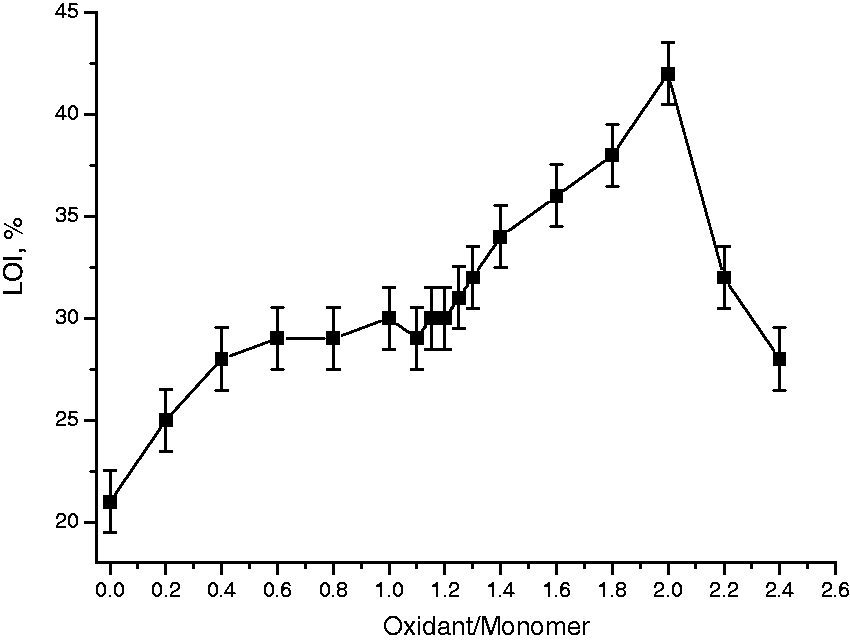
Conclusions
In this study, a novel conductive and flame-retardant PET fabric was prepared by in-situ chemical polymerization in the presence of APS and doping with HCl and H3PO4. The modified structure of the PET fabric was confirmed by Fourier transform infrared spectroscopy and some characteristic absorption peaks corresponding to a number of groups, such as C–N, C=N, N–H,
Footnotes
Declaration of Conflicting Interests
The authors declared no potential conflicts of interest with respect to the research, authorship, and/or publication of this article.
Funding
The authors disclosed receipt of the following financial support for the research, authorship, and/or publication of this article: This work was supported by National High-tech R&D Program of China (863 Program) 2012AA030313 and Industry-Academia-Research Joint Innovation Fund of Jiangsu Province (BY2015057-06).