




Abstract
In this work, we tried to enhance anti-bacterial activity of fabric fibers by controlling the shape of filaments, such as tetragonal and cross-pillar, which led to an increase of the surface portion of filaments. With this purpose, silver and platinum nanoparticles were immobilized on the surface of TiO2 nanoparticles within tetragonal and cross-pillar-shaped polyester (PET) filaments. The process consists of preparing 4 wt.% of TiO2 compounding PET chips, melt-spinning of them and photo catalytic deposition of nanoparticles in sequence. To obtain tetragonal and cross-pillar-shaped morphologies of filaments, two different nozzles were used in the melt-spinning process. For the photo-deposition of metal nanoparticles, adsorption of the metal ions on the surface of the filaments was performed by immersing them in AgNO3 and H2PtCl6 aqueous solutions, respectively, with simultaneous addition of methanol as a sacrificial agent. Photo-deposition was then carried out under ultraviolet light with an irradiation time of 300 s. The structural and antimicrobial properties of the tetragonal and cross-pillar-shaped PET/TiO2 filaments with noble metal loaded were systematically characterized. Ag and Pt metal photo-deposited filaments showed excellent antimicrobial effect against the two types of bacteria, Staphylococcus aureus and Klebsiella pneumonia, under the dark condition.
Keywords
Recently, there have been great demands for textiles to provide multi-functions, such as self-cleaning, ultraviolet (UV) protection, hydrophilicity, antimicrobial activity and deodorant properties. 1
TiO2, Al2O3, ZnO, SiO2, MgO, nano-clays and carbon nanotubes (CNTs) are among the most commonly used as functional materials.2–5 Among these functional materials, titanium dioxide (TiO2), which is able to catalyze reactions with the involvement of light, has emerged as one of the most promising materials for use in multifunctional textiles. Because of its whiteness and high refractive index, TiO2 nanoparticles, particularly in the anatase form, are already used in a large number of consumer products, such as textiles, sunscreen, toothpaste, paints and coatings. In particular, photocatalytic TiO2 is one of the most studied materials in the field of anti-bacterial applications due to its unique abilities, such as photocatalytic bacterial-disruption, nontoxicity and self-cleaning properties.6,7 There are a number of methods for the design of these multi-functional textiles, such as the incorporation of functional materials in the filaments or the coating of functional materials on the fabrics. Alebeid and Zhao 8 tried a new approach to provide UV protection function for cotton fabrics by using TiO2 nano-sol and reactive dye. The cationized cotton fabrics, treated with TiO2 nano-sol and dyed with reactive dye, showed better UV protection with slight reduction in color depth (K/S) and tensile strength. Dzinun et al. 9 reported that TiO2 particles, which were loaded in outer layer of polyvinylidene difluoride (PVDF)-based dual-layer hollow fiber (DLHF) membranes, has improved the membrane properties by increasing their hydrophilicity, pore size and permeability. Esthappan et al. 10 also reported the addition of TiO2 nanoparticles in the polypropylene fiber improved mechanical properties and thermal stability.
In our previous study, we have successfully prepared multifunctional fibers by decorating with noble metal on the surface of polyester (PET)/PET-TiO2 bi-component filaments. In the bi-component filaments; the core region consists of PET alone, and the sheath one consists of PET and TiO2. Ag, Au and Pt metal photo-deposited fabrics showed an excellent antimicrobial effect against the two types of bacteria, Staphylococcus aureus and Klebsiella pneumonia, in the dark condition. 11
Now, we have also intended to demonstrate that metal nanoparticles can be selectively deposited on TiO2 within tetragonal and cross-pillar-shaped PET filaments by the photo-deposition method. We have tried to enhance antimicrobial activity of fabric fibers by controlling the shape of filaments, such as tetragonal and cross-pillar, which led to an increase in the surface portion of filaments. In addition, since noble metals have been known to have excellent antimicrobial activity without any other requirements, such as UV light and so on, it is important in the preparation of antimicrobial fibers to make them load onto fibers and be stable against outer circumstances, such as oxidative environments or washing conditions. With this purpose, silver and platinum nanoparticles were immobilized on the surface of TiO2 nanoparticles within tetragonal and cross-pillar-shaped PET filaments. Irradiation of UV light inactivates bacteria by damaging their DNA, which prevents their proliferation. Application of UV-C doses of around 5 kJ/m2 resulted in a reduction of more than 1 log of the microbial population on fresh-cut watermelon, while doses above 10 kJ/m2 were too high and affected fruit quality. Usage of UV light must be controlled appropriately and carefully. UV light can also damage human skin and so the textiles used in clothes need equipment for inactivation of bacteria by UV. Therefore, antimicrobial fiber, which does not need UV light to inhibit bacteria, could have some advantages. The structural and anti-bacterial properties of these filaments will be discussed in this paper.
Experimental details
Materials
Commercially available TiO2 spherical nanopowder (P25, Degussa, Germany) was used in this study. The average particle diameter of the powder was 30 nm, and the specific surface area was 50 ± 15 m2g−1. A PET (SKYPET BB8055, SK Chemicals, Republic of Korea) with an intrinsic viscosity of 0.8 dl/g and a density of 1.4 g/cm3 was used to manufacture the filaments. Silver nitrate (Kojima Chemicals, 99.9%) and hydrogen hexachloroplatinate (IV) hexahydrate (Kojima Chemicals, 99.9%) were purchased and used without further purification.
Preparation of the PET/TiO2 nanocomposites
For preparation of the PET/TiO2 nanocomposites used in this study, commercial PET was used as the matrix and TiO2 nanoparticles were applied as fillers. Prior to compounding, PET and the TiO2 nanoparticles were dried in an oven at 70℃ for about 72 h. Compounding of the PET and TiO2 nanoparticles was carried out in a co-rotating twin-screw extruder (HAAKE PolyLab RheoDrive 7, Thermo Scientific, Germany) with well-designed screw elements. Twin-screw extrusion was done with a heating profile of 280℃, 275℃, 275℃, 270℃, 265℃ and 260℃ from feed to nozzle (barrel diameter of 16 mm, L/d = 25:1) at a rate of 200 rpm. After extrusion, the strands obtained upon extrusion were immediately quenched in water and then cut into pellets by a pelletizer. Prior to fiber spinning, the pellets were dried in an oven at 70℃ for about 72 h.
Preparation of tetragonal and cross-pillar-shaped PET/TiO2 filaments
Tetragonal and cross-pillar-shaped PET/TiO2 filaments were produced with a melt-spinning machine (TMT, Japan). The tetragonal-shaped PET/TiO2 filaments were spun by a spinning system consisting of an extruder and a spinning pack. The spinneret had 36 die holes with diameter (0.2 mm) and length (0.5 mm). In the spinning system, 4 wt.% of TiO2 was loaded and compounded in PET. The spinning system consisted of three extruder zones, of which the temperatures were 295℃, 300℃ and 292℃. The winding speed was 4000 m/min, and the spinneret temperature was 265℃. The filaments were subsequently drawn with a draw ratio of 3.5 and the temperatures in the drawing zone were 88℃ and 125℃ from godet roller 1 to godet roller 2, respectively. The cross-pillar-shaped PET/TiO2 filaments were spun on cross-pillar-shaped spinning nozzles. The spinneret had 36 die holes with slit width (0.06 mm), length (0.4 mm) and depth (0.7 mm). We tried to load 4 wt.% of TiO2 into PET for the production of cross-pillar-shaped PET/TiO2 filaments. However, it was hard to produce the PET compounding chip with 4 wt.% of TiO2 loaded. Therefore, we reduced TiO2 content from 4 to 1 wt.%. Finally, we produced cross-pillar-shaped PET/TiO2 filaments in which the content of TiO2 is 1 wt.%. The winding speed was 3100 m/min, and the spinneret temperature was 270℃. The tetragonal-shaped PET/TiO2 filaments were produced as 50 denier/36 filament SDY (spin draw yarn) and cross-pillar-shaped PET/TiO2 filaments produced as 85 denier/36 filament POY (partially oriented yarn) with 4 and 1 wt.% of TiO2 content, respectively.
Photo-deposition of noble metal nanoparticles on tetragonal and cross-pillar-shaped PET/TiO2 filaments
For the photo-deposition of metal nanoparticles, adsorption of the metal ions on the surface of the filaments (1 g) was performed by immersing them into 30 ml of AgNO3 aqueous solution and H2PtCl6 solution (1.5 × 10⁻³ mol/L, respectively), followed by the addition of 5 ml of methanol as a sacrificial agent for 5 min. Photo-deposition was then carried out under UV light (4 × 10⁻³ J/s at 254 nm) with an irradiation time of 300 s. The filaments deposited with noble metal nanoparticles were rinsed continuously with distilled water and dried for 48 h at room temperature.
Characterization
The structure and morphology of tetragonal and cross-pillar-shaped PET/TiO2 filaments were investigated using optical microscopy (ECLIPSE 80i, Nikon, Japan) and field emission scanning electron microscopy (FESEM) (S-4200, Hitachi, Japan). X-ray photoelectron spectroscopy (XPS) measurements were carried out on an ESCALAB 250 spectrometer (VG Co., UK) using Al Kα (1486.6 eV) radiation. The applied power was operated at 15 kV and 20 mA. The base pressure in the analysis chamber was less than 10−8 Pa. All the peaks were corrected with the C 1 s peak at 286.5 eV as the reference. The mechanical properties of the filaments were measured with an Instron 4411 (Bucks, England) tensile testing machine equipped with a 10-N cell. The gauge length was 20 mm, and the crosshead speed was 20 mm/min. Results were reported as averages of five tests for each sample.
Antimicrobial activity
The antimicrobial properties of the resulting metal photo-deposited tetragonal and cross-pillar-shaped PET/TiO2 filaments were tested by the shake-flask method. Gram-positive and gram-negative bacteria have similar internal structures, but very different external ones, both structurally and chemically. Cell walls of gram-negative bacteria are more complex and thinner than those of gram-positive bacteria. In order to evaluate the antimicrobial efficacy against gram-positive and gram-negative bacteria, gram-positive Staphylococcus aureus and gram-negative Klebsiella pneumoniae were selected as the experimental bacteria. Luria Bertani (LB) broth was used as the growing medium for S. aureus and K. pneumoniae, and phosphate buffered saline (PBS, 0.03 mol/L, pH 7.2–7.4) was used as the testing medium. Bacteria were cultivated in 10 ml of LB broth (containing 10 g/L peptone, 8 g/L beef extract, 5 g/L sodium chloride, 5 g/L glucose and 3 g/L yeast extract, pH = 6.8) at 37℃ for 24 h, and the cell suspensions were diluted with LB broth to a cell density corresponding to 1–5 × 10⁶ colony-forming units per milliliter (CFU/mL). Next, 6 g of the tetragonal and cross-pillar-shaped PET/TiO2 filaments was placed into a 250-ml flask with 70 ml of PBS and 1 ml of a bacterial suspension with a germ density of about 1.3 × 10⁵. The flask was shaken on an agitation shaker at a speed of 300 rpm at 25℃, and then 100 µL of the solution was spread onto a plate. The inoculated plate was incubated at 37℃ for 24 h. The antimicrobial activity of tetragonal and cross-pillar-shaped PET/TiO2 filaments and metal photo-deposited tetragonal and cross-pillar-shaped PET/TiO2 filaments against gram-positive Staphylococcus aureus and gram-negative Klebsiella pneumoniae were investigated by a viable cell-counting method. The bacterial reduction (BR in %) of the specimen was calculated according to the following equation: BR (%) = (Vc − Vt)/Vc × 100, where Vc and Vt are the number of viable bacterial colonies of the blank control and test specimen, respectively. All antimicrobial experiments were conducted under dark conditions and were repeated three times.
Results and discussion
Morphology of bi-component filaments
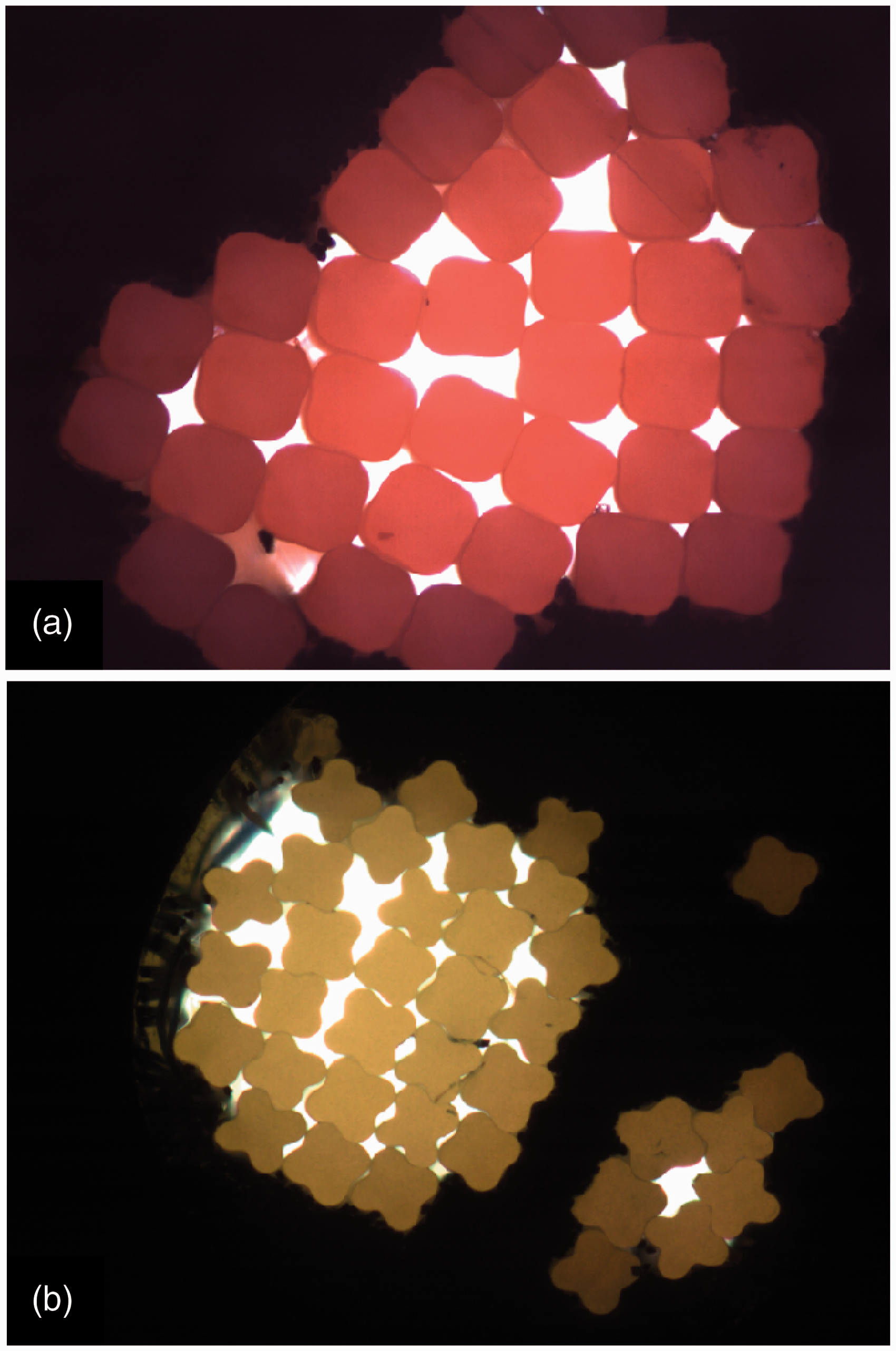
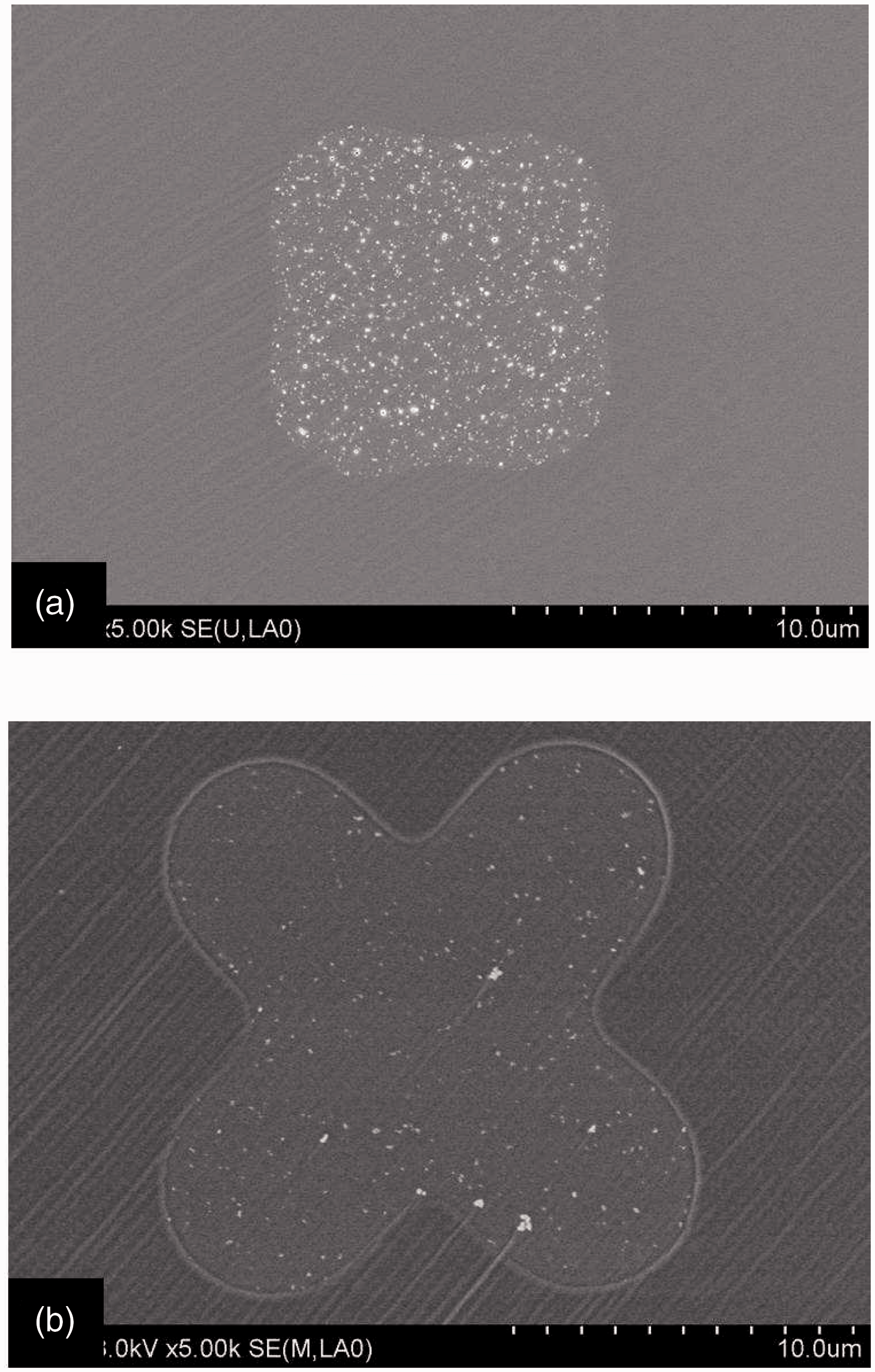
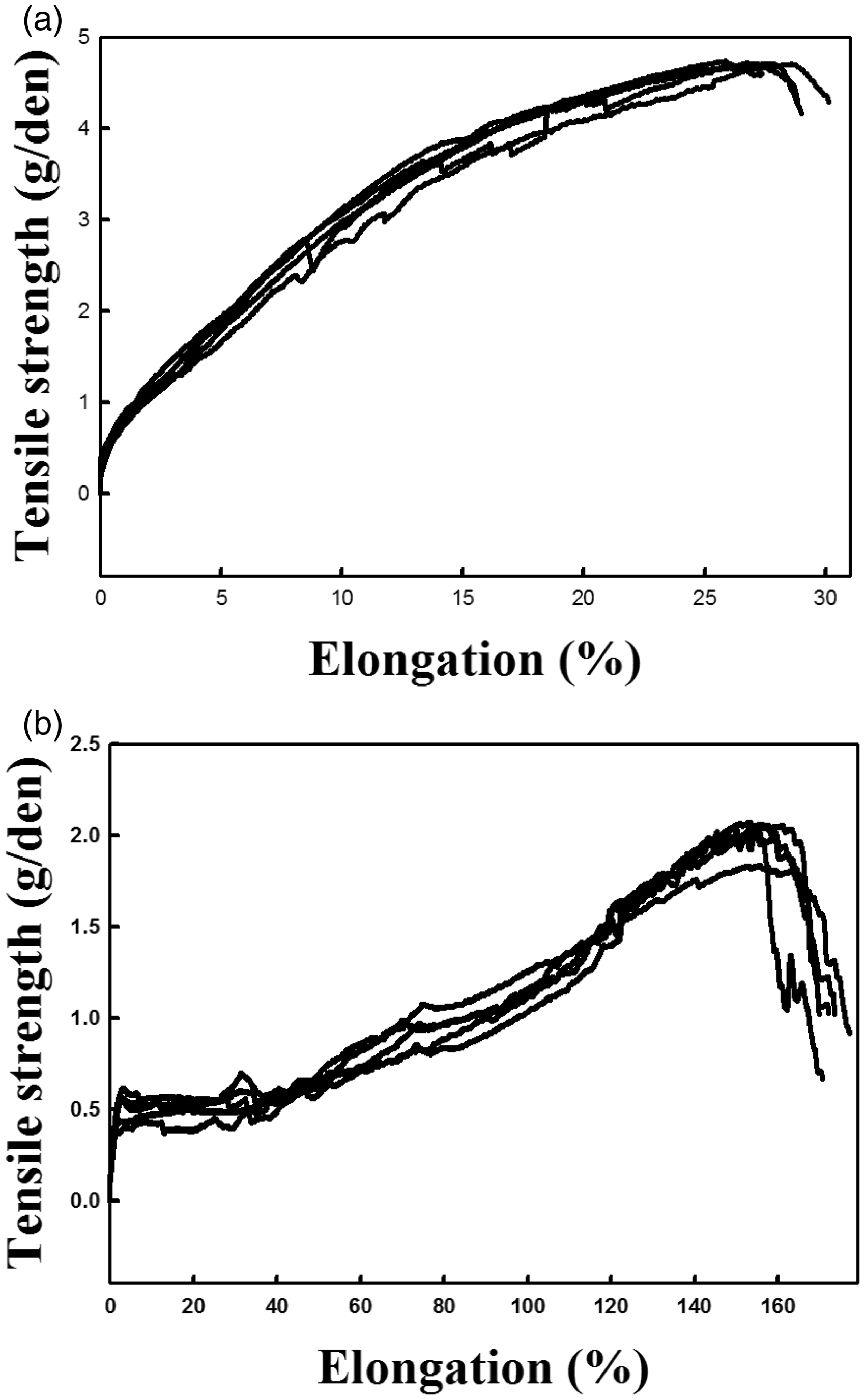
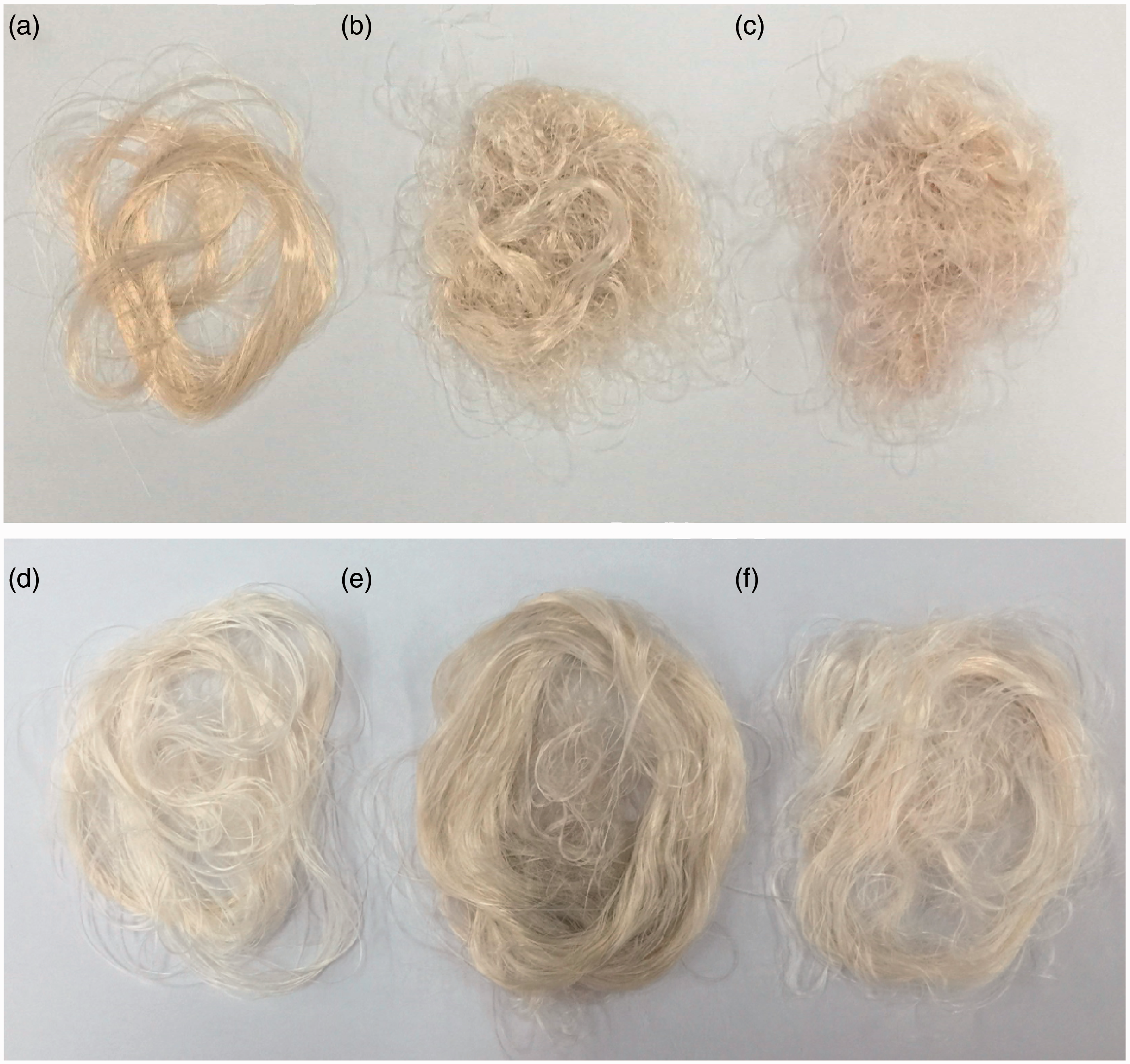
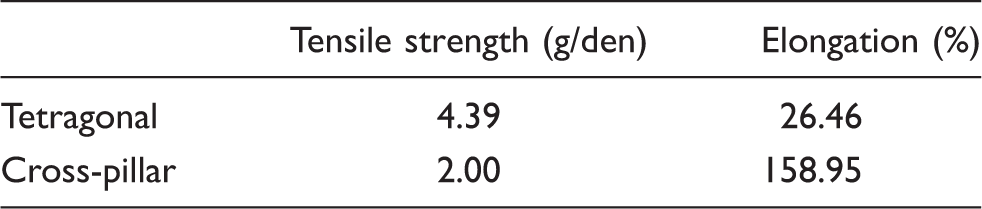
Tetragonal and cross-pillar-shaped PET/TiO2 filaments were prepared by using the melt-spinning method. Photographs of both filaments are shown in Figure 1. Figures 2 and 3 show cross-sectional images of the tetragonal and cross-pillar-shaped PET/TiO2 filaments, which were observed by optical microscopy and scanning electron microscopy (SEM). TiO2 nanoparticles are well dispersed in the PET filaments. The mechanical properties of the filaments were also measured. As shown in Table 1 and Figure 4, the tensile strength and elongation of tetragonal and cross-pillar-shaped PET filaments show obvious differences. Tetragonal-shaped PET/TiO2 filaments containing 4 wt.% of TiO2 (50 denier/36 filament SDY) show about 4.4 g/denier of tensile strength and 26% of elongation, while cross-pillar-shaped PET/TiO2 filaments containing 1 wt.% of TiO2 (85 denier/36 filament POY) show 2 g/denier of tensile strength and about 159% of elongation. As shown, the tensile strength of SDY samples is higher than that of POY samples due to the orientation of the PET yarn's molecular chains, which were created through the drawing process. Figure 5 shows a photograph of tetragonal and cross-pillar-shaped TiO2-containing PET filaments photo-deposited with metal nanoparticles, which showed different colors depending on the metal species. Both pure tetragonal and cross-pillar-shaped PET/TiO2 filaments showed the same sand beige color. However, after the PET/TiO2 filaments were photo-deposited with Ag and Pt nanoparticles, a color change was observed in both the tetragonal and cross-pillar-shaped PET/TiO2 filaments. The color changes occurred from a sand beige color to gray and light pink one, respectively, which might be attributed to the surface plasmon resonance of metal nanoparticles.
12
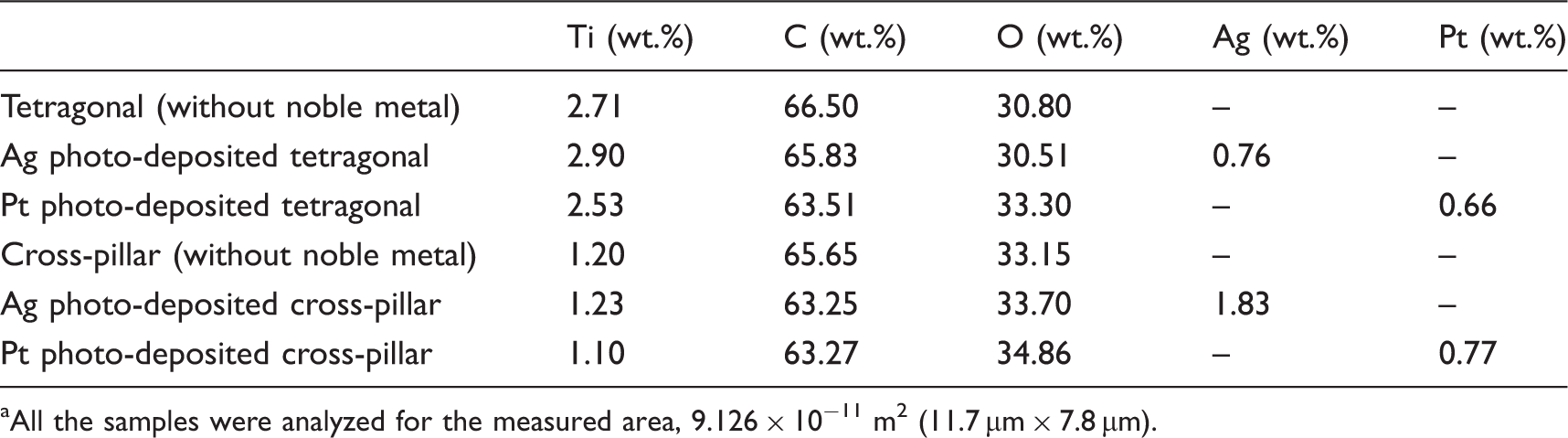
Figures 6(a) and (d) show SEM images of tetragonal and cross-pillar-shaped PET/TiO2 filaments without treatment of metal photo-deposition. The energy-dispersive x-ray spectroscopy (EDS) elemental spectra of tetragonal and cross-pillar-shaped PET/TiO2 filaments without treatment of metal photo-deposition were inserted in Figures 6(a) and (d). It shows the presence of carbon, titanium and oxygen in the tetragonal and cross-pillar-shaped PET/TiO2 filaments. Figures 6(b), (c), (e) and (f) show the SEM images of Ag and Pt photo-deposited tetragonal and cross-pillar-shaped PET/TiO2 filaments, respectively. Table 2 also presents EDS analyses results. From the EDS spectra and analyses results, the existence of Ag and Pt metals was confirmed, respectively. On the other hand, the most important thing with respect to functional filaments, such as antimicrobial properties and so on, is the surface presence of functional materials and how they are distributed on the surface. From this point of view, the surface contents from EDS analyses are notable. At first, the surface contents of Ti in the tetragonal-shaped PET/TiO2 filaments were determined to be ca. 2.53–2.9 wt.%, which corresponds to 3.9–4.5 wt.% of TiO2. These values are in relatively good agreement with the initial loading amount of TiO2, 4 wt.%, revealing that TiO2 nanoparticles are uniformly distributed in both the surface region and inner region, as shown in Figure 3(a). On the contrary, surface contents of Ti in cross-pillar-shaped PET/TiO2 filaments were ca. 1.1–1.23 wt.%. These values correspond to 1.7–1.9 wt.% of TiO2, much more than the initial loading amount, 1 wt.%, implying that TiO2 nanoparticles in cross-pillar-shaped filaments are mainly localized in the surface region, as seen in Figure 3(b). Because of the surface area effect and this difference in surface distribution of TiO2 nanoparticles, which might be the largest in the outmost surface, which acts as an active site for the deposition of noble metal, the amount of photo-deposited noble metal in cross-pillar-shaped pillar filaments could become larger than in tetragonal-shaped filaments and so microbial activity would be also expected to be influenced.
Photographs of tetragonal and cross-pillar-shaped polyester (PET)/TiO2 filaments: (a) tetragonal-shaped PET/TiO2 filaments; (b) cross-pillar-shaped PET/TiO2 filaments. Optical microscope images of cross-sectional surface of tetragonal and cross-pillar-shaped polyester (PET)/TiO2 filaments: (a) tetragonal-shaped PET/TiO2 filaments; (b) cross-pillar-shaped PET/TiO2 filaments. Scanning electron microscopy images of the cross-section surface of tetragonal and cross-pillar-shaped polyester (PET)/TiO2 filaments: (a) tetragonal-shaped PET/TiO2 filaments; (b) cross-pillar-shaped PET/TiO2 filaments. Tensile strength and elongation curve of tetragonal and cross-pillar-shaped polyester (PET)/TiO2 filaments: (a) tetragonal-shaped PET/TiO2 filaments; (b) cross-pillar-shaped PET/TiO2 filaments. Photographs of the metal photo-deposited tetragonal and cross-pillar-shaped polyester (PET)/TiO2 filaments: (a) untreated tetragonal-shaped PET/TiO2 filaments; (b) Ag photo-deposited tetragonal-shaped PET/TiO2 filaments; (c) Pt photo-deposited tetragonal-shaped PET/TiO2 filaments; (d) untreated cross-pillar-shaped PET/TiO2 filaments; (e) Ag photo-deposited cross-pillar-shaped PET/TiO2 filaments; (f) Pt photo-deposited cross-pillar-shaped PET/TiO2 filaments. Scanning electron microscopy and energy-dispersive x-ray spectroscopy images of metal photo-deposited tetragonal and cross-pillar-shaped polyester (PET)/TiO2 filaments: (a) untreated tetragonal-shaped PET/TiO2 filaments; (b) Ag photo-deposited tetragonal-shaped PET/TiO2 filaments; (c) Pt photo-deposited tetragonal-shaped PET/TiO2 filaments; (d) untreated cross-pillar-shaped PET/TiO2 filaments; (e) Ag photo-deposited cross-pillar-shaped PET/TiO2 filaments; (f) Pt photo-deposited cross-pillar-shaped PET/TiO2 filaments. Mechanical properties of tetragonal and cross-pillar-shaped polyester (PET)/TiO2 filaments Energy-dispersive x-ray spectroscopy analyses of tetragonal and cross-pillar-shaped polyester (PET)/TiO2 filaments.
a
All the samples were analyzed for the measured area, 9.126 × 10⁻¹¹ m2 (11.7 µm × 7.8 µm).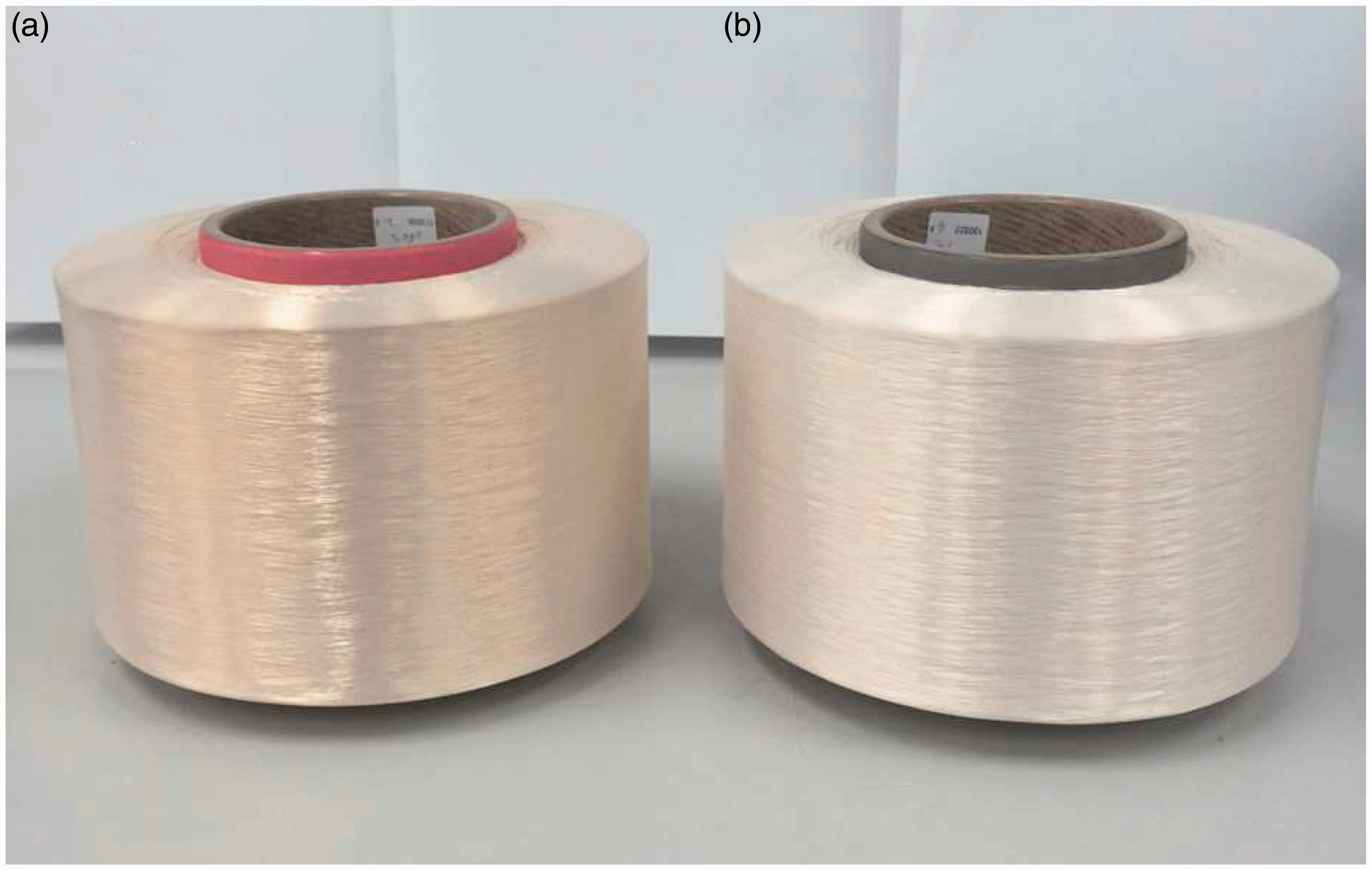

X-ray photoelectron spectroscopy
TiO2 nanoparticles in the tetragonal and cross-pillar-shaped PET/TiO2 filaments play an important role in metal deposition by acting as a good support for electrostatic adsorption of Ag and Pt metal ions and by reducing metal ions with excited electrons under the irradiation of UV light.
13
To further confirm the formation of metal nanoparticles on the TiO2 in the surface of the tetragonal and cross-pillar-shaped PET/TiO2 filaments, XPS measurement was performed. Figure 7(a) shows the XPS spectrum of Ag photo-deposited tetragonal and cross-pillar-shaped PET/TiO2 filaments. The XPS spectrum shows two peaks at 368 and 374 eV, corresponding to the Ag0 3d5/2 and Ag0 3d3/2 binding energies, respectively. Therefore, the silver ions are reduced to silver nanoparticles during the photo-deposition process.
14
Figure 7(b) shows the XPS spectrum of Pt photo-deposited tetragonal and cross-pillar-shaped PET/TiO2 filaments. The Pt 4f7/2 and Pt 4f5/2 energies were observed at 71 and 74 eV, respectively, indicating that the Pt nanoparticles were successfully obtained.
15
Even though tetragonal-shaped PET/TiO2 filaments contained a large amount of TiO2 content, the intensity of cross-pillar-shaped PET/TiO2 filaments is stronger than tetragonal-shaped PET/TiO2 filaments. This might be due to the surface area effect, in that cross-pillar-shaped PET/TiO2 filaments have a larger surface area than tetragonal-shaped PET/TiO2 filaments. These data are in good agreement with the data for metallic Ag and Pt, thereby supporting the formation of metal nanoparticles.
X-ray photoelectron spectra of tetragonal and cross-pillar-shaped polyester (PET)/TiO2 filaments with different metal photo-deposition with an ultraviolet irradiation time of 300 s condition: (a) Ag photo-deposited; (b) Pt photo-deposited.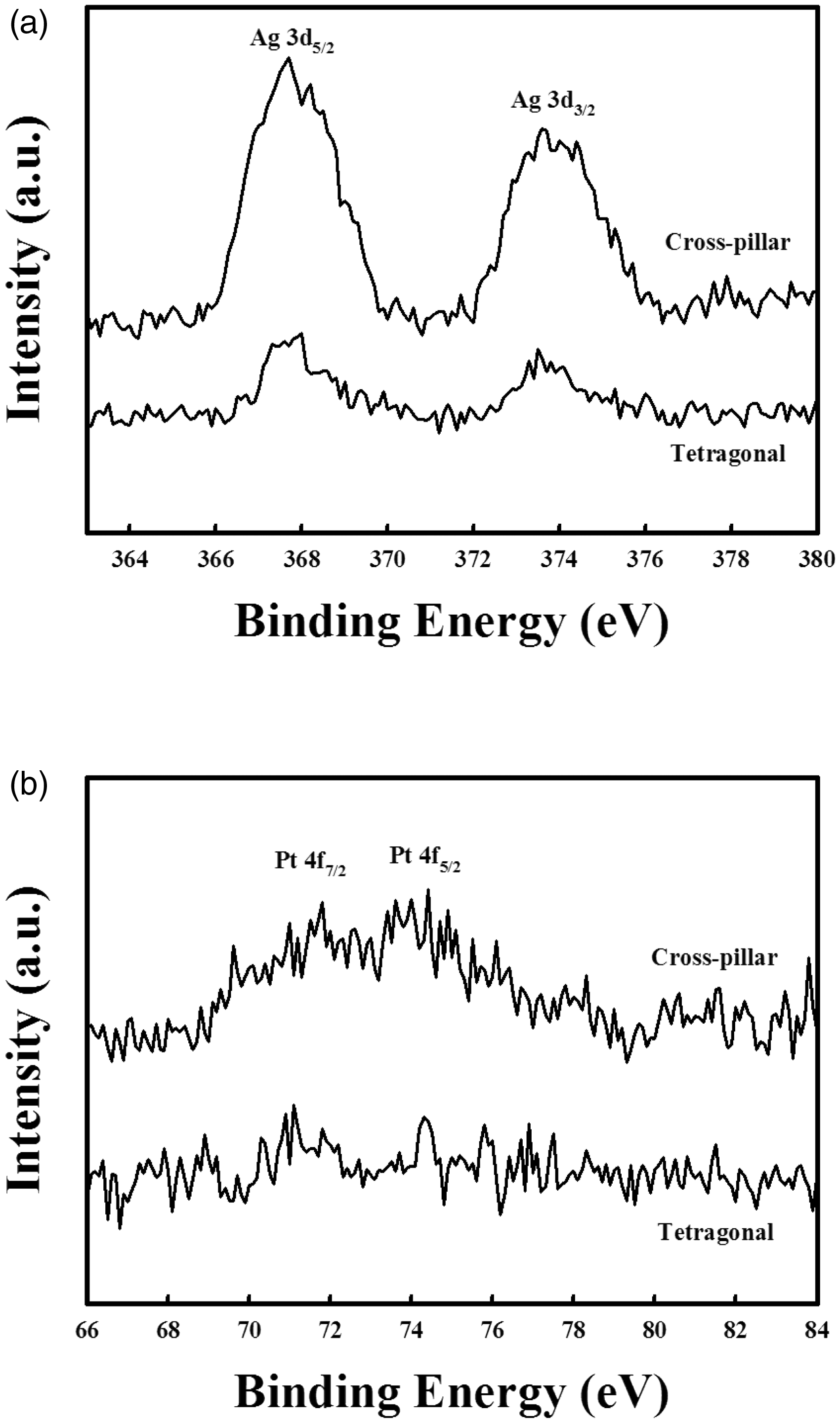
Antimicrobial activities
The antimicrobial activities of tetragonal and cross-pillar-shaped polyester (PET)/TiO2 filaments against S. aureus and K. pneumoniae.
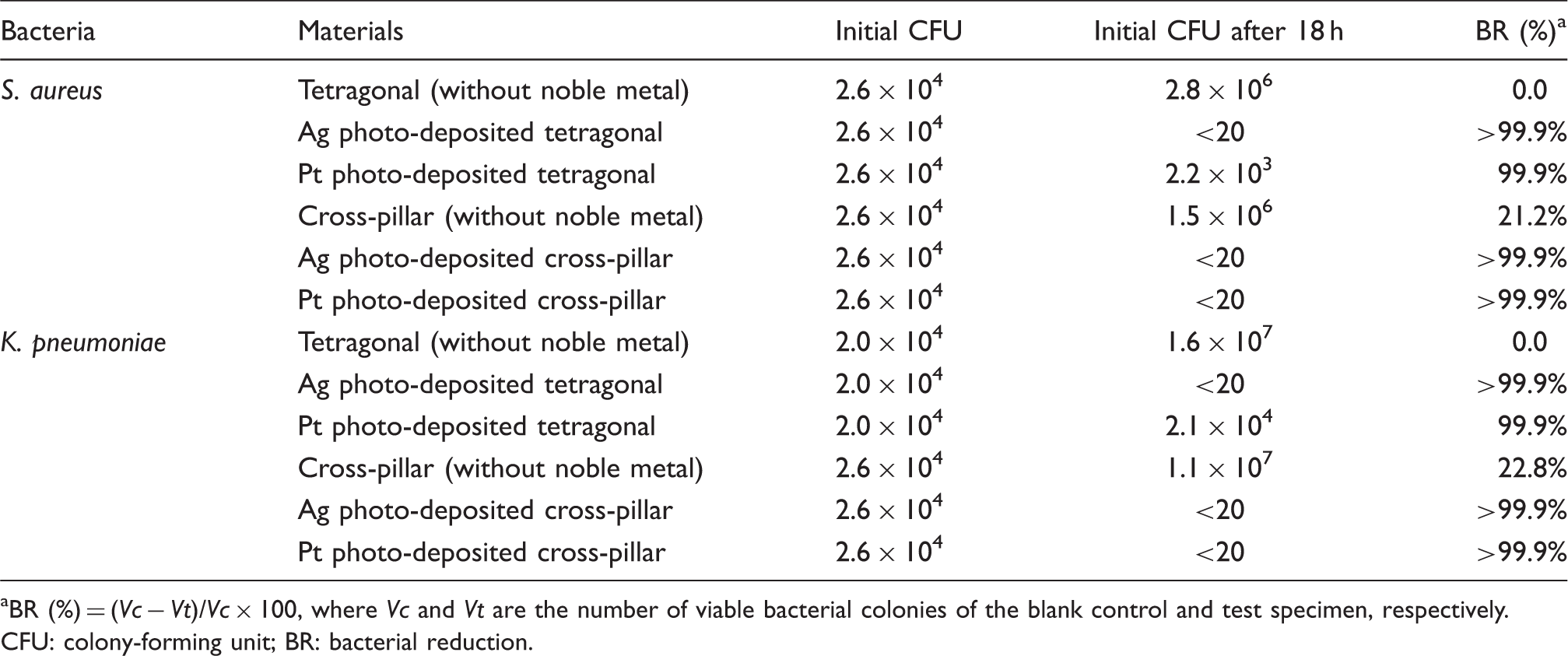
BR (%) = (Vc − Vt)/Vc × 100, where Vc and Vt are the number of viable bacterial colonies of the blank control and test specimen, respectively.
CFU: colony-forming unit; BR: bacterial reduction.
On the other hand, the BR values of all the noble metal-deposited tetragonal and cross-pillar-shaped PET/TiO2 filaments against S. aureus and K. pneumoniae under the dark condition was very high and almost the same to 99.9%, irrespective of the kind of metal species. The antimicrobial property of noble metal nanoparticles, such as silver, gold or platinum, has been known to be due to a different origin from that of TiO2. Several mechanisms have been postulated for the antimicrobial property of noble metal nanoparticles. (1) Contact of noble metal nanoparticles to the bacterial membrane surface, which results in altering the membrane properties. Noble metal nanoparticles have been reported to degrade lipopolysaccharide molecules, accumulate inside the membrane by forming “pits”, and cause large increases in membrane permeability. 18 (2) Noble metal nanoparticles penetrate inside bacterial cells, resulting in DNA damage. (3) Dissolution of noble metal nanoparticles releases antimicrobial Ag+ ions. 19
Physicochemical properties play an important role in the antimicrobial activity of noble metals. In general, particles of less than 10 nm are more toxic to bacteria such as Escherichia coli and Pseudomonas aeruginosa.20,21 So, although under the condition of UV irradiation, both TiO2 and noble metal nanoparticles have a synergic effect on the antimicrobial property of our filaments, under the absence of UV light, only noble metal nanoparticles could contribute to the antimicrobial activity.
These results indicate that metal nanoparticles exhibit more enhanced antimicrobial activities (both for gram-positive and gram-negative bacteria) than those of TiO2 nanoparticles under the dark condition. The increased antimicrobial activity of metal-deposited tetragonal and cross-pillar-shaped PET/TiO2 filaments might be explained by the presence of the metal nanoparticle.
Conclusion
In this study, we have enhanced the antimicrobial property of filaments by controlling the shape of filaments, such as tetragonal and cross-pillar, which led to an increased surface portion of filaments. Tetragonal and cross-pillar-shaped PET/TiO2 filaments were prepared with PET and TiO2 nanoparticles with a melt-spinning machine. Silver and platinum nanoparticles were immobilized on a surface of TiO2 in the filaments by a metal photo-deposition process. From the EDS and XPS results, TiO2 nanoparticles were also found to be randomly distributed in PET filaments, without being partially located at the surface or internal region. In addition, even though tetragonal-shaped PET/TiO2 filaments contained a large amount of TiO2, cross-pillar-shaped PET/TiO2 filaments contained a larger amount of Ag and Pt contents after the photo-deposition process. It could be explained by the surface area effect, in which cross-pillar-shaped PET/TiO2 filaments have a larger surface area than tetragonal-shaped PET/TiO2 filaments. So, the amount of photo-deposition might be thought to be influenced largely by the shape of filaments. On the other hand, Ag and Pt photo-deposited filaments showed excellent antimicrobial effects against two types of bacteria, Staphylococcus aureus and Klebsiella pneumonia, under the dark condition.
In this study, we could conclude that noble metal would play a major role to inhibit bacteria under absence of UV light, although we can have a synergic effect of TiO2 and Ag or Pt under the condition of irradiation of UV light. That is, under the absence of UV light, TiO2 nanoparticles, of which the surface was covered with noble metal, act as the supporting materials, which can load noble metal effectively and stably. Generally, since the fibers, that were directly coated or loaded with noble metal are known to be very unstable under oxidation or washing conditions, direct noble metal coated or loaded fibers are lacking in terms of long-period stability, and so have some disadvantages in commercial applications. On the contrary, the adhesion of noble metals to TiO2 was strong enough to resist continuous water rinsing for a long time, and the noble metals embedded on composite fibers in this way showed the enhanced stability to oxidation by the external environment due to the semiconductor–metal interaction. In this regard, our study to prepare for effective anti-bacterial PET filaments with Ag or Pt nanoparticles on TiO2 nanoparticles is thought to be widely applied to industrial or commercial fields.
Footnotes
Declaration of Conflicting Interests
The authors declared no potential conflicts of interest with respect to the research, authorship and/or publication of this article.
Funding
The authors disclosed receipt of the following financial support for the research, authorship, and/or publication of this article: This work was supported by the Development of Nano material-converged Products on the Basis of Industry Demands Program (Project No. 10050722) funded by the Ministry of Trade, Industry & Energy(MI, Korea), and also supported by the DGIST R&D Program of the Ministry of Education, Science and Technology of Korea (15-NB-03).