




Abstract
Unmodified nylon is dyeable to a single color only, and is almost exclusively dyed with acid dyes that are absorbed with amine groups of nylon molecules. Two types of polycaprolactam (PA6) copolyamide were successfully prepared with 5-sulfoisophthalic acid monosodium salt and poly(ethylene glycol) (PEG) units named cationic dyeable polyamide (CD-PA6) and easy cationic dyeable polyamide (ECD-PA6). The chemical and crystalline structures of CD-PA6 and ECD-PA6 were characterized by Fourier transform infrared spectroscopy and wide angle x-ray diffraction, and their thermal properties were tested by differential scanning calorimetry and thermogravimetric analysis, respectively. In addition, the rheological behavior and mechanical properties of copolyamide are presented in this paper. The influence of chemical modification in polyamide 6 fibers on the dyeing properties was investigated using cationic dye (methylene blue). The incorporation of PEG not only destroyed the regularity of the molecular chain arrangement and created more amorphous regions of ECD-PA6 samples, but also led to nylon 6 changing from the α-form to the γ-form. In addition, the crystallinities and degradation temperatures of samples which corresponded to different mass losses of CD-PA 6 and ECD-PA6 declined as the sulfonic group content increased, since large –SO3Na side groups in the copolymers prevented the chain molecules from tightly coagulating and obstructed the formation of larger crystals. Based on the analysis of the dyeing, a distinct improvement in tinctorial affinity and wash fastness for modified fibers compared with unmodified fibers was revealed.
Generally, polyamide 6 (PA6) fiber is widely used in clothing, upholstery, transportation, and individual protection, with the merits of abradability, ductility, chromaticity, and elasticity, and is further used as an extruded film and an oriented film aimed at the food packing. In addition, it is also widely used as an injection-molded product in the automobile field, in electrical equipment, in electronics, and so on. When dyeing nylon 6 fiber, or film, or a molded article, an acid dye or a disperse dye are mainly used.1–5 However, nylon fibers are severely and permanently stained by certain artificial and natural colorants present in common household items, such as food and soft drinks. The vast majority of these colorants are acid dyes, all of which have been approved by the Food, Drug, and Cosmetic Commission for human consumption; for example, FD&C Red Dye No. 40. So for acid dye-resistance, nylon 6 which is affinitive to basic dyes is required. In particular, nylon 6 with cationic dyeability that can be produced at lower cost than conventional cationic dyeability modifiers. Further, fabric should be able to be prepared by combining yarns spun from the modified cationic nylon with yarns spun from standard nylon, in such a manner that, when the fabric is immersed in a dye bath containing selected acid dyes or selected basic dyes, or a combination of both, the fabric is dyed to a plurality of different colors or color tones, defining a pattern or design.6–8
The application of basic dyes, which are absorbed by carboxyl groups of the nylon molecules, results in colored nylon with unacceptable wash and light fastness properties. Nylon 6 has been modified, however, to improve its basic dyeability by forming the cationic dyeable polyamide (CD-PA) in the presence of a monofunctional, monosulfonated monomer, to provide nylon comprising molecules having at least a sulfonic group.9–12 In this paper, 5-sulfoisophthalic acid monosodium salt (5-SSIPA) was found to be preferable. The modified molecules serve a dual role. First, they provide sulfonate groups which can be activated to absorb basic dye under acid conditions without activation of the carboxyl groups, thereby providing color of acceptable wash and light fastness. Secondly, they impart acid dye-resistant properties to the nylon by forming salts with amine end groups, thereby rendering these amine groups no longer available to absorb acid dyes. On the basis of CD-PA, easy cationic dyeable polyamide (ECD-PA) was synthesized by incorporating poly(ethylene glycol) (PEG) into CD-PA molecular chains. PEG was selected because it can give some flexibility to the backbone chain of nylon 6 and improve its impact strength. Furthermore, the decrease of regularity of molecular chain arrangement leads to more amorphous regions of copolyamide, which improves the basic dyeability.13–14 However, the hard and soft segments are usually thermodynamically incompatible, but under certain conditions they show a trend towards compatibility. In this respect, problems arise related to the selection of the proper molecular weights of PEG. In order to prepare block copolymer materials with the desired properties, based on our own previous research and other reports, 10 wt% PEG 1000 is appropriate, and such composites can be prepared with high mechanical properties and splendid dyeability.15–17
In this paper we first prepared the PA6, CD-PA6, and PA6-based copolyamide modified with comonomers of PEG and varying 5-SSIPA content. It was the aim of this paper to study the influence of different content of 5-SSIPA on the chemical structure, crystalline structure, thermal properties, and rheological behavior. Furthermore, the basic dyeability and wash fastness of prepared the copolyamide was also compared and is elucidated in detail.
Experiment
Materials
CD-PA and ECD-PA samples were prepared with the following raw materials: epsilon-caprolactam, tytan TNBT(Ti(OH)), hexamethylene diamine, formic acid, and terephthalic acid (TPA) as sealing reagent; all were analytically pure and obtained from Tianjin Guangfu Science and Technology Development Centers. Poly(ethylene glycol) (PEG) with an average molecular weight of 1000, analytically pure, was purchased from Tianjin Kermel Chemical Reagents and Development Center. 6-aminocaproic acid, as the open-loop reagent, was supplied by the Shanghai Crystal Pure Industrial Co., Ltd. 5-sulfoisophthalic acid sodium (5-SSIPA) was also supplied by the Shanghai Crystal Pure Industrial Co. Ltd.
Synthesis of CD-PA and ECD-PA
The two-step process was carried out according to the methods described previously (Scheme 1). The polymerization reaction was carried out in a 1L autoclave glass reactor. Epsilon-caprolactam and 5-SSIPA with different mole percent (1%, 2%, and 3%) were firstly added to the reactor, and then the open-loop reagent (6-aminocaproic acid) and the sealing reagent (terephthalic acid) were added to it together. Before the polymerization process, nitrogen (N2) at a high flow rate was required to replace the atmosphere in the reactor. Subsequently, the reaction temperature was kept at 200℃, and the ring-opening process continued for about 2–2.5 h. After that, the reaction temperature was gradually raised to 260℃, and the polymerization took about 4–4.5 h (equation (1)). After the end of ring-opening polymerization, the temperature was lowered to 180–200℃. At the same time, TNBT as the esterification catalyst (0.05%–0.1% based on the amount of PEG) and PEG 1000 at 10%wt (based on polyamide) were added into the reactor together for pre-polycondensation for about 0.5 h. The polycondensation reaction was then held at a temperature of 245℃ for 2–2.5 h and at 260℃ for 1–1.5 h (equation (2)). Particles of copolyamide were thus prepared successfully, after granulating and drying. Using an electrospinning method, CD-PA and ECD-PA, after extraction and drying, were spun into nano-fibers.
Synthesis of cationic dyeable PA6.
Dyeing
The samples were extracted prior to dyeing with a boiling water treatment over 60 min. After that, the samples were dyed with 2% owf basic dyes (methylene blue; Scheme 2) in sealed stainless-steel dye pots with a capacity of 120 cm3 in a laboratory-scale dyeing machine (Ahiba Nuance: Datacolor, India) with a liquor ratio of 1:100. The samples were introduced into the dyebath at 40℃, and the temperature was then increased to 95℃ at a rate of 2℃/min. After 60 min at this temperature, the dyebath was cooled to room temperature. After dyeing, the dyed samples were removed, rinsed thoroughly in tap water, and allowed to dry in the open air.18–19
Methylene blue.
Measurements and characterization
The Fourier transform infrared –Attenuated total reflection (FTIR-ATR) spectra were obtained with a Bruker FTIR spectrophotometer, model TENSOR37 at room temperature. The dried sample was made into potassium bromide (KBr) pellets and scanned from 4500 cm−1 to 400 cm−1.
Differential scanning calorimetry (DSC) measurement was performed by using a NETZSCH 200 F3 instrument under a nitrogen atmosphere. The sample was carefully cut into small chips, weighting about 5 mg. The sample was first heated from ambient temperature to 250℃ at the rate of 10℃/min, and then was gradually cooled to 50℃ at the rate of 10℃/min. Thereafter, the sample was reheated to 250℃ at the rate of 10℃/min. The thermal properties in this study were determined by the second heating run. The crystallinity of the DSC method was calculated from the following equation: crystallinity
Thermogravimetric analysis (TGA) measurement was executed using a SEIKO TG/DTA6300 instrument under nitrogen atmosphere. A 5 mg sample was gradually heated from 25℃ to 600℃ at the rate of 10℃/min, and the residues were naturally cooled to room temperature.
Wide angle x-ray diffraction (XRD) measurement was implemented on a D/Max-2550 PC. The power of the generator is 40 kV × 40 mA, and Nickel-filtered Cu Ka radiation (λ = 0.154 nm) is used. All samples were firstly crystallized at 130° for 1 h under vacuum, and were carefully made into fine powder.
Scanning electron microscopy (SEM) analysis was carried out using a Hitachi S-4800 to analyze the surface morphology of 1%5-SSIPA/PA6 and 1%5-SSIPA/10%PEG/PA6 nanocomposites, respectively.
Tensile tests of monofilaments were performed at a drawing speed of 20 mm/min according to the GB/T 14344-2003 test method, and were carried out in a single-fiber strength testing machine, model LLY-06 E, produced by Laizhou Electronic Instrument Co., China Ltd.
The rheological behavior was investigated by HAAKE MARS III (plate: P35Ti L, diameter 35 mm), made by the HAAKE Corp., Germany. Each sample was dried after blending and tested for its rheological behavior. The test temperature was 260℃. The range of shear rate was 1–100 s−1. The relation between the shearing stress and the shear rate of the melts can be expressed in a power-law equation:
To determine the dyeing characteristics, absorbance measurements of the original dyebath and the exhausted dyebath were carried out using a UV/vis spectrophotometer (TU-1901). Using a previously established absorbance/concentration relationship at λmax of the dyes, the quantity of reactive dye in the solution was calculated and the extent of exhaustion (%E) achieved was determined using equation (3), where A0 and At are the quantities of dye initially in the bath and of residual dye in the final bath, respectively

In addition, color measurements were carried out using an UltraScan PRO spectrophotometer interfaced to a PC. Measurements were taken with the UV component included, using illuminant D65, 10° standard observer.
The washing fastness of the dyed samples was determined according to the standard ISO 105-A02 wash test method. Staining and change in color were assessed using the visual grayscale. The five grades in washing fastness rating are: 5–excellent, 4–good, 3–fair, 2–poor, 1–very poor.
Result and discussion
The chemical structures and compositions of CD-PA6 and ECD-PA6
Figure 1 shows the FTIR spectra of pristine PA6, CD-PA, and ECD-PA respectively. Comparing with IR spectra of pristine PA6, characteristic peaks at 1170.6, 686.1, and 575.2 cm−1 can be clearly seen, which is the absorption band of the sulfonic group. That is to say, the sulphonate group was successfully incorporated into PA6. The formation of the new ester linkage in the copolymer macromolecular chains is clearly demonstrated by the appearance of the intensive absorption band of the ester carbonyl group at 1737.1 cm−1. The weak intensities of the 1737.1 cm−1 peak are due to the relatively small amount of ester carbonyl group in the copolyamide. The IR spectra of the copolymers show characteristic absorption of the hydrogen-bonded amide groups at 3268.3, 1631.7, and 1541 cm−1. Because of the similarity of these bands and the analogous bands in the IR spectra of PA6 oligomers, and assuming the reaction mode, a multiblock structure of hard polyamide segments linked by soft polyether segments can be proposed. The broad band center around 1108.4 cm−1 can be attributed to the ether C–O–C antisymmetric stretch.
FTIR spectra of the PA6 (a), CD-PA6 (b), and ECD-PA6 (c).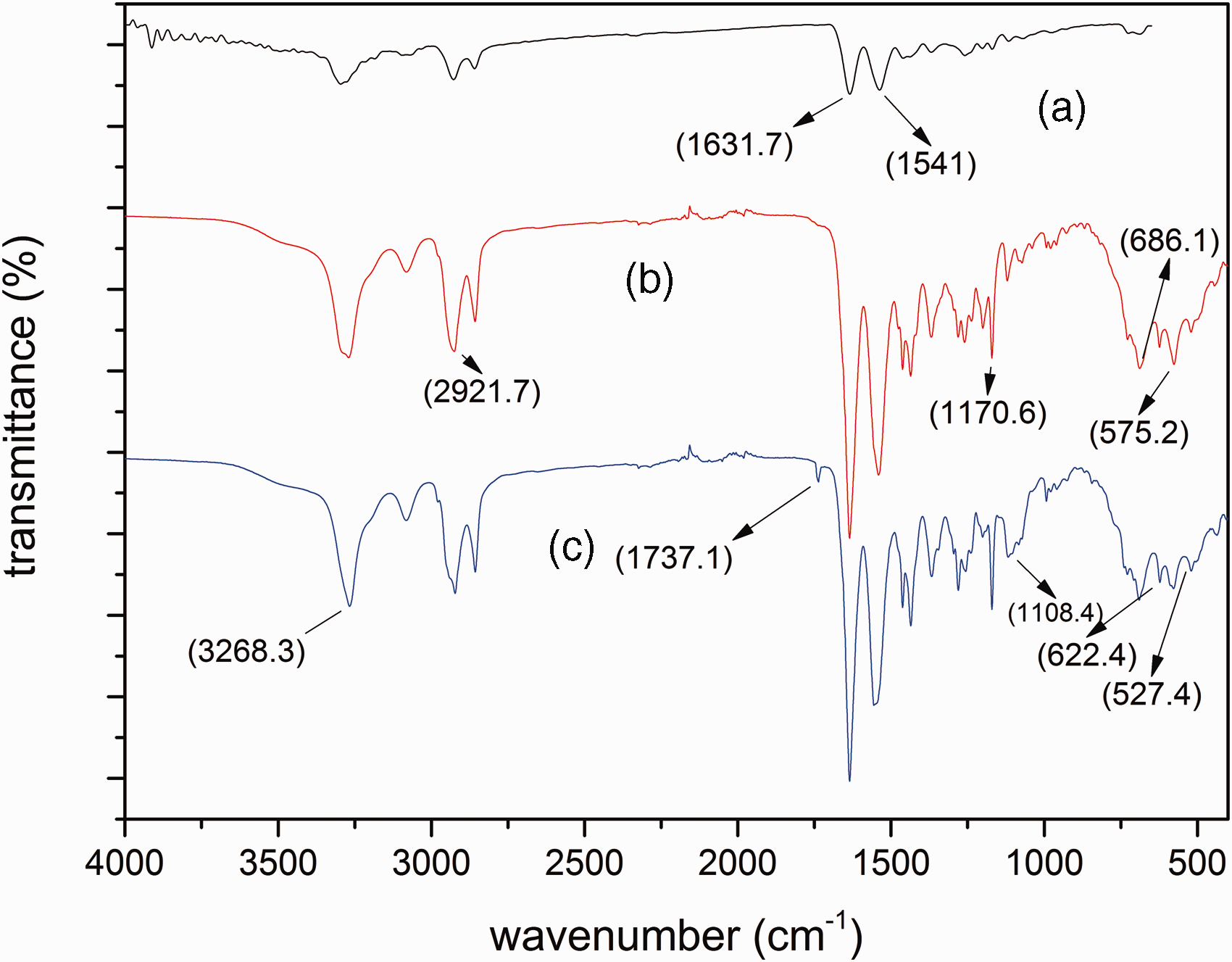
Thermal behavior and crystallinity
Table 1 and Figure 2 display the thermal properties of PA6, CD-PA 6, and three ECD-PA6 with a variety of 5-SSIPA content. In the DSC heating process, the endothermic peaks of PA6 and CD-PA6 occurred at 218.8 and 215.2℃, respectively. The endothermic peak (TM) is due to the melting of the sample. Particularly, with the content of 5-SSIPA increased, the TM of the copolyamide was prone to decline. The result can be explained by a large –SO3Na side group in the CD-PA6 and ECD-PA6 polymer preventing the chain molecules from crystallizing close to each other, resulting in more amorphous regions and more defective crystalline regions. Therefore, the crystalline regions tended to be destroyed with less melting enthalpy.
DSC curves of pure PA6 (a); CD-PA6*1 (b); ECD-PA6*1 (c); ECD-PA6*2 (d) and ECD-PA6*3 (e). Thermal properties and crystallinities of PA 6, CD-PA6*1, and ECD-PA6 Xc: Crystallinity of sample.
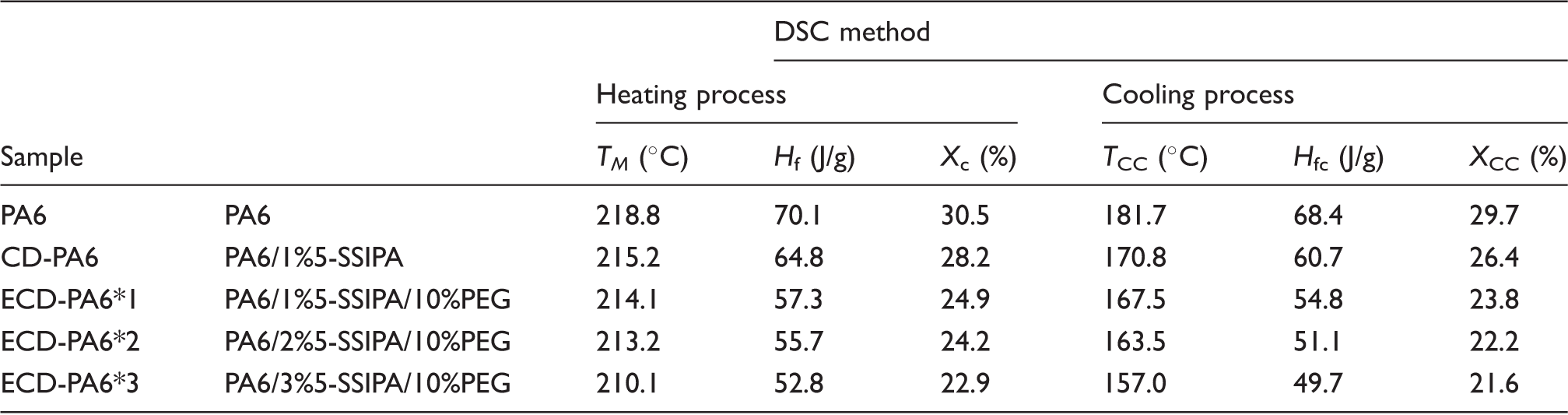
The heat of fusion was used to indicate the crystalline fraction of the material. A higher value of heat of fusion was expected to result in a higher crystallinity. Table 1 also reveals the crystallinities of PA6, CD-PA6, and ECD-PA6. Notably, increasing the 5-SSIPA content in the ECD-PA6 reduced the heat of fusion, thus decreasing the crystallinity. The corresponding crystallinity of PA6, CD-PA6, ECD-PA6*1, ECD-PA6*2, and ECD-PA6*3 was 30.5%, 28.2%, 24.9%, 24.2%, and 22.9%, respectively. The crystallinity of CD-PA6 sample was lower than that of the specimen because of the effects of polarity of the sulfonated group (–SO3Na+) and steric hindrance of the isophthalic structure jointly decreased the regularity of the molecular chains. Besides, the crystallinity of ECD-PA6 samples was lower than that of CD-PA6 specimen, since the incorporation of PEG molecular segments increases the irregularity of the molecular chain arrangement and leads to more amorphous regions of ECD-PA6 samples. The crystallization exothermic peak (TCC) of the PA6 polymer was higher than that of the CD-PA6 polymer. This implies that the crystallization rate of the PA6 polymer was faster than that of the CD-PA6 polymer. Furthermore, along with the increase of 5-SSIPA content, the TCC of ECD-PA6 declined. This phenomenon can be explained by the following: the incorporation of PEG can bring better flexibility to the molecular chains, and in this way, the molecular chains are better able to crowd into the crystal lattices. In addition, it was presumed that dye molecules can diffuse only in non-crystalline regions of the fiber, 21 so those phenomena were considerably advantageous for the cationic dyeability of copolyamide.
TGA discussion
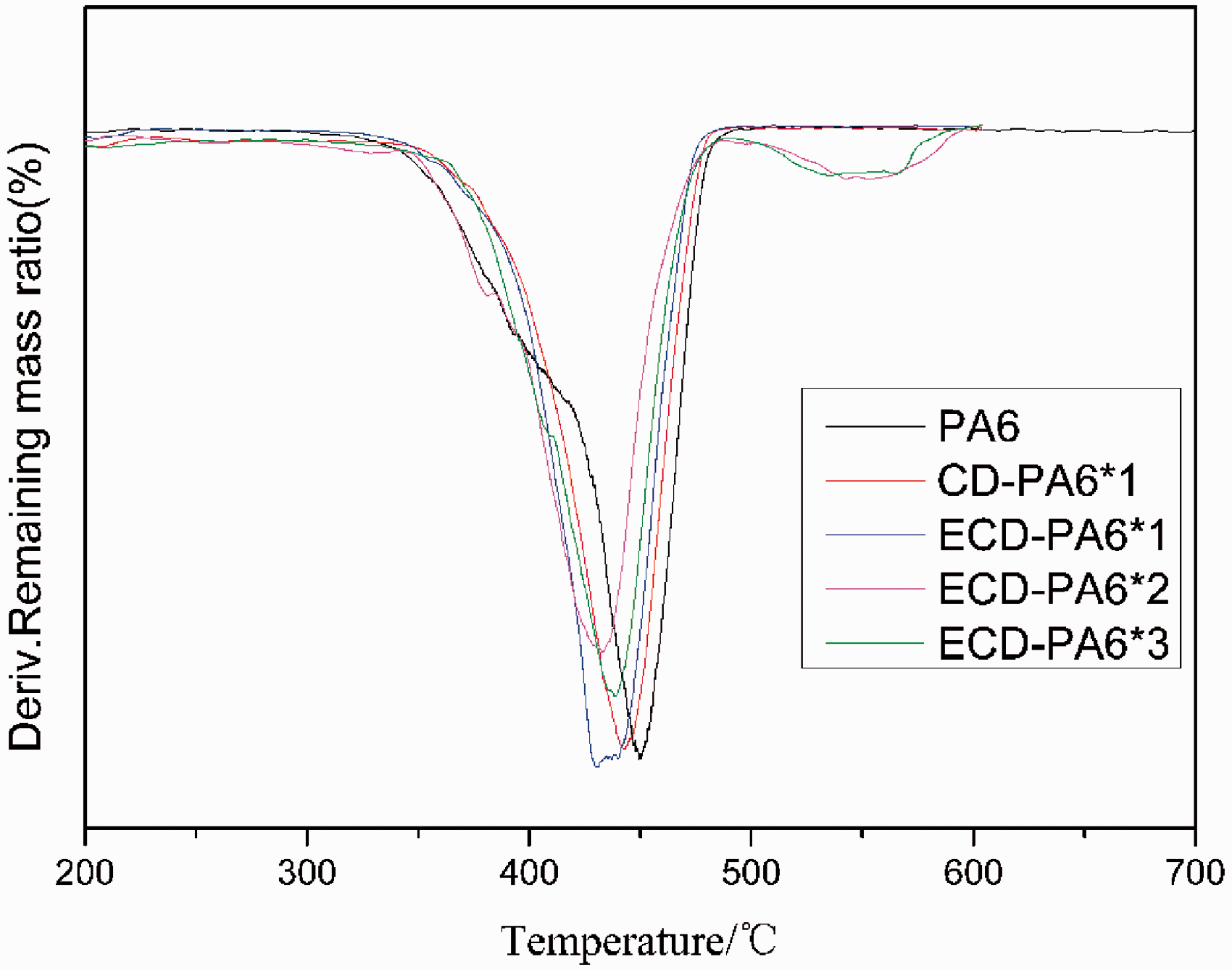
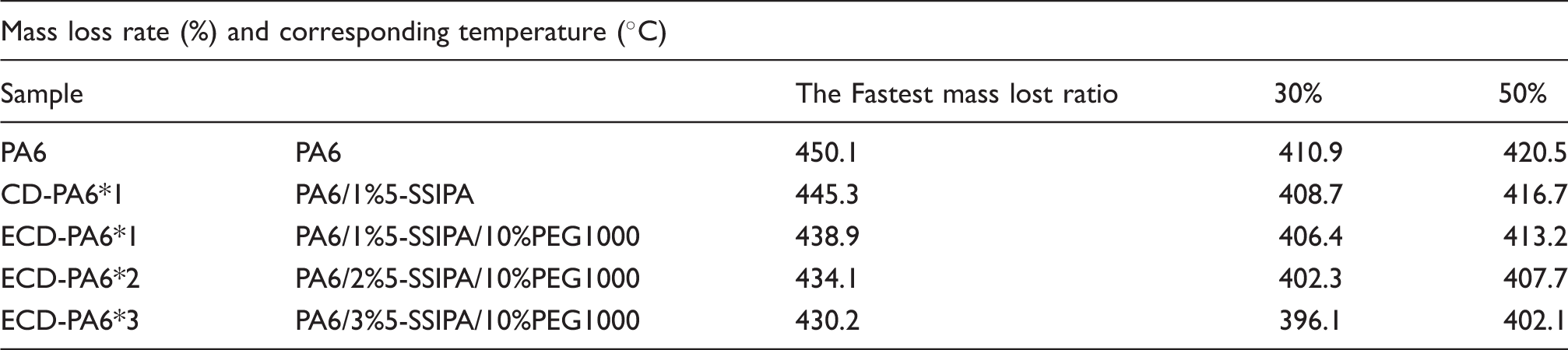
Figure 3 and 4 plot the TGA and DTG (derivative thermogravimetric analysis) curves of CD-PA6 and ECD-PA6 samples under a nitrogen atmosphere, respectively. All of the samples were dried for 1 h before the TGA experiment. After initial loss of moisture and desorption of gases at about 100–120℃, for modified PA6 there was an additional loss of weight at 150–300℃, which was attributed to actual pyrolysis brought about by a minor decomposition reaction. Obviously, the curves seemed to shift towards the lower temperature side with the increasing 5-SSIPA, indicating that the thermal stability of ECD-PA deteriorated gradually. Meanwhile, the TGA curves of the CD-PA6 and ECD-PA6 samples under nitrogen were found to have one weight-loss stage at 300–450℃, which was confirmed by the single peak in the DTG curves of the samples. The weight-loss stage was mainly attributed to the thermal degradation process of macromolecules with long molecular chains and huge molecular weight breaking into shorter molecular chain fragments via chain scission when samples were gradually heated up to a certain high temperature.22–23
TG curves of pure PA6, CD-PA6*1, ECD-PA6*1, ECD-PA6*2, and ECD-PA6*3. DTG curves of pure PA6, CD-PA6*1, ECD-PA6*1, ECD-PA6*2, and ECD-PA6*3.
Degradation temperatures of PA6 CD-PA6*1and ECD-PA6 samples corresponding to different mass losses
XRD analysis
According to the literature, PA6 has the property of polymorphism, and this depends on the conditions of crystallization. At room temperature, two crystalline morphologies exist, namely the α phase and the γ phase. The essential differences between these two phases lie in the lattice parameters and the orientation of the hydrogen bonds between the N–H and C=O groups.
24
In terms of pure PA6, two main reflections can be observed at 2θ = 20.2°and 2θ = 23.7° (Figure 5), which can be respectively attributed to the α (2 0 0) and α (0 2 0) crystal plane. That is to say, the α-form is the dominated crystalline phase. Interestingly, compared with PA6, no obvious positional changes were observed in CD-PA6 XRD spectra because the –SO3Na units mostly were in the noncrystalline state as minor components in these copolyamides. However, a new shape peak at 2θ = 21.7° appeared in ECD-PA6 XRD spectra, which is a γ-form crystalline structure corresponding to (0 0 2).
25
Such a phenomenon indicated that the crystalline structure of the composites was destroyed due to the incorporation of PEG, which increased the irregularity of the molecular chain arrangement. The general trend is in accordance with the results from DSC thermograms. It was presumed that the PEG soft segments might restrict the crystallization of the nylon 6 homopolymer.
X-ray diffraction patterns of different samples: pure PA6 (a), CD-PA6 (b), ECD-PA6*1 (c), ECD-PA6*2 (d), and ECD-PA6*3 (e).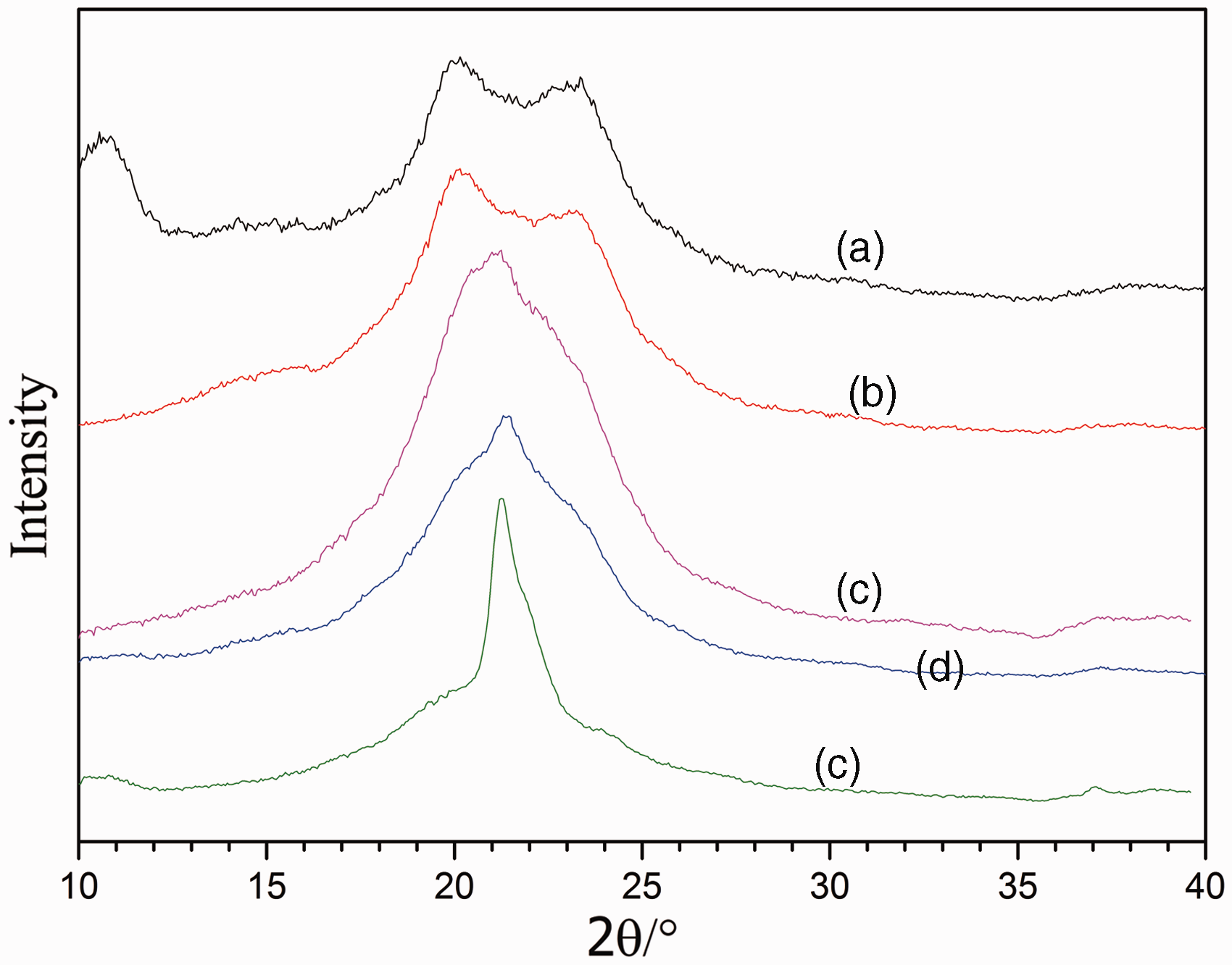
Mechanical properties and morphology analysis
In order to get a better understanding on the influence brought about by different contents of 5-SSIPA and incorporation of PEG on the structure of fibers, a microscopic analysis experiment was carried out. Figure 6 shows the surface morphology of CD-PA6*1 and ECD-PA6*1 nanofibers. It can be seen that the surface of the nanofibers was smooth; in other words, the modified PA6 gathered in a glassy state or semi-crystalline state, and dispersed well in the PEG continuous phase, indicating excellent compatibility.
SEM micrographs of different samples nanofibers: (a) 1%5-SSIPA/PA6, (b) 1%5-SSIPA/10%PEG/PA6.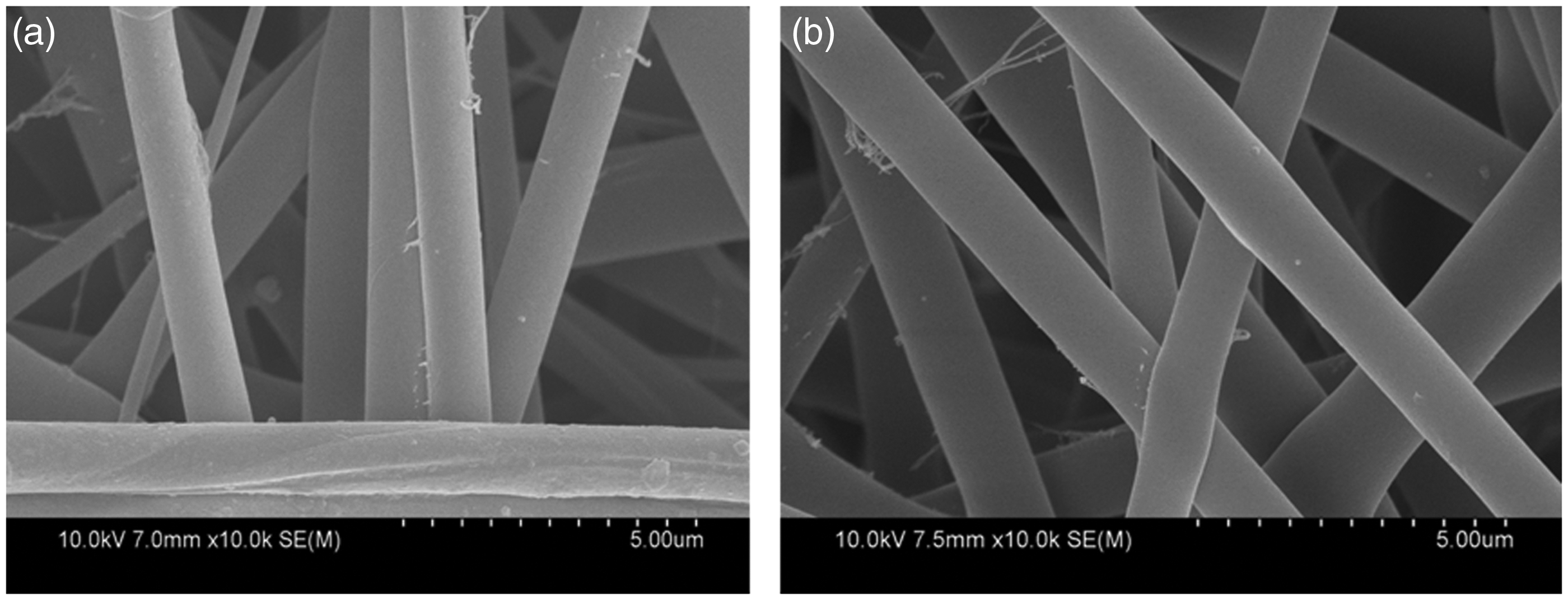
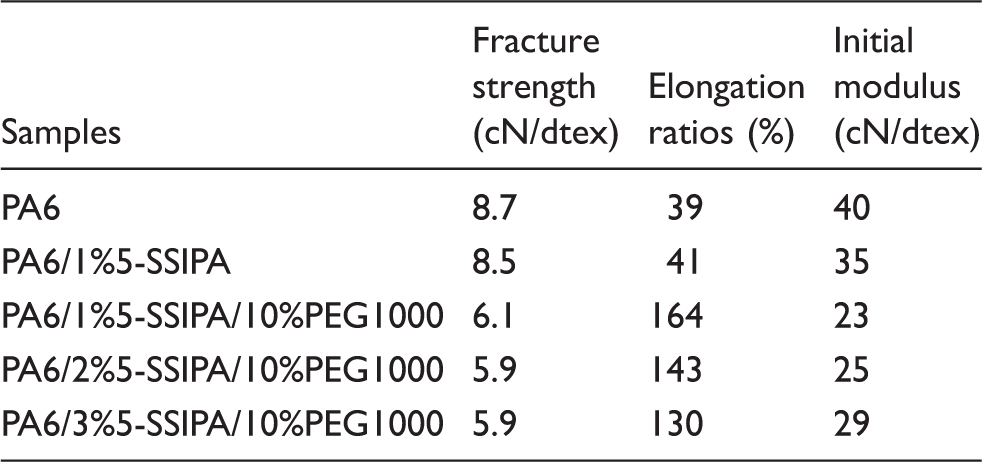
Mechanical properties of different samples
Rheological behavior
Figure 7 shows the melt viscosity of PA 6, CD-PA 6, and ECD-PA6 polymers at 260℃ versus shear rate from 1 to 100 s−1. Table 4 and Figure 8 show the changes of non-Newtonian index, n, along with different samples, indicating that the rising 5-SSIPA decreases the flowing performance of the ECD-PA6 (Newtonian fluid: n = 1, pseudoplastic fluid: n < 1). Three polymers exhibited typical shear thinning and pseudo-plastic flow behavior. Shear thinning is due to the number of geometrical tangling points among macromolecular chains decreasing with the increasing shear rate and rising temperature, thereby making the apparent viscosity fall. Thus, at the same shear rate, the melt-viscosity of ECD-PA6 falls with rising 5-SSIPA. It is possible that the polarity of the sulfonated group (–SO3Na) and the steric hindrance of isophthalic structure jointly reduce the flow capability of the macromolecular chains. The aggregation caused by the strong polarity of the sulfonic group in CD-PA6 and ECD-PA6 can generate more polar tangling points. As a result, the total number of tangling points is apparently higher than in PA6. However, PEG, as soft segments which enhanced macromolecular chains flow capability and decreased the melt-viscosity of ECD-PA6, and make it close to a Newtonian fluid.
The melt viscosity of PA 6, CD-PA 6, and ECD-PA6 polymers at 260℃ versus shear rate. Rheological property of different samples. Non-Newtonian index of different samples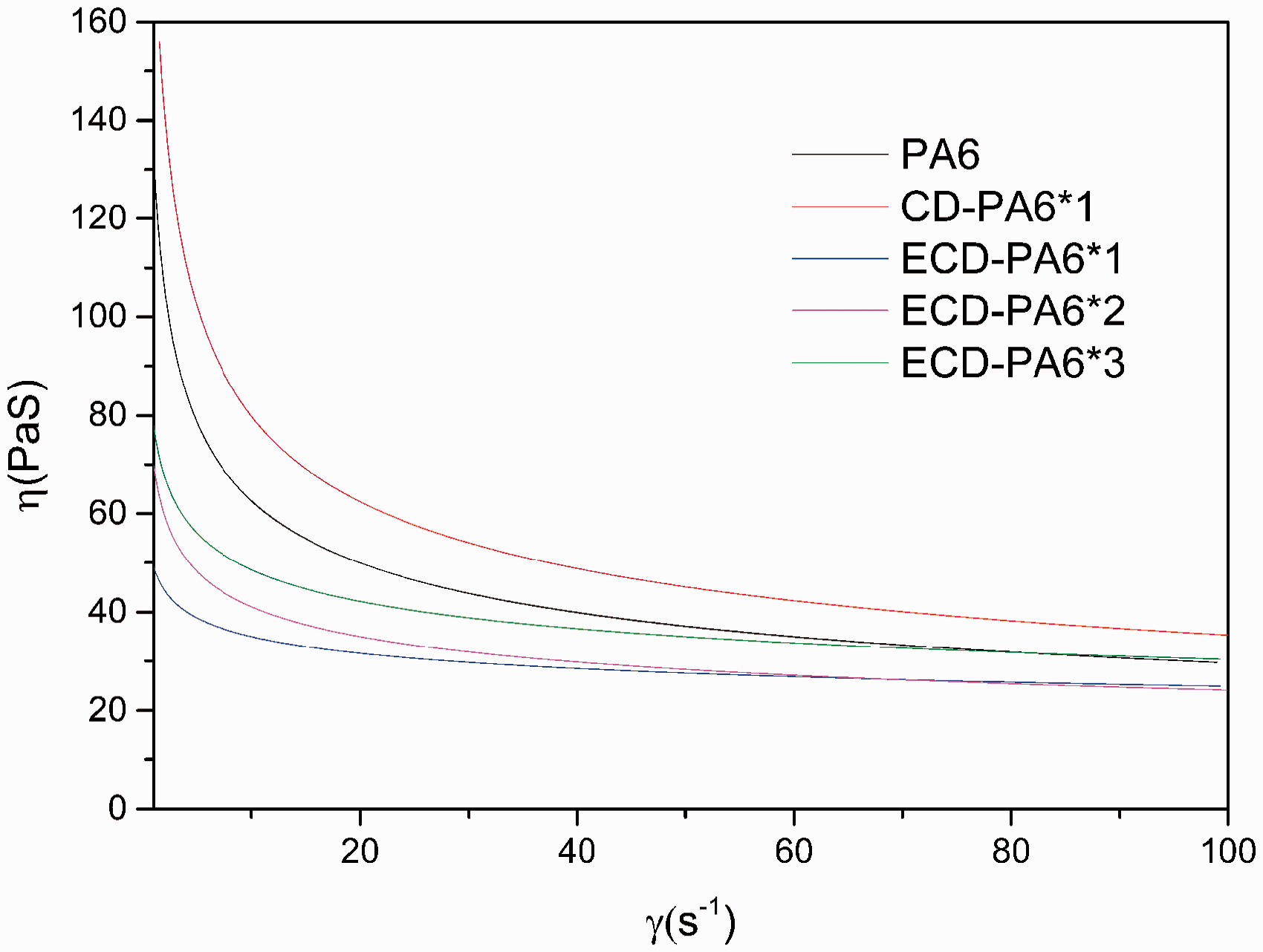


Dyeing studies
Dyeing investigation was carried out on unmodified and modified PA6 with various mole percentages (1%, 2%, and 3%) 5-SSIPA and 10 wt% PEG.
The rate of exhaustion at equilibrium of different samples.
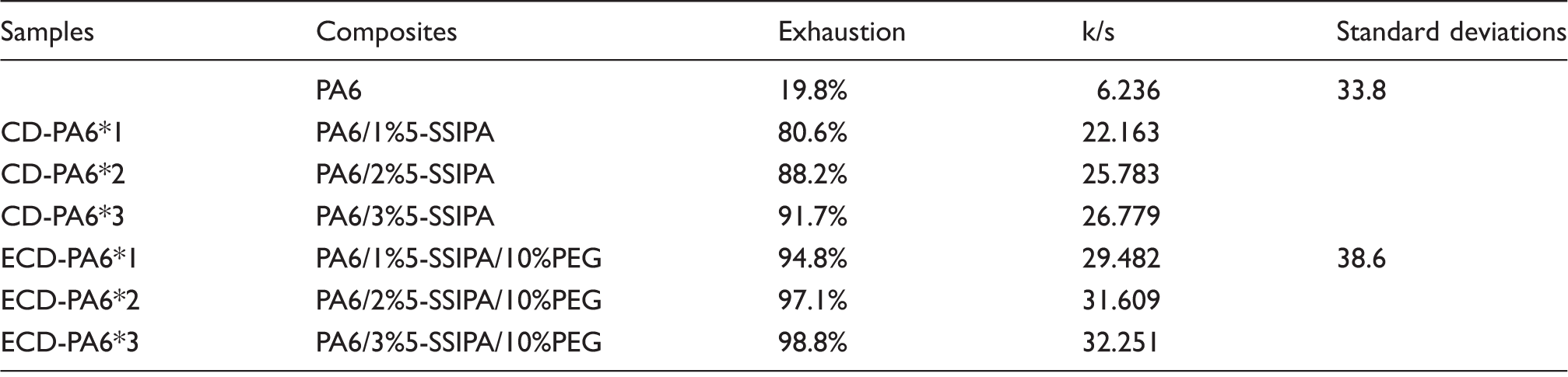
k/s: Dyeing degree.
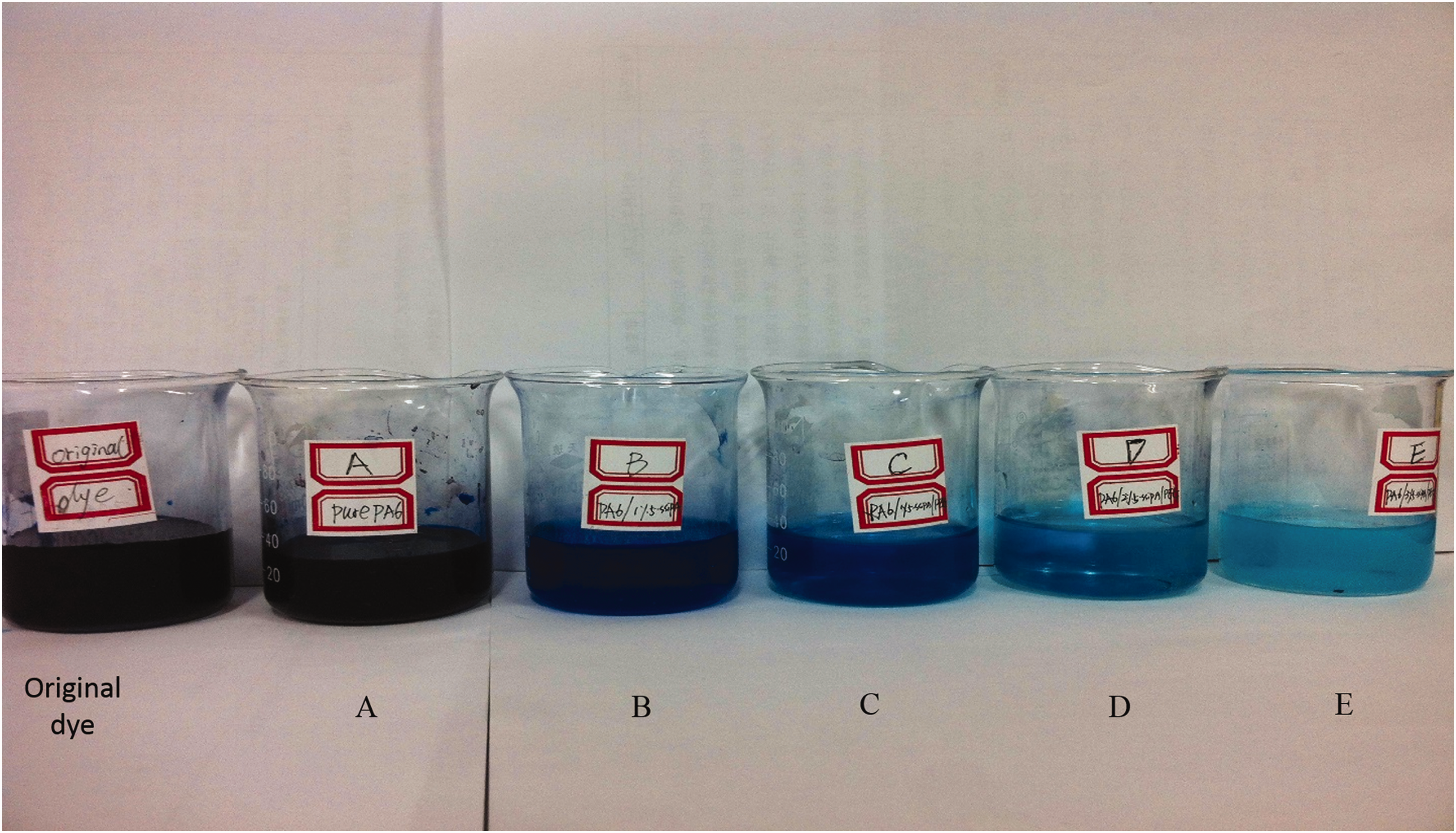
The evolution of the rate of exhaustion at equilibrium versus the mole percentage of 5-SSIPA is represented in Figure 9. Obviously, for the mole percentages of 1%, 2%, and 3%, a parabolic branch is obtained, which tends towards a value limit that corresponds to the totality of the dissolved quantity of dye in the bath. In the other words, the exhaustion of the bath reaches ≈ 100%. Based on Figure 10, the higher the mole percentage of 5-SSIPA, the lighter the residual liquid shade becomes. This is because of the increase in the number of sulfonic group on the fibers that are responsible for the absorption of the cationic dye.
The rate of exhaustion at equilibrium of PA6, CD-PA6, and ECD-AP6. The picture of residual liquid shade of different samples; pure PA6 (a), CD-PA6 (b), ECD-PA6*1 (c), ECD-PA6*2 (d), and ECD-PA6*3 (e).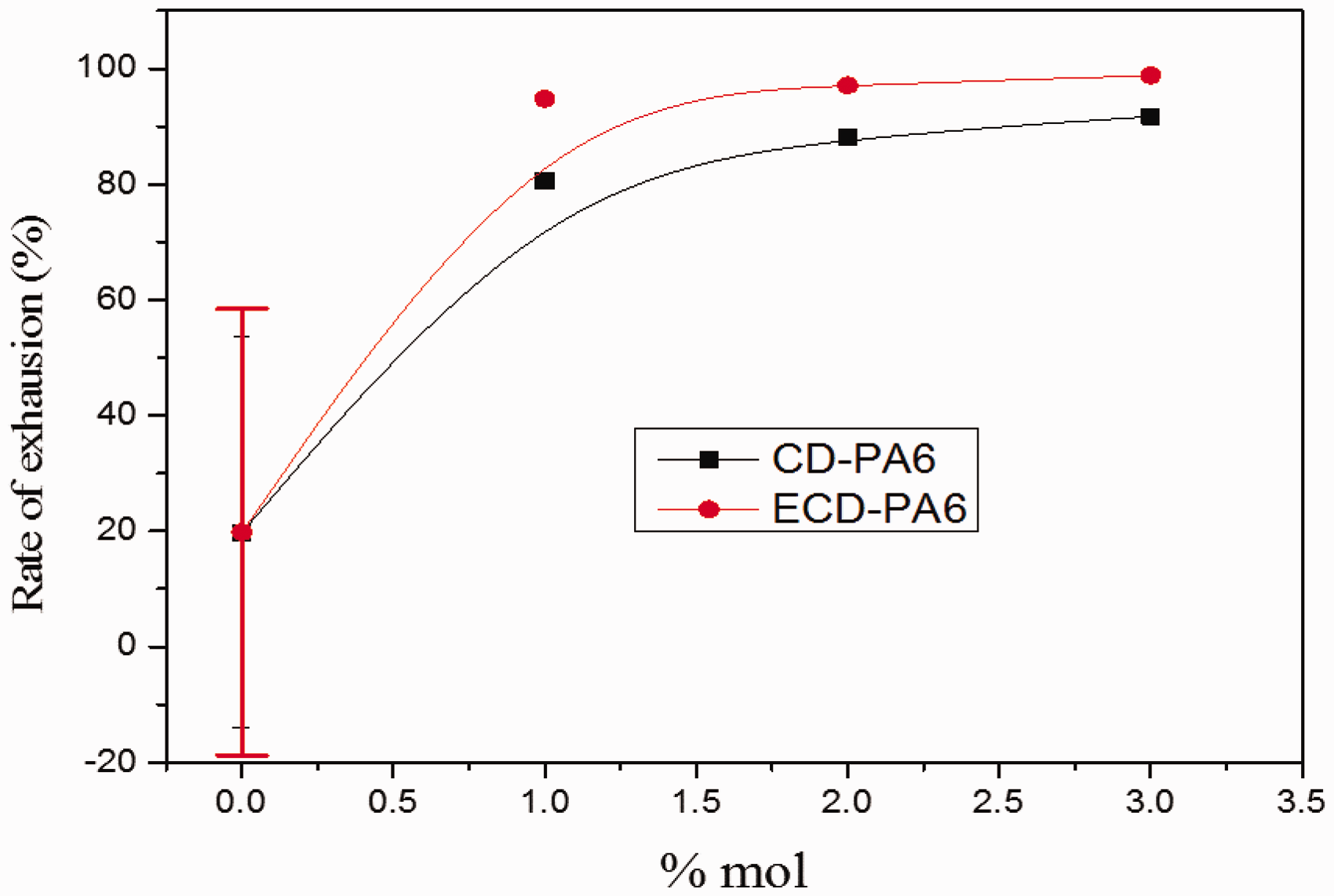
Evaluation of wash fastness at different percentages of grafting
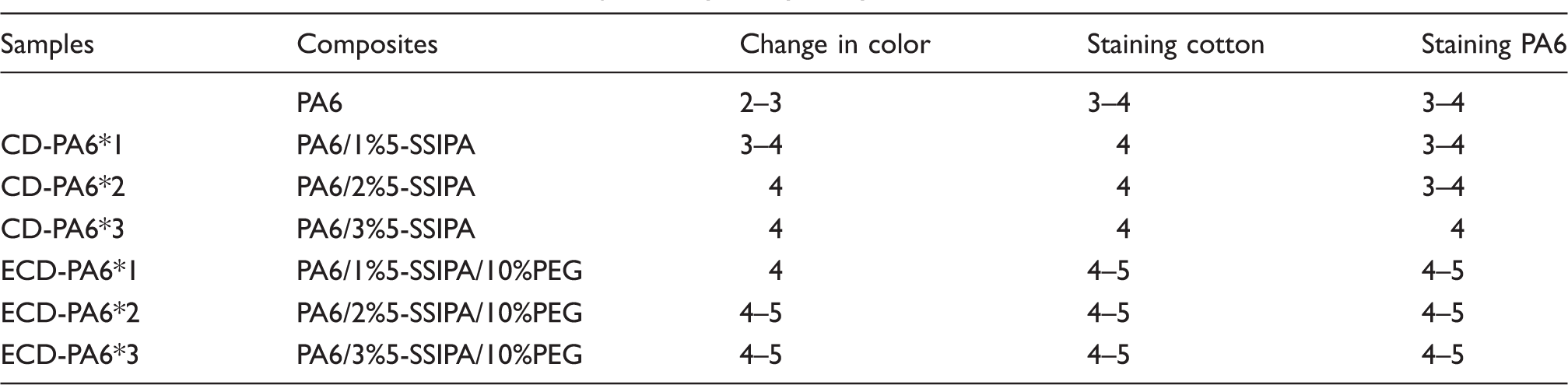
The test results show that the unmodified polyamide fibers had poor washing fastness. However, the washing fastness was improved by the increase of 5-SSIPA. Indeed, this improvement is attributable to the presence of a great number of the anionic sites that are able to ensure electrostatic interactions, to which Van der Waals and hydrogen interaction are added.
Conclusions
This paper highlighted the influence of block copolymerization on the tinctorial behavior and structure of PA6 fibers modified by 5-SSIPA and PEG 1000. Cationic dyeable PA6 (CD-PA6) and easy cationic dyeable PA6 (ECD-PA6) based on PA6 were prepared with 5-SSIPA and PEG. FTIR results shows that the sulphonate group and PEG were successfully incorporated within PA6. According to DSC and TGA, the crystallinities of CD-PA 6 and ECD-PA6 declined as sulfonic group content increased with the incorporation of PEG. Simultaneously, the degradation temperatures of samples which corresponded to different mass losses were also found to decline, since large –SO3Na side groups in the copolymers prevented the chain molecules from tightly coagulating and obstructed the formation of larger crystals. PEG molecular segments increase the irregularity of molecular chain arrangements and leads to more amorphous regions of ECD-PA6 samples. XRD results show that the grafting of PEG leads to nylon 6 changing from the α-form to the γ-form, or to an increase in the amount of γ-form crystals, which existed only in trace within the nylon 6 used in this study, if at all, relative to the major α-form crystals. However, sulfonic groups mostly were in the non-crystalline state as minor components in these copolyamides. Considering that dye molecules can diffuse only in non-crystalline regions of the fiber, these phenomena were considerably advantageous for the cationic dyeability of the copolyamides. Furthermore, from the picture of SEM, the surface of the nanofibers was smooth, and PEG has good compatibility with PA6. Meanwhile, the incorporation of PEG increased the elongation at break of the fibers. It may be considered that the polarity of the sulfonated group (–SO3Na) and the steric hindrance of isophthalic structure jointly reduced the flow capability of the macromolecular chains, whereas PEG, as soft segments, brought better flexibility into molecular chain and decreased the melt-viscosity of ECD-PA6. This conclusion can be researched based on analysis of the dyeing, which revealed a distinct improvement of tinctorial affinity and wash fastness for modified PA6 fibers compared with those unmodified. In particular, compared with CD-PA6 at the same quantity of 5-SSIPA, the incorporation of 10 wt% PEG significantly improved the dyeability of ECD-PA6.
Footnotes
Declaration of conflicting interests
The authors declared no potential conflicts of interest with respect to the research, authorship, and/or publication of this article.
Funding
The authors received no financial support for the research, authorship, and/or publication of this article.