




Abstract
In this study, a novel smart electrically heated sleeping bag was developed by incorporating a proportional–integral–derivative heating control system into a traditional sleeping bag. The smart sleeping bag was aimed to maintain human feet temperature within the thermoneutral range (i.e. 25.0–34.0℃) by automatically adjusting the heat power to the feet region based on real-time human toe temperatures. Subsequently, the performance of the newly developed smart sleeping bag in improving human thermal comfort was investigated by human trials. Eight female subjects underwent two 8-hour sleep trials, that is, the smart sleeping bag with power turned on (SleepingbagHT) and the smart sleeping bag with power turned off (SleepingbagCON). All trials were performed at an air temperature of 6.1 ± 0.5℃ (i.e. the EN 13537 defined comfort temperature for females), relative humidity of 80 ± 5% and air velocity of 0.4 ± 0.1 m/s. It was found that SleepingbagHT could maintain both the foot and toe temperatures within the thermal neutral range as well as keep the local-, and whole-body thermal and comfort sensations in thermal neutral state throughout the 8-hour cold exposure. In contrast, linearly decreasing foot and toe temperatures and aggravated local-, and whole-body thermal and comfort sensations were detected in SleepingbagCON within a 4.5-hour cold exposure. It could thus be concluded that the smart electrical heating sleeping bag was able to provide wearers an 8-hour comfortable sleep in the studied cold environment.
Keywords
Outdoor recreation customers all over the world are fast growing. 1 For example, the population in the USA that went camping grew from 39.9 million in 2011 to 42.5 million in 2012. 1 In Europe, the population who stayed overnight in campsites accounted for 13.8% of the total population stayed who outside overnight in 2014 (i.e. about 2.64 billion), and the figure could be more impressive if stays in the wilderness were counted. 2 When sleeping outdoors, especially under cool or cold environments, sleeping bags are common and important personal protective equipment (PPE). According to the EN13537 (2012) standard, sleeping bags are required to be labeled with four different operation temperatures (i.e. the extreme temperature, the limit temperature, the comfort temperature and the maximum temperature). 3 Sleeping bags are intended to be used under their comfort or limit temperatures (i.e. temperature thresholds at which male and female users could have an 8-hour sleep without feeling cold).3–9 The aforementioned four temperatures are normally determined by thermal manikin test.3–9 However, not all manufacturers strictly follow the EN13537 (2012) standard to label these operation temperatures. Hence, temperatures labeled by different manufacturers may vary largely even for sleeping bags with similar thermal insulation. On the other hand, the existing temperature prediction model adopted by the EN 13537 (2012) standard has been criticized by users for giving less consideration to local thermal comfort.6–9
To improve local thermal comfort in the feet region, we developed an electrically heated sleeping bag in our previous studies6–8 by incorporating two heating pads into traditional sleeping bags in the feet region, and a series of research studies have been performed to assess the performance of the electrically heated sleeping bag.6–8 It was found that the electrically heated sleeping bag could greatly improve the wearers’ local thermal comfort, as well as the foot and toe temperatures.6–8 Although the electrically heated sleeping bag was effective in improving overall human thermal comfort at the extremities, overheating and insufficient heating were also discovered in some individuals. 8 This defect was due to the non-automatic control of the heating supply (i.e. a constant heating power was used). For a traditional electrically heated sleeping bag equipped with a constant heating power, it was rather difficult to determine for the required heating power how to maintain a thermoneutral status for wearers. The required heating power normally changes with the insulation of sleeping bags and ambient temperatures, as well as individual thermal status. In addition, the manual determination of the required heating power was time consuming and inconvenient. Therefore, it was urgently necessary to develop a smart sleeping bag to automatically adjust the required heating power to maintain thermal comfort for wearers based on their real-time body thermal status.
In this study, a smart electrically heated sleeping bag was developed. A smart heating system (comprising a temperature sensor, a heating pad and a microcontroller) was introduced into the traditional electrically heated sleeping bag. The smart heating system could automatically adjust the heating power that was supplied to the feet region by comparing the real-time toe temperatures and target temperature thresholds. Such a sleeping bag, according to Tao and Zhang’s definition of smart textiles, might be classified as a “very smart” textile product, which indicates that the sleeping bag could sense, react and adapt it to varying environments.10–13 Human trials were performed to examine the performance of the newly developed smart electrically heated sleeping bag. The smart electrically heated sleeping bag with no heating (i.e. the heating was switched off, SleepingbagCON) was the control condition. Thermophysiological responses and subjective perceptions of eight female wearers in SleepingbagHT and SleepingbagCON were investigated and statistically compared. It was hypothesized that the smart electrically heated sleeping bag was able to provide the subjects with an 8-hour comfortable sleep and also a complete absence of thermal discomfort feelings in their feet region.
Methodology
Designing a smart electrically heated sleeping bag
An electrically heated sleeping bag (shown in Figure 1) was developed by introducing a smart heating system (shown in Figure 2) into a traditional sleeping bag. A mummy-shaped traditional sleeping (VE9004, V-camp Outdoor Co. Ltd, Xiamen, China) bag was randomly selected from the market. It was constructed by a nylon shell, nylon lining and filled with polyester fiber; the total weight of the sleeping bag was 1860 g and the comfort temperature labeled was 3.0℃. The smart heating system included a flexible carbon polymer heating pad, a temperature sensor, a microcontroller and two optional power supply interfaces (i.e., alternating current (AC) power source and a connection to portable battery). A flexible heating pad (Aizhi Electrical Co. Ltd, Ningbo, China) was also sourced from the market and it was constructed by sandwiching carbon fibers between two nonwoven polyester fabrics (length × width: 80 cm × 40 cm). The heating pad was integrated into the feet region of the sleeping bag by stitching. In addition, a temperature sensor (Xinghe Electronics, Suqian, China) was used to detect real-time temperature at the fourth toe. A microcontroller (XH-W1308, Xinghe Electronics, Suqian, China) was connected to both the heating pad and the temperature sensor, which mainly consisted of a temperature-setting unit, a processing unit (∑), a memory unit (electrically erasable programmable read-only memory: EEPROM) and a display screen (organic light-emitting diode: OLED). The temperature-setting unit was used to record the temperature-setting points (two setting points in this study, i.e. low and high temperature thresholds), EEPROM was used to store the set point and the processing unit (∑) was used to control the power supply. Noteworthy was that heating output was controlled by a proportional–integral–derivative (PID) controller. With its three-term functionality, the PID controller could deal with both transient and steady-state responses in a robust and reliable way.
14
In this study, a manual tuning method was employed and this method is based on the open-loop step response of the system. During operation, the power supply adjusted continuously and generally followed a non-linear descending manner. The real-time heating power was determined after a series of calculations on the difference between the feedback measured by the temperature sensor taped on the toe and the preset temperature thresholds, and the calculations included proportional, integral and derivative actions. Thus, the heating output reached its maximum value at the beginning, and then it would decrease proportionally based on the feedback measured by the sensor attached on the toe, and finally terminate the heating when the temperature reached the high temperature threshold.
The schematic diagrams of the smart heating sleeping bag. Schematic diagram of the heating control system. EEPROM: electrically erasable programmable read-only memory; OLED: organic light-emitting diode.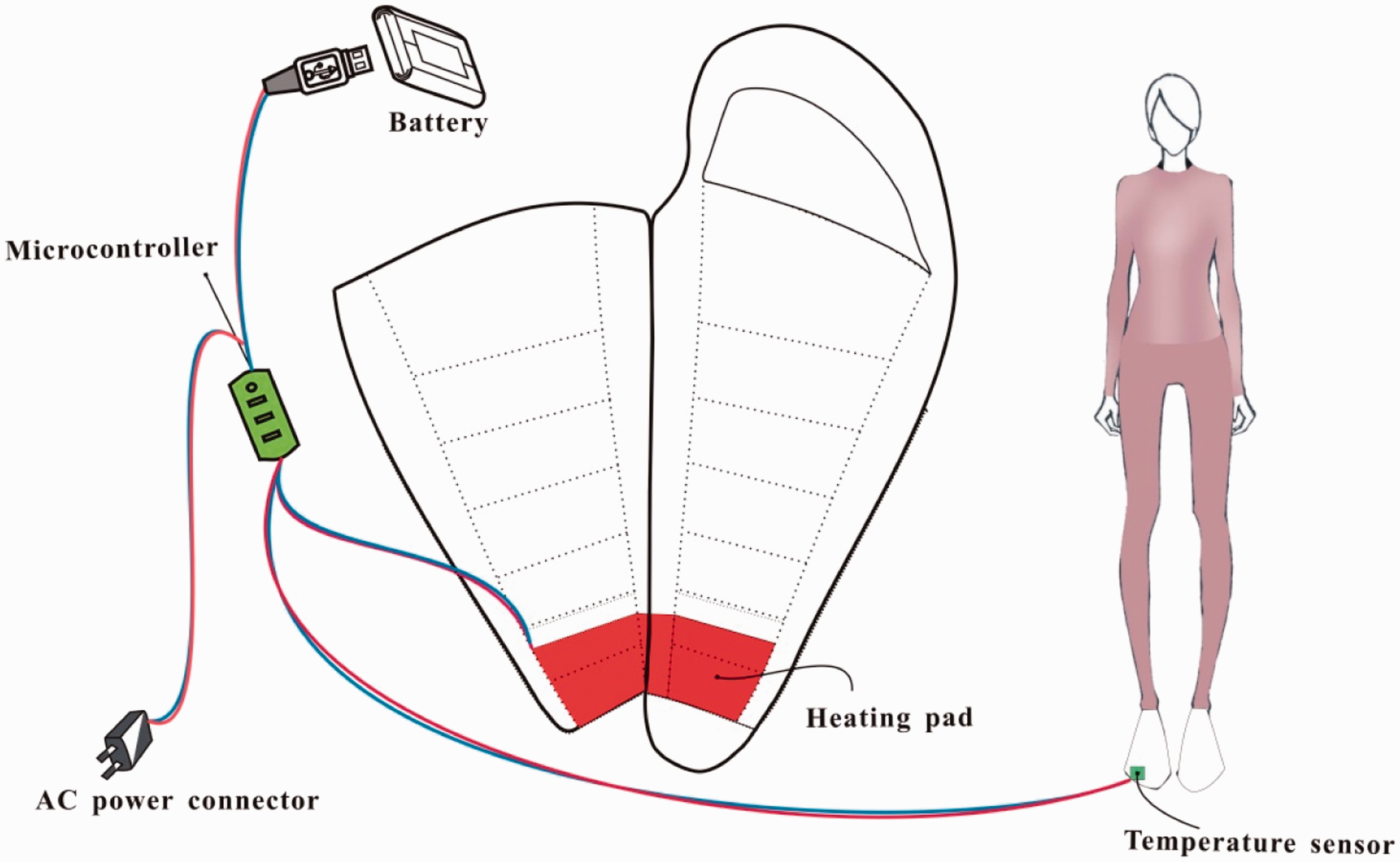
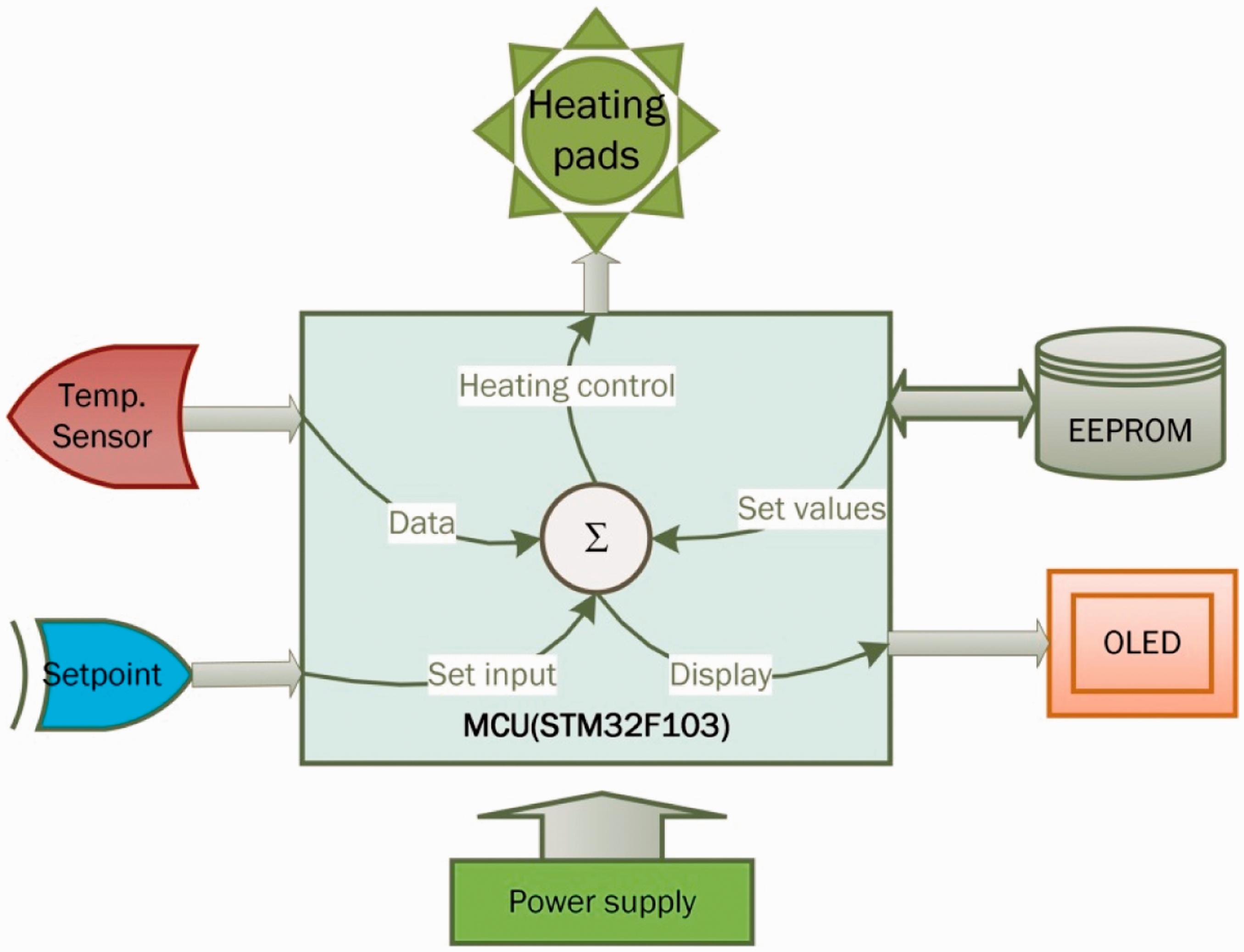
For the smart electrically heated sleeping bag, the low and high thresholds were set to 26.0℃ and 32.0℃, respectively. The low temperature threshold was set to be 1.0℃ higher than the upper limit of the feet temperature that would induce a cold-related discomfort sensation (i.e. 25.0℃).15–17 Such a design could prevent the possible heating delay caused by heating up the microenvironment between the sleeping bag and the feet. To avoid sweating-related discomfort, as well as saving energy, the high temperature threshold was set to be 3.0℃ lower than the lower limit of the feet temperature that would induce sweating-related discomfort sensation (i.e. 35.0℃).15–17 The maximum allowable heating power of the heating pad was 16 W.
The thermal insulation of the smart electrically heated sleeping bag with the heating power turned off was determined on a 34-zone “Newton”-type thermal manikin (Thermetrics LLC, Seattle, WA). The test procedure strictly followed the EN 13537 (2012) standard: unpack and shake the sleeping bag to loosen the packed fibers in it, and condition it in the testing environment for 12 hours, dress the manikin with long cotton knitted underwear (including a sweater and long trousers, with the fabric thermal resistance: Rct = 0.049 K·m2/W), knee length socks, briefs and a balaclava, then place the manikin into the sleeping bag and close the zipper and hood tightly, and finally start the manikin test. It should be noted that a 40-mm thick inflated mattress (Therm-a-Rest®, Cascade designs Inc., Seattle, USA) with a thermal insulation of 0.791 K·m2/W was placed beneath the sleeping bag, and the whole system was supported by a 17-mm thick wooden table.
4
All manikin tests were carried out at an air temperature of 0.0 ± 0.5℃, relative humidity (RH) of 60 ± 5% and air velocity of 0.4 ± 0.1 m/s. The thermal insulation of the smart electrical heating sleeping bag was calculated by equation (1)

The measured thermal insulation of the smart electrically heated sleeping bag (with heating turned off) was 6.17 clo and hence its corresponding comfort temperature (Tcom -m ) was 6.1℃. Thus, the measured comfort temperature was 3.1℃ higher than the comfort temperature (Tcom -l , 3.0℃) labeled on the sleeping bag.
Subjects
Eight healthy female subjects voluntarily participated in this study, and their age, height, weight, body surface area and body mass index were 20.2 ± 1.2 yr, 160.3 ± 3.5 cm, 52.4 ± 6.4 kg, 1.56 ± 0.09 m2 and 20.57 ± 2.23 kg/m2, respectively. No subject had experience in using sleeping bags. The purpose, procedure and potential risks of this study were clearly explained to the subjects, and written consent was signed. The subjects were instructed not to do intensive physical activities, and to refrain from alcohol or drinks containing caffeine at least 24 hours before tests. Each subject underwent two testing scenarios, one in the sleeping bag with the power on (i.e. SleepingbagHT) and one in the sleeping bag with the power off (i.e. SleepingbagCON). The two trials were performed at the same time of the day with at least 48-hour intervals in order to eliminate circadian variations. The study was approved by the Ethical Committee of Soochow University.
Test procedure
A total of 16 trials (i.e. eight subjects times two testing scenarios) were performed in a randomized and counter-balanced order. The subjects were asked to dress in the same underwear and knee-length socks as those used for thermal manikin tests.
During the preparation stage, subjects were instructed to rest on a chair at room temperature of 20.0 ± 2℃ for 30 min to adjust their thermal status close to thermoneutral (i.e. the metabolic heat production is minimal and steady, thermoregulatory processes are not activated).
18
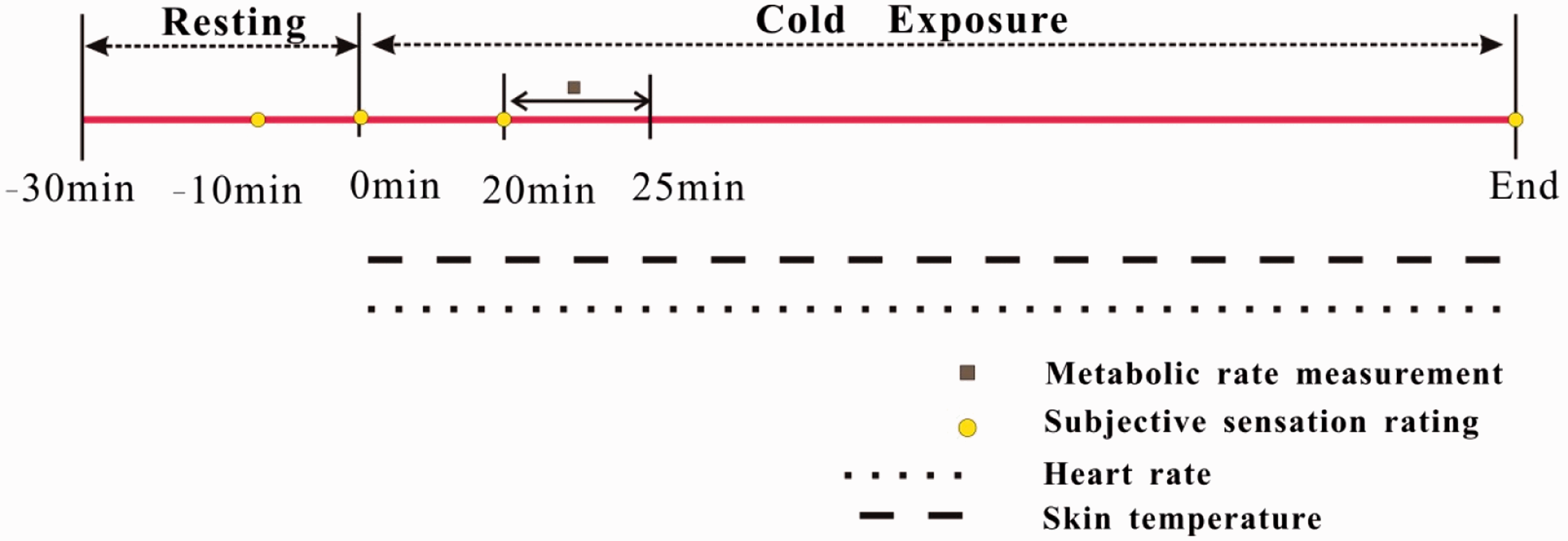
They were then equipped and dressed in the underwear and knee-length socks (shown in Figure 3a). The subjects entered into the chamber, laid in the sleeping bag with a flat posture, and were attached with the temperature sensor on the fourth toe with surgical tape (Micropore 1530C-0, 3M Company., Minnesota, USA, shown in Figure 3b). The sleeping bag and the mattress beneath were supported by the same wooden table as that was used for manikin test. The temperature inside the chamber was 6.1 ± 0.5℃ (i.e. the EN 13537 (2012) standard defined comfort temperature for females), the RH was 80 ± 5% and the air velocity was 0.4 ± 0.1 m/s. The test duration of SleepingbagHT was 8 hours, and that of SleepingbagCON was determined based on the time at which the toe temperature dropped to 15.0℃ or the foot temperature dropped below 20.0℃. Trials should also be immediately terminated if one or more of the following criteria were satisfied: (i) the maximum test duration was reached; (ii) the subjects refused to continue. After the test, the participant left the chamber and took off the clothing and equipment. The schematic chart of the test procedure is displayed in Figure 4.
A female subject was dressed with the underwear (a) and temperature sensors were taped on the subject’s left foot (b). The schematic chart of the test procedure.
Measurements and calculations
The metabolic rate of the subjects was measured continuously for 5 min from the 20th min of each trial using a MetaMax®3B cardiopulmonary tester (Cortex Biophysik GmbH, Leipzig, Germany). The heart rate and skin temperatures were recorded throughout the whole test with a constant sample logging interval of 30 s. The heart rate was recorded with a Polar® chest strap (Polar Electro Oy, Kempele, Finland). The skin temperatures were measured at 10 body sites with thermistors (MSR® 145B4, accuracy: ±0.1℃, MSR Electronic GmbH, Seuzach, Switzerland) attached on the left body (i.e., the forehead, upper arm, forearm, chest, specula, hand, thigh, calf, foot and the fourth toe). The mean skin temperature (Tsk) was calculated according to Gagge and Nishi’s eight-point empirical equation, shown as equation (2)
19

Subjective perceptions
Thermal sensations, comfort sensations in the whole body, the hand and the feet were collected at the following time points during the test: 15 min before the test, the beginning of the test, the 20th min and the end of the test. Thermal sensations were rated by a nine-point thermal scale (–4 = very cold, −3 = cold, −2 = cool, −1 = slightly cool, 0 = neutral, 1 = slightly warm, 2 = warm, 3 = hot, 4 = very hot), and comfort sensations were assessed by a four-point scale (0 = comfortable, 1 = slightly uncomfortable, 2 = uncomfortable, 3 = very uncomfortable).9,20
Statistical analysis
All data were presented as mean ± standard deviation (SD). Prior to statistical analysis, the differences in physiological and perceptual responses between the two testing scenarios (i.e., SleepingbagCON and SleepingbagHT) were assessed by calculating the effect size (d); the effect size was classified as 0–0.19 = negligible effect, 0.20–0.49 = small effect, 0.50–0.79 = medium effect and more than 0.8 as large effect. 21 To examine whether there were significant differences in the physiological and psychological responses (Tsk, Tft, Ttoe, heart rate and subjective perceptions) between SleepingbagHT and SleepingbagCON, a two-way repeated-measures analysis of variance (ANOVA) [test scenarios (SleepingbagCON and SleepingbagHT) × time (the 0th minute, the 5th minute, the 10th minute, the 15th minute, the 20th minute, …)] was conducted using the SPSS v.20.0 (IBM Inc., Armonk, NY) software. If significant differences were detected, paired-sample t-tests were used to determine which pairs had the significant difference. The alpha significance level, p, was set to 0.05.
Results
All subjects successfully completed all trials. It was found that the foot temperatures of the eight subjects (i.e., in the range of 18.6–19.8℃) fell below 20.0℃ (i.e. satisfying the test termination criteria) in SleepingbagCON within 4.5-hour of cold exposure. Hence, individual thermophysiological and perceptual responses during the 4.5-hour tests in SleepingbagCON were averaged and reported for presentation. Similarly, 8-hour duration averaged data were also reported in SleepingbagHT for the use of comparison.
Metabolic rate and heart rate
The mean metabolic rates in SleepingbagCON and SleepingbagHT were 1.10 ± 0.13 and 1.12 ± 0.15 METs, respectively. The averaged heart rates in SleepingbagCON and SleepingbagHT were 58 ± 3 and 60 ± 3 bmp, respectively. No statistical significance was detected in these two physiological parameters between the two testing scenarios (p > 0.05). The effect size of the mean metabolic rate and the mean heart rate was small (0.2 < d < 0.49).
Mean skin temperature
Time course changes in the mean skin temperatures of the two testing scenarios are illustrated in Figure 5. It can be clearly seen that the mean skin temperatures in both testing scenarios firstly increased from 32.3 ± 1.3℃ to their peak values (i.e., around 33.2 ± 0.9℃), and then declined into their steady state until the end of the test. In SleepingbagCON, the mean skin temperature reached its steady state after 150 min and then stayed at around 32.6 ± 0.5℃ throughout the remaining test period. In contrast, the mean skin temperature in SleepingbagHT became stable after the 180th min, and it plateaued at around 32.2 ± 1.1℃ throughout the remaining duration of the tests. No statistically significant difference in the mean skin temperature was detected between the two testing scenarios (p > 0.05), and small effect size (0.2 < d < 0.49) was detected.
Time course changes in the mean skin temperatures in SleepingbagCON and SleepingbagHT. The gray shaded area denotes the ± 1 SD of the mean in SleepingbagHT; the brown shaded area is ± 1 SD of the mean in SleepingbagCON. (Color online only.)
Foot temperature and the fourth toe temperature
Time course changes in the foot and toe temperatures are displayed in Figures 6 and 7, respectively. The foot temperature in SleepingbagCON showed a sharp decrease from the beginning of the trial throughout the whole 4.5-hour test, dropping from 30.5 ± 2.1℃ to 19.7 ± 0.6℃. In contrast, the mean foot temperature in SleepingbagHT fluctuated within the range of 31.0–33.5℃ during the 8-hour test. Statistical analysis revealed that both time and testing scenarios were main factors affecting the changes of foot temperature (p < 0.05), and a significant difference in the foot temperatures was detected between the two testing scenarios from the 45th min to the end of the test (p < 0.05), and the effect size was large (d > 0.8).
Time course changes in the foot temperature in SleepingbagCON and SleepingbagHT. The gray shaded area is ± 1 SD of the mean in SleepingbagHT; the brown shaded area is ± 1 SD of the mean in SleepingbagCON. (Color online only.) *p < 0.05. Time course changes in the toe temperature in SleepingbagCON and SleepingbagHT. The gray shaded area denotes ± 1 SD of the mean in SleepingbagHT; the brown shaded area is ± 1 SD of the mean in SleepingbagCON. (Color online only.) *p < 0.05.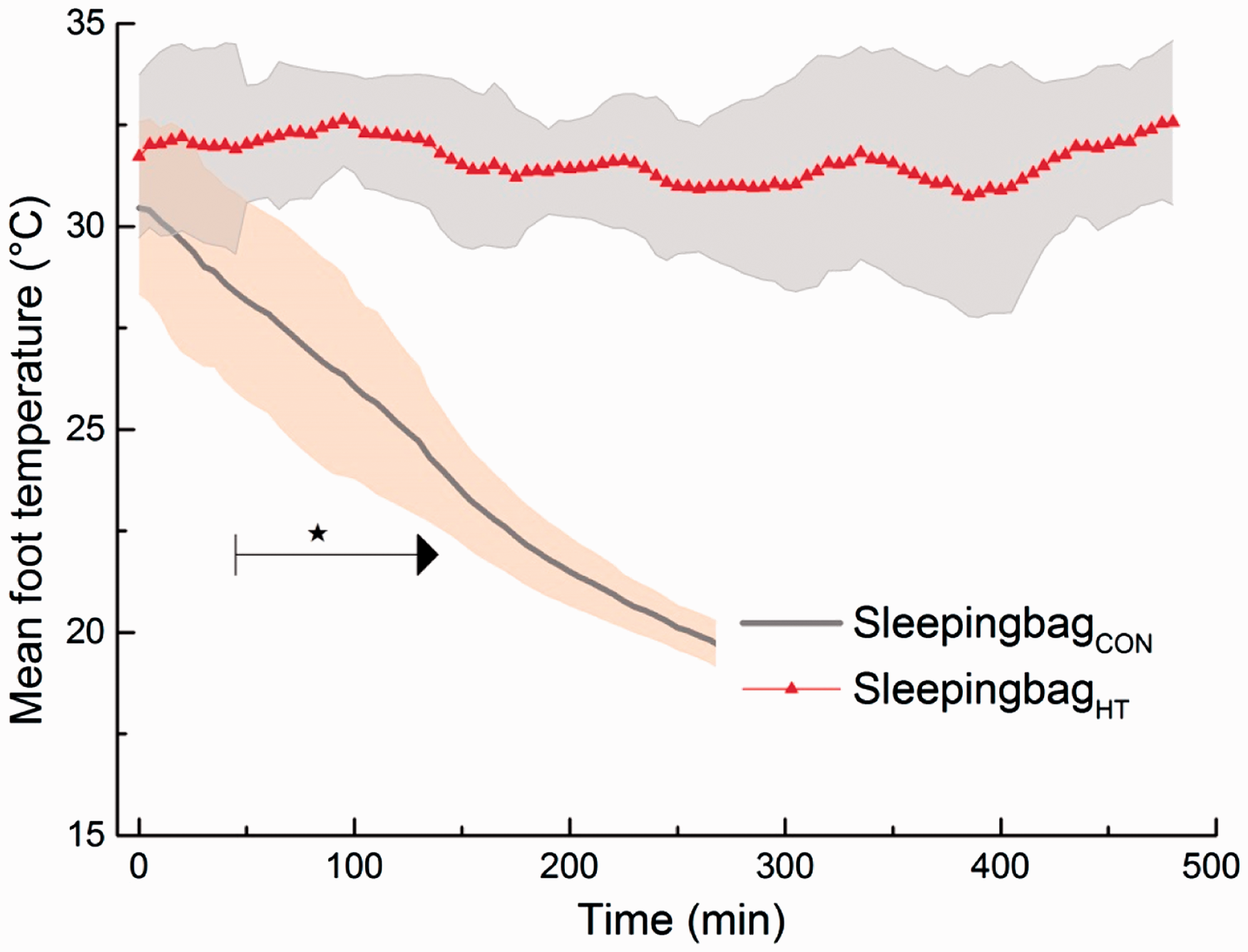

Time course changes in the toe temperatures in the two testing scenarios showed similar patterns to those of foot temperatures. The toe temperature in SleepingbagCON also displayed a sharp declination within the 4.5-hour test, from 29.0 ± 1.3℃ to 16.9 ± 0.9℃. In SleepingbagHT, the toe temperatures underwent several fluctuations, and fell into the range of 26.0–32.5℃ throughout the 8-hour test. The effect size was large (d > 0.8), and statistically significant differences in the toe temperatures between the two testing scenarios were detected from the 15th min to the end of the test (p < 0.05).
Subjective perceptions
Time course changes in thermal and comfort sensations in the whole body and feet in the two testing scenarios are shown in Figure 8. It could be observed that the subjective perceptions were all rated zero in the two testing scenarios during the initial 20 min of the tests, and then differed with the testing time. In SleepingbagCON, thermal and comfort sensations in the whole body decreased to −0.44 ± 0.26 (i.e. “Slightly cool”) and −0.88 ± 0.35 (i.e. “Slightly uncomfortable”) at the end of the test, and those in the feet decreased to −2.56 ± 0.42 (i.e. “Cold”) and −1.69 ± 0.37 (i.e. “Uncomfortable”) at the end of test. In contrast, thermal and comfort sensations in the whole body in the SleepingbagHT were all rated zero (for both sensations), and rated −0.19 ± 0.26 (i.e. close to “Neutral”) and −0.06 ± 0.18 (i.e. close to “Comfortable”) at the end of the test. Thermal and comfort sensations in the hand were all scored zero throughout the whole test in both testing scenarios. Significant differences in the foot thermal sensations, foot comfort sensations and whole-body comfort sensations were detected at the end of the test (p < 0.05). A large effect size was detected in the foot thermal sensations and foot comfort sensations (d > 0.8), and small effect size was detected in whole-body thermal sensations at the end of the test (0.2 < d < 0.49).
Time course changes in thermal and comfort sensations in SleepingbagCON and SleepingbagHT. *p < 0.05.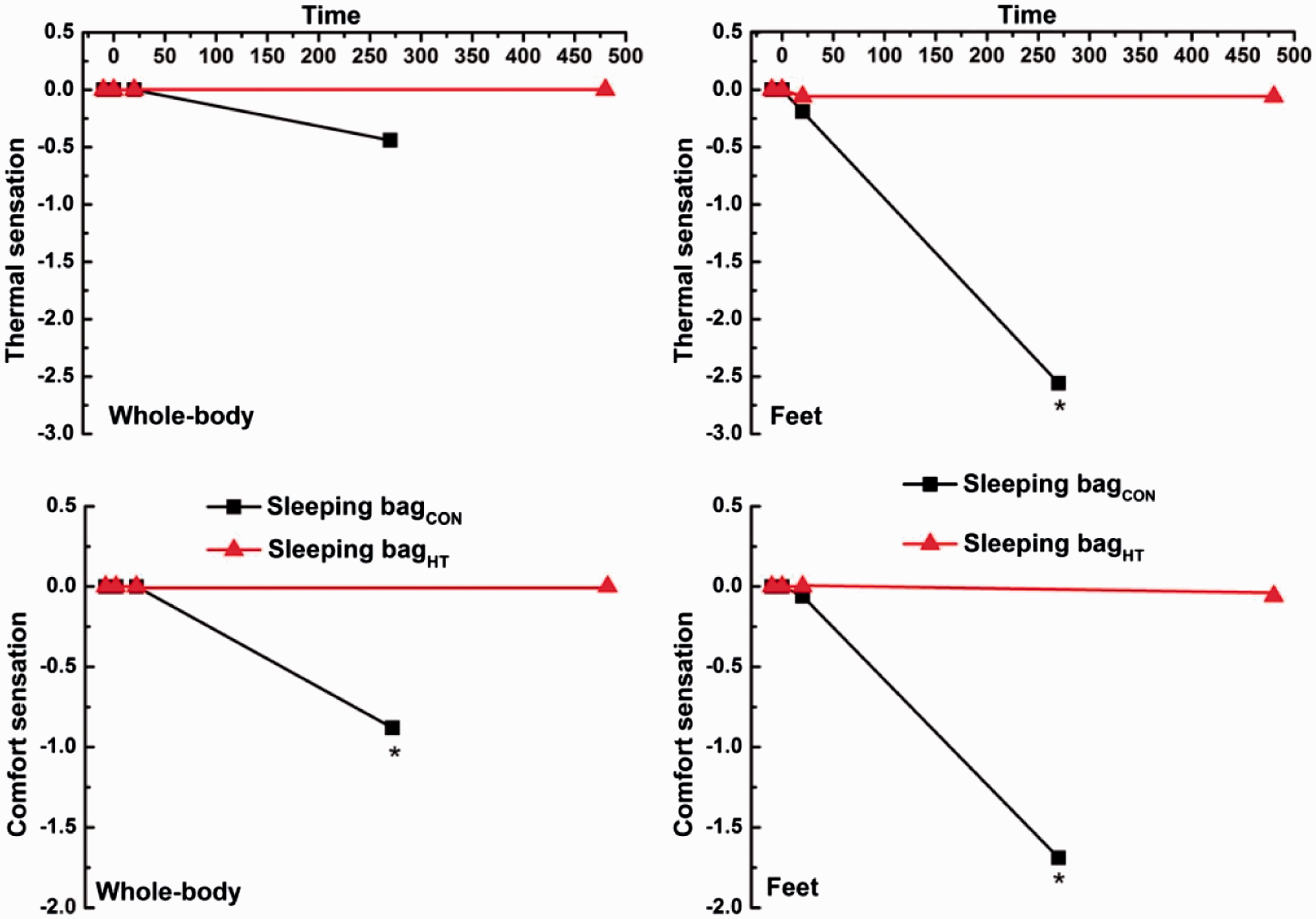
Discussion
In this study, a smart electrically heated sleeping bag was developed by incorporating a smart heating system into the traditional sleeping bag to improve human thermal comfort in the feet region. Human tests indicated that both thermophysiological responses (i.e. foot and toe temperatures) and subjective perceptions (i.e. thermal and comfort sensations) were greatly improved in the feet region. The positive effect was mainly due to the thermal transfer from the heating pad to the feet via conduction, as well as the thermal transfer via convection induced by the improvement of the microclimate at the feet region. 7
In SleepingbagCON, the subjects could only endure a 4.5-hour sleep due to the sharp reduction in the foot temperature, while they had 8 hours of comfortable sleep in SleepingbagHT. The heart rate was found to be in the range of 55–80 bpm throughout both testing scenarios, which was in the normal range of a person lying down quietly. 22 However, this finding was different from the observation of Song et al., 7 who reported a much lower heart rate in a heated sleeping bag than that in a non-heated one. This inconsistency might be due to the lower temperature (–6.4℃) adopted in their study.
Further, mean skin temperatures in both SleepingbagCON and SleepingbagHT slightly increased within the first 20 min due to the transition from room temperature into the chamber. During the remaining testing period, they were maintained well within the thermal neutral range (i.e. 32.0–34.0℃). This reconfirmed the finding of our previous studies that the EN 13537 (2012) standard was good at predicting human global thermal comfort temperatures.6–8 Besides, Isik 23 discovered that supplying heating to human feet could maintain a stable region skin temperature, but it had no effect on the other body parts. These findings were supported by our observation that heating the foot region did not affect the reported mean heart rate (SleepingbagCON and SleepingbagHT: 58 ± 3 versus 60 ± 3 bpm) or the global skin temperature (SleepingbagCON and SleepingbagHT: 32.8 ± 0.18℃ versus 32.5 ± 0.33℃).
With regard to local skin temperature, sharp reductions in both the foot and toe temperatures were detected during the 4.5-hour cold exposure in SleepingbagCON, and the foot and toe temperatures decreased to 19.7 ± 0.6℃ and 16.9 ± 0.9℃, respectively. This reconfirmed the observation that the traditional sleeping bags failed to provide sufficient protection in the feet region when being operated under the EN13537 defined comfort temperatures.6–8 In contrast, the foot and toe temperatures in the smart sleeping bags were found to be between 26.0℃ and 32.5℃ throughout the 8-hour testing period. Those foot temperature values fell well into the thermal comfort range (i.e. 25.0–34.0℃). Hence, supplying heating to the foot regions effectively improved the foot and toe temperatures. The fluctuation cycles in the toe temperature indicated the heating pattern of the smart heating sleeping bag. The sleeping bag started to supply heat to the feet region when the detected toe temperature decreased to the low temperature threshold and the heating was completely stopped when the toe temperature reached the high temperature threshold. The smart sleeping bag developed in this study showed advantageous functions over our previously developed electrically heated sleeping bag (i.e. a constant heating power was used) in terms of improvement of local thermal comfort at the feet regions. The traditional electrically heated sleeping bags developed in our previous studies showed somewhat insufficient heating in the feet region.6–8
Given the sharp decreases registered in both feet and toe temperatures in SleepingbagCON, it was reasonable to speculate that cold and discomfort sensations in the feet region were registered approaching the end of the trials. Local perceptions could significantly affect whole-body sensations.4,5 Arens et al. 24 pointed out that the accumulation of cold feeling could disrupt the whole-body thermal comfort, even the rest of the body parts that were properly protected. Even though the reported physiological responses (i.e. mean skin temperature, heart rate and metabolic rate) in this study were not significantly affected, there was pronounced deterioration in both the whole-body thermal sensations and whole-body comfort sensations in SleepingbagCON. Hence, the finding reconfirmed that the EN 13537 standard could not provide sufficient protection in the local region, for example, feet. “Slightly cool” and discomfort sensations were also rated in the whole body at the end of the tests in SleepingbagCON, which confirmed the finding of many researchers who found that worsened subjective perceptions in the feet could deteriorate the whole-body perceptual sensations.25–27 In contrast, the thermal and comfort sensations in the smart sleeping bag were both rated as or almost as ‘Neutral’ and ‘Comfort’, respectively, in the feet as well as in the whole body. It could thus be concluded that body thermal comfort was well retained in the smart sleeping bag.
It is evidently proved that the newly developed smart sleeping bag could provide females with sufficient protection for 8 hours of comfortable sleep. Moreover, compared to the electrically heated sleeping bag developed in our previous studies, the smart sleeping bag had three unique advantages: firstly, it provided more effective cold protection by automatic heat supply control to the feet region; secondly, it was more personalized and it could adjust the heating power automatically based on the toe temperatures of the individuals; thirdly, the heating was programmed and thus was more energy-saving compared to smart heating sleeping bag with constant heating power.
Finally, this study had some limitations. The temperature sensor was taped on the toe and this could limit its applicability for practical use. Also, discomfort might be introduced by taping point sensors on the human skin surface. In the future, the temperature sensor will be integrated into toe socks, and only in this way will the usability of the smart sleeping bag be greatly improved. In addition, we must acknowledge that only young female subjects were employed, which restricted the results to male subjects and other populations. Future human studies are required to examine the performance of the smart electrical sleeping bag on both females and males with wide age distributions.
Conclusions
In this study, a smart electrically heated sleeping bag was developed by integrating a smart heating system into the traditional non-heating sleeping bag. The smart sleeping bag could automatically control the heat supply to the feet region based on the toe temperatures measured by a temperature sensor. Besides, compared with the traditional non-heating sleeping bag, the smart sleeping bag could greatly improve both the local- and whole-body thermal and comfort sensations, and maintain both the mean skin temperature and the foot temperature in the thermoneutral state throughout the 8-hour cold exposure. Thus, it could be concluded that the smart electrical heating sleeping bag was successfully developed.
Footnotes
Declaration of conflicting interests
The authors declared no potential conflicts of interest with respect to the research, authorship and/or publication of this article.
Funding
The authors received no financial support for the research, authorship and/or publication of this article.