



Abstract
All historical textile materials, due to their chemical composition (cellulose, protein), under conditions of high humidity are potentially exposed to microbial degradation. Numerous examples of microbial deterioration of archaeological textile materials demonstrate the need for the use of modern analytical methods for examination of diversity of organisms inhabiting them, as well as an analysis of their behavior. It is recommended that objects with a high degree of microbiological contamination are disinfected before being incorporated to a collection. Today, due to the progress in research on the effects of disinfection on historical material, risks to health and the environment, new methods of disinfection are still being developed. The presented literature review describes the testing methods of microbial deterioration of historical textile materials, including the latest methods for assessing biodiversity (called Next Generation Sequencing) and properties of historical textiles (chemical, microscopic, mechanical). It is particularly suitable for conservators and scientists who are interested in biodeterioration, disinfection technology, and maintenance problems of this type. Characteristics of test methods and disinfection include their application to historical objects, description, advantages, and disadvantages, as well as directions for future studies that aim to even better protect cultural heritage using the latest scientific and technical innovations.
A number of objects made from a variety of textile materials are exhibited and stored in museums throughout the world. Among them are artifacts from archaeological excavations, tombs, and sarcophagi. Archaeological textiles are usually in a poor state of preservation. There are also a number of antique textiles, for example, tapestries, carpets, and decorative fabrics, clothing, and ecclesiastical vestments, that were used hundreds of years ago in palaces, mansions, or churches, and are now stored in museum collections. Furthermore, valuable collections of ‘contemporary textile art' also require frequent conservation processes, over the years, as they gain historical value. Generally, the state of preservation of textiles depends on the types of textile fibers, dye composition, and textile age, as well as their history of use and storage conditions.
Natural fibers can be divided into two main types, based on their origin: plant cellulose fibers and animal protein fibers (Figure 1).
Division of natural fibers based on their origin.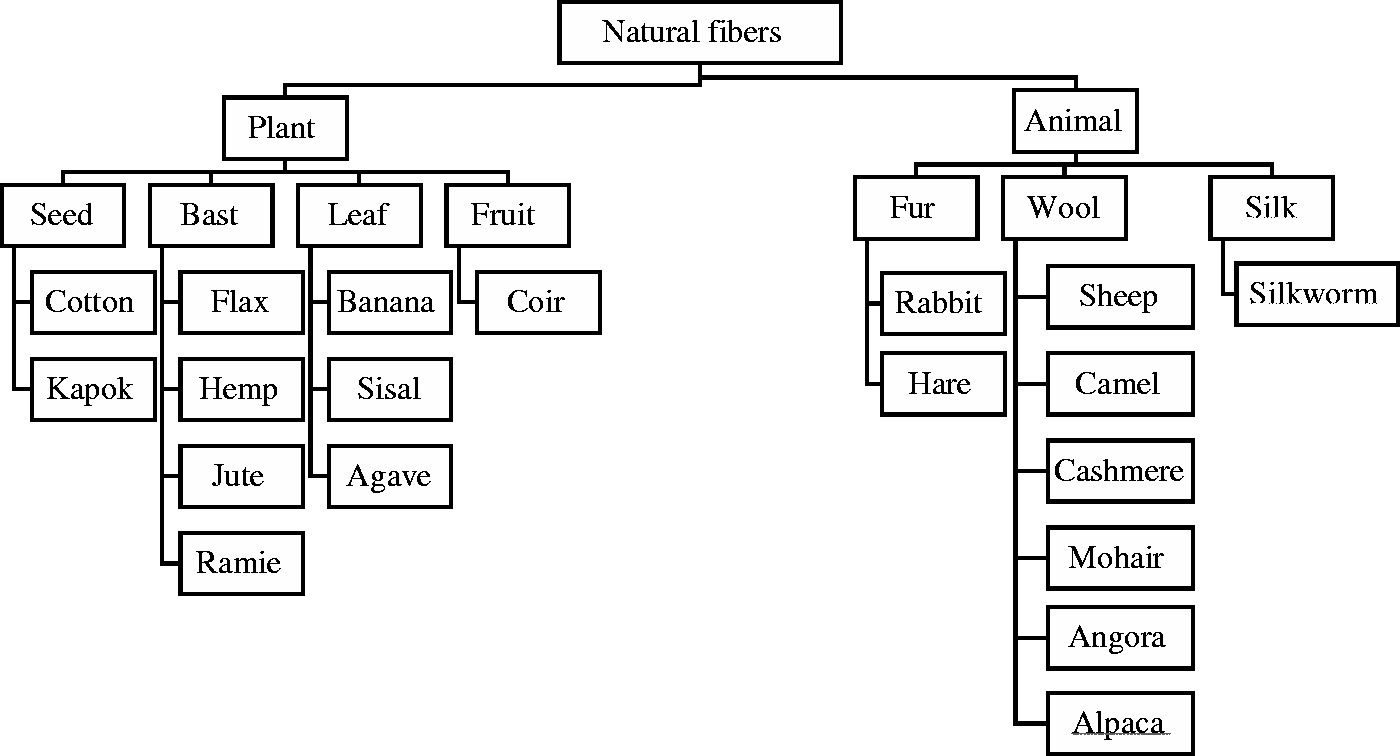
Antique textile objects have been made from a wide range of natural fibers using various manufacturing techniques. Production of the world’s first commercially manmade cellulose fiber began at the end of the 19th century, which was later known as rayon. By the middle of the 20th century, fibers from synthetic polymers also entered the market: first polyamide (nylon), then acrylic and polyester fibers. 1 Since then, textile products, such as clothing, decorative fabrics, and artistic fabrics, have been manufactured using both natural fibers and regenerated cellulose or synthetic fibers.
Another important category of historical artifacts that contain textiles are paintings, which include some of the most valuable oil on cotton or linen canvas works of art by famous painters. 2
Antique textile objects are an important part of cultural heritage that need to be saved. Preserving them for a long time is a real challenge not only for conservators and museum staff, but also for microbiologists, chemists, textile scientists, and other experts. This review discusses the state-of-the-art of methods for analyzing biodeteriorated historical textiles, their disinfection, preventing biodeterioration, and future challenges in the field.
This review was created based on the quality and relevance, according to the authors, of scientific articles available in databases such as Scopus, Google Scholar, PubMed, JSTOR, Web of Science, Science Direct, Research Gate, and many others.
Biodeterioration of historical textiles
The biodeterioration process, “any undesirable change in the properties of material caused by the vital activities of organisms,” 3 is a threat to historical textile materials. This process mainly depends on the type of fabric and its origin, contact with microorganisms or insects, and storage conditions (temperature, humidity, light, oxygen, dust, and pollution).
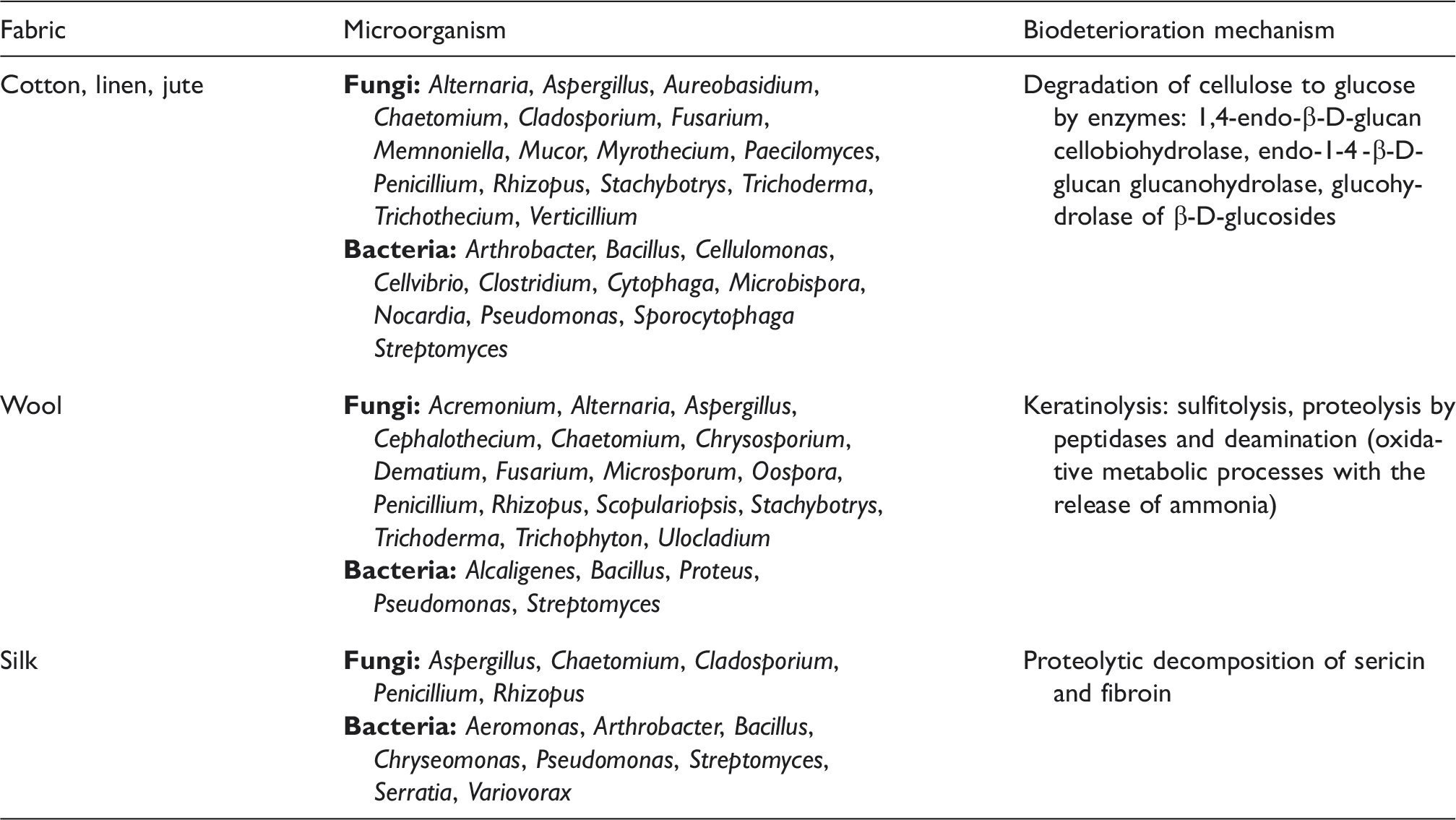
Microorganisms can impact textile materials in the following ways: assimilation–microorganisms use fibers as a nutrient source; and/or degradation–fabrics are damaged due to growth of microorganisms and secreted metabolites. 12 Filamentous fungi play a significant role in the biodeterioration of cellulosic and proteinaceous archaeological textiles, while bacteria are primarily responsible for the biodegradation of silk (Table 1).
The most common microorganisms isolated from archaeological textiles are molds and bacteria, as presented in Tables 1–3.
The biodeterioration of textiles leads to odors, staining, or discoloration, a decrease in strength, and a change in pH. 3 Stains appear due to the action of exopigments, which are secreted by microbial cells and diffuse into the fabric. The most frequently occurring pigment is melamine, which is produced in the mycelium of fungi, which give fabrics a dark shade. Depending on the group of microorganisms present on the fabric, the color can vary from creamy, yellow, or orange to red and brown, or black. The groups of pigment-producing bacteria include Achromobacter sp., Bacillus sp., Brevibacterium sp., Corynebacterium sp., Pseudomonas sp., Rhodococcus sp., and Streptomyces sp.; fungal groups include Aspergillus sp., Penicillium sp., Cryptococcus sp., Rhodotorula sp,. and others. 14 The microbial population can also alter the pH of fibers, which might result in a change in the colors of dyes on the fabric. 15 Microbial growth could lead to fiber degradation, changes in structure, cracking, and fragmentation, thereby causing a reduction in the degree of polymerization, and a decrease in tensile strength and elasticity of the textile material.
Examples of biodeteriorated archaeological textiles reported in the literature.
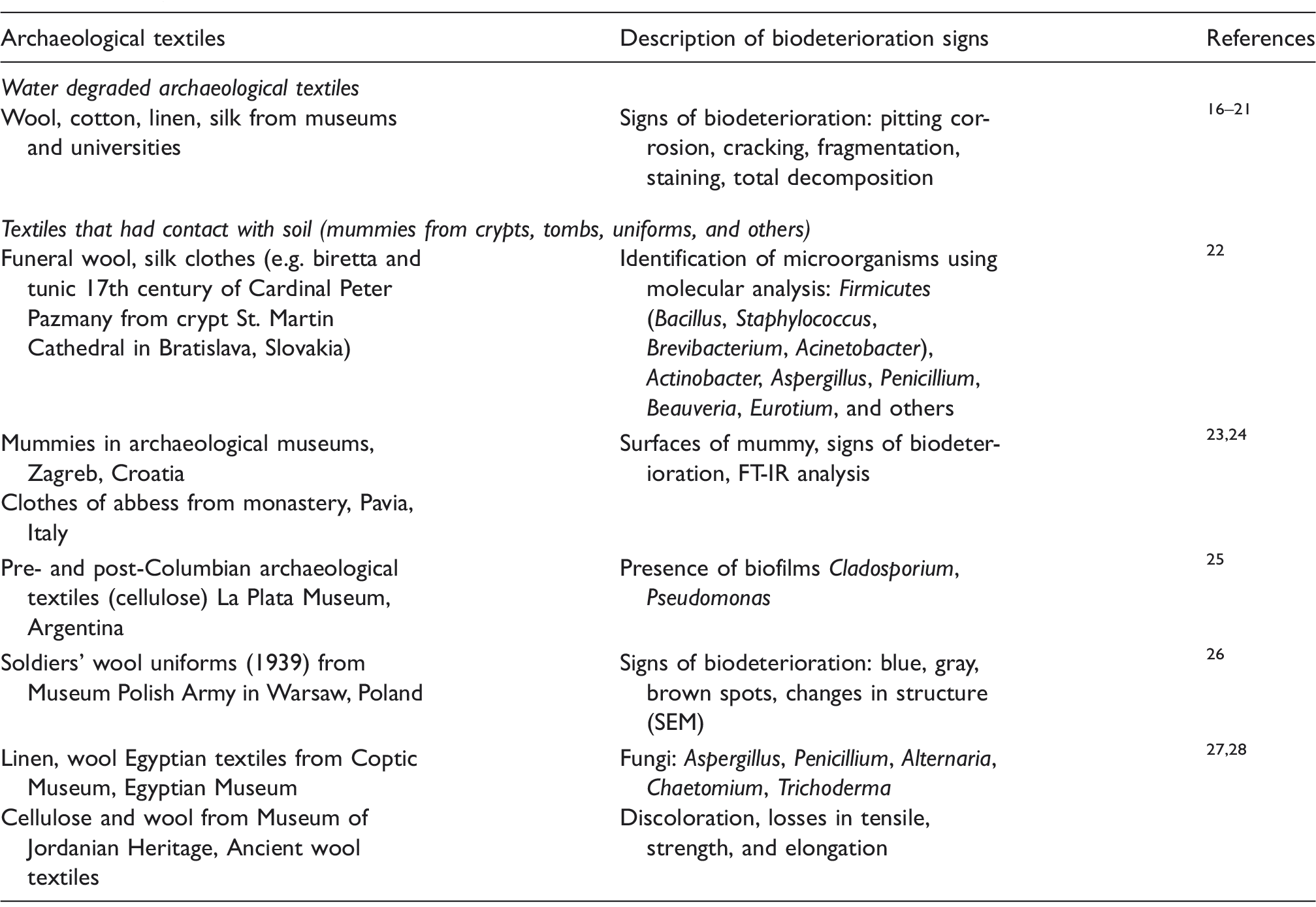
FT-IR: Fourier Transform Infrared Spectroscopy; SEM: Scanning Electron Microscopy.
Prevention
Preventive conservation is the most desirable method to prevent deterioration, as it involves limited handling and no invasive treatment of historic material. In this method collections are stored under conditions that minimize microbial activity. These include adequately ventilated and stable microclimatic conditions: air temperature around 20 ℃ and relative humidity (RH) below 60%. Depending on the institution or research team, these conditions can vary slightly. Museum Handbook recommends a wide range of temperatures, 18–24 ℃, and RH as close as possible to 50%. 32 Hamilton 33 advises that textile artifacts are stored in a dark place with a RH of 50% or less. Meanwhile, Eri 34 suggests a temperature of 18–20 ℃ and RH = 55–60%. The Smithsonian’s Museum Conservation Institute 35 recommends maintaining microclimatic conditions at RH = 37–53% and temperature between 19 ℃ and 23 ℃. Generally, high humidity can promote the growth of microorganisms, mostly fungi. 36 High temperature and low RH (below 35%) may embrittle textiles. Moreover, the maximum illuminance recommended for textiles is 50 lx. 32 Apart from microclimatic conditions, the concentration of different contaminants must be monitored, such as microorganisms and heavy metals (arsenic, lead, or mercury in pigments and pest-control substances), as well as other chemical pollutants. The ISO 11799:2003 37 standard mentions the maximum concentration of sulfur dioxide (10 ppb), nitrogen oxides (10 ppb), ozone (10 ppb), acetic acid (4 ppb), formaldehyde (4 ppb), and dust particles, including mold spores (50 µg/m3).
When significant growth of microorganisms is visible, disinfection is recommended to protect the material and inhibit spread to other exhibits. Contaminated materials can also be a threat to museum workers and conservators. 38
Methods for analyzing historical textile material
Analysis of microbial contamination
Knowledge of the level of microbial contamination and the identity of microorganisms inhabiting historic textile materials are extremely important, as these affect the maintenance strategy and the methods of conservation, disinfection, and storage. Prior to any treatment, the deterioration potential of the microorganisms has to be analyzed. 39
Culturing is the most basic microbiological analysis method. For culturing, microorganisms can be isolated using swabs, contact plates, or wash out.11,40,41 Culture-dependent analyses allow the isolation of only viable and culturable microorganisms, which constitute only 0.1–1% of the microorganisms present in the environment. 39 Around 99% of metabolically active microbial strains are viable but non-culturable (VBNC) due to their anabiotic state. VBNC microorganisms are metabolically active; however, laboratory methods cannot meet their requirements for growth.42–44 The laboratory medium composition is not able to recreate the environmental conditions. These are known and described in the literature group of microorganisms detected on cultural heritage using only culture-independent methods, such as Proteobacteria and halophilic bacteria Rubrobacter and Salinisphera. 44 , 45
Therefore, culture methods should be assisted by molecular methods to analyze microbial communities on cultural heritage objects. 46 The first step in any molecular detection of microorganisms is the isolation of nucleic acids and Polymerase Chain Reaction (PCR)-amplification of target genes. The most common molecular identification markers are genes encoding small subunits of ribosomal RNA (rRNA): 16S rRNA (prokaryotes), 18S rRNA, and 28S rRNA (eukaryotes). 47 Mold identification is commonly performed with internal transcribed spaces (ITSs): ITS1, ITS2, and 5.8S rRNA genes. 48
Current molecular techniques that are applied in biodiversity studies include clone library constructions, fingerprinting (Denaturing Gradient Gel Electrophoresis – DGGE, Temperature Gradient Gel Electrophoresis – TGGE, Amplified Ribosomal DNA Restriction Analysis – ARDRA, Terminal Restriction Fragment Length Polymorphism – T-RFLP, Single-strand Conformation Polymorphism – SSCP, Automated rRNA Intergenic Spacer Analysis – ARISA), and next-generation DNA sequencing (NGS). 49
Clone library construction is more frequently used. The analysis involves the identification of clones with specific functions or sequences. It can be performed by analyzing genes encoding certain enzymes and metabolites, or by studying the diversity by the use of ribosomal genes and bioinformatics tools.49,50 Genetic fingerprinting allows detailed quantitative analysis of changes in microbial composition. However, it is unable to provide taxonomic identification. 51 The next approach is the use of NGS, which includes pyrosequencing and different other platforms, for example, Illumina MiSeq.52,53
To date, with the exception of DGGE, none of the above-mentioned molecular methods have been applied to historic fabrics. 54 However, they have been successfully used on other historical materials, such as tiles, mural paintings, and fountains.55–57
Observation of textiles
Historic textiles can be analyzed from different perspectives: fiber structure and condition, fiber chemical composition, and dye and pigment identification.
In preliminary physicochemical studies of textile objects, the type and condition of fibers are first analyzed. In most cases, optical microscopy58,59 is the first method of choice. In many cases, 500x magnification allows the visualization of interesting patterns in small parts of loose fibers. 60 Other interesting methods for preliminary investigation of textiles are ultraviolet (UV)-reflectance, UV-fluorescence, and infrared photography. 61 Images from these techniques can aid in selecting the sampling sites based on visual differences that suggest varying chemical compositions. For determining changes in the color of aged textiles, ultraviolet-visible (UV-Vis) (micro)spectrophotometers and CIEL*a*b* color system are commonly used.62–64 For instance, the CIEL*a*b* color coordinates for L*, a*, and b* values are recorded and the changes are expressed as ΔL*, Δa*, and Δb*, respectively. The total color change ΔE* can be determined using the equation ΔE* = [(ΔL*)2 + (Δa*)2 + (Δb*)2]0.5. This spectrophotometric method has also been applied to determine the changes in color of cotton fabrics caused by disinfection (silver nanoparticle (AgNPs) misting) and artificial ageing processes. 65
Analysis of fiber structure and condition
Scanning Electron Microscopy (SEM) can be employed to analyze fiber morphology of higher magnification, and with considerably better depth of focus.64,66–68 The common changes in morphology of fibers, caused by biodeterioration, that are possible to identify using SEM are surface damage, scratches, large slights, holes, and transverse cracking of fibers. SEM was also successfully employed for a number of studies, such as investigating wool fiber development in pre-Roman Italy
69
and biodegradation of the fabric of soldiers' uniforms.
26
SEM can be also be applied to examine biodeteriorated textile surfaces to detect bacterial and fungal growth.7,21,27 The same microscopic technique was also used to analyze surface morphology of natural fibers in fabric samples after gamma irradiation (γ-irradiation) and microorganism incubation (Figure 2).
70
Scanning Electron Microscopy images of linen fiber surfaces after Penicillium funiculosum incubation: (a) non-irradiated; (b) irradiated with 100 kGy, before incubation.
70

A scanning electron microscope equipped with an energy-dispersive X-ray spectroscopy detector (energy-dispersive spectroscopy (EDS), energy-dispersive X-ray spectroscopy (EDX), X-ray energy-dispersive spectroscopy (XEDS)) enables elemental analysis in a range of elements from B (boron) to U (uranium). This technique is commonly used as the first non-destructive approach to analyze dyes, pigments, and other metal objects.58–60,71,72 Restivo et al. 73 combined Field Emission Scanning Electron Microscopy (FESEM) with EDX to study a set of 48 artificially aged wool specimens, dyed with several raw materials and mordants.
X-ray diffraction (XRD) is another method commonly used in conservation investigations to observe changes in analyzed material before and after treatment with conservation materials, 62 to identify mordants and dust, 59 or calculate the crystallinity index (crystalline-to-amorphous ratio), which might be used as a degradation factor. 67 Chen 74 compared the microstructures of archaeological and laboratory mineralized fibers to modern Indian hemp fibers using SEM-EDS and XRD.
The crystallinity indices of historic textiles, which were subject to aqueous treatments with and without sodium borohydride as a reducing agent, were also analyzed using Solid State Cross Polarization Magic Angle Spinning nuclear magnetic resonance (NMR) to elucidate the impact of age and treatment on these objects. 75
Size Exclusion Chromatography (SEC) is a very promising method that can give insight into fiber structure and its changes caused both by natural and artificial ageing. Pawcenis et al. 76 described a successful approach to analyze silk fibroin using this method. SEC with Multiple Angle Laser Light Scattering (MALLS) has been found to be the most comprehensive and robust analytical method for determining the distribution of molar masses without the need for synthetic standards of mass, which usually have different structures. 77
Changes in polymer molecular structure can also be monitored using viscosimetry measurements. The effects of gamma and e-beam irradiation on the molecular structure of a few fiber types were investigated using this method by Aytac et al. 78
To analyze the influence of temperature on fiber properties Thermogravimetry/Derivative Thermogravimetry (TG/DTG), 79 Differential Scanning Calorimetry (DSC), 80 and Differential Thermal Analysis (DTA) 81 can be utilized. These methods can be particularly useful for quick and easy checks during ageing experiments.
SDS Polyacrylamide Gel Electrophoresis (Sodium Dodecyl Sulfate (SDS)–PAGE) is a popular separation technique that can also be employed to analyze the degradation of polymeric chains. 82 For example, this method was used to monitor the degradation of silk over a 10-week ageing period. 83
Typical mechanical tests, such as Tensile Strength Tests, are also often used to assess the state of historical textiles and to make conservation decisions.
The effects of different disinfection, conservation methods, and accelerated ageing on the mechanical properties of historical fabrics from natural fibers have been investigated by many authors.62,65,71,84,85 The most commonly assessed mechanical aspects of textiles are tensile properties and breaking force and elongation at break.
Results from testing tensile properties show the extent of damage to historical textiles caused by different destructive factors, accelerated ageing processes, biological factors, and disinfection processes.70,83
Although the breaking force and elongation at break are the most commonly assessed mechanical aspect of museum textiles, other mechanical parameters (tear and abrasion resistance) are also important. These parameters were investigated for silk and wool fabrics by Nilsson. 86
Analysis of fiber chemical composition and dyes
The most common method used for identifying the fibers in textile materials is Fourier Transform Infrared spectroscopy (FT-IR). This method gives information about the chemical composition of the material based on the identification of characteristic absorption bands and comparison of the spectra of the analyzed sample with those from a standard database. FT-IR can be performed in different modes: the KBr pellet technique 60 and Attenuated Total Reflectance FT-IR (ATR FT-IR) technique.67,87 An interesting comparison of ATR FT-IR and FT-IR with the standard KBr pellet technique in an investigation of historic textiles excavated from Ancient Ainos was described by Akyuz et al. 68 FT-IR has been successfully applied to analyze the effects of hydrogen peroxide treatment on wool fabrics, 88 the detection of functional groups typical of deteriorated cellulose, 89 and the identification of dyes and organic stains. 90 Near-infrared spectroscopy (NIR) is a spectroscopic technique that was found to be useful in the analyses of contemporary and historical materials within textile collections. 91
Peptide Mass Fingerprinting (PMF) by the Matrix-Assisted Laser Desorption/Ionization Time of Flight Mass Spectrometry (MALDI-TOF-MS) method has been successfully used by Solazzo et al. 92 to identify the origin of species in both collagen and keratin-made archaeological artifacts. Another approach is to analyze amino acids using High-performance Liquid Chromatography (HPLC), and then determine their relative proportions in protein-based fibers of different origins. Sen and Babu 93 described a procedure for analyzing amino acids.
Gong and Yang 94 analyzed ancient silk textiles from more than 2000 years ago using Electron Paramagnetic Resonance (EPR) spectroscopy in an attempt to unveil the deterioration mechanism of silk. EPR spectra helped identify free radicals that had not yet been discovered in ancient silk fabrics before.
Various chromatographic techniques are commonly used to identify dyes in textiles. The most common are HPLC and Thin Layer Chromatography (TLC). Balan and Monteiro 95 undertook qualitative analysis using the TLC technique on plates of silica gel of dyes, which were subjected to biodegradability. Depending on the detector used, HPLC can give information about the chemical nature of the analyzed components and their concentrations in textile or fiber samples. HPLC with a (Photo) Diode Array Detector (HPLC-PDA or HPLC-DAD) was successfully used for the following: in the analysis of silk microsamples extracted from nine ecclesiastical objects (16–19th c.) of the monastery of Xeropotamou, Mount Athos, by Karapanagiotis et al.; 96 for the analysis of dyes extracted from textiles excavated from a graveyard at Yingpan, Xinjiang, by Liu et al.; 97 on a large number of archaeological textile fragments from the Bronze Age by Joosten et al.; 98 in organic dyes used in pre-Hispanic textiles found in funerary contexts; 99 for the identification of natural dyes in extracts from wool and silk fibers from archaeological textile objects from the collection of Early Christian Art of the National Museum in Warsaw; 100 and for the identification of dyestuffs in ancient textiles from Xinjiang. 101 Claro et al. 66 published results from analyzing Nasca textiles (200 B.C. to 1476 A.D.) using HPLC-DAD and Liquid Chromatography–Mass Spectrometry (LC-MS) instruments where purpurin and pseudopurpurin were identified as the red dyes. Another advanced chromatographic method–HPLC coupled with spectrophotometric and electrospray mass spectrometric detection (HPLC-UV-Vis-ESI-MS) for the characterization of natural dyes present in historical art works from the collection of the Wawel Cathedral treasury was described by Lech and Jarosz. 102
Raman spectroscopy is a complementary method to FT-IR, which broadens the analytical possibilities. This method was used in textile analysis to probe the carbonization of silk fibroin. 94 In some cases, the analytical technique must not only be non-destructive, but must also be capable of analyzing very large objects without sampling. Vandenabeele et al. 103 analyzed a painted banner from The National Museums of Scotland (with dimensions of 1080 mm × 2030 mm) using mobile Raman instrumentation.
Analysis of pigments and metal objects
A method that is capable of identifying metals (Cu, Ag, As, Au, Zn) that are present in textiles, mostly as metal threads, is Atomic Absorption Spectroscopy (AAS). Using this method, both qualitative and quantitative measurements can be performed. However, it is important to note that beside inorganic constituents also all inorganic contaminants will also be detected. 104
The entire family of Inductively Coupled Plasma (ICP) methods can be very useful in the analysis of the biodeterioration of textiles. These techniques provide information about the elemental composition of textile objects, which are an integral part of analyzed textile objects (inorganic dyes, metal threads, or sequins).
Rezic et al. 105 described studies on textiles where SEM-EDS was used as the non-destructive technique for the identification of the chemical composition of sample surfaces. They also described the use of Inductively Coupled Plasma-Optical Emission Spectroscopy (ICP-OES) for the chemical analysis of metal threads (also quantitatively). This research shows that different techniques should be used to analyze the same object to obtain more valuable data.
Combining the Laser Ablation (LA) and Time-of-Flight (TOF) analyzer in Inductively Coupled Plasma Mass Spectrometry (ICP-MS) makes this technique quasi-non-destructive. Szynkowska et al. 106 described the analysis of the Wawel Castle Arras pieces using Laser Ablation Inductively Coupled Plasma Time-of-Flight Mass Spectrometry (LA-ICP-MS-TOF), where Ag and Au (derived from a strip) and Li, Al, Cr, Cu, Zn, Rb, Sr, Sn, Ba, Ce, Hg, Pb, Bi, and U (mainly in fabrics) were identified.
Laser-induced Breakdown Spectroscopy (LIBS) is another rapid elemental analysis technique that can be used to analyze elements such as Al, Mg, Ca, and Na in metal threads. 59 This technique was successfully used by Abdel-Kareem and Harith 28 to control metal thread samples before and after cleaning using the laser technique.
X-ray fluorescence (XRF) spectrometry is another popular and very efficient method for the identification and quantification of metals in inorganic dyes 29 and in metal ornaments of textiles. 68
A more sophisticated method to detect dyes that avoids the time-consuming and destructive extraction procedures necessary for spectrophotometric and chromatographic methods is Time-of-Flight Secondary Ion Mass Spectrometry (TOF-SIMS), described by Lee et al. 107 Claro et al. 66 identified red dyes in Paracas and Nasca textiles using microspectrofluorimetry.
Disinfection methods
The purpose of disinfection is to stop progressive biodeterioration and the active development of microorganisms on historical objects. A satisfactory effect is to reduce the number of microorganisms to safe levels and eliminate vegetative forms of microorganisms that are active in destroying materials. Effective disinfection reduces the number of microorganisms by at least three-fold on a logarithmic scale.108,109
For the disinfection of historical objects, various physical and chemical methods can be applied. There are legal requirements for chemical disinfectants (biocides),
110
as well as for their use in museums.
111
Among registered biocides, many substances exhibit a variety of antimicrobial properties and can be used for the disinfection of historical objects, including historical fabrics. They can be used in the following forms: gases and vapors, water, or alcohol solutions. Several of these methods–ethylene oxide (EtO), formaldehyde, essential oils–were applied to the mass disinfection of historical objects. This disinfection takes place under strictly defined conditions in specially constructed chambers (Figure 3 shows chambers for γ-irradiation and EtO).

Chemical methods
Biocides can act using two different mechanisms against microorganisms: membrane active (alcohols, phenols, acids, salicylanilides, carbanilides, dibenzamidines, biguanides, quaternary ammonium salts, and azole) and electrophilically active to DNA and proteins (EtO, aldehydes, compounds with a vinyl group, an activated halogen, activated N–S bond, and organometallic compounds). 114
Aqueous alcohol solutions are effective at a concentration between 50% and 90% with maximum efficiency at 70% (v/v), depending on the type of alcohol and microorganisms. 115 Alcohols have a biostatic, rather than a biocidal effect. However, they can activate conidia and result in the regrowth of molds.116,117 Ethanol is the most popular alcohol for treating microbial contaminated heritage objects, and is applied by spraying, brushing, swabbing, immersion, or by exposing the object to vapors. 117 The advantage of alcohol treatment is the fact that it does not leave toxic residues. However, according to the literature alcohols can cause changes in materials, for example on paper, they can extract soluble components, result in the loss of gloss, increase in opacity, and slight deformation.36,117
Phenols (dichlorophen–trade name Preventol GD or Panacide; o-phenylphenol–Preventol O, Topane, Dowicide; pentachlorophenol–Preventol P, Dowicide 7, G, EC-7) were used for mass disinfection of paper, textiles, wood, and also as a preservative in restoration products, synthetic adhesives, and animal glues.118,119 Phenols are soluble in organic solvents that have a broad spectrum of antimicrobial activity, and especially a strong fungistatic effect at low concentrations. 114 They may change the color of materials, especially ink on papers, cause depolymerization of cellulose and accelerated ageing.4,118 Many phenols can cause eye and skin irritation, 114 they are carcinogenic (e.g. pentachlorophenol), 120 and due to their poor biodegradation are environmental pollutants. 121 Thus, in the European Union (EU) and in several countries the use of phenols is prohibited.
Azoles (imidazoles, triazoles, thiabendazole) are fungistatic biocides 114 used, at very low concentrations, for the disinfection of archives (1 mol/m3) 122 and in aerial disinfection by thermal fogging in storerooms of libraries and archives. 123 Azoles have only short-term effectiveness, and authors have recommended careful use as the impact of these compounds on materials has not been fully explored. Rakotonirainy and Lavedrine 123 noted that azoles cause slight changes in the brightness of paper, but no significant changes in fiber strength and oxidation.
Currently there is considerable interest for the use of natural essential oils in the form of pure components or standardized plant extracts 124 to disinfect historical objects. Research with such oils has mainly been conducted on archival objects. 125 The major advantages are that such oils are environmentally friendly, have low toxicity, and are easily degradable. Essential oils can cause skin sensitization, allergic contact dermatitis, and eye irritation. 126 The most active essential oils include cinnamon, thyme, armoise, clove, boldo, eucalyptus, ravensara, lavender, tea tree, thuja, and wormseed. The main compounds responsible for antimicrobial activity include linalool, linalyl acetate, eugenol, α and β-thujone, and cineole. 36 However, these compounds are easily oxidized in the air, which has a significant impact on their short-term antimicrobial effect. This disinfection method has mainly been applied to the antifungal protection of historic archives127–129 and mummies. 130 Investigations on the effects of essential oils on historical materials showed a pH decrease, decoloration of documents, inks dissolving, and residues on parchment and paper. 131
Quaternary ammonium compounds (QACs), including dimethyl-lauryl-benzyl ammonium bromide–trade name Sterinol; lauryl-dimethyl-carbethoxymethyl ammonium bromide–Cequartyl BE, have been used for heritage materials since 1986. 132 Some QACs can be used in fogging for mass treatment. They have poor activity against mold spores. 133 They have adverse effects on materials, deteriorating physical properties, and can also cause cellulose depolymerisation. 4 Karbowska-Berent et al. 134 noticed negligible impact of QACs on pure cellulose after 1 h treatment.
Acids (as salts and esters, calcium propionate, esters of p-hydroxybenzoic acid, methyl- and propyl-parabens) were used for leather and paper disinfection for the conservation of heritage objects.135,136 They have fungistatic and bacteriostatic properties, and deacidification potential.137,138 Paper analysis demonstrated that disinfection with parabens and organic acid salts can cause minor yellowing, deformation, increase in pH, and a slight decrease in the tensile strength of paper. 137
EtO is a very effective biocidal gas and can also be used as an insecticide. 139 It is the most popular fumigant used in museums, archives, and libraries, as well as for textile disinfection. 140 It has a number of advantages, including high penetration of material, as an alternative for materials sensitive to moisture and temperature (fumigation takes place at room temperature). 140 Research shows that EtO fumigation causes a decrease in the degree of polymerization, and increases oxidation and yellowing.117,140 Some authors claim that following EtO disinfection, materials become more susceptible to microbial attack. 141 This could be caused by the deposition of small amounts of ethylene glycol on materials, which increase hygroscopicity. 142 EtO is carcinogenic, mutagenic, genotoxic, and is classified as a category 1 carcinogen by the International Agency for Research on Cancer (IARC). 143 Therefore, permissible exposure limits must be met in the workplace (0.56–5 ppm in EU countries, 1 ppm in the USA per 8 h time-weighted average). 144
Formaldehyde in gas form is active against vegetative cells and spores, due to its high penetration capacity into cells. 114 Of particular importance was its use in the past for mass treatment of a variety of historic objects, including textiles.145,146 According to the literature, the use of formaldehyde is not suitable for a number of materials due to cross-linking of cellulose, loss of flexibility on paper, parchment, leather, and silk, due to the fact that it precipitates on treated materials, forming a white deposit, and enhances the corrosion of iron gal ink.86,118 Formaldehyde, due to its high cytotoxicity, is carcinogenic, causing eye, nose, and throat irritation, and contact dermatitis. According to EU regulations it should no longer be sold in the market as a preservative, and should also be removed as a disinfectant due to occupational exposure. 143
EtO and formaldehyde are carcinogenic, mutagenic, and irritating; thus the EU is phasing out these methods.
AgNPs, known for their antimicrobial properties, were also used for the disinfection of historical materials, such as paper, parchment, leather, wood, and cloth (cotton, linen, wool, silk). 65 AgNPs have been applied by fogging in disinfection chambers. Recent studies have shown that AgNPs may accumulate in the organs of living organisms and result in tissue toxicity.147–149 However, studies have shown that when chambers are used for AgNPs disinfection, it does not pose a risk to personnel or the environment, due to low concentrations of the particles emitted during and after the process. 150 AgNPs also do not significantly impact the mechanical properties and discoloration of materials; only paper and silk showed changes in color when exposed to AgNPs disinfection. 65 Furthermore, the presence of AgNPs on cotton samples effectively protected against microbial growth under model conditions, 150 as well as inhibited Pseudomonas aeruginosa biofilm formation on pre-Columbian textiles. 151
Titanium dioxide is a good photocatalyst semiconductor, which transforms light into chemical energy. 152 TiO2 has been used in the disinfection of water and air, and also as a pigment in paints and on textiles in ventilation systems.153,154 Antimicrobial activity is due to UV illumination of surfaces covered with titanium dioxide nanocomposites and depends on illumination time, surface area, light wavelength (the most effective is < 385 nm), and microorganisms (it has better bactericidal than fungicidal activity, and does not affect molds, such as conidia).152,153,155 During irradiation, reactive forms of hydroxyl radicals and oxygen species are emitted, 156 which may adversely affect the degradation of cellulose and accelerate the fading of organic colorants, but on the other hand, may cause the destruction of biofilms and leaves no residue on the material. 157
In practice, none of the chemical substances described above meet all requirements for biocides, 158 especially the ability to kill all microorganisms, posing no harm to materials and people, and are stable during long-term storage. The authors recommend using a mixture of different biocides, particularly at lower concentrations, which can produce a synergistic effect. Example of a biocidal mixture containing heterocyclic sulfur- and nitrogen-containing compounds (isothiazole derivatives) are Sanatex, Rocima GT, Rocima 243, and Anti-B, which showed high synergistic antifungal effects and no effect on the material. 158
Physical methods
As water is essential for microbial development, dehydration is one of the most common physical methods to protect materials against microorganisms. 159 A fast process is required to achieve higher effectiveness; however, it can alter historical objects.142,160 When large amounts of material are dried slowly, it may allow fungal growth. The process is performed in a dehumidifier or by wrapping the object with an absorbent material. The main advantage is that it does not leave toxic residue; however, the antimicrobial effect is static rather than microbicidal.36,161
γ-irradiation is a sterilization technique that uses the radioisotope Cobalt 60 as a source of gamma rays. It is hazardous to health; thus, the objects are placed in a special chamber. Initial attempts at disinfecting archaeological materials were failures, causing destruction of the objects (decrease in the strength, pH, and polymerization degree and yellowing). 162 Depending on the microorganisms tested, the recommended dose is in the range of 3–20 kGy.163,164 Machnowski et al. 70 showed that a dose below 15 kGy does not cause significant deterioration in the mechanical properties of cotton, linen, and silk fabrics. However, the exposure of material to radiation may cause it to become more susceptible to further microorganism action, 165 as well as induce microorganisms to secrete more colored metabolites. 36
Another method to control the growth of microorganisms is the use of modified atmospheres. Oxygen is replaced by gases: argon, nitrogen, and carbon dioxide (low-oxygen environments). The most effective inhibition of microorganism number and their production of mycotoxins is achieved with CO2.166,167 However, this technique is biostatic rather than biocidal. Besides some advantages, such as no toxic residue or the prevention of deteriorating oxygen-dependent chemical reactions, low-oxygen environments with high CO2 may alter the pH of the disinfected object. 160
Freezing as an antimicrobial strategy has been used for decades. The damage to microbial cells includes the formation of extracellular or intracellular ice, which ruptures the membranes and organelles. Frozen water also concentrates cellular solutes, which adversely affect pH.142,168 Despite killing microorganisms, it can also deteriorate material by changing pH-dependent reactions and lipid oxidation, which produces high-energy radicals.142,169 Florian 142 recommended freezing by sublimation (freeze-drying); however, this technique may be less effective. The antimicrobial effect is high for vegetative and spore cells, while dry conidia are much more resistant. 142 It does not leave any toxic residues; however, it may cause embrittlement of paper, parchment, leather, and some adhesives.36,170
Refrigeration (4 ℃) is used as a temporary solution in some cases of microbial growth. Storage at low temperature gives some time to develop the actual disinfection strategy. Some molds can produce more conidia and colorful metabolites. 142 Furthermore, the moisture of the material increases, which advances biodeterioration. The advantage is that it does not leave any harmful residue and can inhibit the rate of chemical deterioration. 36
High temperature and pressure are powerful tools to eliminate microorganisms, since the sterilization is performed at 121 ℃ and 1000 kPa. However, such high physical factors may accelerate the deterioration of materials. 36 Lower temperatures than 121 ℃ may kill vegetative forms of microorganisms and trigger spores and conidia, especially in the case of thermophilic microorganisms.142,168
Disinfection using UV radiation is most effective at wavelengths of 240–280 nm. The most effective are wavelengths between 250 and 265 nm, as these result in DNA damage. 114 UV radiation is most often used to disinfect air (also in museums or archives).171,172 Due to its low penetration properties, UV radiation is rather inefficient for the disinfection of textiles and books. 145 Despite high surface effectiveness, radiation may deteriorate most heritage materials leading to their yellowing, bleaching, or brittleness.142,173,174
Low temperature plasma (LTP) disinfection is performed in specially designed chambers. Microbial growth inhibition (sterilization effect) is achieved by exposing the material to reactive species stemming from an electrical discharge in a gas. 175 It is efficient with most discharge gases (O2, N2, air, H2, halogens, N2O, H2O, H2O2, CO2, SO2, SF6, aldehydes, and organic acids). 176 Despite its poor penetration, LTP may be used in hydrophobization (treatment for further protection–wool, nylon, and cotton). 177 LTP treatments (atmospheric pressure; O2, N2, and air) enhance the color intensity, tensile strength, and the elongation at break of wool/polyester fabrics. 178
Examples of biodeteriorated archaeological objects stored in museums reported in the literature.
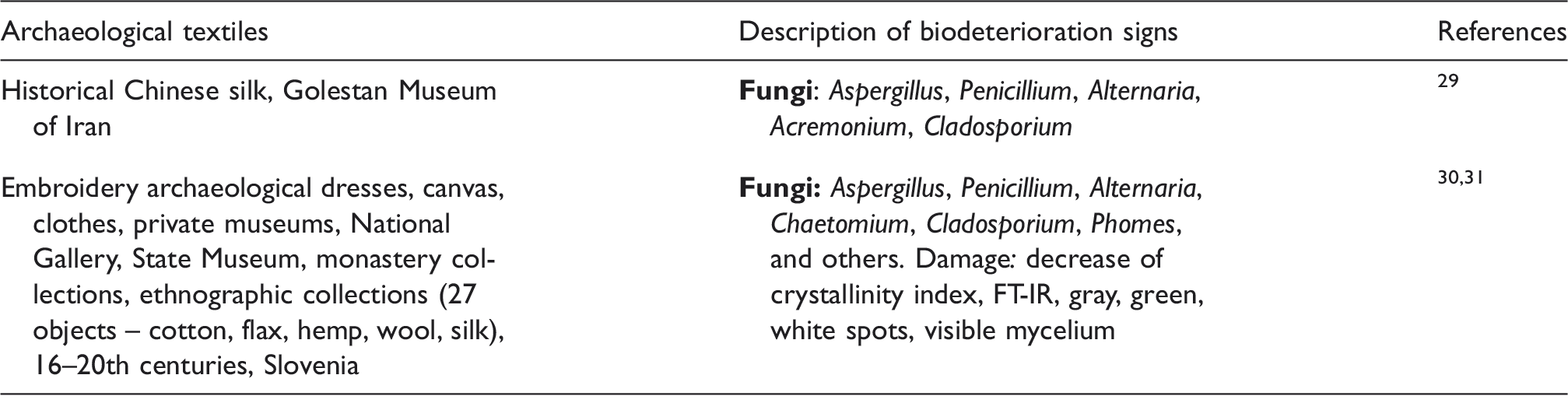
FT-IR: Fourier Transform Infrared Spectroscopy.
Disinfection methods of textiles.
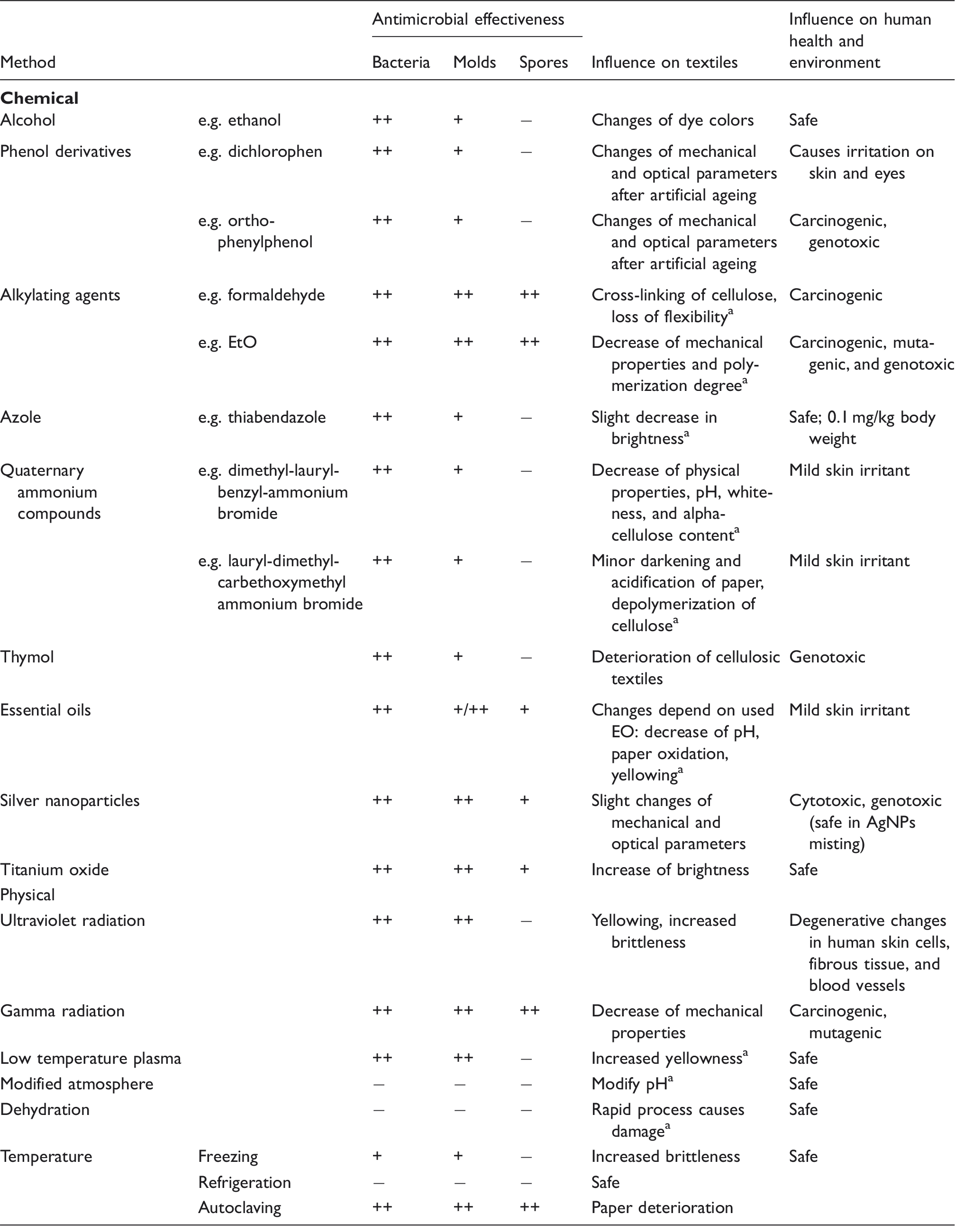
− No effect; + microbistatic; ++ microbicidal; nt: not tested.
Effect on cellulosic materials.
EO: essential oil; AgNP: silver nanoparticle.
Conclusions
The majority of available analytical methods for the determination of textile biodeterioration are invasive and destructive. The most important requirement for analysis of historical textiles is non-invasiveness. The applicable principle of biological and chemical research–“The more methods used, the more the information gathered”–is valid for the examination of archaeological fabrics.
Before any renovation activity it is important to identify the fibers constituting the fabric. Numerous methods are reported in the literature for assessing the chemical composition of fibers constituting textile objects as well as for evaluating the condition of historical textile materials.
It should be emphasized that most of these methods are invasive, which is a huge disadvantage for historical material. Every test for analyzing mechanical properties results in the destruction of a sizeable piece of textile. Currently, there are methods that do not require the destruction of material, and can give a precise description of the fabric, based on its fragment, or even individual fibers of archaeological textiles (e.g. SEM-EDX, TEM, XRF, ATR FT-IR, LA-ICP-MS-TOF). The requirements of non-invasiveness or small sample quantities also apply to methods for biodeterioration analysis. These requirements are fulfilled by modern molecular methods (clone library construction, molecular fingerprinting, and DNA sequencing) and assessing the metabolic potential of the population inhabiting archaeological textiles.
Currently available metabolomics and metagenomic analysis makes this possible, although such analyses have never been performed on biodeteriorated archaeological textiles. Moreover, knowledge about qualitative and quantitative diversity of microorganisms and the metabolites present in material is crucial to choose the best method of disinfection.
The literature lists a number of methods for disinfecting archaeological materials, some of which can be applied to textile objects. Unfortunately, chemical disinfection methods may leave fatty or powdered films and change pH or color; some of them may cause hydrolysis, acidolysis, and accelerated ageing. Some of these methods are being decommissioned and cannot be used due to their carcinogenic or mutagenic properties (formaldehyde, EtO). They are hazardous for humans and the environment (e.g. EtO is classified in group 1: carcinogen). Some chemical methods are considered environmentally friendly, due to their natural plant origin (essential oils). The effectiveness of chemical methods varies; chemical compounds interact rather statically on microorganisms in the concentrations used, and the disinfection effect is short. The exception is biocides, which permanently remain on the material, preventing recontamination (AgNPs). However, there is little data in the literature on the effects of such compounds on fiber morphology.
The efficiency of physical disinfection methods varies from sterilization (γ-irradiation, LTP) to static effect (UV, low or high temperature, dehydration, low oxygen environments). They may have a destructive effect on materials, causing depolymerization, structural changes in different layers of fibers, and changes in the molecular and supramolecular structure. Moreover, methods employing changes of temperature or pressure may activate spores and accelerate pigment production by microorganisms.
Methods such as γ-irradiation, EtO, formaldehyde, essential oils, and biocides may be used for dealing with mass contamination, while some may be used only for single objects (LTP, UV, temperature).
The choice of disinfection method must be preceded by analyzing the pros and cons of each. Objects with high microbial contamination should be disinfected regardless of the destructive effect, while there is no need to treat (destructive manner) objects without visible biodeterioration signs. The influence of disinfection methods should first be checked on model objects, which can be subjected to accelerated ageing. Artificial ageing conditions are calculated based on the reciprocity approximation regarding average museum exposure 179 and analyzed using various methods. Only after gaining sufficient knowledge about the effects of the disinfection method on as many parameters as possible should it be used to disinfect historical textiles. For many fabric disinfection methods, there is no data in the literature on their effects on material parameters. This literature gap must be addressed soon, especially given that we now have access to the above-mentioned analytical methods.
To obtain the best possible disinfection effect, a combination of different methods can be considered, such as γ-irradiation or LTP (sterilization effect) and AgNP misting (protection against future contamination). Also, in this case, the effectiveness over time and the synergistic effect on the material of both the tested methods should be investigated.
There are two approaches to disinfection. The first limits the use of any treatment, due to the adverse effects of physical or chemical processes on historical objects. In this approach, the historical object is subjected to mechanical cleaning or gentle physical treatments–reduced temperature, storage in an inert gas atmosphere in anaerobic conditions. The second approach is the use of disinfection treatments to eliminate metabolically active biological forms. The choice of disinfection approach depends on the type of contamination, the surface area, and type of historical material. The safety of conservators working on the restoration should also be considered, since microorganisms present on these objects may have a negative effect on human health. An important aspect, regardless of the disinfection method, is the appropriate storage of the historic object after disinfection.
This article summarizes current knowledge of the research methods used to evaluate microbial deterioration and disinfection of historical fabrics. It is by no means an exhaustive survey of all aspects, as these are broad topics requiring knowledge of conservation, microbiology, molecular analytics, chemistry, disinfection, and materials science. However, we hope it has highlighted the most important methods currently being used, presented their advantages and disadvantages, and the direction future research should take to study and protect our cultural heritage.
Footnotes
Declaration of conflicting interests
The authors declared no potential conflicts of interest with respect to the research, authorship, and/or publication of this article.
Funding
The authors received no financial support for the research, authorship, and/or publication of this article.