




Abstract
Silk and cotton fabrics were dyed using the extract from blackcurrants, and the properties of the dyed fabrics were investigated. The natural dyes present in the blackcurrants were identified as four types of anthocyanins, i.e. delphinidin-3-glucoside, delphinidin-3-rutinoside, cyanidin-3-glucoside, and cyanidin-3-rutinoside. The colors of the fabrics dyed with and without five types of mordants, including Mg2+, Ca2+, Al3+, Fe3+, and Cu2+, were measured and expressed according to the CIELAB color system, ΔE* value, and K/S value. The affinity of the extracted dye for the silk fabric was higher compared with that for the cotton fabric. The crystallinity of silk was lower than that of cotton. The fabrics dyed with blackcurrants had UV shielding ability, especially at 330–400 nm, and antibacterial properties. Although color fastness to light and washing (color change) was not sufficient, treatment with Mg2+, Fe3+, and Cu2+ mordants could enhance the color fastness.
Mankind has long worn clothes dyed using various natural dyes obtained from plants. The purpose of coloring fabric is not only for aesthetics but also for protection against insects, as an expression of social standing or class, to prevent decay, and so on. Plants shield themselves from the ultraviolet (UV) rays of the sun by using pigments. Therefore, it is expected that UV rays will be blocked by cloth dyed with extracts from plants. We have reported that cotton fabric supported by cerium–calcium hydroxyapatite particles had UV shielding properties in a previous study. 1 If dyeing gives various fabrics the ability to shield the wearer against UV light, aesthetic and functional fabrics can be made.
Previously, we studied dye properties using anthocyanin dyes, which were extracted from red cabbage. We reported that the fabric could be dyed various colors using different mordants under acidic conditions.2,3 Although the color fastness to light of the dyed fabric was not high, the color of the fabrics could be maintained for more than six months by keeping the fabric in the dark in a small container with a drying agent. Moreover, the contributions of different types of mordant on color fastness were investigated.
There are many reports of dyeing fabric with anthocyanin extracted from various natural plants, such as Hibiscus rosa sinensis flowers, 4 H. mutabilis (Gulzuba), 5 black cowpea seed coats 6 , Liriope platyphylla fruits, 7 and wine pomace, 8 and so on. In addition to anthocyanins, Crocus sativus, 9 Terminalia arjuna, Punica granatum, Rheum emodi, 10 Acacia catechu, and Tectona grandis have been used for dyeing fabric. 11 These reports describe the methods used to extract dye from plants and compare the color of fabrics dyed under various conditions, including pH, mordant treatment, and type of fiber. Many reports have also investigated the color fastness of dyed fabrics.
We used blackcurrant extract as a dye in the present study. The blackcurrant is a small dark red colored fruit and is one of the local agricultural products of the Aomori prefecture in Japan. The pulp and peel of the blackcurrant are said to contain anthocyanin pigment.12–19 Although the blackcurrant looks similar to a blueberry, it tastes sour and, unlike blueberries, is hardly ever eaten raw. Currently, blackcurrants are used in many types of processed foods, including drinks, jams, sweetss, and so on. However, to the best of our knowledge, there have been no reports in which blackcurrants are used in textile dyeing applications.
In the present study, we dyed silk and cotton fabrics using blackcurrant extract with and without several mordants. The types of anthocyanins contained in blackcurrants were identified. The structure of the fabrics before and after dyeing was investigated. The color hue of the dyed fabrics was evaluated by CIELAB, ΔE* value, and K/S value. The UV protecting ability, antibacterial properties, and color fastness of the dyed fabrics were also determined. If the method of fabric dyeing using the blackcurrant can be established and the positive aspects of the dyed fabrics are fully shown in this study, it will contribute to the use of various other natural dyes for fabric dyeing.
Materials and methods
Preparation of the dye solution
Aqueous colorants of blackcurrants were extracted as follows. First, 500 g of frozen blackcurrants and 250 cm3 of water were mixed in a liquidizer. The solid was then removed from the mixture using a net, and the liquid was filtered. The obtained solution was used for dyeing. The main colorant in blackcurrants, as well as in red cabbage,2,3 blueberries,12–18 and other plants,4–8 is thought to be anthocyanin. We previously reported that silk fabric can be dyed using extract from red cabbage under acidic conditions.2,3 The extract obtained in the present study had a pH of 3.0, which was suitable for dyeing fabric with anthocyanin. Therefore, the liquor was used without any pH adjustment. The blackcurrant extract used for the present study is not a chemical dye but is a plant extract, and the quantity of anthocyanins in the plant extracts varies. Therefore, the blackcurrant extract was obtained at one time and was distributed for all of the fabric dyeing.
Dyeing the fabric
The substrate samples were plain-woven silk fabric “habutae” (smooth silk) and plain-woven cotton fabric “kanakin” (unbleached muslin) #3 supplied by the Japan Standard Association. These fabrics were used because silk is easily dyed using traditional natural dyes, and cotton has long been an important material for clothing. The structure of the silk fabric was as follows: EPI/PPI was 135/98, the weight was 54.6 g m−2, and the thickness was 0.10 mm. The structure of the cotton fabric was as follows: EPI/PPI was 79/69, the weight was 96.5 g m−2, and the thickness was 0.20 mm. The silk and cotton fabrics were washed in 30℃ and boiling water, respectively, for 10 min twice and dried under ambient conditions before use. A piece of the silk or cotton fabric (5 × 5 cm2) was immersed into 5 or 10 cm3 of a dyeing solution, respectively, in a 300 cm3 beaker at room temperature for 24 h. The ratio of the fabric to dye solution was 1:40. In the case of mordant-free dyeing, the fabric was twice washed in 1.5 dm3 of water, dried under ambient conditions, and then kept in a shaded desiccator. The dye solution was diluted to 10, 25, 50, and 75% to investigate the antibacterial activity of the fabrics. The solution was adjusted to pH 3 using HCl.
Mordant dyeing was performed using five types of metals. Mg(NO3)2 · 6H2O (Mg2+), Al(NO3)3 · 9H2O (Al3+), Ca(NO3)2 · 4H2O (Ca2+), FeCl3 · 6H2O (Fe3+), and CuSO4 · 5H2O (Cu2+) were dissolved at a concentration of 0.01 mol dm−3. After being dyed, a piece of the fabric was immersed into the mordant solution in a 300 cm3 beaker at room temperature for 1 h. The ratio of the fabric to the mordant solution was 1:40, and the sample fabric was washed, dried and kept under the same conditions as the mordant-free dyed samples described above.
To analyze UV shielding properties, the silk and cotton fabrics were also dyed using standard dyes for comparison with the fabrics dyed using blackcurrants. The silk fabric was dyed using the acid dyes Kiwacid Red GS-N (a mixture of C.I. Acid Red 337, Acid Red 111, Acid Red 131, and Acid Violet 48) and Blue GL-N (a mixture of C.I. Acid Blue 127:1, Acid Blue 264, and Acid Blue 62) (Kiwa Chemical Industry Co., Ltd., Japan). The cotton fabric was dyed using the reactive dyes Sumifix Supra Brilliant Red 3BF (C.I. Reactive Red 195), Blue BRF (C.I. Reactive Blue 221), and Yellow 3RF (C.I. Reactive Yellow 145) (Sumika Chemtex Co. Ltd., Japan).
All chemicals were reagent grade, were supplied by Nacalai Tesque Co., and were used without further purification. Distilled water was used for dyeing the fabrics.
Characterization
The types of anthocyanins in the blackcurrant extract were investigated using high-performance liquid chromatography (HPLC) as follows. Frozen blackcurrants (30 g) were homogenized in a Waring blender. The homogenate was then diluted with water to a final volume of 100 cm3 and centrifuged at 5000 r/min at 4℃ for 30 min. The supernatant was filtered using a 0.45 µm membrane filter. The analysis of anthocyanins in the filtrate was performed at 40℃ on a Capcell Pak C18 UG120 column (4.6 mm × 250 mm, 5 µm, Shiseido) using a flow rate of 1.0 cm3 min−1. The filtrate (1.0 mm3) was eluted with the following liner gradient profile: the ratio of solvent A (0.5 % phosphoric acid) to solvent B (0.1 % formic acid:acetonitrile, 4:1) at 0 min was 80:20, at 15 min the solvent A:B ratio was 0:100, and then 100% solvent B was used for 10 min. Anthocyanins were identified from UV–visible (UV-vis) absorption spectra at 525 nm and detected by a photodiode array detector (Hitachi L-4500) in the range 220–700 nm.
The fabric dyed by blackcurrant extract was characterized as follows. The color of the dyed fabric was evaluated using a spectrophotometer (SE-2000, Nippon Denshoku Kogyo Co.) connected to a computer and expressed according to the CIELAB color system. L* defines lightness, lighter or darker; a*, redder or greener; and b*, yellower or bluer. A color measurement movement in the +a direction depicts a shift toward red. The +b movement represents a shift toward yellow. For the measurements, each fabric was folded two times (four-ply), and the color of the four different faces (two faces at the surface and two faces at the back side) of each fabric was measured using a 10 mm aperture and was automatically averaged. The color strength (K/S value) was used for comparison of the dyed silk and cotton fabrics. The K/S value was also used to compare dyed fabrics stored in different conditions. The K/S value was assessed using the Kubelka–Munk equation:

The total color difference (ΔE*) was used for comparison between fabrics dyed using blackcurrant and the fabrics dyed using a chemical dye. The value was obtained as follows:

The surface observation of the fabric was performed using a field emission-scanning electron microscope (FE-SEM, JEOL JSM-7000F) at an accelerating voltage of 10 kV. The samples were dried at 100℃ for 3 days before the observation. The crystal structure of the particles was determined by powder X-ray diffraction (XRD) using a Rigaku diffractometer (Geigerflex 2013) with Ni-filtered Cu Kα radiation (30 kV, 15 mA). Transmission UV-vis spectra of the fabrics were obtained using an UV-vis spectrophotometer (Jasco UV-vis V-600) between 260 and 800 nm with an integrating sphere (ISV-722). The protection grade of UVA (PA) and the sun protection factor (SPF) were obtained as indications of the shielding effect of UVA and UVB using a program (Jasco VWSP-966) installed into the UV-vis system. The measurement of PA is based on ISO 24442:2011. 20 The measurement of SPF is based on ISO 24444:2010. 21 The bacteriostatic potency of the fabrics was investigated using Staphylococcus aureus in the Japan Textile Products Quality and Technology Center (Kobe, Japan) according to the Japan Industrial Standard method, JIS L 1902:2008, 22 which is based on ISO 20743:2007. 23
The color fastness of the dyed fabrics was investigated using silk fabric as follows. Color fastness to light was tested using JIS L 0841:2004, 24 which is based on ISO 105-B01:1994/Amd.1:1998. 25 The color change of the fabrics was assessed against the blue wool standards. Any accelerated test methods were not adopted. Wash fastness tests were carried out according JIS L 0844:2011, 26 which is based on ISO 105-C06:2010. 27 The adjacent fabrics for staining were silk and cotton. A natural detergent was used for washing the silk. Color change of the fabrics was assessed against the standard grey scale for color change and for staining. The color fastness test of the fabrics against NO x was carried out in the Nissennkenn Quality Evaluation Center (Tokyo, Japan) according to JIS L 0855:2005, 28 which is based on ISO 105-G01:1993. 29 The fabrics dyed with and without mordant were kept in the laboratory (200–500 lx in the daytime), in a shaded desiccator (0 lx), and at a window (3500–4500 lx in the daytime) for three months, and K/S values of the fabrics were compared.
Results and discussion
Types of anthocyanin contained in blackcurrants
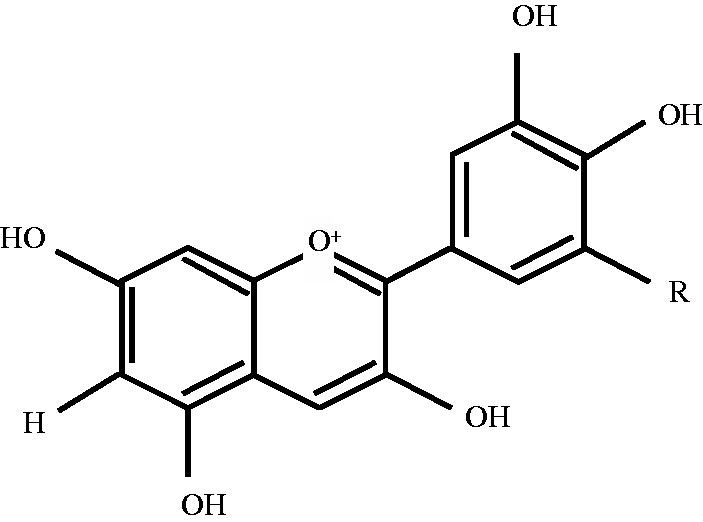
The HPLC chromatogram of the blackcurrant extract is shown in Figure 1. Four peaks were detected and identified as delphinidin-3-rutinoside (Del-3-R, 45.1%), cyanidin-3-rutinoside (Cya-3-R, 42.5%), delphinidin-3-glucoside (Del-3-G, 7.8%), and cyanidin-3-glucoside (Cya-3-G, 4.6%).16,17 The structure of cyanidin and delphinidin are shown in Figure 2. Thus, four types of anthocyanins were found in blackcurrants, which is less than the number found in other berries and fruits.
16
HPLC chromatogram of anthocyanins in blackcurrants. Structure formula of anthocyanins contained in blackcurrants. Cyanidin, R = H; delphinidin, R = OH.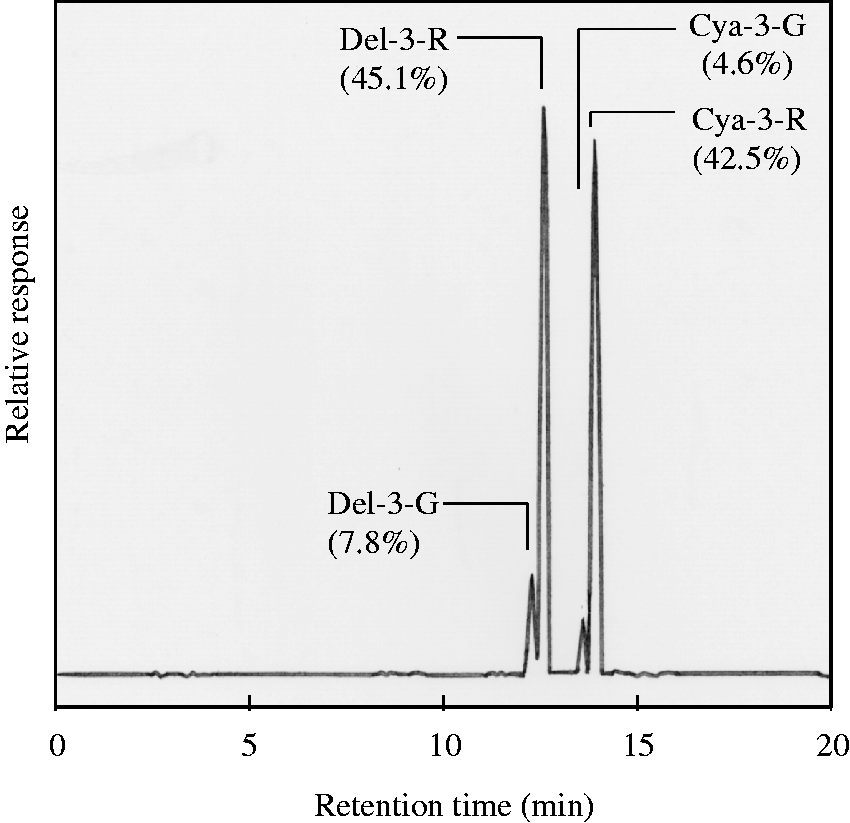
Color strength of dyed silk and cotton
The K/S values of silk and cotton fabrics dyed without mordant were 3.23–3.67 and 2.10–2.42, respectively. This indicates that the silk fabric was dyed a deeper color than cotton. The color strength of the fabric is due to the affinity between the dye and the fiber. Thus, the functional groups of the anthocyanins combine with animal fibers more easily than with the vegetable fibers. Protein fibers have carboxyl (–COOH) and amino (–NH2) end groups. Anthocyanin assumes a protonated flavylium ion structure under acidic conditions with a pH of 3. Therefore, the protein fibers and anthocyanin dye are thought to link through ionic bonds. Cellulose fibers do not have these functional groups. Only weak van der Waals forces and hydrogen bonds exist between the hydroxyl groups on the cellulose surface and the hydroxyl groups of anthocyanins. 6 In addition, cellulose fibers are highly polymerized and have less amorphous regions that the dye can physically enter compared with protein fibers. The difference in the crystallinity between silk and cotton will be shown by XRD measurements later.
Structure of fabric before and after dyeing
Figure 3 compares FE-SEM pictures of silk and cotton fabrics before and after dyeing without mordant. The pictures of the silk before and after dyeing are shown in Figure 3(a) and (b), respectively. Both of the fibers are smooth. The pictures of the cotton fibers before and after dyeing are shown in Figure 3(c) and (d), respectively, and both of the fibers are wrinkled. The morphology of the silk and cotton fibers after dyeing are similar to the morphology before dyeing. It can be observed from the pictures at both magnifications that dyeing the fabrics with blackcurrant does not affect the fibrous morphology. Changes were also not observed on the FE-SEM images of the fabrics dyed with various mordants (data not shown).
FE-SEM pictures of silk and cotton fabrics before and after dyeing using blackcurrant without mordant. (a) Silk before dyeing, (b) Dyed silk, (c) Cotton before dyeing, (d) Dyed cotton.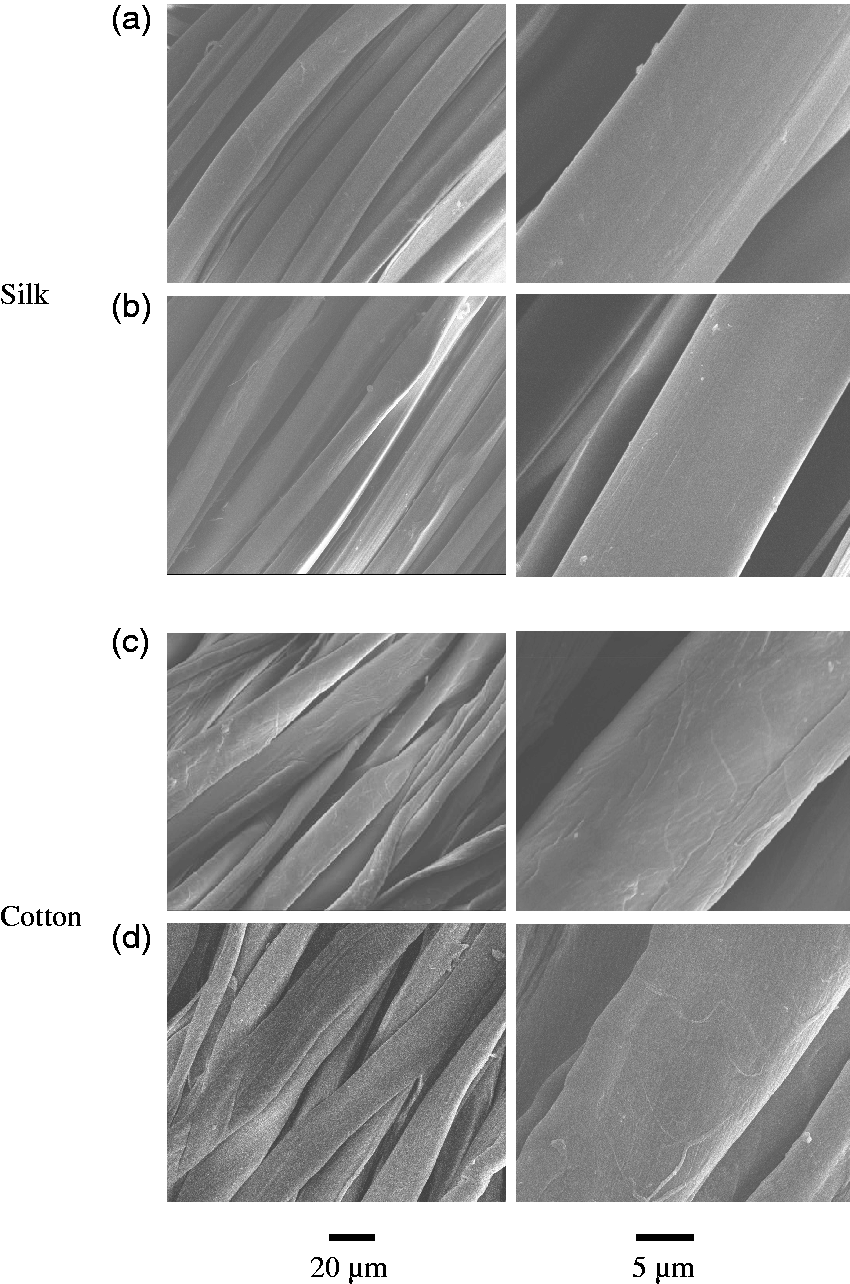
Figure 4(a) and (b) show XRD patterns of the silk fabrics before and after dyeing without mordant, respectively. The pattern of the silk before dyeing has a peak at approximately 21.5°, which has also been reported in the literature.30,31 XRD patterns of the cotton fibers before and after dyeing are shown in Figure 4(c) and (d), respectively. Before dyeing, the fabric has three XRD peaks at approximately 15.1° (101), 16.8° (10 XRD patterns of silk and cotton fabrics before and after dyeing using blackcurrant without mordant. (a) Silk before dyeing, (b) Dyed silk, (c) Cotton before dyeing, (d) Dyed cotton.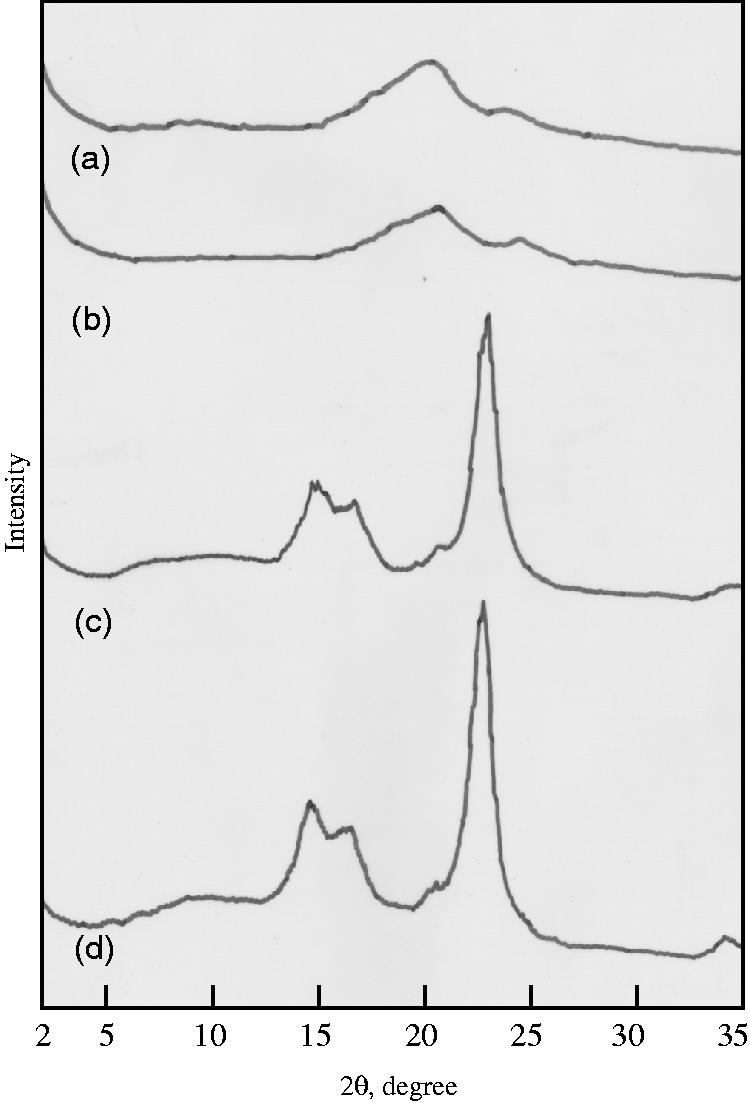
Color of the fabrics dyed with mordant
In general, various metals are used as mordants in natural dyeing. The role of a mordant is to enhance the color stability through the formation of a dye–metal complex. 7 In addition, varied hues of color are obtained by treating fabrics with mordants.4–6 To investigate the influence of mordants, the fabrics were treated with the following mordants: Mg2+, Al3+, Ca2+, Fe3+, and Cu2+.
Figure 5 shows plots of the a*b* values of silk (closed symbols) and cotton (open symbols) fabrics dyed under different conditions. The circle symbols represent the values of the fabrics dyed without mordant. The different mordants led to differences in the hues of the silk and cotton fabrics. All of the values of the fabrics are in the red-blue region except for the cotton dyed with Fe3+ (▵) and Cu2+ (◃) mordants. The plot of the cotton fabrics extends across a larger area than the silk.
a*b* plots showing the color of silk and cotton fabrics dyed with and without various mordants. •, ^: without mordant; ▪, □: Mg2+; ♦, ⋄: Al3+; ▾, ▿: Ca2+; ▴, ▵: Fe3+ and ◂, ◃: Cu2+. Closed symbols: silk and open symbols: cotton. Color pictures can be seen online.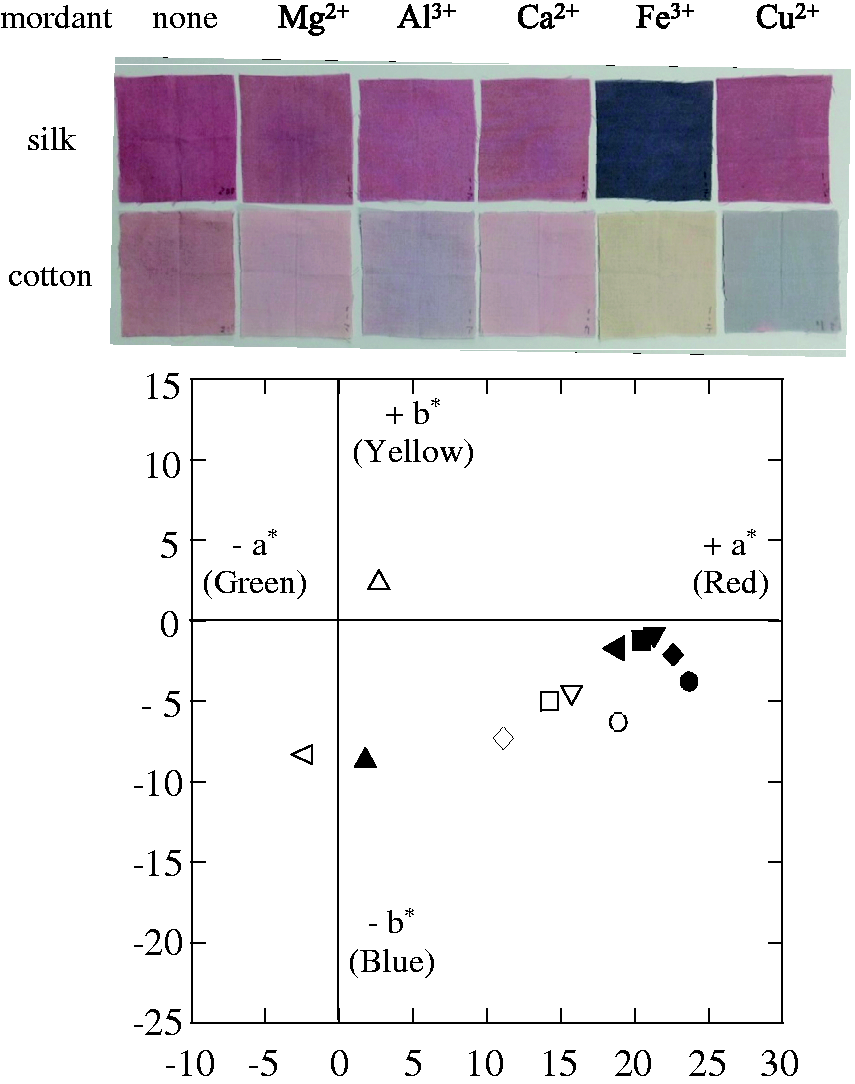
UV shielding properties
Figure 6(a) shows the transmission UV-vis spectra of the silk and cotton fabrics before and after mordant-free dyeing with blackcurrant. The spectra of silk and cotton are represented by bold and thin lines, respectively. SPF and PA values are also shown. The UV spectrum of cotton before dyeing does not exhibit a strong absorption, and the SPF value of this sample is 2.0. The spectrum of silk before dyeing shows a lower transmittance in the region below 300 nm, and the SPF value of the sample is 2.7. The PA values of the silk and the cotton before dyeing are PA+. On the other hand, the UV spectra of both the silk and cotton fabrics dyed with the blackcurrant extract show a lower transmittance in the visible and UV ranges below 700 nm. Although a decrease of transmittance in the visible range is due to coloring of the fabrics, it is noteworthy that the transmittance of the dyed fabrics is very low in the UV range below 400 nm. The SPF values of the silk and cotton fabrics after dyeing with blackcurrant are 22.8 and 11.4, respectively. The PA values of the silk and cotton are PA+++. The UVB rays (290–320 nm) are more intense than the UVA rays (320–400 nm), and the UVA rays are more prevalent than the UVB rays.36–38 Therefore, shielding against both UVA and UVB rays is needed. The fabric dyed with blackcurrant is capable of shielding against UVA and UVB light.
Transmission UV-vis spectra of various fabrics. (a) Silk and cotton fabrics before and after dyeing by blackcurrant. (b) Silk fabric after dyeing by blackcurrant, silk fabric after dyeing by an acid dye, and silk fabric after dyeing by blackcurrant and stored at a window for 3 months.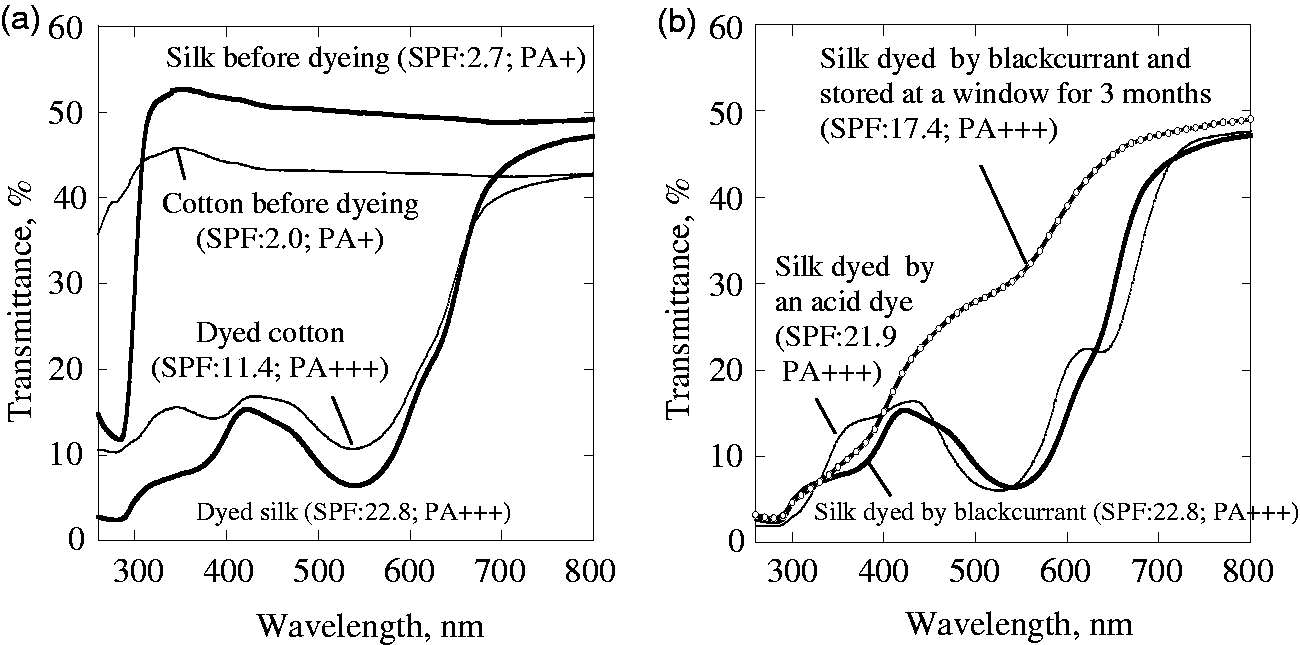
To investigate in detail the ability of the blackcurrant dye to shield against UV light, the silk fabric was also dyed with two acid dyes. The color and strength were adjusted to match the dyeing with the blackcurrant extract by controlling ΔE* value within 2.0. The dyeing process using the acid dyes was repeated nine times. The UV-vis spectra of the silk fabrics dyed with the blackcurrant and the acid dyes are shown by bold and thin solid lines, respectively, along with the SPF and PA values in Figure 6(b). Both spectra show a very similar transmittance within the visible region between 400 and 800 nm. The SPF values of the fabrics dyed by blackcurrant and the acid dye are 22.8 and 21.9, respectively. The fabric dyed with blackcurrant shows a lower transmittance (a higher UV shielding ability) at 330–400 nm than that of the fabric dyed by the acid dyes. Therefore, the fabric dyed by blackcurrant is better at shielding against UVA light at 330–400 nm than the fabric dyed by the acid dye. The UV shielding ability is a result of both the color and the original properties of the blackcurrant. The UV-vis spectrum of the fabric dyed and stored at a window for three months is shown by circle symbols in Figure 6(b). The SPF and PA values of the fabrics dyed and stored at a window for 3 months were 17.4 and PA+++, respectively. Although the transmittance of the fabric in the visible light region was changed by light exposure, the UV shielding ability of the fabric was relatively consistent. Therefore, the materials that have UV shielding properties seem to not be decomposed by light exposure.
The cotton fabric was dyed by reactive dyes mentioned above. The color and strength were adjusted to match the dyeing with the blackcurrant extract by controlling ΔE* value within 2.0 as well as the silk fabric. Although the results for cotton are not shown here, similar tendencies to those mentioned above were observed with silk. The SPF values of the silk and cotton fabrics dyed with the five types of mordants ranged from 15.7 (Ca-mordant) to 39.0 (Fe-mordant) and 7.0 (Mg-mordant) to 8.9 (Fe-mordant), respectively. The PA values of the fabrics dyed with the various mordants were PA+++ for all of the silk samples and were PA++ for all of the cotton samples.
Antibacterial properties
To investigate the antibacterial activity of the fabrics dyed with blackcurrant, the bacteriostatic potency of the silk and cotton fabrics was evaluated. The silk and cotton fabrics were dyed in blackcurrant solutions with different concentrations without mordant. Figure 7 shows the bacteriostatic potency of silk (•) and cotton (^) in relation to the concentration of the dye solution. The bacteriostatic potency of the undyed silk and cotton fabrics was 0 and 0.3, respectively. The values for both of the fabrics increased as the concentration of the dye solution increased. Silk had higher antibacterial activity than cotton at the same dye concentration.
Antibacterial activity of silk and cotton fabrics dyed without mordant by dyeing solutions with different concentrations. •: silk; ^: cotton.
Bacteriostatic potency of various cotton fabrics.
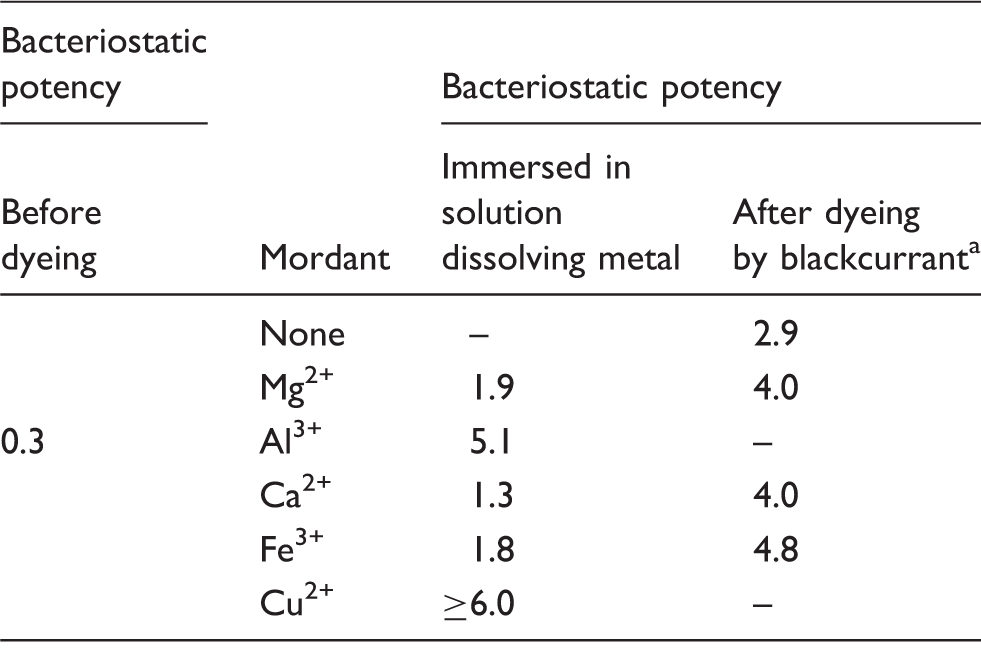
Concentration of dyeing solution is 50%.
Color fastness of dyed fabric
Fastness properties of the silk fabrics dyed with and without mordant.

Color fastness to light of the fabric dyed without mordant was not sufficient to reach grade 2. However, the fabric dyed with Al3+ and Ca2+ mordants was grade 2, which was the same as the mordant-free dyed fabric. The other mordants, including Mg2+, Fe3+, and Cu2+, enhanced the color fastness of the dyed fabrics; fabrics treated with Mg2+ and Cu2+ mordants were grade 2–3 and fabrics treated with the Fe3+ mordant were grade 3–4.
Color fastness to washing for color change of the fabric dyed without mordant was grade 2. The fabrics dyed with the five types of mordants ranged from grade 2–3 to grade 4–5, which was higher than the mordant-free dyed fabric. All of the fabrics showed good color staining (grade 5).
Color fastness against NOx was grade 4 for the mordant-free dyed fabric. The fabrics dyed with Mg2+, Al3+, Ca2+, and Cu2+ were grade 3 to grade 3–4, which was lower than the value of the mordant-free fabric. The fabric dyed with the Fe3+ mordant had a grade of 4–5. These results show that none of the mordants, except Fe3+, used in the present study improved the color fastness against NO x .
Because the fabric dyed with blackcurrant had a low color fastness to light, the storage conditions required to maintain the color of the dyed fabrics were investigated. The silk fabrics dyed with the blackcurrant extract without a mordant were placed in three different locations: the laboratory (200–500 lx), in a shaded desiccator (0 lx), and at a window (3500–4500 lx). Changes in the K/S values of the fabrics are shown in Figure 8 by the open symbols. As shown in Figure 8, the K/S values of the fabric change in the following order: at a window (▵)>in the laboratory (^)>in a shading desiccator (□). The K/S values of the fabrics stored at a window changed the most in the first month. The shading desiccator kept the color of the dyed fabric for a long period.
Change of K/S values against storage period. Open symbols: dyed without mordant and settled, ^: in the laboratory; □: in a shading desiccator; and ▵: at a window. Closed symbols: dyed with mordant and settled at a window, ♦: Al3+; ▴: Fe3+; and •: Cu2+.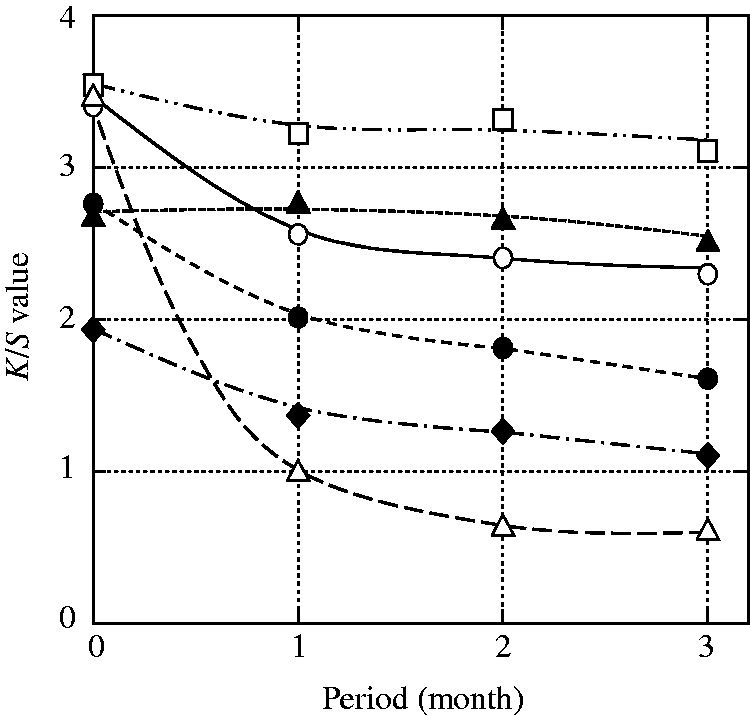
To investigate the influence of the mordant, the silk fabrics dyed using blackcurrant with five types of mordants were kept at a window. Figure 8 shows the K/S values of the fabrics treated with the mordants using closed symbols: Al3+ (♦), Fe3+ (▴), and Cu2+ (•). The K/S values of the Mg2+ and Ca2+ mordant-treated fabrics were close to the values of fabric treated with the Al3+ mordant (♦) (data not shown). The K/S values of the mordant-treated fabrics changed more slowly than the value of mordant-free dyed fabric (▵). Thus, the use of a mordant enhances the color fastness of the dyed fabrics, but the degree of the effect is not the same for each type of mordant. The use of Fe3+ as a mordant can maintain the color of the dyed fabric for a long time.
Conclusions
Natural dye was extracted from blackcurrants. Four types of anthocyanins, including Cya-3-G, Cya-3-R, Del-3-G, and Del-3-R, were present in the blackcurrants. The extract was acidic and was used to dye silk and cotton fabrics without a mordant at room temperature. Silk fabric was less crystalline and was dyed a deeper shade than the cotton fabric. XRD measurements and FE-SEM observations of the silk and cotton fabrics revealed that dyeing did not affect the structure of the fabrics. Dyeing the fabrics with different mordants resulted in differences in color hues. Although the fabric dyed without mordant had low color fastness to light and washing for color change, fabrics treated with Mg2+, Fe3+, and Cu2+ mordants had enhanced color fastness to light, and all of the mordant metals used in the present study enhanced the color fastness to wash for color change. In particular, the fabric dyed with the Fe3+ mordant showed superior overall color fastness. The fabrics dyed with blackcurrant exhibited UV shielding and antibacterial properties. Mordant treatment enhanced the antibacterial properties of the dyed fabrics.
The present study revealed that the blackcurrant could be used as a natural dye for cloth and that this dye has UV shielding properties and antibacterial properties. There are many plants containing natural dyes, which are expected to be environmental friendly dyes. The technique and insights of the present study will contribute to the dyeing of fabrics using various natural dyes. The useful properties of natural dyes reported in this study will encourage others to find the novel advantages of many other plants.
Footnotes
Declaration of conflicting interests
The authors declared no potential conflicts of interest with respect to the research, authorship, and/or publication of this article.
Funding
The authors disclosed receipt of the following financial support for the research, authorship, and/or publication of this article: This work was supported in part by JSPS KAKENHI (grant number 25350063).