



Abstract
In this study, the influence of homehold composting conditions on the molecular and supramolecular structure of polylactide (PLA) in the form of spun-bonded nonwovens was investigated. Nonwoven samples were studied using size-exclusion chromatography coupled with multiangle laser light scattering detection, wide-angle X-ray diffraction, differential scanning calorimetry and Fourier transform infrared spectroscopy. In addition, the physical and mechanical properties of the nonwovens before and after composting were determined. The results show the varying degree of influence of the prepared compost mixtures of soil with common horticultural additives, such as chalk, commercially available agents, cow manure and chicken litter, on the molecular and supramolecular structure of PLA and its degradation rate. The obtained experiment explained which popular homehold agent had the strongest affect on the PLA nonwoven dedicated for agriculture use in the first period of season composting (first 6 months).
Keywords
Poly(lactic acid) or polylactide (PLA) has attracted considerable attention in recent years due to its excellent mechanical properties that are comparable to those of other polyesters. In addition, PLA can be produced from completely renewable resources. 1 The synthesis of PLA is based on the polycondensation of lactic acid or ring-opening polymerization of lactide (LA), which is obtained from the depolymerization of oligomers of lactic acid (2-hydroxypropionic acid) (LAc). LAc is synthesized from hydrocarbons with an agricultural origin, such as corn, potatoes or waste biomass, via a fermentation process with the use of bacteria (i.e., Lactobacilli). The polymerization of LA is usually initiated by covalent alcoholates (Mt(OR)n) or by alcohols in the presence of catalysts (e.g., Sn(Oct)2), and leads to PLAs composed of macromolecules with ester and hydroxyl terminal groups. 2
The properties of PLA depend not only on the molecular weight but also on various stereoisomeric LA forms and different chiralities in the polymer chain. The various chiralities of PLA reduce its ability to crystallize.3,4 The poly(L-lactide) homopolymer is a crystallizable polymer that can crystallize into four different polymorphic forms as follows: pseudo-orthorhombic ά,5,6 orthorhombic α, 7 orthorhombic β 8 and trigonal γ. 9 The many technological regimes of the production of foils, fibers and nonwovens have resulted in crystallization of PLA to the ά or α forms. The controlled induction of polymer crystallization during the technological process is important from the point of view of usefulness.10–13 The presence of ordered chains in a polymer structure is advantageous and improves the strength, elasticity and resistance to weathering processes.14,15
The second and perhaps the most important advantage of PLA is the facile utilization of waste from this polymer. PLA is an unstable and hydrolyzable biodegradable polyester. The degradation of this aliphatic polyester depends on physical, chemical and biological agents. 16 PLA degradation may take place under the influence of temperature (thermo degradation), water activity (hydrolytic degradation) or activity of bacteria, enzymes or fungi (biodegradation).
In addition, the degree and rate of degradation strongly dependent on the PLA structure. A high molecular weight and degree of crystallinity reduces its ability to degrade. 17
Analysis of the PLA degradation process and the agents that support degradation has attracted considerable attention. According to the results from recent years, the preferred method involves a combination of effects, such as pH and temperature of water during hydrolysis. 18 Composting is a more complex degradation process that occurs under controlled conditions. In the first phase of this process, the hydrolysis process occurs under anaerobic conditions at elevated temperatures. In the last phase, short chain oligomers and monomers, which were prepared by hydrolysis (depolymerization), are metabolized by microorganisms to chemical compounds of natural cycles in the environment. The described results from composting tests have demonstrated that materials made from PLA can be degraded after several weeks. However, the temperature of the compost must be near or above the glass transition temperature, which for PLA is in the range of 55–65℃. 19 The degradation of PLA products in outdoor manure piles is slower in a Mediterranean climate. 20
In this study, degradation in a homehold regime was investigated, which is interesting not only from the scientific point of view. The possibility of utilization of plastics by composting in a home is extremely important in respect of environmental protection, and could be a method of reduction waste. Semicrystalline PLA in the form of spun-bonded nonwovens, such as the material employed to cover plants in the winter of 2013, was composted under anaerobic conditions in soil with the addition of common horticultural materials, such as chalk, commercially available agents, cow manure and chicken litter. The experiment was carried out outside from 10 April to 10 October 2013 in a moderate climate (Poland).
Experimental details
Materials
Investigation of structural changes of PLA spun-bonded nonwovens after homehold composting was performed on the materials made from PLA 6251D (Nature Works, USA) using a large laboratory stand and the previously described methodology.
21
The nonwoven, which had a mass per unit area of 50.1 g/m2, was prepared using optimal technological parameters that allowed for maximum mechanical strength and minimum thermal shrinkage in high humidity conditions.
13
In Figure 1 the photography and optical microscopy images of the studied material are presented.
Photography (a) and optical microscopy image (magnification ×50) (b) of the studied polylactide spun-bonded nonwoven.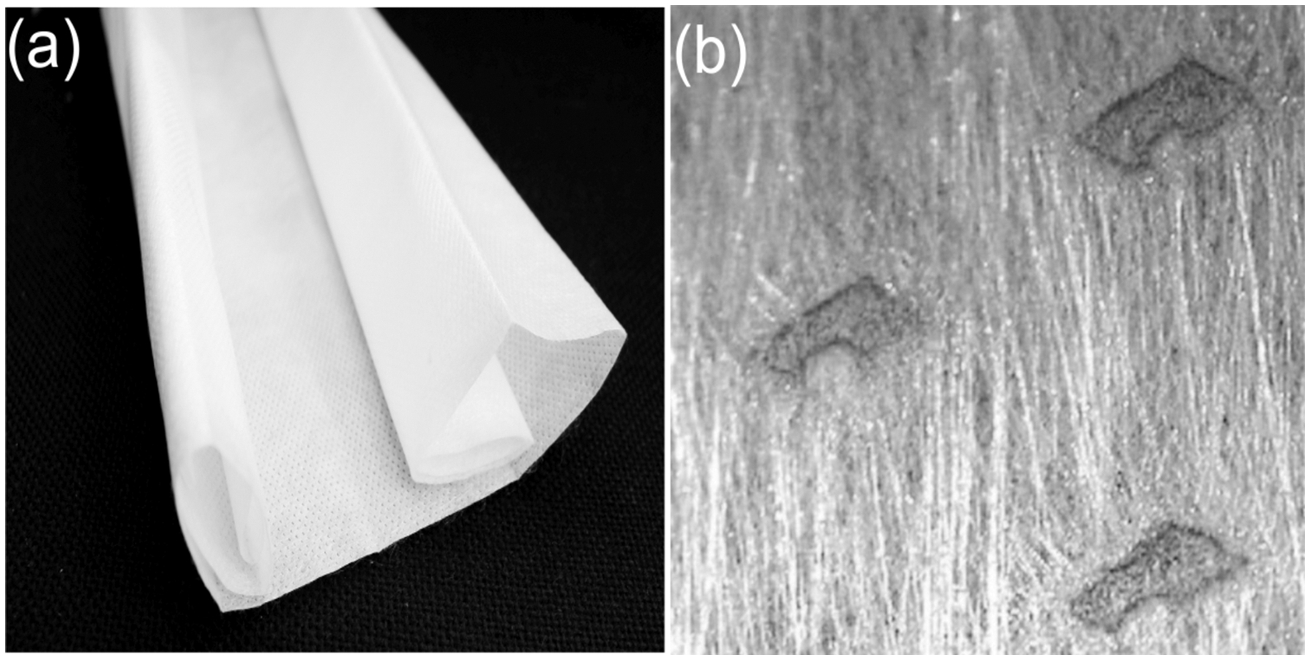
Composting method
The composting process was carried out under controlled conditions and taking into account the homehold composting conditions. Popular in horticulture, composting agents such as chalk (CaCO3 95%), a commercially available agent for composting Radivit® (N 8%), cow manure (N 0.50%; P 0.11%; K 0.50%; Ca 0.09%) and chicken litter (N 1.50%; P 0.66%; K 0.50%, Ca 0.42%) were used. One hundred small samples of PLA nonwoven were added to 10 L of cropland soil (N 1.50%; P 0.66%; K 0.50%, Ca 0.42%) with the addition of the chosen agents:
cropland soil – pH 6.9; cropland soil (5 L) and chalk (CaCO3) (5 L) – pH 8.0; soil (10 L) and a commercially available agent for composting that contains nitrogen, Radivit® (300 g) – pH 6.8; soil (5 L) and cow manure (5 L) – pH 5.6; soil (5 L) and chicken litter (5 L) – pH 3.6; soil (5 L), cow manure (2.5 L) and chicken litter mixture (2.5 L) – pH 3.9.
The next step of the composting process preparation was the addition of water to samples mixed with compost so that the moisture content was 100% and the samples were sealed in closed containers. The containers were placed outdoors from 10 April to 10 October 2013 in Cracow Mydlniki (Poland). The latitude and longitude of the site are 50°4’46’’ N and 19°50’54’’ E, respectively, with an altitude of 215 m; and the temperature changes during the experiment are shown in Figure 2.
Average daily temperature change during the experiment.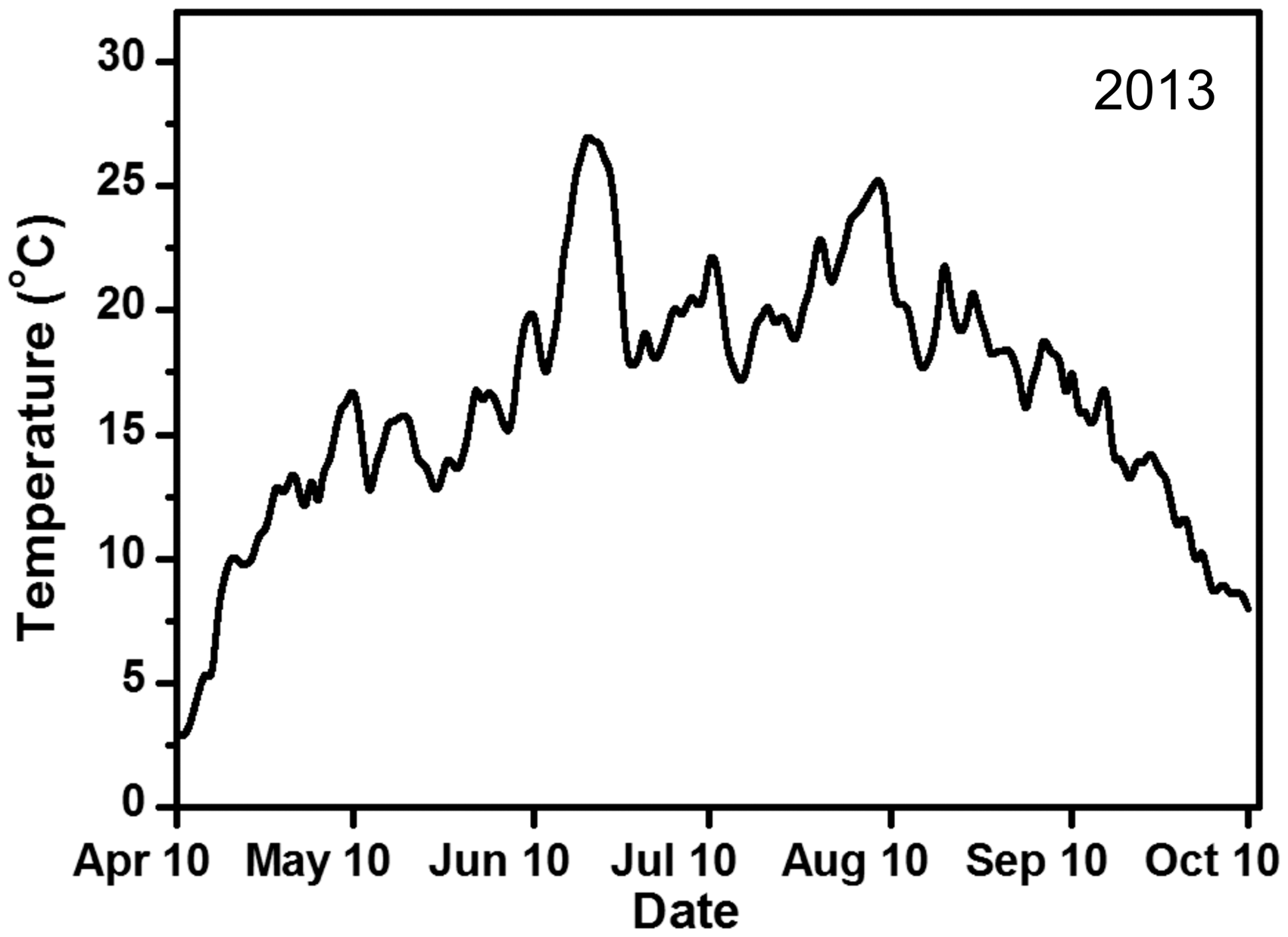
The investigated samples of PLA nonwoven samples were square with field dimensions of 50 × 50 mm2. The size of the samples tested takes into account the size necessary to perform planned measurements and to accelerate the process of its degradation.
Mechanical properties
Before testing, the samples were cleaned with distilled water, dried in a heater at 30℃ and conditioned under normal conditions (t = 20℃, 65% relative humidity (RH)) for 24 h.
The mechanical parameters of the studied nonwovens, such as stress at break and strain at break, were measured using a mechanical testing machine, Instron 5511 (Instron, USA), with a load cell of 2 kN. The mechanical test of the samples was carried out according the modified test regime of standard EN 29073-3:1994 “Textiles – Test methods for nonwovens – Part 3: Determination of Tensile Strength and Elongation”. The size of the tested samples was determined by the size of the composting samples and was equal to 10 × 50 mm2. The test was performed with a 30 mm distance between clamps at a velocity of 30 mm/s. The measurements for the 10 samples were obtained under normal conditions (t = 20℃, 65% RH).
In addition, the weight loss was analyzed. The measurement was carried out for a sample of nonwoven dissolved in dichloromethane and measuring the mass of PLA without dirtiness using a precision balance PS.R1 (Radwag, Poland). The weight loss was calculated as the difference in weight in relation to the weight of dissolved PLA nonwoven before composting.
Size-exclusion chromatography coupled with multiangle laser light scattering analysis
Molecular weights (Mn and Mw) and dispersity (Mw/Mn) were analyzed using size-exclusion chromatography coupled with multiangle laser light scattering (SEC-MALLS) detection. SEC-MALLS was composed of an isocratic pump, autosampler, degasser, thermostatic box for columns, a photometer MALLS DAWN EOS (Wyatt Technology Corporation, USA), a Wyatt Optilab Rex differential refractometer and equipped with a set of two PLGel 5 µL MIXED-C columns. ASTRA 4.9 Software (Wyatt Technology Corporation, USA) was used for data collecting and processing. Between 5 and 8 mg of sample was dissolved in 1 mL of methylene chloride, filtrated using a filter with a pore size of 20 µm and, finally, solution was injected in a chromatographic column. The volume of the injection loop was 100 µL. Methylene chloride was used also as a mobile phase at a flow rate of 0.8 mL min–1. Therefore, the dn/dc of PLAs was measured in two independent ways: on line, when a sample is passing through the columns, and when a sample is directly injected to the refractive index (RI) detector. In both measurements we determined the same value of dn/dc = 0.035 for PLA in methylene chloride.
Differential scanning calorimetry method
Analysis of the thermal properties of the studied materials was performed using a model Q 2000 differential scanning calorimeter (TA Instrument Inc., UK) in the range from 0℃ to 250℃ at a heating rate of 10℃/min. The measurement for 6 mg of samples was carried out under nitrogen.
Wide-angle X-ray diffraction method
The crystalline structure of PLA was characterized using an X'Pert PRO diffractometer (PANalytical, The Netherlands) with a CuKα source (λ = 0.154 nm) and the following parameters: accelerating voltage of 40 kV and anode current density of 30 mA. A semiconductor counter X’Celector was used as the detector. The diffraction patterns for the powdered samples were recorded over a 2θ range of 5–45° with a step size of 0.05°.
Fourier transform infrared spectroscopy method
The chemical composition and structure of the nonwoven was analyzed by infrared (IR) spectroscopy using a FTIR-Nicolet 6700 spectrometer (Thermo Scientific, USA) within the wave number range of 4000–600 cm–1, and the instrument was equipped with a reflection attachment (ITR type) with a diamond crystal of a reflection angle of 45°.
The following settings of the device work parameters were used: DTGS KBr detector; accuracy of measurement recording – 2 cm–1; mirror speed – 0.31 mm/s; aperture – 50; and minimum number of scans recorded – 32 for each measurement. The Fourier transform infrared (FTIR) spectra that were obtained in the A = f(1/λ) system were analyzed to estimate changes in the intensity of the absorption bands in the test samples in the powder form used.
Results and discussion
Mechanical properties
Physical characteristics of manufactured polylactide spun-bonded nonwovens before and after composting

<x>: sample mean value; cv: sample coefficient of variation; MD: machine direction; TD: transverse direction.
The uncomposted sample had a stress at break at the level of 23 N and a strain at break at the level of 6% in the two studied directions in the TD. According to these results, the composting process decreased the strength of the sample. The highest change was observed after composing in soil with a mixture of chicken litter and cow manure, and the stress at break was 3.8 N in the MD and only 0.6 N in the TD. For this sample, the highest weight loss (i.e., 20.4%) was observed. In the case of composting in a mixture containing chicken litter, the degradation process could not only undergo hydrolysis degradation but perhaps also degradation by the use of ammonia (chicken litter produces ammonia). The composting process also caused a change in the strain of the studied nonwoven fabrics. Due to composting, the samples became brittle, which confirms the degradation of PLA and possible changes in the molecular and supramolecular structure. It is important to note that a significant change in the coefficient of variation of the estimated parameters of the sample was also observed. Composting under severe conditions not only reduces the strength and elasticity, but also results in heterogeneity of the properties of nonwovens. However, only a slight change was observed for composting the nonwoven fabric only in soil, which confirms that environment is not sufficient for the rapid degradation of PLA. These results demonstrate the effect of compost with various compositions on the physical properties of nonwovens.
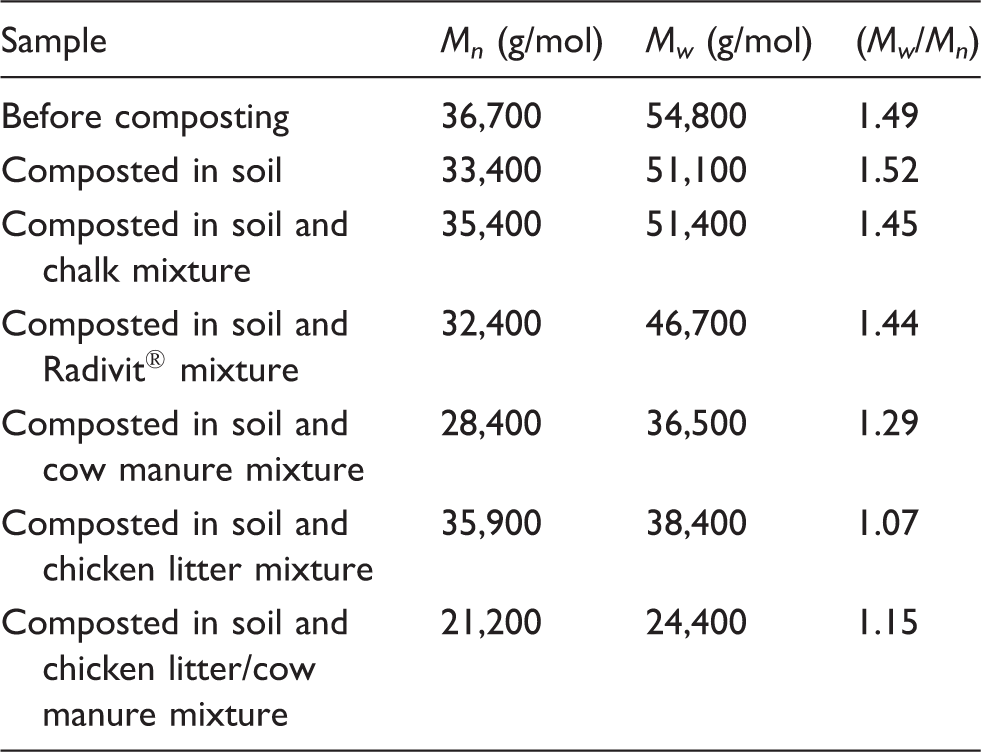
Molecular weight analysis
Molecular weight and dispersity changes in polylactide studied by size-exclusion chromatography coupled with multiangle laser light scattering
Differential scanning calorimetry results
Thermal analysis of the PLA nonwoven material was performed before and after composting in various media. The first heating differential scanning calorimetry (DSC) thermograms of the studied materials are shown in Figure 3. Table 3 provides a comparison of the estimated thermal properties and the degree of crystallinity of each studied PLA sample. The degree of crystallinity was calculated using the following equation
Differential scanning calorimetry thermograms of the polylactide spun-bonded nonwovens before and after composting. Results from differential scanning calorimetry analysis of polylactide spun-bonded nonwovens before and after composting


In all of the thermograms, the melting point of PLA, which is approximately 165℃, was observed. In addition, a slight decrease in Tm of the studied samples was observed after composting in soil with chicken litter and the chicken litter/cow manure mixture (Table 3). It is important to note that the addition of only cow manure did not cause visible changes in the melting point.
Similar changes that were more obvious were observed for the glass transition point and cold crystallization peak. For all of the studied samples, a decrease in Tg and Tc was observed (Figure 2). However, the largest changes occurred for samples after composting in soil with chicken litter and the chicken litter/cow manure mixture. The difference in the glass transition points and cold crystallization peaks between sample before and after composting under these conditions is 15%. These results correlate with the results from the molecular weight analysis using the SEC-MALLS method. The glass transition point and cold crystallization peak were observed at lower temperatures for the polymer with a lower molecular weight and lower molecular weight dispersity. This phenomenon is due to the polymer with the lower Mw requiring a lower thermal energy to transition from a solid to a glassy form. The decrease in the molecule weight and molecular weight dispersity also results in a decrease in the cold crystallization point due to the high crystallinity of the studied samples (approximately 50%) and low Hc value. This change was slightly visible in the thermograms (Figure 1).
The composting process altered the thermal properties of PLA due to a decrease in the Tg, Tc and heat capacity (ΔCp). In addition, an increase in the degree of crystallinity was observed for the studied samples, except for the nonwoven samples composted in soil and soil with cow manure added.
Moreover, the additional endothermic effect between Tg and Tc was observed in the obtained thermograms for the composting of nonwovens in soil and chalk mixtures. The addition of chalk results in a substantial increase in the degree of crystallinity but does not cause a significant molecular weight reduction. This phenomenon suggests that the other type of PLA degradation process was occurring. The chalk, which contains the calcite mineral, most likely facilitates heat transfer to the sample, which causes thermal crystallization. However, the molecular structure of the polymer was not affected.
Wide-angle X-ray diffraction results
A comparison of the X-ray diffractograms of the studied PLA nonwoven samples before and after composting is shown in Figure 4. In all of the obtained diffractograms, two dominant diffraction peaks were observed at 2θ 16.5° and 18.8°, corresponding to the (110)/(200) and (203) lattice planes of the α or α’ forms of PLA.6,7 In addition, the small diffraction peak that was observed at 28.8° was assigned to the reflection from the (216) crystallographic planes.6,7 In addition, for the nonwovens composted in soil, soil with chalk and soil with Radivit®, artifacts from the mineral materials of composting mixture with strong peaks around 27° and 29.5° were observed. The presence of contaminants may indicate penetration of the structure of the nonwoven as well as the fibers.
Wide-angle X-ray diffraction diffractograms of polylactide spun-bonded nonwovens before and after composting.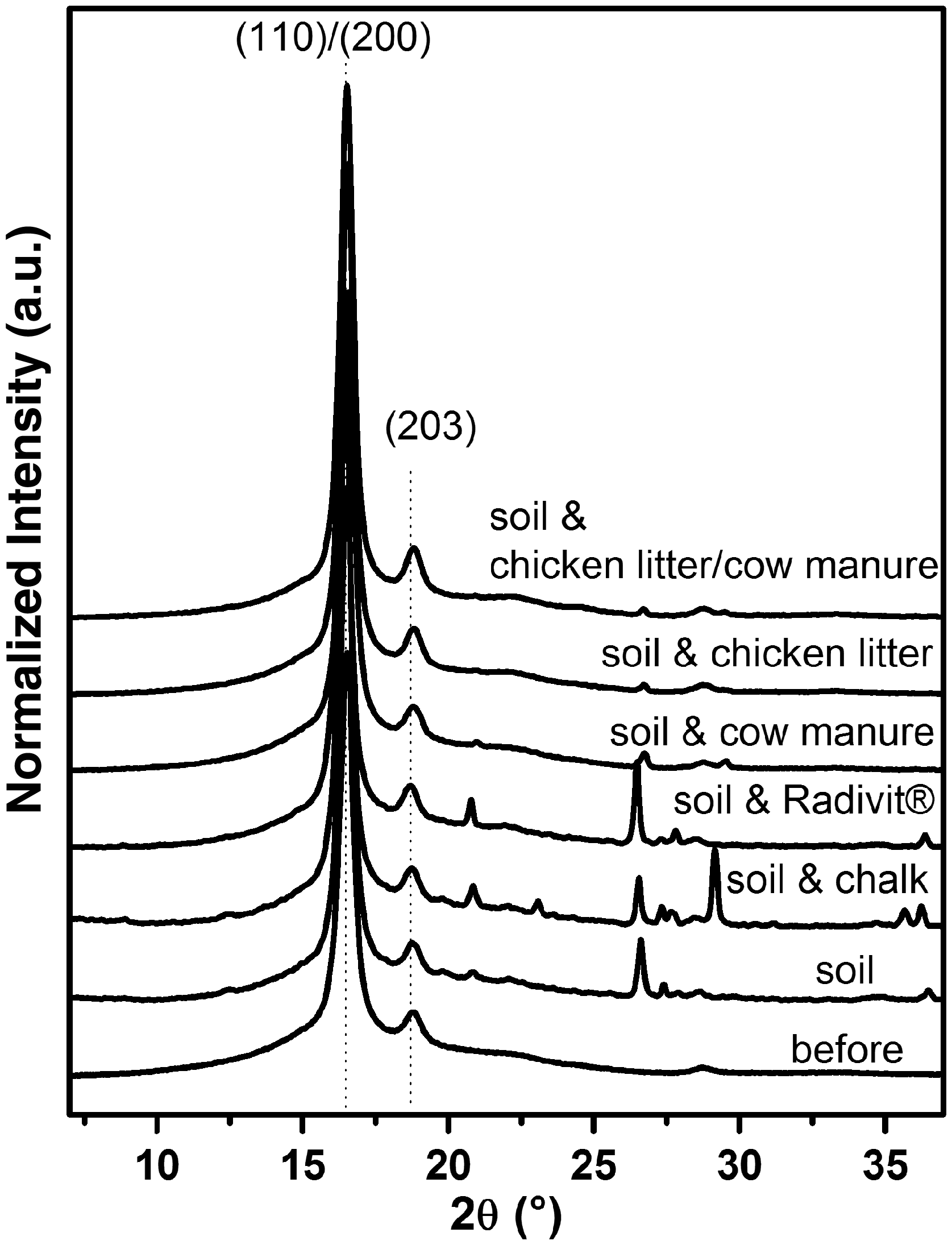
To gain additional structural insight, the diffractograms were deconvoluted into an amorphous halo and crystalline peaks. For this analysis, the experimental data were fitted with a combination of Gauss and Lorentz functions using the WAXSFIT software based on Hindeleh and Johnson’s method.22 The shapes of the amorphous halo and the mesomorphic and crystalline peaks were selected according to the model proposed by Stoclet et al.
9
The crystalline phase contents in the studied materials were calculated according to the following equation

The crystallinity degree calculated using the wide-angle X-ray diffraction (WAXS) method confirmed the results from the DSC thermogram analysis. The crystallinity of all of the studied samples increased from 49% to 57%, except for the nonwoven composted in soil with cow manure addition, where the crystallinity was constant.
Another characteristic feature of the structure after composting of the PLA spun-bonded nonwoven under different conditions was detected by analysis of the lattice length (d-spacing), which was calculated using Bragg’s equation

Results from wide-angle X-ray diffraction analysis of polylactide spun-bonded nonwovens before and after composting

The crystalline area size was calculated from the diffraction peak width using Scherrer’s formula

Analysis of the estimated structural factor indicates that the changes in the polymer lattices are due to the composting agent (Table 4). The composting process increased the crystallinity degree. This result is similar to the result obtained using the DSC method and explains the decrease in the stress and strain of the studied nonwoven. The most visible increase in the crystallinity degree was observed for the nonwoven composted in soil with chalk, chicken litter and a mixture of chicken litter and cow manure. The influence on the mechanical parameter also has crystalline size. The increase in the crystalline size as the crystallinity degree increased does not decrease the mechanical properties of the nonwoven. More deterioration of the mechanical parameters was observed as the crystallinity degree increased without a noticeable change in the crystalline size. This observation suggests that the composting process in soil with chalk, chicken litter and a mixture of chicken litter and cow manure results in degradation of the amorphous form of PLA, which only results in changes in the crystallization degree. According to the presented results the largest difference from neutral pH strongly influences the induction of crystallization of the polymer. For the other composting processes, the crystallization of the amorphous phase was observed, which increases the crystalline size. The obtained results indicate that the composting mixture exhibited different effects on the crystalline structure as well as on the deterioration of the mechanical properties and the rate of degradation.
It is important to note that the composting process does not change the crystalline form from α’ to α. In addition, for composting in soil with Radivid®, an increase in the lattice length was calculated for the two most intense diffraction peaks, corresponding to the (110)/(200) and (203) planes. In this case, the disorder of structure of the PLA crystallites may have increased. This observation can also explain the increase in the size of the crystallites, which most likely results in the crystallization of the amorphous phase and an increase in the lattice length.
FTIR analysis of chemical structure
These results indicate differences in the effects of composting in various soil mixtures due to the chemical composition of the composting environment. The addition of ground chalk to the soil increased the alkalinity of the mixture, and the addition of Radivit® increased the nitrogen content. With regards to the use of animal excrement, the results are more difficult to clearly interpret. FTIR spectrometry was employed to analyze the chemical structure and microstructure of the PLA spun-bonded nonwovens after composting. The FTIR spectra in the 1850–750 cm−1 region are shown in Figure 5 for the studied samples. The bands in the 1850–1700, 1500–1300 and 1300–1000 cm–1 regions were assigned to the C=O stretching vibrations (ν(C=O)), CH3 and CH bending vibrations (δ(CH3) and δ(CH)), coupling of the C–O-C backbone stretching (ν(C–O–C)), CH3 rocking (r(CH3) and δ(CH) vibration modes. As shown in Figure 5, the differences in the FTIR spectra were relatively small and only observed in the 1510–1540 cm–1 region. For the two samples of nonwovens that were composted in soil containing chicken litter, an additional band at 1595 cm−1 was observed, indicating the presence of –NH3 and -COO- groups in the studied materials. Therefore, composting of PLA samples in an environment containing chicken litter resulted in interaction with an acidic environment, and the degradation was supported by ammonia. The presence of additional chemical factors that promoted degradation resulted in visible destruction of the samples and their crystallinity due to degradation of the amorphous phase. The amorphous form of PLA was susceptible to hydrolysis, aminolysis and other chemical degradation processes.
Fourier transform infrared spectra of polylactide spun-bonded nonwovens before and after composting.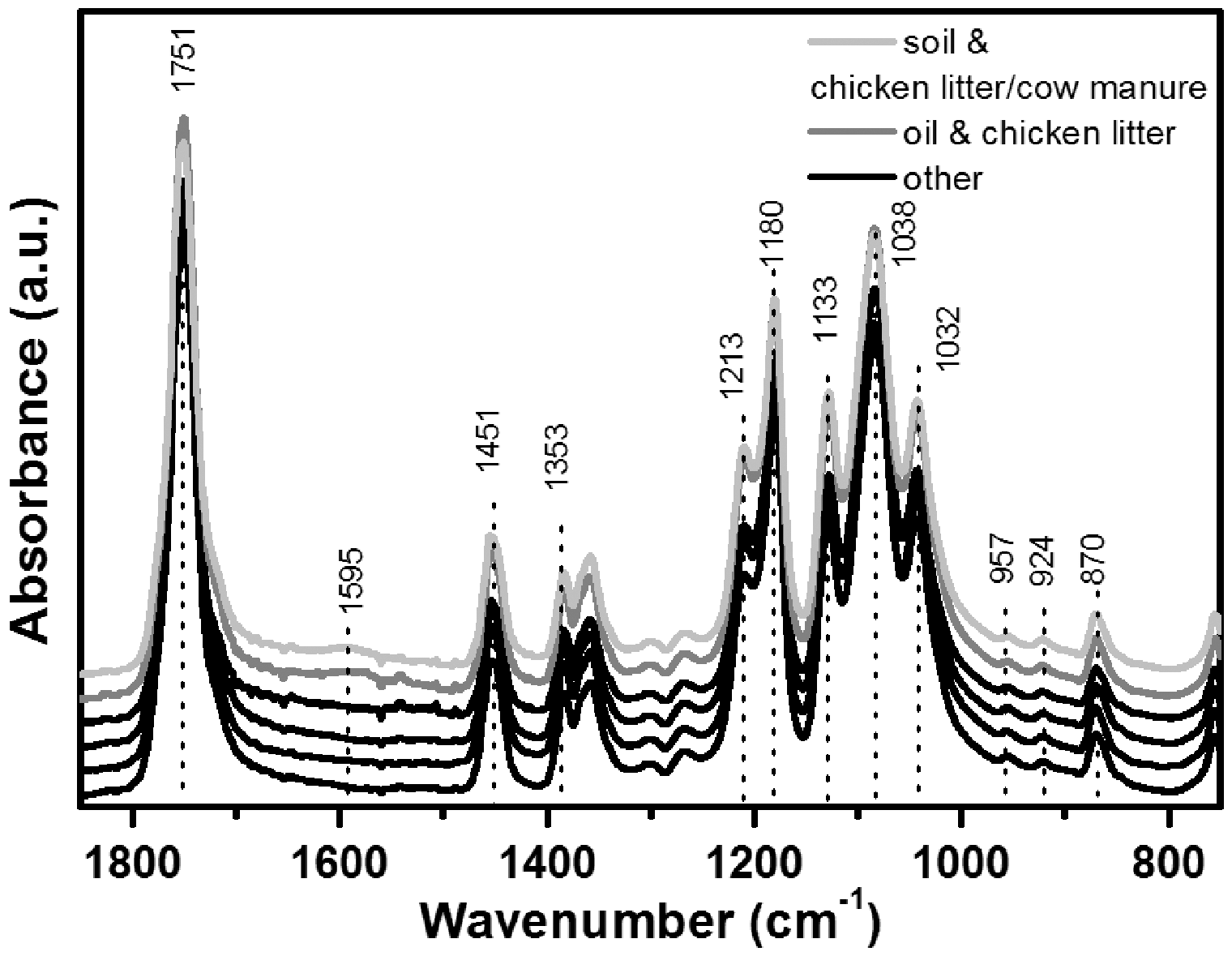
The FTIR spectra also contain absorption bands at approximately 924 and 957 cm–1, which were assigned to the crystalline α (or α’) form with a 103 helix conformation as well as the amorphous phase in the PLA sample, respectively. This result confirms the high crystalline degree of the studied materials as well as the DSC and WAXS results.
Conclusion
Analyses of the structural changes of PLA spun-bonded nonwovens after homehold composting in heat for half of the year provided important information regarding the degradation of PLA. The most important conclusions are as follows.
The degradation in only soil under high humidity at a temperature lower the glass transition temperature was not efficient. A decrease in the mechanical properties, increase in the degree of crystallinity and changes in the thermal properties of the studied material were observed but to a lesser extent than with the addition of degradation agents. The selection of degradation agents is important because the homehold composting of PLA is strongly dependent on the pH of the composting mixture. An alkaline pH environment is not as favorable as an acidic environment for PLA degradation. The most effective soil additive was chicken litter, which contained –NH3 groups. Homehold composting did not affect the disorder-to-order phase transition (α’ to α form) of PLA. With regards to the addition of alkaline additives, such as chalk and a commercially available agent for composting containing nitrogen (Radivit®), the opposite effect was observed, and the lattice length increased. Homehold composting in an acidic environment increased the degree of crystallinity and decreased the thermal properties (i.e., glass transition point and melt temperatures). These changes are responsible for the degradation of PLA and destruction of the nonwoven structure.
Footnotes
Declaration of conflicting interests
The authors declared no potential conflicts of interest with respect to the research, authorship and/or publication of this article.
Funding
The authors disclosed receipt of the following financial support for the research, authorship, and/or publication of this article: This work was performed within the framework of the key project entitled, “Biodegradable fibrous products” (acronym: Biogratex), which was supported by the European Regional Development Fund; Agreement No. POIG.01.03.01-00-007/08-00.