




Abstract
The adherence of wet fabrics to the skin brings much discomfort. The relationship between hydrophilicity and adhesion properties of fabric materials is investigated. A theoretical expression is given to describe the relationship of adhesion force, water contact angle (WCA), and radius of fabric–liquid interface. The adhesion force grows with decreasing WCA and increasing radius of the fabric–liquid interface. With the help of atmospheric pressure plasma jet (APPJ) treatment, the hydrophilicity of the fabric materials is improved, accompanied by reduced WCA, roughened fiber surfaces, as observed by scanning electronic microscope (SEM), and increased Oxygen/Carbon (O/C) atomic ratio and polar bonds, analyzed by X-ray photoelectron spectroscopy (XPS). In accordance with the theoretical conclusion, the APPJ treated fabrics have a much larger maximum adhesion force and longer adhesion duration with water, indicating more discomfort resulting from the increase of hydrophilicity when they are wet. To minimize the discomfort caused by wet adhesion, less hydrophilic fabric surfaces may be preferred.
When inevitably getting wet by sweat, urine, body exudate, rain, sea water or pool water, and so on, fabrics become sticky and usually adhere to the skin, restricting body movements, and causing physical and mental discomfort, 1 in addition to exhibiting poor appearance. According to our questionnaire survey, eight out of 28 interviewees (23 females, five males, age 19–35, height 150–177 cm, and body weight 41–70 kg), often experienced discomfort because their clothes were wetted by sweat or other liquids. Nineteen of them experienced the discomfort sometimes, while only one of them was never bothered by this situation. Among those feelings such as adherence, restrictiveness, wetness, dripping, coldness, and ugliness that may cause discomfort when wearing wet clothes, adherence ranked top in the survey. If there is no adherence between fabrics and the skin, no force would be applied to the skin and many of the other uncomfortable feelings may not occur. Adhesion of fabrics and films to a wet surface could also be of interest to the end users of many industrial textiles and films, such as medical textiles2–4 and geotextiles. 5 Therefore, it is important to look into the adhesion properties of wet fabrics and find a way to adjust the adherence between the fabric and human skin.
Wet fabric adhesion to skin has been studied based on a mass spring model of a wet fabric being pulled up from a plane through the center, 6 and on a back-propagation neural network to connect instrumental measurements to sensory evaluation indices, including sticky feeling. 7 Vertical8,9 and horizontal10–14 testing methods have also been developed to measure the wet adhesion properties of fabrics and films.
The adhesion of a wet fabric can be explained by the presence of the liquid bridge(s) between the fabric and the skin, or between the fabric and a large volume of liquid.11,13 The liquid bridge holds the fabric and the skin together. The configuration and adhesion force of a very small liquid bridge (within the volume of a few µL) have been reported between two rigid surfaces, such as two parallel surfaces, two spheres, or a sphere and a plane surface.15–17 However, a liquid bridge of a larger scale (could be more than 16 mL) between flexible materials such as fabrics are quite different, and are rarely reported. Previous studies11,13,18 showed that the adhesion properties of wet fabrics are intricately related to tensile and bending properties, hydrophilicity, structure of the material, and surface tension of the liquid. The influence of hydrophilicity of the material on the adhesion properties has not been independently and systematically studied, and thus remains unknown.
The atmospheric pressure plasma jet (APPJ) treatment is well acknowledged as an efficient clean source for surface modification,19–23 without changing the overall bulk properties of the original material.19,20,24–26 With short time exposure to the plasma, the chemical reactions and physical changes take place only on the surface layer, within a few tens of nanometers, 25 making the treatment harmless to the mechanical properties (including deformability of stretching and bending) of the bulk material, but very effective for surface layer modification. With the right technique and proper parameters, the APPJ treatment is suitable to modify fabric materials and to improve their hydrophilicity.19–21,27,28
In this study, a theoretical expression was deduced to describe the relationship between adhesion force, F, water contact angle,
Theoretical modeling
Our previous research
11
revealed that the adhesion force applied to the fabric can be expressed as follows

With a small and constant separating speed of the fabric from the liquid, the separation can be regarded as a quasi-static process, and the influence of the viscosity and turbulence of the liquid is negligible.
13
The pressure difference, The geometric relationships in the fabric–liquid system.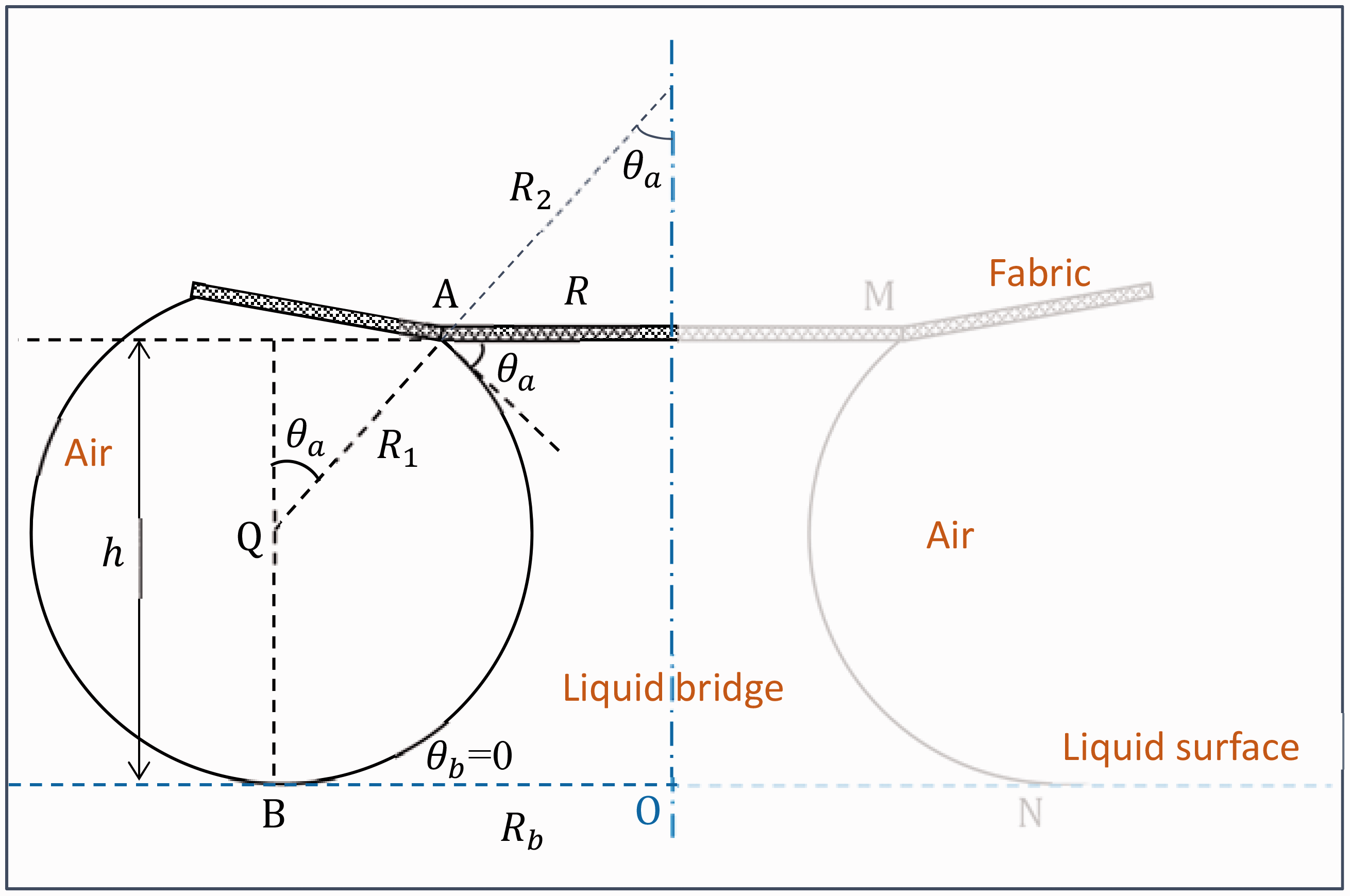

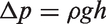
The two expressions could be assumed equal

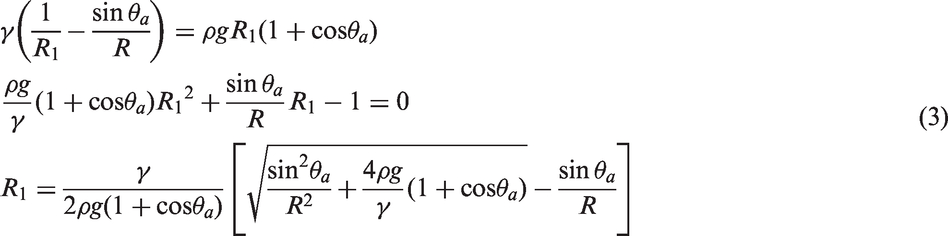

Within the ranges of The theoretical relationship between F, 
According to the theoretical relationship, in order to reduce the adhesion force, F, between the fabric and the liquid, a larger water contact angle,
Experimental
Materials
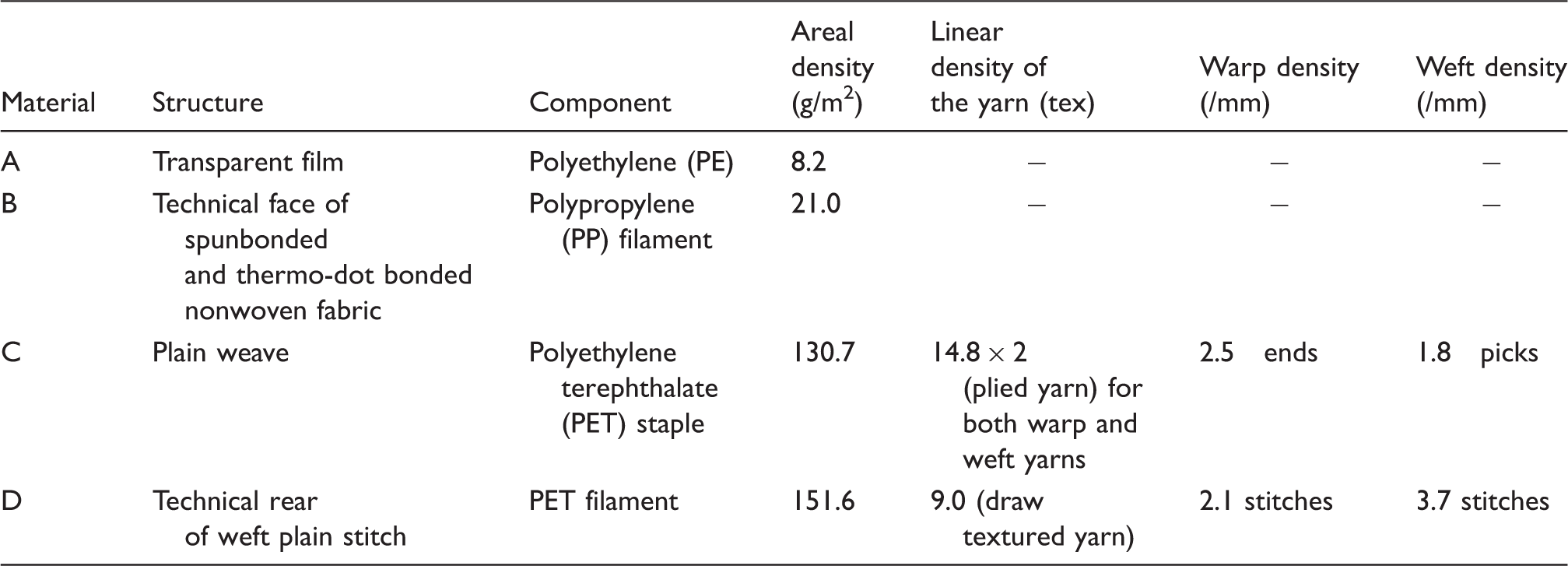
Parameters of the fabric materials

Appearance of the samples (a) PE film, (b) nonwoven PP fabric, (c) woven PET fabric, (d) knitted PET fabric under magnification of ×100.
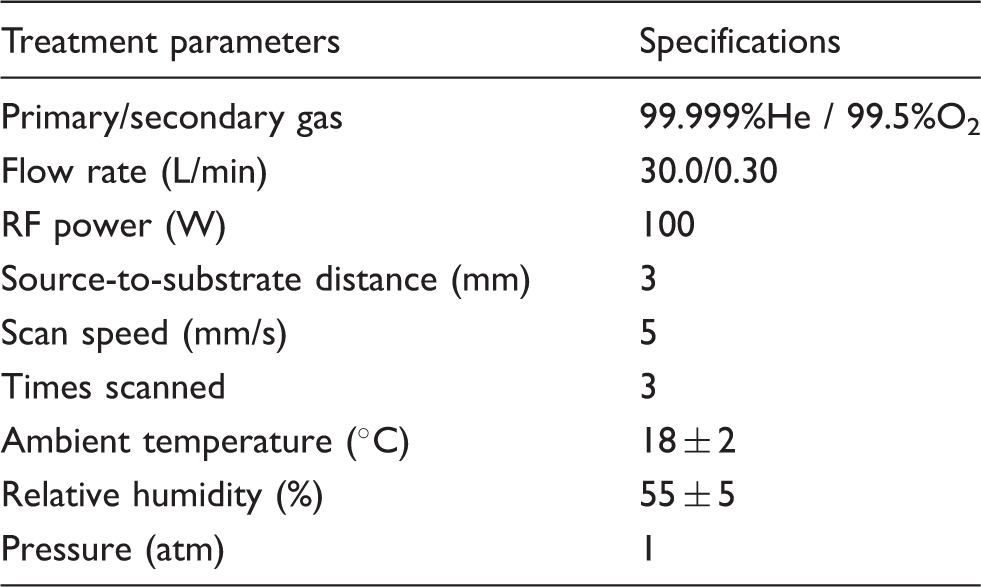
Plasma treatment
Parameters of the plasma treatment
Hydrophilicity measurement
The hydrophilicity was evaluated by measuring the surface water contact angle with a KRUSS EasyDrop system (Model FM40Mk2, Hamburg, Germany). During the test, a 3 µL deionized water drop was released at 3.5 mm above the sample, which was recorded by a video camera at a frame rate of 25 fps. The frame of the moment when the water drop was in contact with the sample for 1 sec was extracted and the apparent contact angle was measured. For each material, five specimens were tested, and the average contact angle was calculated. The room temperature and relative humidity were 20 ± 2℃ and 65 ± 5%, respectively.
Surface morphology analysis
The surface morphology was studied by a Hitachi S-4800 scanning electronic microscope (SEM). The specimens were platinum-coated prior to performing the SEM observation.
Surface chemical composition analysis
The surface chemical compositions were analyzed to gain insight into the changes induced by APPJ treatment, using an X-ray photoelectron spectroscopy (XPS) system (Model Thermo ESCALAB 250, Thermo Fisher Scientific Inc., Waltham, MA, USA) with an Al Kα (hν = 1486.6 eV) X-ray source and 150 W power. The take-off angle was 45 °.
Adhesion measurement
The adhesion properties were evaluated by the adhesion force measurement system developed in our laboratory10,11 (see Figure 4). In that system, the horizontally placed sample ascended from the deionized water below at a constant speed. The adhesion force (measurement error of ± 0.1 mN) for the sample clinging to the water surface was measured and a curve of the adhesion force versus time was obtained. The parameters of the adhesion measurement are listed in Table 3.
Testing system for adhesion force measurement. Parameters of the adhesion measurement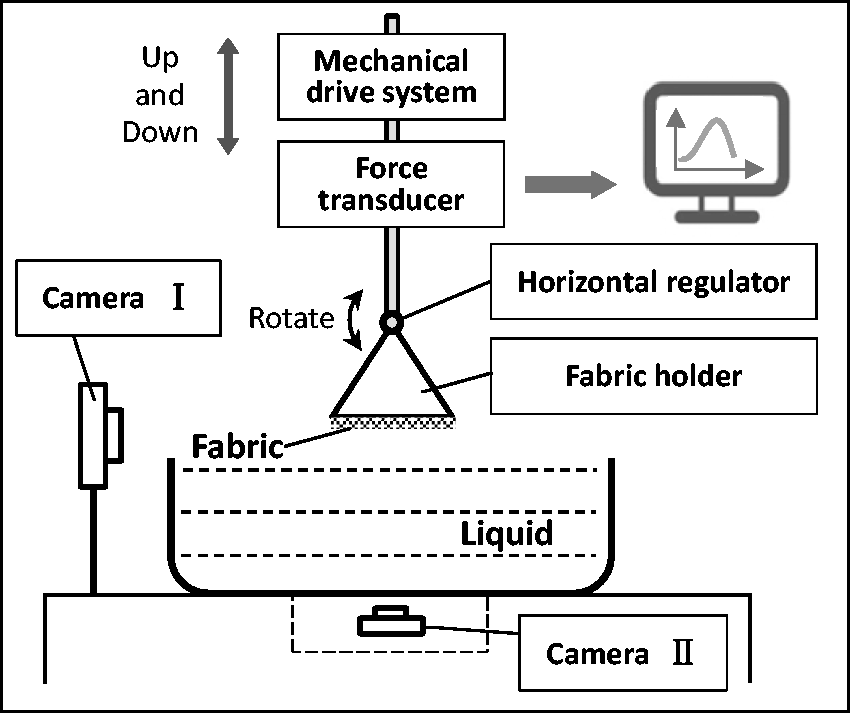

Results and discussion
Water contact angle
The apparent water contact angles of the four different materials decreased universally after surface modification with APPJ treatment (see Figure 5). One-way analysis of variance (ANOVA) showed there were significant differences between the contact angles before and after APPJ treatment (P < 0.05). The decrease percentage ranged from 3.3% to 19.9%. The decrease of the contact angles indicated that the materials became more hydrophilic after the APPJ treatment.
Average contact angles of the materials before and after the APPJ treatment.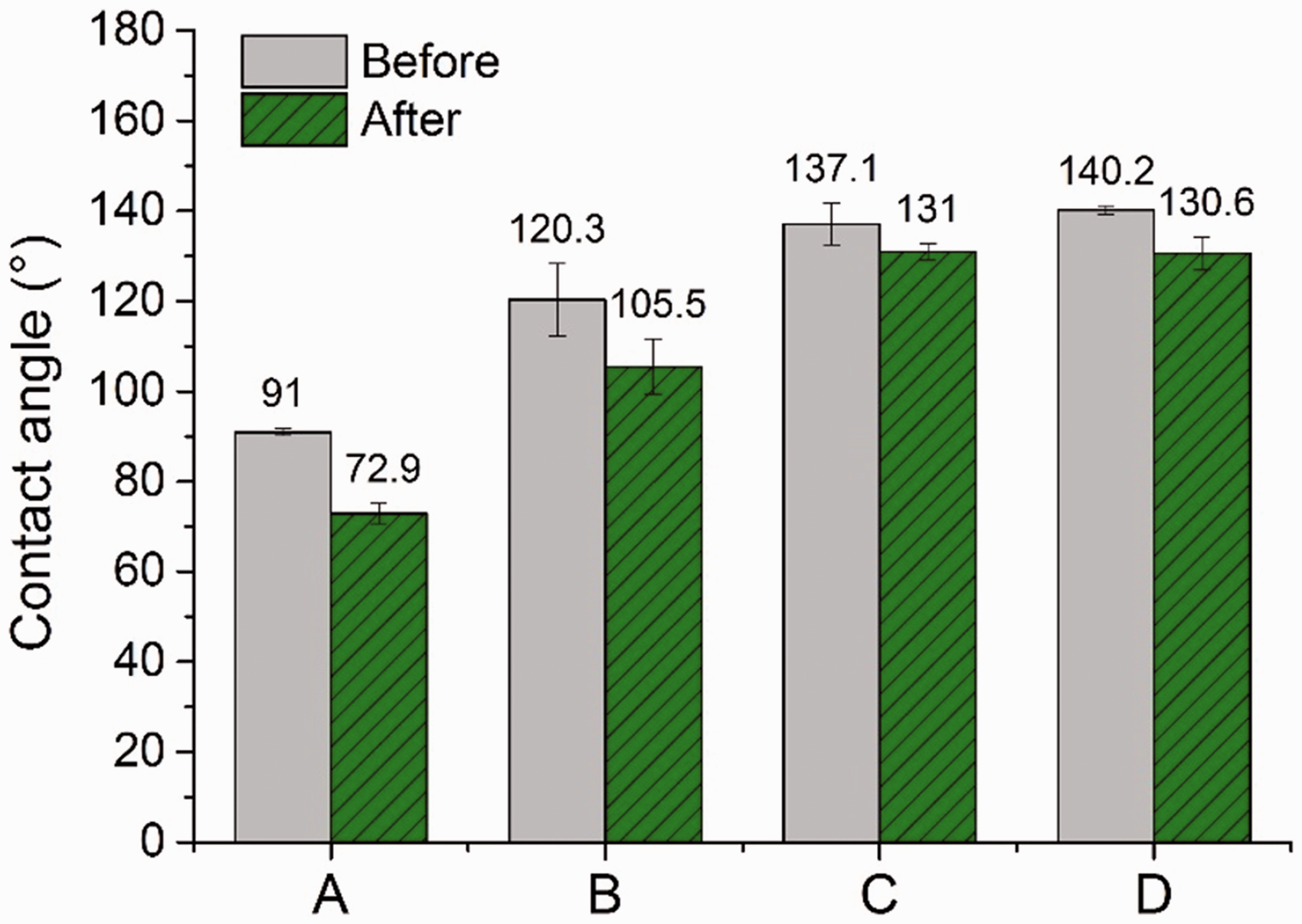
As the materials were not ideally smooth and flat, and the fabrics even had very porous structures, the APPJ treatment could penetrate the material,20,29,30 leading to numerous wicking tunnels. The overall improvement of hydrophilicity might be more significant than the decrease percentage of the static surface water contact angle.
SEM analysis
The surface morphology of the materials changed after APPJ treatment, which created lots of micro and nano roughness (see Figure 6). Granules and dents appeared on the originally smooth surface of Material A (PE). Protrusions, dents, and small pores are visible on the fibers of Material B (PP) after APPJ treatment. For Material C (PET), granules, plaques, and cracks occurred after the treatment. Granules, coatings, and branches were formed on the fiber surface of treated Material D (PET). The activated particles from the plasma induced etching and chemical reactions on the surface of the materials, resulting in those morphological changes, which could contribute to the hydrophilicity of the materials.
Surface morphology of Materials A–D before and after APPJ treatment.
XPS analysis
Surface chemical analysis determined by XPS on Materials A–D before and after APPJ treatment
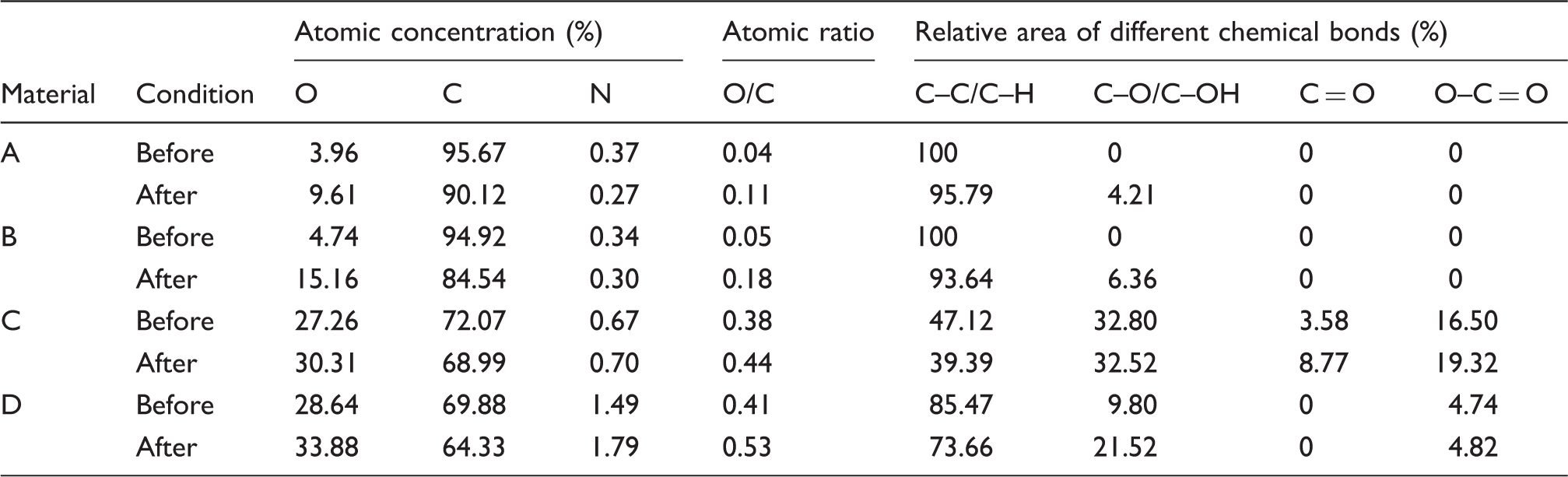
For further analysis, the XPS spectra were deconvolved with XPSPEAK software. The percentages of chemical bonds determined by curve-fitted spectra for C1s are presented in Table 4. The content of C–C/C–H was significantly decreased and oxidized polar groups were increased or added to the material surfaces after APPJ treatments. The material surfaces could potentially have carbon-containing peaks corresponding to C–C/C–H (∼284.8 eV), C–O/C–OH (∼286.3 eV), C = O (∼287.4 eV), and O–C = O (∼288.8 eV).29,32–34 For Material A (PE) and Material B (PP), APPJ treatment created 4.21% and 6.36% of C–O/C–OH, respectively. For Material C (PET), the content of C = O was increased by 5.19% and that of O–C = O by 2.82%. For Material D (PET), a 11.72% increase of C–O/C–OH occurred. The creation and increase of oxygen-containing groups during the oxidation process of APPJ treatment contributed fundamentally to the improvement of surface hydrophilicity.20,31
Adhesion property analysis
The maximum adhesion force and the duration time for materials with different structures made of different components all increased a lot after the APPJ treatments (see Figure 7). The maximum adhesion force increased by 21.7%–55.1% and the duration time increased by 21.4%–60.5% for the different materials. Compared with the PE film (A), the percentage decrease of apparent water contact angles, the percentage increase of adhesion force and adhesion duration, were much larger for the PP and the two PET fabrics (B, C, and D). A larger adhesion force indicates that the material would stick more tightly to a wet surface. A larger duration time indicates that the material would linger on the wet surface for a longer time before detaching. After treatment with APPJ, a larger force and a longer travelling distance or duration time would be required, leading to increased work for separating the adhering material from the water surface.
Curves of adhesion force versus time for different materials before and after APPJ treatment.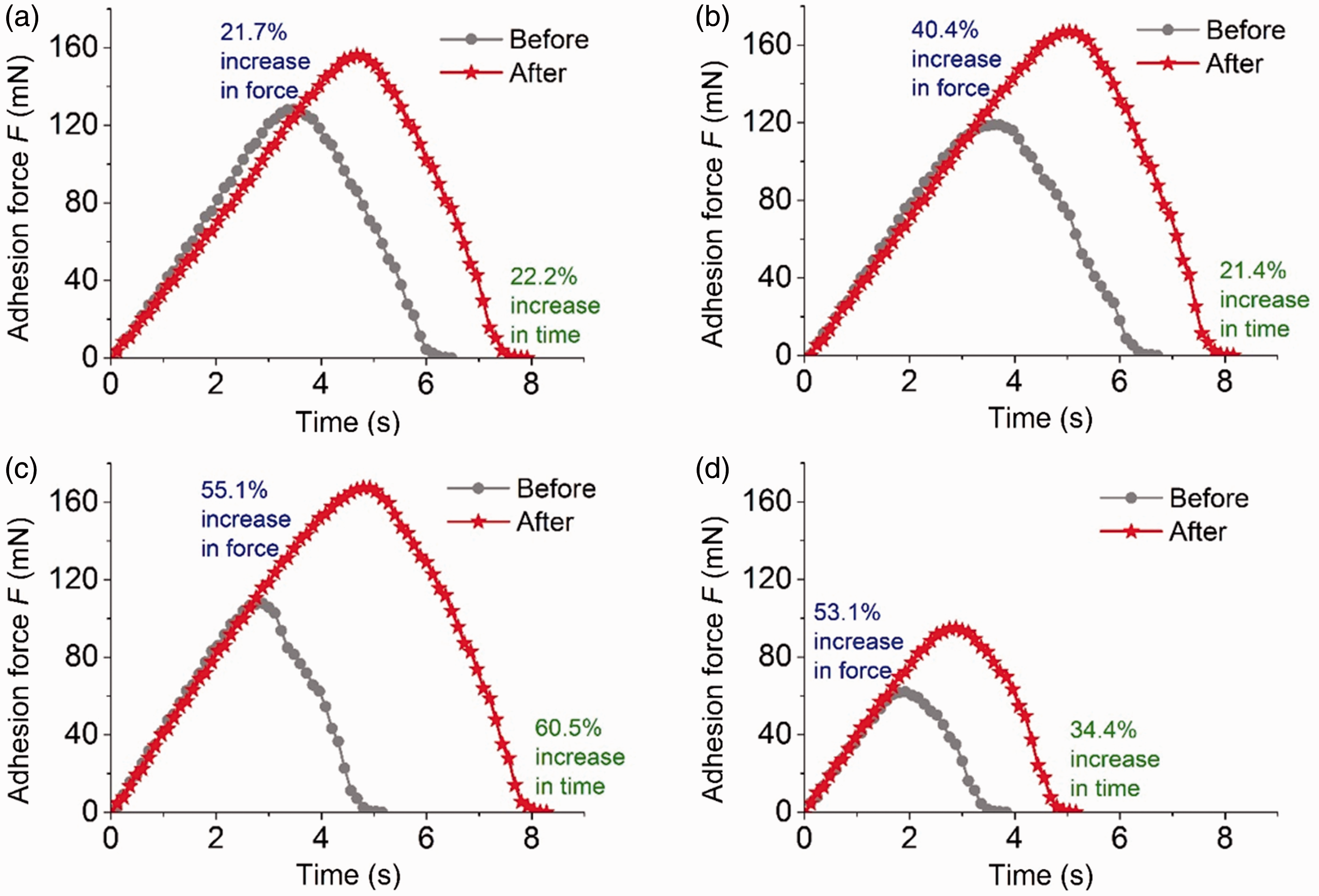
As discussed in our previous study, the adhesion property could be related to hydrophilicity, deformability, structure of the material, and surface tension of the liquid.11,13,18 Since the APPJ treatment only increased the hydrophilicity of the materials, with little change in other characteristics, such as deformability or structure, the above results showed a positive relationship between the hydrophilicity of the material surface and the adhesion force, which agrees with the theoretical conclusions of equation (4) quite well. The increase of hydrophilicity leads to a larger adhesion force and also a longer adhesion duration, which may cause more discomfort with wet fabric materials. However, in many applications, such as adhesion of pasting film or geotextiles to soil, larger adhesion force and longer duration of adhesion before detaching could be advantageous.
Conclusions
A theoretical expression was derived to describe the relationship between adhesion force, F, water contact angle,
Nomenclature
Adhesion force on the fabric. Contact angle at the top or bottom of the liquid bridge. Pressure difference between air and liquid, with air pressure higher than liquid pressure. Surface tension of liquid. Radius of the top or bottom of the liquid bridge. Radius of circle Q which is on the profile of the liquid–vapor interface. Density of the liquid. Height of the liquid bridge.
Footnotes
Declaration of conflicting interests
The authors declared no potential conflicts of interest with respect to the research, authorship, and/or publication of this article.
Funding
The authors disclosed receipt of the following financial support for the research, authorship, and/or publication of this article: This work was supported by the Scientific Research Fund of Zhejiang Provincial Education Department (grant number Y201432037), and the Zhejiang Top Priority Discipline of Textile Science and Engineering & Engineering Research Center of Clothing Technology of Zhejiang Province (grant number 2013KF11).