



Abstract
The sensation of prickle from textile garments is directly related to the force that a fiber protruding from the fabric surface can exert on the skin without buckling – its critical buckling load (CBL). Finite element modeling (FEM) has previously been used in the literature to predict CBLs for a set of 25 fibers with different along-fiber morphology. With a view to high-throughput analysis of fibers, we investigated two analytical methods that were potentially faster and less computationally intensive than FEM and applied them to calculate CBLs for the same set of fibers. In addition, we tested a numerical integration and gradient search (NIGS) method that we developed by adapting a previously published, non-FEM, numerical approach.
The analytical methods that we tested were either inadequately formulated or prone to instability. Our NIGS method was more reliable that the analytical methods (but slower to compute), and its results appeared more accurate than the published FEM results, based on an inconsistency metric that we developed.
The published FEM results and the NIGS predictions agreed within 5% for 60% of the fibers, and within 10% for 72% of the fibers (with differences ranging from 0.4% to 19.1%) and generally showed qualitative agreement on the response of CBL to fiber shape, with some notable exceptions.
The response of CBL to dimensional variation was complex. This, and the inconsistency between methods, highlights the need for caution when analyzing complicated biological structures, such as wool, and the value of verifying the reliability of any predictions from any approach.
Keywords
Single wool fibers are highly heterogeneous both in composition and shape; effectively, they are a multi-component cellular-based biomaterial. An adequate understanding of how the industrially relevant properties of single fibers are created from underlying composition requires consideration of structure at a range of scales from nanometers to micrometers, 1 and this has been the motivation for significant past modeling efforts. 2 Liu and Bryson 3 addressed the composite nature of wool fibers by modeling the effective stiffness of a fiber as a function of the Young’s moduli of its cuticle, orthocortex and meso/paracortex, weighted by the relative abundances of these components, but did not extend their approach to investigate emergent effects of along-fiber variation in composition. Conversely, the effect of shape on buckling was investigated by He 4 and He and Wang, 5 who modeled smooth sinusoidal variations in diameter along the length of a fiber, but assumed its composition to be constant. For irregular shapes, explicit solutions are not necessarily available, and thus finite element modeling (FEM) methods were used. Munro and Carnaby 6 also used FEM to connect ratios of idealized macrofibrils (the structural basis of orthocortex and paracortex) to single fiber curvature. Our long-term interest is also in describing how along-fiber variation in morphology, cellular and sub-cellular composition scales up to affect whole-fiber mechanical properties from biological data. We have chosen “prickle” as a property for initial investigation as it is a relatively simple, well understood and physically measurable single-fiber textile property.
The sensation of prickle from textile garments or surfaces is largely governed by the buckling behavior of individual fibers whose ends protrude onto the skin. A fiber will resist a degree of end-on force from the skin without buckling. The greater this exerted force, the greater the sensation of prickle, once a nerve sensitivity threshold has been reached.
7
A critical buckling load (CBL) of greater than 75 mg has been shown to stimulate pain nerve receptors in the skin, and sufficient stimulation within a given area of skin results in a prickle sensation. Thus the CBL of a fiber (the minimum force that will cause buckling) is a major factor in the tactile acceptability of textiles, especially garments worn next to the skin (Figure 1).
Fibers protruding from the surface of a textile garment are subject to an end-on force from the skin of the wearer, which generates a resultant force of the same magnitude exerted from the fiber onto the skin. If fiber can resist this force without buckling, the wearer of the garment will experience a sensation of prickle if the force is over a nerve sensitivity threshold. Discomfort increases with the magnitude of the force. If the fiber buckles it causes very little prickle.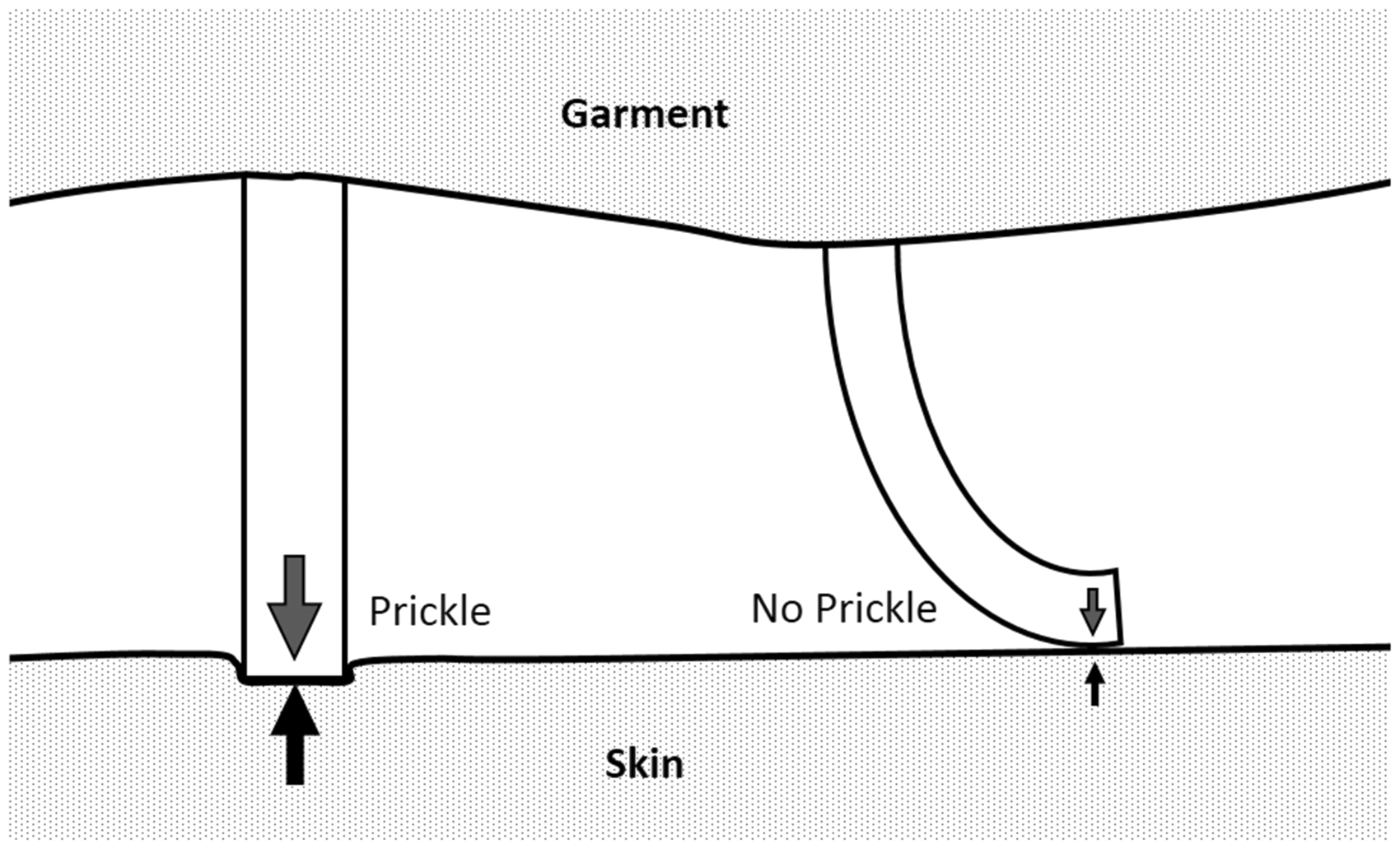
The CBL of a thin column or rod can be described by the Euler–Bernoulli beam theory, for example, see Timoshenko and Young. 8 This theory was applied in mathematical studies of wool fiber stiffness by Veitch and Naylor, 9 who modeled the wool fiber as a materially homogenous, circular rod with uniform cross-section, for which an explicit, analytical solution is readily obtainable. More recently, Asad et al. 10 applied the theory to study a range of animal and plant fibers, using similar assumptions of homogeneity and a uniform, circular cross-section of fibers.
A natural extension of the previous approaches is to model how both variation in fiber morphology and composition along the length of the fiber might generate single-fiber stiffness, affecting CBL and, thus, fiber prickle. This is necessary for future studies that investigate how actual variations in real wool fibers affect CBL. FEM is widely used for studying the mechanical properties of irregular structures. For biological structures such as bone, the performance of FEM may depend on the number and shapes of mesh elements used to represent the structure. 11 Thus, accuracy may require manual input into mesh design rather than relying on a purely automated approach to mesh generation. This consideration is equally applicable in the context of complex wool fibers. Therefore, from the future aspiration of automated, high-throughput analysis of fibers from real fiber and sub-fiber structural data, we investigated alternative methodologies for finding the CBL of irregular fibers.
Methods
Equations for critical buckling load
The buckling of fibers is analogous to the buckling of columns in engineering applications, despite the large difference in scale. The governing equation for buckling of columns not subject to axial restraints can be obtained from the moment-equilibrium equation for a free body and was given by Coşkun and Atay
12
as a fourth-order differential equation (DE)

We can express equation (1) in a non-dimensional form as



Wool fibers vary in diameter and cross-sectional shape along the short distances relevant to our prickle scenario (Figure 2). In our model we assume that the fiber has an elliptical cross-section along its length, and the moment of inertia of the fiber is described as
A scanning electron microscope image of wool fibers from a Perendale sheep showing the typical irregularities that occur in what would otherwise be a fiber of elliptical cross-section (image by the authors using standard scanning electron microscope methods).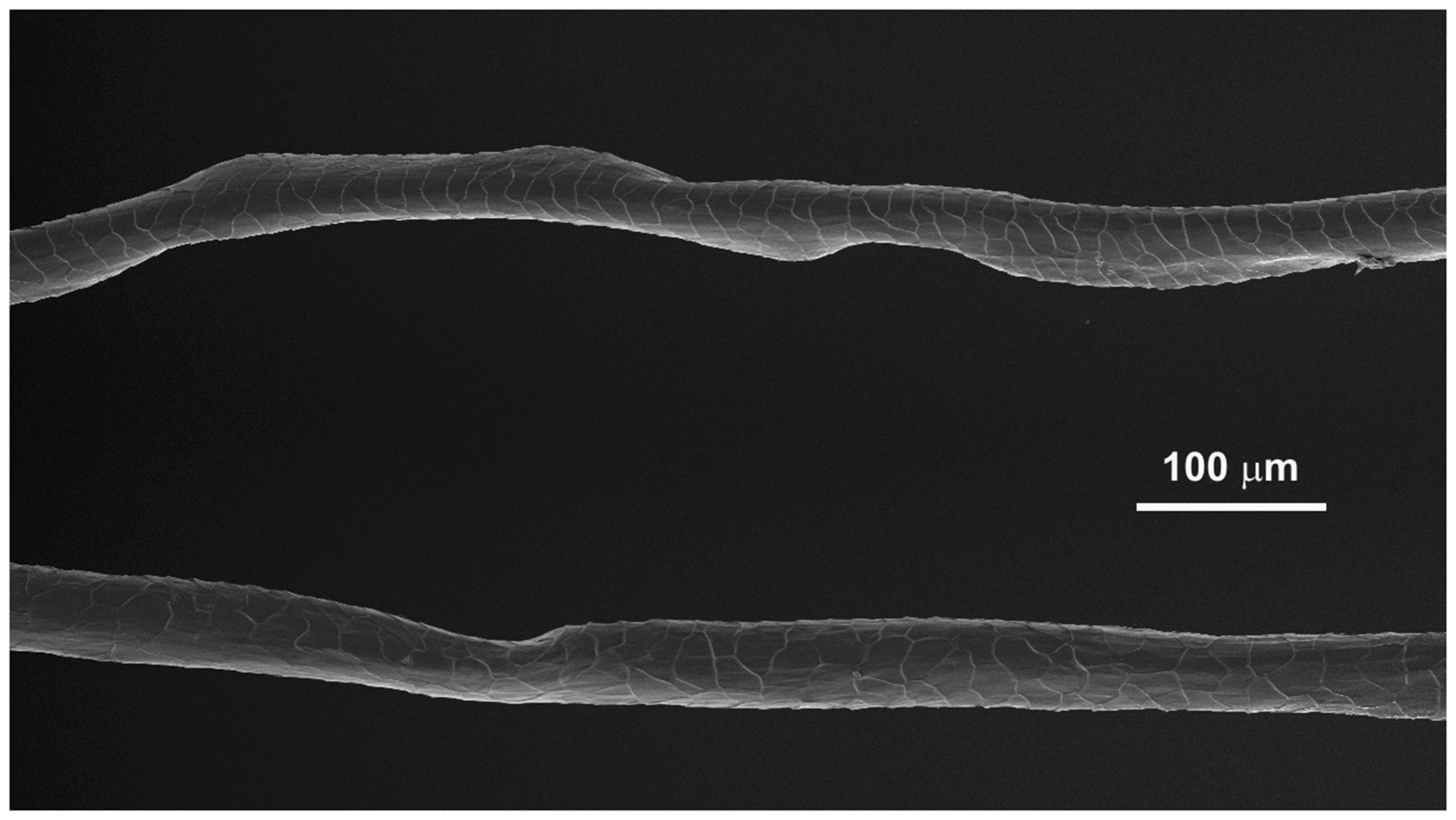

Figure 3 depicts the assumptions made for the analysis of prickle. The end of the fiber that is anchored in the garment can be considered to be clamped (at Representation of the buckling problem for a textile fabric against skin, where the fiber length has been normalized to the unit length, and the fiber is subject to a normalized force, β, by the skin, with buckling occurring if this force is greater than or equal to the normalized critical buckling load, 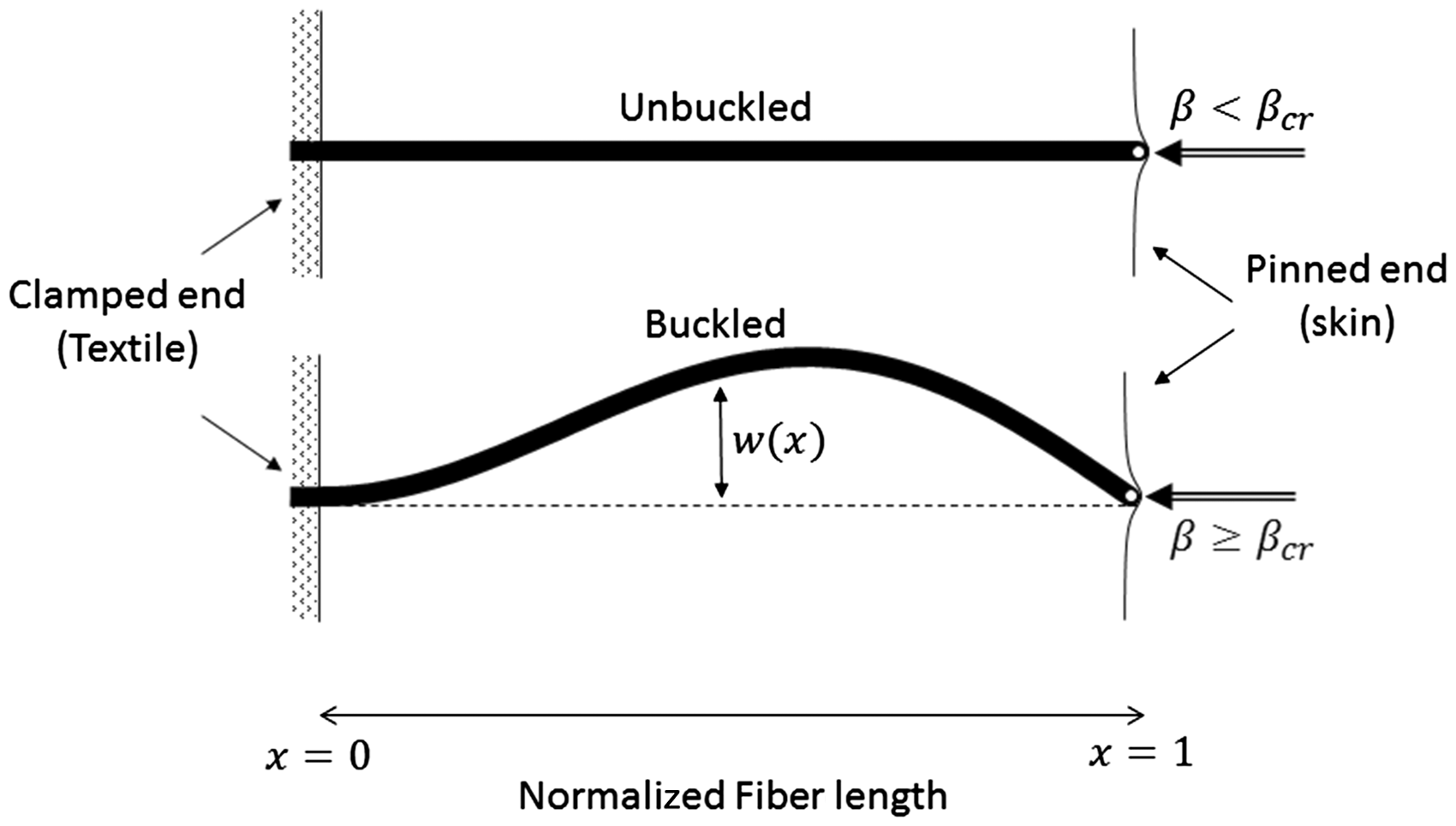


Integrating equation (2) twice and using the boundary conditions gives

However, many approaches to solving the buckling problem use the form in equation (2).
Solution approaches alternative to FEM
Exact, closed-form solutions for w and β are not generally available, although solutions to equation (2) have been calculated for a few special cases.14–19 A number of analytical approaches have been used to obtain approximate solutions, including a functional perturbation method involving convolutions of ζ with Green’s functions, 20 application of the variational iteration method (VIM),12,21,22 homotopy analysis 23 or by assuming a power series solution to w and generating linear relations to identify coefficients.13,15
Numerical approaches other than FEM have been used to investigate column buckling, such as the boundary element 24 and differential quadrature 25 methods. Alternative approaches involve the numerical solution of equation (2) (or equivalent first-order formulations involving tangent angles and displacements) with an iterative search to find unknown initial values and buckling load.26–28 Rychlewska 29 used a piecewise, exponential approximation of ζ, generating an eigenvalue problem incorporating continuity conditions across segments.
Analytical approaches have generally been developed using relatively simple functional forms of ζ, which are more applicable to structures of engineering interest than complex biological structures for which these approaches may become intractable. However, they are useful for testing the performance of other methods that yield approximate solutions and can be relatively fast to compute compared to numerical approaches that do not suffer the same tractability issues, but often entail a balance between precision of representation and calculation versus computation time and/or memory.
Investigating alternative approaches to FEM
We evaluated three non-FEM methods by analyzing the same set of fiber morphologies from the FEM studies of He
4
and He and Wang
5
and then comparing our results with those in their publication. For each of the fibers considered by He
4
and He and Wang,
5
elasticity was specified as

In equation (9) we have made the transformation,
To obtain the actual CBL (P) from the normalized CBL (β) in equation (4) and express it in terms of mg to facilitate comparisons between studies, multiplication by a scale factor of 12.2 mg is necessary

The challenge for each method was to substitute equation (9) into equation (2) and solve for the smallest positive value of β. We investigated this for the same combinations of r, m and θ considered in the FEM studies.4,5
The first of the three methods we investigated was the VIM developed by He
30
to solve the general DE,
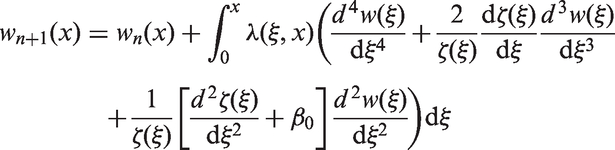

The second method investigated (which we will refer to as the power series method or PSM) was presented by Huang and Luo,
13
who assumed the solution to equation (2) to be an Nth-order power series expansion
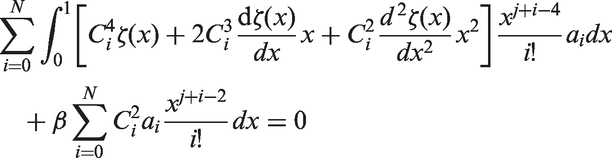


Substituting equation (13) into the boundary condition equations gives four more relationships, which together with equation (14) can be written as

Equation (9) can be exactly represented as a finite sum of sine and cosine terms, which we used in the PSM. With a view to analyzing real fibers whose flexural rigidity is available from data measured at discrete points, we also investigated the PSM using both Fast Fourier Transform (FFT) representations (PSM FFT) and polynomial representations (PSM Poly) of ζ to compare with the PSM using the exact representation (PSM Exact). The FFT and polynomial representations were obtained by calculating values for ζ at discrete points of x, for different values of r, m and θ and using, respectively, the fft and polyfit commands in MATLAB. All three PSM methods were implemented in MATLAB (The Mathworks Inc., Natick, MA) and used the eig function to solve the generalized eigen problem. Following the recommendation of Huang and Luo, 13 we used a polynomial of order 14 to represent the buckling deformation, and thus the dimensions of the matrices involved were 15 × 15.
The third method tested was motivated by the approach of Lee et al.,
27
who numerically integrated equation (2) from
We adapted this version by making use of the boundary conditions at both ends of the fiber to determine the values of w and its first, second and third derivatives at

Equation (2) is readily expressed as a system of first-order ordinary differential equations (ODEs) with initial values given by equation (17), leaving just β as the unknown. We used the MATLAB function fminsearch (which implements a Levenberg Marquard gradient search) to find the CBL, β, using the MATLAB integration routine ode113 to perform the numerical integration. In each case we used a starting value of 0.1 for β (corresponding to 1.22 mg for the non-normalized problem). To avoid convergence on

We refer to this numerical integration and gradient search method as “NIGS”. We note that because equation (2) is linear, equation (17) (and indeed any solution to w) can be scaled by a constant and still be valid for the same value of β.
Checking prediction consistency for the investigated approaches
Experimental testing of predictions would generally be required to validate theoretical predictions. If independent methods agree in their prediction of the CBL, β, then this may on its own suggest that the predictions are reliable. If methods differ, then determining which (if any) result is correct can be challenging without recourse to experiments. However, it may be possible to detect anomalies by checking the consistency of the predicted β with the corresponding solution for the deformation, w.
We calculated a dimensionless inconsistency score, γ, to use as an indicator of how well the solutions satisfied both equation (8), and the boundary conditions, defining it as

The first term of equation (19) was obtained by taking the root mean square (RMS) of the left-hand side of equation (8) and dividing by the RMS of
Ideally, predictions for β and w should yield a value of zero for γ when substituted into equation (19). However, we do not suggest that γ quantifies the uncertainty in the corresponding estimate of β. Further, γ does not detect whether or not β is the CBL, since γ should be zero for all buckling modes.
We calculated γ for from the predicted β and w for each method that we implemented. When a method expressed the solution to w as a polynomial, equation (18) was calculated by global adaptive quadrature using the integral function in MATLAB. When the solution to w was a set of numerical values corresponding to discrete values of x, ζ was correspondingly discretized and equation (19) was calculated by the trapezoidal method, using the trapz function in MATLAB. Since the values of
Results
Predicted critical buckling loads (

For PSM FFT, 51 discrete values of ζ were used to obtain its Fourier series approximation. For PSM Poly a polynomial of degree 15 was used to represent ζ. A polynomial of this magnitude was not sufficient for accurately approximating ζ when m was 5 or 10, and using a higher order polynomial introduced spurious oscillations or approximated poorly at the ends of the fiber.
The results for PSM FFT and PSM Exact (which used the exact functional form of ζ) were in good agreement (within 0.1 mg) for only the instances satisfying {
PSM Exact, PSM FFT and PSM Poly showed very large variations in γ, ranging from a lower value of 2
In order to ensure the NIGS was converging to an actual root and achieved the boundary conditions for
The FEM results always differed by more than 0.1 mg from the results for any of the other methods for any of the model fibers. This was notable for the uniform case where all the tested methods gave the theoretically derived value while the FEM results differed by 5.6 mg. Agreement to either within 1 mg or to within 1% occurred only in one instance – for the NIGS result for {
However, on a qualitative level, the FEM and NIGS results generally showed agreement on the direction of the response of CBL to changes in the shape of the fiber. However, for the fiber described by {
To estimate w, in order to calculate γ for each finite element model, we integrated equation (2) using ode113 with
Computation times were measured using the tic and toc functions in MATLAB. To reduce computation time for the NIGS, we performed the NIGS with
However, we found that if we used the NIGS with
Discussion
For the fibers considered, the buckling equation can be solved explicitly for only the simplest fiber (uniform along its length). Thus, in the absence of experimental verification (which is outside the scope of this paper), the inconsistency score, γ, described by equation (19) may provide a useful gauge for evaluation of the goodness of predictions. The first term in equation (19) tests for consistency of equation (2) without reference to boundary conditions, and would be negligible if w is obtained from
Based on the γ scores, the NIGS method appeared to give more reliable predictions than the other methods considered, provided stringent error tolerances were observed. This came at the cost of having a much longer computation time (apart from the VIM). Relaxing the tolerances reduced the computation time without having a significant effect on the predicted CBL and, thus, is an option if faster prediction is required. This could have the consequence of increasing the inconsistency score (equation (19)) due to less accurate prediction of fiber deformation, but this would be a concern only if the accuracy of the results were in question.
The PSM Exact method, while giving good agreement with the NIGS method in many cases, was found to be unstable in others, and should be used with caution: it appears adequate for fibers/columns with small deviations from a uniform cylinder or for large deviations if the rate of change along the length is relatively low. This is certainly a scenario that is expected in keratin fibers.
The generally better agreement of PSM FFT with PSM Exact than PSM Poly for integer values of m reflects that a Fourier series representation is likely to be more robust than a polynomial representation when dealing with biological structures like wool, which often show seasonal (sinusoidal) variations in diameter. Conversely, the better agreement of PSM Poly with PSM Exact for half-sine-wave variations was expected as such a shape is more readily approximated by a polynomial, and since FFT performs better when the sampling window corresponds to integer cycles of periodic data. However, the PSMs in general appear to be unreliable because they can yield an unstable eigen problem, giving some erroneous results.
One would expect that if the FEM CBL predictions of He and Wang 5 were correct, then our numerical integration of equation (2) would yield correct values for the corresponding fiber deformations, and thus the calculated γ scores would be negligible. On this basis, the FEM predictions appear to be less accurate than the NIGS predictions. It is unclear why and may be related to the choice of mesh shape and density. He 4 reported using a mesh with 84 elements for the cross-section of the fiber and 120 layers along the fiber for all simulations performed. While this may have been too sparse, especially for cases when five or 10 undulations were modeled along the length of the fiber, the best agreement between the FEM and NIGS predictions were a fiber with 10 undulations of the largest diameter variation considered.
The inability of the VIM to converge was puzzling, but appears to be related to the choice of Lagrange multiplier. Applying variational iteration theory
30
to equation (8), λ must satisfy both the relationship

The boundary conditions in equation (6) assume that a fiber protruding from a textile garment can be treated as being clamped by surrounding fibers at the garment end, that is, that it cannot move). Similarly, the boundary conditions in equation (7) assume that a fiber pushing against the skin can be treated as pinned, that is, that the end of the fiber is perhaps lodged in a pore and will not slide along the skin but can swivel. The accuracy of these assumptions has obvious implications for the accuracy of the predictions.
Conclusion
Our simulation results indicate how sinusoidal modulation of the fiber diameter can cause significant effects on its CBL, compared with a uniform fiber having the same mean diameter. This general conclusion was no surprise and therefore reassuring, because our aim was to compare the fine details of results from alternative methods. CBL was affected by the magnitude of the modulations, the number of modulations occurring along the fiber length and the position along the fiber where peak diameter occurred. When changes in diameter were relatively small and gradual along the length of the fiber, the resistance to end-on forces can be increased. However, for larger variations in diameter, increasing the magnitude of variation while retaining a gradual change along the fiber resulted in a weakening of the fiber. Interestingly, when the diameter at the clamped end equaled the mean fiber diameter, increasing the number of diameter modulations along the fiber showed a complex, diameter-dependent response. When the peak diameter was 10% or 30% of the mean diameter, the CBL decreased when the number of modulations in the fiber increased from one to five, but increased when the number of modulations in the fiber increased from five to 10. When the peak diameter was 50% of the mean, CBL increased monotonically with the number of modulations in the fiber.
This complex behavior even in highly simplified abstract structures (simple wave-form diameter changes) underscores the need for reliable computational methods to investigate CBLs when analyzing complicated biological structures, such as wool. The significantly poor performance of published methods (e.g. PSM and VIM) that had been “validated” against exact solutions for simple column geometries indicates the need for caution when using CBL predictions for irregular geometries. Our inconsistency analyses for the predictions of different methods indicate that the NIGS approach gave more reliable predictions than previously published results that had been obtained by FEM, and that we had originally intended to use as a standard.
We stress that this does not reflect on the FEM approach itself, but rather underscores that other approaches can be equally valid and that there is always a need to investigate the reliability of predictions, irrespective of the method used.
Wool fibers, in addition to being morphologically irregular, vary considerably in chemical and structural composition (and thus elasticity) along their lengths. Consideration of morphological and compositional irregularities together presents a more demanding computational problem as a future research challenge.
Footnotes
Acknowledgements
We would like to thank Peter Brorens, Andy Bray and Warren Meade for discussion at various stages of this work.
Declaration of conflicting interests
The authors declared no potential conflicts of interest with respect to the research, authorship and/or publication of this article.
Funding
The authors disclosed receipt of the following financial support for the research, authorship, and/or publication of this article: This work was supported by the New Zealand Ministry of Business, Innovation and Employment (contract number C10X0710) and the AgResearch Core funded Integrated Wool Research Science Programme.