




Abstract
A different percentage of nanoparticles of zinc oxide dispersed in a newer amino-silicone binder (poly-hydroxy-amino methyl silicone) were applied to bleached cotton khadi (handloom woven from handspun yarns) fabric to impart both ultraviolet protection and an antimicrobial finish in one step using the pad-dry-cure method, instead of using two processes for two different finishes. Amongst the varying dosages of nanoparticles of zinc oxide (1% to 5%) on the weight of fabric dispersed in poly-hydroxy-amino methyl silicone (2–10%) owf, 1% nanoparticles of zinc oxide and 4% poly-hydroxy-amino methyl silicone show ultraviolet protection factor 10 and 93–95% antibacterial reduction, whereas a 4% poly-hydroxy-amino methyl silicone and 5% nanoparticles of zinc oxide combination yields ultraviolet protection factor 20 and 99% antibacterial reduction. Thus, nanoparticles of zinc oxide at the level of 5% application with 4% poly-hydroxy-amino methyl silicone gives the best antimicrobial (99% bacterial reduction) and ultraviolet protection factor value of 20, balanced with 15–20% loss of fabric tenacity. Fourier transform infrared spectroscopy analysis reveals a complex formation between cellulose/oxy-cellulose and poly-hydroxy-amino methyl silicone that embeds nanoparticles of zinc oxide within it. Supporting reaction mechanisms proposed for both energy dispersive spectroscopy and atomic absorption spectrophotometry results further confirm the presence of zinc, potassium, and silicon on the treated cotton fabric. A wash stability test also shows the stability of the antimicrobial treatment for up to five wash cycles with 96% bacterial reduction and retention of ultraviolet protection factor of 15 after five washes. Thus, this single step combining ultraviolet protective and antimicrobial finishing of cotton fabric may be used for eco-fashion garments to protect the human skin from ultraviolet light and microbes alongside its possible uses in medical textiles to protect human body parts.
Keywords
Cotton cellulose is a carbohydrate-based fibrous material used in textile applications. It is susceptible to microbial attack in specific humid conditions (during use) and has a low ultraviolet (UV) protection capacity with a maximum UV protection factor (UPF) of 5; to improve these it needs the application of two finishes simultaneously. To increase the UV protection and antimicrobial resistance of cotton in a conventional process, two different types of chemical are applied in three different steps. However, in the present work, an attempt has been made to impart these two protective finishes with a single chemical formulation in a one-step application. Nanoparticles of zinc oxide (NP-ZnO) have previously been applied to different textiles including cotton to impart antimicrobial 1 and UV protection 2 properties through treating them with NP-ZnO coated or impregnated cotton cellulose substrate with various types of dispersing media, binding agents, and cross-linking agents such as poly carboxylic acid, carboxy-methyl-chitosan, 3 polystyrene-block-poly (acrylic acid) copolymer.
However, so far no study has used NP-ZnO with poly-hydroxy-amino methyl silicone (PHAMS) as a dispersing media or binder. The antimicrobial activity of NP-ZnO, particularly in smaller particle sizes (giving a higher surface area to volume ratio), is thought to be due to the action of active oxygen species (killing bacteria) released from Zn through the formation of ZnO2 (Zn peroxide), 4 and this antimicrobial activity is again reported to rise with a decrease in the size of NP-ZnO.
The highly abrasive nature and surface roughness of the NP-ZnO coating (which is higher for smaller size NP-ZnO) causes mechanical damage to the cell membrane of bacteria, leading to an enhanced bacterial (antimicrobial) effect of NP-ZnO. Moreover, PHAMS binds with the –NH2 group in an acidic medium to form cationic quaternary ammonium ions, which has a detrimental effect to microbes and, hence, it is believed to be useful as an antimicrobial finish.
Alongside these applications, NP-ZnO can also be used as a nano semi-conductor, solar energy conserver or an electrostatic dissipative coating, and it has self-cleaning activity5-6 beside its UV protection and antimicrobial resistance properties. The potential applications of prepared PAA/PEG-600 adduct in improving the sizing and durable hand building of cotton cellulose and the functional finishing of cellulose-containing fabrics with nanoparticles of Ag or TiO2 has been investigated previously. 7 Incorporation of synthesized hyper-branched poly (ester-amine) after treatment with iodine solution brings about a remarkable improvement in the antimicrobial properties of the cotton fabric and subsequent treatment of modified cross-linked cotton fabric with Zn or copper (Cu) acetate results in higher UV protection and antimicrobial functionality with a good durability when washed. 8
The UV blocking and antimicrobial properties of viscose fabric can also be enhanced by the incorporation of NP of Ag or TiO2 applied in a mixture with a DMDHEU or DMDHEU/TC finishing bath. 9 NP (1 nm= 10−9 m) are considered a special group of materials with unique features and extensive applications in diversified fields of nano-composite films and membranes. 10 Usually an NP size of 30–100 nm is considered most useful; however, for application in textiles NPs of 100–500 nm are preferred, as a very low particle size (i.e. 30–100 nm) may penetrate the skin’s pores. Recent advances in the field of nanotechnology have led to the preparation of highly ordered crystalline NPs and nanorods of any size and shape for specific applications.
Of the metal oxide NPs, NP-ZnO is a multifunctional inorganic NP with many significant features such as chemical and physical stability, high catalyst activity, effective antibacterial activity, and a protective finish against UV and infrared adsorption. However, in the field of textiles some cotton apparel and fabric could benefit from the above two finishes for UV protection and antimicrobial finishes moving to a one-step finish. Recently, the industry stopped using nano-silver technology for an antimicrobial finish due to its high cost. Hence, at present researchers are attempting to establish efficient metal nano-oxides including ZnO as other low-cost options. ZnO is considered a safe chemical and is excluded from the prohibited chemicals and element list under Global Organic Textile Standard (GOTS). ZnO is also known to be stable when exposed to high temperatures and is capable of photo-catalytic oxidation to producing UV protection. The present study places a high importance on the report of the application of NP-ZnO with PHAMS, a newer dispersing agent cum binder that has not been not studied so far. PHAMS was selected as a suitable binder in the present work from our earlier experience of good results observed on an NP-ZnO finish with PHAMS on jute. 11
Hence, in this study NP-ZnO was applied along with PHAMS as a newer binder cum dispersing media on cotton fabric in a single-step application to achieve both UV protection and antimicrobial and rot-resistant properties with a minimum loss of tensile properties.
Experiments
Materials
Hydrogen peroxide-bleached, plain weave cotton fabric (98% cellulose) with 63 ends per dm (linear density 256 tex), 55 picks per dm (linear density 256 tex) and 80 g/m2 (area density) was used in this experiment.
Zn acetate (assay, 98% pure, Loba Chemie, India), NaOH (assay, 97% pure, E Merck, India), and aqueous solution (65% conc.) of PHAMS obtained from Wacker Chemicals, Germany were also used. PHAMS is a low Degree of Polymerization (DP) copolymer obtained in emulsion form. Normally it is also available in local markets in the form of potassium salt.
Preparation of NP-ZnO
NP-ZnO was freshly prepared by a co-precipitation method. On total, 50 gm of di-hydrated Zn acetate was added to 1000 ml of distilled water under vigorous stirring. After 10 min, 2 M NaOH aqueous solution was introduced into the above solution drop by drop with simultaneous stirring for 2 hours in an ultra-high-speed magnetic stirrer, resulting in a slurry-like white solution. The slurry was then taken out, filtered, and washed repeatedly with distilled water followed by ethanol to remove the impurities from the final product. The slurry was then dried at 100℃ in a vacuum oven for 6 h to form a white powder or flakes of ZnO. This was then calcinated at 600℃ for 4 hrs in a Muffle furnace to lead to NP-ZnO.11–12
Methods
Reaction mechanism showing the preparation of NP-ZnO and its characterization
Before the application to cotton cellulosic fabric, NP-ZnO was generated by the above co-precipitation method. Zn acetate di-hydrate and NaOH were used as the precursor for generating NP-ZnO followed by calcinations at a high temperature (600℃) in a muffle furnace. The growth of NP-ZnO via this method uses the following steps:
13
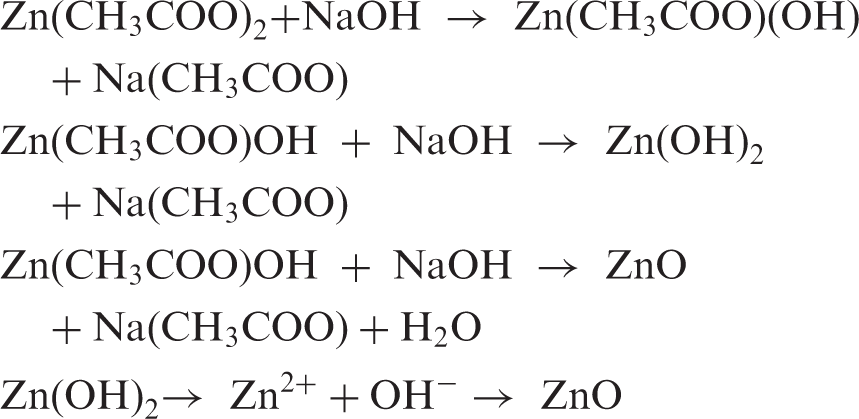
The conversion of the bulk of ZnO to NP-ZnO was carried out by calcination at 600℃.
The size and quality of the particles have an effect on a particle’s settling velocity in the dispersion medium. The larger the particle, higher the settling velocity. Any NPs (including NP-ZnO) that are very small have a large specific surface area and high surface activity, which may lead to some agglomeration, 14 hence, the use of a suitable dispersing medium becomes necessary. No work on the application of NP-ZnO on cotton with silicone binders (PHAMS) has been reported so far. Hence, PHAMS has been used in the present work.
Application of NP-ZnO on cotton fabric
NP-ZnO was weighed in a specific dosage (1 gm to 5 gm) and dispersed with the requisite amount of 2–10 ml PHAMS. The volume was then adjusted with distilled water to 100 ml. All the concentrations of application of NP-ZNO and PHAMS are in weight/weight percentage on the basis of the dry weight of the fabric (owf). The solution (pH 12–14) was poured into a tray with the bleached cotton fabric immersed in the solution. Then the fabric was passed through the padding mangle at a pressure of 2 Kg/cm2 maintaining 100% pick up. The padded fabric was dried at 90℃ for 10 min and cured at 120℃ for 5 min followed by cooling under air.
Methods of testing
The samples of NP-ZnO-coated fabrics were evaluated for important textile-related physical and mechanical parameters, thermal degradation behavior, fire-retardant properties, and characterization of nature of coating by scanning electron microscopy (SEM), Fourier transform infrared spectroscopy (FTIR) analysis, etc. as detailed below.
X-ray powder diffraction analysis
The X-ray powder diffraction (XRD) pattern of the samples was analyzed on the PAN analytical X’PERT PRO system with Bragg-Brentano geometry using Cu K alpha1 radiation, operating at 40 kV and 30 mA, where alpha = 1.5418 Å for the Cu Kα1 line. The yarns from the fabric were removed, placed parallel, and scanned in the transmission mode, at a range of 10–40°. The mean particle size from XRD analysis was calculated by using Debye-Scherrer’s formula:
15
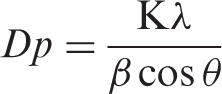
where Dp = average crystallite size
K = dimensional shape factor
Β = line broadening in radians
Θ = Bragg angle
Λ = X ray wavelength
Particle size analysis
Particle size analysis of NP-ZnO powder was carried out with a particle size analyzer (Mastersizer).
FTIR analysis
Finely crushed selected cotton fiber samples (3 mg) taken from untreated and treated fabrics were examined in a double-beam FTIR spectrophotometer with an attenuated total reflectance attachment. 16
SEM
The surface morphology of untreated cotton, NP-ZnO-treated cotton and NP-ZnO powder samples were examined using a scanning electron microscope at different magnifications. The fiber samples for the SEM study were prepared with a gold-palladium alloy coating following a standard procedure. 17
Atomic absorption spectrophotometry
The contents of the metallic element, i.e. Zn, potassium (K), were measured in a GBC 90 6 AA model atomic absorption spectrophotometer as per the alpha method and the content of silica (Si) was determined by Inductively Coupled Plasma Optical Emission Spectroscopy (ICP OES) method in a Perkin Elmer Optima 8000 model instrument. 18
Test of anti-microbial and antifungal properties
The presence of microbes in the treated and untreated fabric has been tested by the parallel and streak method as per the American Association of Textile Chemists and Colorists (AATCC) 147-2011 standard. The bacterial reduction has been ascertained as per the AATCC 100-2012 standard. 19
The assessment of antifungal activities on the control and treated fabrics was tested as per the AATCC 30-2013 method 3.
UPF test
UPF has been tested as per the AATCC 183:2010 method in a UPF Labsphere UV transmittance analyzer with the following equations:


Tenacity
Breaking tenacity (cN/tex) of the fabric samples were measured by the raveled strip method following IS-1969-1985 20 specification using an Instron (Model-1445) CRT-Universal tensile tester with a traverse speed of 300 mm per min maintaining a pretension of 0.5 N. The sample size of the fabric was 100 mm × 50 mm between the jaws.
Fabric stiffness
The bending length of the fabric samples were measured as per the IS-6490-1971 method using the cantilever principle.
Whiteness indices
The whiteness index as per the Hunter Lab-Scale formula of the cotton fabric samples was directly evaluated using a computer-aided Macbeth 2020 plus reflectance spectrophotometer (with D65 standard illuminant and 10 deg standard observer setting) and associated color measurement software.
Test of crease recovery angle
Dry crease recovery angle of both the warp and weft way of selected fabric samples were measured by the Presto crease recovery tester in accordance with the IS 4681:1981 standard test method. 21
Test of degree of polymerization
The degree of polymerization of the oxidized and controlled cotton samples was studied by standard cuprammonium fluidity test as per the IS 244:2006 method. 22
Wicking test
The wettability of the control and treated fabric was tested with the liquid wicking rate for 5 min as per the ISO 9073 2000 method. 23
Test of surface roughness, frictional properties and total hand value
The surface roughness and the coefficient of friction of the untreated and differently treated cotton fabric was estimated with the Kawabata surface roughness test as per the standard procedure. 24
Test of wash stability
Washing the treated fabric was carried out as per the IS 687:1979 standard method IS-I conditions, i.e. with 3 gpl neutral soap at 40℃ for 30 minutes with MLR-1:50, and stirring at 45 rpm. The UPF and antimicrobial properties were tested before and after washing, as discussed below.
Comparison with commercial UV absorbers
A commercial UV absorber, 5% (owf) Tinuvin-1130 (supplied by BASF, presently owned by Archoma), was applied in the presence of 1% acetic acid by pad-dry-cure at 100% expression, then dried at 100℃ for 10 min and cured at 140℃ for 3 min, followed by a normal cotton wash. This experiment was carried out to compare the UPF results of 5% (owf) NP-ZnO in combination with 4% PHAMS applied on bleached cotton fabric.
Results and discussion
Characterization of NP-ZnO
With an objective to obtain an antimicrobial and UV-protection finish with a single bath treatment on cotton khadi fabric, different percentages (on the weight of fabric) of NP-ZnO in the presence of a PHAMS binder as the dispersing media were applied by pad-dry-cure. The relevant changes or improvements in property parameters were evaluated after characterization of the NP-ZnO powder preparation.
XRD analysis
Figure 1 shows the XRD of freshly synthesized NP-ZnO powder prepared from di-hydrated Zn acetate by co-precipitation.
X-ray powder diffraction of nanoparticles of zinc oxide (ZnO) powder.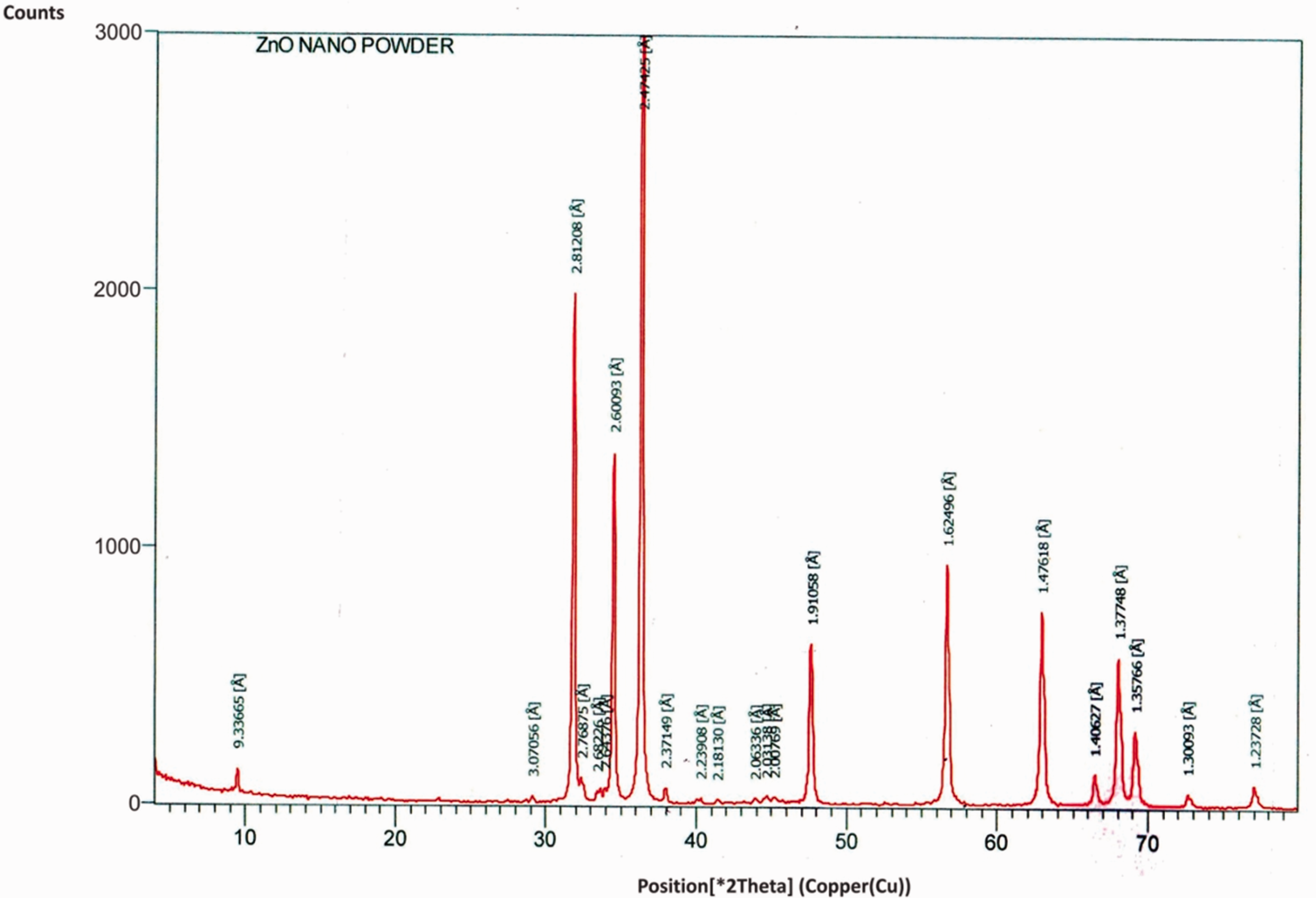
The corresponding percentage of crystallinity and the crystallite size were found to be 71.7% and 47.23 nm respectively.
The diffraction pattern in the XRD diagram of the NP-ZnO powder matches the hexagonal (wurtzite) crystallites of ZnO showing nano-crystallites of around 47.2 nm, with matching peaks in different planes according to JCPDS card number: 36-1451, which confirms NP-ZnO crystal formation. The mean particle size from XRD analysis was calculated using Debye-Scherrer’s formula (given in the Methods section). The mean size of the NP-ZnO was obtained by XRD analysis, i.e. 47.2 nm, is obviously much lower than the particle size of crystallites or non-crystallites for commercially available bulk NP-ZnO. 25
Particle size analysis of NP-ZnO powder
To understand the mean size of the NP-ZnO in the bulk of the NP-ZnO produced by taking 1% aqueous solution of PHAMS (as binder cum dispersion media), the particle size and its distribution was analyzed using a particle size analyzer (Mastersizer). For this, the particle size distribution curve was obtained under specific test conditions as shown in Figure 2 and the corresponding data are shown in Table 1 and Table 2.
Particle size distribution curve of nano-zinc oxide powder. Particle size distribution of NP-ZnO powder NP-ZnO: nanoparticles of zinc oxide. Overall particle size distributions of NP-ZnO powder d(0.1) Size of particle below which 10% of the sample lies. d(0.5) Size of particle of which 50% of the sample is smaller and 50% is larger. d(0.9) Size of particle below which 90% of the sample lies. D[4.3] Volume weighted mean. NP-ZnO: nanoparticles of zinc oxide.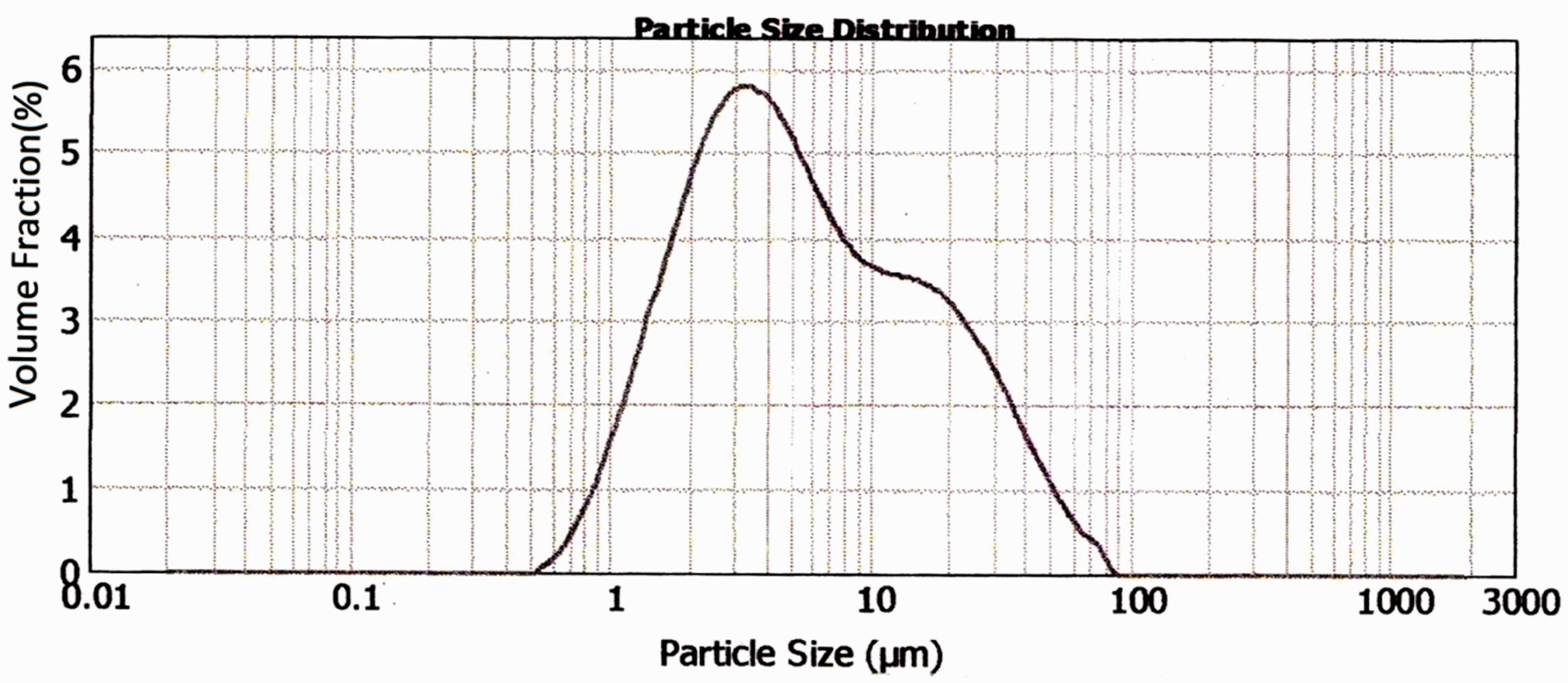
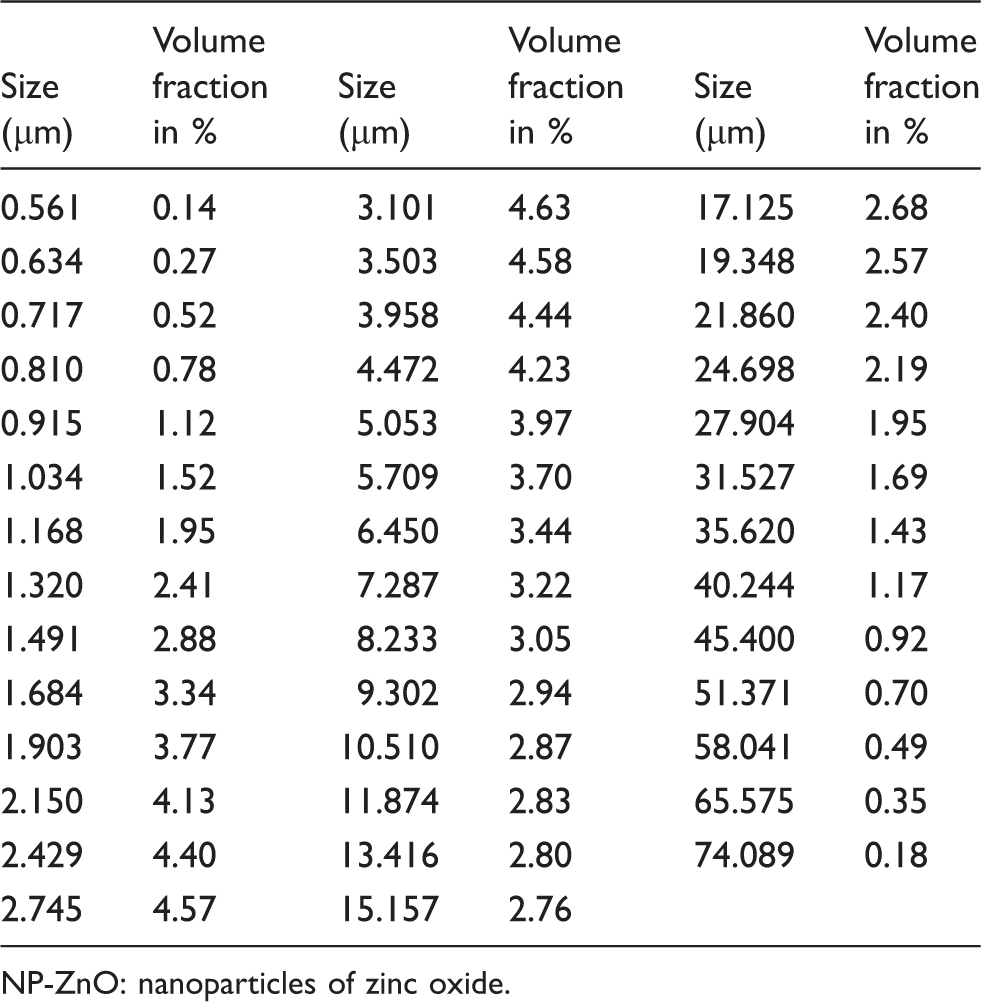
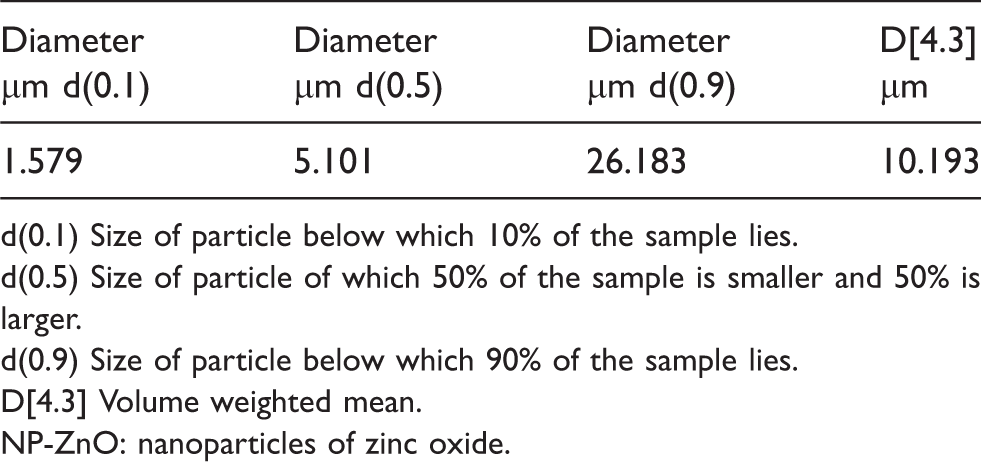
These data and the curve indicate that the average particle size of NP-ZnO is 3–5 µm due to agglomeration; the rest are larger microparticles of ZnO, as no capping agent was used. However, as per this particle size distribution curve (Figure 2) and the average NP size obtained from XRD analysis, it appears that there is presence of 0.472–5 µm NP-ZnO in 50% of the mass. The size and quality of NP have an effect on particle settling velocity in the dispersing medium. The larger the particle, the higher the settling velocity; because of their small dimensions, light weight and high specific surface area, NPs showed more movement, resulting in higher agglomeration. Thus, such a highly active NP needs to be dispersed in a thick medium and to be bound or fixed by the help of a binder such as PHAMS, which is used in the present experiment to restrict the agglomeration and uniform dispersion of NP-ZnO.
Effect of NP-ZnO and PHAMS on the textile-related properties of cotton fabric
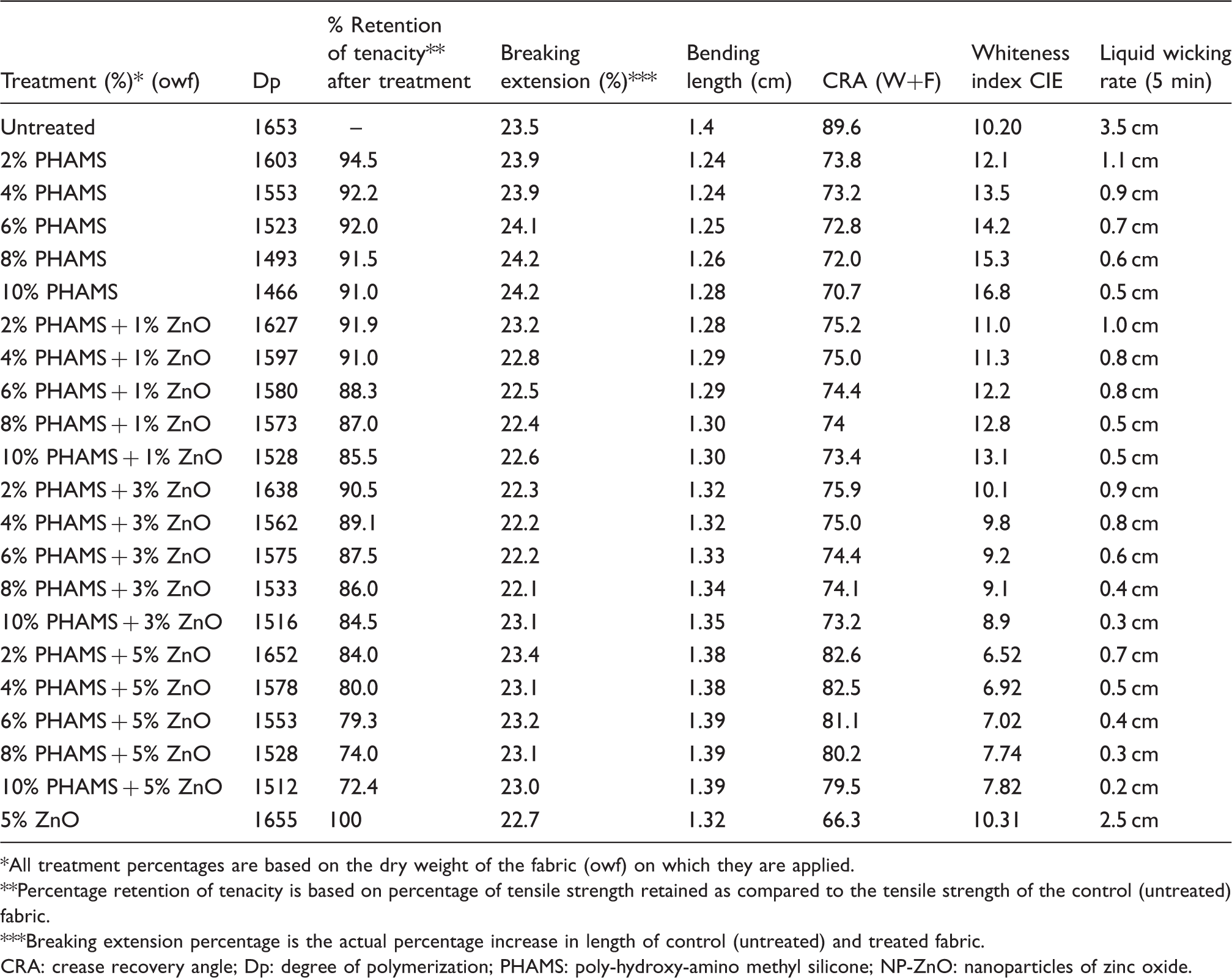
Effect of treatment with different proportions and combinations of NP-ZnO powder and PHAMS on physical properties of cotton khadi fabric
All treatment percentages are based on the dry weight of the fabric (owf) on which they are applied.
Percentage retention of tenacity is based on percentage of tensile strength retained as compared to the tensile strength of the control (untreated) fabric.
Breaking extension percentage is the actual percentage increase in length of control (untreated) and treated fabric.
CRA: crease recovery angle; Dp: degree of polymerization; PHAMS: poly-hydroxy-amino methyl silicone; NP-ZnO: nanoparticles of zinc oxide.
Data in Table 3 indicate the tensile strength of the fabric reduced 20% after treatment of NP-ZnO with PHAMS. This may be due to the alkaline degradation of the cellulose chain in some lower molecular weight celluloses by reduction of its DP by the alkaline action of PHAMS, along with possible partial removal of some low DP cellulose, particularly during pad-dry-cure, followed by the washing process. For reduction of the tensile strength of the cotton fabric after this treatment, there is a chance of generating stiffness (increased bending length), slippage of chains due to the anti-friction effect of PHAMS (alkaline) along with the reduction of DP during the pad-dry-cure process.12,26 However, from the data in Table 3 it is evident that other physical factors such as a change in stiffness, changes in water absorption (wicking) and a reduction of breaking extension etc. do not have much of an effect on the tensile strength reduction and hence, reduction of DP is thought to be the most important indication. The initial bending length of the fabric was 1.4 cm, which is found to decrease up to 1.24 cm in treatment with 4% PHAMS, whereas it tends to increase slightly more with an increase in NP-ZnO application. PHAMS is a soft binder and is hygroscopic as well as a softener. The increase in bending length is not highlighted, predominately due to the softening effect of PHAMS, which may form a softer film on the fiber surface and reduce the bending length. NP-ZnO particles are highly abrasive and rough enough to increase the bending length (stiffness) and hence, the resultant fabric is between the harder and softer feel, striking a balance in the bending length data (which is either not increased or decreased to a measurable extent).
However, the crease recovery angle constantly decreases in both cases, which may be due to the loss of some inherent orientation of the cellulosic chains and resulting in chain scission through alkaline degradation by PHAMS after curing. Thus, an increase of cross-linking stiffness was also not found. As there is no improvement in the crease recovery angle, the possibility of a cross-linking reaction by PHAMS with cellulose is excluded; the reduction in the crease recovery angle may be explained by the softness imparted by PHAMS, which is otherwise responsible for the recovery in elongation (in the case of having no cross-linking, such as in the control cotton fabric). The initial whiteness index was measured as 10.2. Due to ZnO coating in the formulation of 10% PHAMS + 1% ZnO treated fabric, it increased to 13.1. However, with an increase in ZnO percentage, it decreases to 6.52 due to more diffused reflection from the increasing NP-ZnO powder. It again increases with the enhancement of PHAMS percentage masking, thereby reducing the diffused reflection of the ZnO powder. PHAMS forms a smooth binder film and hence regular reflections are increased, enhancing the whiteness, whereas an increase in NP-ZnO imparted on the fabric surface increases the diffused reflections, enhancing the scattering and reducing the whiteness index.
The liquid wicking rate reduces compared to the control fabric because of the formation of a water-repellent coating on the treated fabric surface in the presence of PHAMS (a silicon binder). This prevents the washing out of NP-ZnO particles from it, thereby making it washfast.
UPF
Effect of NP-ZnO on UV protection properties of cotton fabric

All treatment percentage is based on the dry weight of fabric (owf) on which it is applied.
Bacteria reduction percentage means percentage of bacterial growth reduction as compared to the same on untreated (control) cotton fabric.
AATCC: american association of textile chemists and colorists; CRA: crease recovery angle; PHAMS: poly-hydroxy-amino methyl silicone; UV: ultraviolet; UPF: UV protection factor; NP-ZnO: nanoparticles of zinc oxide.
However, keeping ZnO constant (1%) with an increase in PHAMS from 2% to 8% (see experiments 7, 8, 9, 10 in Table 4) and PHAMS from 2% to 8% without the use of NP-ZnO (see experiments 2, 3, 4, 5 in Table 4) shows the UPF is 5 or below, except experiment numbers 7 and 8 where the content of PHAMS is restricted to a maximum 4% in combination with 1% NP-ZnO.
Thus the UV-blocking properties rise alongside an increase in NP-ZnO when PHAMS is under 4%. However, an increase in PHAMS probably has a masking effect, with PHAMS film covering some of the active ZnO and, hence, reducing the UPF. Thus, a combination of ZnO plus PHAMS provides both a UPF and antimicrobial finish, although the UV protection is lower (under 20; this is acceptable as a UPF of 15 to 24 is considered satisfactory).
It is interesting to note that 4% PHAMS and 1% NP-ZnO (i.e. 4:1 weight ratio) gives a good overall balance, with a UPF value of 10 and microbial reduction of 93.6% and 95.9% against the growth of Staphylococcus aureus and Klebsiella pneumoniae under AATCC 100 test procedures. However, a final application of 4% PHAMS and 5% NP-ZnO powder (60% of which is 30–500 nm) renders a UPF of 20 and a 99.9% reduction for both the bacteria, which is a feasible option. Earlier similar work on this (Burcin, 2012) 27 corroborates the formation of a polystyrene-block-olyacrylic acid copolymer as the dispersing media and binder along with NP-ZnO powder, which also gave a good balance of both UPF and antimicrobial property at a 4:1 ratio. This supports our finding in experiment 8 in Table 4.
The UV absorbance peak of NP-ZnO as shown from the UV Visible Spectrophotometry (Vis) spectra (Figure 3 (b)) of 0.1% aqueous solution of NP-ZnO (curve b) shows a characteristic UV absorption range from 300 to 350 nm (peak of 328 nm), indicating the highly UV absorptive property of NP-ZnO absorbing most of the UV-A component of sunlight (315–400 nm) (Figure 3). However, PHAMS (curve a) has no predominant UV absorber peak, although there are small humps at 300 nm and in the wavelength range of 360–400 nm. In the mixture of both PHAMS and NP-ZnO (curve c), the former suppresses the UV absorbance of NP-ZnO, but still it is predominantly absorbing UV at 260 nm (peak) (UV-B) and 328 nm (peak) (UV-A). The water absorbency of the treated fabric (Table 3) decreases as the PHAMS content in the fabric increases due to the hydrophobic nature of siliconate.
Ultraviolet visible absorption spectrum of a) poly-hydroxy-amino methyl silicone (PHAMS), b) nanoparticles of zinc oxide (NP-ZnO) powder, c) mixture of PHAMS and NP-ZnO powder.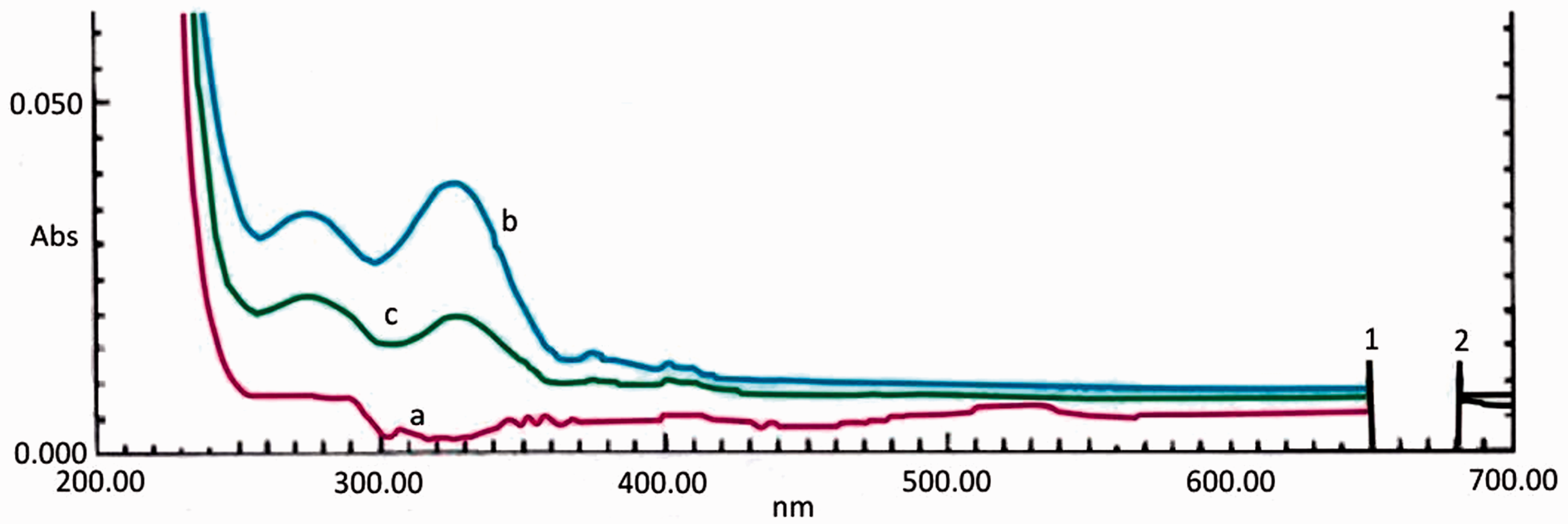
Antimicrobial properties
The antimicrobial activity of NP-ZnO incorporated along with the PHAMS binder on the surface of cotton textile fabric showed a 95% to 99.9% reduction against Staphylococcus aureus (Gram-positive bacteria) and Klebsiella pneumoniae (Gram-negative bacteria) (see the two bacteria reduction columns of Table 4) irrespective of the application of ZnO and PHAMS, requiring a minimum of 4% PHAMS and 3% NP-ZnO or 4 to 8% PHAMS and 1% NP-ZnO; both rendered similar results with respect to microbial reduction tests as per AATCC 147 (Figure 4(a) and 4(b)) and as per AATCC 100 (Figure 4 (c) and Figure 4 (d)). The antimicrobial activity of cotton treated with 5% 2-hydroxy-benzotriazole with PHAMS binder are shown in Figure 4 (e), Figure 4 (g), and Figure 4 (h) and that of only 5% 2-hydroxy-benzotriazole are shown in Figure 4 (f), Figure 4 (i) and Figure 4 (j). These samples show a similar antimicrobial effect when compared with 5% ZnO and 4% PHAMS treated fabric.
(a) Growth of Staphylococcus aureus and Klebsiella pneumonia in control fabric., (b) Absence of Staphylococcus aureus and Klebsiella pneumonia in 4% poly-hydroxy-amino methyl silicone (PHAMS) and 5% zinc oxide (ZnO)-treated fabric., (c) Reduction in Staphylococcus aureus after 24 hrs of incubation in 4% PHAMS and 5% ZnO-treated fabric., (d) Reduction in Klebsiella pneumonia after 24 hrs of incubation in 4% PHAMS and 5% ZnO-treated fabric., (e) Absence of Staphylococcus aureus and Klebsiella pneumonia in 5% 2-hydroxy-benzotriazole and 4% PHAMS treated fabric in the presence of MgCl2, (f) Absence of Klebsiella pneumonia and Staphylococcus aureus in 5% 2-hydroxy-benzotriazole treated fabric in the presence of MgCl2, (g) Reduction in Staphylococcus aureus after 24 hrs of incubation in5% 2-hydroxy-benzotriazole and 4% PHAMS-treated fabric in presence of MgCl2, (h) Reduction in Klebsiella pneumonia after 24 hrs of incubation in 5% 2-hydroxy-benzotriazole and 4% PHAMS-treated fabric in presence of MgCl2, (i) Reduction in Staphylococcus aureus after 24 hrs of incubation in 5% 2-hydroxy-benzotriazole treated fabric in the presence of MgCl2, (j) Reduction in Klebsiella pneumonia after 24 hrs of incubation in 5% 2-hydroxy-benzotriazole treated fabric in the presence of MgCl2.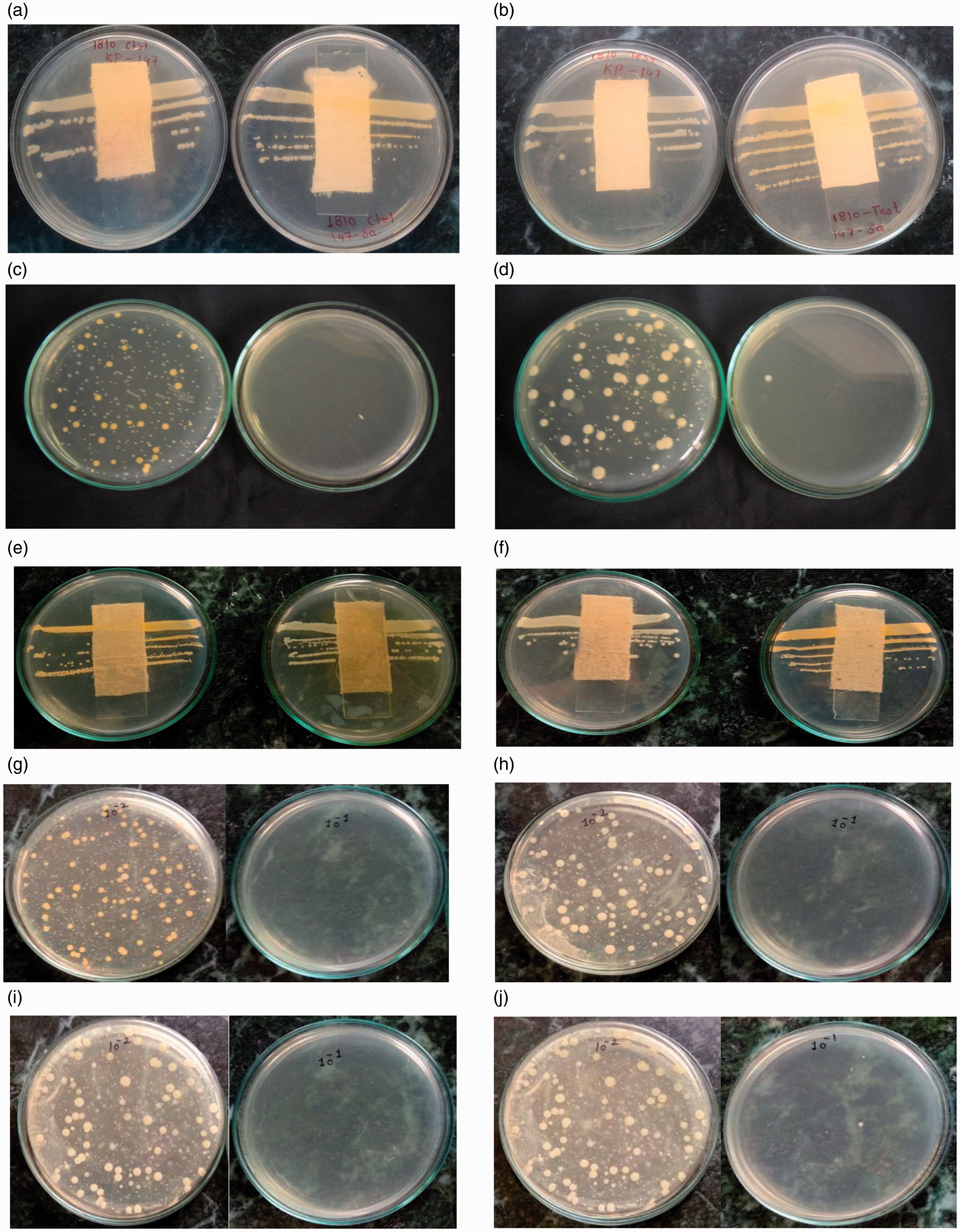
The antimicrobial activity of ZnO is known to be due to the possibilities of the NP-ZnO combining with moisture to form Zn di-hydroxide or a Zn tetra hydroxide suspension. This generates √OH & H+, which gradually liberates HO2. Free radicals combine with dissolved oxygen, which forms hydrogen peroxide (H2O2) (as shown below). This can penetrate the cell membranes of microbes, killing the bacteria with the active oxygen species thus generated, giving a photo-catalysis effect of ZnO and improving the UPF factor.
The major photo-catalysis and antimicrobial effect
4
of ZnO on cellulose is as follows:
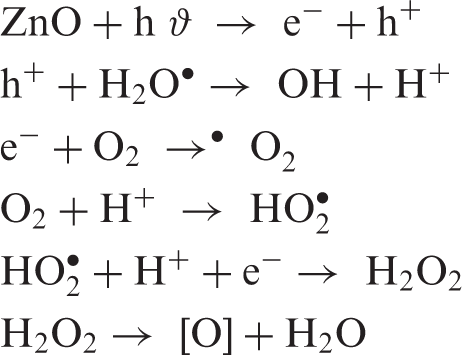
The higher the surface to volume ratio, the higher the bacterial effect. Thus, NP-ZnO can show better results than normal ZnO.
Moreover, due to its high surface area NP-ZnO is more abrasive and more rough than bulk ZnO. It thus causes greater mechanical damage to the cell membrane of microbes and increases the antimicrobial effect of NP-ZnO.1,4,27
This photo-catalysis effect of NP-ZnO under light irradiation is due to electron transition in the NP-ZnO resulting in an electron-hole pair where the electron (e−) is reductive and the hole (h+) is oxidative. The h+ reacts with OH− (from moisture) on the surface of NP-ZnO, generating hydroxyl radicals, superoxide anion (O2−) and perhydroxyl radical (HO2−). These highly active free radicals form H2O2, which can damage the cells of bacteria and microbes, leading to decomposition or complete destruction of the internal structure or membrane to achieve these germicidal and antibacterial effects.
PHAMS has a methyl array on the surface of the film, which forms on the fabric after pad-dry-cure and is considered water repellant; therefore moisture cannot be absorbed into the fabric’s surface and microbes cannot grow. Moreover, the presence of a flexible siloxane backbone has a high antifriction property that therefore does not allow microbes to be fixed on the fabric surface, due to the slippery effect of PHAMS covering the surface covered. As shown in Figure 3, the chemical nature of the PHAMS copolymer may react or form a coordinated covalent bond with the surface OH group of cotton cellulose when cured at 120℃ for 5 mins with little strength loss. This forms a hydrophobic, well-anchored film of PHAMS embedding the NP-ZnO inside and outside the surface of the polymer depending on the percentage of PHAMS and ZnO used. The possible reaction scheme (reaction scheme 1) and coordinated complex forming interaction of ZnO (Zn has a multiple valency and can form a coordinated complex with the OH group of PHAMS or cellulose) creating a ring-like oligomeric complex, as shown in structure 3 in reaction scheme 1.
Growth of bacteria in the control and treated fabrics
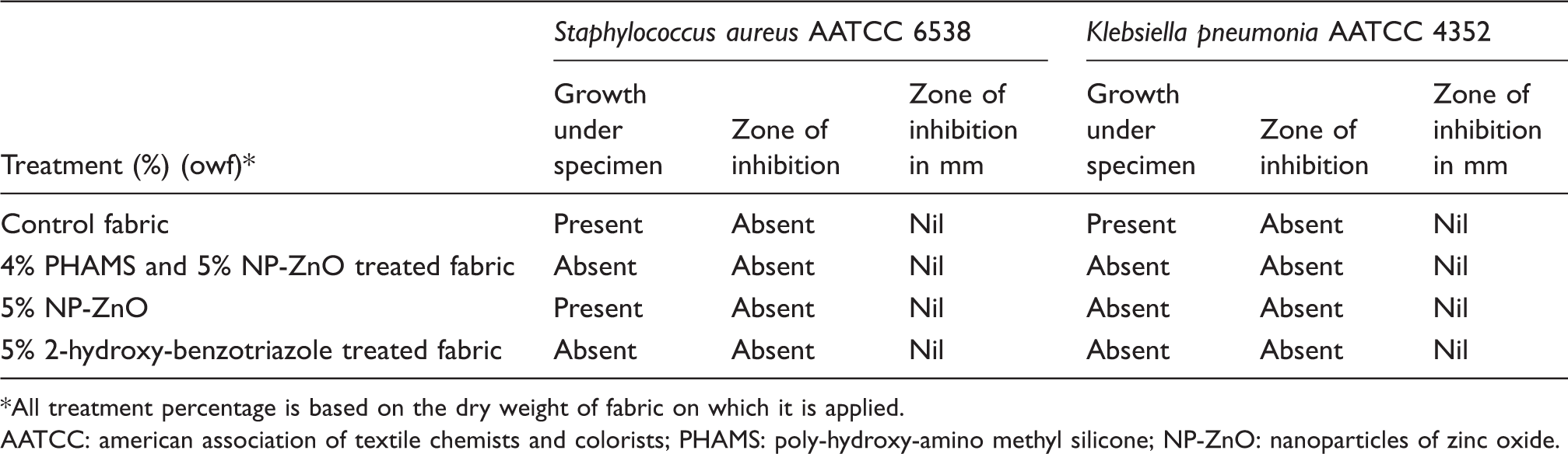
All treatment percentage is based on the dry weight of fabric on which it is applied.
AATCC: american association of textile chemists and colorists; PHAMS: poly-hydroxy-amino methyl silicone; NP-ZnO: nanoparticles of zinc oxide.
Antifungal properties
All treatment percentages are based on the dry weight of the fabric on which it is applied.
Antifungal activities in the treated and untreated fabrics

AATCC: american association of textile chemists and colorists; PHAMS: poly-hydroxy-amino methyl silicone; NPZnO: nanoparticles on zinc oxide.
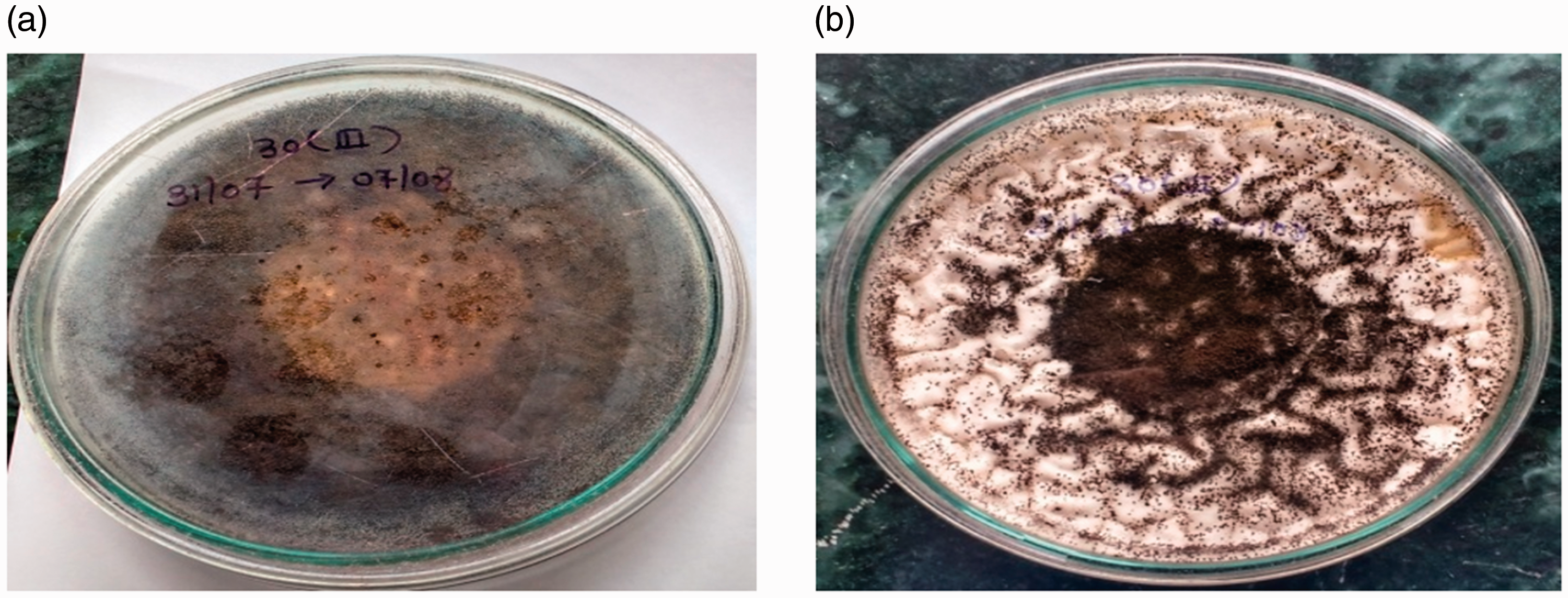
Presence of Fungus Aspergillus niger in (a) control fabric (b) fabric treated with 4% poly-hydroxy-amino methyl silicone and 5% zinc oxide.
Reaction mechanism
Reaction scheme 1
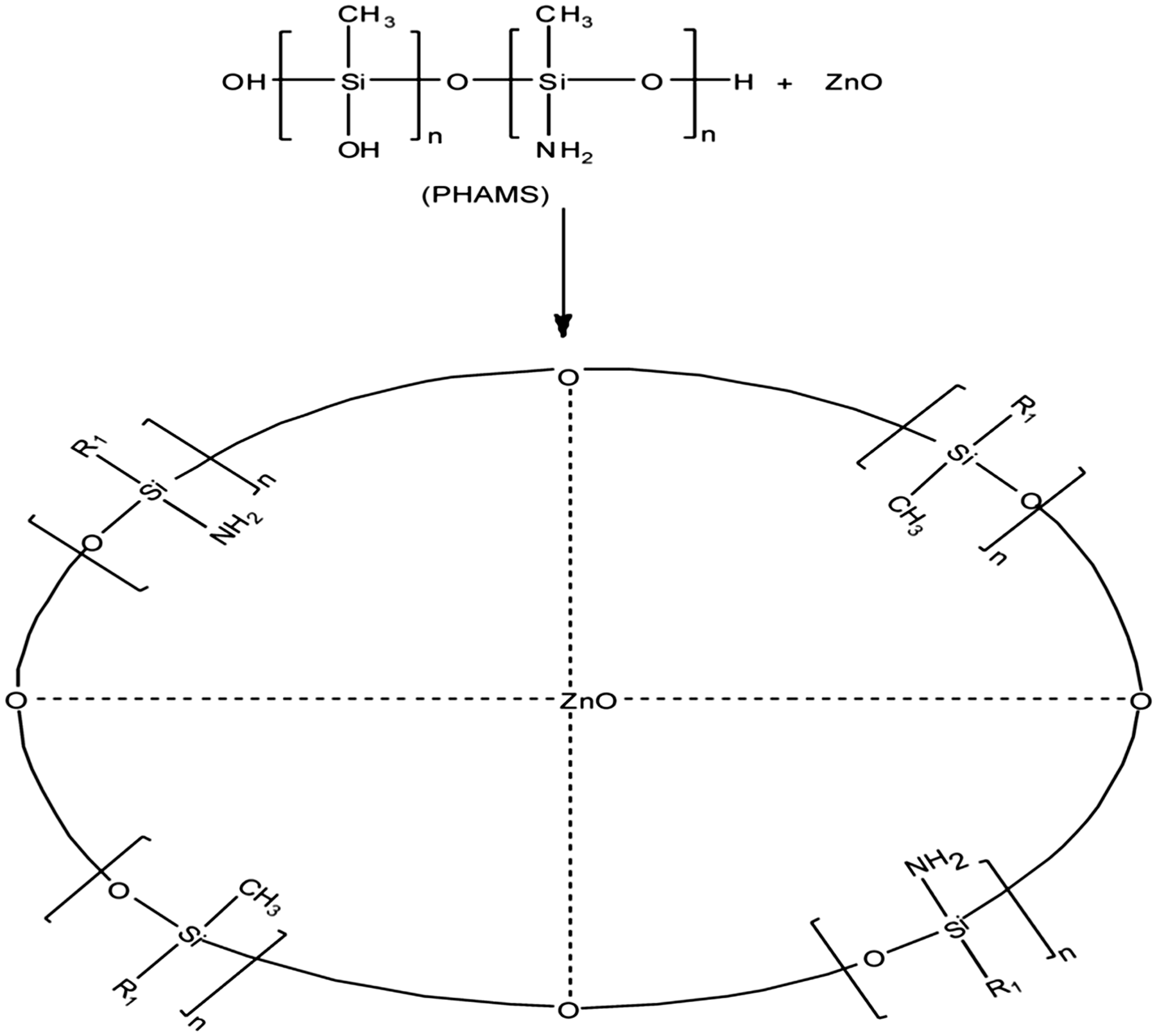
Reaction scheme 2
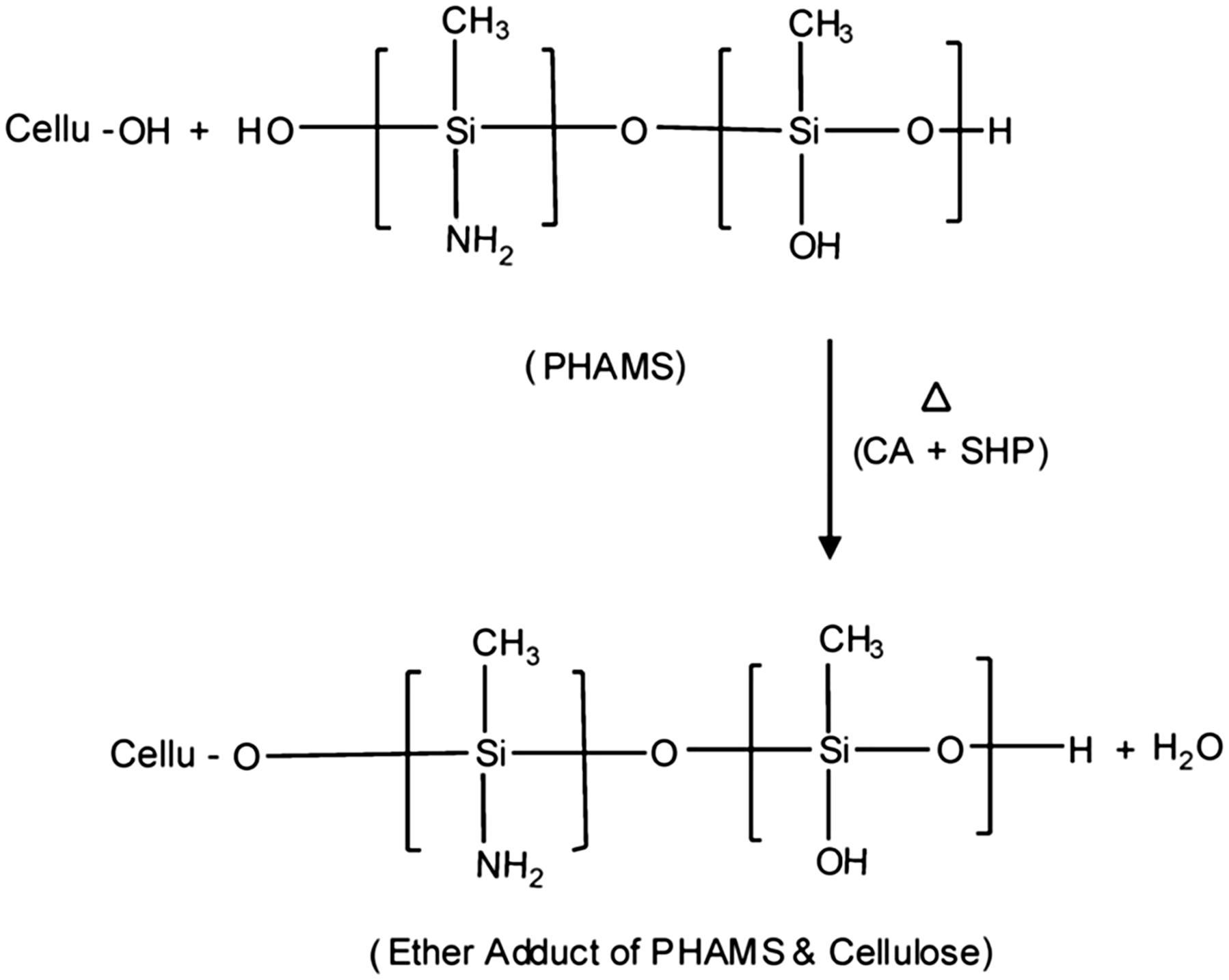
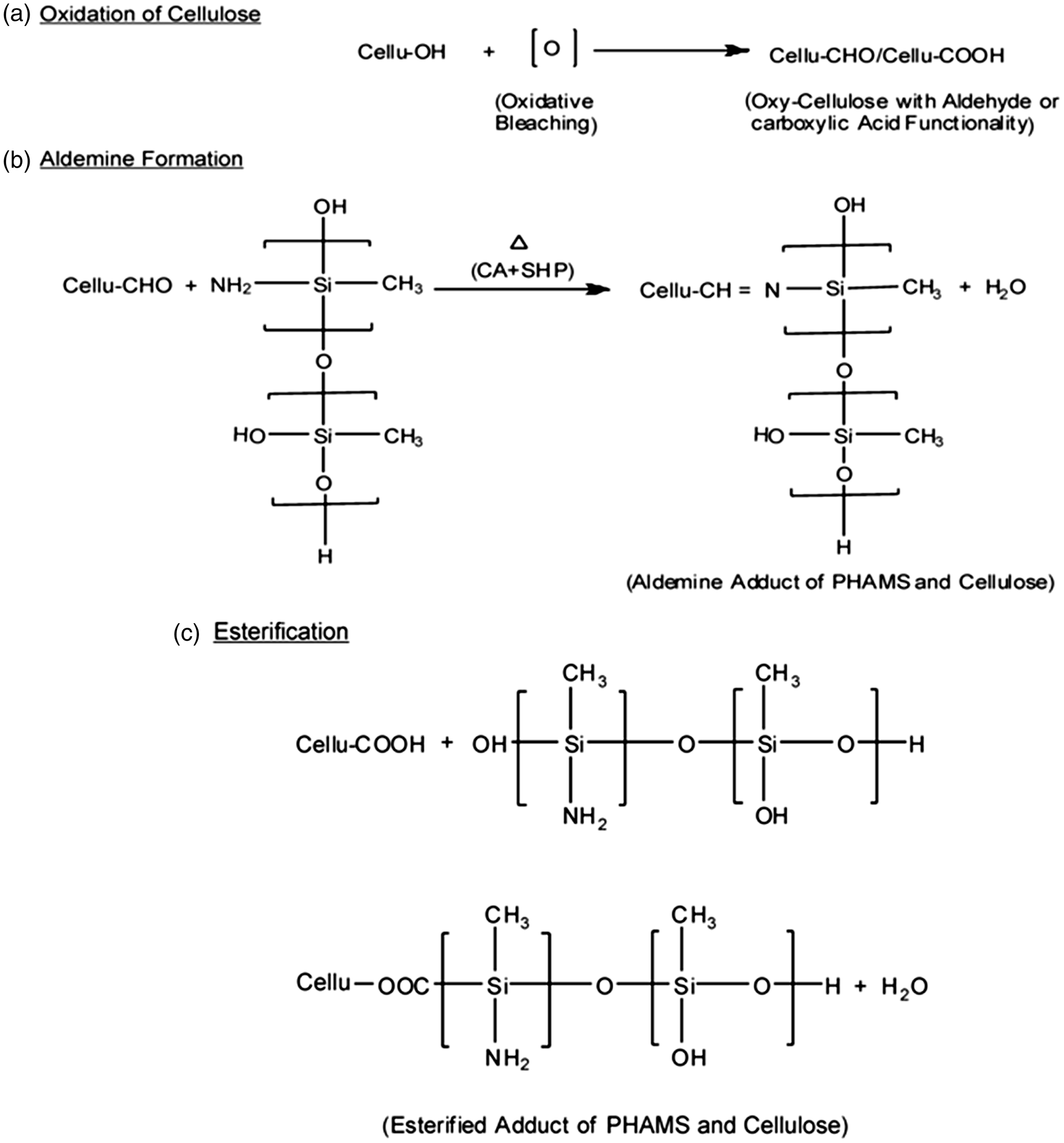
Reaction scheme 3
Deposition of elements on the surface of the treated fabric
Contents of zinc, potassium and silica on control fabric as well as treated fabrics as measured by atomic absorption spectrophotometry

PPM = mg/Kg.
PHAMS: poly-hydroxy-amino methyl silicone; ZnO, zinc oxide.
Atomic absorption spectrophotometry
It is further confirmed by energy dispersive spectroscopy (EDS) as described in Table 8 and Figure 6 (a) and 6(b).
(a) Energy dispersive spectroscopy (EDS) analysis of control cotton fabric. (b) EDS analysis of zinc oxide nano and poly-hydroxy-amino methyl silicone treated fabric. Element contents presents on the surface of control and treated cotton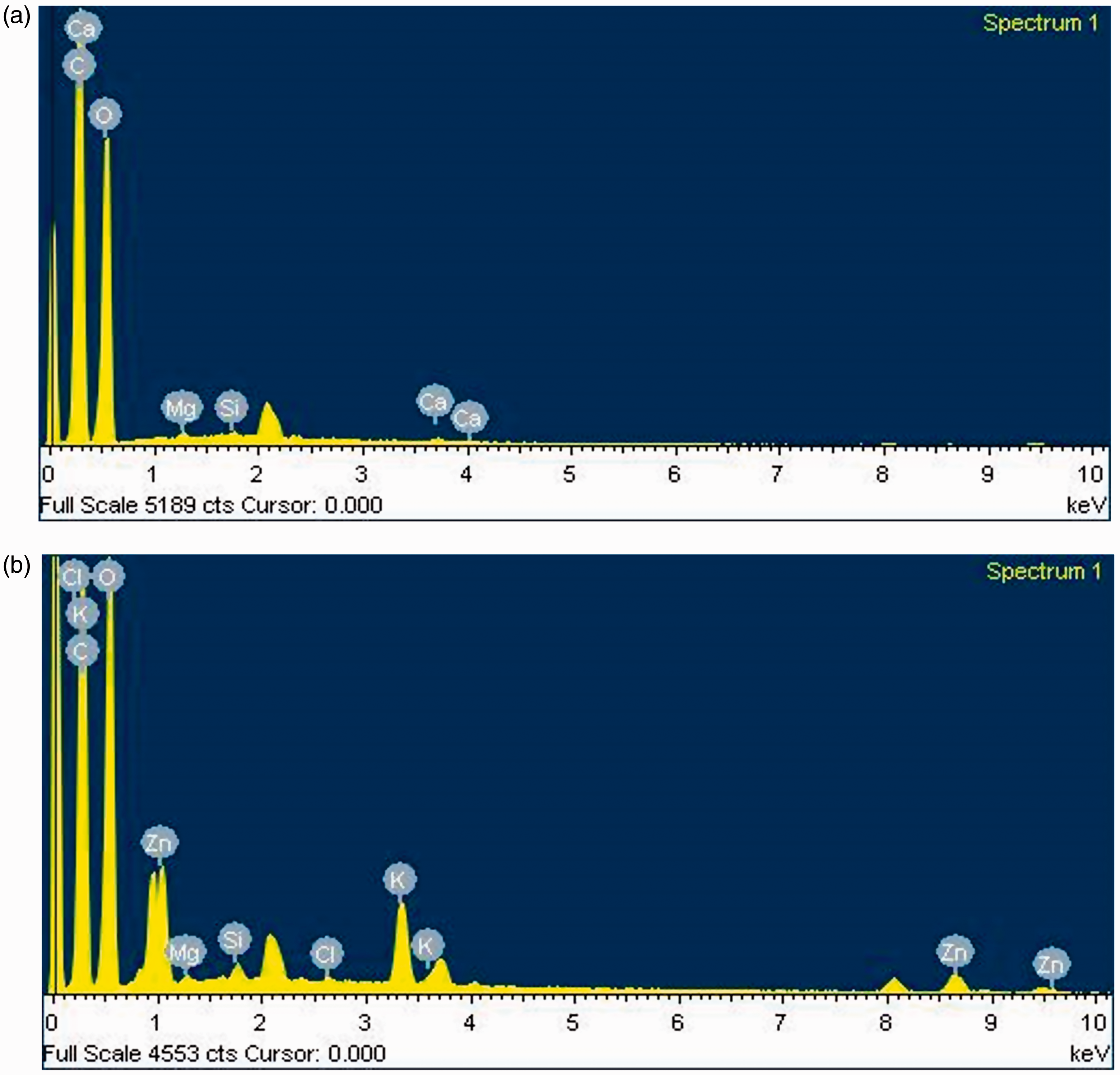

EDS
FTIR analysis of untreated and NP-ZnO treated cotton fabric
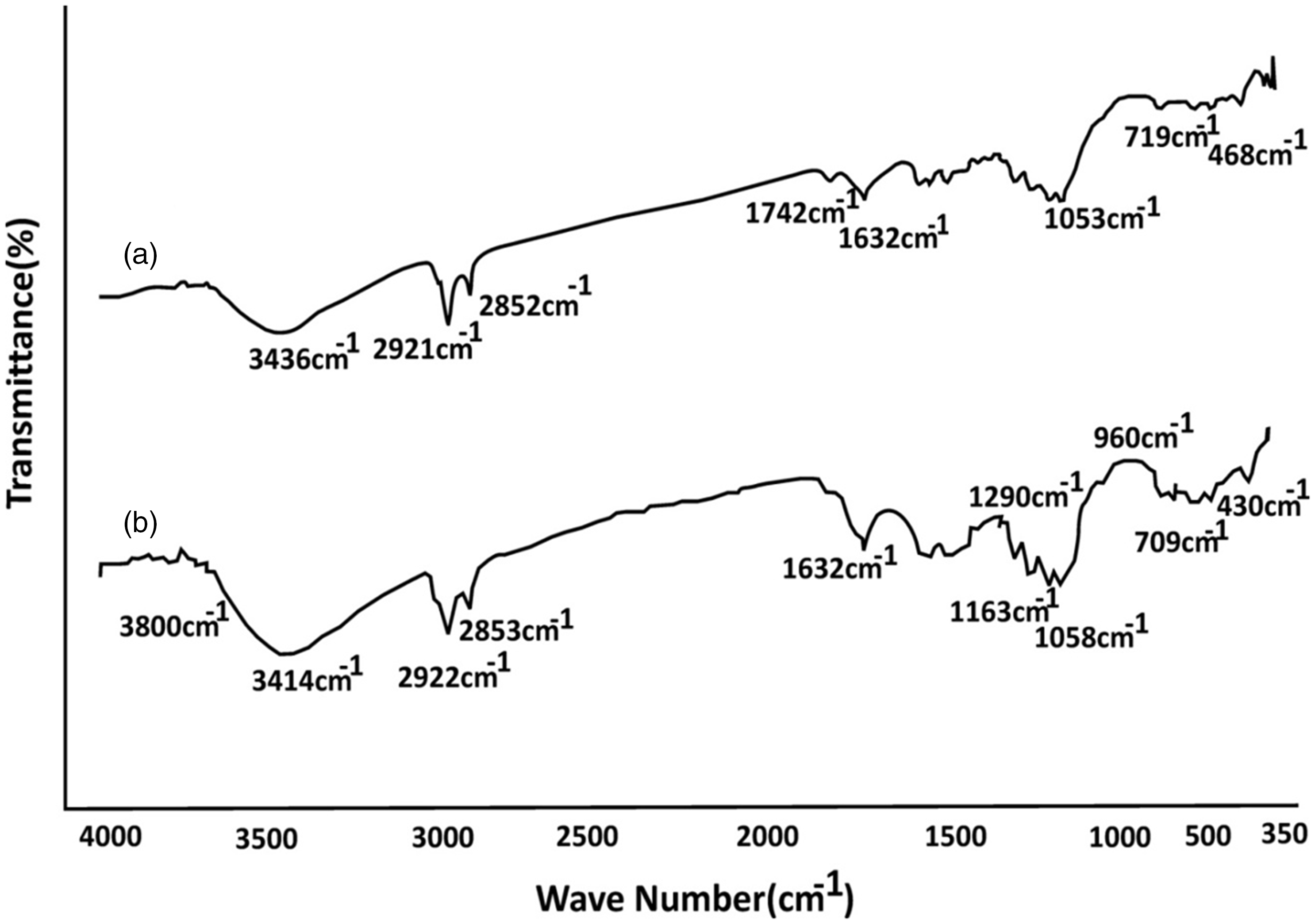
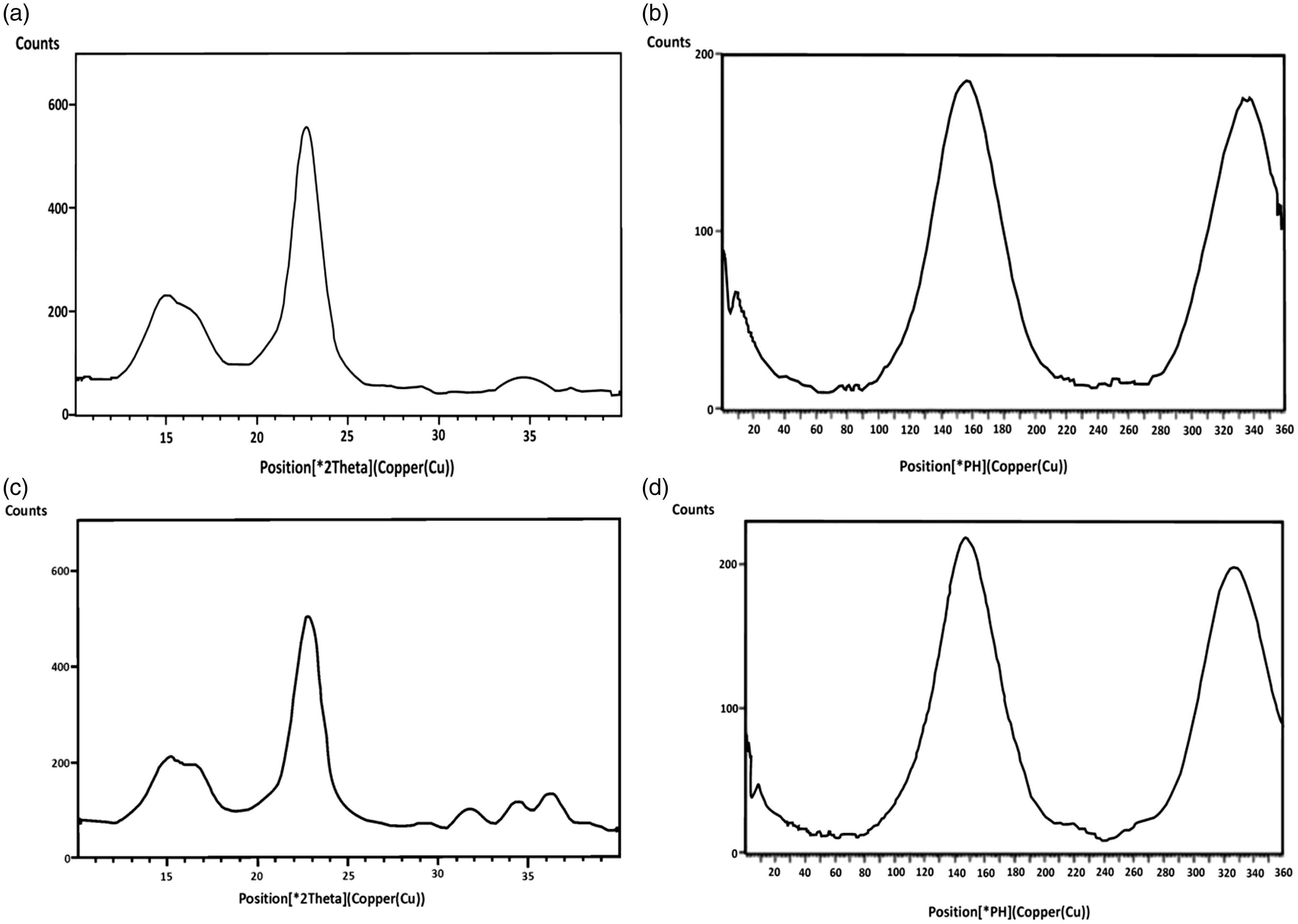
FTIR spectra of PHAMS and nano-powder are shown in Figure 7. Metal oxides generally give absorption bands in a fingerprint region, i.e. below 1000 cm−1, arising from inter-atomic vibrations. The presence of PHAMS (Figure 8) is indicated by a few small peaks at 1290–1300 cm−1 corresponding to Si-C and –Si–O–C– in the silicone compound (the original FTIR curve for PHAMS show the peaks at 1256 cm−1 (Figure 7), which after application on cotton shifted to 1290 cm−1 in Figure 8 (b), showing a small peak that was absent in untreated cotton (a). The Si–O stretching vibration of silicone occurred at 960 cm−1 of the FTIR peak of PHAMS (spectrum a, Figure 7). When applied on cotton, this merged with the peak already present in the cotton at 1053 cm−1 and shows a sharper peak at 1058 cm−1 (Figure 7). The additional very small peak observed at 430 cm−1 in spectrum (b) indicates the lattice vibration of ZnO in the treated cotton. The spectrum (b) of PHAMS and NP-ZnO treated fabric (Figure 7) shows significant peaks at 3800 and below 500 cm−1. The peak below 500 cm−1 shows the distinct lattice vibrations of ZnO and the band at 709 cm−1 attributed to the asymmetric stretching vibration of Zn-O-Zn bridging, rendering evidence of formation of complex structure III in reaction scheme 1 between ZnO, PHAMS, and cellulose combination. Also, the FTIR peak at 1245 cm−1 corresponds to the ether band vibration, which proves the formation of the ether linkage between the cellulose and PHAMS-forming complex as shown in reaction scheme 2. The presence and enhancement of a small peak at 1632 cm−1 in treated cotton is ascribed to the bending vibration of the –C=N group formed by treating the –NH2 group of PHAMS and –CHO group of oxy(bleached) cotton as shown in reaction scheme 3(B). Also, a small peak of 1735 cm−1 is ascribed to the formation of the ester group for a reaction between the –COOH group of oxy (bleached) cellulose and the –OH group of PHAMS, as shown in reaction scheme 3(C). The broad peak at 3800 cm−1 of OH stretching suggests the presence of Zn (OH)2 physically adsorbed moisture (Figure 8). The crystallinity index, crystallite size, and orientation angle of control and treated fabric are depicted in Table 9. The corresponding crystallinity and orientation graphs for control and mixture of 4% PHAMS and 4% NP-ZnO powder treated fabric are shown in Figure 9 (a), (b), (c), and (d).
FTIR spectra of (a) poly-hydroxy-amino methyl silicone and (b) zinc oxide nano powder. Fourier transform infrared spectroscopy graph of (a) untreated fabric (b) fabric treated with mixture of 4% poly-hydroxy-amino methyl silicone and 5% zinc oxide. Crystallinity index and crystallite size of treated and control fabric PHAMS: poly-hydroxy-amino methyl silicone; ZnO, zinc oxide. Powder x-ray diffraction crystallinity curves of (a) untreated fabric, (b) orientation curve of untreated fabric, (c) crystallinity curve of treated fabric with 4% poly-hydroxy-amino methyl silicone (PHAMS) and 5% zinc oxide (ZnO), (d) orientation curve of treated fabric with 4% PHAMS and 5% ZnO.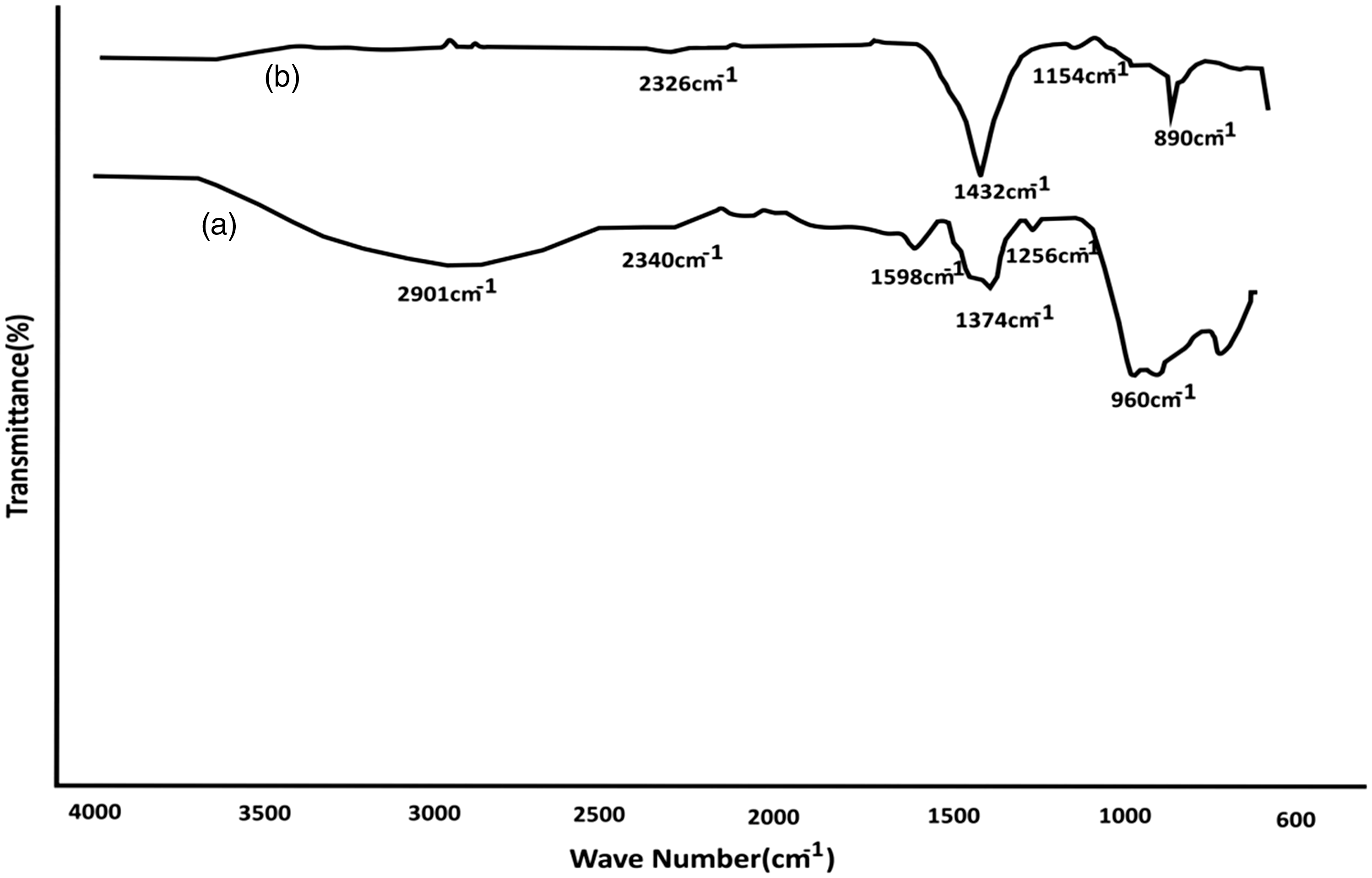

Study of surface morphology of untreated and NP-ZnO-treated cotton fabric by Transmission Electron Microscopy (SEM) and TEM analysis
SEM investigates the changes in the topography of the NP-ZnO-treated cotton fabrics in comparison with untreated fabric. The corresponding SEM micrographs are shown in Figure 10. The scanning electron micrographs (a) and (b) show the surface appearance of bleached cotton and NP-ZnO-treated cotton fibers. The SEM micrograph (a) of bleached cotton fibers shows the convoluted half-twisted surfaces of cotton fibers with small serrations, whereas the NP-ZnO powder shows the varying degree of particle sizes. However, treated cotton (treated with mixture of 5% ZnO and 4% PHAMS) shows an extraneous deposition of anchored NP-ZnO embedded in the PHAMS film deposited on the surface of cotton fiber (c), demonstrating some surface-smoothing effect. However, some agglomerations of NP-ZnO are visible in both Figure 10 (b) (for NP-ZnO powder) and in Figure 10 (c) (for cotton fabric treated with NP-ZnO + PHAMS).
Scanning electron microscopy micrographs of untreated and nanoparticles of zinc oxide-treated cotton. (a) Control bleached cotton; (b) Nanoparticles of zinc oxide (NP-ZnO) powder; (c) Bleached cotton treated with NP-ZnO with poly-hydroxy-amino methyl silicone.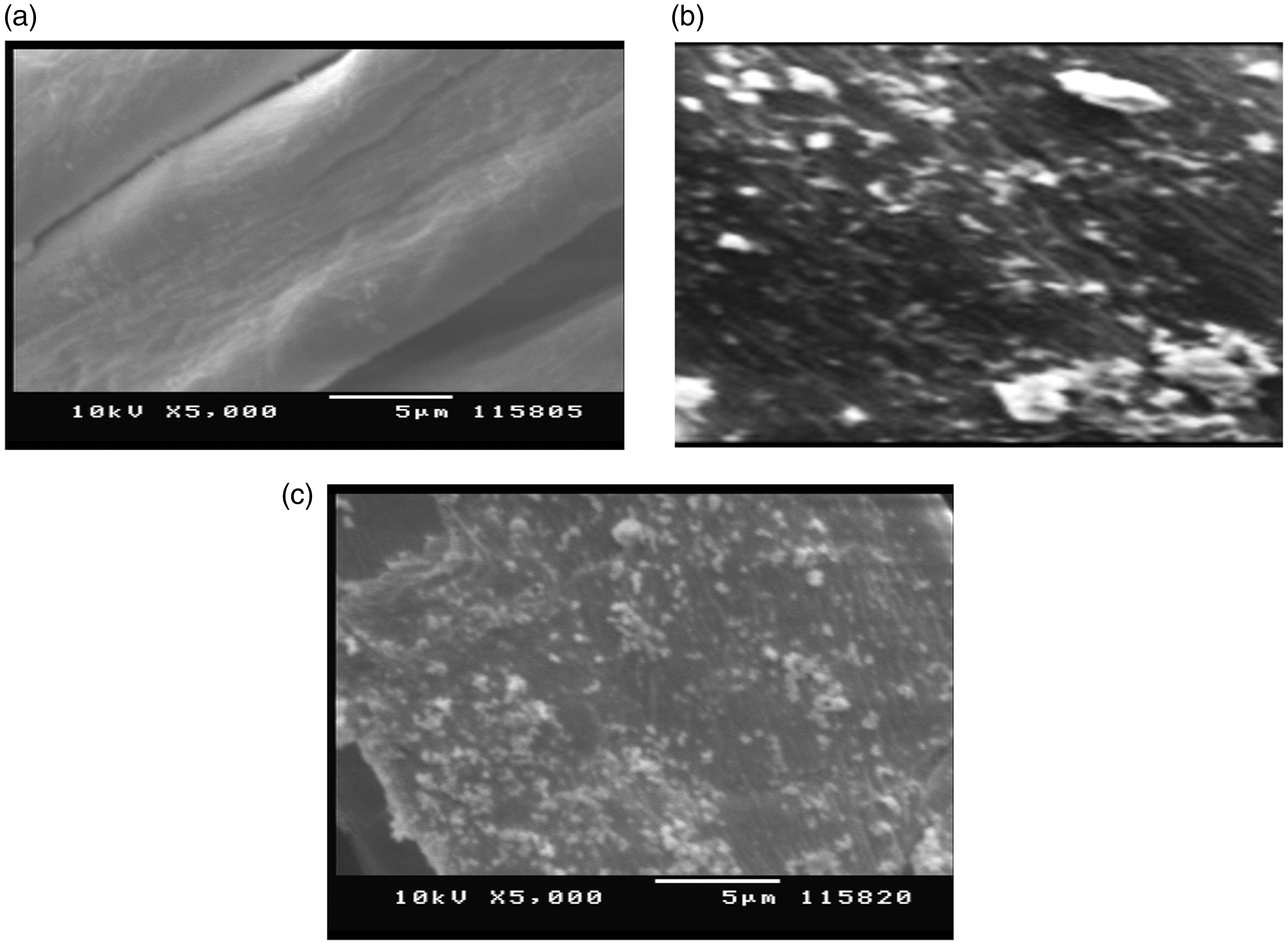
TEM of NP-ZnO particles dispersed in PHAMS coating
Figure 11 (a) to (h) show the TEM photographs of the coverage of NP-ZnO particles in a PHAMS-coated surface of the cotton fiber. Figure 11 (a), and the further investigations in Figure 11 (b) and Figure 11 (c), shows particle sizes of 200 nm and 100 nm respectively and the deposition of NP-ZnO (small black spots of different sizes) in a discontinuous manner along with a small agglomeration at 100 nm in Figure 11 (c). The TEM photograph in Figure 11 (d) at a 500 nm level shows an enlargement of the NP-ZnO cluster along with a clear film of PHAMS coating on which the NP-ZnO powder is embedded. The TEM photograph in Figure 11 (e) shows a masking effect, indicating the lesser appearance of the NP-ZnO powder as compared to PHAMS film coating at different places on the same cotton fabric surface. Figure 11 (f) is a clearer picture of the TEM of NP-ZnO coated fiber, showing the agglomerated clusters of NP-ZnO powder. Figure 11 (g) shows an enlarged overall TEM picture of NP-ZnO-treated fabric with a PHAMS binder coating on cotton fabric, indicating the smooth surface films of PHAMS with different sizes of NP-ZnO embedded with or without agglomeration. Figure 11 (h) shows selected area electron diffraction patterns of NP-ZnO, indicating the polycrystalline diffraction spots of NP-ZnO.
Transmission electron microscopy photographs of nanoparticles of zinc oxide coating with poly-hydroxy-amino methyl silicone binder on cotton fiber.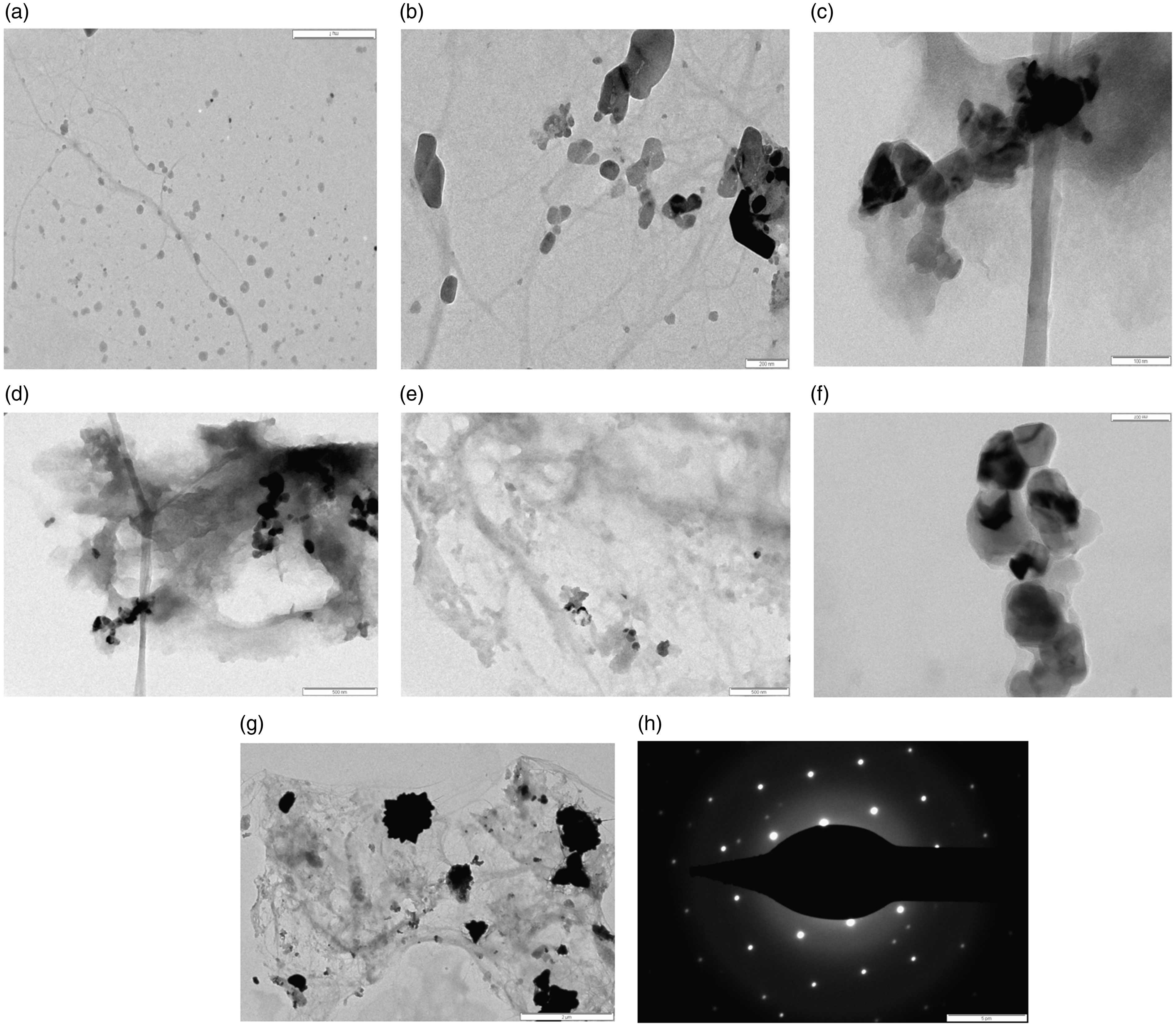
Total hand value
Evaluation of total hand value related surface properties of untreated and treated cotton fabric
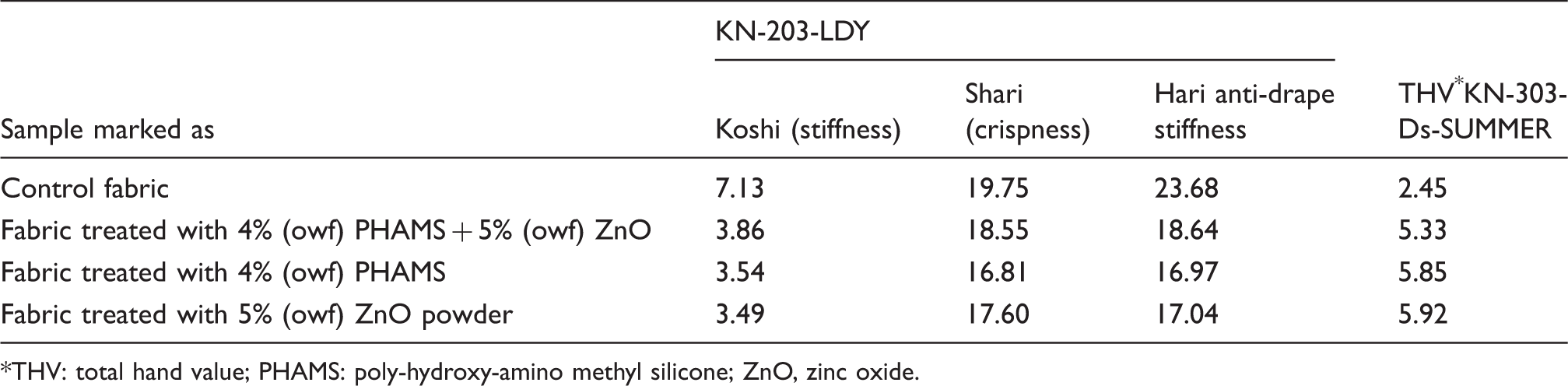
THV: total hand value; PHAMS: poly-hydroxy-amino methyl silicone; ZnO, zinc oxide.
Relevant data in Table 10 show the total hand values are enhanced for all the treated samples due to the smoothness of the PHAMS film and pliability of NP-ZnO as indicated by reduced stiffness of this cotton Khadi fabric.
Wash stability
Antimicrobial and rot-resistant properties after washing
Retention of properties after washing
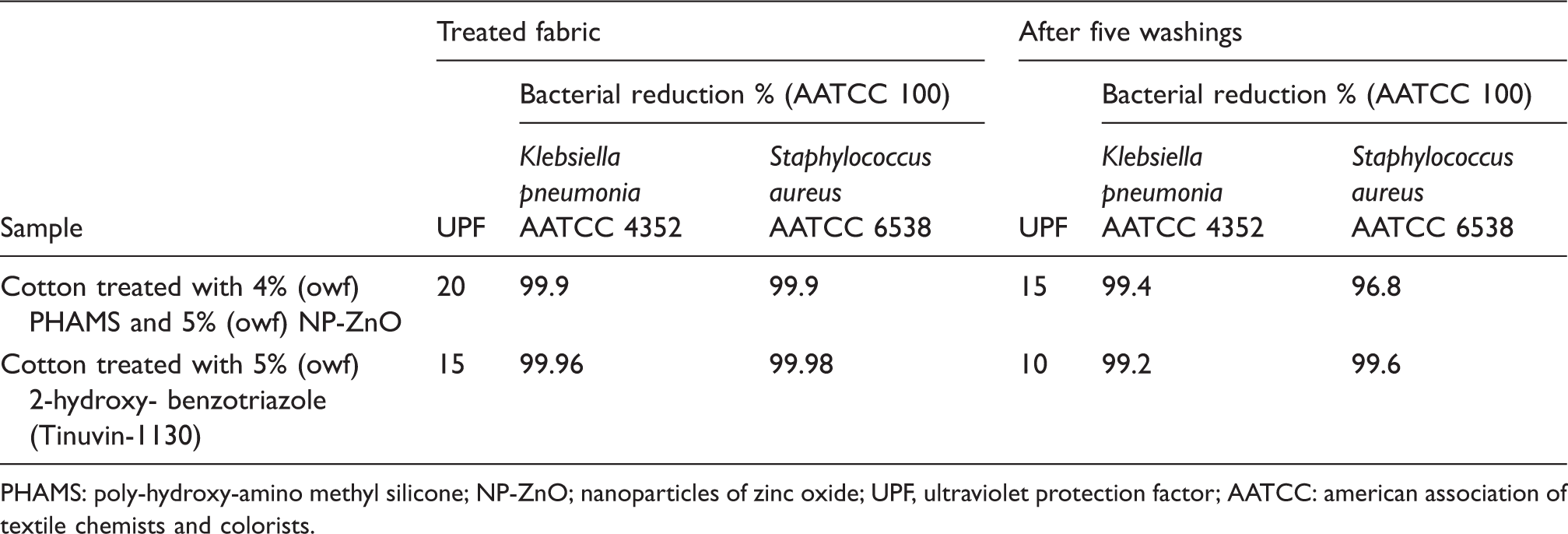
PHAMS: poly-hydroxy-amino methyl silicone; NP-ZnO; nanoparticles of zinc oxide; UPF, ultraviolet protection factor; AATCC: american association of textile chemists and colorists.
Comparison of results of treatment with a commercial UV-absorber (2-hydroxy-benzotriazole, i.e. Tinuvin-1130) as compared to results of application of 5% NP-ZnO+4% PHAMS under same conditions of treatment
Table 11 indicates the comparative data of UPF and bacterial reduction for cotton fabric treated with 4% PHAMS and 5% NP-ZnO as compared to cotton fabric treated with a commercial UV absorber Tinuvin-1130, i.e. 2-hydroxy-benzotriazole. The results indicate NP-ZnO and PHAMS treatment results in a higher UPF value (20) than the commercial UV absorber (15), whereas the bacterial reduction for both types of treatment shows similar results, with 99% and above bacterial reduction for both. Further UPF value and bacterial reduction results are also estimated against five washing cycles after washing as per the IS-I standard of IS 687-1979. There was a small reduction in UPF value (maximum 5) in a five-wash cycle. For the bacterial reduction, there were no significant changes after a five-wash cycle, indicating good stability for this specific finish treatment.
Conclusions
In the present study, varying dosages of NP-ZnO (1–5%) dispersed in PHAMS (2–10%) binder media were applied to bleached cotton khadi fabric to produce an antimicrobial and UV protective finish by a single-step treatment. The application of a 1% NP-ZnO and 4% PHAMS combination shows a UPF of 10 and 93–95% microbial reduction, whereas the application of 4% PHAMS and 5% NP-ZnO in combination shows a UPF of 20 and a 99% reduction of microbial activity with some loss (15–20%) in fabric tenacity as the optimum balance. The presence of Zn and Si on treated cotton fabric was also confirmed by FTIR analysis, XRD, EDS and atomic absorption spectrophotometry analysis. The proposed reaction schemes are shown to produce all the possibilities of forming ether, ester and aldemine groups as per the FTIR results. The high crystalline nature and analysis of sizes of NP indicate that 50% of the NP-ZnO are 0.472–5 µm in size and other 50% are bigger and agglomerated. The average size of NP-ZnO was 47.2 nm as confirmed by XRD analysis. Comparison with commercial UV absorber (2-hydroxy-benzotriazole UV1) shows similar results to those obtained for 4% PHAMS and 5% NP-ZnO. Wash stability results also indicate that even after five washes, bacterial reduction was 96% and UPF was 15. Thus, the treatment with the 4% PHAMS binder+5% NP-ZnO finish on cotton applied in a single-step process can be used for eco-fashion garments, protecting the human body from microbial attack and from UV damage.
Footnotes
Acknowledgements
The authors acknowledge the help received from the laboratories of BTRA for testing and analysis of samples. The authors also express special thanks to the director, MGIRI, Wardha, for their support.
Declaration of conflicting interests
The authors declared no potential conflicts of interest with respect to the research, authorship, and/or publication of this article.
Funding
The authors received no financial support for the research, authorship, and/or publication of this article.