




Abstract
Surface sensitive Fourier transform-infrared attenuated total reflectance (ATR) accessories using different crystals as well as incident beam angles were examined for the characterization of cotton fabric scouring. The extra sharp antisymmetric and symmetric C-H stretching peaks due to long chain alkyls at 2918 and 2849 cm−1 were observed in greige cotton fabrics with a tendency to be more profound with the ATR cell with bigger incident angles and a higher refractive index, due to less depth of penetration. Water absorption data and gas chromatography-mass spectrometry analyses indicated that these peaks were mostly caused by secondary added paraffin wax of higher linear alkanes (C22 to C30) and cotton wax of C16 and C18 fatty acids in free form. Absence of these peaks alone did not result in sufficient water absorption. No observation of carboxylate (COO−) peak at 1600 cm−1 together ensured a successful scouring. Presence of this weak peak can be further confirmed by the reversible shift between 1600 cm−1 and 1750 cm−1 of protonated carboxylic acids (COOH) under non-destructive and quick HCl or NH3 vapor exposures on cotton samples.
With cellulose in the primary and secondary walls as a core component, cotton fibers consist of an outer protective cuticle that contains hydrophobic waxes and pectins, which are associated with the primary cell wall.1,2 Cotton scouring is the process of the complete or partial removal of these non-cellulosic hydrophobic components of native cotton, as well as secondary added impurities such as size and lubricants, to give a fabric a high and even wettability that can be bleached and dyed successfully. 3 The traditional processes use highly alkaline sodium hydroxide, while bioscouring based on enzymatic hydrolysis of pectin substrates in cotton has been developed with a number of potential advantages.4–9
Pectins are known to act as cement in the primary cell wall of cotton fibers 10 and to occur in combination with calcium as insoluble salts, calcium pectate, where Ca2+ ions occur between the unesterified carboxyl groups of the galacturonosyl chains of pectins.3,4,7,11 During cell wall formation, pectins are secreted as methyl esters of galacturonic acid, and are only later deesterified by pectin methylesterase, liberating carboxyl groups with which calcium ions can cross-link and conferring strength to the cotton fiber.3,8,12,13 After enzymatic destabilization of the pectin structure, other hydrophobic component waxes present in the primary cell wall layer can be removed easily.1,10 It is also reported that wax and pectin removal are the key steps for a successful scouring process, and that efficient removal of wax in the outermost layer prior to pectinase treatment results in more improved hydrophilicity than pectinase treatment alone. 4
Fourier transforms-infrared (FT-IR) attenuated total reflectance (ATR) spectroscopy has been reported to be a fast and semi-quantitative method for surface characterization of scoured or plasma-treated cotton.14–17 In our previous report, the C-H stretching region of 2800 to 3000 cm−1 and the carbonyl stretching region of 1600 to 1800 cm−1 with acid/base vapor exposure of a cotton fabric sample were investigated to evaluate the scouring of cotton fabrics by FT-IR ATR. 14 In this paper, we would like to clarify the source of the extra sharp C-H stretching peaks of greige cotton fabric that were mistakenly interpreted as resulting from the cotton wax only in the previous report 14 with the aid of water absorption tests and gas chromatography-mass spectrometry (GC-MS) analysis. The crucial FT-IR ATR peaks that ensure successful cotton scouring, as well as the effect of various ATR accessories for surface components, will be also presented.
Experimental
Chemicals
Sodium hydroxide, hydrochloric acid (35%) and ammonium hydroxide (28% in water), as well as KBr (FT-IR grade), were purchased from Aldrich and used without further purification. Methanol, ethanol and hexane (high-performance liquid chromatography grade (HPLC), J.T.Baker) were used as received. All solutions and mobile phases were prepared with distilled and deionized water of 18.2 MΩ.
Preparation of cotton fabrics
Three sets of cotton samples were prepared from knitted 100% cotton greige fabrics (single jersey, Ne = 40) provided by a local dyeing company in Korea. The first set of cotton samples was scoured to give different degrees of scouring performance by three methods: (a) alkaline scouring, (b) bioscouring using pectinase followed by high temperature after-treatment and (c) bioscouring using pectinase without after-treatment. An alkaline-scoured cotton sample was obtained by treating greige cotton fabric in 2 g/L of aqueous NaOH solution and 2 g/L of scouring agent of a non-ionic type (AZ-100, PYC Co. in Korea) for 2 h at 95℃. Bioscouring was carried out using 0.5 g/L Scourzyme L (an activity of 375 asparaginase units [ASPU]/g, Novozymes) at 60℃ for 20 min in the presence of 1 g/L wetting agent (DGA W-15, mixture of non-ionic and anion types, Dong-A Petrochemical) at pH 8.5 adjusted with Tris-HCl buffer. Washing at 95℃ for 5 min was further carried out for the second sample. The second set of cotton samples was prepared by (a) stirring greige fabric in boiling water for 15 min (only heat treatment), (b) subsequently extracting greige fabrics with hexane and methanol using an accelerated solvent extraction system (ASES; Dionex, ASE 200, USA) at 1500 psi and 100℃ for 15 min for each solvent, and (c) treating greige fabric in 2 g/L of aqueous NaOH solution and then 2 g/L of scouring agent (AZ-100, PYC Co. in Korea) for 40 min at 98℃ each. The third set of cotton samples were prepared by (a) scouring with 2 g/L of scouring agent of non-ionic type (AZ-100, PYC Co. in Korea) only, (b) with 2 g/L of scouring agent in 1 g/L of aqueous NaOH solution and (c) with 2 g/L of scouring agent in 2 g/L of aqueous NaOH solution for 40 min at 98℃. A laboratory IR dyeing machine (DL-6000 Starlet-2, Korea) was used for scouring, with a liquor ratio of 1:20. All the treated samples were washed with distilled water, dried and conditioned for measurements. A greige cotton fabric sample was used as a blank sample for all sets.
FT-IR measurement of cotton fabrics
All the FT-IR spectra (256 scans, 4 cm−1 resolution) were measured with a Thermo-Nicolet Nexus FT-IR spectrophotometer with a liquid nitrogen cooled mercuric cadmium telluride (MCT)-A detector (narrow band = 650 cm−1 cutoff). Figure 1 shows FT-IR accessories used in the experiments. Horizontal ATR accessories (PIKE technologies, USA) were used with a single reflection diamond and Ge crystal fixed at incident angle of 45°. In case of variable incident angle experiments, a ZnSe crystal was used with a multiple reflection mode. A 5 × 5 mm piece of each fabric sample was mounted on top of the ATR crystal and pressed with the sample clamp. For a diffuse reflectance infrared Fourier transform (DRIFT) accessory (Thermo Fisher Scientific, USA), a fabric sample was finely chopped and ground homogeneously with KBr using a mortar and placed in a sample cup. For KBr pellets, each fabric sample was finely chopped and ground homogeneously with KBr using a mortar and pressed into a pellet using a hydraulic press. For acid and base treatments used in ATR methods, a piece of fabric sample was fumed with hydrochloric acid or aqueous ammonia vapor for 1 min. Quantitative depth profiling, where the dependence in depth penetration is a function of wavelength in ATR or Kubelka–Munk compensation in DRIFT,
19
was not attempted in this study. To calculate the relative peak intensity of the carboxylate peak compared to 609 cm−1, FT-IR ATR spectra (256 scans, 4 cm−1 resolution) of scoured cotton samples were measured in a range of 4000–600 cm−1 using a Ge ATR cell with a Nicolet iS50 FT-IR spectrophotometer equipped with a deuterated triglycine sulfate (DTGS) detector (Thermo Fisher Scientific, USA).
Fourier transform-infrared sampling techniques and optical diagrams of Fourier transform-infrared accessories used in this study. (a) Transmission, (b) diffuse reflectance infrared Fourier transform accessories and (c) attenuated total reflectance accessories.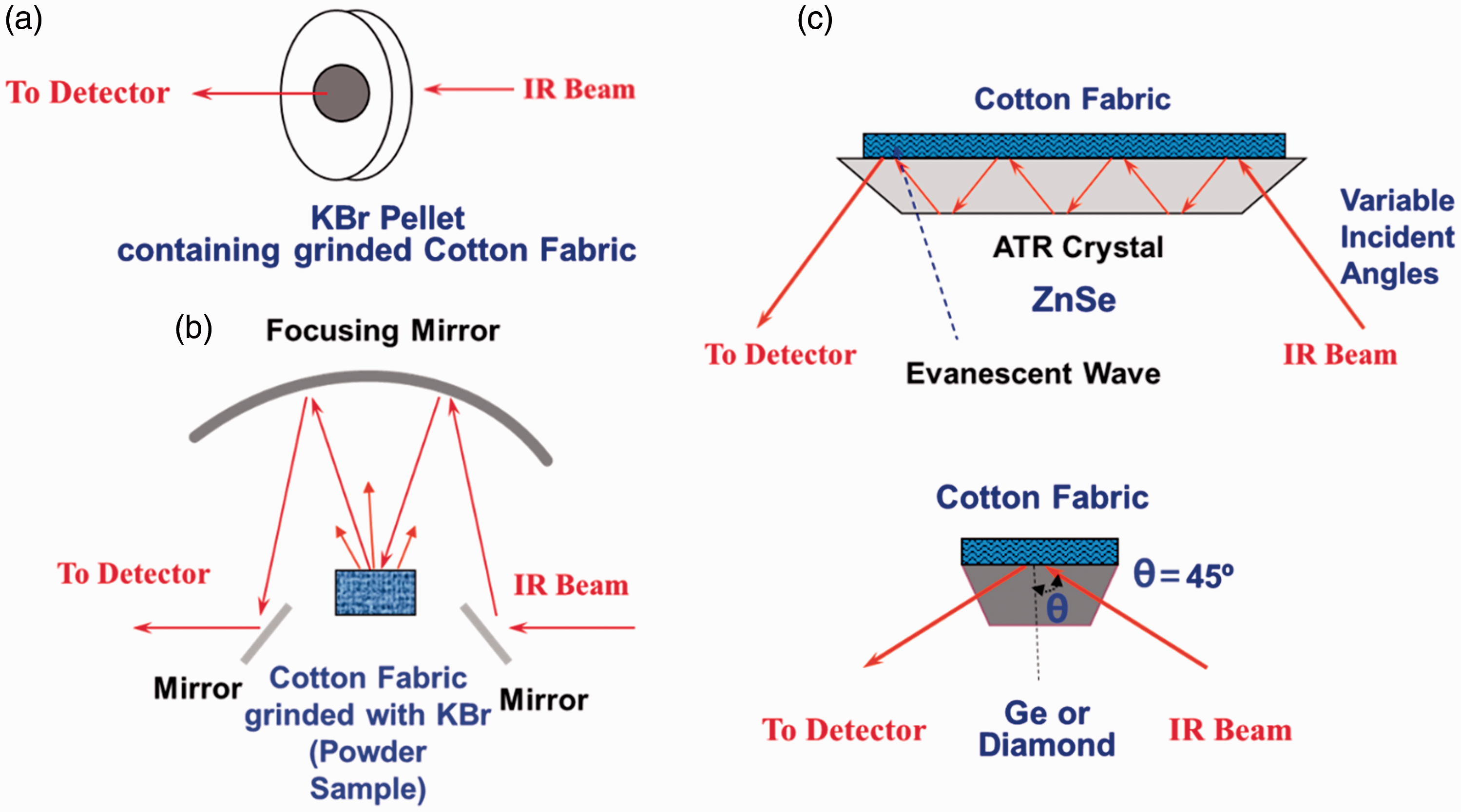
Water absorbency testing
A round fabric sample with a diameter of 10 cm was cut and mounted on the test plate of a gravimetric absorbency testing system (GATS, M/K Systems, Inc. USA), as shown in Figure 2. After the fabric weight was measured, water was transferred through the capillary tube into the center of the fabric. Increased weight per gram of fabric sample was recorded every 0.4 s for 10 s. Water absorbency of all the fabric samples prepared was measured using this system. Additional water absorbency testing was carried with all fabric samples according to the AATCC (American Association of Textile Chemists and Colorists) Test method TS-018 and time for absorbing a water drop was measured.
Schematic diagram of gravimetric absorbency testing system.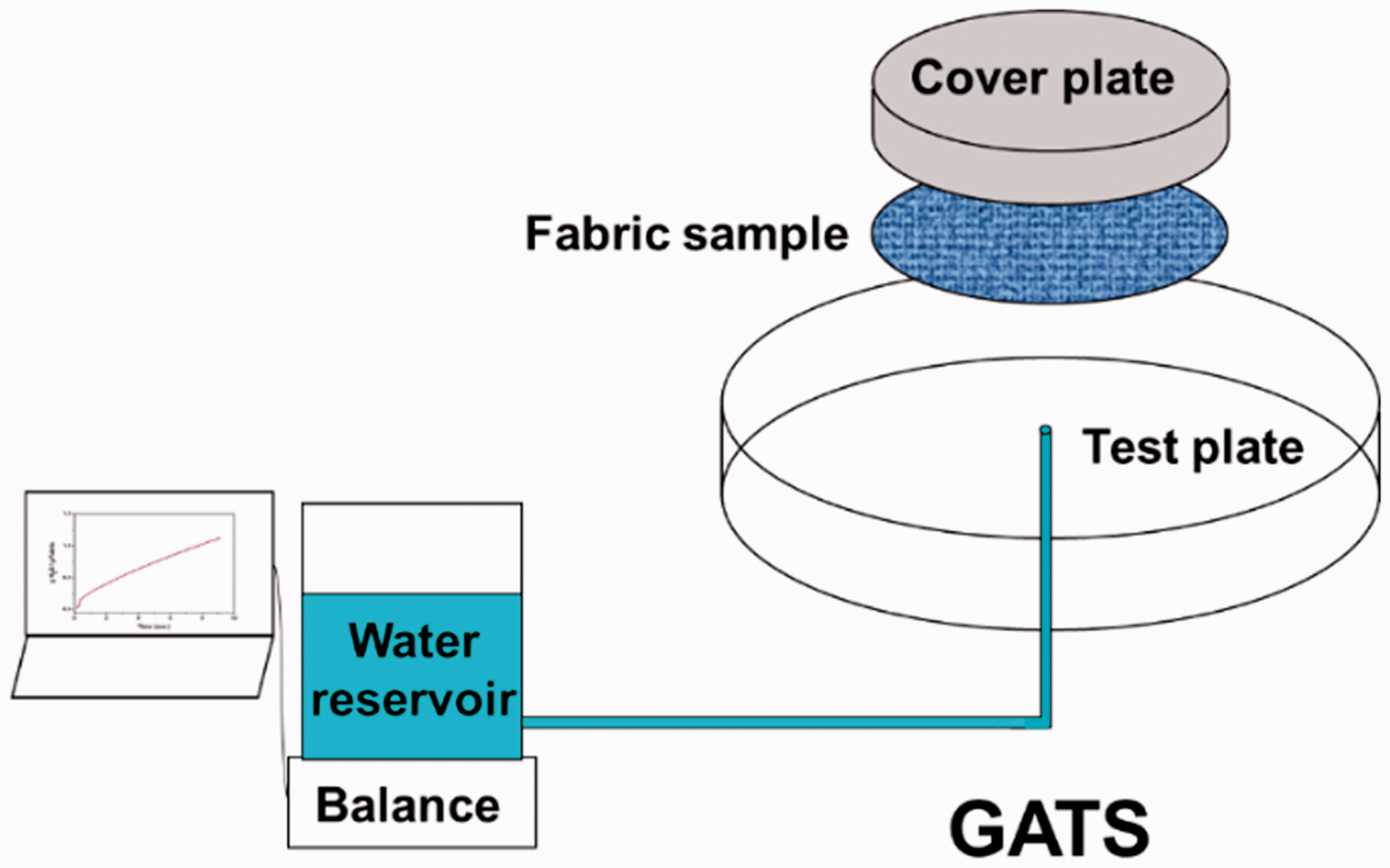
GC-MS analysis
Five grams of greige knitted cotton fabrics were placed in a 22 mL extraction cell and extracted with methanol and hexane, respectively, using ASES at 1500 psi and 100℃ for 15 min. The final volume of eluted methanol extract and hexane extract was adjusted to 50 mL. A portion of 1 µL was subjected to GC-MS analysis in splitless mode using
Results and discussion
Effect of sampling techniques on cotton surface measurement
The information from the FT-IR spectra varies depending on the sampling techniques used. Since the scouring process occurs from the surface of cottons, different sampling techniques can provide different information about the process. Basically, the commonly used sample preparation techniques are transmission FTIR, ATR and DRIFT.
18
The KBr pellet method is most widely used in the transmission technique, while ATR and diffuse DRIFT are both reflectance techniques. However, because samples for both the KBr pellet method and DRIFT are ground with KBr, the bulk properties of samples are measured in their FT-IR results. The ground powder is pelletized in the KBr pellet method while the DRIFT preparation technique can avoid the need for pelleting, though it still requires samples to be mixed with KBr.18,19 Figure 3 shows the FT-IR spectra of the greige cotton fabric in the region of C-H stretch vibration using different sampling techniques including a KBr pellet, DRIFT accessory and ATR accessories.
Fourier transform-infrared spectra of greige cotton knitted fabrics. (a) Comparison of sampling techniques (absorbance is in arbitrary units just to compare), (b) effect of incident angles using ZnSe attenuated total reflectance and (c) effect of crystal (refractive index) with an incident angle of 45°.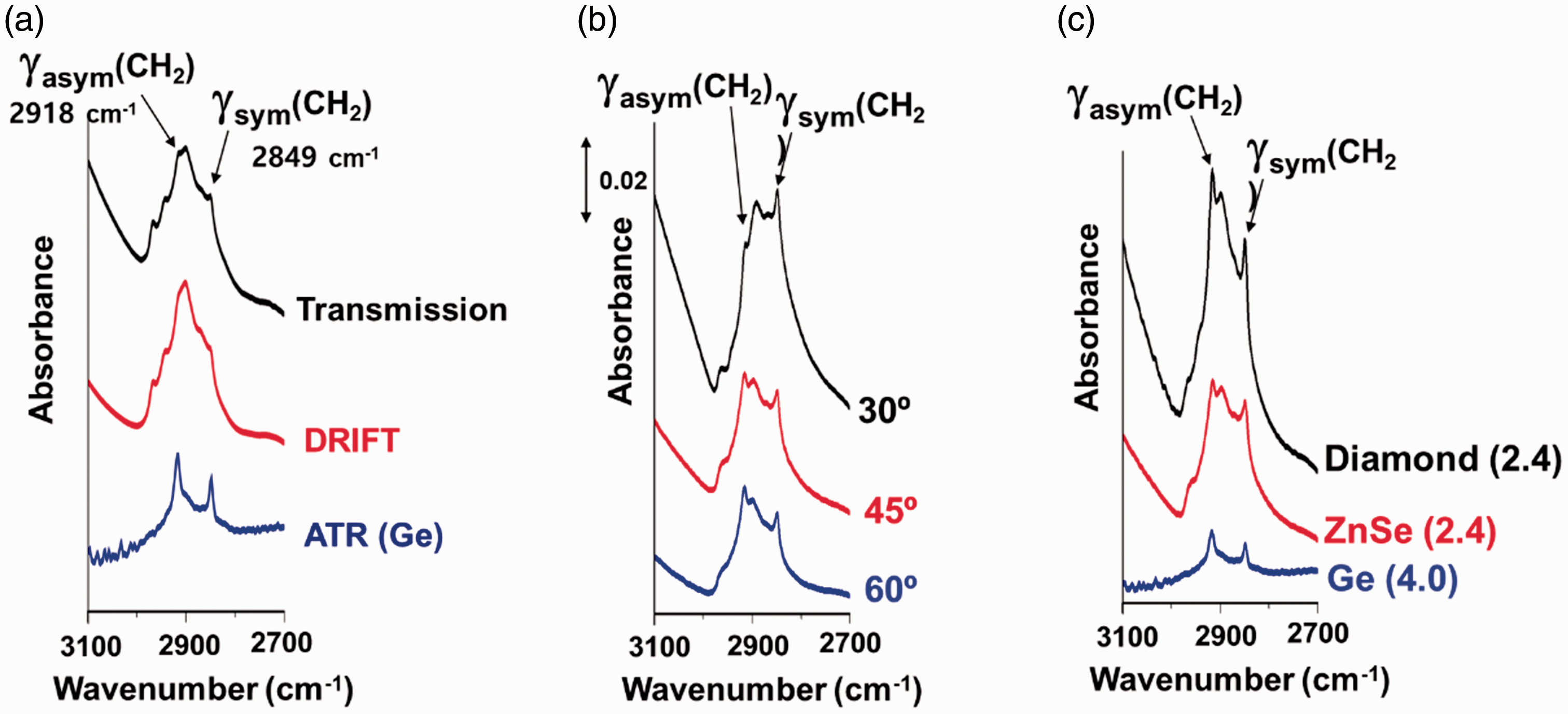
In Figure 3(a), the absorbance using a transmission technique using a KBr pellet and a reflectance DRIFT technique showed the same pattern, which resulted from a main component, cellulose, because well ground samples give a bulk property of the cotton. Two sharp peaks at 2918 and 2849 cm−1 were only observed in the surface-sensitive ATR method because these are due to surface components present. Absorbance was in arbitrary units just to compare the FT-IR features of three spectra in Figure 3(a).
In Figure 3(b) and (c), a broad C-H stretching band corresponding mostly to cellulose was observed from 2800 to 3000 cm−1, while two extra sharp C-H stretching peaks appeared at 2918 and 2849 cm−1 in a broad C-H stretching band with the ATR method, which is surface component sensitive. These asymmetric and symmetric stretching peaks at 2918 and 2849 cm−1 were more profound as the ATR crystal has a bigger incident angle and a higher refractive index, where IR beam can penetrate less depth of the surface. 20 In transmission and drift mode, where the bulk components were measured, two extra sharp C-H stretching peaks were not measured, resulting in a failure to detect a small amount of surface components on greige cotton fabric. Therefore, in this study, a Ge crystal with an incident angle of 45° was selected for the characterization of cotton fabric scouring, because it showed most clearly sharp C-H stretching peaks at 2918 and 2849 cm−1, which were the key indicators of surface components.
Selection of IR ranges having significant features of scoured cotton fabrics
Figure 4 shows that any differences in FT-IR spectra of greige and scoured cotton fabrics with/without HCl vapor exposure in a full IR range of 4000–600 cm−1 were not noticeable, except two regions of 2800–3000 (region I in Figure 4) and 1600–1800 cm−1 (region II in Figure 4). In the study of scouring cottons, these two regions need to be examined closely. Because the intensities in these regions are very weak, important information on changes in surface components after scouring or organic solvent treatment can be overlooked. Details in these regions will be discussed in the following sections.
Fourier transform-infrared attenuated total reflectance spectra using a Ge crystal. (a) 1 = greige and scoured cotton knitted fabrics, 2 = with scouring agent only, 3 = with scouring agent in 1 g/L alkaline solution and 4 = with scouring agent in 2 g/L alkaline solution; and (b) 1–4 = their HCl vapor-exposed fabric samples.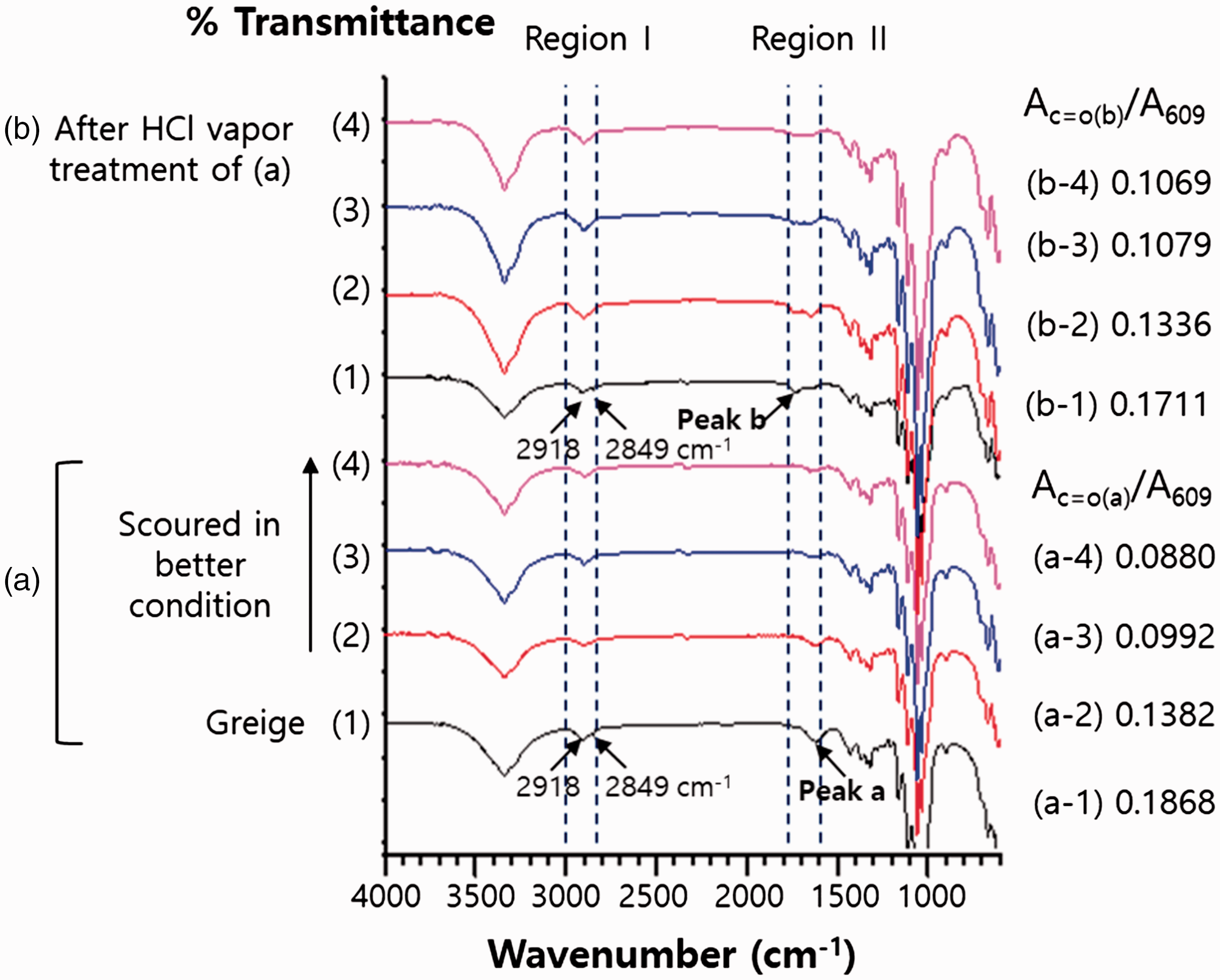
Calculation of the relative intensity of the carboxylate peak to the peak at 609 cm−1
According to the previous report, the relative peak intensities at the ester region (1727–1732 cm−1) of linen were calculated in comparison to 609 cm−1, that is the OH out of plane bending in cellulose. 21 The relative intensity for raw linen (0.3807) decreased to various scoured samples (0.3693–0.3283) and alkaline-scoured and bleached samples (0.3216–0.3207) in FT-IR data obtained using a diamond ATR cell in the range of 4000–400 cm−1. The relative peak intensity calculation using the OH out of plane bending of cellulose was also applied to evaluate various retting processes of kenaf fibers. 22 In this case, a KBr pellet method with a range of 4000–400 cm−1 was used because FT-IR peaks resulting from non-cellulosic fibers of kenaf were detected in the ground fiber samples. However, this calculation is not possible when the FT-IR spectra are measured with a ZnSe crystal (cut off 650 cm−1) or an MCT-A detector (cutoff 650 cm−1). 23 Using Figure 4, where FT-IR were taken using a DTGS detector in the range to 600 cm−1, the relative intensities of the carboxylate peak compared to the peak at 609 cm−1 were calculated to be 0.1868 for the greige sample (water drop test: less 5 min up) and decreased to 0.0880 in a fabric sample that was scoured fully (water drop test: less than 1 s).
Comparison of FT-IR ATR peaks of differently scoured cotton fabrics
In Figure 5(a) 1, the greige cotton fabrics showed the most profound extra C-H asymmetric and symmetric stretching peaks at 2918 and 2849 cm−1, as well as a broad peak at 1600 cm−1. According to Chung et al.,
14
the extra sharp peaks at 2918 and 2849 cm−1 were interpreted to correspond to methylene groups (-CH2-) in the long alkyl chains of wax present on the cotton surface while broad C-H stretching bands correspond mostly to cellulose. The peak at 1600 cm−1 was interpreted as carboxylate (COO−), as proved by a shift to the carbonyl group of carboxyl acid (COOH) at 1750 cm−1 using the HCl-vapor treatment on the greige cotton sample, as shown in Figure 4(b) 1. This shift was observed to be reversible between carboxylate (COO−) at 1600 cm−1 and the carbonyl group(>C=O) of carboxylic acid (COOH) at 1750 cm−1 using alternative non-destructive HCl and NH3 vapor exposures during FT-IR measurements. The study by Mao et al.
24
observed a >C=O stretching vibration of stearic acid to occur at 1763 cm−1 in the monomer state, 1719 cm −1 in dimeric state and 1725 cm−1, 1745 cm−1and 1750 cm−1 in the hydrogen bonded state with DMSO, ethanol and acetonitrile, respectively. From their results, the peak at 1750 cm−1 in our study indicated that carboxylic acid (COOH) groups probably became hydrogen bonded with water during HCl-vapor treatment.
Fourier transform-infrared attenuated total reflectance spectra of variously scoured and greige cotton knitted fabrics. (a) -CH2- region and (b) R-COO− region. 1 = greige, 2 = bioscoured without washing at 95℃, 3 = bioscoured with washing at 95℃ and 4 = alkaline scoured.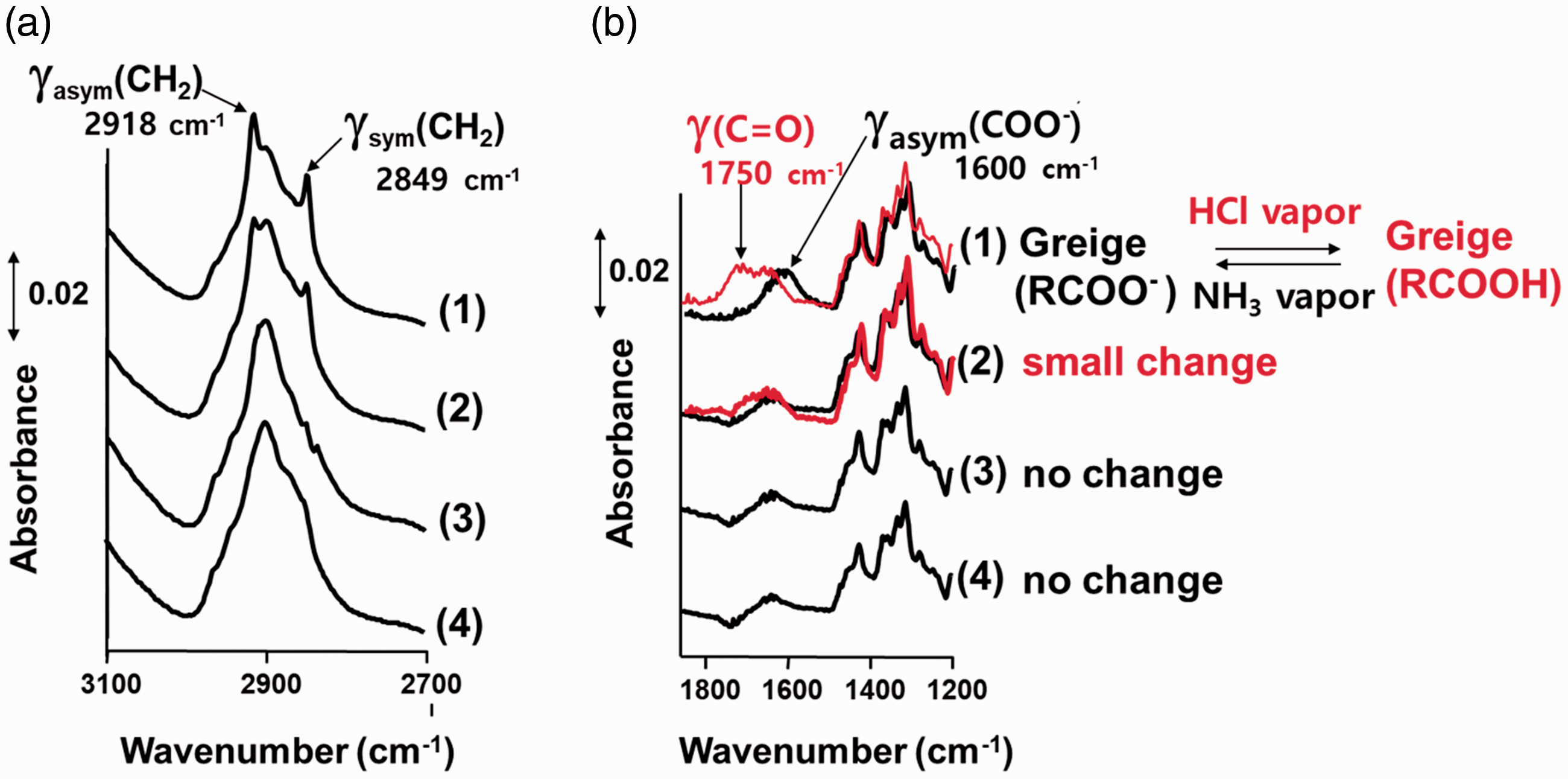
The greige cotton sample used in this study seems to have cuticle pectins present as free carboxylate because of the absence of a peak at around 1736 cm−1, where Wang et al. 15 detected a rather weak absorbance and interpreted their greige cotton sample as having esterified pectins. The degree of esterification of pectin depends on the growing stage of the plant, as briefly mentioned in the introduction, and has been intensively investigated using peak areas of the ester carbonyl (COO-R) stretching peak and free carboxylate stretching peak at 1745–1760 and 1620–1650 cm−1, respectively, in various fields.25–28 Free carboxylate groups seem to resulted from mostly deesterified pectin and fatty acids in free forms that are one type of cotton wax.4,15 The latter could exist as carboxylate forms by coordinating with each other or with a carboxylate of pectin through a Ca2+ ion.
Two cotton fabric samples that were alkaline scoured or bioscoured with washing at 95℃ revealed the absence of waxes, as confirmed by the absence of the extra sharp C-H stretching peaks (Figure 5(a) 3 and 4) as well as the absence of the carboxylate group, therefore resulting in no peak shift either in HCl-vapor or NH3-vapor treatment (Figure 5(b) 3 and 4). However, the cotton fabric that was scoured incompletely on purpose by avoiding washing at 95℃ after pectinase treatment 29 showed less profound extra C-H stretching peaks (Figure 5(a) 2) and only a small change of reversible shift in the region 1600–1800 cm−1 (Figure 5(b) 2), indicating smaller amount of components that still had carboxylate (COO−) after scouring compared to greige fabric.
FT-IR ATR peaks of boiled and solvent-extracted cotton fabrics
To clarify whether FT-IR peaks of two regions in Figure 5 correspond to the same surface components, we tried to remove the wax components from cotton fabrics by boiling them in water or extracting in organic solvents. Cotton fabric that was just boiled in water showed the same pattern as the greige cotton fabric, but showed a slight decrease in the intensity of peaks (Figure 6(a) and (b) 2).
Fourier transform-infrared attenuated total reflectance spectra of differently treated and greige cotton knitted fabrics in (a) a -CH2- region and (b) an R-COO− region. 1 = greige, 2 = boiled in water, 3 = extracted in hexane and methanol consecutively, and 4 = alkaline scoured.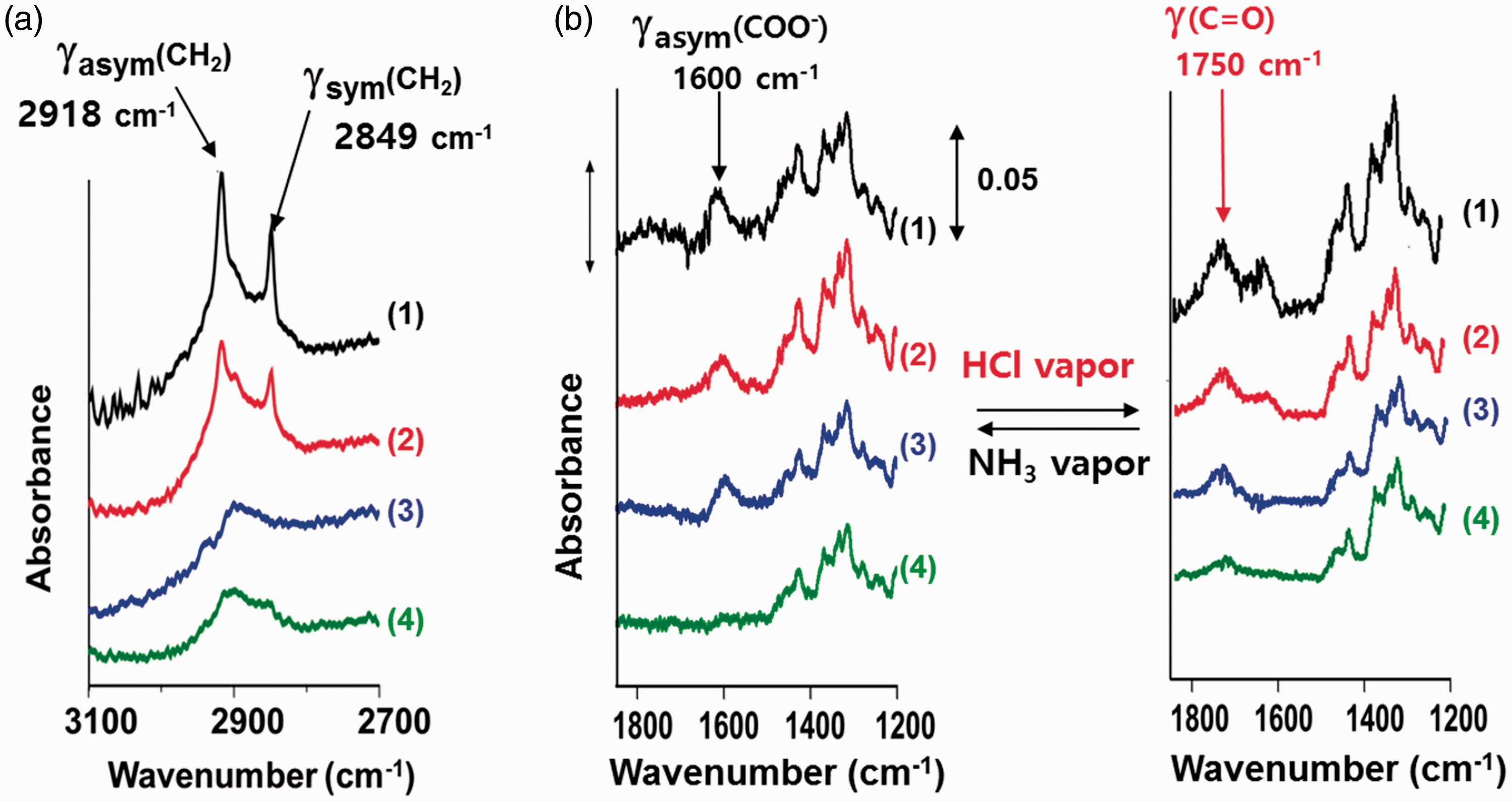
However, unlike the greige and scoured cotton fabrics in Figures 5 and 6(a) 1, where the disappearance of extra C-H peaks was accompanied by the absence of the carboxylate group as well, cotton fabric extracted by hexane and methanol subsequently showed different behavior in FT-IR ATR measurements. The presence of carboxylate groups was observed in solvent-extracted cotton fabric (Figure 6(b) 3) despite of the disappearance of the extra sharp C-H peaks (Figure 6(a) 2). This strongly indicated that one group of components that contributed to the extra C-H stretching peaks may not be related to the acid–base reversible carboxylate peak. In the previous report by Agrawal et al., 4 less than 7% pectin was removed compared to 100% pectin removal in NaOH-scoured cotton fabric when wax removal was carried out by fabric extraction with hexane (30 min at 75℃). Our FT-IR results showing the presence of a carboxylate peak at 1600 cm−1 after consecutive hexane and methanol extraction (Figure 6(b) 3), and the absence of the same peak after alkaline scouring (Figure 6(b) 4), agreed with their findings regarding the difficulty of removing pectin via hexane treatment, although our results were not as quantitative as theirs.
Water absorption of cotton fabric samples
To evaluate the scouring performance of cotton fabrics, the water absorption was measured by GATS and a water drop test. The FT-IR results shown in Figures 4 and 5 were examined closely with water absorbency data shown in Figure 7. When all the fabric samples were subjected to GATS, where the system delivers water to them and records the mass absorbed per unit amount of fabric against time (Figure 2), the weights of two cotton fabrics that were alkaline scoured or bioscoured with washing at 95℃ increased continuously over 10 s, proving the excellent water absorbency to be enough for the next dyeing process (Figure 7). The absorbency time for a water drop for these two samples was measured to be <1 s. The AATCC recommended absorbency standard for a drop test is in the range of 1–5 s.
Water absorbency data of cotton knitted fabrics using a gravimetric absorbency testing system: 1 = alkaline scoured (water drop test: less than 1 s), 2 = bioscoured with washing at 95℃ (less than 1 s), 3 = bioscoured without washing at 95℃ (65 s), 4 = solvent-extracted (2 min up), 5 = boiled in water (2 min up) and 6 = not treated (greige) (5 min up).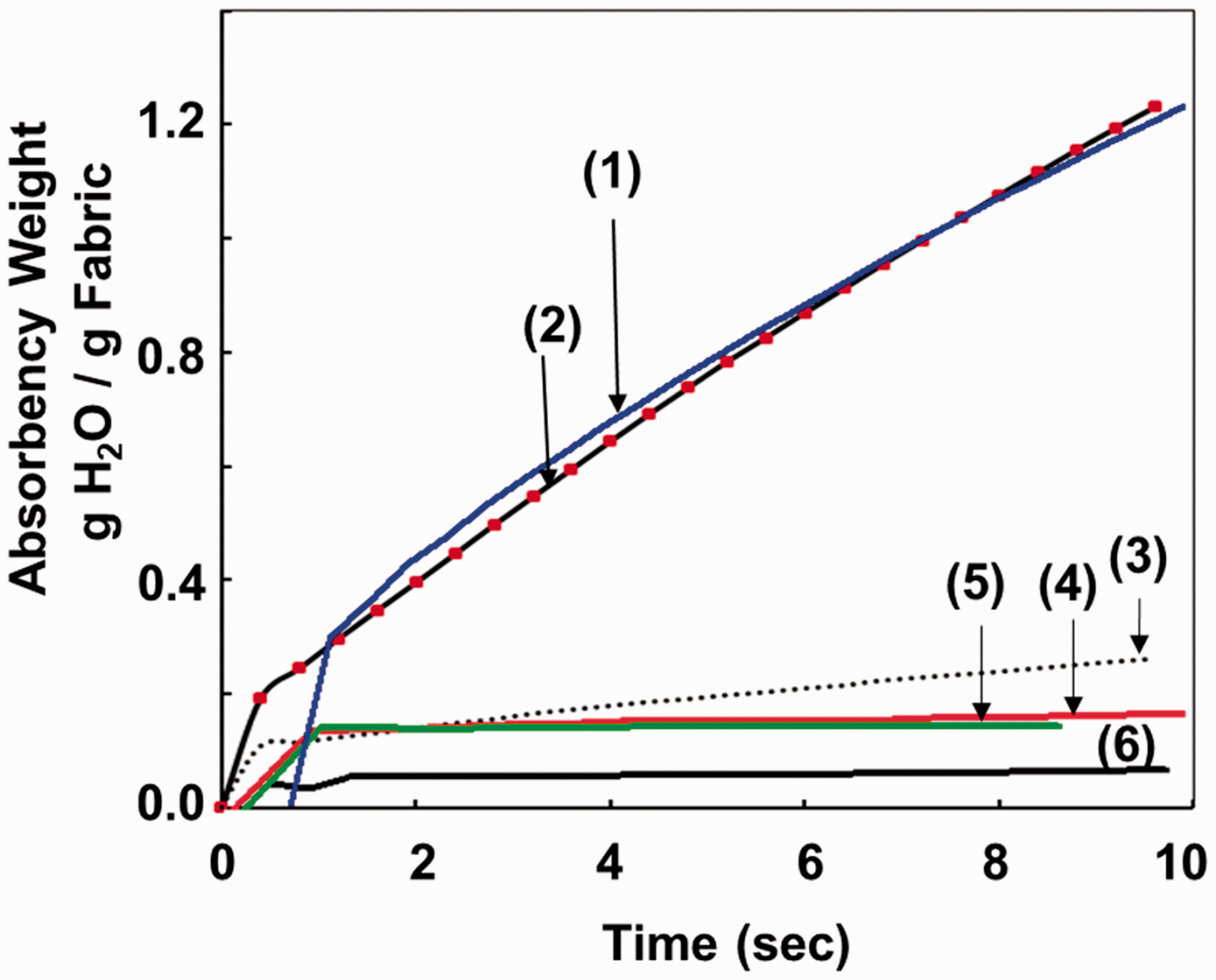
The water absorbency of boiling water-treated and solvent-extracted fabric lay in a similar range as that of greige cotton fabric (Figure 7: samples 4–6). These fabric samples had ATR FT-IR peaks at 1600 cm−1, indicating that most of the pectin was not removed with these treatments (Figure 6: sample 2). The water absorbency data and FT-IR results in Figure 6(a) suggested that the absence of the extra C-H stretching peaks alone does not guarantee successful scouring, as shown in the solvent-extracted or boiling water-treated cotton fabrics. Absorbency time for these samples ranged from 2–5 min or more. Bioscoured fabrics showed slightly increased water absorption compared to solvent-extracted ones, but far less than successfully scoured samples (Figure 7: sample 3).
Identification of wax components related to the extra sharp C-H peaks
GC-MS analyses were carried out to determine which components were removed from the greige cotton fabric during solvent extraction and contributed to the disappearance of the extra C-H peaks. A GC-MS chromatogram using non-polar hexane as the extracting solvent is presented in Figure 8(a) and one using the most polar organic solvent, methanol, is presented in Figure 8(b). Each peak was assigned by its mass spectral data and MS library results are summarized in Table 1.
Gas chromatography chromatograms of (a) hexane extract and (b) methanol extract of greige cotton knitted fabrics. Assignment of gas chromatography-mass spectrometric peaks in Figure 6 From the mass spectral data measured of higher alkanes, bis(2-ethylhexyl) phthalate, palmitic acid and stearic acid. Calculation from empirical formula of higher alkanes, bis(2-ethylhexyl) phthalate, palmitic acid and stearic acid. From Wikipedia.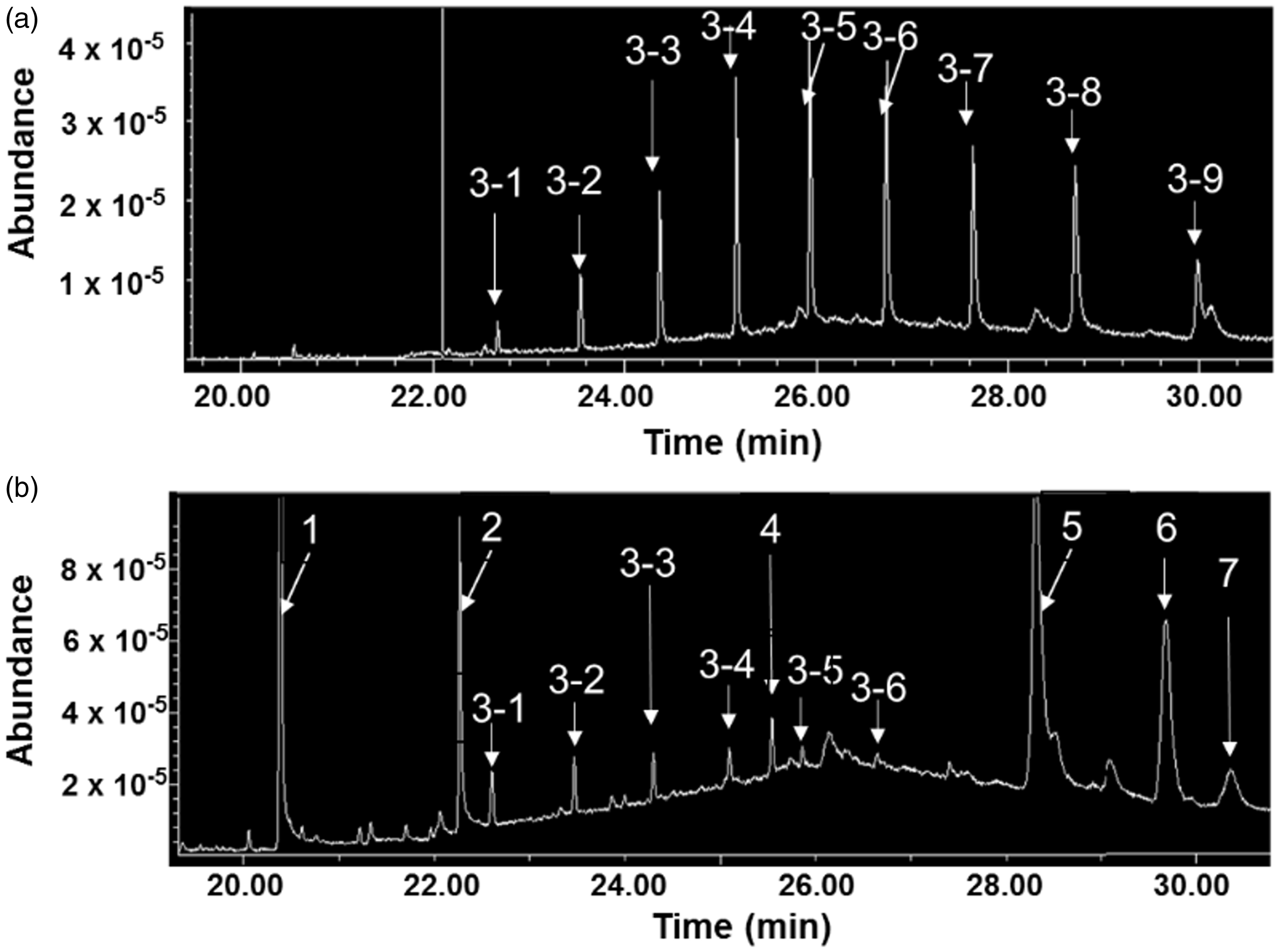

In hexane extracts (Figure 8(a) and Table 1), several typical components of paraffin wax, ranging from C22H46 (docosane) to C30H62 (triacontane), were detected. Each component of paraffin wax that consists of a mixture of long chain alkanes with the general formula C n H2 n +2 was eluted earlier in order of its lower boiling point. Pentacosane (C25H52), hexacosane (C26H54) and heptacosane (C27H56) were the most abundant components. Paraffin wax is commonly applied and dispersed to the yarn surface before the knitting process to decrease the friction between yarns, needles and sinkers on the knitting machines. 30 The paraffin wax added secondarily during wax processing became present on the greige cotton knitted fabric and was proved to be the major component that contributed to the extra C-H stretching peaks at 2918 and 2849 cm−1. A GC-MS chromatogram on methanol extracts (Figure 8(b) and Table 1) indicated that there was other type of component that contributed to these C-H stretching peaks.
In addition to paraffin wax detected in hexane extracts, hexadecanoic acid and octadecanoic acid, as well as γ–sitosterol, α-amyrin and bis-(2-ethylhexyl) phthalate (DEHP), were detected in methanol extracts (Figure 8(b)) because they have polar hydroxyl and carboxyl groups in their chemical structures and could be extracted in polar solvents. Hexadecanoic acid (C15H31COOH, palmitic acid) and octadecanoic acid (C17H35COOH, stearic acid) are naturally occurring cotton waxes according to Degani et al. 31 who also analyzed these C16 and C18 fatty acids in the NaOH scouring bath of cotton fabrics, as well as pectin by reverse-phase HPLC equipped with an UV detector and evaporative light-scattering detectors in series on chloroform extracts of the wasted bath. Long alkyl chains of C16 and C18 fatty acids in free form seemed to contribute to the extra sharp C-H peaks together with paraffin wax added as lubricating oil. Other types of cotton wax that were esterified, or coordinated with each other or to pectin in the form of carboxylate via Ca2+ ions, were regarded as not being extracted in measurable amounts by hexane and methanol used in our experimental conditions.
Amyrins and γ–Sitosterol, which are known to have biological and anti-inflammatory activities and to be found in various plants32,33 including cotton, 4 were also analyzed. Detected components in Table 1 are all included in the cotton wax constituents reviewed by Agrawal et al., 4 except DEHP, which has been the most commonly used plasticizing agent for the widely used plastics. The detection of DEHP in methanol extraction of cotton fabric is probably due to well-known laboratory contamination during the analysis by using plastic bottles and syringes, as illustrated in International Electrochemical Commmission 62321-8 Annex D (2017). 34
Conclusions
The ATR FT-IR measurements on differently scoured or treated cotton fabrics were taken in combination with water absorption data and GC-MS analyses of hexane and methanol extracts. Significant improvement on the previous work with ATR FT-IR alone
14
was obtained as follows.
The extra sharp asymmetric and symmetric C-H stretching peaks at 2918 and 2849 cm−1 in the broad C-H stretching band of bulk cellulose were proved to be caused by paraffin wax of a mixture of more than nine straight-chain alkanes in carbon lengths of 22 to 30, possibly added as lubricating oil. The long alkyl chain of cotton wax of natural origin, hexadecanoic acid and octadecanoic acid, in free form contributed also to the extra sharp C-H peaks at 2918 and 2849 cm−1. However, the absence of these extra C-H stretching peaks alone was not related to improvement of the water absorption of cotton fabric. Disappearance of these C-H peaks and the carboxylate peak at 1600 cm−1 together guaranteed enough water absorption of the cotton fabric for dyeing. The carboxylate peak at 1600 cm−1 detected in cotton fabric samples that were greige, water-boiled, hexane–methanol extracted or incompletely scoured was confirmed to result from the presence of deesterified pectin and probably fatty acids having a carboxylic acid group in the form of carboxylate via Ca2+ ions. Cross-linked structures from these pectin and cotton waxes should be removed in the scouring of cotton fabrics. Removal of components related to these cross-linked structures was further proved by observing no carboxylate peak at 1600 cm−1 being able to shift to 1750 cm−1 under acid vapor exposure, and it being restored to 1600 cm−1 under base vapor exposure. The carboxyl group of carboxyl acid (COOH) at 1750 cm−1 is a derived peak that is only obtained when greige cotton or incompletely scoured cotton react with HCl. It was derived from the carboxylate (COO−) peak (1600 cm−1) of pectin and wax. In the completely scoured cotton samples, there were no changes at all upon HCl vapor treatment because there was no measurable pectin and wax left after scouring, and the very weak peak at 1640 cm−1 due to water was not shifted with HCl vapor exposure. The FT-IR ATR measurements with alternate acidic and ammonia vapor exposures can be applied to small spots of undyed cotton fabric when the troubleshooting of uneven dyeing is needed. FT-IR ATR measurement on surface components of cotton fabric was found to be most effective by selecting an ATR accessory with a higher incident angle and a crystal of a higher refractive index, which according to our results can be applied to the quality control of cotton scouring regardless of fibers, yarns and fabrics.
Footnotes
Declaration of conflicting interests
The authors declared no potential conflicts of interest with respect to the research, authorship and/or publication of this article.
Funding
The authors disclosed receipt of the following financial support for the research, authorship, and/or publication of this article: Part of this research was supported by the National Research Council of Science & Technology (NST) grant by the Korea government (MSIP) [Grant No. CAP-17-01-KIST EUROPE].