




Abstract
Metaplexis japonica seed hair fibers (Mj-fiber), harvested from the seed pods of Metaplexis japonica (Apocynaceae: Asclepiadoideae) originating in China, Japan and Korea, have features ensuring its potential application in the textile and other industrial fields. In spite of the extensive study on the medicinal properties of Metaplexis japonica, research literature about Mj-fiber is quite limited. We obtained Mj-fibers by artificial peeling and seed removing; then the fiber morphology, chemical composition, structures, fiber surface absorption characteristics, and tensile and thermal properties were studied in detail. From the results, Mj-fiber has a hollow structure with a thin fiber wall and large lumen, in which the hollowness is over 92%. Uniquely, Mj-fiber is a natural profiled fiber with a cross-section of a "cross flower" morphology. At the same time, the density of it is very low, accounting for only one-fifth of the cotton fibers, and the fiber length distribution is relatively concentrated. The main component is cellulose, with a content of 53.9 ± 3.20% and structure of cellulose I. In particular, Mj-fiber has excellent hydrophobic and oil affinity surface characteristics. Moreover, the fibers bulkiness and warmth retention performance are comparable to that of duck down. Therefore, the results provide an experimental basis for the application of Mj-fibers in the textile and other industrial fields.
Unlike synthetic fibers extracted from the limited and precious petrochemical resources, biofibers are renewable fibers that can be obtained from wild plants, agricultural crops and residues, forest resources and residues, and even animal and municipal wastes, being abundant in sources.1–5 In recent years, study on biofibers such as seed hair fibers from poplar, kapok and Pergularia daemia plant and wheat and rice straw fibers is burgeoning, not only because of their biodegradability and environmental friendliness, but also because of their distinct structures, morphology and chemical compositions to ensure their application in many special fields.6–9 Taking kapok fiber for example, as a natural fiber it is harvested from the kapok tree and has been successfully used in many fields such as warmth retention fabrics, oil-absorbing materials, and even versatile activated carbon fiber materials due to its peculiar cavity structure.10–13 Furthermore, many new technologies have been applied in the development of biofibers; accordingly, many emerging biofibers have been developed, such as a new wood-textile fibers with aligned cellulose nanofibers which have been fabricated directly from natural wood via a chemical delignification and twisting process. 14
Metaplexis japonica (Apocynaceae: Asclepiadoideae) is native to thickets, forest margins, grassland and streambanks in China, Japan and Korea, and is known for its medicinal functions. Research on its medicinal value originated in Japan in the 1960s. Since then, a variety of pharmacologically active ingredients such as C21 steroidal glycosides, polysaccharides, alkaloids and flavonoids have been extracted from roots, stems, leaves, seeds and peels of Metaplexis japonica, which are effective in the treatment of traumatic injury, snake bites, infantile malnutrition and other fields.15–22 Because of the effects of harmonizing qi and protecting semen, harmonizing qi and blood, removing toxin for detumescence, and so on, the roots, stems, leaves and peels of Metaplexis japonica can be used directly as medicinal herbs according to the theory of traditional Chinese medicine. Furthermore, papers on tumor cells inhibiting, immunity regulating, antibacterial, anti-oxidation and neuroprotection of Metaplexis japonica have been published especially in recent years.23–27 In summary, the previous and present research on Metaplexis japonica is mainly focused on its medicinal values.
Nowadays, Metaplexis japonica is widely cultivated due to its multifarious medicinal properties. As a by-product of Metaplexis japonica, the yield of Metaplexis japonica seed hair fiber (Mj-fiber) is about 320–650 g per plant, which depends on the quantity and size of fruits per plant. In autumn, Mj-fibers fly out of the natural cracks of mature fruits, and float in the air. Usually, a convenient and effective method to harvest Mj-fibers is to peel the fruit artificially or mechanically. The current large-scale planting facilitates the harvesting. Thus, as a type of renewable natural plant fiber, Mj-fiber is abundant, biocompatible and biodegradable, and also has the features of low density, high fluffiness and hydrophobic/oleophilic properties, which indicate that it has potential application in textiles and other fields. However, research literature about Mj-fiber is quite limited, and there is little appreciation for its potential values; the fibers' properties have never been critically evaluated either. In order to analyze and assess properties of Mj-fibers, the fiber morphology, including its length, fineness, longitudinal and cross-sectional characteristics, has been studied using digital camera and scanning electron microscope (SEM) methods in this paper. Then, the composite of Mj-fibers was analyzed according to the standard of GB5889-86 “Method of quantitative analysis of ramie chemical components”. Fourier-transform infrared (FTIR) spectroscopy and X-ray diffraction (XRD) were used to further determine the fiber's structure. In addition, the characteristic of the fiber surface was studied using the static contact angle measurement. Finally, the thermal insulation characteristics of Mj-fibers were measured in relation to other fibers. Therefore, these research results can provide an experimental basis for the potential application of Mj-fiber in the textile and other industrial fields.
Experimental details
Materials
The mature Metaplexis japonica fruits were supplied by Ma'anshan Yitengyi Co., Ltd, China, from which the Mj-fibers were obtained after artificial peeling and seed removing. The harvesting process and optical images of Mj-fibers are shown in Figure 1.
Harvesting process of Metaplexis japonica seed hair fibers.
The 60 s × 60 s cotton fabric with areal density of 76 g/m2 was used as the cover fabric to manufacture the “experimental pillows” in this work. In order to evaluate the warmth retention properties of Mj-fibers, silk fiber, duck down and goose down samples (the latter two each with 85% down content) purchased in China's domestic market were chosen as comparison.
Fiber length measurement
Since the Mj-fibers are straight and have little curl, it is relatively easy to measure their natural length. Before the test, fibers were spread separately on a black sheet of paper and a ruler was used for calibration. The length of about 100 fibers was measured and recorded each time, and more than 1200 fibers were measured in total. Origin software was used for statistical analysis of the data.
Morphology analysis
The overall morphology of Mj-fibers was obtained using an MC-D500U(C) HD digital camera (Phoenix Co. Ltd, China); next, the detailed fibers' morphology was detected by the S-4800 SEM (Hitachi Co. Ltd, Japan). Prior to being imaged, samples were sputter coated with gold with the layer thickness of 30 nm to avoid sample charging under the electron beam. From the SEM images, the fineness of the Mj-fiber was analyzed using Digimizer software.
Mechanical properties' measurements
In this experiment, the breaking strength and elongation of Mj-fibers in dry and wet states were measured, respectively. In this test, the dry Mj-fibers were prepared after equilibration under standard conditions (20 ± 2.0℃ with a relative humidity (RH) of 65 ± 2.0%) for 24 h. The wet fibers were obtained after saturating in distilled water for 5 min.
The breaking strength and elongation were measured using YG001 single fiber strength tester with a gage length of 10 mm and test speed of 5 mm/min. The procedure involved gluing the individual fibers to a paper frame with a slit dimension of 10 mm × 10 mm. Before testing, the edge of the supporting paper was cut so that the frame carried no load.7,28 The mean value of five measurements was calculated.
Basic chemical composition measurement
The composition of Mj-fiber was determined according to the standard of GB5889-86 “Method of quantitative analysis of ramie chemical components”.29–31 The mean value of five measurements was calculated. The basic chemical composition of Mj-fibers was confirmed by FTIR spectrum, which was acquired using IR Prestige-21 FTIR spectrophotometer (Shimadzu, Japan), and the spectrum was obtained with an accumulation of 32 scans and with a resolution of 2 cm−1. Before measuring, the sample was milled, mixed with KBr and then pressed into a disk for the FTIR measurement.
Structures analysis
The crystal structure of Mj-fiber was determined using D8 series X-ray (powder) diffractometer (Bruker, Germany) with Cu Kα radiation (λ=1.54056 Å). The X-ray generator system was operated at 40 kV and 30 mA. The 2θ angles range from 5 to 40° with a scanning rate of 2°/min and an interval of 0.02°. The crystallinity index (CI) of cellulose was calculated by Segal method using equation (1)
32
where the Icrystalline is the maximum intensity of the (002) lattice diffraction and Iamorphous is the intensity diffraction at 18° 2θ degrees.

Surface properties analysis
The surface properties of Mj-fiber were analyzed through the static contact angle measurement. Before the test, Mj-fibers were spread on the surface of the test plate. Two solvents of pure water and salad oil were chosen in this experiment. The static contact angle measurements were recorded and analyzed at room temperature on a OCA-20 contact angle meter from DataPhysics Instruments GmbH with SCA20 software. Reported contact angles were the average of at least five measurements.
Warmth retention property measurements
Mj-fiber is a floating fiber, so it is not easy to be directly used for thermal performance testing. In order to measure the warmth retention property, an “experimental pillow” was designed 33 and prepared according to the following method. Cotton fabric was cut into pieces of 40 cm × 40 cm in size. Two pieces were layered together and three of the sides were sewn in advance. Then, 50 g of the fiberfill was stuffed through the unsewn side. After the fourth side was stitched intact, the experimental pillow was obtained. In this experiment, silk and duck down and goose down (both with 85% down content) were chosen for comparison with Mj-fibers. Accordingly, four pillows filled with different fiberfill were prepared.
Meanwhile, the fill power of Mj-fibers, duck down and goose down were measured according to the standard testing procedure of the International Down and Feather Testing Laboratory, 2009. The measurement process was specified as follows: one ounce (28.35 g) of each fiber was allowed to reach equilibrium under the testing condition of 20 ± 1℃ and 65 ± 2% RH for 24 h before being placed in a large plastic cylinder (61 cm high and 25 cm inside diameter). A plunger, consisting of a lightweight piston plate with alignment rod, which weighs 68.5 g, was placed on the top of the fibers and allowed to press freely for 60 s with the final volume of each fiber being recorded.
The warmth retention ratio (WRR), clo value (CLO) 34 and heat transfer coefficient (HTC) of each experimental pillow filled with the different fibers were measured by the YG606D plate type thermal insulation instrument (Wenzhou Fangyuan Instrument Co., Ltd, China) under the testing condition of 20 ± 1℃ and 65 ± 2% RH.
Results and discussion
Morphology of Mj-fibers
Fiber length distribution
Because the fiber length and its distribution play a major role in determining the end use of the fiber and the processes adopted for its transformation, the fiber length and its distribution have always been considered to be the most crucial parameters.
35
Thus, more than 1200 single Mj-fibers were randomly selected and tested for length one by one in this work; then, the length distribution pattern was drawn according to these testing data and the result is shown in Figure 2.
Length distribution of Metaplexis japonica seed hair fibers.
As can be seen from Figure 2, the length of Mj-fiber distributed in the range of 22–52 mm, and concentrated in the range of 40–46 mm accounting for 58%. In this test, we noted that the single fiber length was often determined by the size of each fruit, and fibers from the long fruits were always longer than those from the short fruits. But there was no significant difference in length of fibers from different parts in one fruit. In other words, the single Mj-fiber from the head, middle or tail part of one fruit always has the same length. It is speculated that the reason should be closely related to the same fiber growth time and nutrient absorption in the same fruit. Consequently, the fibers with uniform length can be obtained by choosing the fruits with uniform size. With reference to the published papers, the Mj-fiber was longer than several common natural textile fibers, such as fine cotton (25–35 mm), kapok (8–32 mm), linen (17–25 mm), jute (2–4 mm) and so on, but shorter than ramie fibers (50–120 mm).9,28
Fiber fineness and morphology characteristics
In order to detect the overall and detailed morphology of the Mj-fibers, digital camera and SEM were used and the results are shown in Figure 3.
Morphology of Metaplexis japonica seed hair fibers. (a) Optical morphology ×50, (b) Microscopic morphology ×500, (c) Microscopic morphology ×2000 and (d) “Cross flower” section of Mj-fiber.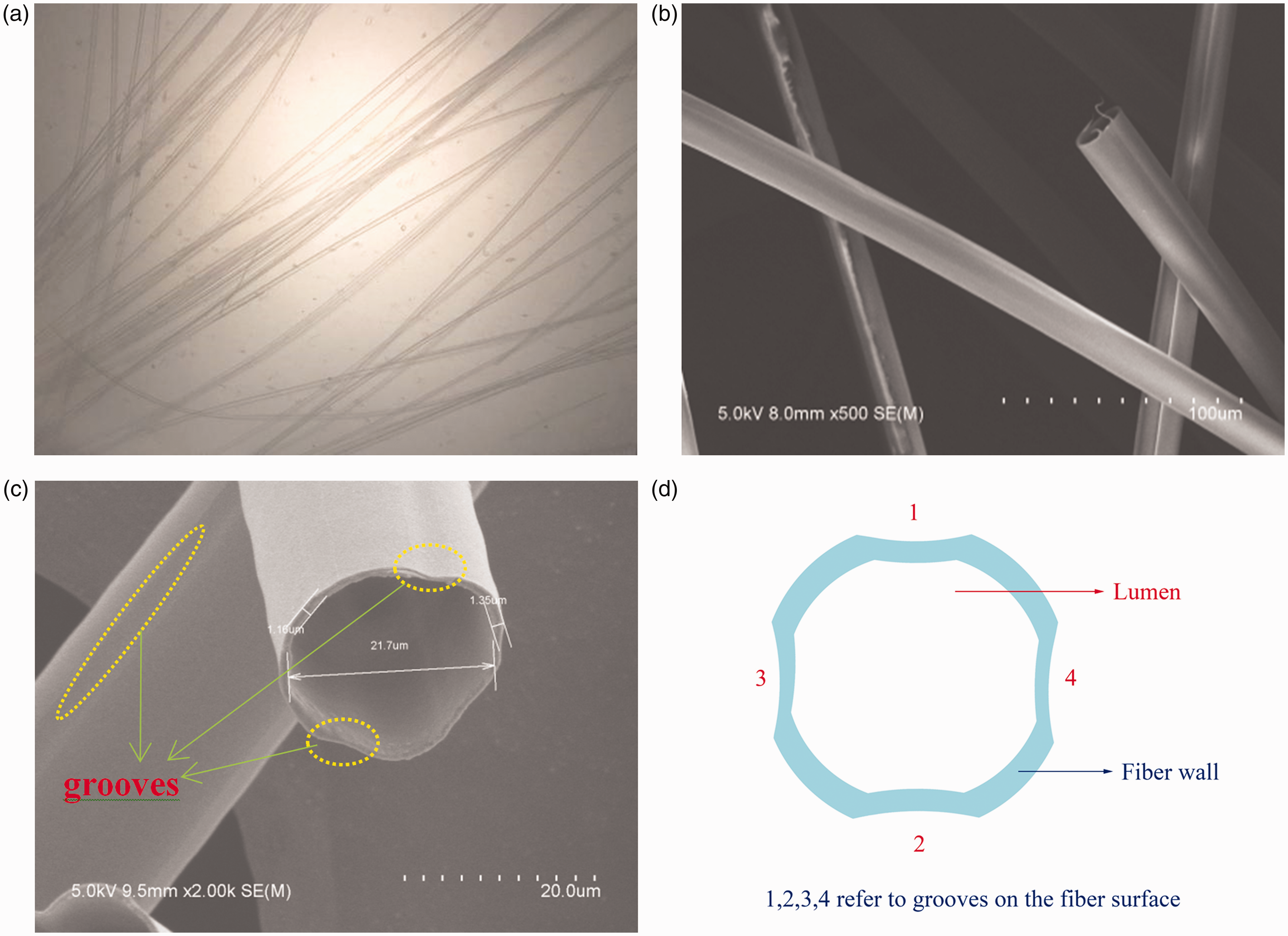
The Mj-fibers were straight and each fiber had almost the same diameter from the top to the root according to the optical morphology in Figure 3(a). From the morphology detecting of more than 1000 fibers in this experiment, we found the fineness of Mj-fiber was very uniform. Furthermore, from the SEM images in Figure 3(b) and (c), the Mj-fiber had a hollow structure with a thin fiber wall and large lumen. Taking the Mj-fiber cross-section as a circle, the diameter including the fiber wall was around 21–23 µm, which was more fine than kapok fiber (20–45 µm), and the lumen diameter was about 20–21 µm. Thus, the average hollowness of Mj-fiber calculated from the cross-section values in the studied samples was over 92%, which was as high as kapok fiber and much higher than that of the current synthetic chemical fiber (40%). 10 Consequently, there was a lot of static air trapped inside the Mj-fibers. Uniquely, there were two pairs of grooves distributed symmetrically along the fiber axis, resulting in the fiber being approximately cylindrical with a cross-section like a “cross flower” as shown in Figure 3(d). It could be seen that the thickness of the fiber wall was not uniform, and the fiber wall became thinner at the bottom of the grooves. In the same fiber, the depth of two pairs of grooves was approximately the same, and the position of grooves was basically uniformly distributed around the fiber wall. Of course, there were differences in groove depth and distribution between different fibers. Undeniably, the Mj-fiber was a kind of natural profiled cross-section fiber. As we know, static air can block and prevent heat transfer. 36 Due to the grooves on the surface, the space between the fibers was also filled with air, combined with high hollowness, resulting in the Mj-fiber having low density and high fluffiness. Therefore, the above characteristics rendered Mj-fiber itself a natural candidate for bulk textile thermal insulation.
Fiber chemical composition, structure and tensile properties
Composition and properties of Metaplexis japonica seed hair fibers
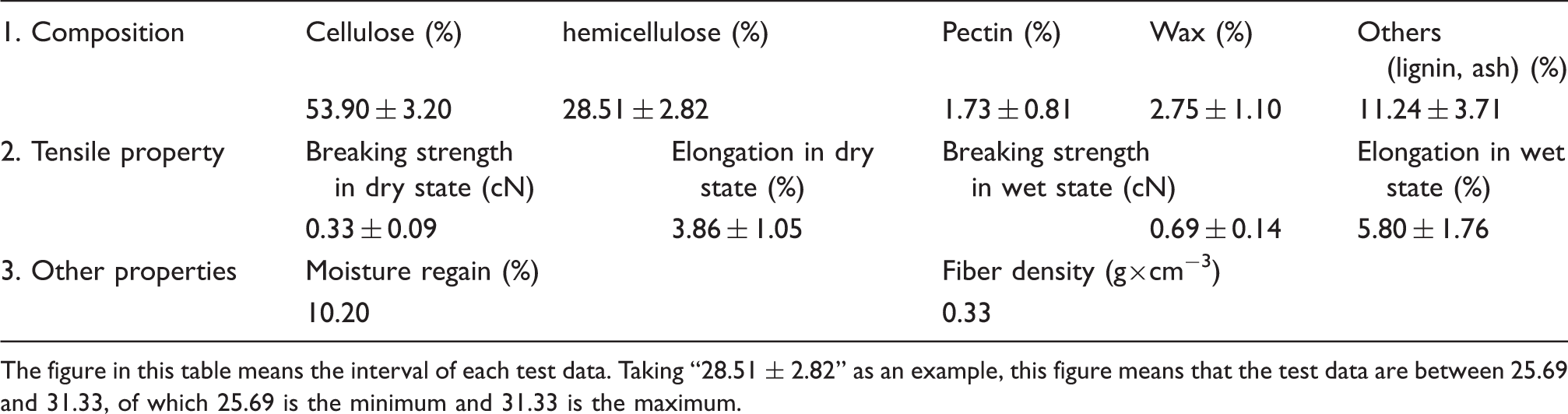
The figure in this table means the interval of each test data. Taking “28.51 ± 2.82” as an example, this figure means that the test data are between 25.69 and 31.33, of which 25.69 is the minimum and 31.33 is the maximum.
At the same time, the fiber composition was confirmed by FTIR spectroscopy in this study, and the result is shown in Figure 4. From this figure, the absorption peak at 3405 cm−1 was ascribed to OH group, and the absorption peaks in the fingerprint regions at 1432, 1164 and 1058 cm−1 were attributed to cellulose structure. Furthermore, the peaks at 1323 cm−1 were ascribed to the C-C and C-O skeletal vibration and the bands at 897 cm−1 were associated with the glycosidic linkages among sugars. The peak at 2918 cm−1 was assigned to the less ordered band of the alkyl chain, indicating the existence of wax or wax like substances. The absorbance at 1734 cm−1 was ascribed to the C=O stretching of methyl ester and carboxylic acid in pectin or the acetyl group in hemicelluloses. The tiny absorption peaks at 1625 and 1521 cm−1 were related to aromatic rings in lignin, which also indicated that the lignin content is relatively low.
37
In conclusion, the fiber composition tested by chemical method has been confirmed in the FTIR spectrum analysis.
Fourier-transform infrared spectra of Metaplexis japonica seed hair fiber.
Furthermore, cellulose is composed of 1→4 linked β-D-glucose residues, and is known to exist in at least four polymorphic crystalline forms, of which the cellulose I structure is native cellulose and made of parallel chains characterized by an intermolecular hydrogen bond network extending from the O2-H hydroxyl to the O6 ring oxygen of the next unit.38–41 According to the characteristic peaks of the FTIR spectrum, Mj-fiber was confirmed as belonging to the cellulose I structure. 32
To investigate the crystal structure of the Mj-fiber, the XRD pattern was measured and the result is shown in Figure 5. It can be seen that the Mj-fiber showed cellulose I structure with the diffraction peaks of the 2θ angles at 15°, 16.3°, 22° and 34.5°, which were assigned to (101), ( X-ray diffraction spectra of Metaplexis japonica seed hair fiber.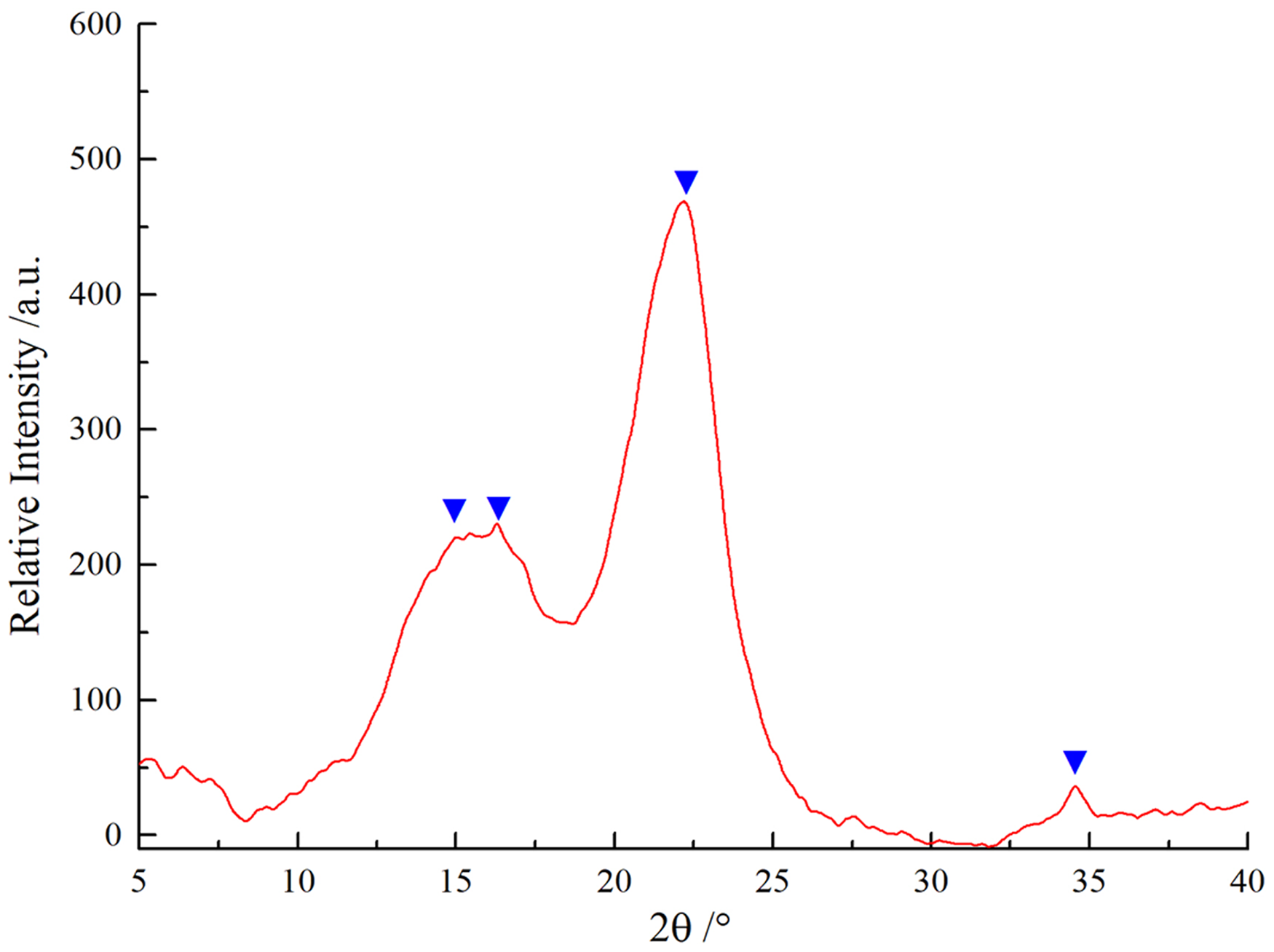
Fiber surface absorption characteristics
To characterize hydrophilic/hydrophobic properties of the Mj-fiber surface, distilled water was chosen as solvent in the present study, and the average static contact angle on the fiber surface was measured at 105.4°, as shown in Figure 6, indicating that the Mj-fiber surface was hydrophobic.
Static contact angle between distilled water and Metaplexis japonica seed hair fibers.
Meanwhile, salad oil was selected as another solvent to detect the surface absorption characteristics of Mj-fibers. During the measuring, it was found that the oil droplet on the fiber surface was a dynamic spreading process, and could be completely spread in a very short time. For this reason, the charge-coupled device camera equipped with contact angle meter was used to capture pictures of oil droplet falling and spreading on the fiber surface, as shown in Figure 7. It was found that within 0.72 s, the oil droplet could be completely spread on the fiber surface. As previously mentioned, the waxy content of the fiber was as high as 2.75%. As is well known, the waxy surface facilitated the spread of oil droplets, which was considered to be an important reason for the lipophilic properties of fibers. At the same time, the hollow morphology of the fiber provided space for oil storage. All in all, the hydrophobic/oleophilic surface, combined with the large cavity features, enabled Mj-fiber to be potentially used as a buoyancy material and oil-absorbing material.
Spreading process of salad oil on the surface of Metaplexis japonica seed hair fibers. (a) 0 s, (b) 0.21 s, (c) 0.36 s, (d) 0.50 s, (e) 0.65 s and (f) 0.72 s.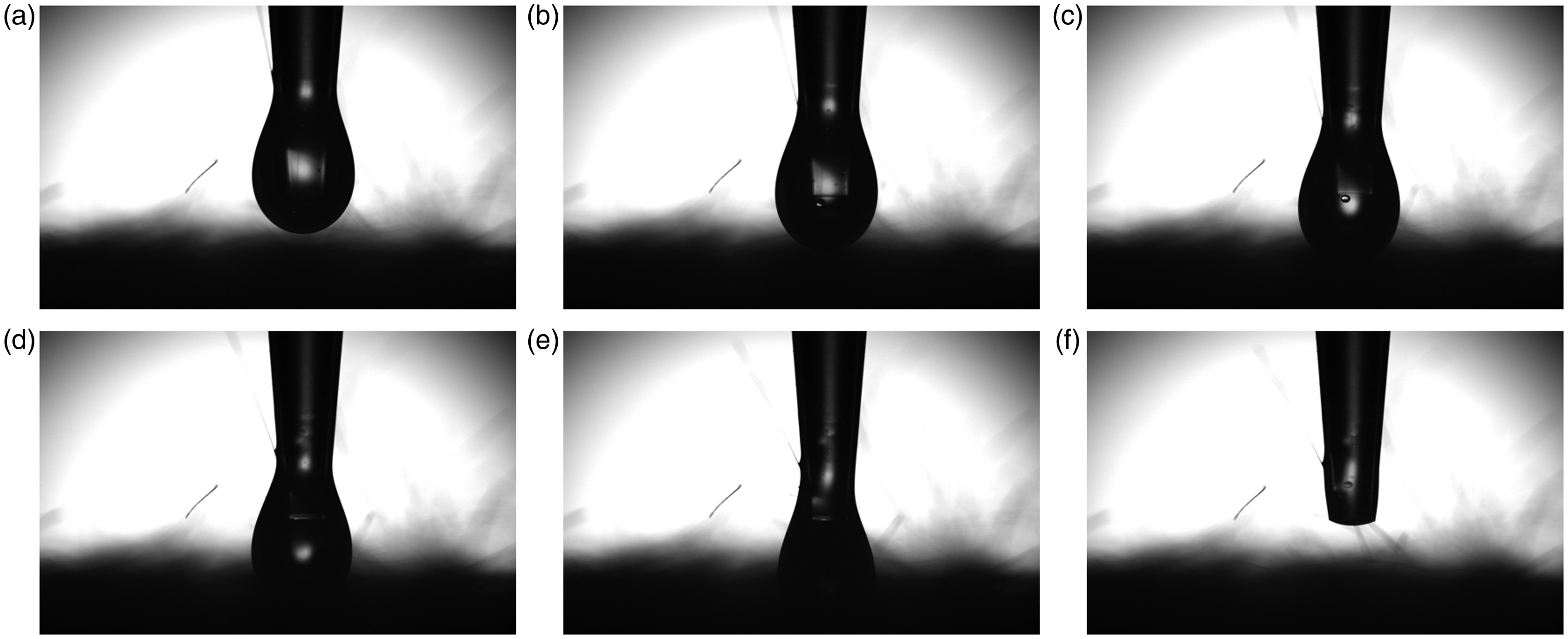
Warmth retention properties of Mj-fibers
Fill power of different fibers.
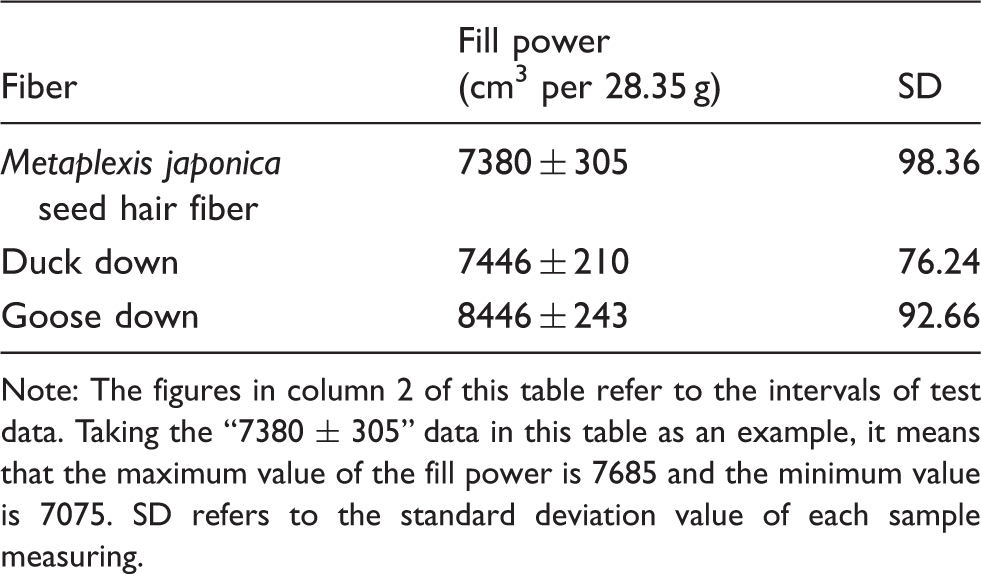
Note: The figures in column 2 of this table refer to the intervals of test data. Taking the “7380 ± 305” data in this table as an example, it means that the maximum value of the fill power is 7685 and the minimum value is 7075. SD refers to the standard deviation value of each sample measuring.
Thermal resistance data of pillows filled with different fibers.

CLO: clo value; HTC: heat transfer coefficient; WRR: warmth retention ratio.
It can be seen from Table 2 that among the three fibers studied, the Mj-fiber exhibited a high fill power; that is to say, it had excellent bulkiness, and its fill power was very close to the duck down fiber, and only slightly lower than the goose down fiber. The fill power of Mj-fiber was attributed to the combined effect of the fineness, “cross flower” morphology and hollowness. In addition, on removal of the plunger used for the fill power measurement, the Mj-fiber assembly returned approximately to its premeasurement volume in a very short time, the same as for other two samples. This indicated that the Mj-fibers would be a great candidate as a bulk textile thermal insulator because the excellent loft property is critical for a fiber to be used for the insulation fiberfill application.
Thermal resistance represents a treatment's resistance to radiant, conductive and convective heat loss. In Table 3, the WRR, CLO and HTC of the pillows filled with Mj-fibers were compared to that of three fibers currently used as thermal insulators: duck down, goose down, and silk fibers. Based on the above three indexes, the thermal resistance of the Mj-fiber–filled pillows was very close to the duck down–filled ones, and higher than that of silk fiber–filled pillows. Of the four samples studied, pillows filled with goose down provided significantly higher thermal resistance than others. Nevertheless, the Mj-fibers possess unique properties of environmental benefits associated with natural fibers (renewability, biodegradability, and cleanliness). Moreover, Mj-fibers are harvested as a by-product without any subsequent processing such as washing for down fibers and degumming for silk fibers.
Conclusion
In summary, the morphology, chemical composition, structures, fiber surface absorption characteristics and tensile and thermal properties of Mj-fibers were studied in the present study. The results showed that Mj-fiber has a low density, hollow structure and “cross flower” cross-sectional morphology. The interior of the fiber and between the fibers are filled with static air, resulting in high fluffiness and warmth retention properties of the fiber assembly, which render Mj-fiber itself a natural candidate for bulk textile thermal insulation. The fiber is weak and has a high content of non-cellulosic components, which may not be suitable for single spinning. However, the excellent hydrophobic/oleophilic surface characteristic enables Mj-fiber to be potentially used as a buoyancy material and oil-absorbing material.
Footnotes
Declaration of conflicting interests
The authors declared no potential conflicts of interest with respect to the research, authorship and/or publication of this article.
Funding
The authors disclosed receipt of the following financial support for the research, authorship, and/or publication of this article: This work was financially supported by the key research and development plan project of Anhui province (1804a09020077), the open project program of Anhui engineering and technology research center of textile (2018AKLTF14), the Wuhu key research plan project (2017yf14 and 2017yf33), and the middle-aged and young talent project of Anhui Polytechnic University (2016BJRC007).