



Abstract
Hybrid polyimide (PI)-polytetrafluoroethylene (PTFE)/Nomex fabric composites and Nomex-PTFE/Nomex fabric composites were prepared with benzoxazine (BOZ) as the resin binder. The tribological properties and wear mechanisms of the two composites at different temperatures were investigated using a ball-on-disk wear tester. Before sliding wear tests, a thermo-aging test, thermogravimetric analysis and dynamic mechanical analysis of PI and Nomex fibers were performed to evaluate the thermal properties of the two reinforcing fibers. After each wear test, scanning electron microscopy was employed to analyze the morphologies of the worn surfaces of the composite. The results of sliding wear tests show that the difference between the tribological properties of the two composites is small at room temperature. However, the hybrid PI-PTFE/Nomex fabric composite achieves better tribological properties at high temperatures compared with the hybrid Nomex-PTFE/Nomex fabric composite, which suffered wear failure at 240℃. It is proposed that the excellent thermal mechanical property and thermal stability of PI fibers is the main factor that endows the PI-PTFE/Nomex/BOZ composite with a more favorable tribological property at high temperatures. Moreover, the influence of the increasing temperature on the tribological properties of the two composites was also investigated.
In recent years, fabric-reinforced polymer composites have been widely used as the key part of spherical joint bearings in the aerospace and manufacturing industries, owing to their favorable properties.1–4 Among various kinds of fabrics developed for the composites, hybrid polytetrafluoroethylene (PTFE)/Nomex fabrics are generating extensive interest owing to their tremendous promise in achieving the self-lubricating function and high strength property for liner materials.5–7 On the basis of the self-lubricating property of PTFE fibers and high strength of Nomex fibers, hybrid PTFE/Nomex fabrics are designed with two distinct faces, one as the working face rich in PTFE fibers and the other distributed mainly with Nomex fibers.8–10 However, in practice, PTFE/Nomex fabric composites still do not meet the requirements of aviation companies, and the design theory and methods of the composites have not been realized, especially at high temperatures. As a consequence, it is significantly important to focus on the composite design and study the relation between the wear mechanism and high-temperature tribo-performance of the designed fabric composites.
Different methods have been tried to improve the high-temperature tribological performance of fabric composites, including treating fabric surfaces with air plasma or rare earth elements, incorporating nanoparticles in the resin matrix and introducing reinforcing fibers to the fabrics.11–15 Surface treatment can introduce polar groups to the fabric surface, which increases the bonding property of fabric/resin structures and, therefore, improves the high-temperature tribological properties of fabric composites to some extent.16–18 Moreover, nanoparticles have been found in many reports to be useful to achieve the desired tribological properties of fabric composites.19–21 Zhang et al. 22 studied the influence of graphite and MoS2 as fillers on the tribological behavior of hybrid PTFE/Nomex fabric composite and found that the incorporation of graphite was effective in reducing the wear of the composite sliding at 200℃, whereas MoS2 filler was unfavorable for improving the wear resistance at high temperatures. With regard to fiber reinforcing, Su and Zhang 14 used modified glass fibers to reinforce PTFE and investigated the friction and wear properties of hybrid glass/PTFE fabric/phenolic composites. The report found that the friction coefficient was much lower at 150℃ than that at room temperature. Nevertheless, the use of glass fiber in polymer-based composites contributes to the friction reduction of polymers at the cost of increase in wear rates, especially at elevated temperature of 150℃. It was reported that although glass fibers have a good mechanical property, they are demonstrated to be brittle during the sliding process, which could be the reason for the increasing wear rates. Thus, except for the favorable mechanical property, there is some demand for plasticity for reinforcing fibers, such as polyimide (PI) fibers and aromatic organic fibers, including Nomex and Kevlar,23,24 to improve the tribo-performance of fabric composites at high temperatures. In particular, PI possesses high heat resistance, high mechanical strength and a low friction property, and these desired properties promote its application as a tribological material over a wider temperature range.25–27 However, although numerous kinds of fibers have been developed to improve the tribological property of fabric composites, research focused on developing PI as a reinforcing fiber has been relatively rare until now. Thus, the study of the influence of PI fibers on the tribological property of fabric composites is required.
In this study, the hybrid PI-PTFE/Nomex fabric was woven from PI-PTFE composite fibers on the weft and Nomex fibers on the warp. Similarly, the hybrid Nomex-PTFE/Nomex fabric was woven from Nomex-PTFE composite fibers on the weft and Nomex fibers on the warp. By introducing benzoxazine (BOZ) as the adhesive resin, the hybrid PI-PTFE/Nomex fabric composite and Nomex-PTFE/Nomex fabric composite were prepared. Thermal property tests of the reinforcing fibers and wear tests were carried out to study the sliding wear behavior of the two composites. On the basis of the testing results, the wear behavior of the two fabric composites was compared and the corresponding wear mechanism was discussed. We also investigated the influence of the environmental temperature on the tribological property of the two fabric composites. This study is hoped to improve the fabric design theory and high-temperature performance of fabric composites.
Experimental details
Materials
The twill-weave hybrid Nomex-PTFE/Nomex fabric and PI-PTFE/Nomex fabric were woven out of Nomex (polyisophthaloyl metaphenylene diamine, fineness: 200 DEN) and PTFE fibers (PTFE, fineness: 400 DEN) supplied by DuPont Plant and PI fibers (PI, fineness: 200 DEN) provided by Jiangsu First New Material Technology Co., Ltd, China. The adhesive resin (SZ-2 BOZ resin) was provided by Shanghai Plastics Research Institute Co., Ltd, China. The remaining chemicals were all of analytical grade and used as received.
Preparation of the fabrics
The Nomex-PTFE/Nomex fabric and PI-PTFE/Nomex fabric used in this study were woven from single yarn Nomex fibers, complex yarn PI-PTFE fibers and complex yarn Nomex-PTFE fibers. To prepare the Nomex-PTFE/Nomex fabric, multifilament yarn Nomex and PTFE fibers were twisted into complex yarn Nomex-PTFE fibers in the S direction, which then with single yarn Nomex fibers were woven into the twill-weave hybrid Nomex-PTFE/Nomex fabric. The twill-weave hybrid PI-PTFE/Nomex fabric was prepared in the same manner except that Nomex fibers were changed to PI fibers in complex yarns.
Specimen preparation
For a typical procedure, the Nomex-PTFE/Nomex and PI-PTFE/Nomex fabrics were first cleaned ultrasonically in ethanol for 1 h and dried in an oven at 70℃ for 1 h. Then the two fabrics were immersed in the BOZ resin (diluted with butanone) repetitively until the mass fraction of the fabric was about 75–80% in the final samples. Subsequently, the butanone solvent was removed by drying the immersed fabrics for 2 h at 150℃ in an air atmosphere. Specimens were then cooled to room temperature. After being dried, the fabrics were consolidated with a certain pressure at 150℃ and then cooled to room temperature 15 min later. Finally, the two prepregs were cured onto AISI-1045 stainless steel (ϕ 43 mm × 3 mm, R a : 0.45 μm) at 200℃ for 4 h under a certain pressure.
Mechanical and thermal performance test of reinforcing fibers
The thermal aging properties of PI and Nomex fibers were characterized by a FAVIMAT + single fiber tester (provided by Textechno Compony, Germany) using ISO 37:2007 standards. Before carrying out the tensile tests, the PI and Nomex fibers were subjected to thermal aging treatment using ISO 188:2011 (E) standards in an air atmosphere for 8 h * 4 cycles at 25℃ and 240℃, respectively. Each tensile test was performed 50 times with a fiber stretching rate of 500 mm/min, and the average value was used.
The dynamic mechanical thermal analysis (DMTA) data of PI and Nomex fibers was acquired using a Q800 Dynamic Mechanical Analyzer (provided by TA Instruments, USA). The test was carried out at 3 Hz in an air atmosphere at 3℃/min to 300℃ from 50℃.
The thermal stability of PI and Nomex fibers was investigated by a Q500 thermal gravimetric analyzer (provided by TA Instruments, USA). The test was performed in a nitrogen atmosphere at 10℃/min to 700℃ from room temperature.
Friction and wear test
The friction and wear behavior of hybrid PI-PTFE/Nomex fabric and Nomex-PTFE/Nomex fabric composites was investigated by ASTMG99 standards using a MMUD-5B ball-on-disk friction and wear tester (provided by Jinan HengXu Testing Machine Technology Co., Ltd, China). On the ball-on-disk tester, three stationary AISI-1045 stainless steel balls (R a : 0.15 μm, hardness: HRC50) were fixed to the upper holder and slid over the sample disk affixed with the fabric composite. The wear tests are performed inside the testing chamber equipped with heat insulation panels. When testing, the ambient air temperature in the chamber is controlled by the heating equipment installed on the heat insulation panels. The temperature sensor embedded in the lower holder is used to give real-time feedback of accurate composite temperature to the heating system and thus restrict the temperature error to within 1℃.
The dry sliding wear tests were performed for 125 min at temperatures in the range of 25–240℃, with the applied load of 30 N and speed of 0.115 m/s. After each test, the wear volume loss was acquired by measuring the cross-sectional area of the wear scar and the wear depth of the composite on a three-dimensional (3D) digital microscope, as shown in Figure 1. Then the wear rate of the composite was calculated through the formula ω = V/(P*L), where V is the wear volume loss in m3, P is the load in newtons and L is the sliding distance in meters. The friction torque was measured directly by the torque sensor secured on the rotating shaft, which was converted to the friction coefficient by the corresponding software running on the tester. Each experiment was carried out five times and the average value was used.
Schematic diagram of the measurement of the cross-sectional area and wear depth. The related data used in the diagram corresponds to the Nomex-polytetrafluoroethylene/Nomex fabric composite sliding at 200℃.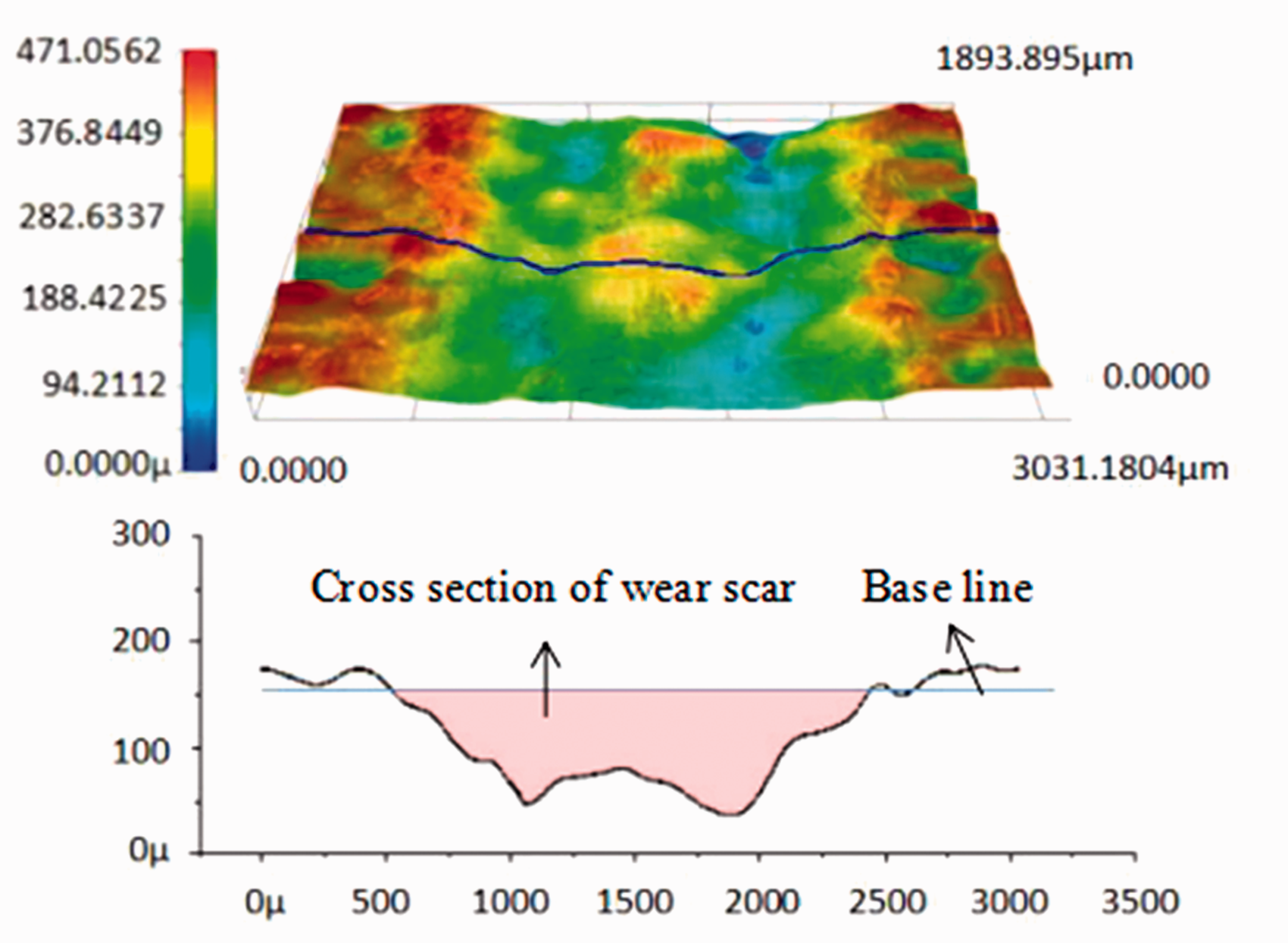
Characterization
An RH-2000 3D digital microscope (provided by Hirox China Co., Ltd, Japan) was firstly employed to acquire the accurate 3D surface profile of the worn surfaces, then the computerized image analysis software equipped on it was adopted to quantify surface parameters, such as the depth and cross-sectional area of the wear scar. The morphologies of the worn surface of the composites and counterpart balls were analyzed by a Phenom ProX scanning electron microscope (provided by Phenom China Co., Ltd, Netherlands).
Results and discussion
Characterization of reinforcing fibers
Mechanical properties of polyimide (PI) and Nomex fibers after heat treatment

Subsequently, the dynamic mechanical analysis (DMA) was conducted on a TA Q800 Dynamic Mechanical Analyzer according to ASTM E160: 2013, at 3℃ min, 3 Hz and temperature range from 50℃ to 300℃. The testing results of the storage modulus, given directly by the equipment, as a function of temperature for the two fibers, are shown in Figure 2. It can be found that the storage modulus of PI and Nomex fibers decreased with the temperature increasing. Within the temperature region investigated, Nomex fibers showed a 50% decrease in storage modulus, while only a 36% decrease was observed for PI fibers. In addition, the storage modulus of Nomex fibers was observed to be lower than that of PI fibers at all temperatures investigated and dropped dramatically when the temperature was over 270℃. When the temperature reached 300℃, the storage modulus of PI fibers was about 1.5 times higher than that of Nomex fibers, at 1.11 × 10⁵ and 7.36 × 10⁴ MPa, respectively. This result is attributed to the fact that Nomex experienced glass transition at around 270℃, while there was no glass transition of PI within the temperature scope. Thus, with less tendency of deformation for PI fibers, the hybrid PI-PTFE/Nomex fabric composite is expected to exhibit more favorable tribological properties at high temperatures.
Storage modulus of polyimide (PI) and Nomex fibers as a function of temperature. The heating rate in the test was 3℃/min.
The thermal stability property of PI and Nomex fibers under nitrogen condition was examined in detail by using thermogravimetric analysis (TGA) and differential thermal gravimetry (DTG) thermograms in the temperature range of 25–700℃. The TGA and DTG data was directly given by the TA Q500 thermal gravimetric analyzer and expressed as a function of temperature (see Figures 3(a) and (b)). Table 2 shows the thermal gravimetric data of PI and Nomex fibers. It is found that PI fibers exhibited higher initial and peak temperatures of decomposition. In addition, the char yield of PI fibers was considerably superior to that of Nomex fibers. The char yield of PI fibers at 700℃ in a nitrogen atmosphere was over 63%, contrasted with 42.29% for Nomex fibers. These findings demonstrate that although both reinforcing fibers have the capacity of heat resistance, PI fibers have higher thermal stability at all the temperatures investigated.
Thermal gravimetric curves (a) and differential thermogravimetric curves (b) of polyimide (PI) and Nomex fibers. Thermal gravimetric data of polyimide (PI) and Nomex fibers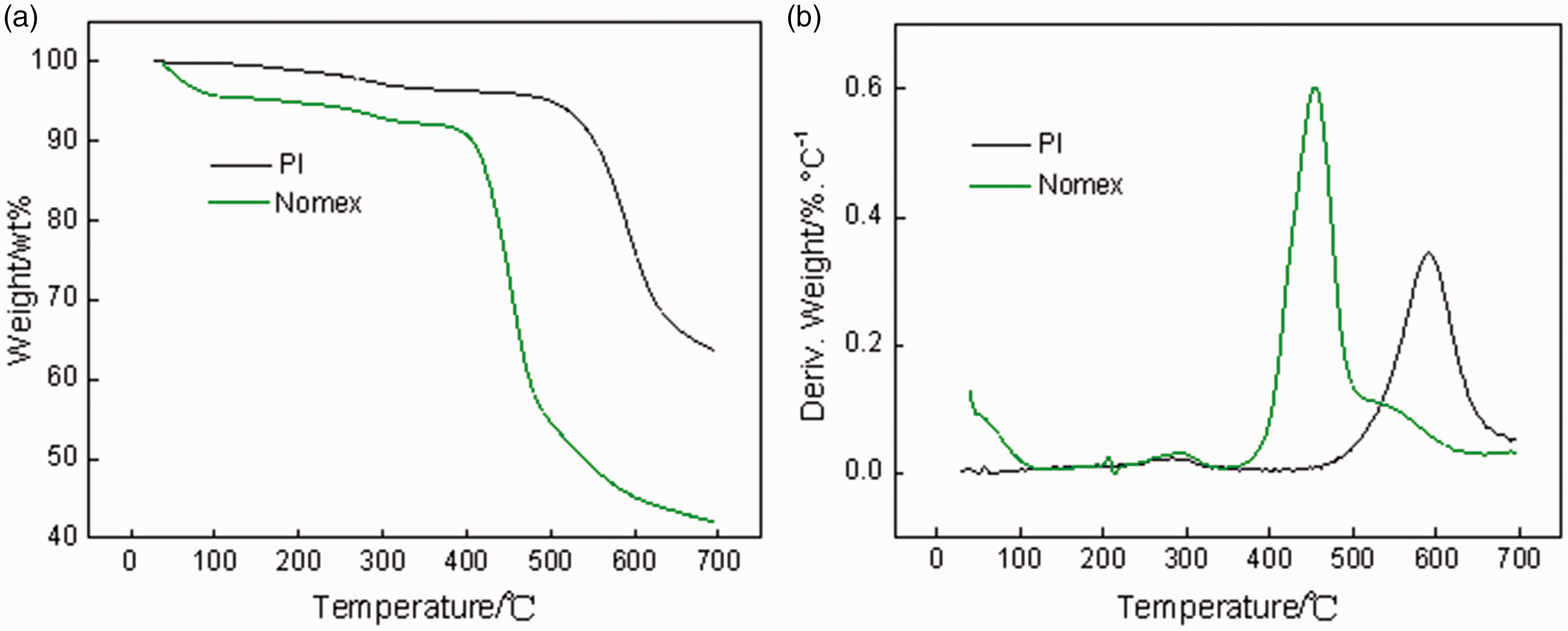

Friction and wear properties
The tribological properties of the hybrid PI-PTFE/Nomex fabric and Nomex-PTFE/Nomex fabric composites were investigated at different temperatures. Figure 4 shows the friction coefficient and wear rates of both fabric composites sliding at different temperatures. It can be seen from Figure 4(a) that the friction coefficient of the two fabric composites varied little with the temperature below 200℃. However, at 240℃, the hybrid PI-PTFE/Nomex fabric composite presented an obvious smaller friction coefficient (0.041), which is 42.3% lower than that of the hybrid Nomex-PTFE/Nomex fabric composite. As for the wear rates, the composite with PI-PTFE/Nomex fabric achieved reduced wear rates to a different extent, which is shown in Figure 4(b). Specifically, the hybrid PI-PTFE/Nomex fabric composite exhibited a wear rate of 1.13 × 10⁻¹² m3 (N·m)−1 at 240℃, contrasting with the hybrid Nomex-PTFE/Nomex fabric composite, which underwent wear failure at this temperature. The friction and wear results show that the composite with PI-PTFE/Nomex fabric achieves an obviously better high-temperature tribological property than the composite using Nomex-PTFE/Nomex fabric that may be attributed to the excellent thermal mechanical property and thermal stability of PI fibers that shared the load stress during the sliding process. In previous researches, a phenolic-based glass fabric composite tested on a pin-on-disk wear tester was reported by Su et al.
28
to achieve 0.13 in the friction coefficient and 1.6 × 10⁻¹³ m3 (N·m)−1 in the wear rate, with the sliding temperature of 150℃. Compared with that, our composite introduced with PI fibers exhibited a much lower friction coefficient (0.064) at 163℃, without sacrificing the anti-wear property (wear rate: 1.13 × 10⁻¹³ m3 (N·m)−1). Another research carried out by Bijwe et al.
29
studied the oscillating wear behavior of a polyetherimide-based aramid/carbon fabric composite. The composite exhibited a wear rate of 4.00 × 10⁻¹⁴ m3 (N·m)−1 and 0.32 in the friction coefficient at 150℃. The introduction of carbon fabric improved the anti-wear property at the cost of an increase in the friction coefficient, compared with our own values of the introduced PI composite. Considering the requirement of tribo-materials used in spherical joint bearings, PI fibers are more suitable for improving the wear resistance without sacrificing the lubricity needed for bearings.
Friction coefficient (a) and wear rate (b) of the hybrid polyimide (PI)-polytetrafluoroethylene (PTFE)/Nomex fabric composite and the hybrid Nomex-PTFE/Nomex fabric composite at different temperatures.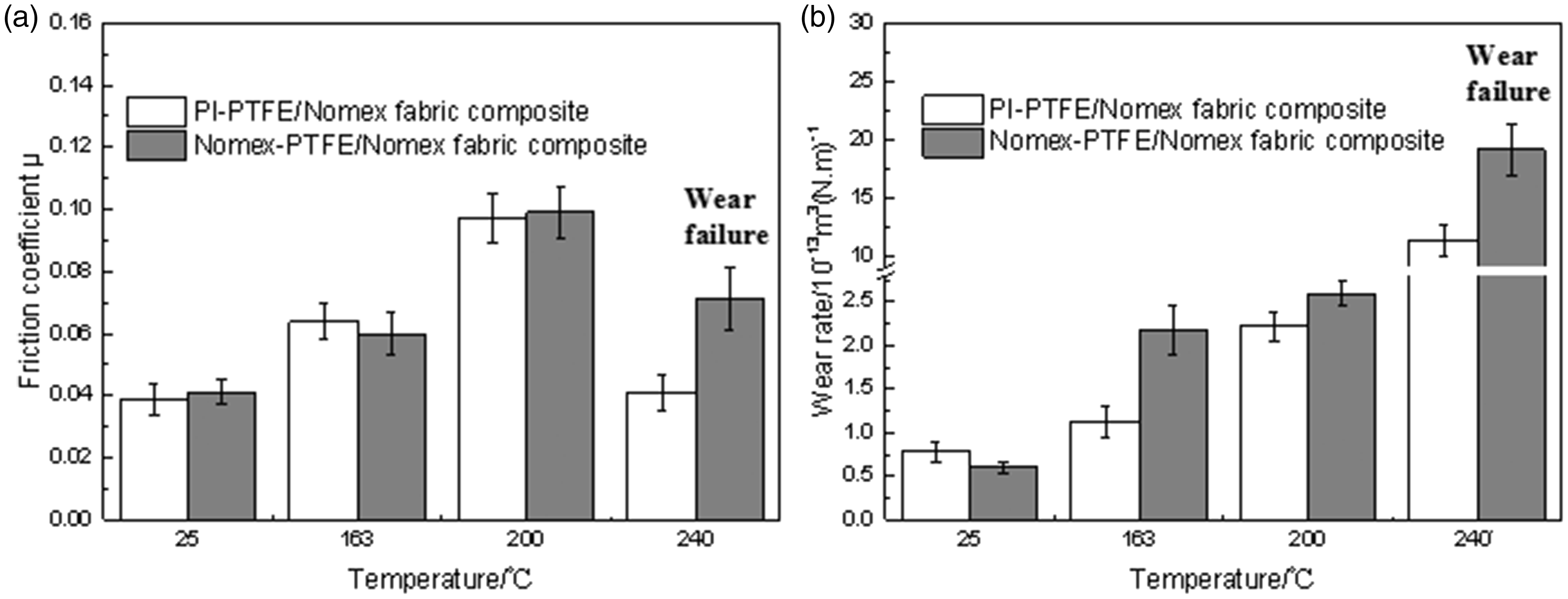
Moreover, according to the results of the sliding wear experiment, the friction and wear behavior of the two composites are strongly influenced by temperature. For both composites, the friction coefficient value was the lowest at the temperature of 25℃. It increased with increasing temperature, showing a maximum value at 200℃. At the higher temperature of 240℃, the friction coefficient value further decreased. However, the wear rates of the two fabric composites increased with increasing temperature from 25℃ to 240℃. The probable explanation for this phenomenon is given in the following discussion section. To sum up, it can be stated that both fabric composites exhibited a decreased anti-wear property as the ambient temperature increased from 25℃ to 240℃.
Digital microscopic observations of the worn surfaces
A quantitative description of the worn surface profiles of the hybrid PI-PTFE/Nomex fabric and Nomex-PTFE/Nomex fabric composites was performed by 3D digital microscopic measurement apparatus. Figure 5(a)–(g) show the 3D microscopic images of the worn surfaces of the two fabric composites at 25–240℃ (The 3D worn surface profile of the Nomex-PTFE/Nomex fabric composite at 240℃ is not available because of extremely severe wear damage). Compared with the hybrid Nomex-PTFE/Nomex fabric composite, the wear scar for the introduced PI composite was found to be narrower at all temperatures investigated, which means a smaller contact area between the counterpart faces. At 240℃, the hybrid Nomex-PTFE/Nomex fabric composite suffered wear failure with an extremely deep wear depth, indicating the Nomex as reinforcing fibers had lost its bearing capacity. The results indicate that PI fibers are more efficient in improving the wear resistance of the fabric composites, and this improved wear resistance would extend the application of PI for reinforcing fibers.
Three-dimensional profile of the worn surfaces of hybrid polyimide-polytetrafluoroethylene (PTFE)/Nomex fabric composite: (a) 25℃, (b) 163℃, (c) 200℃, (d) 240℃; Nomex-PTFE/Nomex fabric composite: (e) 25℃, (f) 163℃, (g) 200℃.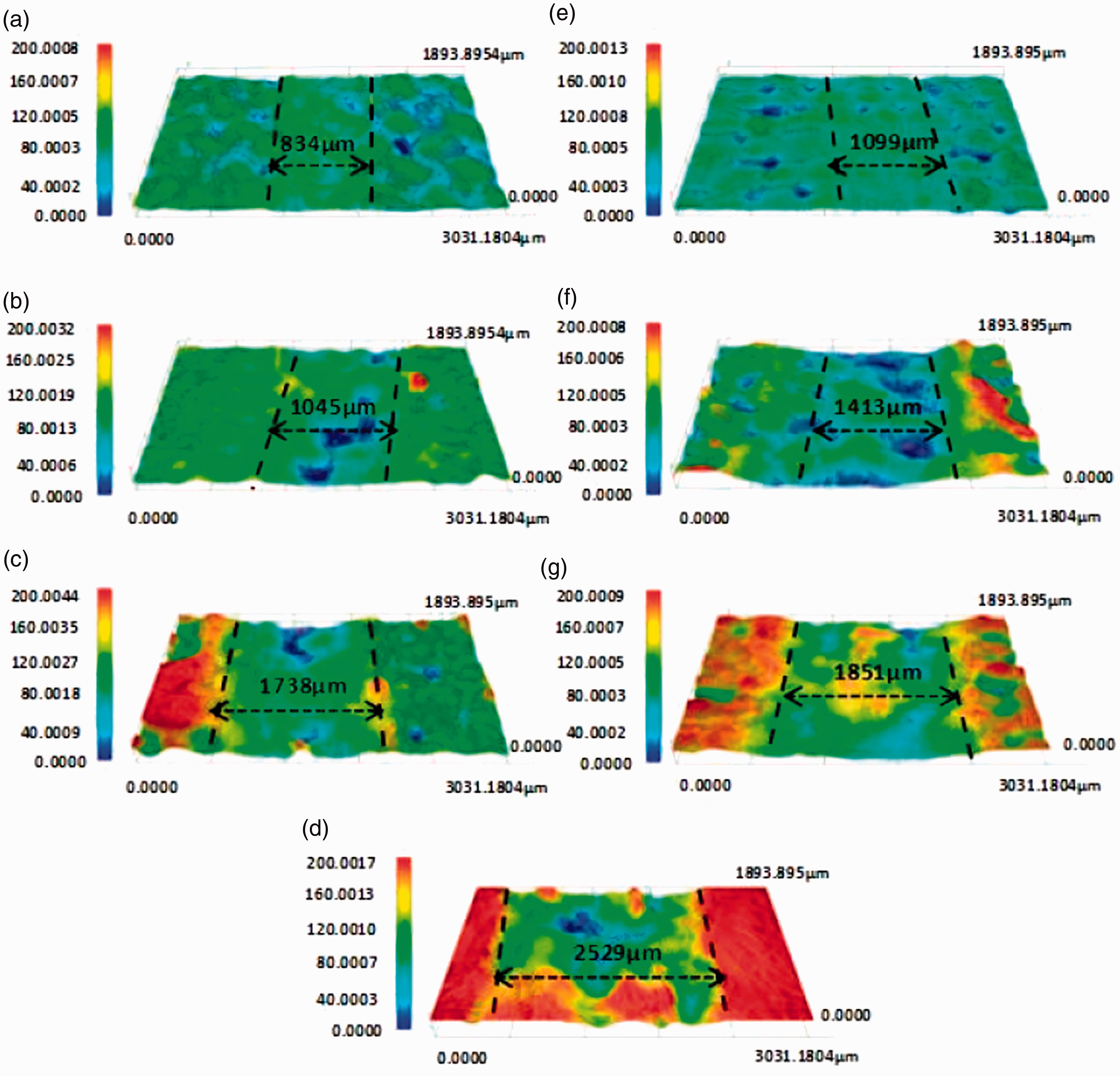
Moreover, the wear width of the two composites became wider along with the increasing temperature, which is indicative of an enlarging contact area between the counterpart faces owing to the enhanced plasticity of polymers.
Surface morphology analysis
Figure 6 shows scanning electron microscopy (SEM) images of the worn surfaces of the two fabric composites and counterpart balls at room temperature. As can be seen in the micrographs for the introduced PI composite (see Figure 6(a)), only a small part of the whole surface suffered resin detachment, which resulted in easy breakage of the surface fibers. For the hybrid Nomex-PTFE/Nomex fabric composite, resin detachment was rarely seen on the worn surface, which appeared to have fewer exposed fibers (see Figure 6(b)), leading to a slightly lower wear rate. It is noted that neither fabric composite suffers severe damage at this temperature, which is consistent with the data from the friction coefficient and wear rate. SEM images of the counterpart surface of the worn balls show small and thin adhesive junctions (see Figure 6(c) and (d)) that formed when a load was applied for both composites, indicating the adhesive wear mechanism. At room temperature, relatively few adhesive junctions cause a small real contact area between the friction pairs, and thus result in a low friction force for both composites. It is believed that the resin matrix and fibers have good mechanical strength to support the applied load at room temperature, as observed by the transferred polymers distributing in a small region (see Figure 6(c) and (d)). Moreover, hard wear debris in-between the ball and disk is also thought, in part, to be responsible to the low friction coefficient and wear rates for both composites.
Scanning electron microscopy images of the worn surfaces for the hybrid polyimide-polytetrafluoroethylene (PTFE)/Nomex fabric composite (a) and Nomex-PTFE/Nomex fabric composite (b) at 25℃; (c) and (d) show the corresponding worn surface of the counterpart ball. The applied load and sliding speed in the tests were 30 N and 0.115 m/s, respectively.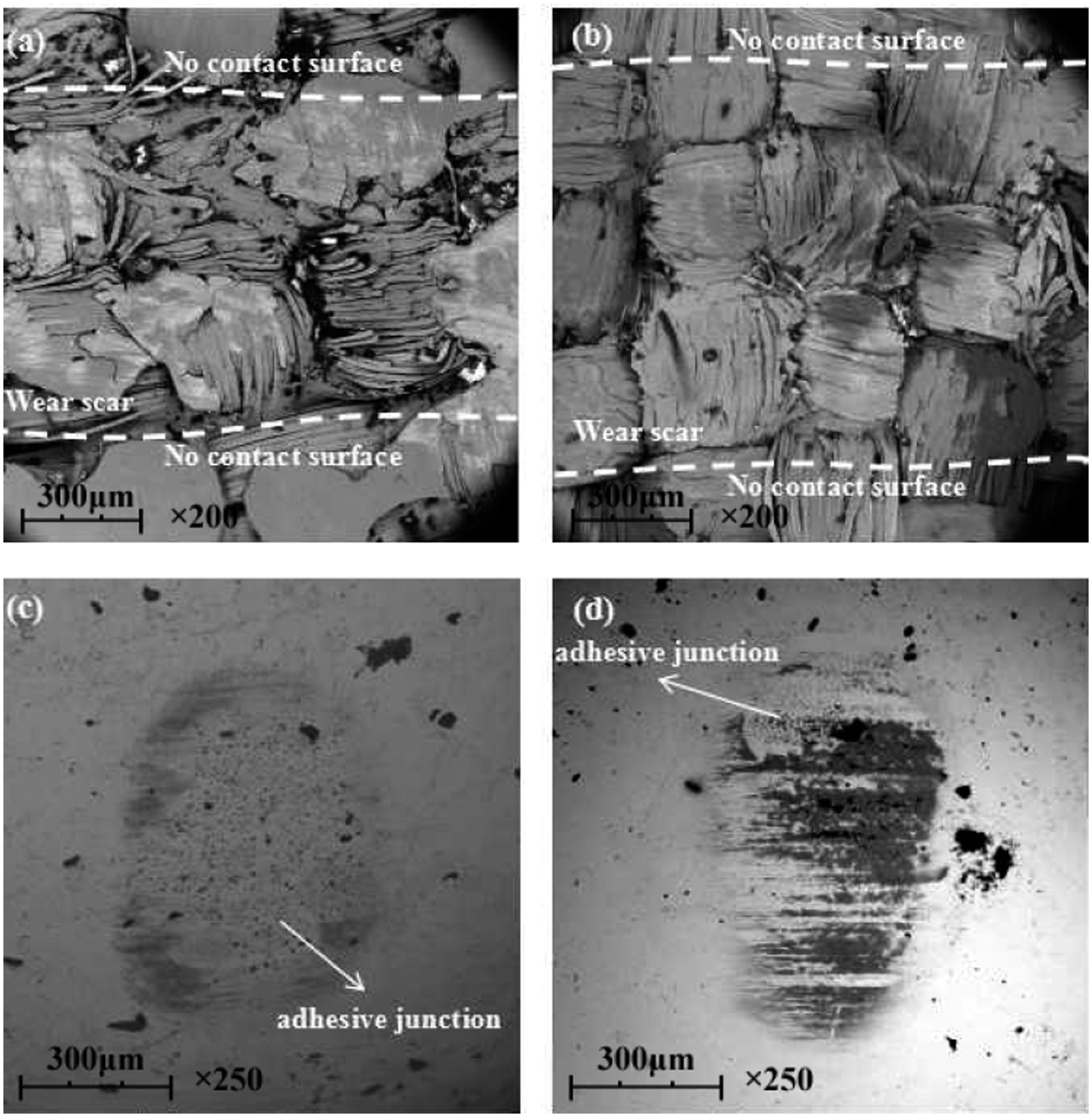
Figure 7 shows SEM images of the worn surface of the two fabric composites and counterpart balls at 163℃. It can be seen that bundles of PI fibers were exposed on the worn surface (see Figure 7(a)), which prevents a large contact area between the counterpart surfaces and thus reduces the wear, as observed by the small and few adhesive junctions shown in Figure 7(c). For the hybrid Nomex-PTFE/Nomex fabric composite, pulled-out fibers scarcely existed, but were compressed with the resin matrix into a smoother worn surface (see Figure 7(b)). Thus, the adhesion wear was more serious, evidenced by larger and more adhesive junctions, shown in Figure 7(d). Consequently, the introduced PI fabric composite exhibits advantages in friction and wear properties at 163℃. Moreover, compared with the case at room temperature, the increase in the friction coefficient and wear rates were induced by the strengthened effect of the ball onto the sliding surface. The elevated environment temperature increases localized heating caused by frictional heat, resulting in a strengthened sticking effect between the ball and the disk, as observed by the larger and more widely distributed adhesive junctions in Figure 7(c) and (d).
Scanning electron microscopy images of the worn surfaces for the hybrid polyimide-polytetrafluoroethylene (PTFE)/Nomex fabric composite (a) and Nomex-PTFE/Nomex fabric composite (b) at 163℃; (c) and (d) show the corresponding worn surface of the counterpart ball. The applied load and sliding speed in the tests were 30 N and 0.115 m/s, respectively.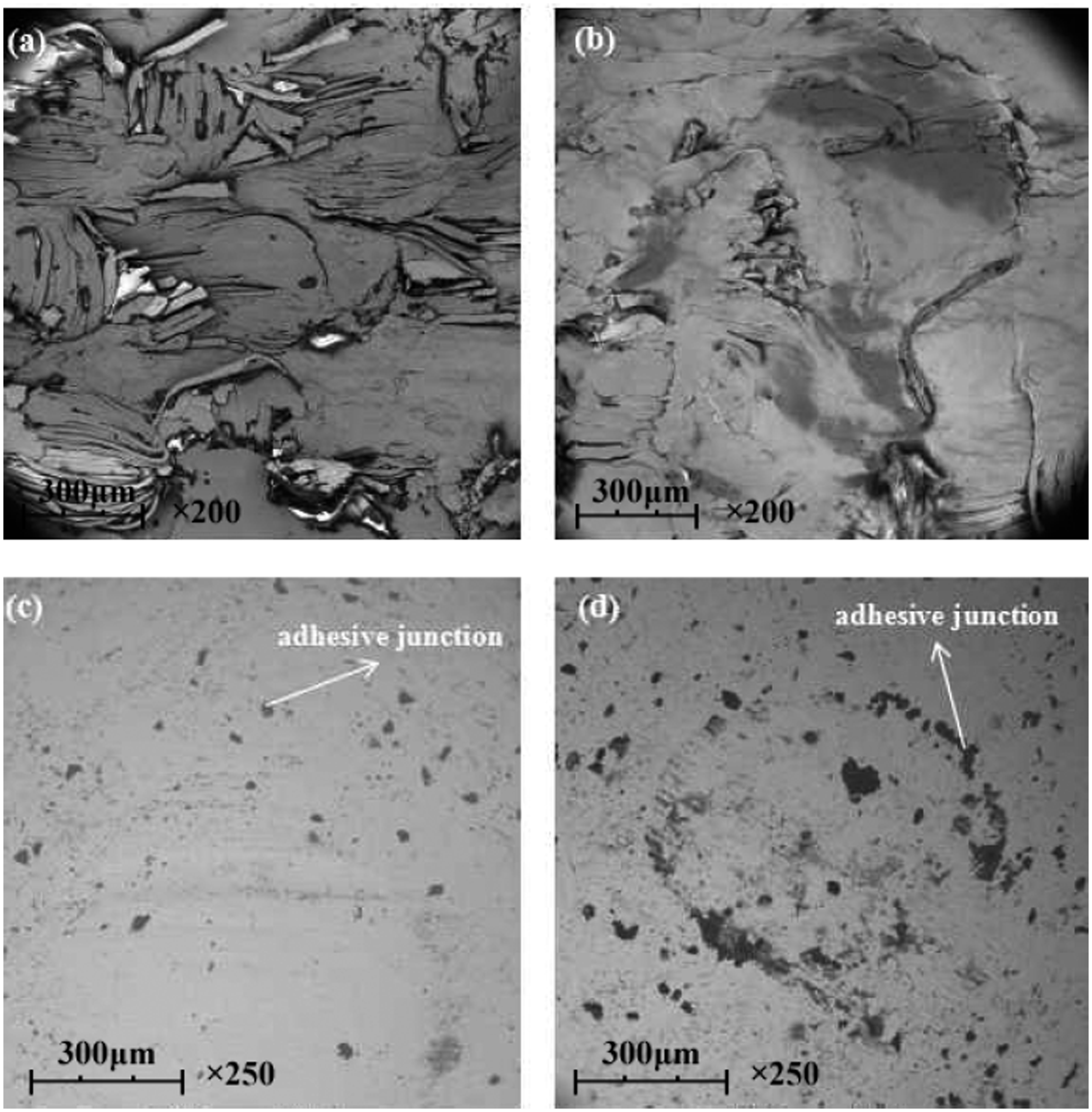
Figure 8 shows SEM images of the worn surface of the two fabric composites and counterpart balls at 200℃. For the introduced PI fabric composite, the worn surface was rough, featuring short cutting-off PI fibers and small wear debris (see Figure 8(a)). This indicates that PI fibers still possess a load-carrying capacity at this temperature. As for the hybrid Nomex-PTFE/Nomex fabric composite, fiber deformation was more serious, characterized by distorted and compressed fibers on the worn surface (see Figure 8(b)). This observation confirms the fact that the mechanical property of the reinforcing fiber and tribological properties of composites are closely related to each other. Owing to favorable strength property for PI fibers, the hybrid PI-PTFE/Nomex fabric composite achieves a better tribological property at 200℃. Figure 8(c) and (d) show the adhesive junctions, which have a tendency to connect with each other for both composites. This is attributed to the further softened polymer at higher temperatures, which resulted in an increased friction coefficient and wear rates for both composites.
Scanning electron microscopy images of the worn surfaces for the hybrid polyimide-polytetrafluoroethylene (PTFE)/Nomex fabric composite (a) and Nomex-PTFE/Nomex fabric composite (b) at 200℃; (c) and (d) show the corresponding worn surface of the counterpart ball. The applied load and sliding speed in the tests were 30 N and 0.115 m/s, respectively.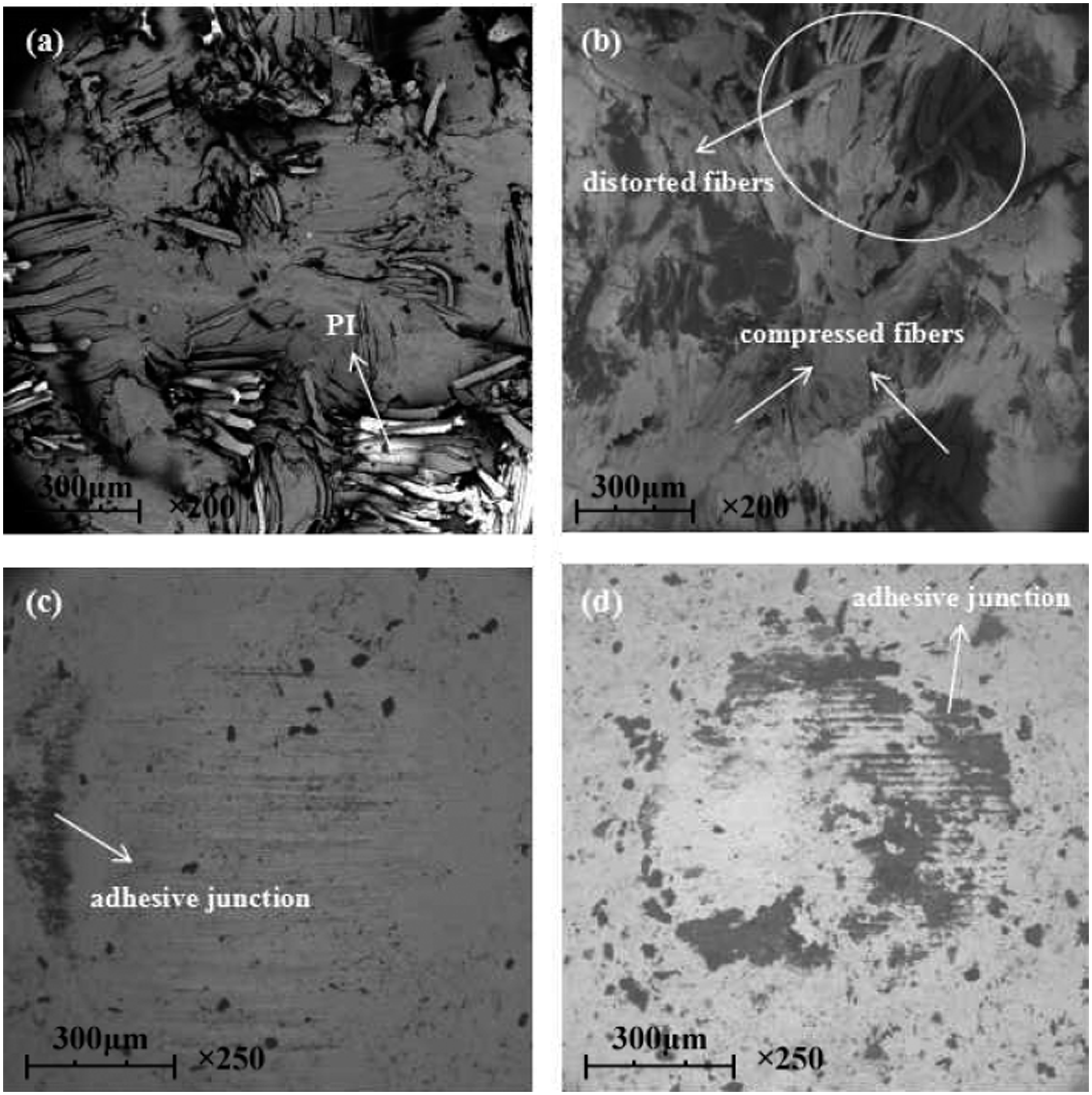
Figure 9 shows the SEM images of the worn surface of the two fabric composites and counterpart balls at 240℃. It can be seen that the worn surface was mainly covered by a large number of PI fibers for the introduced PI composite, which means serious wear damage (see Figure 9(a)). For the hybrid Nomex-PTFE/Nomex fabric composite, the most severe breakage of fibers happened on the worn surface, resulting in wear failure, as observed by the deep crack on the worn surface (see Figure 9(b)). The results indicate that PI fibers are more efficient in reducing composite deformation and preventing wear damage, evidenced by the significant contrast between the adhesive junctions (see Figure 9(c) and (d)). Moreover, it is worth noting that the friction coefficient exhibited a sudden decrease at 240℃ for both composites. It is proposed that the overabundant frictional heat caused the decomposition and excessive melting of surface layer polymers, resulting in a decrease in the friction coefficient.
Scanning electron microscopy images of the worn surfaces for the hybrid polyimide-polytetrafluoroethylene (PTFE)/Nomex fabric composite (a) and Nomex-PTFE/Nomex fabric composite (b) at 240℃; (c) and (d) show the corresponding worn surface of the counterpart ball. The applied load and sliding speed in the tests were 30 N and 0.115 m/s, respectively.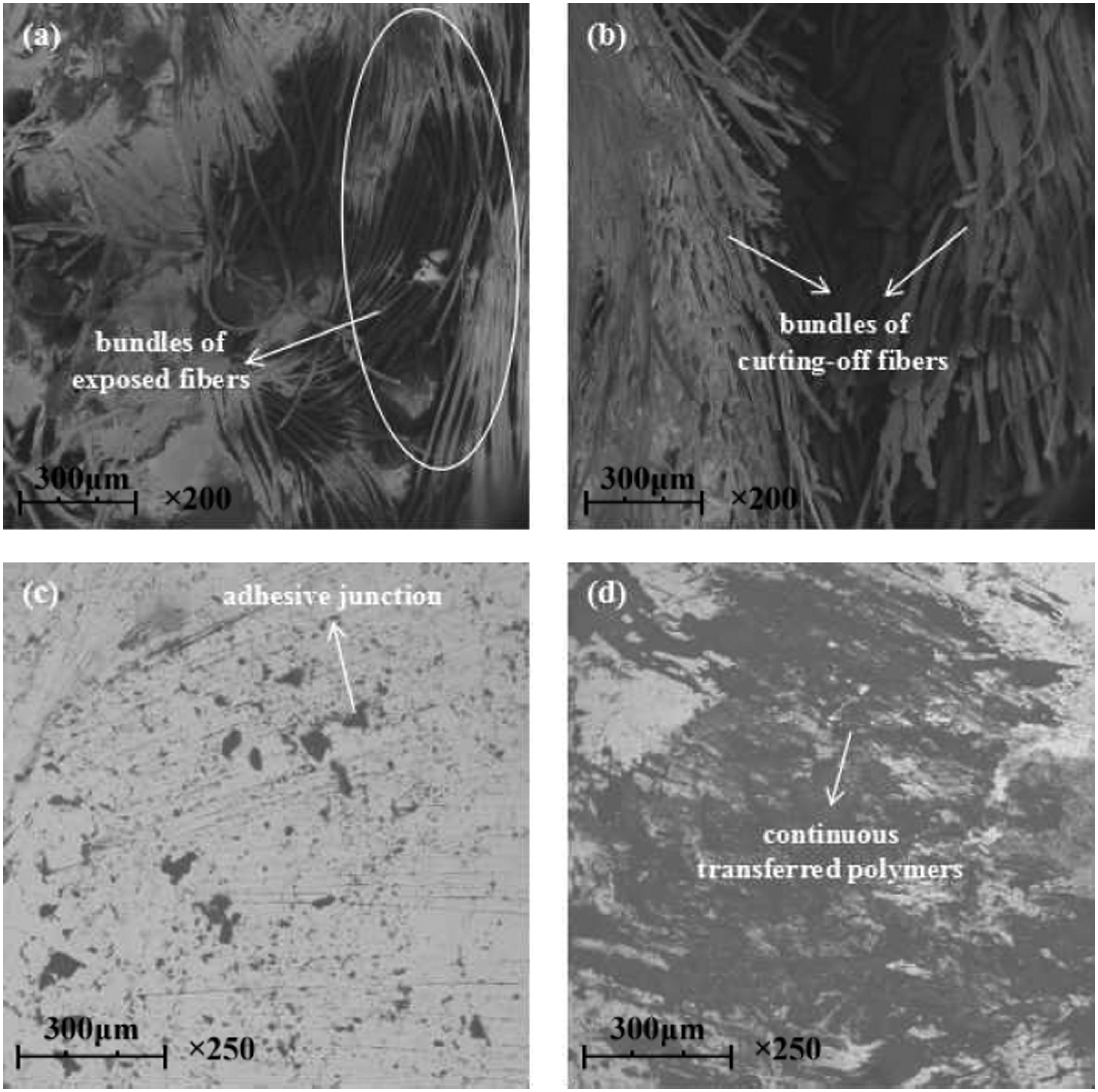
Conclusions
The hybrid PI-PTFE/Nomex fabric composite and hybrid Nomex-PTFE/Nomex fabric composite were prepared with PI and Nomex as the reinforcing fibers, respectively. The thermal mechanical properties of the reinforcing fibers and the tribological properties of the two fabric composites at environmental temperatures of 25–240℃ were studied comprehensively. The results of sliding wear tests show that although the difference between the tribological property of the two composites is small at room temperature, the hybrid PI-PTFE/Nomex fabric composite achieves a better tribological property at high temperature. It is believed that the excellent thermal mechanical property and thermal stability of PI fibers contribute to the optimized high-temperature tribological property of the fabric composite. Moreover, the friction and wear properties of the two composites are closely related to the environmental temperature, owing to the variation of the mechanical properties of the polymers.
Footnotes
Declaration of conflicting interests
The authors declared no potential conflicts of interest with respect to the research, authorship and/or publication of this article.
Funding
The authors disclosed receipt of the following financial support for the research, authorship, and/or publication of this article: This work was supported by the 2017 Special Funding of Shanghai Municipal Commission of Economy and Informatization (2017365) and the National Key R&D Program of China (Grant Number 2017YFB1103400).